
Saudi Arabia is investing heavily in accessibility, but the reality on the ground remains uneven. Newly built mega-projects, five-star hotels and modern transport systems like the Riyadh Metro meet international standards, while older neighbourhoods, heritage sites and budget accommodation often fall short. This guide — part of our Saudi Arabia Travel Guide 2026 — gives disabled travellers the honest, practical information they need to plan a trip with confidence: what works, what doesn’t, and how to bridge the gaps.
Best Time to Visit: October to March (cooler temperatures reduce fatigue and heat-related risks)
Getting There: Direct flights to Riyadh (RUH), Jeddah (JED) and Dammam (DMM) — all three airports offer wheelchair assistance
Visa Required: Yes — tourist e-visa available online
Budget: $120–250/day (accessible rooms and private transport increase costs)
Must-See: Riyadh Metro (fully accessible), Masjid al-Haram wheelchair Tawaf lanes, Jeddah Corniche waterfront
Avoid: Assuming older districts are wheelchair-friendly — always confirm access before visiting historic sites
Legal Framework: What Saudi Law Guarantees
Saudi Arabia’s Rights of Persons with Disabilities Law, issued by Royal Decree in August 2023, replaced the older Disability Welfare Law of 2000. Article Three guarantees the right to access physical environments in all facilities, mandates accessible design in roads, sidewalks and parking, and requires accessibility compliance when issuing or renewing building licences.
The Saudi Building Code (SBC-2018) requires all new buildings to be accessible, with enforcement phased in starting with government buildings, hospitals, high-rise structures and hotels. The King Salman Center for Disability Research (KSCDR) in Riyadh has published Universal Accessibility Guidelines covering the built environment, land transportation, and places of accommodation — and declared Riyadh the Kingdom’s first disability-friendly city in 2010.
In practice, enforcement is improving but inconsistent. Newly built projects — particularly those tied to Riyadh’s Vision 2030 developments — tend to meet or exceed international accessibility standards. Older buildings, especially in historic districts and smaller cities, frequently lack ramps, lifts or accessible toilets. The gap between law and implementation is the single biggest challenge disabled travellers will face.
Saudi Benefits for Disabled Visitors
Saudi Arabia offers concrete financial benefits to travellers with documented disabilities:
- 50% discount on airfares with Saudi carriers — applies to both the disabled passenger and one companion
- 50% discount on government transportation including the Haramain High-Speed Railway, available with a valid disability ID or digital card
- Accessible parking spaces are mandated at all new commercial and government facilities
- SAR 10,000 vehicle conversion subsidy for Saudi residents (not available to tourists, but relevant for long-stay visitors)
- Three wheelchair categories: WCHR (ramp assistance — can climb stairs but not walk long distances), WCHS (stair assistance — cannot climb stairs), and WCHC (cabin assistance — completely immobile)
- Mobile cranes for boarding and deplaning at airports without jet bridges
- Onboard wheelchair for in-flight movement to the lavatory
- Movable armrest seats for easier transfer from aisle chair to seat
- Dedicated check-in counters for passengers with special needs at all major stations
- Step-free access at all entrances via ramps and lifts
- Elevators and escalators for vertical movement between levels
- Tactile paving throughout for visually impaired passengers
- Audio and visual announcements in Arabic and English
- Designated wheelchair spaces inside all train carriages
- Accessible platforms with level boarding (minimal gap between platform and train)
- Elevators, ramps and wide entrances at all stations
- Wheelchair spaces and accessible restrooms onboard
- Two designated Business Class seats per train for passengers with special needs
- 50% fare discount for disabled passengers with valid documentation
- Wheelchairs available at all stations for passenger use
- Is the accessible room on a ground floor or serviced by a lift?
- Does the bathroom have a roll-in shower or a step-over bath?
- Are grab bars fitted beside the toilet and in the shower?
- Is there a portable shower chair or fixed bench?
- How wide are the doorways? (minimum 80 cm / 32 inches for standard wheelchairs)
- Is the hotel entrance ramped or only stepped?
- Is the breakfast area / restaurant accessible without stairs?
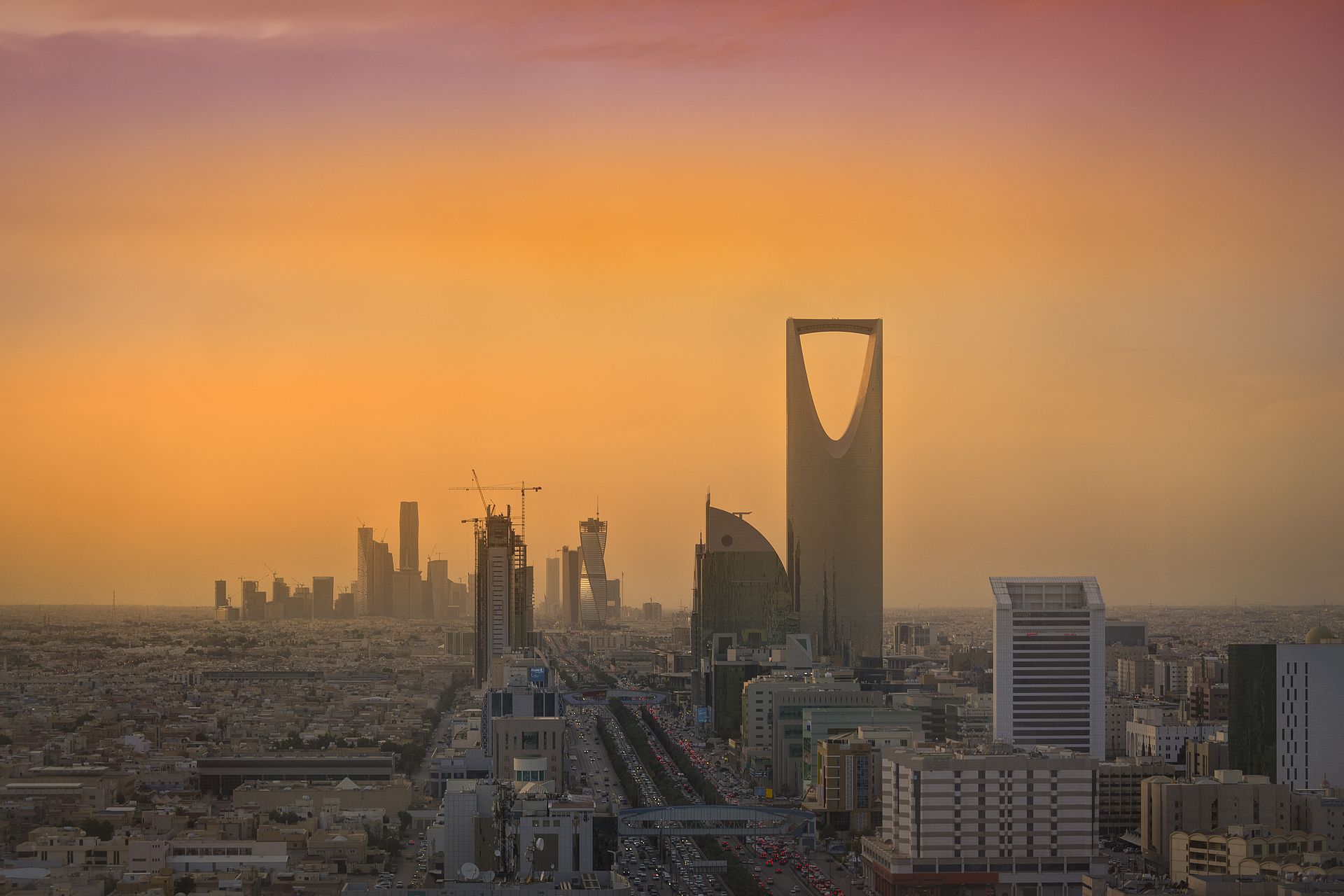
- Kingdom Centre Tower Sky Bridge: Elevator access to the 99th-floor observation bridge with level viewing areas
- National Museum of Saudi Arabia: Fully ramped, with lifts between all floors, accessible toilets and wheelchair loan service
- King Abdullah Financial District (KAFD): Entirely new-build with universal design throughout — wide pavements, ramps, tactile paving
- Riyadh Boulevard (Riyadh Season): Purpose-built entertainment district with flat terrain, accessible paths and wheelchair-friendly venues
- Al Masmak Fortress: Free entry; the courtyard is accessible, but some upper areas involve narrow stairs
- Diriyah Gate (At-Turaif): UNESCO World Heritage Site undergoing extensive restoration — new visitor facilities include accessible pathways, but the historic mud-brick structures have inherent limitations
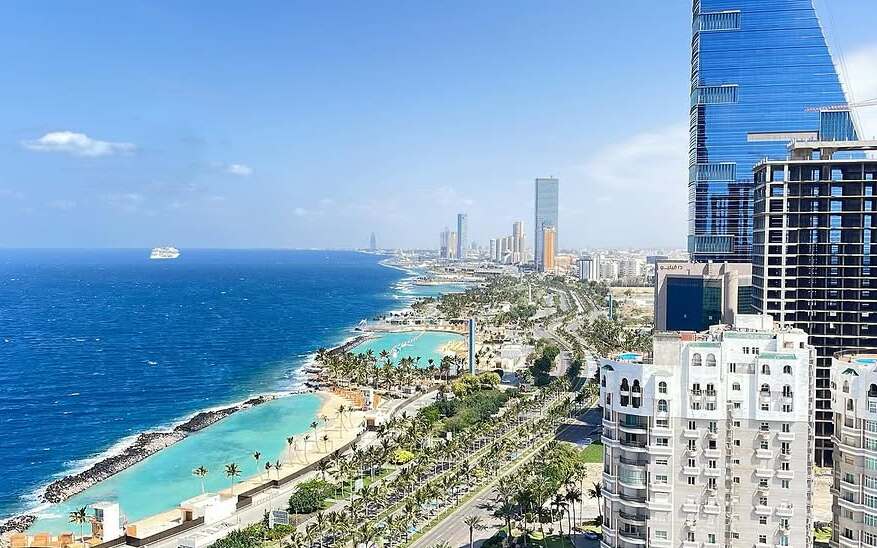
- Jeddah Corniche: The 30+ km waterfront promenade is flat, paved and wheelchair-accessible along most of its length — one of the most enjoyable accessible experiences in the Kingdom
- King Fahd Fountain: Viewable from the accessible Corniche; the fountain plaza itself has level access
- Red Sea Mall and other modern shopping centres: Fully accessible with lifts, accessible toilets and dedicated parking
- Al-Balad (Historic Jeddah): UNESCO World Heritage Site — the narrow coral-stone alleys are not wheelchair-accessible. Visitors with mobility impairments can view the exterior of the historic houses from the wider main streets but cannot navigate the interior laneways
- Jeddah Corniche Circuit (Formula 1): The Saudi Arabian Grand Prix venue offers designated accessible seating, accessible toilets and companion tickets
- Wheelchair Tawaf lanes: Dedicated circular paths on the upper floors of the Mataf area allow wheelchair users to perform Tawaf around the Kaaba
- Sa’i (Safa and Marwah): A clearly marked, slightly elevated wheelchair path runs between Safa and Marwah, separated from pedestrian traffic
- Free wheelchair service: The General Presidency for the Affairs of the Two Holy Mosques provides wheelchairs free of charge inside the Haram
- Electric wheelchairs and carts: Available for rent on the first and second levels of the Mataf area (SAR 50–100 depending on duration)
- Elevators: Multiple lifts connect all floor levels of the mosque expansion
- Wheelchair access throughout the mosque, including special lanes and elevators
- Buggy cart service for long-distance movement within the mosque complex, particularly helpful given the scale of the expanded mosque
- Accessible entrances on all sides of the mosque
- Jamarat Bridge (for stoning) is accessible by wheelchair — it was purpose-built with ramps and multiple levels
- Mina tent camps vary in accessibility — premium Hajj packages offer tents with better facilities
- Arafat requires standing (or sitting) in an open plain; the main challenge is heat and crowd density rather than physical barriers
- Mashaer Railway connects Mina, Arafat and Muzdalifah and has wheelchair spaces, but operates only during Hajj days
- Bring a doctor’s letter (in English and Arabic) listing all medications, particularly controlled substances — Saudi customs is strict about prescription drugs
- Carry spare parts for wheelchairs, hearing aids and other assistive devices — specialist repair services are available in Riyadh and Jeddah but parts for non-standard equipment may not be stocked
- Pharmacies are abundant in all Saudi cities and many medications available by prescription elsewhere are sold over the counter — but check the Saudi Food and Drug Authority’s restricted list before travelling
- Hospitals: Saudi Arabia has excellent private hospitals in all major cities. The King Faisal Specialist Hospital (Riyadh and Jeddah) is the most advanced in the region
- International accessible travel agencies (Accessible Travel Solutions, Enable Holidays, Wheel the World) that arrange bespoke Saudi itineraries
- Hotel concierge services at five-star properties, which can arrange private accessible transfers, guides and adapted excursions
- Hajj/Umrah operators that specifically cater to disabled pilgrims — several UK, US and Malaysian-based operators offer premium accessible packages
- Saudi General Authority for Tourism: Contact them via the Visit Saudi website for current accessibility information at specific destinations
- Riyadh Metro — genuinely world-class accessibility
- Haramain Railway — comfortable, accessible high-speed rail
- International chain hotels — reliable accessible rooms
- Masjid al-Haram wheelchair infrastructure — comprehensive and well-maintained
- Airports — good wheelchair assistance at all three main hubs
- Modern malls and new-build entertainment districts
- Older city districts — poor kerb cuts, no ramps, uneven surfaces
- Heritage sites — limited access at Al-Balad, Diriyah, older mosques
- Budget accommodation — rarely meets accessibility standards
- Public toilets — accessible facilities scarce outside modern buildings
- Ride-hailing — no wheelchair-accessible vehicle category
- Desert and outdoor attractions — uneven terrain with limited adaptations
- Saudi Arabia Travel Guide 2026 — The complete guide to visiting the Kingdom
- Saudi Arabia for Senior Travellers — Accessibility and comfort tips for older visitors
- First Time in Saudi Arabia — Everything you need to know before your first visit
- Hajj 2026 Guide — Complete pilgrimage planning including accessibility
- Saudi Arabia Visa Guide — Every visa type explained
- Budget Travel in Saudi Arabia — How to visit for under $50 a day
Tip: Carry official documentation of your disability translated into Arabic or English. Saudi authorities and transport operators recognise international disability cards, but a medical letter with specific details of your needs speeds up assistance at airports and train stations.
Getting to Saudi Arabia: Airports and Airlines
Airport Accessibility
Saudi Arabia’s three main international airports — King Khalid International (RUH) in Riyadh, King Abdulaziz International (JED) in Jeddah, and King Fahd International (DMM) in Dammam — all provide wheelchair assistance, priority immigration clearance and trained staff for disabled passengers. Request assistance when booking your flight, and confirm it 48 hours before departure.
The newer terminals are fully accessible. JED’s Terminal 1 (opened 2019) features step-free access throughout, accessible toilets on every level, tactile paving for visually impaired passengers and low-level check-in counters. RUH’s terminals have similar facilities, though the older Terminal 1 is less consistent than the newer Terminal 5. For a full rundown of airport facilities, see our airport lounge guide.
Saudia Airlines
Saudia, the national carrier, provides comprehensive disability services free of charge:
One personal wheelchair is accepted in the cabin on a first-come, first-served basis (max dimensions after folding: 13 × 36 × 42 inches / 33 × 91 × 107 cm). If cabin space is unavailable, it travels in the hold as checked baggage at no extra cost. Contact Saudia’s medical desk at [email protected] or call 920022222 at least 48 hours before travel.
Other airlines: Emirates, Etihad, British Airways, Lufthansa and other major carriers serving Saudi Arabia all offer wheelchair assistance and priority boarding. Budget carriers like flynas and flyadeal provide basic wheelchair services but have less consistent onboard accessibility — confirm arrangements directly before booking.
Getting Around: Transport Accessibility
Riyadh Metro
The Riyadh Metro, which opened all six lines in January 2025, is Saudi Arabia’s most accessible public transport system. Every one of its 85 stations features:
The Metro spans 176 kilometres across six colour-coded lines and was designed with universal accessibility from the outset. It is the single best way for disabled travellers to move around Riyadh independently.
Haramain High-Speed Railway
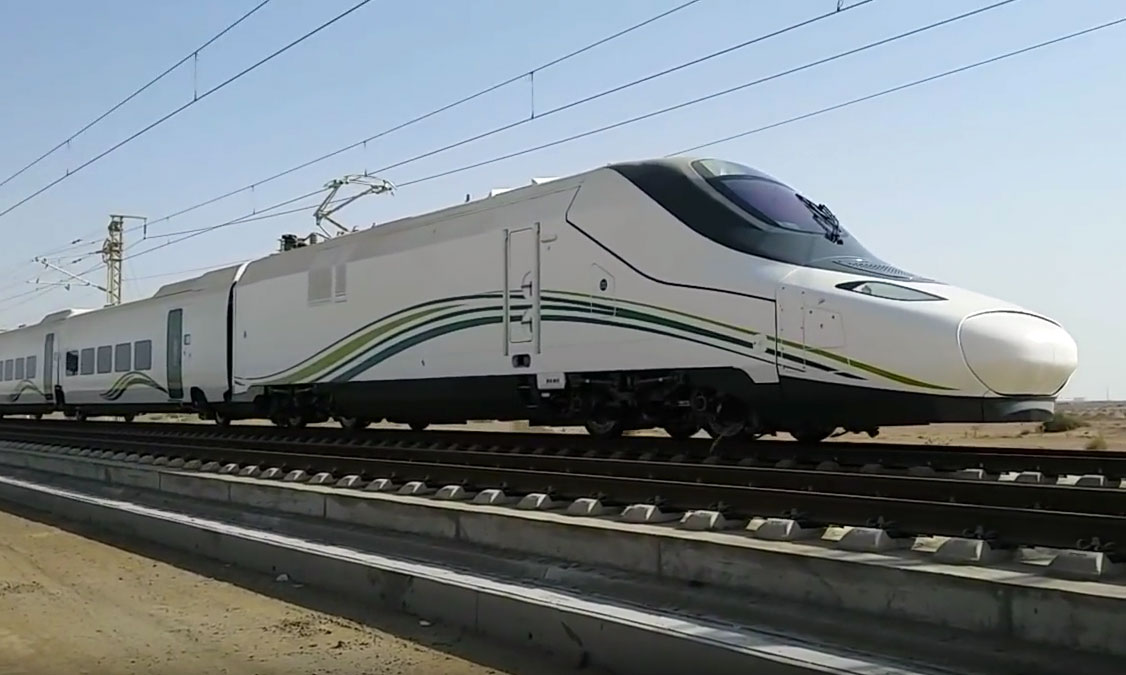
The Haramain High-Speed Railway connects Makkah, Madinah, Jeddah and King Abdullah Economic City at speeds up to 300 km/h. Accessibility features include:
Book tickets through the official HHR website or app. Select the accessibility option during booking to reserve a wheelchair space. The train is the best way to travel between Jeddah and the Holy Cities for passengers with mobility limitations.
Ride-Hailing and Taxis
Uber and Careem both operate across Saudi Arabia’s major cities. Neither app currently offers a dedicated wheelchair-accessible vehicle category, but you can add accessibility notes in the driver instructions. For wheelchair users requiring a ramp-equipped vehicle, the most reliable option is to pre-arrange private transfers through your hotel concierge or a specialist tour operator.
Standard taxis can usually accommodate a folding wheelchair in the boot, but purpose-built accessible taxis are not yet widespread. In Riyadh, the new Riyadh Bus network includes buses fitted with ramps and designated wheelchair spaces.
Car Rental
Major international car rental companies (Hertz, Avis, Budget, Europcar) operate at all Saudi airports. Hand-controlled vehicles are not standard fleet items — you must request them well in advance (ideally 2–4 weeks) and availability is not guaranteed. Bringing your own hand controls and having them fitted may be a more reliable option. An international driving permit is accepted alongside your home licence.
Accommodation: Finding Accessible Hotels
Saudi Arabia’s hotel stock divides sharply between accessible and inaccessible. The rule of thumb: the newer and more upscale the property, the better the accessibility. Consult our Saudi Arabia Hotels Guide for full property reviews.
International Chains (Generally Good)
Global brands apply their corporate accessibility standards to Saudi properties. The following chains consistently offer accessible rooms with roll-in showers, grab bars, lowered fixtures and wider doorways:
| Chain | Riyadh Properties | Jeddah Properties | Key Access Features |
|---|---|---|---|
| Marriott / JW Marriott | 5+ | 3+ | Accessible rooms on request, roll-in showers, visual fire alarms |
| Hilton / DoubleTree | 4+ | 2+ | Wheelchair-accessible rooms, pool hoists at select properties |
| Hyatt | 3+ | 2+ | Accessible suites, bathroom grab bars, lowered peepholes |
| Four Seasons | 1 | 1 | Full ADA-equivalent rooms, dedicated accessible parking |
| Radisson | 3+ | 2+ | Accessible rooms, ramp access to public areas |
Always call the hotel directly to confirm the specific room configuration. The “accessible room” category varies significantly between properties — some offer full roll-in showers and transfer benches, others merely have grab bars in a standard bathroom.
Makkah and Madinah Hotels
Hotels near the Two Holy Mosques are increasingly required by the Ministry of Tourism to provide rooms for guests with special needs, including modified bathrooms, elevators, wide pathways and wheelchair-friendly entrances. The major Haram-facing hotels (Raffles, Conrad, Swissotel, Hilton Suites) generally meet international standards. Budget hotels in the back streets are far less consistent — steep terrain around the Haram area in Makkah makes wheelchair access genuinely difficult in some locations. See our Hajj 2026 Guide for more on pilgrimage accommodation.
What to Ask Before Booking
Accessible Attractions by City
Riyadh
Riyadh is Saudi Arabia’s most accessible city, thanks to massive Vision 2030 infrastructure investment. Top accessible attractions include:
Jeddah
Jeddah combines a modern waterfront with one of Saudi Arabia’s oldest urban cores:
AlUla
AlUla presents mixed accessibility. The new visitor centre and Hegra (Mada’in Salih) main entrance area have been built with ramps and accessible facilities. However, the Nabataean tombs at Hegra involve uneven desert terrain — wheelchair users can view the iconic Qasr al-Farid tomb from the accessible vehicle stop but cannot independently navigate to all tomb clusters. Guided accessible tours in adapted vehicles can be arranged through the Royal Commission for AlUla. Elephant Rock viewing area has a level car park but uneven ground to the formation itself.
Dammam and Al Khobar
The Eastern Province is relatively flat, which helps. The Khobar Corniche is paved and accessible. King Fahd Causeway (connecting to Bahrain) has accessible toll facilities. The Ithra (King Abdulaziz Center for World Culture) in Dhahran is fully accessible with lifts, ramps, accessible toilets and sensory guides for visually impaired visitors.
Hajj and Umrah for Disabled Pilgrims
Saudi Arabia has invested significantly in making the Two Holy Mosques accessible to pilgrims with disabilities. For complete pilgrimage planning, consult our Hajj 2026 Guide.
Masjid al-Haram (Makkah)
Masjid an-Nabawi (Madinah)
Mina, Arafat and Muzdalifah
The Hajj ritual sites outside Makkah are the most challenging for disabled pilgrims. Terrain is uneven, distances are long and crowds are extreme. Key considerations:
Important: Book a premium Hajj package if you have significant mobility limitations. Budget packages involve far more walking on uneven ground and less individualised support. The Nusuk app offers information about accessible routes and facilities within the Holy Mosques.
Specific Disability Types: What to Expect
Wheelchair Users and Mobility Impairments
New-build areas are generally manageable. The main challenges are broken or absent kerb cuts in older neighbourhoods, uneven pavement surfaces, and the absence of accessible public toilets outside hotels and malls. Carry a portable ramp (lightweight folding ramps are available) for the occasional unexpected step. Power wheelchair users should note that Saudi Arabia uses 220V/60Hz electrical outlets with Type G (British three-pin) sockets — bring a universal adapter and check your charger’s voltage compatibility.
Visual Impairments
Tactile paving is standard on the Riyadh Metro and at the Haramain Railway stations. Elsewhere it is inconsistent. Guide dogs are not culturally common in Saudi Arabia — while there is no specific law banning them, you may encounter resistance at hotels and restaurants. Contact venues in advance. Audio announcements are provided on the Metro and Haramain Railway in Arabic and English.
Hearing Impairments
Visual information displays are standard on the Metro and at airports. Hotels in international chains typically offer visual fire alarm systems and vibrating alarm clocks on request. Saudi Sign Language exists but is not widely known outside specialist services — if you need a sign language interpreter, arrange this through your tour operator or embassy before travel.
Cognitive and Developmental Disabilities
Saudi Arabia’s tourism sector does not yet offer specialised services for travellers with cognitive disabilities. Sensory-friendly hours or quiet spaces are rare outside the Ithra cultural centre in Dhahran. The most helpful approach is to work with a specialist travel agent who can structure itineraries to minimise sensory overload and ensure quiet return-to-hotel breaks are built in.
Practical Tips for Disabled Travellers
Travel Insurance
Standard travel insurance policies often exclude pre-existing conditions or wheelchair damage. Specialist providers like AllClear, Staysure and True Traveller offer policies that cover pre-existing medical conditions, wheelchair repair/replacement and medical evacuation. Saudi Arabia requires all tourists to have valid travel insurance — check that your policy meets the visa requirements.
Medical Equipment and Medication
Heat and Climate
Saudi Arabia’s extreme heat (regularly above 45°C / 113°F in summer) poses additional risks for disabled travellers, particularly those with conditions affected by temperature, medication that causes sun sensitivity, or limited ability to self-regulate temperature. Visit between October and March when temperatures are manageable (18–30°C / 64–86°F). If travelling in summer, limit outdoor time to early morning and evening. See our summer escape guide for highland alternatives.
Cultural Considerations
Saudi society is generally respectful and helpful toward people with disabilities. Strangers will often offer unsolicited assistance — this is culturally normal and well-intentioned. Dress code requirements (modest clothing, loose-fitting garments) apply equally to disabled visitors. Women with disabilities are subject to the same dress expectations as other female visitors, though practical adaptations for medical equipment are understood and accepted.
Specialist Tour Operators
No Saudi-based tour operators currently specialise exclusively in accessible travel. Your best options are:
The Honest Assessment
Saudi Arabia in 2026 is a country in transition on accessibility. Here is the unvarnished picture:
What works well:
What needs improvement:
The trajectory is clearly positive. Vision 2030 projects are being built to international accessibility standards, and the 2023 disability rights law is progressively tightening enforcement. For first-time visitors with disabilities, starting with Riyadh (the most accessible city) and using the Metro as your primary transport gives the smoothest experience.
Essential Contacts
| Service | Contact | What They Help With |
|---|---|---|
| Saudia Medical Desk | [email protected] / 920022222 | Flight accessibility, wheelchair booking |
| King Salman Center for Disability Research | kscdr.org.sa | Accessibility guidelines, city accessibility maps |
| Saudi General Authority for Persons with Disabilities | apd.gov.sa | Rights information, complaints |
| Visit Saudi | visitsaudi.com | Tourism queries, destination accessibility info |
| Emergency Services | 911 (Riyadh, Makkah, Madinah) / 999 (elsewhere) | Medical emergencies |