
Saudi Arabia is no longer the closed, forbidding destination older travellers once imagined. The Kingdom has spent billions modernising its airports, railways, hospitals and hotels as part of its push to welcome international tourists, and much of that investment directly benefits seniors. Flat, well-maintained boardwalks line Jeddah’s Corniche. Five-star hotels in Riyadh offer butler service and accessible rooms as standard. The Haramain high-speed train connects Makkah, Madinah and Jeddah with wheelchair-accessible carriages, priority boarding and a 50 per cent discount for passengers with reduced mobility. For travellers over 60 who want culture, warmth, history and genuine comfort, the Kingdom delivers — provided you plan around its fierce summer heat and understand a few important rules about medication and insurance.
Best Time to Visit: November to February (daily highs 20–28 °C in Riyadh; mild across the Kingdom)
Getting There: Direct flights to Riyadh (RUH) and Jeddah (JED) from most major hubs; modern terminals with jet bridges and assistance
Visa Required: Yes — tourist e-visa available online for 60+ nationalities
Budget: USD 120–300/day (comfortable mid-range to luxury)
Must-See: AlUla and Hegra (flat terrain, guided tours); Riyadh’s National Museum; Jeddah’s Al Balad historic quarter
Avoid: Visiting June–September (extreme heat, dangerous for older travellers); arriving without pre-approved medication permits
Why Saudi Arabia Works for Older Travellers
Several factors make the Kingdom surprisingly well suited to seniors. First, the infrastructure is new. Saudi Arabia has built more hotels, airports and roads in the past decade than many countries build in a generation. New construction means lifts, ramps and wide corridors come as standard rather than retrofitted afterthoughts. Second, Saudi culture deeply respects elders — you will find genuine, unhurried helpfulness from locals. Third, the major attractions are not physically demanding: Hegra’s tombs are viewed from flat desert ground, Riyadh’s museums are air-conditioned, and Jeddah’s historic Al Balad quarter is compact enough for gentle strolls.
The Kingdom also has one of the best-equipped healthcare systems in the Middle East, with 107 hospitals accredited by the Joint Commission International (JCI). Private hospitals in every major city have English-speaking staff, modern emergency departments, and executive health packages — a genuine safety net that makes travelling here less risky than many assume. The best hospitals include King Faisal Specialist Hospital in Riyadh, Dallah Hospital, and the Saudi German Hospital chain across multiple cities.
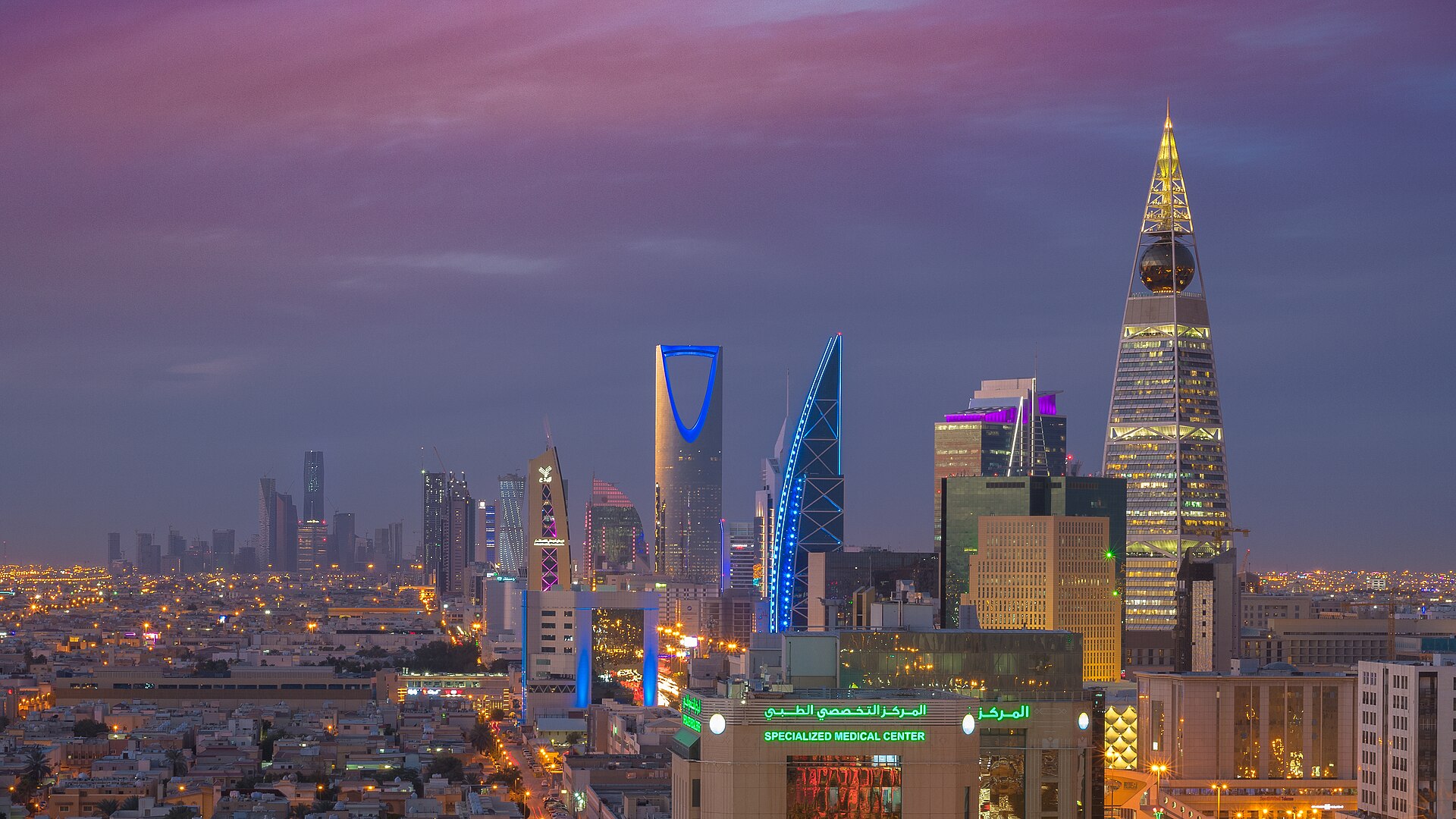
Best Time to Visit for Seniors
This is non-negotiable: visit between November and February. The Saudi climate is extreme, and heat-related illness is the single biggest health risk for older visitors. In July and August, Riyadh regularly hits 43–45 °C. Jeddah is marginally cooler on the thermometer (37–39 °C) but far worse in practice because coastal humidity makes it feel like a sauna. Even fit young adults avoid midday outdoor activity in summer.
Winter is a different country. January highs in Riyadh average 20 °C with cool, dry evenings around 8 °C — perfect for sightseeing. Jeddah sits around 24–26 °C. AlUla, in the northwest, offers crisp desert mornings and pleasant daytime temperatures around 22 °C, which is exactly why its tourist season runs October to March. The mountain areas around Abha and Asir are even cooler, dipping below 10 °C on winter nights.
Heat safety tip: Even in winter, carry a water bottle and wear a hat during midday hours. Dehydration happens faster in Saudi Arabia’s dry air than many travellers expect. If you take blood pressure or heart medication, consult your doctor about heat interactions before travelling.
Month-by-Month Overview for Seniors
| Month | Riyadh High | Jeddah High | AlUla High | Senior Suitability |
|---|---|---|---|---|
| November | 28 °C | 31 °C | 27 °C | Good — warm but manageable |
| December | 22 °C | 28 °C | 21 °C | Excellent — peak season begins |
| January | 20 °C | 26 °C | 19 °C | Excellent — coolest month |
| February | 23 °C | 27 °C | 22 °C | Excellent — still comfortable |
| March | 28 °C | 29 °C | 26 °C | Acceptable — warming up |
| April–May | 33–39 °C | 33–36 °C | 32–37 °C | Risky — limit outdoor time |
| June–September | 42–45 °C | 37–39 °C | 40–42 °C | Not recommended for seniors |
| October | 35 °C | 34 °C | 32 °C | Marginal — late month improves |
Getting There and Getting Around
Airports and Arrival
Saudi Arabia’s major airports — King Khalid in Riyadh, King Abdulaziz in Jeddah, and King Fahd in Dammam — are modern facilities with jet bridges, lifts and wheelchair assistance. Request special assistance when booking your flight and again at check-in. Airlines serving Saudi Arabia (Saudia, Emirates, British Airways, Lufthansa) all offer wheelchair and mobility assistance as standard. Riyadh’s new Terminal 1 opened in recent years and is particularly spacious and well-signposted.
At immigration, there is no formal fast-track lane for seniors, but airport staff will routinely offer assistance if you visibly need it. Luggage trolleys are free at all Saudi airports.
The Haramain High-Speed Train
The Haramain Railway is one of Saudi Arabia’s great travel assets for seniors. The 450 km/h Talgo 350 trains connect Makkah, Madinah, Jeddah and King Abdullah Economic City with smooth, quiet, air-conditioned comfort. Every station has lifts, ramps and wheelchair access. Business Class includes two dedicated wheelchair-accessible seats, and passengers with reduced mobility receive a 50 per cent fare discount with valid documentation.
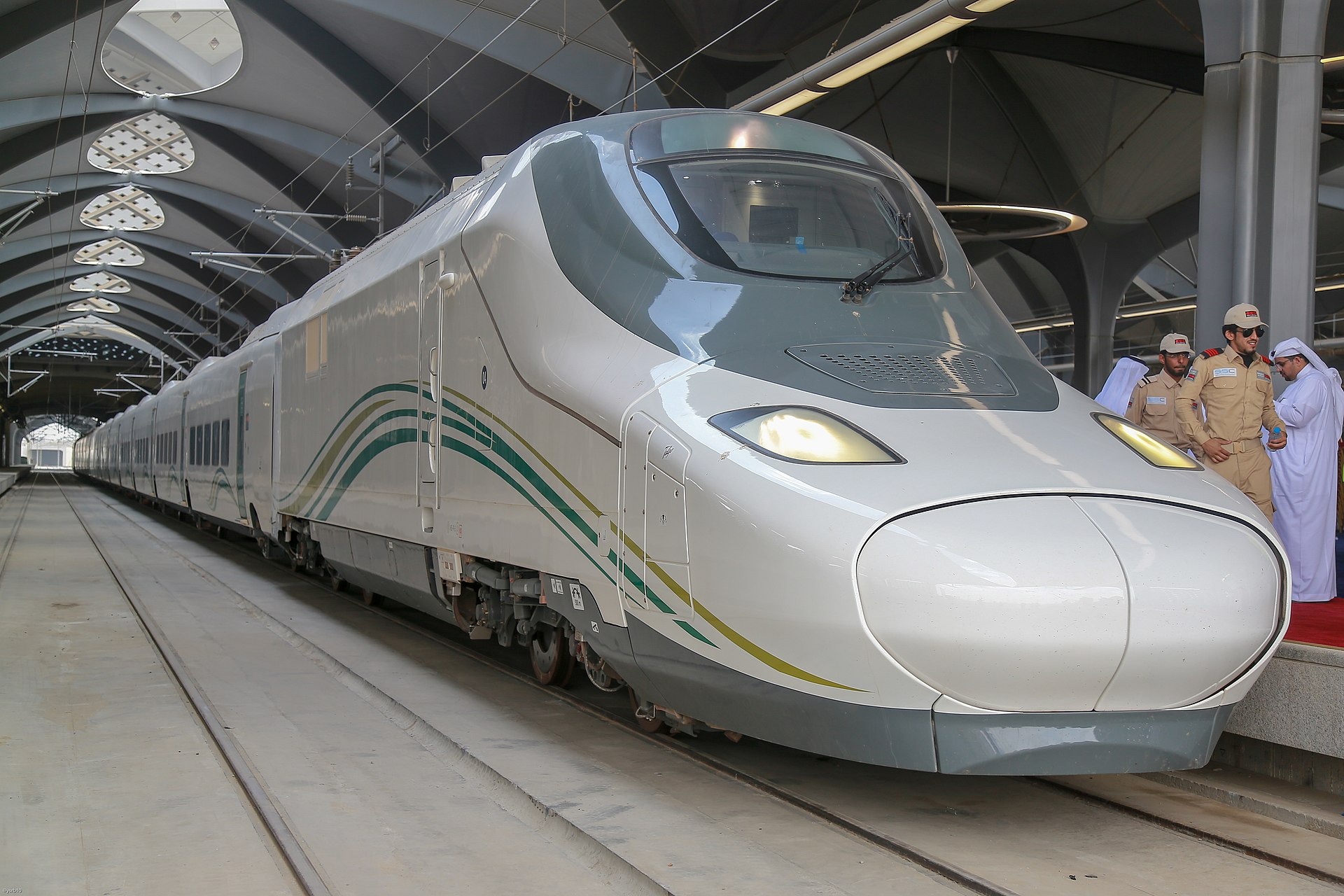
Key accessibility features include priority boarding (you board before other passengers), wheelchair ramps at platform level, accessible restrooms on board, multilingual staff (Arabic, English, Urdu), Braille signage and audio announcements, and medical first aid available at major stations. Book via the SAR (Saudi Railway Company) website or app and select “special assistance” during the booking process.
Taxis and Ride-Hailing
Uber and Careem operate throughout Riyadh, Jeddah, Dammam and most tourist cities. Both apps let you add a note requesting a larger vehicle or extra time for boarding. Careem, which is the regional market leader, also offers a “Careem Plus” SUV option that is easier to climb into than a sedan. Taxis are metered in major cities. Drivers are generally helpful with luggage.
Driving
While renting a car is common among tourists, it is not recommended for most senior travellers. Saudi driving culture is fast and assertive, and intercity distances are vast. If you do drive, stick to major highways (which are excellent) and avoid city centres during rush hour. Speed cameras are everywhere, and fines are steep.
Domestic Flights
Domestic flights are the fastest way to cover large distances. Saudia, flynas and flyadeal all serve the main tourist cities. Business class on Saudia domestic routes offers generous legroom and lounge access. AlUla, for example, is a 90-minute flight from Riyadh — far preferable to a 12-hour drive for anyone with mobility concerns.
Where to Stay: Hotels for Comfort and Accessibility
Saudi Arabia’s hotel sector has expanded enormously. International chains dominate the luxury end, and their global accessibility standards apply in the Kingdom. Here are the best options by city:
Riyadh
- Mandarin Oriental Al Faisaliah: Ground-floor accessible rooms, concierge medical service, executive lounge with complimentary afternoon tea. Central location on King Fahad Road.
- Four Seasons at Kingdom Centre: 274 rooms with panoramic views, multiple restaurants (no need to leave the building), and the iconic Sky Bridge observation deck accessed by lift.
- Ritz-Carlton Riyadh: Sprawling grounds with golf-cart transfers between buildings, dedicated accessible suites, and an on-site medical clinic.
- Shangri-La Jeddah: Waterfront location on the Corniche, flat walking paths outside, accessible rooms with roll-in showers, and proximity to the Red Sea Mall (10-minute flat walk).
- Park Hyatt Jeddah: Marina-front resort with a private beach, pool villas, and a relaxed pace suited to longer stays.
- Banyan Tree AlUla: Tented villas in the Ashar Valley with personal butler service and vehicle transfers to all sites (no walking required between villa and reception).
- Habitas AlUla: Sustainable desert resort with low-rise, ground-level room access.
- The Chedi Hegra: 35 rooms at the base of the Hegra site itself, offering the shortest transfer to the UNESCO tombs.
- Opioid painkillers (codeine, tramadol, morphine)
- Benzodiazepines (diazepam, lorazepam, alprazolam)
- Sleeping pills (zolpidem, zopiclone)
- ADHD medications (methylphenidate, amphetamine-based)
- Certain antidepressants and antipsychotics
- “Unforgettable Saudi Arabia” (Bookmundi/various): A 7-day Jeddah-to-Riyadh tour at a relaxed pace, covering AlUla, Hegra, and the major cities with comfortable hotel stays and transport included.
- “Saudi Arabia, the Desert Jewel” (Bookmundi/various): 9 days from Jeddah to Dammam via Al Hofuf, designed for seniors who appreciate cultural depth. Easy-paced with hotel meals included.
- Intrepid Travel: Offers Saudi Arabia group tours with an adventure consultant who can advise on accessibility and make reasonable adjustments for mobility needs.
- MIR Corporation: Small-group guided tours with experienced local guides, suitable for mature travellers.
- Adventures Abroad: Small-group Saudi tours that emphasise cultural immersion at a comfortable pace.
- Masjid al-Haram (Makkah): Free wheelchair services for Tawaf and Sa’i, smart golf carts that reduce Sa’i duration by 50 per cent, accessible floors reached by lift, and air-conditioned halls. The “Tanaqol” app lets pilgrims reserve electric mobility vehicles in advance.
- Prophet’s Mosque (Madinah): Ramps, lifts, wide prayer spaces and wheelchair assistance. Rawdah visits can be arranged with wheelchair access when slots are available.
- Hajj accessibility: The National Hajj Initiative for Persons with Disabilities provides accessible transport, specialised accommodation, and 24-hour escort support. In 2025, over 520 pilgrims with disabilities performed Hajj rituals through this programme.
- Heat-related illness: The leading health risk. Drink water constantly, even when you do not feel thirsty. Carry oral rehydration salts.
- Road safety: Saudi driving is aggressive by Western standards. Use ride-hailing apps rather than crossing busy roads on foot.
- Uneven surfaces: Historic sites, souks and some pavements have uneven ground. A walking stick is useful in places like Al Balad.
- Altitude: The Asir highlands around Abha sit above 2,000 metres. Seniors with respiratory or heart conditions should be aware of mild altitude effects.
- Edge of the World hike: The viewpoint is accessible by 4×4, but the hiking trail involves scrambling over loose rock. View from the top only.
- Dune bashing: The violent lurching of desert 4×4 driving can aggravate back, neck and joint conditions.
- Long-distance driving: Riyadh to AlUla is 900 km through featureless desert. Fly instead.
- Extreme sports: Skydiving, bungee jumping and canyoning are increasingly popular in Saudi Arabia but carry obvious risks for older participants.
- Summer visits: Repeated for emphasis — do not visit in June, July, August or early September.
- Saudi Arabia Travel Guide 2026 — The complete guide to visiting the Kingdom
- Is Saudi Arabia Safe for Tourists? — Honest security assessment for all travellers
- Best Hospitals in Saudi Arabia — Where to get medical care as a tourist
- Haramain High-Speed Railway Guide — Tickets, stations and accessibility features
- Saudi Arabia Packing List — What to bring and what to leave at home
- Saudi Arabia Visa Guide — Every visa type explained
Jeddah
AlUla
Booking tip: When reserving any hotel in Saudi Arabia, request an accessible room explicitly. Use the “special requests” field to note mobility needs. Five-star properties are reliable; mid-range hotels vary considerably in accessibility.
Health, Medication and Insurance
Bringing Prescription Medication
This is the single most important administrative task for senior travellers. Since 1 November 2025, Saudi Arabia requires advance electronic clearance for controlled medications through the Saudi Food and Drug Authority (SFDA) Controlled Drug System (CDS). This affects common prescriptions including:
The process involves creating a personal account on the SFDA CDS platform, submitting an electronic clearance permit request with your trip details, uploading a doctor’s prescription and medical report, and receiving approval — which can take several weeks. You may bring a maximum 30-day supply or enough for the duration of your stay, whichever is less.
Warning: Saudi Arabia imposes severe penalties for drug offences, including long prison sentences. Do not arrive with controlled substances without a valid CDS permit, even if they are entirely legal in your home country. Begin the application process at least six weeks before departure. Carry a printed copy of your permit alongside the original prescription.
For non-controlled medications (blood pressure pills, statins, diabetes medication, inhalers), no special permit is needed, but carry them in their original pharmacy packaging with a doctor’s letter listing each medication, the dosage and the medical condition. Check the full list of Saudi customs rules before packing.
Travel Insurance
All visitors to Saudi Arabia must hold travel medical insurance. The mandatory policy included with the e-visa covers emergencies up to SAR 100,000 (approximately USD 27,000), but this is insufficient for serious medical events. Senior travellers should purchase supplementary coverage.
Look for policies that specifically cover: pre-existing conditions (many standard policies exclude these for over-65s), medical evacuation (air ambulance to your home country — essential if hospitalised far from a major city), and trip cancellation (seniors are statistically more likely to need this). The GlobeHopper Senior plan, for example, covers up to USD 1 million for travellers under 79 and USD 100,000 for those over 80, with USD 2,500 for sudden recurrence of pre-existing conditions.
Healthcare Facilities
Saudi Arabia’s medical infrastructure is extensive: approximately 500 hospitals nationwide with 78,000 beds. The best hospitals for tourists include King Faisal Specialist Hospital (Riyadh), Dallah Hospital (Riyadh), Saudi German Hospital (multiple cities), Dr Sulaiman Al Habib Medical Group (Riyadh, Jeddah), and International Medical Centre (Jeddah). Most doctors are Western-trained, speak English, and are familiar with treating international patients. Private hospital consultations typically cost SAR 200–500 (USD 53–133).
Accessibility at Major Attractions
Riyadh
The capital is Saudi Arabia’s most accessible city. The National Museum on King Faisal Road is fully wheelchair accessible with lifts between all floors, wide galleries, and benches throughout. The museum’s air conditioning alone makes it a refuge. The adjacent Murabba Palace compound is on flat ground. Day trips from Riyadh to the Edge of the World (Jebel Fihrayn) are spectacular but involve rough terrain — consider a private 4×4 tour with a driver rather than attempting the hike.
The Kingdom Centre Mall and its Sky Bridge are fully accessible by lift. Diriyah, the UNESCO-listed birthplace of the Saudi state currently being restored as a heritage quarter, has new pathways designed for accessibility, though some areas involve uneven ground.
AlUla and Hegra
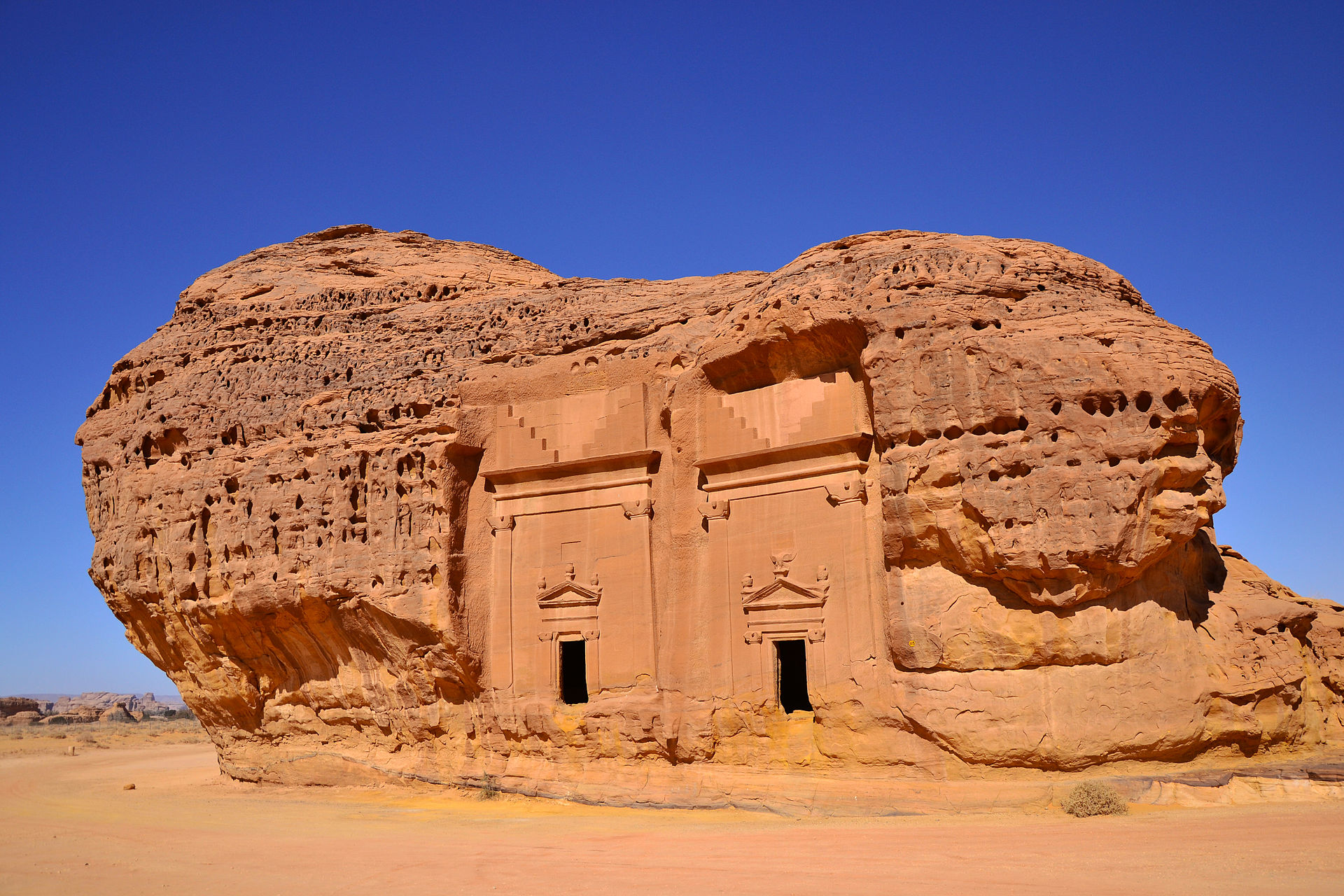
AlUla is arguably Saudi Arabia’s single best destination for senior travellers. The Hegra UNESCO site consists of monumental Nabataean tombs carved into free-standing rock formations on flat desert ground. You view the tombs from a guided bus or vehicle tour — there is no climbing, no stairs, no rough hiking required. The main tombs, including the iconic Qasr al-Farid (the Lonely Castle), are visible from the vehicle or a few metres’ walk on compacted sand.
Other AlUla highlights that work well for seniors include the Dadan archaeological site (viewed from a boardwalk), the AlUla Old Town (partially restored with flat stone paths), and hot air balloon rides over the valley — a seated, zero-effort way to see the landscape. The Maraya concert hall, the world’s largest mirrored building, is fully accessible. Winter evenings at outdoor restaurants in the Ashar Valley are gentle, warm, and spectacular.
Jeddah
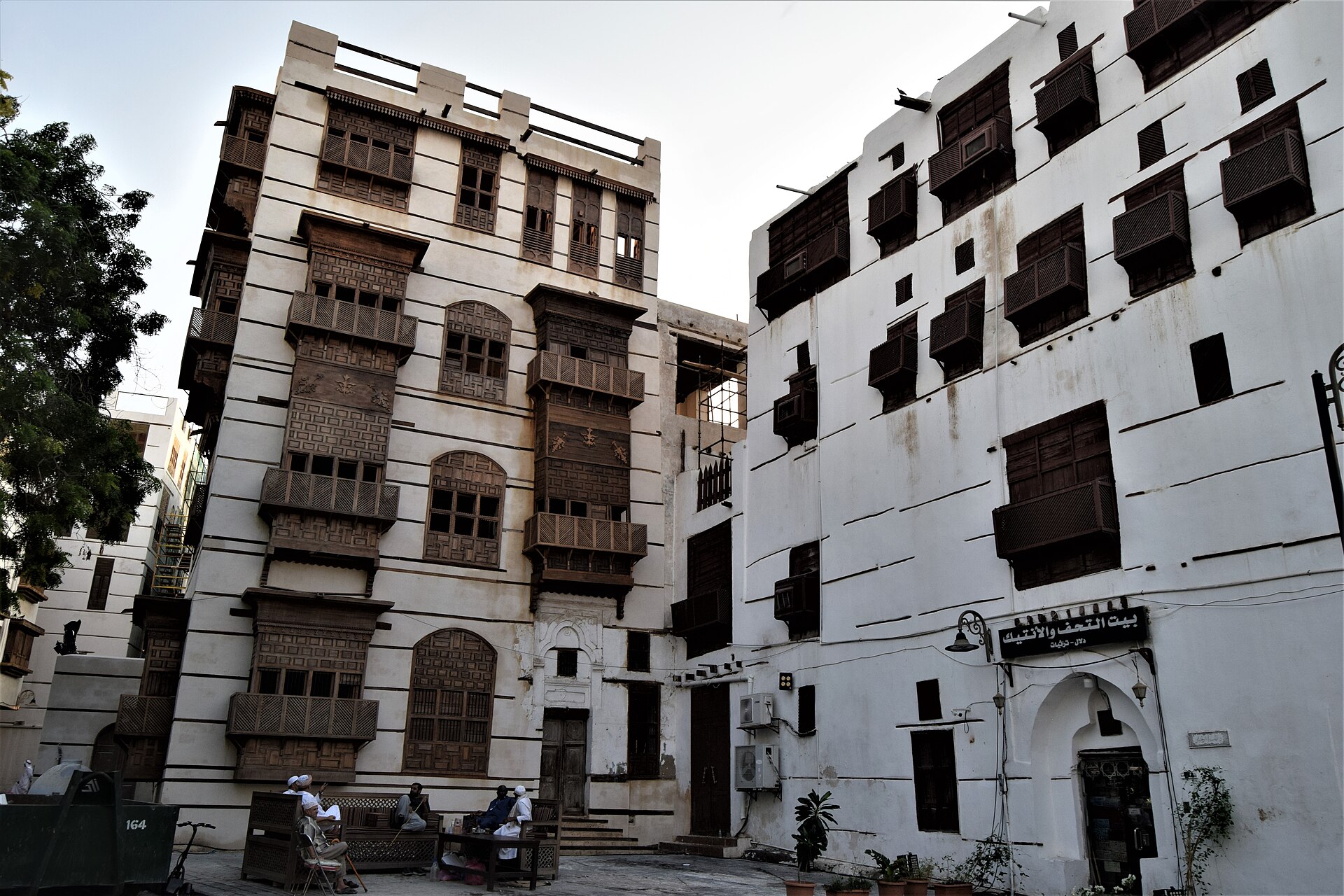
Jeddah offers the Corniche waterfront promenade — a flat, paved, 30 km stretch ideal for evening walks. The Al Balad historic quarter (UNESCO World Heritage Site) is compact enough for a gentle 1–2 hour stroll, though some lanes have uneven surfaces. The Jeddah Waterfront area near the floating mosque and King Fahd Fountain is flat and accessible. The Red Sea International Film Festival in December draws international audiences and is held in fully accessible modern venues.
Eastern Province
Dammam and Al Khobar have a pleasant Corniche and several modern malls. The Ithra cultural centre (King Abdulaziz Center for World Culture) in Dhahran is fully accessible and architecturally stunning. Al Hofuf’s Al Ahsa Oasis, a UNESCO site, can be explored by car with stops at accessible viewpoints.
Senior-Friendly Tours and Itineraries
Several international tour operators now run Saudi Arabia itineraries specifically designed for older travellers:
Private touring: For maximum comfort, hire a private guide and driver through your hotel or a local agency. Expect to pay SAR 1,500–3,000 (USD 400–800) per day for a vehicle, driver and English-speaking guide. This lets you control the pace entirely and skip anything too strenuous.
Suggested 10-Day Senior Itinerary
| Day | Location | Highlights | Pace |
|---|---|---|---|
| 1–2 | Jeddah | Al Balad walking tour, Corniche evening walk, Floating Mosque, Red Sea Mall | Gentle |
| 3 | Jeddah → AlUla | Morning flight (90 min), check in, evening at Ashar Valley restaurants | Easy travel day |
| 4–5 | AlUla | Hegra guided vehicle tour, Dadan boardwalk, Old Town, hot air balloon, Maraya | Gentle |
| 6 | AlUla → Riyadh | Morning flight, afternoon rest, evening at Kingdom Centre Sky Bridge | Easy travel day |
| 7–8 | Riyadh | National Museum, Diriyah, Masmak Fort, souks, evening dining at Boulevard | Gentle |
| 9 | Riyadh day trip | Private 4×4 to Edge of the World viewpoint (vehicle access) or Diriyah Season events | Moderate |
| 10 | Departure | Morning at leisure, airport transfer | Easy |
Practical Tips for Senior Travellers
What to Wear
Saudi Arabia has relaxed its dress code significantly for tourists, but conservative clothing remains appreciated. Men should wear long trousers and shirts with sleeves. Women are no longer required to wear an abaya in public but should cover shoulders and knees. Loose, breathable fabrics in light colours are ideal. Comfortable, supportive walking shoes are essential — sandals on uneven terrain invite falls. Read the full men’s dress code and women’s dress code guides for details.
Food and Dietary Needs
Saudi restaurants are generally accommodating of dietary requirements if you explain them clearly. Pork and alcohol are not available (see the alcohol guide for details). Halal meat is universal. Vegetarian options are widely available in international hotel restaurants and increasingly in local restaurants. If you have specific allergies or take medications that interact with certain foods, carry a card in Arabic explaining your needs — hotel concierges can prepare this for you.
Staying Connected
Purchase a local SIM card or eSIM on arrival. Saudi Arabia has excellent 5G coverage in major cities. WhatsApp and FaceTime calling work normally. The essential apps for Saudi travel include Careem (ride-hailing), Google Maps (works well throughout the Kingdom), and Google Translate (for Arabic signs and menus).
Currency and Payments
The Saudi Riyal (SAR) is pegged to the US dollar at approximately 3.75 SAR per USD. Card payments are accepted almost everywhere in cities. ATMs are ubiquitous. Carry some cash for souks and smaller vendors.
Etiquette
Saudi Arabia’s social norms are more conservative than Western countries, though the gap has narrowed rapidly. Key points for seniors: the weekend is Friday–Saturday (Sunday is a working day); greetings between men and women follow local custom (wait for the other person to extend a hand); and photography at government buildings and military sites is prohibited. Read the full etiquette guide for a comprehensive overview.
Umrah and Hajj for Senior Pilgrims
Many senior travellers visit Saudi Arabia specifically for religious pilgrimage. The Kingdom has invested heavily in accessibility at the Two Holy Mosques:
Senior pilgrims should book with an established Hajj or Umrah package provider that specifically offers elderly support services, including hotel rooms within walking distance (or wheelchair-push distance) of the Haram, dedicated guides, and medical support.
Important: Hajj falls in summer (late May to early June in 2026). The heat in Makkah during Hajj season regularly exceeds 45 °C. Senior pilgrims should carry electrolytes, use the misting stations and shaded corridors provided by Saudi authorities, and avoid outdoor exposure during midday hours. Consult your doctor before undertaking Hajj if you have cardiovascular conditions.
Safety Considerations
Saudi Arabia is a generally safe destination with low crime rates. For seniors, the main safety concerns are:
In an emergency, dial 911 (unified emergency number across Saudi Arabia since the system was rolled out nationally). The Saudi Red Crescent Authority (SRCA) operates ambulance services.
What Senior Travellers Should Skip
Not every Saudi experience suits older travellers. Consider avoiding:
Costs and Budgeting
Saudi Arabia is a mid-range to expensive destination. For seniors seeking comfort, expect:
| Category | Budget | Mid-Range | Luxury |
|---|---|---|---|
| Hotel (per night) | SAR 300–500 (USD 80–133) | SAR 600–1,200 (USD 160–320) | SAR 2,000+ (USD 530+) |
| Meals (per day) | SAR 100–150 (USD 27–40) | SAR 200–400 (USD 53–107) | SAR 500+ (USD 133+) |
| Transport | SAR 50–100 (USD 13–27) | SAR 150–300 (USD 40–80) | SAR 500+ (USD 133+) |
| Attractions | SAR 50–100 (USD 13–27) | SAR 100–250 (USD 27–67) | SAR 300+ (USD 80+) |
| Daily total | SAR 500–850 (USD 133–227) | SAR 1,050–2,150 (USD 280–573) | SAR 3,300+ (USD 880+) |
Tipping is not mandatory but appreciated — SAR 10–20 for hotel porters, 10–15 per cent at sit-down restaurants. Most attractions charge modest entry fees: the National Museum in Riyadh is SAR 10 (about USD 2.70), and Hegra entrance tickets are SAR 95 (about USD 25).