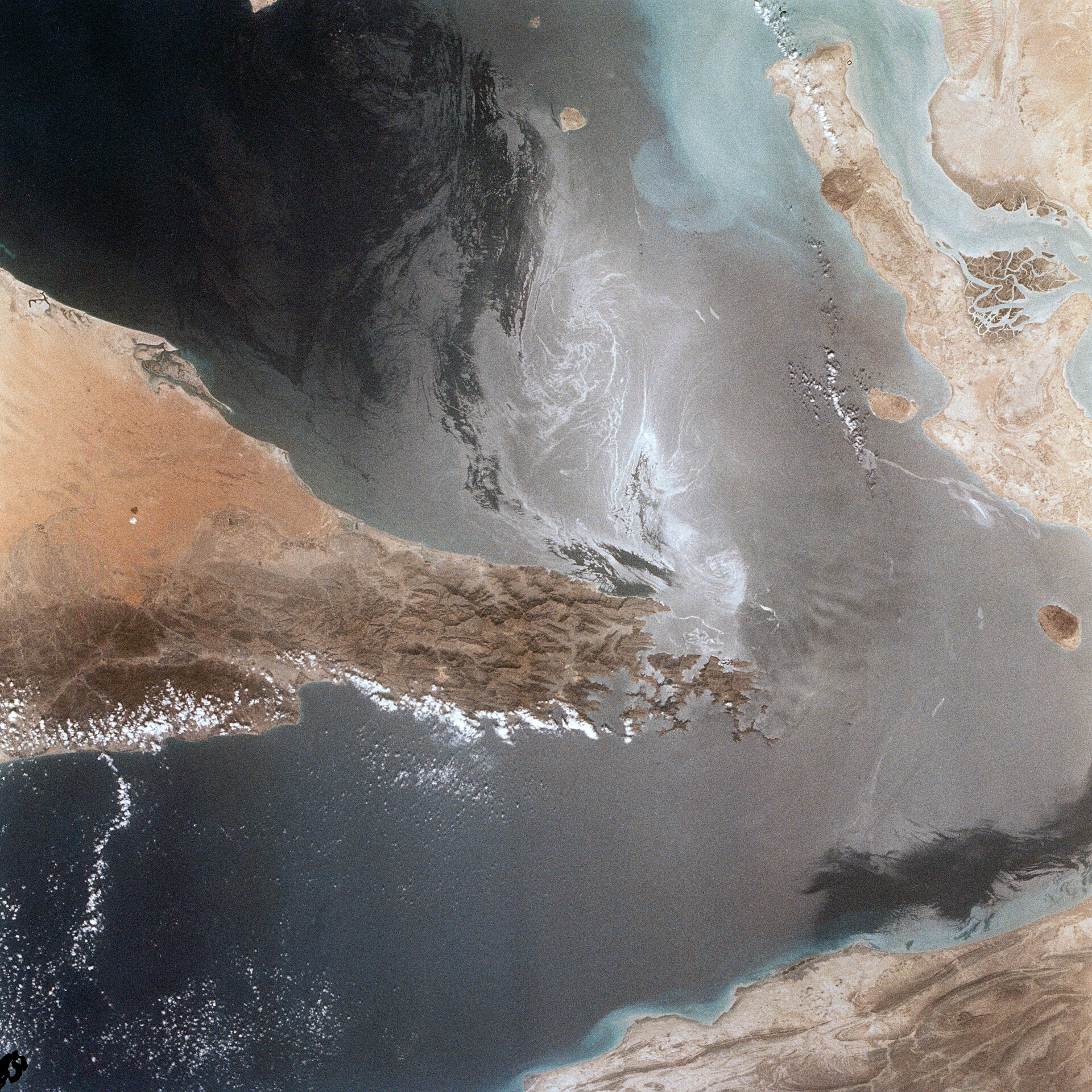
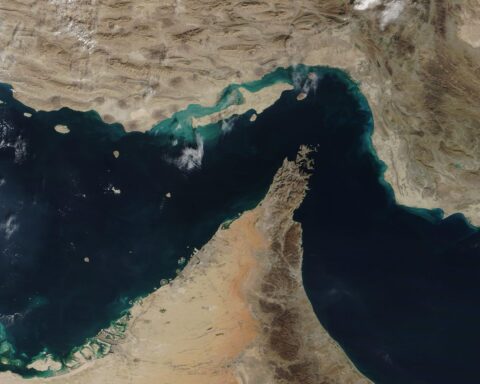
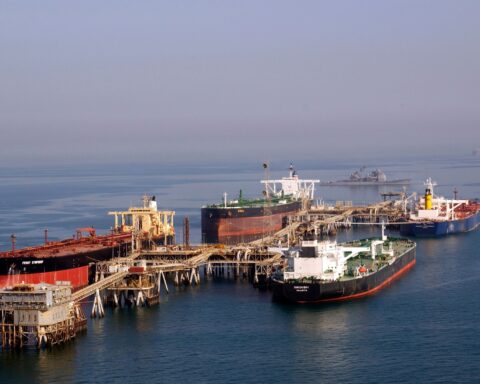
WASHINGTON — President Donald Trump told ABC News on April 8, 2026, that the United States is considering operating the Strait of Hormuz as a US-Iran “joint venture” toll-collection mechanism, a proposal that would formalize Iranian sovereign jurisdiction over the waterway carrying one-fifth of global oil trade. “We’re thinking of doing it as a joint venture,” Trump told ABC’s Jonathan Karl. “It’s a way of securing it — also securing it from lots of other people. It’s a beautiful thing.” The announcement came hours after Iran’s foreign minister confirmed that safe passage through Hormuz would require “coordination with Iran’s Armed Forces,” and as Brent crude suffered its largest single-day decline since the 1991 Gulf War.
The proposal transforms Iran’s unilateral toll regime — $1 per barrel, or roughly $2 million per laden VLCC transit — into a bilateral architecture co-sponsored by the power that has spent four decades defending freedom of navigation through international straits. Saudi Arabia, whose entire eastern export corridor passes through Hormuz, was not consulted. Riyadh’s foreign ministry welcomed the ceasefire and called for Hormuz to be opened but made no mention of tolls or joint ventures, according to Al Jazeera. Oman, which the ceasefire text implicitly assigned a co-toll-collection role, rejected the premise outright.
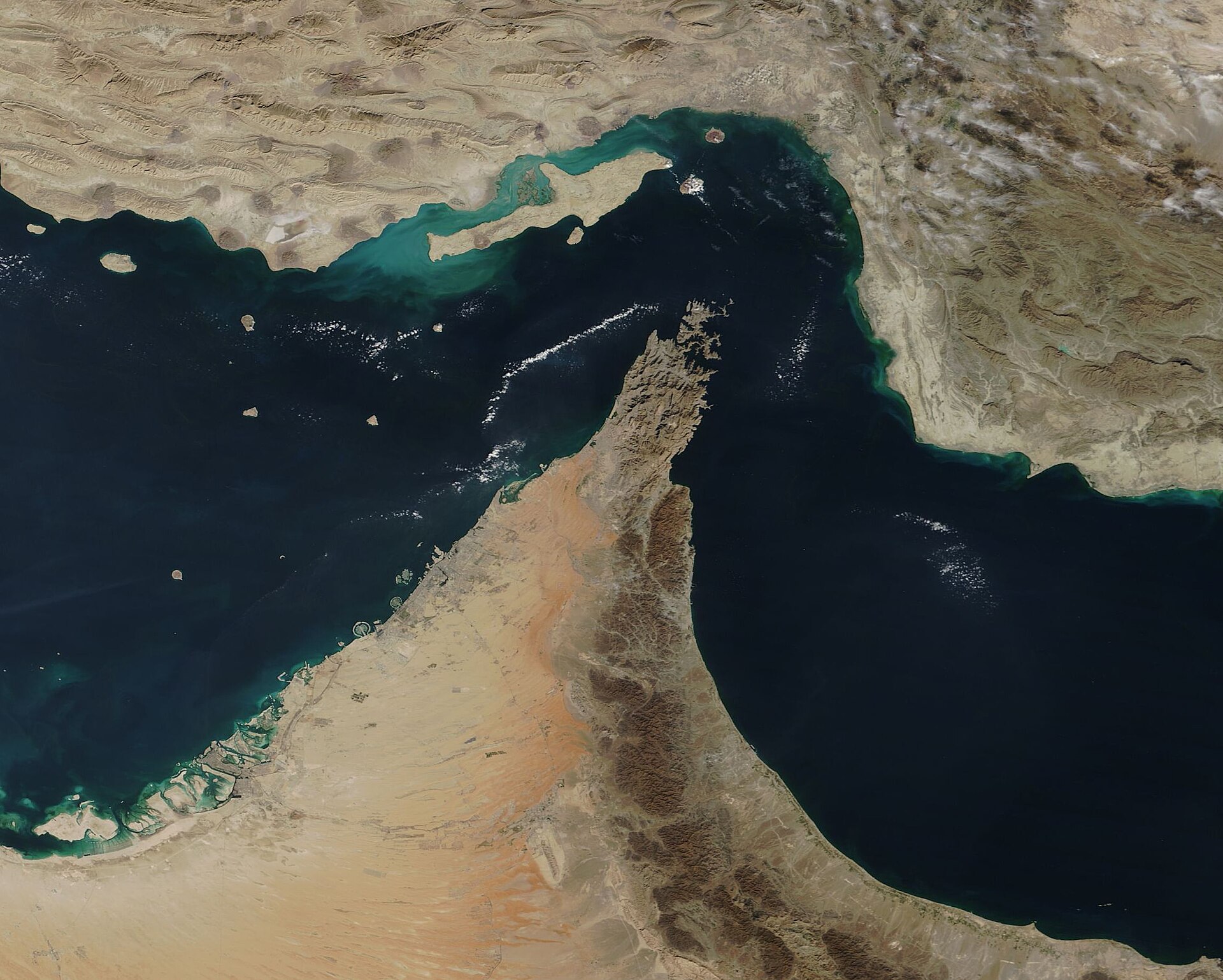
Table of Contents
- What the “Joint Venture” Means in Practice
- How Does Co-Sponsoring a Toll Destroy the US Transit Passage Argument?
- Saudi Arabia Excluded from the Governance Conversation
- What Happens to Asian Buyers Holding Inverted May OSP Contracts?
- Oman’s Refusal Fractures the Gulf Consensus
- Iran’s Revenue Architecture and Sanctions Insulation
- Background: Sound Dues, Montreux, and the Precedent Problem
- Frequently Asked Questions
What the “Joint Venture” Means in Practice
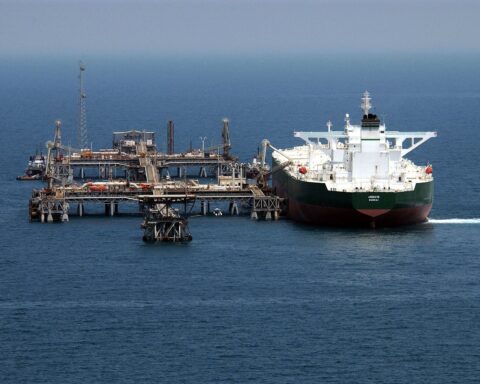
The ceasefire deal terms reported by the Associated Press state that “Iran and Oman will be able to charge ships transiting through the Strait of Hormuz,” treating the waterway as territorial rather than international waters. Iran’s toll structure, first codified in its parliament’s March 31 bill, sets the rate at $1 per barrel. For a standard 2-million-barrel VLCC, that amounts to a $2 million transit fee, according to Fortune. The Philippines has reportedly already paid up to $2 million per ship, establishing the ceiling for what Iran considers “friendly” nation pricing.
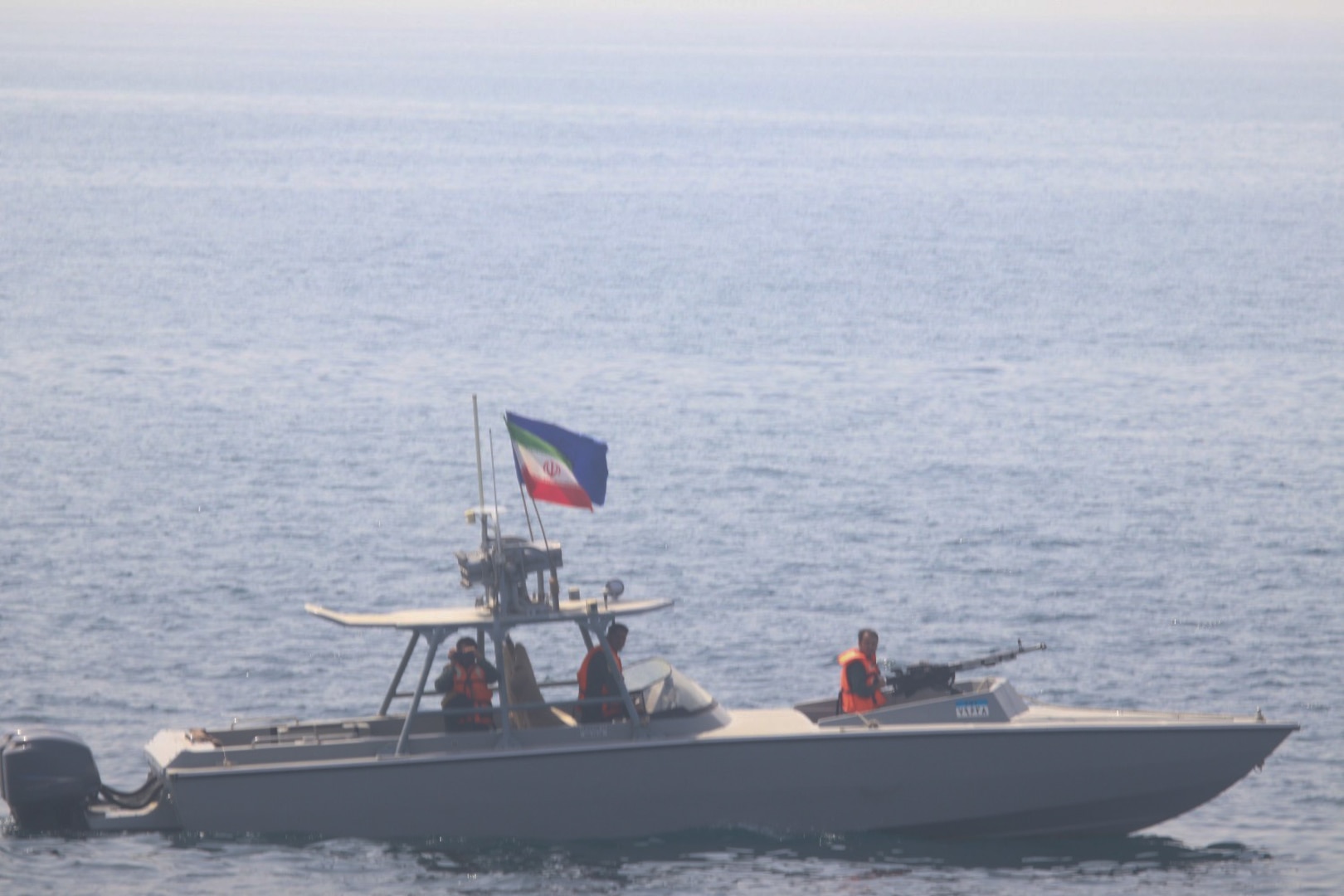
Iran’s Foreign Minister Abbas Araghchi spelled out the operational framework on April 8: “For a period of two weeks, safe passage through the Strait of Hormuz will be possible via coordination with Iran’s Armed Forces and with due consideration of technical limitations,” NBC News reported. This language directly mirrors Point 7 of Iran’s 10-point plan, which conditions passage on “coordination with Iran’s Armed Forces” — the same sovereignty mechanism that Iran’s parliament had already codified in its toll bill. Trump’s “joint venture” proposal does not replace Iran’s military gatekeeping; it ratifies it with American co-branding.
The throughput numbers expose the practical constraint. Pre-war, approximately 130 ships per day transited Hormuz, carrying roughly 20.4 million barrels per day — 20 percent of global oil trade, according to Fortune. Post-ceasefire traffic has recovered to only 15 to 20 ships per 24 hours, roughly 11 to 14 percent of pre-war volume, based on Windward tracking data. The toll does not open the strait; it monetizes the trickle that Iran has already permitted.
How Does Co-Sponsoring a Toll Destroy the US Transit Passage Argument?
UNCLOS Articles 37 through 44 establish that all ships enjoy the right of transit passage through international straits, a right that “shall not be impeded.” Article 26 prohibits coastal states from levying charges on vessels “by reason only of their passage.” By proposing a bilateral toll-collection partnership with Iran, the United States would be endorsing the precise fee structure that its own Freedom of Navigation program exists to prevent.
The Middle East briefing 3,000+ readers start their day with.
One email. Every weekday morning. Free.
Mark P. Nevitt, a retired Commander in the Navy Judge Advocate General’s Corps and Associate Professor of Law at Emory University, wrote in Just Security that “transit passage is afforded to all ships and aircraft that transit the strait, a permissive legal right that ‘shall not be impeded’ — even in times of war.” James Kraska, Professor of International Maritime Law at the US Naval War College, was more direct: “Imposing transit fees is a violation of the rules of transit passage” and “there is no legal basis under international law for a coastal state to charge fees in an international strait.”
The legal problem is structural, not rhetorical. Neither the United States nor Iran has ratified UNCLOS. Iran signed the convention in 1982 but declared that the transit passage provisions were “quid pro quo” treaty bargains that do not constitute customary international law, according to UNCLOSdebate.org. The US has long argued the opposite — that transit passage rights reflect customary international law binding on all states regardless of ratification.
A US-Iran joint venture collecting tolls at Hormuz would constitute American state practice contradicting that position. Once Washington co-sponsors the toll architecture, it cannot simultaneously argue that the architecture violates customary international law.
“Legal correctness and strategic leverage are not the same thing. Iran has correctly diagnosed the Strait’s strategic importance and converted geography into coercive power.”— Mark P. Nevitt, Emory University School of Law, in Just Security
Sanjeet Ruhal, Professor of International Maritime Security Law at the International Maritime Law Institute in Malta, confirmed the legal framework to TRT World: “Iran and Oman retain sovereignty over their respective territorial seas, but that sovereignty is limited by the right of transit passage.” He added: “No charge may be levied upon foreign ships by reason only of their passage.” Iran’s Deputy Foreign Minister Kazem Gharibabadi has preemptively dismissed this framework: “We are now in a state of war, and wartime conditions cannot be governed by peacetime rules.”
Saudi Arabia Excluded from the Governance Conversation
Saudi Arabia is not a party to the ceasefire text. It was excluded from the April 10 Islamabad bilateral negotiations where the toll framework was shaped. The kingdom’s foreign ministry response, as reported by Al Jazeera, welcomed the ceasefire and called for “an end to attacks on countries in the region” while urging Hormuz to be opened — but said nothing about tolls, the joint venture proposal, or Saudi Arabia’s role in any Hormuz governance structure.
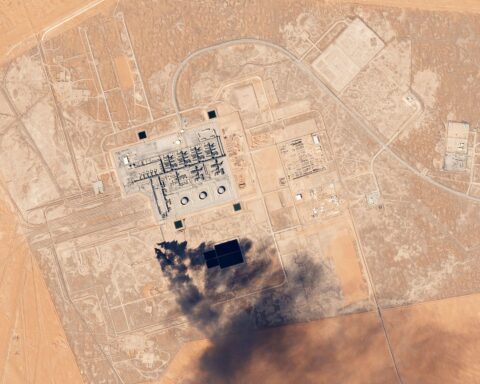
This silence is not ambiguity. Every barrel of Saudi crude exported from Ras Tanura, Ju’aymah, or any other Eastern Province terminal must transit the strait that Iran now claims to govern “in coordination with” its armed forces. Saudi Arabia’s entire eastern export infrastructure — the terminals that carry the majority of Aramco’s output — now operates under a toll regime that Riyadh had no role in designing and no mechanism to contest. The Washington Times reported that Trump did not consult Oman before announcing the joint venture, despite the ceasefire text implicitly assigning Muscat a co-toll-collection role. Saudi Arabia received even less consideration.
The exclusion compounds the legal exposure. In Phase 2 negotiations — where Hormuz governance is supposed to be permanently resolved — Saudi Arabia needs to argue that transit passage is a settled right under customary international law. That argument requires a great-power ally willing to defend the legal principle. If the United States has already co-sponsored a toll regime with Iran, Riyadh loses the only naval power capable of enforcing the transit passage framework that 3,200 ships and 20,000 seafarers currently trapped in Gulf waters depend on.
Bloomberg reported on April 5 that European and Asian officials said the conflict “has eroded faith in the US role as protector of the high seas,” describing it as a “break with decades of US policy keeping open the sea lanes that carry four-fifths of the $35 trillion global goods trade.” Trump’s joint venture proposal converts that erosion from a perception into a contractual arrangement.
What Happens to Asian Buyers Holding Inverted May OSP Contracts?
Asian refiners face a compounding cost structure with no historical precedent. Saudi Aramco set its May Official Selling Price at +$19.50 per barrel above Oman/Dubai — the highest premium since February 2010, according to Nikkei Asia. Brent crude on April 8 fell to approximately $91 to $94 per barrel, putting the May OSP roughly $11 to $14 per barrel above spot. Buyers locked into May lifting schedules are already absorbing that inversion. The $1-per-barrel Hormuz toll adds a second cost layer on top of an already historic premium.
Paul Donovan, Chief Economist at UBS, told Fortune that “the numbers imply around a dollar a barrel being added to oil costs via that route, which is economically negligible.” That framing applies to the aggregate world oil price impact. For an Indian refiner — IOC, BPCL, or HPCL — lifting a May cargo of Arab Light at $19.50 above benchmark, into a spot market that has collapsed $15 to $18 below the OSP reference price, the additional $1 per barrel toll is not negligible. It is the third layer of a compound cost shock that makes every alternative crude grade more attractive. The June OSP repricing crisis is due around May 5.
Guntram B. Wolff, Senior Fellow at Bruegel, modeled the toll’s incidence and found that “90 percent of the tax is paid by the Gulf exporters and only 10 percent by world consumers.” At $1 to $2 per barrel, annual toll costs to Gulf states would total $6 billion to $14 billion, according to Bruegel’s estimates. That burden falls disproportionately on Saudi Arabia, which accounts for the largest share of Hormuz-transiting crude, and on its Asian buyers, who are contractually obligated to lift cargoes at prices set when Brent was $109.
Oman’s Refusal Fractures the Gulf Consensus
Oman’s Transport Minister Saeed bin Hamoud bin Saeed Al Maawali rejected the toll framework categorically on April 8: “No tolls can be imposed for crossing Hormuz.” Oman cited binding international agreements guaranteeing no transit fees, according to NewsX and TRT World. The statement is significant because the ceasefire text assigns Oman a co-toll-collection role alongside Iran — a role Muscat neither negotiated nor accepted.
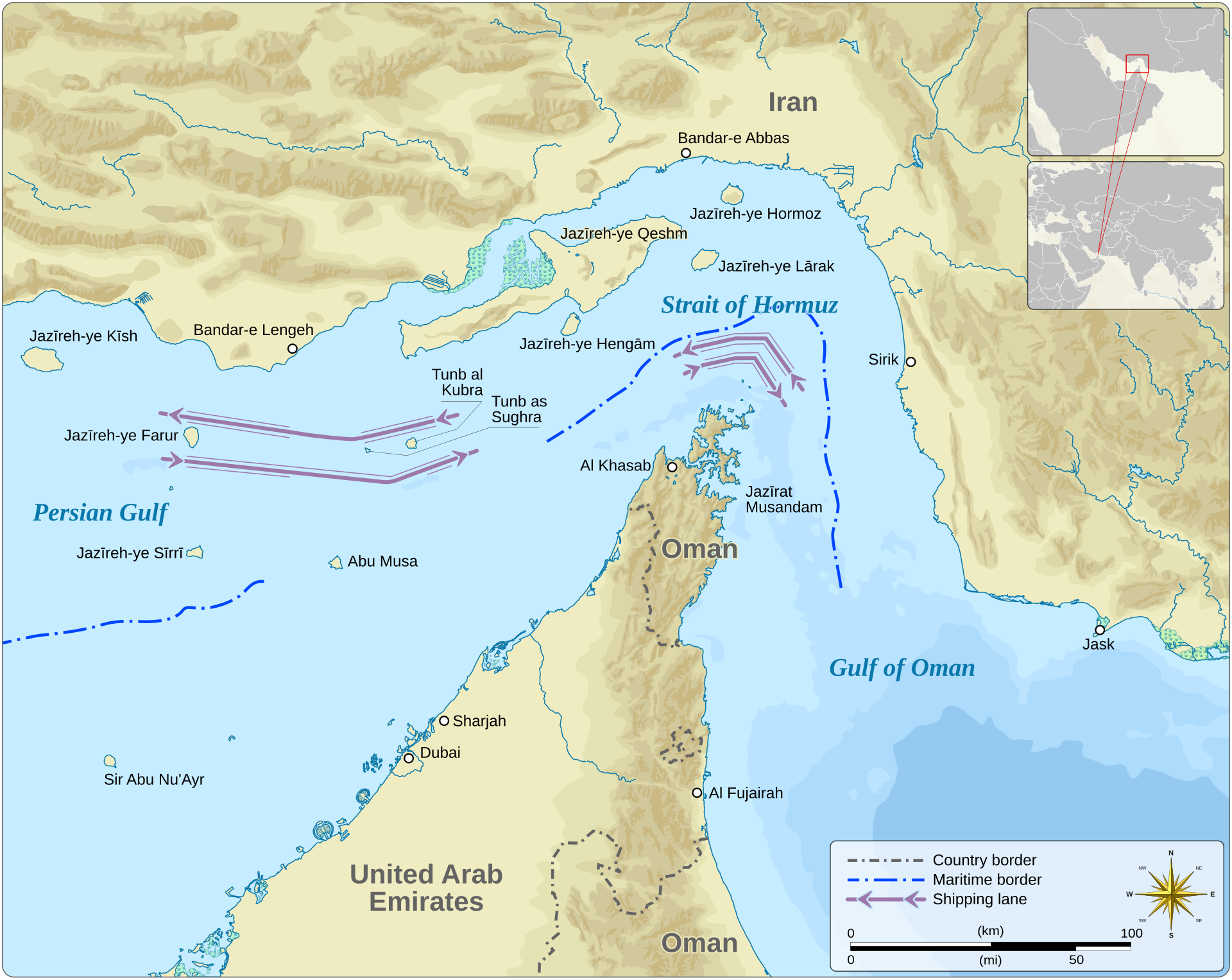
The Omani refusal creates a governance contradiction at the center of the joint venture proposal. The strait’s navigable shipping lanes pass through both Iranian and Omani territorial waters. A toll regime that Iran enforces unilaterally on its side of the strait while Oman refuses to participate on its side produces an asymmetric chokepoint — ships could theoretically route through Omani waters to avoid the Iranian toll, but the navigational geography of the strait makes this impractical for laden VLCCs. Iran’s armed forces, not legal agreements, determine which ships pass. Saudi Arabia asked for an open Hormuz; Iran gave it a conditional one.
Oman’s position also exposes Trump’s failure to coordinate with Gulf allies before announcing the joint venture. The Washington Times reported that the White House did not consult Muscat before the proposal. Oman, which has maintained a carefully balanced relationship with both Iran and the GCC throughout the conflict, now finds itself publicly rejecting a framework that the United States and Iran are jointly promoting — a diplomatic position Muscat has historically avoided.
Iran’s Revenue Architecture and Sanctions Insulation
The toll’s financial significance for Iran extends well beyond the per-barrel arithmetic. Amir Handjani of the Quincy Institute for Responsible Statecraft calculated in Foreign Policy that “even a modest transit fee of $500,000 per vessel…would generate more than $1.5 billion per month.” At $1 million per vessel and 130 ships per day — the pre-war throughput — potential monthly revenue approaches $3.9 billion. The revenue scales automatically as traffic recovers.
Reza Khanzadeh, Professor of Middle East Politics at George Mason University, told TRT World that Iran is “attempting to create a new revenue stream, given the extent of sanctions and the cost of this war.” The revenue architecture is designed to survive sanctions enforcement. CoinDesk reported on April 8 that Iran is accepting toll payments in Chinese yuan via Kunlun Bank — which operates outside the SWIFT system — as well as in bitcoin and USDT on the Tron network. This payment infrastructure insulates toll revenue from the same US sanctions regime that Washington would nominally be co-administering through the joint venture.
Iran’s state media has framed the entire ceasefire as a strategic victory. Tasnim News Agency listed “10 signs of Iran’s great victory,” including the claim that “there is no trace of [missile capability limits] in the 10-point plan that Trump was forced to accept,” according to NBC News. The toll mechanism is central to that victory narrative: Iran has converted a 35-day military conflict into a permanent revenue extraction mechanism endorsed by the adversary that initiated the strikes. Every point in Iran’s 10-point plan poses a direct threat to Saudi Arabia’s security architecture.
Background: Sound Dues, Montreux, and the Precedent Problem
Trump’s “joint venture” proposal has no direct precedent in international maritime law, but two historical parallels illuminate its implications. Denmark collected Sound Dues on ships transiting the Danish Straits from 1429 until 1857, at their peak generating two-thirds of Danish state income. The 1857 Copenhagen Convention abolished the dues permanently; Denmark received 33.5 million rigsdalers in one-time compensation from 12 European maritime powers, according to records of the convention. The abolition was multilaterally negotiated with all affected parties — not structured as a bilateral arrangement between the toll-collecting state and a single great power.
The Montreux Convention of 1936 governs Turkey’s toll authority over the Bosphorus and Dardanelles under a pre-UNCLOS framework negotiated over 17 years with multilateral participation. Nevitt wrote in Just Security: “There is no ‘Strait of Hormuz Convention,’ and Iran cannot conjure one through unilateral assertion.” Trump’s joint venture would effectively create a Hormuz Convention through executive action — bypassing the multilateral negotiation that both the Sound Dues abolition and the Montreux framework required.
The Suez Canal comparison, which several commentators have invoked, is inapposite. Egypt collects more than $9 billion annually in Suez transit fees, but the canal is unambiguously Egyptian sovereign territory under the 1888 Constantinople Convention. Hormuz involves competing territorial sea boundaries that remain disputed, and transit passage rights are codified under a framework that — while Iran rejects its applicability — the majority of maritime states recognize as binding customary international law.
Frequently Asked Questions
What is the legal difference between Hormuz tolls and Suez Canal fees?
The Suez Canal is an artificial waterway built entirely within Egyptian sovereign territory, governed by the 1888 Constantinople Convention that explicitly grants Egypt the right to collect transit fees while maintaining open passage. The Strait of Hormuz is a natural international strait where UNCLOS Articles 37 through 44 establish transit passage as a right that “shall not be impeded.” Article 26 specifically prohibits coastal states from levying charges on foreign vessels “by reason only of their passage.” Egypt’s fee authority has a treaty basis; Iran’s does not. The joint venture proposal attempts to create a treaty-equivalent through bilateral executive action rather than multilateral negotiation.
Could Saudi Arabia route exports around the Strait of Hormuz entirely?
Saudi Arabia’s East-West Pipeline to Yanbu on the Red Sea has a nameplate capacity of approximately 7 million barrels per day, but effective throughput is constrained by the IRGC strike on a pumping station on April 8 and prior damage to the SAMREF Yanbu refinery on April 3. Pre-war Saudi exports totaled roughly 7.3 million barrels per day, meaning the Yanbu bypass could theoretically handle 80 to 85 percent of volume at full capacity — but the pipeline is not at full capacity, and Bab el-Mandeb, the chokepoint at the southern end of the Red Sea, presents its own security vulnerabilities. Iran’s Jask terminal on the Gulf of Oman, which bypasses Hormuz from the Iranian side, operates at only 0.3 million barrels per day against a 1.0 million barrel per day design capacity, according to Kpler data.
How much revenue could Iran generate from Hormuz tolls at full pre-war throughput?
At $1 per barrel and pre-war throughput of approximately 20.4 million barrels per day, daily toll revenue would reach $20.4 million, or roughly $7.4 billion annually. At the $2 million per vessel rate reportedly charged to the Philippines and 130 ships per day, annual revenue would approach $95 billion — exceeding Iran’s entire pre-war oil export revenue. The actual figure will fall between these extremes depending on vessel size, cargo type, and the bilateral rate negotiations Iran conducts with individual flag states. Handjani’s Quincy Institute estimate of $1.5 billion to $3.9 billion per month assumes a per-vessel fee rather than a per-barrel fee.
Has any country legally challenged Iran’s toll authority?
No state has filed a formal legal challenge as of April 8. UNCLOS provides for dispute resolution through the International Tribunal for the Law of the Sea (ITLOS), but Iran has never ratified UNCLOS and does not recognize ITLOS jurisdiction. The United States, also a non-ratifier, lacks standing to bring an UNCLOS claim. A challenge could theoretically be brought before the International Court of Justice under customary international law, but ICJ jurisdiction requires consent of both parties. Oman’s public rejection of the toll framework is the strongest official objection to date, but it is a political statement rather than a legal filing.
What is the OPEC+ production impact of the toll regime?
OPEC+ agreed to increase output by 206,000 barrels per day starting in May, a decision made before the toll regime was formalized. The toll creates an asymmetric burden within the cartel: Saudi Arabia, Kuwait, the UAE, and Iraq — whose exports transit Hormuz — absorb the full cost, while non-Hormuz OPEC+ members like Libya, Algeria, and Nigeria face no toll burden. This intra-cartel cost disparity may complicate the June OPEC+ meeting, where Gulf producers could argue that toll costs should be reflected in quota adjustments or compensated through production allocation changes.