DHAHRAN — Saudi Arabia asked for the Strait of Hormuz to be opened, and Iran obliged — by installing a tollbooth. The ceasefire text that Riyadh “welcomed” on April 8 does not contain the word “open,” does not guarantee free passage, and formalizes a $2 million-per-tanker fee collected jointly by Iran and Oman that could generate $500 billion over five years, funding Iranian reconstruction with revenue extracted from the very shipping lanes Saudi Arabia’s economy depends on.
The Saudi Foreign Ministry’s statement called for Hormuz to be “opened.” It said nothing about tolls. It said nothing about the fee regime that Iran’s parliament had already legislated on March 31, before any ceasefire existed, and which the Associated Press confirmed would funnel Iran’s share directly into postwar reconstruction. In that single word — “opened” — Riyadh endorsed an outcome that converts a wartime blockade into a permanent revenue mechanism, launders IRGC control through Omani diplomatic cover, and gives Tehran a structural incentive never to dismantle the apparatus. A closed strait creates international pressure and a clear reopening trigger. A tolled strait generates a global shrug and an IRGC reconstruction fund running on shipping receipts.
Table of Contents
- What Does the Ceasefire Text Actually Say About Hormuz?
- The Toll Architecture Iran Built Before the Ceasefire
- Why Does Oman’s Co-Collection Make the Toll Permanent?
- The Legal Fiction: Extortion Dressed as Service
- How Does the Toll Trap Saudi Arabia on Pricing?
- The Sound Dues Precedent: 428 Years of Strait Tolls
- Day One: 15 Ships Through a 138-Ship Strait
- Trump’s Joint Venture Trial Balloon
- What Riyadh Actually Endorsed
- Frequently Asked Questions
What Does the Ceasefire Text Actually Say About Hormuz?
The language is precise and the precision is the problem. Abbas Araghchi’s Supreme National Security Council statement, reported by the Washington Examiner on April 8, reads: “For a period of two weeks, safe passage through the Strait of Hormuz will be possible via coordination with Iran’s Armed Forces and with due consideration of technical limitations.” That sentence does not promise free passage. It promises “coordination” — which means permission, which means a gate, which means whoever controls the gate sets the price.
The AP, via a regional official involved in negotiations, confirmed what “coordination” means in practice: the ceasefire plan “allows for Iran and Oman to charge fees on ships transiting through the water passageway,” and Iran’s share “would be used for the reconstruction of the country.” That sentence should have detonated in every foreign ministry in the Gulf. Reconstruction revenue extracted from the strait that Iran closed by force, collected under the diplomatic umbrella of a ceasefire that the victims of Iran’s missile campaign are being asked to celebrate as progress.
The UAE and Qatar grasped what Saudi Arabia apparently did not. Both called for “free and open navigation” and argued that “financial mechanisms” discussions should be deferred — a polite way of saying the toll should not exist. Riyadh’s statement contained neither phrase. It asked for “opened.” Iran gave it “opened.” The distinction between opened and free is not semantic. It is worth, by one estimate, $500 billion.
The Toll Architecture Iran Built Before the Ceasefire
Iran did not improvise this. On March 31 — eight days before the ceasefire — Iran’s parliament approved the “Strait of Hormuz Management Plan,” a legislative framework that bans US and Israeli vessels entirely, mandates Omani cooperation, and establishes what it calls a “regional development fund.” The fee is structured across four categories: shipping security, pollution charges, “guidance services,” and the development fund. Each category is designed to satisfy a specific clause of international maritime law, and the entire architecture was in place before any ceasefire negotiator sat down.
The Middle East briefing 3,000+ readers start their day with.
One email. Every weekday morning. Free.
The operational mechanism, as Bloomberg reported on April 1, works like this: $2 million per VLCC, equivalent to roughly $1 per barrel, payable in Chinese yuan through Kunlun Bank or in USDT stablecoins on the Tron blockchain — both channels that bypass SWIFT entirely. The IRGC Navy’s Hormozgan Provincial Command operates a transit corridor around Larak Island. Clearance arrives as a passcode transmitted over VHF radio. At least two vessels had paid in yuan by April 1, a week before the ceasefire formalized the arrangement. On April 9, the IRGC published a navigational chart formally marking the standard Traffic Separation Scheme lanes as a “danger zone”, confirming that the mine placements underlying Hormuz’s closure remain in place and that the Larak corridor is not a temporary wartime measure.
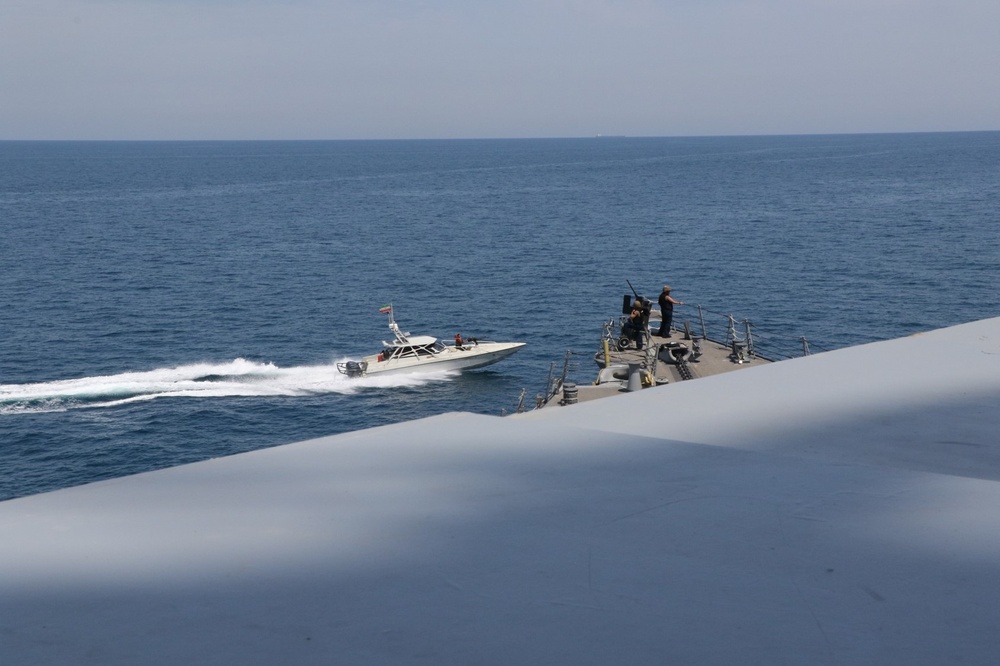
Iranian Deputy Foreign Minister Kazem Gharibabadi was explicit about what the protocol means. “We are drafting a protocol for Iran and Oman to supervise transit in the Strait of Hormuz,” he told TRT World on April 4. And then the line that strips away any ambiguity about Tehran’s intentions: “We are now in a state of war, and wartime conditions cannot be governed by peacetime rules.” The ceasefire, in other words, does not end wartime conditions. It institutionalizes them.
Why Does Oman’s Co-Collection Make the Toll Permanent?
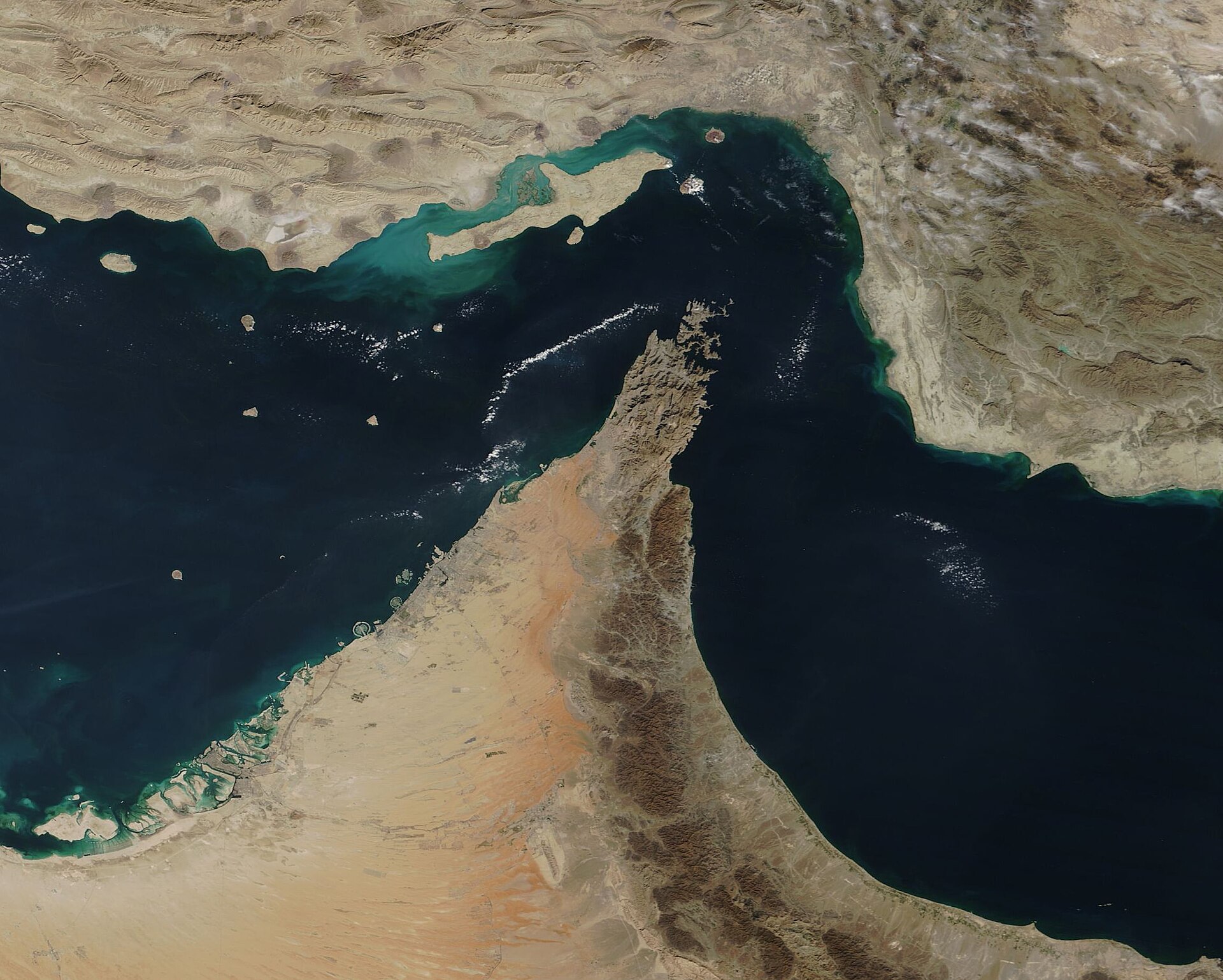
The geography is the lock. The Strait of Hormuz has no high-seas corridor — the navigable shipping lanes pass through both Iranian and Omani territorial waters, and a vessel cannot bypass Iranian jurisdiction by hugging the Omani coast. This is not a technicality. It means that any toll regime requires either Omani consent or Omani resistance, and Oman has chosen consent. When Gharibabadi says “Iran and Oman to supervise transit,” he is describing a two-key mechanism in which both parties must cooperate for ships to pass, and both parties collect revenue for allowing it.
Oman’s public framing has been carefully scrubbed of financial language. Muscat described its role as ensuring “smooth flow of traffic” — not fee collection, not revenue sharing. But the AP’s sourcing is unambiguous: Iran and Oman charge fees jointly. Oman converts what would otherwise be a unilateral Iranian seizure — subject to international condemnation, possible military response, and coalition pressure — into a bilateral arrangement with a respectable Gulf state attached. The diplomatic cover is the product.
“Iran will likely control the waterway. The question is whether diplomats find a way of making that workable.”— Amir Handjani, Quincy Institute / Foreign Policy, April 7, 2026
Handjani, writing in Foreign Policy, characterized the toll as potentially “the most consequential piece of postwar economic statecraft the Middle East has seen since Nasser nationalized Suez in 1956.” That comparison is instructive. Nasser’s nationalization of the Suez Canal in 1956 triggered a military invasion by Britain, France, and Israel within four months. Iran’s monetization of Hormuz has triggered a ceasefire in which the tolled parties congratulate Iran on “opening” the strait. The difference is not in the scale of the act but in the appetite for response.
The Legal Fiction: Extortion Dressed as Service
Iran’s parliamentary bill is a piece of legal engineering that deserves to be examined on its own terms, because the craftsmanship reveals the strategy. The four-category fee structure — shipping security, pollution charges, guidance services, development fund — is a deliberate attempt to satisfy UNCLOS Article 26, which prohibits charges on vessels “by reason only of their passage” but permits fees for “specific services rendered to the ship.” Iran is arguing, in effect, that it created a security threat in the strait and is now charging vessels for protection from that threat.
Mark Nevitt, a retired US Navy Commander and Associate Professor of Law at Emory University, dismantled this argument in Just Security: “Charges may be levied only as payment for specific services rendered to the transiting vessel, applied without discrimination. Tehran’s fee is neither linked to any service nor applied without discrimination — it is a selective toll imposed for purely coercive purposes.” The fee fails both UNCLOS tests. It is not linked to a service the vessel requested. And it is selectively applied — US and Israeli vessels are banned entirely, not charged, which means the fee discriminates by flag state.
Sanjeet Ruhal of the International Maritime Law Institute in Malta reinforced the point: Iran and Oman “may adopt limited laws on safety, navigation, pollution, and sea lanes, but they may not convert the strait into a permission-based corridor.” But Ruhal’s legal precision collides with Nevitt’s strategic candor. “Legal correctness and strategic leverage are not the same thing,” Nevitt wrote. Iran signed UNCLOS in 1982 but never ratified it, claiming “persistent objector” status to the transit passage regime. No international tribunal has ruled on this claim. The US and Israel have not ratified UNCLOS either, which makes any American legal challenge to Iran’s toll regime an exercise in demanding compliance with a treaty Washington itself refuses to join.
| Iran’s Claimed Service | UNCLOS Article 26 Test | Assessment |
|---|---|---|
| Shipping security | Must be a service rendered to the vessel | Iran created the threat it claims to protect against |
| Pollution charges | Must be non-discriminatory | US/Israeli vessels banned entirely, not charged |
| Guidance services | Must be requested by the vessel | Imposed unilaterally via IRGC corridor |
| Development fund | No UNCLOS basis for strait-based development levies | Revenue channel for Iranian reconstruction |
Reza Khanzadeh of George Mason University offered the most clear-eyed assessment of why legality is beside the point: “If the only way to ensure passage is by paying a toll rather than engaging in military action, many companies may choose the former.” The toll survives not because it is legal but because challenging it requires military force that no state is willing to deploy against a mechanism framed as a ceasefire achievement.
How Does the Toll Trap Saudi Arabia on Pricing?
Saudi Arabia exported 5.5 million barrels per day through Hormuz before the war — 38% of total strait crude flows. Those barrels are now banned from the IRGC corridor entirely. Saudi-bound vessels do not pay the toll; they are excluded from transit altogether. Riyadh’s response has been to reroute through the East-West Pipeline to Yanbu on the Red Sea, where the IRGC struck a pumping station on April 8, and where 47 VLCC loadings in March represented four times the pre-war monthly average of 11-12.
But the bypass creates a pricing trap that compounds the toll’s damage. Aramco’s May Official Selling Price was set at +$19.50 per barrel above the Oman/Dubai benchmark when Brent stood at $109. WTI has since crashed toward $92, leaving the May OSP $11-14 per barrel above spot — an inversion that gives Asian buyers like India’s IOC, BPCL, and HPCL a $6 to $6.5 per barrel incentive to buy from anyone other than Aramco. Iraqi crude, some UAE cargoes, and Kuwaiti barrels that can transit the tolled Hormuz at $1 per barrel gain a structural pricing advantage over Saudi crude routed through the Red Sea at pipeline-constrained capacity. The pricing trap deepened on April 9 when Iran blocked Cosco-linked tankers at Larak Island even as the ceasefire held on other fronts — proof that the ceasefire and the strait are two separate negotiations running on two separate timelines, with separate leverage and separate price tags.
The toll, in other words, does not need to apply to Saudi vessels to damage Saudi revenue. It applies to Saudi competitors at $1 per barrel while Saudi Arabia pays the full cost of a pipeline bypass that cannot match Hormuz capacity. Pre-war, 138 ships transited the strait daily. Yanbu, even at quadruple its peacetime loading rate, handles a fraction of that throughput. The Bruegel think tank found that Gulf states absorb 85-90% of toll costs, with global oil prices rising only $0.05-0.40 per barrel — meaning the toll’s burden falls almost entirely on producers, not consumers, which eliminates the global price shock that might generate international pressure to abolish it.
The Sound Dues Precedent: 428 Years of Strait Tolls
There is one historical parallel that matters, and it is not encouraging. Denmark charged vessels transiting the Øresund — the strait between Denmark and Sweden — for 428 years, from 1429 to 1857. At its peak, the Sound Dues generated two-thirds of Danish state income. The toll was abolished only when the United States led a multilateral buyout under the Copenhagen Convention of 1857, paying Denmark 33.5 million rigsdalers to relinquish the right permanently. The toll survived not because it was legal under any recognizable framework but because no coalition had sufficient incentive to organize its abolition until the cost of maintaining it exceeded the cost of buying it out.
No equivalent coalition exists for Hormuz in 2026. The US, which led the Sound Dues abolition, has a president who publicly floated joining the toll regime as a “joint venture.” China, which brokered the first yuan-denominated toll payments, has 8 million tonnes per annum of contracted LNG offtake from Qatar’s North Field and a 5% equity stake in North Field East — structural motivations to keep the corridor functional, not free. Russia benefits from any mechanism that raises transit costs for Gulf crude competing with Russian barrels in Asian markets. The three powers that could abolish the toll each have reasons to preserve it.

Hugo Dixon, the Reuters columnist, estimated the toll’s five-year revenue potential at $500 billion at pre-war throughput levels. An alternative calculation using the $500,000-per-vessel rate on 2,600 monthly pre-war transits yields $1.3 billion per month, or $15.6 billion annually — a lower figure but still transformative for a country whose entire 2025 military budget was $12.4 billion. The toll would make Hormuz Iran’s single largest revenue source, exceeding oil exports, and it would do so with the formal endorsement of the ceasefire that Saudi Arabia “welcomed.”
This would be the first new toll on an international strait in more than 160 years. The Suez and Panama canals are artificial waterways built at state expense — a fundamentally different legal category from natural straits, which is why their toll regimes have never been challenged as precedents for natural waterway fees. Iran is attempting something that has no modern precedent: converting a natural strait into a revenue-generating chokepoint, with the Montreux Convention governing Turkey’s Bosphorus as its aspirational model. But as Nevitt noted: “There is no ‘Strait of Hormuz Convention,’ and Iran cannot conjure one through unilateral assertion.” Iran does not need a convention. It needs acquiescence, and the ceasefire text provides it.
Day One: 15 Ships Through a 138-Ship Strait
The operational reality on Day One of the ceasefire tells the story that the diplomatic language obscures. Windward tracking data showed 15-20 daily transits — 11-14% of the pre-war baseline of 138 ships per day. Eight hundred vessels remain trapped in or near the strait. More than 70 empty VLCCs idle off Singapore, unable to reach Gulf loading terminals. Kpler estimates a 6 million barrel-per-day supply deficit that the tolled corridor, at its current throughput, cannot begin to close.
The gap between “opened” and operational is vast, and the toll is only part of the reason. Iran’s ceasefire halt order faces its own enforcement problem — Khamenei’s attributed statement on IRIB said “all units must ceasefire,” but the IRGC’s mosaic structure of 31 provincial corps means orders from Tehran may not reach, or may not be obeyed by, the Hormozgan Provincial Command that actually controls the transit corridor. The White House acknowledged that “it will take time for orders to reach lower ranks.” A toll regime operated by a force that may not follow its own government’s ceasefire instructions is not a commercial arrangement. It is a protection racket with uncertain management.
Three thousand two hundred ships and 20,000 seafarers remain caught in the legal void between the ceasefire’s promise of “safe passage” and the IRGC’s operational control of the corridor. The IMO’s emergency session (C/ES.36) produced no Chapter VII authority. The Philippines negotiated a bilateral deal with Iran on April 2 — the only US treaty ally to do so — to protect its seafarers, a transaction that implicitly recognizes Iran’s authority over the strait.
Trump’s Joint Venture Trial Balloon
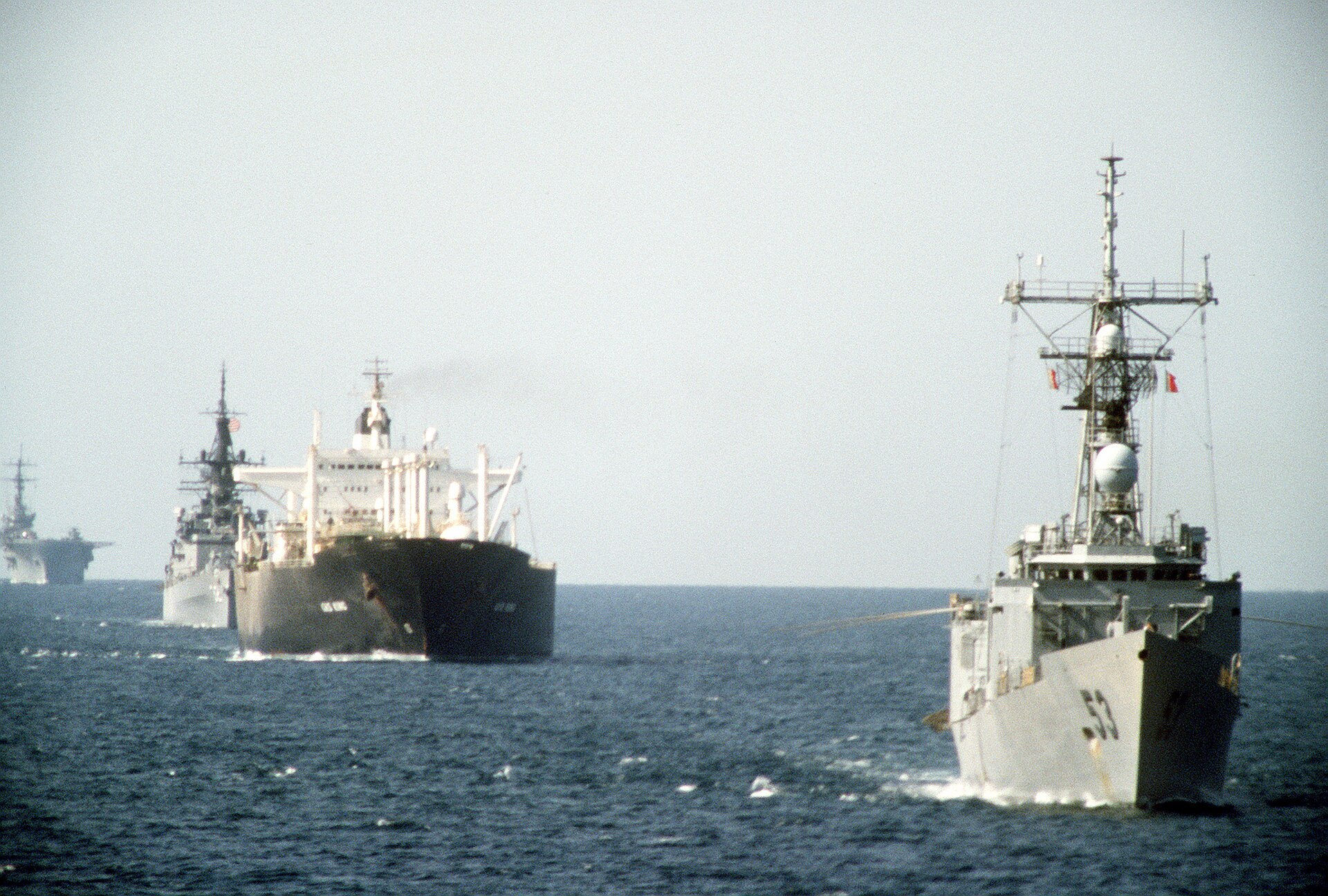
On April 8, Donald Trump offered a sentence that should have produced more alarm than it did. “We’re thinking of doing it as a joint venture,” he told the Washington Times, referring to Hormuz toll collection. “It’s a way of securing it — also securing it from lots of other people.” The statement was reported, noted, and largely absorbed into the noise of a president who says many things. But the implication is structural: the United States, which conducted Operation Earnest Will in 1987-88 specifically to guarantee free passage through Hormuz, is now publicly considering becoming a co-collector of tolls on the same waterway.
During the Tanker War of 1984-88, Iran attacked more than 190 ships in and around the strait but never formalized a toll. The US military response — reflagging Kuwaiti tankers, escorting convoys, eventually sinking Iranian naval vessels — was triggered by threats to seize or sink commercial shipping. A toll is less hostile than a blockade. It is harder to justify military countermeasures against a fee than against a missile, which is precisely why Iran chose this mechanism. Trump’s “joint venture” remark suggests that the distinction has registered in Washington: you cannot send the Navy to stop a tollbooth.
Khanzadeh’s analysis at George Mason captures the logic: Iran’s toll is “multi-faceted” — creating revenue streams, setting precedent for allies in contested waterways, and using Hormuz as “its last bargaining chip.” If the US joins the collection mechanism rather than opposing it, the precedent extends beyond Hormuz. Any state controlling a natural chokepoint — the Bab el-Mandeb, the Malacca Strait, the Taiwan Strait — gains a template for monetization endorsed by both the regional power and the global hegemon.
What Riyadh Actually Endorsed
Saudi Arabia has no seat at the Islamabad bilateral talks scheduled for April 10, where the toll’s Phase 2 terms — including Hormuz’s permanent status — will be negotiated between Iran and the United States. The Saudi Foreign Ministry’s April 8 statement welcomed the ceasefire and called for Hormuz to be “opened.” That statement will be cited in every future negotiation as Gulf acquiescence to the toll regime, because the toll regime is what “opened” means in the ceasefire text. Riyadh asked for “opened” and got “opened.” It did not ask for “free,” “untolled,” or “unconditional,” and it will not receive what it did not demand.
The annual cost to Gulf exporters at pre-war throughput, according to Bruegel, runs between $6 billion and $14 billion — absorbed almost entirely by producers, not passed through to consumers. Saudi Arabia’s share of that cost is zero in direct toll payments, because Saudi vessels are banned from the corridor, but the indirect cost through pricing disadvantage, pipeline-constrained export capacity, and the structural competitiveness gap with tolled competitors may exceed what the toll itself would have cost. Paying $1 per barrel to transit Hormuz would have been cheaper than rerouting 5.5 million barrels per day through a pipeline system the IRGC has already demonstrated it can strike.
Nevitt’s legal analysis is correct, and it does not matter. The toll exists because Iran controls the corridor, Oman provides diplomatic cover, China provides the payment infrastructure, and no coalition has the incentive to dismantle it. The Sound Dues lasted 428 years. Iran’s Hormuz toll has the advantage of nuclear ambiguity, IRGC operational control, great-power acquiescence, and a ceasefire text that the tolled parties themselves endorsed. Denmark’s toll was abolished when the United States decided the cost of maintaining it exceeded the cost of buying Denmark out. In 2026, the United States is considering joining the toll as a partner. The first Western leader to push back publicly on the toll architecture while standing on Gulf soil was Keir Starmer on April 9 — UK Foreign Secretary Yvette Cooper stated from London the same day that “freedom of navigation means navigation must be free” and that “nor can there be any place for tolls on an international waterway.” Why Starmer called Israeli Lebanon strikes ‘wrong’ on Saudi soil — and what that statement accomplished for Riyadh that Riyadh could not accomplish for itself — is the diplomatic context ceasefire day one produced. The first vessel to test the new architecture after ceasefire was the MSG tanker on April 9: it paid, it complied, and the IRGC declared the licensing regime permanent.
Iran did not open Hormuz — it monetized it, and Saudi Arabia, in a single statement that used the word “opened” without the word “free,” gave Tehran exactly the endorsement it needed to make the tollbooth permanent. The ceasefire will be remembered not for ending a war but for beginning a revenue regime — one that funds Iranian reconstruction with Gulf shipping receipts, operates outside SWIFT through Chinese yuan and cryptocurrency, and carries the formal blessing of every government that chose to call a tolled strait an open one.
The Lebanon dimension adds a compounding variable that Riyadh cannot manage from outside the room: every IDF strike wave on Lebanon triggers an Iranian Hormuz re-closure, converting the toll regime from a permanent cost into an on-again-off-again crisis. The full fiscal transmission chain — from Israeli targeting decision to Saudi budget crisis via Hormuz — is analyzed in Lebanon Is Iran’s Kill Switch on Saudi Arabia’s Oil Recovery.
Frequently Asked Questions
How much would the Hormuz toll cost per barrel of oil?
The fee is approximately $1 per barrel, or $2 million per fully laden VLCC (which carries roughly 2 million barrels). At pre-war throughput of approximately 2,600 monthly transits, a calculation using the $500,000 Suezmax rate generates approximately $1.3 billion per month. However, individual vessel costs vary by size — a Suezmax carrying 1 million barrels would pay proportionally less. The payment bypasses Western financial infrastructure entirely, processed through Kunlun Bank in yuan or via USDT stablecoins on the Tron blockchain, which means no SWIFT transaction records exist for compliance monitoring.
Can the toll be challenged under international law?
In theory, yes — UNCLOS Article 26 prohibits charges “by reason only of their passage” through international straits. In practice, enforcement is nearly impossible. Iran signed UNCLOS in 1982 but never ratified it, and claims “persistent objector” status to the transit passage regime specifically. No international tribunal has ever ruled on this claim. The International Tribunal for the Law of the Sea (ITLOS) requires both parties to accept jurisdiction, which Iran has not done. The ICJ requires either a compromissory clause in a relevant treaty or special agreement — neither exists. Turkey’s Montreux Convention, the closest operational parallel, was negotiated multilaterally in 1936; Iran is attempting to achieve the same result unilaterally.
Why doesn’t the US Navy simply escort ships through without paying?
The US conducted exactly this operation during the Tanker War (1987-88, Operation Earnest Will), but the threat then was physical attack — missiles, mines, and gunboats — not tolls. Military escorts address kinetic threats. They do not address a fee regime that a vessel’s insurer, flag state, and port of destination may independently require the vessel to pay. A warship can protect a tanker from an IRGC fast boat; it cannot prevent an IRGC-controlled port from refusing to issue a clearance passcode if the fee is unpaid. The corridor around Larak Island is physically within Iranian territorial waters, and forcible transit would constitute an act of war that the ceasefire was designed to prevent.
What happens to the toll if a comprehensive peace deal is reached?
The ceasefire text defers Hormuz’s permanent status to Phase 2 negotiations, but Iran’s parliamentary legislation — the Strait of Hormuz Management Plan, passed March 31 — is domestic law, not a ceasefire provision. Repealing it requires a parliamentary vote that the IRGC-aligned majority is unlikely to support. Gharibabadi’s statement that “wartime conditions cannot be governed by peacetime rules” suggests Iran will argue that wartime justifications persist even after a peace deal, particularly if Iran characterizes ongoing US sanctions as a form of economic warfare. The legislation was deliberately passed before the ceasefire to ensure it outlives any negotiated settlement.
Could Saudi Arabia pay the toll and resume Hormuz transit?
No. Saudi-bound vessels are banned from the IRGC corridor entirely — they are not offered the option of paying. This is a separate and more severe restriction than the toll applied to other Gulf exporters. The ban reflects Iran’s designation of Saudi Arabia as a co-belligerent (Saudi Arabia hosted US forces at Prince Sultan Air Base and provided airspace for US strike operations). Even if the ban were lifted in Phase 2 negotiations, Saudi Arabia paying an Iranian toll on its own export route would represent a strategic concession — recognition of Iranian authority over the strait — that Riyadh has publicly rejected for decades. That concession took on a new dimension on April 8, when Trump’s proposal to run Hormuz as a joint venture with Iran recast the toll not as Iranian overreach but as a potential bilateral commercial arrangement endorsed by Washington. The full implications of the ceasefire’s omissions are examined in the ceasefire’s missing Bab al-Mandab clause, which shows that 90 percent of Yanbu’s VLCC exports must exit via a strait the Islamabad Accord left entirely outside its scope. The oil market consequences of that impasse are quantified in Brent Drops 10% While Zero Tankers Clear the Strait, which shows futures markets pricing in a deal that physical tanker data does not support.