
RIYADH — Saudi Arabia maintains the fifth-largest defense budget on earth and the most expensive military apparatus in the Arab world, yet one week into the first direct conflict with Iran, a discomforting question haunts Riyadh’s corridors of power: can the Kingdom’s armed forces actually fight a conventional war? The answer, based on equipment inventories, operational history, and the structural contradictions embedded in Saudi defense architecture, is far more complicated than the $75 billion annual price tag suggests.
The Kingdom’s military has performed admirably in defensive operations since Iranian missiles and drones began striking Saudi territory on March 1, 2026 — intercepting ballistic missiles aimed at Prince Sultan Air Base, neutralizing drone swarms targeting Ras Tanura, and maintaining air sovereignty over the world’s most valuable energy infrastructure. But the gap between defending fixed positions with American-built Patriot batteries and projecting offensive military power across a hostile theatre remains vast. Seven days of Iranian bombardment have exposed both the strengths and the structural fragilities of a military that spends more than Russia, France, or Japan on defense, yet has never won a war on its own terms. The war has also exposed the limits of American support — seven days of combat have cracked the US-Gulf alliance, raising urgent questions about whether Washington will deliver on the $142 billion defense partnership when Saudi Arabia needs it most.
Table of Contents
- How Strong Is Saudi Arabia’s Military in 2026?
- What Does the Royal Saudi Land Forces’ Arsenal Look Like?
- Can the Royal Saudi Air Force Dominate Iranian Airspace?
- How Capable Is the Royal Saudi Navy in the Persian Gulf?
- What Role Does the Saudi Arabian National Guard Play in Wartime?
- What Did Saudi Arabia Learn From Its Failed Yemen Campaign?
- How Does Saudi Arabia’s Military Compare to Iran’s Armed Forces?
- Is the Saudi Defense Industry Ready to Sustain a Prolonged War?
- Will the F-35 Deal Change Saudi Arabia’s Military Calculus?
- Why Does Saudi Arabia Spend More Than Russia on Defense but Struggle to Project Power?
- The Combat Readiness Matrix — Measuring Saudi Arabia’s True Military Capability
- What Is Saudi Arabia’s Strategic Reserve and Mobilization Capacity?
- The Contrarian Case — Spending Less Might Make Saudi Arabia Stronger
- Frequently Asked Questions
How Strong Is Saudi Arabia’s Military in 2026?
Saudi Arabia’s armed forces consist of approximately 257,000 active military personnel spread across five branches — the Royal Saudi Land Forces, Royal Saudi Air Force, Royal Saudi Naval Forces, Royal Saudi Air Defense Forces, and the Royal Saudi Strategic Missile Force — with the Saudi Arabian National Guard operating as a parallel military structure reporting directly to the Crown Prince. Combined with reservists and the National Guard’s 125,000 troops and 28,000 tribal militiamen, the Kingdom maintains a total security force exceeding 400,000 personnel.
The numbers alone place Saudi Arabia among the most heavily armed nations in the Middle East and the most generously funded military in the developing world. The 2025 defense budget reached a record $78 billion, according to Breaking Defense, representing 21 percent of total government spending and 7.1 percent of GDP. The 2026 allocation settled at approximately $74.76 billion — still exceeding the defense budgets of Germany, Japan, and South Korea combined.
Global Firepower ranks Saudi Arabia 25th worldwide for overall military strength, while the Military Power Rankings index places it 17th globally. Within the Middle East, only Israel and Turkey are considered more capable in terms of combined conventional and asymmetric warfare capacity. The Kingdom holds clear superiority in two domains: air defense and air-to-air combat platforms. Its weaknesses — naval power projection, ground force operational experience, and joint command integration — are precisely the capabilities required for offensive operations against a state-level adversary like Iran.
| Category | Figure | Global Rank |
|---|---|---|
| Active Personnel | 257,000 | 21st |
| National Guard (additional) | 153,000 | N/A |
| Defense Budget (2025) | $78 billion | 5th |
| Combat Aircraft | 384 | 12th |
| Main Battle Tanks | ~1,300 | 18th |
| Naval Vessels | 29 | 44th |
| Global Firepower Index | 0.5157 | 25th |
The raw inventory is impressive. Whether it translates to combat effectiveness is the question that the Iran war is now answering in real time.
The Middle East briefing 3,000+ readers start their day with.
One email. Every weekday morning. Free.
What Does the Royal Saudi Land Forces’ Arsenal Look Like?
The Royal Saudi Land Forces represent the largest branch of the Saudi military by personnel count, with an estimated 150,000 active soldiers organized into mechanized infantry divisions, armored brigades, and artillery battalions. The RSLF’s equipment inventory reads like a catalog of Western arms manufacturers’ finest offerings — and therein lies both its strength and its most significant vulnerability.
The backbone of Saudi armored capability is the M1A2S Abrams, a variant of America’s premier main battle tank customized for desert warfare conditions. The RSLF operates approximately 575 M1A2S hulls, with another 150 on order, making it one of the largest Abrams fleets outside the United States. These are supplemented by approximately 450 M60A3 Patton tanks and 290 AMX-30 main battle tanks, though the French-built AMX-30s are largely in storage and no longer considered frontline assets.

The mechanized infantry rides in a mix of 400 M-2 Bradley infantry fighting vehicles, more than 570 AMX-10P armored personnel carriers, and nearly 3,200 M113 tracked APCs that have served since the Cold War era. For mine-resistant operations, the RSLF fields over 1,000 Oshkosh M-ATV vehicles optimized for urban and counter-insurgency environments.
Artillery capability is built around a combination of self-propelled and towed systems. The GCT AuF1 155mm self-propelled howitzer provides mobile fire support, while M109 self-propelled guns and M198 towed howitzers provide additional indirect fire capability. Multiple launch rocket systems include the Astros II and M270 MLRS platforms.
The diversity of this equipment creates a paradox that military analysts have flagged for decades. Operating American M1 Abrams tanks alongside French AMX-30s, American M-2 Bradleys alongside French AMX-10Ps, and American M109 artillery alongside French GCT howitzers means maintaining separate supply chains, separate spare parts inventories, separate maintenance protocols, and separate training pipelines for what are fundamentally similar capabilities. During peacetime, this hedging strategy distributes geopolitical risk across multiple supplier relationships. During wartime, it creates a logistical nightmare that no amount of money can fully resolve.
| Platform | Type | Origin | Quantity | Status |
|---|---|---|---|---|
| M1A2S Abrams | Main Battle Tank | USA | 575+ | Active frontline |
| M60A3 Patton | Main Battle Tank | USA | ~450 | Active/Reserve |
| AMX-30SA | Main Battle Tank | France | ~290 | Storage |
| M-2 Bradley | Infantry Fighting Vehicle | USA | ~400 | Active |
| AMX-10P | APC | France | 570+ | Active |
| M113 | APC | USA | ~3,200 | Active/Reserve |
| Oshkosh M-ATV | MRAP | USA | 1,000+ | Active |
The RSLF’s ground forces have never been tested against a peer-level conventional adversary. The Crown Prince Mohammed bin Salman‘s decision to commit ground forces to Yemen in 2015 produced the most recent — and most sobering — assessment of Saudi land force capability. The results were not encouraging.
Can the Royal Saudi Air Force Dominate Iranian Airspace?
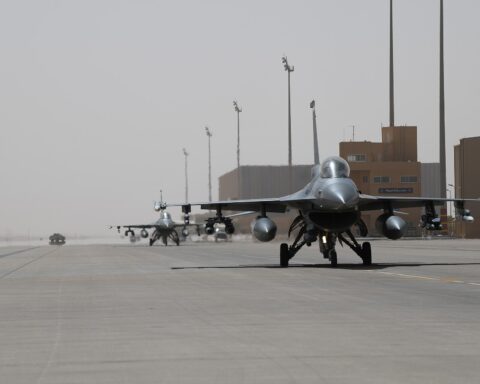
The Royal Saudi Air Force is the crown jewel of the Saudi military establishment and, by most assessments, the one branch that could compete directly with Iran in a conventional conflict. The RSAF operates approximately 914 total aircraft, including 384 combat-capable platforms, making it the most powerful air force in the Arab world and the second-largest operator of F-15 Eagles after the United States Air Force.
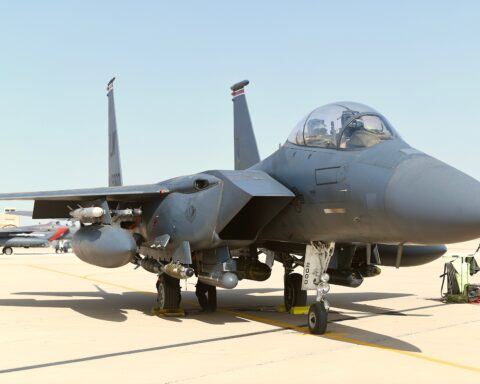
The F-15 family forms the RSAF’s primary air superiority and strike platform. As of late 2025, the RSAF inventory included 232 F-15s broken down into 84 advanced F-15SA variants, approximately 68 F-15SR models, and 80 earlier F-15C/D air superiority fighters. The F-15SA — Saudi Advanced — incorporates the APG-63(V)3 active electronically scanned array radar, digital electronic warfare suite, and can carry up to 24,500 pounds of ordnance across 11 hardpoints. It is, by a considerable margin, the most capable fourth-generation fighter aircraft operated by any Middle Eastern air force outside Israel.

Complementing the F-15 fleet are 72 Eurofighter Typhoons, making Saudi Arabia one of the largest Typhoon operators outside Europe. The Typhoon provides swing-role capability — air superiority and ground attack — and was procured through the Al-Salam deal with BAE Systems valued at approximately $8.9 billion. The aircraft fleet is supported by E-3A Sentry AWACS airborne early warning platforms, A330 MRTT aerial refueling tankers, and a growing fleet of unmanned aerial systems. Saudi tanker operations remain heavily dependent on U.S. Air Force KC-135 Stratotankers based at Prince Sultan, a dependency underscored when a KC-135 crashed over Iraq on March 12 with six crew aboard.
On paper, the RSAF holds decisive superiority over Iran’s air force. Iran operates approximately 286 combat aircraft, many of which are ageing American F-14 Tomcats, F-4 Phantoms, and F-5 Tigers acquired before the 1979 revolution, supplemented by domestically produced Kowsar and Azarakhsh fighters of questionable capability. In a straight air-to-air engagement, the RSAF’s F-15SAs would likely achieve air superiority within hours.
The complication is that Iran has not designed its military around air superiority. Tehran’s strategic doctrine relies on ballistic missiles, cruise missiles, and drone swarms — systems that bypass traditional air combat entirely. The cost asymmetry between Iranian drones and Saudi interceptors means that the RSAF’s air superiority advantage, while real, addresses only a fraction of the actual threat. A $35,000 Shahed drone does not care whether the aircraft pursuing it cost $80 million.
Pilot quality remains a contested assessment. The RSAF trains its F-15 crews through joint programs with the US Air Force, while Typhoon pilots follow training pipelines established by the Royal Air Force and BAE Systems. Annual flying hours for Saudi combat pilots are estimated at 180-220 hours — adequate by regional standards but below the 240-280 hours typical of US, Israeli, and leading NATO air forces. The Yemen campaign raised concerns about precision targeting capability, with reports of Saudi strikes missing military targets and causing disproportionate civilian casualties, suggesting either inadequate training, poor intelligence integration, or both.
How Capable Is the Royal Saudi Navy in the Persian Gulf?
The Royal Saudi Naval Forces represent the most significant gap in the Kingdom’s military capability — a vulnerability thrown into sharp relief by Iran’s effective closure of the Strait of Hormuz and the threat to Saudi oil export terminals along the Persian Gulf coast. The RSNF operates a modest fleet of 29 vessels, compared to Iran’s 90-ship navy that includes six submarines, dozens of fast-attack craft, and the Islamic Revolutionary Guard Corps Navy’s swarm warfare capabilities.
The RSNF is organized into two fleets: the Eastern Fleet based at King Abdulaziz Naval Base in Jubail, responsible for Persian Gulf operations, and the Western Fleet headquartered at King Faisal Naval Base in Jeddah, covering the Red Sea. This geographic division reflects the Kingdom’s unique strategic challenge — defending two coastlines separated by 1,300 kilometers of desert against fundamentally different threat environments.

The surface combatant fleet is anchored by three Al Riyadh-class frigates, based on the French La Fayette design and commissioned between 2002 and 2004. These 4,700-ton warships carry Aster 15 surface-to-air missiles and Exocet anti-ship missiles, providing the RSNF’s most capable blue-water platforms. Four older Al Madinah-class frigates, built in France during the 1980s, provide additional surface warfare capability but are approaching the end of their service lives. One of the class, HMS Al Madinah, was damaged by a Houthi suicide boat attack in the Red Sea in 2017 — a stark demonstration of the fleet’s vulnerability to asymmetric threats.
The corvette force consists of four ageing Badr-class vessels built in American shipyards in the early 1980s and five newer Al Jubail-class corvettes constructed by Spain’s Navantia based on the Avante 2200 design. The Al Jubail-class represents the RSNF’s most modern surface combatant, equipped with the RAN-30X/I radar, Mk 41 vertical launch system, and a 76mm OTO Melara main gun.
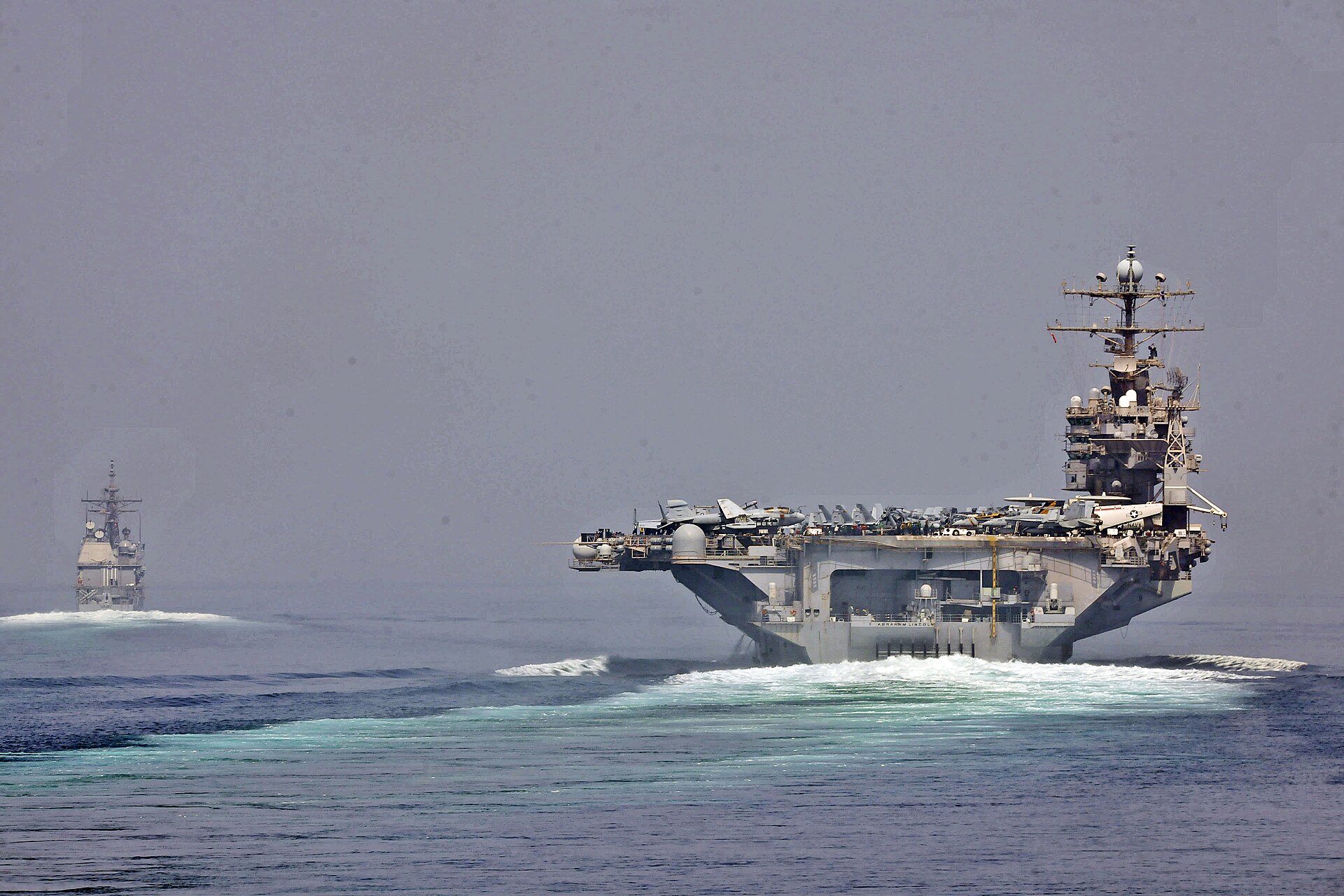
What the RSNF conspicuously lacks is submarine capability. Saudi Arabia operates zero submarines, leaving it entirely unable to conduct subsurface operations, anti-submarine warfare from a position of parity, or impose a submarine blockade. Iran’s six submarines — three Russian-built Kilo-class diesel-electric boats and three domestically produced Ghadir-class midget submarines — provide Tehran with a capability that Riyadh simply cannot counter without relying entirely on US Fifth Fleet assets based in Bahrain.
The RSNF’s mine countermeasures capability is limited to three Al Jawf-class minehunters. In a scenario where Iran seeds the Persian Gulf with mines — a tactic it has practiced since the Tanker War of the 1980s — the RSNF would struggle to clear safe shipping channels without extensive allied support. This vulnerability is particularly acute given that the Ras Tanura terminal, through which roughly 6.5 million barrels per day of Saudi crude has historically flowed, sits directly on the Gulf coast.
What Role Does the Saudi Arabian National Guard Play in Wartime?
The Saudi Arabian National Guard — known as the White Army — occupies a unique position in the Kingdom’s security architecture that reflects the royal family’s paramount concern: not external invasion, but internal stability. With 125,000 standing troops and approximately 28,000 tribal militia (Fouj), the SANG is larger than the entire regular army of many Middle Eastern nations, yet its primary mission has nothing to do with fighting foreign wars.
The SANG reports directly to the Crown Prince and operates independently of the Ministry of Defense. Its core missions include protecting the Saudi royal family, guarding against military coups, safeguarding strategic installations including oil facilities and desalination plants, and providing security for the holy cities of Mecca and Medina. Since the 1960s, when several Arab monarchies fell to military coups, the SANG has served as a counterweight to the regular armed forces — a parallel military designed to ensure that no general can march on the royal palace.
This mission set means the SANG’s equipment and training are oriented toward internal security rather than conventional warfare. Its mechanized force consists of three mechanized brigades and five motorized infantry brigades, equipped primarily with LAV-25 light armored vehicles procured from General Dynamics, 100 domestically manufactured Al-Fahd infantry fighting vehicles, and approximately $1 billion worth of Canadian-built armored vehicles. These are adequate for crowd control, counterterrorism, and guarding fixed positions, but insufficient for armored maneuver warfare against a state-level adversary.
The United States Army has maintained a continuous modernization partnership with the SANG since 1973 through the Office of the Program Manager-Saudi Arabian National Guard (OPM-SANG). This programme, one of the longest-running military cooperation agreements in US-Saudi relations, provides training, doctrine development, and equipment integration. The relationship deepened significantly under Defense Minister Khalid bin Salman, who has sought to modernize both the SANG and the regular armed forces.
In the current Iran crisis, the SANG has assumed responsibility for protecting critical infrastructure — oil facilities, water desalination plants, power stations, and telecommunications centers — freeing regular military units for frontline air defense duties. This division of labor is precisely what the SANG was designed for, and early reports suggest it has performed effectively. The question is whether the Kingdom can afford to keep 125,000 of its best-trained troops focused inward when the external threat demands every available asset.
What Did Saudi Arabia Learn From Its Failed Yemen Campaign?
No assessment of Saudi military readiness can avoid the most uncomfortable data point in the Kingdom’s recent military history: the Yemen war. Launched in March 2015 with the stated objective of reversing the Houthi takeover of Sanaa, Operation Decisive Storm was supposed to demonstrate Saudi Arabia’s ability to project military power and protect its southern border. A decade later, the intervention stands as one of the most expensive military failures in modern Middle Eastern history.
The initial air campaign, conducted with total air superiority and no opposing air force, failed to achieve decisive results. Saudi pilots, according to assessments from the Arab Center Washington DC and the Middle East Institute, lacked consistent training necessary for precision strike operations. Bombing runs were conducted at high altitudes to minimize the risk of ground fire, resulting in inaccurate strikes and devastating civilian casualties that drew international condemnation. Despite deploying the most advanced American and European combat aircraft in the region, the RSAF could not translate air dominance into ground-level military outcomes.
Ground operations fared worse. Saudi troops, operating alongside Emirati forces and Yemeni government militias, struggled with basic combined-arms coordination, logistics in austere environments, and adapting to the Houthis’ guerrilla tactics. The Houthis, equipped with Iranian-supplied drones and missiles, exploited Saudi weaknesses in intelligence gathering, night operations, and small-unit tactics. Several incidents of Saudi armored columns being ambushed in Yemen’s mountainous terrain exposed a force that had trained for desert maneuver warfare but never developed the adaptability required for irregular combat.
The Saudi-led intervention in Yemen had one main objective: reversing the Houthi takeover of Sanaa. It unequivocally failed in that mission. Despite substantial military expenditures, the coalition’s failure to achieve its objectives exposed deep vulnerabilities in Saudi Arabia’s military capabilities.
Arab Center Washington DC, March 2025
The strategic consequences were severe. Thomas Juneau, in a 2024 analysis published in the Journal of Strategic Studies, described the Yemen campaign as a case study in “neoclassical realist overbalancing” — a situation where a state’s threat perception exceeds the actual threat, leading to costly military overreaction. The intervention drained resources, strengthened the Houthis politically and militarily, and exposed Saudi Arabia’s inability to sustain expeditionary operations even against a non-state adversary with no air force, no navy, and a fraction of the Kingdom’s defense budget.
The lessons for the Iran conflict are direct and concerning. If Saudi forces struggled to defeat Houthi rebels in Yemen — fighters who received Iranian support but operated with limited resources — how would they perform against Iran’s regular armed forces, Revolutionary Guards, and the full spectrum of Tehran’s ballistic missile and drone arsenal? The Yemen war demonstrated that the gap between procurement and performance is wider in the Saudi military than perhaps any other major armed force in the world. A closer look at the technical specifications of Iran’s missiles and drones reveals just how formidable an adversary Tehran has become.
Several reforms have been implemented since the Yemen quagmire. Crown Prince Mohammed bin Salman consolidated the defense establishment under a single command authority, merged overlapping intelligence agencies, and increased joint training exercises with the United States and United Kingdom. The World Defense Show, first held in 2022, signaled the Kingdom’s intent to build domestic defense industrial capacity. Whether these reforms have been sufficient to address the structural deficiencies exposed in Yemen remains the most consequential unanswered question of the current conflict.
How Does Saudi Arabia’s Military Compare to Iran’s Armed Forces?
The military balance between Saudi Arabia and Iran defies simple comparison because the two nations have built fundamentally different armed forces optimized for fundamentally different strategies. Saudi Arabia has invested in conventional military superiority — advanced fighter aircraft, modern main battle tanks, sophisticated air defense systems. Iran has invested in asymmetric deterrence — ballistic missiles, drone swarms, proxy networks, and naval guerrilla warfare in confined waters. Comparing the two is less like comparing armies and more like comparing a fortress with a swarm of hornets.
| Category | Saudi Arabia | Iran | Advantage |
|---|---|---|---|
| Active Personnel | 257,000 | 650,000 | Iran (2.5:1) |
| Defense Budget | $74.76B | $7.9B | Saudi (10:1) |
| Combat Aircraft | 384 | 286 | Saudi (quality gap) |
| Main Battle Tanks | ~1,300 | 1,713 | Iran (quantity) |
| Naval Vessels | 29 | 90+ | Iran (3:1) |
| Submarines | 0 | 6 | Iran (absolute) |
| Ballistic Missiles | Limited | 3,000+ | Iran (overwhelming) |
| Drone Fleet | Emerging | Thousands | Iran (massive) |
Iran holds a 2.5-to-1 advantage in active military personnel, with approximately 650,000 troops including the regular armed forces (Artesh) and the Islamic Revolutionary Guard Corps. The IRGC alone fields an estimated 190,000 personnel, including the elite Quds Force responsible for external operations. Iran’s ground forces operate 1,713 main battle tanks — more than Saudi Arabia’s approximately 1,300 — though the quality comparison favours Riyadh, as Iran’s fleet includes ageing T-72s, Chieftains, and domestically produced Karrar tanks that cannot match the M1A2S Abrams in protection, firepower, or fire control systems.
The most significant Iranian advantages lie in three domains that Saudi Arabia has no effective counter for. First, Iran’s ballistic missile arsenal — estimated at over 3,000 missiles of various ranges — can saturate Saudi air defenses through sheer volume, as the current conflict has demonstrated. Second, Iran’s drone programme, built around the Shahed family of one-way attack UAVs, provides mass precision-strike capability at a fraction of the cost of conventional munitions. Third, Iran’s submarine and fast-attack craft capabilities in the confined waters of the Persian Gulf give Tehran the ability to threaten shipping and naval assets in ways that Saudi Arabia’s surface fleet cannot counter.
The spending disparity — Saudi Arabia outspends Iran by roughly ten to one — illustrates a broader principle: money does not automatically translate into military capability. Iran has spent decades developing indigenous weapons systems, training for asymmetric warfare, and building the institutional knowledge required to operate complex military systems under sanctions. Saudi Arabia has spent the same period purchasing the finest weapons money can buy without necessarily developing the doctrinal, logistical, or human capital foundations to employ them at their full potential.
Is the Saudi Defense Industry Ready to Sustain a Prolonged War?
One of the most critical questions of the current conflict is whether Saudi Arabia can sustain its military operations without a constant stream of Western resupply. The answer, until recently, was an unequivocal no — the Kingdom produced almost none of its own weapons systems, ammunition, or spare parts, making it entirely dependent on foreign suppliers. That dependency is gradually changing, but the transformation is far from complete.
Saudi Arabian Military Industries (SAMI), the PIF-owned conglomerate established in 2017, has emerged as the centrepiece of the Kingdom’s defence localization strategy. Operating across five divisions — SAMI Aerospace, SAMI Land, SAMI Sea, SAMI Defense Systems, and SAMI Advanced Electronics — the company has expanded from a concept to a defence industrial group with more than 60 national products and capabilities. At the World Defense Show in February 2026, SAMI signed 25 strategic agreements and showcased capabilities in command-and-control systems, maintenance, repair, and overhaul (MRO) solutions, and land systems manufacturing.
The numbers tell a story of rapid progress from a very low base. Defense spending localization has risen from just 4 percent in 2018 to 25 percent by the end of 2024, according to figures cited by Ahmad al-Ohali, governor of the General Authority for Military Industries (GAMI). The target is 50 percent by 2030 — a goal that the current war may either accelerate through urgency or delay through resource diversion.
The SAMI Land Industrial Complex, inaugurated at the World Defense Show, represents the most visible symbol of this ambition. Covering 82,000 square metres, it is described as the largest fully integrated land systems industrial facility in the Middle East and North Africa, employing Industry 4.0 technologies including artificial intelligence, robotics, and Internet of Things integration. The facility is expected to generate over 1,000 skilled jobs for Saudi nationals — a reminder that Vision 2030’s economic diversification goals are deeply intertwined with the defence localization strategy.
The World Defense Show itself closed with 60 military and defence contracts worth 33 billion Saudi riyals — approximately $8.8 billion — signed across 93 intergovernmental deals and 127 company-to-company agreements. Among the most strategically significant was a deal with Turkey’s ULAQ Global to localize unmanned surface vessel production in Saudi Arabia, establishing domestic capability for the design, development, and maintenance of drone boats.
| Year | Localization Rate | Key Development |
|---|---|---|
| 2017 | ~4% | SAMI established as PIF subsidiary |
| 2018 | 4% | GAMI created to regulate defense industry |
| 2022 | ~14% | First World Defense Show held in Riyadh |
| 2024 | 25% | SAMI reaches 60+ national products |
| 2026 | ~28% | SAMI Land Industrial Complex opens, WDS signs $8.8B |
| 2030 (target) | 50% | Half of defense spending domestically sourced |
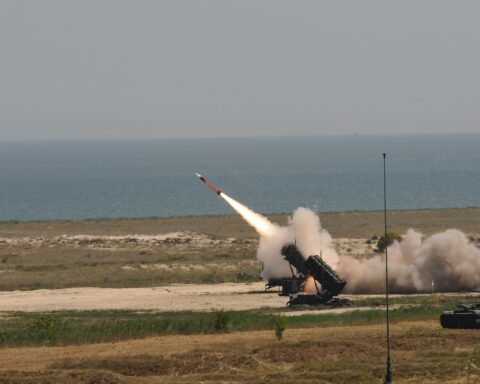
The critical gap remains in high-end systems. Saudi Arabia cannot yet manufacture main battle tanks, fighter aircraft engines, advanced radar systems, or the precision-guided munitions that its air force consumes. During the current conflict, every Patriot PAC-3 MSE interceptor fired at an incoming Iranian ballistic missile costs approximately $4 million and must be resupplied from Lockheed Martin’s production line in Arkansas. The $9 billion deal for 730 PAC-3 MSE interceptors approved by the State Department provides a strategic stockpile, but in a prolonged conflict, consumption could outpace delivery. Munitions dependency remains Saudi Arabia’s most acute wartime vulnerability.
Will the F-35 Deal Change Saudi Arabia’s Military Calculus?
The November 2025 announcement that the United States would permit Saudi Arabia to purchase F-35 Lightning II stealth fighters marked a watershed moment in the bilateral defence relationship. If finalized, the Kingdom would become the first Arab nation admitted to the exclusive F-35 programme, joining a club that currently includes Israel, the UAE (pending), and select NATO allies. Saudi Arabia has reportedly requested 48 aircraft — enough to equip three combat squadrons.
The F-35 would transform the RSAF’s capability profile. The aircraft’s low-observable stealth characteristics, advanced sensor fusion through the AN/APG-81 AESA radar, Distributed Aperture System, and Electro-Optical Targeting System, and its ability to share tactical data through the Multifunction Advanced Data Link would give Saudi Arabia capabilities that no other Gulf state — with the possible exception of Israel — currently possesses. Against Iran’s aging air defenses, built primarily around Russian S-300 and domestic Bavar-373 systems, the F-35 would provide a level of penetration capability that the F-15 and Typhoon cannot match.
Several significant obstacles stand between the announcement and operational capability. Congressional approval remains uncertain, with bipartisan concerns about Saudi Arabia’s human rights record, the Khashoggi murder, and the risk of technology transfer to China. Israeli opposition, while not a formal veto, carries substantial weight — US officials have already confirmed that Saudi F-35s will be delivered in a less advanced configuration than Israel’s, with certain weapons systems and electronic warfare capabilities removed to preserve Israel’s qualitative military edge.
Even if the sale proceeds without political obstruction, the timeline is daunting. Lockheed Martin’s F-35 production line is already stretched to capacity fulfilling orders for the US military, NATO allies, and other international customers. Estimates suggest that the first Saudi F-35s would not be delivered for at least seven years — placing initial operational capability no earlier than 2032 or 2033. For the current conflict with Iran, the F-35 is irrelevant. For the long-term strategic balance in the Middle East, it could be transformative.
The broader significance of the F-35 deal lies not in the aircraft itself but in what it signals about the US-Saudi relationship. The sale was announced alongside Saudi Arabia’s designation as a Major Non-NATO Ally — a status that unlocks access to the most advanced American weapons systems and deepens the institutional bonds between the two militaries. The Trump-MBS alliance that produced this deal has been the most consequential factor in Saudi Arabia’s strategic position during the Iran crisis, and the F-35 represents its ultimate expression in hardware.
Why Does Saudi Arabia Spend More Than Russia on Defense but Struggle to Project Power?
Saudi Arabia’s defense budget — $78 billion in 2025, approximately $75 billion in 2026 — exceeds Russia’s official military expenditure, which stands at approximately $65-70 billion even at wartime levels. The Kingdom outspends France ($60 billion), Germany ($75 billion in its newly expanded budget), and Japan ($54 billion). Yet no serious military analyst would rank Saudi Arabia’s combat capability alongside any of these nations. The spending-capability paradox is the central riddle of Saudi defense policy, and it has several explanations.
The first and most significant factor is the premium Saudi Arabia pays for imported Western systems. Purchasing a complete weapons ecosystem from abroad — aircraft, missiles, radar, training, logistics support, maintenance contracts, and technology transfer agreements — costs substantially more than developing domestic capability. The $3 billion F-15 sustainment deal approved in February 2026 is a maintenance contract, not a procurement of new aircraft. A substantial portion of the $75 billion annual budget goes to keeping existing equipment operational through foreign contractor support, rather than expanding capability.
The second factor is the defence budget’s role as a tool of political patronage and alliance management. Saudi weapons purchases serve multiple functions beyond military capability. They cement relationships with key arms-supplying nations — the United States, United Kingdom, France, and increasingly South Korea and Turkey. They create employment for Saudi nationals in defence-adjacent industries. And they provide contracts that flow through royal-connected intermediaries, serving the regime’s domestic patronage networks. None of these functions are inherently wasteful, but they mean the defence budget is never purely a military spending instrument.
The third factor is the structural duplication embedded in the Saudi security architecture. The Kingdom maintains five separate military branches under the Ministry of Defense plus the Saudi Arabian National Guard under a separate command authority. Joint command and coordination between these entities has historically been poor, with each branch maintaining its own procurement channels, training establishments, and operational doctrines. The result is a force that is large in aggregate but fragmented in practice, with limited ability to conduct the kind of integrated, multi-domain joint operations that define modern high-intensity warfare.
Comparisons with Israel illuminate the paradox most starkly. Israel spends approximately $24 billion annually on defense — roughly one-third of Saudi Arabia’s budget — yet maintains qualitative military superiority across every domain. The difference lies in Israel’s investment in human capital (mandatory conscription and reserve service), indigenous defence industry (Rafael, Elbit, IAI produce world-leading systems), operational experience (continuous low-intensity conflict and periodic high-intensity operations), and unified command structure. Saudi Arabia has the money. Israel has the system. In warfare, systems win.
The Combat Readiness Matrix — Measuring Saudi Arabia’s True Military Capability
Assessing military readiness requires moving beyond simple equipment counts and budget figures. Six dimensions determine whether an armed force can fight effectively: equipment quality, personnel training, operational experience, command unity, logistics and sustainment, and asymmetric warfare capability. Evaluating the Saudi military across these dimensions reveals a force with pockets of genuine excellence surrounded by systemic weaknesses.
| Dimension | Score (1-10) | Assessment | Key Evidence |
|---|---|---|---|
| Equipment Quality | 8 | Among the best-equipped forces globally | M1A2S, F-15SA, Patriot PAC-3, Typhoon |
| Personnel Training | 5 | Adequate but inconsistent across branches | 180-220 flying hours, Yemen performance gaps |
| Operational Experience | 3 | Limited and largely negative | Yemen failure, no peer-level combat since 1991 |
| Command Unity | 4 | Improving but structurally fragmented | 5 branches + SANG, recent consolidation under MBS |
| Logistics & Sustainment | 4 | Dependent on foreign supply chains | Multi-vendor equipment base, 75% imported systems |
| Asymmetric Warfare | 3 | Minimal capability against drone/missile threats | Defensive only, no offensive asymmetric doctrine |
The matrix produces an aggregate score of 27 out of 60 — or 45 percent of maximum combat readiness. This assessment places Saudi Arabia in the upper tier of regional militaries but well below the threshold for sustained offensive operations against a peer adversary. The equipment quality score of 8 reflects the genuine excellence of Saudi Arabia’s imported weapons platforms. The operational experience score of 3 reflects the reality that owning the best weapons and knowing how to use them effectively in combat are entirely different propositions.
For comparison, applying the same matrix to Iran would produce a different profile: lower equipment quality (perhaps 4-5) but significantly higher scores in operational experience (7, given the Iran-Iraq War, proxy operations, and current conflict), asymmetric warfare capability (9, reflecting decades of investment in missiles, drones, and irregular warfare), and command unity (6, despite the Artesh-IRGC duplication, both have institutional combat experience). Iran’s aggregate score would likely land in a similar range — 35-40 out of 60 — but with a fundamentally different capability profile that is far better suited to the type of conflict currently being waged.
The matrix highlights a strategic truth that the Saudi defence establishment has been reluctant to confront: spending cannot substitute for fighting. Military institutions develop genuine combat capability through experience, institutional learning, and the kind of doctrinal evolution that only comes from testing theories against reality. Saudi Arabia’s most recent significant combat experience was the 1991 Gulf War, in which it served as a supporting element in a US-led coalition rather than an independent military power. Everything since — the Yemen campaign, border skirmishes, counterterrorism operations — has reinforced the perception of a force that relies on American technology, American intelligence, and American strategic leadership to function.
What Is Saudi Arabia’s Strategic Reserve and Mobilization Capacity?
Beyond the active force structure, Saudi Arabia’s ability to sustain a prolonged conflict depends on its strategic reserves — both military and industrial. The Kingdom’s reserve military personnel are estimated at approximately 25,000, a figure that is strikingly low compared to Israel’s 465,000 reservists, Turkey’s 378,700, or Iran’s estimated 350,000 Basij militia who can be mobilized for territorial defence. Saudi Arabia has never implemented conscription, and the all-volunteer force model means there is no large pool of trained former soldiers who can be recalled to duty.
Ammunition stocks represent another critical dimension of sustainment capability. During the Yemen campaign, Saudi Arabia consumed precision-guided munitions at a rate that alarmed both Pentagon planners and arms manufacturers. Paveway laser-guided bombs, JDAM GPS-guided kits, and AGM-65 Maverick air-to-ground missiles were expended faster than production lines could replace them, leading to emergency resupply requests to the United States. A 2016 Reuters investigation revealed that the US had sold Saudi Arabia approximately $1.29 billion worth of munitions in a single year to replenish stocks depleted by Yemen operations.
The current conflict presents an even more acute munitions challenge. Each Patriot PAC-3 MSE interceptor costs approximately $4 million, and the Kingdom is expending multiple interceptors daily against Iranian ballistic missiles and cruise missiles. The $9 billion deal for 730 PAC-3 MSE interceptors provides a theoretical buffer, but delivery of the full order will take years. In the interim, Saudi Arabia must manage its existing interceptor stocks against an adversary that can produce ballistic missiles and drones at a fraction of the cost of the systems required to defeat them.
Strategic fuel reserves, by contrast, are among the strongest in the world. Saudi Arabia maintains an estimated 90 days of refined petroleum products in strategic storage, with Aramco’s domestic distribution network capable of sustaining civilian and military consumption even if export terminals are disrupted. The East-West Pipeline connecting the Eastern Province to the Red Sea port of Yanbu provides an alternative export route that bypasses the Strait of Hormuz entirely — a piece of infrastructure whose strategic value has increased exponentially since Iran’s closure of the strait.
Medical sustainment capacity is adequate for low-intensity operations but untested at the scale a conventional war would demand. The Royal Saudi Armed Forces Medical Services operates military hospitals in Riyadh, Jeddah, and the Eastern Province, with a combined capacity of approximately 2,500 beds. Saudi Arabia has also signed military medical cooperation agreements with the United States and United Kingdom that could provide additional capacity in a crisis, but the logistics of casualty evacuation from forward positions to rear-area hospitals have never been tested under fire.
The Contrarian Case — Spending Less Might Make Saudi Arabia Stronger
The conventional wisdom in Riyadh and Washington holds that Saudi Arabia’s security depends on maintaining massive defence expenditure and continuous access to the most advanced Western weapons systems. The evidence suggests a more provocative conclusion: Saudi Arabia’s excessive spending may actually be undermining its military effectiveness.
The core of this argument rests on an observation from military history that applies across eras and geographies: the wealthiest military in a conflict rarely fights the hardest. Saudi Arabia’s defence abundance has produced institutional complacency in several measurable ways. The availability of unlimited funding means procurement decisions are driven by political relationships rather than operational requirements, resulting in the multi-vendor equipment chaos described earlier. The ability to outsource maintenance, logistics, and even strategic planning to American contractors has atrophied the institutional capacity that would otherwise develop through necessity. And the assumption that superior technology will compensate for inferior training and experience has been contradicted by every engagement since Yemen.
Iran’s military, forged under sanctions and international isolation, has been forced to innovate precisely because it could not buy its way to security. The Shahed drone programme — which Ukraine has spent three years learning to counter with purpose-built interceptor drones now coveted by the Gulf — was born from Iran’s inability to acquire modern combat aircraft. The ballistic missile arsenal was developed because Tehran could not match its adversaries in conventional air power. The IRGCN’s swarm warfare tactics emerged because Iran could not afford a conventional blue-water navy. In each case, constraint produced creativity, and creativity produced capability.
The prescription is not that Saudi Arabia should disarm, but that it should redirect a portion of its defence budget from hardware acquisition to three areas that would produce greater returns. First, human capital development — doubling or tripling investment in pilot training hours, NCO professional development, and joint operations exercises. Second, indigenous defence industry acceleration — moving beyond SAMI’s current 25 percent localization to genuine domestic manufacturing of critical munitions and spare parts. Third, doctrinal innovation — developing a Saudi-specific warfighting doctrine that accounts for the Kingdom’s unique geographic, political, and threat environment rather than importing American doctrine wholesale.
Historical precedent supports this prescription. South Korea’s military transformation from a poorly led, US-dependent force during the Korean War to a world-class fighting machine by the 2000s was driven not by increased spending but by institutional reform — mandatory conscription that created a deep reserve pool, domestic defence industry development that reduced dependency on American resupply, and decades of sustained investment in NCO and officer professional development. Taiwan’s military, facing an existential threat from mainland China, has adopted an asymmetric defence doctrine that emphasises sea mines, mobile anti-ship missiles, and distributed air defences rather than expensive conventional platforms — precisely the approach that Iran has used so effectively against Saudi Arabia.
The Iran war is providing, at enormous cost, the battlefield validation that no amount of peacetime planning can replicate. The question is whether Saudi Arabia’s military leadership — and the royal family that funds it — will have the institutional humility to learn from this experience rather than simply writing another cheque for more American hardware. The Kingdom’s $75 billion annual defence expenditure could build one of the world’s most formidable fighting forces. Whether it currently does so remains, after one week of war, a question that Riyadh can no longer afford to leave unanswered.
Frequently Asked Questions
How large is the Saudi Arabian military?
Saudi Arabia maintains approximately 257,000 active military personnel across its five armed forces branches, with an additional 125,000 troops and 28,000 tribal militia in the Saudi Arabian National Guard. Including reserves and paramilitary forces, the Kingdom’s total security establishment exceeds 400,000 personnel, making it the largest military in the Arabian Peninsula.
What is Saudi Arabia’s defense budget in 2026?
Saudi Arabia’s defense budget for 2026 is approximately $74.76 billion, down slightly from the record $78 billion allocated in 2025. This figure represents the fifth-largest defense budget in the world, exceeding the military spending of Russia, Germany, and Japan. Approximately 21 percent of total Saudi government spending is directed toward defense and security.
Does Saudi Arabia have nuclear weapons?
Saudi Arabia does not possess nuclear weapons and is a signatory to the Nuclear Non-Proliferation Treaty. However, Crown Prince Mohammed bin Salman stated in 2023 that the Kingdom would pursue nuclear weapons if Iran acquired them. Saudi Arabia is currently negotiating a civilian nuclear cooperation agreement (Section 123 agreement) with the United States that would permit uranium enrichment on Saudi soil.
How does Saudi Arabia’s military compare to Iran’s?
Saudi Arabia holds decisive advantages in equipment quality, air power, and defense spending (outspending Iran roughly 10 to 1), while Iran maintains superiority in personnel numbers (650,000 vs. 257,000), ballistic missile inventory (3,000+ vs. limited), submarine capability (6 vs. 0), and asymmetric warfare doctrine. The two forces are optimized for fundamentally different strategies.
Why did Saudi Arabia struggle in Yemen?
Saudi Arabia’s decade-long intervention in Yemen failed to achieve its primary objective of reversing the Houthi takeover of Sanaa despite total air superiority and massive financial investment. Key factors included inconsistent pilot training leading to inaccurate airstrikes, poor combined-arms coordination on the ground, inability to adapt to guerrilla warfare tactics, and the absence of a coherent political-military strategy or exit plan.
What fighter jets does Saudi Arabia operate?
The Royal Saudi Air Force operates 232 F-15 Eagles (including 84 advanced F-15SA variants), 72 Eurofighter Typhoons, and a declining number of Panavia Tornado IDS aircraft. Saudi Arabia has been approved to purchase 48 F-35 Lightning II stealth fighters from the United States, though delivery is not expected before 2032-2033 at the earliest.
What tanks does Saudi Arabia use?
The Royal Saudi Land Forces operate approximately 575 M1A2S Abrams as their primary main battle tank, supplemented by roughly 450 M60A3 Patton tanks and 290 AMX-30SA tanks held largely in storage. The M1A2S Abrams, customized for desert warfare, is one of the most capable tanks in the Middle East. Mechanized infantry units ride in M-2 Bradley fighting vehicles, AMX-10P armored personnel carriers, and the ubiquitous M113 tracked APCs.
Can Saudi Arabia fight a conventional war against Iran?
Saudi Arabia possesses significant defensive capabilities, particularly in air defense and air superiority, but faces critical gaps in naval power, ground force operational experience, joint command integration, and sustainment capability that would limit its ability to conduct sustained offensive operations against Iran without substantial American military support. The current conflict has demonstrated Saudi proficiency in defensive operations while leaving offensive capability untested.