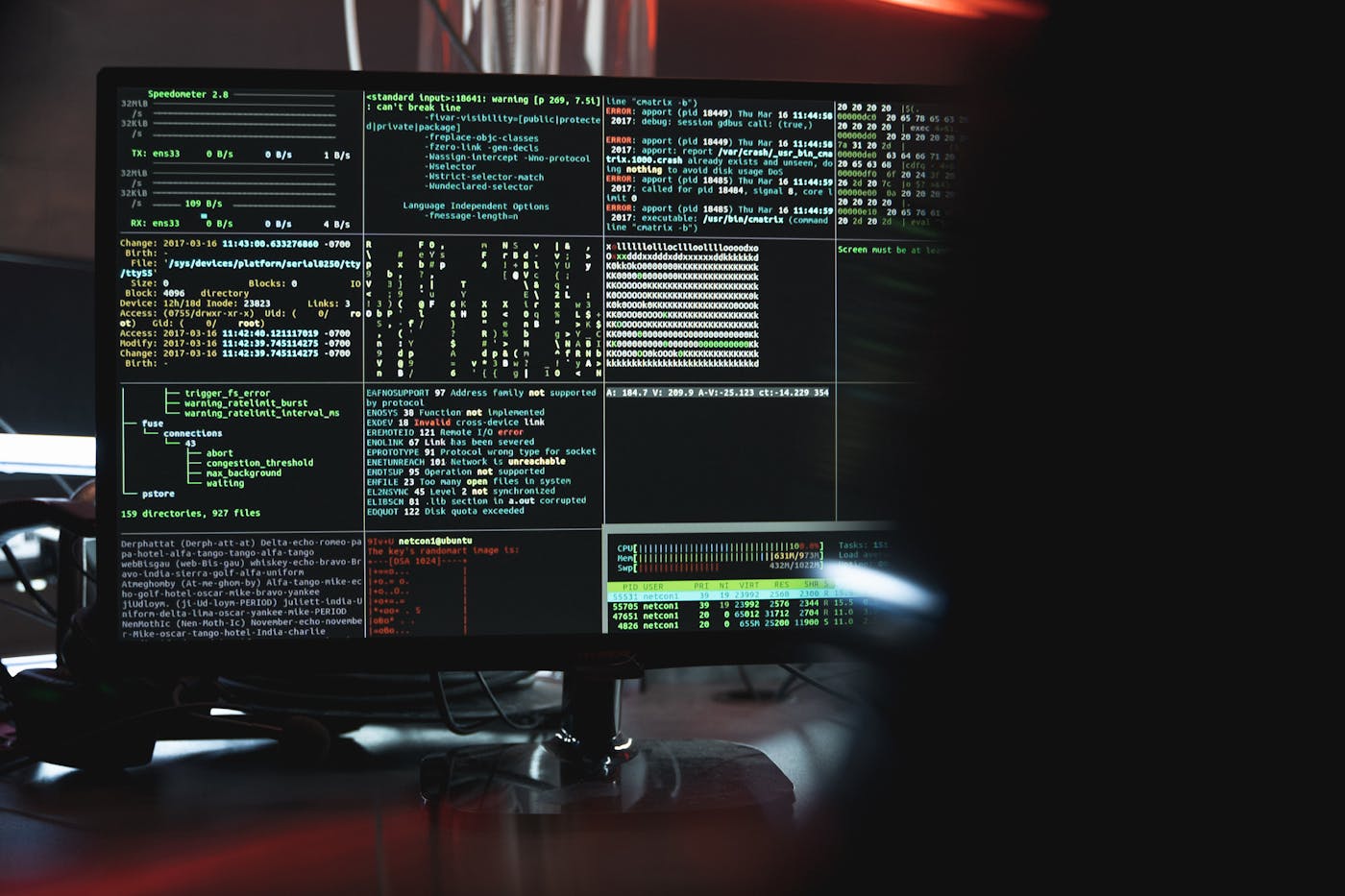

RIYADH — While Iranian ballistic missiles streak across Gulf skies and drone wreckage smolders on Saudi soil, a parallel war is unfolding in silence across the Kingdom’s digital infrastructure — and it may prove more consequential than any physical strike. Since Operation Epic Fury began on February 28, 2026, at least 60 pro-Iranian hacktivist groups have launched more than 150 cyber attacks against targets across the Middle East, with Saudi Arabia’s banks, oil systems, government networks, and critical infrastructure squarely in the crosshairs. The cyber campaign is not an afterthought to the kinetic war. It is an integrated element of Iran’s retaliation strategy — one that exploits a $132 billion digital economy that Saudi Arabia built at breathtaking speed under Vision 2030 but has not yet fully learned to defend.
The attacks range from distributed denial-of-service (DDoS) floods that have intermittently crippled Saudi online banking services to far more alarming intrusions into industrial control systems that govern oil refineries, desalination plants, and power grids. Iran’s cyber arsenal, honed across more than a decade of increasingly destructive operations — from the Shamoon virus that destroyed 30,000 Aramco workstations in 2012 to the Triton malware that targeted safety systems at a Saudi petrochemical plant in 2017 — now operates alongside conventional military forces in what cybersecurity analysts describe as the most sophisticated state-sponsored cyber campaign ever directed at the Gulf.
This analysis maps the full scope of Iran’s digital offensive against the Kingdom, identifies the specific infrastructure under threat, profiles the threat actors executing the campaign, and assesses whether Saudi Arabia’s much-celebrated cybersecurity defenses — ranked first globally by the IMD World Competitiveness Yearbook — can withstand a sustained assault from an adversary with nothing left to lose.
Table of Contents
- What Is Iran’s Cyber Campaign Against Saudi Arabia?
- How Did the Shamoon Attack Change Saudi Cybersecurity Forever?
- The Arsenal — Iran’s APT Groups and Their Saudi Targets
- Which Saudi Infrastructure Is Most Vulnerable to Iranian Cyber Attack?
- How Are Iranian Hackers Targeting Saudi Arabia’s Oil Industry?
- The Financial Battlefield — Why Saudi Banks Are Under Siege
- Is Saudi Arabia’s National Cybersecurity Authority Prepared for Full-Scale Cyber War?
- The Hacktivist Swarm — 60 Groups, 150 Attacks, Seven Days
- Why Is the Cyber War More Dangerous Than the Missile War?
- The Vision 2030 Paradox — How Digital Transformation Created a $132 Billion Attack Surface
- The Cyber Escalation Ladder — From Defacement to Destruction
- What Comes Next — The Long Shadow of Iran’s Digital War
- Frequently Asked Questions
What Is Iran’s Cyber Campaign Against Saudi Arabia?
Iran’s cyber campaign against Saudi Arabia is a coordinated, multi-layered digital offensive combining state-sponsored hacking operations, proxy hacktivist groups, and influence operations that runs parallel to Tehran’s physical missile and drone attacks on the Kingdom. The campaign targets five critical sectors — energy infrastructure, financial services, government networks, telecommunications, and transportation — using tactics ranging from DDoS attacks and website defacements to wiper malware and intrusions into industrial control systems.
The scale is unprecedented. Between February 28 and March 7, 2026, cybersecurity firm CloudSEK documented over 150 hacktivist incidents claimed across open channels in the first 72 hours alone. The Hacker News reported 149 DDoS attack claims targeting 110 distinct organizations across 16 countries, with 107 attacks concentrated in the Middle East. Palo Alto Networks’ Unit 42 identified approximately 60 individual hacktivist groups active as of March 2, while Recorded Future’s Insikt Group tracked an even wider constellation of threat actors spanning state-sponsored advanced persistent threat (APT) teams, IRGC-affiliated hacktivists, and opportunistic criminal groups.
The campaign operates on what Alexander Leslie, senior threat analyst at Recorded Future, describes as an integrated war doctrine. “It is an integrated campaign in which kinetic operations, cyber effects, psychological operations, and economic coercion are sequenced,” Leslie told Recorded Future’s client briefing on March 3. The assessment aligns with a broader pattern identified by CSIS, which noted that Iran would “likely use offensive cyber operations as a major instrument against Saudi critical infrastructure in the Gulf, such as oil facilities.”
The Middle East briefing 3,000+ readers start their day with.
One email. Every weekday morning. Free.
What distinguishes the 2026 campaign from previous Iranian cyber operations is the convergence of multiple factors. Iran’s conventional military capabilities have been severely degraded — the IDF claims to have destroyed 80 percent of Iran’s air defense systems and struck approximately 900 targets in the first 12 hours of Operation Epic Fury. With its conventional arsenal constrained and its leadership decapitated, cyber warfare represents one of Tehran’s few remaining scalable military options. “Cyber remains one of Iran’s most scalable military options, especially as conventional operations are constrained,” Leslie noted.
Yet a critical paradox has emerged. Iran’s own internet connectivity collapsed to between 1 and 4 percent of normal levels following the initial strikes, according to Unit 42. This near-total blackout has simultaneously hindered Iran’s ability to coordinate sophisticated attacks from within its borders while driving operations outward — to proxy groups in Iraq, Lebanon, Malaysia, and beyond — that operate independently and are harder to disrupt.

How Did the Shamoon Attack Change Saudi Cybersecurity Forever?
The Shamoon virus attack of August 15, 2012, remains the single most destructive cyber attack in corporate history and the event that fundamentally reshaped Saudi Arabia’s approach to digital security. At 11:08 AM local Saudi time, a piece of malware called W32.DistTrack — later known as Shamoon — began systematically destroying data across Saudi Aramco’s network, ultimately wiping the master boot records of 30,000 workstations and rendering them unusable within hours.
The attack was timed with precision. Most Aramco employees had left for the Islamic holiday of Lailat al-Qadr, leaving minimal staff to detect and contain the intrusion. By the time security teams fully grasped the scope, three-quarters of Aramco’s computer systems had been destroyed. A group calling itself the “Cutting Sword of Justice” claimed responsibility, citing Aramco’s role in supporting the Al Saud regime.
The recovery effort became a corporate legend. Aramco dispatched its private fleet of aircraft to purchase hard drives from every available supplier worldwide, driving up global hard drive prices in the process. Full restoration took more than a week, during which Aramco was forced to revert to manual operations — typewriters, fax machines, and paper documentation — for the world’s most valuable company. An NSA document later described the Shamoon attack as “the first such attack NSA has observed from this adversary,” confirming Iran’s direct involvement.
Shamoon returned in November 2016 and January 2017 as Shamoon 2.0, targeting Saudi government entities and civil organizations including Sadara Chemical Co., a joint venture between Dow Chemical and Saudi Aramco. The timing was again deliberately chosen to coincide with the end of the work week. The malware overwrote files with an image of Alan Kurdi’s body — the Syrian refugee child whose drowning photograph shocked the world — adding a psychological dimension to the technical destruction. Bloomberg reported that U.S. intelligence officials and independent security experts concurred the forensic evidence “suggests the 2016 attack emanated from Iran.”
The third escalation came in 2017 with the Triton malware, which targeted Schneider Electric Triconex safety instrumented systems at an unidentified Saudi petrochemical plant. Unlike Shamoon, which destroyed data, Triton was designed to disable the safety systems that prevent catastrophic industrial accidents. In a worst-case scenario, a successful Triton attack could have caused the release of toxic hydrogen sulfide gas or triggered explosions, putting human lives at direct risk. The malware targeted six Triconex emergency shutdown (ESD) controllers and represented the first known malware designed specifically to attack safety instrumented systems in industrial environments. While FireEye attributed Triton to Russia rather than Iran, the attack demonstrated that Saudi Arabia’s industrial infrastructure was vulnerable to precisely the kind of cyber-physical attack that Saudi Arabia’s air defense shield cannot intercept.
The Shamoon legacy is visible in everything Saudi Arabia has built since. The National Cybersecurity Authority, the massive investment in defensive capabilities, the recruitment of thousands of cybersecurity specialists, the obsessive focus on operational technology security at Aramco and other critical facilities — all trace directly back to that August morning when 30,000 screens went black.
The Arsenal — Iran’s APT Groups and Their Saudi Targets
Iran’s cyber warfare capability is not a monolithic entity but a fragmented, competitive ecosystem of state-sponsored groups, military units, and outsourced hacktivists — each with distinct capabilities, mandates, and targets. Understanding which groups target Saudi Arabia, and how, is essential to assessing the threat the Kingdom faces in 2026.
Two institutions control the bulk of Iran’s offensive cyber operations: the Islamic Revolutionary Guard Corps (IRGC) and the Ministry of Intelligence and Security (MOIS). The IRGC tends toward disruptive, destructive operations and influence campaigns. The MOIS focuses on espionage and intelligence collection. Both have proven willing and capable of targeting Saudi infrastructure.
| Group | Also Known As | Sponsor | Primary Targets | Key Capabilities | Saudi Relevance |
|---|---|---|---|---|---|
| APT33 | Elfin, Peach Sandstorm, Refined Kitten | IRGC | Aerospace, energy, defense | Custom backdoors (Tickler, FalseFont), cloud-based C2, OT/ICS targeting | Critical — primary energy sector threat |
| APT34 | OilRig, Helix Kitten | MOIS | Government, finance, telecoms, energy | Credential harvesting, spear-phishing, web shell deployment | Critical — espionage and credential theft |
| APT35 | Charming Kitten, Phosphorus, Mint Sandstorm | IRGC-IO | Government, defense, academia, journalists | Credential theft, social engineering, phishing | High — intelligence collection |
| MuddyWater | Static Kitten, Mercury, Seedworm | MOIS | Telecoms, energy, academia, government | PowerShell-based attacks, new Dindoor backdoor, RustyWater RAT | High — telecom infiltration |
| Cotton Sandstorm | Haywire Kitten, Emennet Pasargad | IRGC | Media, government, elections | Influence operations, DDoS, website defacement | Medium — information warfare |
| CyberAv3ngers | BAUXITE, Storm-0784 | IRGC-CEC | Water systems, fuel management, ICS/OT | Custom IOCONTROL malware, PLC compromise | Critical — infrastructure sabotage |
Microsoft’s 2024 assessment described APT33’s capabilities as “materially more sophisticated” than previous years, noting a clear shift toward operational technology (OT) and industrial control system (ICS) environments. The “Cloud-to-OT” attack scenario — in which cloud infrastructure is used as a bridge to reach air-gapped industrial systems — indicates the group “is no longer just stealing data but has the potential to sabotage physical processes,” according to Brandefense analysis.
The CyberAv3ngers group deserves particular attention. In 2023, it compromised 75 Unitronics Vision Series programmable logic controllers (PLCs) across U.S. water systems using default passwords. In 2024, it deployed custom IOCONTROL malware — a Linux backdoor using MQTT-based command-and-control — to remotely control water and fuel management systems. This is precisely the kind of capability that could target Saudi desalination plants, which provide roughly 70 percent of the Kingdom’s drinking water.
Beyond the established APT groups, the IRGC’s Basij paramilitary force claims 1,000 cyber battalions nationwide and outsources cyberattacks to approximately 50 different hacktivist groups. These groups “operate independently, compete for contracts, and have their own modus operandi and targets,” creating a diffuse threat landscape that is far more difficult to defend against than a single, centralized adversary. Iran’s cyber budget reportedly jumped twelvefold between 2013 and 2021, reaching over $1 billion annually by 2016 — a figure comparable to that of the United Kingdom.
On February 28, 2026 — the same day the first bombs fell on Tehran — Iran stood up a new “Electronic Operations Room” to coordinate cyber retaliation across this sprawling network. Whether it can function effectively given the near-total collapse of Iranian internet infrastructure remains an open question, but the autonomous nature of many proxy groups means the campaign continues regardless.
Which Saudi Infrastructure Is Most Vulnerable to Iranian Cyber Attack?
Five categories of Saudi critical infrastructure face the greatest risk from Iranian cyber operations: oil production and export systems, desalination plants, the electrical grid, industrial control systems governing all three, and financial networks. CSIS analysis identifies these as the primary targets where cyber attacks could cause strategic-level damage to the Kingdom’s economy and population.
The vulnerability is structural. Saudi Arabia’s rapid modernization under Vision 2030 has connected systems that were previously isolated, expanding the attack surface at a pace that defensive measures have struggled to match. CloudSEK’s March 2026 assessment of exposed industrial control system devices in Saudi Arabia paints a sobering picture of the terrain Iranian hackers can potentially exploit.
| Protocol | Port | Function | Exposed Devices | Risk Level |
|---|---|---|---|---|
| Modbus TCP | 502 | SCADA/industrial automation | 340 | Critical — direct industrial control |
| S7comm | 102 | Siemens PLC communication | 525 | Critical — manufacturing and energy |
| Niagara Fox | 1911 | Building automation systems | 451 | High — building and facility control |
These 1,316 exposed devices represent entry points that sophisticated attackers could use to reach deeper into Saudi industrial networks. The S7comm protocol, used by Siemens programmable logic controllers, is the same protocol exploited by the Stuxnet worm that destroyed Iranian nuclear centrifuges in 2010. The irony of Iran potentially using similar attack vectors against Saudi infrastructure has not been lost on cybersecurity analysts.
Desalination infrastructure presents a particularly alarming vulnerability. Saudi Arabia operates the world’s largest desalination capacity, producing roughly 70 percent of the Kingdom’s drinking water through plants concentrated along the Gulf and Red Sea coasts. A cyber attack that disrupted desalination operations during the summer months — when temperatures regularly exceed 45 degrees Celsius — could create a humanitarian crisis within days. The CyberAv3ngers group’s demonstrated ability to compromise water system PLCs using default passwords in the United States raises obvious questions about the security of Saudi Arabia’s water infrastructure under wartime conditions.
The electrical grid faces a different but equally serious threat. Saudi Arabia’s electricity consumption peaks at approximately 62 gigawatts during summer, and the grid’s increasing integration with smart monitoring systems creates potential points of compromise. The 2015 and 2016 attacks on Ukraine’s power grid — in which Russian hackers used BlackEnergy malware to cut power to hundreds of thousands of people — demonstrated that nation-state actors can weaponize access to electrical systems. Iran’s cyber forces have studied these operations closely.

How Are Iranian Hackers Targeting Saudi Arabia’s Oil Industry?
Iran’s cyber operations against Saudi Arabia’s oil industry represent the most dangerous thread of the digital campaign because they target systems where a successful attack could cause physical destruction, environmental catastrophe, or both. The threat extends beyond data theft to the manipulation of operational technology systems that control pressure valves, temperature regulators, and emergency shutdown mechanisms across Aramco’s vast network of refineries, pipelines, and export terminals.
The precedent is clear. The 2012 Shamoon attack destroyed 30,000 Aramco workstations. The 2017 Triton malware targeted safety instrumented systems at a Saudi petrochemical plant — the first malware ever designed to disable industrial safety controllers. In January 2026, reports emerged of a Shamoon variant dubbed Shamoon 4.0 striking Saudi energy infrastructure, initially compromising approximately 15,000 workstations across multiple facilities before containment.
APT33, the IRGC-affiliated group that has targeted Saudi energy infrastructure since 2013, has undergone a significant evolution in recent years. Microsoft’s 2024 assessment noted the group’s development of custom backdoors (Tickler and FalseFont) and its adoption of cloud-based command-and-control infrastructure hosted on Microsoft Azure. More critically, Brandefense analysis identified a clear shift in APT33’s focus toward operational technology and industrial control system environments — the “Cloud-to-OT” attack scenario that cybersecurity professionals consider the highest-risk vector for catastrophic infrastructure damage.
The practical implications are severe. A sophisticated attacker that gains access to the SCADA systems controlling an Aramco refinery could theoretically manipulate process parameters — pressure settings, chemical mixing ratios, temperature controls — in ways that cause equipment failure, fires, or explosions. This is precisely what the Triton malware was designed to enable by disabling the safety systems that would normally detect and prevent such manipulations.
Aramco has invested heavily in cybersecurity since 2012, building what multiple industry assessments describe as one of the most sophisticated operational technology security operations in the energy sector. The company maintains dedicated security operations centers, employs thousands of cybersecurity specialists, and has implemented air-gapping protocols that physically isolate critical control systems from internet-connected networks. Yet the Ras Tanura refinery shutdown following drone strikes on March 2 demonstrated that physical and digital vulnerabilities compound each other — a drone that damages sensor equipment or communications infrastructure can create gaps in the digital monitoring systems that defenders rely on.
The IRGC’s targeting of Aramco is strategic, not opportunistic. Saudi oil exports represent approximately 16 percent of global petroleum trade. Any sustained disruption to Aramco’s digital infrastructure — particularly the systems managing the East-West Pipeline that has become the Kingdom’s primary export route since the Strait of Hormuz closure — would amplify the oil price shock that has already pushed Brent crude up 24 percent since hostilities began.
The Financial Battlefield — Why Saudi Banks Are Under Siege
Saudi Arabia’s financial sector has absorbed the most visible impact of Iran’s cyber campaign. Between February 28 and March 5, coordinated DDoS attacks targeted at least 10 financial institutions including major banks in Saudi Arabia, Jordan, and Israel, according to reporting by The National. Some Saudi banks experienced multi-day DDoS campaigns peaking at approximately 1.2 terabits per second — traffic volumes sufficient to overwhelm most commercial anti-DDoS mitigation services — that intermittently degraded online banking and ATM networks.
The financial sector attacks are significant for several reasons beyond their immediate operational impact. Financial and payment services were the hardest-hit sector in the MENA region, comprising 38 percent of DDoS attacks with a 268 percent year-on-year increase in DDoS traffic, according to cybersecurity monitoring data. The attacks have coincided with the broader market turmoil triggered by the physical conflict, creating a compounding effect that has stressed Saudi Arabia’s financial infrastructure from both directions simultaneously.
The DieNet hacktivist group — one of three groups responsible for 74.6 percent of all DDoS activity during the first week of the conflict, according to Hacker News analysis — specifically enumerated Saudi banks and utilities as primary targets. The Sylhet Gang, a pro-Iranian hacktivist group, claimed responsibility for targeting the Saudi Ministry of Home Affairs’ HCM and internal management systems. The FAD Team — the Fatimiyoun Cyber Team, a pro-Iranian group — claimed control over network monitoring dashboards for firewall devices in Mecca and Medina.

The concern extends beyond service disruption. Iran’s APT34 (OilRig) has historically focused on financial sector espionage in the Gulf, using credential harvesting and spear-phishing to penetrate banking networks. A successful intrusion into Saudi banking infrastructure — particularly during the confusion of an active military conflict — could enable data exfiltration, fraudulent transactions, or destructive attacks designed to undermine confidence in the Kingdom’s financial system.
The Saudi Arabian Monetary Authority (SAMA) and the Tadawul stock exchange have activated emergency cybersecurity protocols, and Saudi banks have engaged additional DDoS mitigation capacity from international providers. But the sustained nature of the attacks — running continuously for over a week with no indication of diminishing — has strained defensive resources and forced financial institutions to operate on a wartime footing that was designed for days, not weeks.
SentinelOne’s February 28 assessment described Iran as presenting “a mature, well-resourced cyberthreat based on more than fifteen years of experience across a wide range of malicious cyber events.” The financial sector attacks validate that assessment. They are not sophisticated individually — DDoS attacks represent the bluntest tool in the cyber arsenal — but their volume, coordination, and persistence suggest a deliberate strategy to degrade Saudi financial services at precisely the moment the economy is under maximum stress from the physical conflict and oil market disruption.
Is Saudi Arabia’s National Cybersecurity Authority Prepared for Full-Scale Cyber War?
Saudi Arabia’s National Cybersecurity Authority, established by royal order in 2017 as a direct response to the Shamoon devastation, has built one of the most formidable national cyber defense organizations in the world — at least on paper. The NCA achieved first place globally in the IMD World Competitiveness Yearbook’s cybersecurity indicator in both 2024 and 2025, and the ITU Global Cybersecurity Index classifies Saudi Arabia as Tier 1 or “Role-modelling” among more than 190 member states across 83 indicators.
The NCA’s CyberIC training program has empowered more than 13,000 beneficiaries, building specialized national capabilities that include 10,000 Saudi cybersecurity professionals, 1,500 government cybersecurity officials, and 150 cybersecurity executives with leadership training. Over 5,000 Saudis have participated in advanced cyber exercises. The Kingdom’s cybersecurity market reached SAR 15.2 billion (approximately $4.05 billion) in 2024, recording 14 percent year-on-year growth, with projections reaching $6.02 billion by 2030.
| Metric | Value | Source |
|---|---|---|
| IMD Global Cybersecurity Ranking | 1st worldwide (2024-2025) | IMD World Competitiveness |
| ITU Global Cybersecurity Index | Tier 1 — “Role-modelling” | ITU (190+ states) |
| Cybersecurity Market Size (2024) | SAR 15.2B (~$4.05B) | NCA Market Report |
| Market Growth Rate | 14% YoY | NCA Market Report |
| Trained Professionals | 10,000+ | NCA CyberIC Program |
| Government Cyber Officials | 1,500 | NCA |
| Projected Market Size (2030) | $6.02B | Industry estimates |
Yet global rankings and market capitalization are peacetime metrics. The question confronting the NCA in March 2026 is whether its capabilities can function effectively under the sustained, multi-vector pressure of a coordinated state-sponsored cyber campaign coinciding with a conventional military conflict — a scenario that no cybersecurity organization on Earth has ever faced at this scale.
Several structural advantages work in Saudi Arabia’s favor. The NCA operates as a centralized authority with direct royal backing, giving it the bureaucratic authority to coordinate cyber defense across government ministries, critical infrastructure operators, and the private sector in ways that more fragmented national cybersecurity structures — like the United States’ division between CISA, NSA, Cyber Command, and the FBI — cannot match. The Kingdom’s relatively concentrated infrastructure landscape means that a smaller number of organizations control the critical systems that require protection.
The challenges are equally real. Iran’s internet blackout has not eliminated its offensive capability — it has diffused it. The 60-plus hacktivist groups identified by Unit 42 operate from locations across the Middle East, Southeast Asia, and beyond. Many use commercially available DDoS-for-hire services and coordinate via encrypted messaging platforms that are difficult to disrupt. The NCA can harden Saudi networks, but it cannot prevent attacks from being launched.
Cynthia Kaiser, formerly of the FBI’s cyber division and now senior vice president at cybersecurity firm Halcyon, described Iran’s likely approach in stark terms: “Iran will likely respond in cyberspace. It will probably look like cybercrime and ransomware.” Kaiser noted that Iran’s cyber operations function as “a murky blend of state sponsorship, personal profiteering, and outright criminal activity” — making attribution difficult and response complicated by the need to distinguish state-directed attacks from opportunistic cybercrime riding the chaos of war.
The Hacktivist Swarm — 60 Groups, 150 Attacks, Seven Days
The sheer number of actors involved in the cyber campaign against Saudi Arabia and its allies distinguishes it from previous Iranian cyber operations. Previous attacks — Shamoon, Triton, APT33 espionage campaigns — were conducted by discrete, identifiable teams with clear operational mandates. The 2026 campaign more closely resembles a swarm: dozens of independent groups, loosely coordinated through shared ideology and encrypted messaging channels, launching attacks of varying sophistication against a sprawling target set.
Unit 42’s tracking identified approximately 60 individual hacktivist groups active as of March 2. The Hacker News documented 149 DDoS attack claims targeting 110 distinct organizations across 16 countries in the first 72 hours, with three groups — Keymous+, DieNet, and NoName057(16) — responsible for 74.6 percent of the total activity. The first attacker, a Tunisian group called Hider Nex (Tunisian Maskers Cyber Force), launched its initial DDoS on February 28, the same day the physical strikes began.
| Group | Affiliation | Attack Types | Known Saudi Targets |
|---|---|---|---|
| DieNet | Pro-Iran network | DDoS, disruption | Saudi banks, utilities, airports |
| Sylhet Gang | Pro-Iran | DDoS, data breach claims | Saudi Ministry of Home Affairs |
| FAD Team (Fatimiyoun) | Pro-Iran | Wiper malware, SCADA access | Firewall devices in Mecca, Medina |
| Cyber Islamic Resistance | Umbrella collective | Coordinated operations | Payment infrastructure, defense systems |
| 313 Team | Pro-Iran (Iraq) | DDoS, intrusion | Kuwait Armed Forces (Saudi ally) |
| Nation of Saviors | Pro-Palestine/Iran | Data theft | 21 GB data claim against Saudi entity |
| Handala Hack | MOIS-affiliated | Data exfiltration, cyber ops | Energy, healthcare across region |
| Dark Storm Team | Pro-Palestinian/Iranian | DDoS, ransomware | Banking targets across Gulf |
The sector targeting breakdown is revealing. Government systems absorbed 47.8 percent of attacks, followed by finance at 11.9 percent and telecommunications at 6.7 percent. Geographically, Kuwait bore 28 percent of Middle Eastern attack claims, Israel 27.1 percent, and Jordan 21.5 percent, while 22.8 percent of total activity targeted European nations — reflecting the widening geographic scope of the campaign as NATO allies increasingly involve themselves in the conflict.
The FAD Team’s claimed access to network monitoring dashboards in Mecca and Medina carries particular significance. If verified, the compromise of firewall devices in Islam’s two holiest cities would represent not only a security breach but a symbolic provocation — an attack on infrastructure protecting the spiritual heart of the Islamic world, claimed by a group named after the Fatimiyoun Brigade, an Afghan Shia militia fighting under Iranian command in Syria. The implications for Hajj 2026, already threatened by missile attacks, would be severe.
The Nation of Saviors group’s claim of exfiltrating 21 gigabytes of data from a Saudi private entity illustrates another dimension of the campaign: hack-and-leak operations designed to embarrass the Kingdom and undermine confidence in its ability to protect sensitive information. As Kaiser observed, Iranian operators will “turn [an intrusion] into an information operation, and say, ‘Look, we compromised this entire facility,’ even though they compromised just a machine.” The psychological impact of data breach claims — regardless of their accuracy — is a force multiplier that costs almost nothing to deploy.
Why Is the Cyber War More Dangerous Than the Missile War?
The conventional wisdom frames Iran’s missile and drone strikes as the primary threat to Saudi Arabia and the cyber campaign as a secondary nuisance — a sideshow of website defacements and temporary service disruptions. This assessment is dangerously wrong. Three factors make the cyber dimension of the conflict potentially more consequential than the kinetic one.
First, Saudi Arabia’s air defense systems are demonstrably effective against the physical threat. The Kingdom’s layered defense network — combining Patriot PAC-3 batteries, THAAD systems, and short-range point defense — has successfully intercepted the majority of Iranian missiles and drones targeting Saudi territory. The air defense shield, while not perfect, provides a quantifiable level of protection. No equivalent shield exists in cyberspace. There is no Patriot battery for a DDoS attack, no THAAD interceptor for a wiper virus. Every connected system in Saudi Arabia is theoretically reachable by an adversary with sufficient capability and patience.
Second, the asymmetric cost calculus that favors the attacker in drone warfare — the $35,000 Shahed drone versus the $4 million Patriot interceptor — is even more extreme in cyberspace. A DDoS attack using commercially available botnet services costs as little as $50 per hour. A phishing campaign targeting Saudi government employees costs virtually nothing. The defensive infrastructure required to detect, attribute, and mitigate these attacks costs billions. Iran’s reported $1 billion annual cyber budget, while modest compared to Saudi Arabia’s $4 billion cybersecurity market, purchases a volume of offensive capability that far exceeds what the Kingdom must spend to defend against it.
Third, and most critically, cyber attacks do not end when the shooting stops. Missiles land, cause damage, and the damage is immediately visible and quantifiable. Cyber intrusions can persist for months or years after initial compromise, with malware dormant in Saudi networks waiting for activation commands. The “dwell time” — the period between initial compromise and detection — averages 21 days even for well-defended organizations, according to Mandiant’s annual threat report. For less mature defenders, it can stretch to months. Iranian APT groups that gained access to Saudi networks before February 28 may have implanted backdoors that will only become apparent weeks or months from now — long after the ceasefire negotiations have concluded and the world’s attention has moved on.
The 28 February 2026 strikes accelerated an existing cyber threat rather than creating it. The scale of this threat is not measured in the sophistication of individual attacks. It is measured in the number of actors, the breadth of the attack surface, and the history of real disruption that has already occurred.
CloudSEK Threat Intelligence Report, March 5, 2026
The contrarian position — that the cyber war is more dangerous than the missile war — is supported by a simple test. Saudi Arabia can repair a missile-damaged refinery in weeks or months. It can rebuild a destroyed building. Physical damage is finite and visible. But a sophisticated intrusion into Aramco’s operational technology networks, or a successful compromise of the banking system’s transaction processing infrastructure, or the manipulation of data in government databases, creates damage that may be invisible, uncertain in scope, and impossible to fully remediate without rebuilding systems from scratch. The 2012 Shamoon attack proved this: Aramco needed to buy the world’s supply of hard drives to recover. In 2026, with systems orders of magnitude more complex and interconnected, the recovery from a successful deep intrusion would be correspondingly more difficult.
The Vision 2030 Paradox — How Digital Transformation Created a $132 Billion Attack Surface
Saudi Arabia’s digital economy reached a market value exceeding SAR 495 billion (approximately $131.9 billion) in 2024, equivalent to 15 percent of GDP. Internet penetration stands at nearly 99 percent. Mobile internet speeds have doubled to 215 megabits per second — almost twice the global average. The ICT sector alone is valued at over $40.94 billion, contributing 4.1 percent of GDP. E-commerce has grown to $5.15 billion, with 34.5 million active users expected by 2025.
These are Vision 2030’s proudest achievements — and they are also the dimensions of the attack surface that Iranian hackers are now probing. Every connected device, every digital government service, every cloud-hosted enterprise application, every smart building management system in the Kingdom’s gleaming new cities represents a potential point of entry for an adversary. The very speed and ambition of Saudi Arabia’s digital transformation has created a paradox: the Kingdom is simultaneously one of the world’s most digitally advanced nations and one of the most exposed.
The government has allocated approximately SAR 12 billion ($3.2 billion) for digital transformation initiatives under Vision 2030. The technology workforce has grown to over 381,000 specialized professionals — the largest concentration of digital talent in the Middle East. Women’s participation in the tech sector has increased from 7 percent in 2018 to 35 percent in 2024, the highest in the region. These investments have created genuine capability. But they have also connected systems that were previously isolated, moved sensitive data to cloud platforms that introduce new trust dependencies, and created digital infrastructure whose compromise would affect every aspect of Saudi society.
| Metric | Value | Cyber Risk Implication |
|---|---|---|
| Digital Economy Market Value | $131.9 billion | Scale of potential economic disruption |
| Internet Penetration | 99% | Near-universal connectivity = near-universal exposure |
| Mobile Internet Speed | 215 Mbps | High bandwidth enables faster data exfiltration |
| E-Commerce Users | 34.5 million | Consumer financial data at scale |
| ICT Sector Value | $40.94 billion | Technology dependency across economy |
| Government Digital Services | SAR 12B investment | Centralized digital government = centralized risk |
| Exposed ICS/SCADA Devices | 1,316 | Direct industrial system compromise potential |
The Iranian drone strikes on AWS data centers in the UAE highlighted a related vulnerability. Saudi Arabia has actively courted hyperscale cloud providers as part of its digital transformation strategy. While cloud infrastructure offers security advantages over on-premises systems, it also creates concentration risk — a successful attack on a major cloud provider’s regional data center could simultaneously affect thousands of Saudi organizations. The physical and cyber dimensions of this risk converged when Iranian drones physically damaged data center facilities while cyber operators simultaneously probed the same providers’ network defenses.
NEOM and other megaprojects amplify the paradox further. The smart city vision — with its integrated sensors, autonomous systems, and connected infrastructure — assumes a secure digital environment as a foundational condition. Under wartime conditions, that assumption collapses. Every connected sensor becomes a potential intelligence collection device. Every networked building management system becomes a potential sabotage target. The future Saudi Arabia is building under Vision 2030 is optimized for peacetime connectivity, not wartime resilience.
The Cyber Escalation Ladder — From Defacement to Destruction
Iranian cyber operations against Saudi Arabia in the current conflict can be understood through a five-tier escalation framework that maps the progression from nuisance-level attacks to potentially catastrophic infrastructure sabotage. Each tier represents an increase in technical sophistication, strategic risk, and potential damage.
| Tier | Category | Tactics | Current Status (March 2026) | Damage Potential |
|---|---|---|---|---|
| 1 | Disruption | DDoS attacks, website defacement, DNS hijacking | Active — 150+ incidents documented | Low — temporary service disruption |
| 2 | Intelligence Collection | Spear-phishing, credential theft, network reconnaissance | Active — APT34, APT35 campaigns detected | Medium — data exfiltration, future access |
| 3 | Data Destruction | Wiper malware (Shamoon variants), ransomware | Suspected — Shamoon 4.0 reports (Jan 2026) | High — mass data loss, weeks to recover |
| 4 | Information Warfare | Hack-and-leak, deepfakes, AI-generated disinformation | Active — data breach claims, influence ops | High — undermines public confidence |
| 5 | Physical Sabotage | ICS/OT manipulation, safety system compromise (Triton-class) | Possible — APT33 OT capability confirmed | Critical — explosions, environmental disaster, loss of life |
The current conflict is operating primarily at Tiers 1 and 2, with significant activity at Tier 4 and unconfirmed indicators at Tier 3. The critical question is whether Iran will escalate to Tier 5 — the deliberate manipulation of industrial control systems to cause physical damage.
The capability exists. APT33’s documented shift toward OT and ICS targeting, the precedent set by the Triton malware, and the CyberAv3ngers’ demonstrated ability to compromise PLCs all confirm that Iran possesses the technical capacity to attack Saudi industrial systems at the most dangerous level. The 1,316 exposed industrial control system devices identified by CloudSEK represent a quantifiable subset of the potential access points.
The question is intent and threshold. CSIS analysis noted that while Iran has the capability to cause strategic damage to Saudi infrastructure through cyber means, “it would be difficult for Iran to cause strategic damage to most of these systems without escalating the conflict into a broader war that risks Tehran’s own critical infrastructure.” Under normal circumstances, this deterrence calculus holds. But the current circumstances are not normal. Iran’s conventional military has been severely degraded. Its supreme leader is dead. Its nuclear facilities have been damaged. Its internet is operating at 1-4 percent capacity. A government with nothing left to lose may reach for the most destructive tools in its arsenal regardless of the consequences — and cyber weapons that target Saudi industrial safety systems are among the most destructive tools available.
The progression from Tier 1 to Tier 5 is not inevitable, but it follows a historical pattern. Russian cyber operations against Ukraine escalated from website defacements in 2014 to power grid attacks in 2015-2016 to the NotPetya wiper in 2017 to sustained critical infrastructure targeting in 2022-2023. Iranian operations against Saudi Arabia have followed a similar trajectory — from Shamoon in 2012 to Triton in 2017 to the current multi-vector campaign. Each cycle has been more sophisticated, more destructive, and more difficult to defend against than the last.
What Comes Next — The Long Shadow of Iran’s Digital War
The cyber campaign against Saudi Arabia will outlast the physical conflict by months, possibly years. Even if a ceasefire is achieved tomorrow, the digital effects of the current campaign will persist in three critical ways.
First, compromised networks take far longer to remediate than damaged buildings take to rebuild. Any Iranian APT group that gained access to Saudi government, financial, or infrastructure networks during the confusion of the war’s opening days may have established persistent access that will require months of forensic investigation to identify and eliminate. The average dwell time for advanced persistent threats — 21 days by Mandiant’s estimates, longer for less mature organizations — means that some compromises may not be discovered until well into the summer of 2026.
Second, the hacktivist ecosystem that mobilized in the conflict’s first days will not simply demobilize when hostilities end. The 60-plus groups that Unit 42 identified have tasted the publicity, the camaraderie, and the sense of purpose that comes from participating in what they perceive as a righteous cause. Many will continue targeting Saudi and Gulf infrastructure opportunistically for months afterward, creating a persistent background threat that the NCA and private sector defenders must resource against indefinitely.
Third, the intelligence collected during the campaign — network architectures, credential databases, vulnerability maps, insider information gathered through social engineering — has permanent value. Even if no further attacks are launched using this intelligence, it represents a strategic asset that Iran and its proxies can leverage in any future confrontation. The data exfiltrated during the war is data that can never be un-stolen.
Crown Prince Mohammed bin Salman’s vision of a digitally transformed Saudi Arabia remains strategically sound. The Kingdom cannot and should not retreat from digital modernization. But the 2026 cyber campaign has exposed a fundamental tension in that vision: every step toward greater connectivity, automation, and digital integration simultaneously increases the Kingdom’s exposure to an adversary that has spent 14 years developing the means to exploit precisely those systems. The infrastructure that powers Saudi Arabia’s future is the same infrastructure that Iran is learning to attack.
The path forward requires accepting that cybersecurity is not a technical problem to be solved but a permanent strategic condition to be managed — with the same resources, attention, and institutional commitment that Saudi Arabia’s conventional military receives. The missiles flying over Riyadh are temporary. The digital battlefield is forever.
Frequently Asked Questions
Has Iran hacked Saudi Aramco during the 2026 war?
Reports emerged in January 2026 of a Shamoon 4.0 variant striking Saudi energy infrastructure and initially compromising approximately 15,000 workstations. Since the war began on February 28, Palo Alto Networks’ Unit 42 and CloudSEK have documented ongoing cyber operations targeting Saudi energy infrastructure from multiple Iranian-affiliated groups. Aramco has invested heavily in cybersecurity since the original 2012 Shamoon attack that destroyed 30,000 workstations, but the current multi-vector campaign represents an unprecedented threat level to its digital systems.
How many cyber attacks has Saudi Arabia faced since the Iran war started?
CloudSEK documented over 150 hacktivist incidents in the first 72 hours of the conflict. The Hacker News reported 149 DDoS attack claims targeting 110 organizations across 16 countries, with 107 attacks concentrated in the Middle East. Approximately 60 individual hacktivist groups were active as of March 2, according to Unit 42, targeting government systems, banks, telecommunications providers, aviation, and energy infrastructure across Saudi Arabia and its Gulf allies.
What is the most dangerous Iranian cyber threat to Saudi Arabia?
The most dangerous threat is the potential compromise of industrial control systems governing oil refineries, desalination plants, and the electrical grid. APT33, an IRGC-affiliated group, has demonstrated a clear shift toward operational technology and ICS environments. The precedent set by the 2017 Triton malware — which targeted safety systems at a Saudi petrochemical plant and could have caused explosions or toxic gas releases — confirms that Iran has both the capability and the willingness to attack systems where cyber intrusions can cause physical destruction and endanger human lives.
Is Saudi Arabia prepared for Iranian cyber attacks?
Saudi Arabia’s National Cybersecurity Authority has achieved first place globally in the IMD World Competitiveness cybersecurity indicator for two consecutive years and Tier 1 status in the ITU Global Cybersecurity Index. The Kingdom has invested $4.05 billion in cybersecurity capabilities and trained over 10,000 specialists. However, the unprecedented scale of the current campaign — with 60-plus hacktivist groups, state-sponsored APT teams, and opportunistic criminals attacking simultaneously during a conventional military conflict — represents a scenario no national cybersecurity organization has ever faced.
Can Iran’s cyber attacks affect Saudi Arabia’s water supply?
Saudi Arabia relies on desalination plants for roughly 70 percent of its drinking water, making this infrastructure a high-value target. The CyberAv3ngers group, affiliated with the IRGC, has demonstrated the ability to compromise water system PLCs using default passwords, successfully targeting 75 Unitronics controllers across U.S. water systems in 2023. CloudSEK identified 1,316 exposed industrial control system devices in Saudi Arabia, including SCADA and building automation systems that could potentially include desalination plant controls.
What happened in the Shamoon cyber attack on Saudi Aramco?
On August 15, 2012, the Shamoon virus destroyed the master boot records of 30,000 Saudi Aramco workstations during the Islamic holiday of Lailat al-Qadr. The attack rendered three-quarters of Aramco’s computer systems unusable, forcing the world’s most valuable company to revert to typewriters and fax machines. Recovery took more than a week and required Aramco to purchase hard drives worldwide in such volume that it drove up global prices. The NSA confirmed it was the first destructive cyber attack observed from Iran.
Are Russian hackers also targeting Saudi Arabia?
Unit 42 identified pro-Russian groups including NoName057(16) and the Russian Legion actively participating in attacks alongside pro-Iranian groups. NoName057(16) was one of the three groups responsible for 74.6 percent of all DDoS activity during the first week. CBS News reported that Russia has provided Iran with intelligence about U.S. military positions, and the cross-pollination between Russian and Iranian cyber capabilities has been documented by multiple intelligence firms, suggesting a coordinated effort that extends beyond Iran’s own resources.