DHAHRAN — Physical crude oil hit $148.87 a barrel on April 13 while Brent futures traded at $97. That $47 gap is not a market anomaly — it is the market’s verdict on whether Hormuz reopens before inventories run out. Futures traders are pricing diplomatic optionality: a ceasefire, a deal, a Trump tweet that breaks the impasse. Physical buyers are pricing something simpler — they need barrels delivered next week to refineries that are days from shutting in, and no futures contract can substitute for a tanker that cannot leave the Persian Gulf. Saudi Arabia sits at the center of this paradox. Brent prices are higher than at any point since 2008. Saudi oil revenue is barely above pre-war levels. The kingdom is selling 5 million barrels a day at $102 when the physical market would pay $144, because the volume it lost through Hormuz cannot be replaced through Yanbu’s pipeline ceiling. Goldman Sachs raised its Q4 Brent forecast to $90. That number assumes convergence — physical prices falling toward futures. JPMorgan’s Natasha Kaneva says OECD inventories hit operational minimum by mid-May. If she is right, convergence goes the other direction, and Goldman’s model breaks.
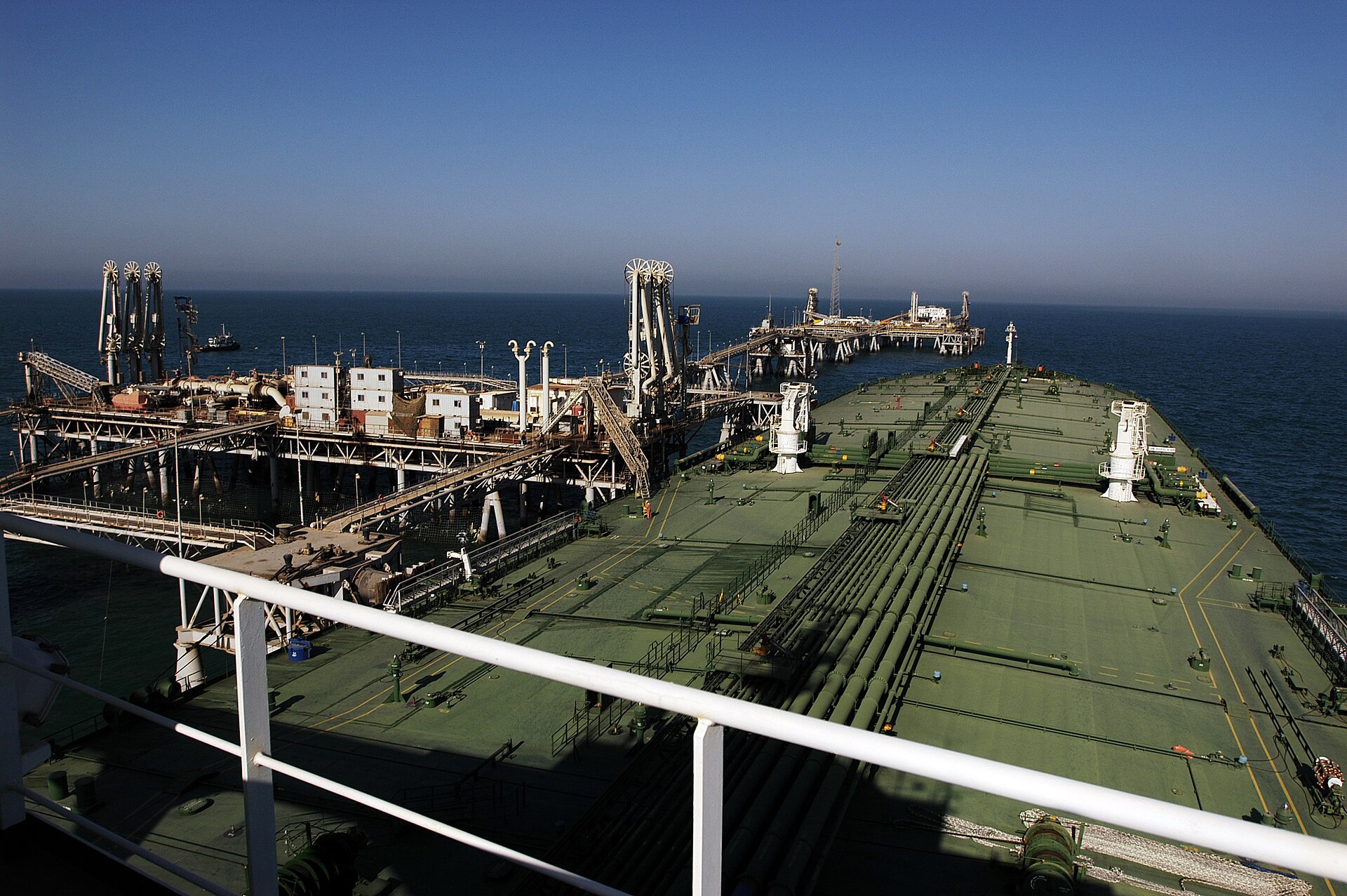
Table of Contents
- The $47 Spread That Broke the Textbook
- Why Can’t Traders Arbitrage a $47 Spread?
- The Saudi Revenue Paradox: Record Prices, Flat Income
- How Is Aramco Posting Record Profits While Saudi Revenue Collapses?
- Goldman’s $90 Forecast and the Convergence Bet
- The Inventory Cliff JPMorgan Sees Coming
- Iran’s Toll Booth and the Insurance Death Spiral
- Why Can’t Hormuz Just Reopen After a Ceasefire?
- The Three Break-Evens and Which One Matters
- What Convergence Actually Looks Like
The $47 Spread That Broke the Textbook
On April 7, the Exchange-for-Physical instrument — the swap that connects Brent futures to physical delivery — hit $47 a barrel intraday. In 39 years of S&P Global Platts assessments, no EFP had ever exceeded $5. The previous ceiling was not a record anyone tracked because nobody imagined a world where it would matter. It matters now because the EFP is the bridge between paper and physical oil markets, and that bridge just collapsed under the weight of 13 million barrels a day of stranded supply.
Three days later, North Sea Forties crude touched $148.87 — surpassing its July 2008 all-time high. Dated Brent, the physical benchmark that actually determines what refiners pay, hit $144. Meanwhile, ICE Brent front-month futures sat near $97–$109, depending on the hour. Morgan Stanley’s team put it precisely: “The market is scrambling for prompt, refinery-usable barrels, and stress is appearing first in the part of the benchmark that is closest to the immediate physical problem.” The part closest to the problem is the part where real crude changes hands.
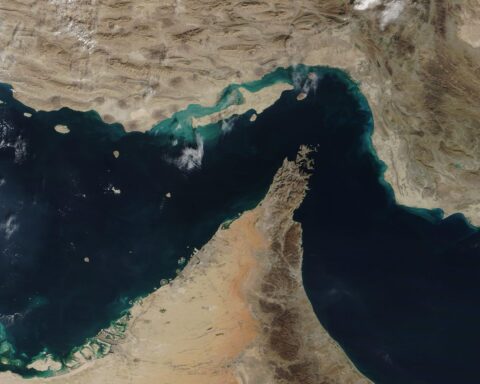
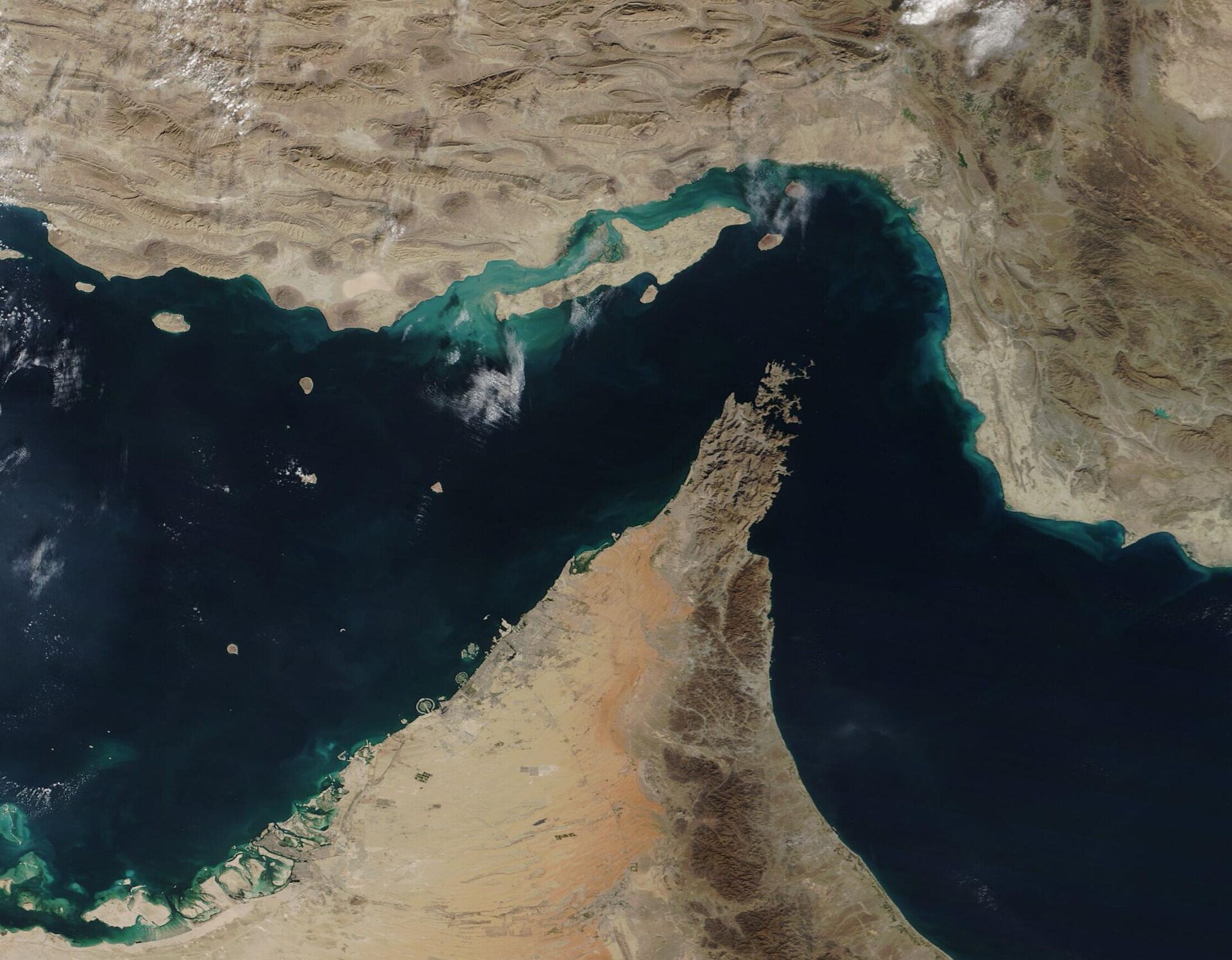
The spread in normal markets runs $1–$3. In the worst weeks of the 2011 Libya disruption — when 1.5 million barrels a day went offline — the Brent-Dubai differential widened to $8.50. Libya was a single-grade problem affecting one basin. The 2026 Hormuz crisis blocks 20 million barrels a day through a single 21-mile-wide transit point, physically preventing the arbitrage mechanism that normally closes spot-futures gaps within hours. This is not Libya scaled up. It is a structurally different kind of disruption, and the market is telling you so in the only language it speaks — price.
Why Can’t Traders Arbitrage a $47 Spread?
In a functioning market, a $47 spread between physical and futures would last approximately fifteen minutes. Traders would buy cheaper futures, sell physical forwards using EFP swaps, and pocket the difference until the gap closed. The mechanism is as old as commodity trading. It requires one thing: the ability to move a barrel from where it is cheap to where it is expensive. When 13 million barrels a day are geographically stranded behind a mined, blockaded chokepoint patrolled by an IRGC navy that seized two container ships on April 22 — the same day Iran’s foreign minister declared the strait “completely open” — capital availability is irrelevant. The barrel itself cannot move.
The geographic mismatch compounds the problem mechanically. ICE Brent references North Sea crude, which sits 37 to 48 transit days from Asian refineries. Asian refiners need Dubai-grade physical with two-to-four-day delivery windows. A refiner in Ulsan or Jamnagar cannot substitute a deferred London futures contract when its crude inventory is measured in days, not weeks. Pavel Molchanov at Raymond James put the hierarchy plainly: “If someone wants oil for immediate delivery — rather than in the future — what matters is the spot price.” Futures are a financial instrument. Physical crude is an industrial input. The war made those two things unrelated.
The Middle East briefing 3,000+ readers start their day with.
One email. Every weekday morning. Free.
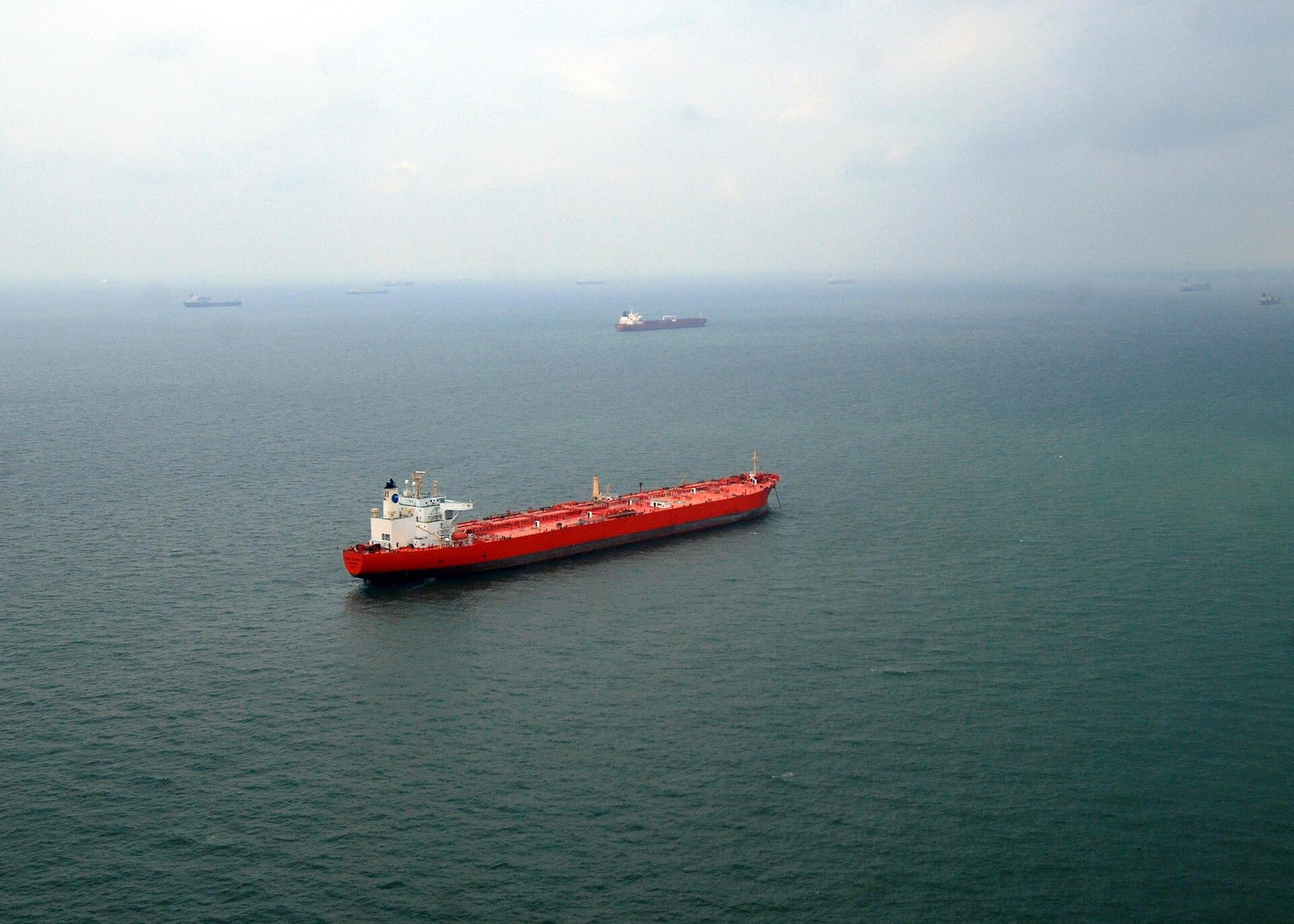
Then there is the cost of trying. War-risk insurance for a $100 million VLCC peaked at $5 million per single Hormuz transit in March — up from $150,000–$250,000 pre-crisis. Even at the “moderated” rates of late March, hull premiums run 0.8%–1% of vessel value. Stack the IRGC’s $2 million toll, routing delays, and P&I coverage, and a single transit costs $6–$10 million before the vessel loads a drop of crude. At those numbers, the $47 spread does not cover the risk-adjusted cost of moving the barrel. Arbitrage does not fail because traders lack sophistication. It fails because the physical world will not cooperate.
The Saudi Revenue Paradox: Record Prices, Flat Income
Before the war, Saudi Arabia pumped 6.7 million barrels a day and sold them at roughly $75 a barrel. That produced approximately $502 million in daily oil revenue. In April 2026, with Brent at $102, Saudi production has fallen to around 5 million barrels a day. Daily revenue: approximately $510 million. A 36% price increase has been almost entirely absorbed by a 25% volume decline, producing a net improvement of $8 million a day — less than what a single VLCC cargo is worth at current physical prices.
The arithmetic gets worse when you examine what Saudi Arabia cannot collect. Physical Dated Brent hit $144. Aramco’s Official Selling Price for Arab Light to Asia was set at a $19.50 premium over Oman/Dubai, producing an effective May delivery price of roughly $110 a barrel. Saudi crude is selling at a $34 discount to the physical market it cannot access, because the barrels that would capture that premium are the ones that used to go through Hormuz. The kingdom lost its swing-producer crown to a war that stripped it of the one thing swing producers need: the ability to put incremental barrels on the water.
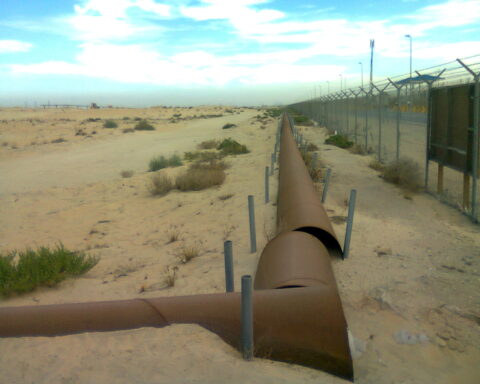
The Yanbu ceiling is the structural constraint nobody in the futures market is pricing. The East-West Pipeline carries 7 million barrels a day to the Red Sea coast, but domestic refining consumes roughly 2 million of those barrels, leaving an export ceiling of 4.0–5.9 million barrels a day. Yanbu loaded 47 VLCCs in March against a pre-war average of 11–12 per month — a four-fold increase that port infrastructure cannot sustain. Berth congestion, loading arm capacity, and draft limitations are physical constraints that do not respond to price signals. Saudi March output of 7.25 million barrels a day was already 3 million below its OPEC+ quota, a gap covered in the production crash breakdown. The price is high. The volume is gone. The revenue is flat. That arithmetic reached a precise inflection point on April 29, when Brent at $114.50 finally restored Saudi daily oil income to pre-war levels — but $300–500 million in daily war costs consumed the entire recovery. Saudi Arabia’s war revenue paradox is no longer theoretical.
How Is Aramco Posting Record Profits While Saudi Revenue Collapses?
AlJazira Capital forecasts Aramco’s Q1 2026 net profit at SAR 108.8 billion — roughly $29 billion, up 56.7% from the previous quarter and 13.8% year-on-year. At first glance, this looks like the war is making Saudi Arabia rich. It is making Aramco’s shareholders rich. The Saudi state is a different ledger, and the 2019 IPO architecture is why.
When Saudi Arabia floated 1.73% of Aramco in December 2019, it created a corporate structure that separates dividend obligations from production-dependent royalties. Aramco’s profit margin rises with price because its upstream costs are among the lowest in the world — roughly $3–$5 per barrel lifting cost. But the state’s fiscal position depends on volume-weighted royalties and taxation, not headline profit. Pre-war, Aramco’s daily revenue on 10.4 million barrels at roughly $80 was $832 million. At 7.25 million barrels and $102, it is $739 million — a $93 million daily decline that the corporate P&L hides behind margin expansion. The company looks healthy. The treasury does not.
This matters because the fiscal gap determines whether Vision 2030 megaprojects continue, whether PIF’s $930 billion asset target stays credible, and whether Saudi Arabia’s sovereign credit trajectory holds. Aramco’s Q1 earnings call will be the most misleading document in the oil market — not because AlJazira Capital’s numbers are wrong, but because they answer the wrong question. The question is not whether Aramco can make money at $100 oil. It always could. The question is whether the Saudi state can fund itself on 5 million barrels a day, and the answer emerging from the data is no.
Goldman’s $90 Forecast and the Convergence Bet
Goldman Sachs upgraded its Q4 2026 Brent forecast from $80 to $90 on April 26, while simultaneously estimating a 9.6 million barrel-per-day market deficit for Q2 2026. Read those two numbers together and the internal tension is obvious: the largest deficit Goldman has ever modeled requires closing through some combination of demand destruction, supply recovery, and strategic reserve releases — mechanisms that are themselves running into structural limits.
The forward curve tells you what Goldman is actually betting on. December 2026 Brent futures traded at $79.92 on April 10. That means the market — and Goldman’s model — expects physical-to-futures convergence to go downward: physical prices falling toward the $80–$90 range, not futures rising toward the $144 physical market. Goldman’s forecast arithmetic is unsparing: $90 Brent at 5 million barrels a day produces annual Saudi oil revenue of roughly $164 billion — about $33–$38 billion below what the kingdom needs at Goldman’s own PIF-inclusive break-even estimate of $108–$111. Goldman’s model has an elegant internal logic. It also requires Hormuz to function again within six months, and nobody in the physical market is pricing that outcome.
Goldman’s own language betrays the fragility: “Because extreme inventory draws are not sustainable, even sharper demand losses could be required if the supply shock persists longer.” Translation: if Hormuz stays closed, the only mechanism that brings physical-to-futures convergence is a recession severe enough to destroy 9.6 million barrels a day of demand. That is not a forecast. It is a prayer dressed in a spreadsheet. Adi Imsirovic at CSIS identified the analytical trap precisely — the “TACO” trade, which stands for “Trump Always Chickens Out,” where futures traders systematically underprice disruption risk because they assume political resolution. Goldman’s “sloppy peace” scenario is Saudi Arabia’s fiscal trap, not its exit.
“Paper markets are likely to sell off harder than physical markets, which will be stuck with disrupted supply chains.”— Adi Imsirovic, Senior Associate, CSIS Energy Security Program
The Inventory Cliff JPMorgan Sees Coming
JPMorgan’s Natasha Kaneva has modeled the endgame. OECD commercial crude inventories are projected to draw roughly 166 million barrels in April and another 67 million in early May, reaching what she calls the “operational minimum” — approximately 842 million barrels, or 30 days of refining demand — between May 9 and May 30. Operational minimum is not a metaphor. It is the point below which refineries cannot maintain continuous feed to crude distillation units. Below 842 million barrels, refiners start shutting processing capacity not because they choose to, but because the crude physically is not there.
At operational minimum, Kaneva’s model shows prices moving “exponentially rather than linearly.” This is the phase transition that the futures market is not pricing. Linear price response is what happens when supply tightens within a system that still has buffer. Exponential response is what happens when the buffer is gone and every marginal barrel becomes a bidding war between refiners who cannot afford to lose. Paul Sankey at Sankey Research has been blunter than most on the inventory situation: “The emergency inventories are probably lower in real actual terms than they appear on your screen and they appear very low.” The IEA’s Fatih Birol has called 13 million barrels a day offline “the biggest energy security threat in history.” Neither is prone to hyperbole.
The IEA’s April Oil Market Report provides the granular picture. Global observed inventories fell 85 million barrels in March alone. Stocks outside the Middle East Gulf have drawn 205 million barrels at a rate of 6.6 million barrels per day. Cumulative losses surpassed 360 million barrels through March and are projected to reach 440 million by end of April. Total alternative-route exports — Yanbu, Fujairah, Iraq’s Ceyhan pipeline — are running at 7.2 million barrels a day, still 13 million below pre-war Hormuz throughput. The arithmetic is remorseless. Even if every bypass route runs at theoretical maximum, the deficit does not close.
Iran’s Toll Booth and the Insurance Death Spiral
Iran approved the “Strait of Hormuz Management Plan” on March 30–31, converting the world’s most important oil chokepoint into a permission-based corridor. The toll is $2 million per vessel, payable in yuan via Kunlun Bank, Bitcoin, or USDT — deliberately structured to bypass SWIFT and dollar-denominated sanctions infrastructure. Iranian MP Mohammadreza Rezaei Kouchi framed the parliamentary legislation in revenue terms: “Parliament is pursuing a plan to formally codify Iran’s sovereignty, control and oversight of the Strait of Hormuz, while also creating a source of revenue through the collection of fees.” The IRGC Navy enforces; the Iran Ports and Maritime Organisation administers. The bureaucratic architecture is designed to make the toll look like a port fee rather than an act of war.
The toll creates an insurance death spiral that is self-reinforcing. Lloyd’s Market Association classified the Persian Gulf as a war-risk zone, requiring separate hull war-risk policies above standard marine coverage. Pre-crisis, insuring a $100 million VLCC for a Hormuz transit cost $150,000–$250,000 — effectively a rounding error on a $150 million cargo. By March 2026, that premium peaked at $5 million per transit, a 20-to-33-fold increase. The moderation to 0.8%–1% by late March still means $800,000–$1 million in war-risk premium alone, before adding the IRGC toll, P&I club surcharges, crew hazard pay, and routing delays that push total transit costs to $6–$10 million per single passage. Repsol CEO Josu Jon Imaz captured the downstream reality: “Physical transactions are under a lot of strain.”
The double blockade mechanism makes transit costs irrelevant for most vessels anyway. The US controls Arabian Sea entry from April 13; the IRGC controls Gulf of Oman exit from March 4. Only 45 transits have occurred since the April 8 ceasefire — 3.6% of the pre-war daily baseline. Vessels need approval from both sides, and both sides have conditions the other rejects. The insurance market is pricing a corridor that barely exists, and every seizure — MSC Francesca and Epaminondas on April 22, the day Iran’s FM declared the strait open — reprices the next policy upward.
| Transit Cost Component | Pre-War (per VLCC) | April 2026 (per VLCC) | Change |
|---|---|---|---|
| War-risk hull premium | $150K–$250K | $800K–$5M | 5x–33x |
| IRGC transit toll | $0 | $2M | New |
| P&I club surcharge | Negligible | $500K–$1M (est.) | New |
| Crew hazard bonus | $0 | $200K–$400K (est.) | New |
| Routing delay cost | $0 | $1M–$2M (est.) | New |
| Total per transit | $150K–$250K | $6M–$10M | 30x–40x |
Why Can’t Hormuz Just Reopen After a Ceasefire?
The futures market is pricing a ceasefire as a binary switch — Hormuz closed, then Hormuz open. The physical market knows better. The IRGC mined approximately 200 square miles of the standard shipping lanes between February and April, publishing a chart on April 9 marking the conventional traffic separation scheme as a “danger zone” and redirecting vessels to a 5-nautical-mile channel between Qeshm and Larak islands — inside Iranian territorial waters. Even if a ceasefire were signed today and every party complied immediately, mine clearance of 200 square miles requires approximately 51 days at the rate established during the 1991 Kuwait benchmark, and that assumed full mine countermeasures capability.
The US does not have full capability in theater. The four Avenger-class MCM ships that were based in Bahrain were decommissioned in September 2025. Only two remain in the region. Three Littoral Combat Ships with mine warfare modules are deployed in Asia, not the Gulf. The mine clearance timeline is not 51 days — it is 51 days from the point at which adequate assets arrive, are positioned, and begin systematic sweep operations in an area where the IRGC may or may not have stopped laying new mines. Morgan Stanley’s Martijn Rats identified the structural fragility this creates: “The distance between a manageable disruption and a disproportionate price move has collapsed.” A ceasefire that the futures market prices as resolution would, in physical reality, be the beginning of a months-long reopening process during which every mine-clearance setback reprices risk upward.
FM Araghchi’s April 17 declaration that Hormuz is “completely open” came with three conditions that ensure it is not: follow IRGC-designated routes, commercial vessels only, and explicit IRGC Navy permission before entry. Iran’s parliament is advancing a 12-article sovereignty law that would codify these conditions permanently. The physical market understands that “open” and “open for unrestricted commercial transit at pre-war volumes” are different propositions separated by months and billions of dollars in mine clearance, insurance normalization, and route de-confliction. The futures market has not caught up.
The Three Break-Evens and Which One Matters
Saudi Arabia has three fiscal break-even oil prices, and which one you use determines whether the kingdom is solvent or hemorrhaging. The IMF’s central-government-only figure is $86.60 a barrel — the number Riyadh cites in investor presentations. Bloomberg Economics’ consolidated figure, which includes off-budget spending through government-related entities, is $94. Goldman Sachs’ PIF-inclusive figure, which accounts for the Public Investment Fund’s capital requirements, is $108–$111. The gap between $86.60 and $111 is the difference between fiscal discomfort and a structural funding crisis for Vision 2030.
At current production of roughly 5 million barrels a day, the math is unforgiving at every break-even. Goldman’s war-adjusted Saudi deficit estimate is 6.6% of GDP — approximately $73 billion — against an official projection of 3.3% or $44 billion. Deutsche Bank, Emirates NBD, and ADCB cluster at 5.0%–5.3%, still well above the official figure. The OPEC+ decision to add 206,000 barrels a day in May is symbolic arithmetic — Saudi actual output is 3 million barrels below its quota of 10.2 million. You cannot add barrels you cannot ship.
| Break-Even Measure | Price ($/bbl) | Source | Annual Revenue Gap at 5M bpd, $90 Brent |
|---|---|---|---|
| IMF central-government | $86.60 | IMF Article IV / AGSI | +$6.2B surplus |
| Bloomberg consolidated | $94.00 | Bloomberg Economics | −$7.3B deficit |
| Goldman PIF-inclusive | $108–$111 | Goldman Sachs | −$33B to −$38B deficit |
Goldman’s own $90 Q4 forecast, applied against Goldman’s own PIF-inclusive break-even, produces an annual shortfall of $33–$38 billion in oil revenue alone. That is before accounting for the non-oil revenue compression that accompanies any sustained disruption to logistics, construction supply chains, and the expatriate workforce. The IMF number lets Riyadh claim solvency. The Goldman number determines whether NEOM, the Red Sea tourism corridor, and the Diriyah Gate project stay funded. Those are not the same question, and the market that matters — the one where physical barrels actually trade — is answering the Goldman version.
What Convergence Actually Looks Like
The CSIS analysis by Adi Imsirovic and Clayton Seigle — the most rigorous public paper on wartime oil price mechanics — establishes a critical point that Goldman’s forecast model appears to ignore: convergence between physical and futures prices will go downward, not upward. Physical prices will fall toward futures as disrupted supply chains slowly rebuild, not the other way around. But “slowly” is measured in months, not weeks, and the path down is gated by mine clearance timelines, insurance normalization curves, and the IRGC’s demonstrated willingness to seize vessels after declaring the strait open.
What this means for Saudi Arabia is that the kingdom is trapped between two convergence timelines that work against it simultaneously. In the near term, physical prices remain elevated but inaccessible — Saudi crude goes through Yanbu at OSP, not through Hormuz at Dated Brent. The volume ceiling means the kingdom cannot capture the war premium on anything beyond its pipeline-constrained export capacity. In the medium term, when convergence does arrive, it arrives as price decline — physical falling toward the $80–$90 futures level — at which point the volume problem becomes a price problem too. Saudi Arabia gets squeezed on the way up and squeezed on the way down.
“The next two months is going to be an ongoing, absolute disaster even if you open the straits tomorrow.”— Paul Sankey, President, Sankey Research
Sankey’s timeline aligns with Kaneva’s inventory model and Imsirovic’s convergence analysis. Even in the optimistic scenario — ceasefire holds, mine clearance begins immediately, insurance markets gradually normalize — physical prices stay elevated for 60–90 days while the operational bottleneck clears. In the pessimistic scenario, where the double blockade persists through Hajj and the ceasefire expires April 22 without extension, Kaneva’s operational-minimum threshold triggers the exponential price response she modeled, and the physical-futures spread widens further rather than closing. Goldman’s $90 is not wrong as a mathematical exercise. It is wrong as a description of the world Saudi Arabia actually lives in — a world where the most important oil exporter on earth is selling at a structural discount to a physical market it helped create and can no longer reach.
Frequently Asked Questions
What is the Exchange-for-Physical (EFP) instrument and why does its record matter?
The EFP is a privately negotiated swap that allows a trader holding a futures position to exchange it for a physical cargo, or vice versa. It is the mechanical link between paper and physical oil markets. When the EFP trades at $0.50–$2.00, the two markets are functionally connected. When it hit $47 on April 7 — nine times the prior 39-year record of $5 — it signaled that the connection has severed. Traders cannot convert futures into deliverable barrels because the barrels are geographically inaccessible, making the EFP a direct measurement of chokepoint risk rather than normal basis differential. In 39 years of S&P Global Platts physical assessments before 2026, it never exceeded single digits.
Could strategic petroleum reserve releases close the physical-futures gap?
IEA member countries hold approximately 1.2 billion barrels in government-controlled strategic reserves, with the US SPR at roughly 395 million barrels — its lowest since 1983 after the 2022 drawdown. At the current deficit rate of 6.6 million barrels per day (IEA non-Gulf stock draw rate), total IEA strategic reserves would last approximately 182 days if fully deployed. However, SPR release mechanisms are designed for temporary disruptions of 1–3 million barrels a day, not a 13-million-barrel structural blockade. The infrastructure to release at rates exceeding 4.4 million barrels a day (the US maximum sustained SPR drawdown) does not exist. China’s separate SPR of 1.2 billion barrels provides 109 days of domestic cover but has never been made available to international markets. Reserve releases can moderate price spikes — they cannot substitute for a functioning chokepoint.
What happens to Saudi Arabia’s sovereign credit rating if the deficit reaches Goldman’s 6.6% estimate?
Saudi Arabia currently holds an A/A1 rating from S&P and Moody’s, underpinned by low public debt (approximately 26% of GDP pre-war) and substantial foreign reserves ($432 billion as of February 2026, per SAMA). A sustained 6.6% deficit would draw reserves down at $5–$6 billion per month if funded domestically, reaching a psychologically significant $400 billion threshold by late 2026. Fitch placed Saudi Arabia on “Rating Watch Negative” on April 15, citing “uncertainty regarding the duration and fiscal impact of the Hormuz disruption.” A downgrade to A- would trigger portfolio rebalancing by sovereign wealth fund index trackers and raise borrowing costs on the roughly $18 billion in international bonds Saudi Arabia planned to issue in 2026. PIF’s $15 billion green bond program, priced at A-equivalent spreads, would face immediate repricing.
How does the 2026 physical-futures divergence compare to the 2008 oil price spike?
In July 2008, Brent futures hit $147.50 and physical Dated Brent tracked within $2–$3 — the spread was unremarkable because the 2008 spike was demand-driven (Chinese industrial expansion) with Hormuz fully functional. Arbitrage worked normally: traders could move barrels freely between regions, and the EFP stayed under $2. The 2026 divergence is structurally different because it is supply-blockade-driven with the arbitrage mechanism itself disabled. Physical exceeded $148 while futures sat $40–$50 lower, a configuration that has no modern precedent. The closest historical parallel is not 2008 but the 1973 Arab oil embargo, where posted prices and actual transaction prices diverged by up to 400% in spot cargo markets — though data from that era is too fragmented for precise EFP comparison because the instrument did not yet exist.
Why doesn’t Saudi Arabia simply increase pipeline capacity to Yanbu?
The East-West Pipeline (Petroline) was built in 1981 with a design capacity of 5 million barrels a day, later expanded to 7 million. Expanding beyond 7 million would require new pump stations, additional pipeline loops, and terminal expansion at Yanbu — a project with a minimum 3–4 year construction timeline and estimated cost of $8–$12 billion based on comparable Gulf pipeline projects (Iraq’s Basra-Aqaba proposal and the cancelled IPSA-2 line). Saudi Aramco reportedly began preliminary engineering assessments in late March 2026, but no formal expansion announcement has been made. The constraint is not financial but temporal: the pipeline expansion that would solve the 2026 crisis cannot be built during the 2026 crisis. Yanbu’s current bottleneck is not just pipeline flow but port infrastructure — berth space, loading arms, and draft limitations that restrict simultaneous VLCC loading to four vessels.