
DHAHRAN — Iran sent sixteen drones in four waves at Saudi Arabia’s Shaybah oil field on March 7, 2026, and Saudi air defenses destroyed every one of them over the Empty Quarter desert. The interception preserved one million barrels per day of production capacity at one of the most remote major oil installations on Earth. But the attack exposed a strategic reality that no missile battery can fix: Saudi Arabia’s most valuable energy asset sits 500 miles from the nearest major city, surrounded by nothing but sand dunes that stretch to the horizon in every direction, and Iran now knows exactly how to find it.
The Shaybah assault marks a decisive shift in Iran’s targeting strategy. After spending the first week of the conflict concentrating on coastal facilities and military bases, Tehran reached deep into the Arabian interior, probing Saudi defenses in terrain where interception is logistically punishing and any failure catastrophic. With Brent crude already at $85 per barrel and analysts warning prices could breach $100, the Shaybah attack forces a question the Kingdom’s defense planners have avoided for decades: can Saudi Arabia protect a million barrels a day in the middle of nowhere, indefinitely, against an adversary that can produce drones faster than Riyadh can buy interceptors?
Table of Contents
- What Happened at Shaybah on March 7?
- What Is the Shaybah Oil Field and Why Does It Matter?
- Is Shaybah More Strategically Important Than Ras Tanura?
- How Is Iran Changing Its Targeting Strategy?
- The Saudi Energy Vulnerability Matrix
- Can Air Defense Cover 2.15 Million Square Kilometres of Desert?
- The 2019 Warning That Went Unheeded
- What Does the Shaybah Attack Mean for Oil Markets?
- The Pipeline Solution and Its Limits
- The Asymmetric Math That Keeps Saudi Generals Awake
- What Happens When Iran Sends a Hundred Drones Instead of Sixteen?
- Frequently Asked Questions
What Happened at Shaybah on March 7?
Saudi Arabia’s Ministry of Defense announced on March 7, 2026, that air defense systems intercepted and destroyed sixteen drones launched toward the Shaybah oil field in the Empty Quarter. The drones arrived in four distinct waves, according to the Saudi Gazette, suggesting a coordinated multi-axis assault designed to probe and overwhelm Saudi air defenses from multiple approach vectors. The interceptions occurred over Saudi Arabia’s share of the Rub’ al-Khali desert, the largest continuous sand desert on the planet.
Simultaneously, the Ministry reported the interception of a ballistic missile and a cruise missile targeting Prince Sultan Air Base in al-Kharj, south of Riyadh, which hosts United States military forces. The combined operation — drones at Shaybah in the far south and missiles at al-Kharj in the central region — indicates Iran was attempting to stretch Saudi air defenses across multiple threat axes separated by hundreds of kilometres, according to defense analysts cited by Arab News.
Earlier in the day, CGTN reported an explosion and fire at the Shaybah facility, though Saudi authorities did not confirm any ground impact. Argus Media confirmed that the field’s one-million-barrel-per-day production capacity was preserved. The attack represented the first confirmed targeting of Shaybah in the current conflict, following repeated strikes on the Ras Tanura refinery and coastal infrastructure during the war’s opening week.
The scale of the assault was notable. Sixteen drones represent a significant commitment of Iran’s unmanned aerial vehicle inventory for a single target, and the four-wave structure mirrors the saturation tactics Iran has refined through its proxy networks over the past decade. Each wave likely tested whether Saudi defenders had reloaded and repositioned after engaging the previous swarm — a tactic designed to find the precise moment when a battery goes cold.
The Middle East briefing 3,000+ readers start their day with.
One email. Every weekday morning. Free.
What Is the Shaybah Oil Field and Why Does It Matter?
Shaybah is a super-giant oil field located on the northern edge of the Rub’ al-Khali, approximately 10 kilometres south of the border with Abu Dhabi in the United Arab Emirates. Aramco discovered the field in 1968, but the extreme desert conditions — sand dunes rising 300 metres high, temperatures exceeding 50 degrees Celsius, and winds gusting to 80 kilometres per hour — delayed development for three decades. Construction began in 1995, and the field came on-stream in 1998, a full year ahead of schedule, according to Aramco’s corporate records.
The numbers define Shaybah’s significance. The field holds estimated recoverable reserves exceeding 14 billion barrels of crude oil and 25 trillion cubic feet of natural gas. Production capacity reached one million barrels per day in 2016, when a 250,000-barrel expansion doubled the original output. The crude produced is Arabian Extra Light — a premium grade with a specific gravity of 42 degrees API and a sulphur content below 0.7 percent — that commands a price premium on global markets and is particularly valued by Asian refiners.

Beyond crude oil, Shaybah hosts a critical natural gas liquids recovery plant that feeds Saudi Arabia’s downstream petrochemical industry. The NGL plant processes associated gas from the field, supplying feedstock that underpins a petrochemical sector worth tens of billions of dollars annually. Disrupting Shaybah would therefore damage not just crude supply but the entire petrochemical value chain that Saudi Arabia has spent decades building.
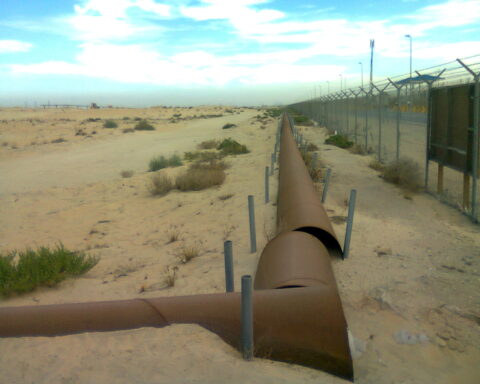
The infrastructure required to sustain Shaybah in the Empty Quarter is staggering. Aramco moved approximately 13 million cubic metres of sand during construction. A 386-kilometre road was carved through the desert. A 645-kilometre pipeline carries crude north to the Abqaiq processing facility, the world’s largest oil processing plant, which handles over 7 million barrels per day. A 650-kilometre fibre optic cable connects Shaybah to Aramco’s main communications network. The field maintains housing for 1,000 workers, an airstrip, a fire station, power generation facilities, and maintenance workshops — an entire self-contained community in one of the most inhospitable places on Earth.
This remoteness, the very quality that made Shaybah so difficult to develop, now makes it extraordinarily difficult to defend.
Is Shaybah More Strategically Important Than Ras Tanura?
The conventional focus of the war’s first week fell on Ras Tanura — the world’s largest offshore crude oil loading terminal, located on the Persian Gulf coast. Iran struck Ras Tanura with drones on March 2, forcing a partial shutdown that disrupted global tanker schedules. The coastal location, the sheer volume of exports processed through the terminal, and the dramatic footage of fires burning above the refineries made Ras Tanura the focal point of international media coverage.
The assumption embedded in that coverage — that coastal export infrastructure represents Saudi Arabia’s greatest vulnerability — deserves challenge. Ras Tanura processes and loads crude from multiple fields; if one source goes offline, others can partially compensate. Aramco demonstrated this flexibility after the 2019 Abqaiq-Khurais attack, restoring 50 percent of the 5.7 million barrels per day lost within a week. Coastal facilities also benefit from proximity to military installations, population centres, and the layered air defense network that Saudi Arabia has concentrated along its Gulf coast.
Shaybah occupies a different position in the vulnerability calculus. Its production of one million barrels per day of Arabian Extra Light crude cannot be easily replaced by other Saudi fields, which predominantly produce heavier grades. Arabian Extra Light commands a price premium of $2-4 per barrel over Arabian Light, making Shaybah’s output disproportionately valuable per barrel. The NGL recovery plant has no direct equivalent elsewhere in the Saudi system — its loss would cascade through the petrochemical supply chain.
Most critically, Shaybah feeds into the pipeline network that terminates at Abqaiq. Any sustained disruption at Shaybah reduces the volume available for processing at Abqaiq, which in turn reduces what can flow through the East-West pipeline to Yanbu on the Red Sea — the very bypass route Saudi Arabia is relying on to circumvent Iran’s Strait of Hormuz blockade. Shaybah’s loss would therefore simultaneously reduce production, damage petrochemicals, and weaken the Kingdom’s ability to export through its Hormuz workaround.
Ras Tanura is the pipeline’s mouth. Shaybah is the artery that feeds it. Strike the mouth and oil pools behind it, waiting for repairs. Strike the artery and the system starves.
Energy infrastructure analysis, March 2026
How Is Iran Changing Its Targeting Strategy?
Iran’s target selection over the first eight days of the conflict reveals a systematic effort to map Saudi Arabia’s defensive perimeter and identify gaps. The pattern is not random. Each phase probed a different type of vulnerability, and the weapons deployed evolved to match the target.
| Phase | Dates | Targets | Weapons Used | Strategic Objective |
|---|---|---|---|---|
| Phase 1 | Feb 28 – Mar 1 | Prince Sultan Air Base, Ras Tanura, US Embassy Riyadh | Ballistic missiles, cruise missiles, drones | Demonstrate reach; strike military and symbolic targets |
| Phase 2 | Mar 2 – Mar 5 | Ras Tanura (again), Eastern Province, data centres, Riyadh | Drones, cruise missiles | Disrupt infrastructure; test redundancy |
| Phase 3 | Mar 6 – Mar 7 | Shaybah (Empty Quarter), Prince Sultan Air Base (again) | Drone swarms (16 in 4 waves), ballistic missiles | Probe remote defenses; stretch coverage |
The progression from Phase 1 to Phase 3 reveals three shifts. First, Iran moved from high-value symbolic targets (the US Embassy, military bases) to economic infrastructure (oil fields, refineries, pipelines). Second, the geography expanded from the Gulf coast inward to the deep interior. Third, the tactics evolved from mixed-weapon salvos to dedicated drone swarms, likely because drones offer a superior cost-exchange ratio and can be deployed in greater numbers than Iran’s dwindling precision missile stocks.
The Shaybah attack specifically demonstrates that Iran has mapped Saudi Arabia’s air defense topology and identified the Empty Quarter as a coverage gap. Drones flying low over the desert present a particularly difficult radar challenge — the flat terrain offers no ground clutter to mask them, but the sheer distance from radar installations near the coast means detection may come late, compressing the engagement window.
Phase 3 also revealed coordination sophistication. By simultaneously targeting Shaybah in the far south and Prince Sultan Air Base near Riyadh, Iran forced Saudi air defenses to engage threats separated by approximately 800 kilometres — testing whether the Kingdom can maintain defensive posture at multiple points simultaneously. The answer on March 7 was yes. The question is whether that answer holds when the drone count rises from sixteen to sixty.
The Saudi Energy Vulnerability Matrix
Saudi Arabia’s oil infrastructure sprawls across a territory of 2.15 million square kilometres — roughly the size of Western Europe. Defending every facility against drone and missile attack is mathematically impossible without an air defense budget that would dwarf the entire national defense spending of most NATO countries. The challenge demands prioritisation, and prioritisation demands a clear understanding of which facilities matter most and which are most exposed.
Analysis of publicly available data on Saudi Arabia’s major energy facilities produces a vulnerability assessment that military planners in Riyadh are almost certainly conducting in classified form. Five factors determine each facility’s risk profile: production capacity, defensive proximity, redundancy, export route dependency, and attack history.
| Facility | Capacity (bpd) | Defense Proximity | Redundancy | Export Route | Attack History | Vulnerability Rating |
|---|---|---|---|---|---|---|
| Abqaiq Processing | 7,000,000 | High (coastal belt) | None — irreplaceable | Both (Hormuz + pipeline) | 1 (2019) | CRITICAL |
| Ghawar Field | 3,800,000 | High (Eastern Province) | Partial | Both | 0 | HIGH |
| Ras Tanura Terminal | 6,500,000 (throughput) | High (coastal) | Partial (Yanbu alt.) | Hormuz only | 3 (2026) | HIGH |
| Safaniya Offshore | 1,300,000 | Medium (offshore) | Partial | Hormuz primary | 0 | MEDIUM-HIGH |
| Shaybah Field | 1,000,000 | Low (Empty Quarter) | None for AXL grade | Pipeline to Abqaiq | 2 (2019, 2026) | CRITICAL |
| Khurais Field | 1,200,000 | Medium (interior) | Partial | Pipeline to Abqaiq | 1 (2019) | HIGH |
| Yanbu Terminal | 5,000,000 (pipeline cap.) | Medium (Red Sea) | None as bypass hub | Red Sea only | 0 | HIGH |
The matrix reveals two facilities at critical vulnerability: Abqaiq and Shaybah. Abqaiq is irreplaceable because virtually all Saudi crude passes through its processing and stabilisation systems before export; there is no alternative facility of comparable scale anywhere in the world. Shaybah is critical for a different reason — its isolation. While Abqaiq benefits from the densest air defense coverage in the Kingdom, Shaybah sits hundreds of kilometres from the nearest permanent military installation of comparable capability.
The matrix also exposes a strategic dilemma. Yanbu, Saudi Arabia’s Red Sea export terminal and the endpoint of the East-West pipeline, has never been attacked. As Aramco reroutes increasing volumes through Yanbu to bypass the Hormuz blockade, the terminal’s importance grows — and with it, the incentive for Iran to strike westward. Defending Yanbu adequately would require redeploying assets currently protecting Eastern Province facilities. The Kingdom cannot be strong everywhere.
Can Air Defense Cover 2.15 Million Square Kilometres of Desert?
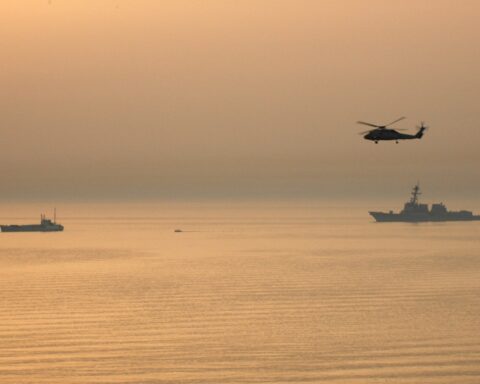
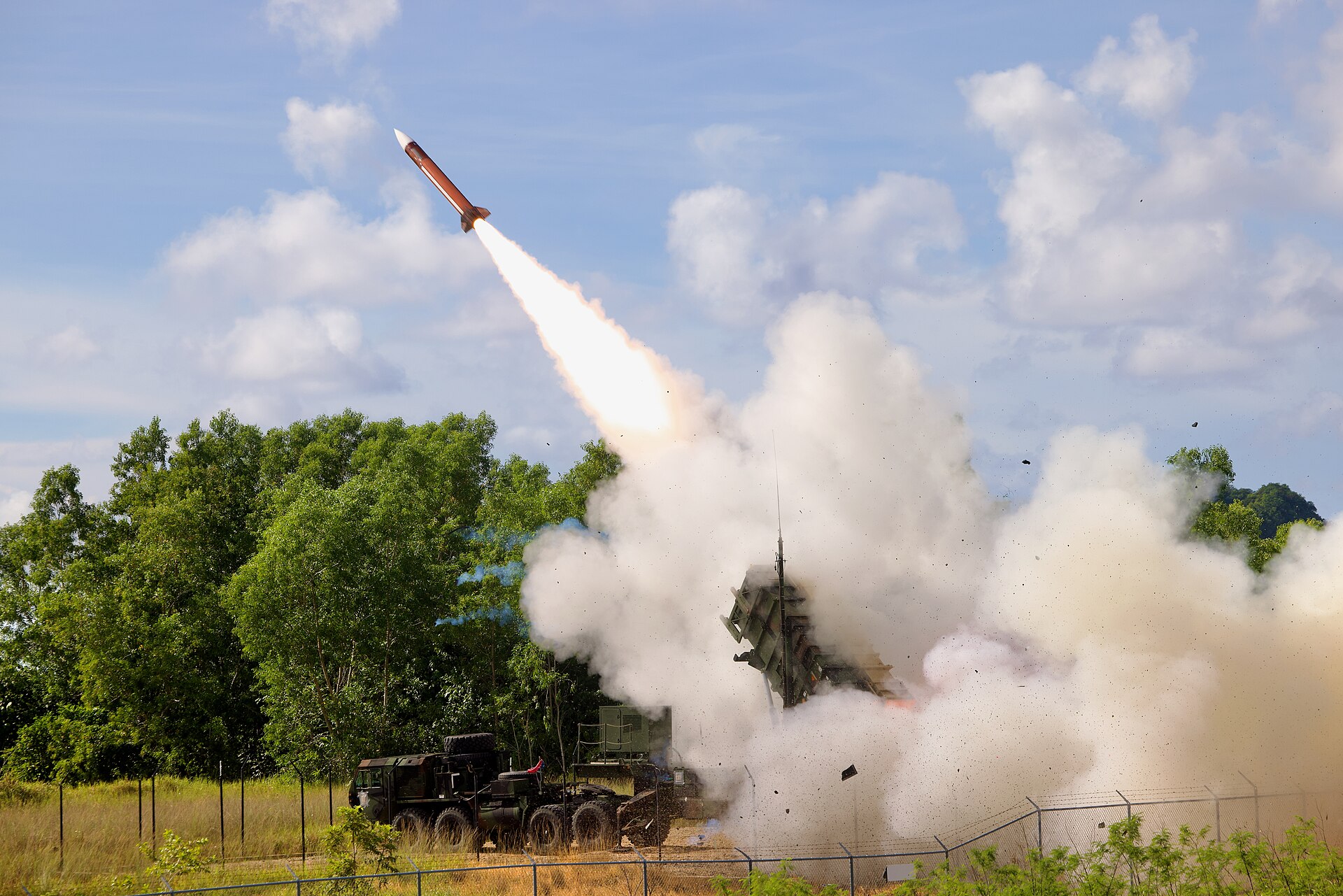
Saudi Arabia operates one of the most expensive air defense networks in the world. The Kingdom has purchased MIM-104 Patriot PAC-2 and PAC-3 batteries, Terminal High Altitude Area Defense (THAAD) systems, and a network of surveillance radars that collectively cost tens of billions of dollars. The March 7 interceptions demonstrate that these systems work — they destroyed all sixteen drones and the missiles targeting al-Kharj.
But the question is not whether the systems work. The question is whether they can work everywhere, all the time, against an adversary willing to sustain losses indefinitely.
A standard Patriot battery provides effective coverage over an area of roughly 20 to 40 kilometres in radius against cruise missiles and drones, depending on the engagement altitude and approach angle. Covering the Empty Quarter’s approximately 650,000 square kilometres — where Shaybah sits — would require dozens of batteries deployed across terrain where there are no roads, no supply chains, and no permanent military installations. The Washington Institute for Near East Policy has documented Saudi Arabia’s directional radar gaps, noting that most systems face east toward the Gulf and do not provide 360-degree coverage. The 2019 Abqaiq attack exploited exactly this weakness, with drones arriving from the north near the Iraqi and Kuwaiti borders.
The Empty Quarter presents specific challenges. On one hand, the absence of civilian air traffic simplifies the detection problem — anything airborne in the Rub’ al-Khali that is not an Aramco helicopter is almost certainly hostile. On the other hand, the distances are extreme. Emergency response teams based in Dhahran or Dammam are more than 500 kilometres away. Replacement parts for interceptor batteries must travel the same route. And the environmental conditions — sand storms, extreme heat, wind-driven erosion — accelerate equipment degradation.
Military analysts estimate that maintaining a single Patriot battery in a forward-deployed desert position costs approximately $2-3 million per month in logistics, maintenance, and personnel when accounting for the hostile environment and extended supply lines. Deploying the six to eight batteries needed to provide meaningful coverage of the Shaybah complex and its pipeline corridor would cost $15-25 million per month — nearly $300 million per year — for a single facility.
The 2019 Warning That Went Unheeded
Shaybah was not an unknown target before March 2026. On August 17, 2019, Yemen’s Houthi movement claimed responsibility for a drone attack that struck the Shaybah natural gas liquefaction facility, sparking a fire. The Houthis said they launched ten drones from positions over 1,000 kilometres away, though Saudi investigators subsequently assessed that likely only three drones reached the target. Production was not interrupted, and no casualties were reported.
The 2019 Shaybah attack came exactly one month before the September 14, 2019, Abqaiq-Khurais assault — the most devastating drone and missile attack on oil infrastructure in history. That operation knocked out approximately 5.7 million barrels per day, roughly 50 percent of Saudi production, and triggered the largest single-day spike in oil prices ever recorded. Twenty-five drones and cruise missiles struck with precision, defeating Patriot batteries, Skyguard systems, and Shahine air defenses that, as the Military Times subsequently reported, failed to bring down a single incoming weapon.
The Abqaiq-Khurais attack exposed that Saudi air defenses were oriented toward threats from the east — Iran and the Gulf — while the assault came from the north. Saudi Arabia spent the years between 2019 and 2026 addressing this gap, investing in additional radar coverage, procuring new interceptor systems, and reorganising command and control structures. The March 7 Shaybah interceptions suggest these investments have yielded results.
What remains unchanged is the fundamental geographic problem. Saudi Arabia has 12 million barrels per day of production capacity distributed across facilities spanning thousands of kilometres. Defending them all simultaneously against a sustained drone campaign would require an air defense network of a scale that does not exist anywhere in the world outside of the continental United States — and even there, coverage gaps persist.
The parallels between 2019 and 2026 are instructive in another dimension. After the Abqaiq-Khurais attack, Aramco restored production with remarkable speed — within 10 days, output had returned to pre-attack levels. That recovery, however, relied on spare processing capacity and strategic reserves. In March 2026, those buffers have already been activated. The Ras Tanura partial shutdown, the Hormuz blockade, and the general elevation of war risk across the Eastern Province mean that the system’s margin for absorbing a major hit at Shaybah is narrower than it was seven years ago. The 2019 attack struck a peacetime system with redundancy to spare. The 2026 drones targeted a system already operating under wartime stress, where every barrel of capacity is counted twice.
One additional difference separates the two periods. In 2019, Iran used proxies to maintain deniability — the Houthis claimed the Shaybah and Abqaiq attacks, giving Tehran diplomatic cover. In 2026, there is no pretence. The Islamic Republic has openly acknowledged its strikes on Gulf states as retaliation for the US-Israeli campaign, eliminating the ambiguity that previously constrained Saudi Arabia’s response options. The Kingdom has declared it reserves the “full right” to respond, according to a Cabinet statement chaired by Crown Prince Mohammed bin Salman on March 3. But exercising that right risks the very escalation that Saudi Arabia’s secret backchannel to Tehran is attempting to prevent.
What Does the Shaybah Attack Mean for Oil Markets?
The Shaybah interception on March 7 prevented what would have been a devastating supply disruption. One million barrels per day represents approximately 1 percent of global oil consumption and roughly 8 percent of Saudi production. The loss of Shaybah’s output would have added immediate upward pressure to a market already straining under the weight of the Strait of Hormuz disruption, which has curtailed approximately 20 percent of global oil transit volumes.
Brent crude was trading at approximately $85 per barrel on March 7, up more than 20 percent from pre-conflict levels of around $70. Analysts at Barclays have warned that sustained disruption to Gulf production could push prices above $100 per barrel, according to CNBC reporting. Morgan Stanley’s analysis projects that each additional million barrels per day taken offline would add between $8 and $12 to the Brent benchmark, with cascading inflationary effects estimated at 0.8 percentage points of additional global inflation.
| Scenario | Production Lost (bpd) | Estimated Brent Impact | Projected Brent Price | Duration Assumption |
|---|---|---|---|---|
| Shaybah offline (1 week) | 1,000,000 | +$8-12 | $93-97 | Short-term spike, partial recovery |
| Shaybah + Ras Tanura | 1,500,000+ | +$15-22 | $100-107 | Market panic premium |
| Abqaiq disrupted (2019 repeat) | 5,700,000 | +$30-50 | $115-135 | Catastrophic; strategic reserves released |
| Sustained multi-facility attacks | 2,000,000-3,000,000 | +$20-35 | $105-120 | War risk premium becomes structural |
Saudi Aramco’s stock price has paradoxically benefited from the conflict, hitting an 11-month high as investors bet that elevated oil prices would translate into record quarterly earnings. Aramco’s share price has risen more than 8 percent since the start of the year, according to market data cited by AGBI. The company’s quarterly earnings call, scheduled for the following Tuesday, is expected to provide the first detailed assessment of how the world’s most valuable oil company is managing simultaneous production, logistical, and security challenges.
OPEC+ agreed on March 1 to increase production by 206,000 barrels per day for April, a modest increment that reflected the cartel’s reluctance to flood the market during a conflict that could remove far larger volumes from supply. The decision, as OPEC’s wartime production strategy demonstrates, balanced the desire to replace lost Iranian output against the risk of price collapse if the conflict ended suddenly.
The Pipeline Solution and Its Limits
Saudi Arabia’s primary response to the Hormuz blockade has been to reroute crude oil exports through the East-West pipeline, a 1,200-kilometre conduit running from the Abqaiq processing centre in the Eastern Province to the Yanbu terminal on the Red Sea coast. The pipeline was built in 1981 specifically as insurance against a Hormuz closure and has a stated capacity of 5 million barrels per day, with Saudi authorities claiming in early 2025 that capacity had been raised to 7 million barrels per day — though sustained flows at that level have never been tested.
Shaybah’s crude feeds directly into this system. The field’s 645-kilometre pipeline carries Arabian Extra Light crude north to Abqaiq, where it is processed, stabilised, and then either loaded onto tankers at Ras Tanura or redirected westward through the East-West pipeline. If Shaybah production were disrupted, the volume available for the Yanbu bypass would decline commensurately. This creates a cascading vulnerability: Iran’s Hormuz blockade makes Saudi Arabia more dependent on the East-West pipeline, which in turn makes Saudi Arabia more dependent on the upstream fields — including Shaybah — that feed Abqaiq.
Yanbu itself presents bottleneck constraints. The terminal was designed as a secondary export hub, not as the Kingdom’s primary loading facility. Crude loadings at Yanbu peaked at just under 1.5 million barrels per day in April 2020, according to International Energy Agency data. Even with parallel pipeline infrastructure converted to carry additional crude, the maximum sustainable throughput to the Red Sea is estimated at 5-7 million barrels per day — short of the 7.5-9 million barrels per day Saudi Arabia normally exports when operating at full capacity.
The pipeline itself is also vulnerable. Running 1,200 kilometres across open desert, the East-West pipeline cannot be defended along its entire length against drone or sabotage attacks. Iran has not yet targeted the pipeline directly, but the Shaybah attack demonstrates a willingness to reach deep into Saudi territory. A coordinated strike on Shaybah and the pipeline corridor simultaneously would be difficult to intercept and could sever Saudi Arabia’s only viable alternative to Hormuz.
The United Arab Emirates offers a partial alternative. Abu Dhabi’s Habshan-Fujairah pipeline can export approximately 1.5 million barrels per day to the Indian Ocean, bypassing Hormuz entirely. But Fujairah itself was hit by intercepted drone debris in early March, causing fires at its oil storage hub, according to Bloomberg — demonstrating that Iran’s targeting extends to Red Sea and Indian Ocean alternatives as well. The lesson is that no single pipeline or terminal can replace the Strait of Hormuz, and every alternative becomes a target the moment it carries meaningful volumes.
The Asymmetric Math That Keeps Saudi Generals Awake
The cost asymmetry of drone warfare has been widely discussed since the Ukraine conflict made it a central feature of modern war. In the Saudi context, the numbers are particularly stark.
Iran’s Shahed-series drones, the platform most commonly used in attacks on Gulf states, cost an estimated $20,000 to $50,000 per unit to produce, according to assessments by the Carnegie Endowment for International Peace. A single MIM-104 Patriot PAC-3 interceptor costs approximately $4 million. Even assuming Iran deployed its most capable drones at $50,000 each, the sixteen Shaybah drones cost Tehran approximately $800,000. Intercepting all sixteen with Patriot missiles would cost Saudi Arabia approximately $64 million — an 80-to-1 cost ratio in Iran’s favour.
| Item | Unit Cost (Est.) | Quantity (Shaybah) | Total Cost |
|---|---|---|---|
| Iran: Shahed drone | $20,000-$50,000 | 16 | $320,000-$800,000 |
| Saudi: Patriot PAC-3 interceptor | ~$4,000,000 | 16 | ~$64,000,000 |
| Cost ratio (Iran:Saudi) | — | — | 1:80 to 1:200 |
Saudi Arabia does not use Patriot interceptors against every drone — cheaper point defense systems, electronic warfare tools, and anti-aircraft guns handle some engagements. But the principle holds. Iran can produce drones at industrial scale using relatively simple manufacturing infrastructure that has proven resistant to air strikes. Saudi Arabia’s interceptor supply depends on Western arms manufacturers with production backlogs measured in years.
The US military has confronted this same problem. Analysis by the Critical Threats Project at the American Enterprise Institute documented that the United States lost nearly $2 billion worth of military equipment in the first four days of strikes against Iran, with Iranian drones striking a $1.1 billion AN/TPY-2 radar system in Qatar that serves as a critical node in the Gulf’s ballistic missile early warning network. The mathematics of sustained attrition favour the side with the cheaper weapons — provided it can absorb the political cost of individual attacks failing to reach their targets.
For Iran, every drone that is intercepted still achieves a strategic objective: it depletes Saudi Arabia’s interceptor stocks, forces defensive expenditure, degrades operational readiness, and maintains the psychological pressure that keeps insurance premiums elevated and foreign investment cautious. The sixteen drones that failed to reach Shaybah on March 7 may have cost Iran less than a million dollars. The air defense expenditure they consumed, the readiness posture they forced, and the market anxiety they generated far exceeded that figure in strategic value.
What Happens When Iran Sends a Hundred Drones Instead of Sixteen?
The March 7 Shaybah attack was a probe. Sixteen drones in four waves was sufficient to test Saudi defensive coverage in the Empty Quarter, map response times, and assess the type and location of interceptor systems deployed. Iran will have gathered intelligence from the engagement — radar emissions, response intervals between waves, approach vectors that triggered detection earliest — and will use this data to plan future operations at greater scale.
The precedent from Iran’s broader campaign is instructive. The February 28 opening salvo involved mixed weapon types across multiple targets. By March 7, Iran had refined its approach to dedicated drone swarms against specific facilities. The logical escalation is to increase the swarm size beyond what current defenses can engage simultaneously. A Patriot battery can typically engage eight to twelve targets before requiring reload, a process that takes approximately 30 minutes. A swarm of one hundred drones arriving in rapid succession would overwhelm any single battery.
Saudi Arabia’s response options are constrained. Procuring additional interceptor batteries from the United States takes years — the Patriot production line at Lockheed Martin’s facility in Dallas produces systems at a rate that cannot be accelerated quickly to meet wartime demand. Deploying existing batteries from coastal positions to the Empty Quarter weakens defense of facilities closer to the Gulf. And mobile deployment in desert conditions imposes maintenance and logistics burdens that reduce operational availability.
The Kingdom is exploring alternatives. Ukraine has offered Saudi Arabia its battle-tested counter-drone interceptors, which cost roughly $2,100 each and have destroyed more than 1,000 Shaheds in Ukrainian skies. Electronic warfare systems that can jam drone navigation signals offer another lower-cost defensive layer. Directed-energy weapons — lasers capable of destroying drones at a fraction of the cost of a missile interceptor — are under development by several defence contractors, but none have been deployed operationally in the Saudi theatre. Counter-drone systems using interceptor drones — small, fast UAVs designed to physically destroy incoming drones — offer a middle ground between expensive missiles and immature laser systems, and Saudi Arabia’s defence industrial ambitions under Vision 2030 include domestic drone production capacity.
In the near term, however, the defence of Shaybah depends on the same Patriot batteries that performed flawlessly on March 7. Flawless performance is not guaranteed indefinitely. One malfunction, one reload interval exploited, one wave that arrives from an unexpected azimuth — and a million barrels per day go offline.
The vulnerability of remote oil facilities has proved prophetic. Iran escalated its targeting of Eastern Province petroleum infrastructure to one hundred drones in a single day by March 17, confirming that the dispersed geography of Saudi oil production makes comprehensive air defense coverage nearly impossible at any price.
Frequently Asked Questions
Where is the Shaybah oil field located?
Shaybah is located on the northern edge of the Rub’ al-Khali, or Empty Quarter, in southeastern Saudi Arabia, approximately 10 kilometres south of the border with Abu Dhabi. The field sits roughly 500 miles from the nearest major city, making it one of the most remote major oil installations in the world. Aramco built a 386-kilometre road through the desert to access the site and maintains a self-contained worker community with housing, an airstrip, and power generation facilities.
How much oil does Shaybah produce per day?
Shaybah has a production capacity of one million barrels per day of Arabian Extra Light crude oil, a premium grade with 42 degrees API gravity and less than 0.7 percent sulphur content. The field reached this capacity in 2016 following a 250,000-barrel expansion that doubled its original output. Shaybah also hosts a natural gas liquids recovery plant that feeds Saudi Arabia’s petrochemical industry, making the facility’s total economic contribution significantly larger than its crude oil output alone.
Has Shaybah been attacked before?
Yes. On August 17, 2019, Yemen’s Houthi movement launched a drone attack on the Shaybah natural gas liquefaction facility, sparking a fire but causing no casualties or production interruption. The Houthis claimed to have launched ten drones, though Saudi investigators assessed that only three likely reached the target. The 2019 attack foreshadowed the vulnerability that the March 2026 assault exploited — remote oil infrastructure in the Empty Quarter, hundreds of kilometres from concentrated air defense coverage.
How many drones did Saudi Arabia intercept at Shaybah on March 7?
Saudi Arabia’s Ministry of Defense announced the interception of sixteen drones launched toward Shaybah, arriving in four distinct waves. Simultaneously, Saudi defenses intercepted a ballistic missile and a cruise missile targeting Prince Sultan Air Base in al-Kharj, south of Riyadh. The combined operation forced Saudi air defenses to engage threats across multiple axes separated by hundreds of kilometres. All incoming weapons were destroyed, according to official Saudi statements confirmed by Argus Media.
What would happen to oil prices if Shaybah were taken offline?
The loss of Shaybah’s one million barrels per day would likely push Brent crude prices above $90 per barrel and potentially toward $100, according to analyst projections from Barclays and Morgan Stanley. The impact would be amplified because Shaybah produces premium Arabian Extra Light crude that cannot be easily replaced by other Saudi fields producing heavier grades. Additionally, Shaybah feeds the pipeline system that supports Saudi Arabia’s Hormuz bypass route to Yanbu, meaning its loss would compound the export disruption caused by Iran’s Strait of Hormuz blockade.