DUBAI — A Japanese supertanker carrying two million barrels of Saudi crude and an Emirati LNG carrier loaded at Abu Dhabi’s Das Island both cleared the Strait of Hormuz within 48 hours of each other this week, and neither used the IRGC’s Larak corridor — the narrow channel through Iranian territorial waters that has served as Tehran’s primary physical enforcement tool since the war began on February 28. The twin transits, first reported by Bloomberg and confirmed by AIS tracking data, represent the first loaded crude VLCC and the first loaded LNG vessel to bypass the Larak mechanism entirely, raising a question Iran’s own fractured command structure may not be able to answer: whether the corridor architecture that generated at least $124 million in transit fees from 62 vessels since March 13 is breaking down, or whether Tehran has quietly moved to a flag-nation permission model that selectively rewards countries willing to negotiate bilaterally — and punishes those, like Saudi Arabia, that cannot.
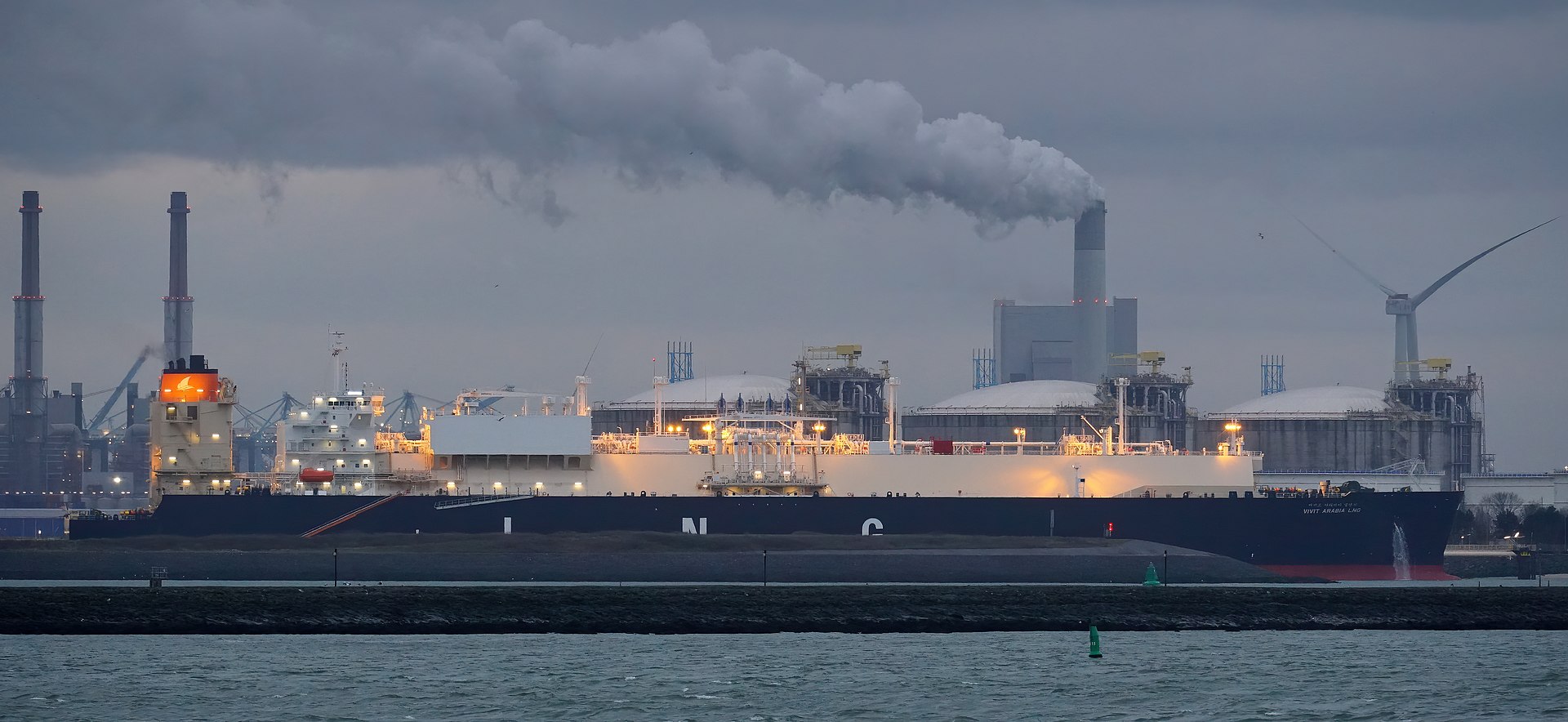
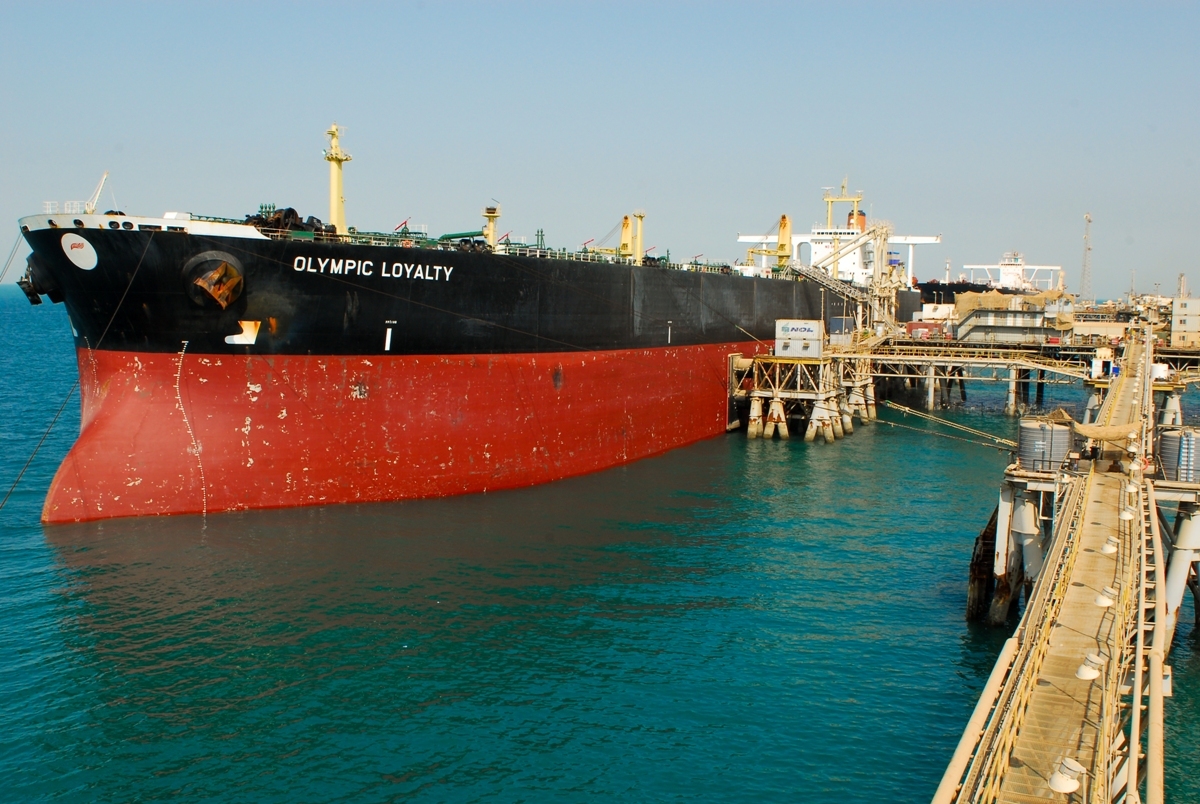
The Idemitsu Maru, a Panama-flagged VLCC managed by a subsidiary of Japan’s Idemitsu Kosan, cleared Hormuz at approximately 1:35 AM GST on April 29 bound for Nagoya, according to Bloomberg and the Japan Times. The ADNOC LNG tanker Mubaraz, carrying 132,890 cubic metres of liquefied natural gas, had already passed through on or around April 27 after going dark — AIS transponder off — for 28 consecutive days, reappearing near India with a destination of Tianjin, China, and an estimated arrival of May 15. The two stories look identical from a distance but diverge completely under scrutiny, and the divergence matters more than either transit on its own.
Table of Contents
- The Idemitsu Maru Transit — A Negotiated Carve-Out Five Weeks in the Making
- The Mubaraz Ghost Transit — AIS Dark for 28 Days
- What Happens to the Larak Corridor If Vessels Can Go Around It?
- Why Can’t Saudi Arabia Replicate What Japan Just Did?
- Why Does Iran Claim the Idemitsu Transit But Not the Mubaraz?
- Market Response and the Pricing of Selective Access
- FAQ
The Idemitsu Maru Transit — A Negotiated Carve-Out Five Weeks in the Making
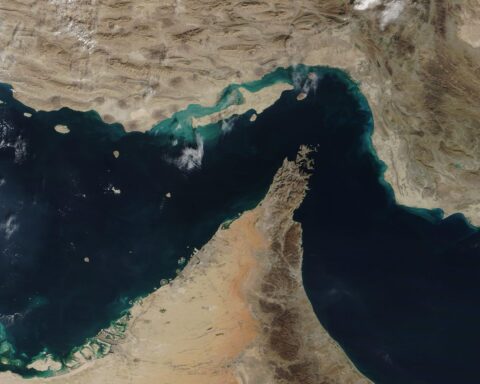
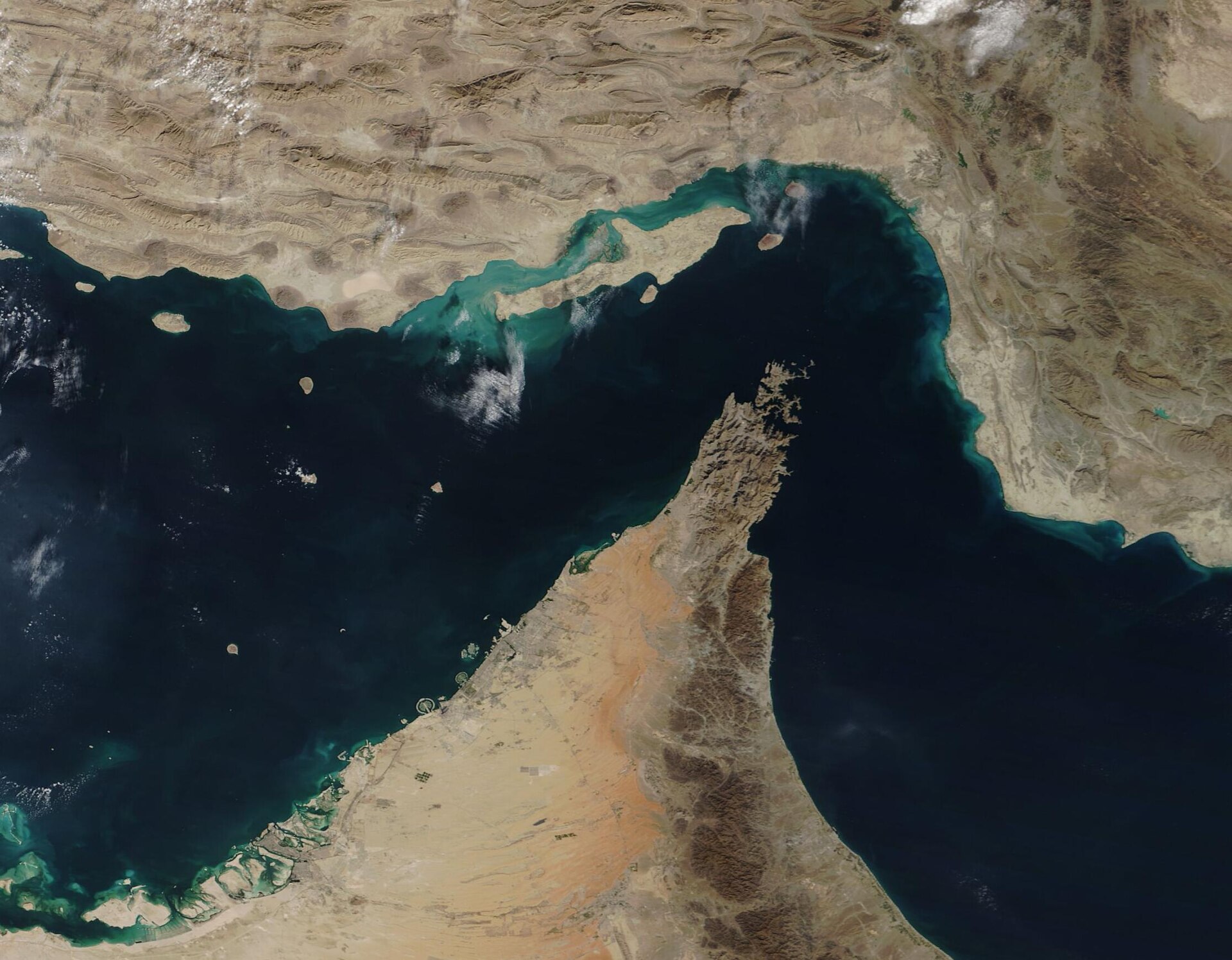
The Idemitsu Maru’s passage through the standard Hormuz shipping lane — not the 5-nautical-mile Qeshm-Larak channel that the IRGC declared mandatory in its February 28 “danger zone” chart — was not a surprise to Tehran. Iranian Foreign Minister Abbas Araghchi announced on March 21 that Iran was “prepared to facilitate navigation of Japanese ships through Hormuz,” following direct discussions with Japanese Foreign Minister Motegi, according to the Japan Times and Al Jazeera. Five days later, Araghchi expanded the framework publicly: “We have allowed passage through the Strait of Hormuz for China, Russia, India, Pakistan, and Iraq, as well as other states we consider friendly,” he told Sputnik on March 26.
Between that announcement and the actual transit lay five weeks — a gap the Seoul Economic Daily attributed to “persistent negotiations by the Japanese government” and unnamed Japanese government sources confirmed involved no toll payment. The vessel had been sitting idle northwest of Abu Dhabi for more than a week before departure, waiting, shipping sources told OilPrice.com, for explicit IRGC operational clearance that evidently came through channels separate from Araghchi’s diplomatic declarations. Japan imports 95 per cent of its crude oil from West Asia, according to the Japan Times, a dependency that made the bilateral negotiation existential rather than transactional.
PressTV, the English-language arm of Iranian state broadcasting, framed the transit as proof that the system works exactly as designed: the vessel “briefly altered course near Iran’s Qeshm and Larak Islands before continuing eastward past Larak,” it reported on April 28, describing the passage as one conducted with Iranian “coordination.” Tasnim, the IRGC-affiliated news agency, confirmed that “Japanese tanker Idemitsu Maru went through the Strait of Hormuz with Iran’s facilitation.” The cargo itself — approximately two million barrels of Saudi Aramco crude loaded at the Juaymah terminal in early March — received no mention in any Iranian outlet, a silence that carries its own weight: Iran permitted Saudi oil to flow under a Japanese flag, and chose not to discuss whose oil it was.
The Mubaraz Ghost Transit — AIS Dark for 28 Days
The Mubaraz tells a fundamentally different story, and the difference starts with what is missing from the record. The 132,890-cubic-metre LNG carrier, loaded at ADNOC’s Das Island facility in Abu Dhabi, went dark on its Automatic Identification System around March 30 or 31 and did not reappear until approximately April 27, when tracking services picked it up near India heading for Tianjin, China, with an ETA of May 15, according to Bloomberg and Marine Insight. Twenty-eight days without a transponder signal is not a technical glitch — it is a deliberate operational choice, and one that only makes sense if the vessel’s operators judged that visibility carried more risk than silence.
The Middle East briefing 3,000+ readers start their day with.
One email. Every weekday morning. Free.
The Circuit, a shipping industry publication, noted that the vessel was “tracked getting past the blockade” — language that implies observation from a distance rather than any coordinated or announced passage. No Iranian state media outlet — not PressTV, not Tasnim, not Mehr, not Fars — claimed credit for the Mubaraz transit or framed it as evidence of Iranian sovereign management, a contrast with the Idemitsu Maru coverage that is difficult to read as anything other than deliberate. The UAE officially closed its embassy in Tehran after what it called “unprovoked terrorist attacks” and is not on any version of Iran’s publicly stated “friendly nations” list.
The Mubaraz is the first loaded LNG vessel to transit Hormuz since February 28, and only the second category of LNG transit after Qatar’s Al Daayen crossed on April 6 with Chinese intermediation — CNPC and Sinopec hold contracted offtake of 8 million tonnes per annum plus 5 per cent equity in Qatar’s North Field East, and the $2 million transit fee was reportedly settled in yuan via Kunlun Bank outside SWIFT. If China intermediated the Mubaraz transit as well — and Tianjin as the destination makes this plausible — then Beijing’s role as what this publication has previously described as the “Hormuz operating system” gains a second confirmed data point in a different flag-state context.
What Happens to the Larak Corridor If Vessels Can Go Around It?
Since March 13, at least 62 vessel transits have been tracked through the Larak corridor, the 5-nautical-mile channel between Qeshm and Larak Islands inside Iranian territorial waters, according to Gulf Business and Lloyd’s List Intelligence, with each vessel paying approximately $2 million in transit fees and submitting cargo manifests to IRGC naval coordinators. The corridor was the physical expression of an enforcement architecture that Iran built from the crisis’s first week — the February 28 “danger zone” chart published by the IRGC marked the standard international shipping lanes as hazardous, and the Larak channel became the only sanctioned alternative, funnelling commercial traffic through waters where Iranian sovereignty is uncontested under UNCLOS.
Two vessels bypassing this mechanism in 48 hours does not mean the architecture has collapsed, but it does mean it is no longer operating as a chokepoint in the physical sense. The Idemitsu Maru used the standard lane after a five-week bilateral negotiation; the Mubaraz appears to have used it without any public Iranian acknowledgement at all. The total number of transits since the April 8 ceasefire remains approximately 45, according to Bloomberg — 3.6 per cent of the pre-war baseline — so the corridor’s suppressive effect on overall traffic persists even as individual vessels find or negotiate routes around it. The IRGC Navy, still operating without a named commander 30 days after Admiral Tangsiri was killed on March 30, has not publicly responded to either bypass.
Saeid Golkar, an Iran expert at the University of Tennessee at Chattanooga, told Fortune in April that “because the main arbitrator is gone, the fight between different factions has started” — a reference to Khamenei’s extended absence from public view and the resulting vacuum in which the IRGC Navy, the Foreign Ministry, and the Supreme National Security Council operate with overlapping and contradictory mandates. The Larak corridor was built on the assumption that all three institutions would enforce the same rules; the Idemitsu Maru and Mubaraz transits suggest at least two of them may no longer be coordinating.
Why Can’t Saudi Arabia Replicate What Japan Just Did?
The Idemitsu Maru carried Saudi crude — loaded at Aramco’s Juaymah terminal, bound for a Japanese refinery — but it moved under a Japanese flag with Japanese diplomatic cover, through a bilateral framework that Saudi Arabia has no access to and no capacity to replicate. Iran’s “friendly nations” list, as Araghchi articulated it on March 26, includes China, Russia, India, Pakistan, Iraq, Turkey, Malaysia, Thailand, the Philippines, France (one CMA CGM container vessel), Japan, and Oman — countries that have either maintained diplomatic relations with Tehran, offered mediation services, or hold economic leverage that Iran values. Saudi Arabia, which Iran struck directly at Ras Tanura and whose Eastern Province took seven ballistic missiles on April 7, is not on any version of this list and has no plausible pathway onto it while hostilities continue.
The structural consequence is that Saudi crude can leave the kingdom through Hormuz only when a third country’s flag and a third country’s diplomacy provide the vehicle. The Yanbu bypass via the East-West Pipeline remains the only Saudi-controlled export route that avoids the strait entirely, but its effective loading ceiling of 4 to 5.9 million barrels per day, according to Aramco operational data, falls short of pre-war Hormuz throughput of 7 to 7.5 million bpd by between 1.1 and 3.5 million bpd depending on which ends of both ranges apply. Saudi March production fell to 7.25 million bpd, according to the IEA — a 3.15-million-bpd drop from February’s 10.4 million — and Asian exports declined 38.6 per cent, Kpler data showed.
The Idemitsu Maru transit, in other words, does not solve Saudi Arabia’s export problem. It demonstrates the mechanism by which individual cargoes can move while the systemic blockage remains intact, a distinction that matters for Aramco’s forward pricing — the June OSP was already reset at +$3.50 per barrel, a $16 collapse from May’s war-premium +$19.50, according to Argus — and for the fiscal arithmetic that Goldman Sachs has pegged at a 6.6 per cent GDP war-adjusted deficit versus the official 3.3 per cent projection.
Why Does Iran Claim the Idemitsu Transit But Not the Mubaraz?
The Iranian media response to the two transits reveals a regime that wants to claim sovereign control without acknowledging the gaps in that control. PressTV and Tasnim both covered the Idemitsu Maru extensively, framing it as evidence that Iran’s “coordination” system works: the strait “is closed only to ships belonging to enemies, countries that attack Iran, but for other countries, ships can pass through the strait,” Araghchi said in March, and Iranian outlets treated the Japanese transit as vindication. The Mubaraz received no such treatment — no Tasnim confirmation, no PressTV coordination narrative, no Fars News analysis of Emirati LNG passing through sovereign waters.
The silence is structurally revealing. If the IRGC had coordinated the Mubaraz transit, Iranian media would have claimed it — as they did with Qatar’s Al Daayen, as they did with Iraqi Suezmax crossings, as they did with the Idemitsu Maru. The absence of a claim suggests either that the transit occurred without IRGC awareness, which would indicate a genuine enforcement gap in the corridor architecture, or that Iran cleared it through a covert back-channel with Beijing or Abu Dhabi that Tehran does not wish to publicise, given the UAE’s formal diplomatic hostility. Sultan Al Jaber, ADNOC’s CEO, told Al Arabiya English on April 9 that “the Strait of Hormuz is shut, must reopen without conditions” — language that does not suggest a bilateral arrangement with Iran was in place three weeks later.
Market Response and the Pricing of Selective Access
VLCC day rates on the Middle East-to-China route hit $423,000 per day in late March, according to Paradox Intelligence and Argus, and war-risk premiums have risen from 0.125 per cent to 1 per cent of hull value — adding approximately $800,000 per VLCC voyage, CNBC reported in April. The website hormuztoll.com, which tracks incremental costs above the January 2026 baseline, estimated $6 to $10 million in additional costs per Hormuz transit as of April 23. Two vessels clearing the strait without using the Larak corridor and — in the Idemitsu Maru’s case — without paying a toll does not materially alter these economics when total post-ceasefire traffic remains at roughly 3.6 per cent of the pre-war daily baseline.
Brent crude sat at $90.38 on April 28, below Saudi Arabia’s fiscal break-even of $108-111 per barrel as calculated by Bloomberg’s PIF-inclusive methodology. The IEA’s Fatih Birol has described the current disruption — approximately 13 million barrels per day offline across Iranian and Gulf production — as “the biggest energy security threat in history.” Two tankers transiting does not change that assessment, but it does begin to price in the possibility that Iran’s enforcement architecture is becoming porous at the bilateral level, even as it remains effective at the systemic one.
The UAE’s exit from OPEC, effective May 1, adds a further variable: Abu Dhabi is now free to pursue independent export arrangements, and the Mubaraz transit — if it was coordinated rather than unauthorised — suggests ADNOC may already be operating on that basis. The question for the next week is not whether more vessels will attempt Hormuz outside the Larak corridor, but whether the IRGC responds by reasserting physical control or by quietly accepting a model in which the corridor becomes optional for nations willing to negotiate and impenetrable for those that cannot.
FAQ
How many vessels have used the Larak corridor since it was established?
At least 62 vessels have transited via the IRGC-designated Larak corridor since March 13, 2026, according to Gulf Business and Lloyd’s List Intelligence, each paying approximately $2 million and submitting cargo manifests to IRGC naval personnel. The corridor revenue to date exceeds $124 million — a figure that gives the IRGC a direct financial incentive to maintain the mechanism even as some vessels bypass it through bilateral diplomatic arrangements.
Has any vessel been intercepted or turned back for attempting to bypass the Larak channel?
The Selen, a 6,800-deadweight-tonne container feeder, was turned back on March 24 in what was the first documented formal administrative rejection by IRGC naval forces, according to Lloyd’s List. CENTCOM destroyers USS Frank E. Petersen Jr. (DDG-121) and USS Michael Murphy (DDG-112) transited on April 11 and received an IRGC “last warning” radio call but continued their passage, responding that they were exercising lawful transit under international law. No commercial vessel attempting the standard lane has been reported intercepted since the Idemitsu Maru’s successful passage.
What is Japan’s energy exposure to the Hormuz crisis?
Japan depends on West Asia for 95 per cent of its crude oil imports, according to Japan Times data, and had been sourcing alternatives from non-Gulf suppliers since February as a contingency. The country’s Strategic Petroleum Reserve holds approximately 145 days of net imports, according to Japan’s Agency for Natural Resources and Energy, but the reserve drawdown rate accelerated in March and April. Tokyo’s bilateral negotiation with Tehran was led by Foreign Minister Motegi and is understood to cover commercial crude carriers under Japanese management, not Japanese-flagged vessels broadly — a distinction that limits the framework’s applicability to a relatively small number of ships.
Could other countries replicate Japan’s toll-free bilateral arrangement?
South Korea, which shares Japan’s near-total dependence on Gulf crude, has not secured a comparable arrangement despite diplomatic efforts, according to Seoul Economic Daily reporting from April 29. India operates under OFAC General License U provisions (which expired April 19 without renewal) and has settled Iranian crude purchases in yuan via ICICI Bank Shanghai rather than through any Hormuz-specific bilateral framework. The toll-free model appears to require both diplomatic relations with Tehran and a willingness to negotiate directly with the IRGC naval command — a combination that excludes not only Saudi Arabia but most GCC states and any nation currently participating in the US-led CENTCOM blockade.
What is the IRGC Navy’s current command status?
Admiral Alireza Tangsiri, commander of the IRGC Navy, was killed on March 30, 2026, and no successor has been publicly named as of April 29 — a 30-day command vacuum that is unprecedented in the force’s history. Deputy commanders and regional flotilla leaders are believed to be operating under standing orders, but the absence of a named commander means there is no single authority capable of issuing new operational directives or resolving contradictions between the Foreign Ministry’s diplomatic clearances and the IRGC Navy’s enforcement posture on the water.