Table of Contents
WASHINGTON — Iran cannot locate all of the mines it laid in the Strait of Hormuz, US officials have told the New York Times and confirmed in classified Congressional briefings — and the IRGC Navy laid additional mines after the April 23 ceasefire, according to Axios, meaning the minefield is still growing even as diplomats in Islamabad negotiate terms for reopening the waterway through which roughly 20 per cent of the world’s daily oil supply once flowed. Pentagon officials told the House Armed Services Committee last week that clearing the Strait would likely take six months, a timeline that begins only after hostilities end, after Iran cooperates on mine locations it does not possess, and after minesweeping ships arrive from Japan — because the US Navy had zero dedicated mine-countermeasure vessels in the Gulf when the war started on February 28.
The consequence is a structural decoupling that neither Washington nor Tehran has acknowledged in plain language: the diplomatic track and the physical reopening track are no longer connected. A fully signed agreement — should one materialise from the Islamabad process or Iran’s April 27 proposal transmitted via Pakistan — produces no reopening date, no insurance certification, and no return to the 138-ship daily baseline that defined pre-war Hormuz. The waterway that carries roughly one-fifth of the world’s daily oil consumption is not closed because of a political disagreement that a signature can resolve; it is closed because the seabed contains objects that kill ships, placed there by forces that did not record where they put them, and retrievable only by vessels that do not yet exist in the theatre of operations. The economic clock is running simultaneously on both sides of the strait: US sanctions on Qingdao Haiye and Iran’s approaching storage ceiling give Tehran 12–22 days before forced production cuts begin at Kharg Island, independent of any diplomatic outcome.
What Iran Laid — and What Iran Lost Track Of
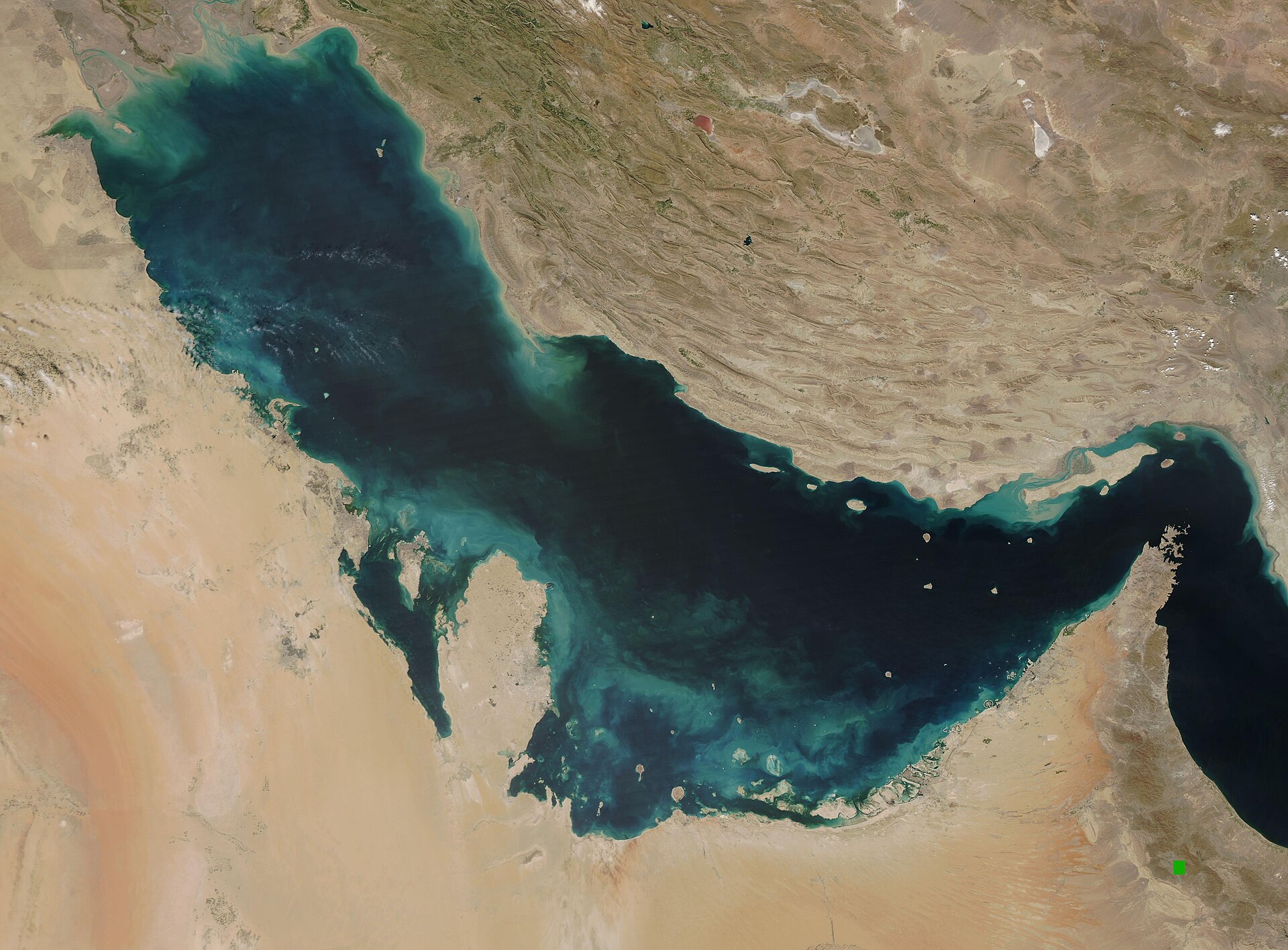
Iran began laying mines on March 10, ten days after the war’s outbreak, using IRGC small speedboats operating from bases along its southern coastline, according to CNN. The method was — in the assessment of US intelligence officials who spoke to the New York Times on April 11 — “haphazard,” conducted by “decentralised forces” operating “without a clear command chain” and, most consequentially, “without a clear record of where they were placed.” Some mines, those officials added, may have drifted from their original positions due to sea currents in a strait where tidal flows routinely exceed two knots.
The Washington Post reported on April 22 that lawmakers in a classified House Armed Services Committee briefing were told Iran may have placed 20 or more mines in and around the Strait, though a separate Stars and Stripes report the following day cited estimates of “at least a dozen, possibly fewer.” The discrepancy itself is telling — the United States does not know how many mines are down there, because Iran does not know how many mines are down there. Emma Salisbury, a researcher at the Foreign Policy Research Institute and the Royal Navy Strategic Studies Centre, told Fortune on April 25 that the problem is definitional: “You don’t even have to have lain mines — you just have to make people believe that you’ve laid mines.”
Iran’s total mine stockpile is estimated at between 2,000 and 6,000 units, with the Defense Intelligence Agency’s 2019 assessment settling on approximately 5,000, according to Al Jazeera and Fortune. The arsenal includes Soviet-era M-08 contact mines — a design dating to the First World War, moored to the seabed, detonating on hull contact — alongside domestically produced Maham-2 bottom-influence mines triggered by acoustic, magnetic, or pressure signatures, and Chinese EM-52 rocket mines capable of mooring at depths up to 200 metres and launching projectiles at vessel undersides. The variety matters: each type requires a different detection and neutralisation method, and the IRGC’s failure to maintain a master chart means clearance crews cannot know in advance what they are looking for or where.
Iran’s Foreign Minister Abbas Araghchi declared on April 17 that the Strait was “completely open,” a statement that Al Jazeera reported alongside his separate use of the phrase “taking into account technical constraints” when discussing a reopening timeline. US officials interpreted that second phrase as an indirect acknowledgment that Iran’s own diplomatic apparatus understands the gap between declaration and physical reality — the sole moment, however oblique, when an Iranian official has publicly conceded that saying Hormuz is open does not make it so.
The Middle East briefing 3,000+ readers start their day with.
One email. Every weekday morning. Free.
The Post-Ceasefire Mining
The April 8 ceasefire — brokered through Pakistan’s Islamabad process after the Vance-Ghalibaf face-to-face talks — was supposed to freeze the military situation while diplomats worked. It did not freeze the minefield. Axios reported on April 23 that Iran’s IRGC Navy laid additional mines in the Strait during that week, meaning the seabed threat expanded after the ceasefire began, after Araghchi declared the waterway open, and while negotiators were actively discussing terms for its reopening. The additional mining rendered the ceasefire’s military logic incoherent: you cannot negotiate the reopening of a waterway while your military is simultaneously making it more dangerous to transit.
Trump responded the same day on Truth Social, ordering the Navy to “shoot and kill” any Iranian boats laying mines “with no hesitation” and simultaneously ordering mine-clearing activity “tripled up.” The IRGC Navy’s response, reported by the Washington Post on April 23, was to deny US claims of mine-clearing operations and threaten any military vessels attempting to cross the channel. The exchange — Trump ordering clearance tripled, the IRGC threatening to attack the vessels doing the clearing — captures the circularity of the current impasse in miniature.
The post-ceasefire mining also destroyed what remained of the Araghchi track’s credibility. As House of Saud reported on April 18, the IRGC had already reversed Araghchi’s “completely open” declaration within hours, with the Tasnim news agency announcing Hormuz had “returned to previous state, strict management and control.” The April 23 mining was not a reversal of diplomatic messaging — it was a physical escalation conducted while the diplomatic messaging was still being revised.
Why Can’t the US Just Clear Them?
The United States Navy had zero dedicated mine-countermeasure vessels in the Persian Gulf when the war began on February 28, 2026. The four Avenger-class MCM ships previously based in Bahrain — the workhorses of Gulf mine warfare for two decades — were decommissioned in September 2025 and physically removed to Philadelphia in January 2026, according to the Maritime Executive and Defence-UA. The UK similarly decommissioned its last traditional minesweeper in Bahrain. When Iran started dropping mines on March 10, the combined Western MCM presence in the Gulf was, functionally, nothing.
Only two Avenger-class vessels remain deployable in the entire US Navy: USS Pioneer, commissioned in 1992, and USS Chief, commissioned in 1994, both homeported at Sasebo, Japan. They departed Singapore on April 10 and face a transit of approximately 4,000 nautical miles at the class’s maximum speed of 13.5 knots — a two-to-three-week transit, per Stars and Stripes, meaning they may not arrive in the Gulf until late April or early May. Even upon arrival, two ships cannot clear the Strait. The Washington Institute estimated that the task would require up to 16 MCM vessels; the US Navy has seven total across all fleets worldwide, according to NavalNews.
The Littoral Combat Ships USS Tulsa and USS Santa Barbara carry mine-countermeasure mission packages and were moved from Bahrain to Malaysia before the war began. USS Tulsa transited the Strait of Malacca on April 2 carrying MCM equipment, but the LCS mine-warfare package has been, in NavalNews’s assessment, “plagued with problems, in some cases making them combat ineffective,” and has never been tested in combat. Scott Savitz of the RAND Corporation told Fortune that the historical record offers no comfort: “There’s still areas that have not been cleared from World War II — and in some cases, World War I — just because it is so resource intensive.”
The gap between declared intent and available hardware is the central problem Project Freedom now inherits: Trump announced a US Navy convoy through Hormuz launching Monday, but the mine-clearance prerequisite for safe transit has a 51-day minimum benchmark that begins only after minesweepers arrive in theater — and none are confirmed in the Gulf yet.
The 1991 Gulf War provides the closest operational benchmark, and it is not encouraging. After the February 27 ceasefire, US and UK forces planned to clear more than 200 square nautical miles of Iraqi-laid mines, estimating the job at roughly 40 days. Iraqi forces handed over mine maps on March 3 — a cooperation Iran has not offered and, per US officials, cannot offer because no master chart exists. Actual clearance operations were not completed until September 10, 1991: six and a half months after the shooting stopped, with full Iraqi cooperation, in a smaller and shallower area than the Strait of Hormuz’s primary commercial lanes.
“Allegedly that was something that was said. But we feel confident in our ability, in the correct period of time, to clear any mines that we identify.”
— Pete Hegseth, US Defense Secretary, PBS NewsHour, April 25, 2026
Hegseth’s phrasing — “the correct period of time,” “mines that we identify” — contained its own qualifications. Pentagon spokesman Sean Parnell publicly disputed the six-month figure’s accuracy without offering an alternative, and CENTCOM declined to discuss mine specifics, citing operational security. Admiral Brad Cooper, CENTCOM’s commander, announced on April 11 that “we began the process of establishing a new passage and we will share this safe pathway with the maritime industry soon to encourage the free flow of commerce.” As of April 29, no such pathway has been published.
The Insurance Wall No Diplomat Can Remove
Even if every mine were cleared tomorrow — a physical impossibility, but grant the hypothetical — the Strait would not reopen, because the insurance market would not let it. War-risk premiums for Hormuz transit have surged from roughly 0.25 per cent of hull value before the war to between one and five per cent today, according to industry sources. For a $100 million vessel, that translates to a single-voyage premium of $1 million to $5 million, up from roughly $250,000 — a cost increase that renders most commercial transits economically unviable regardless of what any government declares about safety.
James Holmes, chair of maritime strategy at the Naval War College, told Stars and Stripes on April 23 that “the contest is taking place in the minds of” insurance providers at Lloyd’s of London, and that if insurers lack confidence, “shipping will stay put or take the route close to Iranian shores.” That alternative route — the 5-nautical-mile Qeshm-Larak corridor that the IRGC’s own navigational chart established — runs through Iranian territorial waters, where vessels are subject to Iranian inspection, Iranian fees, and Iranian seizure. The IRGC seized the 11,660-TEU container ship MSC Francesca and the 6,690-TEU Epaminodas on April 22, as House of Saud’s analysis of the double blockade documented.
Oscar Seikaly, CEO of NSI Insurance Group, told Al Jazeera on April 28 that insurers need “evidence that the threat environment has fundamentally stabilised” — specifically requiring a durable ceasefire, clear naval security guarantees, credible mine clearing, and no recent seizures or attacks. Munro Anderson, a director at Vessel Protect, added that insurers require an “explicit commitment by all parties to enforce freedom of navigation.” Dylan Mortimer, a UK marine war leader at Marsh insurance, described mines as playing a “specter of threat” psychological role: “Whether there are mines there or not, people think there’s mines there and they will operate accordingly.”
The numbers on the water confirm the paralysis. Stars and Stripes reported on April 23 that commercial traffic through Hormuz had collapsed to six transits on one day and 16 on another, against a historical baseline of approximately 138 ships daily — an 88 to 96 per cent reduction. Jakob Larsen, maritime security head at BIMCO, the world’s largest shipowner association, told Al Jazeera that the restricted routing near Iranian and Omani coasts “cannot safely accommodate the normal volumes” of traffic. Zero mine strikes on commercial vessels have been confirmed since the war began, according to Stars and Stripes — but the absence of explosions has not produced the presence of ships, because insurers do not price based on what has happened but on what could happen next.
What Does a Signed Deal Actually Reopen?
Iran transmitted a new Hormuz reopening proposal to the United States via Pakistan on April 27, according to Axios. The offer conditioned reopening on US blockade removal and the war’s end. It contained no mechanism for mine clearance, no accountability framework for locating existing mines, and no reopening timeline — because, Iran cannot offer what it does not possess. You cannot promise to remove mines whose positions you did not record, using a command structure that the New York Times described as lacking “a clear command chain,” on a timeline that the Pentagon told Congress requires six months and assets the US Navy does not have.
The Islamabad process faces the same structural void. Pakistan, which has emerged as the ceasefire’s sole enforcement mechanism — a role this publication examined on April 9 — can broker political terms, but it cannot broker physics. A ceasefire can stop new mines from being laid (though the post-April 23 mining demonstrates it has not yet done so); it cannot remove mines already on the seabed, cannot reconstruct records that were never kept, and cannot manufacture minesweeping ships that take years to build.
Alexandru Cristian Hudisteanu, a retired Romanian naval officer, captured the epistemological trap in Al Jazeera on April 13: “The mined area does not have to be everywhere to be everywhere in the minds of those who must transit it.” Salisbury of the Foreign Policy Research Institute made the corollary explicit: “Even if the U.S. sweeps the strait and says everything’s clear, all the Iranians have to do is say, ‘Well, actually, you haven’t found them all yet.’” That single sentence — a hypothetical future Iranian statement that costs nothing to make — is sufficient to keep war-risk premiums elevated and commercial traffic at single-digit daily transits indefinitely.
The cost asymmetry is the final structural fact. A naval mine costs tens of thousands of dollars to produce and can be pushed off the back of a speedboat by two men in minutes, as Salisbury told Fortune. Clearing that mine costs approximately $15 million in vessel time, personnel, and equipment (Fortune, April 25, 2026), and requires weeks of dedicated MCM operations per device. Iran’s IRGC can re-mine the Strait faster than any navy on earth can clear it, at a fraction of the cost, using assets that are effectively impossible to interdict completely. The Saudi production crash documented on April 17 — output falling from 10.4 million barrels per day in February to 7.25 million in March, a 30 per cent collapse — is not a temporary disruption awaiting a diplomatic fix. It is the new baseline until the seabed is certified clear, and no one can say when that will be.
| Factor | Current Status | What a Signed Deal Changes |
|---|---|---|
| Mines on seabed | 20+ (est.), positions unknown to Iran | Nothing — mines remain |
| US MCM vessels in Gulf | Zero dedicated; 2 in transit from Japan | Nothing — arrival timeline unchanged |
| Iran mine chart | Does not exist (NYT/US officials) | Cannot be produced |
| Clearance timeline | 6 months minimum (Pentagon to Congress) | Clock starts only after deal + cooperation |
| War-risk insurance | 1–5% of hull value ($1M–$5M per voyage) | Premiums drop only after verified clearance |
| Daily transits | 6–16 ships (vs. 138 pre-war) | Traffic returns only after insurance normalises |
| Post-ceasefire mining | Confirmed April 23 (Axios) | Must stop — but verification is the problem |
Background: Mines, the Gulf, and the Asymmetry That Never Changes
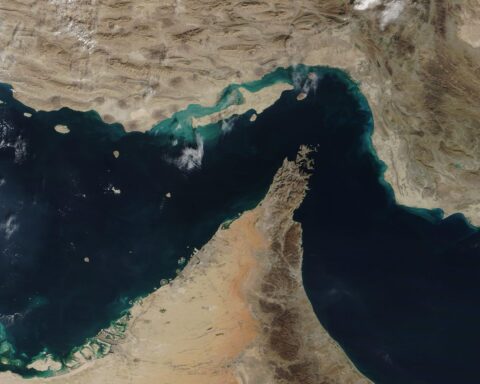
The Strait of Hormuz — 21 nautical miles wide at its narrowest, with two-mile shipping lanes in each direction — has been the world’s most consequential maritime chokepoint for half a century. Before the current war, approximately 138 ships transited daily, carrying roughly 20 per cent of global oil consumption and nearly all of Qatar’s liquefied natural gas exports. The International Energy Agency’s executive director, Fatih Birol, has described the current disruption — 13 million barrels per day effectively offline — as “the biggest energy security threat in history.”
Mine warfare in the Gulf is not new. On April 14, 1988, the frigate USS Samuel B. Roberts struck an Iranian mine that blew a 15-foot hole in its hull, flooded the engine room, and broke the keel. The mine’s serial number matched those recovered from the Iranian minelayer Iran Ajr, seized the previous September — a single mine, laid deliberately, in a known location, by a vessel the US had already captured. Those conditions bear no resemblance to the current situation, in which dozens of mines were laid by decentralised speedboat crews without central coordination or records.
The war began on February 28, 2026, and has driven physical crude prices to $150 per barrel even as futures markets trade at $97 — a divergence that reflects the market’s understanding that supply disruption is not a risk to be priced probabilistically but a physical reality already manifesting. US gasoline prices averaged $4.03 per gallon nationally on April 23, up $0.86 year-on-year, according to Stars and Stripes. Steven Wills of the Center for Maritime Strategy at the Navy League summarised the doctrinal reality to Stars and Stripes: “One can never take for granted that mines are not present unless cleared.” Sal Mercogliano of the US Merchant Marine Academy added the practical corollary: “If there’s a fear of a mine… you’ve got to prove that there aren’t any mines” — requiring “extensive mine sweep operations” that have not yet begun in earnest.
Frequently Asked Questions
How long would it take to clear the Strait of Hormuz if a deal were signed today?
Pentagon officials told the House Armed Services Committee it would likely take six months, according to the Washington Post — and that estimate assumes Iranian cooperation on mine locations, cooperation the US believes Iran cannot provide because no master chart exists. The 1991 Gulf War clearance, conducted in a smaller area with full Iraqi cooperation including mine maps handed over on March 3, 1991, took six and a half months. Defense Secretary Hegseth declined to confirm the six-month figure and offered no shorter estimate, saying only that the US feels “confident in our ability, in the correct period of time, to clear any mines that we identify.”
Could Iran clear its own mines as part of a deal?
The fundamental problem is informational, not operational: US officials told the New York Times that Iran’s decentralised IRGC forces laid mines “without a clear record of where they were placed” and that some may have drifted. Iran would face the same detection challenges as any other navy, compounded by the variety of mine types — contact, influence, and rocket mines each require different detection methods. No Iranian official has publicly offered to conduct clearance, and Iran’s April 27 proposal via Pakistan contained no mine-clearance mechanism.
What happens to oil prices if Hormuz stays functionally closed for six months?
Saudi Arabia’s Yanbu bypass via the East-West Pipeline has a practical ceiling of 4 to 5.9 million barrels per day, well below the 7 to 7.5 million barrels that transited Hormuz daily before the war — leaving a structural gap of 1.1 to 1.6 million barrels per day that no existing bypass can fill. Goldman Sachs has estimated Saudi Arabia’s war-adjusted fiscal deficit at 6.6 per cent of GDP against the official projection of 3.3 per cent. The March production crash to 7.25 million bpd — down 30 per cent from February — suggests the supply impact is already exceeding most analysts’ baseline scenarios.
Are there alternatives to minesweeping for reopening the Strait?
CENTCOM Commander Admiral Brad Cooper announced on April 11 that the US had “begun the process of establishing a new passage” and would share a “safe pathway with the maritime industry soon.” Nearly three weeks later, no such pathway has been published. The IRGC’s own navigational chart redirects vessels through a 5-nautical-mile corridor between Qeshm and Larak islands — inside Iranian territorial waters, where Iran exercises inspection and seizure authority. BIMCO’s Jakob Larsen told Al Jazeera that this restricted routing “cannot safely accommodate the normal volumes” of traffic. Any alternative passage still runs through waters where mines may be present, and verification requires the same MCM assets in short supply for the primary lanes.
Why did the US have no minesweepers in the Gulf when the war started?
The four Avenger-class MCM ships based in Bahrain were decommissioned in September 2025 and physically removed to Philadelphia in January 2026, two months before the war began. The LCS ships USS Tulsa and USS Santa Barbara — intended replacements carrying MCM mission packages — had been moved from Bahrain to Malaysia before the war began. Their mine-warfare packages have never been tested in combat and have been described by NavalNews as “plagued with problems, in some cases making them combat ineffective.” The UK had similarly decommissioned its last traditional minesweeper in Bahrain, leaving the combined Western MCM presence at outbreak functionally zero.
The practical limits of the Larak corridor became apparent in late April, when two vessels â the VLCC Idemitsu Maru and the LNG carrier Mubaraz â both cleared the Strait outside the corridor within 48 hours. Only one had Iranian authorization. The Mubaraz ghost transit and what it reveals about the corridorâs enforcement capacity is examined in full.