
BRUSSELS — Ten days into the most significant Middle Eastern conflict since 2003, Europe has managed to issue statements, dispatch warships, and coordinate evacuation flights. What it has not managed to do is influence the war’s trajectory in any meaningful way. The continent that spent two decades building diplomatic architecture around the Iran nuclear file — the Joint Comprehensive Plan of Action, the E3 negotiating framework, the snapback mechanism — now watches from the sidelines as American and Israeli strikes reshape the region and Iranian missiles fall on the Gulf states that host European military bases, employ European citizens, and supply European energy markets. That distance closed dramatically on March 13, when a French soldier became the first European casualty of the Iran war, killed by an Iranian drone in Iraqi Kurdistan.
The strategic miscalculation is almost total. Europe bet its Middle Eastern influence on diplomacy with Tehran; that bet collapsed when the JCPOA died in October 2025. Europe assumed the Strait of Hormuz would remain open; it closed on 28 February 2026. Europe believed its defense relationships with Gulf states were supplementary to the American security umbrella; Iranian drones have now struck French military installations in Abu Dhabi. And Europe calculated that its gas storage levels, rebuilt after the Russian supply shock of 2022, would provide a comfortable buffer against any new energy crisis. Those storage levels entered March 2026 at 46 billion cubic metres — compared to 60 bcm in 2025 and 77 bcm in 2024, according to Bruegel analysis.
The consequences for Saudi Arabia are direct and consequential. Europe is Mohammed bin Salman’s largest source of megaproject expertise, a critical arms supplier, and the diplomatic counterweight to Washington’s transactional approach. A weakened, distracted Europe leaves Riyadh more dependent on an American alliance that has already shown signs of fracture. This analysis examines how Europe lost its leverage, why it matters for Saudi Arabia, and what the continent’s paralysis means for the war’s endgame.
Table of Contents
- How Did Europe Lose Its Iran Leverage?
- Why Can’t Europe Agree on the Iran War?
- The Five Europes
- How Exposed Is Europe to Gulf Energy Disruption?
- The Arms Paradox
- European Boots on Gulf Sand
- What Happens to 100,000 European Citizens in the Gulf?
- Why Does European Paralysis Matter for Saudi Arabia?
- The European Gulf Dependency Matrix
- The Argument Nobody in Brussels Wants to Hear
- Is Europe’s Vision 2030 Investment at Risk?
- What Comes After the War for EU-Gulf Relations?
- Frequently Asked Questions
How Did Europe Lose Its Iran Leverage?
Europe’s influence over the Iran file rested on a single instrument: the Joint Comprehensive Plan of Action. Signed in 2015, the JCPOA gave the E3 — France, Germany, and the United Kingdom — a seat at the table that their military capabilities alone could never have earned. For seven years, European diplomats were the indispensable intermediaries between Washington and Tehran, the custodians of a deal that constrained Iran’s nuclear programme in exchange for sanctions relief.
That architecture collapsed in stages. The United States withdrew in 2018 under President Trump’s first term. Iran progressively breached enrichment limits from 2019 onward. Five rounds of US-Iran talks in early 2025 briefly suggested diplomacy might gain traction, but Israeli strikes on Iranian nuclear facilities in June 2025 forced the cancellation of a planned sixth round. Iran officially terminated the JCPOA on 18 October 2025.
The E3’s final card was the snapback mechanism. On 28 August 2025, France, Germany, and the United Kingdom initiated the process to reimpose UN sanctions, stating that Iran had “increasingly and deliberately ceased performing its JCPOA commitments,” including the accumulation of highly enriched uranium. UN sanctions were officially reimposed on 28 September 2025. But by then, the mechanism was punitive rather than diplomatic — a stick without a carrot, severing the last thread of engagement rather than rebuilding it.
The Middle East briefing 3,000+ readers start their day with.
One email. Every weekday morning. Free.
The result is a Europe with no diplomatic channel to Tehran, no leverage over American military decisions, and no independent framework for managing the crisis. As Matthias Matthijs, senior fellow for Europe at the Council on Foreign Relations, noted in a 6 March analysis, the US and Israel launched strikes on Iran “with minimal consultation of European allies.” Europe was informed, not consulted. The distinction matters enormously.
Why Can’t Europe Agree on the Iran War?
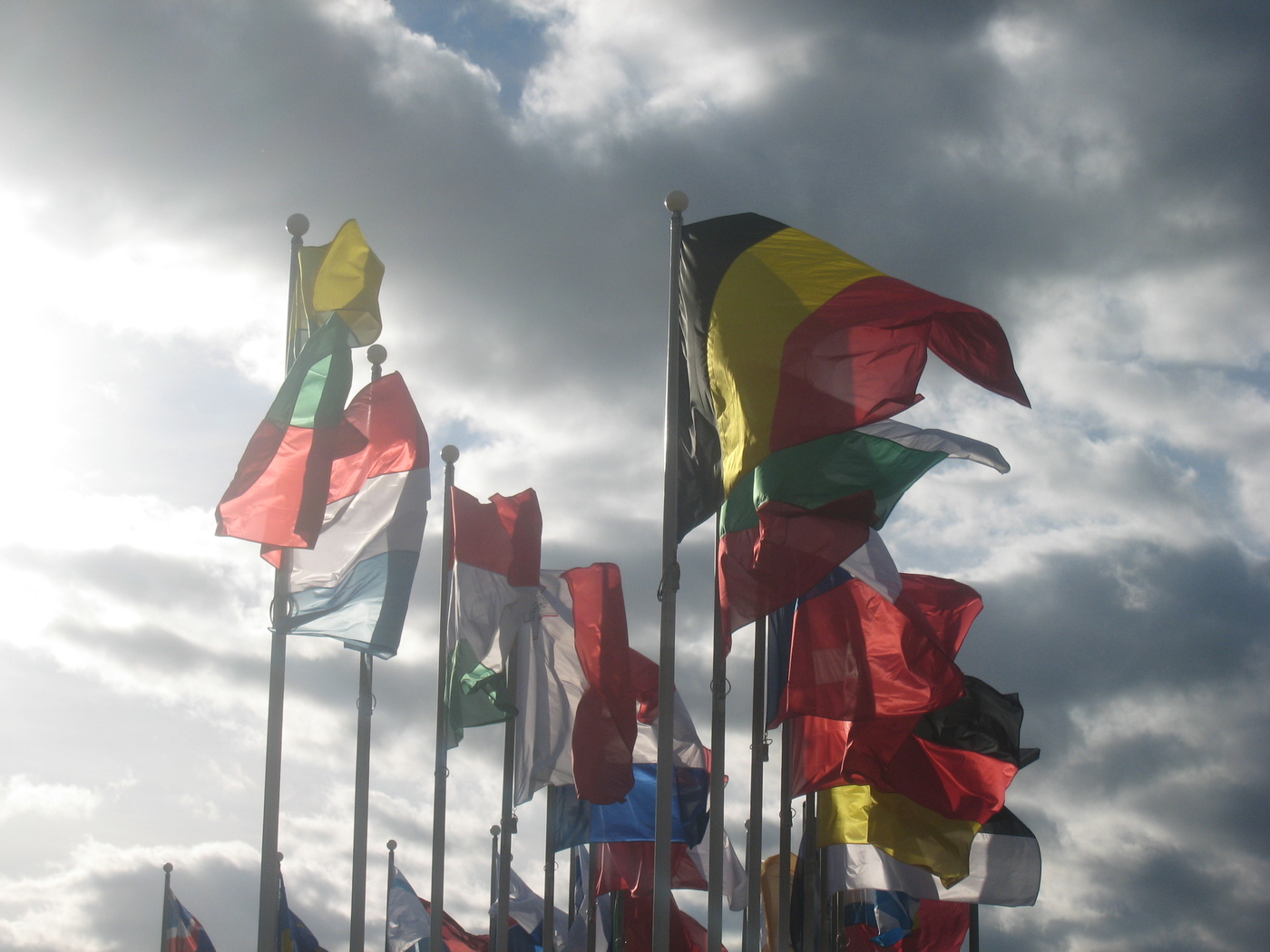
Europe’s disjointed response to the Iran war reflects structural divisions that predate the conflict by decades. The continent cannot agree on the war because its member states hold fundamentally different views on three questions: whether the US-Israeli strikes were legitimate, whether Europe should participate in the military response, and whether Iran’s retaliation against Gulf states hosting US assets changes the calculus.
CNBC reported on 3 March that the EU “struggles to be heard as the war on Iran escalates,” and the description is generous. Struggling implies effort. On the critical decisions — whether to provide basing rights, whether to deploy offensive military assets, whether to participate in freedom-of-navigation operations in the Strait of Hormuz — individual European states have made individual choices with minimal coordination. Spain refused to allow US forces to use Spanish bases, even after President Trump threatened to “cut off all relations.” France authorised US aircraft to operate from select French bases in the Middle East. Germany’s Chancellor Friedrich Merz told Trump they were “on the same page.” Italy raised legal concerns while remaining politically close to Washington.
The Al Jazeera assessment from 4 March was blunt: “Europe fails to unite on war launched by US, Israel.” The failure is not merely procedural. It reflects an absence of common strategic culture on Middle Eastern military operations — a void that the EU’s Common Security and Defence Policy was supposed to fill but never did. When Iranian drones struck a French military installation in Abu Dhabi on 1 March, the attack did not trigger a collective European response. It triggered a French response. The difference is the difference between a superpower and a collection of medium-sized states with different interests.
The Five Europes
The Iran war has revealed not one European position but five distinct camps, each operating from different strategic assumptions and domestic political constraints. Understanding these camps is essential to understanding why Brussels cannot act as a unified strategic actor in the Gulf.
| Camp | Countries | Position on US Strikes | Military Contribution | Gulf Basing Rights |
|---|---|---|---|---|
| Atlanticist hawks | Poland, Baltics, Czech Republic, Romania | Full political backing | Symbolic deployments | Offered if requested |
| Strategic hedgers | UK, Germany | Conditional support with caveats | Defensive assets deployed | UK: yes (Diego Garcia); Germany: case-by-case |
| Legalist critics | France, Italy | Legal concerns raised publicly | France: significant (carrier group); Italy: naval assets to Cyprus | France: authorised US use of regional bases |
| Refuseniks | Spain, Ireland, Belgium | Condemnation or opposition | None offensive | Spain: explicitly refused |
| Silent majority | Most other EU members | Vague concern statements | None | Not applicable |
The Atlanticist hawks, led by Poland’s President Karol Nawrocki, frame the conflict through a security lens shaped by their own proximity to Russia. For Warsaw, Prague, and Tallinn, supporting Washington on Iran is inseparable from maintaining American commitment to European defence against Moscow. Their position is transactional: back the US in the Gulf, retain US protection in Eastern Europe. The logic is coherent even if the strategy carries risks.
The strategic hedgers — the UK and Germany — occupy the most uncomfortable position. Britain initially restricted US use of its Diego Garcia military base before reversing course under American pressure, with Prime Minister Keir Starmer emphasising that Britain “did not participate in strikes” while reaffirming that US forces could use the base for regional defence. This “balanced approach invited the ire of US President Donald Trump,” according to CFR analysis. Germany’s Merz adopted a different form of hedging: rhetorically hawkish (“decades of sanctions and diplomacy have failed to halt Tehran’s destabilising activities”) while offering no substantive military contribution beyond diplomatic backing.
France stands alone as the only European power combining legal criticism of the strikes with significant military deployment. President Macron warned that “military action conducted outside international law risks undermining global stability” while simultaneously deploying the Charles de Gaulle aircraft carrier to the eastern Mediterranean and authorising US use of French regional bases after the Iranian drone attack on France’s Abu Dhabi installation. The French position is internally consistent — defend international law in principle, defend French interests in practice — but it satisfies nobody.
How Exposed Is Europe to Gulf Energy Disruption?
The Strait of Hormuz crisis has forced a reckoning with European energy security that many in Brussels believed they had resolved after the Russian gas shock of 2022. They were wrong. Europe replaced Russian pipeline gas with global LNG — and approximately 10 percent of that LNG transits the Strait of Hormuz from Qatar, according to the Institute for Energy Economics and Financial Analysis. The strait handles 20 million barrels per day of oil and petroleum products — roughly one-fifth of global consumption — and 20 percent of global LNG trade.
The immediate market impact was severe. Oil prices surged approximately 8 percent on 2 March. European gas prices at the Title Transfer Facility, Europe’s benchmark trading hub, spiked from €31.9 per megawatt-hour on the Friday before strikes to €54.3 per MWh by the following Tuesday — a 70 percent increase in four trading days, according to Bruegel analysis. For a continent still recovering from the 2022 energy crisis, the speed of the price shock was alarming.
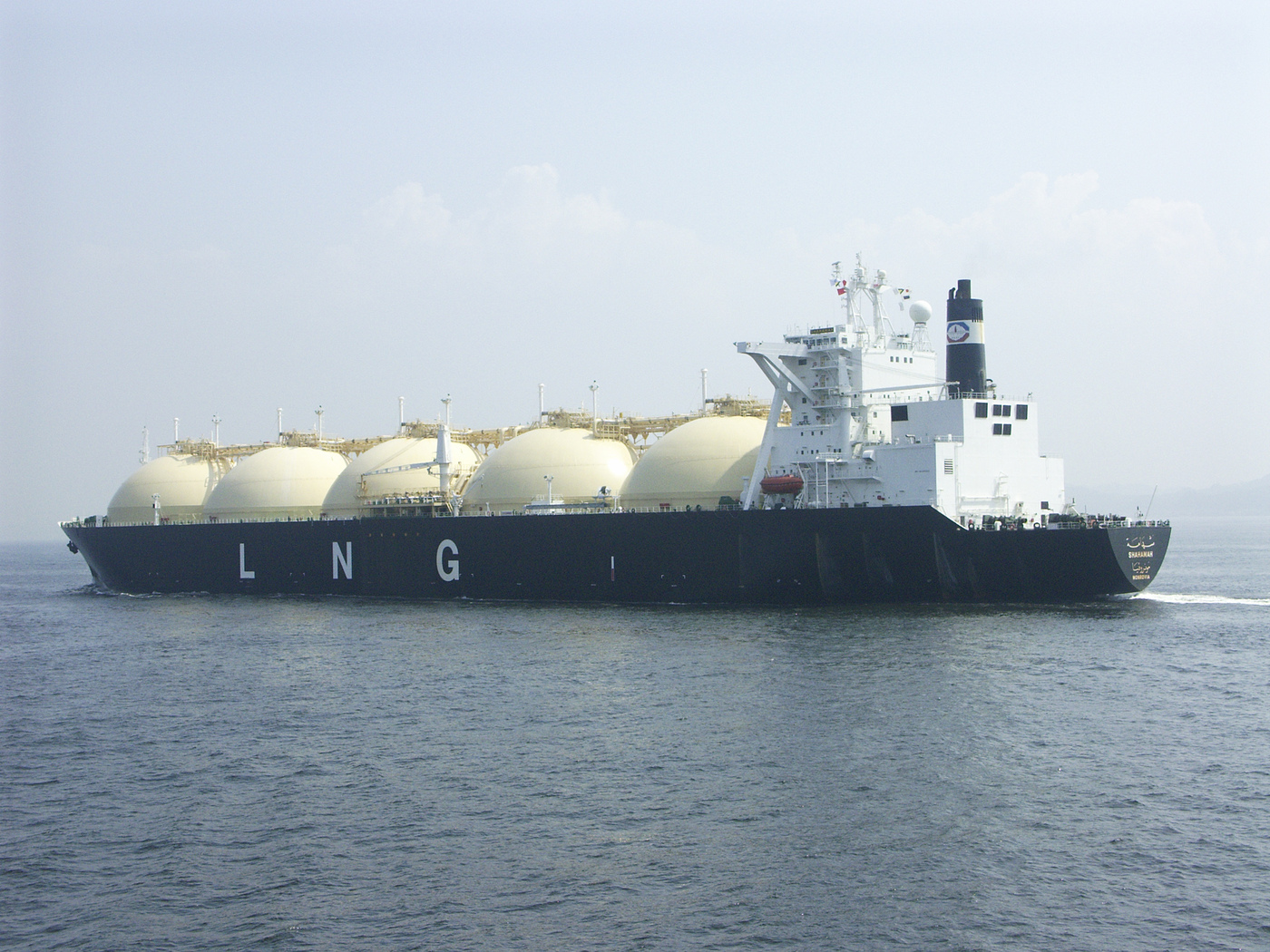
The storage picture compounds the vulnerability. Europe entered March 2026 with gas storage at 46 billion cubic metres — 23 percent below the 60 bcm level of March 2025 and 40 percent below the 77 bcm of March 2024. The drawdown reflects a colder winter combined with reduced refilling rates as European buyers competed with Asian purchasers for spot LNG cargoes throughout 2025.
| Metric | Value | Source |
|---|---|---|
| European LNG from Qatar via Hormuz | ~10% | IEEFA, 2026 |
| Italy’s share of EU Qatar/UAE LNG imports | 50% | Bruegel, 2026 |
| Belgium’s share | 24% | Bruegel, 2026 |
| Poland’s share | 13% | Bruegel, 2026 |
| EU gas storage (March 2026) | 46 bcm | Bruegel, 2026 |
| EU gas storage (March 2025) | 60 bcm | Bruegel, 2026 |
| EU gas storage (March 2024) | 77 bcm | Bruegel, 2026 |
| US share of EU LNG imports | ~58% | EU Commission, 2026 |
| TTF gas price pre-war (28 Feb) | €31.9/MWh | Bruegel, 2026 |
| TTF gas price post-strikes (4 Mar) | €54.3/MWh | Bruegel, 2026 |
EU officials insist the bloc remains “well supplied” because 58 percent of its LNG imports come from the United States. The reassurance obscures a critical point: oil and LNG are global markets. A blockage of the Strait of Hormuz does not merely remove Qatari cargoes from the European supply mix — it forces Asian buyers who lost Gulf supply onto the spot market, where they compete directly with European purchasers. The Bruegel analysis warns that the dynamic risks triggering competitive bidding for spot market cargoes “similar to the 2021-2023 energy crisis.” Europe is not directly exposed to Hormuz the way Japan or South Korea are. But in a supply-constrained global market, the distinction between direct and indirect exposure narrows rapidly.
For Saudi Arabia, Europe’s energy anxiety creates both leverage and risk. Aramco’s oil fields face Iranian drone threats, but the kingdom’s ability to reroute exports via the Red Sea and its East-West pipeline gives it options that other Gulf producers lack. A Europe desperate for energy security is a Europe more likely to accommodate Saudi diplomatic preferences — but also a Europe more likely to pursue radical energy transition measures that could undermine long-term demand for Saudi crude.
The Arms Paradox
European defence companies have made billions from Gulf arms sales while European parliaments have spent decades debating whether those sales are ethical. The Iran war has collapsed this comfortable hypocrisy into an urgent contradiction: the weapons Europe sold to Gulf states are now being used in an active conflict, and the Gulf states buying those weapons are simultaneously being struck by Iranian missiles. Europe cannot simultaneously arm the Gulf, critique the war, and claim neutrality.
The numbers are substantial. According to SIPRI’s March 2025 data on international arms transfers, GCC states accounted for 20 percent of global arms imports in the 2020-24 period, with import volumes increasing 4.1 percent compared to 2015-19. Three GCC members — Qatar, Saudi Arabia, and Kuwait — ranked among the world’s top 10 arms importers. European suppliers provided 12 percent of Middle Eastern arms imports from Italy, 9.7 percent from France, and 7.6 percent from Germany during the same period.
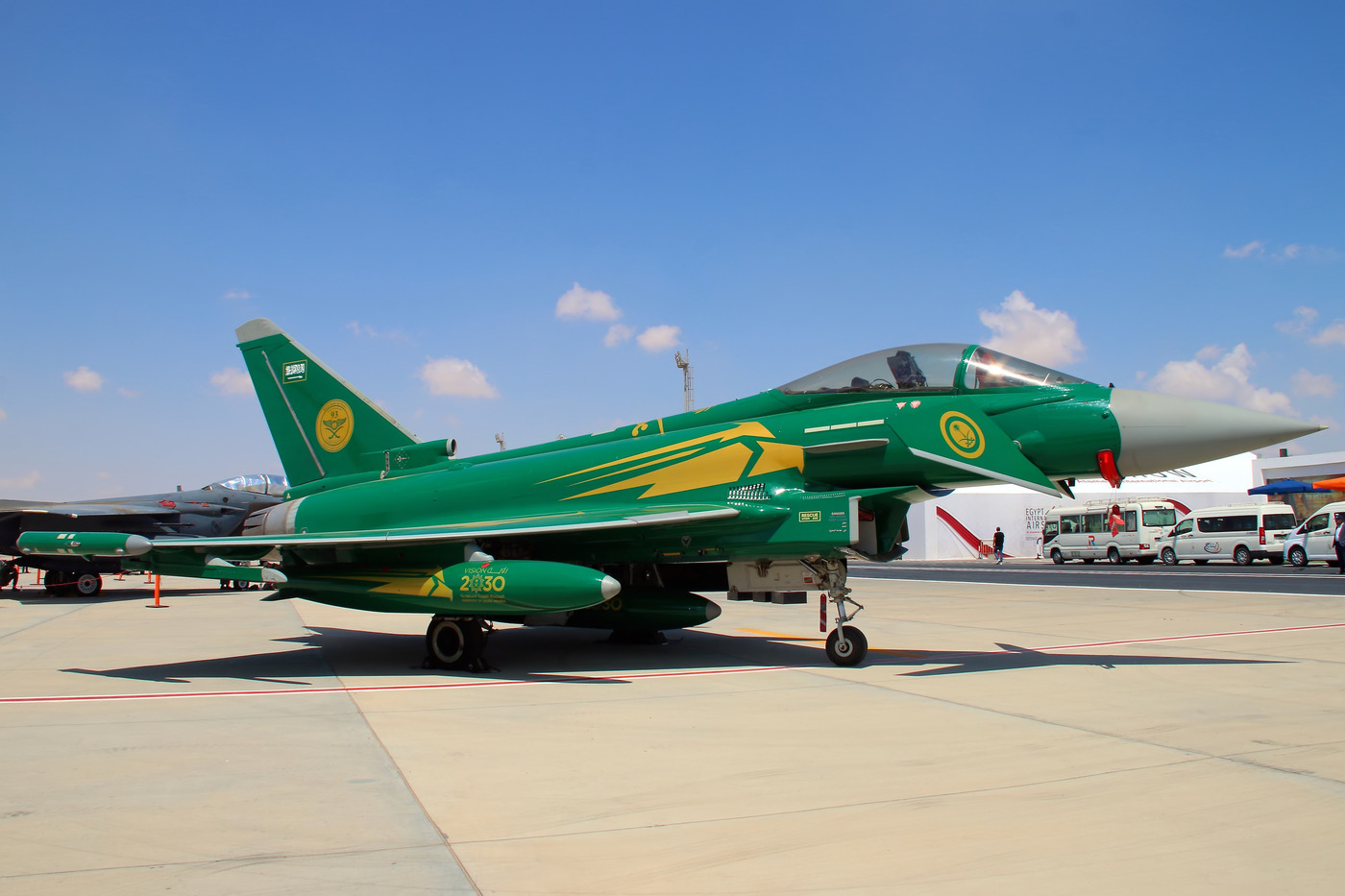
Saudi Arabia’s primary arms supplier remains the United States at 74 percent of imports during 2020-24, but European suppliers are critical in specific categories. Spain provided 10 percent of Saudi arms imports and France 6.2 percent. The Eurofighter Typhoon programme — a consortium of BAE Systems (UK), Airbus (Germany/Spain), and Leonardo (Italy) — represents one of the deepest European defence-industrial ties with Riyadh. The Royal Saudi Air Force operates 72 Eurofighter Typhoons, with discussions on additional orders ongoing before the war began.
The paradox becomes acute in the German case. Berlin has maintained restrictions on arms exports to Saudi Arabia since the Khashoggi murder in 2018, creating friction with consortium partners Britain and France who wish to continue Eurofighter sales. The Iran war intensifies pressure from both directions: German industry and NATO allies argue that restricting arms to a state under missile attack is strategically absurd, while German peace movements and legal activists argue that the war validates their longstanding opposition to Gulf arms sales.
For MBS, Europe’s arms relationship is transactional but not replaceable. European defence technology — particularly in air defence systems, naval platforms, and electronic warfare — complements American equipment in ways that Chinese or Russian alternatives cannot. A Europe that restricts arms sales to the Gulf during the war risks pushing Saudi Arabia further toward non-Western suppliers, accelerating a defence diversification that Riyadh has pursued since the 2026 World Defense Show in Riyadh.
European Boots on Gulf Sand
Europe’s military presence in the Gulf is modest compared to the American footprint but significant enough to have made European installations targets of Iranian retaliation. France operates a naval air base at Al Salam (Camp de la Paix) in Abu Dhabi, established in 2009, representing France’s only permanent military installation in the Gulf. Britain maintains the UK Naval Support Facility in Bahrain, supporting Operation Kipion — the Royal Navy’s longstanding maritime security mission in the Persian Gulf and Indian Ocean.
On 1 March, two Iranian drones struck the French base in Abu Dhabi, causing a fire in two containers of general materials. French Defence Minister Catherine Vautrine confirmed “the damage is limited and only material. No injuries have been reported.” The attack was a threshold event: Iran had struck a European military installation on allied soil, marking the first direct Iranian attack on a European military asset since the war began.
France’s response was proportionate but revealing. Paris deployed Rafale jets to protect its Abu Dhabi installations, sent the aircraft carrier Charles de Gaulle to the eastern Mediterranean, and dispatched the frigate Languedoc to waters off Cyprus. Italy, Spain, France, and the Netherlands agreed to send naval assets to protect Cyprus after an Iranian drone struck the British Sovereign Base Area of Akrotiri on 3 March. The deployments are defensive — protecting European assets and evacuation routes — rather than offensive participation in the war. But the distinction may prove unsustainable if Iranian attacks on European installations continue.
Britain’s position in Bahrain is particularly exposed. The UK Naval Support Facility sits in a country that has become one of Iran’s most frequently targeted locations, with multiple missile and drone attacks on Bahraini installations hosting US and allied forces. The Royal Navy has conducted defensive operations in Gulf waters, but the scale of British naval commitment — one destroyer, HMS Dragon, plus helicopters with counter-drone capabilities — is modest relative to the threat environment.
What Happens to 100,000 European Citizens in the Gulf?
The Iran war triggered the largest evacuation of European citizens from the Middle East since the 2006 Lebanon war. Germany cited roughly 30,000 nationals affected across the Gulf region. Italy planned to assist up to 58,000 citizens in returning. The European Commission’s Emergency Response Coordination Centre coordinated six repatriation flights from the Middle East within the first week of the conflict, with flights landing in Bulgaria, Italy, Austria, and Slovakia.
The evacuation numbers represent only a fraction of the European population in Gulf states. Hundreds of thousands of European nationals live and work in the UAE, Saudi Arabia, Qatar, Bahrain, Oman, and Kuwait — employed by European companies operating in the region, working on Vision 2030 megaprojects, managing hotels, teaching at international schools, running financial services operations. The disruption to their lives and livelihoods represents a human cost of the war that European media has covered extensively but European governments have struggled to mitigate.
For Saudi Arabia, the departure of European professionals creates immediate operational challenges for Vision 2030 projects that depend on Western expertise. Engineering firms, consulting companies, architectural practices, and financial services operations staffed heavily by European nationals face workforce disruption. The longer the conflict continues, the harder it becomes to reverse the brain drain. European professionals who leave the Gulf during wartime may not return when the fighting stops — they will take positions in Singapore, Hong Kong, or London instead.
Why Does European Paralysis Matter for Saudi Arabia?
Europe’s inability to act as a unified strategic actor in the Gulf creates four specific problems for Riyadh. Each compounds the others, leaving Saudi Arabia with fewer options at a moment when it needs more.
The first problem is diplomatic. Europe was the one major power bloc that maintained diplomatic channels to both Iran and the Gulf states simultaneously. The JCPOA framework, flawed as it was, gave European diplomats credibility in Tehran that neither Washington nor Riyadh possessed. With that framework destroyed and Europe marginalised from the war’s decision-making, Saudi Arabia loses a potential intermediary for de-escalation. The kingdom’s own diplomatic backchannel to Tehran operates without European support that could have added weight to ceasefire proposals.
The second problem is economic. European companies are deeply embedded in Vision 2030 implementation. Siemens, Alstom, Vinci, and dozens of smaller European firms provide engineering, consulting, and project management services for Saudi megaprojects. The EU recently inaugurated its first European Chamber of Commerce in Saudi Arabia, and a forthcoming EU-Saudi Arabia Strategic Partnership Agreement was expected to reinforce cooperation on clean technologies and industrial innovation. War-related disruption — evacuation of personnel, insurance cost increases, supply chain uncertainty — threatens project timelines and budgets at a moment when Vision 2030 is already under strain.
The third problem is security. European defence exports to the Gulf complement American systems in critical areas. French MICA missiles equip the air forces of several Gulf states. The Eurofighter Typhoon forms a major component of the Royal Saudi Air Force. European naval vessels patrol Gulf waters alongside American carriers. If European domestic politics — particularly in Germany and Spain — drive further restrictions on arms exports or military cooperation during the war, Saudi Arabia faces gaps in its defence supply chain that cannot be filled quickly from alternative sources.
The fourth problem is strategic balance. Saudi Arabia has spent years cultivating a multi-polar foreign policy, reducing dependence on any single great power by building relationships with China, India, Russia, and Europe alongside the United States. A Europe that retreats from Gulf engagement — whether through diplomatic marginalisation, economic withdrawal, or arms restrictions — pushes Riyadh back toward a binary choice between Washington and Beijing. That binary is precisely what MBS has worked to avoid.
The European Gulf Dependency Matrix
The relationship between Europe and the Gulf is frequently described in simple terms: Europe buys oil, the Gulf buys arms. The reality is far more complex. A structured analysis reveals seven distinct dependency channels, each flowing in both directions, each affected differently by the Iran war.
| Channel | Gulf → Europe Flow | Europe → Gulf Flow | War Impact | Post-War Outlook |
|---|---|---|---|---|
| Energy | Oil, LNG, petrochemicals | Renewable technology, hydrogen expertise | Supply disruption, price spikes | Accelerated European diversification away from Gulf hydrocarbons |
| Defence | Basing rights, intelligence sharing | Combat aircraft, naval systems, training | Arms restrictions debated; installations targeted | Possible re-evaluation of export controls |
| Finance | Sovereign wealth fund investment in European assets | Banking, insurance, asset management services | War risk insurance costs surge | Gulf sovereign funds diversify to Asia |
| Labour | Remittances, professional employment | Technical expertise, project management | Evacuations, workforce disruption | Slow return; brain drain to Asia |
| Diplomacy | Multilateral coordination, UN voting | JCPOA mediation, conflict resolution expertise | Europe marginalised from decision-making | Opportunity for post-war reconstruction diplomacy |
| Technology | Data centre hosting, digital infrastructure | AI, cybersecurity, industrial automation | Data centre attacks threaten European tech operations | Possible relocation of digital infrastructure |
| Trade | Hydrocarbon exports, aluminium, fertilisers | Machinery, vehicles, luxury goods, food | Supply chain disruption, shipping costs | Trade routes reconfigured away from Hormuz |
The matrix reveals an asymmetry that neither side finds comfortable. Europe’s dependencies on the Gulf are concentrated in energy and increasingly in digital infrastructure — both of which are vulnerable to military disruption. The Gulf’s dependencies on Europe are spread across defence, technology, labour, and trade — all of which are vulnerable to political disruption from European domestic opinion. The war amplifies both vulnerability sets simultaneously.
Three patterns emerge from the matrix. First, the war accelerates existing trends rather than creating new ones. European energy diversification away from the Gulf was already underway; the Hormuz closure merely increases its urgency. Gulf sovereign fund investment in Asian rather than European assets was already growing; European political instability reinforces the trend. Second, the labour and technology channels are the most fragile — they depend on individual decisions by professionals and companies that cannot be compelled by government policy. Third, the diplomacy channel is the one most likely to recover post-war, because both sides need each other for reconstruction and stabilisation in ways that transcend the current conflict.
The Argument Nobody in Brussels Wants to Hear
Conventional analysis frames Europe’s marginalisation from the Iran war as a failure — of diplomatic preparation, strategic foresight, and institutional capacity. The CFR calls it a “disjointed response.” Al Jazeera says Europe “fails to unite.” Modern Diplomacy describes “shrinking leverage.” The consensus is clear: Europe should have been more prepared, more unified, more relevant.
The contrarian case is that Europe’s marginalisation may prove to be its greatest strategic asset in the war’s aftermath. Consider the historical parallel. In 1991, Japan contributed $13 billion to the Gulf War effort but no combat forces. The contribution was derided at the time as “chequebook diplomacy.” Within five years, Japan had become the largest investor in Gulf economic diversification, the most trusted Asian partner for Gulf sovereign wealth funds, and a critical source of the engineering expertise that built modern Dubai and Doha. Japan’s wartime absence became a peacetime advantage: it had no military baggage, no civilian casualties to account for, and no strategic debts to repay.
Europe — or at least the parts of Europe that have avoided direct military involvement — may be positioning themselves for a similar post-war role, whether by design or by accident. Spain’s refusal to provide basing rights looks weak today. In two years, when Saudi Arabia and a post-war Iran are rebuilding diplomatic and economic relationships, Spanish companies may find doors open that are closed to American and British competitors. Italy’s “legal concerns” about the strikes seem performative today. They may prove to be the foundation of Italian credibility in Tehran when reconstruction contracts are awarded.
The states that stay out of the war will have the strongest position when the war ends. Europe’s division is not a bug — it is an insurance policy that guarantees at least some European capitals will retain credibility with every party to the conflict.
European Diplomatic Analyst, Chatham House, March 2026
The argument has limits. Europe’s marginalisation is not a strategy — it is the absence of one. No European government chose strategic restraint the way Japan did in 1991. They stumbled into varying degrees of involvement based on domestic politics, alliance obligations, and the location of their military bases. The outcome may resemble strategic positioning, but it was not planned as such. And the states that are most marginalised — the “silent majority” in the dependency matrix — are also the states least likely to have the commercial and diplomatic infrastructure to exploit post-war opportunities.
Is Europe’s Vision 2030 Investment at Risk?
European companies account for a disproportionate share of the technical expertise powering Saudi Arabia’s Vision 2030 programme. The Riyadh Metro — the largest urban transit project currently under construction globally — relies heavily on European engineering firms. NEOM’s hydrogen innovation hub draws on European green energy expertise. The tourism sector’s ambition to attract 100 million visitors annually by 2030 depends on European hotel chains such as Accor and hospitality management companies.
The war introduces three categories of risk to this European commercial footprint. The first is personnel risk: European professionals evacuating the Gulf take institutional knowledge with them. The second is insurance risk: war risk premiums for construction projects, shipping, and business operations in the Gulf have surged, adding costs that strain already ambitious project budgets. The third is political risk: European parliaments may impose new restrictions on commercial engagement with Gulf states if the war escalates or if civilian casualties mount.
| Sector | Key European Players | V2030 Projects | War Risk Level |
|---|---|---|---|
| Transport infrastructure | Alstom, Vinci, FCC | Riyadh Metro, HSR | Medium — construction delays |
| Energy transition | Siemens Energy, Vestas, TotalEnergies | NEOM hydrogen, solar | Medium — supply chain disruption |
| Hospitality | Accor, Kempinski, Marriott (US but EU ops) | Red Sea, Diriyah, AMAALA | High — tourism collapse |
| Financial services | HSBC, BNP Paribas, Deutsche Bank | Capital markets development | Low-Medium — remote operations possible |
| Defence industry | BAE Systems, Airbus, Leonardo, MBDA | SAMI partnerships, Typhoon | Low — demand increasing |
| Consulting | McKinsey, BCG, Roland Berger | Strategy across all V2030 pillars | High — personnel departures |
The paradox of the defence sector is striking: it is the one European commercial presence in Saudi Arabia where demand is increasing because of the war rather than despite it. BAE Systems, Airbus Defence, Leonardo, and MBDA stand to benefit from accelerated Gulf defence procurement driven by the conflict. Saudi Arabia’s nascent defence industry — Saudi Arabian Military Industries (SAMI) — depends on European technology partnerships. The war creates urgent demand for the products those partnerships produce.
What Comes After the War for EU-Gulf Relations?
The Iran war will end. The question is whether European-Gulf relations will emerge stronger or weaker from the conflict, and the answer depends on decisions being made — or not made — in European capitals right now.
Three scenarios are plausible. In the first, Europe uses the war’s aftermath to rebuild its Middle Eastern diplomatic credibility. A European-led reconstruction initiative for Iran — similar in ambition to the post-2003 Iraq reconstruction effort but managed with greater competence — could restore the EU’s role as an indispensable intermediary. The forthcoming EU-Saudi Arabia Strategic Partnership Agreement provides a framework for deeper commercial engagement that benefits both sides.
In the second scenario, Europe’s wartime marginalisation becomes permanent. Gulf states conclude that European diplomatic and military commitments are unreliable and redirect commercial relationships toward Asian partners — South Korea for construction, Japan for engineering, China for technology, India for labour. European companies retain a presence but lose market share to competitors who did not evacuate their personnel or debate their arms export policies during the conflict.
In the third and most likely scenario, the outcome varies by country rather than by continent. France and the UK, which maintained military engagement throughout the war, retain privileged partnerships with Gulf states. Germany remains constrained by its arms export policies but compensates through industrial technology exports. Southern European states leverage their wartime neutrality into commercial advantages in post-war Iran. And the EU as an institution remains a useful but marginal player — capable of coordinating humanitarian assistance and trade policy but incapable of unified strategic action.
For Saudi Arabia, the practical implication is that Europe should be engaged bilaterally rather than through Brussels. The kingdom’s relationships with Paris, London, and Berlin each operate on different terms and serve different purposes. Attempting to build a unified EU-Saudi strategic relationship during or after the war is unlikely to succeed given the structural divisions the conflict has exposed. The more productive approach — and the one Riyadh appears to be pursuing — is to deepen bilateral ties with the European states that have demonstrated strategic commitment while maintaining commercial relationships with those that have not.
The appointment of Mojtaba Khamenei as Iran’s new supreme leader adds another variable. If the new leadership in Tehran proves more amenable to ceasefire negotiations — an uncertain proposition given Mojtaba’s deep IRGC connections — European diplomatic channels could prove critical. France and Germany both have embassy-level relationships with Tehran that the United States currently lacks. The JCPOA may be dead, but the diplomatic relationships it built are not entirely extinguished. In a post-war environment, those relationships could give Europe a role in Iranian stabilisation that no other Western power can fill.
Frequently Asked Questions
What is Europe’s official position on the Iran war?
Europe does not have a single official position. EU member states are divided into at least five camps, ranging from full support for US-Israeli strikes (Poland, the Baltics) to explicit opposition (Spain). The EU as an institution has condemned Iranian retaliatory attacks on Gulf states and called for protecting civilians, but it has not taken a unified position on the legality of the original US-Israeli strikes that triggered the conflict.
How much energy does Europe import through the Strait of Hormuz?
Approximately 10 percent of Europe’s LNG imports transit the Strait of Hormuz from Qatar, according to the Institute for Energy Economics and Financial Analysis. The most exposed EU member states are Italy (50 percent of EU Qatar/UAE LNG), Belgium (24 percent), and Poland (13 percent). While 58 percent of EU LNG comes from the United States, the global nature of energy markets means that Hormuz disruption causes price spikes that affect Europe regardless of direct physical exposure.
How many European citizens live in Gulf states?
An estimated 100,000 or more European citizens were affected by evacuation advisories across the Gulf region. Germany cited roughly 30,000 nationals, and Italy planned to assist up to 58,000 citizens. The European Commission’s ERCC coordinated six repatriation flights within the first week of the conflict. Many additional Europeans work across the Gulf in construction, financial services, hospitality, and energy sectors under Vision 2030 and similar programmes.
What European military forces are deployed in the Gulf?
France maintains a naval air base at Al Salam in Abu Dhabi, the only permanent French military installation in the Gulf. Britain operates the UK Naval Support Facility in Bahrain. Since the war began, France deployed the Charles de Gaulle aircraft carrier and the frigate Languedoc; Britain deployed HMS Dragon with counter-drone helicopters. Italy, Spain, France, and the Netherlands sent naval assets to protect Cyprus after an Iranian drone struck the British base at Akrotiri.
Will European arms sales to Saudi Arabia continue during the war?
The picture is mixed. France and the UK have shown willingness to maintain defence relationships with Gulf states during the conflict. Germany’s arms export restrictions — in place since 2018 following the Khashoggi murder — remain a source of friction within the Eurofighter consortium (BAE Systems, Airbus, Leonardo). Spain has refused basing rights but has not explicitly restricted arms exports. The war creates countervailing pressures: strategic arguments for supplying an ally under attack compete with domestic political resistance to arms sales in an active conflict zone.
Could Europe mediate a ceasefire in the Iran war?
Europe’s diplomatic marginalisation during the war makes immediate mediation unlikely. However, France and Germany maintain embassy-level relationships with Tehran that the United States lacks, and the EU’s track record on the JCPOA — despite its ultimate failure — gives European diplomats credibility on Iranian issues that no other Western power possesses. If ceasefire negotiations materialise, European participation would add legitimacy and provide communication channels that the belligerents cannot easily replicate through other means.