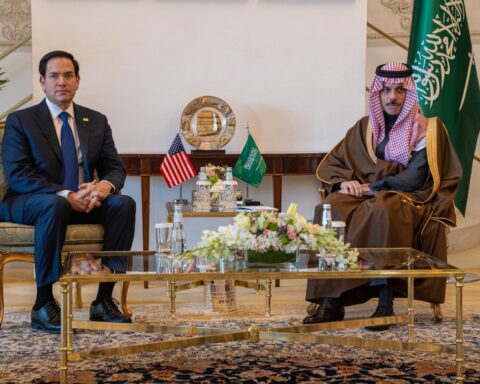

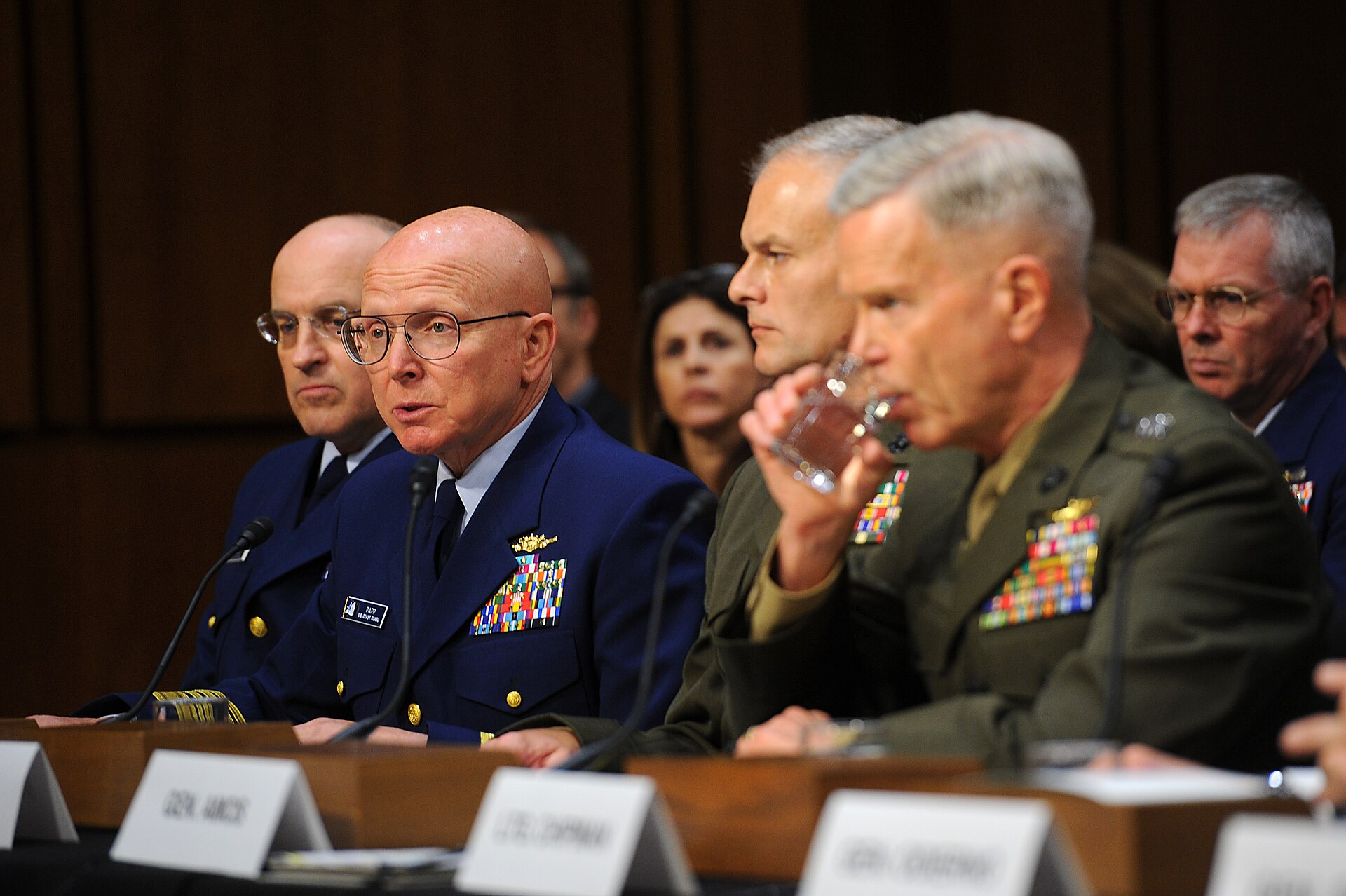
WASHINGTON — Pete Hegseth told the Senate Armed Services Committee on May 12 that America’s munitions shortages have been “foolishly and unhelpfully overstated,” and in Riyadh, where the Saudi military maintains its own intercept logs from seventy-five days of war, the reaction was not anger but confirmation. The Defence Secretary’s testimony — his third public denial of a shortage crisis since March — did not deceive Mohammed bin Salman, who knows to the round how many PAC-3 interceptors his batteries have left; it told him that Washington has chosen performance over partnership, and that the security architecture he has been building outside the American orbit since February is no longer a hedge but a primary strategy.
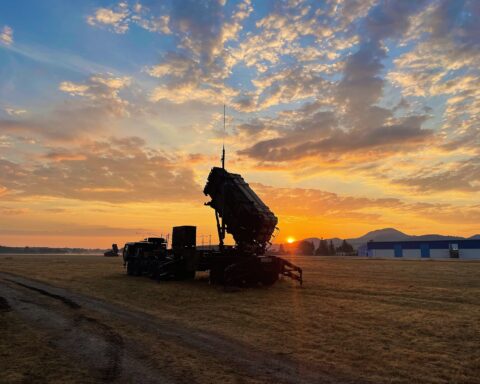
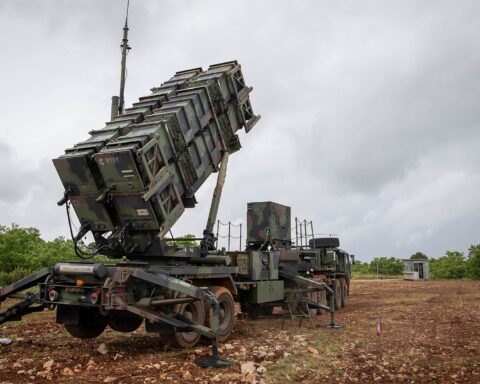
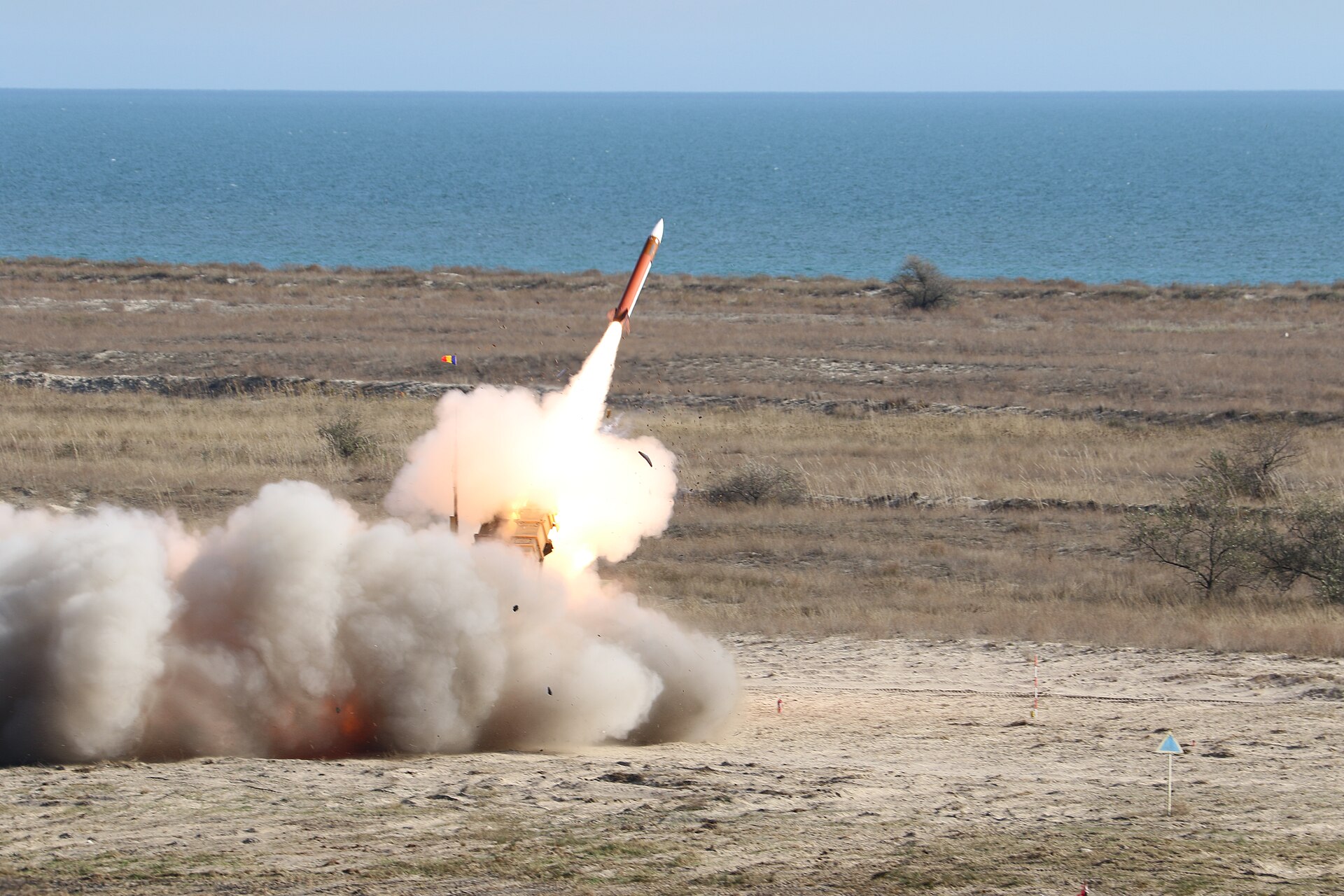
What Hegseth called reassurance, Riyadh received as a planning signal. The Camden, Arkansas factory that produces every PAC-3 MSE interceptor on Earth makes 620 per year for all global customers — the United States, Saudi Arabia, Japan, Germany, the UAE, and every other operator combined. Saudi Arabia’s approved order of 730 rounds, signed through the Defence Security Cooperation Agency on January 30, exceeds an entire year of that output. The first deliveries will not arrive before mid-2027. The full order will not be complete before 2029, and that assumes a production line that has never once met an accelerated schedule on time. MBS can read a calendar as well as a classified brief, and the calendar says he is on his own for at least fourteen months.
Table of Contents
- Hegseth’s Three Denials and the Man Who Called Him On It
- What Does Saudi Arabia Actually Know About Its Own Inventory?
- The Camden Math: Why 620 Rounds a Year Is the Only Number That Matters
- How Does Iran’s $20,000 Drone Break a $3.9 Million Defence?
- Project Freedom and the Veto That Changed Everything
- The Security Architecture MBS Is Building Without Washington
- What Does PAC-3 Depletion Mean for the Ceasefire Window?
- Faisal in London While Hegseth Testified
- Frequently Asked Questions
Hegseth’s Three Denials and the Man Who Called Him On It
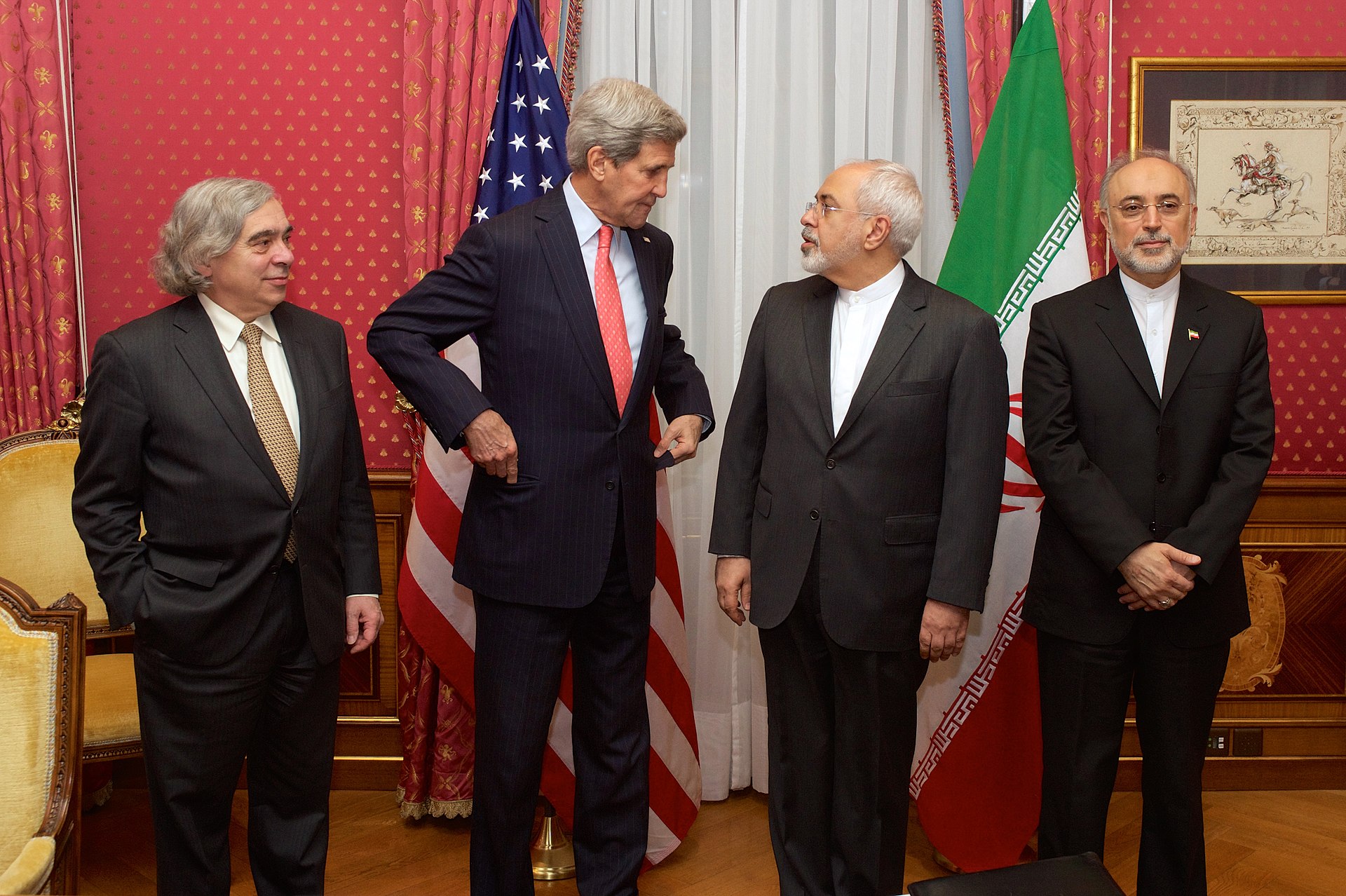
The pattern is now unmistakable and, for anyone tracking Pentagon communications strategy, unusually clumsy. In March 2026, Hegseth told Bloomberg that the United States had “no shortage of munitions for the Iran war.” On April 29, he repeated the claim before the House Appropriations Committee, assuring members that “we know exactly what we have, we have plenty of what we need.” On May 12, facing the Senate Armed Services Committee and a $29 billion war cost — $24 billion of which is munitions replacement and repair alone — he upgraded the language to accusation, calling the shortage narrative “foolishly and unhelpfully overstated.”
Senator Mark Kelly, a Navy combat veteran and SASC member who had spent the preceding weekend on CBS’s Face the Nation warning that the United States had gone “shockingly deep” into its magazines, was not persuaded. When Hegseth accused him of revealing classified information by citing depletion figures, Kelly delivered the line that will outlast the hearing itself: “That’s not classified, it’s a quote from you.” The exchange crystallised something that defence analysts had been circling for weeks — the Pentagon’s public posture and its private reality had formally separated, and the separation was now on the congressional record.
Kelly’s broader point, made both on television and under the committee’s lights, was not about Iran alone: “Whether it’s a conflict in the western Pacific with China or somewhere else in the world, the munitions are depleted.” That sentence reframes the entire debate. The Iran war did not merely consume interceptors earmarked for the Gulf; it consumed interceptors that the Pacific Command’s war plans assume will be available for a Taiwan contingency, and every round fired at a Shahed drone over Dhahran is a round that does not exist for a DF-21D over the Philippine Sea. Hegseth’s assurance that America has “plenty” is not a statement about Iran — it is, whether he intended it or not, a statement about China, and the SASC members who heard it understood the implication immediately.
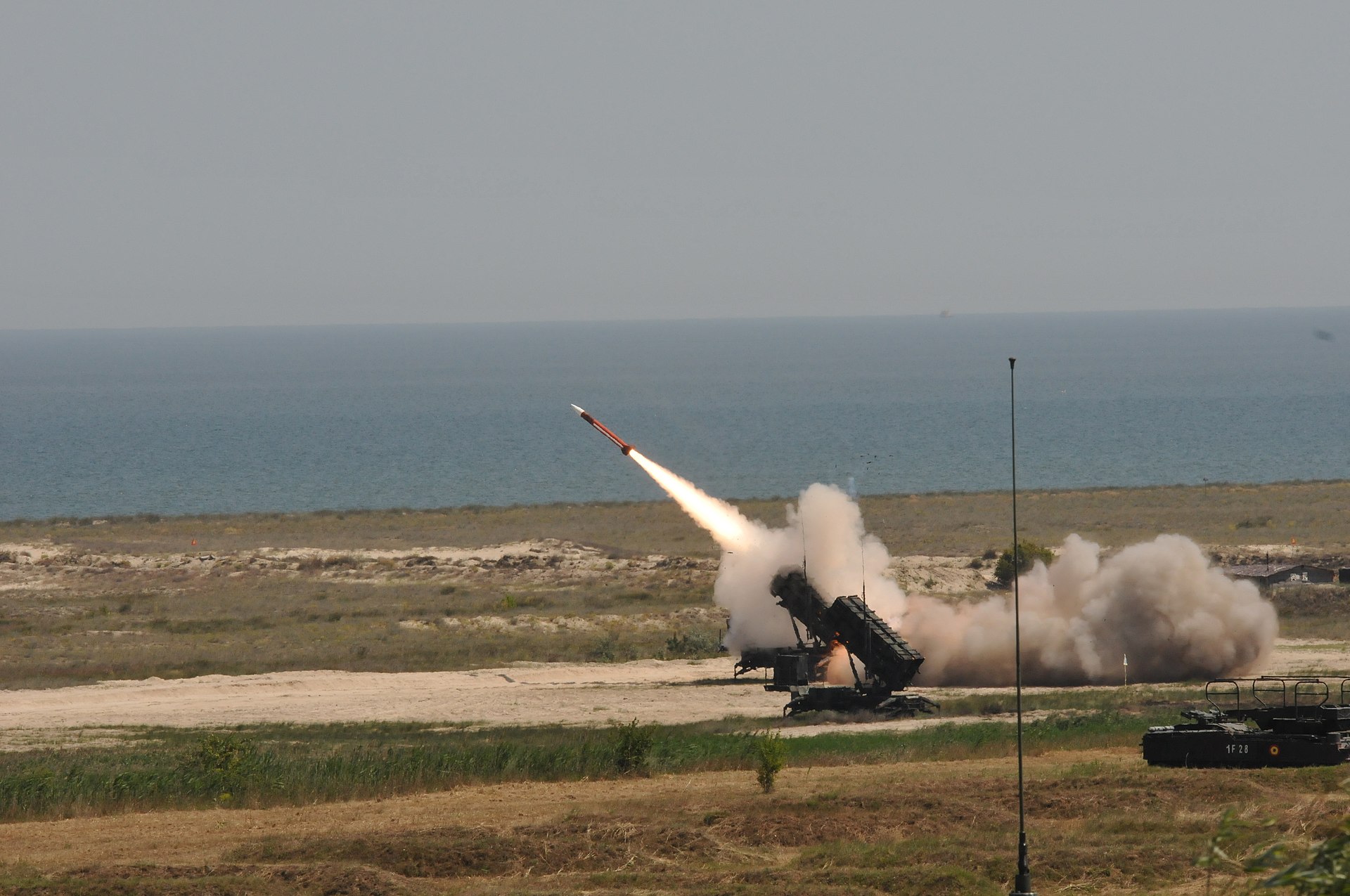
The CSIS report that formed the evidentiary backbone of Kelly’s questioning — “Last Rounds? Status of Key Munitions at the Iran War Ceasefire,” published April 24 by Mark Cancian, a retired Marine colonel and senior adviser, alongside research associate Chris Park — found that US forces had “expended more than half of the prewar inventory” across four weapons systems. At least 50 percent of THAAD missiles, at least 45 percent of Precision Strike Missiles, and nearly 50 percent of Patriot interceptors were gone as of April 21. These are not leaked figures; they are analytical estimates derived from open-source satellite imagery, known engagement rates, and published CENTCOM strike data. Hegseth’s accusation that discussing them constitutes a security breach tells you more about his comfort level than about the classification system.
The Middle East briefing 3,000+ readers start their day with.
One email. Every weekday morning. Free.
What Does Saudi Arabia Actually Know About Its Own Inventory?
Saudi Arabia maintains its own fire-control logs from every PAC-3 battery engagement since February 28. Its remaining inventory — approximately 400 rounds, down 86 percent from a prewar stock of 2,800 — is known to the Saudi military with more precision than any Washington think tank or Senate committee possesses. Hegseth’s public denials contradict data Riyadh holds independently.
The publicly reconstructable picture is bleak enough. Saudi and Gulf state forces intercepted at least 894 aerial threats by the April 7 snapshot: 799 drones, 86 ballistic missiles, and 9 cruise missiles. The combined Gulf states expended approximately 2,400 interceptor rounds over the course of the war — a total replacement cost of roughly $9.36 billion at the standard PAC-3 MSE unit price of $3.9 million per round — drawing Saudi Arabia’s own stocks down from one of the largest Patriot arsenals outside the United States to the 400 rounds that remain.
Four hundred rounds sounds like a number. It is not a comfortable one. During the most intense phases of the Iranian campaign, Saudi batteries were engaging dozens of targets per night, and the standard doctrine — born from both Houthi experience since 2015 and the Ukrainian precedent that established the modern template for rapid depletion — calls for two interceptors per incoming ballistic missile to ensure kill probability. Against drones, single-round engagements are common, but the Iranian force mix has never been exclusively drones; the ballistic component, which demands the expensive double shots, has remained a consistent feature of every major salvo. At the engagement rates seen in March and early April, 400 rounds represents weeks of capacity, not months, and every Saudi air defence officer in the Eastern Province knows the arithmetic.
This is the context in which Hegseth’s testimony lands. When the Defence Secretary tells Congress that shortages are “overstated,” he is not correcting a misperception — he is contradicting information that the Saudi military possesses independently, from its own systems, logged in its own operations centres. The statement is not directed at Riyadh; it is directed at domestic American audiences. But Riyadh hears it, and what Riyadh hears is not “we have enough.” What Riyadh hears is “we have chosen not to tell you the truth in public, which means we will not tell you the truth in private either, and you should plan accordingly.”
The Camden Math: Why 620 Rounds a Year Is the Only Number That Matters
Every PAC-3 MSE interceptor in the world comes from a single Lockheed Martin facility in Camden, Arkansas, and that facility’s annual output — 620 rounds — is the hard ceiling against which every promise, every DSCA notification, and every congressional supplemental must be measured. The number does not care about political urgency, allied relationships, or Pentagon press conferences; it is a function of clean-room capacity, solid rocket motor production, and a supply chain that runs through dozens of sub-tier vendors who were already at capacity before the Iran war began.
Saudi Arabia’s DSCA-approved order of 730 rounds, valued at approximately $9 billion and signed on January 30, 2026, exceeds one full year of that global output. The order does not place Saudi Arabia at the front of a queue — it places Saudi Arabia in a queue that includes the United States’ own replenishment needs, a military that burned through more than half its prewar stocks, plus standing commitments to Japan, Germany, the UAE, Qatar, and every other Patriot operator. The congressional supplemental under consideration — $80 to $100 billion to replace lost munitions across all categories — will fund orders that the Camden line cannot physically fill for years.
Lockheed Martin signed an undefinitised contract action worth $4.7 billion on April 10 to begin accelerating production, and the company’s stated target is 2,000 rounds per year. That target, according to Breaking Defense’s January 2026 reporting, is not achievable before the end of 2030 — four and a half years from now, and two full years after the Saudi order is supposed to be complete. The acceleration, in other words, will not help Saudi Arabia in the window that matters: the next fourteen months, during which the ceasefire either holds or collapses and the Kingdom faces the next Iranian salvo with whatever it has on hand.
MBS has been through this before, though never at this scale. The Houthi campaign that began in 2015 created recurring depletion cycles in which Saudi Arabia burned through Patriot stocks faster than Washington could resupply them, generating the same pattern of private anxiety and public reassurance that Hegseth is now repeating at higher volume. The difference is magnitude — the Iran war consumed in seventy-five days what the Houthi conflict consumed over years — and the difference is that MBS, who was Deputy Crown Prince when the first Houthi interceptor shortages hit, is now the decision-maker, and he has spent the intervening decade building alternatives precisely because he learned that lesson early.
How Does Iran’s $20,000 Drone Break a $3.9 Million Defence?
Each Shahed drone costs Iran $20,000-$35,000 to produce. Each PAC-3 interceptor costs $3.9 million to fire. The cost-exchange ratio of approximately 1:112, calculated by the Bulletin of the Atomic Scientists, means Iran can manufacture over a hundred attack drones for the price of a single defensive round — a deliberate asymmetry that targets the Camden production line more than any Saudi facility.
That ratio is the structural fact that Hegseth’s testimony did not mention and that no amount of congressional reassurance can alter. It is the deliberate product of Iranian strategic design, refined over decades of studying how expensive Western air defence systems interact with cheap, expendable attack platforms. The Shahed is not meant to destroy its target — though it sometimes does. It is meant to destroy the interceptor fired at it, because every interceptor destroyed is $3.9 million that Saudi Arabia cannot recover and 620 annual production slots that cannot be accelerated. Iran has, in effect, designed a weapon whose primary target is not a building or a runway but a production line in Arkansas, and the weapon is working exactly as intended.
The combined expenditure tells the story in financial terms. The Gulf states expended approximately 2,400 interceptor rounds over the war’s most intense phase — a replacement bill of roughly $9.36 billion at $3.9 million per round. Iran’s entire annual military budget, funded primarily from oil revenue, is $12.4 billion. The Gulf states spent more than three-quarters of Iran’s total military budget on interceptors alone, and the interceptors are gone while Iran’s capacity to produce more Shaheds — distributed across facilities that coalition strikes have repeatedly targeted and repeatedly failed to permanently disable — remains largely intact.
When Hegseth tells Congress that munitions concerns are “overstated,” he is implicitly arguing that this ratio does not matter, or that production acceleration will overcome it, or that the war is over and the ratio is now academic. The Saudi military, which watched the ratio operate in real time across its own skies, does not share that assessment, and the procurement decisions Riyadh has made since February — the KM-SAM deal, the UK deployments, the STEP Quartet framework — are the behavioural evidence that it does not.
Project Freedom and the Veto That Changed Everything
The clearest evidence that Riyadh has already drawn its own conclusions about American reliability arrived not in a diplomatic cable but in a denied runway. On May 5-7, Saudi Arabia and Kuwait refused the United States access to Prince Sultan Air Base and Saudi airspace for Project Freedom, the CENTCOM-planned Hormuz escort operation that was supposed to demonstrate American commitment to keeping the Strait open. NBC News reported a Saudi source explaining the decision in language that was diplomatic in form and devastating in substance: “Saudi Arabia was against the operation because it felt it would just escalate the situation and would not work.”
“Would not work” is the operative phrase, and it carries a military judgment inside a political one. Saudi Arabia did not merely disagree with the operation’s politics — it assessed that the American military, in its current state of depletion, could not execute the mission without creating risks that exceeded the benefits. A Hormuz escort operation requires sustained air defence coverage for transiting vessels, which requires interceptor stocks that both sides know are depleted, which means the operation would either succeed and burn more of the rounds Saudi Arabia cannot replace, or fail and demonstrate American impotence in the most strategically visible waterway on Earth. Either outcome was unacceptable, so Riyadh said no.
That veto — the first time Saudi Arabia has denied the United States operational access to its facilities during an active conflict in which both countries are engaged — is the decision that historians will mark as the structural break in the US-Saudi security relationship. It did not happen because MBS dislikes America or because Saudi Arabia has turned toward China or Russia, though both of those narratives are already circulating in Washington’s more excitable commentary. It happened because the PAC-3 production line in Camden produces 620 rounds a year, because Saudi Arabia needs 730 and the United States needs more than that, and because MBS concluded that a partner who cannot supply your primary air defence system and will not admit it in public is a partner whose operational plans you cannot afford to enable.
The Security Architecture MBS Is Building Without Washington
The non-American security architecture that Saudi Arabia has been assembling since the war began is not a bluff, a negotiating tactic, or a tantrum designed to extract better terms from Washington — it is an engineering response to a production constraint, and its components are arriving on timelines that the Camden line cannot match. Korean interceptors, British destroyers, and a four-nation security quartet have all moved faster in three months than Lockheed Martin’s expansion plan will move in four years.
The most consequential element is the KM-SAM Block 2, the South Korean Cheongung-II system for which Saudi Arabia signed a $3.2 billion contract covering ten batteries in February 2024, with first deliveries scheduled for 2028. The system achieved its first combat intercept of an Iranian ballistic missile in the UAE in March 2026, which means it has been tested under the exact conditions that Saudi Arabia needs it to perform in — not on a range in the Mojave but against a live Iranian reentry vehicle in Gulf airspace. The KM-SAM does not replace PAC-3; it supplements it, filling the medium-altitude engagement layer and reducing the number of PAC-3 rounds consumed per salvo by handling threats that PAC-3 can kill but should not have to.
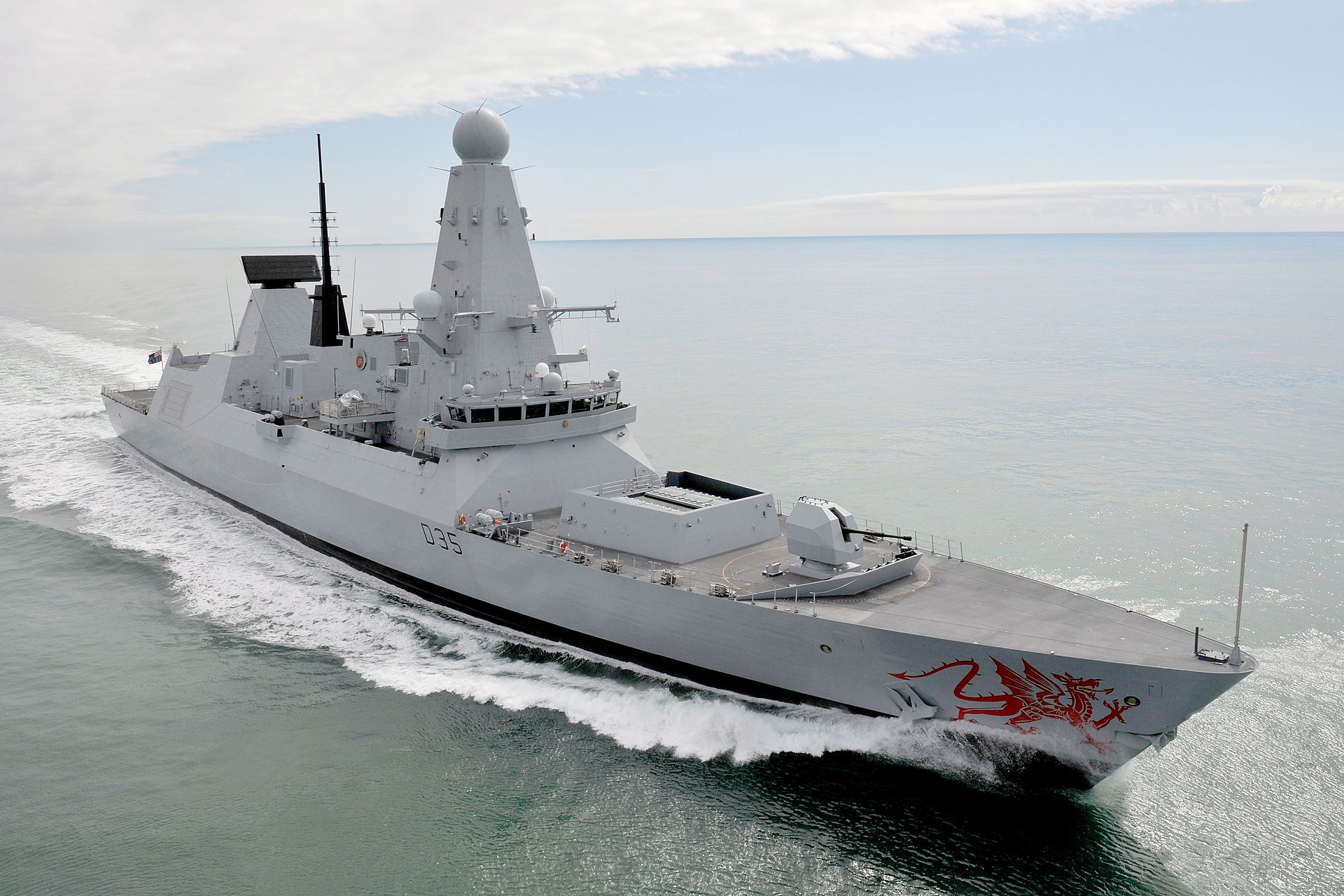
The British contribution accelerated dramatically in the week of Hegseth’s testimony. HMS Dragon, a Type 45 destroyer carrying the Sea Viper system, forward-deployed to the Middle East on May 11 — one day before Hegseth told Congress that everything was fine. The Royal Navy is also contributing Typhoon jets and autonomous mine-hunting drones via RFA Lyme Bay; UK Defence Secretary John Healey co-chaired a 40-nation virtual summit on Hormuz security with his French counterpart. Sky Sabre, the British Army’s CAMM-based short-range system with an 8-kilometre ceiling, has been operational in Saudi Arabia since late March, filling the very-short-range layer that Patriot was never designed to cover. None of it is symbolic — each element fills a specific capability gap that PAC-3 depletion created.
The structural innovation, though, is the STEP Quartet — Saudi Arabia, Turkey, Egypt, and Pakistan — the first major Saudi multilateral security framework built explicitly outside the GCC structure. Convened in Riyadh on March 19, elevated in Islamabad on March 29, and formalised at foreign-minister level on April 14, the Quartet represents something that did not exist before the war: a Saudi-led coalition in which the United States is not a member, not a partner, and not a stakeholder. The IISS’s May 2026 assessment described it as “the most significant realignment of Middle Eastern security architecture since the Carter Doctrine,” which may be overstated, but the direction is not.
None of these systems — Korean, British, Turkish, or multilateral — will be fully operational before mid-2027 at the earliest. That is roughly the same timeline as the first PAC-3 deliveries from Camden. The difference is that the non-US systems do not depend on a single factory, do not compete with American replenishment needs, and do not come with a Defence Secretary who will tell Congress they are not needed while the Kingdom watches its intercept logs tick down. MBS is not abandoning the American relationship — he is insuring against it, which is what any rational sovereign does when the supplier cannot deliver and will not say so.
What Does PAC-3 Depletion Mean for the Ceasefire Window?
Saudi Arabia’s roughly 400 remaining PAC-3 rounds could be exhausted by two large-scale Iranian salvos, and no resupply will arrive before mid-2027. Iran knows this, which is why the ceasefire holds — Tehran’s attrition strategy worked, and time deepens its advantage as Saudi defensive stocks remain static while Iranian offensive production, cheap and distributed, continues to regenerate.
The ceasefire that paused the Iran war is not a peace agreement — it is an operational pause whose duration is determined, in large part, by the military balance that will exist when it expires or collapses, and that balance is currently being reshaped by a factory in Arkansas that cannot run any faster. The depletion timeline and the diplomatic one are now the same timeline.
With the IRGC having demonstrated both the willingness and the capacity to launch multi-axis salvos combining ballistic missiles, cruise missiles, and drones in the hundreds, the Kingdom’s defensive depth is measured in engagements, not months. A single large-scale Iranian attack on the pattern of the March and April salvos could consume 100 to 200 interceptors in a night — a quarter to half of what remains. Two such attacks would functionally exhaust the PAC-3 stockpile and leave Saudi Arabia dependent on the THAAD batteries (themselves at 50 percent depletion), the nascent KM-SAM capability, and whatever the British systems can contribute at their respective altitude bands.
This arithmetic gives the ceasefire a structural dimension that the diplomatic coverage has largely missed. The three men who can kill any Iran deal Trump signs — Vahidi, Zolghadr, and whoever now commands the IRGC Navy after Tangsiri’s death — know the depletion numbers as well as Riyadh does, because Iran’s own battle damage assessment teams track interceptor launches from optical and signals intelligence. The ceasefire is not holding because both sides want peace; it is holding because Iran understands that its attrition strategy worked, that time favours its position as long as Camden cannot accelerate, and that every month of ceasefire is a month in which Saudi Arabia’s defensive capacity does not regenerate while Iran’s offensive capacity — cheap, distributed, and deliberately low-tech — does.
Hegseth’s testimony, in this context, is not reassurance — it is acceleration. By publicly insisting that there is no shortage, the Defence Secretary has made it politically harder for Congress to approve the emergency supplemental at the scale required, because the Pentagon’s own leader is telling appropriators that the money is not urgently needed. The $80-100 billion supplemental under consideration would fund the production expansion that could, by 2030, bring the Camden line to 2,000 rounds per year. If that supplemental is delayed because the Senate takes the Defence Secretary at his word, the depletion window extends, the ceasefire’s structural incentive for Iran to wait rather than strike deepens, and Saudi Arabia’s dependency on non-US systems becomes not a transition but a permanent condition.
Faisal in London While Hegseth Testified
The scheduling tells you what the briefings cannot. On May 12, while Pete Hegseth sat before the Senate Armed Services Committee insisting that everything was fine, Saudi Foreign Minister Prince Faisal bin Farhan was in London meeting UK Foreign Secretary Yvette Cooper — a meeting whose timing, in the context of HMS Dragon’s deployment the previous day and the 40-nation Hormuz summit Healey had just co-chaired, was not coincidental but architectural.
Faisal’s London visit continues a pattern that has become impossible to ignore. The Saudi Foreign Minister has spent more time in European capitals since the war began than in Washington, and the destinations track precisely to the countries providing the non-US security contributions that are filling the gaps Hegseth says do not exist. London provides Sea Viper and Sky Sabre. Paris co-chairs the Hormuz framework. Seoul builds KM-SAM. Ankara and Islamabad anchor the STEP Quartet. Each visit produces a bilateral communiqué, a new capability commitment, or both, and each one moves Saudi Arabia’s centre of gravity a few degrees further from the Pentagon.
Cooper’s agenda included Gulf maritime security, the Hormuz framework, and bilateral trade — the UK-Saudi relationship is already at £16.6 billion annually, with a target of £30 billion by 2030, and the PIF-UKEF memorandum of understanding signed in March is worth $6.8 billion. But the defence content of the meeting, which both governments described only as “security cooperation,” is where the substance lies. The UK is now providing Saudi Arabia with capabilities that would normally flow through the DSCA process: ship-based air defence, mine countermeasures, short-range ground-based intercept. These are not replacement systems for PAC-3 — nothing replaces PAC-3 at its performance tier — but they are systems that reduce the rate at which PAC-3 rounds are consumed, and in a depletion crisis, consumption rate is everything.
The UNSC Hormuz resolution that Saudi Arabia co-sponsored in the knowledge that it would fail, the Project Freedom veto, and now Faisal in London while Hegseth testifies — these are not separate events. They are the same event, viewed from different angles: the construction of a post-American security posture by a country that spent seventy-five days watching more than nine billion dollars in interceptors disappear and then listened to its principal supplier tell Congress that the problem was “overstated.” MBS is not punishing Washington. He is doing what the Crown Prince of a country with 400 PAC-3 rounds and a fourteen-month resupply gap is supposed to do: finding someone else who will show up with missiles that work and a government that will say so honestly.
Hegseth’s testimony will be remembered, if it is remembered at all, as the moment when the assurance posture became so disconnected from observable reality that America’s most important Gulf partner stopped listening and started building. The Kelly exchange — “That’s not classified, it’s a quote from you” — will circulate in Riyadh not because it embarrassed the Defence Secretary but because it confirmed what the intercept logs already showed: the rounds are gone, the factory is slow, and the man responsible for both is still saying otherwise on camera, which means the only rational response is to assume he will keep saying it and act as if he will never stop.
Frequently Asked Questions
How long would it take the US to fully replenish Saudi Arabia’s PAC-3 stockpile?
At the current Camden production rate of 620 rounds per year serving all global customers, and with the US military’s own replenishment needs consuming a substantial share of that output, Saudi Arabia’s 730-round DSCA order would require dedicating more than a full year’s production exclusively to the Kingdom — an impossibility given competing demand. Realistic delivery models, factoring in US priority allocation and other allied orders from Japan, Germany, and the UAE, suggest full replenishment no earlier than 2029, with the first significant deliveries arriving mid-2027. Even the planned production acceleration to 2,000 rounds per year, which Lockheed Martin has acknowledged will not be achieved before late 2030, would only begin easing the global backlog roughly four years from now.
Has Saudi Arabia ever denied the US military access to its bases during a conflict before?
The Project Freedom veto of May 5-7, 2026 — in which Saudi Arabia and Kuwait denied CENTCOM access to Prince Sultan Air Base and Saudi airspace for a Hormuz escort operation — has no direct precedent in the modern US-Saudi military relationship. During the 1990-91 Gulf War, the 2003 Iraq invasion, and the post-2015 Houthi campaign, Saudi Arabia provided basing access for every major US operation requested, though the terms and visibility varied. The closest analogue is the quiet Saudi request in 2003 that the US reduce its footprint at Prince Sultan after the Iraq invasion, but that was a post-conflict drawdown, not a wartime operational denial. The May 2026 veto represents a qualitative shift: Riyadh assessed that the US lacked the munitions depth to execute the mission without creating unacceptable escalation risk, and said so through action rather than diplomacy.
What is the STEP Quartet and why does it matter for Saudi defence?
STEP — Saudi Arabia, Turkey, Egypt, and Pakistan — is a four-nation security and diplomatic framework convened by Riyadh in March 2026, the first major Saudi multilateral security initiative built entirely outside both the GCC and the US alliance structure. It matters because each member contributes a capability that Saudi Arabia currently lacks or is losing access to: Turkey’s Bayraktar drone and electronic warfare expertise, Egypt’s geographic control of the Suez Canal and Red Sea access, and Pakistan’s nuclear deterrent umbrella plus its unique role as Iran’s interlocutor and, through the September 2025 Saudi-Pakistan Mutual Defence Agreement, Riyadh’s treaty ally. The Quartet’s existence means that future Saudi security planning has a non-American institutional framework to develop within — not replacing CENTCOM, but providing a parallel structure that does not depend on a single factory in Arkansas.
Could Iran resume large-scale attacks despite the ceasefire?
The IRGC’s offensive infrastructure — drone production facilities, missile storage sites, and the command networks that coordinated multi-axis salvos during the war — remains substantially intact despite coalition strikes. Iran’s cost-exchange advantage (each Shahed costs $20,000-$35,000 versus $3.9 million per PAC-3 interceptor) means its offensive capacity regenerates faster than Saudi Arabia’s defensive capacity, a dynamic that the ceasefire’s passage of time only deepens. The structural risk is not that Iran will resume attacks tomorrow but that the IRGC, which has demonstrated its willingness to operate independently of civilian diplomatic commitments, retains the option to resume at a moment when Saudi Arabia’s interceptor stocks are at their lowest point — and that moment, absent emergency resupply, is now.
Why did Senator Kelly’s exchange with Hegseth matter beyond the hearing room?
Kelly’s retort — “That’s not classified, it’s a quote from you” — punctured the Pentagon’s information-control strategy by establishing, on the congressional record, that the depletion data Hegseth was trying to classify had originated from his own earlier public statements. This matters operationally because it means allied governments, including Saudi Arabia, can now cite the Defence Secretary’s own words as the basis for their independent assessments without being accused of relying on leaked intelligence. It also matters legislatively because it weakened Hegseth’s argument against the $80-100 billion supplemental — if the man requesting the money is simultaneously claiming the shortage it would address does not exist, appropriators have grounds to either demand transparency or withhold funds, neither of which accelerates the production timeline that Saudi Arabia’s survival depends on.