
RIYADH — A military projectile struck a residential compound in Saudi Arabia’s Al-Kharj governorate on Sunday, killing two Bangladeshi nationals and wounding 12 others in the first civilian fatalities on Saudi soil since the Iran war began on February 28. The attack, which hit worker housing belonging to a maintenance and cleaning company approximately 80 kilometres southeast of the capital, occurred as Iran’s Islamic Revolutionary Guard Corps continued to target military installations in the area, including the nearby Prince Sultan Air Base, home to a significant US Air Force presence.
The deaths mark a dangerous escalation in a conflict that has, until now, spared Saudi Arabia from the kind of civilian casualties already reported across Kuwait, Bahrain, and the United Arab Emirates. The Saudi General Directorate of Civil Defence confirmed the incident through the state-run Saudi Press Agency, describing it as a “military projectile” without directly attributing it to Iran. Separately, a seventh American service member died on Saturday from injuries sustained during an earlier Iranian attack on US forces in the Kingdom, according to US Central Command, bringing mounting pressure on both Riyadh and Washington as the war enters its second week.
Table of Contents
- What Happened in Al-Kharj on Sunday?
- Who Were the Victims and What Was the Compound?
- Why Is Prince Sultan Air Base an Iranian Target?
- How Has Saudi Arabia’s Air Defense Performed?
- What Does the Seventh American Death Mean for the War?
- How Are India and Bangladesh Responding?
- What Is Saudi Arabia Doing to Protect Civilians?
- Where Does the War Stand on Day Nine?
- Frequently Asked Questions
What Happened in Al-Kharj on Sunday?
A military projectile struck a residential site in the Al-Kharj governorate at approximately midday local time on Sunday, March 8, according to the Saudi General Directorate of Civil Defence. The projectile hit a compound belonging to a maintenance and cleaning company, killing two people and injuring 12 others. Al Jazeera and the Saudi Gazette reported the casualties, citing the Civil Defence statement distributed through the Saudi Press Agency.
The Saudi authorities used the deliberately vague term “military projectile” rather than identifying the weapon as a missile, drone, or munition fragment. Western defence analysts have suggested the projectile may have been debris from an intercepted Iranian ballistic missile or cruise missile, rather than a direct strike on the residential area. The IRGC had claimed earlier in the day that it had targeted radar systems at several locations in Saudi Arabia, including in the Al-Kharj governorate, according to Iranian state media.
Al-Kharj sits approximately 80 kilometres southeast of Riyadh and is best known internationally as the location of Prince Sultan Air Base, one of the most significant US military installations in the Middle East. The governorate has been a target of repeated Iranian strikes since the conflict began, with three ballistic missiles intercepted near the air base on March 6 alone, according to Qatar’s state news agency QNA.
The incident represents the first time Saudi Arabia has reported civilian fatalities from the ongoing hostilities. While Iran’s war has widened to hit civilian infrastructure across the Gulf, including a desalination plant in Bahrain and fuel storage tanks at Kuwait International Airport, Saudi Arabia’s defensive systems had until Sunday prevented casualties on Saudi territory.
The Middle East briefing 3,000+ readers start their day with.
One email. Every weekday morning. Free.
Who Were the Victims and What Was the Compound?
Initial reports from multiple news outlets, including India.com and ANI News, stated that one Indian national and one Bangladeshi national had been killed. However, the Indian Embassy in Riyadh subsequently issued a clarification on March 9 confirming that no Indian nationals died in the incident. According to the embassy statement reported by BusinessToday, the two fatalities were both Bangladeshi nationals, while one Indian worker was among the 12 injured.
The 12 injured comprised 11 Bangladeshi nationals and one Indian national, according to Al Arabiya and the Saudi Gazette. All casualties were foreign workers employed by the maintenance and cleaning company that operated the residential compound.
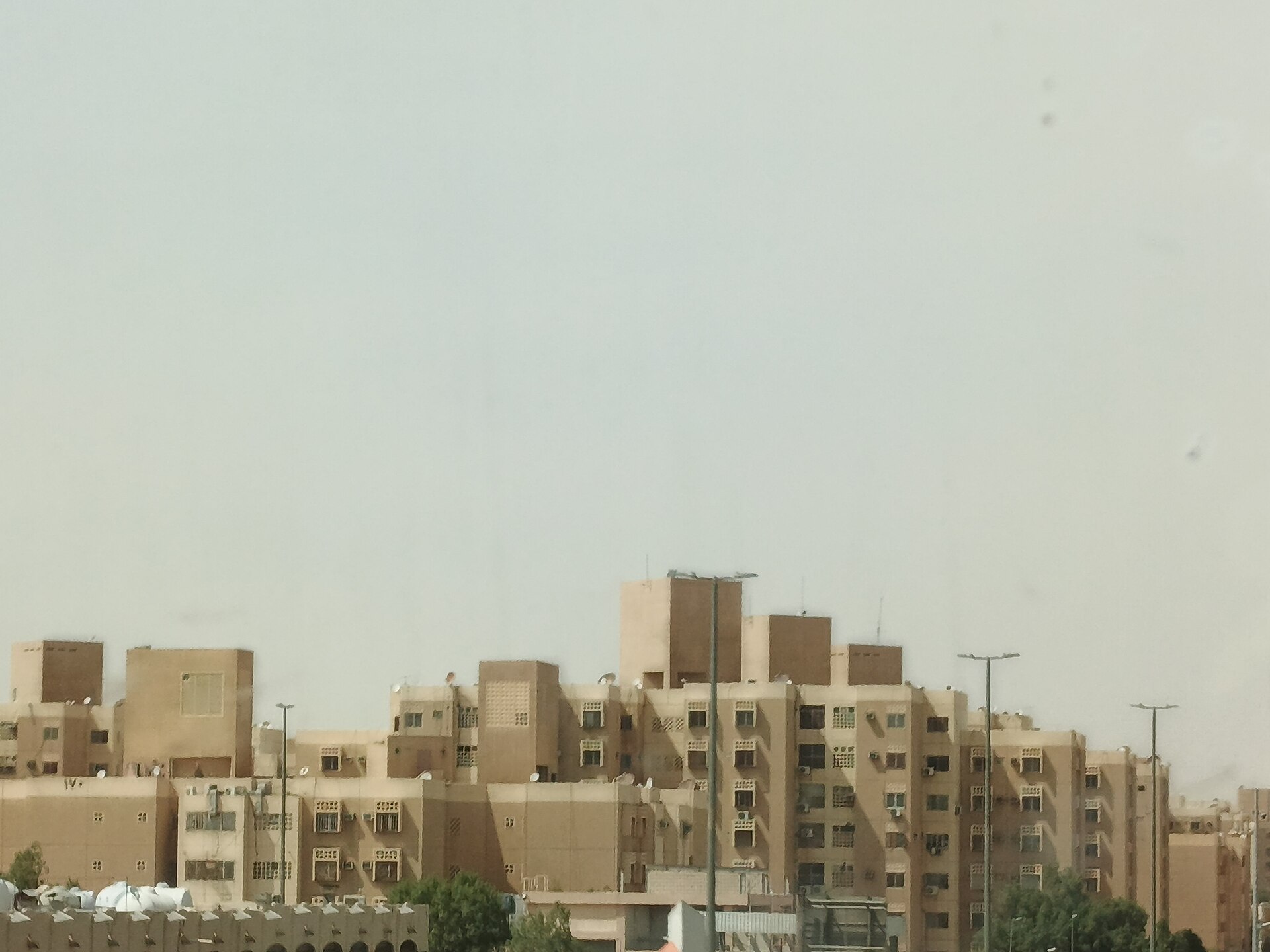
The compound was typical of the worker housing found throughout Saudi Arabia’s industrial and military support zones. Such facilities house the millions of foreign labourers who form the backbone of the Kingdom’s maintenance, construction, and cleaning industries. Saudi Arabia’s approximately 13 million foreign residents, as documented in reporting on the 13 million expats caught in the drone war, constitute roughly 38 percent of the total population, with the largest contingents coming from India, Bangladesh, Pakistan, Egypt, and the Philippines.
Workers in maintenance and cleaning companies are among the lowest-paid foreign labourers in the Kingdom, typically earning between 1,500 and 3,000 Saudi riyals ($400-800) per month, according to recruitment industry data. Many live in employer-provided compounds near industrial zones and military installations where their services are required, placing them in proximity to the very targets Iran has been striking.
The Dhaka Tribune reported that the Bangladesh Embassy in Riyadh was coordinating with Saudi authorities to provide consular assistance to the families of the deceased and the injured. Bangladesh has approximately 2.5 million nationals working in Saudi Arabia, according to the Bureau of Manpower, Employment and Training in Dhaka, making it the second-largest destination for Bangladeshi migrant workers after the United Arab Emirates.
Why Is Prince Sultan Air Base an Iranian Target?
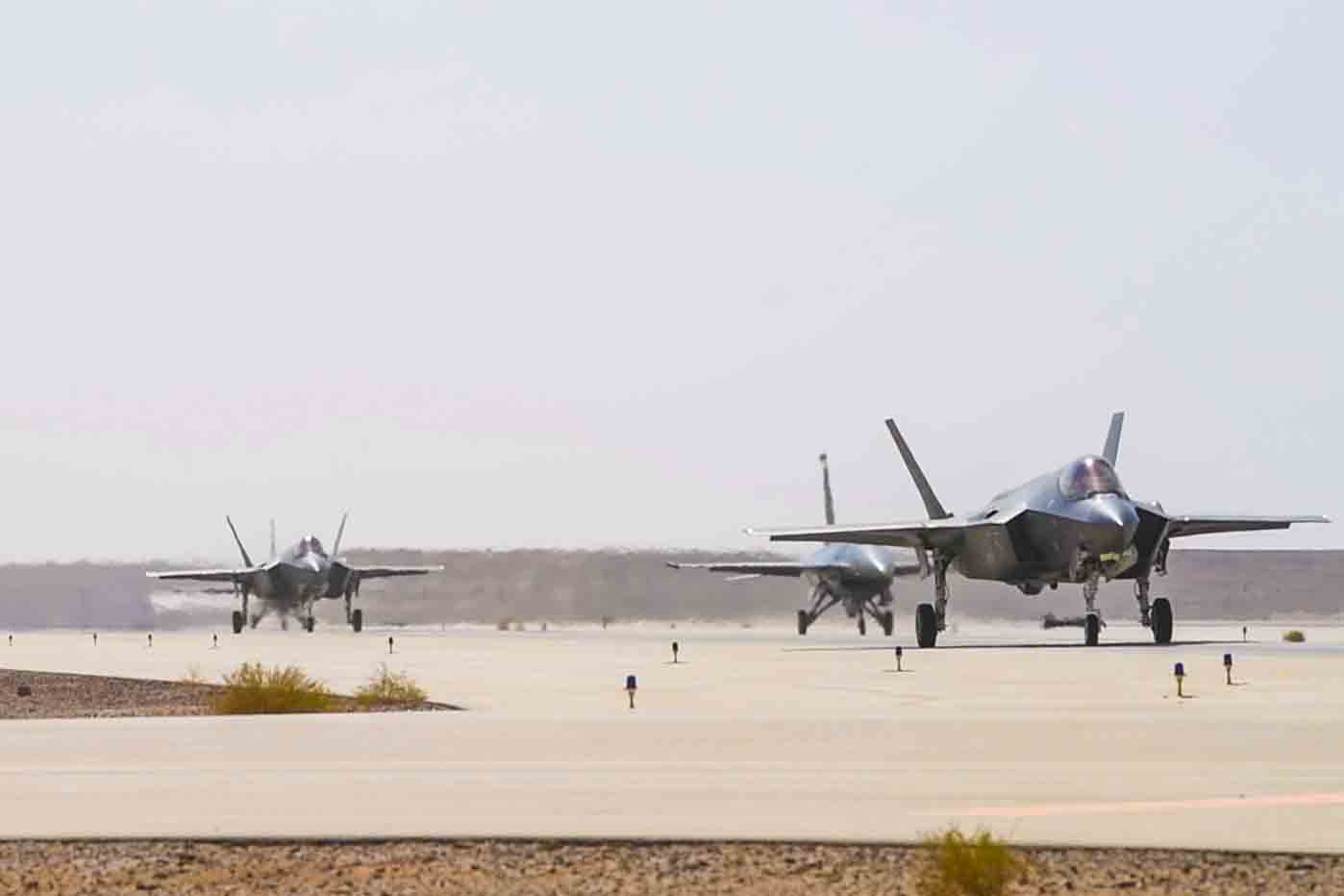
Prince Sultan Air Base, located in Al-Kharj, is one of the most strategically significant military installations in the Middle East. The base hosts US Air Force operations under Air Forces Central Command, including F-35A Lightning II stealth fighters, F-16 Fighting Falcons, and Patriot missile defence batteries. The US military presence at the facility, which has been expanded since 2019, makes it a primary target for Iran’s retaliatory strikes against American military assets in the Gulf region.
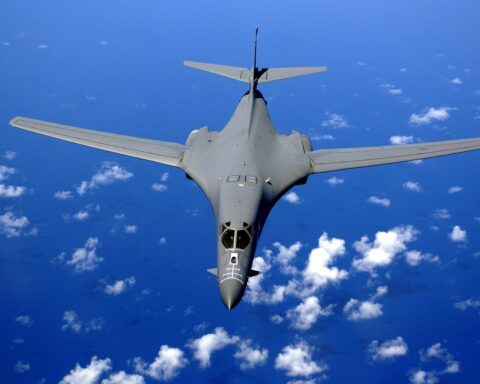
The base is owned and operated by the Royal Saudi Air Force but has hosted American forces intermittently since the early 1990s. During Operations Southern Watch, Enduring Freedom, and Iraqi Freedom, upwards of 4,500 US military personnel were stationed at the facility, according to GlobalSecurity.org. After a withdrawal to Al Udeid Air Base in Qatar in 2003, American forces returned in 2019, with approximately 2,700 troops deployed alongside B-1B Lancer bombers, F-22 Raptor stealth fighters, and Patriot air defence systems, as confirmed by the US Department of Defense.
Iran’s IRGC has explicitly identified Prince Sultan Air Base as a target. In statements carried by Iranian state media, the IRGC said it had struck radar installations and military infrastructure at Al-Kharj as part of its retaliatory campaign against US forces in the region. The Saudi Defence Ministry confirmed on March 6 that three ballistic missiles aimed at the vicinity of Prince Sultan Air Base were successfully intercepted, according to QNA.
The persistent drone and missile threat has prompted international partners to offer assistance, with Ukraine announcing it would send counter-drone defence teams to Saudi Arabia following a direct call between President Zelenskyy and Crown Prince Mohammed bin Salman.
The proximity of the base to civilian residential areas has raised questions about the risks of collateral damage. Al-Kharj is a city of approximately 425,000 residents, according to the Saudi General Authority for Statistics. Worker compounds, commercial districts, and agricultural operations sit within kilometres of the military installation, creating a situation where interception debris or missed projectiles can fall on populated areas. The asymmetric cost equation between cheap Iranian drones and expensive interceptors compounds this problem, as the sheer volume of incoming projectiles increases the likelihood of debris scattering across civilian zones.
How Has Saudi Arabia’s Air Defense Performed?
Saudi Arabia’s multi-layered air defence network has intercepted the vast majority of incoming Iranian projectiles since the conflict began, but the Al-Kharj incident demonstrates that even a high interception rate cannot eliminate all risks to civilians. The Saudi Defence Ministry reported intercepting 15 drones on Sunday alone, including an attempted strike on the diplomatic quarter of Riyadh, in addition to earlier interceptions of ballistic and cruise missiles, Reuters reported.
The Kingdom’s air defence shield, built on American-supplied Patriot and THAAD systems, has been widely credited with preventing the kind of catastrophic infrastructure damage that could have resulted from the volume of Iranian fire. Since the war began on February 28, Saudi forces have intercepted dozens of ballistic missiles, cruise missiles, and one-way attack drones targeting military bases, oil infrastructure, and government facilities.
Yet the system has not been perfect. The Ras Tanura refinery in the Eastern Province was hit by drones that penetrated air defences, forcing a partial shutdown of what is the world’s largest oil processing facility, according to Bloomberg. The Al-Kharj incident, whether caused by a direct strike or interception debris, suggests that the defensive umbrella cannot guarantee civilian safety in areas near targeted military installations.
The challenge is partly one of mathematics. Iran has fired what analysts estimate to be hundreds of projectiles at Gulf targets since March 1, according to detailed tracking of Tehran’s war arsenal. Even an interception rate of 90 percent, which would be considered exceptional by historical standards, means that dozens of projectiles or their fragments reach the ground. When those fragments land in densely populated areas or worker compounds near military targets, casualties become a matter of when rather than if.
Saudi Arabia has invested an estimated $80 billion in air defence systems over the past decade, according to SIPRI arms transfer data. The question of whether that investment is actually working has become one of the war’s central strategic debates, with the Al-Kharj deaths adding a human cost to what had previously been a largely technical discussion.
What Does the Seventh American Death Mean for the War?
The death of a seventh US service member, announced by US Central Command on Saturday, adds domestic political pressure in Washington to the mounting human toll in the Gulf. The soldier, whose name was withheld pending next-of-kin notification, was an Army service member who had been seriously wounded in an Iranian attack on US forces in Saudi Arabia on March 1, according to CNN and the Army Times.
Six of the seven American fatalities occurred when an Iranian one-way attack drone evaded US air defences and struck a makeshift operations centre at a civilian port in Kuwait on March 1, according to CBS News and NBC News. The seventh soldier died from injuries sustained in a separate attack in Saudi Arabia. All deaths have occurred during Operation Epic Fury, the US-Israeli military campaign against Iran that began on February 28.
The casualty figures, while modest compared to the losses sustained in Afghanistan or Iraq, carry significant political weight given that the Trump administration initially characterised the strikes on Iran as a limited operation that would avoid a ground war. The withdrawal of non-emergency embassy staff from Saudi Arabia and the upgrading of travel advisories to “depart now” for 16 Middle Eastern countries signal a growing acknowledgement in Washington that the conflict has expanded well beyond initial expectations.
Senator Tim Kaine of Virginia, a member of the Senate Armed Services Committee, called the mounting deaths “exactly the escalation many of us warned about” in a statement to CNN. The Washington Post reported that bipartisan pressure was building for the administration to provide Congress with a formal war authorisation under the War Powers Act, as the conflict enters its second week with no clear exit strategy.
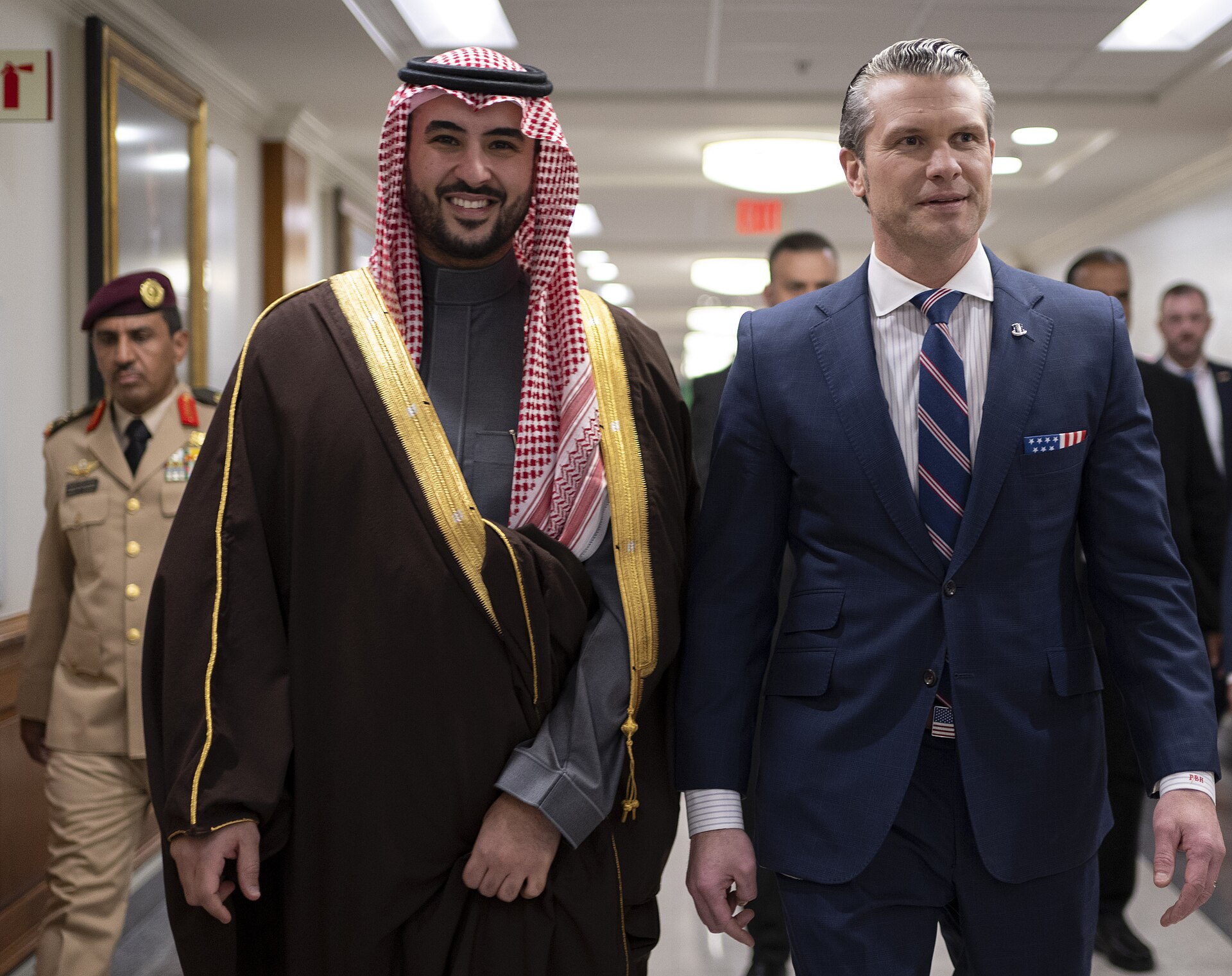
For Saudi Arabia, the American casualties on its soil present a diplomatic complication. Crown Prince Mohammed bin Salman has positioned the Kingdom as a reluctant bystander to the US-Israeli campaign rather than an active participant. But the presence of American troops dying on Saudi territory, combined with Saudi civilian deaths in the same governorate, makes this narrative increasingly difficult to sustain. Defence Minister Khalid bin Salman contacted the Crown Prince of Dubai and the UAE Defence Minister in the wake of the attacks, condemning Iran’s aggression, according to liveuamap.com. That bilateral condemnation was later reinforced by the Arab League’s emergency session on March 8, which described Iran’s strikes on civilian areas as illegal and invoked collective defense rights.
How Are India and Bangladesh Responding?
The deaths and injuries of South Asian workers in Al-Kharj have triggered diplomatic activity in New Delhi and Dhaka, though the responses have been notably cautious, reflecting both countries’ delicate relationships with Saudi Arabia and their limited ability to evacuate large populations from a war zone.
The Indian Embassy in Riyadh moved quickly to clarify that no Indian nationals were among the dead, issuing a statement on March 9 that confirmed one Indian worker was injured but that both fatalities were Bangladeshi citizens. The clarification, reported by BusinessToday, appeared designed to manage domestic concern in India, where the fate of approximately 9 million Indian citizens in the Gulf has become a major political issue since the war began.
India’s Ministry of External Affairs has set up a 24-hour control room for Indians in the Middle East and has been coordinating evacuation flights, though the scale of commercial aviation disruption has made mass evacuation impractical. According to ASIS International, organisations and travellers remain “stuck between evacuation orders and limited routes” across the Middle East, with signal jamming and military airspace restrictions severely curtailing commercial flight options.
Bangladesh’s response has been more muted, though the Dhaka Tribune reported that the Bangladesh Embassy in Riyadh was providing consular support to the families of the deceased. Bangladesh, which relies heavily on remittances from its Gulf-based workforce, has approximately 2.5 million nationals in Saudi Arabia. The loss of two Bangladeshi workers in a military incident places Dhaka in an uncomfortable position, as Bangladesh has sought to maintain neutrality in the conflict while protecting its citizens’ economic interests in the Kingdom.
The Philippines, Pakistan, and Egypt, which together account for several million additional foreign workers in Saudi Arabia, have also issued travel advisories and established emergency hotlines, though none has attempted a large-scale evacuation. The logistical challenges are immense, according to CNN, with repatriation flights operating at limited capacity and maritime exit routes through the Strait of Hormuz effectively closed.
What Is Saudi Arabia Doing to Protect Civilians?
Saudi Arabia’s General Directorate of Civil Defence has been issuing shelter-in-place guidance and air-raid warnings through mobile phone alerts since the conflict began, though the Al-Kharj incident raises questions about whether these measures are sufficient for vulnerable populations like foreign workers who may lack access to reinforced shelters or may not receive warnings in their native languages.
The Civil Defence apparatus, which falls under the Ministry of Interior, has activated emergency response protocols across the Kingdom’s central and eastern regions, where Iranian strikes have been concentrated. Saudi media have reported the deployment of additional ambulance units and trauma teams to cities near military installations, including Al-Kharj, Dhahran, and the Riyadh metropolitan area.
However, the compound struck in Al-Kharj was worker housing, not a hardened structure. Residential compounds of this type are typically constructed of reinforced concrete block with minimal blast protection. They are not equipped with the safe rooms or underground shelters found in some of the Kingdom’s newer residential developments. The Saudi Building Code, updated in 2024, does not mandate civilian blast shelters in residential construction, according to the Saudi Standards, Metrology and Quality Organization.
The absence of any civilian shelter programme stands as one of the most glaring gaps in Saudi Arabia’s war preparedness. A detailed analysis of the Kingdom’s civil defense gap found that despite investing $80 billion in air defence systems, Saudi Arabia has built zero public bomb shelters, leaving 35 million residents with no hardened refuge when interceptors fail.
The US Embassy in Riyadh, which has been operating under modified shelter-in-place orders since March 3, has suspended all routine consular services and urged all American citizens in the Kingdom to avoid embassy facilities. The embassy’s March 8 security alert, the latest in a series of increasingly urgent advisories, recommended that Americans “shelter in well-built structures” and monitor local media for air-raid warnings.
Saudi Arabia has also positioned itself as a regional evacuation hub despite the security situation. According to Arab News, Riyadh’s King Khalid International Airport remains one of the few major airports in the Gulf still operating near-normal commercial schedules, partly because the Kingdom’s air defences have kept its central airspace largely clear of Iranian threats. This dual role, as both a target of Iranian attacks and a gateway for evacuees from other Gulf states, underscores the complexity of Saudi Arabia’s position in the conflict.
Where Does the War Stand on Day Nine?
As the conflict enters its ninth day, the scope of Iranian retaliation continues to expand. Sunday’s events in Al-Kharj occurred alongside a broader barrage targeting multiple Gulf states. Iranian missiles were intercepted over Saudi Arabia, Qatar, the UAE, and Bahrain, according to Al Jazeera, while Kuwait reported that an attack hit fuel tanks at its international airport. Bahrain accused Iran of striking a desalination plant critical to its drinking water supply.
In Iran itself, the Assembly of Experts named Mojtaba Khamenei, the son of the late Supreme Leader Ayatollah Ali Khamenei, as the country’s new religious and political authority, according to NBC News and CNBC. The elder Khamenei was killed in the initial US-Israeli strikes on February 28. The selection of his son, a figure with deep ties to the IRGC, suggests continuity in Iran’s wartime posture rather than any immediate openness to de-escalation.
Oil prices have surged above $110 per barrel on the back of disruptions to Gulf production and shipping through the Strait of Hormuz, according to CNBC. The US has ordered non-emergency government staff to leave Saudi Arabia, and the State Department has issued “depart now” advisories for multiple countries in the region.
Saudi Arabia’s diplomatic backchannel to Tehran remains active, according to Bloomberg, which reported on March 6 that Saudi officials had intensified direct engagement with Iran in an effort to contain the conflict. However, the gap between Iran’s civilian government, which has signalled interest in de-escalation, and the IRGC, which controls the missile programme, makes these channels uncertain at best.
The Al-Kharj deaths, while a small number in the context of a regional war, carry outsized significance. They demonstrate that the conflict has penetrated Saudi Arabia’s defensive perimeter in a way that is no longer abstract. For the millions of foreign workers who power the Kingdom’s economy, the projectile that hit a cleaning company’s dormitory served as confirmation that the war is no longer something happening on radar screens and in government communiques. It has arrived at their doorstep.
The civilian casualties in Al-Kharj added urgency to Saudi Arabia’s search for additional defense partners. On March 7, Pakistan’s Field Marshal Asim Munir formally invoked the bilateral mutual defense pact during talks with Saudi Defense Minister Prince Khalid bin Salman in Riyadh, marking the first operational test of the September 2025 agreement.
Frequently Asked Questions
How many people were killed in the Al-Kharj attack?
Two Bangladeshi nationals were killed when a military projectile struck a residential compound belonging to a maintenance and cleaning company in Al-Kharj on March 8, 2026. Twelve others were injured, including 11 Bangladeshi nationals and one Indian national. Initial reports incorrectly stated that an Indian national was among the dead, but the Indian Embassy in Riyadh issued a correction on March 9.
Were any Indians killed in the Al-Kharj strike?
No. The Indian Embassy in Riyadh confirmed on March 9 that no Indian nationals died in the Al-Kharj incident, according to BusinessToday. One Indian worker was injured. Both fatalities were Bangladeshi nationals employed by the maintenance company that operated the residential compound.
How many US service members have died in the Iran war?
Seven American service members have been killed in action during Operation Epic Fury as of March 8, 2026, according to US Central Command. Six died in a drone strike on a port operations centre in Kuwait on March 1. The seventh, an Army soldier, died on March 8 from injuries sustained in a separate attack in Saudi Arabia on March 1.
What is Prince Sultan Air Base?
Prince Sultan Air Base is a military airfield located in Al-Kharj, approximately 80 kilometres southeast of Riyadh. It is owned by the Royal Saudi Air Force and hosts a significant US Air Force presence, including F-35A stealth fighters, F-16 Fighting Falcons, and Patriot missile defence batteries. The base has been a primary target of Iranian retaliatory strikes since the war began, according to the Saudi Defence Ministry.
Is Saudi Arabia safe for foreign workers during the Iran war?
Saudi Arabia’s air defence network has intercepted the vast majority of incoming Iranian projectiles, but the Al-Kharj incident demonstrates that no defence system can guarantee absolute safety. The US State Department has issued a Level 2 travel advisory for Saudi Arabia urging increased caution. Foreign workers, particularly those housed near military installations, face elevated risk from interception debris and projectile fragments.