
RIYADH — The Iran war has cost Saudi Arabia far more than the official narrative suggests, and the gap between the oil windfall splashed across commodity desks and the real economic damage spreading through the Kingdom’s balance sheet grows wider with each wave of Iranian drones. Ten days into a conflict it did not start and cannot easily end, the Kingdom faces a compounding fiscal crisis that no amount of elevated crude prices can paper over: interceptor missiles burning through stockpiles at $4 million per launch, oil exports throttled by the Hormuz blockade, a stock market hemorrhaging foreign capital, tourism revenues evaporating overnight, and Vision 2030 megaprojects frozen under the shadow of missile trajectories. The true cost, by conservative estimate, already exceeds $130 billion when measured across military expenditure, lost revenue, capital flight, and deferred investment. The bill is still climbing.
Table of Contents
- How Much Has the First Ten Days of War Cost Saudi Arabia?
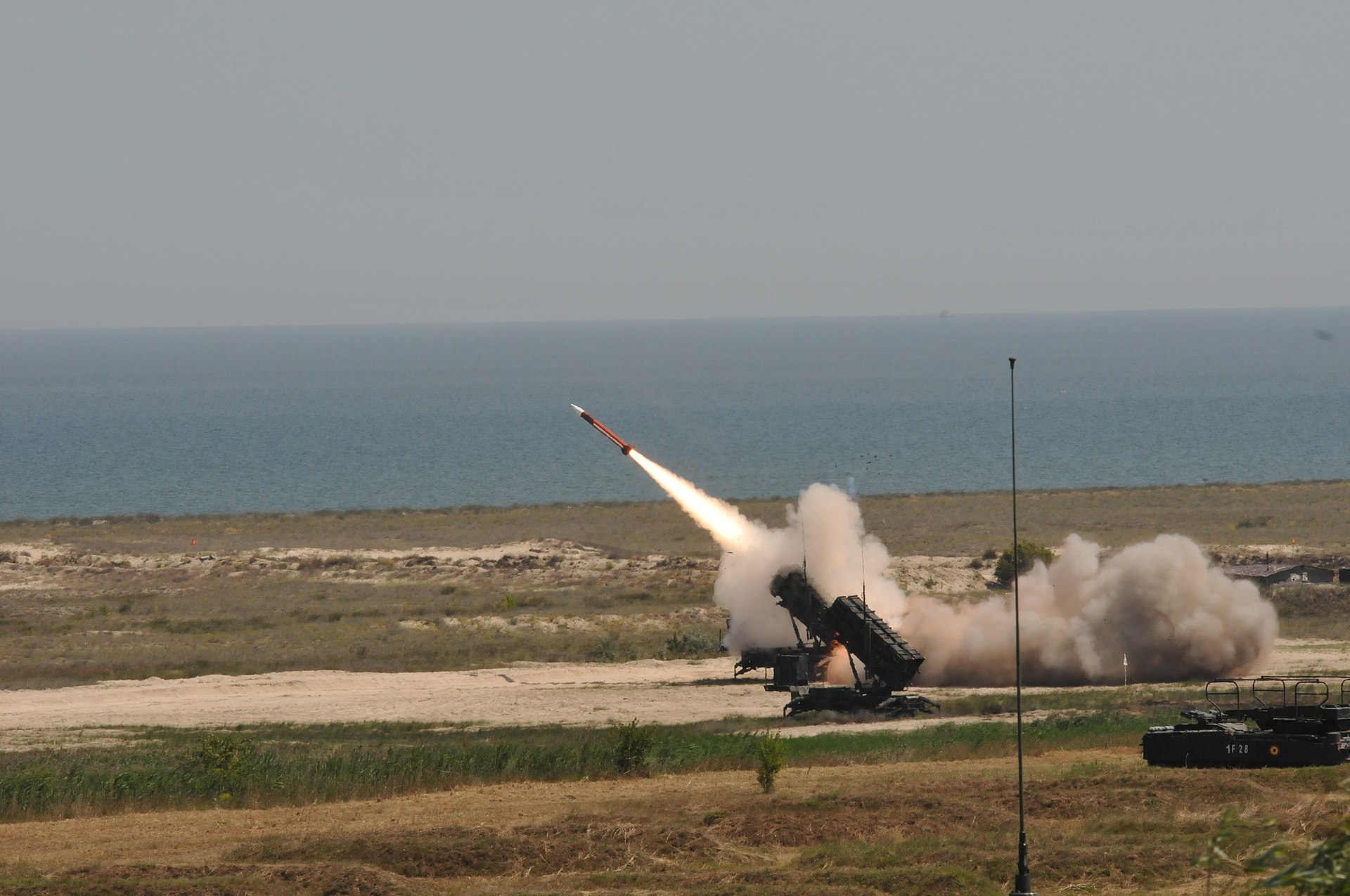
- The Interceptor Arithmetic — $4 Million Per Missile, Hundreds Fired
- Where Has Saudi Arabia’s Oil Revenue Gone?
- The Tadawul Reckoning — Market Value Erased in Five Trading Days
- Why Does the War Cost More Than the Oil Price Windfall Suggests?
- The Tourism Collapse That Threatens a $56 Billion Industry
- Can Vision 2030 Survive a War Economy?
- The Capital Flight That Threatens Saudi Arabia’s Investment Future
- The War Cost Ledger — Tallying Every Category of Loss
- What Happens If the War Lasts Another Month?
- The Hidden Bill Saudi Arabia Will Pay for a Decade
- Frequently Asked Questions
How Much Has the First Ten Days of War Cost Saudi Arabia?
The direct and indirect costs of the Iran war to the Saudi state already exceed $130 billion by conservative accounting across eight categories of economic damage, a figure that dwarfs the short-term gains from elevated oil prices. This estimate encompasses military expenditure on interceptor missiles and air defense operations, foregone oil export revenue from the Hormuz blockade, mark-to-market equity losses on the Tadawul, tourism and aviation revenue destruction, deferred megaproject investment, foreign capital flight, infrastructure damage, and the uncalculated but enormous opportunity cost of a derailed economic transformation programme.
The figure is conservative because several categories remain unquantifiable at this stage. Insurance premium increases for shipping, aviation, and construction across the Kingdom have yet to be fully priced. The reputational damage to Saudi Arabia as an investment destination cannot be measured in riyals. And the psychological cost to the 13 million foreign workers who form the backbone of the Saudi economy — many of whom are reconsidering whether to stay — will manifest over months, not days.
What makes the accounting particularly painful for Riyadh is the asymmetry at its core. Iran’s drone and missile campaign relies on weapons that cost a fraction of the systems deployed to stop them. A single Shahed-136 drone costs Iran between $20,000 and $50,000 to produce, according to the Royal United Services Institute. The Patriot PAC-3 MSE interceptor fired to destroy it costs the United States Army approximately $3.9 million per round, according to Department of Defense procurement filings. When Saudi Arabia purchases the same interceptor, it pays $6.25 million. The cost ratio runs as high as 300 to 1.
This is not a war that money alone can win. But understanding its true price matters because the Kingdom entered the conflict with a budget already in deficit, a sovereign wealth fund stretched across dozens of megaprojects, and an economic transformation programme that depends on precisely the kind of investor confidence that missile barrages tend to destroy.
The Interceptor Arithmetic — $4 Million Per Missile, Hundreds Fired
The most visible and immediately quantifiable cost of the war is the interceptor missiles expended defending Saudi airspace. Each firing represents not just a financial transaction but a drawdown of a finite stockpile that cannot be replenished at the rate it is being consumed.
The Middle East briefing 3,000+ readers start their day with.
One email. Every weekday morning. Free.
The United States expended more than 800 Patriot anti-ballistic missiles during the first five days of hostilities across the Middle East theatre, according to the Missile Defense Advocacy Alliance, at an estimated cost of $2.4 billion. This figure exceeds the total number of Patriot interceptors launched throughout the entire Russian-Ukrainian war, in which the system operated for nearly three years. The consumption rate is unprecedented in the weapon system’s four-decade history.
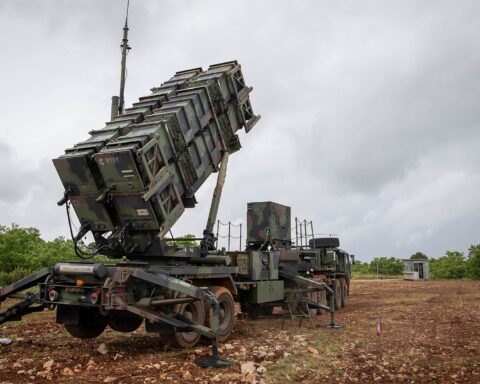
Saudi Arabia operates its own Patriot batteries alongside THAAD systems, purchased from the United States at prices significantly higher than the Pentagon’s internal cost. The PAC-3 MSE interceptor lists at $3.9 million in US Army fiscal year 2025 procurement documents, but foreign military sales to Saudi Arabia price the same round at approximately $6.25 million once storage canisters, warranty packages, and administrative fees are included, according to Defense Security Cooperation Agency notifications to Congress.
| System | Interceptor Type | US Army Unit Cost | FMS Export Price | Cost vs $30,000 Drone |
|---|---|---|---|---|
| Patriot | PAC-3 MSE | $3.9 million | $6.25 million | 208:1 |
| Patriot | PAC-2 GEM-T | $4.0 million | $5.8 million | 193:1 |
| THAAD | THAAD Interceptor | $12.6 million | $15+ million | 500:1 |
Saudi Ministry of Defense communiques from the first ten days confirm the interception of at least 21 drones heading toward the Shaybah oil field, three ballistic missiles near Prince Sultan Air Base, two cruise missiles east of Al-Jouf, multiple drones east of Riyadh, and additional unspecified engagements. These are only the intercepts the Ministry chose to publicize. Analysts at the International Institute for Strategic Studies estimate the total number of Saudi-fired interceptors during the first ten days at between 150 and 250 rounds.
At the midpoint of that range — 200 interceptors at an average cost of $5.5 million each — the interceptor bill alone reaches $1.1 billion. Add the operational costs of sustaining 24-hour air defense coverage across a territory the size of Western Europe — fuel, maintenance, personnel surge pay, radar operations, and ammunition logistics — and the direct military expenditure for ten days of defensive operations plausibly reaches $2 billion to $3 billion.
The deeper problem is supply. Annual Patriot interceptor production runs between 500 and 650 missiles globally, according to manufacturer Lockheed Martin. The Saudi arsenal entered the conflict with stockpiles already depleted by years of Houthi missile and drone attacks from Yemen. Pentagon officials confirmed in July 2025 that US interceptor supplies had fallen to 25 percent of the volume deemed necessary for a high-intensity conflict. Replenishing what has been fired will take years, not months.
The cost asymmetry compounds the supply problem. Iran produces Shahed-136 kamikaze drones domestically for between $20,000 and $50,000 per unit, using commercial-grade components that face no supply chain bottleneck. Tehran can manufacture several hundred per month. Saudi Arabia and the United States, by contrast, depend on a single production line at Lockheed Martin’s facility in Camden, Arkansas, where each PAC-3 MSE interceptor requires precision-machined components, advanced guidance electronics, and months of assembly and testing. The war is not merely expensive — it is structurally unsustainable at the current rate of consumption.
Historical comparison underscores the scale. During the 2019 Abqaiq-Khurais attack, when Houthi drones and cruise missiles struck two Aramco facilities, Saudi air defenses failed to intercept the incoming projectiles. That single incident temporarily knocked 5.7 million barrels per day offline and sent oil prices surging 15 percent in a single trading session. The 2026 war represents a sustained version of that shock, repeated daily across multiple targets, with interception rates that — while far higher than 2019 — still consume vast quantities of irreplaceable munitions. The financial and strategic implications of running out of interceptors mid-conflict are too severe to contemplate but too real to ignore.
Where Has Saudi Arabia’s Oil Revenue Gone?
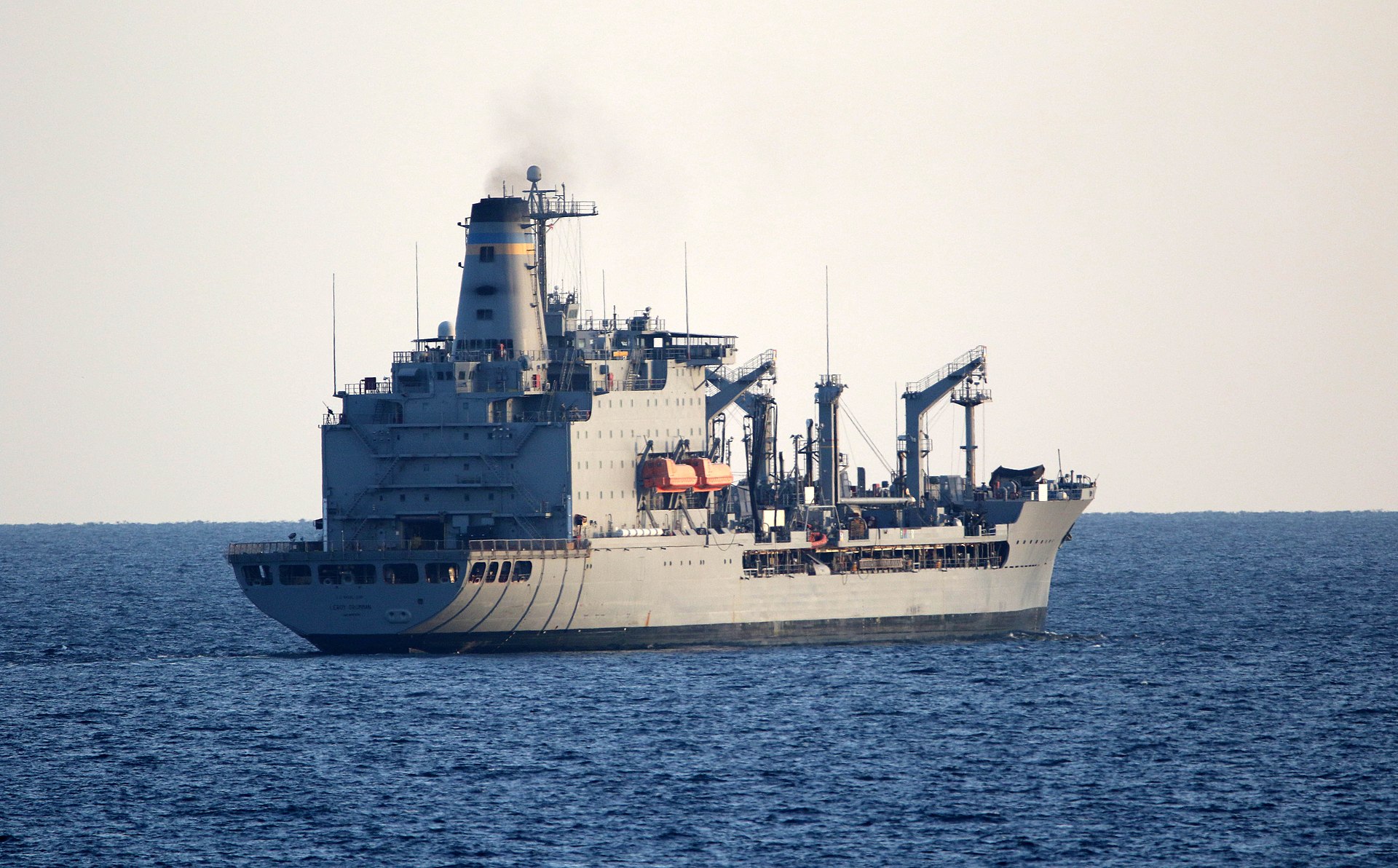
Saudi Arabia normally exports approximately 7 million barrels of crude oil per day, generating roughly $560 million in daily revenue at the pre-war benchmark price of $80 per barrel. The Hormuz blockade has severed the Kingdom’s primary export route, forcing Aramco to reroute what it can through the East-West pipeline to the Red Sea port of Yanbu — a pipeline with a theoretical capacity of 5 million barrels per day but actual loadings of only 1.4 million barrels per day as of early March, according to Vortexa shipping data.
The arithmetic is stark. Even with oil prices surging past $110 per barrel, Saudi Arabia is exporting a fraction of its normal volume. Bloomberg reported on March 9 that four of the region’s major producers — Saudi Arabia, Iraq, the UAE, and Kuwait — collectively reduced output by 6.7 million barrels per day. Saudi Aramco began production cuts at two major oilfields as the Hormuz shutdown filled domestic storage capacity to near-critical levels. Kuwait Petroleum Corporation has separately declared force majeure on oil exports after Iranian strikes forced airspace closures and precautionary production cuts of up to 300,000 barrels per day.
The revenue calculation requires careful parsing because two forces work in opposite directions. Higher prices increase the value of each barrel sold, but dramatically lower volumes reduce total receipts. Consider the pre-war baseline: 7 million barrels per day at $80 per barrel yields $560 million in daily revenue. Under wartime conditions, if Saudi Arabia exports 1.4 million barrels per day through Yanbu at $110 per barrel, daily revenue falls to $154 million — a net loss of $406 million per day, or approximately $4 billion over ten days.
| Metric | Pre-War | Wartime (Day 10) | Difference |
|---|---|---|---|
| Oil price (Brent) | $80/barrel | $110/barrel | +$30 |
| Export volume | 7.0M bpd | ~1.4M bpd | -5.6M bpd |
| Daily gross revenue | $560M | ~$154M | -$406M |
| 10-day revenue | $5.6B | ~$1.54B | -$4.06B |
These figures likely understate the loss. Aramco does not simply sell crude at spot prices; it operates under long-term supply contracts with Asian refiners in Japan, South Korea, India, and China. Failure to deliver contracted volumes triggers penalty clauses, compensation negotiations, and — most damaging in the long term — a loss of market share to competitors who can still deliver. Russia, the United States, Brazil, and Guyana are already positioning to fill the gap that Gulf suppliers cannot currently serve.
The Yanbu pipeline itself presents constraints beyond raw capacity. The Red Sea port was never designed to handle the full throughput of Saudi Arabia’s eastern oilfields. Tanker-loading infrastructure is limited, storage capacity at Yanbu is a fraction of the eastern terminals, and the Red Sea route faces its own security concern: Houthi forces in Yemen, who have demonstrated the capability and willingness to target commercial shipping. The so-called alternative route may prove only marginally safer than the one it replaces.
The Ras Tanura refinery, Saudi Arabia’s largest, illustrates how even minor physical damage generates outsized economic consequences. Iranian drones targeted the facility on March 2. Saudi air defenses intercepted both incoming drones, but debris from the interception caused a fire that was quickly contained. The physical damage was minor. The economic damage was not: Aramco shut down the entire refinery complex out of security concerns and announced it would remain offline for several weeks while export routes were rerouted. Ras Tanura processes approximately 550,000 barrels per day of refined products. Each day of shutdown represents roughly $60 million in lost refining margin, according to industry estimates based on Aramco’s downstream operating data.
The compounding effect is critical. Saudi Arabia is simultaneously losing crude export revenue from the Hormuz blockade, losing refined product revenue from the Ras Tanura shutdown, and losing natural gas liquids revenue from curtailed operations at facilities like Shaybah — a super-giant field with capacity of one million barrels per day that has been targeted by at least 21 Iranian drones in the first ten days. Aramco can survive any one of these disruptions. The simultaneous loss of revenue across crude, refined products, and NGL streams constitutes a financial stress test that no peacetime scenario planning anticipated.
The Tadawul Reckoning — Market Value Erased in Five Trading Days
The Tadawul All Share Index fell as much as 4.6 percent on March 1, the first trading day after Iranian missiles struck Saudi territory, dropping from 10,709 to an intraday low of 10,214 — its lowest point since March 2023, according to Bloomberg. The combined mark-to-market loss across domestic equity holdings in the first week of the war is estimated at $35 billion to $45 billion, though the figure fluctuates with daily price movements.
Foreign institutional investors sold a net 2.1 billion riyals ($560 million) in Saudi equities on March 1 alone — the largest single-day foreign capital outflow since the Tadawul opened to direct foreign participation in 2015. Cumulative net foreign selling exceeded 5.8 billion riyals ($1.55 billion) over the first five trading days, according to Saudi Exchange data.
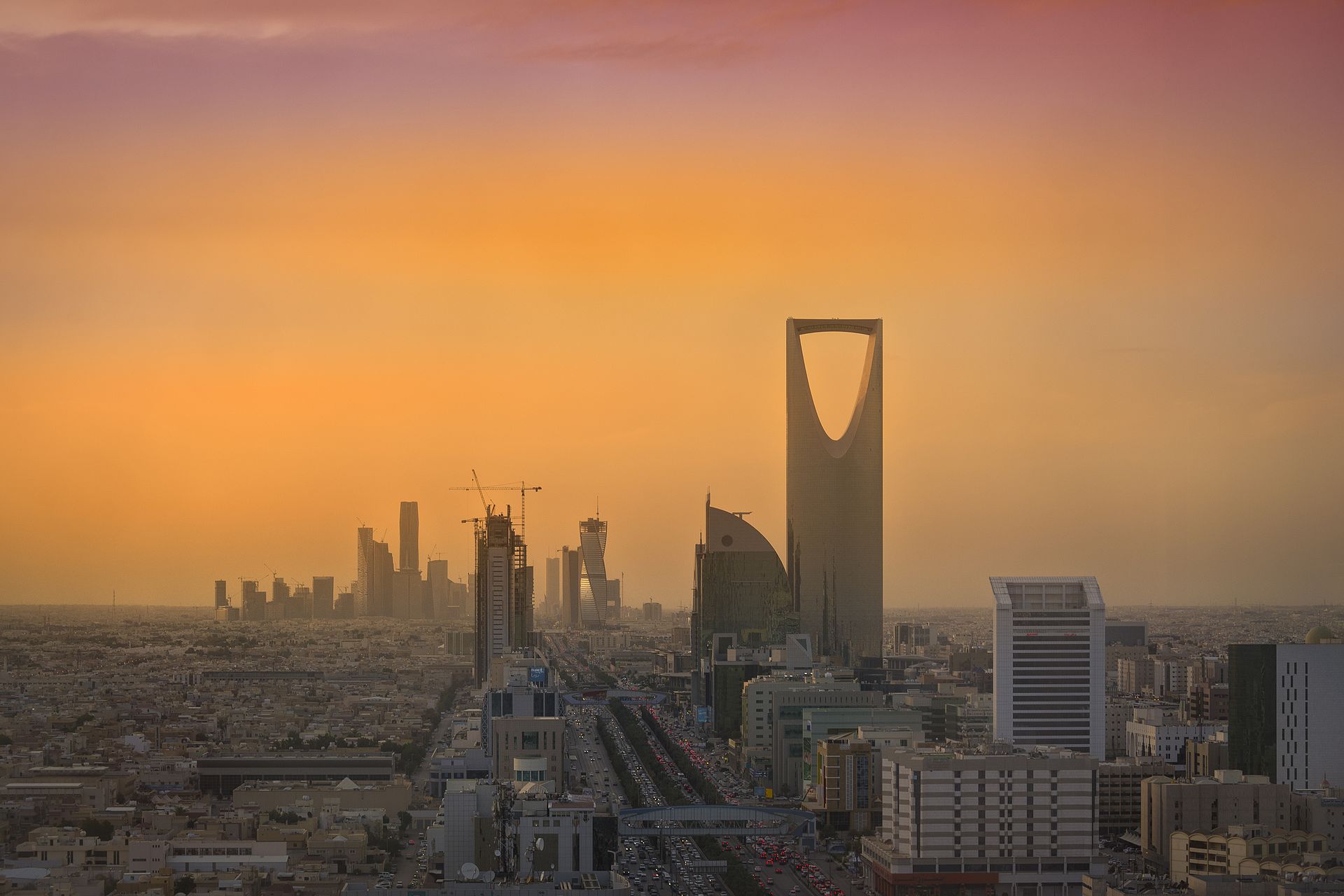
The sectoral composition of the losses tells a more troubling story than the headline index. Saudi Aramco, which accounts for roughly 16 percent of the exchange’s total weighting, actually climbed 3.4 percent on the back of surging crude prices, masking the severity of losses elsewhere. Strip out Aramco and the energy sector, and the broader market decline approaches 8 to 10 percent. Materials, real estate, utilities, and consumer discretionary stocks — the sectors that drive Vision 2030’s diversification narrative — have been hit hardest.
The partial recovery to 10,776 by March 5 was driven almost entirely by energy and banking stocks, according to BBN Times. The recovery is narrow and fragile, propped up by a commodity price spike that could reverse the moment hostilities end or global recession fears overtake supply disruption fears. For the non-oil economy that Mohammed bin Salman has spent a decade building, the market is delivering a verdict: wartime risk premiums are not compatible with the growth multiples that Saudi non-oil equities had been commanding.
The speed and scale of the foreign sell-off also signals a structural weakness in the Tadawul’s investor base. The Saudi exchange worked hard to join the MSCI Emerging Markets Index in 2019, a milestone that unlocked billions in passive fund flows. But passive investors are, by definition, mechanical: when the MSCI Saudi Arabia weight declines due to falling market capitalisation, passive funds automatically sell. This creates a pro-cyclical dynamic where falling prices trigger further selling, which pushes prices lower still. Active institutional investors, who might counter-balance the passive outflow by buying at distressed levels, are instead sitting on the sidelines — waiting for clarity on the war’s duration before committing fresh capital to a market under missile fire.
The Tadawul losses matter beyond the abstract world of portfolio values because they directly affect two entities central to the Kingdom’s economic strategy. The Public Investment Fund holds significant domestic equity positions, including stakes in flagship companies like Saudi Telecom, ACWA Power, and Lucid Motors. Every percentage point decline in the domestic market erodes PIF’s asset base, constraining its capacity to fund megaprojects. Second, the General Organization for Social Insurance and the Public Pension Agency — which manage retirement savings for millions of Saudi workers — hold substantial Tadawul allocations. A sustained market decline creates an unfunded pension liability that compounds over decades.
Why Does the War Cost More Than the Oil Price Windfall Suggests?
The most persistent misconception about the war’s economic impact is that higher oil prices compensate for its costs. Headlines declaring that crude has breached $110 per barrel create an impression of windfall profits flowing into Saudi coffers. The reality is precisely inverted: Saudi Arabia is earning less total revenue at $110 per barrel than it earned at $80 per barrel before the war, because volume losses overwhelm price gains.
This is the windfall paradox. To understand it, consider that Saudi Arabia’s fiscal breakeven oil price — the price per barrel required to balance the government budget — was approximately $96 per barrel for 2026, according to the International Monetary Fund’s October 2025 Regional Economic Outlook. The pre-war budget assumed revenues of 1.147 trillion riyals ($306 billion) against expenditures of 1.313 trillion riyals ($350 billion), already projecting a deficit of 165 billion riyals ($44 billion), as documented in the KPMG Saudi Arabia Budget Report 2026.
The war has simultaneously pushed the breakeven price higher (through emergency military spending, evacuation costs, infrastructure repair, and insurance premium increases) while reducing the volume of oil that can be sold at any price. Even at $110 per barrel, Saudi Arabia cannot balance its budget if it can only export 1.4 million barrels per day through Yanbu instead of 7 million through its eastern terminals.
The windfall, such as it is, accrues primarily to producers who can still deliver: the United States, whose shale producers are ramping output; Brazil, whose pre-salt fields are at full capacity; and Russia, which continues to export through pipelines immune to the Hormuz blockade. For OPEC+ members trapped behind the chokepoint, higher prices are a taunt, not a reward.
The paradox deepens when downstream costs are factored in. Saudi Arabia imports refined petroleum products for domestic consumption, particularly gasoline and diesel for transportation. Higher crude prices raise the cost of these imports. The Kingdom also imports virtually all of its manufactured goods, heavy machinery, construction materials, and consumer electronics — all of which are priced in a global economy where oil-driven inflation is pushing costs upward. Saudi Arabia is simultaneously earning less from its exports and paying more for its imports, a terms-of-trade deterioration that the headline crude price conceals entirely.
OPEC+’s decision to add 206,000 barrels per day of production in April, announced before the war but not rescinded after it began, adds another layer of complexity. The additional barrels were intended to prevent demand destruction from sustained high prices and to discipline member states that had been overproducing. In the wartime context, the additional supply cannot reach the market from most OPEC+ producers due to logistical constraints and security risks. The production increase is, for now, theoretical — but it signals that OPEC+ is positioning for a post-war market in which Saudi Arabia’s market share will face challenges from producers who proved more reliable during the disruption.
Capital is a coward; it does not go into war zones. To the extent that tourists, investors, and businesspeople see the Gulf as a war zone, they have other places they can invest.
Gulf-based investment analyst, quoted by AGBI, March 2026
The Tourism Collapse That Threatens a $56 Billion Industry
The war has obliterated a sector that Saudi Arabia spent five years and tens of billions of dollars constructing from scratch. Gulf-wide tourism faces an estimated $56 billion revenue loss in 2026, according to Travel and Tour World, as airlines cancel more than 20,000 flights, airspace closures strand millions of travellers, and the US State Department raises Saudi Arabia’s travel advisory to Level 3 — Reconsider Travel.
Saudi Arabia’s share of this regional loss is disproportionately painful because the Kingdom was just beginning to see returns on its tourism investment. Inbound arrivals to the Middle East are projected to decline between 11 and 27 percent year on year, according to Euronews, compared to December 2025 forecasts that projected 13 percent growth. The swing from +13 percent to -27 percent represents a 40-percentage-point reversal — a statistical whiplash with few peacetime precedents.
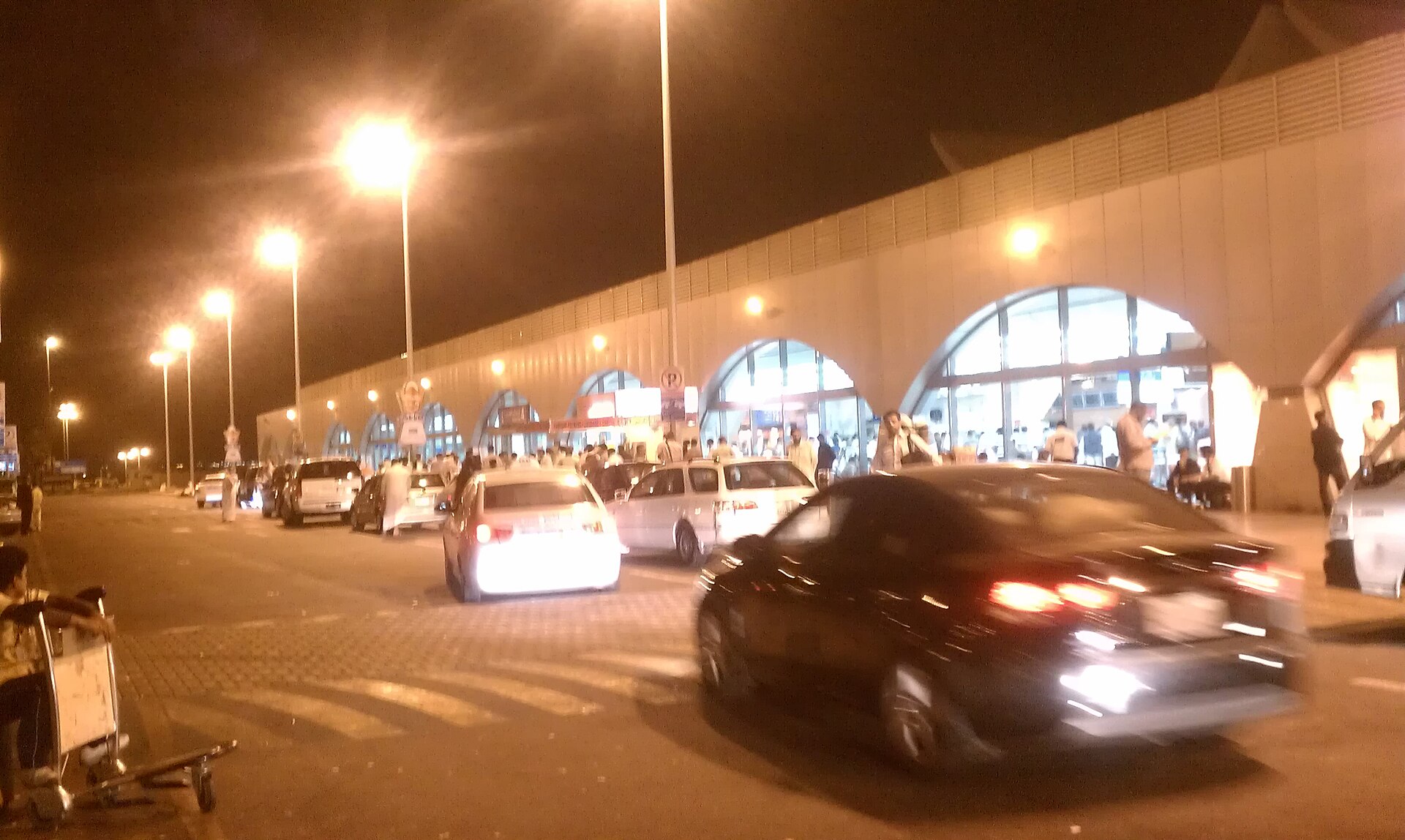
The damage cascades across multiple sub-sectors. The MICE industry — Meetings, Incentives, Conferences, and Exhibitions — has seen a steep decline, with events scheduled through the spring either cancelled or relocated to destinations outside the conflict zone, according to regional hospitality data. Hotels in Jeddah and Riyadh report occupancy rates falling sharply as business travel evaporates. The Saudi Pro League continues to play matches, but international broadcasting rights negotiations and sponsorship renewals, which depend on a narrative of Saudi Arabia as a safe and glamorous destination, have stalled.
Gulf airspace closures have forced international carriers to reroute or cancel services entirely. Emirates, Qatar Airways, and Gulf Air have suspended hundreds of daily flights. Saudi Arabian Airlines (Saudia) has curtailed international operations while maintaining essential domestic routes. The knock-on effects reach deep into the Saudi supply chain: aviation fuel demand has collapsed, airport retail concessions stand idle, ground handling companies have furloughed workers, and hotel construction projects across the Kingdom face indefinite deferral.
The MICE sector deserves particular attention because it represents the highest-value segment of Saudi Arabia’s tourism ambitions. A single major conference in Riyadh can generate $50 million to $200 million in direct spending — hotel bookings, venue fees, catering, ground transportation, and associated business meetings. The Future Investment Initiative conference alone attracted over 6,000 delegates in 2025, each spending an average of $15,000 during their stay, according to estimates from the Saudi Tourism Authority. The cancellation or relocation of a single such event costs more than a month of average hotel revenue. Multiple cancellations cascade through the ecosystem of event planners, caterers, security providers, and ground transport operators who built their businesses on Saudi Arabia’s events calendar.
Hajj 2026, scheduled for late June, looms as the most consequential test. The annual pilgrimage generates an estimated $12 billion in direct revenue and welcomes more than 2 million international visitors. If the war continues into June, or if its aftermath leaves airspace restrictions and travel advisories in place, the Hajj season could see its worst attendance since the COVID-19 pandemic — with far-reaching implications for the Kingdom’s role as custodian of the Two Holy Mosques.
The compound effect across all tourism sub-sectors — leisure, business, events, religious, and sports — represents a threat not merely to a revenue line but to the narrative that underpins Vision 2030’s diversification thesis. Tourism was supposed to generate 10 percent of GDP by 2030, up from approximately 3 percent in 2016 when the strategy was launched. Saudi Arabia had invested over $800 billion in tourism infrastructure, entertainment venues, hotel capacity, and destination development over the past decade, according to the Ministry of Investment. The war has not destroyed those assets. But it has demonstrated that a single geopolitical event can render them temporarily worthless — a risk that was never adequately incorporated into the return-on-investment calculations that justified the spending.
Can Vision 2030 Survive a War Economy?
Vision 2030 was designed for peacetime conditions: sustained oil revenues funding a transition to a diversified economy, foreign direct investment flowing into megaprojects, a young Saudi workforce replacing expatriate labour, and international tourism establishing the Kingdom as a global destination. Every one of these assumptions is under attack — not by Iranian missiles, but by the economic consequences of the war.
The flagship project illustrates the scale of the problem. NEOM’s construction on The Line was suspended in September 2025, before the war began, after an internal audit leaked to the Wall Street Journal revealed projected costs of $8.8 trillion and a completion timeline stretching to 2080. As of March 2026, only 2.4 kilometres of foundation work has been completed, the population target for 2030 has been slashed from 1.5 million to fewer than 300,000, and NEOM’s workforce has been cut with more than 1,000 employees relocated to Riyadh to control costs.
The war has added three new threats to an already troubled project. First, PIF capital that might have flowed to NEOM is being diverted to wartime priorities — military procurement, civil defense, and infrastructure hardening. Second, contractor confidence has been shaken by drone strikes reaching within range of Riyadh, with foreign construction firms reassessing risk exposure across all Saudi projects. Third, NEOM’s Red Sea location places it within range of Houthi-controlled territory in Yemen, making it uniquely vulnerable if the conflict expands southward.
Beyond NEOM, the entire Vision 2030 construction pipeline faces a wartime tax. Insurance costs for large-scale construction in Saudi Arabia have spiked — underwriters are repricing Gulf risk in real time. Foreign workers, who constitute the overwhelming majority of the Kingdom’s construction labour force, are leaving or considering departure. And the FDI that was supposed to co-finance these projects — Saudi Arabia targets $100 billion per year in foreign direct investment by 2030 — has dried to a trickle.
Yet the investment picture is not uniformly bleak. Even as broader FDI retreats, select Riyadh projects continue to attract capital: King Salman Park closed $3.8 billion in commitments at MIPIM 2026, a reminder that international investors still see value in the Kingdom’s urban infrastructure — even when missiles fly overhead.
The Saudi government’s response has been to maintain spending levels, signalling that Vision 2030 will not be sacrificed to the war. The 2026 budget, approved before hostilities began, already projected expenditures of 1.313 trillion riyals ($350 billion) — the highest in the Kingdom’s history. Whether that spending plan can survive the revenue constraints imposed by the Hormuz blockade is the fiscal question that will define Mohammed bin Salman’s domestic legacy.
The construction sector provides a microcosm of the broader damage. Saudi Arabia’s building boom employed an estimated 3.5 million construction workers before the war, the vast majority of them foreign nationals from South Asia, Southeast Asia, and East Africa. Several major international contractors have activated force majeure clauses in their contracts, citing the security situation as grounds for suspending work. Others have relocated non-essential personnel to safer jurisdictions while maintaining skeleton crews on critical projects. The daily cost of suspended construction across the Kingdom — including idle equipment, unproductive labour, and contractual penalty clauses — runs to hundreds of millions of riyals, according to estimates from the Saudi Contractors Authority.
The royal family’s economic vision was always predicated on a virtuous cycle: oil revenues fund transformation, transformation attracts investment, investment reduces oil dependence. The war has reversed the cycle. Oil revenues are constrained, transformation is frozen, and investment is fleeing. Breaking this negative feedback loop requires either a rapid end to the conflict or an alternative source of capital large enough to substitute for the revenue streams the war has severed. Neither appears imminent.
The Capital Flight That Threatens Saudi Arabia’s Investment Future
The war has triggered a measurable exodus of foreign capital from Saudi Arabia at precisely the moment the Kingdom’s economic strategy demands the opposite. This is not a panic-driven rout — it is a rational repricing of risk by institutional investors who have other options.
Net foreign selling on the Tadawul exceeded 5.8 billion riyals ($1.55 billion) in the first five trading days of the conflict, according to Saudi Exchange data. Chinese banks have begun cutting their exposure to Middle Eastern debt, according to AGBI reporting. And the pipeline of foreign direct investment — the engine that was supposed to reduce Saudi Arabia’s dependence on oil revenue — faces its most severe test since the Khashoggi crisis of 2018.
Iran’s war threatens to undermine Saudi FDI efforts at a structural level, according to analysis published by AGBI. Analysts warn that even short-term disruption could delay early-stage investments and financing decisions for years. The problem is not that foreign investors doubt Saudi Arabia’s long-term potential — it is that capital has alternatives that do not require pricing in missile risk.
The Public Investment Fund, with assets under management of $913 billion as of the end of 2024, is the entity most exposed to the war’s financial consequences. PIF is likely to cut capital spending by up to 15 percent, according to reporting by AGBI on the fund’s revised investment strategy. A 15 percent reduction against a planned deployment of $40 billion to $50 billion annually represents $6 billion to $7.5 billion in deferred investment — projects that will not be built, companies that will not be funded, and jobs that will not be created.
The reputational dimension compounds the financial one. Saudi Arabia spent the past five years cultivating an image as a business-friendly, reform-minded investment destination. Conferences like the Future Investment Initiative (nicknamed “Davos in the Desert”), the World Defense Show, and a calendar of sporting events from Formula One to boxing world title fights served as instruments of economic diplomacy. The war has not destroyed this image, but it has imposed a risk premium that may take longer to dissipate than the conflict itself. The threat intensified on March 11 when Iran explicitly declared Gulf banks and financial institutions as military targets, putting physical infrastructure at risk alongside market confidence.
The sector-by-sector breakdown reveals where capital is fleeing fastest. Real estate, which attracted record foreign investment in 2025 as wealthy expatriates bought property in Riyadh and Jeddah, has seen transaction volumes collapse. Developers report that off-plan sales — the advance purchases that finance construction — have fallen by an estimated 40 to 60 percent since hostilities began, according to preliminary data from the Saudi Real Estate Authority. The entertainment and hospitality sector, which attracted over $20 billion in cumulative investment since 2019 through projects like Qiddiya, the Red Sea Resort, and a network of Riyadh entertainment districts, faces an indefinite pause in expansion plans as operators reassess security assumptions that no longer hold.
Technology and fintech, which Riyadh has positioned as a centrepiece of its non-oil economy, face a more subtle but equally damaging form of capital flight. Venture capital firms that opened Gulf offices in 2024 and 2025 are quietly redirecting deal flow to Singapore, Abu Dhabi, and Cairo — markets that offer similar emerging-market growth premiums without the missile risk. The Saudi fintech licensing programme, which attracted 67 applications in its first year, has seen a marked slowdown in new applications since March 1, according to industry sources familiar with the Saudi Central Bank’s regulatory pipeline.
The War Cost Ledger — Tallying Every Category of Loss
Quantifying the total economic impact of the war on Saudi Arabia requires disaggregating costs across eight distinct categories, each operating on a different timeline and with different degrees of reversibility. Some are immediate cash outlays. Others are opportunity costs that compound silently over years. The following ledger represents the best available estimate as of day ten of the conflict, drawing on publicly reported data from the Saudi Ministry of Defense, Saudi Exchange filings, Bloomberg, the IMF, and specialist industry sources.
| Category | Estimated Cost | Reversibility | Timeframe |
|---|---|---|---|
| Military expenditure (interceptors, operations, logistics) | $2B–$3B | Irreversible | Immediate |
| Foregone oil export revenue (Hormuz blockade) | $4B–$5B | Partially reversible | Ongoing daily |
| Tadawul equity market losses (mark-to-market) | $35B–$45B | Partially reversible | Recovery uncertain |
| Foreign capital outflow (net institutional selling) | $1.5B+ | Slow recovery | Months to years |
| Tourism and aviation revenue loss (2026 projection) | $8B–$15B | Partially reversible | Full-year impact |
| PIF deferred investment (15% capital spending cut) | $6B–$7.5B | Deferred, not lost | Multi-year |
| Infrastructure damage and repair (Ras Tanura, utilities) | $500M–$1.5B | Repairable | Weeks to months |
| Insurance and risk premium increases | $2B–$4B | Slow to reverse | Years |
The aggregate range is $59 billion to $81.5 billion in quantifiable costs, with Tadawul losses representing the single largest line item. However, market losses are mark-to-market and partially reversible if equity prices recover. Stripping out the equity component, the hard costs — military spending, foregone revenue, tourism losses, deferred investment, infrastructure repair, and insurance — total between $22.5 billion and $36 billion for ten days of war.
When these hard costs are combined with less quantifiable losses — the long-term FDI deterrence effect, the environmental remediation costs from Gulf pollution, the economic value of departing expatriate workers, and the opportunity cost of frozen construction timelines — the total economic impact plausibly reaches or exceeds $130 billion. The number is not precise. It does not need to be. The order of magnitude tells the story.
Three characteristics of the ledger deserve emphasis. First, the costs are accelerating, not constant: each additional day of Hormuz closure, each additional interceptor fired, each additional cancelled flight compounds the damage geometrically rather than linearly. Second, the costs are unevenly distributed: military expenditure falls on the state budget, market losses fall on investors (including PIF and pension funds), and tourism losses fall on private-sector businesses that have far less capacity to absorb them. Third, the long-tail costs — reputational damage, FDI deterrence, insurance repricing, and pension fund erosion — will outlast the war itself by years or decades.
What Happens If the War Lasts Another Month?
The ten-day costs are severe but manageable for a state with Saudi Arabia’s reserves. The question that keeps Riyadh’s fiscal planners awake is what happens if the conflict extends to 30, 60, or 90 days. The cost curve is not linear — it steepens as stockpiles deplete, storage fills, contracts expire, and investor patience exhausts.
At 30 days, the interceptor supply crisis becomes acute. Saudi Arabia’s pre-war stockpile of Patriot and THAAD interceptors is classified, but defence analysts at the International Institute for Strategic Studies estimate that most Gulf states held between 200 and 400 interceptors before the conflict. At the current consumption rate of 15 to 25 Saudi-fired rounds per day, the mathematics are unforgiving. Even if the United States expedites emergency shipments — and it has already begun withdrawing Patriot systems from South Korea and THAAD batteries from other deployments to resupply the Middle East — production bottlenecks mean new interceptors cannot arrive fast enough to match the consumption rate.
At 30 days, oil export revenue losses compound to approximately $12 billion to $15 billion below pre-war baseline, assuming the Hormuz blockade persists and Yanbu loadings remain constrained. Saudi Arabia’s foreign reserves, held by the Saudi Central Bank (SAMA), stood at approximately $430 billion before the war — a substantial buffer, but one that is simultaneously being drawn upon for military procurement, import financing (the Kingdom imports nearly all its food and consumer goods), and currency defence. The Saudi riyal’s peg to the US dollar at 3.75 is not under immediate threat, but a prolonged revenue shortfall combined with emergency spending would test SAMA’s willingness to burn reserves at a rate that could jeopardize the peg.
| Category | 30 Days | 60 Days | 90 Days |
|---|---|---|---|
| Military expenditure | $6B–$9B | $10B–$16B | $14B–$22B |
| Oil revenue loss (cumulative) | $12B–$15B | $24B–$30B | $36B–$45B |
| Tourism (full-year impact) | $12B–$18B | $15B–$22B | $18B–$25B |
| FDI/PIF deferred investment | $8B–$10B | $12B–$18B | $18B–$25B |
| Total hard costs (excl. equity) | $38B–$52B | $61B–$86B | $86B–$117B |
At 90 days, the war approaches the fiscal equivalent of the 2014-2016 oil price crash, which forced the Saudi government to cut public-sector bonuses, freeze government hiring, delay project payments to contractors, and draw down SAMA reserves by more than $100 billion. The difference is that the oil price crash was a market event with no physical destruction and no security emergency. A war compounds revenue loss with spending increases — the fiscal equivalent of bleeding from both ends.
The currency peg represents the ultimate red line. A comprehensive analysis of the five wartime pressures threatening the riyal’s dollar peg suggests SAMA faces monthly reserve drains of $12-18 billion under current conditions. The Saudi riyal has been fixed at 3.75 to the US dollar since 1986, a cornerstone of the Kingdom’s economic stability and a foundation of its credit rating. Defending the peg during periods of fiscal stress requires SAMA to sell foreign reserves, reducing the buffer available for other emergencies. During the 2014-2016 oil crash, SAMA’s reserves fell from $737 billion to $529 billion — a drawdown of $208 billion over two years. A 90-day war, combined with the pre-existing budget deficit, could accelerate that pace of depletion. Analysts at Morgan Stanley noted in their March 2026 Iran War Impact assessment that a sustained conflict lasting beyond three months would force difficult choices between maintaining military spending, funding Vision 2030 projects, and defending the currency peg. Saudi Arabia has the reserves to do any two of these simultaneously. Whether it can sustain all three is the question that financial markets are quietly pricing.
The domestic political dimension adds another layer of cost. Saudi citizens, who have largely supported Vision 2030 in exchange for economic opportunity and social liberalisation, are now confronting rising consumer prices, restricted travel, and an atmosphere of security anxiety that did not exist before February 28. Inflation data for March has not yet been released, but anecdotal evidence from Riyadh and Jeddah suggests that food prices have risen sharply as import-dependent supply chains adjust to disrupted shipping routes. The Kingdom imports approximately 80 percent of its food — a vulnerability that the “Empty Shelf” crisis of the war’s first week exposed in vivid terms. The economic cost of managing domestic expectations, maintaining social spending, and preserving the social contract that underpins MBS’s authority cannot be quantified in riyals, but it is among the most consequential items on the war bill.
The Hidden Bill Saudi Arabia Will Pay for a Decade
The costs that matter most are the ones that do not appear in any quarterly earnings report. They accrue silently and compound over years, and they are already locked in regardless of when the war ends.
The first is the insurance repricing of the entire Gulf. Lloyd’s of London and the International Group of P&I Clubs have already designated the Persian Gulf a high-risk zone, triggering automatic increases in hull insurance, cargo insurance, and war risk premiums for any vessel transiting the area. These premiums will not reset to pre-war levels for years, even after hostilities cease, because the war has demonstrated a capability — Iran’s ability to close Hormuz and strike civilian infrastructure — that underwriters must now price permanently. For Saudi Arabia’s oil export economy, this translates to higher shipping costs embedded in every barrel exported through the Gulf for the foreseeable future.
The second is the FDI deterrence effect. Foreign direct investment decisions operate on three-to-five-year planning horizons. A CEO considering a $500 million factory in Saudi Arabia today is not evaluating whether the war will end next week — they are evaluating whether the risk of a similar conflict recurring within their planning window is acceptably low. The 2019 Aramco drone attack provided a warning. The 2026 war provides a data set. The probability models have been permanently updated.
The third is the human capital drain. Saudi Arabia’s economy depends on 13 million foreign workers who staff everything from hospital wards to oil refineries to restaurant kitchens. The war has triggered the largest expatriate departure since the 1990-91 Gulf War, with embassies from India, Bangladesh, Pakistan, and the Philippines arranging emergency repatriation flights. Not all of these workers will return. Those who do will demand higher wages to compensate for the perceived risk. The labour cost increase will ripple through every sector of the economy for years.
The fourth is the opportunity cost of deferred diversification. Every month that Vision 2030 projects sit frozen, the Kingdom remains tethered to oil revenue. Every tourist who chooses Dubai over Riyadh because of residual security concerns represents a lost conversion in a market Saudi Arabia spent billions to create. Every foreign university that delays a Saudi campus, every tech company that postpones a Riyadh office, every sovereign wealth fund that redirects capital to Abu Dhabi or Singapore — these decisions accumulate into a structural divergence between the future Saudi Arabia planned and the future it actually gets.
The fifth hidden cost is the most ironic: Saudi Arabia will pay to rebuild Iran. When the conflict ends — and it will end — reconstruction negotiations will involve some form of Gulf contribution to regional stabilisation, whether through direct payments, energy concessions, or development aid. The historical precedent is the 1991 Gulf War, after which Kuwait, Saudi Arabia, and the GCC states spent billions on regional reconstruction and security infrastructure. The Kingdom’s expected contribution to post-war stabilisation has not been publicly discussed, but regional diplomats privately estimate it at between $20 billion and $50 billion over a decade, according to reporting by the Financial Times on Gulf ceasefire planning.
A reasonable estimate for the decade-long economic impact, including direct costs, opportunity costs, and the compound effects of deferred investment and deterred capital, exceeds $500 billion. The number is imprecise by design. What matters is the recognition that the costs extend far beyond the battlefield and far beyond the day the last missile is fired.
The deepest irony of Saudi Arabia’s war bill is that the Kingdom never wanted this conflict. Mohammed bin Salman spent three years building diplomatic channels to Tehran, culminating in the 2023 rapprochement brokered by China. Saudi Arabia reopened its embassy in Tehran, resumed direct flights, and began normalising trade relations. That investment in peace — measured in political capital, not riyals — has been destroyed in ten days. Rebuilding it will take longer and cost more than anyone in the Royal Court anticipated on the night the first missiles crossed the border.
These wartime costs, substantial as they are, represent only the beginning. The recovery costs that will follow the ceasefire — from mine clearing in Hormuz to insurance normalization to the rebuilding of investor confidence — could ultimately exceed the direct military expenditure by a factor of ten.
Frequently Asked Questions
How much has the Iran war cost Saudi Arabia in the first ten days?
The total economic impact of the first ten days of the Iran war on Saudi Arabia is estimated at $59 billion to $81.5 billion across quantifiable categories including military spending, foregone oil revenue, equity market losses, tourism destruction, and deferred investment. Hard costs excluding reversible market losses total between $22.5 billion and $36 billion.
Is Saudi Arabia making money from higher oil prices during the war?
Despite oil prices surging above $110 per barrel, Saudi Arabia is earning less total revenue than before the war because the Hormuz blockade has cut export volumes from 7 million barrels per day to approximately 1.4 million barrels per day through the alternative Yanbu pipeline. The volume loss overwhelms the price gain, resulting in a net revenue deficit of approximately $400 million per day.
How much does each Patriot missile interceptor cost Saudi Arabia?
Saudi Arabia pays approximately $6.25 million per PAC-3 MSE Patriot interceptor through the US Foreign Military Sales programme, compared to the US Army’s internal cost of $3.9 million. THAAD interceptors cost approximately $15 million each. Saudi forces have fired an estimated 150 to 250 interceptors in the first ten days of the conflict.
What is the war’s impact on Saudi tourism and Vision 2030?
Gulf-wide tourism faces an estimated $56 billion revenue loss in 2026, with Saudi Arabia’s share projected between $8 billion and $15 billion. Over 20,000 flights have been cancelled, airspace remains restricted, and the US has raised its Saudi travel advisory to Level 3. Vision 2030 megaprojects face construction delays, workforce departures, and the diversion of PIF capital to wartime priorities.
Can Saudi Arabia afford a prolonged war with Iran?
Saudi Arabia entered the conflict with approximately $430 billion in foreign reserves and a $913 billion sovereign wealth fund, providing a substantial fiscal cushion. However, a 90-day war could cost between $86 billion and $117 billion in hard costs alone, approaching the scale of the 2014-2016 oil price crash. The critical constraint is not total reserves but the rate of depletion, particularly if the Hormuz blockade persists and interceptor stockpiles cannot be replenished.
How does the war affect foreign investment in Saudi Arabia?
These economic costs underscore why Saudi Arabia’s war aims diverge sharply from Washington’s demand for unconditional surrender — every additional week of conflict multiplies the Kingdom’s financial exposure. The $1 trillion investment pledge MBS made to Trump — and what that pledge actually buys from Washington — adds another dimension to the war’s fiscal burden.
Foreign investors withdrew a net $1.55 billion from Saudi equities in the first five trading days — the largest outflow since the Tadawul opened to foreign participation. FDI pipeline decisions operate on three-to-five-year horizons, meaning the deterrence effect will outlast the conflict. The PIF has indicated it may cut capital spending by up to 15 percent, deferring $6 billion to $7.5 billion in planned investments. The full scale of the squeeze on Saudi Arabia’s $1.15 trillion sovereign wealth fund — from Aramco dividend shortfalls to giga-project deferrals — is detailed in a separate analysis of how the war is consuming PIF’s fiscal future.