JEDDAH — Saudi Crown Prince Mohammed bin Salman privately told President Trump in an April 16 phone call that a Lebanon ceasefire was “critical to achieving the goal of reopening the Strait of Hormuz and ending the war,” and within hours Trump announced a 10-day truce between Israel and Lebanon — a sequence that multiple US, Western, and Arab officials confirmed to Middle East Eye was not a coincidence but a transaction.
The ceasefire, which took effect at 21:00 GMT on April 16, was not a humanitarian gesture. It was Saudi Arabia spending its most valuable diplomatic asset — direct access to Trump — to buy four to six days of runway before the Iran-US ceasefire expires on April 22, with Riyadh’s May OSP set for a $109-Brent world and Brent now trading near $90-96, and no confirmed date for the next round of Islamabad talks.
Table of Contents
The Call That Moved a War
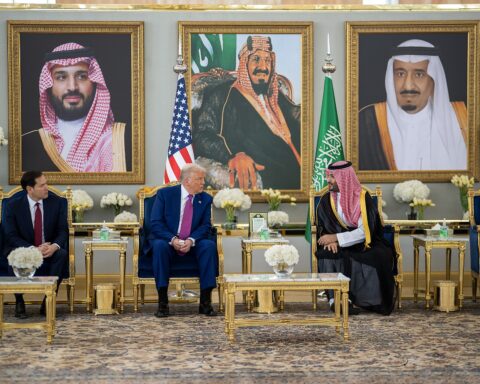
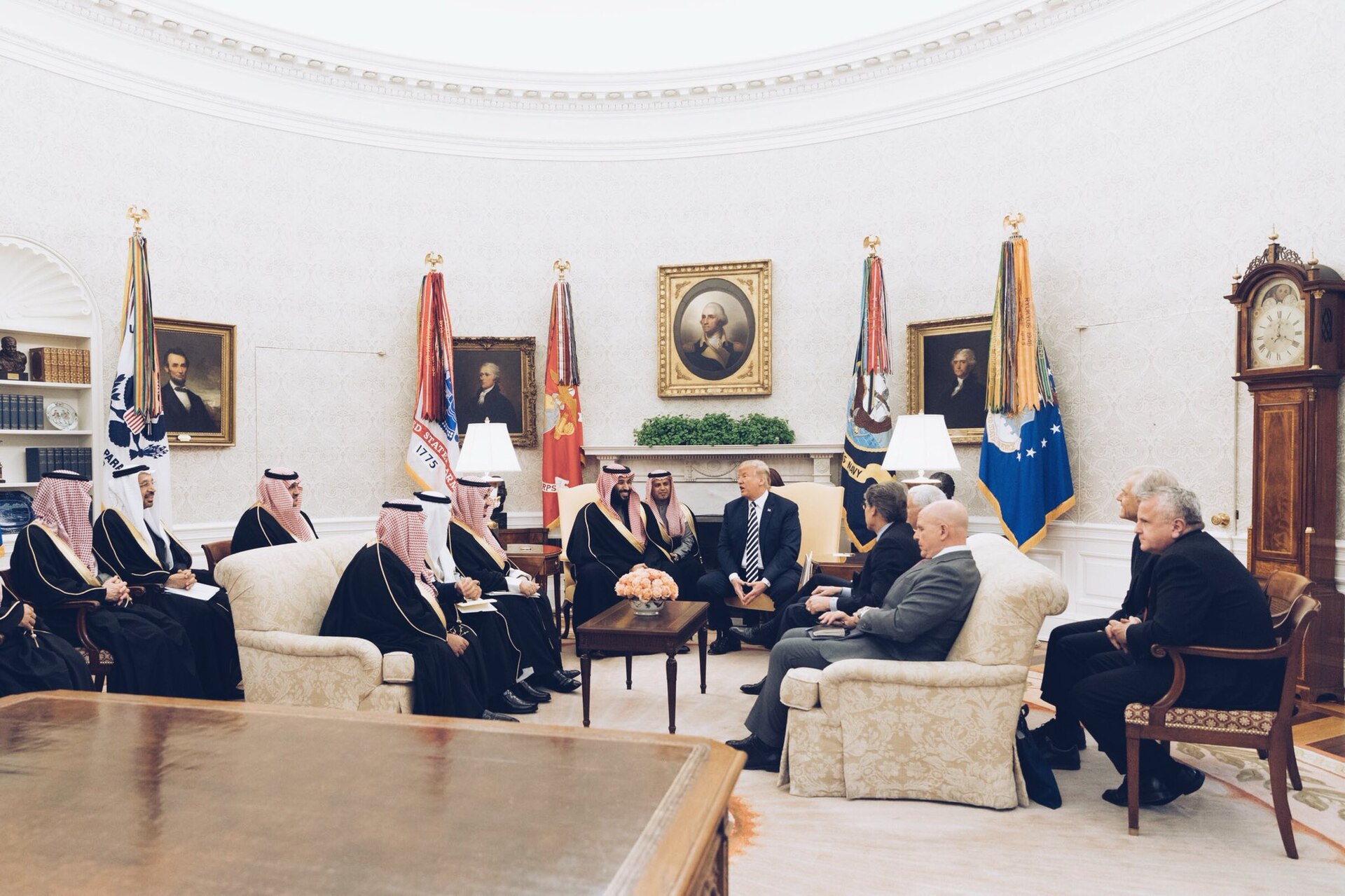
MBS made the call on Wednesday April 16, and the argument he put to Trump was blunt in its transactional clarity: Lebanon was the obstacle Iran’s chief negotiator Mohammad Bagher Ghalibaf had placed in the road at Islamabad, and removing it was the only way to get the broader talks moving before the ceasefire clock ran out. According to Middle East Eye, which cited multiple US, Western, and Arab officials, the Crown Prince framed the Lebanon ceasefire not as a standalone act of diplomacy but as a precondition for everything Saudi Arabia needs — Hormuz reopened, oil flowing, and the fiscal bleeding stopped.
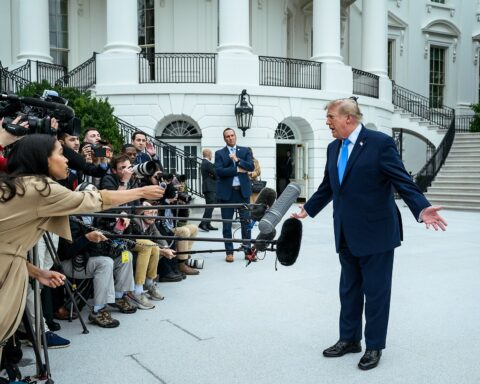
Trump moved fast. His Truth Social post landed the same afternoon: “I just had excellent conversations with the Highly Respected President Joseph Aoun, of Lebanon, and Prime Minister Bibi Netanyahu, of Israel. These two Leaders have agreed that in order to achieve PEACE between their Countries, they will formally begin a 10 Day CEASEFIRE at 5 P.M. EST.” It was Trump’s first direct call with Lebanese President Aoun, which tells you something about the speed at which this was assembled — the relationship didn’t exist 24 hours earlier.
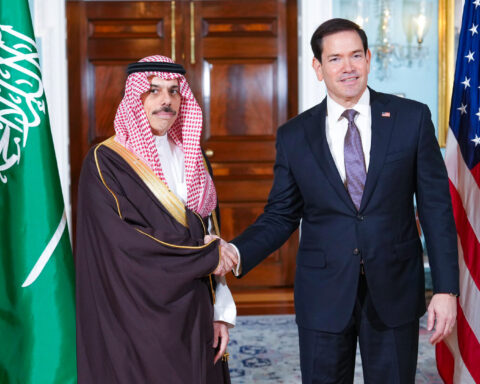
Secretary of State Rubio called Saudi FM Prince Faisal bin Farhan on April 18, two days after the ceasefire announcement, to discuss both Lebanon and the Strait of Hormuz — a US State Department readout that confirmed the coordination between Riyadh and Washington continued well past the initial call. Lebanese PM Nawaf Salam credited “international and regional efforts” for the deal, naming the US, France, the EU, and Arab states including Saudi Arabia, Egypt, Qatar, and Jordan, though the specific choreography of MBS’s private call was not part of the public acknowledgment.
How Did Netanyahu Find Out?
Netanyahu agreed to the ceasefire the night before, in a phone call with Trump at Trump’s explicit request, according to the Times of Israel. What happened next was a piece of political theatre that revealed who was driving the process and who was being driven. Netanyahu convened an urgent security cabinet teleconference only after Trump had already publicly announced the deal — and Israeli ministers heard the news from Trump’s statement several minutes into the call, before any serious discussion had started. A senior Israeli official told the Times of Israel flatly: “Trump pushed this ceasefire through.”
The Middle East briefing 3,000+ readers start their day with.
One email. Every weekday morning. Free.
That sequence matters because the original Iran-Saudi ceasefire, brokered April 7-8, had expressly excluded Lebanon. Both Trump and Netanyahu had said publicly that Lebanon “was not included.” Iran pushed back consistently on this exclusion, with Ghalibaf — the IRGC Aerospace Force veteran who led Iran’s delegation at the 21-hour Islamabad marathon — making Lebanon inclusion a precondition for substantive talks with the US. The exclusion was Israel’s red line. MBS persuaded Trump to cross it.
This was not the first time MBS had engineered a Lebanon demand without putting Saudi fingerprints on it. During Keir Starmer’s April 8 visit to Jeddah, the British Prime Minister was positioned to demand Lebanon’s inclusion in a Western joint statement — with Saudi Arabia getting the demand attributed to a Western ally. Starmer’s foreign secretary David Lammy had already stated at Mansion House that “Lebanon must be included.” The April 16 call was the direct version of a play MBS had been running through proxies for eight days.
The Hormuz Bargain — and Its Immediate Contradiction
The payoff came fast. Within hours of the Lebanon ceasefire taking effect, Iranian FM Hossein Amir-Abdollahian Araghchi announced that the Strait of Hormuz was “completely open” for commercial vessels — the first such statement since the IRGC declared the shipping lanes a danger zone in early April. Iran’s ambassador to Pakistan went further, telling reporters that the Lebanon ceasefire and Hormuz reopening “have created conditions for a broader regional agreement.” Oil prices crashed approximately 11% on the news, with Brent settling near the $90-96 range.
Then Trump blew a hole in it. The same day Araghchi announced Hormuz was open, Trump told reporters the US blockade on Iranian ports and vessels “will remain in full force” until a broader deal is reached. The IRGC immediately called this a ceasefire violation, threatening to revoke the Hormuz opening — creating a live contradiction between the commercial freedom Iran had just announced and the naval enforcement the US refused to lift. NBC News and CBS News both reported the IRGC’s response on April 17, and the gap between “completely open” and “blockade in full force” was the kind of ambiguity that gives shipping insurers nightmares.
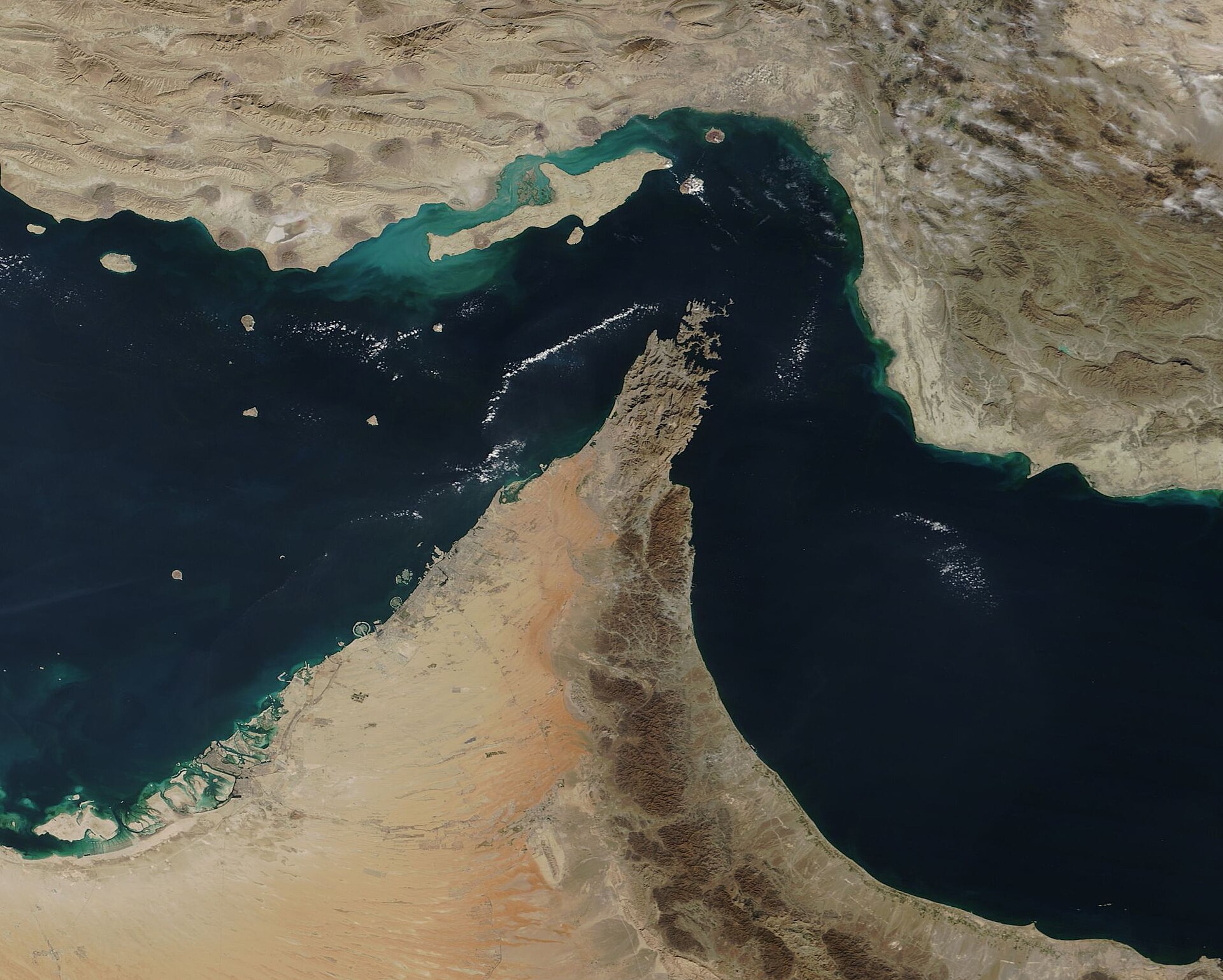
The contradiction was structural, not accidental. Trump needed the Lebanon ceasefire to show diplomatic progress, MBS needed Hormuz open to resume full oil exports, and Iran needed a visible concession on Lebanon to justify any movement at Islamabad. But none of them had agreed on what “open” actually meant when a US carrier strike group was still enforcing a blockade at the same chokepoint Iran claimed was now unrestricted.
Pakistan’s FM Ishaq Dar, speaking at the Antalya Diplomacy Forum on April 18, tried to paper over the gap by declaring that a US-Iran deal was “more than 80 percent” complete — a number that sounded reassuring until you remembered the remaining 20 percent included enrichment timelines and the legal status of the Strait itself. The gap between confidence and reality was six days wide and closing fast.
Why Was MBS Willing to Spend This Capital?
The arithmetic is ugly and getting worse. Saudi Arabia’s May Official Selling Price for Arab Light crude was set at a +$19.50 per barrel premium above the Oman/Dubai benchmark — anchored to a market where Brent was trading near $109. Brent has since crashed to approximately $90-96. Saudi Arabia’s fiscal break-even, once the PIF’s spending commitments are included, sits at $108-111 per barrel according to Bloomberg’s March estimates. At $90 Brent the kingdom’s realized OSP price barely clears the low end of that range; at $91-94 the May OSP is already $11-14 above current spot, pricing Asian buyers toward alternatives. Every week Hormuz remains functionally restricted — even “open” in Iran’s framing — the gap between what Saudi Arabia needs and what it earns widens.
The bypass pipeline through Yanbu, which Saudi Arabia activated as an emergency measure after Hormuz was mined and the Ras Tanura terminal hit, has a ceiling of 4-5.9 million barrels per day against pre-war Hormuz throughput of more than 7 million. That structural gap of 1.1-1.6 million barrels per day cannot be closed by any amount of pipeline engineering — it requires Hormuz to function as a commercial waterway, which requires a deal with Iran, which requires talks at Islamabad, which were stalled over Lebanon. MBS was not spending diplomatic capital on a humanitarian impulse. He was buying the runway to land the only negotiation that can stop Saudi Arabia from running a Goldman-estimated $80-90 billion deficit instead of the official $44 billion projection.
“What Pakistan wants to see is not the extension of the ceasefire, it’s permanent end of the war.”
Ishaq Dar, Pakistan Foreign Minister, Antalya Diplomacy Forum, April 18
The IEA had already called the Saudi production collapse — from 10.4 million barrels per day in February to 7.25 million in March — the “largest disruption on record.” Khurais, the kingdom’s second-largest field, remained offline with 300,000 barrels per day of capacity and no announced restoration timeline. MBS’s phone call to Trump was the action of a man who understood that the ceasefire expiry on April 22 was not a diplomatic deadline but a fiscal one, and that the cost of letting Ghalibaf’s Lebanon precondition stand was measured in billions per week of revenue the kingdom was not earning.
The Pakistan Corridor
The Lebanon ceasefire cleared one obstacle, but the road to the next Islamabad round remains unpaved. Iranian sources told CNN that talks were expected to resume on Monday April 20 — two days before the ceasefire expires — but as of April 18, the US side had not confirmed the date. The 21-hour session at Islamabad on April 11-12, where Vance sat across from Ghalibaf in the first direct US-Iran encounter since 1979, ended with Vance walking out over the enrichment gap: Washington demanded a 20-year moratorium, Tehran countered with five years, and the distance between those numbers proved unbridgeable in a single sitting.
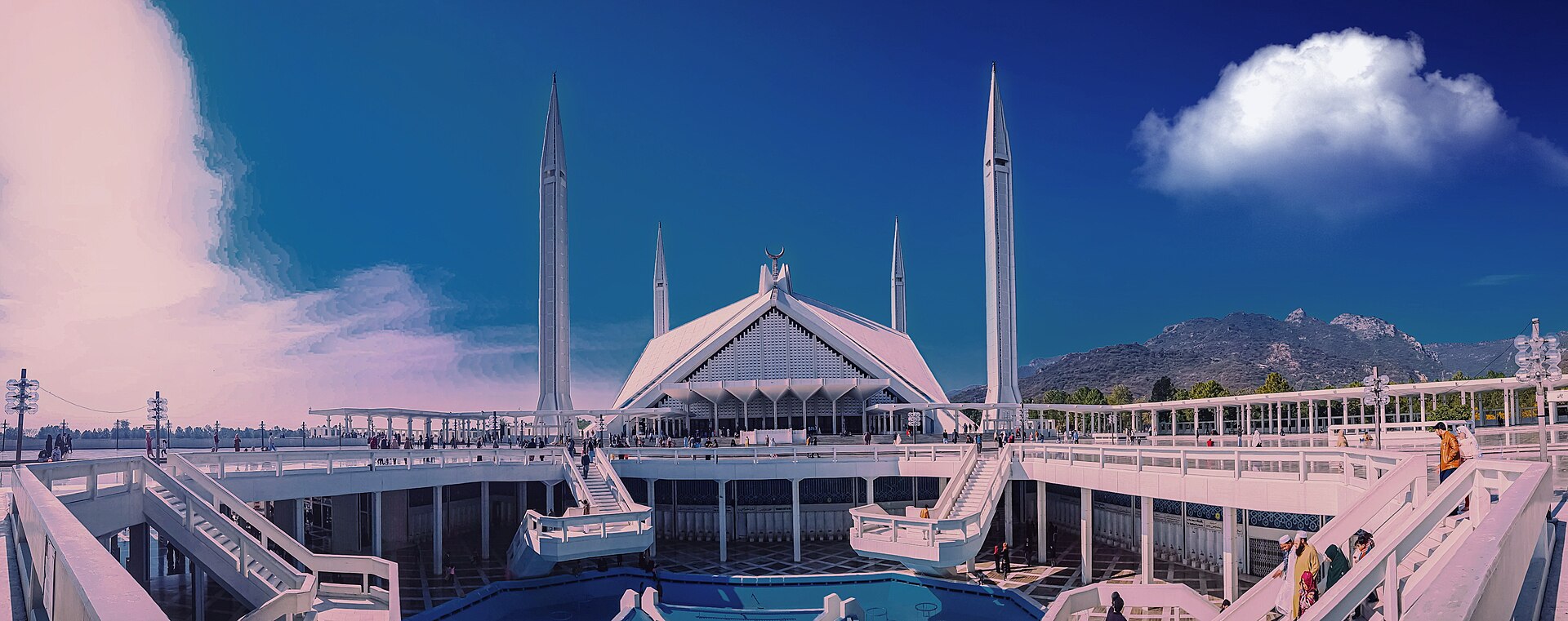
Middle East Eye’s sources were explicit about the structural dependency: Pakistan “would not be able to manoeuvre without the support of Saudi Arabia.” The Saudi-Pakistan mutual defence pact and Riyadh’s role as Islamabad’s economic patron — including a $5 billion Saudi loan that matures in June 2026 — means that Pakistan’s role as ceasefire enforcer is functionally underwritten by Saudi money and Saudi strategic interest. Dar’s “80 percent” figure at Antalya was an attempt to create momentum, but the 20 percent he didn’t mention is where the hardest questions live: Iran’s 440.9 kilograms of uranium enriched to 60 percent, the legal status of IRGC “coordination” over Hormuz, and whether Vahidi — the IRGC-linked SNSC secretary with an INTERPOL red notice who blocked progress at Islamabad — will allow any agreement that Ghalibaf negotiates to survive contact with Tehran’s actual decision-making structure.
The Antalya Quad meeting on April 18, where Dar made his remarks, was itself a signal of the diplomatic acceleration that the Lebanon ceasefire was designed to produce. Rubio’s same-day call to Prince Faisal confirmed that Washington and Riyadh were coordinating not just on the Lebanon truce but on the sequencing of whatever comes next — and that sequencing has to produce results before April 22 or the entire architecture collapses back to the pre-ceasefire status quo of mined shipping lanes, blockaded ports, and a Saudi treasury bleeding at roughly $90 per barrel when it needs $110.
Tehran Claims the Credit
Iran’s public framing of the Lebanon ceasefire was predictable and immediate. IRGC Quds Force commander General Esmaeil Qa’ani declared that “if a ceasefire is achieved, it is the result of the steadfast resistance of Lebanon and the support of the Islamic Republic of Iran” — a formulation that credits Hezbollah’s fighters and Iranian backing while erasing MBS, Trump, and the entire diplomatic sequence that produced the deal. Hezbollah supporters celebrated with gunfire in Beirut’s southern suburbs at midnight, and a Hezbollah lawmaker told Al Jazeera that Tehran had informed the party of the agreement “hours earlier.”
That lawmaker also gave Bloomberg the most revealing quote of the sequence: “The ceasefire would not have happened without Iran considering the ceasefire as equal to closing the Strait of Hormuz.” The admission was buried in the victory lap, but it confirmed exactly what MBS had told Trump — that Lebanon and Hormuz were linked in Iran’s own strategic calculus, and that unlocking one was the mechanism for unlocking the other. Ghalibaf had said it openly during the Islamabad talks: ceasefire in Lebanon was “as important” as the Iran ceasefire itself, and meaningful US-Iran negotiations required movement on both.
The framing contest matters because it determines who enters the next round of talks from a position of strength. If the Lebanon ceasefire is an Iranian achievement — the fruit of resistance — then Tehran arrives at Islamabad having extracted a concession and owing nothing in return. If it is a Saudi-engineered transaction, bought with MBS’s relationship with Trump and designed to serve Riyadh’s fiscal interests, then Saudi Arabia has demonstrated it can move pieces on the board even without a seat at the negotiating table. The answer, as with most things in this war, is that both framings contain enough truth to be dangerous.
Six Days and Counting
The Israeli drone strike between the Lebanese towns of Kounine and Beit Yahoun — which killed one person within hours of the ceasefire taking effect, and which the Lebanese army classified as an Israeli “act of aggression in violation of the ceasefire” — gave Iran a pretext it may or may not choose to use. Trump’s response was to declare Israel “PROHIBITED” from bombing Lebanon, a word that carried more fury than legal force. But the violation, however small, introduced the possibility that the Lebanon ceasefire could collapse before it achieved its purpose, giving Iran justification to walk from the April 20 talks before they begin.
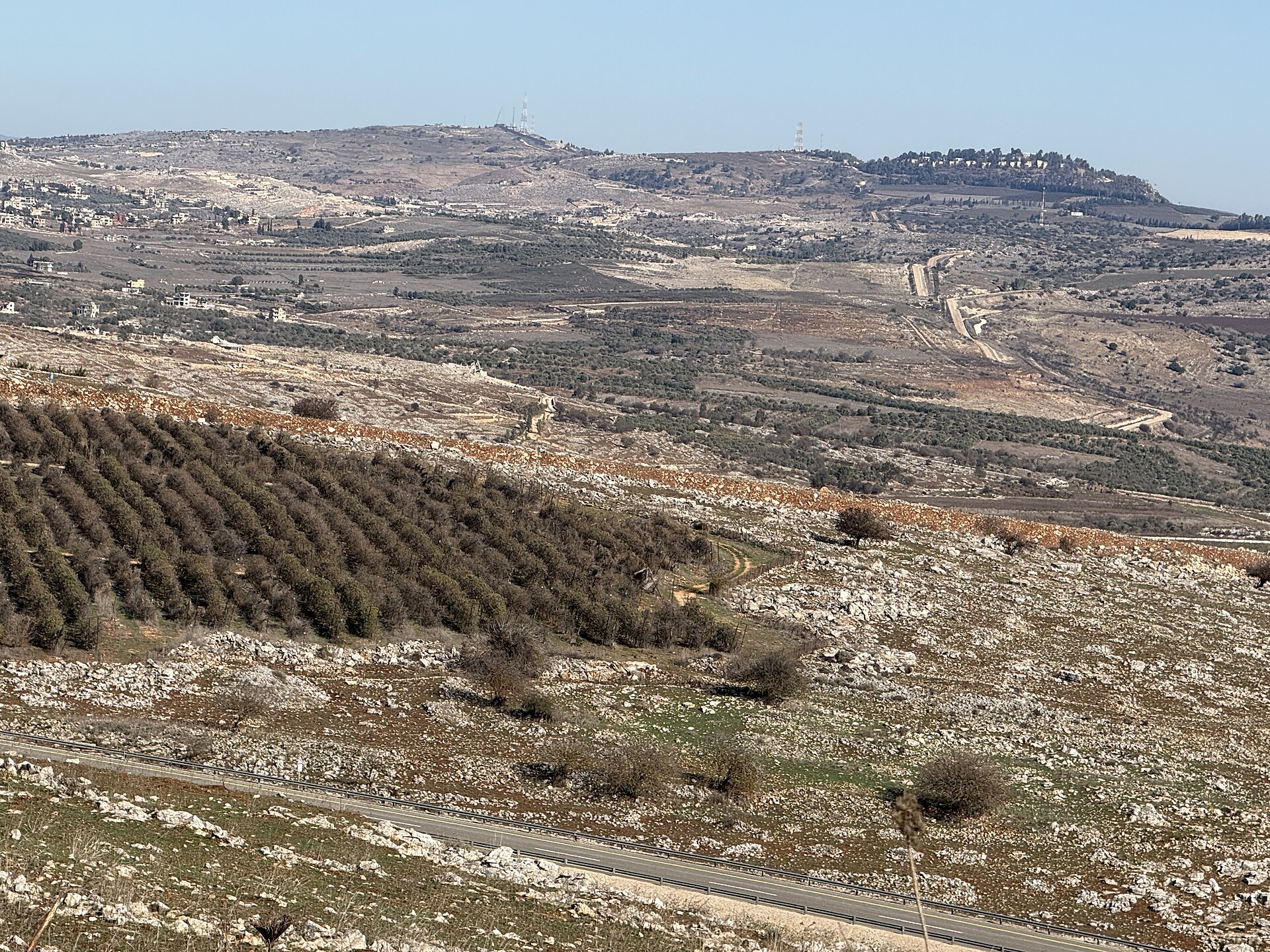
The 10-day Lebanon truce expires on April 26 — four days after the Iran-US ceasefire expires on April 22. There is no extension mechanism for either ceasefire, a structural gap that the Soufan Center flagged weeks ago and that neither Islamabad nor Washington has addressed. Dar’s “80 percent” is a number designed to inspire confidence in a process that has, so far, produced one walkout, one blockade, one contradiction over what “open” means at Hormuz, and one ceasefire that was violated within hours of starting. The 20 percent that remains is the part where wars either end or don’t.
MBS made a phone call and bought six days. What Riyadh does with them — whether the April 20 talks happen, whether Vahidi allows Ghalibaf to negotiate beyond the IRGC’s authorization ceiling, whether Trump can maintain a blockade and a ceasefire simultaneously without one destroying the other — will determine whether Saudi Arabia’s most expensive diplomatic intervention of the war was an investment or a write-off. The May OSP was priced for a $109-Brent world; Khurais is still dark; and the clock MBS bought with that phone call is already running.
Frequently Asked Questions
What happens if the Iran-US ceasefire expires on April 22 without renewal?
There is no extension mechanism built into the existing ceasefire framework. The Soufan Center has noted this structural gap repeatedly. If the ceasefire lapses, Iran’s Hormuz “reopening” — already contradicted by Trump’s insistence that the US blockade remains — would lose even its tenuous diplomatic foundation. Saudi Arabia would face the prospect of returning to Yanbu-only exports at 4-5.9 million barrels per day, roughly 2 million below pre-war Hormuz throughput, with no timeline for restoration. The Hajj season, which begins with the Makkah cordon sealing on April 18 and first pilgrim arrivals on April 22, raises the threshold for any kinetic escalation — a factor MBS is likely counting on as an informal restraint even if the formal ceasefire collapses.
Why did Iran link Lebanon and Hormuz?
Iran’s “axis of resistance” doctrine treats Hezbollah, the Houthis, and Iranian direct operations as a single strategic front. Allowing Israel to continue strikes in Lebanon while Iran negotiated a ceasefire on its own borders would have meant accepting the decoupling of the resistance network — something Ghalibaf, a former IRGC Aerospace Force commander, was institutionally incapable of conceding. The linkage also gave Iran additional bargaining chips: by conditioning Hormuz on Lebanon, Tehran converted a bilateral US-Iran negotiation into a multi-front regional settlement that increased the number of concessions it could extract.
Is the Strait of Hormuz actually open now?
Araghchi’s April 17 declaration that Hormuz is “completely open” coexists with Trump’s same-day statement that the US blockade “will remain in full force.” In practice, this means commercial vessels not flagged by the US sanctions regime may transit, but Iranian-flagged or Iranian-linked vessels remain subject to interdiction. The IRGC’s danger zone designation from February-April has not been formally rescinded, and the four US Avenger-class mine countermeasure ships that were based in Bahrain were decommissioned in September 2025 — meaning the roughly 200 square miles of potentially mined waters have not been cleared. Lloyd’s of London war risk premiums for Hormuz transit remain elevated, and insurers have not adjusted their assessments based on Araghchi’s statement alone.
What is the Saudi-Pakistan mutual defence pact?
The Saudi-Pakistan Military Defence Agreement, signed in September 2025, formalised a security relationship that had existed informally for decades. It commits Pakistan to consult with Saudi Arabia on regional security threats and provides a framework for joint military planning. Combined with Saudi Arabia’s $5 billion loan to Pakistan — which matures in June 2026 and gives Riyadh substantial financial pressure over Islamabad — the pact means Pakistan’s role as ceasefire mediator and enforcer is structurally dependent on Saudi interests. MEE sources stated explicitly that Pakistan “would not be able to manoeuvre without the support of Saudi Arabia.”
Could Israeli ceasefire violations collapse the Lebanon truce before it serves its purpose?
The Lebanese army reported an Israeli drone strike killing one person between Kounine and Beit Yahoun within hours of the ceasefire taking effect, classifying it as an “act of aggression.” Trump responded by declaring Israel “PROHIBITED” from bombing Lebanon. If violations continue, Iran gains a pretext to withdraw from the April 20 Islamabad talks — arguing that the Lebanon ceasefire MBS engineered has already failed and that the US cannot enforce its own agreements. This would collapse the entire diplomatic sequence before the April 22 expiry, leaving Saudi Arabia with a spent diplomatic chit and no progress on Hormuz. That scenario is already materializing: French UNIFIL soldier Staff Sergeant Florian Montorio was killed by small-arms fire in southern Lebanon on April 18, the ceasefire’s first full day, confirming that the enforcement vacuum MBS could not fill is now producing casualties. The structural dimension of Saudi Arabia’s absence — excluded from the Islamabad framework whose results Sharif delivered to MBS — is examined in Iran’s Ceasefire Response Reached Jeddah. Saudi Arabia Had No Hand in Shaping It.