
RIYADH — In twelve days of war with Iran, Saudi Arabia has signed, activated, or accelerated defense agreements with Ukraine, China, South Korea, Pakistan, and Turkey — a purchasing spree that amounts to the most rapid diversification of a national defense supply chain in modern military history. The transformation did not happen because Crown Prince Mohammed bin Salman planned it this way. It happened because the American arms pipeline, worth $140 billion in active Foreign Military Sales cases, could not deliver what the Kingdom needed when Iranian missiles started falling on Saudi cities.
The numbers tell the story with brutal clarity. A $5 billion Wing Loong-3 drone factory agreement with China. A “huge deal” for Ukrainian interceptor drones that could be worth hundreds of millions. A $3.2 billion Cheongung-II missile defense contract with South Korea that just proved its worth with a 96 percent combat kill rate. Pakistani air defense crews operating LY-80 and FM-90 systems on Saudi soil under a mutual defense pact activated for the first time. Turkish Bayraktar Akinci combat drones with a $3 billion local assembly arrangement already producing airframes in the Kingdom. Together, these deals represent a structural rupture in the Gulf defense market that will outlast the conflict that triggered them. The diversification reflects a broader reality: Saudi Arabia’s wartime coalition is wide but shallow, and MBS is building insurance against the moment when allied commitments prove insufficient.
The implications extend far beyond the current war. For seven decades, the United States has been the dominant — often sole — supplier of advanced military hardware to Saudi Arabia. That monopoly rested on three pillars: technological superiority, political leverage, and institutional lock-in through interoperable systems. The Iran war has cracked all three. What emerges from the rubble will be a multi-polar defense supply chain in which Washington competes for Saudi contracts rather than dictating terms. The arms race that began on the first night of Iranian missile strikes will reshape Middle Eastern security architecture for a generation.
Table of Contents
- What Has Saudi Arabia Purchased in Twelve Days of War?
- Why Did the American Arms Pipeline Fail When Saudi Arabia Needed It Most?
- How Did Ukraine Become Saudi Arabia’s Newest Arms Supplier?
- The $3.5 Million Problem That Exposed the Limits of American Air Defense
- How Is China Exploiting the Gap Washington Left Open?
- What Does South Korea’s 96 Percent Kill Rate Mean for Gulf Air Defense?
- Pakistan’s Nuclear-Armed Shield and the Defense Pact Nobody Expected to Activate
- Turkey’s Quiet Drone Revolution on Saudi Soil
- The Defense Supply Chain Diversification Matrix
- Why Washington Should Be More Worried Than Tehran
- What Does SAMI’s Rise Mean for Saudi Arabia’s Defense Independence?
- Frequently Asked Questions
What Has Saudi Arabia Purchased in Twelve Days of War?
The scale of Saudi Arabia’s wartime procurement is without modern precedent. Between February 28 and March 11, 2026, the Kingdom either signed, activated, or placed emergency orders with at least five countries beyond its traditional American supplier — each filling a specific gap that the existing defense architecture could not address under combat conditions.
The purchases fall into four categories: interceptor systems for ballistic and cruise missile defense, counter-drone technology for the Shahed swarms overwhelming legacy air defenses, combat drones for offensive and surveillance operations, and ground-based personnel and equipment deployments under bilateral defense pacts. Each category represents a failure point in the existing US-supplied system, and each new supplier entered the market by offering something Washington either could not provide, could not deliver fast enough, or priced beyond the threshold of wartime rationality.
A critical gap remains in the maritime domain. Iran’s deployment of kamikaze drone boats in the Persian Gulf has exposed a naval defence blind spot that no amount of air defence procurement addresses — and the arms race at sea is only beginning.
The Middle East briefing 3,000+ readers start their day with.
One email. Every weekday morning. Free.
| Supplier | System | Value | Category | Status |
|---|---|---|---|---|
| China (AVIC) | Wing Loong-3 drone factory, Jeddah | $5 billion | Combat drones | Signed |
| Ukraine | Interceptor drones + EW systems | Est. $200-500 million | Counter-drone | Negotiating (March 11) |
| South Korea | Cheongung-II emergency interceptors | $3.2 billion (original contract) | Missile defense | Rush delivery activated |
| Pakistan | LY-80, FM-90, Anza air defense + troops | Pact-based deployment | Integrated air defense | Deployed and operational |
| Turkey (Baykar) | Bayraktar Akinci UCAV local assembly | $3 billion | Combat drones | Assembly active in Saudi Arabia |
| United States | PAC-3 Patriot interceptors | $9 billion | Missile defense | Approved January 2026 |
The combined value of new non-US defense commitments signed, activated, or accelerated since the war began exceeds $11 billion. When the pre-war PAC-3 approval is included, total defense procurement activity in the first quarter of 2026 alone approaches $20 billion — roughly equivalent to Saudi Arabia’s entire 2024 defense budget, according to Stockholm International Peace Research Institute (SIPRI) estimates.
Most significantly, four of the six major procurement actions involve non-American suppliers. That ratio would have been unthinkable twelve months ago. The US share of new Saudi defense commitments has dropped from near-total dominance to less than half in a matter of days — not through any deliberate strategic shift, but through the simple mechanics of wartime necessity.
Why Did the American Arms Pipeline Fail When Saudi Arabia Needed It Most?
The United States remains Saudi Arabia’s largest defense partner by an enormous margin, with more than $140 billion in active government-to-government Foreign Military Sales cases, according to the Defense Security Cooperation Agency. In 2025, Washington and Riyadh signed what the White House described as “the largest defense cooperation agreement in U.S. history,” valued at $142 billion across tanks, combat ships, missile defense systems, radar, and cybersecurity technology. The problem is not the scale of the relationship. The problem is the speed.

Saudi Arabia signed a contract for seven THAAD batteries — 44 launchers, 360 interceptor missiles, seven AN/TPY-2 radars, and 16 mobile fire control units — in 2017. The first battery became operational in July 2025, according to the Defense Security Cooperation Agency. Full delivery is not expected until 2028. An eleven-year timeline from purchase to complete delivery is standard for the FMS system. It is also operationally catastrophic when the buyer is absorbing 37 waves of Iranian missile and drone attacks in twelve days.
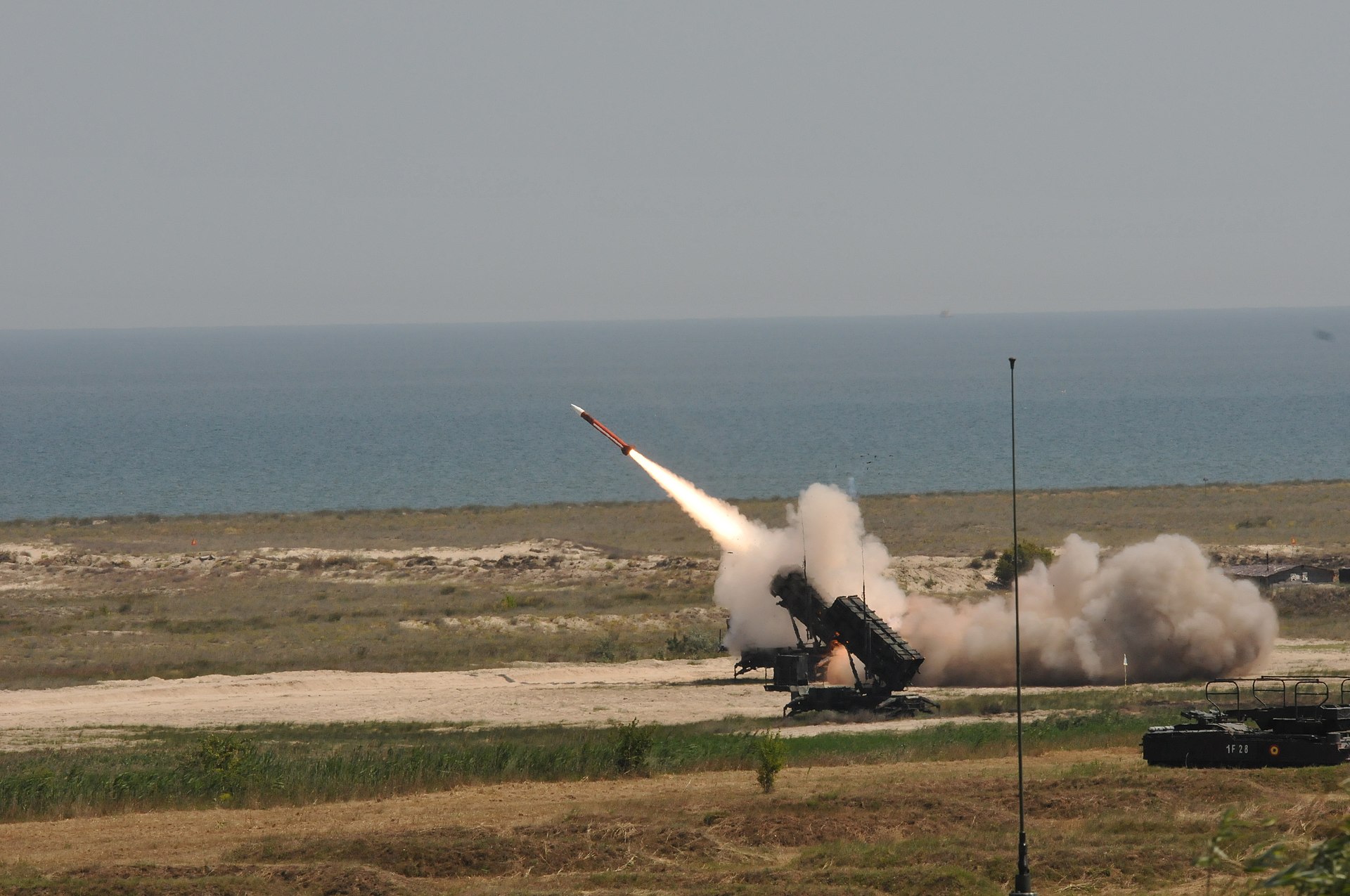
The PAC-3 Patriot missile sale approved in January 2026 — worth $9 billion for advanced interceptors — followed the same bureaucratic timeline. Notification, Congressional review, contract negotiation, production scheduling, and delivery are measured in years, not weeks. When the IRGC began launching ballistic missiles at Prince Sultan Air Base on March 1, the PAC-3 interceptors that Saudi Arabia had just been approved to buy existed on a Lockheed Martin production schedule, not on Saudi launcher rails.
The interceptor shortage has only worsened since. As the war drags into its third week, America’s missile shield over Saudi Arabia is failing — with AN/TPY-2 radars destroyed, THAAD batteries being stripped from South Korea, and interceptor stockpiles at critically low levels.
The American defense industrial base is simultaneously supplying Ukraine, replenishing its own stockpiles depleted by the war in Ukraine, fulfilling a $19 billion backlog to Taiwan, and now surging equipment to the Middle East. Production lines for Patriot interceptors, Stinger missiles, and precision-guided munitions were already running at maximum capacity before the Iran war began. A component in the Stinger missile’s seeker went out of production entirely and requires a complete redesign before large-scale deliveries can resume, according to Army procurement officials. The system that served America’s Cold War-era allies cannot serve the multi-front demands of 2026.
The Foreign Military Sales system was designed for peacetime deterrence, not wartime delivery. Saudi Arabia discovered in twelve days what Taiwan has known for years: the weapons you ordered may not arrive before the war they were meant to prevent.Analysis based on DSCA procurement timelines and Congressional Research Service reporting, March 2026
Beyond production bottlenecks, the FMS process itself creates institutional friction. Congressional notification requirements, human rights reviews under the Leahy Act, end-use monitoring provisions, and technology transfer restrictions add months or years to every major sale. These safeguards serve legitimate policy objectives, but they also mean that a Saudi defense minister calling Washington during an active missile barrage faces a procurement timeline measured in fiscal quarters while the threat is measured in hours. The gap between American political process and Saudi operational urgency created the market opening that Ukraine, China, South Korea, Pakistan, and Turkey have now entered.
How Did Ukraine Become Saudi Arabia’s Newest Arms Supplier?
The most improbable entry in Saudi Arabia’s new defense supply chain is Ukraine — a country fighting its own existential war while simultaneously becoming the Gulf’s most sought-after supplier of counter-drone technology. The relationship began with a phone call on March 7, when Ukrainian President Volodymyr Zelenskyy offered Crown Prince Mohammed bin Salman direct assistance in countering Iranian Shahed drone swarms, according to Al Jazeera reporting.
Within four days, Ukraine had deployed air defense advisory teams to Saudi Arabia, the UAE, and Qatar, with specialists also dispatched to a US military base in Jordan, according to the Kyiv Independent. A contract for Ukrainian-made air defense missiles was signed with a Saudi arms maker acting as intermediary. A separate “huge deal” for interceptor drones and electronic warfare systems was reported by the Wall Street Journal to be nearing finalization as of March 11. The Kyiv Independent reported that the deal could close the same day.

Ukraine’s appeal is straightforward: no other country on Earth has more practical experience defeating Iranian-designed drones. Since 2022, Ukrainian forces have engaged and destroyed thousands of Shahed-series drones launched by Russia, developing an ecosystem of counter-drone technologies that ranges from low-cost interceptor drones to electronic warfare jammers to acoustic detection networks. The technology is battle-tested against the exact weapon system now threatening Saudi Arabia, and it costs a fraction of Western alternatives. The urgency of this procurement is compounded by evidence that Russia is actively transferring Geran-2 drones and tactical intelligence to Iran, making the same OPEC+ partner a source of the weapons Saudi Arabia must now defend against.
Ukrainian interceptor drone manufacturers told Defense News they can produce tens of thousands of units per month without compromising domestic defense needs. Individual interceptors cost between 1,000 and 4,000 euros, according to Euronews reporting — a cost structure that makes them expendable in the same way the Shahed drones they are designed to destroy. The UAE has reportedly inquired about 5,000 interceptor drones, Qatar about 2,000, and Kuwait has also expressed interest, suggesting a regional market worth potentially billions of dollars in aggregate.
The strategic implications of the Ukraine-Gulf defense relationship extend beyond the immediate transaction. Ukraine gains revenue, political capital with Gulf monarchies that could influence their posture toward the Russia-Ukraine war, and a new export market for its burgeoning domestic defense industry. Saudi Arabia gains access to the world’s most advanced counter-drone technology without the political strings, Congressional oversight, or multi-year delivery timelines that characterize American arms sales. Both sides have powerful incentives to deepen the relationship beyond the current crisis. Russia’s evolving role in the conflict adds another dimension: Putin offered to broker a ceasefire during a March 10 phone call with Trump, even as Moscow stands accused of sharing satellite intelligence with Iran about US military positions in the Gulf.
The $3.5 Million Problem That Exposed the Limits of American Air Defense
The arithmetic of the Iran war’s drone campaign has exposed a structural vulnerability in Saudi Arabia’s American-designed air defense system that no amount of additional Patriot batteries can solve. A single PAC-3 interceptor missile costs approximately 3.5 million euros, according to European defense procurement data. An Iranian Shahed-136 drone costs between 25,000 and 40,000 euros to produce, according to CNBC reporting citing Pentagon estimates. Firing a Patriot at a Shahed creates a cost ratio of roughly 100:1 in Iran’s favor.
Iran has exploited this asymmetry with relentless discipline. Across 37 waves of attacks in twelve days, Tehran has launched Shahed drones in swarms designed not necessarily to reach their targets but to deplete Saudi interceptor stockpiles. Each wave forces Saudi air defense operators to choose between expending irreplaceable American interceptors on cheap drones or allowing some drones through to strike infrastructure. NBC News reported that Iran has “leaned on” the Shahed drone precisely because of its cost-effectiveness, describing it as “the poor man’s cruise missile.”
| System | Origin | Cost per Interceptor | Target Type | Cost Ratio vs. Shahed |
|---|---|---|---|---|
| PAC-3 MSE (Patriot) | United States | ~$3.5 million | Ballistic/cruise missiles, aircraft | 100:1 |
| THAAD interceptor | United States | ~$12 million | Ballistic missiles (high altitude) | 340:1 |
| Cheongung-II | South Korea | ~$1.5 million (est.) | Ballistic missiles, aircraft, drones | 43:1 |
| Ukrainian interceptor drone | Ukraine | $1,000–$4,000 | Low-speed drones (Shahed class) | 1:10 to 1:1 |
| Shahed-136 (target) | Iran | $25,000–$40,000 | N/A | N/A |
The table reveals why Saudi Arabia is pursuing a layered defense supply chain rather than simply ordering more Patriot batteries. Ukrainian interceptor drones are the only system that achieves cost parity or cost advantage against Shaheds. The Cheongung-II offers a middle ground — less expensive than American systems while still capable against ballistic missiles. Together, they create a tiered defense architecture in which each threat class is matched to the most cost-efficient interceptor, preserving expensive American missiles for the high-end threats they were designed to defeat.
This layered approach represents a fundamental rethinking of Gulf air defense doctrine. For decades, Saudi Arabia’s air defense strategy was built around American systems alone — Patriot for medium-range threats, THAAD for high-altitude ballistic missiles, and Hawk batteries for shorter ranges. The Iran war has demonstrated that this single-supplier model creates both a capability gap (no cost-effective counter to drone swarms) and a supply chain risk (dependence on one country’s production capacity for resupply). The multi-supplier model now emerging is the direct result of these twin failures.
How Is China Exploiting the Gap Washington Left Open?
China’s entry into the Saudi defense market is not new — the Kingdom purchased DF-3A ballistic missiles from Beijing in the late 1980s, and Chinese CH-4 drones have been in Saudi service for years. What is new is the scale and ambition of the wartime partnership. The $5 billion agreement between Aviation Industry Corporation of China (AVIC) and Saudi Arabia’s General Authority for Military Industries (GAMI) to build a Wing Loong-3 drone assembly facility in Jeddah goes beyond procurement. It is defense industrial collaboration that embeds Chinese technology, training, and maintenance infrastructure inside the Saudi defense ecosystem.
The Jeddah facility will produce approximately 48 Wing Loong-3 combat drones annually, according to Defence Security Asia. The system is a medium-altitude, long-endurance (MALE) unmanned combat aerial vehicle capable of carrying precision-guided munitions for strike missions and persistent surveillance. At $5 billion, the contract includes not just airframes but avionics integration, maintenance infrastructure, and specialized training pipelines for Saudi operators — the kind of deep industrial partnership that creates long-term supplier dependency.
Beijing’s pitch to Riyadh exploits three specific weaknesses in the American defense relationship. First, China imposes no Congressional oversight, human rights conditionality, or end-use monitoring requirements on arms sales. A Saudi order placed in Beijing faces none of the political friction that delayed THAAD delivery by eight years. Second, Chinese systems are designed for export — they use open architectures that can be integrated with non-Chinese equipment, unlike American systems that are optimized for interoperability within the US defense ecosystem. Third, China offers technology transfer and local production that Washington has historically resisted, fearing the proliferation of advanced capabilities.
The strategic calculation for Saudi Arabia is clear. China is simultaneously the world’s largest oil importer and an increasingly capable defense supplier. Deepening the defense relationship creates leverage across both dimensions — oil sales and arms purchases become mutually reinforcing elements of a comprehensive bilateral partnership. For Washington, the China-Saudi defense relationship represents perhaps the most consequential long-term threat to American influence in the Gulf, far more significant than any individual arms deal with Ukraine or South Korea.
What Does South Korea’s 96 Percent Kill Rate Mean for Gulf Air Defense?
The Cheongung-II medium-range surface-to-air missile system achieved something in the first week of the Iran war that years of marketing presentations never could: combat validation. Deployed in the UAE, the South Korean system intercepted Iranian missiles with a reported 96 percent kill rate, according to Seoul Economic Daily. The UAE Ministry of Defence reported that 174 ballistic missiles directed toward the country were detected during attack sequences, with 161 destroyed before reaching their targets, and 689 drones detected, of which 645 were intercepted.
These numbers transformed the Cheongung-II from a promising export product into the most combat-proven medium-range air defense system outside of the American and Israeli inventories. Saudi Arabia, which signed a $3.2 billion contract for the system in February 2024, immediately activated emergency provisions for accelerated delivery. South Korea approved an emergency request for more than 30 additional Cheongung-II interceptors for the UAE, with Seoul expediting deliveries ahead of the original schedule, according to The Defense Post.
The Cheongung-II’s appeal for Saudi defense planners extends beyond its intercept rate. The system fires 400-kilogram interceptors using hit-to-kill technology at a per-unit cost estimated to be less than half that of a PAC-3 MSE. It fills the gap between short-range point defense systems and the high-altitude THAAD, providing medium-range coverage against ballistic missiles, cruise missiles, and large drones. Most critically, it is available — South Korea’s defense industrial base is not simultaneously supplying a war in Ukraine, replenishing Cold War-era stockpiles, and fulfilling a multi-decade backlog of Foreign Military Sales.
The geopolitical dimensions are equally significant. South Korea is a US treaty ally, which means Cheongung-II sales to Saudi Arabia carry implicit American approval without the delays of the American procurement system. The system uses standard NATO data links, allowing integration with existing Saudi air defense networks that were built around American equipment. Seoul offers a politically acceptable alternative that Washington cannot publicly oppose — making South Korea the ideal wedge supplier in a market that American companies have long dominated.
However, the Iran war has also exposed the cost of South Korea’s growing defense export success. The United States has begun relocating THAAD interceptor missiles and Patriot batteries from South Korea to the Middle East, according to CNBC, prompting South Korean President Lee to publicly oppose the transfers. Seoul finds itself in a position where its own defense exports are fueling demand that depletes the American systems protecting the Korean peninsula — a strategic tension that will only intensify as Gulf states place larger orders.
Pakistan’s Nuclear-Armed Shield and the Defense Pact Nobody Expected to Activate
When Saudi Arabia and Pakistan signed their Strategic Mutual Defence Agreement in September 2025, most analysts viewed it as diplomatic symbolism — a formal codification of an informal security relationship that had existed for decades. The Iran war activated it within days.
Pakistani Air Defence Corps units deployed medium- and short-range missile systems to Saudi Arabia, operating in coordination with Saudi counterparts, according to reporting from Times of Islamabad. The deployed systems include LY-80 medium-range surface-to-air missiles, FM-90 short-range systems, and Anza-series man-portable missiles — Chinese and Pakistani-designed equipment that adds a layer of air defense coverage distinct from the American-supplied systems that form Saudi Arabia’s primary shield. An estimated 1,500 to 2,000 Pakistani military personnel are now stationed in Saudi Arabia as part of the deployment.
Pakistan’s contribution goes beyond the specific systems deployed. Islamabad is the only nuclear-armed Muslim-majority nation, and the implicit deterrent value of its security commitment to Saudi Arabia cannot be measured in missile launcher counts. A former Saudi ambassador publicly stated that Pakistan would be prepared to deploy up to 100,000 troops if requested by Crown Prince Mohammed bin Salman — a claim that, while likely hyperbolic, signals the depth of the bilateral commitment.
The Pakistan dimension introduces a variable that no other supplier relationship provides: strategic ambiguity about nuclear deterrence. Pakistan has never explicitly extended its nuclear umbrella to Saudi Arabia, and officials from both countries have denied any such arrangement. But the activation of a mutual defense pact while Iranian missiles are falling on Saudi territory, combined with Islamabad’s history of close nuclear cooperation with Riyadh, creates a deterrent signal that does not require an explicit declaration. The Council on Foreign Relations noted that the defense pact represents “a new security axis in West Asia” whose implications extend well beyond conventional military cooperation. Those implications now include the Kingdom’s accelerating nuclear energy plans, which gained new momentum once Iran’s enrichment infrastructure was reduced to rubble.
Turkey’s Quiet Drone Revolution on Saudi Soil
While the wartime deals with Ukraine and China have captured headlines, Turkey’s defense relationship with Saudi Arabia may be the most structurally advanced of the new supplier partnerships. The $3 billion contract for 60 Bayraktar Akinci combat drones, signed in 2023 during President Erdogan’s visit to the Kingdom, has already progressed from purchase agreement to local production.
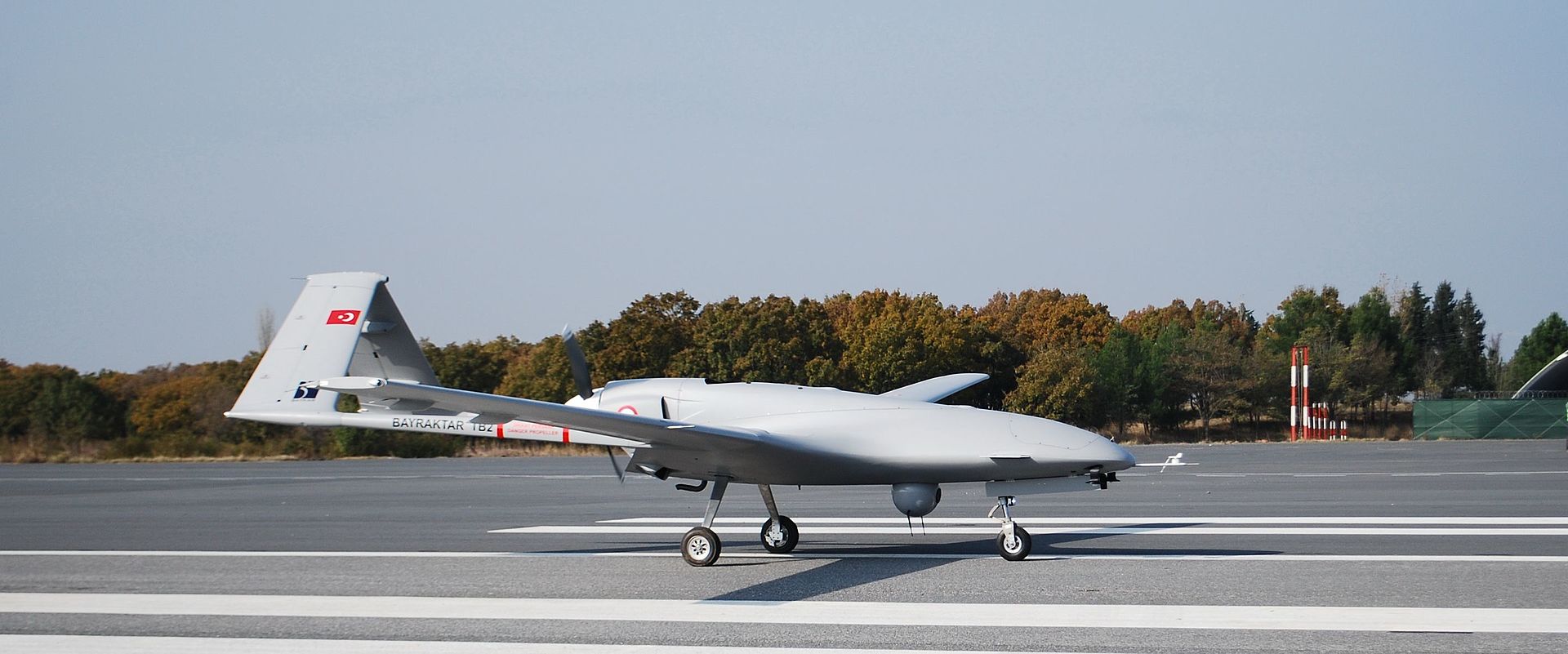
Baykar’s Chief Technology Officer Selcuk Bayraktar confirmed in August 2025 that production lines for the Akinci UCAV were being established inside Saudi Arabia. The arrangement involves Saudi Arabian Military Industries (SAMI) as the domestic manufacturing partner, with 300 Saudi employees trained at Baykar facilities in Turkey. By 2026, more than 70 percent of SAMI’s Akinci production was expected to be locally manufactured, according to Defence Security Asia — making it the most advanced defense localization program in Saudi Arabia’s history.
The Akinci represents a class of weapon system that Saudi Arabia has never had access to through American channels. It is a high-altitude, long-endurance combat drone capable of deploying cruise missiles and AI-enabled standoff weapons. The United States has consistently refused to export armed drones of equivalent capability to Gulf states, citing proliferation concerns and the Missile Technology Control Regime. Turkey faces no such restrictions, and China has similarly capitalized on America’s export reluctance through the Wing Loong program.
The Turkey-Saudi defense relationship is particularly notable because it required both sides to overcome significant political hostility. The 2018 killing of journalist Jamal Khashoggi at the Saudi consulate in Istanbul created a diplomatic rift that many believed would permanently damage bilateral relations. That the two countries have moved from that crisis to joint drone manufacturing within six years illustrates how defense industrial interests can override even the most severe diplomatic ruptures.
The Defense Supply Chain Diversification Matrix
The pattern emerging from Saudi Arabia’s wartime procurement decisions is not random. Each new supplier fills a specific capability gap, operates in a distinct political lane, and offers a unique industrial proposition. Mapping these relationships against three dimensions — capability match, political independence from Washington, and technology transfer depth — reveals a diversification strategy that, whether by design or desperation, creates unprecedented resilience in Saudi Arabia’s defense supply chain.
| Supplier | Capability Niche | Political Independence (1-5) | Tech Transfer Depth (1-5) | Delivery Speed (1-5) | Strategic Risk |
|---|---|---|---|---|---|
| United States | High-end missile defense (Patriot, THAAD), command systems | 1 | 2 | 1 | Congressional restrictions, production backlog, political conditionality |
| China | Combat drones (Wing Loong-3), local production | 5 | 5 | 3 | US sanctions risk, interoperability limits, strategic alignment concerns |
| Ukraine | Counter-drone (interceptors, EW), battlefield-tested | 4 | 3 | 5 | Ukraine’s own war needs, production scalability, untested bilateral relationship |
| South Korea | Medium-range missile defense (Cheongung-II) | 3 | 3 | 4 | US ally constraints, Korean Peninsula tensions, resource competition |
| Pakistan | Integrated air defense layer, manpower, nuclear deterrence | 4 | 2 | 5 | Iran border exposure, domestic political backlash, capability ceiling |
| Turkey | Combat/armed drones (Akinci), local assembly | 4 | 5 | 4 | Erdogan political risk, NATO obligations, historical diplomatic volatility |
The matrix reveals three critical patterns. First, no single supplier scores highly across all dimensions. The United States retains technological dominance in high-end missile defense but scores lowest on political independence, technology transfer, and delivery speed. China scores highest on political independence and technology transfer but carries significant strategic alignment risks. Ukraine scores highest on delivery speed but faces its own wartime production constraints. The optimal strategy — which is precisely what appears to be emerging — is a portfolio approach in which each supplier’s strengths compensate for others’ weaknesses.
Second, the delivery speed dimension is the decisive wartime differentiator. Ukraine and Pakistan score 5 — they delivered operational capability within days of the war beginning. South Korea scored 4, activating emergency delivery provisions within a week. China scored 3, reflecting the longer timeline of industrial facility construction. The United States scored 1, reflecting a procurement system structurally incapable of wartime surge delivery. This single dimension explains why the war triggered diversification: when missiles are falling, delivery speed outweighs every other consideration.
Third, the technology transfer depth dimension is the decisive peacetime differentiator. China and Turkey both score 5, offering local production facilities that embed manufacturing capability inside Saudi Arabia. This is the dimension that will determine long-term supplier relationships after the war ends. Countries offering technology transfer are building 20-year partnerships; countries offering hardware alone are making one-time sales. SAMI’s assembly lines for Chinese drones and Turkish combat UAVs represent structural ties that will persist regardless of whether the Iran war ends tomorrow or in five months.
Why Washington Should Be More Worried Than Tehran
The conventional analysis frames Saudi Arabia’s defense diversification as a wartime expedient that will revert to normal when the conflict ends. This analysis is wrong, and its wrongness will cost the United States its most valuable defense relationship in the Middle East if policymakers fail to recognize what has changed.
Consider the structural dynamics. Saudi Arabia now has operational experience with South Korean missile defense systems that achieved a 96 percent kill rate. It has Ukrainian counter-drone technology that costs 1/1,000th of a Patriot interceptor. It has Chinese drone factories on its own soil. It has Turkish combat UAVs being assembled by Saudi workers in Saudi facilities. And it has a defense minister in Khalid bin Salman who lobbied personally for many of these diversification moves.
None of these capabilities disappear when the war ends. The Wing Loong-3 factory in Jeddah will not be dismantled. The Bayraktar Akinci assembly line will not be shipped back to Turkey. The Cheongung-II batteries will not be returned to Seoul. Ukrainian electronic warfare systems will remain integrated into Saudi air defense networks. Pakistani air defense crews have now trained alongside Saudi operators in combat conditions — a bond that peacetime exercises cannot replicate.
The deeper threat to American influence is not the loss of individual arms sales but the erosion of institutional lock-in. For decades, American dominance in the Saudi defense market was self-reinforcing: every American system purchased made the next American system purchase more logical because of interoperability, shared logistics, and training infrastructure. The introduction of five additional supplier ecosystems breaks that lock-in. Saudi Arabia’s defense architecture will become increasingly multi-standard, multi-platform, and multi-supplier — reducing the switching costs that kept Riyadh purchasing from Washington even when faster or cheaper alternatives existed.
The $142 billion defense cooperation agreement signed in 2025 remains the largest in American history. But it matters little if the weapons it promises arrive after the war they were meant to fight. Saudi Arabia learned in twelve days that a signed contract is not a deployed capability.Strategic assessment, March 2026
Washington’s response options are limited. Accelerating FMS delivery requires Congressional reform of the notification and review process — politically unlikely given bipartisan scrutiny of Saudi arms sales. Increasing production capacity requires years of factory expansion and workforce training. Offering technology transfer and local production on par with Chinese and Turkish arrangements would require reversing decades of proliferation policy. And threatening consequences for Saudi diversification would only accelerate the very trend Washington seeks to reverse.
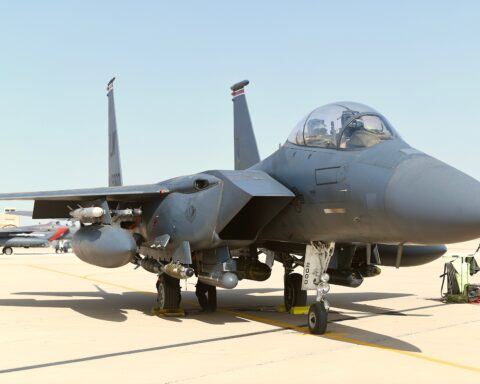
The most likely outcome is a new equilibrium in which the United States retains its role as Saudi Arabia’s primary high-end defense partner — the supplier of F-15s, Patriot command systems, THAAD batteries, and intelligence architecture — while ceding the mid-range and counter-drone segments to a consortium of competitors. This is a sustainable position commercially, but it represents a significant reduction in the political leverage that comprehensive defense dependency once provided. A Saudi Arabia that can source 60 percent of its defense needs from non-American suppliers is a Saudi Arabia that can say no to Washington on issues ranging from oil production to Israel normalization with far fewer consequences.
What Does SAMI’s Rise Mean for Saudi Arabia’s Defense Independence?
The ultimate destination of Saudi Arabia’s defense supply chain transformation is not dependence on six countries instead of one. It is domestic self-sufficiency — or at least a level of domestic production capability that prevents any single foreign supplier from exercising veto power over Saudi military operations. Saudi Arabian Military Industries (SAMI), a wholly owned subsidiary of the Public Investment Fund, is the institutional vehicle for this ambition.
SAMI’s trajectory is measurable. Defense spending localization rose from 4 percent in 2018 to 25 percent by the end of 2024, according to GAMI reporting at World Defense Show 2026. The target is 50 percent by the end of the decade. In February 2026 — weeks before the Iran war began — the Saudi Minister of Defense inaugurated two new SAMI subsidiaries and a large-scale land systems industrial complex in Riyadh with an annual capacity of 1,500 military vehicles and more than 1,000 skilled jobs for Saudi nationals.
The HEET program, unveiled at World Defense Show 2026, represents SAMI’s first family of indigenously designed wheeled armored vehicles in 4×4, 6×6, and 8×8 configurations. A joint venture with Turkey’s ULAQ Global will localize unmanned surface vessel production. The Wing Loong-3 factory and Bayraktar Akinci assembly line add aerial platforms to an expanding domestic manufacturing base. Within five years, Saudi Arabia aims to design, produce, and maintain a significant portion of its own military equipment — an ambition that Vision 2030 positioned as economic diversification but that the Iran war has reframed as national security imperative.
| Year | Localization Rate | Key Milestones |
|---|---|---|
| 2018 | 4% | SAMI established as PIF subsidiary; GAMI created |
| 2020 | 8% | First local ammunition production; maintenance contracts localized |
| 2022 | 14% | Chinese-Saudi drone joint venture established |
| 2024 | 25% | HEET vehicle family; Bayraktar Akinci local assembly begins; Cheongung-II contract signed |
| 2026 (wartime) | ~30% (est.) | Wing Loong-3 factory; Ukrainian EW integration; Riyadh land systems complex operational |
| 2030 (target) | 50% | Full-spectrum domestic production across land, air, and naval platforms |
The Iran war has compressed SAMI’s development timeline by creating both urgency and political cover for accelerated technology acquisition. Deals that might have taken years to negotiate in peacetime were concluded in days under the pressure of incoming missiles. Technology transfer provisions that foreign suppliers might have resisted became table stakes when the alternative was losing the contract to a competitor offering more generous terms. The war has functioned as an accelerant for Saudi defense industrialization in the same way that Ukraine’s war with Russia transformed Kyiv from an arms importer into an arms exporter — existential threats create capabilities that peacetime investment cannot.
The risk for Saudi Arabia is that diversification creates complexity. Managing six supplier relationships, integrating six different technology standards, training operators on six different platforms, and maintaining logistics chains across six countries is vastly more complex than managing one. The US defense architecture, for all its delivery delays, offers the advantage of seamless interoperability. A Saudi air defense operator can hand off a tracked target from a Patriot radar to a THAAD launcher without protocol translation. Integrating a Cheongung-II battery, a Ukrainian electronic warfare system, and a Chinese drone into the same operational picture requires middleware, translator systems, and doctrine that does not yet exist.
GAMI and SAMI are betting that the integration challenge is solvable — and that the benefits of supply chain resilience outweigh the costs of system complexity. The Iran war has validated the first half of that bet. Whether the second half proves true will determine whether Saudi Arabia emerges from this conflict as a genuinely independent defense power or merely a country with six different dependencies instead of one.
Frequently Asked Questions
How much has Saudi Arabia spent on non-US defense deals since the Iran war began?
Saudi Arabia has signed, activated, or accelerated non-American defense commitments worth more than $11 billion since the Iran war began on February 28, 2026. This includes a $5 billion Chinese drone factory deal, a $3.2 billion South Korean missile defense contract with emergency delivery provisions, a $3 billion Turkish drone manufacturing arrangement, and Ukrainian counter-drone deals estimated in the hundreds of millions of dollars.
Why can’t the United States deliver weapons faster to Saudi Arabia?
The American Foreign Military Sales system involves Congressional notification, human rights reviews, technology transfer approvals, and production scheduling that add years to major defense deliveries. Saudi Arabia’s THAAD order, placed in 2017, did not produce an operational battery until July 2025 — eight years from contract to deployment. American defense factories are also simultaneously supplying Ukraine, replenishing US stockpiles, and fulfilling backlogs to other allies, creating production capacity constraints that new orders cannot overcome quickly.
What makes Ukrainian interceptor drones effective against Iranian Shaheds?
Ukrainian interceptor drones cost between 1,000 and 4,000 euros per unit — roughly 1/10th to 1/40th the cost of a Shahed-136 drone and 1/1,000th the cost of a Patriot interceptor. They are the only weapon system that achieves cost parity or advantage against Iranian drone swarms. Ukrainian manufacturers can produce tens of thousands per month, and the technology has been battle-tested against thousands of Shaheds launched by Russia since 2022.
Is Saudi Arabia abandoning the United States as its primary defense partner?
Saudi Arabia is not abandoning the American defense relationship, which remains the largest bilateral defense partnership in the world at over $140 billion in active cases. Rather, the Kingdom is supplementing American high-end systems (Patriot, THAAD, F-15) with mid-range and counter-drone capabilities from other suppliers. The United States is likely to retain its role as the primary provider of advanced missile defense, fighter aircraft, and intelligence systems while losing dominance in the drone and medium-range air defense segments.
What is SAMI and how close is Saudi Arabia to defense self-sufficiency?
Saudi Arabian Military Industries (SAMI) is a Public Investment Fund subsidiary tasked with localizing defense production within the Kingdom. Defense localization rose from 4 percent in 2018 to 25 percent in 2024, with a target of 50 percent by 2030. SAMI currently operates vehicle production facilities, drone assembly lines, and ammunition plants. The Iran war has accelerated technology transfer from multiple foreign partners, potentially compressing the timeline toward the 50 percent target.