Table of Contents
The Caspian Corridor: Factory to Port in 2,400 Kilometres
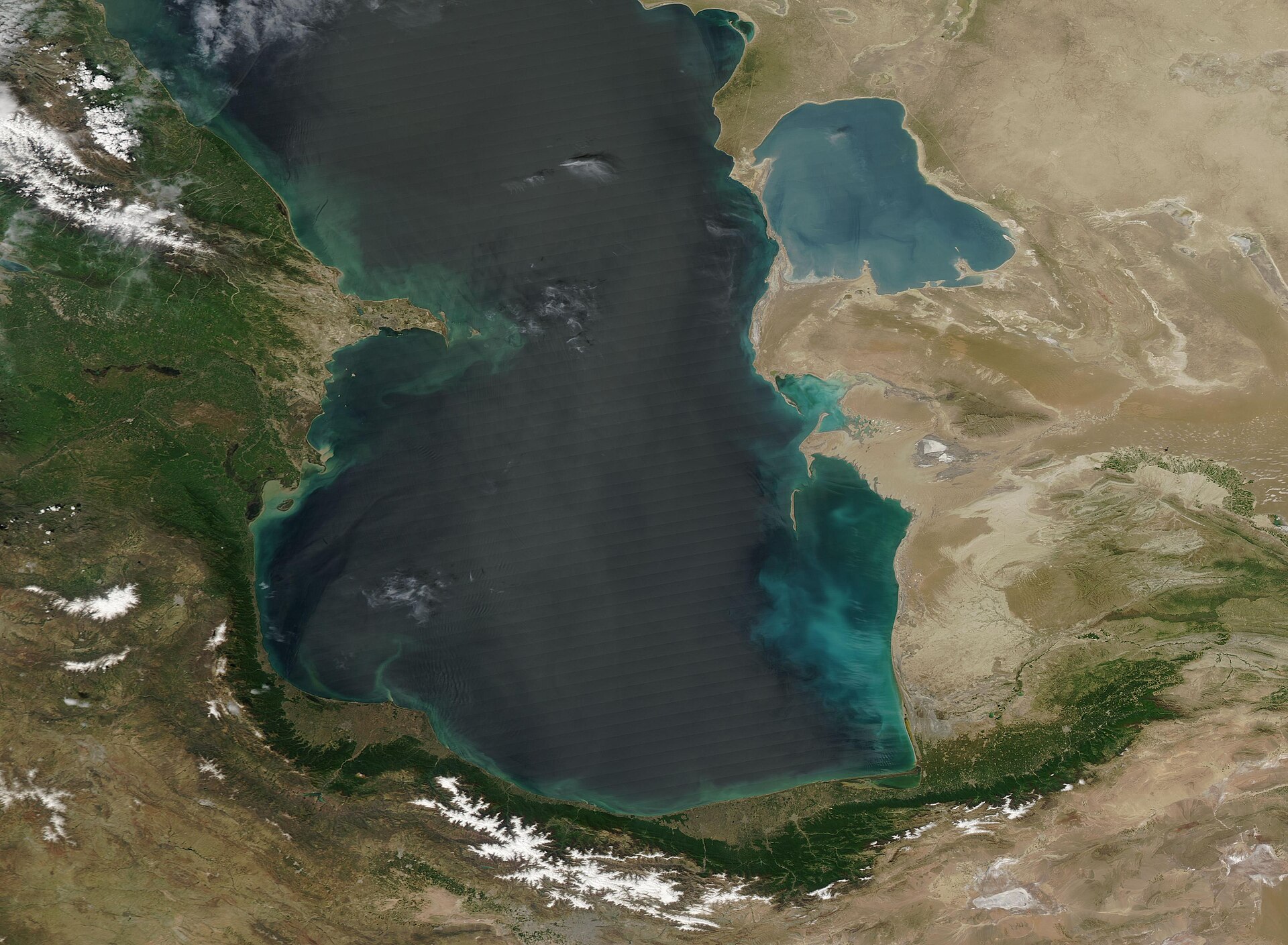
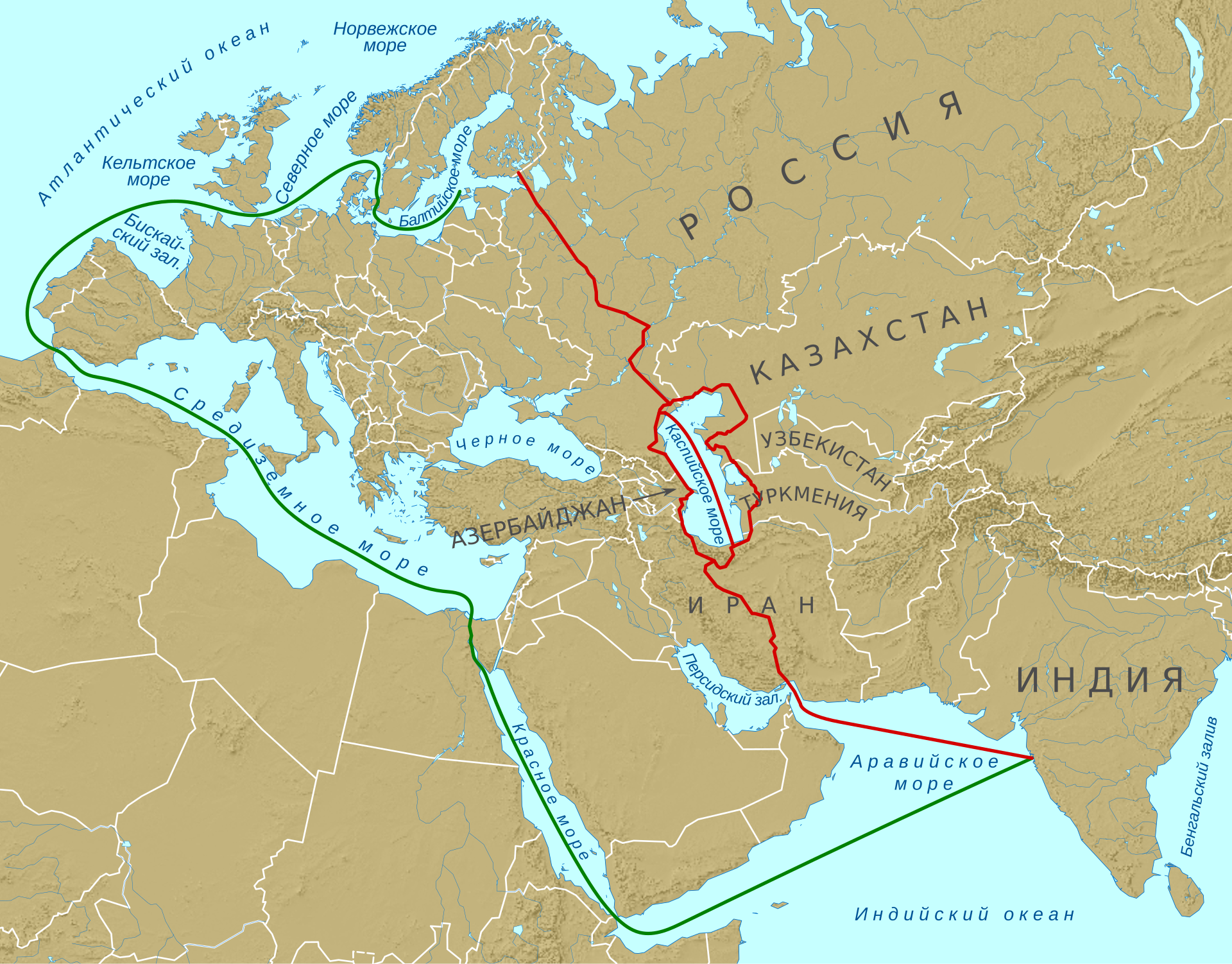
MOSCOW — Russia is shipping drone components to Iran via the Caspian Sea, restoring roughly 60 percent of Tehran’s depleted UAV arsenal through a logistics chain that the United States cannot legally or practically interdict, according to US officials cited by the New York Times on May 9, 2026. The route runs from the Yelabuga special economic zone in Tatarstan through Russia’s inland waterways to Bandar Anzali, Iran’s main Caspian naval port — a corridor shielded by three layers of international treaty that bar non-littoral military forces from the sea entirely.
The disclosure confirms what satellite imagery and shipping data had suggested for weeks: that Russian cargo vessels are moving drone parts downriver through the Kama and Volga to Astrakhan, Russia’s primary Caspian hub, then across the sea by ferry and barge to Iranian ports. The route exploits a structural gap in American power projection. The 2018 Convention on the Legal Status of the Caspian Sea, signed by all five littoral states at Aktau, Kazakhstan, on August 12, 2018, explicitly prohibits “the military presence of all foreign countries in the sea and transit of military consignments belonging to foreign countries.” The US Navy cannot enter. US aircraft cannot overfly the basin without sovereign consent from Azerbaijan, Turkmenistan, or Kazakhstan — states Washington is actively courting as post-Russia economic partners under the C5+1 framework.
The resupply operation arrives at a moment when Iran’s drone inventory is under severe pressure. US strikes on underground storage sites have targeted tunnel entrances and ventilation shafts, but the Soufan Center assessed in an April 6, 2026 IntelBrief that Iran has been able to “dig out bombed entrances and return sites to full operation within hours.” The deeper problem for Tehran is attrition: an estimated 60 percent of its UAV stockpile has been expended or destroyed since fighting began, according to the US officials cited by the Times. Russia’s Caspian corridor offers a replenishment pipeline that operates entirely outside the reach of the US-led Hormuz escort architecture.
What Is Russia Sending Through the Caspian?
The New York Times report, relayed the same day by the Times of Israel and i24NEWS, identifies the cargo as drone components rather than finished airframes. The distinction matters. Components — guidance modules, engine parts, warhead assemblies, wing sections — are smaller, easier to conceal in mixed commercial cargo, and harder to detect through port inspections than fully assembled Geran-2 airframes, which measure 3.5 metres in wingspan. US officials described the shipments as helping Iran “rebuild its offensive abilities,” language that implies parts for assembly at Iranian facilities rather than ready-to-fly systems.
The components are almost certainly flowing from the Yelabuga drone factory in Tatarstan, the world’s largest combat UAV production complex by footprint. The facility sits directly on the Kama River, which feeds into the Volga and then into the Caspian at Astrakhan. The geography is not incidental — the factory was built on this waterway. The Kama-Volga-Caspian connection provides a continuous inland route from production floor to Iranian port without touching a single international checkpoint or transiting a body of water where Western navies operate.
The day before the Times report, The Economist published a separate but related story: a leaked ten-page GRU document proposing to supply Iran with 5,000 short-range fiber-optic drones of the type used in Ukraine, plus an unspecified number of satellite-guided drones equipped with Starlink terminals (DroneXL, May 8, 2026). Fiber-optic drones are guided through a physical cable rather than radio signals, making them immune to the electronic jamming that US and allied forces deploy at scale. The document also proposed recruiting drone operators from among the estimated 10,000 Iranian students studying at Russian universities. The Economist assessed the document as credible but found no direct evidence it had been passed to Iranian officials.
The Middle East briefing 3,000+ readers start their day with.
One email. Every weekday morning. Free.
The two stories describe different things — components via Caspian cargo (confirmed by US officials) and a proposed fiber-optic drone package (documented in a GRU planning paper) — but they point in the same direction. Russia is treating Iran’s drone deficit as a resupply problem it can solve through existing infrastructure.
Why Can’t the US Interdict This Route?
The answer is layered in treaty law that predates the current war by more than a century. Three agreements, stacked chronologically, create what amounts to a permanent legal exclusion zone for non-littoral military assets in the Caspian basin.
The first is the 1921 Russo-Persian Treaty of Friendship, signed on February 26, 1921, which established that only Soviet and Persian vessels could operate on the Caspian Sea. The treaty cancelled all previous concessions to third parties and reserved navigation and fishing rights exclusively to the two coastal states. The second is the 1940 Soviet-Iranian Treaty on Trade and Navigation, signed March 25, 1940, which reaffirmed that framework and extended it to commercial shipping, creating a bilateral condominium that excluded all non-littoral access.
The third and most consequential is the 2018 Convention on the Legal Status of the Caspian Sea. Signed at Aktau by the presidents of all five littoral states, the Convention was the product of 27 years of negotiation following the Soviet Union’s collapse. Its 24 articles define the Caspian as a “peace sea” and contain two provisions directly relevant to interdiction.
The first bans “the military presence of all foreign countries in the sea.” The second prohibits “the military deployment in the sea of any vessel not belonging to a signatory party” (GlobalSecurity/ISNA, August 2018). Together, these clauses bar the United States from sending naval vessels into the Caspian, conducting surveillance operations from its waters, or deploying interdiction assets of any kind.
The prohibition extends beyond surface ships. Any US air interdiction over the Caspian would require overflying the sovereign territory of at least one littoral state — Azerbaijan, Turkmenistan, or Kazakhstan. All three are signatories to the 2018 Convention and current targets of American diplomatic engagement under the C5+1 format. Pressuring any of these governments to grant military overflight rights would directly contradict their treaty obligations and risk destabilising the very relationships the State Department is investing in.
The sanctions route is equally constrained. Secondary sanctions targeting Caspian shipping would expose Central Asian states — many of which use the same waterway for legitimate trade — to economic penalties that Washington has been working to avoid. The INSTC runs through the basin; India, a US partner in the Indo-Pacific framework, has commercial interests in that corridor’s continued operation. The web of dependencies makes targeted sanctions on Caspian cargo politically expensive in ways that Hormuz interdiction is not.
The Yelabuga Machine: 5,500 Drones a Month
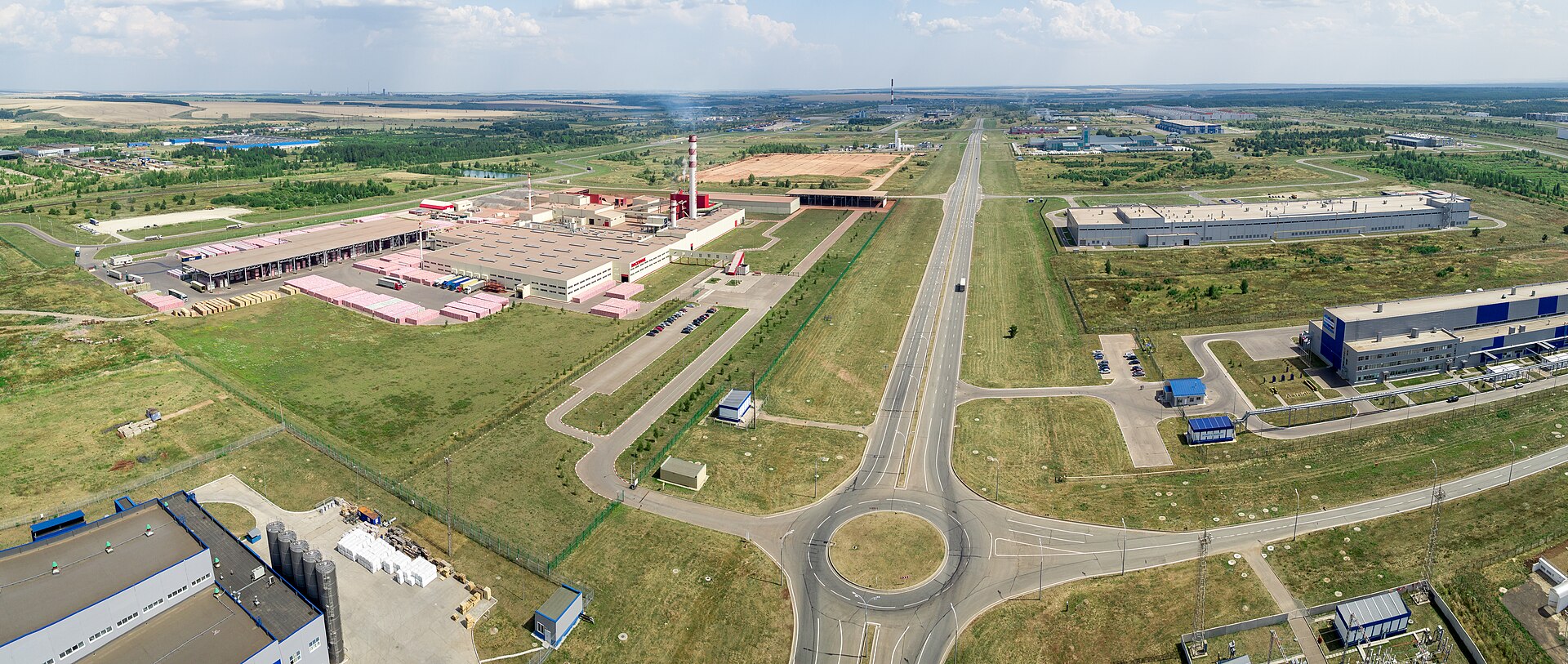
The source of the components flowing through the Caspian is almost certainly the Alabuga Special Economic Zone in the Republic of Tatarstan, where Russia’s largest drone production complex has been operating since July 2023. The facility was established under a bilateral Russia-Iran agreement to produce 6,000 Geran-2 airframes annually — approximately 500 per month — at an initial deal value of $1.75 billion including production line setup (CNN, August 2025).
That initial capacity figure is now obsolete. Satellite analysis by CSIS Beyond Parallel found that by late 2025, the complex had expanded from two buildings to a 17-facility, 116-building campus spanning more than 2.82 square kilometres, with approximately 20,000 worker housing units on site. Separate satellite-based assessments estimated the factory’s capacity at over 5,500 units per month (Quwa, 2026) — roughly eleven times the original contracted capacity, though unconfirmed by primary source data. For context, Ukrainian Commander-in-Chief Oleksandr Syrskyi assessed Russia’s total drone output across all facilities at 404 per day by January 2026, against a stated production target of 1,000 per day.
The factory’s location on the Kama River is the logistical key to the Caspian corridor. Components or finished airframes can be loaded onto river barges at the facility’s own waterfront, shipped downstream to the Volga confluence, and carried south to Astrakhan without ever leaving Russian inland waterways. From Astrakhan, the cargo transfers to Caspian-class ferries or barges for the crossing to Bandar Anzali — roughly 700 kilometres across open water but entirely within treaty-protected space. Russia maintains additional Caspian port capacity at Olya and Makhachkala, giving the corridor supply-chain redundancy that a single-port strike cannot eliminate.
Aleksandr Sharov, director of the RusIranExpo Group, stated that Russia-Iran cargo turnover via the Caspian was projected to double in 2026, reaching 10 million tons — a figure set before the current war began (RFERL, April 2026). The military resupply is embedded within a much larger volume of legitimate commercial traffic, including the food imports — wheat, corn, and cooking oil — that Iranian officials have acknowledged rerouting through Caspian ports since the Persian Gulf Strait Authority complicated southern maritime access.
Israel Already Tried to Cut the Line
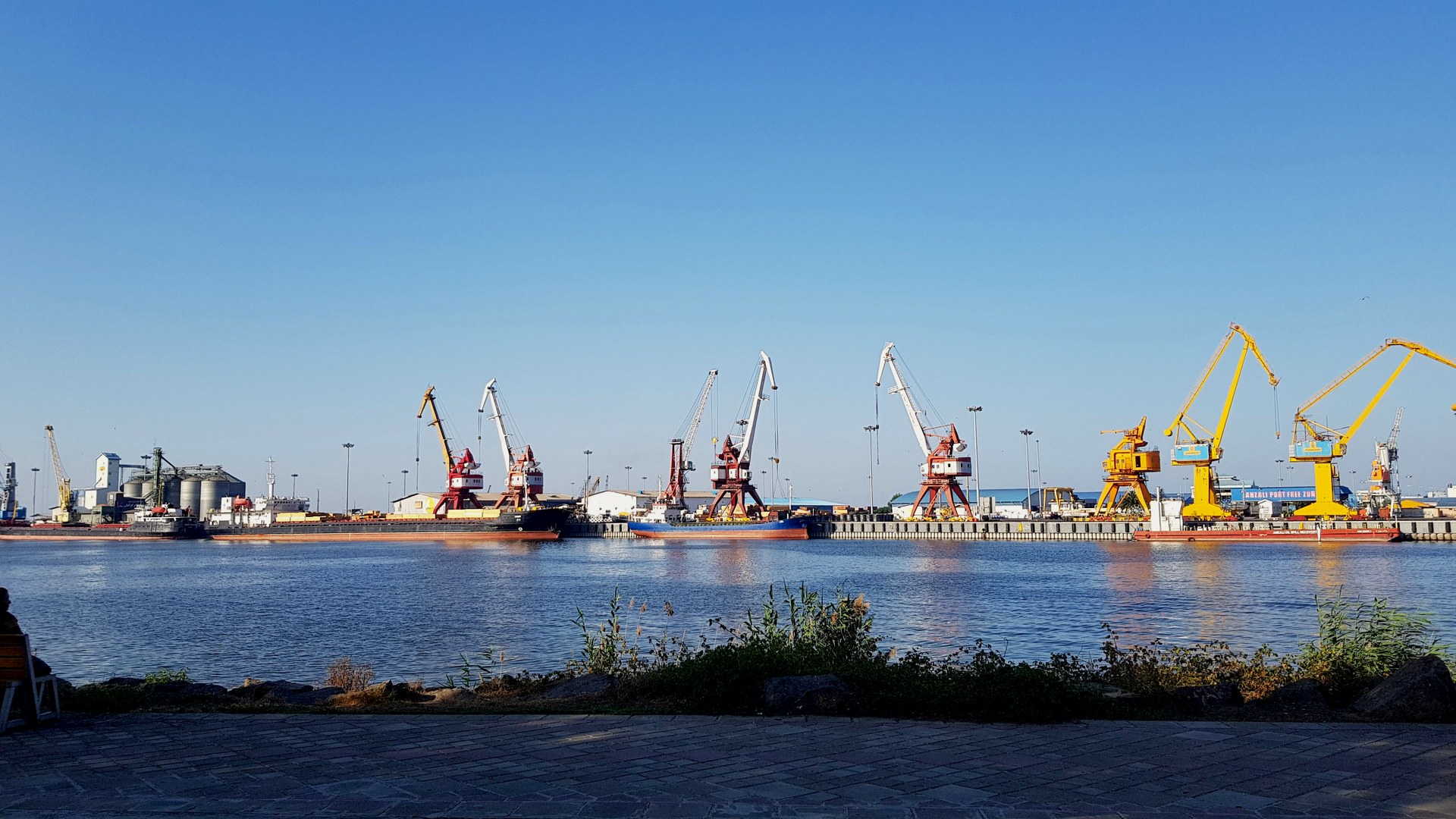
The Israeli Air Force struck Bandar Anzali on March 18, 2026 — the first IDF operation ever conducted against a target on the Caspian Sea. The strike, part of Operation Rising Lion, damaged five Iranian Navy vessels (four missile boats and one corvette), a command centre, and shipyard repair facilities, according to Militarnyi and Israel Hayom. A second strike series hit port infrastructure on April 1, 2026, targeting facilities that RFERL described as central to the Russia-Iran maritime trade route.
Russia’s response was immediate and revealing. The Foreign Ministry condemned both attacks, stating that Bandar Anzali is “an important trade and logistics centre, which is proactively used to support Russian-Iranian trade, including in foods” (RFERL, April 1, 2026). The language was carefully chosen: Moscow framed the strikes as attacks on Russian commercial interests, not as disruptions to military logistics. The framing was consistent with Russia’s broader posture of maintaining deniability on weapons shipments while defending the route’s legitimacy under the 2018 Convention.
The strikes achieved tactical damage but not strategic disruption. Analysts at RUSI and Chatham House assessed that the impact on Russia-Iran trade would be temporary. The corridor’s redundancy — three Russian Caspian ports, multiple ferry and barge operators, and that same projected commercial traffic volume — meant that rerouting cargo around damaged facilities at Anzali was a logistics problem, not a strategic one. The May 9 New York Times report, coming seven weeks after the second Israeli strike, confirms that the route is operating again.
The Caspian strikes exposed a deeper structural problem. Israel can hit Iranian port infrastructure, but it cannot interdict Russian-flagged vessels on the Caspian itself without striking Russian assets — an escalation threshold that even Operation Rising Lion’s broad target set has not crossed. The treaty architecture means that the cargo is legally untouchable while at sea and only vulnerable at the Iranian end of the chain, where it can be offloaded at alternative ports along Iran’s roughly 740-kilometre Caspian coastline.
What Does the Leaked GRU Document Reveal?
The ten-page GRU planning document, published by The Economist on May 8, 2026 — one day before the NYT Caspian resupply report — describes the proposed fiber-optic drone transfer and satellite-guided package detailed above. The document included “maps and charts of islands off the coast of Iran,” according to The Economist, and proposed a structured training programme. The Russian military blogger WarGonzo separately confirmed that Russia “may transfer fiber-optic FPV drones to Iran” on the same day (Pravda UK, May 8, 2026).
The fiber-optic specification is the detail that matters most for Gulf defence planning. Standard Geran-2 drones rely on satellite navigation and inertial guidance, both of which are vulnerable to electronic warfare. The counter-drone systems that Ukraine has been supplying to Saudi Arabia are designed primarily for this threat profile — GPS spoofing, radio-frequency jamming, and radar-guided intercept.
Fiber-optic drones eliminate the radio link entirely. The operator controls the drone through a spool of optical cable that unwinds during flight, transmitting video and control signals through a physical medium that cannot be jammed, spoofed, or detected by electronic warfare sensors.
The GRU document was drawn up early in the war, when the possibility of an American ground operation — potentially targeting Kharg Island, through which more than 90 percent of Iran’s crude exports flow — appeared real. The recruitment pipeline — operators drawn from the same Iranian student population at Russian universities — suggests a sustained training programme, not a one-time transfer. The Economist assessed the document as credible but stressed the absence of evidence that it had been delivered to Iranian officials. The Kyiv Post and DroneXL reported the story the same day.
Whether the fiber-optic proposal has been executed, partially executed, or remains a planning document is unknown. What is confirmed — by US officials speaking to the New York Times — is that drone components are moving through the Caspian corridor now. The GRU document suggests that Russia’s ambitions for the route extend well beyond replacing expended Geran-2 inventory.
The Gulf Exposure
The Caspian resupply corridor has direct implications for Saudi air defence. Iran’s pre-war drone inventory estimates range widely — from several thousand to approximately 80,000 combat-ready Shahed-type airframes, according to Israeli intelligence assessments from January 2026 cited by Defence Security Asia. War on the Rocks cautioned in March 2026 that the variance in pre-war estimates “alone makes estimating precise degradation nearly impossible,” advising against reading launch counts as a proxy for depletion. The Soufan Center assessed on April 6 that “Iran’s missile and drone arsenal remains potent despite five weeks of intensive strikes,” noting that US officials believed Iran was “deliberately keeping its launch rate low to preserve its inventory.”
If Russia restores even a fraction of the 60 percent that US officials assess as lost, the reconstituted stockpile will be qualitatively different from what was expended. Components produced at Yelabuga in 2026 incorporate design iterations refined through two years of combat use in Ukraine — improved guidance, cheaper construction, and potentially the fiber-optic control systems described in the GRU document. The drones Iran lost were built to 2022-2023 specifications. The replacements may arrive at 2026 standards.
The route’s treaty protection creates a permanent structural constraint, not a temporary gap. The 2018 Aktau Convention has no sunset clause. The five littoral states have no incentive to amend it — Azerbaijan and Kazakhstan benefit from the exclusion of foreign naval forces as much as Russia and Iran do.
The IRGC’s maritime framework already operates on the assumption that supply lines from the north are secure. The sanctions architecture around Iran’s Strait Authority does not extend to Caspian commerce.
For Riyadh, the implication is that interdiction of Iran’s drone resupply cannot rely on naval power alone. The Caspian corridor operates outside the reach of the US Fifth Fleet, beyond the range of carrier-based strike aircraft without sovereign overflight permission, and within a legal framework that Washington helped its Central Asian partners build. Russia’s TASS quoted a senior Russian MP stating that Iran “may have tens of thousands of drones and missiles” — framing the arsenal as inexhaustible and Russian support as inconsequential. The framing is self-serving, but the underlying point about the corridor’s resilience is not.
The implications extend to the broader pattern of Iranian maritime aggression now unfolding in the Gulf and beyond. Every Geran-2 component that arrives at Bandar Anzali restocks an arsenal that has been used not only against fixed targets in Saudi Arabia and the UAE but against naval vessels operating in and around the Strait of Hormuz. The corridor does not just replenish Iran’s drone inventory. It replenishes Iran’s capacity to sustain the attritional campaign that has defined the war’s maritime dimension.
Background
The Caspian Sea’s use as a Russia-Iran military logistics corridor predates the current war. Iran began shipping Shahed-136 drones to Russia via the Caspian in 2022; by December of that year, Iran had supplied over 1,700 drones to Russia for use in Ukraine, according to the USIP Iran Primer timeline. The Biden administration officially acknowledged the Caspian drone-to-Russia route in June 2023. The Caspian Policy Centre documented the route’s AIS-dark operational profile as early as 2022-2023: vessels turning off automatic identification systems, emitting decoy signals, or transferring cargo in international waters to avoid tracking.
The direction of travel has now reversed. Where Iran once supplied Russia, Russia is now resupplying Iran — using the same waterway, the same ports, and the same legal protections. The Yelabuga factory that was built to produce Iranian-designed drones for Russian use in Ukraine has become the production base for components flowing back to Iran. Chatham House, in a March 2026 analysis, described Russia’s position in the Iran war as that of “spectator, beneficiary, player” — using the conflict to advance oil pricing interests, drone technology reciprocity, and INSTC infrastructure advantage.
RUSI assessed that the INSTC corridor is “a key vulnerability” in Russia’s most important weapons trade artery. The Caspian route is central to that assessment. For Russia, protecting the corridor is not only about supporting Iran’s war effort. It is about preserving the commercial and military logistics infrastructure that Moscow has spent a decade building through the Caspian basin.
FAQ
How long does a drone shipment take from Yelabuga to Bandar Anzali?
The river passage from the Yelabuga factory down the Kama and Volga to Astrakhan covers approximately 1,700 kilometres and takes 7-10 days by barge depending on seasonal water levels and lock transit times. The Caspian Sea crossing from Astrakhan to Bandar Anzali adds roughly 700 kilometres and 2-3 days by ferry. Total transit time is approximately 10-14 days under normal conditions — faster than any alternative overland route through the Caucasus, which would require transit through Georgia or Azerbaijan and cross international borders subject to customs inspection.
Could Azerbaijan or Kazakhstan block the corridor if pressured by the US?
Both states are signatories to the 2018 Aktau Convention, which guarantees freedom of navigation for littoral-state vessels. Blocking Russian-flagged commercial shipping would violate the Convention and expose either country to retaliatory restrictions on their own Caspian commerce — Azerbaijan ships roughly 60 percent of its non-pipeline exports through Caspian ports. Kazakhstan’s Tengiz and Kashagan oil fields depend on Caspian infrastructure for maintenance supply chains. Neither state has shown willingness to sacrifice these interests for US interdiction objectives, and both have maintained neutrality on the Iran conflict in public statements.
Has the US attempted to sanction Caspian shipping specifically?
As of May 2026, the US Treasury’s Office of Foreign Assets Control (OFAC) has not issued Caspian-specific shipping designations targeting the Russia-Iran drone corridor. Existing sanctions on Iranian ports and Russian defence entities apply in principle, but enforcement on the Caspian requires cooperation from littoral states that have no treaty obligation and limited political incentive to comply. The broader INSTC framework, which includes Indian commercial participation, further complicates targeted sanctions — designating Caspian cargo routes risks secondary effects on Indian trade flows that Washington has worked to protect under the US-India strategic partnership.
The same drone corridor that Russia is using to restock Iran’s depleted UAV arsenal also frames Moscow’s diplomatic positioning: Lavrov’s May 8 call to Saudi Foreign Minister Faisal — proposing to restore Hormuz navigation — came while Astrakhan cargo vessels were loading Shahed-derivative components for Bandar Anzali. Moscow is selling the war to one side and the peace to the other, and timing both for maximum leverage before Trump arrives in Riyadh on May 13.
What is the difference between Geran-2 and Shahed-136?
The Geran-2 is Russia’s domestically produced variant of Iran’s Shahed-136 one-way attack drone. Both share the same delta-wing airframe and Mado MD-550 piston engine design, but the Yelabuga-produced Geran-2 incorporates Russian-sourced electronics, modified guidance systems, and a production process optimised for the Alabuga factory’s tooling. Components shipped from Yelabuga to Iran may represent a hybrid — Russian-manufactured parts designed to be assembled into airframes at Iranian facilities using either Shahed or Geran specifications, depending on the intended operational profile.
Does Iran have other resupply routes besides the Caspian?
Iran’s remaining options are limited. Overland routes through Turkey require transit across NATO territory; routes through Iraq and Syria are exposed to US and Israeli air interdiction; the southern maritime approaches are subject to the US naval blockade since April 13, 2026. Air cargo from Russia is possible but constrained by payload limits and detection risk. The Caspian corridor is the only high-volume route that combines physical capacity, legal protection under the 2018 Convention, and operational security through mixed commercial cargo.