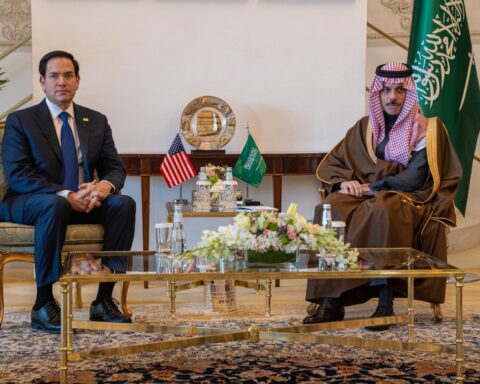
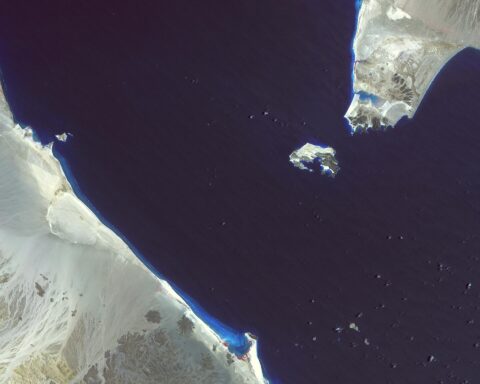
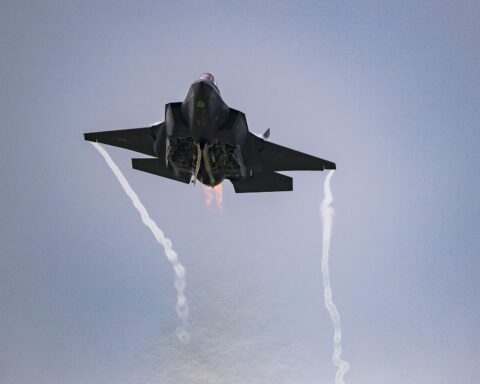
ABU DHABI — Iran fired two ballistic missiles and three drones at the United Arab Emirates on May 8, the same day US Secretary of State Marco Rubio said he expected Tehran’s answer to a proposed memorandum of understanding that would end the war. The UAE Ministry of Defence confirmed its air defences engaged all five projectiles; three people sustained moderate injuries.
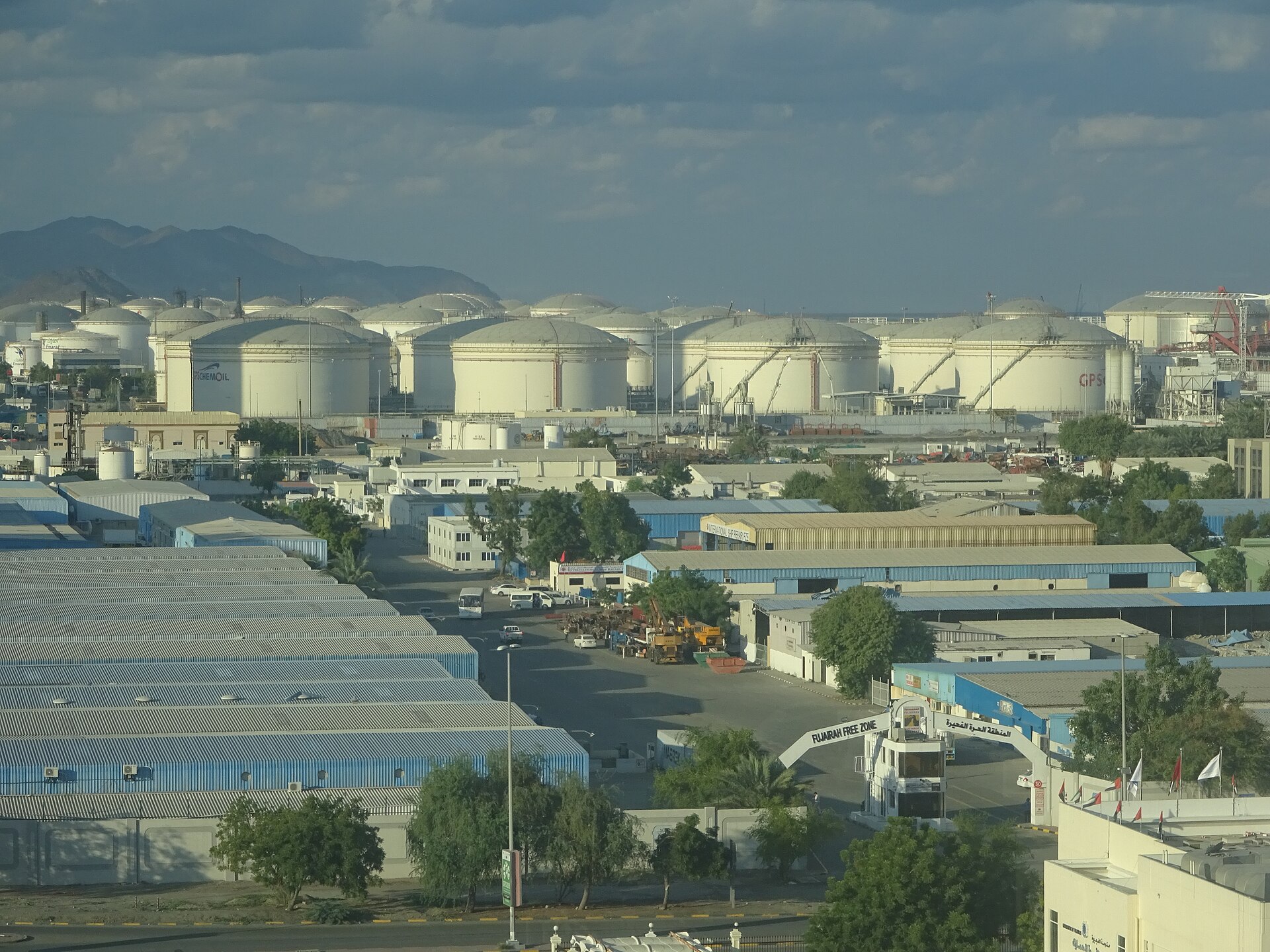
The attack was the fifth day of Iranian strikes against the UAE since the nominal April 8 ceasefire — a streak that began on May 4, when an IRGC drone hit the Fujairah Oil Industry Zone and set off a large fire. As of late May 8, Rubio had not received Iran’s response. “We have not received that yet,” he told reporters at an ABC News briefing.
Table of Contents
The May 8 Salvo
The UAE’s national emergency authority issued a public missile alert on May 8, instructing residents of Dubai and Sharjah to seek immediate shelter. Blasts were heard across both cities. Officials attributed the sounds to successful interceptions in the air, not ground impacts, according to Emirates 24|7.
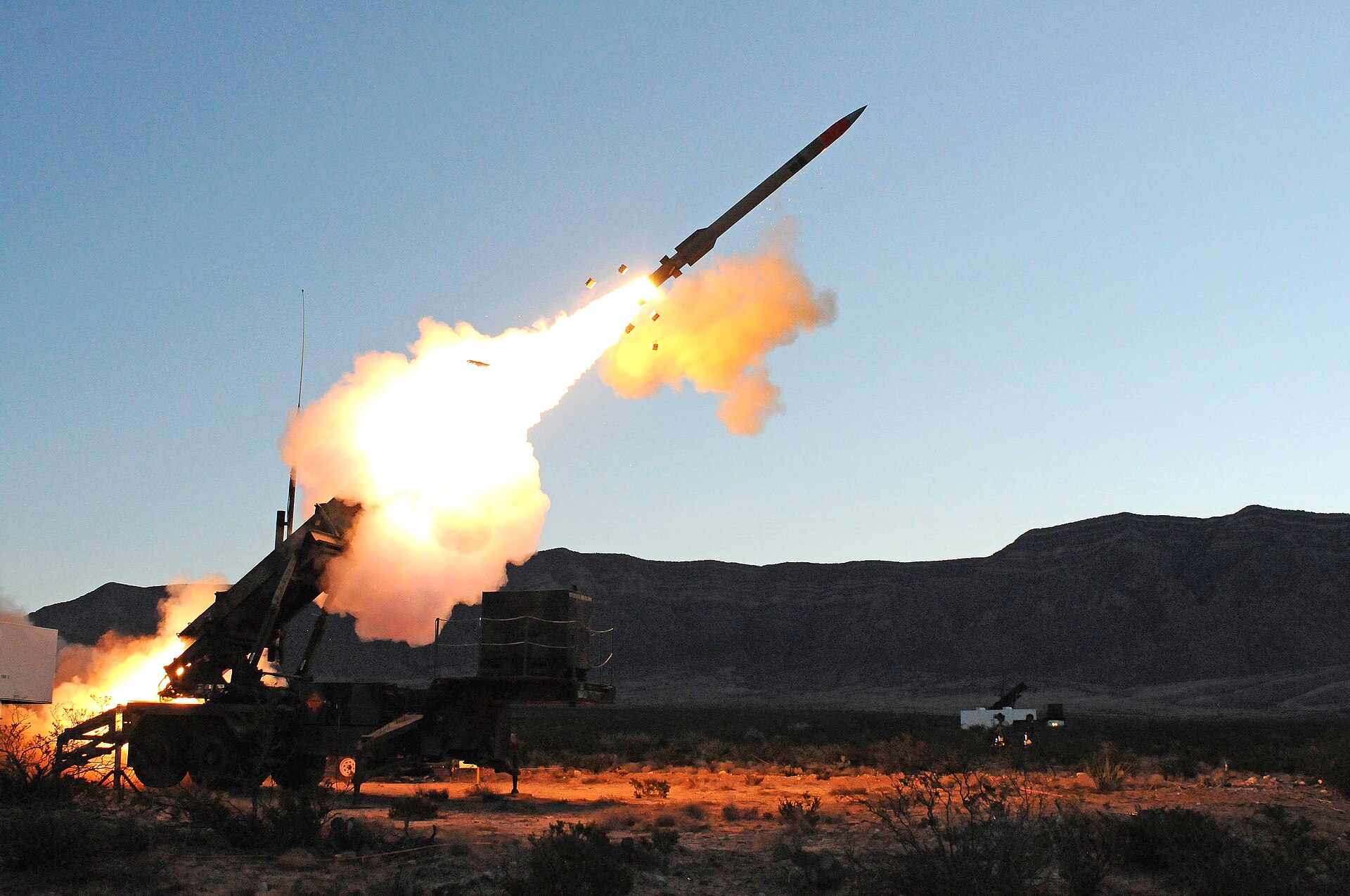
The UAE Ministry of Defence identified the inbound weapons as two ballistic missiles and three unmanned aerial vehicles launched from Iranian territory. All five were engaged by the country’s layered air defence network, which now includes a US THAAD battery, Patriot PAC-3 systems, and — since late April — an Israeli Iron Dome battery deployed for the first time in combat outside Israeli-controlled territory.
Three people sustained what the ministry described as moderate injuries. No fatalities were reported. The relatively small size of the May 8 salvo stood in sharp contrast to the war’s largest single-day UAE attack: on April 3, air defences intercepted 18 ballistic missiles, 4 cruise missiles, and 47 drones in a single engagement, according to Gulf News.
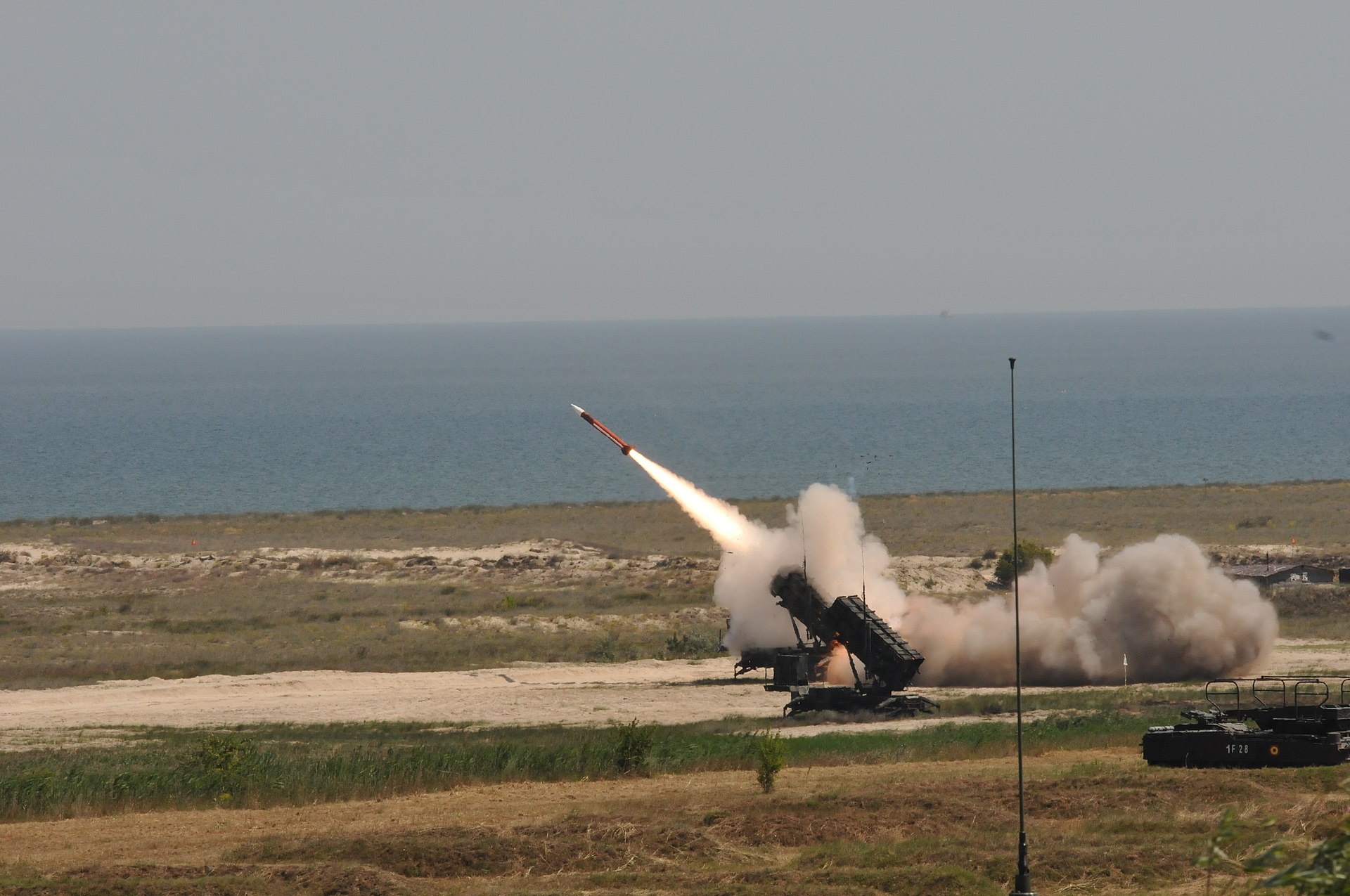
Cumulative figures released alongside the May 8 confirmation brought the total count of Iranian projectiles detected since February 28 to 551 ballistic missiles, 29 cruise missiles, and 2,263 drones, according to the UAE Ministry of Defence via TAG 91.1. The PIR Center, a Moscow-based defence think tank, found that through early March alone the UAE had intercepted 172 of 186 ballistic missiles and 755 of 812 drones — a combined rate of approximately 93 percent.
The Middle East briefing 3,000+ readers start their day with.
One email. Every weekday morning. Free.
Did the IRGC Time the Strike to the Deadline?
Hours before the missiles crossed into UAE airspace, Rubio told ABC News he expected an Iranian response on a potential deal “by end of Friday.” The framework in question — a 14-point, one-page MOU reported by Axios on May 6, citing four sources — would declare an end to the war, impose an enrichment moratorium of 12 to 15 years, require Iran to ship its stockpile of 440.9 kilograms of high-enriched uranium to the United States, restore enhanced IAEA inspections that Tehran terminated on February 28, and lift both the US naval blockade and Iran’s restrictions on Strait of Hormuz transit.
Iran’s counter-demand, as described by diplomatic sources to Axios, was that Hormuz reopening be sequenced before any nuclear commitments — a precondition Washington rejected. Foreign Minister Abbas Araghchi said on May 7 that Iran would “only accept a fair and comprehensive agreement,” according to WION News. A senior Iranian lawmaker dismissed the Axios report as “more of an American wish list than a reality,” Al Jazeera reported on May 6.
No confirmed IRGC or Iranian government statement has linked or distanced the May 8 strike from the MOU deadline. The silence is consistent with the pattern established four days earlier: on May 5, the Khatam al-Anbiya Central Headquarters — the IRGC’s top military command — formally denied conducting any operations against the UAE even as the UAE Ministry of Defence was confirming simultaneous interceptions.
“The Armed Forces of the Islamic Republic of Iran have carried out no missile or drone operations against the UAE in recent days.”
IRGC Khatam al-Anbiya Central Headquarters spokesperson, May 5, 2026 — IRNA via IranWire
Tasnim News Agency, which is aligned with the IRGC, offered a separate account for the same period. It reported that explosions near Bandar Abbas on May 5 were “related to a confrontation with two small aircraft” and attributed the incident to “hostile action from the UAE,” according to Tasnim.
Five Days of Fire Since the Ceasefire
The May 8 attack followed four consecutive days of Iranian strikes against the UAE, the first since the April 8 ceasefire brokered through Pakistan. On May 4, an Iranian drone struck the Fujairah Oil Industry Zone — the UAE’s primary eastern-coast oil export and storage hub — sparking what Al Jazeera described as a “large fire.” Three Indian nationals sustained moderate injuries, according to the UAE Ministry of Defence and Voice of Emirates.
Fujairah’s targeting completed a geographic pattern that had been building since early April. The IRGC had already struck Saudi Arabia’s Yanbu terminal and the East-West Pipeline, hitting the two major overland routes for Gulf crude that bypass the Strait of Hormuz. Fujairah, which handles crude and refined product shipments routed via an overland pipeline from Abu Dhabi’s western fields, had not been struck until May 4.
On May 5 — the second consecutive day of strikes — Iran hit the UAE again while the IRGC’s central command was issuing its categorical denial. The UAE Foreign Ministry described the attacks as a “flagrant violation of national sovereignty and international law” and stated that the country “affirms its right to respond,” according to Voice of Emirates and The National. Further Iranian activity was reported on May 6 and May 7.
Comparing the cumulative figures — 537 ballistic missiles, 26 cruise missiles, and 2,256 drones through April 9, rising to 551, 29, and 2,263 respectively by May 8 — yields a total of 24 additional projectiles across the five post-ceasefire strike days. The salvos have been smaller than the pre-ceasefire barrages, but persistent. On May 5, Rubio declared Operation Epic Fury — the US military campaign against Iran launched on February 28 — “over,” according to Al Jazeera and CNN. Strikes against the UAE, which is not a belligerent in that operation, have continued.
Who Authorized the Strikes?
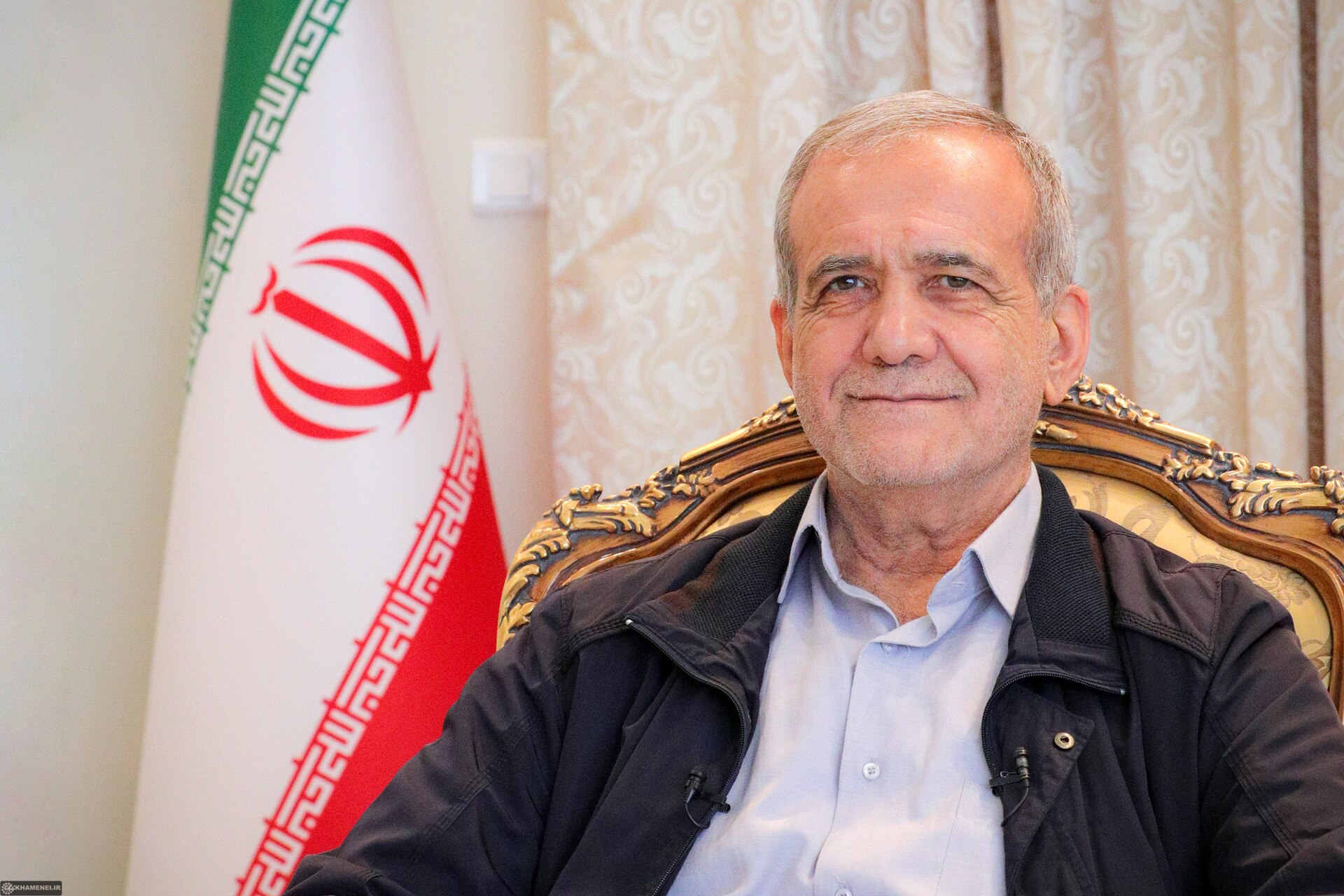
Iran’s civilian government did not authorize, and was not consulted about, any of the five days of UAE strikes, according to Iran International and multiple Iranian media outlets. President Masoud Pezeshkian learned of the May 4 attack after it had already occurred.
“Completely irresponsible… madness.”
Iranian President Masoud Pezeshkian on IRGC strikes against the UAE, May 4–5, 2026 — Iran International / Zambian Observer
Sources close to Pezeshkian’s office described him as “incredibly angry,” warning of “irreversible consequences” and clashing directly with IRGC Commander Ahmad Vahidi, according to Iran International. It was not the first such confrontation. In April, Pezeshkian publicly accused Vahidi and SNSC Secretary Ali Akbar Ahmadian’s deputy, Hossein Zolghadr — who is under international sanctions — of derailing ceasefire negotiations at Islamabad by inserting unauthorized personnel into Iran’s delegation.
The constitutional architecture makes Pezeshkian’s objections procedurally irrelevant. Article 110 of the Iranian constitution places the IRGC under the direct authority of the supreme leader, not the president. The president commands no IRGC unit of any kind — a fact Pezeshkian himself has referenced publicly when describing his own powerlessness. The IRGC’s reorganization into autonomous regional headquarters, each empowered to make independent operational decisions, means that individual commanders can authorize strikes without routing them through any chain that includes the civilian government.
The supreme leader’s office — the one authority that could theoretically countermand IRGC operations — has been functionally vacant. Ayatollah Ali Khamenei has not appeared in person since approximately March 8 or 9, an absence now exceeding 60 days. His son Mojtaba has participated in some decisions via audio-only communication, according to Iranian media reports. With no supreme leader to ratify or overrule, Vahidi has been filling the authorization vacuum — issuing orders that carry constitutional weight without the ratification process Article 110 prescribes.
The Interceptor Arithmetic
The UAE’s interception rate — approximately 93 percent through early March, according to the PIR Center — has held through ten weeks of sustained bombardment. The interceptor supply chain behind that rate is a different matter.
Defence Security Asia reported that UAE Patriot PAC-3 interceptor stocks are projected to reach depletion within seven days of the report’s publication. The United States, which manufactures the PAC-3 missile, has been “stonewalling” Gulf state replenishment requests, according to Defence Security Asia and Middle East Eye — a posture that applies to Saudi Arabia and the UAE equally, despite both countries hosting US military installations involved in ongoing operations.
The wear on the UAE’s fixed infrastructure is visible from orbit. CNN satellite imagery confirmed that THAAD radar installations at Al Ruwais and Al Sader in Abu Dhabi sustained damage from Iranian missiles and drones during the war’s early weeks. Raytheon produces the AN/TPY-2 radar — THAAD’s long-range detection component — at a rate of roughly two per year, making battlefield replacement dependent on production slots booked years in advance.
The Israeli Iron Dome battery, now in active combat in the UAE, was designed to intercept short-range rockets and mortars at ranges of 4 to 70 kilometres — a different threat envelope from the medium-range ballistic missiles that make up the bulk of Iran’s UAE-directed arsenal. Its function is to handle the low-altitude drone and cruise missile threat that PAC-3 was never designed to address at scale.
Background
The Iran-Gulf war began on February 28, 2026, when Iran launched a coordinated missile and drone campaign targeting military and energy infrastructure across the Gulf Cooperation Council states. The UAE has absorbed more Iranian projectiles than any other Gulf country, with cumulative detections exceeding 2,800 as of May 8, according to the PIR Center and UAE Ministry of Defence figures.
The April 8 ceasefire, brokered through Pakistan’s military intelligence chief Lieutenant General Muhammad Munir, was the first formal halt to hostilities. It held for 26 days before Iranian strikes on the UAE resumed on May 4. Saudi Arabia and Qatar formally condemned the post-ceasefire attacks and backed the UAE’s right to “preserve its sovereignty, security and territorial integrity,” according to Voice of Emirates.
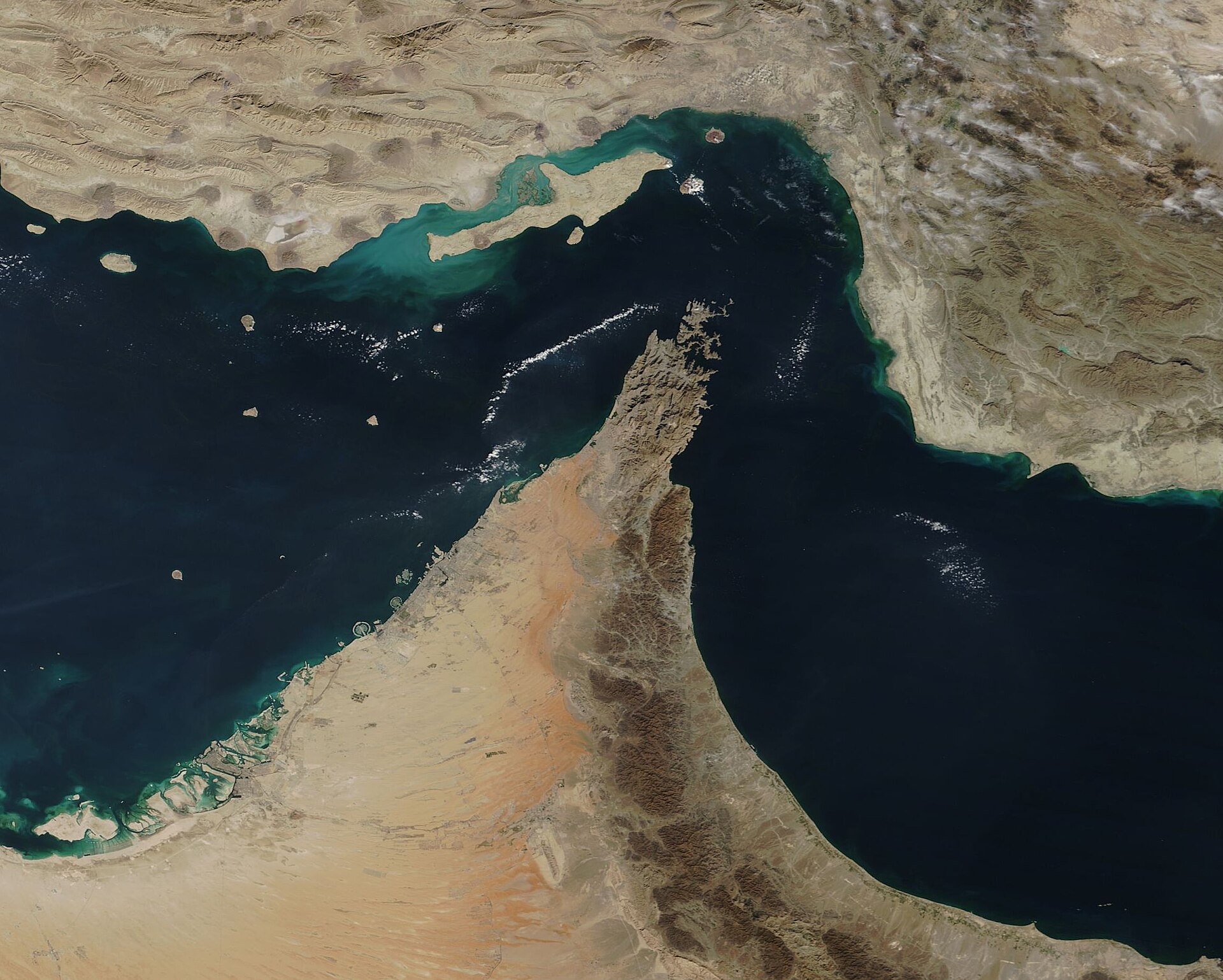
The dual blockade of the Strait of Hormuz — with the US controlling the Arabian Sea entry since April 13 and the IRGC controlling the Gulf of Oman exit since early March — remains in place. The 22,500 commercial mariners trapped in the Gulf and the broader question of Hormuz transit are addressed in the proposed MOU but unresolved in practice. The ceasefire’s formal expiration date of April 22 has passed without renewal or replacement.
Frequently Asked Questions
What are the 14 points in the proposed US-Iran MOU?
The framework, reported by Axios on May 6 based on four sources, is a single-page document with five core provisions: a formal declaration ending the war, an enrichment moratorium of 12 to 15 years, Iran transferring its enriched uranium stockpile to the United States, restoration of enhanced IAEA inspections, and simultaneous lifting of the US naval blockade and IRGC Hormuz restrictions. Iran’s principal objection is sequencing: Tehran demands Hormuz reopening before any nuclear commitments take effect. The 14-point designation is the full document length; the five provisions above are its core substance. At 60 percent enrichment, Iran’s stockpile is approximately 25 days from weapons-grade using IR-6 centrifuge cascades, according to IAEA technical assessments — a timeline that makes the enrichment moratorium the MOU’s most time-sensitive element for Washington.
Has the UAE retaliated against Iran?
The UAE has not confirmed any offensive military action against Iranian territory. Its posture since February 28 has been defensive — interception, GCC solidarity statements, and interceptor resupply requests to Washington. The UAE Foreign Ministry has stated the country “affirms its right to respond,” but no strike has been acknowledged. The IRGC attributed explosions near Bandar Abbas on May 5 to “hostile action from the UAE,” but Tasnim’s account has not been independently verified and no UAE source has claimed any such operation.
What is the Khatam al-Anbiya Central Headquarters?
Khatam al-Anbiya is the IRGC’s top military command structure, responsible for coordinating operations across all IRGC branches — ground forces, aerospace, navy, and the Quds Force. Its commander, Ahmad Vahidi, holds an INTERPOL Red Notice in connection with the 1994 AMIA bombing in Buenos Aires. The headquarters issued the formal May 5 denial of UAE strikes. Georgetown University’s Mehran Kamrava has described Khatam al-Anbiya as the “actual decision-maker” in Iranian military operations, distinct from both the civilian government and the regular armed forces.
How long can the UAE’s air defences sustain current interception rates?
The answer depends almost entirely on US resupply decisions. Each PAC-3 MSE interceptor costs approximately $4 million and is produced by Lockheed Martin at limited annual volumes — current production is insufficient to restore Gulf stocks in weeks or even months. Without resupply, Defence Security Asia’s seven-day depletion window creates a hard ceiling on sustained interception capability. Iron Dome can handle short-range drones and cruise missiles but cannot substitute for PAC-3 or THAAD against medium-range ballistic missiles. The damaged THAAD radars at Al Ruwais and Al Sader cannot be replaced on any near-term timeline given Raytheon’s production rate, meaning the UAE’s long-range detection architecture is degraded even if interceptor stocks are replenished.
Why does the IRGC deny strikes that the UAE has confirmed intercepting?
The IRGC’s May 5 denial — issued while the UAE Ministry of Defence was confirming live interceptions — serves a domestic and diplomatic function. By maintaining plausible deniability, the IRGC preserves its negotiating position (Iran cannot be accused of violating its own ceasefire if it denies firing) while simultaneously demonstrating to Gulf states that its operational tempo is unconstrained by either the civilian government or the diplomatic calendar. The pattern mirrors Iran’s approach during the 2019 Aramco attacks, which Tehran denied despite US and Saudi attribution to Iranian territory. The full record of what both navies did on May 8 itself — the day of Iran’s MOU deadline — is documented in three acts of maritime coercion at Hormuz that revealed each side’s real position before any written answer arrived. The physical toll of that operational tempo became visible three days later when a 71 sq km oil slick appeared off Iran’s Kharg terminal with attribution still contested between blockade pressure and strike damage.