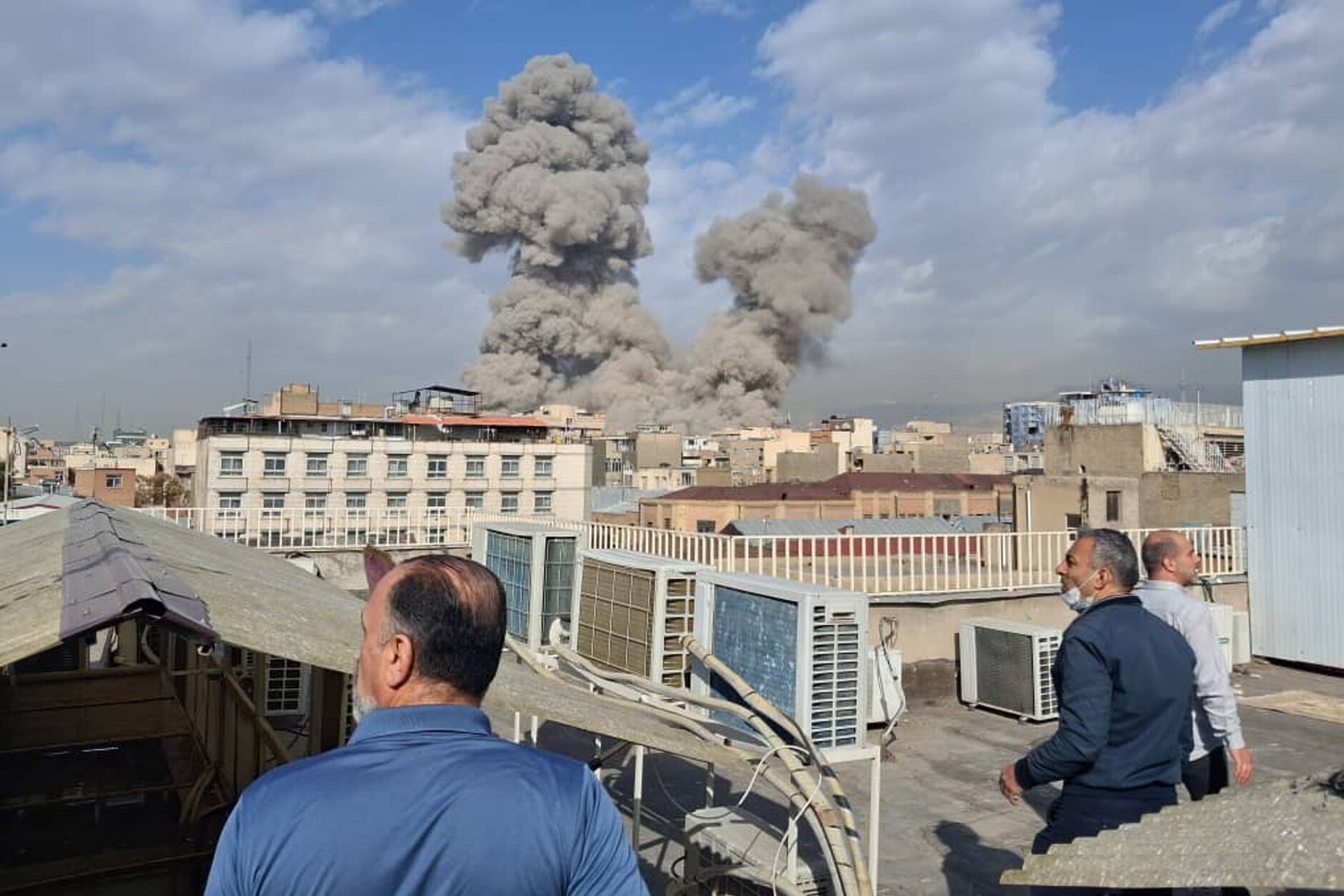

In the early hours of February 28, 2026, the Israeli Air Force executed the most consequential targeted killing in modern warfare — a precision strike on Supreme Leader Ayatollah Ali Khamenei’s fortified compound in northern Tehran that killed Iran’s paramount leader, dozens of senior officials, and members of his own family. The operation, conducted with American intelligence support, decapitated the Islamic Republic’s command structure in under a minute and triggered the widest Middle Eastern conflict since 1973.
The Strike
At approximately 06:45 UTC on Saturday morning, Israeli F-35I Adir stealth fighters — part of the largest combat sortie in Israeli Air Force history, involving some 200 aircraft — dropped an estimated 30 precision-guided munitions on Khamenei’s residential compound, known as the House of Leadership. The compound, nestled in northern Tehran, contained a deep underground bunker whose elevator reportedly took more than five minutes to reach — a detail that underscored just how rarely Khamenei was vulnerable above ground.
Intelligence provided by the CIA had tracked Khamenei’s routines for months. The critical breakthrough came when American signals intelligence confirmed that the Supreme Leader would be meeting with senior defence and security officials at the compound that Saturday morning. Washington shared the intelligence with Israel, and the strike window was moved to coincide with the confirmed gathering. The United States had “high confidence” in the assessment, according to persons familiar with the operation.
Satellite imagery released hours after the attack showed catastrophic damage. Large sections of the compound had been reduced to rubble. The fortified bunker complex, which the IDF later described as spanning “multiple streets in the heart of Tehran” with “numerous entrances and meeting rooms for senior members of the Iranian terrorist regime,” was comprehensively destroyed.
The Casualties
Khamenei, 86, was killed alongside nearly 50 other officials in what Israeli sources described as “under 50 seconds.” The strike eliminated much of Iran’s security establishment in a single blow. Among the confirmed dead were Ali Shamkhani, the powerful Secretary of the Supreme National Security Council and a longtime Khamenei adviser; Mohammad Bagheri, Chief of Staff of the Iranian Armed Forces; Mohammad Pakpour, commander of the Islamic Revolutionary Guard Corps’ ground forces; and Defence Minister Aziz Nasirzadeh.
The toll extended to Khamenei’s own family. Iran’s Fars News Agency confirmed that the Supreme Leader’s daughter, son-in-law, three grandchildren, and his daughter-in-law Zahra Haddad-Adel — wife of Mojtaba Khamenei — were killed in the bombardment. Two days later, on March 2, it was reported that Khamenei’s wife, Mansoureh Khojasteh Bagherzadeh, had succumbed to injuries sustained in the strike. Mojtaba Khamenei himself was injured but survived.
The Middle East briefing 3,000+ readers start their day with.
One email. Every weekday morning. Free.
Confirmation and Aftermath
In the hours immediately following the strike, confusion reigned. Israeli Prime Minister Benjamin Netanyahu said there were “more and more signs indicating Khamenei is gone,” while Iranian officials initially insisted their leadership was safe. The ambiguity lasted until March 1, when Iranian state media confirmed the Supreme Leader’s death. The government declared 40 days of national mourning.
President Donald Trump, briefed on the operation’s success, hailed the killing of what he called an “evil” leader and declared that strikes on Iran would persist “until peace is secured.” The statement signalled that the assassination was not a standalone act but the opening salvo of a broader military campaign.
Iran’s response was immediate and devastating in scope, if not in precision. Within hours of confirming Khamenei’s death, the IRGC launched waves of ballistic missiles at Israel, Saudi Arabia, the UAE, Qatar, Kuwait, and Bahrain — striking at both the perpetrators and their Gulf allies. The missile barrages, while partially intercepted by Saudi, Emirati, and Israeli air defences, caused significant damage and casualties. The Kingdom of Saudi Arabia declared a state of emergency. The Gulf states found themselves at war.
The Succession Crisis
With no designated successor — the position of Vice Supreme Leader had been abolished in 1989 — Iran’s Assembly of Experts faced an unprecedented leadership vacuum during wartime. The 88-member clerical body convened in emergency session as the country absorbed simultaneous military strikes on its air defences, missile launchers, and nuclear infrastructure. On March 8, after ten days of reported internal deliberation, the Assembly appointed Mojtaba Khamenei, the slain leader’s son, as Iran’s third Supreme Leader — a decision that many observers interpreted as a dynastic consolidation rather than a merit-based selection.
For the broader Middle East, February 28 represented a point of no return. The decapitation strike did not end the Islamic Republic — it catalysed a regional war that would consume at least thirteen days and counting, draw in multiple nations, spike oil prices above $110 per barrel, and produce casualty figures not seen in the region for decades. Whether the assassination achieved its strategic objectives — or merely replaced one form of instability with another — remains the defining question of the 2026 Iran conflict.