
TEHRAN — Iran does not have one military. It has at least thirty-two. That is why no ceasefire is coming. The Islamic Republic’s formal activation of its Mosaic Defense doctrine has split the Islamic Revolutionary Guard Corps into 31 autonomous provincial commands, each with independent authority to launch missiles, drones, and guerrilla operations without orders from Tehran. At the same time, the regular army is disintegrating under ammunition shortages and mass desertions, and the IRGC refuses to share its medical facilities with wounded Artesh soldiers. President Masoud Pezeshkian apologized to Gulf states on March 7 and ordered a halt to attacks on neighbours. Hours later, parliament speaker Mohammad Bagher Ghalibaf publicly reversed the commitment. Attacks continued. Iran’s foreign minister admitted on Al Jazeera that military units are now “independent and somewhat isolated,” acting on “general instructions given to them in advance.” The result is a country at war with itself before it can negotiate peace with anyone else — and a structural impossibility at the heart of every diplomatic effort, from Pakistan’s shuttle diplomacy to China’s five-point plan. The Pentagon’s claim that Mojtaba Khamenei is wounded and disfigured has intensified speculation about who truly commands Iran’s operations.
This analysis maps the four fractures running through Iran’s war machine — the Mosaic Defense fragmentation, the army-IRGC operational rift, the civilian-military command disconnect, and the hollow authority of Mojtaba Khamenei — and explains why each one makes a negotiated end to the conflict structurally unachievable. It draws on 14 days of verified reporting from Al Jazeera, The National, Critical Threats, Iran International, Foreign Policy, the Soufan Center, and RFE/RL to present a unified picture that no other publication has assembled.
Table of Contents
- What Is Iran’s Mosaic Defense and Why Does It Matter Now?
- How Do 31 Autonomous Commands Actually Operate?
- The Army-IRGC Rift That Is Destroying Iran’s War Machine
- Why Did Pezeshkian’s Apology Collapse Within Hours?
- Who Speaks for Iran? The Command Authority Crisis
- Mojtaba Khamenei’s Hollow Throne
- Has a Mosaic Defense Ever Been Defeated?
- Why the Ceasefire Architecture Fails
- Who Does Pakistan’s PM Actually Negotiate With?
- What Does Iran’s Fragmentation Mean for Saudi Arabia?
- The Command Fragmentation Matrix
- The Contrarian Case — Fragmentation as Deterrence
- What Comes Next if No Ceasefire Is Possible?
- Frequently Asked Questions
What Is Iran’s Mosaic Defense and Why Does It Matter Now?
Iran’s Mosaic Defense is a decentralized military doctrine designed to ensure the country can continue fighting even after losing its senior leadership, central communications, and major command centres. It is the single most important reason why no ceasefire negotiation can produce a binding agreement, because the very architecture of the doctrine distributes war-making authority to commanders who are neither required nor equipped to stop fighting on the president’s orders.
The doctrine was formalized in 2005 by General Mohammad Ali Jafari, then director of the IRGC’s Center for Strategy, who was subsequently appointed commander of the entire Revolutionary Guard Corps. Jafari’s restructuring was a direct response to the American presence in Iraq and Afghanistan, when an invasion of Iran was discussed as a realistic possibility in Washington. The IRGC was transformed from a conventional army with a traditional chain of command into 31 independent operational units — one for each of Iran’s provinces — plus a Tehran command, according to the Soufan Center’s March 9 analysis.
For two decades, the Mosaic Defense existed as contingency planning. In late February 2026, it became operational reality. When U.S. and Israeli strikes killed Supreme Leader Ali Khamenei and much of the IRGC’s senior command structure in the opening hours of Operation Epic Fury, the decentralization protocol activated automatically. As the Soufan Center noted, the doctrine “led directly to the restructuring of the IRGC command and control architecture into a system of 31 separate commands, which could launch an insurgency in the case of an invasion and which would make any attempt at degrading Iran’s defense exceedingly difficult.”
The Middle East briefing 3,000+ readers start their day with.
One email. Every weekday morning. Free.
The activation was not a breakdown. It was the plan working exactly as designed. And that is the problem.
How Do 31 Autonomous Commands Actually Operate?
Each of the 31 provincial IRGC commands functions as a self-contained military unit with its own weapons arsenal, logistics chains, intelligence services, and Basij militia forces, according to a detailed Modern Diplomacy analysis published on March 11. The commanders are explicitly trained to make independent military decisions, plan attacks, and wage guerrilla warfare without consulting Tehran. When headquarters is disrupted — as it has been since February 28 — the “operational autonomy” protocol activates automatically.
The Sunday Guardian reported on March 2 that provincial commanders have been granted “full authority to launch missiles, drones, and guerrilla operations” under the wartime activation. This is not informal drift or a rogue commander exceeding orders. It is official doctrine codified over 20 years of institutional preparation.
| Feature | Pre-War Status | Post-February 28 Status |
|---|---|---|
| Command Structure | Centralized under Supreme Leader + IRGC HQ | 31 autonomous provincial commands |
| Launch Authority | Required central authorization | Provincial commanders have full autonomy |
| Intelligence | IRGC Intelligence Organization (centralized) | Provincial intelligence cells operating independently |
| Logistics | National supply chains | Provincial arsenals and local supply networks |
| Basij Militia | Coordinated through national command | Under provincial IRGC commanders |
| Ceasefire Compliance | Top-down enforcement possible | Requires 31 separate compliance decisions |
The implications for any ceasefire are immediate. A traditional peace agreement assumes a counterparty with the authority to order a stop. Iran’s Mosaic Defense was built on the explicit assumption that such a counterparty would not exist. As RFE/RL reported on March 10, “with top brass dead, Iran deploys decentralized ‘mosaic’ strategy” — a strategy in which each provincial commander is trained to view the absence of central orders as permission to continue fighting, not as a signal to stop.
IRGC spokesman Ali Mohammad Naeini underscored this autonomy on March 8, claiming the armed forces had already struck “more than 200” U.S. and Israeli targets and were “capable of continuing at least a six-month intense war at the current pace of operations,” according to Al Arabiya and WION. These were not the words of a force seeking an off-ramp.
The Army-IRGC Rift That Is Destroying Iran’s War Machine
While the IRGC operates as 31 autonomous fiefdoms, Iran’s regular army — the Artesh — is falling apart. Reporting from Iran International and the Ukrainian outlet Militarnyi, published on March 12, documents a military in acute institutional crisis. The rift between the two forces has moved beyond bureaucratic rivalry into active hostility on the battlefield.
IRGC personnel have refused to transport injured Artesh soldiers to hospitals despite having access to medical facilities, according to Iran International’s reporting from sources within Iran’s military structure. The refusals have deepened anger and resentment between personnel from the two forces, a fracture that sits atop decades of institutional tension between the regular army and the Revolutionary Guards.
Ammunition shortages have reached critical levels. In one example cited by Militarnyi, some frontline units were issued only 20 bullets for every two Artesh soldiers, leaving troops with almost no capacity to respond to attacks. Field units in several areas are operating without reliable access to drinking water or sufficient food supplies.
Group desertions have followed. Soldiers have abandoned bases and sought refuge in nearby towns, driven by harsh conditions and what they perceive as deliberate neglect by IRGC commanders who control the logistics chain.
| Dimension | Artesh (Regular Army) | IRGC (Revolutionary Guards) |
|---|---|---|
| Constitutional Role | Territorial defense | Regime protection + ideological mission |
| Manpower (pre-war est.) | 350,000 | 190,000 + Basij reserves |
| Equipment Quality | Aging conventional hardware | Missile systems, drones, naval assets |
| Supply Priority | Secondary | First claim on resources |
| Current Ammunition | Reported 10 rounds per soldier | Maintained autonomous provincial stockpiles |
| Medical Access | Denied IRGC facilities (per reporting) | Own medical infrastructure |
| Desertions | Group desertions reported | No equivalent reporting |
| Morale | Critical | Ideologically sustained |
A critical caveat is necessary. Iran International is an opposition-aligned outlet funded by Saudi investors, and its reporting on internal Iranian military affairs should be weighed accordingly. Militarnyi, the Ukrainian defense outlet that ran parallel reporting, has its own editorial perspective shaped by the Ukraine conflict. Neither source can be independently verified from inside Iran’s closed military system. What lends the reporting credibility is its alignment with the structural logic: the IRGC has always prioritized its own forces over the regular army, and wartime scarcity would amplify that hierarchy to breaking point.
For ceasefire prospects, the army-IRGC rift creates a second structural barrier. Even if Iran’s political leadership ordered a halt, and even if the IRGC’s provincial commanders complied, the regular army’s disintegration means there is no coherent conventional force to hold positions, enforce demarcation lines, or implement the kind of military-to-military agreements that underpin ceasefire monitoring. Iran cannot hold what it cannot command. The elimination of Ali Larijani, the SNSC secretary who served as Iran’s de facto wartime leader and most capable negotiator, has deepened this crisis by removing the one figure who combined institutional authority with diplomatic experience.
Why Did Pezeshkian’s Apology Collapse Within Hours?
On March 7, Iranian President Masoud Pezeshkian made a remarkable concession. In a state television address, he apologized to Gulf neighbours for Iranian attacks on their territory and announced that Iran’s interim leadership council had ordered forces to stop striking Gulf states unless Iran was attacked from their territory. “I personally apologize to neighbouring countries that were affected by Iran’s actions,” Pezeshkian said, according to NPR and Euronews reporting.
The commitment lasted less than a day. Within hours, Parliament Speaker Mohammad Bagher Ghalibaf publicly contradicted the president. On X, Ghalibaf wrote that Iran’s defense policies “are consistent, based on the guidelines of our martyred imam” and that as long as U.S. bases remained in the region, “the countries will not enjoy peace,” as reported by CBC News.
Attacks on Gulf states continued immediately after Pezeshkian’s statement. Kuwait, Qatar, Saudi Arabia, and the United Arab Emirates all reported being hit, according to Arab News. Dozens of strikes landed on Gulf targets over the following weekend, including three attempts to hit a Saudi oilfield near the UAE border on Saturday morning alone, The National reported on March 7.
The backlash from hardliners was severe enough to force Pezeshkian into a partial climbdown. When he later repeated his statement, he left out the apology that had angered the Guards, CBC News noted. The humiliation was complete: Iran’s president had been publicly overruled by the speaker of parliament and the IRGC within hours of making a diplomatic commitment to foreign governments.
The sequence of events between March 7 and March 10 destroyed whatever remained of the international community’s belief that Iran’s civilian government could act as a diplomatic counterparty. The timeline is damning.
| Date | Event | Source |
|---|---|---|
| March 7 (morning) | Pezeshkian apologizes to Gulf states on state TV; orders halt to attacks on neighbours | NPR, Euronews, Times of Israel |
| March 7 (afternoon) | Ghalibaf contradicts Pezeshkian on X; says Gulf states hosting US bases “will not enjoy peace” | CBC News |
| March 7 (evening) | Three Iranian strikes on Saudi oilfield near UAE border; Kuwait, Qatar, UAE also hit | Arab News, The National |
| March 8 | Pezeshkian repeats statement but removes the apology; IRGC hardliners force partial climbdown | CBC News |
| March 8 | Mojtaba Khamenei named Supreme Leader; IRGC-orchestrated process completed | Times of Israel, Foreign Policy |
| March 8 | IRGC spokesman Naeini: Iran capable of “six months of intense warfare” | Al Arabiya, WION |
| March 10 | Ghalibaf declares Iran “definitely not seeking a ceasefire” | Press TV, Jerusalem Post, Iran Wire |
On March 10, Ghalibaf made the IRGC’s position explicit. “We are definitely not looking for a ceasefire; we believe that the aggressor should be punched in the mouth so that he learns a lesson so that he will never think of attacking our beloved Iran again,” he wrote on X, according to Press TV, the Jerusalem Post, and Iran Wire. “The Zionist regime sees its shameful existence in the continuation of the cycle of ‘war-negotiation-ceasefire and then war again’ to consolidate its dominance. We will break this cycle,” he added.
The three-day sequence reduced Pezeshkian’s diplomatic standing to zero. Any future commitment he makes to a foreign government will be measured against March 7 — the day the president of Iran promised something to the world and was contradicted by his own system before the sun set. For diplomats in Riyadh, Islamabad, and Beijing attempting to build a ceasefire framework, this is the foundational data point: Iran’s president does not speak for Iran.
Who Speaks for Iran? The Command Authority Crisis
The most damaging admission came not from a foreign intelligence assessment but from Iran’s own foreign minister. Abbas Araghchi told Al Jazeera on March 1 that “our military units are now, in fact, independent and somewhat isolated, and they are acting based on general instructions given to them in advance.” The Gateway Pundit and The Week in India both characterized this as an admission that the civilian government had lost control of the military.
Araghchi’s statement was not a diplomatic deflection. It was a precise description of the Mosaic Defense in action. When the supreme leader was killed and the central command structure was disrupted, the “general instructions” — pre-authorized operational plans distributed to provincial commanders — became the standing orders. No subsequent civilian instruction can override them because the doctrine was designed to function in the absence of central authority.
The National reported on March 7 that “Tehran’s strikes on the Gulf on the weekend show it doesn’t have complete authority over its military, and the confusion over command and control as well as the gap between political voices, such as those of Mr Pezeshkian, and hardline military action deepen uncertainty and complicate diplomatic engagement.”
IRGC spokesman Naeini reinforced the military’s independence from civilian direction. “The initiative over the battlefield conditions and the end of the war lies with the Islamic Republic,” he stated, adding that “the regional equations and the future of the region are now in the hands of the armed forces,” according to Middle East Eye and CGTN. The message was unambiguous: Tehran, not Washington, would determine when the war ends — and within Tehran, the IRGC, not the president, would make that determination.
“Our military units are now, in fact, independent and somewhat isolated, and they are acting based on general instructions given to them in advance.”
Abbas Araghchi, Iranian Foreign Minister, Al Jazeera, March 1, 2026
The command authority crisis produces a paradox that any ceasefire framework must confront: the people who can negotiate do not control the forces, and the people who control the forces do not negotiate. Pezeshkian and Araghchi can sit at a table in Oman or Doha. They can sign documents. They cannot guarantee that a single provincial IRGC commander will stop launching drones the following morning.
Mojtaba Khamenei’s Hollow Throne
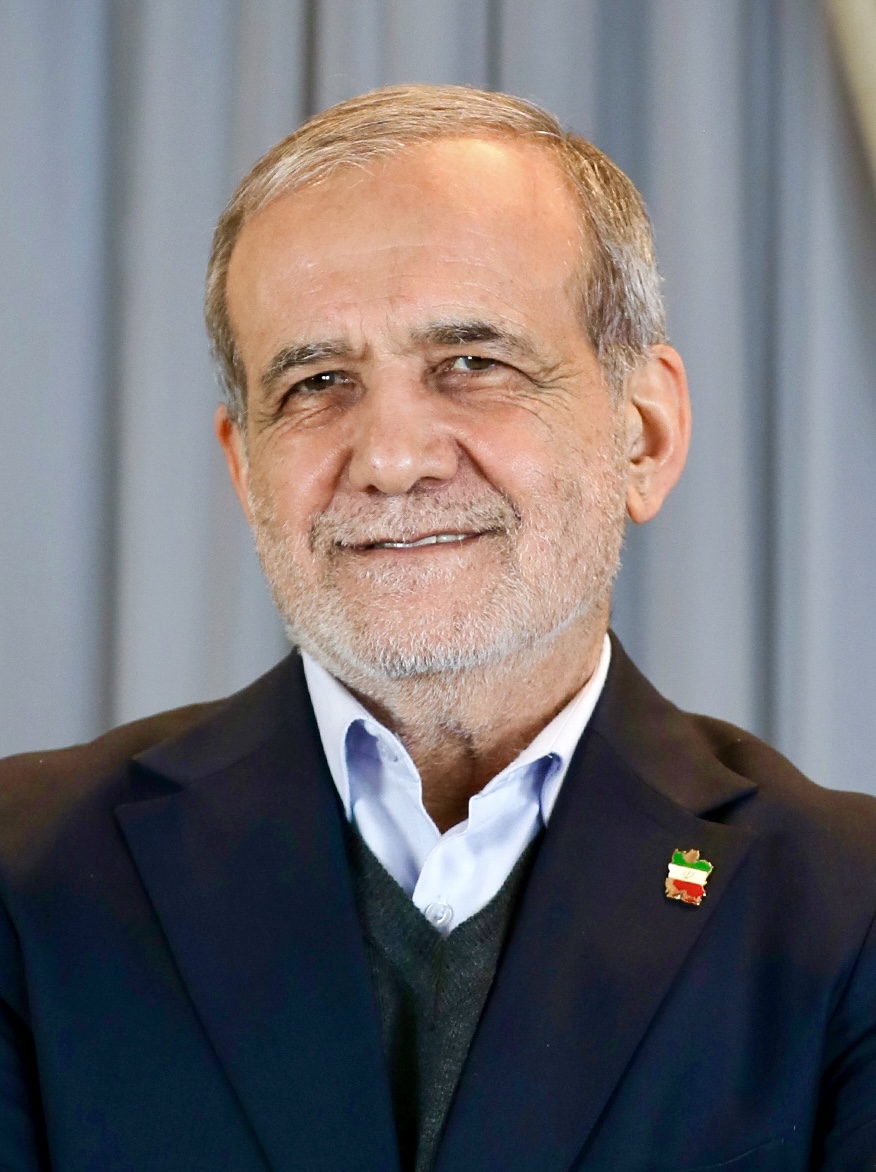
The appointment of Mojtaba Khamenei as Supreme Leader on March 8 was supposed to restore centralized authority. It has done the opposite. The IRGC orchestrated Mojtaba’s selection precisely because it expected him to be manageable — what the Times of Israel described, citing senior Iranian sources, as “a more pliant version of his father who would back their hardline policies.”
The process was coercive. Iran Wire reported that IRGC intelligence “pressured members of Iran’s Assembly of Experts and threatened their families” to secure Mojtaba’s appointment. Eight Assembly members stated they would boycott the second session due to “heavy pressure” from the IRGC, according to Iran International. The eventual announcement, originally planned for Sunday morning, came late in the evening “as a result of lingering opposition to his choice,” the Jerusalem Post reported.
Foreign Policy’s March 11 analysis characterized the appointment as “a confession of political exhaustion” that “sends the clearest possible message that the Islamic Republic is no longer even pretending to renew itself.” The selection, the magazine wrote, confirmed that the regime “has become fully closed, hereditary, and inseparable from the machinery of repression.”
Mojtaba’s inner circle is exclusively hardline. Ahmad Vahidi, the newly appointed IRGC commander-in-chief, is a veteran who led the elite Quds Force from 1988 to 1997 and is wanted by Interpol for his alleged role in the 1994 AMIA bombing in Buenos Aires, according to Al Jazeera’s profile published March 6. Judiciary chief Gholam-Hossein Mohseni-Ejei and parliament speaker Ghalibaf complete the triumvirate surrounding the new supreme leader.
Pezeshkian, nominally Iran’s president, has been visibly excluded from the power centre. His apology to Gulf states drew fury from senior IRGC members, and his subsequent climbdown confirmed what the institutional architecture had already made clear: the presidency is a diplomatic facade, not a command authority.
The Janes defence intelligence assessment, published after the appointment, noted that Mojtaba’s elevation “very likely indicates that elite cohesion will remain strong in the immediate-term,” particularly within the security establishment. But cohesion within the IRGC is not the same as control over it. Mojtaba was selected by the generals. He serves at their pleasure, not the reverse. The supreme leader is supreme in name. The generals run Tehran now.
Has a Mosaic Defense Ever Been Defeated?
Iran’s Mosaic Defense is not without historical precedent, and examining prior decentralized military structures reveals how difficult — and how slow — they are to suppress. The doctrine draws on lessons from Hezbollah’s performance against Israel in the 2006 Lebanon War, the Iraqi insurgency’s resilience against American occupation from 2003 to 2011, and the Viet Cong’s survival under sustained aerial bombardment.
In the 2006 Lebanon War, Hezbollah’s decentralized cell structure allowed it to continue launching rockets into Israel throughout 34 days of intensive Israeli air and ground operations. Despite overwhelming Israeli firepower, Hezbollah fired approximately 4,000 rockets, according to a RAND Corporation study published in 2007. The Israeli military estimated it destroyed roughly 50% of Hezbollah’s long-range rocket capability but was unable to halt the short-range launches from dispersed units operating independently in southern Lebanon.
The parallel is instructive. Hezbollah’s structure served as a model for the IRGC’s Mosaic Defense. General Jafari studied Hezbollah’s performance closely before finalizing the 2005 restructuring, according to the U.S. Institute of Peace’s Iran Primer. The key lesson: a decentralized force that accepts the destruction of its headquarters as a design parameter, rather than as a failure condition, is functionally impossible to defeat through airpower alone.
The Modern War Institute at West Point published an analysis on March 12 titled “Tell Me How This Ends,” posing six questions that will shape the outcome of U.S.-Israeli operations against Iran. The first and most consequential question was whether airstrikes alone could compel a regime change or ceasefire. The institute’s assessment was sceptical: “The historical record of coercion through airpower alone — from strategic bombing in World War II to the Kosovo air campaign — suggests that sustained aerial operations rarely produce political capitulation without a credible ground threat.” Iran’s Mosaic Defense was designed as a direct response to this reality. It ensures that even total air superiority does not produce the political conditions for a ceasefire.
The Iraqi insurgency demonstrated the same principle at national scale. From 2003 to 2007, the United States deployed over 160,000 troops and conducted thousands of airstrikes against a decentralized network of insurgent cells. The insurgency was eventually degraded — not defeated — through a combination of political co-optation (the Anbar Awakening), massive ground troop commitments, and eight years of sustained operations. The U.S. does not have eight years, 160,000 ground troops, or a political co-optation strategy for Iran’s 31 IRGC commands.
What distinguishes Iran’s Mosaic Defense from these precedents is resource depth. Hezbollah is a non-state actor. The Iraqi insurgency operated with improvised weapons and smuggled supplies. Iran’s provincial IRGC commands are state-funded military formations with ballistic missiles, cruise missiles, advanced drones, and two decades of pre-positioned logistics. They represent not an insurgency against a state but a state that has deliberately converted itself into an insurgency — with state-level capabilities.
Why the Ceasefire Architecture Fails
A functional ceasefire requires four conditions: a counterparty with command authority, a chain of command that can transmit a stop order, a military force disciplined enough to comply, and a verification mechanism to confirm compliance. Iran currently meets none of these conditions.
| Condition | Requirement | Iran’s Current Status | Assessment |
|---|---|---|---|
| Counterparty Authority | A leader who can commit Iran to terms | Pezeshkian overruled; Mojtaba controlled by IRGC; Ghalibaf rejects ceasefire | FAIL |
| Command Transmission | Central orders reach all fighting units | 31 autonomous IRGC commands operate on pre-set instructions; communications degraded | FAIL |
| Military Discipline | Forces comply with stop orders | Artesh desertions; IRGC designed for autonomous operations; no enforcement mechanism | FAIL |
| Verification | Monitors can confirm compliance | No access to provincial IRGC commands; no international presence inside Iran | FAIL |
The problem is not political will. Iran’s civilian government may genuinely want to stop the bleeding — Pezeshkian’s apology, whatever its tactical motivations, reflected a real understanding that continued attacks on Gulf states were generating an international coalition against Iran. The problem is structural. The Mosaic Defense was designed to make ceasefire compliance impossible in exactly these conditions.
Consider the mechanism: a ceasefire is announced in Geneva. The IRGC spokesman issues a statement neither endorsing nor rejecting it. Mojtaba Khamenei remains silent — his first and only public communication since taking office was a written statement on March 12, and even that contained errors that raised questions about whether he dictated it himself, the Jerusalem Post reported. The provincial commander in Bushehr, who controls naval assets in the Persian Gulf, receives no direct order to stand down. His “general instructions given in advance” authorize continued operations against threats from Gulf-based U.S. forces. He launches a drone swarm at a Bahraini port. The ceasefire is dead before the ink dries.
This is not a hypothetical scenario. It is a structural description of what the Mosaic Defense produces. Iran’s stated conditions for ending the war — reparations, security guarantees, and sanctions relief — are functionally irrelevant if the forces fighting the war operate outside the authority of anyone sitting at the negotiating table.
Who Does Pakistan’s PM Actually Negotiate With?
Pakistan’s Prime Minister Shehbaz Sharif flew to Riyadh on March 12 to meet Crown Prince Mohammed bin Salman, hours after speaking with Iranian President Pezeshkian by telephone, positioning Islamabad as a shuttle diplomat between the belligerents. Arab News Pakistan reported that Sharif was positioning Pakistan as a “bridge builder” to ease regional tensions. Pakistan’s ability to sit at both tables rests on a mutual defense treaty with Saudi Arabia and a shared border with Iran.
The effort is diplomatically admirable and structurally doomed. The fundamental question that Pakistan’s shuttle diplomacy cannot answer is: who on the Iranian side has the authority to deliver what is promised?
Pezeshkian can agree to a ceasefire. He already tried, on March 7. He was overruled within hours. Araghchi can discuss terms. He has already admitted on Al Jazeera that the military operates independently. Mojtaba Khamenei could theoretically issue a supreme directive. He has been functionally invisible since his appointment, and the IRGC installed him precisely because they expected compliance, not direction.
The only figure who might have the operational authority to order a halt is Ahmad Vahidi, the new IRGC commander-in-chief. But Vahidi is wanted by Interpol, is under EU sanctions, and is constitutionally subordinate to the supreme leader, not the president. He has shown no interest in diplomacy. And even if Vahidi ordered a stand-down, the Mosaic Defense means his 31 provincial commanders are trained, equipped, and doctrinally authorized to disregard orders they judge to be contrary to the Republic’s survival.
China’s peace envoy arrived in Riyadh during the same week with a five-point ceasefire plan, according to reporting from the Beijing-based Global Times. Russia’s Vladimir Putin discussed “a quick end” with Trump by phone, according to CNN. Turkey, France, and Oman have opened mediation channels. The diplomatic traffic is intense. None of it addresses the structural question: there is no Iranian interlocutor whose signature on a ceasefire document binds the forces doing the fighting.
The negotiation paradox can be illustrated through a simple thought experiment. Imagine Pakistan’s PM Sharif secures Pezeshkian’s agreement to a 72-hour ceasefire. He flies to Riyadh with the commitment. MBS accepts. The United States suspends airstrikes. The Gulf states hold fire. Then, within the first six hours, an IRGC unit in Sistan-Baluchestan province — on the opposite side of Iran from Tehran, connected to the capital by degraded communications, operating on pre-authorized instructions that designated Bahrain’s Muharraq airfield as a target — launches a salvo of Ababil drones. The attack hits Bahrain’s fuel depot. The ceasefire is dead. Pezeshkian did not order the strike. He could not have prevented it. And the provincial commander who launched it was not violating orders — he was following pre-war instructions that no one in Tehran has the capacity or authority to countermand.
This is the negotiation paradox: every diplomatic channel runs through Tehran, but the war is being fought from 31 locations that Tehran cannot reach. Pakistan can bridge the gap between Riyadh and Tehran. No one can bridge the gap between Tehran and its own military.
What Does Iran’s Fragmentation Mean for Saudi Arabia?
For Saudi Arabia and Crown Prince Mohammed bin Salman, Iran’s internal fragmentation creates a paradox that inverts conventional strategic logic. A unified enemy, however hostile, is preferable to a fragmented one — because a unified enemy can be deterred, negotiated with, and held accountable. A fragmented enemy can be none of these things.
The Carnegie Endowment for International Peace published an analysis on March 7 that captured the Gulf monarchies’ predicament. “The Gulf states are caught between Iran’s desperation and America’s recklessness,” the paper argued, noting that the smaller Gulf states in particular have few good options: they host the U.S. military infrastructure that Iran considers a legitimate target, yet they have limited capacity to defend against the kind of distributed drone and missile attacks that the Mosaic Defense produces. Bahrain, with a population of 1.5 million and no strategic depth, is particularly exposed. Kuwait, whose international airport has already been damaged by Iranian drones, has closed its airspace entirely.
Saudi Arabia issued a joint statement with the United States and GCC partners condemning Iran’s “indiscriminate and reckless missile and drone attacks against sovereign territories,” according to the Carnegie Endowment for International Peace. MBS reportedly secured full U.S. backing from President Trump for military retaliation. The unprecedented joint GCC-U.S. statement was a show of unified resolve.
But deterrence assumes a rational unitary actor. Saudi Arabia can warn Iran of “dire consequences.” It can coordinate GCC air defenses. It can deploy every Patriot and THAAD battery in its arsenal. None of this deters the IRGC commander in Kermanshah who controls ballistic missile launchers pointed at the Saudi Eastern Province and who is operating on pre-authorized instructions to strike oil infrastructure in the event of escalation.
A Gulf official, speaking to international media, described Iran’s contrition as “unverifiable,” noting that civilian commitments “cannot bind the IRGC.” That assessment captures the Saudi dilemma precisely. The Kingdom is fighting a war against an adversary whose political leadership cannot speak for its military, whose military leadership cannot speak for its provincial commands, and whose provincial commands cannot be reached by any diplomatic channel.
The immediate operational implications are sobering. Saudi Aramco’s critical infrastructure — the Abqaiq processing facility, the Ras Tanura terminal, the Shaybah field — sits within range of IRGC ballistic missile units in at least three Iranian provinces: Khuzestan, Bushehr, and Fars. Each provincial command controls its own targeting cycle. A ceasefire agreement signed in Geneva would need to reach all three commanders independently. If even one decides to launch a parting salvo — either out of ideological conviction, local calculation, or simple miscommunication — the damage to global energy markets would be measured in billions of dollars per hour.
The GCC’s unified military response, coordinated through the unprecedented joint statement with the United States, assumes a conventional threat model: identify the enemy’s command, degrade its capabilities, force negotiations. Iran’s Mosaic Defense was built to defeat exactly this sequence. The enemy’s command is distributed. Its capabilities are dispersed. And negotiations require a counterparty that the architecture was designed to eliminate.
MBS faces a strategic choice with no good options. Escalation risks drawing out a war of attrition against an adversary that has pre-planned for exactly that. De-escalation requires a ceasefire partner who does not exist. The middle ground — sustained defensive operations while waiting for Iran’s provincial commands to exhaust their arsenals — is the most likely path but offers no timeline, no endpoint, and no guarantee that the IRGC’s two decades of pre-positioning have not created stockpiles deep enough to sustain operations for the “six months of intense warfare” that spokesman Naeini promised.
The Command Fragmentation Matrix
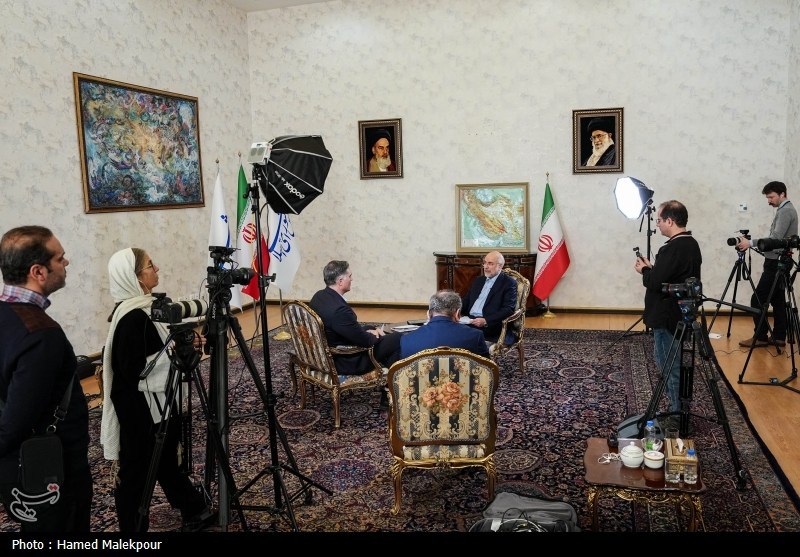
Five distinct power centres now compete for influence over Iran’s war effort, and no two of them agree on whether to continue fighting, on what terms to stop, or who has the authority to decide. Mapping these centres against their stated positions, their operational control, and their relationship to the ceasefire question reveals why every diplomatic initiative fails at the same structural point.
| Power Centre | Key Figure | Position on War | Operational Control | Ceasefire Authority |
|---|---|---|---|---|
| Presidency | Masoud Pezeshkian | Apologized to Gulf; wants de-escalation | None over military forces | Can negotiate but cannot enforce |
| Parliament / Speaker | Mohammad Bagher Ghalibaf | “Definitely not seeking a ceasefire” | Legislative influence; IRGC loyalist network | Can block civilian diplomatic efforts |
| Supreme Leader’s Office | Mojtaba Khamenei | Silent / invisible since March 8 | Theoretical supreme authority; practically untested | Could theoretically order halt; IRGC compliance uncertain |
| IRGC Central Command | Ahmad Vahidi | Continuation of operations; “six months of intense warfare” | 31 provincial commands under Mosaic Defense | Closest to operational authority but provincial commanders can override |
| Provincial IRGC Commands | 31 anonymous commanders | Operating on pre-authorized “general instructions” | Full autonomous military capability in their provinces | No individual or collective mechanism to negotiate |
The matrix reveals a core finding: authority and capability are inversely distributed across Iran’s power structure. The figures with the most diplomatic legitimacy (Pezeshkian, Araghchi) have the least military control. The figures with the most military control (the 31 provincial commanders) have no diplomatic presence whatsoever. The figures in between (Mojtaba, Vahidi, Ghalibaf) have varying degrees of both but have actively rejected diplomacy.
This is not a negotiating position. It is a structural condition. Iran’s formal rejection of ceasefire talks is not a tactical gambit that will soften with pressure. It reflects the honest assessment that the people rejecting talks are not the same people who would need to implement an agreement, and the people who would need to implement an agreement are dispersed across 31 provinces with no mechanism to coordinate their compliance.
The Contrarian Case — Fragmentation as Deterrence
The conventional reading of Iran’s military fragmentation is that it represents weakness — a country falling apart under the pressure of American and Israeli firepower. That reading is wrong, or at least incomplete.
Iran’s fragmentation is also its most effective deterrent. The Mosaic Defense was designed not to win a conventional war against the United States but to make occupation impossible and escalation perpetual. A decapitation strike was supposed to trigger a distributed response that no single military operation could stop. That is exactly what happened. A detailed analysis of the IRGC mosaic doctrine and why killing generals makes the war harder to end reveals how the system has performed under real-world conditions.
The U.S. and Israel achieved their primary military objective within the first 12 hours: the destruction of Iran’s nuclear infrastructure, senior leadership, and centralized command. The Pentagon reported a 90% reduction in centralized missile fire by March 10, according to reporting from the Department of Defense. By any conventional measure, Iran has lost the war.
By the Mosaic Defense’s own metrics, however, the war has barely begun. IRGC spokesman Naeini claimed 600 missile operations and 2,600 drone operations in the first week alone, according to Al Arabiya. The provincial commands continue launching without central direction. Each one operates as an independent insurgency with state-level resources. Coalition forces must now suppress 31 separate threat centres spread across a country the size of Alaska, each with its own arsenal, intelligence apparatus, and ideological motivation.
The deterrent logic is brutally effective. If the cost of attacking Iran is not merely a conventional military response but the creation of 31 permanent, autonomous, resource-rich insurgent commands that will fight indefinitely without orders, central leadership, or the possibility of a negotiated surrender — then the rational calculation for any adversary shifts dramatically. Iran may have lost every battle and yet made the war unwinnable.
For Saudi Arabia, this is the most dangerous insight. The Kingdom’s strategy for ending the war depends on the assumption that enough military pressure will force Iran to a negotiating table. The Mosaic Defense was designed to ensure that no amount of military pressure produces that result. Iran cannot surrender because there is no one left with the authority to sign the surrender.
What Comes Next if No Ceasefire Is Possible?
If a formal ceasefire is structurally impossible — if there is no Iranian counterparty who can bind the forces doing the fighting — then the conflict’s trajectory is defined by exhaustion, not negotiation. Three scenarios emerge.
The first is a gradual degradation of provincial capability. Coalition airstrikes and intelligence operations systematically locate and destroy each of the 31 IRGC command nodes. This is the stated objective of Operation Epic Fury. The problem is timeline: even with overwhelming air superiority, suppressing 31 distributed, camouflaged, and tunneled military commands across a country of 1.65 million square kilometres takes months, not weeks. IRGC commanders have had two decades to prepare for exactly this scenario.
The second scenario is a de facto ceasefire without a formal agreement. Attacks gradually diminish as provincial arsenals are depleted, communications are further degraded, and individual commanders make local calculations that continued operations serve no purpose. This is the most likely outcome, according to the pattern of previous asymmetric conflicts. But it provides none of the security guarantees that Saudi Arabia, the UAE, or other Gulf states require to rebuild.
The third scenario is the worst case: perpetual low-level conflict. Provincial commands maintain enough capability for sporadic drone and missile attacks on Gulf targets for months or years, too dispersed to eliminate, too weak to pose an existential threat, but sufficient to hold Gulf energy infrastructure permanently at risk. This is the scenario that keeps Riyadh awake at night — not a war that ends, but a war that never quite stops.
| Scenario | Mechanism | Timeline | Saudi Risk Level |
|---|---|---|---|
| Systematic Degradation | Coalition airstrikes destroy 31 IRGC nodes | 6-12 months | High (sustained exposure during degradation) |
| De Facto Ceasefire | Arsenal depletion + commander-level exhaustion | 3-6 months | Medium (no formal guarantees; sporadic attacks) |
| Perpetual Low-Level Conflict | Provincial commands maintain residual capability | 12+ months | Extreme (permanent threat to energy infrastructure) |
In all three scenarios, the war’s aftermath will shape Saudi Arabia’s security architecture for a generation. The Kingdom is already signing new defense agreements — a $5 billion deal with China for Wing Loong 3 drone production, Korean Cheongung air defense systems, Ukrainian drone defense teams — because it recognizes that the absence of a ceasefire means the absence of a peace.
The most consequential implication is for the reconstruction of regional order. Every previous Gulf security arrangement — from the 1991 Damascus Declaration to the 2023 Beijing-brokered Saudi-Iran normalization — assumed that Iran was a unitary state actor whose commitments could be enforced through its institutional hierarchy. That assumption is now false. Any post-war security architecture must account for the permanent possibility that Iran’s military will act outside the control of Iran’s government. The 11 days of war that destroyed three years of Gulf-Iran detente did not merely break trust between states. They revealed that the Iranian state was never fully in control of the forces that detente was meant to constrain.
For Saudi Arabia and the broader GCC, this means the post-war environment will require standing air defense at a wartime level indefinitely. There will be no moment when the threat from Iran definitively ends, because there is no moment when all 31 provincial commands simultaneously exhaust their capability and will to fight. The war will end not with a signature but with a long, uneven fade — and the last drone launch, whenever it comes, could still hit an oil processing facility, a desalination plant, or an airport.
“We are definitely not looking for a ceasefire; we believe that the aggressor should be punched in the mouth so that he learns a lesson.”
Mohammad Bagher Ghalibaf, Iran Parliament Speaker, March 10, 2026
The question for Riyadh is not whether a ceasefire is desirable. It is whether a ceasefire is structurally possible with an adversary that has designed its military to make ceasefire impossible. The evidence assembled over 14 days of war points to a single answer: it is not. Iran’s military is at war with itself, and that is exactly why no ceasefire can work.
Frequently Asked Questions
What is Iran’s Mosaic Defense doctrine?
The Mosaic Defense is a decentralized military strategy formalized in 2005 by IRGC General Mohammad Ali Jafari that restructures the Revolutionary Guards into 31 autonomous provincial commands. Each command has its own weapons, logistics, intelligence, and Basij militia forces. The doctrine was designed to ensure Iran can continue fighting even after losing its senior leadership and central command — exactly the conditions created by Operation Epic Fury’s opening strikes in February 2026.
Can Iran’s president order a ceasefire?
In theory, the president can request a halt to military operations. In practice, President Pezeshkian tried exactly this on March 7, apologizing to Gulf states and ordering forces to stop attacks on neighbours. He was publicly overruled by parliament speaker Ghalibaf within hours, and attacks continued. Iran’s foreign minister Araghchi acknowledged on Al Jazeera that military units operate “independently” based on pre-authorized instructions. The presidency lacks operational control over IRGC forces.
Who controls Iran’s military after Khamenei’s death?
Formally, the new Supreme Leader Mojtaba Khamenei holds supreme military authority. Operationally, the IRGC engineered his appointment and views him as a pliant figurehead. The IRGC commander-in-chief Ahmad Vahidi has the closest thing to operational control, but the Mosaic Defense means 31 provincial commanders can and do operate autonomously. Iran’s military is effectively leaderless — by design.
Why are the regular army and IRGC fighting each other?
The institutional rivalry predates the 2026 war by decades. The IRGC has always enjoyed superior funding, equipment, and political patronage. Under wartime conditions, this hierarchy has become lethal: reports indicate IRGC personnel refusing to transport wounded Artesh soldiers to hospitals, severe ammunition shortages (reportedly 10 rounds per soldier in some units), and group desertions from Artesh frontline positions. The IRGC maintains its own logistics and medical infrastructure, leaving the regular army dependent on a force that views it as institutionally inferior.
What does Iran’s military fragmentation mean for Gulf security?
Iran’s fragmentation makes the Gulf less safe, not more. A unified adversary can be deterred and negotiated with. Iran’s 31 autonomous IRGC commands cannot be deterred collectively, cannot negotiate, and cannot be held accountable for individual attacks. Gulf states face the prospect of sporadic, unpredictable missile and drone strikes from provincial commanders operating on pre-authorized instructions, with no diplomatic channel capable of stopping them. This is why Saudi Arabia is investing heavily in layered air defense systems and new military partnerships.
What is the difference between the IRGC and the Artesh?
The Artesh is Iran’s conventional regular army, responsible for territorial defense with approximately 350,000 personnel. The IRGC (Islamic Revolutionary Guard Corps) is a parallel military force of roughly 190,000 personnel plus Basij militia reserves, tasked with protecting the Islamic Republic’s ideological system. The IRGC controls Iran’s ballistic missile program, drone fleet, and naval forces in the Persian Gulf. It receives superior funding and equipment. The two forces have separate chains of command, separate logistics, and a decades-old institutional rivalry that the 2026 war has turned into open hostility.
Who is Ahmad Vahidi and why does he matter for the ceasefire?
Ahmad Vahidi is the newly appointed commander-in-chief of the IRGC, named to the position on March 1, 2026, after the previous leadership was killed in U.S. and Israeli strikes. He previously led the Quds Force from 1988 to 1997 and is wanted by Interpol for his alleged role in the 1994 AMIA bombing in Buenos Aires. Vahidi holds the closest thing to operational military authority in Iran, but even he cannot unilaterally override the 31 provincial commanders operating under the Mosaic Defense doctrine. He is part of Mojtaba Khamenei’s inner circle alongside Ghalibaf and Mohseni-Ejei.
Could the United States negotiate directly with the IRGC?
The IRGC is designated as a Foreign Terrorist Organization by the United States, making direct negotiations legally and politically impossible under current American law. Even if that designation were suspended, the IRGC’s public position — articulated by spokesman Naeini and commander Vahidi — is that it will fight “until surrender” of U.S. and Israeli forces. The IRGC views itself as engaged in a civilizational struggle, not a limited conflict amenable to negotiation. The 31 provincial commands, meanwhile, have no collective negotiating mechanism and no individual incentive to accept terms they view as capitulation.
How long can Iran sustain the Mosaic Defense?
IRGC spokesman Naeini claimed Iran’s forces can sustain “at least six months of intense warfare at current operational rates.” Independent analysts assess this as optimistic but not impossible. The IRGC spent two decades pre-positioning weapons, fuel, ammunition, and supplies across 31 provincial commands in preparation for exactly this scenario. The sustainability question depends on how quickly coalition forces can locate and destroy underground storage facilities, tunnel networks, and camouflaged launch sites — a process measured in months, not weeks. Iran’s drone production capability, in particular, is distributed across multiple factories and may be difficult to fully suppress.