
WASHINGTON — The United States State Department announced on Friday a $10 million reward for information on Iran’s new Supreme Leader Mojtaba Khamenei and nine senior officials linked to the Islamic Revolutionary Guard Corps, marking the first time Washington has placed a bounty on a sitting head of state during an active military conflict. The move, issued through the department’s Rewards for Justice program, targets what US officials described as the command-and-control architecture behind Iranian drone and missile strikes that have hit Saudi Arabia, the United Arab Emirates, Bahrain, Qatar, Kuwait, and Oman over the past two weeks.
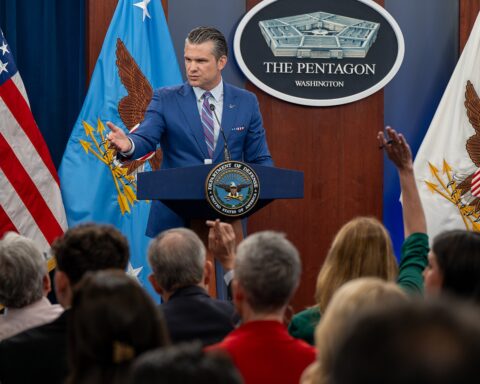
The announcement arrived hours after US forces struck military targets on Iran’s Kharg Island and as Defense Secretary Pete Hegseth told reporters that Iran’s missile volume had dropped 90 percent and drone output 95 percent since the opening days of Operation Epic Fury. For Saudi Arabia, which has intercepted more than 200 Iranian drones and missiles since February 28, the bounty represents a direct effort to dismantle the leadership structure authorizing attacks on the Kingdom’s oil infrastructure, military bases, and civilian areas.
Table of Contents
- Who Are the Ten Officials Named in the US Bounty?
- What Is the Rewards for Justice Program?
- Why Did the State Department Act Now?
- Pentagon Says Iran’s Strike Capability Has Collapsed
- How Does the Bounty Affect the Gulf War?
- Saudi Arabia’s Stake in Dismantling Iran’s Command Structure
- Tehran’s Response and the War’s Trajectory
- Historical Precedent for Wartime Bounties
- Frequently Asked Questions
Who Are the Ten Officials Named in the US Bounty?
The Rewards for Justice notice targets ten individuals at the apex of Iran’s political-military establishment. Six are named by identity; four are identified only by title, reflecting gaps in US intelligence about recent IRGC personnel changes during the wartime succession.
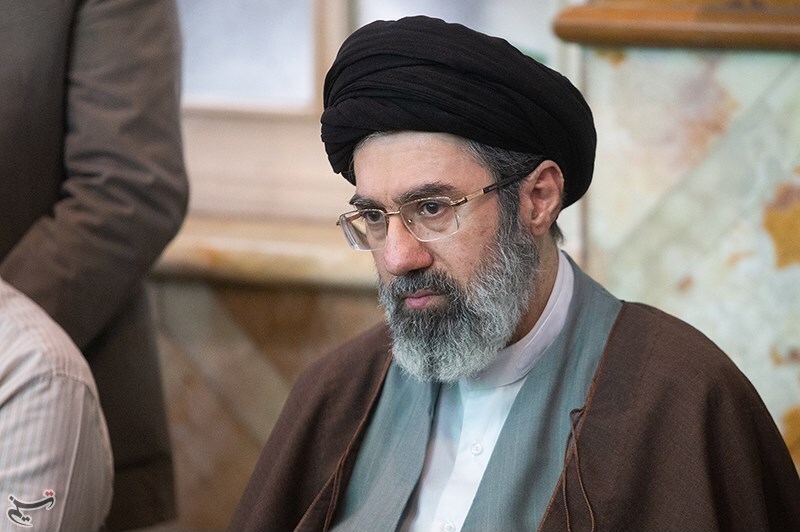
The six named officials are Mojtaba Khamenei, the 56-year-old hardline cleric who succeeded his father as Supreme Leader on March 8 after Ayatollah Ali Khamenei was killed in the opening US-Israeli strikes on February 28; Ali Asghar Hejazi, the deputy chief of staff to the late Supreme Leader who played a central role in coordinating IRGC operations from the Supreme Leader’s office; Ali Larijani, the powerful security chief and former parliament speaker who has served as a nexus between Iran’s elected government and its military-intelligence apparatus for more than two decades; Yahya Rahim Safavi, a retired IRGC commander who serves as senior military adviser to the Supreme Leader and who has been instrumental in shaping Iran’s missile doctrine since the 1990s; Eskandar Momeni, the Interior Minister responsible for domestic security operations and internal suppression of anti-war sentiment; and Esmail Khatib, the Intelligence Minister whose organization runs Iran’s foreign espionage and counterintelligence networks.
The four unnamed positions are the secretary of the Supreme Defense Council, the head of the Supreme Leader’s military office, the commander-in-chief of the Islamic Revolutionary Guard Corps, and an adviser to Iran’s Supreme Leader. The State Department’s decision to list positions rather than names reflects ongoing uncertainty about who holds key posts within Iran’s rapidly reshuffled wartime hierarchy. Several senior IRGC commanders were killed alongside the elder Khamenei in the February 28 strikes, according to the Pentagon, and replacements have been appointed under conditions of extreme secrecy.
| Name | Title/Role | Significance |
|---|---|---|
| Mojtaba Khamenei | Supreme Leader | Top decision-maker; controls IRGC chain of command |
| Ali Asghar Hejazi | Deputy Chief of Staff to late Supreme Leader | Coordinated IRGC operations from Supreme Leader’s office |
| Ali Larijani | Security Chief | Bridge between elected government and military-intelligence |
| Yahya Rahim Safavi | Senior Military Adviser | Shaped Iran’s missile doctrine since the 1990s |
| Eskandar Momeni | Interior Minister | Domestic security; suppression of internal dissent |
| Esmail Khatib | Intelligence Minister | Foreign espionage and counterintelligence networks |
| Unnamed | Secretary, Supreme Defense Council | Coordinates military strategy across all branches |
| Unnamed | Head, Supreme Leader’s Military Office | Direct military liaison to the Supreme Leader |
| Unnamed | Commander-in-Chief, IRGC | Operational command of all IRGC forces |
| Unnamed | Adviser to Supreme Leader | Policy advisory role on military-strategic matters |
The State Department described all ten individuals as “key leaders involved in commanding and directing different branches of the IRGC,” which Washington designated as a Foreign Terrorist Organization in 2019 under the Trump administration’s maximum pressure campaign. The department urged individuals with information to contact the Rewards for Justice program through encrypted messaging platforms, including Signal, or through a Tor-based communication channel. Tipsters were told they could be eligible for relocation to the United States in addition to the monetary reward.
The Middle East briefing 3,000+ readers start their day with.
One email. Every weekday morning. Free.
What Is the Rewards for Justice Program?
The Rewards for Justice program is the US government’s principal counter-terrorism intelligence-gathering tool, administered by the State Department’s Bureau of Diplomatic Security. Established under the 1984 Act to Combat International Terrorism, the program has paid more than $150 million to over 100 informants since its inception, according to the State Department’s own records. Its most prominent targets have included Osama bin Laden, who carried a $25 million bounty before his killing by US Navy SEALs in 2011, and Abu Bakr al-Baghdadi, the Islamic State leader who carried a $25 million reward before his death in a 2019 US special operations raid.
The program’s legal authority permits rewards of up to $25 million for information leading to the prevention of international terrorism or the identification or location of key terrorist leaders. The $10 million figure used for the Iranian officials sits below the program’s maximum but represents its highest tier for intelligence-gathering rather than capture or prosecution. In practical terms, the reward is designed less to produce the physical capture of Iran’s Supreme Leader — an implausible scenario during active hostilities — than to incentivize defections, intercepts, and intelligence leaks from within Iran’s fragmented security establishment.
Previous Iran-related Rewards for Justice actions have included a $15 million offer for information disrupting IRGC financial networks and a $10 million reward targeting Ezedin Abdel Aziz Khalil, an al-Qaeda fundraiser operating through Iranian territory. The March 13 announcement is distinguished by its scope and timing: never before has the program simultaneously targeted a country’s head of state, intelligence minister, interior minister, and senior military command during a shooting war.
Why Did the State Department Act Now?
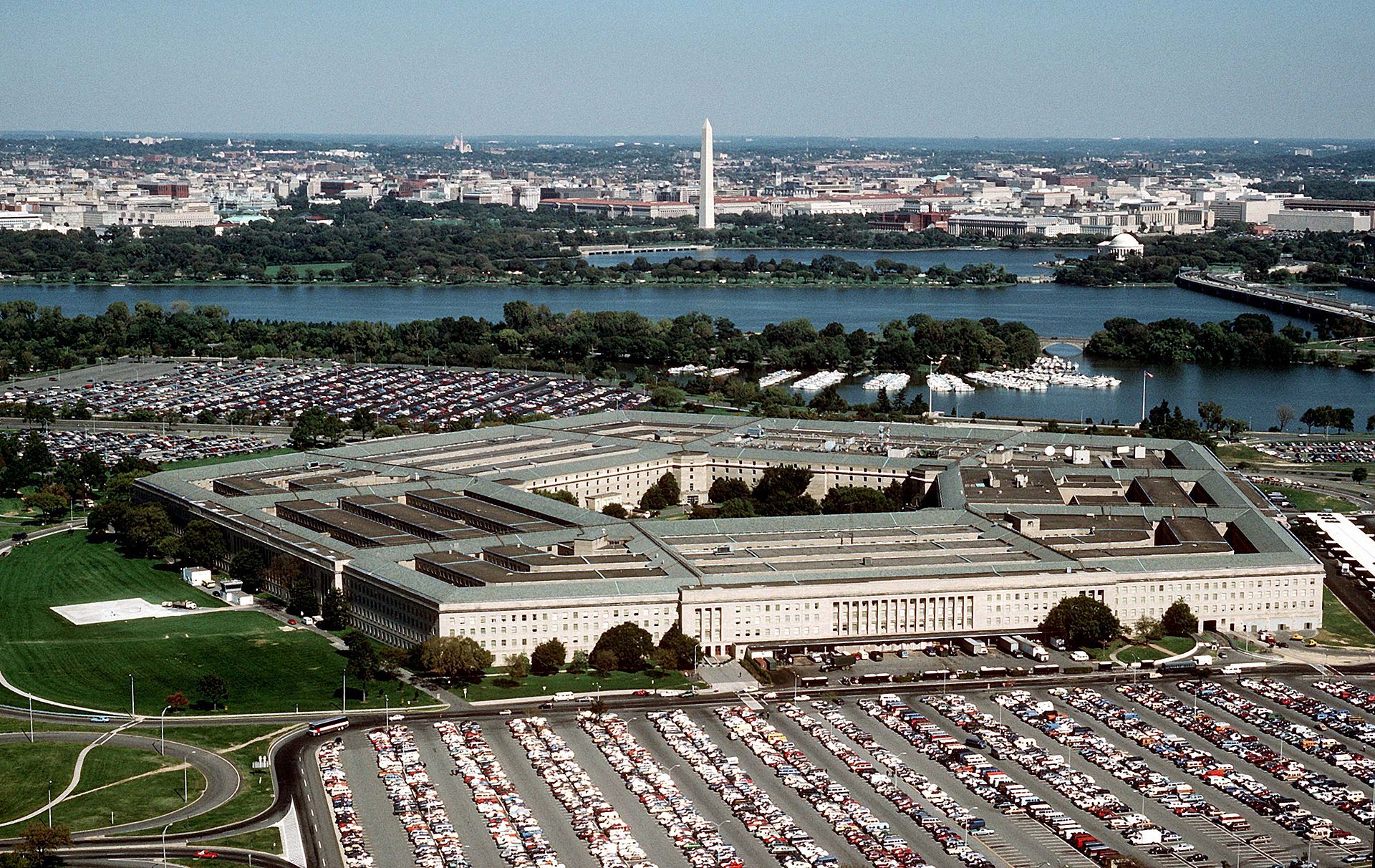
The timing of the Rewards for Justice announcement tracks directly to three developments in the Iran conflict’s second week. First, Iran escalated its attacks on Gulf states despite suffering what the Pentagon describes as devastating losses to its conventional military infrastructure. On March 12 alone, Iranian drones and missiles targeted Saudi Arabia’s Shaybah oil field, Riyadh’s diplomatic quarter, Prince Sultan Air Base, and civilian areas in Al-Kharj, where two foreign workers were killed and 12 injured. The attacks demonstrated that Iran’s command-and-control apparatus remained functional even as its hardware was being destroyed.
Second, Mojtaba Khamenei’s appointment as Supreme Leader on March 8 created a new leadership target set. The elder Khamenei’s death had been the explicit objective of the February 28 strikes. His son’s immediate assumption of power — widely seen as a dynastic rather than constitutional succession — provided Washington with an opening to delegitimize the new leader before he could consolidate authority. The Rewards for Justice notice effectively treats the Supreme Leader of the Islamic Republic as an international fugitive, a framing that carries both legal and psychological weight.
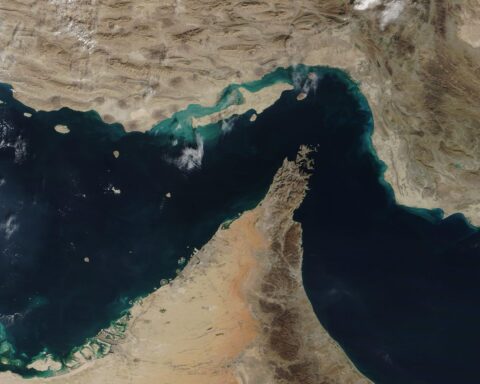
Third, the announcement followed Defense Secretary Hegseth’s claim that Mojtaba Khamenei had been wounded and “likely disfigured” in the opening strikes and was believed to be hiding in an underground facility. The State Department reward, requesting information about the whereabouts and activities of the Supreme Leader, reinforces the narrative that Iran’s top leader is injured, isolated, and unable to govern effectively. Tehran has not confirmed or denied the wounding claim. Khamenei’s first statement as Supreme Leader, read by an aide rather than delivered personally, ordered the Strait of Hormuz to remain closed.
Pentagon Says Iran’s Strike Capability Has Collapsed
The bounty announcement coincided with the Pentagon’s most optimistic battlefield assessment since Operation Epic Fury began. Defense Secretary Hegseth told reporters on March 13 that joint US-Israeli strikes had destroyed the majority of Iran’s conventional military infrastructure, reducing the country’s ability to project force across the region. Missile volume from Iran was down 90 percent compared with the war’s opening days, Hegseth said, and drone launches had fallen by 95 percent.
The assessment was undercut, however, by events on the ground. On the same day Hegseth spoke, Iran launched its 48th phase of retaliatory operations, sending more than 50 drones toward Saudi Arabia and firing a missile that struck a helipad inside the US Embassy compound in Baghdad, destroying part of the embassy’s air defense system, according to Iraqi security officials cited by Al Jazeera. Two foreign citizens were killed and several injured when Iranian drones crashed in Sohar, Oman, marking the first combat deaths on Omani soil in the modern era.
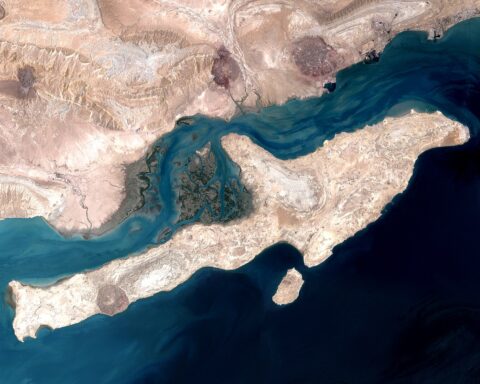
President Donald Trump said on March 13 that US forces had “totally obliterated every military target” on Kharg Island, the small island off Iran’s southwest coast through which 90 percent of the country’s crude oil exports pass. Trump said he had chosen not to destroy Kharg Island’s oil infrastructure but warned that he would “immediately reconsider” if Iran continued to block shipping through the Strait of Hormuz. Iran’s IRGC threatened to reduce US-linked oil facilities in the Gulf to “a pile of ashes” if the United States struck Iranian oil assets.
The Pentagon confirmed six US airmen had been killed when a KC-135 Stratotanker crashed in western Iraq on March 12 while supporting Epic Fury operations, bringing the total US military deaths in the conflict to 13. The Islamic Resistance in Iraq claimed it shot down the aircraft, though the Pentagon attributed the loss to mechanical failure and said no hostile fire was involved.
How Does the Bounty Affect the Gulf War?
The practical impact of a $10 million reward on a wartime head of state is debatable, but the signal it sends is not. By placing Iran’s Supreme Leader and his inner circle on the Rewards for Justice list alongside al-Qaeda and Islamic State leaders, the United States has effectively classified the Iranian government’s command structure as a terrorist organization in wartime — a legal designation with consequences that will outlast the current conflict.
For the Gulf states bearing the brunt of Iranian retaliation, the bounty offers a psychological wedge. Saudi Arabia’s defense establishment has maintained a posture of strategic restraint throughout the conflict, intercepting Iranian drones and missiles while declining to launch offensive strikes against Iran itself. The Rewards for Justice notice redirects pressure onto the individuals authorizing attacks rather than onto the state apparatus as a whole, creating theoretical space for a negotiated outcome with a different set of Iranian leaders.
Analysts at the International Institute for Strategic Studies noted that the bounty also serves a counter-intelligence function. By offering $10 million and relocation to anyone with information on the whereabouts, plans, or communications of Iran’s top ten security officials, the State Department has created an incentive for mid-level IRGC officers and intelligence operatives to defect or leak information. In a military where morale is reportedly deteriorating under sustained bombardment, the financial inducement could prove more effective than additional airstrikes at disrupting Iranian command coherence.
Saudi Arabia’s Stake in Dismantling Iran’s Command Structure
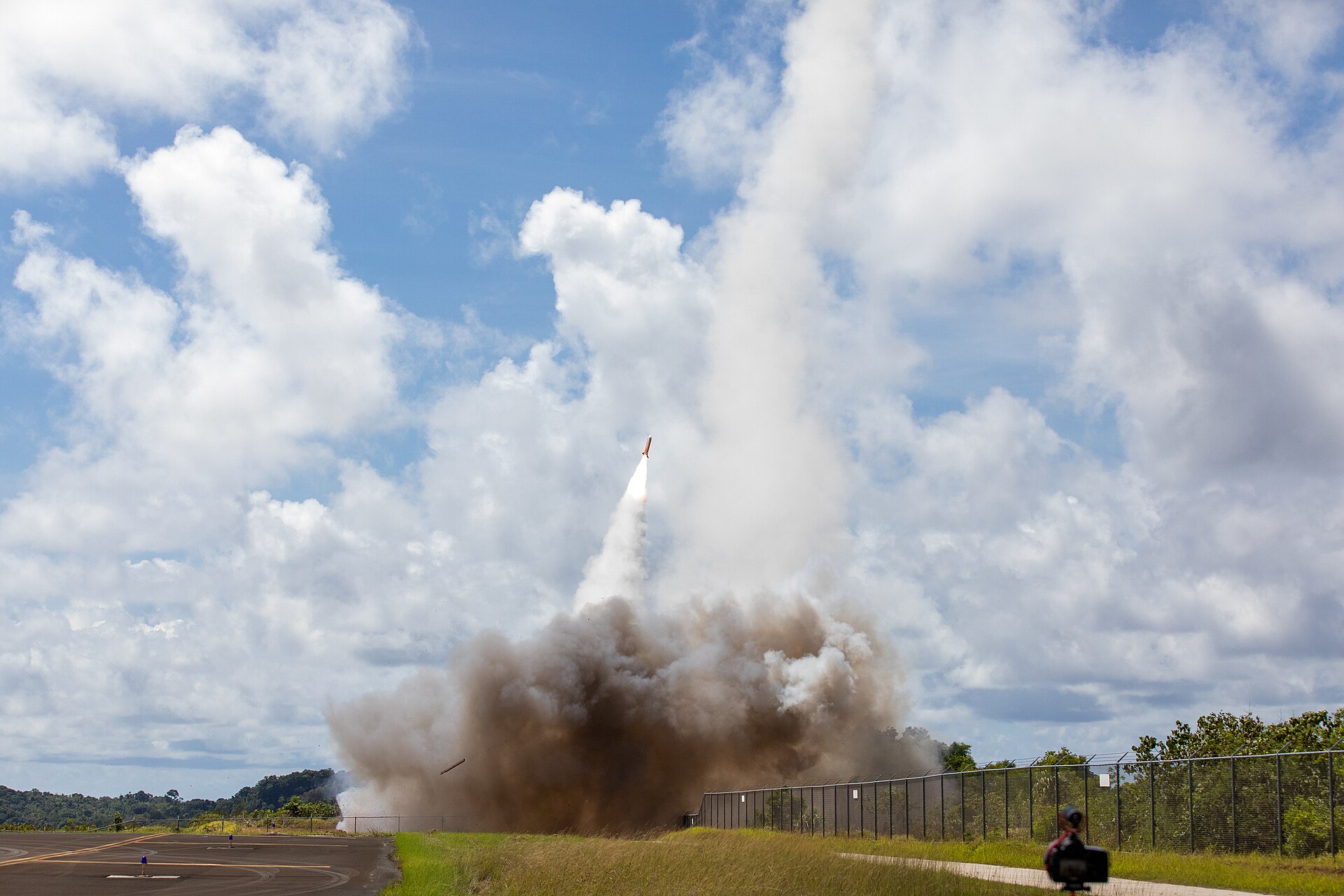
Saudi Arabia has absorbed more Iranian drone and missile attacks than any other Gulf state since the war began. The Kingdom’s Defense Ministry reported intercepting 51 drones on March 14 alone, including projectiles aimed at Riyadh’s diplomatic quarter, the Eastern Province, Prince Sultan Air Base in Al-Kharj, and the remote Shaybah oil field near the Empty Quarter. Iran’s attacks on Saudi territory have killed two people — Indian and Bangladeshi nationals struck by a drone in Al-Kharj on March 9 — and injured at least 12 others, according to Saudi officials.
The officials named in the Rewards for Justice notice include several individuals directly connected to the attacks on Saudi Arabia. Yahya Rahim Safavi, the senior military adviser, is widely credited with developing Iran’s long-range drone and missile strategy that has been deployed against Gulf targets. Esmail Khatib’s Intelligence Ministry runs the networks that Tehran has used to gather targeting data on Saudi military installations and critical infrastructure, according to Western intelligence assessments cited by Bloomberg. Ali Larijani, the security chief, chairs the body responsible for coordinating military and intelligence operations across Iran’s fragmented security establishment.
Crown Prince Mohammed bin Salman has not publicly commented on the bounty, consistent with Saudi Arabia’s broader approach of allowing Washington to take the lead on offensive measures while Riyadh focuses on defense and diplomacy. Saudi Foreign Minister Prince Faisal bin Farhan has spoken with counterparts in France, Pakistan, Egypt, and Turkey in recent days, pressing for what Saudi officials describe as a “comprehensive de-escalation” that would end attacks on Gulf states without requiring Saudi Arabia to join the offensive campaign against Iran.
Pakistan’s Prime Minister Shehbaz Sharif flew to Jeddah on March 12 for an emergency meeting with Crown Prince Mohammed, expressing “full solidarity and support” for Saudi Arabia. Islamabad has deployed air defense assets and military personnel to the Kingdom under a bilateral defense agreement, but both nations have been careful to frame the deployment as defensive rather than joining the US-Israeli offensive.
Tehran’s Response and the War’s Trajectory
Iran dismissed the Rewards for Justice announcement as “a futile act of desperation by a regime that has failed to achieve its military objectives,” according to a statement attributed to Iran’s mission at the United Nations, as reported by Iran International. Tehran has consistently maintained that its attacks on Gulf states are retaliatory measures targeting US military assets hosted by Gulf governments, not acts of aggression against the host nations themselves — a distinction that Gulf states have unanimously rejected.
Mojtaba Khamenei’s first public directive as Supreme Leader ordered the Strait of Hormuz to remain closed as “a tool to pressure the enemy.” IRGC spokesperson Ebrahim Zolfaqari warned that oil prices could reach $200 per barrel because “the oil price depends on regional security, which you have destabilised.” Brent crude surged above $100 per barrel on March 13, the highest level since the 2022 energy crisis, as shipping through the strait remained virtually paralyzed.
The war, which began with the assassination of Ayatollah Ali Khamenei and simultaneous strikes on Iran’s nuclear and military infrastructure on February 28, has killed at least 1,444 people in Iran and injured more than 18,500, according to Iranian health officials cited by Al Jazeera. Israeli strikes on Lebanon since March 2 have killed at least 773 people. Thirteen US service members have died, and at least 14 foreign nationals across the Gulf states have been killed by Iranian drone and missile attacks.
Diplomatic channels remain open but unproductive. Saudi Arabia has maintained its backchannel to Tehran through Omani intermediaries, Bloomberg reported, but Iran has explicitly rejected negotiations while attacks on its territory continue. The United Nations Security Council condemned Iran’s strikes on Gulf states in a near-unanimous vote on March 11, but the resolution contained no enforcement mechanism and China and Russia abstained from provisions calling for an arms embargo.
Historical Precedent for Wartime Bounties
The Rewards for Justice program has targeted heads of armed groups and terrorist organizations throughout its four-decade history, but placing a sitting head of state on the list during active hostilities is without precedent in the program’s records. The closest parallels are the bounties on Saddam Hussein during the 2003 Iraq invasion and on Abu Bakr al-Baghdadi during the campaign against the Islamic State. Both were leaders of entities the United States had classified as hostile, but neither held internationally recognized sovereign status at the time of their inclusion.
Mojtaba Khamenei’s case is different. Iran remains a member of the United Nations, maintains embassies in most world capitals, and sits on OPEC. The bounty does not explicitly call for his capture or killing — it requests “information” about his whereabouts and activities — but the implicit message is unmistakable. The United States does not recognize the legitimacy of his succession, views the IRGC as a terrorist organization, and is prepared to pay $10 million for intelligence that could be used to target the individuals directing attacks on American forces and allied nations in the Gulf.
Legal scholars contacted by Reuters noted that the bounty raises questions about sovereign immunity under international law, though the practical relevance of such questions during a shooting war is limited. The more immediate effect, according to former CIA official Bruce Riedel, is to “make every member of Khamenei’s inner circle wonder whether the person sitting next to them is considering a phone call to Virginia.”
| Target | Bounty Amount | Year Listed | Outcome |
|---|---|---|---|
| Osama bin Laden | $25 million | 2001 | Killed by US special forces, 2011 |
| Abu Bakr al-Baghdadi | $25 million | 2017 | Killed in US special operations raid, 2019 |
| Ayman al-Zawahiri | $25 million | 2001 | Killed by US drone strike, 2022 |
| Hamza bin Laden | $1 million | 2019 | Reported killed in US operation, 2019 |
| IRGC Financial Networks | $15 million | 2024 | Ongoing |
| Mojtaba Khamenei + 9 officials | $10 million | 2026 | Active — first sitting head of state targeted |
Frequently Asked Questions
What is the $10 million reward for information on Iran’s Supreme Leader?
The US State Department’s Rewards for Justice program announced on March 13, 2026, that it would pay up to $10 million for information about Iran’s new Supreme Leader Mojtaba Khamenei and nine senior IRGC-linked officials. The reward covers information about their whereabouts, activities, plans, and communications. Tipsters may also qualify for relocation to the United States.
Who are the Iranian officials targeted by the US bounty?
Six officials are named: Supreme Leader Mojtaba Khamenei, security chief Ali Larijani, Intelligence Minister Esmail Khatib, Interior Minister Eskandar Momeni, military adviser Yahya Rahim Safavi, and Ali Asghar Hejazi. Four additional targets are listed by position only, including the IRGC commander-in-chief and the secretary of Iran’s Supreme Defense Council.
Has the US ever placed a bounty on a sitting head of state?
The Rewards for Justice program has targeted terrorist organization leaders including Osama bin Laden and Abu Bakr al-Baghdadi, but listing a sitting head of state who leads a UN member nation during an active military conflict is without precedent in the program’s 42-year history. Iran remains a recognized sovereign state with embassies in most world capitals.
How does the bounty affect Saudi Arabia?
Saudi Arabia has absorbed more Iranian attacks than any other Gulf state during the 2026 conflict, intercepting over 200 drones and missiles. The bounty targets officials directly linked to authorizing strikes on Saudi oil infrastructure, military bases, and civilian areas. Riyadh has not commented publicly but maintains a posture of defensive restraint while Washington leads the offensive campaign.
How can someone submit information under the Rewards for Justice program?
The State Department directs informants to submit tips through encrypted messaging platforms including Signal or via a Tor-based anonymous communication channel operated by the Bureau of Diplomatic Security. The program has paid more than $150 million to over 100 informants since its founding in 1984, and eligible individuals may receive both financial rewards and US relocation assistance.