
YANBU — A Greek-operated Patriot air defense battery stationed at Saudi Arabia’s Red Sea port of Yanbu intercepted two Iranian ballistic missiles early on Thursday, marking the first confirmed combat engagement by a NATO member’s forces in defense of Saudi territory since the Iran war began. The interception, confirmed by the Greek Defense Ministry, protected the SAMREF oil refinery — a joint venture between Saudi Aramco and ExxonMobil that serves as a critical node in the Kingdom’s Hormuz bypass pipeline network — from what military officials described as a direct strike.
The engagement transforms the war’s diplomatic calculus. Greece, a NATO ally with no bilateral defense treaty with Riyadh, is now operationally entangled in the Gulf conflict through its ELDYSA mission — a Patriot deployment that began in September 2021 to defend Aramco infrastructure from Houthi attacks and has since been extended through November 2026 at Saudi Arabia’s request. The successful intercept came as Iran launched its broadest-ever simultaneous attack on Gulf energy facilities, striking oil and gas infrastructure in Saudi Arabia, Qatar, the UAE, and Kuwait within the same 12-hour window.
Table of Contents
- What Happened at Yanbu on March 19?
- Why Is the SAMREF Refinery Strategically Critical?
- What Is the ELDYSA Mission?
- How Does the Patriot System Intercept Ballistic Missiles?
- What Does a Greek Combat Engagement Mean for NATO?
- Iran’s Simultaneous Four-Country Strike
- Saudi Arabia Hints at Military Response
- Athens Frames Intercept as Defensive
- Frequently Asked Questions
What Happened at Yanbu on March 19?
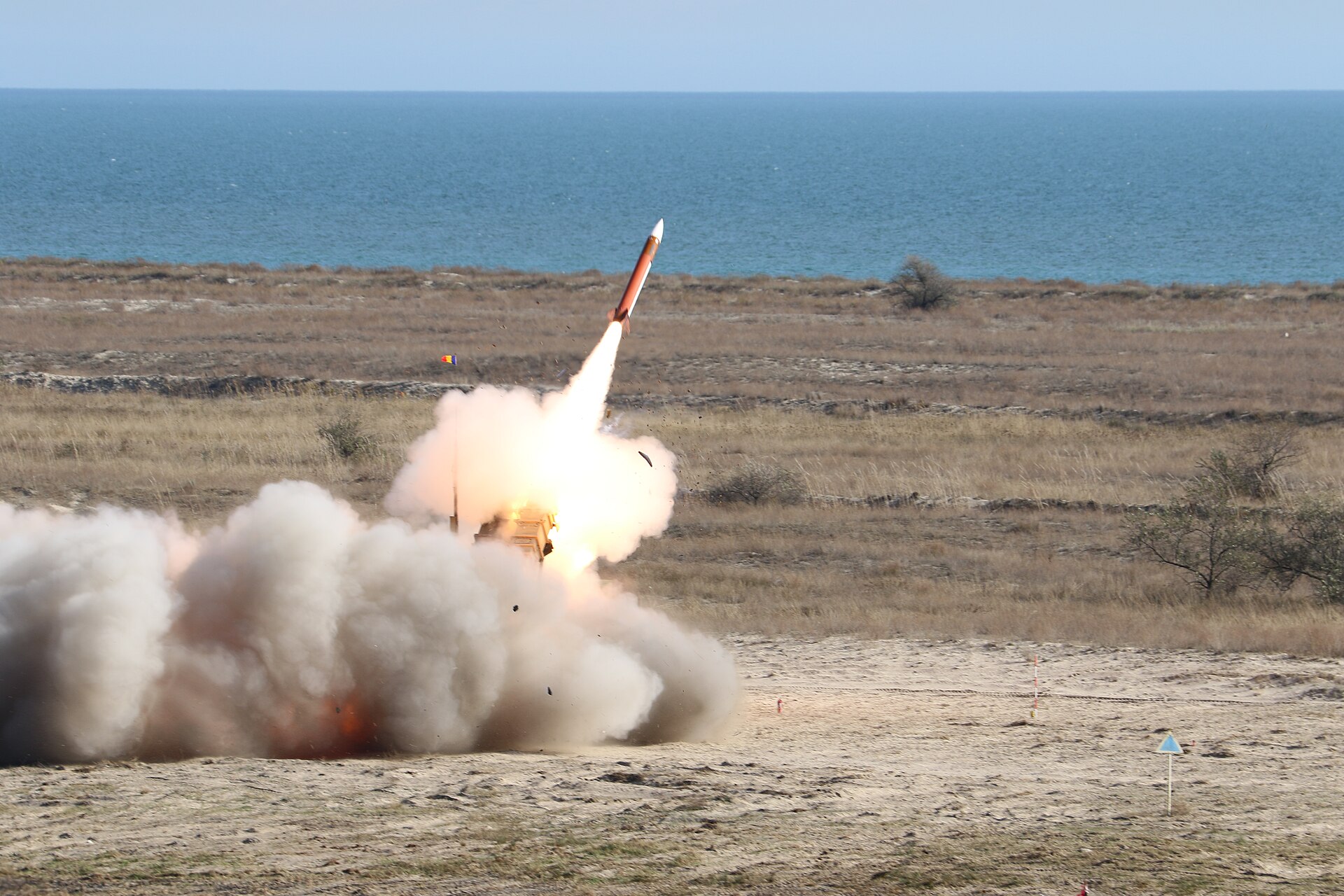
The Greek Patriot Missile Artillery Unit, operating as part of the Hellenic Force in Saudi Arabia known as ELDYSA, detected two incoming Iranian ballistic missiles targeting the port city of Yanbu at approximately 04:30 local time on Thursday, March 19, according to the Greek Defense Ministry. The battery engaged both threats in accordance with established rules of engagement, launching two PAC-3 interceptors that destroyed both incoming warheads before they reached the SAMREF refinery complex.
Fragments from the interception fell within the refinery perimeter, causing what Reuters sources described as “minimal” operational impact. Saudi Defense Ministry spokesperson Major General Turki Al-Malki confirmed the Yanbu intercept as part of a broader defensive effort that included the destruction of 65 drones across multiple Saudi regions throughout Thursday.
A separate drone, however, evaded interception and struck the SAMREF facility directly, Saudi Gazette reported. The Ministry of Defense stated that “damage assessment is currently underway” at the refinery, though no casualties were reported. The drone impact underscored the difficulty of defending fixed infrastructure against saturation attacks combining ballistic missiles with slower, lower-flying unmanned aerial vehicles.
The attack on Yanbu coincided with Iranian strikes on three other Gulf states within the same operational window. Brigadier General Riyadh Al-Maliki, the Saudi Ministry of Defense’s official spokesman, announced the interception of a ballistic missile targeting Yanbu Port alongside the destruction of 12 hostile drones and another ballistic missile targeting the Eastern Province. Six additional drones were destroyed across Riyadh and the Eastern Province in subsequent waves, according to the Saudi Defense Ministry.
The Middle East briefing 3,000+ readers start their day with.
One email. Every weekday morning. Free.
Why Is the SAMREF Refinery Strategically Critical?
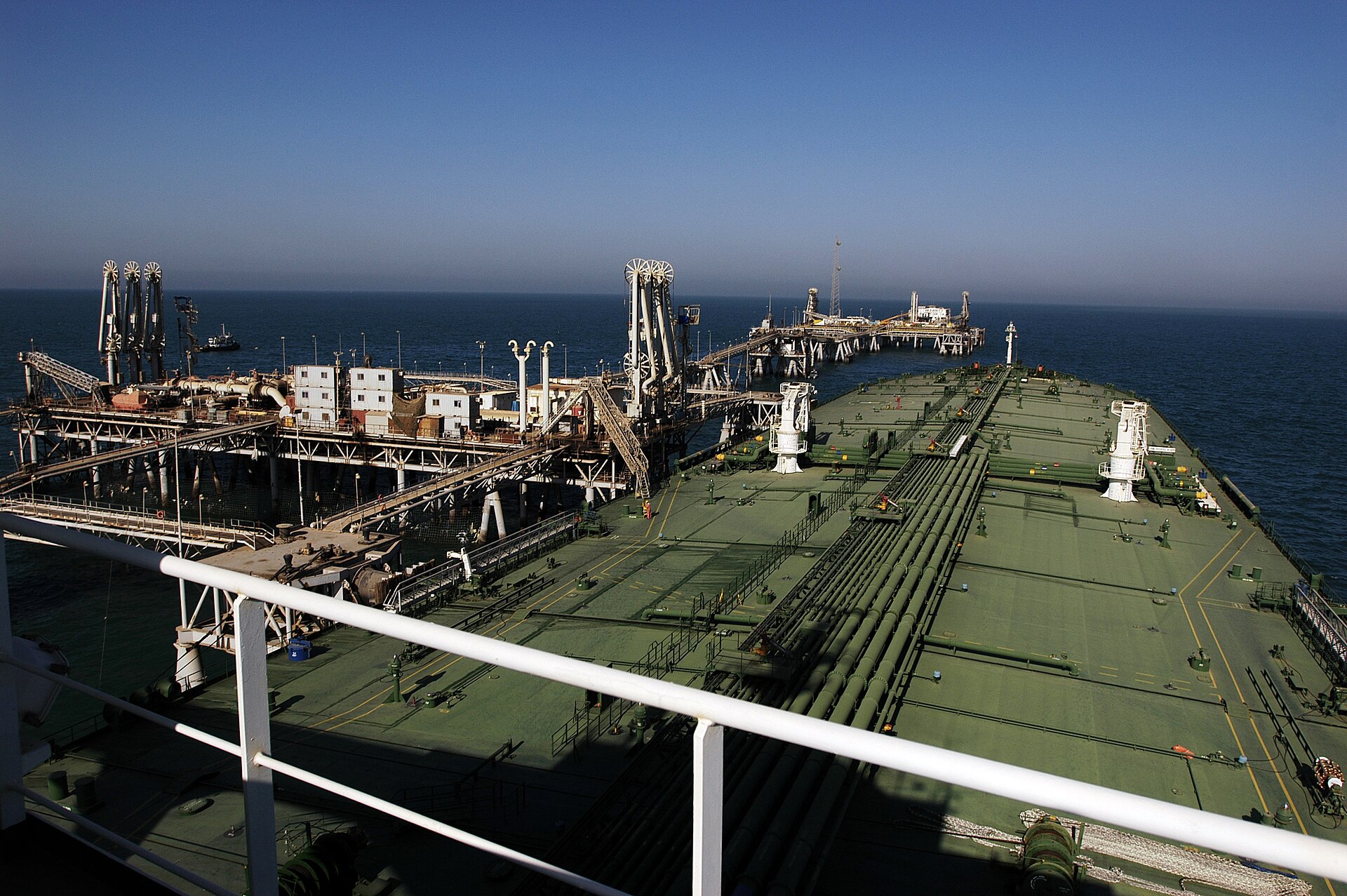
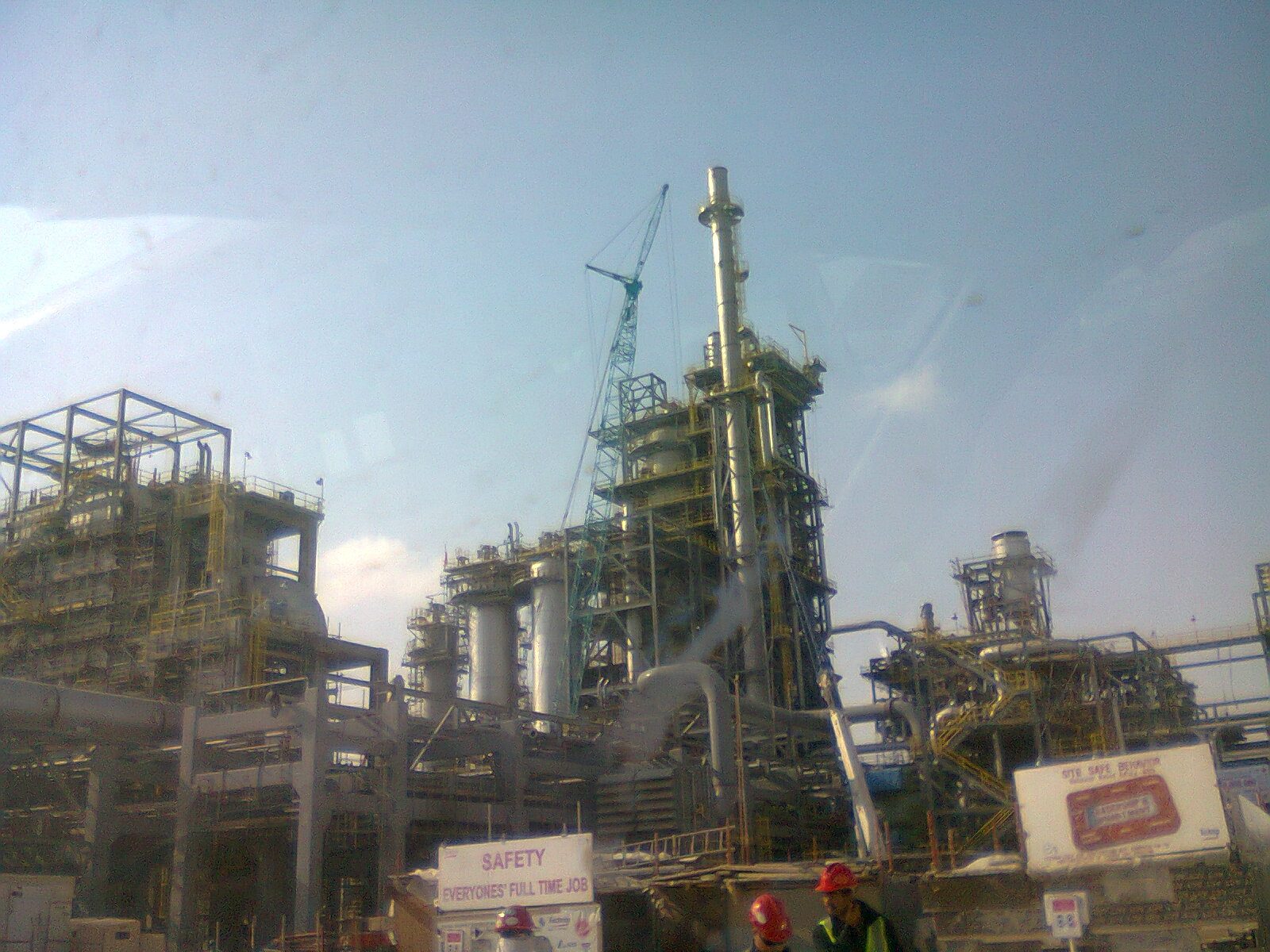
The Saudi Aramco Mobil Refinery, known as SAMREF, sits at the terminus of Saudi Arabia’s East-West pipeline — the 1,200-kilometre Petroline that carries crude from the oil-rich Eastern Province to the Red Sea coast, bypassing the Strait of Hormuz entirely. With Hormuz effectively closed since early March, SAMREF and the broader Yanbu export complex have become the Kingdom’s single most important oil infrastructure outside of its eastern production fields.
Bloomberg reported on March 18 that Saudi Arabia had revived roughly half of its oil exports via the Hormuz bypass, with loadings at Yanbu averaging 2.2 million barrels per day in the first nine days of March — double the 1.1 million barrels per day recorded in February. At least 27 crude carriers were anchored near Yanbu’s two export facilities on Monday, up from 11 on Friday, shipping data showed.
The SAMREF refinery itself processes approximately 400,000 barrels per day and produces gasoline, diesel, and jet fuel for both domestic consumption and export. A successful missile strike on the facility would have disrupted not only refined product supply but also the loading operations at Yanbu’s crude terminal, potentially cutting Saudi Arabia’s remaining export capacity by a quarter at a moment when global markets were already pricing Brent crude above $110 per barrel.
Iran’s decision to target Yanbu — located on the Red Sea coast, more than 1,000 kilometres from the Persian Gulf — signals a deliberate escalation beyond the eastern oil infrastructure that has borne the brunt of Iranian strikes since the war began. Yanbu was previously considered beyond the practical range of Iran’s most common attack vector, the Shahed-136 one-way attack drone. The use of ballistic missiles against the port confirms that Tehran views the Hormuz bypass as a strategic threat worth expending its more expensive and limited missile inventory to disrupt.
What Is the ELDYSA Mission?
ELDYSA — the Hellenic Force in Saudi Arabia — comprises 120 to 130 Greek Air Force personnel operating a single PAC-3-configured Patriot battery originally deployed from Tanagra Air Base outside Athens. The mission began in September 2021 under a bilateral defense agreement signed between Greece and Saudi Arabia following the devastating 2019 Aramco facility strikes at Abqaiq and Khurais, which temporarily knocked out half of Saudi Arabia’s oil production.
The deployment forms part of the multinational Integrated Air and Missile Defense (IAMD) initiative, a framework designed by the United States, Britain, and France to bolster Gulf air defense capabilities by contributing allied Patriot batteries to supplement Saudi Arabia’s own systems. Greece’s contribution was initially focused on defending Aramco energy facilities against Houthi missile and drone attacks from Yemen.
Saudi Arabia covers all operational and logistical costs for the ELDYSA mission, according to Defence Security Asia, and additionally finances upgrades to Greece’s PAC-3 system — a financial arrangement that has drawn scrutiny in the Greek parliament but broad support across the political spectrum. The Hellenic Parliament voted to extend the deployment through November 2026 following a formal request from Riyadh, making the current extension the fourth since the mission’s inception.
Thursday’s intercept marked the first operational engagement by ELDYSA personnel since the mission began more than four years ago. The battery had previously operated in a training and readiness posture, integrated into the broader Saudi air defense network but never called upon to fire in anger.
How Does the Patriot System Intercept Ballistic Missiles?
The MIM-104 Patriot, produced by Raytheon, is the Western world’s most widely deployed theater ballistic missile defense system. The PAC-3 variant operated by the Greek battery at Yanbu represents the system’s most advanced configuration, employing hit-to-kill kinetic interceptors rather than the fragmentation warheads used in earlier PAC-2 models. Each interceptor destroys its target through direct collision at closing speeds exceeding Mach 5, a technique that eliminates the target completely rather than merely damaging it.
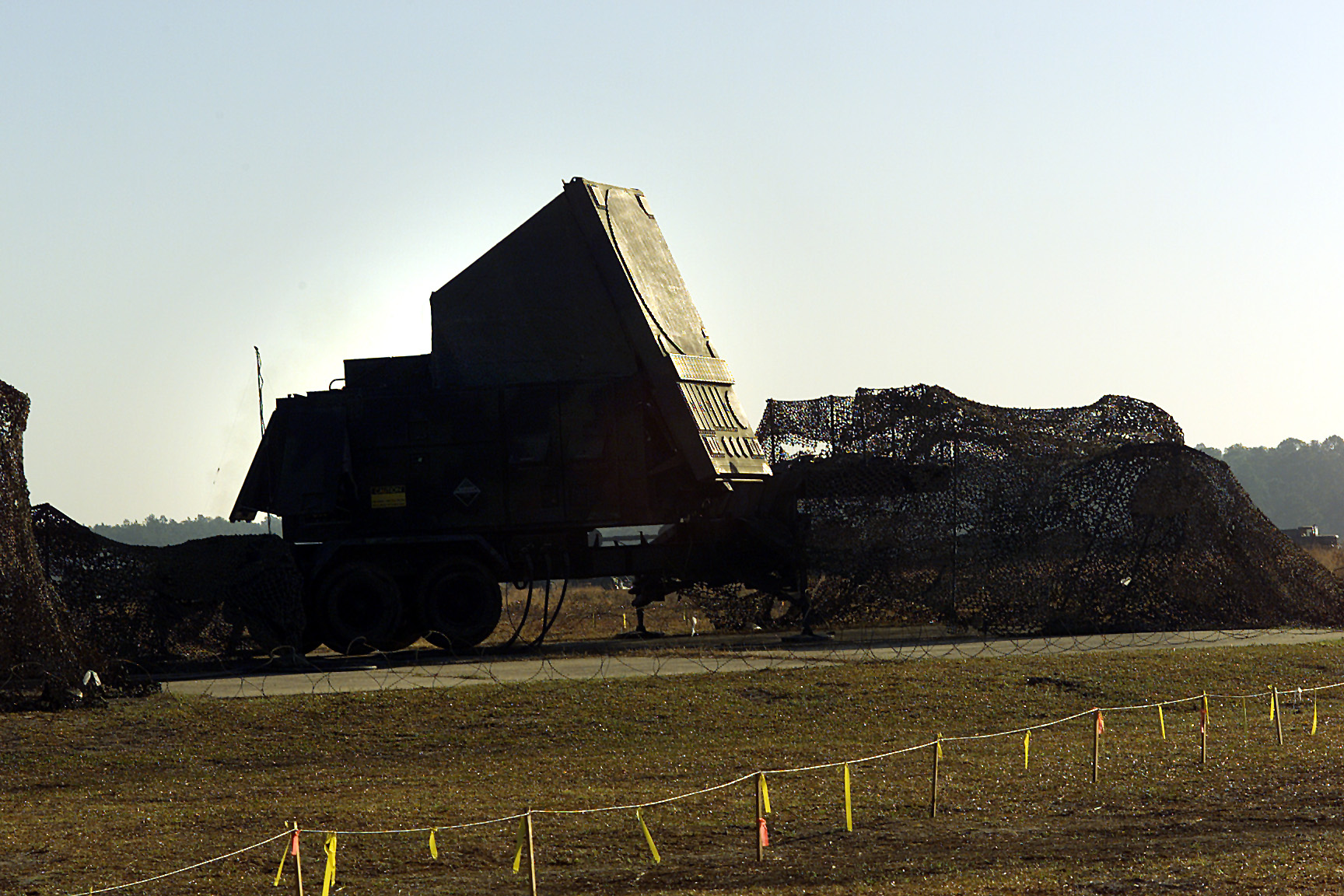
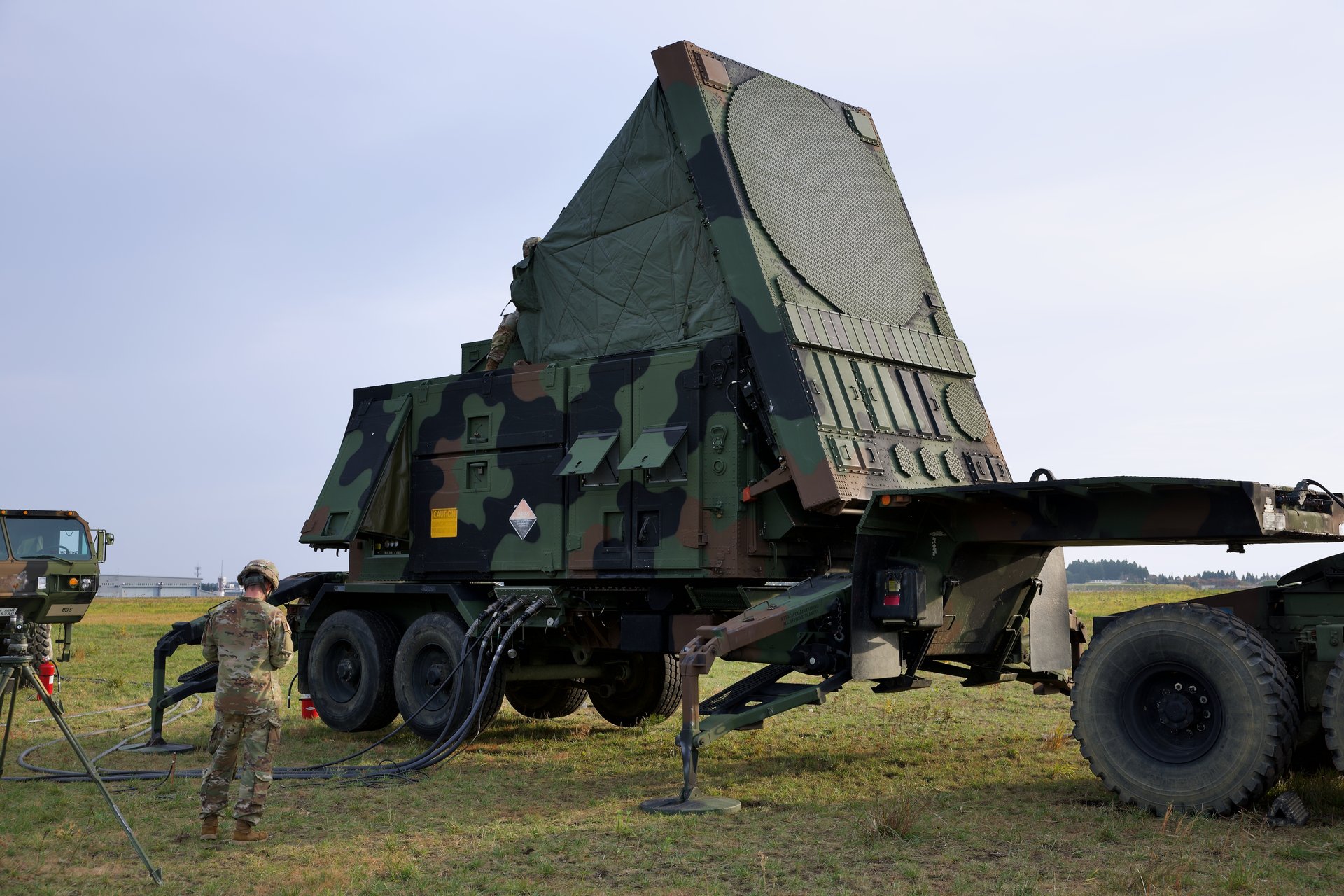
A standard Patriot battery consists of the AN/MPQ-53 phased array radar, which can simultaneously track more than 100 targets at ranges exceeding 150 kilometres; an engagement control station where operators manage the intercept sequence; and up to eight mobile launchers, each carrying four PAC-3 missiles in canisters. The battery can engage multiple threats simultaneously, a capability critical in the saturation attack environments that have characterised the Iran war.
The system’s combat record has improved dramatically since its controversial debut during the 1991 Gulf War, when early PAC-2 batteries achieved mixed results against Iraqi Scud missiles. The PAC-3 variant proved its effectiveness against Iranian ballistic missiles in Saudi Arabia’s defense of Riyadh earlier in the current conflict, and Ukrainian forces have used the system to intercept Russian Kinzhal hypersonic missiles — a feat that expanded the system’s proven engagement envelope.
Each PAC-3 interceptor costs approximately $4 million, according to the Congressional Research Service, compared to an estimated $20,000 to $50,000 for the Shahed-136 drones that constitute the bulk of Iran’s daily attacks. The cost asymmetry — a ratio of roughly 80 to 1 — explains why Saudi Arabia’s multi-layered air defense network relies on cheaper systems for drone interception, reserving Patriot batteries for the ballistic missile threat.
The rapid depletion of interceptor stocks across the Gulf has added urgency to Washington’s resupply efforts. Secretary of State Marco Rubio invoked emergency authority to push through the $16.5 billion emergency arms package for the UAE, Kuwait, and Jordan, bypassing congressional review to accelerate delivery of THAAD systems, Patriot missiles, and counter-drone platforms that Gulf allies need to sustain their air defense networks under continuous Iranian bombardment.
What Does a Greek Combat Engagement Mean for NATO?
Greece’s intercept of Iranian missiles creates an unprecedented situation within NATO. No Article 5 obligation compelled Athens to deploy forces to Saudi Arabia; the ELDYSA mission is a bilateral arrangement outside NATO’s command structure. Yet the fact that Greek military personnel have now fired weapons against Iranian targets — even in a defensive capacity — risks drawing the alliance into a conflict that its leadership has studiously avoided.
NATO Secretary General Mark Rutte has not commented on the intercept. The alliance’s official position maintains that member states’ bilateral deployments do not constitute NATO operations, a distinction that may prove difficult to sustain if Iran retaliates against Greek interests or assets. Turkey, a NATO member that shares a maritime boundary with Greece and has maintained diplomatic ties with Tehran throughout the conflict, has been particularly vocal about keeping the alliance out of the Gulf war.
The Greek engagement also raises questions about the status of other European military contributions to Gulf defense. France has maintained naval assets in the region, the United Kingdom has deployed RAF jets to defend Gulf airspace, and the Netherlands previously deployed a Patriot battery to Turkey during the Syrian civil war under a similar bilateral arrangement. The precedent set by Greece’s combat engagement may accelerate or complicate these nations’ calculations about the depth of their Gulf involvement. An assessment of why European soldiers are fighting in the Gulf while Europe insists it is not at war reveals the full scale of the contradiction.
Athens’s decision to maintain the ELDYSA deployment through the Iran war reflects a strategic calculation that extends beyond Gulf security. Greece’s relationship with Saudi Arabia has deepened steadily since 2020, encompassing defense cooperation, energy partnerships, and significant Saudi investment in Greek tourism infrastructure. The Patriot deployment, according to analysts at the Hellenic Foundation for European and Foreign Policy, serves as both a security contribution and a diplomatic instrument that reinforces Athens’s position as a reliable partner in Riyadh’s expanding web of bilateral defense relationships.
Iran’s Simultaneous Four-Country Strike
The attack on Yanbu formed part of what military analysts are calling the broadest single-day Iranian offensive since the war began. Within a 12-hour window on Thursday, Iranian forces struck energy infrastructure in Saudi Arabia, Qatar, the UAE, and Kuwait simultaneously — a coordinated operation that appeared designed to overwhelm Gulf air defenses and inflict maximum economic disruption.
Iran hit Qatar’s Ras Laffan LNG complex — the world’s largest liquefied natural gas facility — with missiles that caused significant damage, according to Qatar’s Ministry of Foreign Affairs. Doha responded by expelling Iran’s military and security attachés within 24 hours, declaring them persona non grata and condemning the attack as a “direct threat” to national security. The strike on Ras Laffan disrupted approximately 30 percent of the world’s LNG supply, according to industry estimates.
UAE gas fields and facilities were also hit, alongside two Kuwaiti refineries that Iranian state television had explicitly named as targets hours before the attacks began. The advance warning — broadcast on Iranian state television alongside threats to strike “every oil and gas facility in Qatar, Saudi Arabia, and the UAE” — suggested Tehran intended the attacks as both a military operation and a psychological campaign aimed at Gulf populations.
The escalation followed Israel’s March 18 strike on Iran’s South Pars gas field, which damaged the world’s largest natural gas deposit shared between Iran and Qatar. Tehran framed its Gulf attacks as retaliation for the South Pars strike, though the pattern of Iranian escalation against Gulf energy infrastructure predates the South Pars attack by several days.
International benchmark Brent crude briefly surged above $119 per barrel on Thursday morning before settling at $111.06, a rise of more than 3 percent, according to CNBC. European natural gas prices jumped by 15 percent on fears that the disruption to Qatari LNG supply would tighten an already constrained global gas market heading into spring.
Saudi Arabia Hints at Military Response
Saudi Foreign Minister Prince Faisal bin Farhan Al Saud issued his most forceful statement of the conflict on Thursday, warning Tehran that the Kingdom “reserves the right to take military actions, if deemed necessary” and that Iranian tolerance of Saudi restraint “is limited.” The statement, delivered during a press conference in Riyadh, stopped short of promising specific retaliation but represented a marked shift from the Kingdom’s previous insistence on a purely defensive posture.
The warning came hours after the Saudi Defense Ministry confirmed the interception of 65 drones and multiple ballistic missiles across several regions of the Kingdom on Thursday alone. Saudi Arabia has absorbed hundreds of Iranian drone and missile attacks since the war began in late February without launching offensive strikes against Iranian territory, a restraint that Washington has publicly praised but that has generated increasing frustration within the Saudi military establishment.
Saudi Arabia’s defense minister, Prince Khalid bin Salman, contacted his counterparts in the UAE and condemned Iran’s “aggression against the sovereignty of Gulf states,” according to the Saudi Press Agency. The coordinated diplomatic response — paralleled by Qatar’s expulsion of Iranian military personnel — suggests the Gulf Cooperation Council may be approaching a collective decision on military action that individual member states have avoided taking unilaterally. That coordination crystallized on the same day when a twelve-nation summit in Riyadh endorsed Saudi Arabia’s right to self-defense under Article 51, giving the Kingdom multilateral backing that could serve as legal and diplomatic cover for any future offensive action.
Athens Frames Intercept as Defensive
The Greek Defense Ministry characterised the Yanbu intercept as “a defensive action, not an escalation or an attack,” according to ministry sources cited by ProtoThema. The language was carefully chosen to position the engagement within the ELDYSA mission’s existing mandate — the defense of Saudi energy infrastructure — rather than as a new military commitment against Iran.
Greek Prime Minister Kyriakos Mitsotakis, who has cultivated a personal relationship with Crown Prince Mohammed bin Salman since 2020, did not issue a public statement on the intercept by Thursday afternoon. The silence appeared deliberate, allowing the Defense Ministry’s framing as a routine defensive operation to stand without elevating the incident to a head-of-state level that would invite a direct Iranian response.
The engagement is likely to intensify debate within Greece about the ELDYSA mission’s scope and risk profile. When the Greek Parliament approved the latest extension through November 2026, proponents argued that the mission was a low-risk deployment to an area far from active conflict. Thursday’s events demolished that assumption. Greek military personnel are now actively defending Saudi oil infrastructure against Iranian ballistic missiles in what has become the most significant armed conflict in the Middle East since the 2003 invasion of Iraq.
Opposition parties in Athens had previously questioned the deployment’s legality under Greek constitutional provisions governing overseas military operations. The combat engagement may trigger a mandatory parliamentary review, though the governing New Democracy party holds a comfortable majority and is unlikely to face a serious challenge to the mission’s continuation.
| Element | Detail |
|---|---|
| Mission name | ELDYSA (Hellenic Force in Saudi Arabia) |
| Deployment start | September 2021 |
| Current mandate | Extended through November 2026 |
| Personnel | 120–130 Hellenic Air Force |
| System | PAC-3 configured Patriot battery from Tanagra Air Base |
| Components | AN/MPQ-53 radar, engagement control station, up to 8 mobile launchers |
| Primary mission | Defense of Saudi Aramco energy infrastructure |
| Framework | Integrated Air and Missile Defense (IAMD) initiative |
| Funding | Saudi Arabia covers all costs plus Greek PAC-3 upgrades |
| First combat engagement | March 19, 2026 (Yanbu intercept) |
Greece’s combat engagement at Yanbu is one piece of a much larger mosaic. For a comprehensive look at how NATO allies, Asian powers, and Gulf neighbours have converged into the accidental alliance defending Saudi Arabia from Iran, and why this ad-hoc coalition may reshape Middle Eastern security long after the last missile is intercepted, read our full analysis.
Frequently Asked Questions
Did Greece shoot down Iranian missiles in Saudi Arabia?
Yes. On March 19, 2026, a Greek-operated Patriot PAC-3 battery stationed at Yanbu on Saudi Arabia’s Red Sea coast intercepted and destroyed two Iranian ballistic missiles targeting the SAMREF oil refinery. The Greek Defense Ministry confirmed the engagement, describing it as a defensive action within the ELDYSA mission’s existing mandate to protect Saudi energy infrastructure.
What is the ELDYSA mission?
ELDYSA is the Hellenic Force in Saudi Arabia, comprising 120 to 130 Greek Air Force personnel operating a PAC-3 Patriot battery deployed from Tanagra Air Base. The mission began in September 2021 under a bilateral defense agreement and has been extended through November 2026 as part of the multinational Integrated Air and Missile Defense initiative.
Why was Iran targeting the SAMREF refinery at Yanbu?
The SAMREF refinery sits at the terminus of Saudi Arabia’s East-West pipeline, the Kingdom’s primary alternative to exporting oil through the Strait of Hormuz. With Hormuz effectively closed, Yanbu has become Saudi Arabia’s most important export hub, handling 2.2 million barrels per day in early March 2026, according to Bloomberg. Destroying or damaging SAMREF would severely disrupt the Kingdom’s remaining export capacity.
Does this mean NATO is involved in the Iran war?
Not formally. Greece’s ELDYSA mission is a bilateral arrangement between Athens and Riyadh, operating outside NATO’s command structure. However, the combat engagement creates a political reality in which a NATO member’s military personnel have fired weapons against Iranian targets, complicating the alliance’s stated neutrality in the Gulf conflict.
How many Iranian missiles and drones did Saudi Arabia intercept on March 19?
Saudi Arabia’s Defense Ministry reported intercepting at least two ballistic missiles and 65 drones across multiple regions on March 19, 2026. The ballistic missile intercepts occurred at Yanbu Port and the Eastern Province, while drones were destroyed across Riyadh, the Eastern Province, and other regions. One drone evaded interception and struck the SAMREF refinery in Yanbu.