
WASHINGTON — President Donald Trump said on Friday that the United States is considering “winding down” military operations against Iran, claiming that American forces are close to achieving their objectives after three weeks of sustained airstrikes. Hours later, the Pentagon confirmed that roughly 8,000 Marines and sailors aboard six amphibious warships are steaming toward the Persian Gulf, the largest such reinforcement since the war began on February 28.
Whether Trump’s rhetoric translates into policy depends on which of the five endgame scenarios for the Iran war materializes — and each path carries radically different consequences for Saudi Arabia.
The contradiction between Trump’s declaration of near-victory and the simultaneous deployment of thousands of additional combat troops underscored the growing tension between the president’s desire to exit the conflict and the military’s assessment that the war is far from over. As oil prices settled at $112.19 per barrel and Iranian drones continued to strike Gulf energy infrastructure, the implications for Saudi Arabia and its neighbours were immediate and sobering. Within hours of Trump’s remarks, Riyadh opened King Fahd Air Base in Taif to US operations, signalling that the Kingdom was preparing for an extended conflict regardless of Washington’s rhetoric.
Table of Contents
- Trump’s “Winding Down” Declaration
- Why Are 8,000 Marines Heading to the Gulf?
- Who Will Guard the Strait of Hormuz?
- Trump Tells Netanyahu to Stop Hitting Iranian Energy
- What Does a US Withdrawal Mean for Saudi Arabia?
- Stated Objectives Versus Battlefield Reality
- Oil Markets React to Mixed Signals
- Deployment Timeline and Force Composition
- Frequently Asked Questions
Trump’s “Winding Down” Declaration
In a social media post published Friday morning, Trump wrote: “We are getting very close to meeting our objectives as we consider winding down our great Military efforts in the Middle East with respect to the Terrorist Regime of Iran.” The statement, which arrived on Day 21 of the conflict, represented the clearest signal yet that the president is looking for an exit from the war, according to NPR.
Trump listed five objectives he said were nearing completion. These included “completely degrading” Iran’s missile capability, “destroying” the country’s defence industrial base, eliminating its navy and air force — a campaign in which A-10 Warthogs have destroyed more than 120 Iranian vessels in the Strait of Hormuz — preventing Tehran from ever achieving nuclear capability, and protecting American allies in the region, including Israel, Saudi Arabia, Qatar, the United Arab Emirates, Bahrain, and Kuwait.
“I think we’ve won,” Trump told reporters at the White House later on Friday, according to The National. He rejected the term “ceasefire,” saying the United States would not negotiate with Iran — a position that has left twelve separate mediation efforts without a credible American counterpart but would instead reduce its military footprint once objectives had been met.
The Middle East briefing 3,000+ readers start their day with.
One email. Every weekday morning. Free.
The distinction between “winding down” and “ceasefire” was a carefully calibrated semantic choice, according to analysts. “A ceasefire implies negotiation and compromise. Winding down implies mission accomplished,” said a former State Department official quoted by Fortune. The framing allowed Trump to signal withdrawal without the political cost of conceding that Iran had survived the campaign.
Yet the declaration sat uneasily alongside earlier statements. Asked about troop deployments just hours before his “winding down” post, Trump told reporters: “No. I’m not putting troops anywhere,” according to NPR. Central Command declined to comment on the deployment or mission details.
Why Are 8,000 Marines Heading to the Gulf?
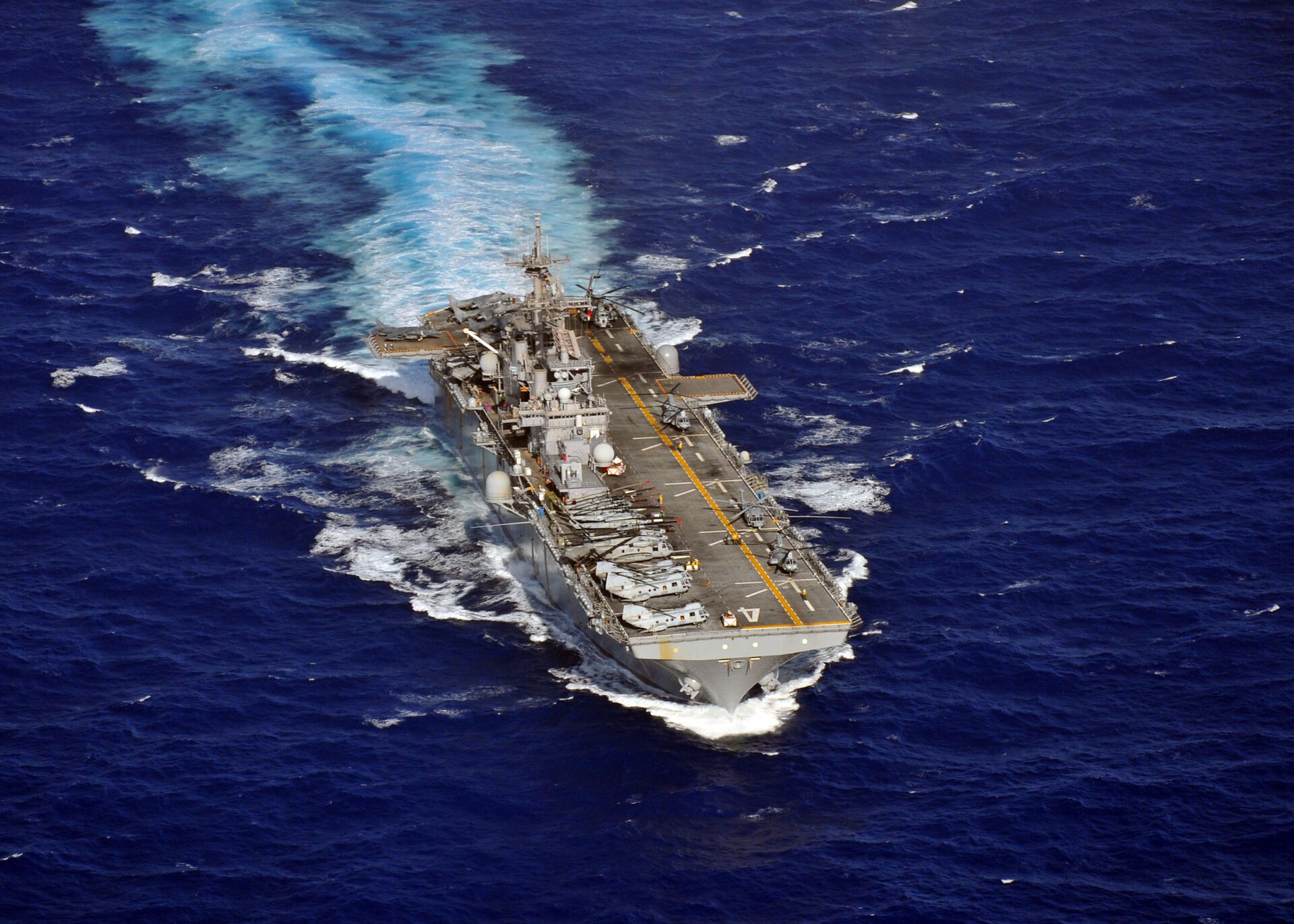
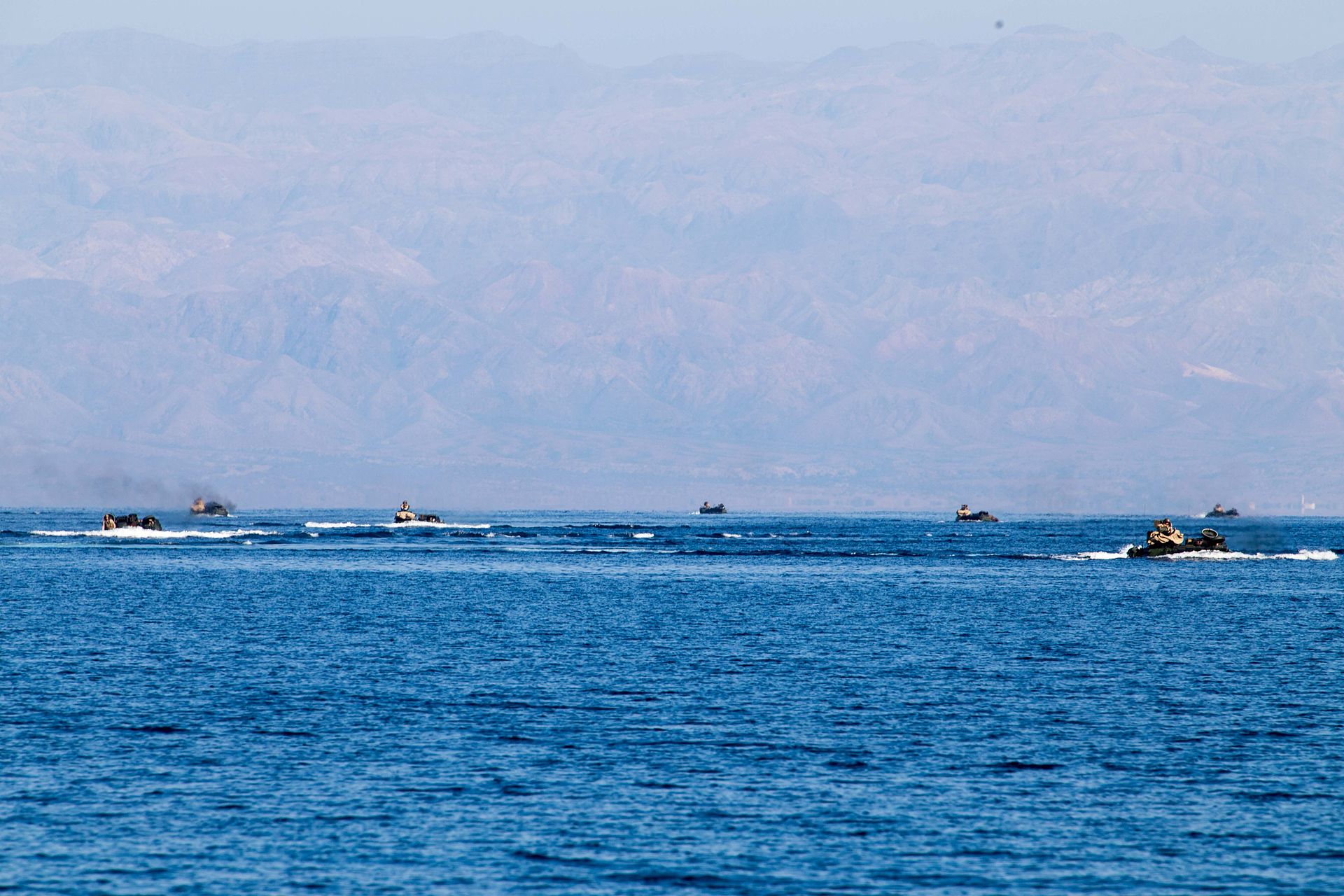
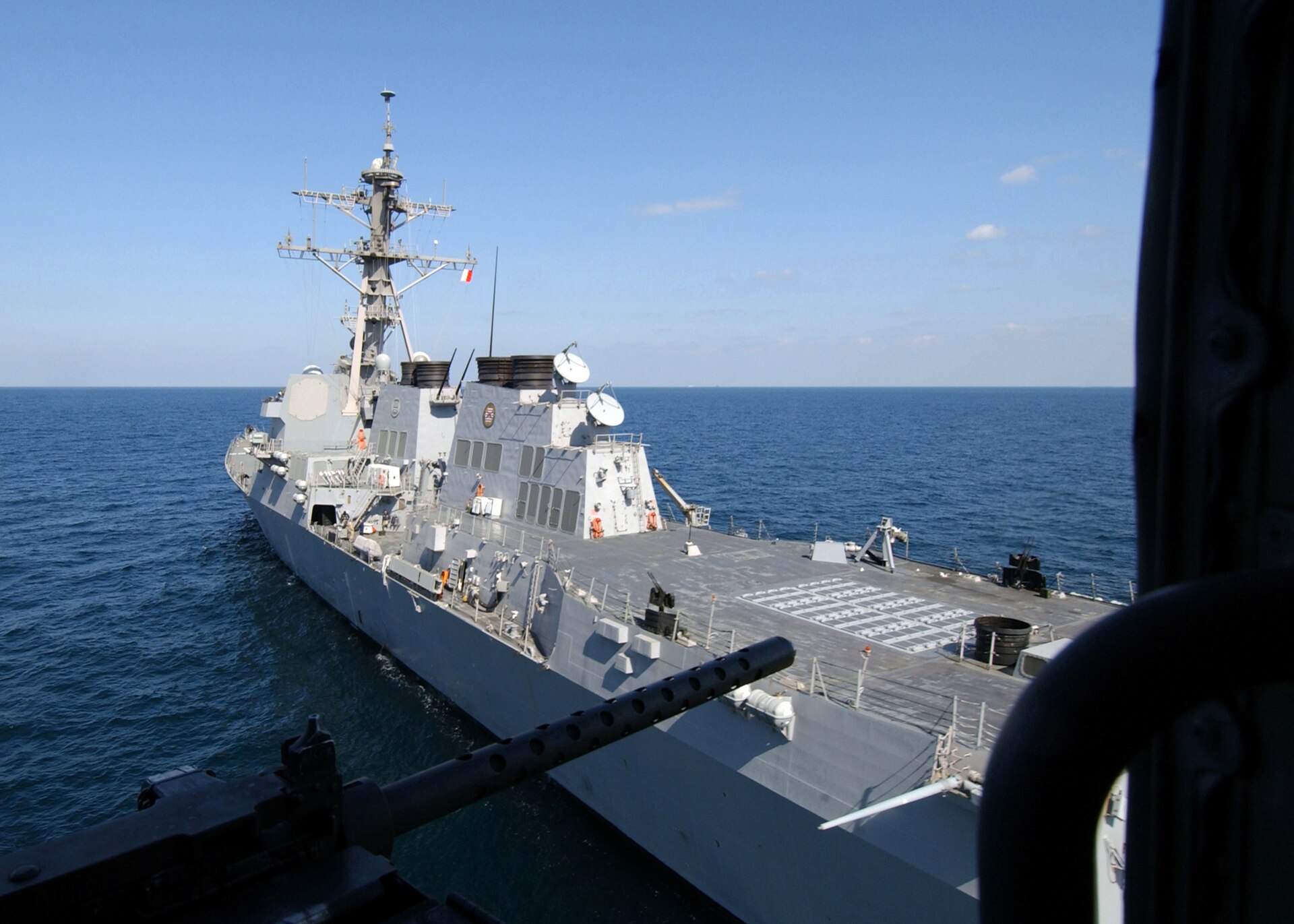
The USS Boxer Amphibious Ready Group, carrying at least 2,200 Marines from the 11th Marine Expeditionary Unit, departed San Diego on Wednesday. Reuters reported that the deployment occurred roughly three weeks ahead of schedule, according to The Hill. The Boxer group consists of three ships, including the amphibious assault ship USS Boxer (LHD 4), and carries helicopters, Osprey tiltrotor aircraft, and amphibious assault vehicles capable of conducting beach landings.
The deployment came less than a week after the USS Tripoli group, with more than 2,200 Marines and sailors, departed Japan for the same region. Once both groups reach the Gulf, approximately 8,000 additional service members aboard six amphibious ships will have reinforced the US presence, according to Stars and Stripes.
The amphibious forces will join the USS Abraham Lincoln carrier strike group, which has been conducting airstrikes against Iranian targets since the war began. Pentagon officials would not specify whether the Marine units were intended for a potential ground operation against Iran, but military analysts noted that amphibious assault ships are designed specifically for forced-entry operations from the sea.
“You don’t send two amphibious ready groups with 8,000 Marines to wind down a war,” said a defence analyst quoted by The War Zone. “These are offensive platforms. They’re designed to put Marines on a hostile shore.” The speculation about a potential ground invasion of Iranian territory has intensified since the USS Boxer’s accelerated departure, according to the World Socialist Web Site.
The Pentagon has so far bypassed Congress to rush $16 billion in emergency arms to Gulf states and requested an additional $200 billion from Congress for ongoing operations. The Marine deployments represent a separate and additional commitment of forces that was not included in those appropriation requests.
Who Will Guard the Strait of Hormuz?
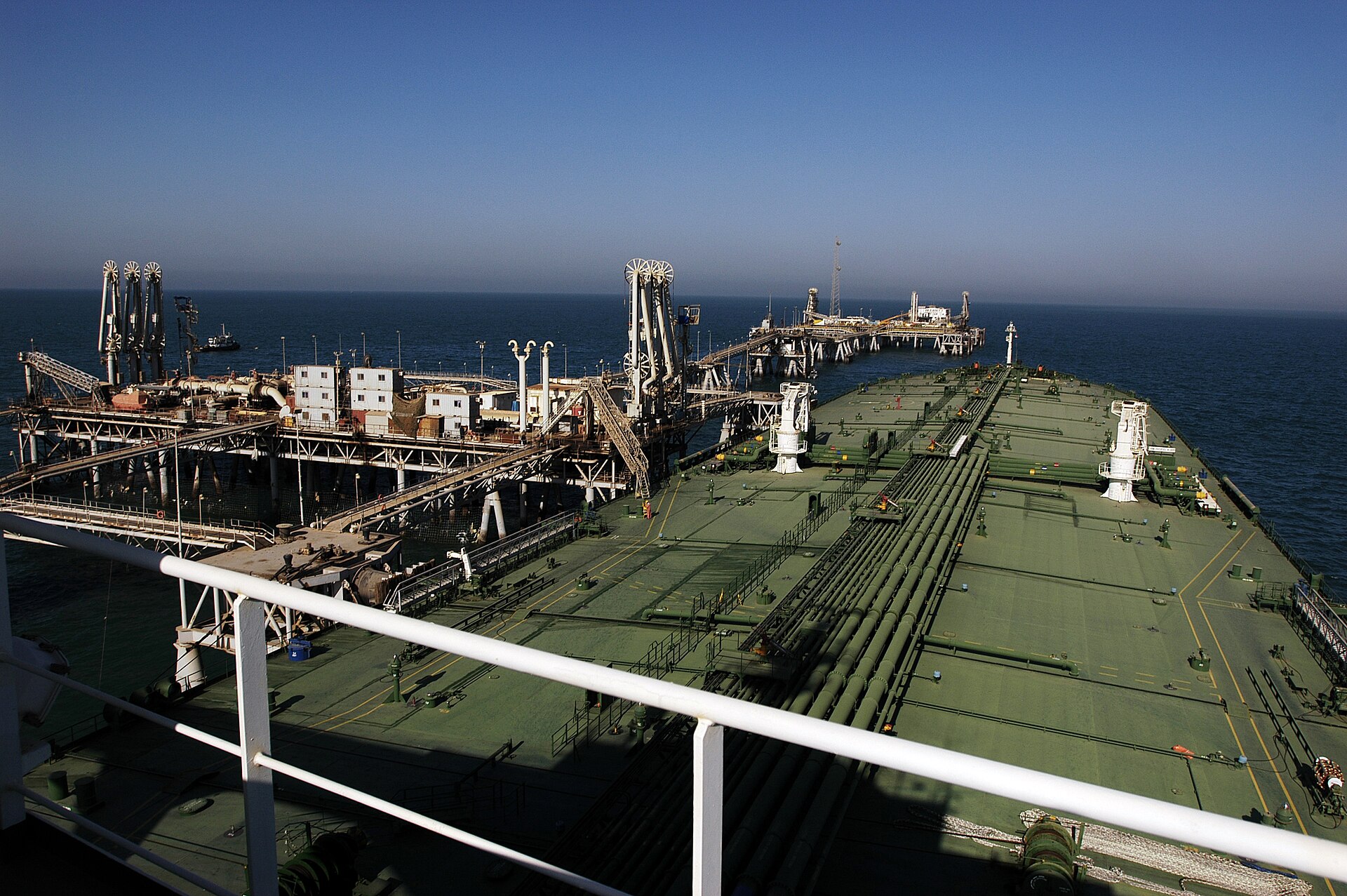
Perhaps the most consequential element of Trump’s Friday statement was his position on the Strait of Hormuz, the 21-mile-wide chokepoint through which roughly 20 percent of the world’s oil and liquefied natural gas normally flows. The strait has been effectively closed to commercial traffic since Iran blockaded it in the opening days of the war.
“The Hormuz Strait will have to be guarded and policed, as necessary, by other Nations who use it — The United States does not!” Trump wrote, according to The Blaze. He added that the United States would “help these Countries in their Hormuz efforts” if asked, “but it shouldn’t be necessary once Iran’s threat is eradicated.”
The statement directly contradicted the Pentagon’s own efforts to assemble a multinational Hormuz coalition, which had been proceeding under the assumption that the US Navy would anchor any reopening operation. NATO allies, Japan, South Korea, and China have so far rebuffed American demands to contribute warships, according to NPR.
Trump escalated his frustration on social media, calling NATO allies “COWARDS” for refusing to help reopen the strait. “They complain about high oil prices but don’t want to help open the Strait of Hormuz, a simple military maneuver,” he wrote, according to ABC News. He described a reopening as something “other Nations” should handle, characterising it as “an easy Military Operation” once Iran’s threat was neutralised.
For Saudi Arabia, the implications were stark. The Kingdom relies on the Strait of Hormuz for a substantial portion of its oil exports, though it has activated the East-West Pipeline to Yanbu on the Red Sea as a partial bypass. Saudi Foreign Minister Prince Faisal bin Farhan warned on Thursday that the Kingdom’s patience with Iranian attacks “is not unlimited” and that Riyadh reserves the right to take military action.
The prospect of the United States stepping back from Hormuz while Iran continues to attack Gulf energy infrastructure created what one Gulf diplomatic source described to Bloomberg as “the worst possible signal at the worst possible time.”
Trump Tells Netanyahu to Stop Hitting Iranian Energy
In a separate development that directly affects the Gulf energy picture, Trump complained to Israeli Prime Minister Benjamin Netanyahu about Israel’s recent strike on Iran’s South Pars gas field, the world’s largest natural gas reserve shared between Iran and Qatar, according to NPR.
Netanyahu agreed to halt future strikes on Iranian energy infrastructure. “President Trump asked us to hold off on future attacks, and we’re holding off,” Netanyahu said, according to NPR’s report. The agreement marked a rare public disagreement between the two leaders over targeting strategy.
NPR reported that the US and Israel had in fact coordinated on all previous targets, contradicting Trump’s initial claim that he “knew nothing” about the South Pars strike. The attack on the gas field had triggered a wave of Iranian retaliatory strikes on Gulf energy facilities, including Qatar’s Ras Laffan LNG terminal and Saudi Arabia’s Jubail industrial complex.
The Trump-Netanyahu understanding on energy infrastructure represented a pragmatic calculation. Destroying Iranian energy capacity would permanently remove millions of barrels of daily supply from the global market, pushing oil prices even higher and deepening the economic pain that was already eroding public support for the war in the United States. Gasoline prices in California had reached $8 per gallon, according to Fortune, and US equity markets had fallen nearly 2 percent for the week.
Washington had also temporarily lifted sanctions on 140 million barrels of Iranian oil at sea until April 19, a move that appeared designed to ease supply constraints even as the military campaign continued. The decision to protect Iranian energy infrastructure while bombing its military capabilities reflected a calculus that prioritised short-term price stability over long-term strategic destruction.
What Does a US Withdrawal Mean for Saudi Arabia?
Saudi Arabia occupies the most exposed position of any US ally in the event of an American withdrawal. The Kingdom hosts multiple US military installations, including Prince Sultan Air Base, and has absorbed hundreds of Iranian drone and missile strikes since the war began. Its air defence systems have intercepted the majority of incoming threats, but the sheer volume of Iranian attacks has strained interceptor supplies and tested the limits of the multilayered defence architecture.
On Friday alone, the Saudi Ministry of Defence announced that Royal Saudi Air Defense Forces had destroyed at least 26 explosive-laden drones targeting the Al-Jawf and Eastern Province regions, according to Voice of Emirates and Arab News. The Eastern Province contains the Kingdom’s most critical oil production and processing infrastructure, including Aramco’s sprawling Abqaiq and Ras Tanura complexes.
The timing of Trump’s withdrawal signal was particularly sensitive. Prince Faisal bin Farhan had just warned Iran that Saudi patience was running out, a statement that many analysts interpreted as laying the groundwork for possible Saudi military action. If the United States winds down its operations before Iran’s strike capability is fully neutralised, Saudi Arabia faces a choice between continued restraint under fire and independent military action without guaranteed American support.
The $16 billion emergency arms package that Secretary of State Marco Rubio pushed through without congressional approval was intended to strengthen Gulf defences. But military hardware without the operational umbrella of American air power and intelligence networks would leave Saudi Arabia fighting a fundamentally different war than the one currently being waged.
Defence Minister Prince Khalid bin Salman has been coordinating closely with his counterparts in the UAE, Bahrain, and Kuwait, according to the Saudi Press Agency. The Gulf Cooperation Council’s collective defence framework — long dismissed as a paper arrangement — is being tested as never before. Pakistan has already deployed air defence units and troops to the Kingdom, and Riyadh signed a $5 billion deal in March to build Chinese combat drones in Jeddah.
The calculus for Crown Prince Mohammed bin Salman is particularly difficult. Saudi Arabia has maintained its restraint throughout the conflict, absorbing Iranian strikes while relying on American and allied air defences. But if Washington withdraws that umbrella, MBS faces the prospect of either accepting continued vulnerability or activating the offensive military capabilities the Kingdom has spent tens of billions of dollars acquiring. Neither option comes without significant risk.
Stated Objectives Versus Battlefield Reality
Trump’s claim that American forces were close to meeting their objectives faced immediate scrutiny from military experts and intelligence officials. The president’s stated goal of “completely degrading” Iran’s missile capability appeared at odds with the reality on the ground, where Iranian missiles and drones continue to strike targets across the Gulf on a daily basis.
The US military had previously claimed to have destroyed Iran’s missile capacity, only for Iran to demonstrate otherwise. “US says it has destroyed Iran missile capacity: How is Iran still shooting?” Al Jazeera asked in a March 16 report. Intelligence estimates suggested Iran maintained large pre-war stockpiles of Shahed drones — between 3,000 and 5,000 assembled units — with manufacturing capacity of 200 to 500 per month.
An F-35 fighter jet made an emergency landing at a US air base in the Middle East on Friday after being struck by what is believed to be Iranian fire, according to NPR. The incident demonstrated that Iran retains the ability to threaten even the most advanced American military platforms three weeks into the campaign.
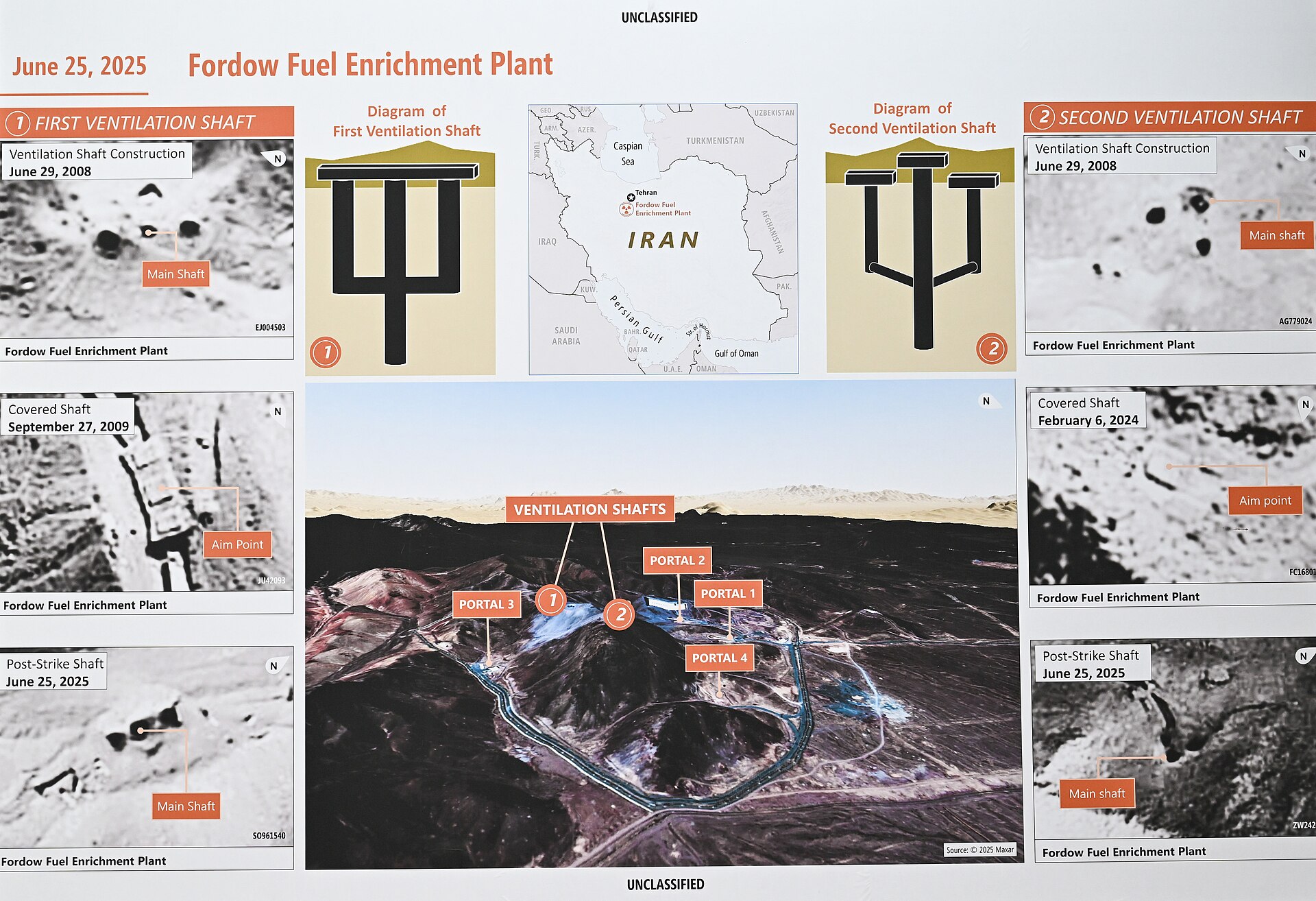
Netanyahu’s claim that Iran “has no ability to enrich uranium” was also disputed. Rafael Mariano Grossi, the director general of the International Atomic Energy Agency, assessed that Iran’s enrichment capacity would likely remain despite the military damage, according to NPR. The gap between political declarations and technical assessments suggested that the “winding down” narrative was driven more by domestic political considerations than by battlefield conditions. The most consequential unfinished objective — securing the 440.9 kilograms of enriched uranium buried beneath Iran’s mountain facilities — cannot be achieved through airstrikes alone and would require the very ground deployment Trump insists is not happening.
| Objective | Trump’s Claim | Independent Assessment |
|---|---|---|
| Degrade missile capability | “Completely degraded” | Iran continues daily drone and missile strikes on Gulf states |
| Destroy defence industrial base | Nearing completion | Pre-war drone stockpile sustains operations; manufacturing capacity unclear |
| Eliminate navy and air force | Largely achieved | Iranian conventional naval forces significantly degraded; IRGC small boats active |
| Prevent nuclear capability | “No ability to enrich” | IAEA says enrichment capacity likely to survive |
| Protect Middle Eastern allies | Ongoing | Saudi Arabia intercepted 26 drones on Eid al-Fitr alone; Kuwait refinery struck |
Oil Markets React to Mixed Signals
Brent crude settled at $112.19 per barrel on Friday, its highest close since the war began, according to Fortune. The price represented a 45 percent increase since the start of hostilities on February 28 and reflected the near-total closure of the Strait of Hormuz to commercial traffic.
Trump’s “winding down” statement briefly pushed prices lower in after-hours trading, as markets interpreted the signal as suggesting a potential reopening of the strait. But the gains evaporated when traders processed the simultaneous Marine deployment and Trump’s declaration that other nations must guard Hormuz, which implied no near-term American operation to reopen the waterway.
The oil price volatility was compounded by Iranian drone strikes on Kuwait’s Mina Al-Ahmadi oil refinery overnight, which sparked fires at one of the Gulf’s largest processing facilities. Iran had ratcheted up attacks on Gulf energy infrastructure throughout the week, hitting facilities in Saudi Arabia, Qatar, the UAE, and now Kuwait.
Bond markets also reflected the uncertainty. Mortgage-backed securities fell sharply, with the 10-year US Treasury yield rising 7.8 basis points to 4.327 percent on Friday. The prospect of Federal Reserve interest rate increases — which had gone from a zero percent probability to more than 25 percent in less than two days — signalled that the war’s inflationary impact was beginning to reshape monetary policy expectations across the developed world.
Deployment Timeline and Force Composition
The current US military buildup in the Gulf region represents the largest concentration of American amphibious forces in the Middle East since the 2003 invasion of Iraq. The following table details the known force deployments.
| Unit | Ship(s) | Personnel | Departed | Expected Arrival | Status |
|---|---|---|---|---|---|
| USS Abraham Lincoln CSG | Carrier strike group | ~6,500 | Pre-war | Already on station | Conducting airstrikes |
| USS Tripoli ARG / Marines | 3 ships | ~2,200 | ~March 13 | Late March | En route from Japan |
| USS Boxer ARG / 11th MEU | 3 ships | ~2,200 | March 19 | ~April 9 | En route from San Diego |
| Ground-based air defence | N/A | Unknown | Ongoing | N/A | Operating from Gulf bases |
The 11th Marine Expeditionary Unit is a self-contained combat force capable of conducting a range of operations, from humanitarian assistance to amphibious assault. Its equipment includes MV-22 Osprey tiltrotor aircraft, AH-1Z Viper attack helicopters, amphibious assault vehicles, and a reinforced infantry battalion. The accelerated departure from San Diego — three weeks ahead of schedule, according to Reuters — suggested urgency that contradicted the “winding down” narrative.
Once the USS Boxer and USS Tripoli groups join the Abraham Lincoln strike group, the US will have approximately 10,900 naval and Marine personnel in the Gulf theatre, not including ground forces deployed to bases in Saudi Arabia, Qatar, Bahrain, and other Gulf states. The total US military footprint in the region has not been publicly disclosed since the war began.
Frequently Asked Questions
What did Trump say about winding down the Iran war?
President Trump wrote on social media on March 20 that the United States is “getting very close to meeting our objectives as we consider winding down our great Military efforts in the Middle East.” He told reporters he believes the US has won, but rejected the term ceasefire. He said Iran’s missile capacity has been degraded, its navy and air force eliminated, and its nuclear programme set back permanently.
How many US Marines are being sent to the Gulf?
Approximately 8,000 Marines and sailors are heading to the Persian Gulf aboard six amphibious warships. The USS Tripoli group departed Japan with more than 2,200 Marines around March 13, and the USS Boxer group left San Diego with the 11th Marine Expeditionary Unit on March 19, three weeks ahead of schedule. These forces join the USS Abraham Lincoln carrier strike group already on station.
Will the United States reopen the Strait of Hormuz?
Trump indicated that reopening the Strait of Hormuz is not an American responsibility. He wrote that “other Nations who use it” must guard and police the strait, and called NATO allies “cowards” for refusing to contribute warships. The Pentagon had been building a multinational coalition for a Hormuz operation, but Trump’s statement suggested the US would only assist if asked by other nations.
What does this mean for Saudi Arabia?
A US withdrawal before Iran’s strike capability is fully neutralised would leave Saudi Arabia as the primary target of continued Iranian drone and missile attacks without the full umbrella of American air power. Saudi Foreign Minister Prince Faisal bin Farhan warned on Thursday that the Kingdom’s patience “is not unlimited” and reserved the right to independent military action. The Kingdom intercepted 26 drones on Eid al-Fitr alone.
Why did Trump tell Netanyahu to stop hitting Iranian energy?
Trump complained to Israeli Prime Minister Netanyahu about the strike on Iran’s South Pars gas field, which triggered retaliatory attacks on Gulf energy infrastructure. Netanyahu agreed to halt future strikes on Iranian energy facilities. The decision reflected concern that destroying Iranian energy capacity would permanently remove oil supply from the global market, pushing prices higher and deepening economic pain in the United States, where gasoline reached $8 per gallon in California.