
RIYADH — Donald Trump landed back in Washington on Friday after a three-day state visit to Beijing that produced no breakthrough on Iran, posting on Truth Social that “the military decimation of Iran” is “to be continued” — a phrase that arrived in Riyadh alongside a set of structural constraints that make Saudi Arabia less capable of absorbing a second escalation round than at any point since the war began on February 28.
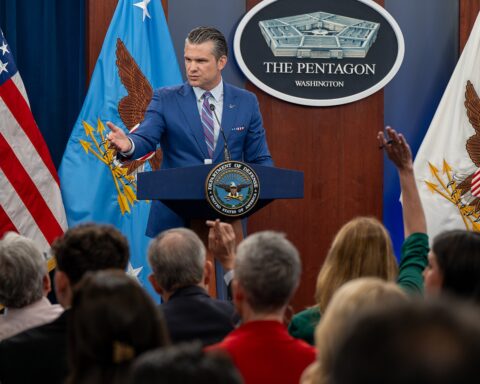
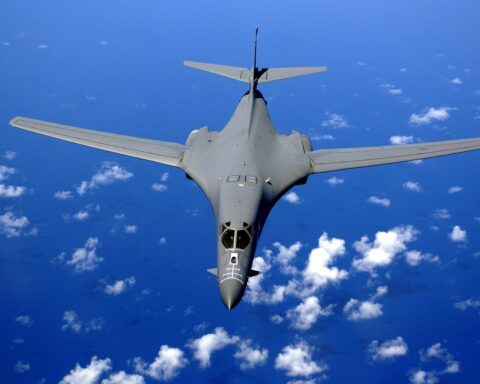
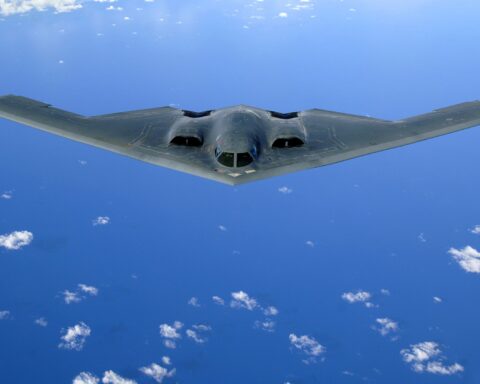
The ceasefire that halted active US-Israeli strikes on April 8 is now, by the president’s own description, “on massive life support.” Multiple US officials have confirmed to CNN and Axios that commanders have been asked to prepare new military options. The Pentagon is actively considering renaming any resumed campaign “Operation Sledgehammer” — a legal mechanism to reset the War Powers Resolution’s 60-day clock. For Saudi Arabia, the question is not whether Washington has the appetite for renewed strikes but whether Riyadh can survive the Iranian response to them with PAC-3 stocks at 14% of pre-war levels, oil production at its lowest since 1990, the East-West Pipeline already at maximum capacity, and a quarterly fiscal deficit that set a national record.
Table of Contents
What Trump Said in Beijing
Trump’s Truth Social post came Friday morning Beijing time — approximately 10 hours after his second meeting with Xi Jinping concluded without a joint statement on Iran. In a long post defending America’s global standing after Xi appeared to refer to the US as “a declining nation,” Trump listed what he called achievements: “the capture of Venezuelan president Nicolás Maduro” and “the military decimation of Iran (to be continued!).” The parenthetical carried weight. It was the first time since the April 8 ceasefire that Trump publicly framed the military campaign as unfinished rather than paused.
Xi offered Trump two things in their private sessions, according to CNN and Fox News: an agreement that Iran cannot have a nuclear weapon, and an agreement that the Strait of Hormuz must remain open. Neither came with an enforcement mechanism, a timeline, or a Chinese commitment to pressure Tehran. “I would like to be of help,” Xi told Trump, per the White House readout. No concrete mechanism followed. Trump told reporters aboard Air Force One on the return flight: “Well, I looked at it and if I don’t like the first sentence, I just throw it away” — referring to Iran’s latest counterproposal.
The gap between what Washington needed from Beijing and what it got is the gap between a diplomatic constraint and its removal. Trump’s stated reason for delaying renewed strikes was to give the China summit a chance. That chance has now passed without result. The constraint, such as it was, no longer applies.
Operation Sledgehammer and the Legal Clock
Operation Epic Fury began on February 28. The War Powers Resolution requires congressional authorization after 60 days of active combat — a deadline that fell on May 1. The administration argues the ceasefire paused the clock after 40 days of active operations. Critics, including Senate Armed Services Committee ranking member Jack Reed, note that the naval blockade of Iranian ports — ongoing since April 13 — constitutes hostilities under any reasonable reading of the statute.
The Middle East briefing 3,000+ readers start their day with.
One email. Every weekday morning. Free.
NBC News reported on May 12 that the Pentagon is considering renaming any resumed campaign “Operation Sledgehammer.” The legal theory: a new operation name creates a new 60-day clock, allowing strikes to continue without congressional authorization through mid-July. The mechanism is not without precedent — the Obama administration’s transition from Operation Odyssey Dawn to NATO’s Unified Protector in Libya served a similar clock-management function — but it has never been applied to a campaign of this scale against a state actor.
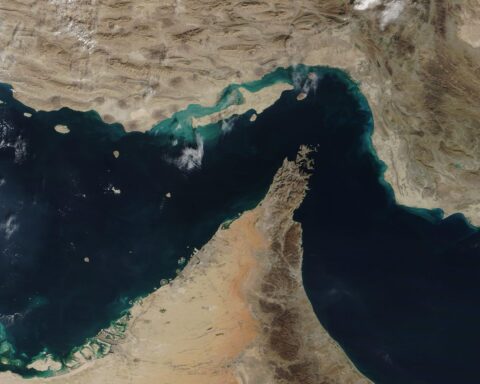
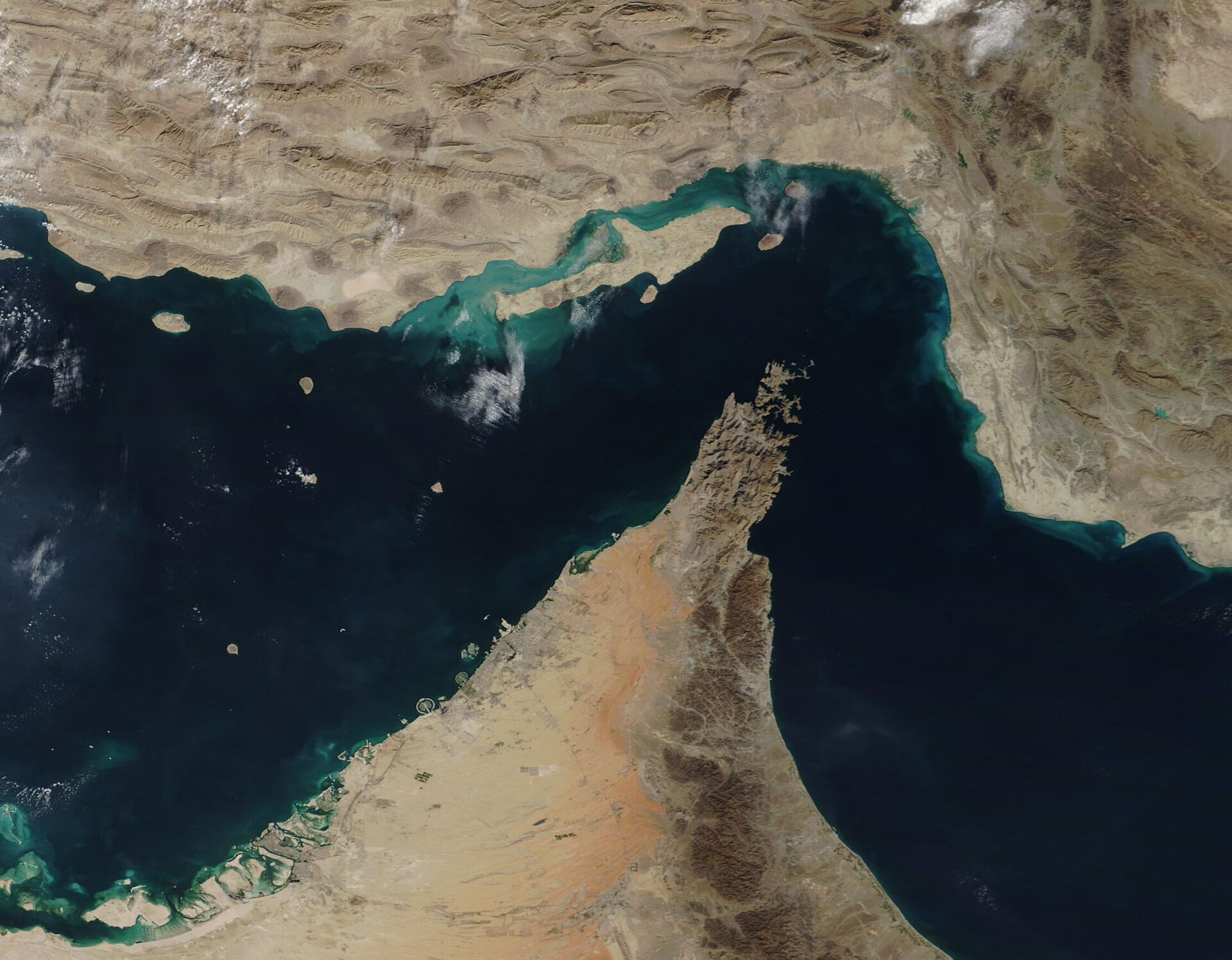
Axios reported on May 11 that the administration’s internal options include resuming “Project Freedom” — the Navy’s Hormuz escort operation — as a limited escalation short of full air strikes. The distinction matters for Riyadh. CENTCOM’s Admiral Brad Cooper told the Senate Armed Services Committee on May 15 that 90% of Iran’s sea mines have been destroyed — yet the Strait remains functionally closed, with approximately 40 ships transiting per week versus a pre-war baseline of 120 per day.
Why Saudi Arabia Cannot Take a Second Round
The Center for Strategic and International Studies published an assessment of Iran’s threat to Saudi critical infrastructure that contained a sentence Riyadh’s defense planners have likely read more than once: “Given the relative ease with which Iran could expand its attacks on the Saudi economy, the Iranians clearly have escalation dominance.” The assessment continued: “Given the vulnerability of their economies to just this sort of conflict, [Gulf states’] risk tolerance is extraordinarily low.”
That was written before the numbers came in. Saudi Arabia’s Q1 2026 fiscal results, released in early May, recorded a deficit of SAR 125.7 billion ($33.5 billion) — the largest quarterly shortfall in the kingdom’s history. Military spending rose 26% year-on-year to SAR 64.7 billion. Total government expenditure climbed 20% to SAR 387 billion. Goldman Sachs projects the war-adjusted full-year deficit at 6.6% of GDP — approximately $80-90 billion — against the government’s official forecast of 3.3%.
| Metric | Current | Pre-War / Target | Source |
|---|---|---|---|
| Oil production | 7.25M bpd (March) | 10.4M bpd (February) | IEA |
| Production decline | -3.15M bpd (-30%) | — | IEA |
| East-West Pipeline throughput | 7M bpd (at capacity) | 7M bpd (maximum) | Aramco Q1 earnings |
| Yanbu practical loading ceiling | ~5.9M bpd | — | Aramco Q1 earnings |
| Structural bypass gap | 1.0–1.6M bpd | — | Aramco / IEA |
| Quarterly fiscal deficit | SAR 125.7B ($33.5B) | — | Gulf News / MoF |
| FDI decline | -60–70% Q1 YoY | — | AGBI |
| Brent crude | ~$108–111/bbl | Break-even: $86.60 (IMF) | Fortune / IMF |
The price paradox is the cruelest part. Brent at $108-111 per barrel sits well above the IMF’s fiscal break-even of $86.60. Under normal conditions, that margin would fund a surplus. But the volume collapse — 3.15 million barrels per day lost, cumulative supply losses exceeding 1.4 billion barrels since late February according to Aramco’s Q1 earnings call — consumes every dollar the price premium generates. Aramco’s Q1 net income rose 26% to $33.6 billion, but the profit is entirely price-driven. The company explicitly flagged that the East-West Pipeline is operating at maximum capacity, confirming no further bypass headroom exists.
A second escalation round that provokes fresh IRGC strikes on Saudi infrastructure — Khurais is already offline with no restoration timeline; the Ras Tanura complex was struck in March — would hit volume again with no compensating mechanism available. Foreign direct investment has already collapsed 60-70% in Q1 versus the same period last year, according to Arabian Gulf Business Insight.
The Air Defense Arithmetic
Saudi air defenses intercepted eight attack drones and three missiles on May 13, according to Arab News — the most recent confirmed Iranian attack during the nominal ceasefire. Each intercept draws from a stockpile that cannot be replenished before mid-2027.
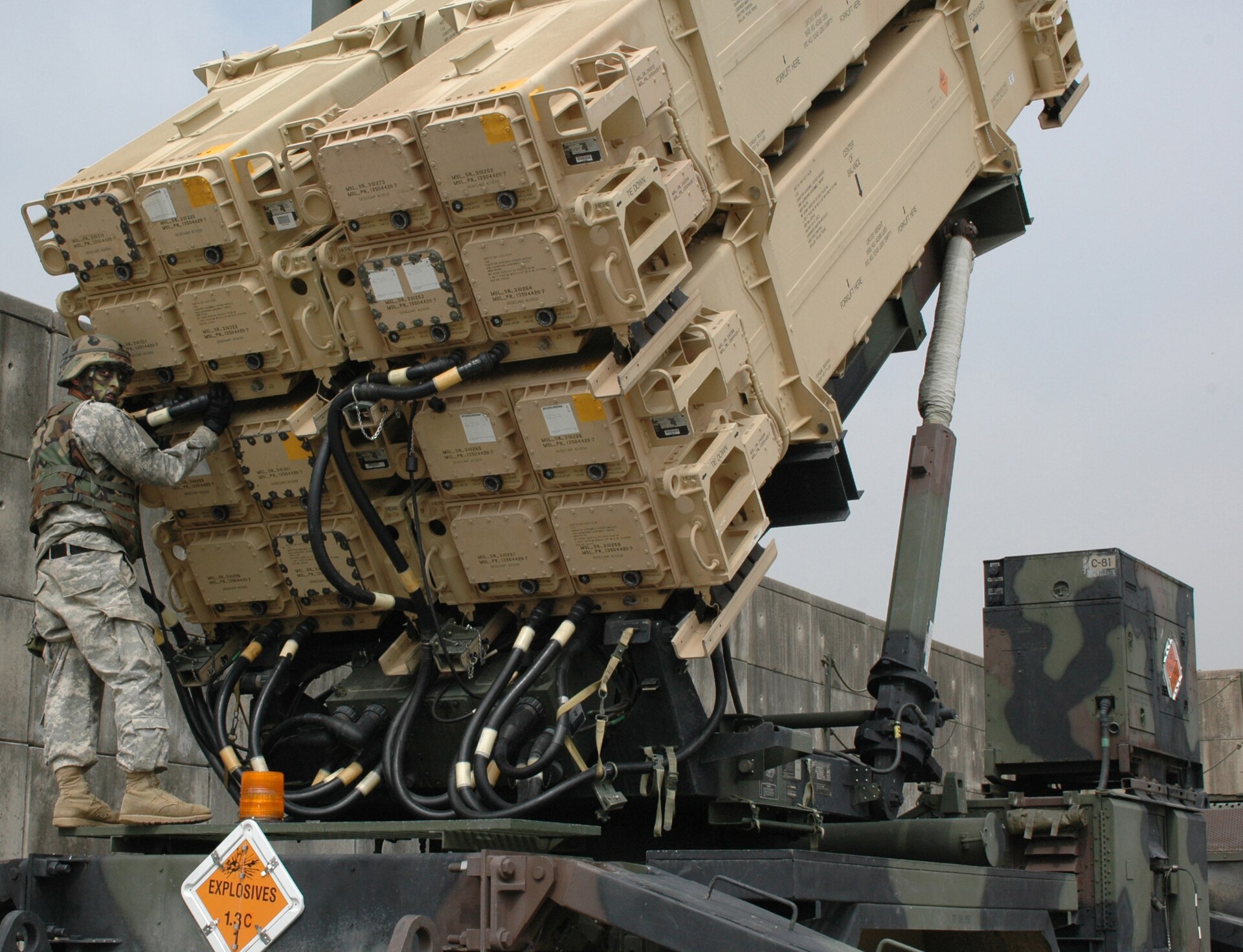
The kingdom’s PAC-3 MSE inventory stands at approximately 400 rounds — 14% of the pre-war stock of roughly 2,800. Distributed across 108 M902 launchers, that averages 3.7 rounds per launcher — below a single reload cycle per fire unit. The $9 billion DSCA sale signed January 30 ordered 730 rounds, but that order exceeds the entire annual output of Lockheed Martin’s Camden, Arkansas production line. A new $4.76 billion contract awarded April 9 aims to scale production to 2,000 rounds per year — a capacity not expected to be reached until 2030.
The $142 billion in US weapons systems Saudi Arabia has purchased since 2009 did not come with a guarantee of resupply speed. The production bottleneck is physical, not financial. No amount of Saudi spending can accelerate the Camden line beyond its current ~500-unit annual capacity. If a second escalation triggers the kind of sustained Iranian retaliation that characterized the first two weeks of the war — when, according to CENTCOM battle damage assessments, IRGC forces launched over 2,800 systems at Gulf targets — the intercept budget measured in PAC-3 rounds would last days, not weeks.
What Iran Kept
The New York Times reported on May 13, citing classified US intelligence assessments, that Iran has restored operational access to 30 of its 33 Hormuz missile sites, retains approximately 70% of its pre-war mobile missile launchers, holds roughly 70% of its pre-war missile stockpile, and has regained access to 90% of underground storage and launch facilities. Trump called the report “virtual treason.”
CENTCOM’s Admiral Brad Cooper told the Senate Armed Services Committee two days later that Iran’s defense industrial base has been degraded by more than 85% and its ballistic missile capability by approximately 80%. The contradiction between classified battlefield assessments and public congressional testimony is not necessarily a lie — Cooper’s figures likely measure production capacity and fixed infrastructure, while the NYT’s figures measure operational readiness of dispersed mobile assets. Both can be true simultaneously. But for Saudi Arabia, the distinction is academic. What matters is what Iran can fire tomorrow, not what it can build next year.
Iranian First Vice President Mohammad Mokhber told PressTV on May 8 that the Strait of Hormuz has strategic value “comparable to a nuclear weapon” and that Iran “will not lose the strait under any circumstances.” On May 12, IRGC Tehran Commander Brigadier General Hassan Hassanzadeh staged large-scale drills — designated “Martyr Commander” — simulating confrontation with US and Israeli forces, declaring troops prepared “to confront any movement by the hostile enemy at any place and at any time with the shortest possible response time.”
Iran’s Foreign Minister Araghchi told CBS News on May 15 that uranium enrichment “is currently not on the agenda of discussions or negotiations” and that Tehran has “no trust” in the United States. He confirmed Iran is in conversations with Russia on a uranium transfer option — a diplomatic card that exists precisely because the 440.9 kilograms of 60%-enriched uranium Iran holds is approximately 25 days from weapons-grade via IR-6 cascade.
What Diplomatic Window Remains
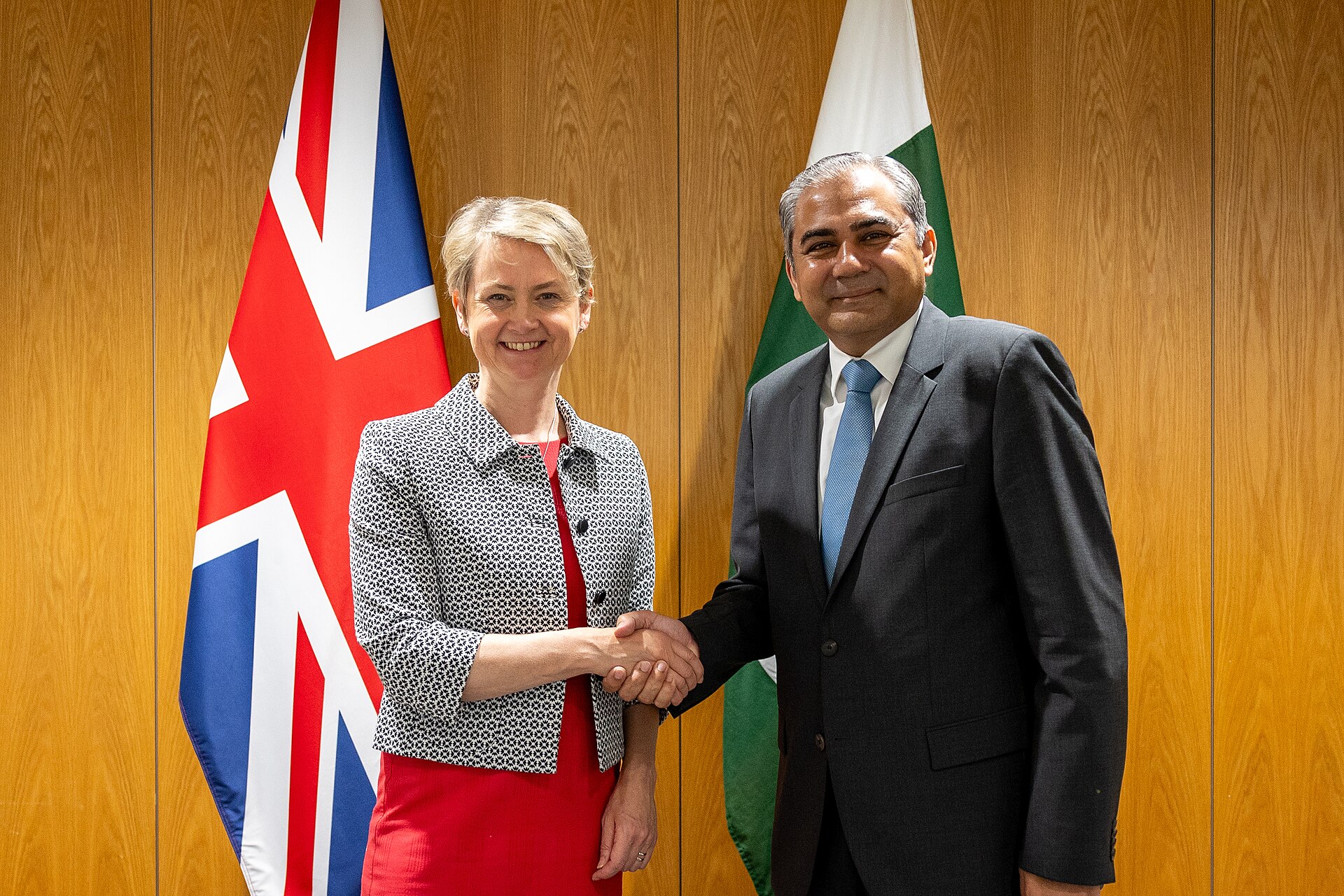
Saudi Foreign Minister Prince Faisal bin Farhan spoke with both Araghchi and Pakistani Foreign Minister Ishaq Dar on May 11 — the same day Trump called the ceasefire “on massive life support.” Al Arabiya reported the calls without disclosing content. The timing was not coincidental. Riyadh’s diplomatic activity intensifies in inverse proportion to its confidence in Washington’s restraint. The next escalation in that same Pakistan channel came five days later: Islamabad dispatched Interior Minister Mohsin Naqvi to Tehran on May 16 — Naqvi’s second visit in a month — as Araghchi simultaneously described the channel as “on a very difficult course.”
The structural problem for Saudi diplomacy is that it cannot offer Iran what Iran wants — removal of the US naval blockade — and cannot offer Washington what Washington wants — leverage over Tehran’s nuclear program. The kingdom occupies a position where its security depends entirely on an American decision it cannot influence and an Iranian response it cannot deter. The CSIS framing applies: risk tolerance is extraordinarily low, but available tools are near zero. Adding to the complexity: Iran’s own diplomatic and security establishments are not speaking with one voice — the split between Iran’s Foreign Ministry and its Supreme National Security Council over Trump’s nuclear proposal means there is no unified Iranian position for Riyadh to engage.
CNN reported on May 16 that unnamed administration officials described the timeline for Trump’s decision as “days not weeks.” The Trump-Xi agreement on principles — Iran cannot have a nuclear weapon; Hormuz must remain open — is a statement of objectives without a mechanism. It does not constitute Chinese pressure on Tehran and does not substitute for one.
Saudi Arabia’s position throughout this war has been one of co-belligerency in practice — hosting strike operations, providing basing rights, absorbing retaliatory attacks — while maintaining the diplomatic language of mediation. That position required the ceasefire to hold. If it does not, Riyadh faces the same Iranian targeting calculus with 86% fewer interceptors, 30% less oil revenue by volume, and no pipeline headroom to compensate for additional infrastructure damage.
Background
The US-Israeli military campaign against Iran — Operation Epic Fury — began on February 28, 2026, following a series of IRGC attacks on Gulf shipping and energy infrastructure. The campaign struck over 1,450 targets across Iran, according to CENTCOM’s May 15 testimony. Iran retaliated extensively against Gulf states, particularly Saudi Arabia and the UAE, while effectively closing the Strait of Hormuz to commercial traffic.
A ceasefire took effect on April 8 following Pakistani-mediated negotiations in Islamabad. The ceasefire halted active air operations but did not reopen Hormuz and did not address Iran’s nuclear program or the US naval blockade imposed on April 13. Negotiations have continued through Pakistani and Egyptian mediators without producing a framework agreement. The ceasefire has no formal expiration date but is widely understood to be conditional on continued diplomatic progress, which has stalled since late April.
Brent crude closed at $108 on May 15 with an 8% weekly gain on escalation fears. The International Energy Agency warned this week that the oil market could remain severely undersupplied until October even if fighting ends next month. Saudi Aramco CEO Amin al-Nasser has described the Hormuz disruption as “the largest shock the world has ever witnessed” in global energy markets, warning that the market loses approximately 100 million barrels for every week the Strait remains closed. On May 11, Nasser told his earnings call that recovery would not arrive before 2027 — a timeline set eight days before the NSC session that will decide whether the second round begins.
The constraint on Riyadh’s ability to absorb a second round is now quantified. Saudi Arabia’s Q1 2026 budget deficit of $33.5 billion — the largest quarterly shortfall in the Kingdom’s history — consumed 76% of the full-year projection in ninety days at oil prices that should have produced a surplus, leaving Goldman Sachs to project the war-adjusted full-year deficit at double the official forecast before any second-round escalation is factored in.
FAQ
What is Operation Sledgehammer?
Operation Sledgehammer is the working name for a potential resumed US military campaign against Iran if the ceasefire collapses. The Pentagon is considering the rename as a legal mechanism to restart the War Powers Resolution’s 60-day clock, which expired on May 1 under Operation Epic Fury. The administration argues a new operation constitutes a new engagement requiring a fresh 60-day notification period to Congress. Senator Tim Kaine has called the theory “legally absurd” and filed a resolution of disapproval on May 13.
Can Saudi Arabia shoot down Iranian missiles without PAC-3 resupply?
PAC-3 MSE is not the only layer in Saudi Arabia’s integrated air defense. The kingdom operates THAAD batteries (for high-altitude ballistic missile intercepts), KM-SAM medium-range systems acquired from South Korea, and short-range point-defense systems including Skyguard and laser prototypes. However, PAC-3 is the primary terminal-phase interceptor against medium-range ballistic missiles — the type Iran fired most extensively in the war’s first weeks. THAAD interceptors are also believed to be in limited supply, though exact figures remain classified. The five-layer system provides redundancy but not replacement at the engagement altitudes where PAC-3 operates.
Why can’t Saudi Arabia simply increase Yanbu loading capacity?
Yanbu’s constraints are physical: berth space, storage tank volume, and single-point mooring buoy capacity. Expansion of port infrastructure requires 18-36 months under peacetime construction timelines. The East-West Pipeline itself is at its rated 7 million bpd maximum — a capacity that includes approximately 2 million bpd allocated to western domestic refineries. Aramco confirmed in its Q1 earnings call that no further throughput increase is possible with existing infrastructure. A proposed parallel pipeline has been discussed since 2019 but was never funded.
How much is the Iran war actually costing Saudi Arabia’s fiscal position?
Saudi Arabia’s Q1 2026 fiscal deficit of SAR 125.7 billion ($33.5 billion) is the largest quarterly shortfall in the kingdom’s history. The government’s 2026 budget projected a full-year deficit of 3.3% of GDP — an estimate based on pre-war oil prices and volumes. Goldman Sachs now projects the war-adjusted full-year deficit at 6.6% of GDP, roughly double the official forecast. Military spending rose 26% year-on-year in Q1 alone to SAR 64.7 billion. The paradox is that Brent above $100 per barrel would ordinarily produce a surplus; the 3.15-million-bpd production collapse wipes out every dollar the price premium generates.
Has Iran attacked Saudi Arabia during the ceasefire?
Yes. Saudi air defenses have intercepted multiple drone and missile attacks since the April 8 ceasefire, including eight drones and three missiles on May 13. Iran has not claimed these attacks, and the IRGC has maintained they originate from “resistance elements” rather than Iranian military forces — a distinction without operational difference from Riyadh’s perspective. The ceasefire’s terms prohibit “strategic strikes on critical infrastructure” but do not clearly define the threshold, and no enforcement mechanism exists beyond Pakistani diplomatic pressure.