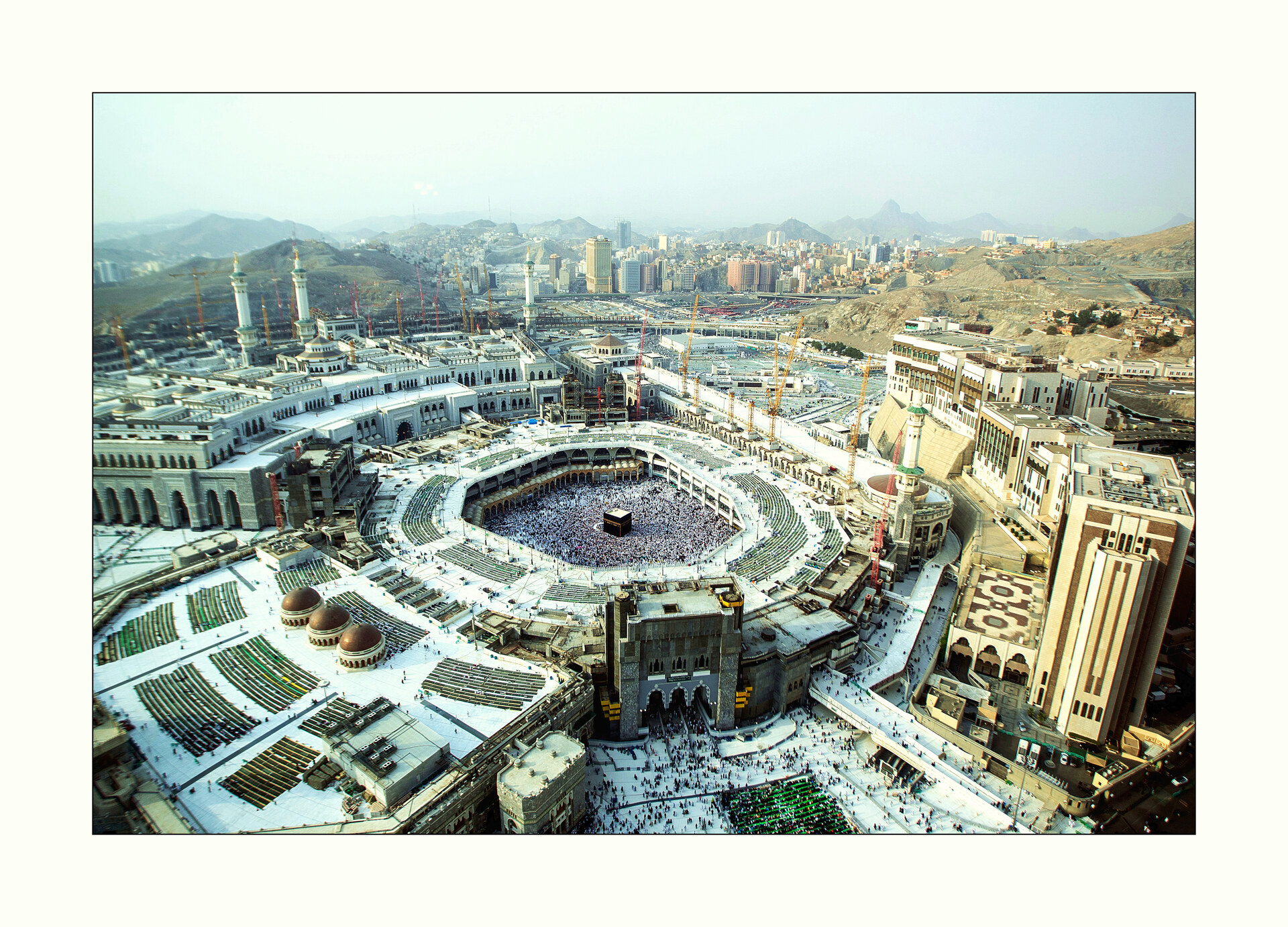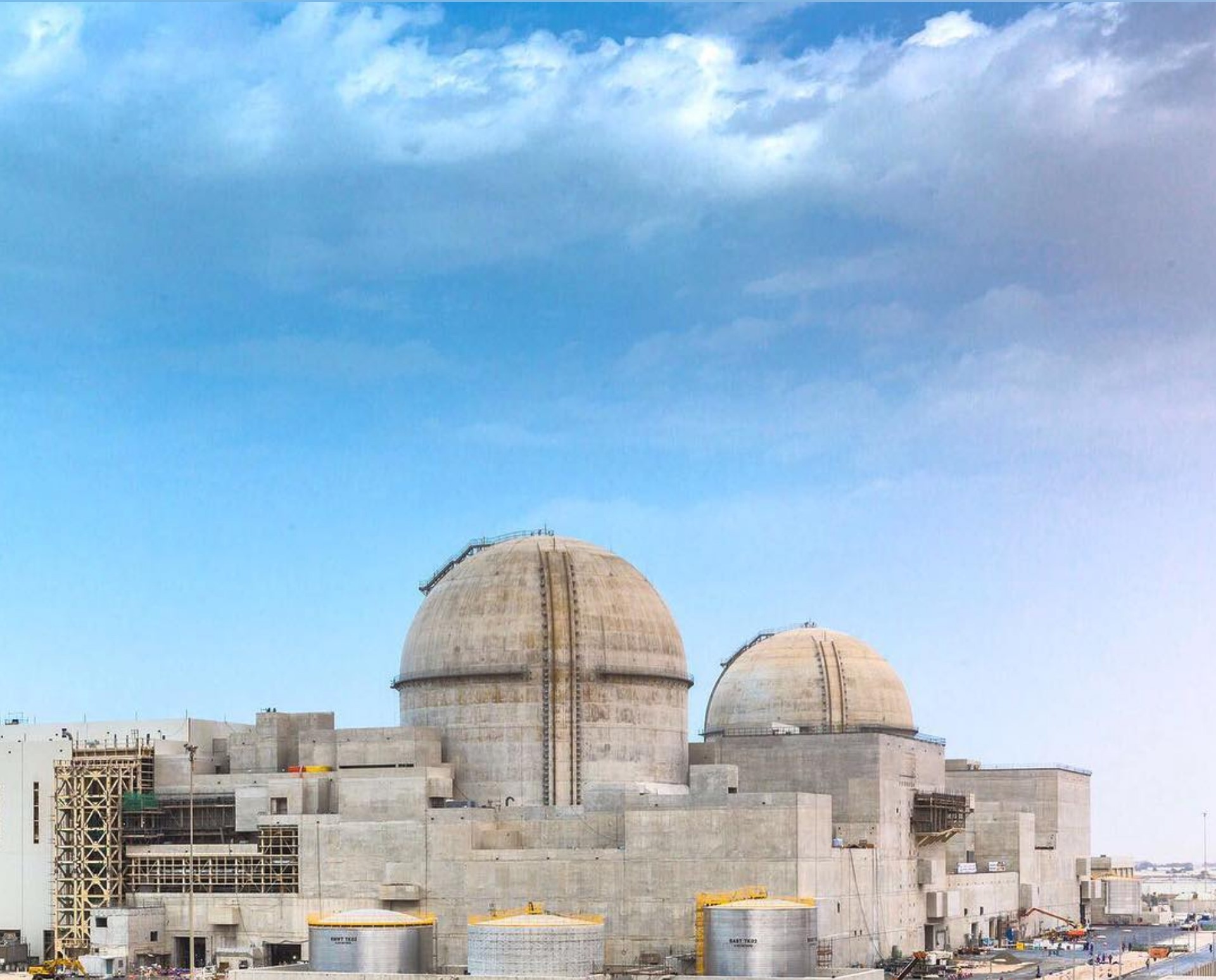

Barakah Nuclear Power Plant reactor containment domes, Al Dhafra Region, Abu Dhabi, UAE — the Arab world's first operational multi-unit nuclear facility

Iran Hit Barakah Nuclear Plant. No Gulf Reactor Has a Shield Now.

Iran's drone hit Barakah nuclear plant on May 17 — the first attack on an active Gulf atomic facility and a threshold the ceasefire was supposed to hold.

ABU DHABI — A drone struck an electrical generator on the perimeter of the Barakah Nuclear Power Plant on Sunday — the first hit on an active atomic facility in the Persian Gulf since the Iran war began on February 28. The UAE’s Federal Authority for Nuclear Regulation confirmed no radiological release and continued normal operation of all four reactor units. The physical damage was limited to a single generator outside the inner containment perimeter. What the strike eliminated was a normative assumption: that operational nuclear power plants occupy a protected category in this war, shielded by international humanitarian law, mutual deterrence, and the shared recognition that some targets carry consequences no belligerent wants to trigger.

Conflict Pulse IRAN–US WAR
Live conflict timeline
Day
79
since Feb 28
Casualties
13,260+
5 nations
Brent Crude ● LIVE
$113
▲ 57% from $72
Hormuz Strait
RESTRICTED
94% traffic drop
Ships Hit
16
since Day 1

The attack came on Day 79 of the conflict and on the day the April 8 ceasefire formally expired. Iran had named Barakah on a published five-target list in March 2026. The IRGC Aerospace Force declared “full readiness” six days before the strike. No party claimed responsibility, though Abu Dhabi attributed the drone to Iran. IAEA Director General Rafael Grossi called the action “unacceptable.” The word carried no enforcement mechanism behind it.

Barakah Nuclear Power Plant reactor containment domes, Al Dhafra Region, Abu Dhabi, UAE — the Arab world's first operational multi-unit nuclear facility
Barakah Nuclear Power Plant in Abu Dhabi’s Al Dhafra Region — the Arab world’s first operational multi-unit nuclear facility, with four APR-1400 reactors generating 5,600 megawatts and supplying roughly 25 percent of the UAE’s electricity. A drone struck an electrical generator on the plant’s outer perimeter on May 17, 2026. Photo: Wikiemirati / Wikimedia Commons, CC BY-SA 4.0

What Happened at Barakah on May 17?

An Iranian drone struck an electrical generator at the Barakah Nuclear Power Plant in Abu Dhabi’s Al Dhafra Region on May 17, 2026 — Day 79 of the Iran war. The UAE’s nuclear regulator confirmed no radiological release, no injuries, and continued normal operation of all four reactor units. No party claimed responsibility.

Barakah is the UAE’s sole nuclear power facility and the Arab world’s first operational multi-unit nuclear plant. Its four APR-1400 reactors — a South Korean design built by KEPCO under a $20 billion contract signed in December 2009 — entered commercial operation in sequence: Unit 1 in April 2021, Unit 2 in March 2022, Unit 3 in February 2023, and Unit 4 in September 2024. At full capacity, the plant generates 5,600 megawatts and supplies approximately 25 percent of the UAE’s electricity — roughly 40 terawatt-hours per year. Unit 4 had been commercially operational for fewer than five months when the war began in February 2026.

Abu Dhabi authorities described the strike as caused by “an Iranian drone.” The attribution was immediate but unilateral. Iran neither confirmed nor denied involvement — a pattern consistent with the war’s highest-escalation events, including the SAMREF refinery strike near Yanbu on April 3, which saw delayed attribution over several days.

FANR’s statement was calibrated to prevent panic: the strike “did not affect the safety of the power plant or the readiness of its essential systems, and all units are operating as normal.” The statement addressed radiological containment. It did not address what the strike meant for the status of nuclear infrastructure as a target class in a war now entering its twelfth week.

The HOS Daily Brief

The Middle East briefing 3,000+ readers start their day with.

One email. Every weekday morning. Free.

The Five-Target List Iran Published in March

The Barakah strike was not a surprise in the sense that matters most. In late March 2026, the IRGC-aligned Fars News Agency published a list of five UAE sites: Jebel Ali port complex, Barakah Nuclear Power Plant, Al Taweelah power station, Dubai’s M Station desalination facility, and the Mohammed bin Rashid Al Maktoum Solar Park. All five are civilian energy infrastructure. None is a military installation.

The list appeared after President Trump named Iranian power plant infrastructure as a potential American target — a sequence that allowed Tehran to frame its own targeting as reciprocal. Fars News positioned the five sites as Iran’s mirror-response to American threats. But the list also functioned as something else: pre-positioned intent. By publishing Barakah’s name on an open target list two months before the strike, Iran created a category of operations that could be implicitly acknowledged without formal claim. The list was the claim, filed in advance.

Iran’s pre-positioning served a legal function as well. Under Additional Protocol I to the Geneva Conventions — to which Iran is a signatory — attacking nuclear power stations is prohibited. Publishing a target list that includes a nuclear plant does not constitute a legal justification. But it telegraphs a doctrinal decision: that Iran considers the prohibition already broken by the other side, and that Barakah sits in the same target class as a desalination plant or a solar park. The distinction between a nuclear reactor and a power substation, in IRGC targeting doctrine, has been formally erased.

Iran explicitly cited the UAE’s hosting of Israeli Iron Dome batteries and IDF personnel as grounds for treating the Emirates as a legitimate target. The logic runs: a state that integrates Israeli air defense systems into its territory forfeits the civilian-infrastructure distinction that would otherwise protect its energy grid. Whether this argument has any basis in IHL is a separate question from whether the IRGC treats it as operationally binding. The five-target list answers the second question.

Bushehr and Barakah: The Bidirectional Precedent

Barakah was not the first nuclear power plant struck in this war. On approximately March 18 — Day 19 — an unidentified projectile destroyed an auxiliary structure within Iran’s Bushehr Nuclear Power Plant complex. No party claimed that strike either. The Bushehr incident established the first data point: nuclear infrastructure was no longer off-limits in practice, whatever remained true in law.

The Barakah strike completed the circuit. Both sides of the conflict have now hit nuclear facilities. The sequence matters: Bushehr first, Barakah second. Iran can frame its action as reciprocal — the Bushehr crisis gave Tehran a precedent to point to, regardless of who was responsible for the March 18 attack. The ambiguity of attribution on the Bushehr strike works in Iran’s favor. If the US or Israel struck Bushehr, then Barakah is retaliation against a coalition partner hosting Israeli military assets. If attribution remains unclear, Iran can still cite the event as proof that the normative ceiling was already broken before its drone reached Abu Dhabi.

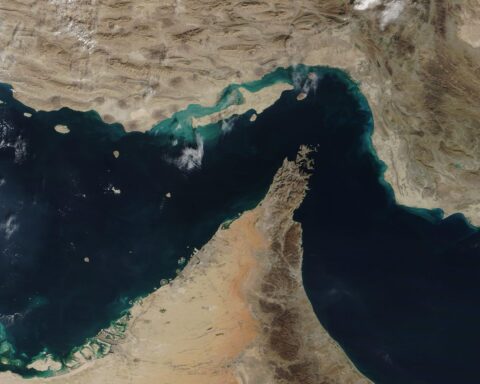
NASA MODIS satellite image of the UAE, Oman, and Persian Gulf — with Barakah on the UAE western coast and Bushehr nuclear plant on the Iranian coast across the Gulf
NASA MODIS satellite image of the UAE, Oman, and the Persian Gulf, April 29, 2016. Barakah Nuclear Power Plant sits on the UAE’s western coast (bottom left); Iran’s Bushehr nuclear plant lies on the opposite shore roughly 200 kilometers across the water. Both facilities were struck during the 2026 Iran war — Bushehr first on approximately Day 19, Barakah on Day 79. Photo: Jeff Schmaltz, MODIS Land Rapid Response Team, NASA GSFC / Wikimedia Commons, Public Domain
Nuclear Infrastructure Targeting Events — Iran War 2026
Date Target Location Damage Attribution
~March 18 (Day 19) Bushehr Nuclear Power Plant — auxiliary structure Bushehr Province, Iran Auxiliary structure destroyed Unattributed
May 17 (Day 79) Barakah Nuclear Power Plant — electrical generator Al Dhafra, Abu Dhabi, UAE Generator fire, contained; no radiological impact UAE attributed to Iran; Iran did not claim

PressTV — Iran’s English-language state broadcaster — reported on March 28 that Tehran was “weighing withdrawal from the Nuclear Non-Proliferation Treaty after US-Israel attacks on nuclear sites.” The framing positioned Iran as the victim of nuclear-infrastructure targeting. The Barakah strike inverts that framing entirely. Iran cannot simultaneously present itself as the aggrieved party on nuclear facility attacks and conduct them. Or rather — it can, because no mechanism exists to adjudicate the contradiction.

The IAEA’s response to both events has been the same: statements of grave concern. Grossi’s “unacceptable” on Barakah echoed his language on Zaporizhzhia in Ukraine in 2022 — a precedent where the IAEA deployed monitors, the Security Council discussed the situation, and no enforcement action followed. The lesson absorbed by every military planner watching Zaporizhzhia was that the prohibition carries no operational consequence when violated. The Barakah strike confirms the lesson holds in the Gulf.

Why Did Iran Strike a Nuclear Power Plant on the Day the Ceasefire Expired?

The April 8 ceasefire formally expired on May 17. Iran had resumed strikes on the UAE on May 4 and the IRGC Aerospace Force declared full readiness on May 11. The timing signals the death of the existing diplomatic framework and a doctrinal shift to an unrestricted target set no longer bound by the implicit hierarchy protecting nuclear infrastructure.

The ceasefire had been on “life support” since Trump characterized it as effectively dead on May 10-11. Trump warned Iran in a BFM TV interview that it would face “a very bad time” if it failed to reach an agreement — language that tracked escalation rather than restraint. The IRGC Aerospace Force commander responded with his own escalatory statement on May 11, declaring that missiles and drones were “aimed at US facilities in the region and enemy aggressor ships” and that the force was “only waiting for the launch order.” Six days separated that declaration from the generator fire at Barakah.

Missiles and drones of the IRGC Aerospace Forces are aimed at US facilities in the region and enemy aggressor ships; we are only waiting for the launch order.

— IRGC Aerospace Force commander, May 11, 2026

The timing permits two readings. They are not mutually exclusive. The first is operational: the ceasefire’s expiration removed the last diplomatic constraint — thin as it already was — on IRGC targeting. Striking Barakah on expiration day was a signal that Iran would not seek or accept renewal of the existing framework. Iran’s counter-proposals to Trump’s nuclear deal had demanded financial reparations for war damage, recognition of Iranian sovereignty over Hormuz, immediate sanctions lift, release of frozen assets, and only a short-term enrichment suspension. None of these conditions had been met. The ceasefire expired without a successor because neither side would meet the other’s prerequisites.

The second reading is doctrinal. By choosing a nuclear power plant on ceasefire expiration day, the IRGC communicated that the next phase of the war operates under a different target set. The March list named five UAE civilian energy sites. Barakah was the highest-escalation target on that list. Hitting it first — not last — inverts the expected escalation ladder. In conventional military doctrine, nuclear infrastructure sits at the top of the escalation spectrum, struck only after lower-value targets are exhausted. The IRGC reversed the sequence. Everything below a nuclear plant on the escalation scale is now implicitly authorized.

The Authorization Ceiling on Day 79

The Barakah strike lands in the structural fracture that has defined Iran’s war conduct since February 28: the gap between civilian government authority and IRGC operational control. President Masoud Pezeshkian publicly accused IRGC generals Vahidi and Abdollahi of wrecking ceasefire negotiations — but Article 110 of Iran’s constitution gives the president zero authority over the Revolutionary Guards. The accusation was a confession of irrelevance.

Time Magazine’s May 6 analysis — “The New Leaders Calling the Shots in Iran” — described a power structure in which authority previously concentrated in the Supreme Leader’s office has diffused across a narrow, IRGC-dominated circle. Ali Khamenei was killed on February 28, the war’s first day. His son Mojtaba Khamenei assumed the supreme leadership, but the transition occurred under wartime conditions that entrenched IRGC commanders in decision-making roles they had previously occupied only with the elder Khamenei’s explicit authorization.

Mojtaba issued “new directives and guidance for the continuation of operations to confront the enemy” during a meeting with Iran’s war commander — language reported by Iranian state television. The phrasing is consistent with a leader ratifying operational decisions already made by his military commanders rather than directing them. The distinction between ordering a strike on a nuclear power plant and being briefed on one after approval within the IRGC’s own chain is the distinction that governs whether Barakah represents Iranian state policy or IRGC institutional policy. For the UAE, the difference is academic. For any diplomat attempting to negotiate a ceasefire successor, it is the central problem.

Pezeshkian’s own language offers no resolution. “We will never bow our heads before the enemy,” he said in May, adding that “if talk of dialogue or negotiation arises, it does not mean surrender or retreat.” The statement is compatible with both authorizing the Barakah strike and learning of it after the fact. The president of Iran can denounce the IRGC’s conduct of negotiations and endorse its conduct of war in the same week because the two tracks operate under different constitutional authorities — and because the IRGC’s track is the one with drones.

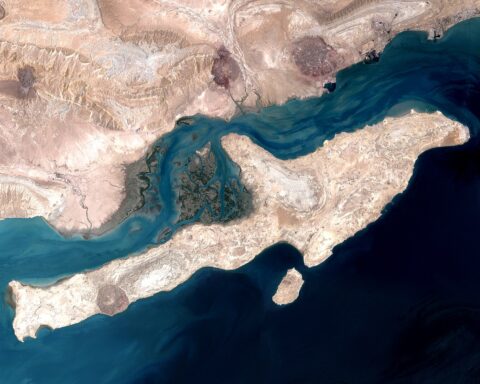
NASA MODIS satellite view of the Persian Gulf theater showing Iran to the north and the UAE-Saudi coastline to the south — the strategic geography of the Iran war
NASA MODIS satellite image of the Persian Gulf, October 19, 2021. Iran occupies the entire northern shore; Saudi Arabia, the UAE, and the smaller Gulf states line the southern coast. The structural gap between Iran’s IRGC command — which ordered the Barakah strike — and its civilian government headed by President Pezeshkian is the defining feature of Iran’s war conduct at Day 79. Photo: Jeff Schmaltz, MODIS Land Rapid Response Team, NASA GSFC / Wikimedia Commons, Public Domain

The Arms Control Association characterized the US-initiated hostilities as “an illegal war of choice” not authorized by Congress — a framing that matters for American domestic politics but not for the IRGC’s operational calculus. The Barakah strike demonstrates that Iran’s targeting decisions are governed by internal command dynamics, not by the legal frameworks invoked by any external party. Whether the war is authorized under US law, prohibited under international humanitarian law, or condemned by institutional observers does not change what a drone does to a generator.

Does International Law Prohibit Attacks on Nuclear Power Plants?

Article 56 of Additional Protocol I to the Geneva Conventions explicitly prohibits attacks on nuclear electrical generating stations. The protection can only be lifted if the plant directly supports military operations. Iran is a signatory. Barakah supplies civilian electricity. The legal prohibition is unambiguous; the enforcement mechanism does not exist in operational terms.

The full text of Article 56 states that protection applies even if the nuclear plant is located near military objectives. The exception is narrow: the plant must provide “electric power in regular, significant and direct support of military operations” and the attack must be “the only feasible way to terminate such support.” Barakah powers civilian homes, desalination plants, and commercial infrastructure in Abu Dhabi. It does not support military operations. No legal argument has been advanced — by Iran or anyone else — that the exception applies.

The Zaporizhzhia precedent from 2022 is the operative comparison. Russian forces occupied Europe’s largest nuclear power plant in Ukraine, converting it to a military position. Shelling damaged the facility’s surroundings on multiple occasions over two years. The IAEA deployed monitors. Grossi traveled to the site. The UN Security Council discussed the situation repeatedly. No enforcement action followed. The plant remained a military position for the duration of the conflict. Every military planner in the region absorbed the same lesson: Article 56 is a rule without a referee.

The Barakah strike extends the precedent from occupation to direct targeting by drone. The IAEA responded with identical vocabulary — “grave concern,” “unacceptable.” These are the words the institution uses when a norm is violated and the institution has no power to restore it. Grossi’s statement that “military activity threatening nuclear safety” was “unacceptable” will be filed alongside his statements on Zaporizhzhia. The filing cabinet grows. The operational environment does not change.

What Does Barakah Mean for Saudi Arabia’s Nuclear Program?

Any future Saudi nuclear power plant now exists in a threat environment where Iran has demonstrated willingness to strike Gulf atomic facilities. The strike also erodes the normative leverage Gulf states deploy when demanding constraints on Iranian enrichment, since Iran can point to bidirectional targeting as neutralizing the asymmetry that underpinned that argument.

Saudi Arabia has pursued a civilian nuclear program under Vision 2030, with a draft Section 123 agreement with the United States that — unlike most such agreements — does not explicitly forbid Saudi enrichment. The kingdom has pointed to Iran’s nuclear program as both threat and justification: the existence of Iranian enrichment capacity has been a core argument for Saudi nuclear hedging. The Barakah strike complicates this calculus from two directions at once.

First, the physical threat. The UAE’s experience at Barakah — a generator hit, no radiological release, plant operations unaffected — represents the best-case version of a nuclear facility strike. The worst case involves a direct hit on spent fuel storage, cooling systems, or containment infrastructure. Saudi Arabia’s planned reactor sites would face the same drone and missile threat that defines the broader war — a threat that CENTCOM has acknowledged it has not fully neutralized after 79 days of operations. Saudi Arabia and Kuwait had already restored US basing access before the Barakah strike, lifting restrictions after “Project Freedom” operations. The basing solves a force-projection problem. It does not solve the air-defense saturation problem that let a drone reach Barakah.

Second, the normative cost. The argument that Iran’s nuclear facilities represent a unique threat — and that Iranian enrichment must be constrained while Gulf civilian programs proceed — loses coherence when Iran can respond that Gulf nuclear plants are being used by states hosting foreign military assets in a war against Iran. The UAE hosted Israeli air defense systems. Iran cited that hosting as justification for escalated targeting. Any Gulf state hosting foreign military infrastructure while operating nuclear reactors now faces the same framing.

Saudi Arabia’s own covert strikes on Iran in late March 2026 — the first direct Saudi military action on Iranian soil — produced a 76 percent drop in Iranian attacks on Saudi targets. The deterrence worked in the conventional domain. Whether it extends to nuclear infrastructure is untested. The Barakah strike suggests that Iran draws no distinction between conventional and nuclear civilian targets when selecting from its published list. Saudi Arabia holds both the launchpads and the pilgrims — and may, within a decade, hold operational reactors too.

Five Targets, One Doctrine

The five UAE targets Iran published in March 2026 share one characteristic: all are civilian energy infrastructure. Jebel Ali is a port and free-trade zone. Al Taweelah is a power and desalination complex. M Station produces desalinated water for Dubai. The Mohammed bin Rashid Solar Park generates renewable electricity. Barakah generates nuclear electricity. None houses military equipment. None is a command center, an airfield, or a weapons depot.

ISS photograph of Abu Dhabi coastline showing Zayed Port, Al Saadiyat Island, and the UAE urban and industrial infrastructure along the Persian Gulf shore
International Space Station photograph of Abu Dhabi and the UAE coastline along the Persian Gulf, March 2020. The urban grid at right is Abu Dhabi city; the tidal flats and lagoons to the west anchor the Al Dhafra region where Barakah Nuclear Power Plant is located. All five targets Iran published in March 2026 — Jebel Ali, Barakah, Al Taweelah, M Station, and the Mohammed bin Rashid Solar Park — are civilian energy infrastructure visible from this altitude. Photo: NASA / ISS062, Wikimedia Commons, Public Domain

The target selection represents a doctrinal choice, not a capability limitation. Iran’s strikes on Saudi Arabia during the war have included military-adjacent infrastructure — the SAMREF refinery near Yanbu, oil facilities at Ras Tanura, the East-West Pipeline pumping station. The UAE list contains no such military adjacency. It is a civilian-infrastructure target set, published openly, with a nuclear power plant embedded among desalination plants and solar farms as though the categories were interchangeable.

The doctrinal logic is coherent from the IRGC’s operational perspective. The UAE’s value to the US-led coalition is not primarily military — it is geographic. The Emirates provides basing, logistics, and overflight. Striking UAE military bases risks direct confrontation with US forces stationed on them. Striking civilian infrastructure imposes economic and political costs on the UAE government without triggering responses from coalition partners bound by their own force-protection rules. The IRGC’s May 11 declaration specified “US facilities” and “enemy ships” as missile targets. The drone that hit Barakah operated under a different target authority.

This bifurcation — missiles reserved for US military targets, drones deployed against UAE civilian infrastructure — suggests an IRGC command structure that is compartmentalized by target class and possibly by authorization level. The drone that reached Barakah may not have required the same “launch order” the Aerospace Force commander referenced on May 11. If that is the case, the nuclear power plant was struck under a lower authorization threshold than the one governing attacks on American military facilities. A reactor ranked below a runway in the IRGC’s hierarchy of restraint.

Saudi Arabia grounded American air power earlier in the war by restricting basing access — a move Washington accepted. The UAE made the opposite choice: it hosted Israeli Iron Dome systems and accepted the targeting consequences. The Barakah strike is one of those consequences. The five-target list is a menu. The IRGC has ordered from it once. Iran built a Hormuz customs agency while the world negotiated; it may now work through the remaining four targets on the UAE list with the same institutional patience.

Frequently Asked Questions

Could a drone strike cause a nuclear disaster at Barakah?

The APR-1400 reactor design at Barakah incorporates multiple independent containment barriers, including reinforced concrete structures engineered to withstand heavy external impacts and aircraft strike scenarios. The May 17 drone hit a generator outside the inner perimeter — the outermost layer of plant infrastructure. A strike on containment structures would face far greater physical resistance. However, spent fuel storage facilities, cooling water intake systems, and external power supply infrastructure present softer targets than reactor containment. The loss of external power — partially realized by the generator strike — is the failure mode that triggered the Fukushima Daiichi disaster in March 2011, though Barakah’s passive safety systems are designed to address this specific vulnerability through gravity-fed emergency cooling.

Has a nuclear power plant been attacked before the Iran war?

Israel destroyed Iraq’s Osirak reactor in June 1981, but Osirak was under construction and contained no fuel — the strike carried zero radiological risk. During the Iran-Iraq War (1980-1988), both sides struck nuclear facilities: Iraq hit Iran’s partially built Bushehr plant, and Iran attacked Iraq’s Al Tuwaitha complex. Russia’s occupation of Zaporizhzhia Nuclear Power Plant in Ukraine in 2022 involved shelling in the facility’s vicinity over an extended period. The March 18, 2026 Bushehr auxiliary strike and the May 17 Barakah generator strike represent the first confirmed hits on infrastructure within operational nuclear power plant complexes during an active interstate war — a distinction from construction-phase or occupation-phase events.

What is Iran’s legal exposure under international humanitarian law for the Barakah strike?

Violations of Article 56 of Additional Protocol I constitute grave breaches under Article 85(3)(c) of the same Protocol, prosecutable as war crimes. The International Criminal Court has jurisdiction over war crimes on the territory of member states or by nationals of member states. The UAE is not an ICC member state, but the UN Security Council can refer situations to the ICC regardless of membership — a path effectively blocked by the veto power of Russia and China, both of which maintain strategic and arms-trade relationships with Iran. Individual IRGC commanders could face prosecution under universal jurisdiction in national courts of states that have adopted it, though no such proceedings have been initiated. The enforcement gap between prohibition and consequence defines the operational reality of nuclear infrastructure protection in armed conflict.

Why has Iran not claimed the Barakah strike?

Iran has maintained non-attribution on its highest-escalation strikes throughout the war. The SAMREF refinery strike near Yanbu on April 3, for instance, saw attribution deferred across multiple news cycles. Iran’s Hormuz enforcement operations have similarly functioned through institutional mechanisms — IRGC Navy directives, port authorities, “coordination” requirements — rather than explicit military claims. Non-claim preserves diplomatic optionality: Tehran can deny responsibility in negotiations while IRGC-aligned media — Fars News, Tasnim, Mehr — implicitly acknowledge the capability through operational reporting. The March target list publication functions as a form of advance attribution that requires no post-strike confirmation. Iran’s negotiating posture, which includes demands for financial reparations and Hormuz sovereignty recognition, is better served by demonstrated capability than by claimed responsibility for an action that violates the Geneva Conventions’ Additional Protocol I.

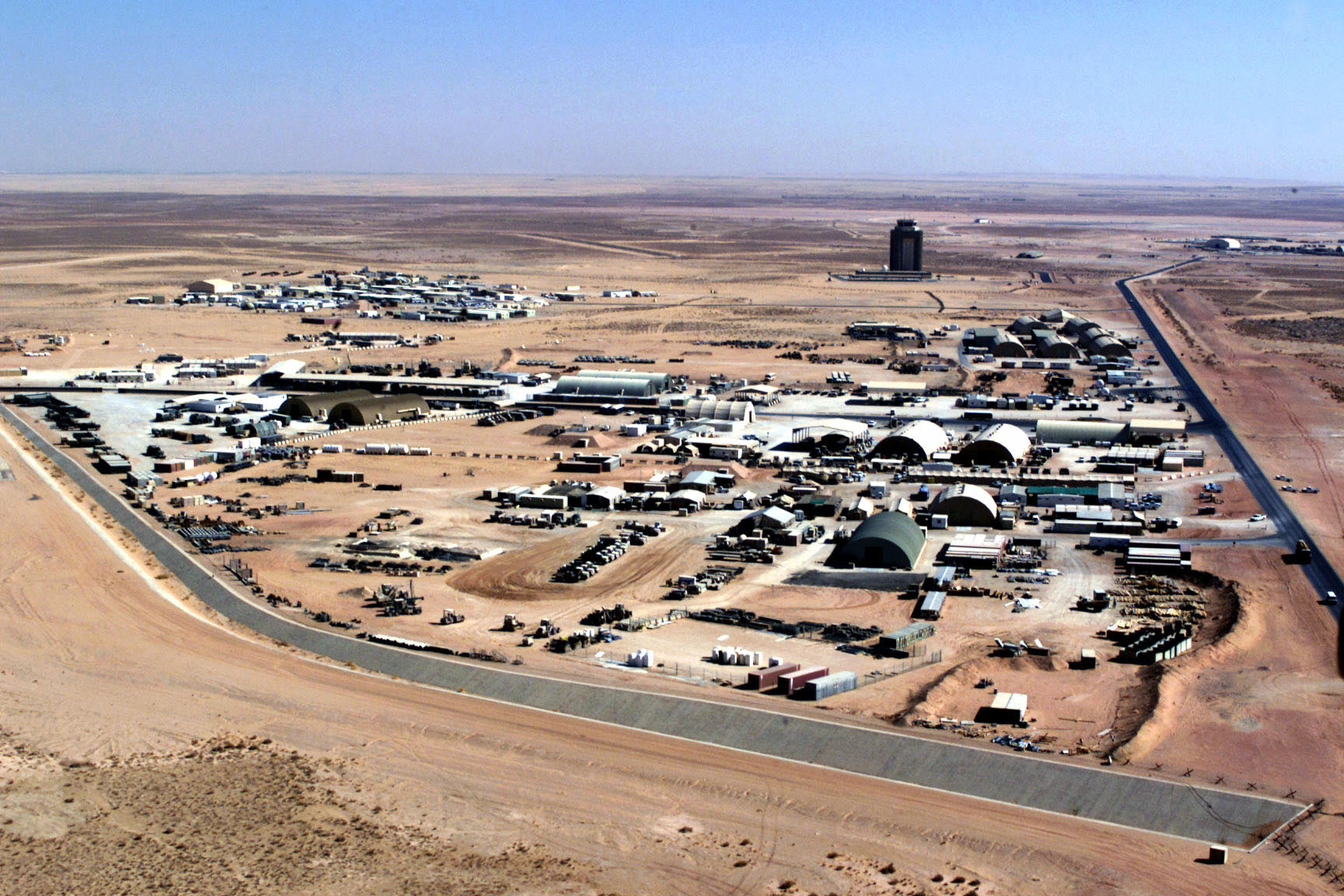
Aerial view of Prince Sultan Air Base Maintenance City, Saudi Arabia, during Operation SOUTHERN WATCH — the US base whose closure grounded Operation Project Freedom in May 2026
Previous Story

Saudi Arabia Grounded American Air Power — and Washington Accepted It

Latest from Iran War

The HOS Daily Brief

The Middle East briefing 3,000+ readers start their day with.

One email. Every weekday morning. Free.

Something went wrong. Please try again.