
WASHINGTON — Iran fired two intermediate-range ballistic missiles at the joint US-UK military base on Diego Garcia in the Indian Ocean on Friday, neither of which struck the installation but both of which delivered a strategic message that reverberates far beyond the remote atoll. One missile failed in flight. A US Navy warship launched an SM-3 interceptor at the second, though Pentagon officials said they could not confirm whether the intercept succeeded. The missiles fell short or were destroyed, and no casualties were reported.
The strike attempt marks the longest-range attack Iran has conducted since the war began on 28 February, targeting a facility approximately 4,000 kilometres from Iranian territory. That distance is double the 2,000-kilometre range that Iranian Foreign Minister Abbas Araghchi publicly stated last month represented a deliberate, self-imposed ceiling on Tehran’s missile programme. The Wall Street Journal, citing multiple US officials, first reported the attack early Friday morning.
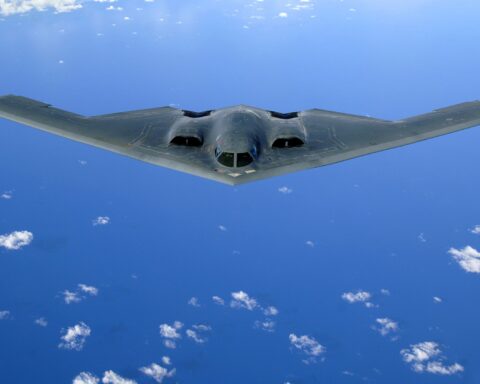
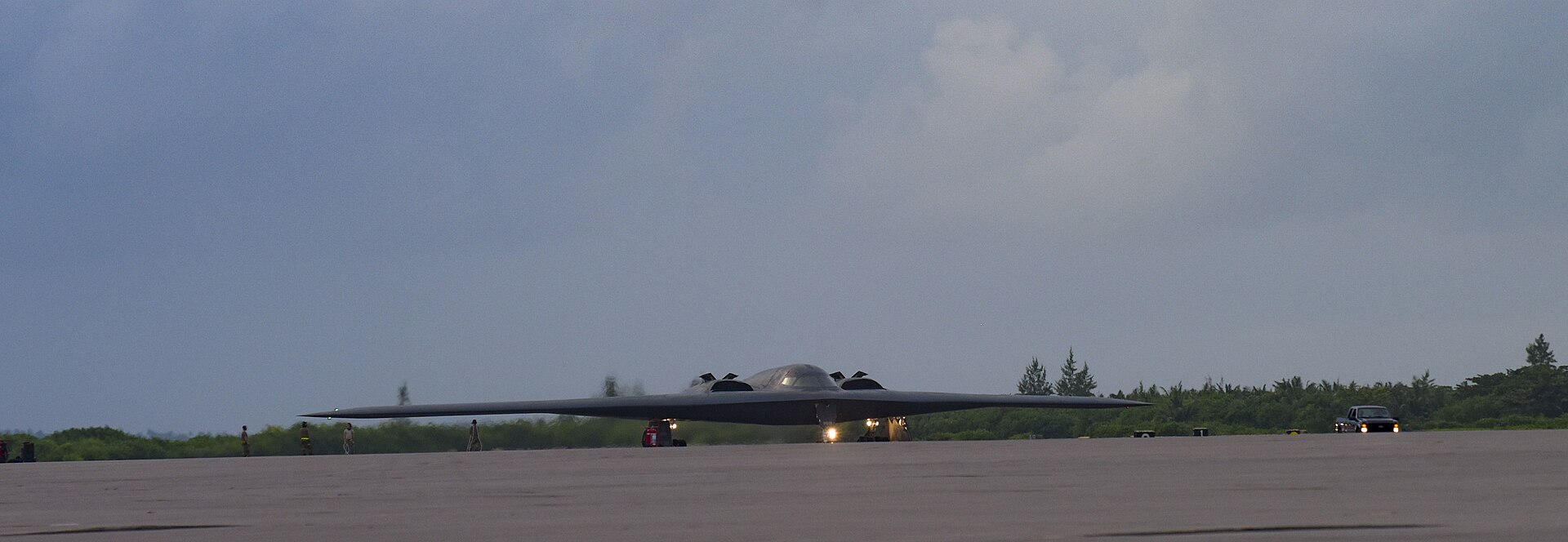
Diego Garcia hosts B-2 Spirit stealth bombers, nuclear-powered submarines, Aegis-equipped guided-missile destroyers, and advanced intelligence collection facilities. Roughly half of the US Air Force’s operational B-2 fleet has been forward-deployed to the island since the start of the conflict, according to the Federation of American Scientists. Strikes launched from the base have hit Iranian nuclear and military infrastructure across multiple provinces.
Table of Contents
- What Happened at Diego Garcia on March 21
- Why Does the 4,000-Kilometre Range Matter
- Iran’s Missile Arsenal and the Range Deception
- Diego Garcia and the War Against Iran
- The UK, the Chagos Deal, and Starmer’s Reversal
- What the Diego Garcia Strike Means for Saudi Arabia
- How Did the US Navy Respond to the Missiles
- What Comes Next for Diego Garcia and the Indian Ocean
- Frequently Asked Questions
What Happened at Diego Garcia on March 21
Iran launched two intermediate-range ballistic missiles at Naval Support Facility Diego Garcia during the early hours of Friday, 21 March, according to the Wall Street Journal, which cited multiple US officials with direct knowledge of the event. The Pentagon confirmed the launch but provided limited operational detail.
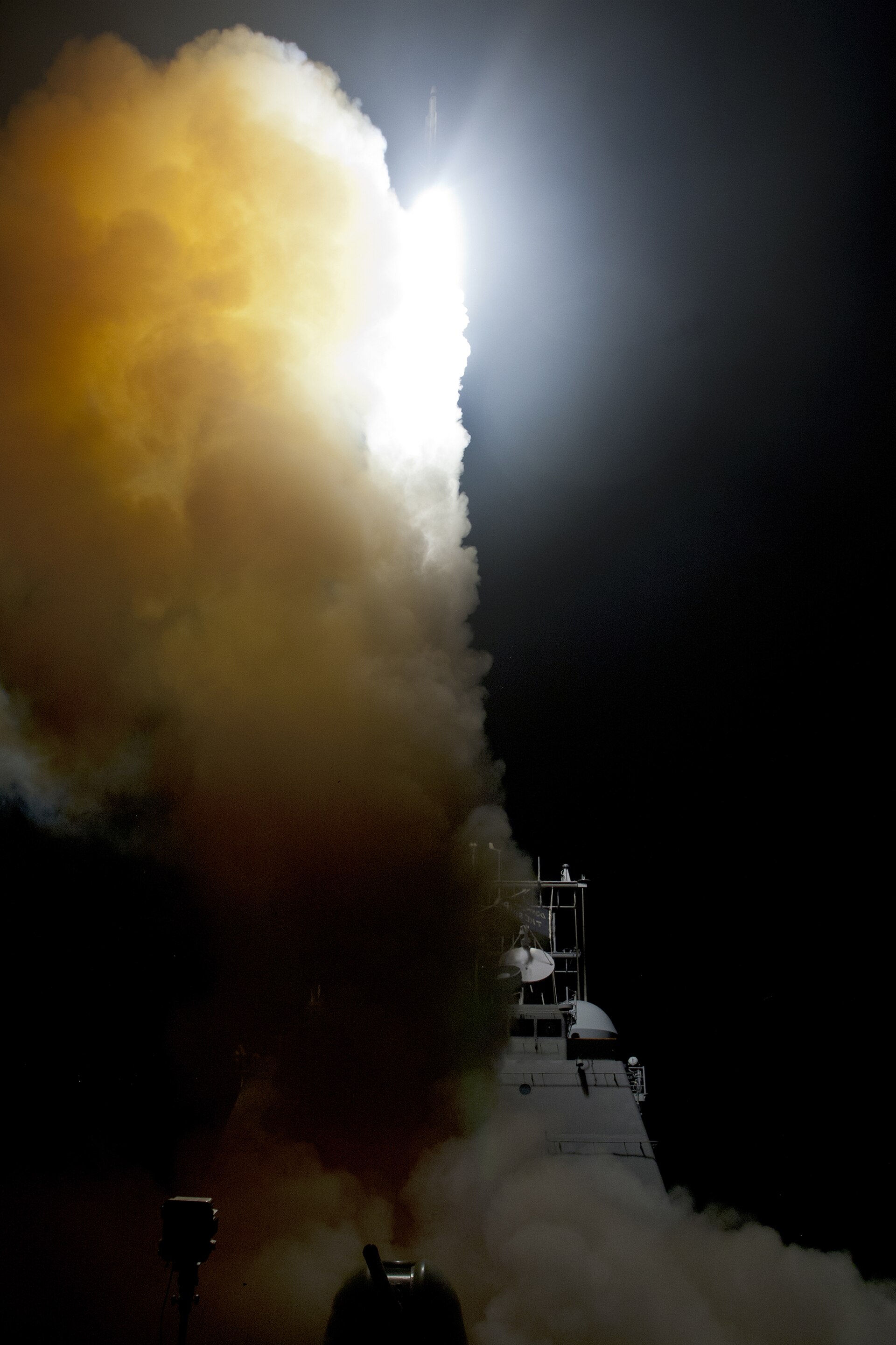
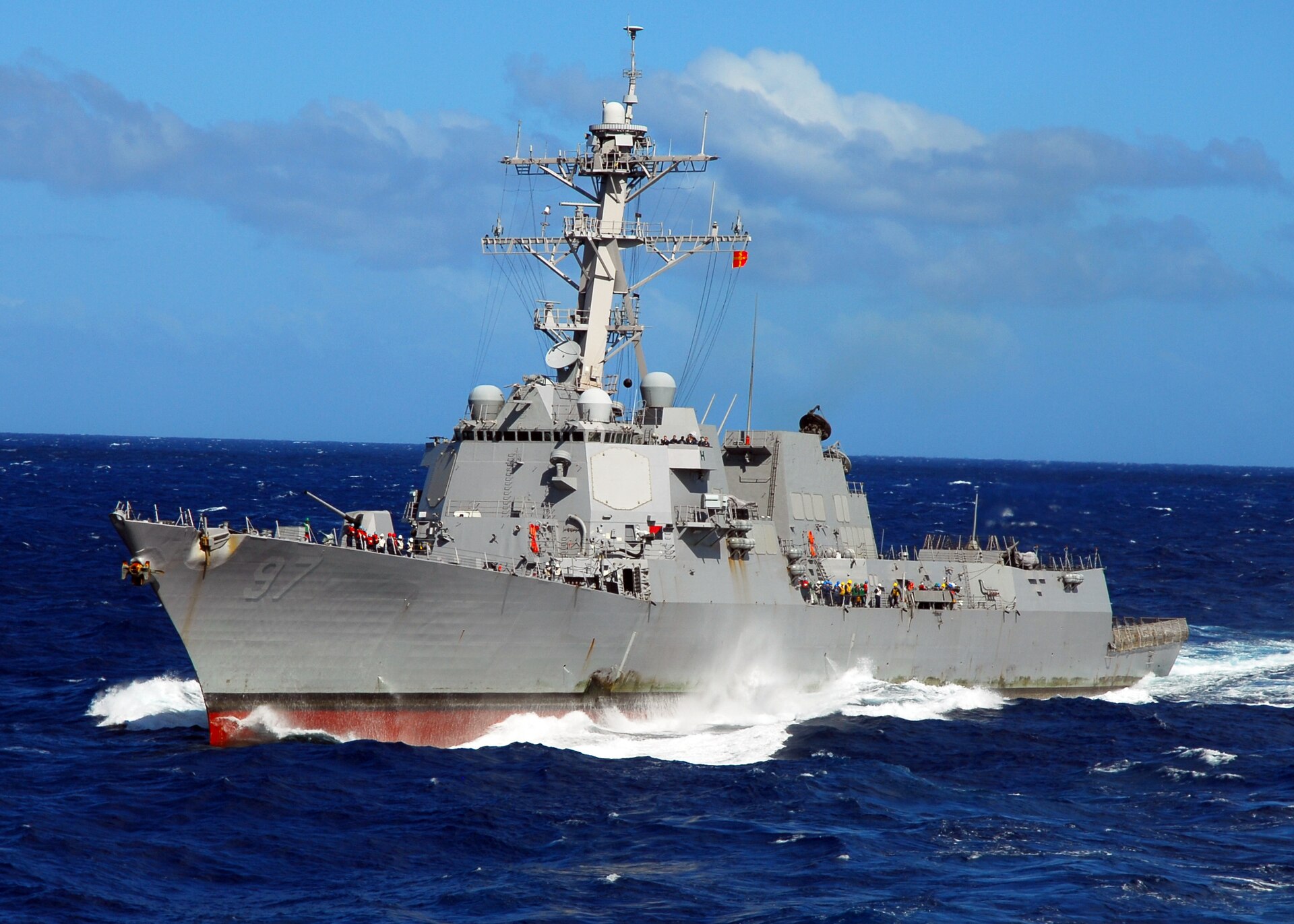
The first missile suffered a propulsion or guidance failure during its flight phase and did not reach the target area. The second missile continued on a trajectory toward the base before a US Navy warship stationed in the Indian Ocean fired a Standard Missile-3 interceptor. US officials told the Journal that they could not confirm whether the SM-3 successfully destroyed the incoming warhead or whether the missile failed independently before reaching Diego Garcia. In either case, neither projectile struck the installation.
Pentagon spokesperson Brigadier General Patrick Ryder described the attack as “a dangerous escalation and a direct challenge to US interests in the region,” adding that Washington “will not tolerate such provocations and will respond accordingly.” The Pentagon did not identify the specific warship that launched the SM-3 or the class of Iranian missile used in the attack.
The Middle East briefing 3,000+ readers start their day with.
One email. Every weekday morning. Free.
No casualties were reported at the base, and operations continued without significant disruption, according to a US Central Command statement released Friday morning. The base houses approximately 3,000 to 5,000 military and civilian personnel at any given time, though the exact current figure is classified.
Why Does the 4,000-Kilometre Range Matter
Diego Garcia lies roughly 4,000 kilometres from Iran’s southern coast, placing it far beyond the missile range that Tehran has publicly acknowledged. Iranian Foreign Minister Abbas Araghchi stated in an interview with India Today in February 2026 that Iran had “deliberately limited the range of its missiles to under 2,000 kilometres,” describing the programme as “strictly defensive and intended for deterrence.” The 2,000-kilometre ceiling, Araghchi said, was sufficient to reach Israel and protect Iranian interests across the Gulf.
The Diego Garcia strike demolishes that claim. Independent analysts had long suspected Iran’s actual capabilities exceeded its stated limits. The Wisconsin Project’s Iran Watch assessed that Tehran possesses missiles capable of reaching up to 4,000 kilometres. Israel’s Alma Research and Education Center estimated approximately 3,000 kilometres. In 2019, France, Germany, and the United Kingdom jointly assessed that a variant of the Khorramshahr missile, fitted with a lighter warhead, could reach approximately 3,000 kilometres, classifying it as an intermediate-range ballistic missile.
The implications extend beyond the immediate conflict. A 4,000-kilometre range places targets across a vast arc within Iranian reach. Southern Europe, including parts of Italy, Greece, and Turkey, falls within that radius. So does the Horn of Africa, India’s western coast, and Central Asia. For Saudi Arabia and its Gulf neighbours, the revelation means that no American military installation supporting their defence sits beyond Iranian targeting.
| Source | Stated Maximum Range | Date |
|---|---|---|
| Abbas Araghchi (Iranian FM) | 2,000 km | February 2026 |
| Iran’s self-imposed limit (since 2015) | 2,000 km | 2015–2026 |
| E3 assessment (UK, France, Germany) | ~3,000 km | 2019 |
| Alma Research Center (Israel) | ~3,000 km | 2025 |
| Iran Watch (Wisconsin Project) | Up to 4,000 km | 2025 |
| Diego Garcia strike attempt (actual) | ~4,000 km | 21 March 2026 |
Iran’s Missile Arsenal and the Range Deception
Iran operates one of the largest and most diverse ballistic missile arsenals in the Middle East. The programme centres on liquid-fuelled and solid-fuelled systems derived from North Korean and Soviet designs, developed over four decades of indigenous engineering. The missiles that targeted Diego Garcia were described by US officials as intermediate-range ballistic missiles, a classification that covers systems with ranges between 3,000 and 5,500 kilometres.
The most likely candidate is a variant of the Khorramshahr, a liquid-fuelled missile first tested in January 2017. The standard Khorramshahr carries a 1,800-kilogram warhead to a range of 2,000 kilometres. However, the International Institute for Strategic Studies has assessed, through analysis by missile expert Michael Elleman, that Iran could extend the Khorramshahr’s range to approximately 3,000 kilometres by reducing its warhead mass. The Diego Garcia strike suggests Tehran has gone further still, either through additional propulsion modifications or by deploying an entirely new missile type that has not been publicly tested.
Iran’s stated missile arsenal includes the Shahab-3 (1,300 km), the Emad (1,700 km with a manoeuvrable re-entry vehicle), the Ghadr (1,950 km), the solid-fuelled Sejjil (2,000 km), and the Khorramshahr (2,000 km). All fall within Araghchi’s 2,000-kilometre limit. The gap between these published specifications and the 4,000-kilometre reach demonstrated on Friday suggests the existence of a parallel development programme that Iran has deliberately concealed from public and diplomatic scrutiny.
The policy of self-imposed range restraint was formalised in 2015 as part of broader diplomatic signalling during the nuclear negotiations that produced the Joint Comprehensive Plan of Action. Western intelligence agencies have long debated whether the limit was genuine or cosmetic. The Diego Garcia attack appears to settle that argument.
Diego Garcia and the War Against Iran
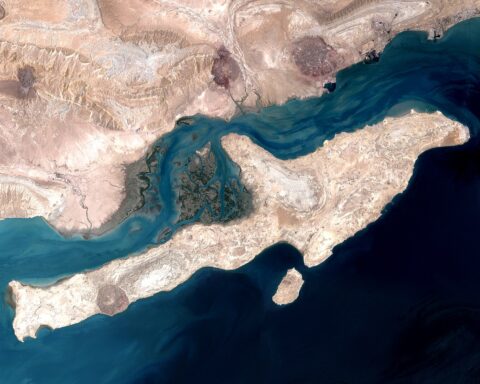
Naval Support Facility Diego Garcia occupies a 44-square-kilometre atoll in the Chagos Archipelago, roughly equidistant from the coasts of Africa, India, and Southeast Asia. The United States has operated the base under a lease from the United Kingdom since 1966, and it has served as a strategic hub in every major American military operation in the Middle East and Central Asia since the 1991 Gulf War.
The base’s runway exceeds 3,600 metres, long enough to launch fully loaded B-2 Spirit and B-52 Stratofortress strategic bombers. Its deep-water port accommodates nuclear-powered submarines and Arleigh Burke-class guided-missile destroyers equipped with the Aegis Ballistic Missile Defense System. Satellite communication stations, signals intelligence facilities, and pre-positioned munitions stores complete the installation.
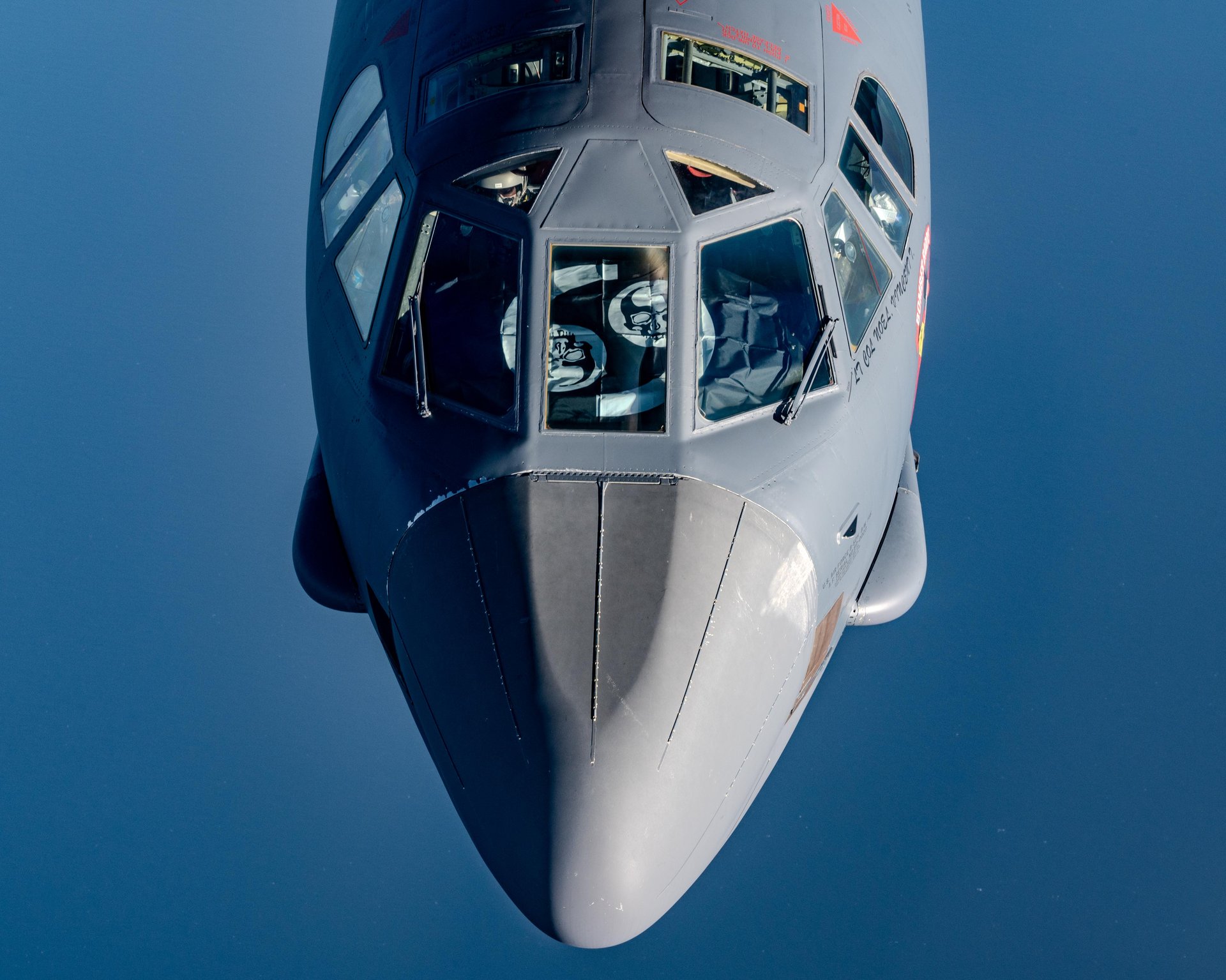
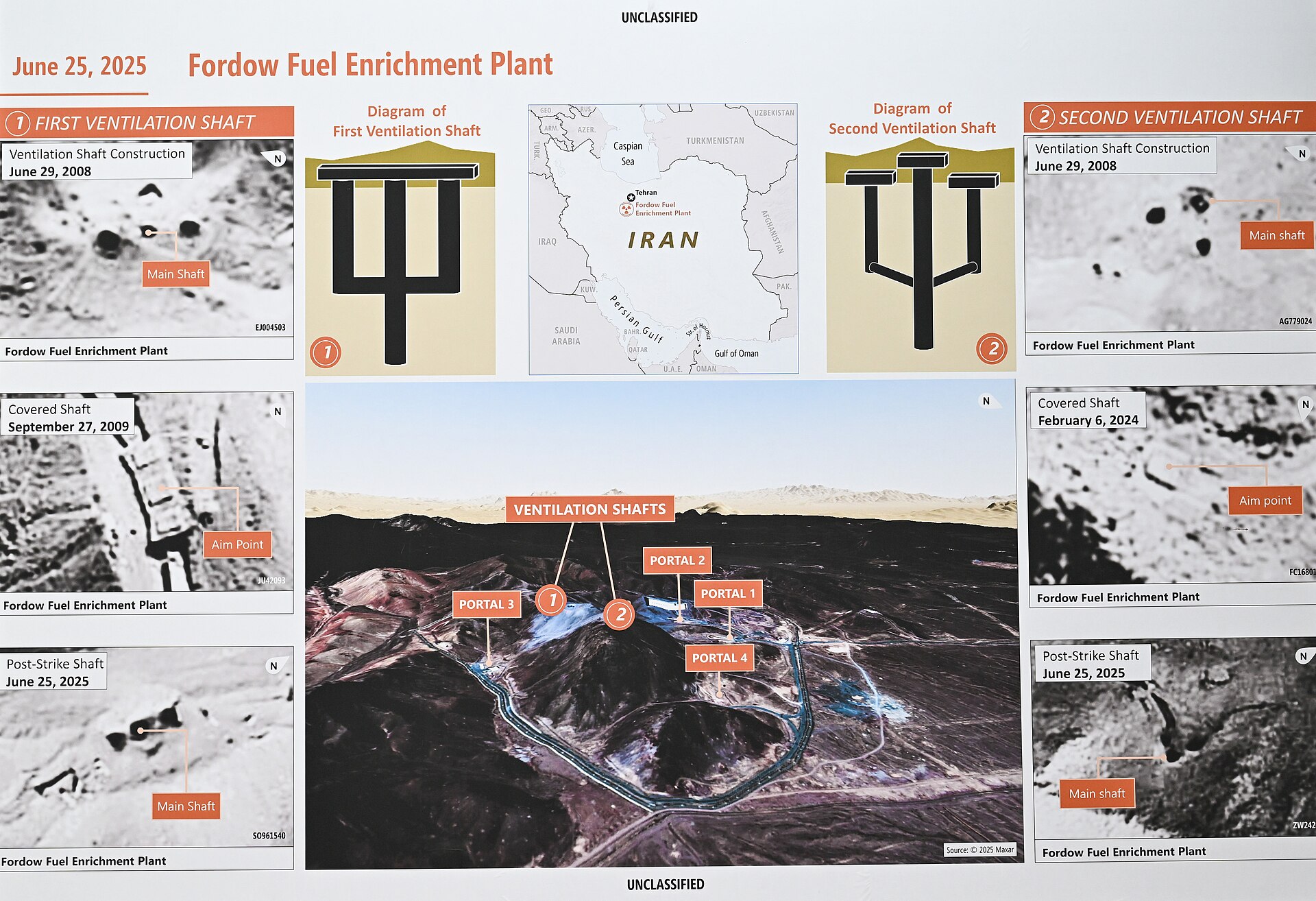
In the current conflict, Diego Garcia has assumed outsized importance. The Federation of American Scientists reported in early March that the US Air Force had forward-deployed approximately half of its operational B-2 fleet to the island, a concentration of stealth strike capability that has no parallel elsewhere in the US military’s global posture. B-2 sorties from Diego Garcia have struck targets across Iran, including hardened nuclear facilities at Fordow and Natanz, IRGC command nodes, and missile production facilities.
The B-2 Spirit can fly missions exceeding 40 hours with aerial refuelling and carries up to 20 tonnes of precision-guided munitions. Its unrefuelled range of approximately 6,000 nautical miles makes Diego Garcia an ideal launch point for deep strikes into Iran without requiring overflight permission from neighbouring states. B-52s operating from the same runway have provided additional strike capacity with conventional cruise missiles and Joint Direct Attack Munitions.
Iran’s decision to target the base reflects a strategic logic, even if the attack failed militarily. By striking at the source of the bombing campaign, Tehran is attempting to signal that it can escalate the cost of continued operations. The attack also carries a psychological dimension. Until Friday, Diego Garcia existed in the conflict as a sanctuary, a rear-area base so distant from the theatre that it appeared invulnerable to Iranian retaliation. The Diego Garcia strike came on the same day that CENTCOM announced it had destroyed an underground Iranian anti-ship missile facility on the Persian Gulf coast, claiming Iran’s Hormuz threat had been significantly degraded.
The UK, the Chagos Deal, and Starmer’s Reversal
Iran’s missile strike on Diego Garcia collides with one of the most sensitive diplomatic arrangements of the war: the UK’s evolving position on whether American forces can use the base for offensive operations against Iran.
When the US-Israeli campaign against Iran began on 28 February, Prime Minister Keir Starmer declined to authorise the use of British military bases, including Diego Garcia, for preemptive strikes. Starmer’s government argued that supporting attacks launched without a United Nations mandate risked violating international law. President Trump publicly described the refusal as “an act of great stupidity” and “a big mistake.”
Starmer partially reversed course on 1 March after Iran launched retaliatory strikes against Gulf states, granting the US permission to use Diego Garcia and RAF Fairford for “defensive” operations. The authorisation carried a specific restriction: strikes launched from British-controlled territory could only target Iranian missile sites threatening shipping in the Strait of Hormuz. This limitation left Starmer in an ambiguous position, permitting the base’s use while attempting to constrain the scope of operations conducted from it.
The Chagos Islands sovereignty dispute adds another dimension. The UK agreed in principle in 2024 to transfer sovereignty over the Chagos Archipelago, including Diego Garcia, to Mauritius, while retaining a 99-year lease on the military base. Trump opposed the deal, warning Starmer not to “lose control” of the islands and suggesting the transfer would benefit Chinese strategic interests. The onset of war has delayed finalisation of the agreement, according to reporting by Asia Times, and Iran’s missile strike will further complicate negotiations by highlighting Diego Garcia’s vulnerability.
Iran formally protested the use of Diego Garcia for operations against its territory, with the Foreign Ministry summoning the British ambassador in Tehran before diplomatic relations were severed in the opening days of the war. Friday’s strike represents Tehran’s physical answer to that protest.
What the Diego Garcia Strike Means for Saudi Arabia
The strike on Diego Garcia carries direct implications for Saudi Arabia’s security architecture. The Kingdom hosts the largest concentration of American military forces in the Gulf at Prince Sultan Air Base near Al Kharj, approximately 1,200 kilometres from Iran’s western border. If Iran can target a base 4,000 kilometres distant, every American facility in the Arabian Peninsula sits well within range, a fact that was already understood but that the Diego Garcia attack has now demonstrated operationally.
Saudi Arabia’s Ministry of Defence reported intercepting four Iranian ballistic missiles aimed at Riyadh and two targeting the Eastern Province earlier this week, part of a broader campaign that has struck energy infrastructure from Yanbu on the Red Sea to Jubail on the Persian Gulf. The Kingdom’s air defence network, built around Patriot PAC-3, THAAD, and a recently deployed Greek Patriot battery, has performed well against missiles and drones launched from ranges of 1,000 to 1,500 kilometres. The Diego Garcia attack raises the question of whether Saudi Arabia’s defences could handle threats from a wider Iranian arsenal that includes previously undisclosed long-range systems.
The $16 billion emergency arms package that Secretary of State Marco Rubio pushed through Congress on an expedited basis last week includes 1,000 AIM-120C-8 advanced air-to-air missiles and additional Patriot interceptors. The Diego Garcia revelations may accelerate requests for the SM-3 system itself, which the Kingdom does not currently operate but which proved its value in Friday’s engagement.
For Crown Prince Mohammed bin Salman, the Diego Garcia strike reinforces the case for Saudi restraint as a strategic posture rather than a sign of weakness. If Iran’s actual missile reach extends to 4,000 kilometres, the calculus of direct Saudi entry into the war changes significantly. The Kingdom’s critical infrastructure, including desalination plants, power generation, and the petroleum sector, would face threats from missile types it has not yet encountered and for which its current interception systems may not be optimised.
How Did the US Navy Respond to the Missiles
The SM-3, or Standard Missile-3, is the US Navy’s primary exo-atmospheric ballistic missile interceptor. Designed to destroy incoming warheads during their midcourse flight phase, outside the Earth’s atmosphere, the SM-3 has undergone multiple upgrades since entering service in 2004. The Block 1B variant, the most widely deployed, uses a kinetic warhead that destroys targets through direct collision at closing speeds exceeding 10 kilometres per second.
The interceptor is launched from Aegis-equipped cruisers and destroyers using the Mark 41 Vertical Launch System. The US Navy maintains a permanent presence of Aegis warships in the Indian Ocean, typically operating from or near Diego Garcia itself. The warship that engaged Friday’s incoming missile was not identified, but Arleigh Burke-class destroyers and Ticonderoga-class cruisers are the platforms most commonly deployed to the region.
The Pentagon’s inability to confirm a successful intercept is notable. SM-3 has a strong record in controlled testing, with the Missile Defense Agency reporting a success rate above 80 per cent across all test variants. However, combat conditions differ from test scenarios, and the incoming Iranian missile’s characteristics, including its trajectory, speed, and any countermeasures, remain classified. It is possible that the missile failed independently before the SM-3 reached it, making the outcome of the interception difficult to verify through sensor data alone.
The engagement represents the first known use of SM-3 against an Iranian intermediate-range ballistic missile at full operational range. Previous intercepts during the conflict have involved shorter-range Shahab and Emad variants targeting Gulf installations, where Patriot PAC-3 and THAAD systems have carried the primary defensive burden. The Diego Garcia engagement demonstrates that the naval component of America’s layered missile defence architecture is now being tested at the upper end of its design envelope.
What Comes Next for Diego Garcia and the Indian Ocean
The failed strike on Diego Garcia is unlikely to be the last Iranian attempt to reach the base. Iran’s military doctrine, developed under former IRGC commander Qasem Soleimani and maintained by his successors, emphasises the importance of threatening an adversary’s rear-area logistics and command infrastructure. Diego Garcia represents exactly that: the single most important US power-projection platform in the Indian Ocean.
The Pentagon is expected to reinforce the base’s defences in the coming days. Options include deploying additional Aegis warships to the surrounding waters, stationing a THAAD battery on the island itself, and accelerating the deployment of directed-energy weapons that have entered limited operational testing. The base’s isolation, located more than 1,600 kilometres from the nearest significant landmass, is simultaneously its greatest defensive asset and its most significant vulnerability. There are no neighbouring territories from which to establish early-warning radar stations or dispersal airfields.
For the broader conflict, the Diego Garcia attack signals that Iran intends to expand the geographic scope of hostilities even as President Trump publicly discusses “winding down” military operations. The strike came on the same day that Trump told reporters he did not want a ceasefire, saying “you don’t do a ceasefire when you’re literally obliterating the other side,” while simultaneously suggesting the US was considering reducing its operational tempo.
The attack also carries implications for the UK’s domestic politics. The Labour government’s decision to permit American use of Diego Garcia for strikes against Iran drew criticism from within Starmer’s own party and from opposition figures who argued that Britain was being drawn into an illegal war. Iran’s retaliatory strike on the base provides ammunition for both sides of that debate: critics who warned that authorisation would make British territory a target, and supporters who argue the attack proves Diego Garcia’s defences must be maintained under Western control.
The Chagos sovereignty deal with Mauritius, already delayed by the war, faces additional complications. Any transfer of sovereignty that could theoretically limit American military access to Diego Garcia now looks politically impossible while Iranian missiles are landing in its vicinity. The 99-year base lease was designed to survive the sovereignty change, but the optics of handing over territory under active attack will test even the most carefully drafted diplomatic agreement.
| Feature | Detail |
|---|---|
| Location | Chagos Archipelago, Indian Ocean (~4,000 km from Iran) |
| Runway length | 3,600+ metres |
| Current bomber deployment | ~50% of operational B-2 Spirit fleet (est. 8–10 aircraft) |
| Port facilities | Deep-water berths for nuclear submarines and destroyers |
| Personnel | 3,000–5,000 (classified) |
| Sovereignty | UK (Chagos) with US base lease; sovereignty transfer to Mauritius pending |
| Operational history | Gulf War (1991), Afghanistan (2001), Iraq (2003), Iran (2026) |
| Key defensive systems | Aegis BMD (SM-3), F-15 fighter detachment |
Frequently Asked Questions
Did Iran’s missiles hit Diego Garcia?
Neither missile struck the base. One failed during flight, and a US Navy warship fired an SM-3 interceptor at the second. Pentagon officials could not confirm whether the interception succeeded or whether the missile failed independently. No casualties or damage were reported at Naval Support Facility Diego Garcia.
How far is Diego Garcia from Iran?
Diego Garcia lies approximately 4,000 kilometres from Iran’s southern coast, roughly double the 2,000-kilometre missile range that Iranian Foreign Minister Abbas Araghchi publicly claimed as Iran’s self-imposed ceiling in February 2026. The strike attempt reveals that Iran’s actual missile capabilities significantly exceed its official statements.
What is the SM-3 missile that was used to intercept the Iranian missile?
The Standard Missile-3 is the US Navy’s primary exo-atmospheric ballistic missile interceptor, designed to destroy incoming warheads during their midcourse flight phase outside the Earth’s atmosphere. Launched from Aegis-equipped cruisers and destroyers, the SM-3 uses a kinetic warhead that destroys targets through direct collision at closing speeds exceeding 10 kilometres per second. The Missile Defense Agency reports a testing success rate above 80 per cent.
Why is Diego Garcia important to the Iran war?
Diego Garcia serves as the primary US power-projection base in the Indian Ocean, hosting approximately half the operational B-2 Spirit stealth bomber fleet, nuclear submarines, and guided-missile destroyers. B-2 sorties from Diego Garcia have struck hardened nuclear facilities, IRGC command centres, and missile production sites across Iran. The base’s 3,600-metre runway and deep-water port make it the only installation capable of sustaining strategic bomber and submarine operations at this distance from the conflict zone.
What does the Diego Garcia attack mean for Saudi Arabia?
The strike demonstrates that Iran’s missile range extends to at least 4,000 kilometres, meaning every American military facility in the Arabian Peninsula, including Prince Sultan Air Base near Riyadh, sits well within Iranian targeting range. The revelation may accelerate Saudi requests for the SM-3 interceptor system, which the Kingdom does not currently operate, and reinforces the case for Saudi restraint as the Kingdom weighs the risks of direct entry into the conflict.