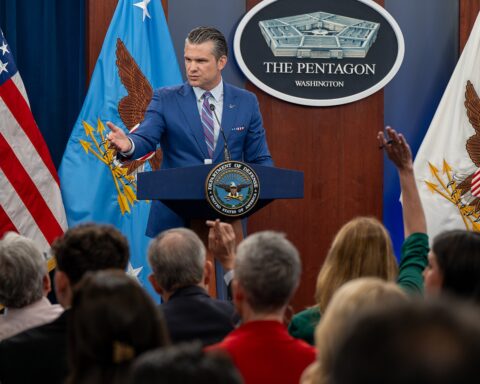

WASHINGTON — The head of United States Central Command said Saturday that Iran’s ability to threaten the Strait of Hormuz has been “degraded” after American warplanes dropped multiple 5,000-pound bombs on an underground coastal facility that housed anti-ship cruise missiles, mobile launchers, and intelligence equipment used to track commercial shipping. Admiral Brad Cooper’s statement, delivered as the war enters its fourth week, marked the most explicit American claim yet that the campaign is dismantling Iran’s capacity to hold the world’s most important oil chokepoint hostage.
The strike came as 22 nations — spanning Europe, the Indo-Pacific, and two Gulf states — issued a joint statement condemning Iran’s attacks on unarmed commercial vessels and demanding the immediate reopening of the Strait of Hormuz to international shipping. With Brent crude trading above $112 per barrel and global gasoline prices at multi-year highs, the twin developments signal the beginning of a coordinated military and diplomatic effort to break Tehran’s de facto blockade of the waterway through which roughly 20 percent of the world’s oil supply flows.
Table of Contents
- What Did CENTCOM Destroy on Iran’s Coastline?
- Inside the Underground Facility
- What Does ‘Degraded’ Mean for Hormuz Shipping?
- Twenty-Two Nations Condemn Iran’s Hormuz Blockade
- How Does the Hormuz Campaign Affect Saudi Arabia’s Oil Exports?
- What Is the Economic Fallout From the Hormuz Blockade?
- What Military Capabilities Does Iran Still Have?
- Three Weeks of War by the Numbers
- Frequently Asked Questions
What Did CENTCOM Destroy on Iran’s Coastline?
The United States military destroyed an underground facility along Iran’s southern coastline that served as a key node in Tehran’s anti-shipping network, according to Admiral Brad Cooper, the commander of U.S. Central Command. The facility stored anti-ship cruise missiles, mobile missile launchers, and associated equipment that, in Cooper’s words, “presented a dangerous risk to international shipping” transiting the Strait of Hormuz.
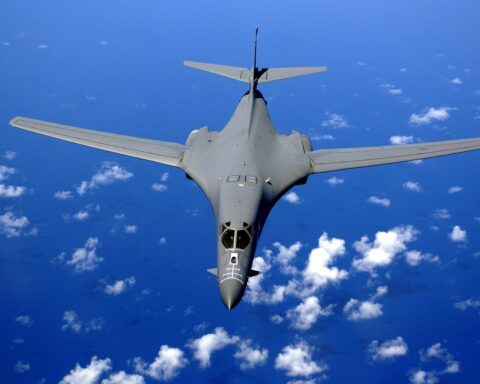
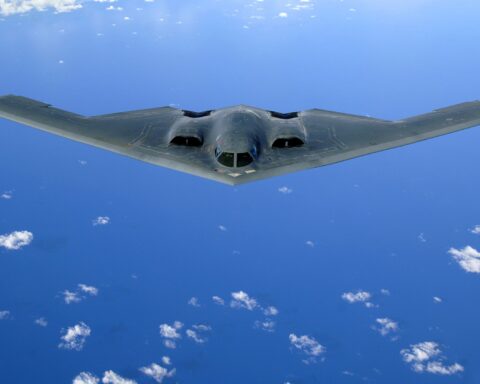
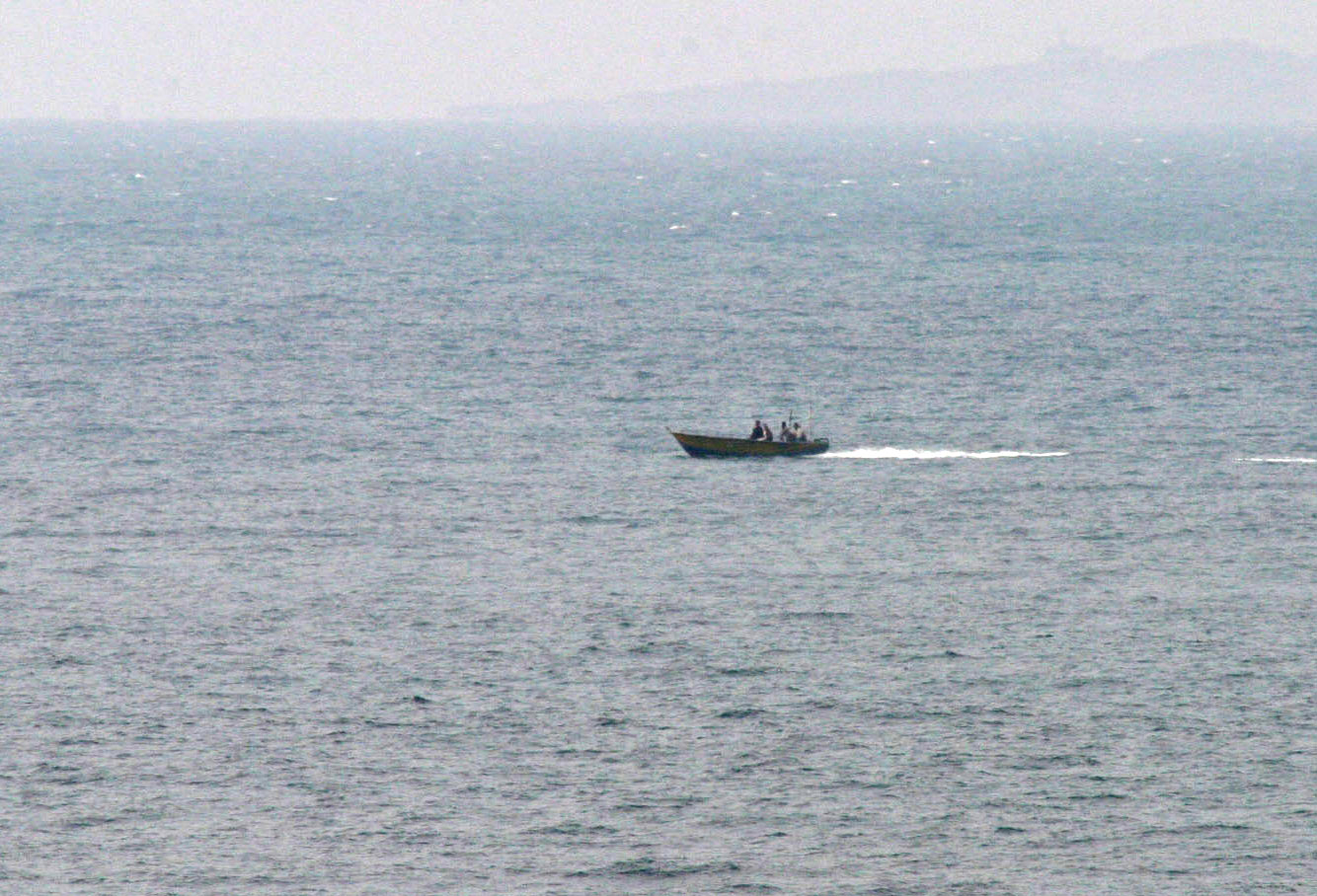
The strike employed multiple 5,000-pound penetrating bombs — among the heaviest conventional ordnance in the American arsenal — designed to reach hardened underground targets. In addition to the primary facility, U.S. forces struck intelligence support sites and missile radar relays that Iranian forces had used to monitor the movements of commercial vessels through the 21-mile-wide waterway, CBS News reported Saturday.
Cooper stated that the operation was part of a broader campaign to “eliminate Iran’s ability to project meaningful power outside its borders.” The CENTCOM commander added that U.S. forces had now struck more than 8,000 military targets across Iran and destroyed or disabled 130 Iranian vessels since the war began on February 28.
The destruction of the coastal facility represents a shift in American targeting priorities. While the first two weeks of the conflict focused on Iran’s nuclear infrastructure, air defenses, and command networks, the latest operations indicate that Washington is now turning sustained attention to the weapons systems directly threatening Gulf maritime traffic — the issue with the most immediate economic consequences for Saudi Arabia and the broader global economy.
The Middle East briefing 3,000+ readers start their day with.
One email. Every weekday morning. Free.
Inside the Underground Facility
The underground site, whose exact location along Iran’s Persian Gulf coast has not been disclosed by the Pentagon, functioned as a concealed forward operating base for Iran’s anti-ship warfare capabilities. According to the CENTCOM briefing, the facility contained three categories of military assets.
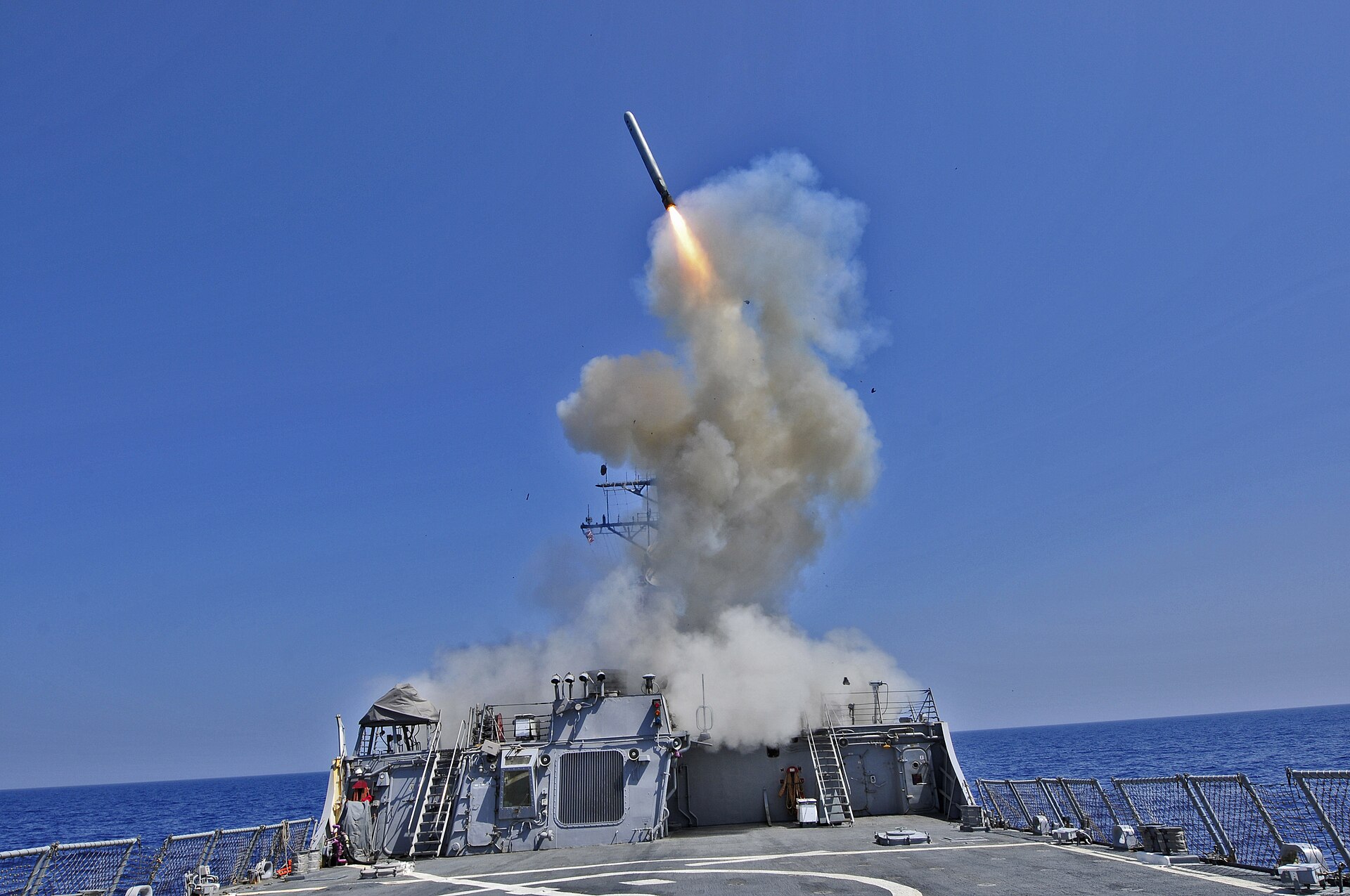
Anti-ship cruise missiles — likely variants of the Noor and Qader systems, which are Iranian derivatives of the Chinese C-802 missile — formed the primary stored ordnance. These weapons have an operational range of approximately 120 to 200 kilometres, sufficient to cover the entire Strait of Hormuz and the approaches to Saudi Arabia’s eastern ports, according to assessments published by the International Institute for Strategic Studies (IISS).
Mobile missile launchers, designed to be driven out of the underground facility and positioned along the coastline for rapid firing, were also destroyed. These transporter-erector-launchers (TELs) give Iran the ability to strike shipping from multiple unpredictable positions, complicating the defensive task facing U.S. and allied naval forces patrolling the Strait.
The third component — intelligence support sites and missile radar relays — served as the surveillance backbone of Iran’s anti-shipping operations. These systems tracked vessel movements, identified high-value targets such as laden crude oil tankers, and fed targeting data to the missile batteries. Their destruction removes what one former U.S. Navy officer described to Reuters as “the eyes of Iran’s coastal defense network.”
The use of 5,000-pound bombs — a category that includes the GBU-28 and the newer GBU-72 Advanced 5K Penetrator — underscores the depth of the hardening protecting the facility. These weapons are designed to penetrate reinforced concrete and layers of rock before detonating. The Pentagon has acknowledged that Iran invested heavily in underground military infrastructure over the past two decades, building facilities beneath as much as 80 metres of mountain rock in some locations.
What Does ‘Degraded’ Mean for Hormuz Shipping?
Admiral Cooper’s assessment that Iran’s Hormuz threat has been “degraded” falls short of claiming the waterway is safe for commercial transit. The distinction matters for Saudi Arabia, whose eastern oil terminals — Ras Tanura, Jubail, and the offshore loading platforms at Safaniyah — remain inaccessible as long as the Strait remains effectively closed to unescorted commercial traffic.
Cooper provided three indicators of degradation during his briefing. Iran’s conventional navy “is no longer sailing,” he stated. Its tactical fighter aircraft “are not flying.” And the destruction of the underground coastal facility and associated surveillance infrastructure has, in his assessment, reduced Tehran’s ability to target individual commercial vessels with anti-ship missiles.
The CENTCOM commander also noted that the United States has constructed “the most extensive air defense umbrella in the world over the Middle East right now,” a system that has intercepted the majority of Iranian missile and drone attacks aimed at Gulf states over the past three weeks. According to Pentagon figures, Iranian attacks on Gulf targets have declined approximately 90 percent from the peak intensity of the war’s opening days.
| Metric | Status Before Strike | Status After Strike |
|---|---|---|
| Anti-ship missile storage | Multiple coastal facilities active | Primary underground site destroyed |
| Mobile launchers | TELs deployed along coast | Multiple launchers destroyed in facility |
| Surveillance radar | Active tracking of ship movements | Radar relays and intel sites struck |
| Iranian naval vessels | ~130+ operational | 130 destroyed or disabled |
| Iranian tactical aircraft | Limited sorties | Not flying, per Cooper |
| Attack intensity (vs peak) | 100% | ~10% of peak |
Despite the progress claimed by CENTCOM, the Strait of Hormuz remains effectively closed to commercial shipping. Iran retains the ability to deploy naval mines — thousands of which it stockpiled over decades — and its fleet of small fast-attack boats, while diminished, has not been entirely eliminated. The selective granting of safe passage to Japanese vessels earlier this week demonstrated that Iran still exercises a degree of control over who transits the waterway, a reality that contradicts any suggestion that its Hormuz leverage has been fully neutralised. The persistence of the blockade despite CENTCOM’s strikes ultimately drove Trump to issue a 48-hour ultimatum threatening to obliterate Iranian power plants if the strait remained closed.
Twenty-Two Nations Condemn Iran’s Hormuz Blockade
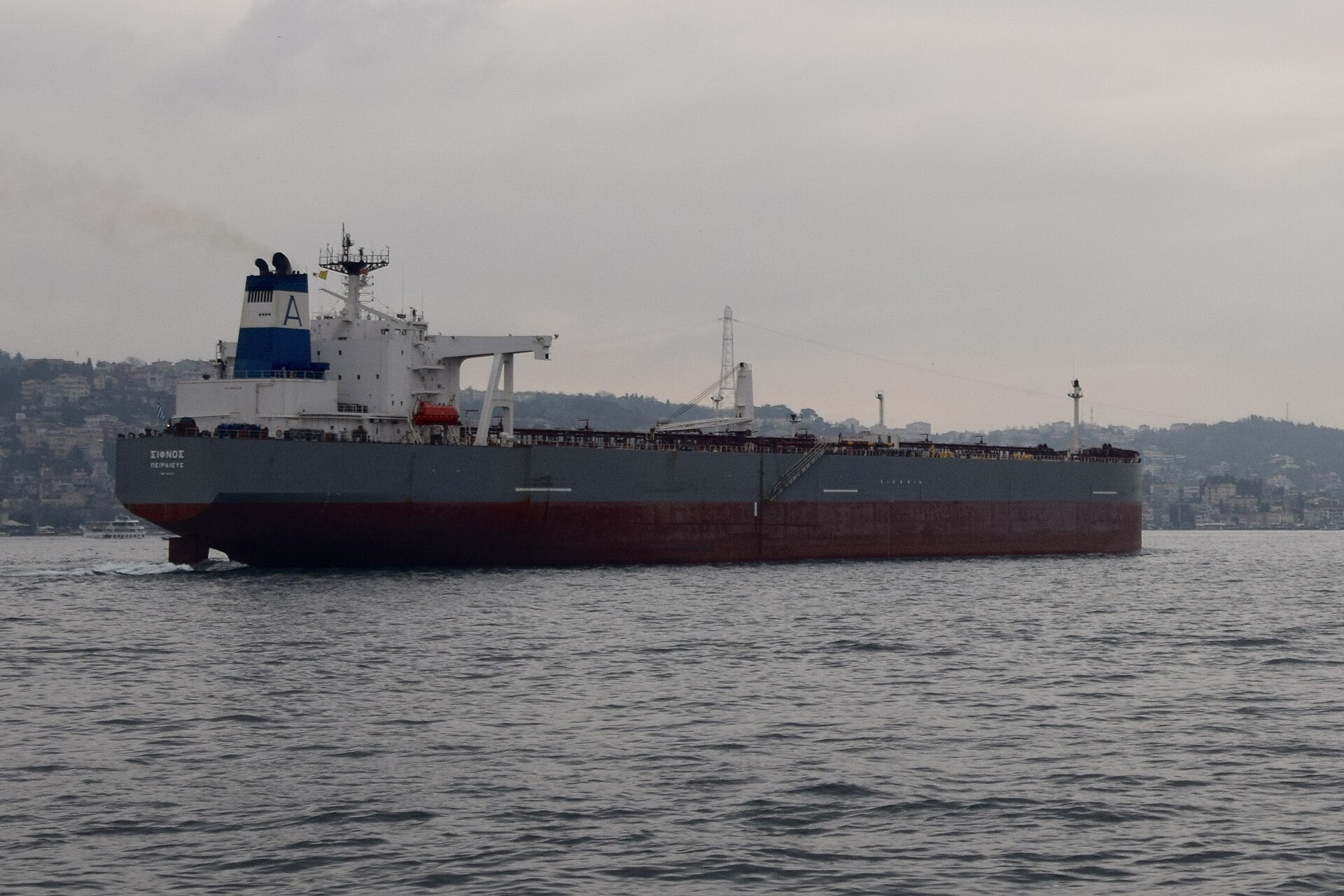
In a parallel diplomatic development, 22 nations issued a joint statement on Saturday condemning “in the strongest terms recent attacks by Iran on unarmed commercial vessels in the Gulf” and demanding that Tehran immediately cease its de facto closure of the Strait of Hormuz.
The statement, coordinated through British and French diplomatic channels, was signed by the United Kingdom, France, Germany, Italy, the Netherlands, Japan, Canada, the Republic of Korea, New Zealand, Denmark, Latvia, Slovenia, Estonia, Norway, Sweden, Finland, Czechia, Romania, Lithuania, Australia, Bahrain, and the United Arab Emirates, according to a text published by the UK government.
The coalition’s breadth — spanning NATO allies, Indo-Pacific partners, and two Gulf states — reflects the global economic pain caused by Hormuz’s closure. The signatories called on Iran to “cease immediately its threats, laying of mines, drone and missile attacks and other attempts to block the Strait to commercial shipping” and to comply with UN Security Council Resolution 2817, which was passed in response to Iran’s attacks on Gulf states.
The statement noted that “the effects of Iran’s actions will be felt by people in all parts of the world,” an acknowledgment that the Hormuz blockade has pushed crude oil prices above $112 per barrel and driven gasoline costs to multi-year highs across Europe, Asia, and North America.
The inclusion of Bahrain and the UAE — both of which have been struck by Iranian missiles and drones — gives the statement a regional anchor that distinguishes it from the 12-nation Riyadh summit two days earlier, which focused on Arab and Islamic solidarity. Saudi Arabia, notably, did not sign the 22-nation statement, maintaining its position of diplomatic restraint even as its economic interests are directly threatened by the ongoing blockade.
The signatories expressed “readiness to support safe passage efforts” through the Strait and welcomed the coordinated release of strategic petroleum reserves by member nations — a measure aimed at dampening the oil price spike, though one that analysts at Goldman Sachs have described as insufficient to offset the loss of roughly 8 million barrels per day of Gulf exports.
How Does the Hormuz Campaign Affect Saudi Arabia’s Oil Exports?
Saudi Arabia’s stake in the reopening of the Strait of Hormuz is larger than that of any other nation. Approximately 6.2 million barrels per day of Saudi crude oil — representing more than 60 percent of the Kingdom’s total exports — normally transit the waterway, according to the U.S. Energy Information Administration (EIA). The closure has forced Saudi Aramco to reroute what it can through the East-West Pipeline to the Red Sea port of Yanbu, which itself was struck by an Iranian drone and ballistic missile on March 19.
The East-West Pipeline has a maximum throughput capacity of approximately 5 million barrels per day, but operational constraints and the damage at Yanbu have reportedly limited actual flows to between 3 and 4 million barrels per day, according to shipping intelligence tracked by Bloomberg. The gap between Saudi Arabia’s production capacity and its available export routes represents a daily revenue loss measured in hundreds of millions of dollars.
CENTCOM’s claim that Iran’s Hormuz threat has been “degraded” is therefore of direct financial interest to Riyadh. Every day that the Strait remains closed costs the Kingdom roughly $500 million in foregone oil revenue at current prices — a figure derived from the approximately 3 million barrels per day of exports that cannot reach market through either Hormuz or the constrained Yanbu alternative, multiplied by the current Brent price of approximately $112.
| Route | Normal Capacity (bpd) | Current Status | Operational Flow (bpd) |
|---|---|---|---|
| Strait of Hormuz (Ras Tanura, Jubail) | ~6.2 million | Effectively closed | ~0 |
| East-West Pipeline to Yanbu | ~5 million | Partially operational (drone/missile damage) | ~3-4 million |
| Total available | ~11.2 million | Constrained | ~3-4 million |
Saudi Arabia’s foreign minister, Prince Faisal bin Farhan, said Thursday that the Kingdom “reserves the right to take military action if deemed necessary” — a statement that reflected Riyadh’s growing frustration with both Iran’s continued attacks and the pace of American efforts to restore shipping. The diplomatic restraint that has characterised Saudi Arabia’s posture throughout the conflict now sits in tension with the economic reality that every passing day deepens the financial damage to the Kingdom’s primary revenue source.
What Is the Economic Fallout From the Hormuz Blockade?
Brent crude was trading at approximately $112 per barrel on Saturday, compared to roughly $70 per barrel before the war began on February 28 — a 60 percent increase in less than four weeks. West Texas Intermediate (WTI) stood at approximately $108. The American Automobile Association reported that U.S. gasoline prices had reached a nationwide average of $3.91 per gallon, up from $2.92 one month earlier, CBS News reported.
The price surge reflects the removal of approximately 8 million barrels per day of Gulf exports from global supply — a disruption larger than any since the 1973 Arab oil embargo, according to analysis by the International Energy Agency (IEA). The IEA’s coordinated release of 400 million barrels from strategic petroleum reserves, announced earlier this week, has done little to arrest the upward pressure on prices.
Goldman Sachs warned this week that Gulf economies face their worst recession in a generation if the conflict continues beyond April. The investment bank estimated that the Hormuz closure was costing the global economy approximately $2.5 billion per day in disrupted trade, factoring in not only oil but also liquefied natural gas shipments from Qatar, petrochemical exports from Saudi Arabia and the UAE, and the broader paralysis of container shipping through the waterway.
President Donald Trump stated Saturday that the United States “doesn’t need” the Strait of Hormuz and that it would “open itself” eventually — a comment that drew criticism from energy analysts who noted that while the U.S. is largely self-sufficient in oil production, its European and Asian allies are acutely dependent on Gulf crude. Trump separately told reporters that he was considering “winding down” military operations against Iran, even as the Pentagon deployed additional Marines and warships to the region.
What Military Capabilities Does Iran Still Have?
Iran’s government has not publicly commented on CENTCOM’s claim to have destroyed the underground anti-ship missile facility. Tehran has, however, continued to demonstrate its willingness to escalate despite mounting military losses.
Earlier on Saturday, Iran fired two intermediate-range ballistic missiles at the joint U.S.-UK military base on Diego Garcia in the Indian Ocean — a strike at approximately 4,000 kilometres that doubled Iran’s previously demonstrated missile range. One missile failed mid-flight; a U.S. warship fired an SM-3 interceptor at the second, though the Pentagon did not confirm whether the interception was successful.
Iran’s IRGC also claimed responsibility for overnight drone strikes that ignited fires near a U.S. military complex in Baghdad, part of a continuing pattern of attacks on American bases across the Middle East. While Iran’s conventional military capabilities have been sharply reduced — Cooper noted that Iran’s navy is “no longer sailing” and its fighter aircraft are “not flying” — Tehran retains asymmetric tools that can inflict damage far beyond what its degraded conventional forces might suggest.
The mine threat remains particularly acute. Iran is estimated to possess between 3,000 and 6,000 naval mines of various types, according to the U.S. Office of Naval Intelligence. Many of these were pre-positioned before the war or can be deployed from small civilian vessels, making them extremely difficult to detect and neutralise. Mine clearance operations in the Strait could take weeks or months, even after Iran’s surface fleet has been neutralised.
Israel, meanwhile, struck the Natanz uranium enrichment facility overnight using what was reported to be American-supplied bunker-buster munitions — a separate operation from CENTCOM’s Hormuz-focused strikes, but one that underscored the breadth of the military campaign against Iran. Iranian state media reported “no leakage of radioactive materials” from the site. The International Atomic Energy Agency (IAEA) stated that preliminary monitoring showed “no increase in off-site radiation levels.”
Three Weeks of War by the Numbers
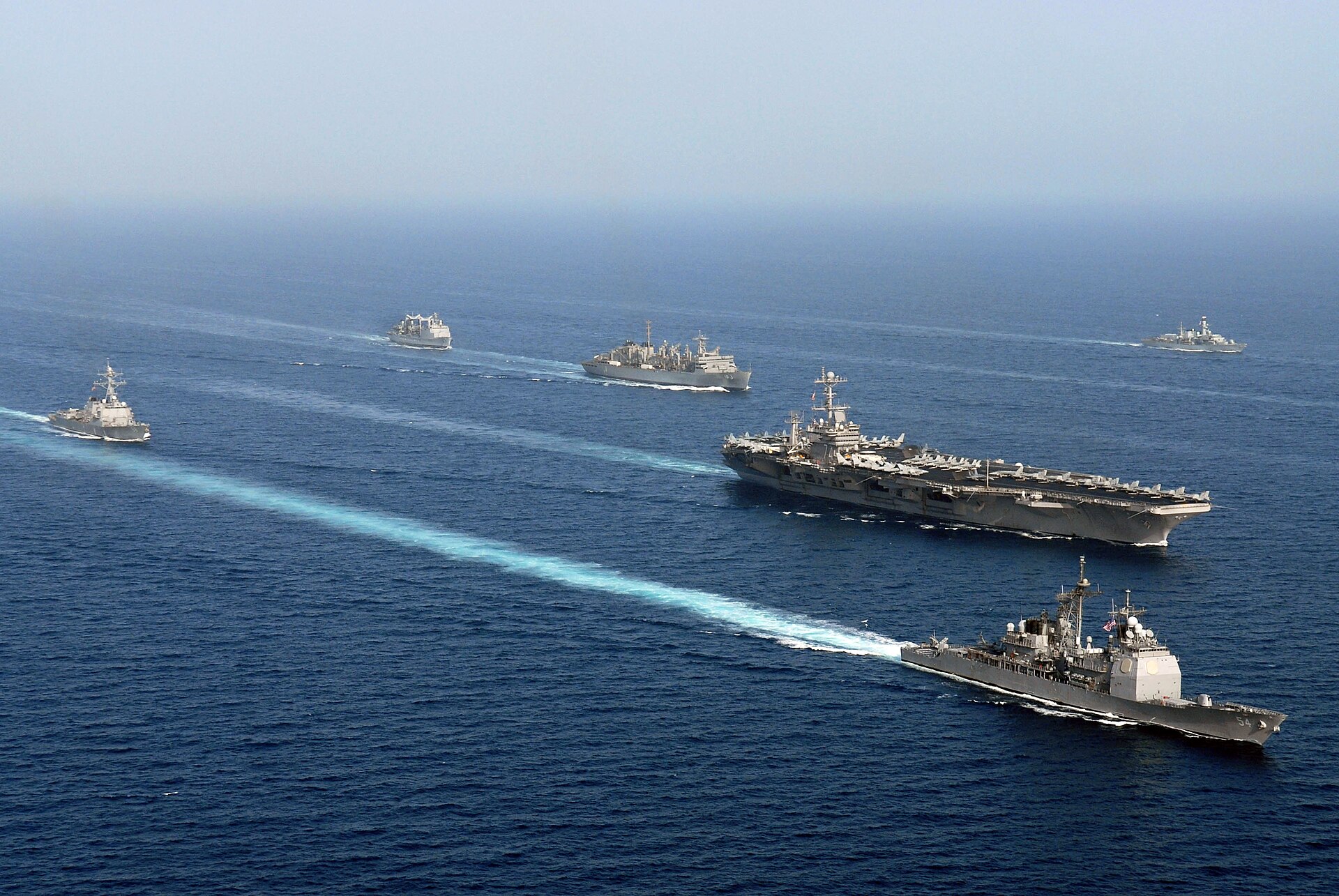
As the conflict enters its fourth week, the scale of the military campaign and its economic consequences have already exceeded most pre-war estimates. CENTCOM’s briefing Saturday provided several statistics that frame the scope of American operations.
| Category | Figure | Source |
|---|---|---|
| Military targets struck by U.S./coalition | 8,000+ | CENTCOM (March 21) |
| Iranian vessels destroyed/disabled | 130 | CENTCOM (March 21) |
| Days of effective Hormuz closure | ~21 | Shipping data |
| Brent crude price (pre-war) | $70/barrel | Bloomberg |
| Brent crude price (current) | $112/barrel | Bloomberg (March 21) |
| Global oil supply disruption | ~8 million bpd | IEA |
| U.S. gasoline price average | $3.91/gallon | AAA (March 21) |
| U.S. gasoline price (one month ago) | $2.92/gallon | AAA |
| Nations condemning Hormuz blockade | 22 | UK Gov joint statement |
| Strategic reserve barrels released | 400 million | IEA |
| Estimated daily global cost of blockade | $2.5 billion | Goldman Sachs |
| Additional U.S. Marines deploying | ~2,500 | Pentagon |
The war began on February 28, 2026, when the United States and Israel launched coordinated strikes against Iranian nuclear facilities, military installations, and leadership targets, killing Supreme Leader Ali Khamenei in the opening hours. Iran retaliated by firing hundreds of ballistic missiles and drones at Israel, U.S. military bases across the Middle East, and civilian infrastructure in Gulf Arab states including Saudi Arabia, the UAE, Qatar, Kuwait, and Bahrain.
Saudi Arabia has borne significant damage from Iranian retaliatory strikes despite having no direct role in the initial U.S.-Israeli operation. Iranian drones and missiles have struck the SAMREF refinery in Yanbu, residential areas in Al-Kharj, the Riyadh diplomatic quarter, and Saudi air defense installations across the Eastern Province. Two foreign workers — one Indian and one Bangladeshi — were killed in the Al-Kharj strike, and at least 12 others were injured.
Prince Faisal bin Farhan, the Saudi foreign minister, said Thursday that trust between Saudi Arabia and Iran had been “completely shattered” and that it would take years to rebuild the diplomatic relationship that both nations had painstakingly reconstructed through China-brokered talks beginning in 2023. The Iran War has now effectively reversed three years of Saudi-Iranian rapprochement.
Frequently Asked Questions
What underground facility did CENTCOM destroy?
U.S. forces used multiple 5,000-pound bombs to destroy an underground coastal facility in Iran that stored anti-ship cruise missiles, mobile missile launchers, and surveillance equipment used to track commercial shipping transiting the Strait of Hormuz. CENTCOM also struck intelligence support sites and missile radar relays associated with the facility.
Is the Strait of Hormuz open to shipping now?
The Strait remains effectively closed to unescorted commercial traffic despite CENTCOM’s claim that Iran’s ability to threaten the waterway has been “degraded.” Iran retains naval mine capabilities and limited fast-attack boat forces. Mine clearance could take weeks or months. Iran selectively granted Japan safe passage earlier this week, demonstrating continued control over transit.
Which 22 nations signed the joint Hormuz statement?
The United Kingdom, France, Germany, Italy, the Netherlands, Japan, Canada, South Korea, New Zealand, Denmark, Latvia, Slovenia, Estonia, Norway, Sweden, Finland, Czechia, Romania, Lithuania, Australia, Bahrain, and the UAE signed the statement condemning Iran’s attacks on commercial vessels and demanding the Strait be reopened to shipping.
How much is the Hormuz blockade costing Saudi Arabia?
Saudi Arabia is losing approximately $500 million per day in foregone oil revenue, according to estimates based on the roughly 3 million barrels per day of exports that cannot reach market through either the closed Strait of Hormuz or the capacity-constrained Yanbu alternative, at current Brent prices of approximately $112 per barrel.
What is Iran’s remaining military capability in the Strait?
While Iran’s conventional navy is “no longer sailing” and its fighter aircraft are grounded, according to CENTCOM, Tehran retains an estimated 3,000 to 6,000 naval mines, diminished but active small-boat forces, and asymmetric warfare capabilities including drone attacks and proxy operations that continue to threaten Gulf infrastructure and shipping.