
TEHRAN — Seven children, including a 10-day-old infant, were killed on March 21 when a US-Israeli airstrike struck a residential apartment building in eastern Tehran, according to Mehr News Agency and Anadolu Agency. The strike, which occurred during Nowruz celebrations marking the Persian New Year, completely destroyed the building near Risalat Square — the same neighbourhood where a triple airstrike killed more than 40 people just eleven days earlier. No US or Israeli military statement has addressed the incident. The children’s names have not been released.
The strike brought the confirmed death toll among Iranian children to at least 204, according to the Iranian Red Crescent, in a war now entering its fourth week. UNICEF recorded more than 200 child deaths by March 12 — nine days before the Risalat Square attack. The independent Kurdish human rights organisation Hengaw, which maintains its own casualty database, documented 127 confirmed minors among 5,900 total deaths through March 20. On the same day that seven children died in Tehran, Iran fired ballistic missiles at the Israeli cities of Dimona and Arad, wounding approximately 200 people. The IDF retaliated with strikes on what it described as “regime infrastructure” in Tehran. President Trump threatened to “obliterate” Iran’s power plants if the Strait of Hormuz was not reopened within 48 hours.
This is the arithmetic of the war. Children die in apartment buildings. Missiles fly in both directions. Ultimatums are issued. And the toll compounds, day after day, with no ceasefire in sight.
Table of Contents
- What Happened at Risalat Square on March 21?
- The First Wartime Nowruz Since the Iran-Iraq War
- How Many Children Have Died in the Iran War?
- The Minab School Strike and the Pattern of Child Casualties
- The March 10 Triple Strike on Resalat Square
- Day 22 on the Battlefield
- Has CENTCOM Addressed Civilian Casualties?
- Why Do Casualty Figures Vary So Widely?
- Trump’s 48-Hour Ultimatum and the Escalation Spiral
- What Has the International Community Said?
- A Timeline of Attacks Killing Children in Iran
- Frequently Asked Questions
What Happened at Risalat Square on March 21?
On the morning of March 21, 2026 — the second day of Nowruz — an airstrike hit a residential apartment building in eastern Tehran, near Risalat Square, one of the most densely populated areas of the Iranian capital. Mehr News Agency, Iran’s semi-official news wire, reported that the building was “completely destroyed.” Seven children were among the dead, the youngest a newborn infant just 10 days old.
Anadolu Agency, Turkey’s state-run international wire service, carried the report on the same day. Middle East Monitor published a corroborating account. Neither outlet identified the specific munition used, and no independent damage assessment from Western journalists or international investigators has been published. Access to Iranian strike sites by non-Iranian media has been severely restricted since the war began on February 28.
The attack occurred in the same cluster of apartment blocks that was targeted on March 10, when three consecutive strikes killed more than 40 residents. Drop Site News, the independent investigative outlet founded by former Intercept journalists, published an investigation into the March 10 triple strike, documenting the destruction of three separate residential buildings within a single city block near Resalat Square. The March 21 strike represents the second mass-casualty event in this neighbourhood in less than two weeks.
The Middle East briefing 3,000+ readers start their day with.
One email. Every weekday morning. Free.
No military target has been publicly identified in the Risalat Square area. CENTCOM has not issued a statement regarding the March 21 strike. The IDF, which coordinates air operations over Tehran with the US Air Force, has not claimed or denied responsibility for the specific attack. Iranian state media attributed the strike to “American and Zionist warplanes.”
The First Wartime Nowruz Since the Iran-Iraq War

Nowruz, the Persian New Year, began at the spring equinox on March 20, 2026. It is the most important holiday in the Iranian calendar — a 13-day celebration of renewal, family, and hope. Families gather around the Haft-sin table, a traditional display of seven symbolic items beginning with the letter S in Farsi: sprouts, garlic, dried fruit, vinegar, apples, sumac, and a sweet pudding. Each represents a different wish for the coming year. Children receive gifts and new clothes. Extended families share meals that take days to prepare.
The last time Nowruz fell during an active war was during the Iran-Iraq War (1980-1988), when Iraqi Scud missiles struck Tehran during the “War of the Cities.” In 1988, the final year of that conflict, Iraq fired 189 modified Scud missiles at Iranian cities between February and April, killing an estimated 2,000 civilians. Nowruz that year was observed in bomb shelters.
In 2026, the parallel is unavoidable. Iranian families prepared Haft-sin tables in apartments with taped windows. In Tehran, air-raid sirens interrupted the traditional fire-jumping ceremony on Chaharshanbe Suri, the “Red Wednesday” celebration held the Tuesday before Nowruz. State television broadcast Nowruz greetings from Supreme Leader Khamenei alongside footage of missile launches. On the second morning of the holiday, the children in the Risalat Square apartment building were killed.
The timing compounds the grief in ways that are difficult for non-Iranian audiences to fully grasp. Nowruz is not merely a holiday. It is the cultural spine of Persian identity — observed by Iranians of every political persuasion, every religious background, every social class. To lose children during Nowruz carries a particular weight in the Iranian collective memory, one that will shape public sentiment toward this war for generations.
How Many Children Have Died in the Iran War?
The answer depends on who is counting, and how. Three separate organisations maintain child casualty figures, and their numbers diverge significantly — a reflection of the chaos of wartime data collection, the difficulty of verifying deaths in an active conflict zone, and the political incentives that shape official reporting.
| Source | Type | Children Killed | Methodology | Date of Estimate |
|---|---|---|---|---|
| Iranian Red Crescent | Government-affiliated | 204 | Hospital admissions, morgue records, field reports | March 21, 2026 |
| UNICEF | International organisation | 200+ | Cross-referenced field reports, hospital data | March 12, 2026 |
| Hengaw | Independent Kurdish human rights org | 127 | Individually verified cases with documentation | March 20, 2026 |
The Iranian Red Crescent’s figure of 204 children is the highest. The Red Crescent operates under the umbrella of the Iranian government and receives casualty data from hospitals and emergency responders across the country. Its figures include children killed in all circumstances — direct strikes, secondary explosions, building collapses, and medical deprivation caused by infrastructure destruction.
UNICEF’s statement, issued on March 12, recorded “more than 200 children” killed in the first 13 days of the conflict. The agency’s methodology cross-references field reports from its Iran country office with hospital admission data. UNICEF has not issued an updated figure since March 12, meaning nine additional days of conflict — including the Risalat Square attack — are not reflected in its count.
Hengaw’s figure of 127 is the most conservative, but also the most rigorously documented. Hengaw, a Norwegian-based organisation that monitors human rights in Kurdish regions of Iran, individually verifies each death with documentation — names, ages, locations, and circumstances. Its 6th report, published on March 20, identified 127 confirmed minors among 5,900 total deaths. The gap between Hengaw’s 127 and the Red Crescent’s 204 likely reflects unverified deaths in areas where Hengaw lacks ground-level contacts, particularly in Tehran, Isfahan, and Shiraz.
All three figures share one characteristic: they are almost certainly undercounts. In any modern conflict, the true civilian death toll emerges only months or years after the fighting ends, when systematic surveys and missing-persons registries can be cross-referenced. The Lancet’s post-conflict mortality studies in Iraq found that initial wartime counts typically captured between 5 and 20 percent of total excess mortality.
The Minab School Strike and the Pattern of Child Casualties
The Risalat Square attack was not the first mass-casualty incident involving children in this war, nor the deadliest. That distinction belongs to the Minab school strike on Day 1 — February 28, 2026 — when a US missile struck a girls’ school in the southern Iranian city of Minab, killing between 165 and 180 people, the majority of them girls between the ages of 7 and 12.
The Minab strike remains the single deadliest incident of the Iran war. The Pentagon initially denied targeting any school. On March 13 — two weeks after the strike — the Department of Defence acknowledged that a US munition had struck the school, describing it as “a tragic incident under investigation.” CENTCOM classified the site as a “secondary effect” of a strike targeting a military communications node 300 metres from the school compound. No independent investigation has been permitted at the site.
The Minab and Risalat Square incidents represent the two poles of child casualties in this conflict. Minab was a single catastrophic event in a provincial city. Risalat Square is a pattern of repeated strikes on the same residential neighbourhood in the capital, accumulating casualties in smaller increments — 40 on March 10, 7 on March 21 — that individually attract less international attention but collectively paint a picture of sustained bombardment of civilian infrastructure.
“We have never — and will never — target civilians. Every strike is directed at military or regime infrastructure. We deeply regret any civilian casualties.”
CENTCOM spokesperson, March 5, 2026
Between Minab and Risalat Square, the pattern is consistent: strikes hit populated areas, children die, and no detailed military justification for the specific targeting decision is provided. The gap between CENTCOM’s stated policy and the documented outcomes grows wider with each incident. Twenty-two days into the war, at least 127 individually verified minors have been killed, and the true number is almost certainly higher.
The March 10 Triple Strike on Resalat Square
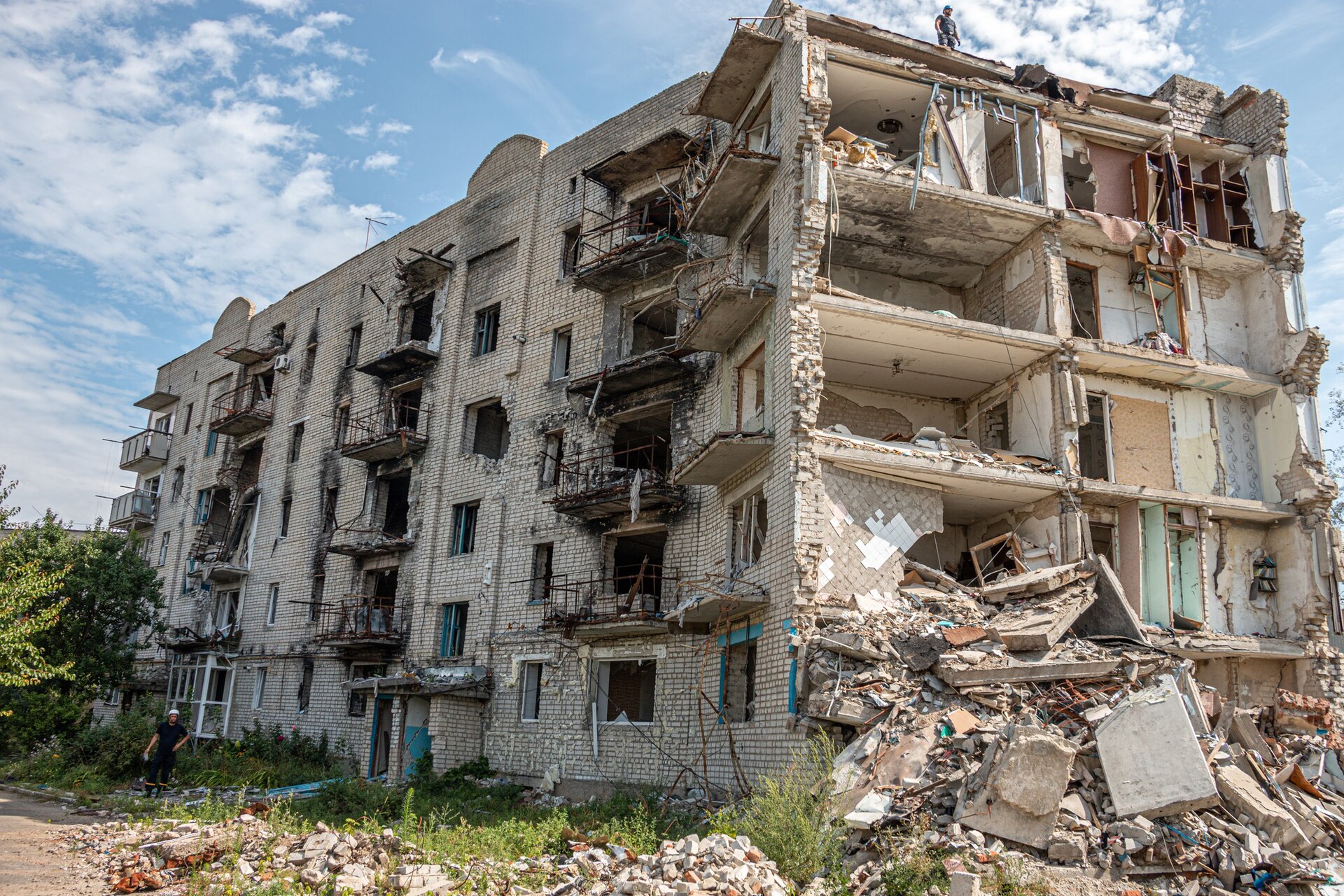
To understand the March 21 attack, the March 10 triple strike must be examined first. On that day — Day 11 of the war — three separate airstrikes hit residential apartment buildings in the Resalat Square area of eastern Tehran within a span of approximately 20 minutes. Drop Site News, citing local sources and satellite imagery analysis, reported that the strikes destroyed three buildings on the same block, killing more than 40 residents.
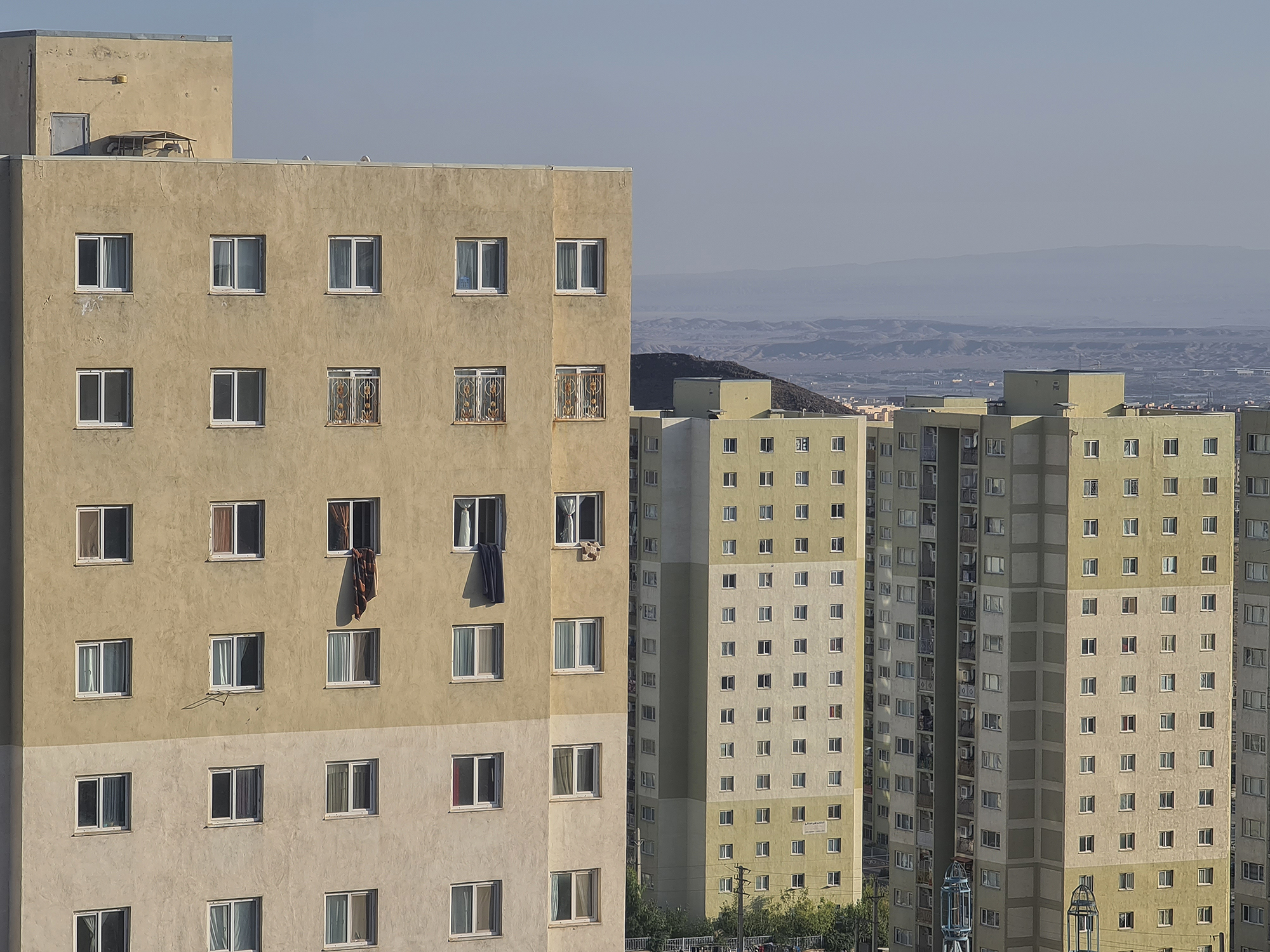
The Resalat Square area is among the most densely populated residential zones in Tehran. The neighbourhood consists primarily of mid-rise apartment blocks built in the 1990s and 2000s during a residential construction boom. Population density in eastern Tehran ranges from 15,000 to 25,000 people per square kilometre — comparable to central London or midtown Manhattan. The buildings are concrete-frame construction with limited blast resistance.
The three buildings struck on March 10 were all residential. No military installation has been publicly identified within 500 metres of the strike zone. Iranian media reported that the attacks occurred during the early evening, when most residents would have been at home preparing or eating dinner. The dead included entire families.
Drop Site News interviewed survivors who described a “double tap” pattern — an initial strike followed by a second strike on the same location minutes later, a tactic that has been documented in conflicts from Gaza to Yemen. The third strike hit a neighbouring building, suggesting either a wider target area or a chain of secondary targeting decisions. No US or Israeli statement has acknowledged the March 10 Resalat Square attacks specifically.
Eleven days later, the same neighbourhood was hit again. The recurrence raises uncomfortable questions about targeting protocols. Either the Resalat Square area contains military infrastructure that neither the US nor Israel has publicly identified, or the same residential neighbourhood is being struck repeatedly for reasons that have not been explained.
Day 22 on the Battlefield
The March 21 children’s deaths did not occur in isolation. They were one thread in a day of escalation that extended from Tehran to the Negev Desert to the Strait of Hormuz. The full sequence of events on Day 22 illustrates the feedback loop that makes civilian protection increasingly difficult as the war intensifies.
Early on March 21, Iran launched a ballistic missile barrage targeting the Israeli cities of Dimona — home to Israel’s Shimon Peres Negev Nuclear Research Centre — and Arad, a city of 26,000 in the northern Negev. NPR reported that approximately 200 people were wounded in the attacks, though Israeli military censorship restricted detailed reporting. The Times of Israel’s live blog confirmed the strikes and the casualty figures.
The IDF responded with strikes on what Chief of Staff Herzi Halevi described as “regime infrastructure” in Tehran. IDF spokesman Brigadier General Daniel Hagari stated that the Iranian campaign had reached its “halfway” stage — a remark that drew sharp analysis from military observers, who noted it implied at least three more weeks of operations. IDF Chief Zamir made similar assessments in parallel briefings.
Simultaneously, President Trump issued a 48-hour ultimatum: if Iran did not reopen the Strait of Hormuz, the United States would “obliterate” Iran’s power generation infrastructure. The ultimatum, delivered via social media and echoed in a White House press statement, represented the most explicit US threat against civilian infrastructure since the war began. Iran’s power grid serves 85 million people, including hospitals, water treatment plants, and cold-storage facilities for food and medicine.
Within this cascade of escalation, seven children died in an apartment building in eastern Tehran. Their deaths were reported by Iranian state media and picked up by Turkish and Middle Eastern wire services. No Western wire service — Reuters, AP, AFP — has independently confirmed the incident. The children’s names have not been released.
Has CENTCOM Addressed Civilian Casualties?
The US Central Command has maintained a consistent public position since the war began on February 28: all strikes target military or “regime” infrastructure, and civilian casualties are neither intended nor acceptable. On March 5, a CENTCOM spokesperson stated: “We have never — and will never — target civilians. Every strike is directed at military or regime infrastructure. We deeply regret any civilian casualties.”
This formulation — expressing regret without acknowledging specific incidents — has been repeated in various forms throughout the conflict. CENTCOM has not issued statements addressing the Risalat Square strikes of March 10 or March 21, the March 3 strikes on Isfahan, or the documented destruction of residential buildings in Shiraz, Tabriz, and Mashhad. The only incident CENTCOM has specifically acknowledged is the Minab school strike, and that acknowledgement came 14 days after the event.
The gap between CENTCOM’s stated targeting policy and the documented civilian death toll presents a credibility challenge that intensifies with each mass-casualty incident. Three explanations are possible, and they are not mutually exclusive.
First, Iranian military assets may be co-located with civilian infrastructure, a practice sometimes described as “human shielding.” The IDF has made this claim regarding Iranian Revolutionary Guard Corps (IRGC) facilities in Tehran, though it has not provided evidence specific to the Resalat Square area.
Second, precision-guided munitions may be striking their intended targets but causing collateral damage to adjacent residential buildings. In dense urban environments, the blast radius of a 2,000-pound Joint Direct Attack Munition (JDAM) — the standard US bunker-buster — extends 365 metres. A GBU-28 deep-penetration bomb has a lethal blast radius of more than 500 metres.
Third, targeting intelligence may be flawed. In every modern conflict, from Baghdad in 2003 to Raqqa in 2017, post-war investigations have found that a percentage of strikes hit the wrong target due to stale intelligence, coordinates errors, or misidentified infrastructure. The Minab school strike — where a school was hit instead of a communications node 300 metres away — is consistent with this pattern.
Why Do Casualty Figures Vary So Widely?
The overall casualty figures from the Iran war exhibit the same divergence seen in the child death counts, and for the same structural reasons.
| Source | Killed | Injured | Civilian Dead | Notes |
|---|---|---|---|---|
| Iran Health Ministry | 1,500+ | 20,984 | Not disaggregated | Official government figures; likely undercounts military deaths |
| Hengaw (6th Report) | 5,900 | Not reported | 595 | Individually verified; 127 confirmed children |
| Iranian Red Crescent | Not published | Not published | 204 children | Only child mortality figure released |
The Iran Health Ministry’s figure of 1,500+ killed is the lowest total, but it comes with the most detailed injury data: 20,984 people hospitalised as of March 21. The Ministry’s count likely reflects only deaths recorded at functioning hospitals and morgues. In areas where medical infrastructure has been destroyed — and Iran’s Health Ministry has reported damage to 23 hospitals and 47 clinics since the war began — deaths may go unrecorded for weeks or months.
The scale of physical destruction extends far beyond medical facilities. By the twenty-fifth day of the war, coalition airstrikes had destroyed an estimated 82,000 civilian structures inside Iran, including residential buildings, schools, and hospitals — a figure that helps explain why official casualty counts diverge so sharply from independent estimates.
Hengaw’s figure of 5,900 killed in 21 days is nearly four times the government’s count. The discrepancy is partially methodological: Hengaw counts deaths reported by local contacts, community leaders, and family members, capturing fatalities that never reach a hospital. Hengaw’s data is strongest in Kurdish areas of western Iran but has coverage gaps in Tehran, the Gulf coast, and the Caspian provinces. Its identification of 595 confirmed civilians — approximately 10 percent of total dead — suggests either that the majority of deaths are combatant (IRGC, Basij militia, military personnel) or that civilian status is difficult to confirm in many cases.
No international organisation has published a comprehensive casualty estimate. The WHO, ICRC, and UN OCHA have all reported being unable to maintain real-time mortality tracking due to restricted access. UN Human Rights Commissioner Volker Turk called for an independent investigation on March 15 but received no mandate from the Security Council, where the United States holds a veto.
Trump’s 48-Hour Ultimatum and the Escalation Spiral
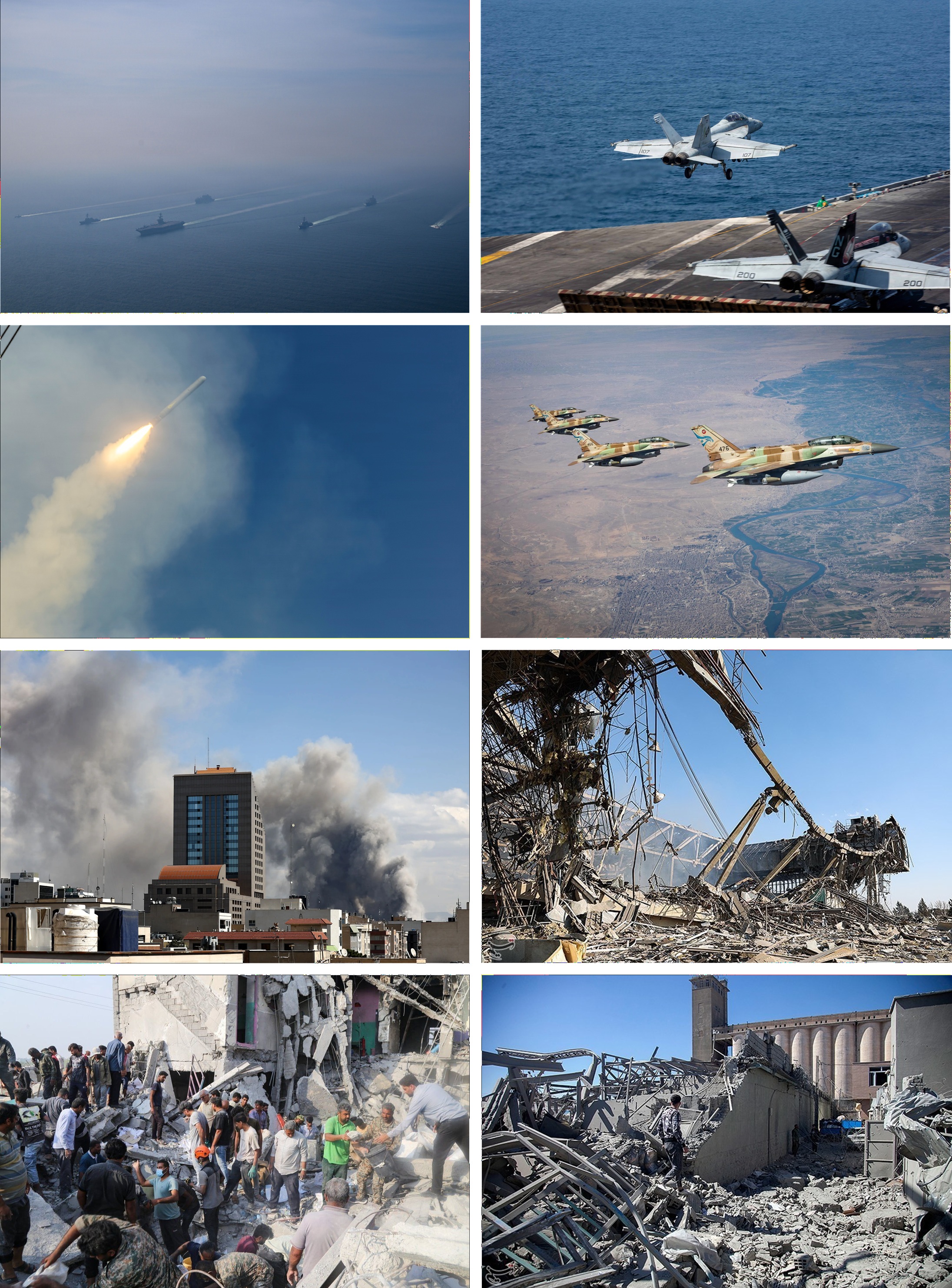
The political rhetoric surrounding the war stands in stark contrast to the reality on the ground in Tehran’s residential neighbourhoods. On March 21, as the bodies of seven children were recovered from rubble near Risalat Square, President Trump issued his most aggressive threat of the war: reopen the Strait of Hormuz within 48 hours, or the United States would destroy Iran’s power plants.
The threat to “obliterate” power generation infrastructure represents a potential escalation from military and “regime” targets to dual-use civilian infrastructure. Iran’s power grid — a network of 85 thermal, hydroelectric, and nuclear power stations — provides electricity to 85 million people. Its destruction would disable hospitals, water purification systems, sewage treatment, food refrigeration, and telecommunications. The humanitarian consequences, according to a March 18 assessment by the International Committee of the Red Cross, would be “catastrophic and potentially irreversible within weeks.”
The term “glorious” has appeared repeatedly in the President’s public statements about the Iran campaign. “We are running a glorious military operation,” he said on March 15. “This will be the most successful military campaign in American history.” The word choice is deliberate — it frames the war as an achievement, a source of national pride. It does not leave room for 10-day-old infants dying in apartment buildings.
There is a cognitive dissonance at the heart of modern air campaigns that the Iran war exposes with particular clarity. The technology is precise — GPS-guided munitions, real-time drone surveillance, signals intelligence. The political language is clean — “regime infrastructure,” “military targets,” “precision strikes.” But the outcomes include destroyed apartment buildings, dead children, and families gathered for Nowruz who will never celebrate another one.
What Has the International Community Said?
The international response to civilian casualties in the Iran war has been characterised by a gap between rhetoric and action that is familiar from previous conflicts. Multiple international bodies have expressed concern. None have taken enforcement action.
UNICEF’s March 12 statement — which recorded 200+ child deaths — called for “an immediate cessation of hostilities and the protection of all children.” The statement noted that children “bear no responsibility for this conflict and must be shielded from its consequences.” It did not name either the United States or Israel as the parties responsible for the strikes that killed children.
The UN Human Rights Office issued three statements between March 1 and March 15, each escalating in language. The most recent described the situation as “a humanitarian catastrophe unfolding in real time” and called for an independent international investigation. UN Human Rights Commissioner Turk stated that “attacks resulting in civilian casualties may constitute violations of international humanitarian law” — the most direct legal framing from a senior UN official.
The UN Security Council has met three times to discuss the Iran conflict. China and Russia have proposed ceasefire resolutions. The United States has vetoed each one, arguing that Iran must first reopen the Strait of Hormuz and halt missile attacks on Israel and Gulf states as preconditions for any ceasefire. The vetoes have effectively blocked any multilateral enforcement mechanism.
Saudi Arabia, which has maintained a carefully calibrated neutrality despite hosting US military bases used for operations against Iran, has not publicly commented on civilian casualties in Tehran. Riyadh’s diplomatic calculus prioritises its security relationship with Washington while avoiding public association with strikes on Iranian civilians — a position that becomes more difficult to sustain with each mass-casualty incident.
A Timeline of Attacks Killing Children in Iran
The following timeline, compiled from reports by Hengaw, UNICEF, Al Jazeera, Anadolu Agency, and Iranian state media, documents the major incidents in which children have been killed during the 2026 Iran war. It is not comprehensive — many individual child deaths in smaller strikes or secondary effects are not captured.
| Date | Day | Location | Description | Children Killed |
|---|---|---|---|---|
| Feb 28 | Day 1 | Minab, Hormozgan Province | US missile struck girls’ school during morning classes | ~130-150 |
| Mar 3 | Day 4 | Isfahan | Airstrikes on residential and industrial areas | Unknown |
| Mar 10 | Day 11 | Resalat Square, Tehran | Triple strike on apartment buildings | Unknown (40+ total killed) |
| Mar 12 | Day 13 | Multiple locations | UNICEF reports 200+ children killed by this date | 200+ cumulative |
| Mar 21 | Day 22 | Resalat Square, Tehran | Airstrike on residential building during Nowruz | 7 (including 10-day-old infant) |
The Minab school strike on Day 1 accounts for the overwhelming majority of documented child deaths in a single incident. The Pentagon’s belated acknowledgement of the strike — and its classification as “collateral damage” from a nearby military target — set a pattern that has repeated throughout the conflict: delayed acknowledgement, attribution to co-location of military and civilian sites, and no independent investigation.
The cumulative effect of these incidents is a child death toll that has reached at least 127 verified cases (Hengaw) and potentially more than 200 (Red Crescent, UNICEF). In 22 days of war, this translates to a minimum of 6 children killed per day by verified count, and potentially 9 to 10 per day by the higher estimates.
For context, the entire 2014 Gaza war — 51 days of fighting — killed 551 children, according to UNICEF. The 2003 Iraq invasion killed an estimated 3,500-4,000 children in the first year, according to the Lancet’s 2006 mortality study. The Iran war is on pace to surpass the Gaza 2014 child death toll within its first month.
Frequently Asked Questions
Who were the seven children killed in the March 21 Tehran airstrike?
The identities of the seven children have not been publicly released. Mehr News Agency and Anadolu Agency reported that they included a 10-day-old infant. The children were in a residential apartment building near Risalat Square in eastern Tehran that was completely destroyed in the airstrike. No further biographical details have been published as of March 22.
How many children have died in the Iran war so far?
Three separate sources provide different counts. The Iranian Red Crescent reports 204 children killed through March 21. UNICEF recorded 200+ child deaths by March 12 and has not updated its figure. Hengaw, an independent human rights organisation, has individually verified 127 child deaths through March 20. All figures are likely undercounts due to restricted access and incomplete reporting from destroyed areas.
Has the United States acknowledged the Resalat Square strikes?
No. Neither CENTCOM nor the Department of Defence has issued a statement regarding the March 10 triple strike or the March 21 attack on Resalat Square. CENTCOM’s standing position is that all strikes target military or “regime” infrastructure and that the US “will never target civilians.” The only specific civilian incident CENTCOM has acknowledged is the Minab school strike on Day 1.
What was the Minab school strike?
On February 28, 2026, a US missile struck a girls’ school in Minab, Hormozgan Province, killing between 165 and 180 people, most of them girls aged 7 to 12. The Pentagon acknowledged the strike on March 13, classifying it as collateral damage from a strike on a military communications node 300 metres from the school. No independent investigation has been permitted at the site.
Why did the strike occur during Nowruz?
There is no indication that the timing was deliberately chosen to coincide with Nowruz. Military operations have continued without pause since February 28. Both sides — the US-Israeli coalition and Iran — have rejected calls for a holiday ceasefire. The IDF described its Iran campaign as at the “halfway” stage on March 21, indicating operations will continue for several more weeks regardless of cultural or religious calendars.