
Changed: True -> False
LONDON — Britain concluded a free trade agreement with the Gulf Cooperation Council on 20 May 2026 — a 2,000-page treaty that makes the United Kingdom the first G7 nation to secure preferential trade access to the six-member bloc, with a projected annual benefit of £3.7 billion. The deal removes 93 percent of GCC tariffs on British goods, opens market access for UK financial services and fintech firms, and establishes first-of-their-kind commitments on cross-border data flows. Keir Starmer called it “a huge win for British business.” It may be. But Britain signed this treaty on the same day Saudi Foreign Minister Prince Faisal bin Farhan publicly endorsed Donald Trump’s decision to cancel a military strike on Iran — a juxtaposition that frames the agreement less as a trade milestone than as a commercial wager on post-war recovery in a region where the war has not ended, the strait has not reopened, and the GCC’s dominant economy is running a quarterly fiscal deficit 194 percent above its full-year target.
Table of Contents
- What Does the UK-GCC Free Trade Agreement Actually Cover?
- The May 20 Coincidence
- How Much of This Deal Depends on Saudi Arabia?
- The Fiscal Backdrop Britain Chose Not to Mention
- Can GCC Trade Volumes Recover While Hormuz Remains Constrained?
- The $6.8 Billion Side Agreement
- What Happens to the Deal If Oil Falls to $79 a Barrel?
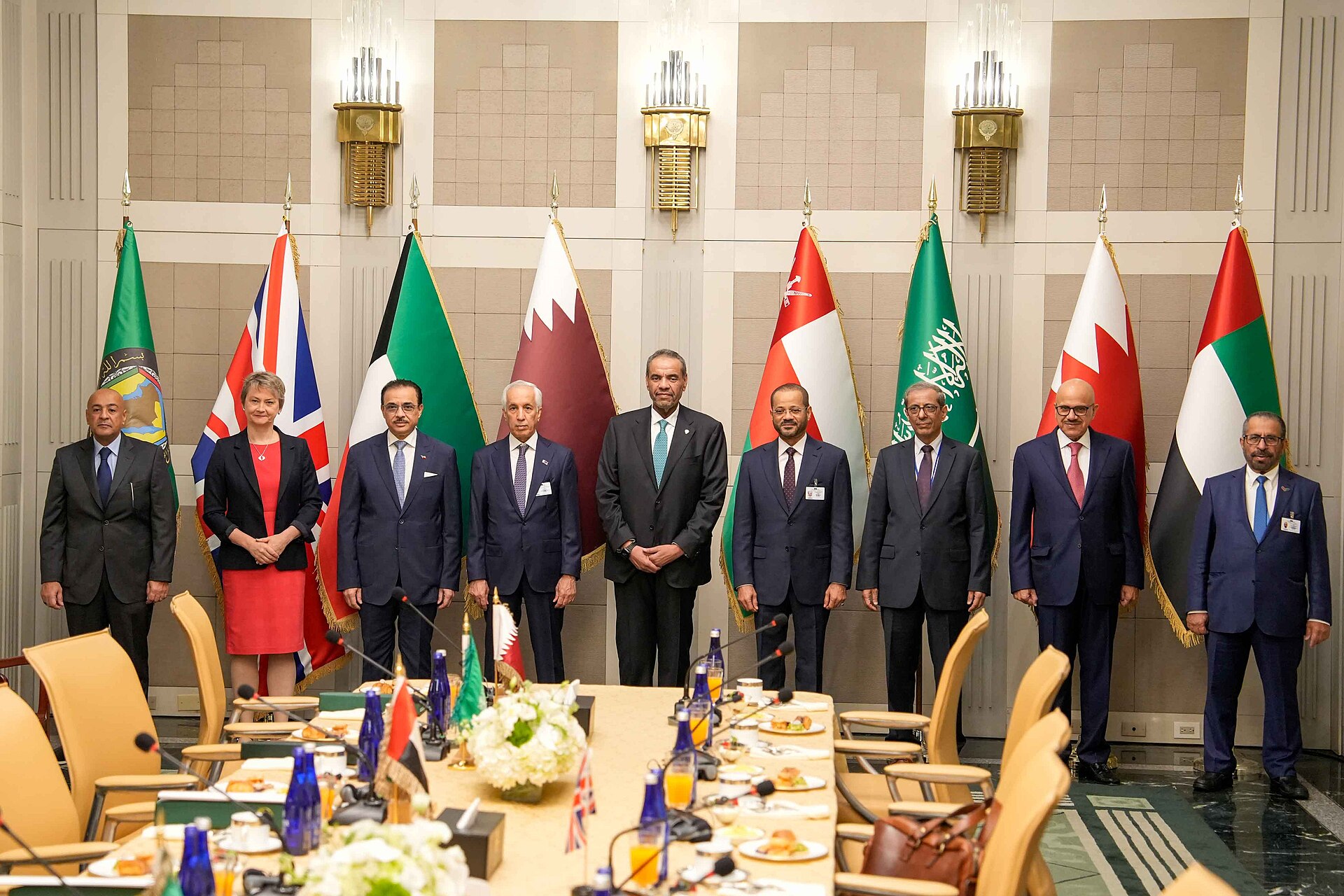
- The Cohesion Problem
- Frequently Asked Questions
What Does the UK-GCC Free Trade Agreement Actually Cover?
The FTA eliminates 93 percent of GCC tariffs on British goods — two-thirds removed on entry into force, with full implementation over ten years delivering annual savings of £580 million for UK exporters. It covers goods from luxury cars to cheddar cheese, and opens new market access for UK financial services, insurance, banking, and professional qualifications recognition across all six GCC member states.
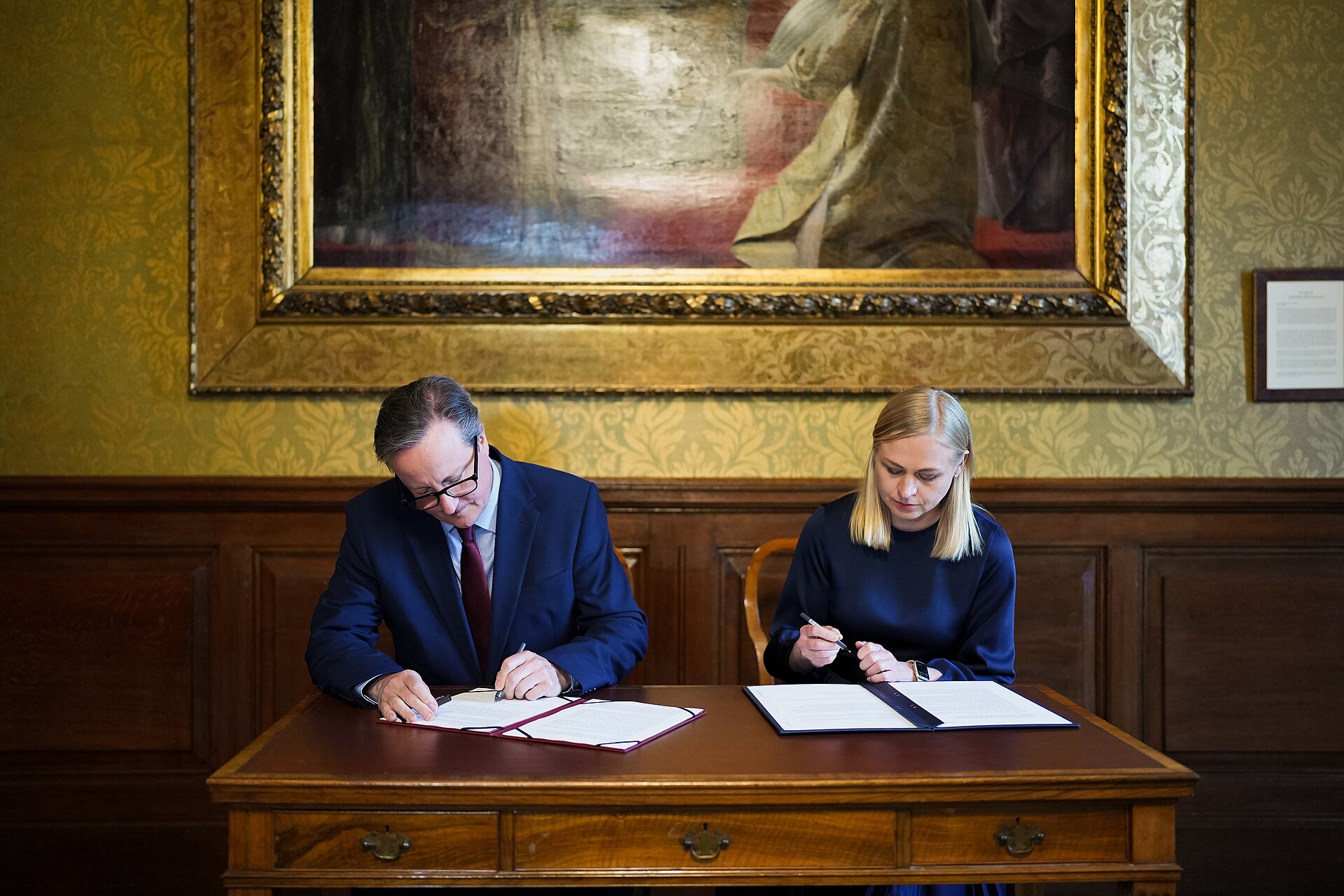
UK Minister of State for Trade Policy Sir Chris Bryant signed the deal in London with GCC Secretary General Jasem Mohamed Albudaiwi. Annual bilateral trade between Britain and the GCC already exceeds £53 billion ($71 billion) in goods and services. The government projects the FTA will lift that figure by roughly 20 percent over the long term.
The £3.7 billion annual boost is itself a revision worth examining. When the Conservative government launched negotiations in June 2022, the projected benefit was £1.6 billion — less than half the final figure. The 131 percent increase reflects expanded commitments in services, data, and digital trade that were added or deepened across six-plus negotiating rounds between August 2022 and early 2025. Labour under Starmer inherited the talks and closed them. The original economic rationale and the final economic rationale describe substantially different agreements, though the political narrative — “historic deal with the Gulf” — remained unchanged throughout.
“Great news for the UK economy,” said William Bain, head of trade policy at the British Chambers of Commerce. The deal “will open up new opportunities for inward investment, exports and supply chains.” Bahrain’s industry minister called it “a monumental achievement.” For context: the European Union has been attempting to negotiate its own GCC trade deal for years, without conclusion.
The Middle East briefing 3,000+ readers start their day with.
One email. Every weekday morning. Free.
The May 20 Coincidence
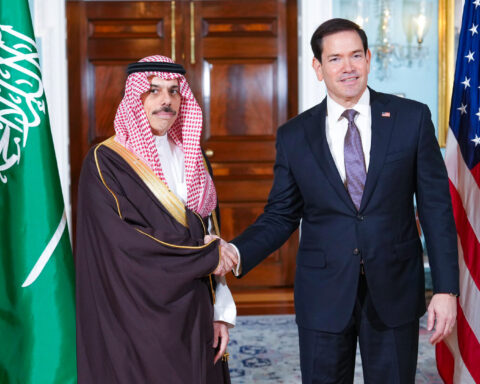
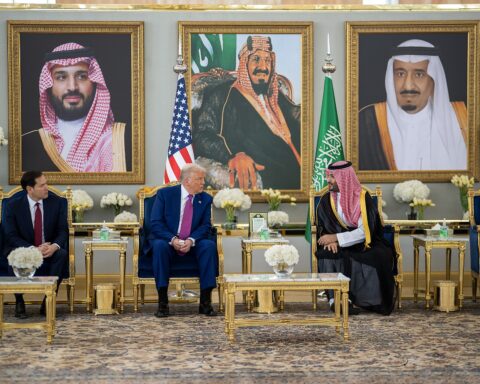
On 20 May 2026, two things happened. In London, Sir Chris Bryant signed a trade agreement binding Britain’s commercial future more tightly to the Gulf Cooperation Council. And 2,800 miles to the southeast, Saudi Foreign Minister Prince Faisal bin Farhan completed what amounted to a 62-day arc from threat to praise — publicly endorsing Trump’s cancellation of a planned military strike on Iran, a reversal that confirmed American security guarantees to the Gulf are conditional and, as of that day, withdrawn.
No major outlet connected these two events. Bloomberg ran the deal as a diplomatic milestone — “first G7 nation,” four years of talks. CNBC led with “historic.” Gulf Today, to its credit, headlined the deal “in the shadow of the Iran war,” but did not note that Britain was concluding a commercial partnership with the GCC at the precise moment the bloc’s security patron demonstrated the limits of patronage. The National’s podcast on 21 May came closest, bracketing the trade deal alongside Iran’s response to a US nuclear proposal — treating the two as co-occurring signals in a single geopolitical frame.
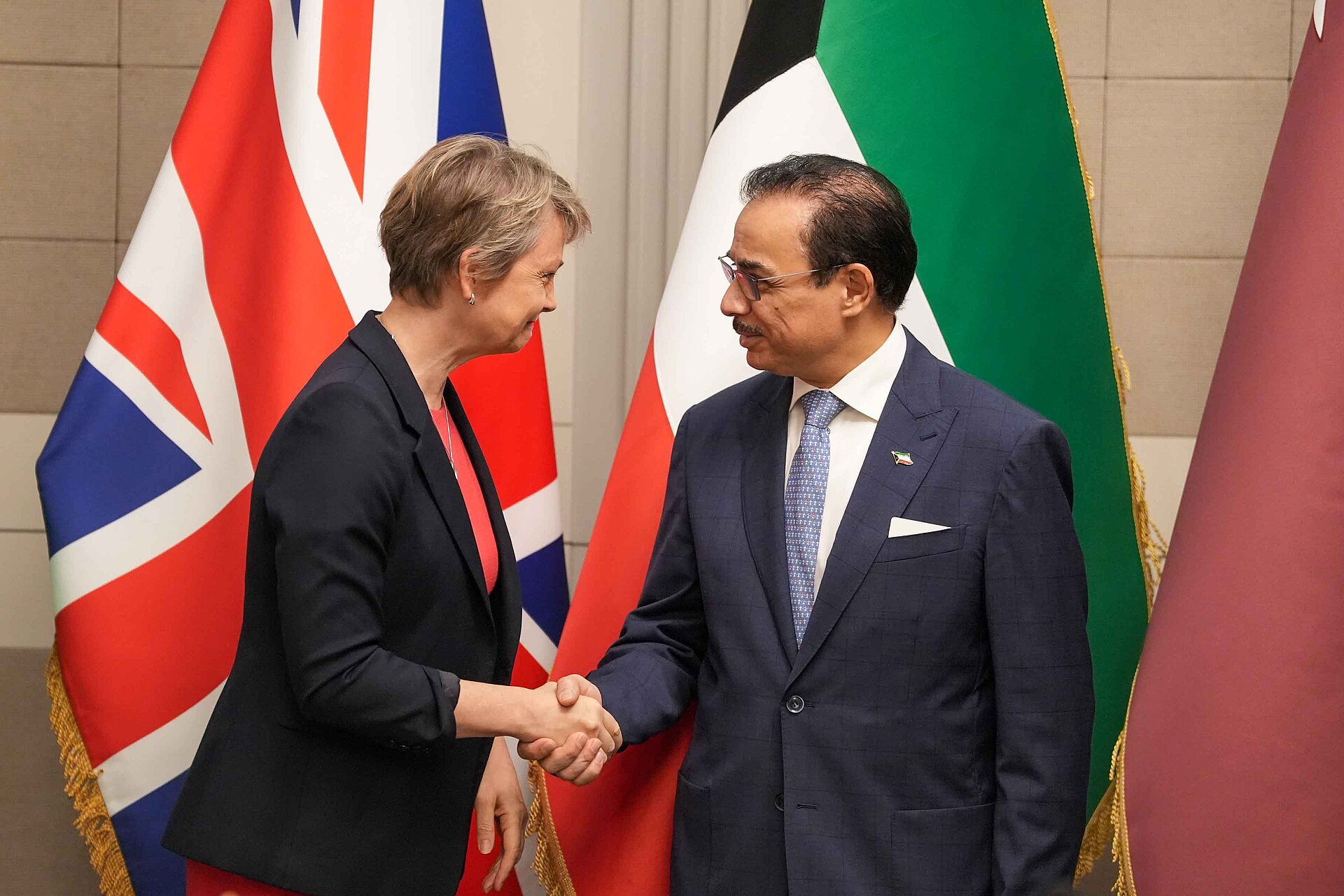
The timing may have been coincidental in the narrow logistical sense. Bloomberg reported the deal as “imminent” in February 2026 — before the Strait of Hormuz closure in March. But the decision to close the file on 20 May rather than wait was a political choice, and the political calendar was not ambiguous. Bin Farhan had spent the preceding weeks on a European diplomatic circuit — Ankara, London, Madrid, Athens — and met UK Foreign Secretary Yvette Cooper in London specifically to discuss, in the Saudi readout’s phrasing, “security and the economic repercussions of ongoing tensions in the Strait of Hormuz.” Britain’s response to that conversation was a trade agreement and a handshake.
The deal functions partly as a solidarity signal — a commercial expression of alignment at a moment when other forms of alignment (military, diplomatic) are strained or absent. Iran International, the London-based outlet closely monitored in Tehran, framed its coverage of the FTA as occurring “amid Iran war fallout,” positioning the agreement as wartime alignment deepening. That framing may overstate British strategic intent, but it accurately captures how the deal reads from the outside.
How Much of This Deal Depends on Saudi Arabia?
Saudi Arabia accounts for approximately half of total GCC GDP, making it the single largest concentration risk in any GCC-wide commercial agreement. UK-Saudi bilateral trade already stands at £13.8 billion ($18.5 billion) — roughly a quarter of the £53 billion UK-GCC total. The previously stated bilateral target of $37.5 billion by 2030 now depends on a fiscal and security recovery that has not begun.
The numbers suggest a deal whose multilateral architecture masks a bilateral center of gravity. Saudi Arabia has invested more than $21 billion in the UK since 2017, including $3.5 billion in the northeast alone. Saudi investors active in Britain — PIF, Alfanar, Aramco Ventures — are concentrated in infrastructure, clean energy, and AI. From Britain’s perspective, it is structural and increasingly load-bearing.
This concentration matters because Riyadh’s capacity to deliver on partnership terms is currently constrained. The question is not whether Saudi Arabia wants to deepen trade with Britain — Mohammed bin Salman called Starmer directly on 20 March 2025 to discuss the deal’s progress. The question is whether Saudi Arabia can sustain the fiscal expenditure and investment flows the partnership assumes, and the answer is being determined by events in Hormuz, not in London.
The Fiscal Backdrop Britain Chose Not to Mention
The UK government’s press materials on the FTA contain no reference to Saudi Arabia’s current fiscal position. The omission is consistent across Downing Street’s announcement, the Department for Business and Trade’s summary, and Starmer’s public statement. None mention deficits. None mention PIF. None mention Hormuz.
Saudi Arabia’s Q1 2026 fiscal deficit reached approximately $33.5 billion — 194 percent of its full-year budget target. PIF, the sovereign wealth fund that anchors Saudi investment in the UK and whose cooperation agreement with UK Export Finance forms a separate $6.8 billion side deal, holds approximately $15 billion in cash reserves — the lowest level since 2020. Khurais, which produced 300,000 barrels per day before the conflict, remains offline with no public restoration timeline.
Britain’s £3.7 billion annual benefit projection is modelled “over time” — the government’s own language, and it does substantial work. It assumes GCC economies return to growth trajectories that existed before April 2026, when Iran’s Persian Gulf Security Authority began enforcing transit restrictions in the Strait of Hormuz. It assumes Saudi Arabia’s $37.5 billion bilateral trade target remains realistic. It assumes PIF continues deploying capital into UK infrastructure and clean energy at the rates established between 2017 and 2025. Each of those assumptions runs through a strait that is currently operating at 3.6 percent of its pre-war capacity.
Starmer, announcing the deal: “The Gulf states are valued economic partners and this agreement deepens that relationship, building trust and unlocking new possibilities for trade and investment.” The statement is accurate in the present tense — the deal does deepen a relationship. Whether the relationship can bear the commercial weight being placed on it is a question the present tense conveniently avoids, and one the government’s own economic projections do not appear to stress-test against current conditions.
Can GCC Trade Volumes Recover While Hormuz Remains Constrained?
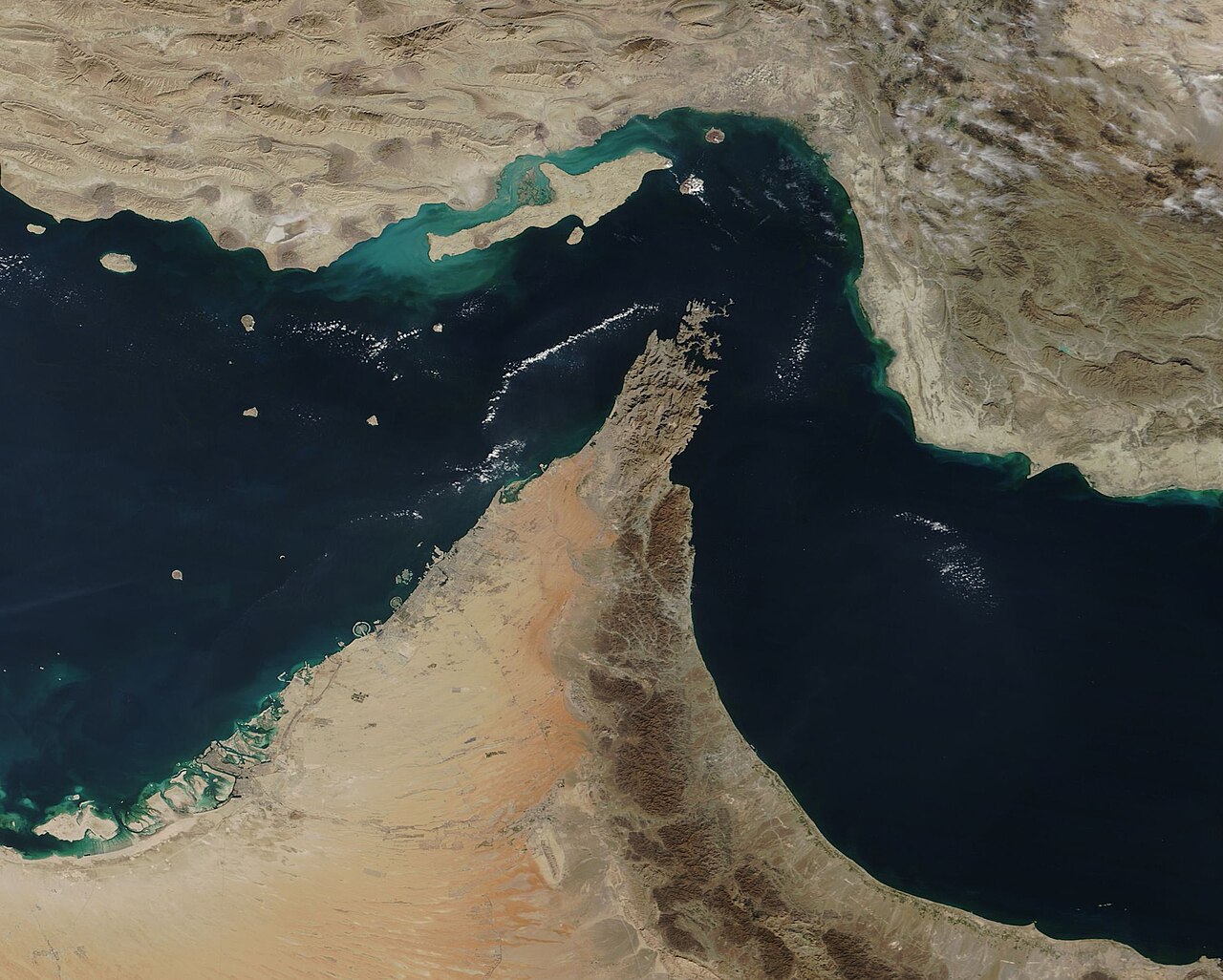
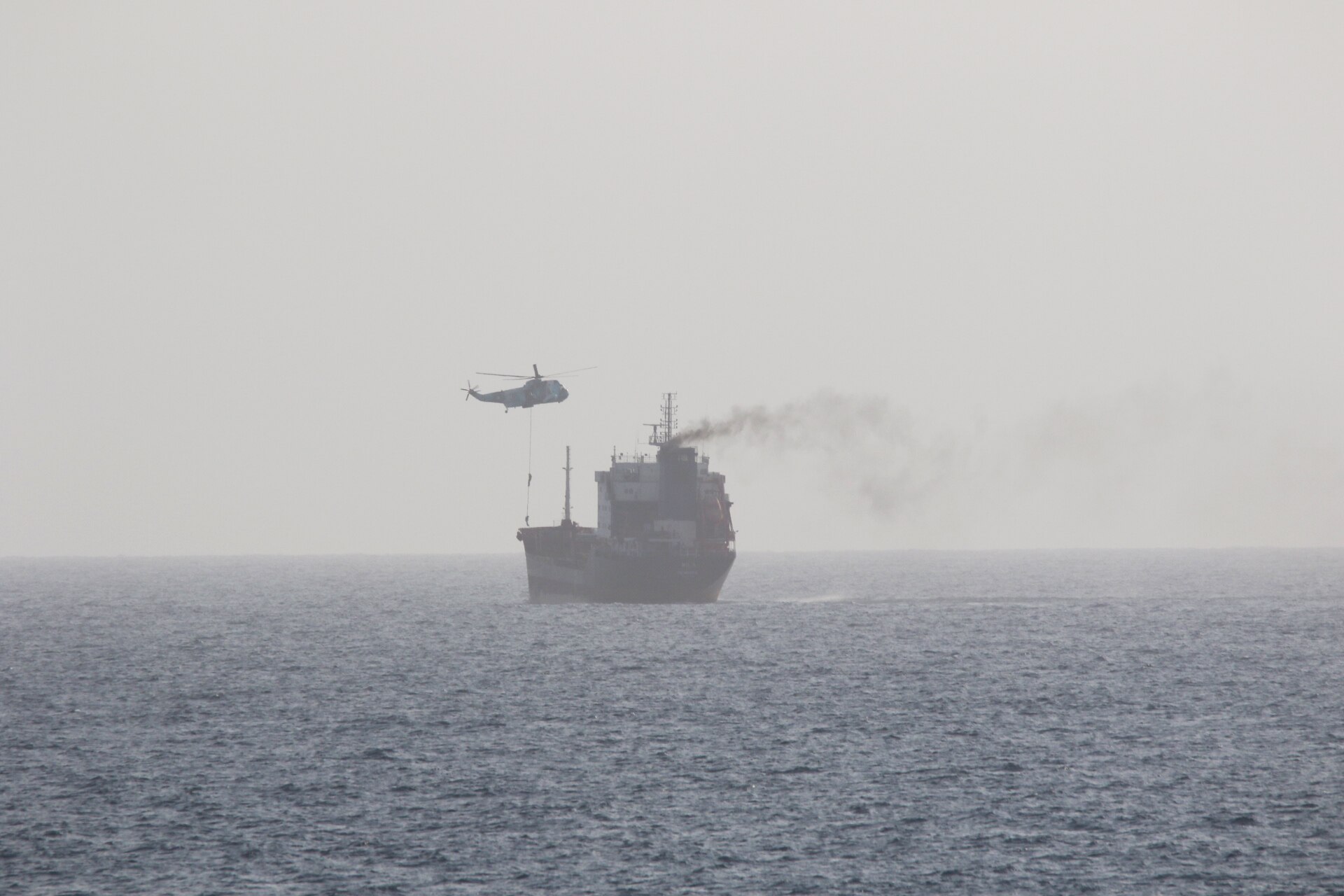
Since 8 April 2026, only 45 commercial vessels have transited the Strait of Hormuz — 3.6 percent of the pre-war baseline. Iran’s IRGC charges ships hundreds of thousands of dollars in “coordination fees” for passage through what it now operates as a de facto customs authority. Until transit volumes recover, the trade growth underpinning the UK-GCC FTA’s projected benefits remains theoretical.
The UK Chancellor acknowledged to the IMF in May 2026 that “the UK is more exposed to energy price shocks than [its] counterparts.” The statement was made against the backdrop of the Hormuz disruption. Britain imports negligible crude directly from the Gulf, but Brent pricing — currently around $110 per barrel — transmits Gulf supply disruptions into UK energy costs with little attenuation. The trade deal does not insulate Britain from this exposure; it deepens the economic relationship that produces it.
The FTA does not address shipping routes, transit security, or the physical infrastructure of trade between Britain and the Gulf. It assumes goods move. Smoked salmon reaches Riyadh. Rolls-Royce chassis reach Abu Dhabi. Medical equipment reaches Doha. The standard GCC tariff on these goods — mostly 5 percent — is now zero or declining. But a tariff cut is meaningless if the goods cannot ship at commercially viable insurance and freight rates through a strait where the IRGC sets the terms of passage.
Saudi Arabia’s partial answer to Hormuz has been the East-West pipeline, restored to 7 million barrels per day of capacity as a bypass route to the Red Sea. But the pipeline moves crude oil, not containers. British food exports, medical equipment, and manufactured goods bound for the Gulf still transit either Hormuz or the longer Cape of Good Hope route — adding weeks and cost that the FTA’s tariff savings do not offset. The £580 million in annual tariff removal the government cites is a real number; the question is what share of it can be captured while shipping routes remain disrupted.
Iran did not issue a formal public reaction to the UK-GCC FTA. But the deal lands in a diplomatic context where Tehran already reads London as adversarial — and with cause. In the two weeks before the FTA’s conclusion, the UK imposed fresh Iran sanctions coordinated with EU measures on 11 May, and participated in a trilateral US-UK-Australia sanctions tightening on 12 May targeting Iran’s oil trade and security apparatus. A Gulf official told Al Arabiya on 18 May that “Iran faces the burden of restoring trust with GCC states” — language that positions UK-GCC economic deepening as occurring at a moment when Iran’s regional rehabilitation is declared incomplete and conditional.
The $6.8 Billion Side Agreement
Alongside the GCC-wide FTA, PIF and UK Export Finance signed a memorandum of understanding establishing a cooperation framework for up to $6.8 billion. This is a bilateral Saudi-UK instrument running in parallel with the multilateral treaty — a deal within the deal, and one that reveals where the commercial relationship’s real weight sits.
UKEF, the UK government’s export credit agency, exists to de-risk British exports by offering insurance and financing to overseas buyers. A PIF-UKEF framework means the British government is, in effect, willing to extend sovereign-backed credit to facilitate trade with Saudi Arabia’s sovereign wealth fund at a moment when that fund’s cash position is at a six-year low. The $6.8 billion figure is a ceiling, not a commitment — MoUs are frameworks for future transactions, not binding purchase orders. But the signal is directional: Britain is prepared to put public money behind the partnership.
The risk is not that PIF defaults. Sovereign wealth funds restructure; they do not default in the conventional sense. The risk is that the cooperation ceiling is never approached because PIF’s investment pace slows as cash reserves constrain deployment. Saudi cumulative investment in the UK since 2017 — the $21 billion figure the Saudi Gazette foregrounded — represents a period when PIF was flush and deploying aggressively. Whether that pace continues with $15 billion in liquid reserves is a question the MoU’s $6.8 billion ceiling does not answer and does not need to. A ceiling only matters if you reach it. The same week the MoU was announced, PIF moved to bridge that liquidity gap through its largest-ever international bond sale — $7 billion oversubscribed 3.4 times — underscoring that the fund is relying on debt markets, not cash reserves, to sustain its investment commitments.
The MoU’s existence alongside the GCC-wide FTA also complicates the multilateral framing. Britain signed a bloc deal and then, in the same diplomatic package, signed a bilateral financing arrangement with the bloc’s dominant member. The other five GCC states received tariff access. Saudi Arabia received tariff access and a sovereign credit facility. The distinction is not subtle, and the smaller GCC economies — Bahrain, whose industry minister called the FTA “a monumental achievement,” and Oman, currently engaged in separate Hormuz governance negotiations with Iran — are unlikely to have missed it.
What Happens to the Deal If Oil Falls to $79 a Barrel?
The EIA’s May 2026 Short-Term Energy Outlook projects Brent crude at $89 per barrel by Q4 2026 and $79 per barrel as the 2027 average — a scenario in which GCC revenues decline materially from current levels. At $79, Saudi Arabia’s fiscal breakeven is breached, PIF deployment capacity tightens further, and the trade volumes underpinning the UK-GCC FTA’s £3.7 billion projection face sustained headwinds.
The deal’s projected benefits assume trade growth of roughly 20 percent over the long term. Trade growth requires functioning economies on both sides of the ledger. For the GCC, functioning economies require oil revenue — and oil revenue at $79 per barrel looks very different from oil revenue at $110. The projected £1.9 billion annual UK wage increase from the deal, cited by the government, is downstream of trade volumes that are themselves downstream of GCC purchasing power.
At current prices, the war premium sustains GCC revenues even as production volumes are disrupted. This is the perverse arithmetic of the Hormuz closure: Saudi Arabia cannot export at full capacity, but the barrels it does export command a higher price. A ceasefire — the outcome Britain’s trade deal implicitly bets on — would reopen Hormuz, restore production, and collapse the price premium simultaneously. The deal is optimized for a recovery scenario whose own internal logic produces an oil price at which the GCC’s capacity to deliver on trade partnership terms is diminished.
The data here is genuinely uncertain. No one — not the EIA, not Saudi Arabia’s planning ministry, not the UK Treasury — knows what post-war oil markets look like, because the war’s end state is undefined. A ceasefire could be durable or temporary. Hormuz could reopen fully or remain a managed chokepoint. Production recovery could be rapid or constrained by infrastructure damage at facilities like Khurais. Britain has made a £3.7 billion annual bet on a specific constellation of outcomes. The EIA’s own modeling suggests that the most favorable of those outcomes — a stable ceasefire and production normalization — delivers a 2027 average oil price below Saudi fiscal breakeven.
The Cohesion Problem
The UK-GCC FTA treats the Gulf Cooperation Council as a single negotiating counterparty — which it is, formally. But the Carnegie Endowment for International Peace warned in April 2026 that “the longer the threat of war lingers over the Gulf, the harder it will be to bring the GCC together,” and that “economic competition between GCC states will return as economies stabilize.” The deal’s architecture embeds a cohesion assumption that wartime solidarity may not sustain.
The FTA requires that tariff schedules, data-flow commitments, and financial market access negotiated with the GCC secretariat be implemented uniformly across six sovereign states with divergent economic strategies and divergent relationships with Iran. The UAE is pivoting toward AI and logistics hub status. Qatar is leveraging LNG revenues that are less Hormuz-dependent than Gulf crude. Bahrain and Oman occupy competitive positions distinct from Saudi Arabia or Kuwait. A 2,000-page agreement must navigate six regulatory environments, six fiscal positions, and — as the war has made visible — six different strategic responses to the same security crisis.
The fracture lines are already visible. Oman is simultaneously a GCC member bound by the UK FTA and a co-drafter of a Hormuz governance mechanism with Iran — the same Iran against which Britain imposed coordinated sanctions in the weeks before signing the GCC deal. Saudi Arabia’s ceasefire diplomacy, Oman’s Iran channel, and the UAE’s more confrontational posture represent three different strategic orientations within a single trade bloc. Abu Dhabi’s parallel-state strategy — OPEC exit, Fujairah pipeline expansion, and bilateral defense architecture with Washington — is accelerating those centrifugal forces into structural divergence. Britain’s treaty assumes these differences remain manageable — that the centrifugal forces Carnegie identified do not pull the GCC’s trade commitments apart before the UK’s £3.7 billion materializes.
The deal was concluded at a moment when wartime solidarity is real but has not been stress-tested by peace. Post-war competition for investment, for transit routes, for the economic relationship with a recovering Iran — these will test the GCC’s cohesion in ways that tariff schedules and data-flow protocols cannot anticipate. Britain secured the first G7 seat at the GCC table. Whether the six states across from it continue to operate as a bloc — in trade implementation, not just in treaty signatures — is a question the 2,000 pages assume rather than address.
Frequently Asked Questions
Does the UK-GCC FTA include defense or arms trade?
No. Defense trade between the UK and GCC states — particularly Saudi Arabia and the UAE — operates through separate bilateral government-to-government arrangements governed by UK export licensing. The FTA covers commercial goods and services. The $6.8 billion PIF-UKEF memorandum of understanding running alongside the deal creates a sovereign-backed financial channel that could, in principle, facilitate cooperation in dual-use technology sectors such as AI and cybersecurity, which sit at the boundary between commercial and defense applications. But the FTA text itself contains no defense provisions.
What British goods gain tariff-free access under the agreement?
The FTA removes the standard GCC tariff — mostly set at 5 percent — on products including smoked salmon, cheddar cheese, chocolate, butter, luxury vehicles such as Rolls-Royce, and medical equipment. British food and beverage exports to Saudi Arabia alone currently total £184 million annually. For high-volume, low-margin goods like dairy and processed foods, the tariff elimination is commercially meaningful. For luxury goods, the 5 percent reduction is marginal relative to retail price. For perishable goods of either category, tariff savings matter less than cold-chain logistics and the Hormuz-dependent shipping routes the deal does not address.
How does the UK-GCC FTA compare to other nations’ trade negotiations with the bloc?
The UK is the first G7 nation to conclude a GCC-wide FTA. The European Union has pursued GCC trade talks intermittently for over a decade without conclusion — partly because the EU must negotiate as a group of sovereign states with competing agricultural and energy interests, a structural constraint Britain shed with Brexit. China has bilateral arrangements with individual GCC states, including an FTA with the UAE, but no bloc-wide deal. South Korea, India, and Japan have all explored GCC frameworks without resolution. Britain’s ability to negotiate as a single sovereign gave it a speed advantage that, in this case, proved decisive.
What happens to the FTA if Iran and the GCC normalize relations?
Normalization could increase the deal’s value by reopening Hormuz, restoring shipping routes, and allowing the trade growth the FTA projects. But it would also reduce the political premium Britain currently captures as the only G7 nation with a GCC trade agreement during a security crisis. The solidarity signal embedded in the deal’s wartime timing depreciates as the crisis recedes — leaving a commercial agreement that must justify itself on pure trade economics rather than geopolitical alignment. The government’s £3.7 billion projection assumes both a recovery in trade volumes (which requires normalization) and sustained GCC demand for British goods and services (which requires GCC fiscal health). The two assumptions are related but not identical.
The diplomatic timeline complicating that calculation runs through Islamabad: how the IRGC built a permanent toll regime at Hormuz across the 39 days since talks collapsed shows how quickly an unresolved negotiation can become entrenched infrastructure — and what the UK FTA’s Hormuz reopening assumption is actually betting against.