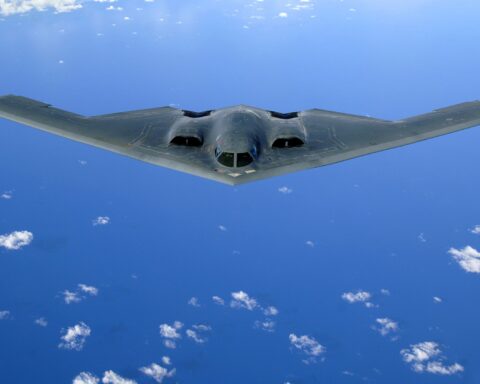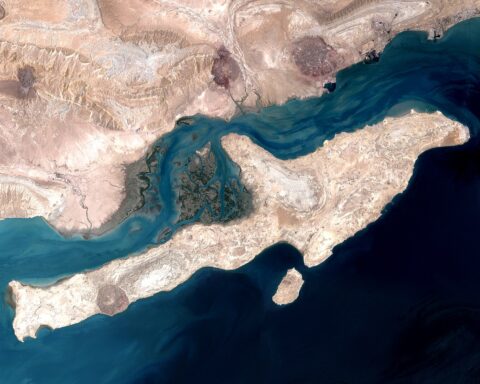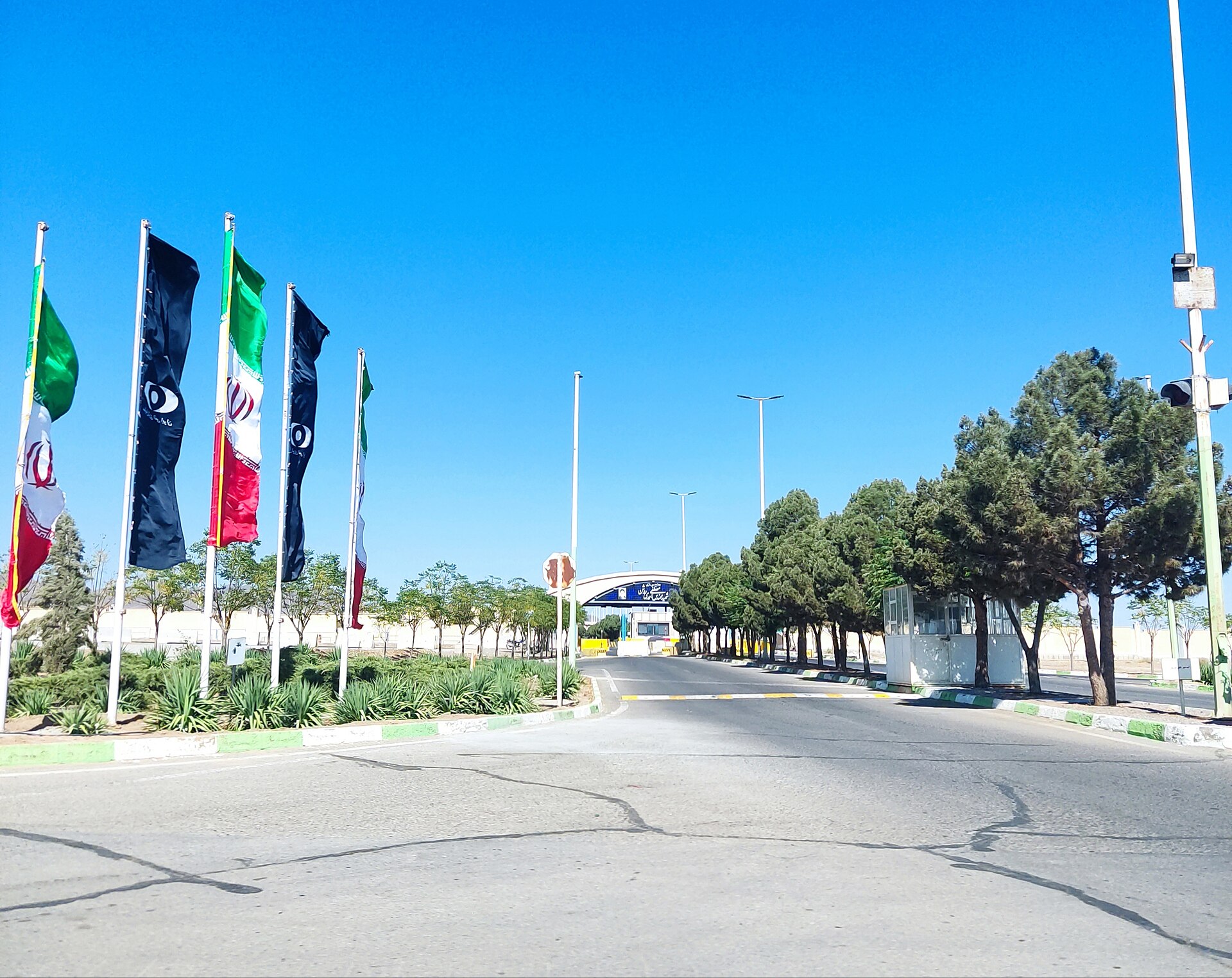

RIYADH — The Iran war crossed into nuclear territory on Saturday when US and Israeli forces struck Iran’s Natanz uranium enrichment complex and Tehran retaliated hours later with ballistic missiles aimed at Israel’s Dimona nuclear research centre, wounding approximately 180 people in the most dangerous escalation since the conflict began on February 28. As both sides targeted the other’s most sensitive nuclear infrastructure within a single twelve-hour window, Saudi Arabia intercepted nearly 60 Iranian drones over its Eastern Province and tracked three ballistic missiles toward Riyadh, underscoring how the Kingdom’s own security is now inseparable from a war that has entered what defence analysts describe as a nuclear-shadow conflict.
The mutual targeting of nuclear sites, confirmed by the International Atomic Energy Agency which reported no radioactive leaks at either location, marks a stark departure from three weeks of strikes focused on military bases, energy infrastructure, and air defence systems. Iran’s parliament speaker, Mohammad Bagher Ghalibaf, said the exchange signals “entering a new phase of the battle,” while Israeli Army Chief General Eyal Zamir warned that “the war is not close to ending.” For Saudi Arabia, which hosts the US air bases from which many strikes on Iran are launched, the nuclear escalation compounds an already precarious position at the centre of a conflict it did not initiate.
Table of Contents
- What Happened at Natanz on Saturday Morning?
- Iran Retaliates Against Dimona and Arad
- How Did the IAEA Respond to Both Strikes?
- Saudi Arabia Intercepts Barrage as Nuclear Sites Burn
- What Is a Nuclear-Shadow Conflict?
- Why the Strikes Matter for Saudi Arabia’s Nuclear Future
- Trump’s 48-Hour Ultimatum and the Escalation Spiral
- What Comes Next in the Fourth Week of War
- Frequently Asked Questions
What Happened at Natanz on Saturday Morning?
US and Israeli forces struck Iran’s Natanz nuclear enrichment facility on Saturday morning, March 22, according to Iran’s Atomic Energy Organization. The facility, located approximately 220 kilometres southeast of Tehran in central Iran, houses the Shahid Ahmadi Roshan enrichment complex where Iran operated thousands of gas centrifuges for uranium enrichment. Iran’s atomic energy body confirmed the attack caused “damage to entrances and supporting structures” but reported no leakage of radioactive materials and no danger to the surrounding population.
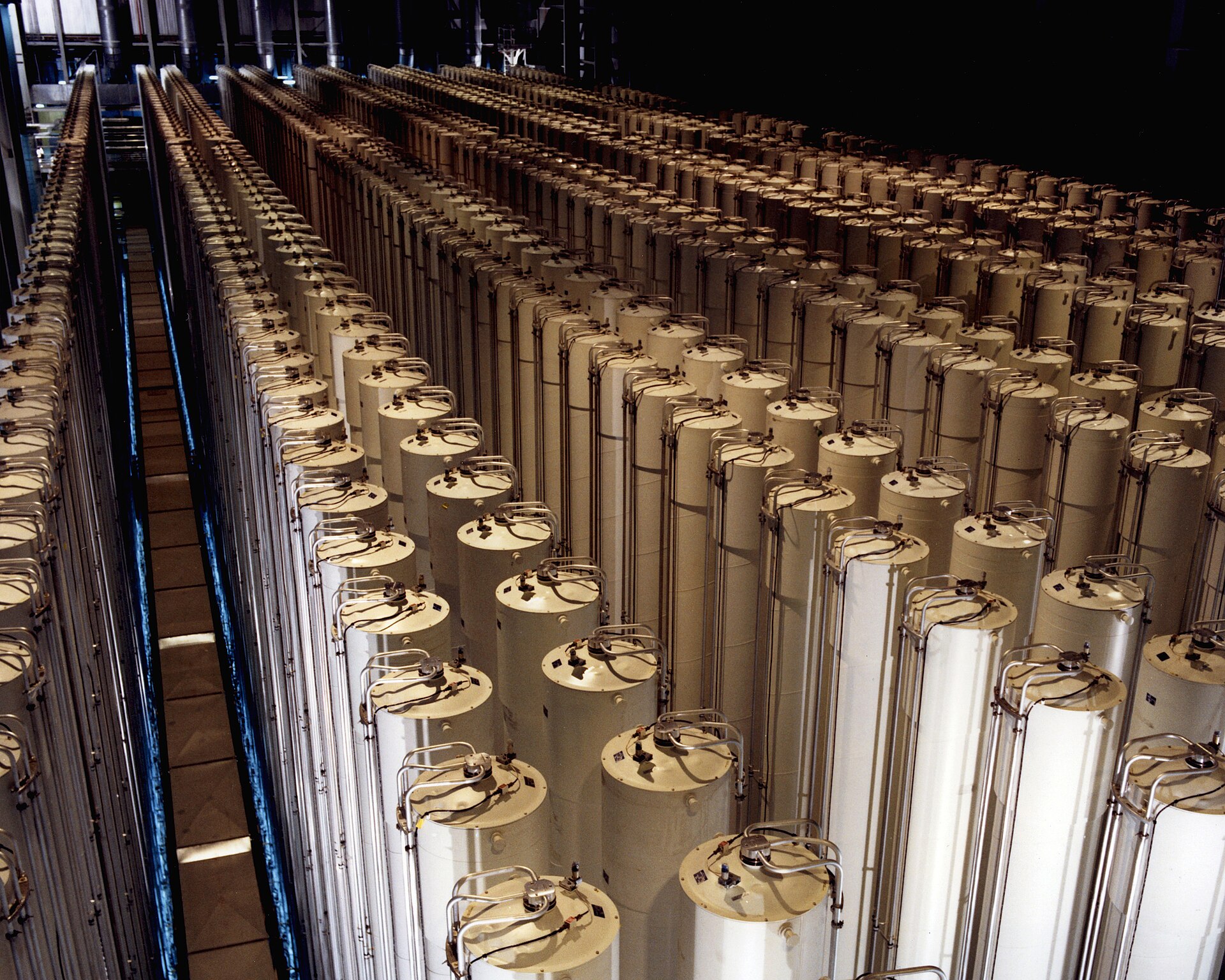
The strike was not the first time Natanz had been targeted during the current war. US and Israeli forces hit the site during the opening salvo on March 2, with satellite imagery revealing significant building damage. The facility was also struck during the 12-day Iran-Israel conflict in June 2025. According to the IAEA, Iran’s estimated 440 kilograms of enriched uranium is now primarily located elsewhere, reportedly beneath rubble at its Isfahan facility following earlier strikes.
An unnamed Israeli official denied Israel was responsible for the latest Natanz strike, according to the Associated Press, though the denial appeared contradicted by an Israeli military announcement on the same day that forces had struck the Malek Ashtar University research facility in Tehran, stating that Israel “will not allow the Iranian regime to acquire nuclear weapons.” The Pentagon declined to comment on the Natanz operation specifically, though Admiral Brad Cooper of US Central Command reported that coalition forces had struck more than 8,000 military targets across Iran and assessed that Iran’s “combat capability is on the steady decline.”
Russia’s foreign ministry condemned the strike. Spokesperson Maria Zakharova warned that targeting nuclear infrastructure posed “a real risk of catastrophic disaster throughout the Middle East,” a statement that carried particular weight given Moscow’s role as a nuclear technology supplier to Iran. China’s foreign ministry echoed the concern, calling for an immediate cessation of hostilities and warning that “targeting civilian nuclear infrastructure during armed conflict violates the fundamental principles of international humanitarian law.”
The Middle East briefing 3,000+ readers start their day with.
One email. Every weekday morning. Free.
The Natanz facility has been central to Iran’s nuclear programme for more than two decades. Constructed in the early 2000s with parts of the enrichment hall buried eight metres underground, the facility survived cyberattacks including the 2010 Stuxnet operation, sabotage incidents attributed to Israel in 2020 and 2021, and the June 2025 strikes. Each time, Iran rebuilt. Whether reconstruction is possible after three successive waves of bombing in the current war remains an open question that will shape Middle Eastern nuclear politics for a generation.
Iran Retaliates Against Dimona and Arad
Hours after the Natanz strike, Iran launched ballistic missiles at the southern Israeli cities of Dimona and Arad, both located near Israel’s Shimon Peres Negev Nuclear Research Centre. The Israeli Ministry of Health reported at least 180 people wounded across both cities, with 116 injuries in Arad including seven people in serious condition, and 64 in Dimona with one person seriously hurt. A 10-year-old boy was among the injured. Three separate impact sites were recorded in Dimona, where one three-storey building collapsed and multiple residential structures sustained severe damage.
Israeli military spokesperson acknowledged that air defence systems “failed to hit the threats, resulting in two direct hits by ballistic missiles with warheads weighing hundreds of kilograms.” Iran’s Islamic Revolutionary Guard Corps claimed it targeted military installations in Arad, Dimona, Eilat, Beersheba, and Kiryat Gat. Iranian state media framed the strikes explicitly as a “response” to the Natanz attack.
Since the war began on February 28, Iran has carried out at least eight waves of missile attacks on Israel. The cumulative toll stands at 4,564 people hospitalised across Israel, with 124 patients still receiving treatment, according to the Israeli health ministry. Prime Minister Benjamin Netanyahu called it a “very difficult evening” and pledged to continue strikes on Iran.
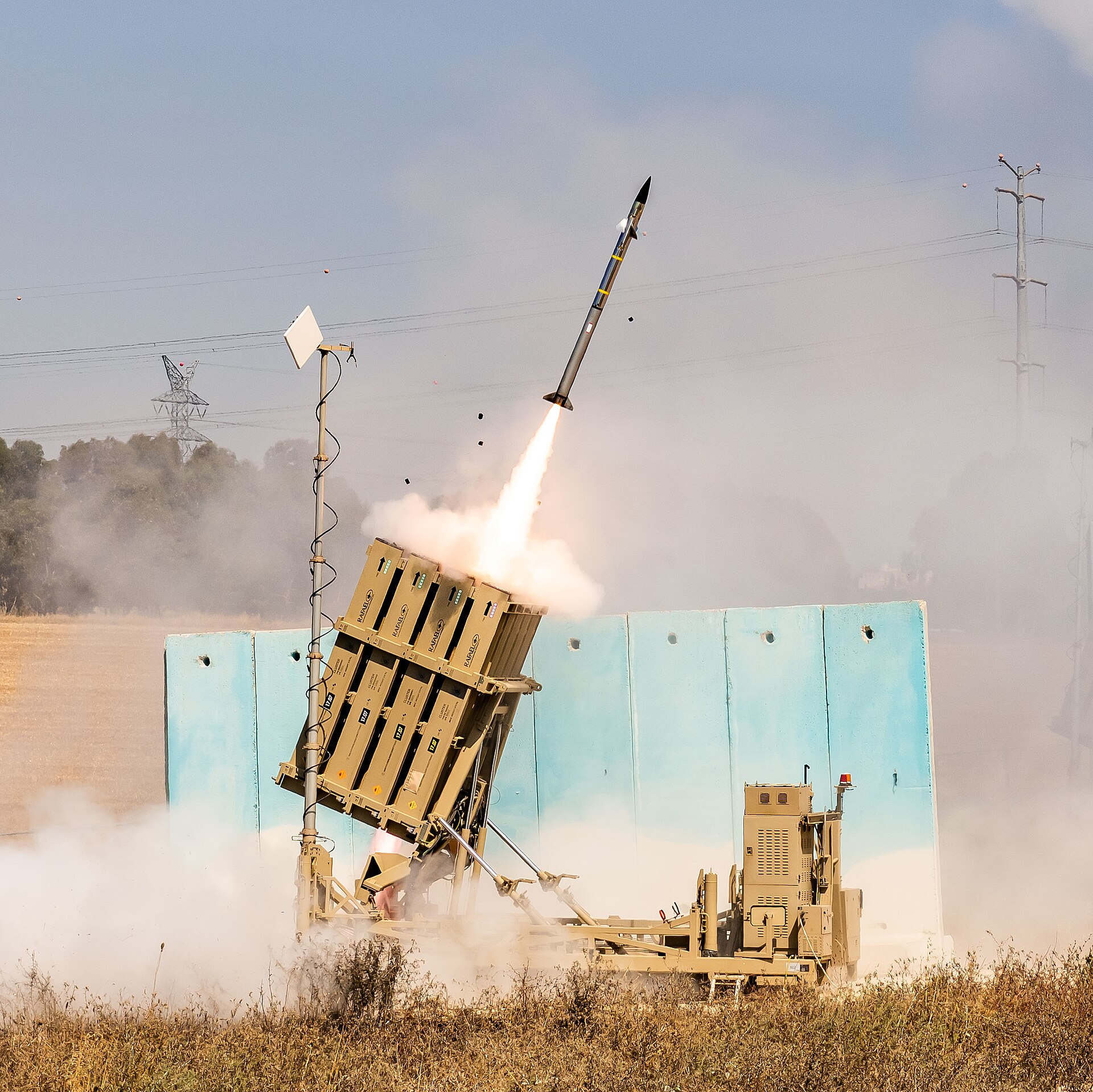
Dimona’s nuclear research centre, opened in 1958 and built secretly with French assistance, is widely understood to be the site where Israel developed its nuclear weapons programme by the late 1960s. Israel maintains a policy of deliberate ambiguity regarding its nuclear arsenal. Saturday’s strike marked the first time the Dimona research facility had been directly targeted during the current war, though the IAEA confirmed no damage to the nuclear installation itself and no abnormal radiation levels.
How Did the IAEA Respond to Both Strikes?
The International Atomic Energy Agency confirmed it had been notified by Iran about the Natanz attack and reported no increase in off-site radiation levels at either nuclear facility. IAEA Director General Rafael Grossi issued an urgent statement calling for “maximum military restraint” to “avoid any risk of a nuclear accident,” particularly in the vicinity of nuclear installations. The agency is conducting an independent investigation into both incidents.
Grossi’s warning reflected growing international alarm at the targeting of nuclear infrastructure during a conventional conflict. The IAEA’s mandate to monitor nuclear safety has been tested repeatedly during the war, with previous strikes damaging facilities at Isfahan and disrupting monitoring equipment. The agency maintained that neither the Natanz nor Dimona incidents resulted in radiological contamination, but cautioned that continued targeting of nuclear-linked sites carried escalatory risks that could have irreversible consequences.
The mutual nuclear targeting drew immediate condemnation from non-combatant states. India, currently chairing BRICS, called for restraint through Prime Minister Narendra Modi’s office. Iran’s President Masoud Pezeshkian urged BRICS nations to play “an independent role in stopping hostilities,” proposing a West Asian security framework led by regional nations without external interference.
Saudi Arabia Intercepts Barrage as Nuclear Sites Burn
While Natanz and Dimona dominated global headlines, Saudi Arabia faced its own sustained assault on Saturday. The Kingdom’s Ministry of Defence reported intercepting nearly 60 Iranian drones, most of them targeting energy facilities in the Eastern Province, according to Major General Turki Al Malki. Separately, three ballistic missiles were detected heading toward the Riyadh area. One was intercepted and destroyed; the other two fell in uninhabited areas outside the capital.
The attacks on Saudi Arabia came on the same day Riyadh declared remaining Iranian diplomatic staff persona non grata, ordering their departure within 24 hours. The expulsion completed the diplomatic rupture between Saudi Arabia and Iran that had accelerated throughout the war’s third week, dismantling years of carefully constructed engagement that included the 2023 Beijing-brokered restoration of ties.
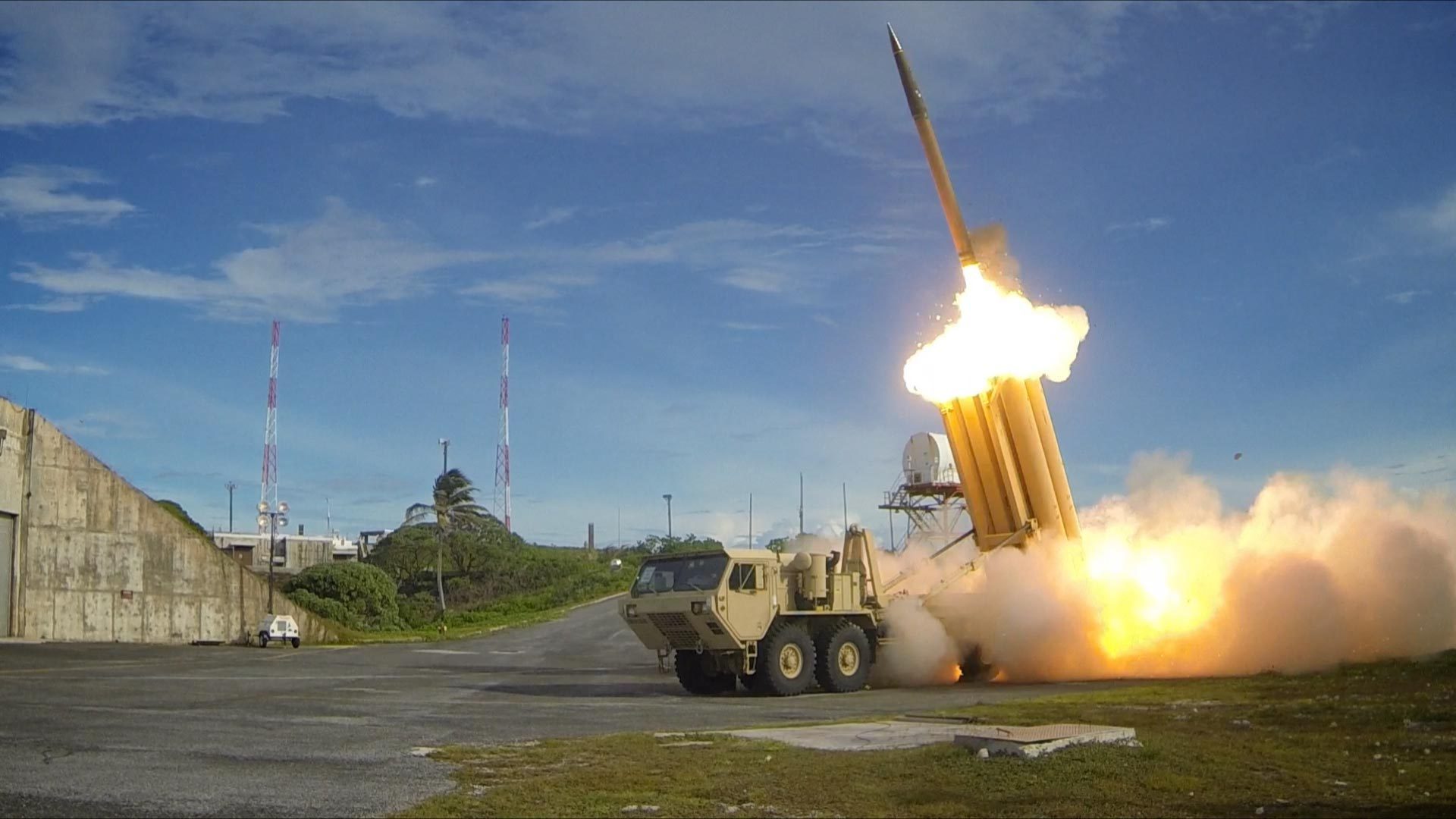
Since February 28, Saudi Arabia has absorbed more than 600 Iranian drones and missiles, according to the Ministry of Defence’s cumulative tally. The Kingdom has maintained a strictly defensive posture throughout the war, declining to launch offensive strikes against Iran even as its oil infrastructure, military bases, and capital have come under repeated attack. Saudi Arabia hosts US forces at multiple bases, including King Fahd Air Base in Taif, which was opened to American operations earlier in the week.
Elsewhere in the Gulf, Bahrain’s air defences have intercepted 143 missiles and 242 drones since the war began, according to Manama’s defence ministry. Kuwait, Qatar, and the UAE also reported intercepting Iranian projectiles on Saturday. A joint statement from the UAE, Bahrain, the United Kingdom, France, and Germany condemned Iranian attacks on commercial vessels and civilian infrastructure across the region. The UK Maritime Trade Operations continues to classify the threat level across the Gulf, Strait of Hormuz, and Gulf of Oman as “critical,” with 21 confirmed attacks on commercial vessels and offshore infrastructure since March 1.
What Is a Nuclear-Shadow Conflict?
Defence analysts describe Saturday’s exchange as the moment the Iran war crossed from a conventional military campaign into a nuclear-shadow conflict, a term used to characterise warfare in which nuclear infrastructure becomes a legitimate target not for its military utility but for its symbolic and strategic value. Neither side appears to have sought to cause a radiological disaster, but the deliberate targeting of facilities associated with nuclear programmes introduces a layer of escalation that conventional arms control frameworks were not designed to manage.
The pattern observed on Saturday, where one side strikes a nuclear-associated facility and the other retaliates in kind within hours, establishes what strategists call an “escalation echo.” Each strike on a nuclear site increases the probability that future retaliatory strikes will target similar facilities, gradually normalising what was previously considered an absolute red line. The pairing of Natanz, the earlier strikes on Bushehr, and now Dimona within the same escalation chain transforms the confrontation from a conventional missile exchange into something qualitatively different.
Abas Aslani of Iran’s Centre for Middle East Strategic Studies described the Dimona strike as part of Tehran’s strategy to “re-establish deterrence” and “reduce the gap between words and actions.” Iran, according to Aslani, seeks to make its threats credible enough to underpin “a long-term security arrangement, not to simply force a ceasefire, but to establish deterrence.” The implication is that nuclear infrastructure targeting has become a bargaining chip in negotiations that have not yet begun.
For the Gulf states, the nuclear-shadow dynamic is particularly alarming. Saudi Arabia, the UAE, and Bahrain all operate or have planned civilian nuclear energy programmes, and several Gulf nations host critical desalination infrastructure whose destruction could create humanitarian consequences equivalent to a radiological event. Iran has already threatened Gulf desalination plants, and a Bahraini desalination facility was struck by an Iranian drone earlier in the war.
Why the Strikes Matter for Saudi Arabia’s Nuclear Future
The destruction of Iran’s enrichment capability, which US and Israeli strikes have systematically targeted since the war’s opening week, has paradoxically accelerated Saudi Arabia’s own nuclear ambitions. As reported in the assessment that Iran’s nuclear programme died while Saudi Arabia’s was born, Crown Prince Mohammed bin Salman has long stated that the Kingdom would pursue nuclear weapons if Iran obtained them. With Iran’s enrichment infrastructure in ruins and its estimated 440 kilograms of highly enriched uranium scattered across damaged facilities, the immediate proliferation threat from Tehran has diminished, but the precedent the war has set has hardened Riyadh’s determination to develop its own nuclear fuel cycle.
Saudi energy minister Prince Abdulaziz bin Salman has indicated the Kingdom seeks “the entire nuclear fuel cycle, which involves the production of yellowcake, low-enriched uranium, and the manufacturing of nuclear fuel both for our national use and of course for export,” according to statements reported by the Arms Control Association. The war has strengthened Riyadh’s negotiating position with Washington, where the Trump administration has signalled openness to a nuclear cooperation agreement that would grant Saudi Arabia enrichment rights in exchange for strategic concessions.
The Natanz strike also demonstrated that even deeply buried and hardened nuclear facilities are vulnerable to sustained aerial assault, a lesson that Saudi Arabia’s defence planners will incorporate into the design of their own future nuclear infrastructure. Saturday’s events reinforced a conclusion that has been building throughout the war: possession of nuclear technology without the military means to defend it creates vulnerability rather than security.
Trump’s 48-Hour Ultimatum and the Escalation Spiral
The nuclear exchange occurred against the backdrop of President Donald Trump’s 48-hour ultimatum to Iran, issued on Saturday, demanding Tehran fully reopen the Strait of Hormuz or face attacks on its power plants. Writing on Truth Social, Trump stated that if Iran did not comply within 48 hours, “the United States of America will hit and obliterate their various POWER PLANTS, STARTING WITH THE BIGGEST ONE FIRST.” Israeli Defence Minister Israel Katz separately warned that US and Israeli strikes would “increase significantly” in the coming week.
Iran responded to Trump’s ultimatum by threatening retaliatory attacks on all US and Israeli-linked energy infrastructure across the region if power plants were targeted. Iran’s military also threatened to attack the energy facilities of any nation hosting American forces, a warning directed at Saudi Arabia, the UAE, Bahrain, and Kuwait. The threat raised the prospect of an escalation spiral in which destroying Iran’s power grid triggers attacks on Gulf energy facilities, which in turn provokes further Western strikes on Iranian infrastructure.
The Strait of Hormuz has remained effectively closed since March 2, when Iran’s Islamic Revolutionary Guard Corps officially declared the waterway shut to commercial traffic. Maritime insurance premiums have surged more than 300 percent, and shipping traffic through the strait has collapsed from approximately 77 daily crossings to single digits. Trump’s ultimatum followed a week in which oil prices briefly touched $119 per barrel before retreating, and the administration issued a 30-day sanctions waiver permitting the sale of approximately 140 million barrels of Iranian crude oil currently at sea.
What Comes Next in the Fourth Week of War
The conflict enters its fourth week with no diplomatic process underway and both sides signalling further escalation. Admiral Cooper assessed that Iran’s military capability is “on the steady decline,” but Iranian missile attacks on Dimona demonstrated that Tehran retains the ability to penetrate Israeli air defences and inflict significant damage. The death toll in Iran has surpassed 1,500, according to Iranian state media, including more than 200 children, while cumulative Israeli hospitalisations have reached 4,564.
For Saudi Arabia, the coming week poses three immediate challenges. The Kingdom must sustain its air defence operations against what has become a daily barrage of Iranian drones targeting its energy infrastructure. It must manage the diplomatic fallout from the total rupture with Tehran, including the potential for Iran to escalate attacks on Saudi territory in retaliation for hosting US forces. And it must navigate the strategic implications of the nuclear-shadow conflict, which has simultaneously destroyed Iran’s enrichment capability and demonstrated the vulnerability of nuclear facilities to military action.
Saturday’s twelve-hour sequence from Natanz to Dimona established a new and dangerous precedent. For the first time in the 21st century, two nuclear-associated states struck each other’s nuclear infrastructure in a single day. The war that began as an American and Israeli assault on Iranian military targets has now touched the most sensitive and consequential assets in the Middle Eastern security architecture. The next escalation, whether it targets Iran’s power grid, Gulf energy infrastructure, or another nuclear facility, will be measured against a baseline that moved dramatically on March 22.
The environmental and radiological consequences of these strikes extend far beyond the immediate blast zones. The IAEA has since acknowledged changed radiation readings at Natanz, and the broader pattern of environmental damage across the Gulf — including 300 documented incidents and threats to desalination infrastructure — may prove more consequential than the military damage itself.
Frequently Asked Questions
Was there any radioactive contamination from the Natanz or Dimona strikes?
No. The International Atomic Energy Agency confirmed no radioactive material leakage occurred at Natanz and no abnormal radiation levels were detected near Dimona. IAEA Director General Rafael Grossi urged maximum military restraint near nuclear facilities. Iran’s atomic energy body stated the Natanz strike damaged entrances and supporting structures but did not breach enrichment areas containing radioactive material.
How many people were wounded in the Dimona and Arad attacks?
The Israeli Ministry of Health reported approximately 180 people wounded across both cities. Arad recorded 116 injuries including seven people in serious condition, while Dimona saw 64 hospitalisations with one person in serious condition. A 10-year-old boy was among the injured. One three-storey building in Dimona collapsed from the impact.
Why did Iran target Dimona specifically?
Iran’s IRGC framed the Dimona strike as a direct response to the Natanz attack, establishing a tit-for-tat nuclear targeting pattern. Abas Aslani of Iran’s Centre for Middle East Strategic Studies said the strikes aimed to “re-establish deterrence” by demonstrating Iran’s willingness to target Israel’s most sensitive nuclear infrastructure in retaliation for strikes on its own facilities.
What is Saudi Arabia’s position on the nuclear escalation?
Saudi Arabia has maintained a strictly defensive posture throughout the war, intercepting Iranian missiles and drones but not launching offensive strikes against Iran. The Kingdom has absorbed more than 600 Iranian projectiles since February 28 while hosting US forces at multiple bases. The nuclear escalation has reinforced Saudi Arabia’s determination to develop its own nuclear fuel cycle, with the Kingdom pushing for enrichment rights in negotiations with Washington.
What weapons did Iran use in the Dimona strike?
Iran launched ballistic missiles with warheads weighing “hundreds of kilograms,” according to the Israeli military spokesperson. Unconfirmed reports from Defence Security Asia suggested Iran may have used a hypersonic-capable missile, though no Israeli or independent sources confirmed hypersonic weapon deployment. Israeli air defences failed to intercept the missiles, resulting in direct hits on both Dimona and Arad.