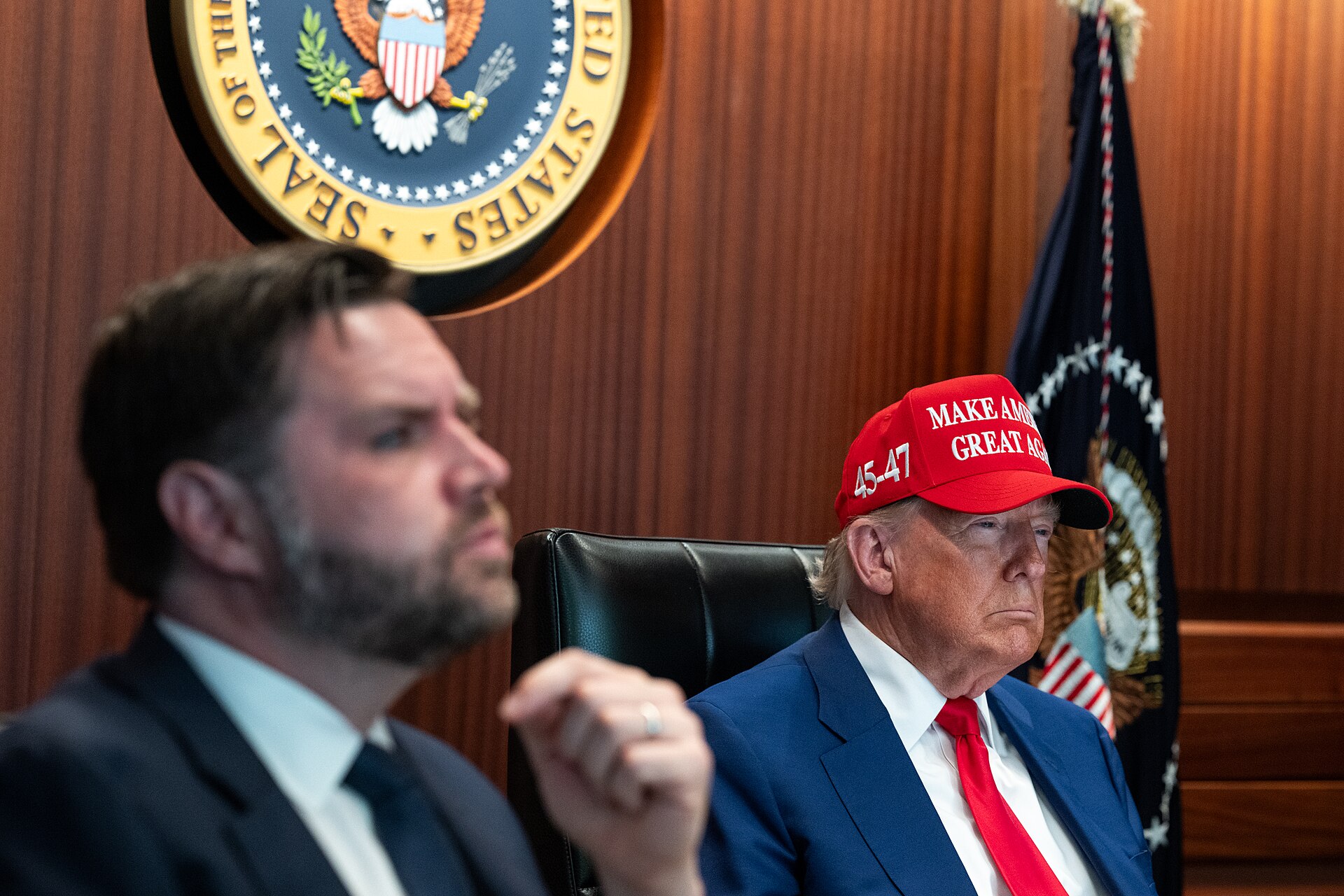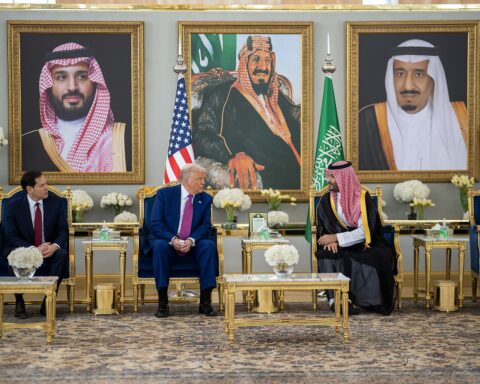

RIYADH — The most dangerous moment for Saudi Arabia in the 24-day-old Iran war is not another barrage of ballistic missiles over Riyadh. It is a phone call between Washington and Tehran that ends with a deal Riyadh never approved. President Trump’s announcement on March 23 of “very good and productive conversations” with Iran — talks that Tehran immediately denied exist — has triggered more alarm inside the Royal Court than any of the 47 drones Saudi air defenses have intercepted since February 28. The reason is structural, not emotional. A premature peace that leaves Iran’s proxy network intact, fails to guarantee freedom of navigation through the Strait of Hormuz, or removes American forces from Prince Sultan Air Base before a durable security architecture is in place would leave the Kingdom more exposed than the war itself. Crown Prince Mohammed bin Salman did not pledge a trillion dollars in American investment, expel Iran’s military attache, and open Saudi airspace to US combat operations to watch Jared Kushner hand Tehran a lifeline.
Table of Contents
- Why Is Trump’s Peace More Dangerous Than Iran’s Missiles?
- The Kushner Factor — What the Man Behind the Abraham Accords Wants From Iran
- What Are Saudi Arabia’s Non-Negotiable Red Lines?
- The Deal Acceptability Matrix
- How Did the JCPOA Sideline Saudi Arabia — and Can It Happen Again?
- The Hormuz Leverage — Why Iran’s Blockade Is Its Only Bargaining Chip
- What Security Guarantees Does Saudi Arabia Actually Need?
- The Trillion-Dollar Leverage — How MBS Bought a Seat at the Table
- Why Would Israel Bomb Tehran While Trump Talks Peace?
- The Proxy Problem — No Deal Works Without Dismantling Iran’s Regional Network
- What Happens If Saudi Arabia Is Left Out of the Room?
- Frequently Asked Questions
Why Is Trump’s Peace More Dangerous Than Iran’s Missiles?
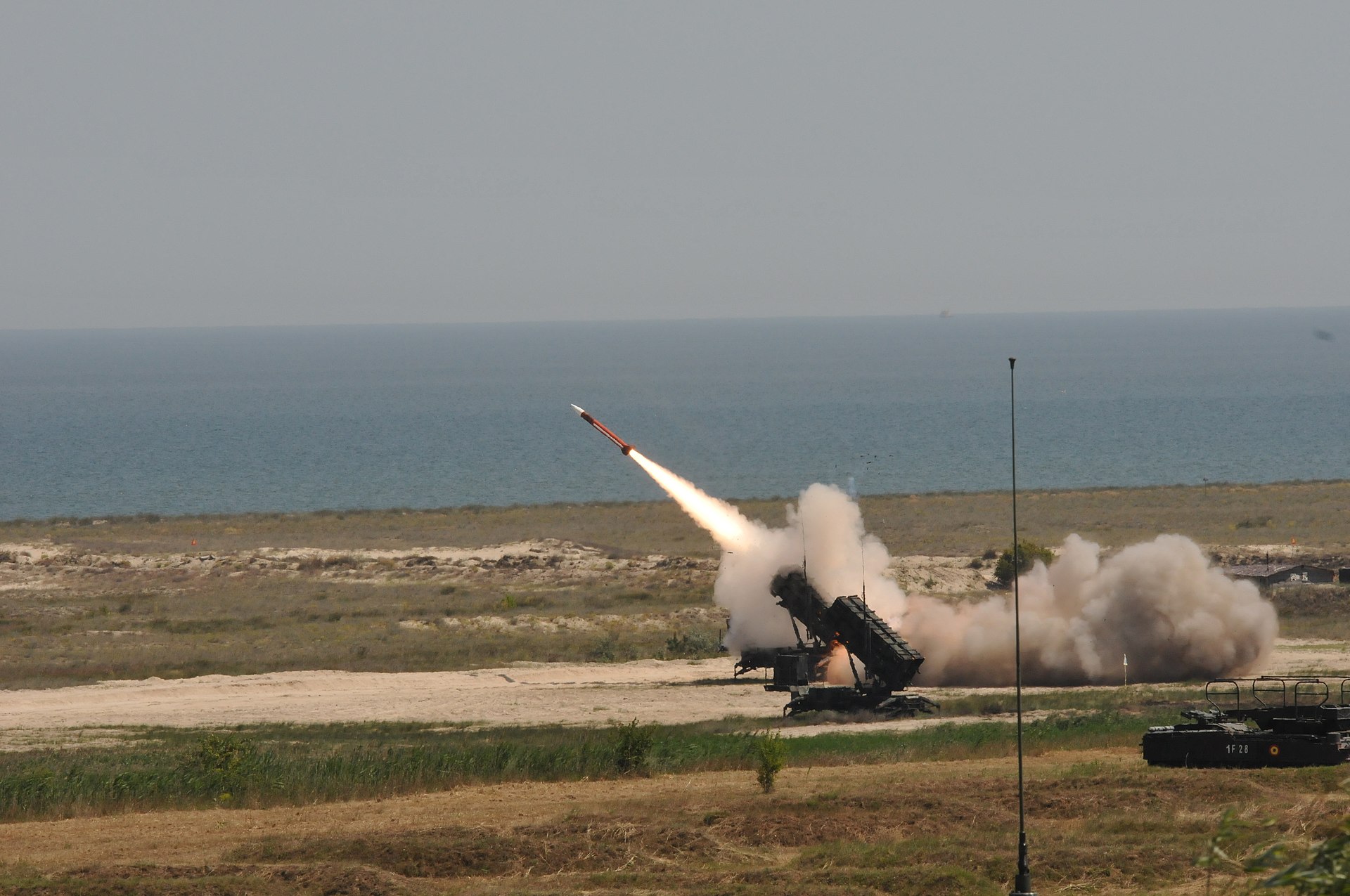
Twenty-four days into the war, Saudi Arabia’s military position is stronger than at any point since the Kingdom’s founding. The Royal Saudi Air Defense Force has intercepted every ballistic missile and cruise missile launched in its direction. Patriot PAC-3 batteries and THAAD systems, operated jointly with American crews at Prince Sultan Air Base, stopped 38 drones in a three-hour window on a single night in March. Bahrain’s integrated air defense network, linked to Saudi command-and-control systems, has defeated 143 missiles and 242 drones since February 28. The military math is working.
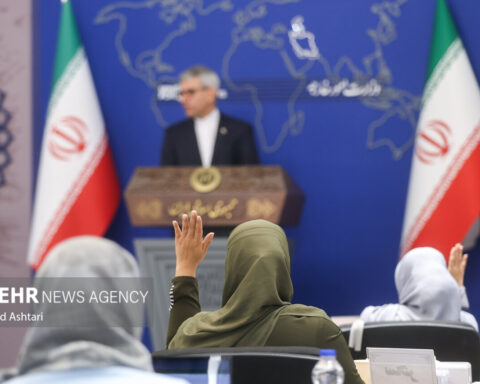
The diplomatic math is not. Trump’s postponement of energy infrastructure strikes for five days — announced the same morning Israel launched what officials in Tel Aviv called “unprecedented” strikes on Tehran — signals that Washington is exploring an off-ramp. The President’s language was unmistakable: “very good and productive conversations.” That Iran’s Foreign Ministry immediately responded with “there is no negotiation and there is no negotiation” does not reassure Riyadh. Tehran denied backchannel contacts with the United States in 2012, 2013, and 2014 — all of which were real, and all of which produced the Joint Comprehensive Plan of Action that the Kingdom’s senior leadership regards as a strategic betrayal.
The danger is not peace itself. Saudi Arabia would welcome the end of a conflict that has sent oil prices above $100 a barrel since March 8, disrupted Red Sea shipping, and forced the evacuation of 12,000 foreign workers from the Eastern Province. The danger is a specific kind of peace: one negotiated bilaterally between Washington and Tehran, without Saudi input, that trades the removal of American military assets in the Gulf for Iranian nuclear concessions that expire in a decade.
That is not a hypothetical. It is a description of the JCPOA.
The arithmetic of threat is clarifying. Iran launched its war with an estimated 3,000 ballistic missiles in its arsenal, per the International Institute for Strategic Studies’ pre-war assessment. It has expended a significant portion of that inventory in 24 days. Its ballistic missile production infrastructure has been targeted by American strikes. Its air force is grounded. Its navy has lost multiple vessels. Iran is weaker today than it will be in five years if a premature deal allows it to rebuild. Every day the war continues under current conditions, the military balance shifts further against Tehran and further in favor of the Gulf states. That is why a bad peace — signed now, while Iran is desperate — is more dangerous than the war that is steadily degrading Iran’s ability to threaten its neighbours.
The Middle East briefing 3,000+ readers start their day with.
One email. Every weekday morning. Free.
The Kushner Factor — What the Man Behind the Abraham Accords Wants From Iran
Jared Kushner’s presence in the Iran talks is the single most consequential personnel decision of the crisis. Kushner is not a State Department official. He is not bound by the institutional memory of Foggy Bottom or the regional expertise of career diplomats who spent decades managing the Gulf security file. He is a dealmaker whose previous Middle East achievement — the Abraham Accords — was built on a specific theory: that Arab-Israeli normalization could be achieved by going around the Palestinian question rather than through it.
The question Saudi officials are asking privately is whether Kushner intends to apply the same logic to Iran: go around Saudi security concerns rather than through them.
Kushner’s financial ties to the Kingdom are not a footnote. His firm, Affinity Partners, received $2 billion from the Public Investment Fund in 2021, a commitment that survived intense scrutiny from PIF’s own advisory panel, which flagged concerns about the fund’s track record and management. That investment gives Kushner a personal financial relationship with the Saudi sovereign wealth apparatus that no previous American negotiator has possessed. Whether this makes him more sympathetic to Saudi concerns or more conflicted in addressing them depends entirely on which side of the table you sit on.
Kushner’s involvement in the talks became public on March 23, when Trump revealed that Kushner and envoy Steve Witkoff had spoken with a senior Iranian official. Anonymous prediction market accounts had placed $160,000 in ceasefire bets before the announcement, raising questions about who had advance knowledge of the diplomatic channel.
Steve Witkoff, the New York real estate developer who joined the talks alongside Kushner, brings no Middle East experience. His presence suggests that the Trump administration views the Iran negotiation through the lens of transactional deal-making — a framework that suits bilateral prisoner swaps and sanctions relief packages but collapses when applied to multi-party regional security architectures that involve six Gulf states, Israel, Iraq, and the remnants of Iran’s proxy network across four countries.
The Abraham Accords succeeded in part because they asked relatively little of the signatories. Bahrain and the UAE normalized relations with Israel in exchange for American arms packages and implicit security guarantees. No territory changed hands. No armies demobilized. An Iran deal that addresses Saudi Arabia’s actual security requirements would demand orders of magnitude more: the verified dismantlement of Hezbollah’s precision missile program, the withdrawal of IRGC advisors from Iraq and Syria, the reopening of the Strait of Hormuz under international naval escort, and a nuclear inspections regime with no sunset clauses. Kushner has never negotiated anything of this complexity.
What Are Saudi Arabia’s Non-Negotiable Red Lines?
Saudi Arabia has not publicly released a list of demands for any Iran peace deal. That silence is deliberate. Publishing red lines before negotiations begin is a concession in itself — it tells the other side exactly where you will compromise. But the Kingdom’s requirements can be reconstructed from its actions, its defense spending, its diplomatic communications, and the strategic logic of its position.
The first red line is presence. Saudi Arabia must be in the room. Not briefed after the fact. Not consulted by phone. Present, with veto authority over any provision that affects Gulf security. The JCPOA was negotiated by the P5+1 — the five permanent members of the UN Security Council plus Germany. Saudi Arabia, which shares a maritime border with Iran, hosts American military forces that would enforce any deal, and sits on 17 per cent of the world’s proven oil reserves, was excluded entirely. That cannot happen again.
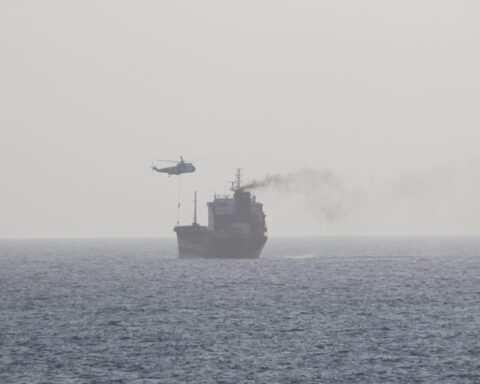
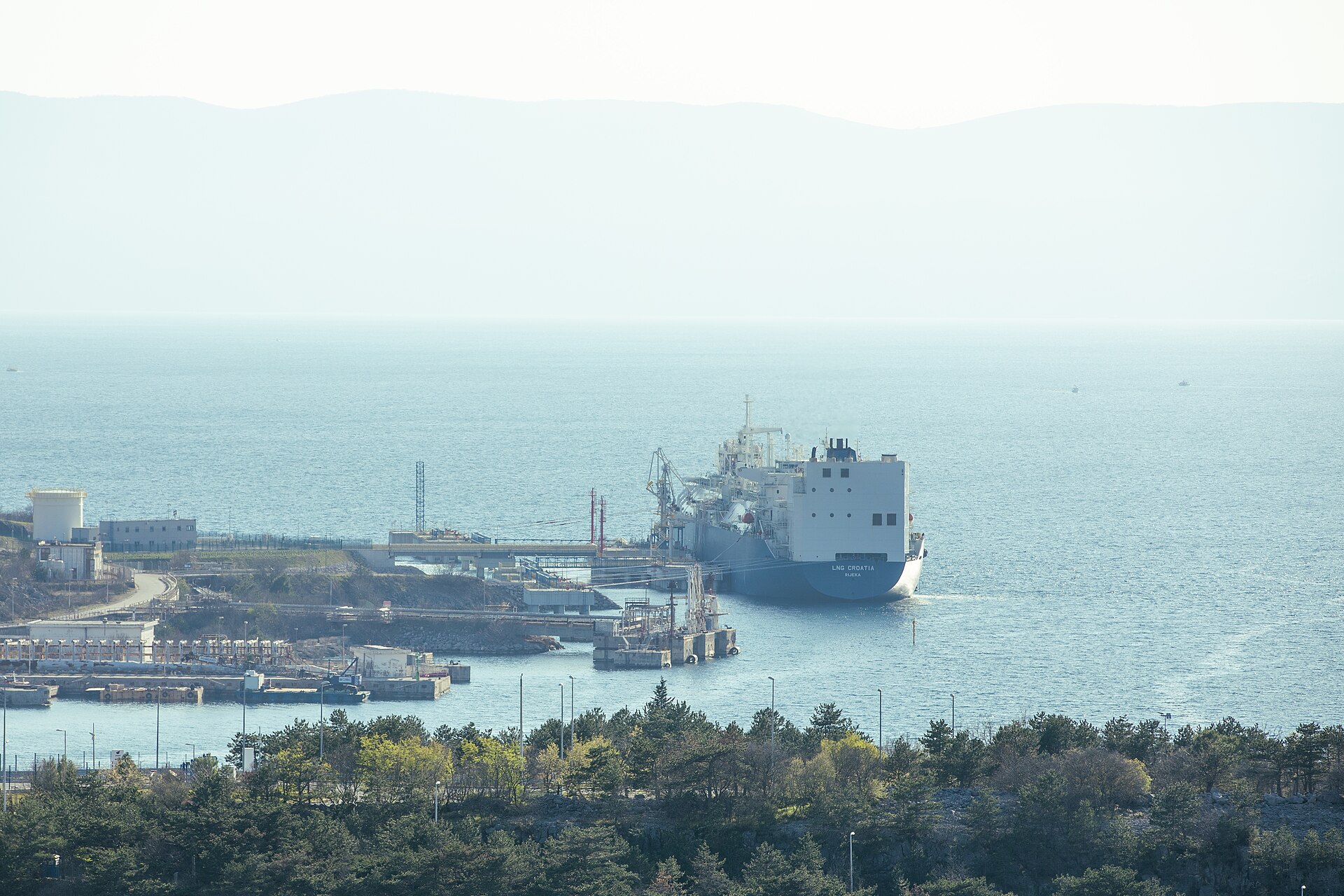
The second red line is Hormuz. The Strait of Hormuz must be reopened under conditions that prevent Iran from closing it again. Forty thousand sailors are stranded as of March 23. Maritime traffic through the strait has dropped by 70 per cent. Iran’s naval mines, fast-attack craft, and anti-ship missiles — many of which survived the opening weeks of the war — represent a standing threat to 20 per cent of global oil transit. Any deal that does not include a permanent international naval presence in the strait, with rules of engagement that allow pre-emptive action against Iranian mine-laying, is a deal that hands Tehran a reloadable weapon.
The third red line is proxies. Iran’s regional proxy network — Hezbollah in Lebanon, the Houthis in Yemen, Kata’ib Hezbollah and Asa’ib Ahl al-Haq in Iraq, and various militia formations in Syria — represents the primary threat to Saudi Arabia’s civilian population and economic infrastructure. The Houthis alone launched more than 400 attacks on Saudi territory between 2015 and 2022. A peace deal that freezes the proxy network in place, rather than requiring its verifiable dismantlement, is worse than no deal at all.
The fourth red line is nuclear permanence. Any nuclear restrictions must have no sunset clause. The JCPOA’s provisions were designed to expire after 10 and 15 years, a timeline that Saudi officials publicly described as a “countdown clock to an Iranian bomb.” Prince Turki al-Faisal, the former intelligence chief, warned in 2015 that if Iran retained the right to enrich uranium, Saudi Arabia would seek the same capability. That warning remains operative.
The Deal Acceptability Matrix
Any potential Iran deal can be evaluated against six categories of Saudi strategic requirements. Each category has a threshold below which no deal is acceptable, regardless of how favorable the other terms may be. This framework — the Deal Acceptability Matrix — provides a structured method for assessing whether a given set of terms meets Saudi Arabia’s minimum requirements for ratification.
| Category | Minimum Acceptable Terms | Unacceptable Terms (Deal-Breakers) | JCPOA Precedent (2015) |
|---|---|---|---|
| Security Architecture | Permanent US force presence at Prince Sultan Air Base; integrated Gulf air defense command; bilateral defense treaty with Article 5-equivalent clause | Withdrawal of US forces as precondition; reduction of THAAD/Patriot deployments; time-limited security guarantees | No security provisions for Gulf states; US force posture unaddressed |
| Maritime Freedom | International naval task force in Strait of Hormuz with pre-emptive authority; Iranian mine clearance verified by third party; permanent maritime monitoring | Iranian sovereignty claim over strait recognized; naval task force with Iranian veto; time-limited patrols | Maritime security not addressed |
| Proxy Dismantlement | Verifiable withdrawal of IRGC advisors from Iraq, Syria, Lebanon, Yemen; militia disarmament under UN supervision; financial network sanctions maintained until verified | Proxy network frozen in place; “non-interference pledge” without verification; phased dismantlement tied to sanctions relief | Proxies excluded from negotiations entirely |
| Nuclear Safeguards | No sunset clauses on enrichment limits; IAEA Additional Protocol ratified permanently; all undeclared sites opened; weaponization research fully disclosed | Sunset clauses on any provision; enrichment above 3.67 per cent permitted; IAEA access limited to declared sites | Sunset clauses at 10 and 15 years; enrichment permitted; undeclared sites not addressed until 2023 |
| Economic Compensation | Gulf state reconstruction fund for war damages; Iranian liability for Hormuz closure economic losses; Saudi energy infrastructure protection guarantees | Immediate sanctions relief without compensation; Iranian assets unfrozen before proxy dismantlement verified; no war reparations mechanism | $150 billion in Iranian assets unfrozen; no Gulf compensation |
| Regional Recognition | Saudi Arabia and Gulf states as signatories; GCC veto on provisions affecting Gulf security; formal Iranian recognition of Bahrain’s sovereignty | Bilateral US-Iran deal; Gulf states briefed but not signatories; no formal recognition framework | Gulf states excluded; briefed after terms finalized |
The matrix reveals a structural problem. Not one of the six categories was addressed in the JCPOA. The 2015 deal was a nuclear agreement only — it deliberately excluded regional security, proxy networks, maritime freedom, and Gulf state participation. If the Trump administration is using the JCPOA as a template, or even as a starting point, every single category in the matrix starts at zero.
The matrix also reveals the scale of what Saudi Arabia is asking for. Meeting the minimum acceptable terms across all six categories would require the most ambitious arms control and regional security agreement since the Helsinki Accords. It would demand that Iran accept constraints on its conventional military posture, its intelligence operations, its naval deployments, and its relationships with non-state actors — in addition to nuclear restrictions. No country has accepted this level of intrusion into its sovereign security policy without first suffering total military defeat.
That is the core tension. Saudi Arabia’s minimum requirements for a peace deal are structurally incompatible with any deal Iran would voluntarily accept. Which means that either the war continues until Iran’s position deteriorates enough to force these concessions, or the deal falls short of Saudi requirements — and the Kingdom finds itself in a worse position than before the first missile was fired.
The risk is compounded by the Kingdom’s exclusion from the talks. With Trump’s 15-point deal focused on nuclear and Israeli security concerns rather than Gulf state protection, Saudi Arabia faces the prospect of a peace settlement that addresses everyone’s priorities except its own.
How Did the JCPOA Sideline Saudi Arabia — and Can It Happen Again?
The Joint Comprehensive Plan of Action, signed in Vienna on July 14, 2015, remains the defining trauma of Saudi foreign policy in the twenty-first century. Not because of what it contained — though Riyadh objected to virtually every provision — but because of what it represented: the willingness of the United States to negotiate the security architecture of the Persian Gulf without consulting the states that live there.
The Obama administration’s logic was internally coherent. The JCPOA was a nuclear non-proliferation agreement. Its scope was limited to Iran’s nuclear program. Including Gulf security, proxy networks, and regional power dynamics would have made the negotiations impossibly complex and given Iran reasons to walk away. By narrowing the aperture, the P5+1 achieved a deal that subjected Iran’s nuclear program to the most intrusive inspections regime in IAEA history.
From Riyadh’s perspective, that logic was a betrayal dressed in diplomatic clothing. The nuclear program was never the Kingdom’s primary concern. Iran’s ballistic missile arsenal — estimated at approximately 3,000 missiles before the current war by the International Institute for Strategic Studies — was a greater threat than its centrifuges. The IRGC’s expeditionary operations in Iraq, Syria, Lebanon, and Yemen were an existential challenge to Saudi regional influence. The nuclear deal did not address either. Worse, it released approximately $150 billion in frozen Iranian assets, money that Riyadh watched flow directly into the IRGC’s Quds Force budget and from there to Hezbollah, the Houthis, and Iraqi militias.
The JCPOA was not a peace deal. It was a permission slip for Iranian expansion, paid for with frozen assets and sealed with American indifference to the security of its Gulf allies.
Senior Saudi diplomatic source, speaking to Reuters in 2016
King Salman declined to attend Obama’s Camp David summit in May 2015, sending then-Crown Prince Mohammed bin Nayef instead — a diplomatic downgrade that Washington understood as a deliberate rebuke. The message was clear: Saudi Arabia would not legitimize a process from which it had been excluded.
The parallels to March 2026 are uncomfortably precise. Once again, Washington is talking to Tehran. Once again, the talks appear bilateral. Once again, the Gulf states are learning about the negotiations from press conferences rather than from their own seats at the table. The difference is that in 2015, Saudi Arabia had no active military engagement with Iran. Today, Saudi air defenses are shooting down Iranian drones over Saudi cities. The stakes of exclusion are not diplomatic embarrassment — they are national survival.
The Hormuz Leverage — Why Iran’s Blockade Is Its Only Bargaining Chip
Iran’s closure of the Strait of Hormuz is the single most consequential act of economic warfare since the Arab oil embargo of 1973. Approximately 20 per cent of global oil supply transits the strait under normal conditions. Since Iran deployed naval mines, fast-attack craft, and shore-based anti-ship missiles to close the waterway in early March, global oil markets have not merely reacted — they have restructured.
That restructuring is now set to collide with the reopening of the Tadawul after its eight-day Eid closure, forcing Saudi equity markets to price in a week of escalation that occurred while the exchange was dark.
Oil prices crossed $100 a barrel on March 8, according to the International Energy Agency’s emergency assessment, and have remained there. More than 40,000 commercial sailors are stranded on vessels unable to transit. Insurance premiums for Gulf-bound tankers have increased by 400 per cent. Three major shipping lines — Maersk, MSC, and CMA CGM — have suspended all Gulf port calls indefinitely.
For Iran, the Hormuz closure is not a military strategy. It is a negotiating strategy. Tehran’s conventional military forces have been degraded significantly by 24 days of American and Israeli strikes. Eighty thousand civilian building units have been hit, according to Iranian state media figures that may understate the actual damage. The Iranian air force has been functionally destroyed. IRGC ground forces have suffered significant casualties, though precise numbers remain unavailable.
What Iran retains is the ability to keep the strait closed. Mine clearance in contested waters is one of the most time-consuming and dangerous naval operations in existence. The US Navy’s mine countermeasures force — four Avenger-class ships and a complement of MH-53E helicopters — can clear a shipping lane, but not while Iranian shore batteries remain operational. Iran can re-mine faster than the coalition can de-mine, creating a cycle that only ends with either the destruction of Iran’s entire coastal defense network or a negotiated reopening.
This is why the Hormuz question sits at the center of any peace deal. Iran will offer to reopen the strait in exchange for a ceasefire and sanctions relief. The temptation for Washington to accept this trade is enormous — every day the strait remains closed costs the global economy an estimated $3.5 billion in disrupted trade, according to Lloyd’s of London estimates. For the Trump administration, reopening Hormuz would be a tangible, visible achievement that lowers gas prices before the midterm election cycle begins in earnest.
For Saudi Arabia, accepting this trade without permanent maritime security guarantees would be catastrophic. It would establish the principle that Iran can close the strait, extract concessions, and then reclose it whenever the next crisis arrives. The strait would become a toll booth, not a waterway.
What Security Guarantees Does Saudi Arabia Actually Need?
Saudi Arabia spent $67.6 billion on defense in 2025, according to the Stockholm International Peace Research Institute — the fifth-largest defense budget on earth, exceeding that of Japan, Germany, or France. That figure, which represents roughly 6 per cent of GDP, buys an impressive arsenal: F-15SA strike fighters, Eurofighter Typhoons, Patriot PAC-3 and THAAD air defense systems, and a navy built around French-designed frigates and American littoral combat ships.
It is not enough. The current war has demonstrated that Saudi Arabia’s defense establishment, for all its hardware, depends on American personnel, American intelligence, and American command-and-control integration to function at the level required to defeat a sustained Iranian missile and drone campaign. The 38 drones intercepted in three hours on a single night were not stopped by Saudi operators alone — they were stopped by a fused sensor network that connects Saudi radar installations, American AWACS aircraft, and space-based infrared satellite systems into a single targeting picture.
This dependency is the core of Saudi Arabia’s security dilemma. The Kingdom needs American forces to remain in the Gulf not as a diplomatic gesture but as a functional military requirement. Remove the American personnel who maintain the THAAD batteries, the intelligence analysts who process satellite imagery at the Combined Air Operations Center, and the refueling aircraft that keep Saudi fighters aloft during extended combat air patrols, and Saudi Arabia’s ability to defend itself against the next Iranian missile barrage drops precipitously.
The security guarantees Saudi Arabia requires therefore go far beyond a paragraph in a treaty. They require a permanent, treaty-based American military presence in the Kingdom — something closer to the US-Japan or US-South Korea security alliance than to the informal, deployable arrangements that have characterized the US-Saudi military relationship since the 1990s. Secretary of State Marco Rubio’s approval of a $16 billion emergency arms package for Gulf states in March was a step in this direction, but arms sales are not alliances. Saudi Arabia needs a binding commitment that an attack on the Kingdom will be treated as an attack on the United States.
No American administration has been willing to make that commitment. The Trump administration, which views Gulf security through a transactional lens — military protection in exchange for investment and arms purchases — may be more amenable than its predecessors, but only if the price is right. Which brings the analysis to the trillion-dollar question.
The Trillion-Dollar Leverage — How MBS Bought a Seat at the Table
Mohammed bin Salman’s pledge of $1 trillion in Saudi investment in the United States — announced during his meeting with Trump in early 2025 — was not an act of generosity. It was a down payment on relevance. The Crown Prince understood, from the JCPOA experience, that Saudi Arabia’s security concerns carry weight in Washington only when attached to economic incentives large enough to reshape domestic political calculations.
One trillion dollars, deployed across American manufacturing, technology, defense, and energy sectors, creates constituencies in every congressional district that benefit from Saudi investment. It makes the US-Saudi relationship a domestic economic issue, not merely a foreign policy one. A senator from Michigan whose state received a $20 billion Saudi automotive investment will think twice before voting to withdraw American forces from the Gulf. That is the strategic logic.
The Kushner dimension amplifies this calculus. Affinity Partners’ $2 billion PIF investment means that the man sitting across from Iranian negotiators has a direct financial relationship with the Saudi state. Critics describe this as a conflict of interest. Riyadh describes it as alignment of incentives. The distinction matters less than the practical effect: Kushner understands, at a personal and financial level, that Saudi Arabia’s interests cannot be ignored in whatever deal emerges.
But money is a depreciating asset in diplomatic negotiations. The trillion-dollar pledge buys attention, not outcomes. If the Trump administration concludes that a quick deal with Iran — one that reopens Hormuz, lowers oil prices, and allows the President to declare victory — is worth more politically than Saudi investment flows that will take a decade to materialize, the pledge becomes irrelevant. Saudi Arabia’s financial power is enormous, but it operates on a timeline measured in years. Diplomatic crises operate on a timeline measured in hours.
Saudi Arabia has learned that when Washington decides to negotiate with Tehran, no amount of money, no depth of alliance, and no volume of oil can guarantee a seat at the table. The only guarantee is making the cost of exclusion higher than the cost of inclusion.
Former Saudi Ambassador to the United States, Adel al-Jubeir, in remarks to the Atlantic Council, 2019
The expulsion of Iran’s military attache on March 21 was a signal of exactly this logic. By escalating its own diplomatic posture against Tehran, Riyadh raised the cost of any deal that excluded Saudi concerns. You cannot negotiate a peace between two parties while one of them is actively expelling the other’s diplomats — unless you address the reasons for the expulsion.
There is a deeper structural issue with the trillion-dollar strategy. Saudi Arabia’s investment pledge is contingent on American policy outcomes. If the Trump administration delivers a security architecture that protects the Kingdom, the trillion dollars flows. If it does not, the money stays home — or flows to China, which has already demonstrated through the 2023 Beijing agreement that it can broker Gulf diplomacy without American participation. The PIF’s $925 billion in assets under management gives the Crown Prince the ability to redirect capital flows in ways that would reshape global financial markets. That is not a threat. It is a fact that every White House economic advisor understands.
Why Would Israel Bomb Tehran While Trump Talks Peace?
The Israeli strikes on Tehran’s infrastructure on March 23 — described by Israeli officials as “unprecedented” in scope — appear to contradict the simultaneous American diplomatic outreach. They do not. Israel and the United States are executing a coordinated strategy that diplomatic analysts call “escalate to negotiate”: increase military pressure to the point where Iran’s cost of continuing the war exceeds its cost of accepting unfavorable peace terms.
This approach mirrors what analysts have identified as Iran’s own fight-while-talk doctrine — Tehran fired ballistic missiles at Riyadh on the very day it was pursuing peace channels, suggesting that both sides in this conflict view military escalation and diplomatic engagement not as contradictions but as complementary instruments of coercion.
Trump’s postponement of energy strikes for five days was not a ceasefire. It was a selective pause on American targeting of Iranian oil infrastructure — the one category of target that would permanently reduce Iran’s post-war economic recovery capacity. By holding energy targets in reserve while Israel destroyed military infrastructure in Tehran, the administration created a two-track pressure campaign: immediate pain from Israeli strikes, and the threat of permanent economic damage from American strikes that remain on the table.
For Saudi Arabia, this dual approach is both reassuring and alarming. Reassuring because it degrades Iran’s military capacity in real time — every IRGC command node destroyed in Tehran is one fewer node directing proxy operations against Gulf states. Alarming because it gives Iran a reason to negotiate quickly, before the American strikes resume, which increases the probability of a deal struck in haste rather than in deliberation.
Israel’s objectives in any peace deal overlap with Saudi Arabia’s in some areas and diverge sharply in others. Both want Iran’s nuclear program permanently constrained. Both want Hezbollah’s precision missile capability destroyed. But Israel has no strategic interest in the Strait of Hormuz — it imports its oil through the Mediterranean via pipeline from Azerbaijan and tanker from West Africa. Israel has no interest in the composition of Iraqi militias or the future of Iranian-backed groups in Syria, provided they do not threaten the Golan Heights. And Israel has an active interest in preventing Saudi Arabia from acquiring the nuclear capability that Riyadh has repeatedly said it would seek if Iran retains enrichment rights.
The risk for Saudi Arabia is that an American-brokered deal optimizes for Israeli and American priorities — nuclear constraints and hostage releases — while treating Gulf security concerns as secondary provisions that can be addressed in follow-up negotiations that never actually occur. This is not a theoretical concern. The Camp David Accords of 1978 included provisions for Palestinian autonomy that were never implemented. The Dayton Agreement of 1995 included a multi-ethnic governance framework for Bosnia that remains dysfunctional three decades later. International agreements routinely defer the hardest provisions to follow-on processes that die of bureaucratic neglect.
Saudi Arabia cannot afford that outcome. The Kingdom has provided Prince Sultan Air Base to US forces, opened its airspace to American combat sorties, and absorbed direct Iranian attacks on its territory. It has, in operational terms, co-belligerent status. A deal that treats Riyadh as a bystander while rewarding Tehran for concessions it made under Israeli and American military pressure would send a message that aligning with the United States in wartime carries no diplomatic dividend — a message that would reverberate from Taipei to Warsaw.

The Proxy Problem — No Deal Works Without Dismantling Iran’s Regional Network
Iran’s proxy network is not an adjunct to its foreign policy. It is the foreign policy. The Islamic Revolutionary Guard Corps’ Quds Force, which has directed external operations since the 1980s, built a network of armed non-state actors that gives Tehran strategic depth across four countries without the cost or visibility of deploying conventional Iranian forces. Before the current war, the network included an estimated 200,000 fighters under varying degrees of Iranian command, according to the Center for Strategic and International Studies — more than the active-duty military of most NATO members. Whether Mojtaba Khamenei can maintain coherent command over this network from his undisclosed location remains the critical unknown.
The war has degraded but not destroyed this network. Hezbollah’s command structure in Lebanon has suffered significant losses from Israeli targeting. The Houthis in Yemen have absorbed substantial damage from American and Saudi strikes. Iraqi militias have been constrained by the Iraqi government’s reluctant cooperation with American operations. But the network’s fundamental infrastructure — the training camps, the financial pipelines, the weapons supply chains, and the ideological recruitment mechanisms — remains intact.
Any peace deal that does not address proxies is not a peace deal. It is a pause. Saudi Arabia’s experience with the JCPOA proved this definitively. Between 2016 and 2019, while the nuclear deal was in effect, Iran increased its weapons shipments to the Houthis by 300 per cent, according to the UN Panel of Experts on Yemen. Hezbollah’s precision missile inventory grew from an estimated 10,000 to 150,000, per Israeli military intelligence assessments. The IRGC expanded its presence in Syria from advisory roles to direct combat operations involving thousands of personnel.
The nuclear deal did not merely fail to constrain proxies. It funded their expansion. And it created a diplomatic shield: any American attempt to pressure Iran over proxy activities was met with European objections that such pressure might collapse the nuclear agreement. The JCPOA became, in practice, an immunity clause for Iran’s most destabilizing behavior.
Saudi Arabia’s position is that proxy dismantlement must be a precondition of any deal, not a follow-on provision. The Houthi arsenal that has targeted Saudi cities, the Iraqi militia networks that threaten Gulf shipping in the northern Persian Gulf, and the Hezbollah missile infrastructure that holds Israel and by extension the Eastern Mediterranean at risk must be addressed as core terms, not aspirational annexes. If the Trump administration treats proxies the way the Obama administration treated them — as a separate problem to be addressed through separate diplomatic channels — the deal will fail for the same reasons the JCPOA failed, and the next war will be worse than this one.
What Happens If Saudi Arabia Is Left Out of the Room?
The conventional wisdom in Western capitals is that Saudi Arabia will accept whatever deal the United States negotiates, because the Kingdom depends on American military protection and has no alternative security patron. This is wrong on every count.
Saudi Arabia’s response to being excluded from the JCPOA was not acquiescence. It was a wholesale reorientation of regional strategy. Within 18 months of the nuclear deal’s signing, Riyadh had intervened militarily in Yemen, organized the Qatar blockade, deepened defense cooperation with Pakistan’s nuclear establishment, and begun exploring a Chinese-brokered rapprochement with Tehran that would eventually produce the March 2023 Beijing agreement. Each of these moves was, at least in part, a response to the perception that American security commitments could not be relied upon.
If the Kingdom is excluded from the current negotiations, the response will be more dramatic, for a simple reason: this time, Saudi Arabia is actively at war. Exclusion from a peace deal that affects your own security during an ongoing conflict is not a diplomatic slight. It is an abandonment.
The most immediate consequence would be a Saudi refusal to cooperate with deal enforcement. If Riyadh is not a signatory, it has no obligation to respect the deal’s terms. Saudi Arabia could refuse to restore diplomatic relations with Iran, maintain its own sanctions on Iranian entities, continue arming anti-Iran proxy forces in Yemen and Iraq, and decline to participate in any international monitoring mechanisms. The deal would exist on paper, but the largest and wealthiest state in the Gulf would be actively working to undermine it.
The longer-term consequence would be the acceleration of Saudi Arabia’s pursuit of strategic autonomy — including, potentially, a nuclear capability. Prince Turki al-Faisal’s warning that the Kingdom would seek nuclear parity with Iran was not a bluff. Saudi Arabia has the financial resources, the technical partnerships (including a Chinese-built research reactor and ongoing discussions with South Korea and Pakistan on civilian nuclear technology), and the strategic motivation to develop a nuclear deterrent. It is the one move that would fundamentally alter the regional balance of power in ways that no American negotiator can undo.
The infrastructure damage the Kingdom has already sustained — including strikes on digital infrastructure critical to Vision 2030 — has hardened the view within the Royal Court that self-reliance, not alliance management, is the path to security. A deal that excludes Saudi interests would be the final confirmation of this thesis.
Washington’s choice is therefore not between including Saudi Arabia and achieving a cleaner, simpler deal without it. The choice is between including Saudi Arabia and producing a durable regional settlement, or excluding Saudi Arabia and producing a deal that collapses within three years, exactly as the JCPOA collapsed, but with the additional consequence of a nuclear-armed Gulf.
None of this is what anyone in Riyadh wants. The Crown Prince would prefer a comprehensive peace that secures the Kingdom’s borders, reopens its shipping lanes, and allows the war to end on terms that justify the blood and treasure already spent. But if the alternative is a bad peace — one that reconstitutes the JCPOA’s failures in a new document, hands Iran a recovery path without dismantling its proxy infrastructure, and removes the American military presence that has kept Saudi cities safe for the past 24 days — then the war, for all its costs, is the lesser danger.
That is the calculation Riyadh is making tonight, as Trump declares progress and Tehran declares nothing is happening. Both cannot be true. But for Saudi Arabia, the worst outcome is the one where Trump is right.
There is, however, a third possibility that this paradox obscures: that regardless of whether peace comes on Washington’s terms or the war grinds on, MBS has already won the peace. The defense pact, the nuclear deal, the weakened Iran, and the OPEC leverage were all secured before any ceasefire document was drafted — meaning the post-war order may already belong to Riyadh.
Frequently Asked Questions
Why does Saudi Arabia oppose a quick peace deal with Iran?
Saudi Arabia does not oppose peace. It opposes a deal that addresses American and Israeli priorities — nuclear constraints and hostage releases — while ignoring Gulf security requirements including the Strait of Hormuz, Iran’s proxy network, and the permanent US military presence in the region. The JCPOA set this precedent in 2015, and Riyadh refuses to accept a repeat.
What is the Deal Acceptability Matrix?
The Deal Acceptability Matrix is a framework for evaluating any potential Iran peace agreement across six categories: security architecture, maritime freedom, proxy dismantlement, nuclear safeguards, economic compensation, and regional recognition. Each category has minimum thresholds that Saudi Arabia requires. The JCPOA of 2015 scored zero across all six categories, which is why Riyadh considered it a strategic failure.
How much has Saudi Arabia spent on defense during the Iran war?
Saudi Arabia’s defense budget for 2025 was $67.6 billion according to SIPRI, making it the fifth-largest defense spender globally. The current war has triggered additional emergency spending, including contributions to the $16 billion arms package approved by Secretary of State Marco Rubio for Gulf states. Total war-related costs, including air defense interceptor replenishment, are not yet publicly disclosed.
Why is Jared Kushner involved in Iran negotiations?
Kushner led the Abraham Accords negotiations during Trump’s first term, establishing himself as the administration’s primary Middle East dealmaker. His firm Affinity Partners received $2 billion from Saudi Arabia’s Public Investment Fund, giving him financial ties to the Kingdom. His involvement signals that the Trump administration views the Iran file as a deal-making opportunity rather than a traditional diplomatic negotiation.
Could Saudi Arabia develop nuclear weapons if excluded from a peace deal?
Saudi officials, including former intelligence chief Prince Turki al-Faisal, have publicly stated that the Kingdom would seek nuclear parity if Iran retains enrichment capability. Saudi Arabia has the financial resources, an existing Chinese-built research reactor, and partnerships with Pakistan and South Korea that could facilitate a weapons program. Exclusion from a peace deal that leaves Iran’s nuclear pathway intact would be the strongest accelerant for this outcome.
What is the Strait of Hormuz and why does it matter for peace talks?
The Strait of Hormuz is a 33-kilometre-wide waterway between Iran and Oman through which approximately 20 per cent of global oil supply transits. Iran has kept it closed since early March 2026, stranding over 40,000 sailors and driving oil prices above $100 per barrel. The strait’s reopening is Iran’s primary bargaining chip, and Saudi Arabia insists any deal must include permanent international naval presence to prevent future closures.