
Table of Contents
- The Broadcast Before the Delivery
- What Did Iran Actually Demand?
- The $270 Billion Reparations Trap
- Hormuz Sovereignty and the PGSA
- Why Did Tehran Publicize These Terms Before Washington Could Respond?
- How Does the Broadcast Cage Pezeshkian?
- The 96-Hour Collapse
- Mokhber’s “Atomic Bomb” and the Domestic Price Signal
- Can Any Mediator Bridge This Gap?
- What Happens When Trump Lands in Riyadh
- FAQ
The Broadcast Before the Delivery
TEHRAN — Iran’s counter-proposal to the US memorandum of understanding was broadcast on IRNA and Tasnim before Pakistan’s mediators had finished transmitting it to Washington. That sequencing — publication before response — was the negotiating position. The terms themselves, demanding $270 billion in war reparations and full Iranian sovereignty over the Strait of Hormuz, were designed to be rejected. Their public delivery was designed to make rejection irreversible.
On May 10, Iran submitted its latest response to the US framework through Pakistani intermediaries. Within hours, both IRNA and Tasnim carried the full text. Trump responded on social media: “TOTALLY UNACCEPTABLE!” and accused Tehran of “playing games with the United States, and the rest of the World.” The same day, Iran-linked drones struck a commercial ship off Qatar, the UAE shot down two drones, and Kuwait reported hostile drones in its airspace — a synchronized demonstration that the counter-proposal was backed by kinetic enforcement, not diplomatic courtesy.
The gap between what Tehran demands and what Washington has offered is not a negotiating range. Tehran chose to make it public at the precise moment when any concession by Pezeshkian would be witnessed — and punished — by every faction with the power to block a deal.
The House of Saud Daily Briefing
Saudi Arabia's news in 3 minutes, every morning. Free. See today's issue

What Did Iran Actually Demand?
The counter-proposal transmitted May 10 reiterates terms Iran first submitted on May 2 as a 14-point framework. The demands, as reported through Tasnim, IRNA, and Al Jazeera, include: a permanent end to hostilities on all fronts including Lebanon; full Iranian sovereignty over the Strait of Hormuz under what Tehran calls “a new mechanism”; war reparations from the United States; lifting of all OFAC sanctions on Iranian oil sales; removal of the US naval blockade on Iranian ports; unfreezing of frozen Iranian assets; and US troop withdrawal from Iran’s periphery.
Iran’s framework demands all issues resolved within 30 days. The US proposal envisions a two-month ceasefire as a first phase before permanent deal negotiations begin. The enrichment moratorium — 12 to 15 years in the US version, with one source reporting a 20-year ask — is countered by Iran’s offer of five years. On HEU, the positions are irreconcilable: Washington demands Iran’s stockpile of 440.9 kilograms at 60% enrichment be removed from the country. Foreign Ministry spokesman Esmail Baghaei stated on state TV on April 17 that “Iran’s enriched uranium is not going to be transferred anywhere under any circumstances.” That position hardened further when Trump publicly claimed Iran had verbally agreed to surrender its nuclear stockpile during negotiations — a claim that represents perhaps the most acute single instance of negotiating bad faith in this cycle. The HEU verbal commitment dispute, and the 24-hour public denial from Iran’s Foreign Ministry, destroyed the constructive ambiguity that any subsequent deal framework requires to survive.
PressTV’s English-language framing used the headline construction “Iran submits response to latest US proposal for ending aggression” — the word “aggression” doing the work of positioning Washington as the initiating belligerent and Tehran as the party seeking legal remedy.
The $270 Billion Reparations Trap
Iranian Government Spokeswoman Fatemeh Mohajerani told Russia’s RIA Novosti in April that total war damage stands at “approximately $270 billion,” covering both direct and indirect losses. The US has offered roughly $20 billion in frozen asset releases — a gap of approximately 13 to 1 at stated figures.
Reparations as a ceasefire condition have a specific Iranian precedent, and it is not encouraging. During the Iran-Iraq War, Khomeini demanded reparations from Baghdad as a precondition for ending hostilities. UN Security Council Resolution 598, adopted in 1987, contained no reparations language. Iran eventually accepted the ceasefire in 1988 without them — a decision Khomeini compared to “drinking poison.” The UN later recognized Iraq as the aggressor, but no compensation mechanism was ever established.
The only modern precedent for wartime reparations paid by a sovereign state is the UN Compensation Commission established after Iraq’s 1990 invasion of Kuwait. That required Security Council authorization under Resolution 687 — a path unavailable to Iran given Russian and Chinese veto protection for Tehran.
Iran’s reparations demand extends beyond the United States. Ambassador Amir-Saeid Iravani submitted a formal letter to UN Secretary-General Guterres on April 14, simultaneously copied to the Security Council, accusing Saudi Arabia, the UAE, Bahrain, Qatar, Kuwait, and Jordan of co-belligerence and naming them as reparations debtors. The letter transforms a bilateral ceasefire negotiation into a multilateral liability claim — one that no existing international mechanism can adjudicate, and one that no Gulf capital will voluntarily accept.
| Issue | US MOU Position | Iran Counter-Proposal | Gap |
|---|---|---|---|
| Enrichment moratorium | 12–20 years | 5 years | 7–15 years |
| HEU stockpile (440.9 kg at 60%) | Removed from Iran | “Under no circumstances transferred” | Irreconcilable |
| Financial settlement | ~$20B frozen assets released | $270B in reparations | ~13:1 ratio |
| Hormuz | Full reopening, free transit | Iranian sovereignty / “new mechanism” | Irreconcilable |
| Ceasefire scope | Iran-US bilateral, phased | All fronts incl. Lebanon, 30 days | Structural |
| US military presence | Not addressed | Withdrawal from Iran’s periphery | Asymmetric |
| Sanctions | Phased, conditional | Full OFAC lift, immediate | Sequencing |
| IAEA inspections | Snap inspections required | Not accepted (access terminated Feb 28) | Irreconcilable |
Hormuz Sovereignty and the PGSA
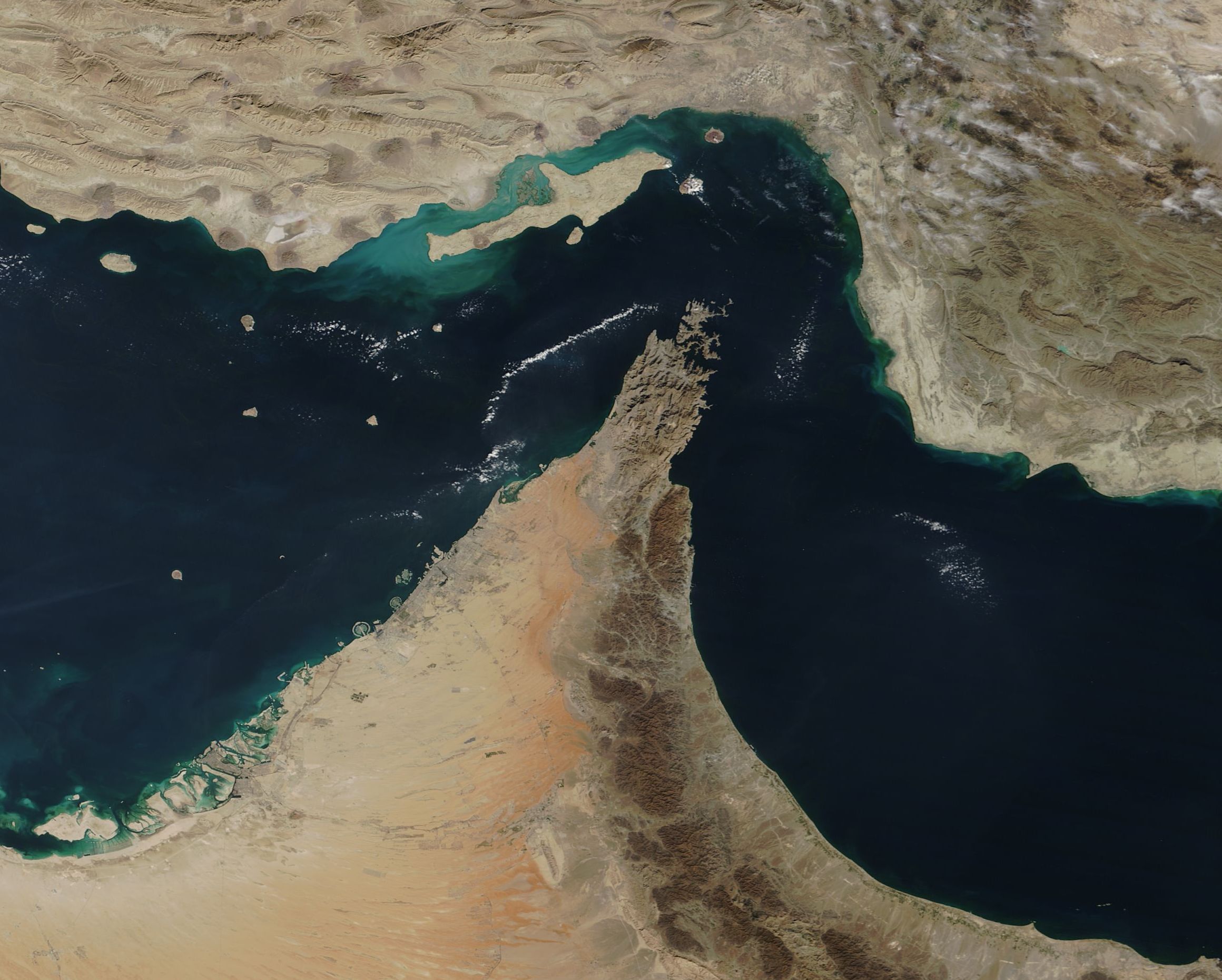
Iran’s Hormuz demand is not a negotiating position. It is an institution. On May 5 — five days before the latest counter-proposal — Tehran formally established the Persian Gulf Strait Authority, complete with its own domain (PGSA.ir), email address, and a transit-permit regime requiring IRGC clearance for all Hormuz passage. Vessels transiting without PGSA authorization face confiscation of approximately 20% of cargo value. All fees are denominated in Iranian rials.
Building a regulatory authority with a web presence, a fee schedule, and an enforcement protocol does not happen in the days between negotiating rounds. The infrastructure was under construction while Axios was reporting a “one-page deal is near.” The IRGC designed its maritime rules to outlast the MOU — visible to anyone reading Tasnim’s Persian-language coverage even as English-language outlets were projecting optimism.
Tehran’s specific legal framing avoids a blanket claim of closure. Instead, it proposes “Iranian management of the Strait of Hormuz if certain commitments are undertaken by the US” — language that implies conditional IRGC operational control rather than permanent blockade. The IRGC Navy stated on May 6 via PressTV that it would allow “safe, stable” transit only with “aggressor threats neutralized” — condition-setting that mirrors the counter-proposal’s Hormuz sovereignty demand and confirms operational-diplomatic synchronization between the IRGC and the Foreign Ministry’s public text.
Iran signed but never ratified UNCLOS. Tehran’s consistent position since 1982 is that transit passage — the regime that makes Hormuz non-suspendable under international law — is a “package deal” applicable only among UNCLOS parties, not binding custom. The strait narrows to 21 nautical miles; with Iran’s and Oman’s 12-nautical-mile territorial sea claims, vessels in the deepwater shipping lanes are within one or both countries’ territorial waters. Iran exploits this geometry as legal cover. UNCLOS Article 26 explicitly prohibits charges “by reason only of passage through the territorial sea.” The PGSA toll regime directly violates this provision for any UNCLOS-ratifying state — but Iran’s argument is that Article 26 does not bind a non-ratifier.
Why Did Tehran Publicize These Terms Before Washington Could Respond?
The timing answers the question the terms themselves cannot. If Iran wanted to negotiate, back-channel delivery through Pakistan — the established relay since Islamabad’s mediation began — would have allowed Washington to absorb, counter-propose, and maintain the appearance of momentum. Instead, IRNA and Tasnim carried the full counter-proposal simultaneously with its delivery to Pakistani intermediaries. By the time Dar’s office had transmitted the text, every political faction in Tehran — and every editorial desk at Fars, Mehr, and IRIB — had the document.
Trump’s arrival in Riyadh is days away. The Oman round failed, and MBS now owns whatever framework emerges from the Riyadh summit. Publishing maximalist terms before that visit accomplishes three things simultaneously: it frames any Saudi-brokered compromise as a concession Tehran has already publicly rejected; it makes Pezeshkian’s attendance or endorsement of a softer position a domestically visible capitulation; and it gives the IRGC’s media apparatus — IRIB, Tasnim, Fars — a documented baseline against which to measure any retreat.
How Does the Broadcast Cage Pezeshkian?
Masoud Pezeshkian has spent weeks signaling a willingness to negotiate that he lacks the constitutional authority to deliver. On May 4, Iran International reported that Pezeshkian described the IRGC’s escalation against Gulf states as “madness” and requested an urgent meeting with Mojtaba Khamenei to press for a halt to IRGC attacks. In April, he publicly named Vahidi and Abdollahi as the officials who wrecked the Islamabad ceasefire — an extraordinary accusation that confirmed, rather than resolved, the authorization ceiling that has defined every round of negotiations since March.
Under Article 110 of Iran’s constitution, the president has zero authority over the IRGC. The Supreme Leader — absent for over 70 days, with Mojtaba Khamenei operating through audio-only channels — retains sole command. The Supreme National Security Council, where IRGC-aligned secretary Ali Akbar Ahmadian and sanctioned member Mohammad Reza Zolghadr hold blocking positions, must approve any ceasefire terms. Vahidi, who carries an INTERPOL red notice for the 1994 AMIA bombing, has refused to permit the delegation to compromise on Hormuz or enrichment in every round since Islamabad.
Publishing the counter-proposal through state TV makes any future Pezeshkian concession a matter of public record. If the president were to accept enrichment terms between the US and Iranian positions — say, an eight-year moratorium — every IRIB commentator, every Paydari lawmaker, and every Tasnim editorial would have a stamped document showing that Iran’s official position was five years. The broadcast creates an accountability architecture more binding than any constitutional clause.
IRIB’s editorial line is controlled by Vahid Jalili, brother of hardline Paydari politician Saeed Jalili. Iran International reported in May that IRIB has increasingly featured commentators calling for the execution of former officials and attacking Iran’s chief nuclear negotiators.
The 96-Hour Collapse
On May 6, Axios reported that a “one-page deal is near,” citing multiple US officials describing a 14-point MOU framework. The story projected momentum: both sides were engaged, the contours of a deal were visible, the gap was narrowing.
Ninety-six hours later, Trump called Iran’s response “TOTALLY UNACCEPTABLE.” The velocity of the reversal measures how little the public optimism reflected the actual negotiating dynamic. The Axios report described US positions — enrichment moratorium ranges, frozen asset releases, inspection regimes — that Iran had already signaled it would reject. The two voices that have defined Iran’s approach since the war began were audible to anyone listening to both the English and Persian feeds.
Domestically, through IRIB, Tasnim, and Fars, Iran’s emphasis was on sovereignty, reparations, and anti-humiliation — refusing what state media consistently termed “surrender.” Internationally, through English-language PressTV and Araghchi’s diplomatic statements, Iran presented as a willing negotiator seeking “a new mechanism” and “security of shipping.” The two registers are structural: the domestic audience is the IRGC’s constituency; the international audience is Pakistan’s, Qatar’s, and Oman’s.
Qatar took the Iran file from Pakistan after the Oman round collapsed, bringing what Islamabad never had — a direct IRGC channel through Doha’s long-standing relationship with the Revolutionary Guards. But a channel to the IRGC does not solve the problem if the IRGC’s position is the one that was just broadcast on state television as Iran’s national demand.
Mokhber’s “Atomic Bomb” and the Domestic Price Signal
On May 8, Mohammad Mokhber — adviser to Supreme Leader Mojtaba Khamenei — delivered a statement in Persian to domestic audiences that no subsequent diplomatic language walked back. As reported by Al Jazeera and Times of Israel, citing the Persian-language delivery:
“The Strait of Hormuz is a capability equivalent to an atomic bomb. Having in one’s hands a position that allows you to influence the global economy with a single decision is a major opportunity.”— Mohammad Mokhber, Adviser to Supreme Leader Mojtaba Khamenei, May 8, 2026
Mokhber was telling every faction in Tehran — from the IRGC Navy commanders who declared “full authority” over Hormuz in April to the Paydari bloc in parliament advancing a 12-article Hormuz sovereignty law — that the Supreme Leader’s office values Hormuz control as equivalent to the nuclear program itself.
The statement was delivered two days before the counter-proposal’s public broadcast. It arrived two days after the Axios deal-optimism story. Its placement in that sequence — after the US leaked confidence, before Iran leaked its terms — means it functioned as an advance anchor. When the counter-proposal’s Hormuz demand appeared on Tasnim, it had already been framed by the Supreme Leader’s office as non-negotiable at the highest possible valuation.
Tehran-based analyst Seyed Mojtaba Jalalzadeh told Al Jazeera in May that Hormuz “remains the most unresolved issue, not only between the two sides but within Iran itself.” The internal fracture is real — Pezeshkian’s “madness” characterization and his appeal to Mojtaba Khamenei confirm it — but the public anchoring by Mokhber forecloses the moderate position. Whatever Pezeshkian believes privately, the institutional price of Hormuz concession is now pegged at “atomic bomb” levels by the office he reports to.
Can Any Mediator Bridge This Gap?
Pakistan’s Deputy PM and Foreign Minister Ishaq Dar acknowledged in early May that Pakistan had “helped bring both sides to the negotiating table for direct talks for the first time in 47 years” — a reference to the Vance-Ghalibaf face-to-face in Islamabad — but that subsequent direct meetings had not materialized. Trump suggested the two sides could engage by phone instead, a downgrade from the in-person format that itself failed to produce agreement.
The mediation problem is not one of communication. Pakistan, Qatar, Oman, Turkey, and Egypt have all participated in relay or hosting roles. The problem is that Iran’s counter-proposal contains demands that no mediator can repackage into terms acceptable to Washington without altering their substance. Reparations of $270 billion cannot be relabeled as “reconstruction assistance” at $20 billion without the IRGC’s media apparatus exposing the gap. Hormuz sovereignty under a “new mechanism” cannot be reframed as “enhanced transit coordination” without the PGSA’s institutional infrastructure contradicting the reframing.
The US blockade effective since April 13 applies to Iranian ports and toll-collecting vessels, not to all Hormuz transit — a calibrated-scope approach modeled on coercive diplomacy rather than total interdiction. Iran’s counter-proposal demands its removal as a precondition, while the US treats it as leverage to be released upon agreement. These are not positions separated by a negotiable distance. They are positions separated by the question of who concedes first — a question that, in the shadow of state TV broadcast, no Iranian official can answer without career-ending exposure.
The simultaneous kinetic activity on May 10 — drones hitting a commercial vessel off Qatar, strikes on UAE and Kuwait airspace on the same day Iran submitted its “peace response” — confirms that the counter-proposal was transmitted with its own enforcement commentary. Iran issued Hormuz threats and submitted peace terms on the same day, a pattern that several rounds of mediation have failed to interrupt because the threats and the terms come from different command authorities that answer to the same absent Supreme Leader.
What Happens When Trump Lands in Riyadh
Iran’s counter-proposal was not addressed to Washington. It was addressed to Riyadh — or, more precisely, to the diplomatic space MBS will occupy when Trump arrives. By publishing terms that the US has already rejected, Tehran ensures that any Saudi-brokered framework starts from a position of documented Iranian refusal. MBS cannot present himself as the architect of a breakthrough when one party has broadcast its non-negotiable demands on state television five days earlier. The GCC’s institutional response to the May 10 strikes — Al-Budaiwi’s seventh “treacherous” condemnation, with Article 51 stripped from the language and Qatar omitted from the header despite a drone hitting Qatari waters — tells Tehran that the body it is targeting has already absorbed the maximum verbal response available to it.
The threat to close Hormuz permanently for Bahrain, issued four days before Trump’s expected arrival, compounds the pressure. Saudi Arabia’s fiscal exposure — Goldman Sachs projects a 6.6% GDP war-adjusted deficit versus the official 3.3% estimate — means Riyadh needs a deal more than Tehran does, at least on the energy front. Iran’s Central Bank memo projecting 180% inflation and a 12-year recovery timeline suggests Tehran’s civilian government understands the cost. But the IRGC, which controls the PGSA, the Hormuz transit regime, and the drone operations that accompanied the counter-proposal, does not answer to the Central Bank.
The IRGC’s “missiles locked” declaration on May 10 was aimed at Tehran, not Washington — a signal to the domestic political establishment that the military command considers the MOU framework a threat to its institutional authority over Hormuz, enrichment, and force structure. Every demand in the counter-proposal — reparations, sovereignty, troop withdrawal, sanctions lift — protects IRGC equities. The proposal is the IRGC’s institutional red line, published on state television so that it cannot be quietly abandoned in a back room in Doha or Muscat. The deepest layer of that architecture was revealed at Muscat Round 4, where Iran tabled a regional enrichment consortium that would structurally prohibit any Arab state from accepting the US-Saudi 123 Agreement without simultaneously legitimizing Iranian centrifuges.
Khomeini demanded reparations from Iraq for eight years before accepting a ceasefire without them, calling it poison. The current Supreme Leader’s office, through Mokhber, has valued Hormuz at “atomic bomb” equivalence. Whether this generation of Iranian leaders will drink that poison — and who, constitutionally, has the authority to pour it — remains the question that no counter-proposal, however public, can answer.
Frequently Asked Questions
What is the Persian Gulf Strait Authority (PGSA) and when was it created?
The PGSA was formally established on May 5, 2026, with its own domain (PGSA.ir) and a transit-permit regime requiring IRGC clearance for all Hormuz passage. It imposes penalties of approximately 20% of cargo value for non-compliant transit and denominates all fees in Iranian rials. Its creation five days before the latest counter-proposal delivery indicates the enforcement infrastructure was under construction during the same period Western media was reporting deal optimism. The authority draws on a 12-article Hormuz sovereignty bill advancing through Iran’s parliament, sponsored by lawmakers Ahmadi and Rezayi Kouchi, which would give the PGSA statutory backing beyond executive decree.
Has Iran ever successfully obtained war reparations in a peace settlement?
No. Khomeini demanded reparations from Iraq throughout the 1980–88 war. UNSCR 598 (1987) excluded reparations language. Iran accepted the ceasefire in 1988 without them. The only modern sovereign reparations mechanism — the UN Compensation Commission after Iraq’s 1990 Kuwait invasion — required Security Council authorization under UNSCR 687, which is unavailable to Iran given Russian and Chinese veto protection. The 2015 JCPOA released approximately $150 billion in frozen assets and settled a $1.7 billion pre-revolution arms dispute, but explicitly avoided reparations framing. Iran’s current use of the word “reparations” rather than “compensation” or “settlement” sets a structurally different legal and political bar.
Why does Iran claim Hormuz transit passage does not apply to its waters?
Iran signed but never ratified the 1982 UN Convention on the Law of the Sea (UNCLOS). Tehran’s consistent position is that transit passage — the non-suspendable regime governing international straits — is a “package deal” binding only among UNCLOS parties, not customary international law. The US argues transit passage has become binding custom for all states regardless of ratification. The Strait of Hormuz narrows to 21 nautical miles; with both Iran and Oman claiming 12-nautical-mile territorial seas, the deepwater shipping lanes fall within overlapping sovereign waters. Iran uses this geographic fact, combined with its non-ratification status, to assert that passage through Hormuz is subject to the more restrictive “innocent passage” regime — which, unlike transit passage, can be suspended for security reasons.
What is Iran’s current HEU stockpile and how close is it to weapons-grade?
As of the last IAEA count in June 2025, Iran held 440.9 kilograms of highly enriched uranium at 60% purity. IAEA access was terminated on February 28, 2026, meaning the current stockpile is unknown but presumed larger. At 60% enrichment, the material is approximately 25 days from weapons-grade conversion using IR-6 centrifuge cascades. The US MOU demands this stockpile be physically removed from Iran. Foreign Ministry spokesman Baghaei stated on April 17 that removal is categorically excluded. This single issue — custody of existing HEU — may be the most technically precise incompatibility in the entire negotiation, as both positions are binary and admit no compromise short of one side’s complete reversal.
Who controls Iran’s state broadcaster IRIB and why does it matter for the counter-proposal?
IRIB’s editorial direction is shaped by Vahid Jalili, brother of hardline Paydari politician Saeed Jalili. Iran International reported in May 2026 that IRIB has increasingly featured commentators calling for the execution of former officials and attacking Iran’s chief nuclear negotiators. IRIB holds a terrestrial broadcast monopoly inside Iran — it is the sole channel through which most Iranians receive political information. When the counter-proposal was broadcast via IRIB alongside IRNA and Tasnim, it was not a neutral act of public information. The broadcast channel’s editorial alignment with the Paydari faction — the same bloc that opposes Pezeshkian’s diplomatic overtures — means the counter-proposal’s terms were amplified through a medium controlled by the faction that authored them, guaranteeing that any future retreat would be framed domestically as betrayal. Saudi Arabia’s strategy of co-sponsoring UNSC Hormuz resolutions that were designed to be vetoed — building an on-the-record demonstration that the UN cannot address Hormuz — is analysed in Saudi Arabia’s Hormuz Resolution Was Designed to Fail. The structural reason no deal will survive even if one is signed — the three independent veto-holders inside and outside Iran — is examined in Three-Body Veto.
The House of Saud Daily Briefing
Saudi Arabia's news in 3 minutes, every morning. Free. See today's issue