
MOSCOW — On May 8, Sergey Lavrov called Saudi Foreign Minister Faisal bin Farhan and proposed restoring Hormuz navigation to its pre-late-February baseline. Three days earlier the Russian foreign minister called the Qatari prime minister. Two days before the Saudi call, he reached the Omani foreign minister. Five days after the Saudi call, Donald Trump lands in Riyadh.
The same week Lavrov was sequencing Gulf foreign ministers, Russian-built Shahed-derivative drones were being loaded onto cargo vessels at the Volga riverport of Astrakhan, bound for Bandar Anzali on Iran’s Caspian coast — the restocking route bypassing the Hormuz blockade entirely, since US officials assess roughly 60 percent of Iran’s UAV arsenal was destroyed during the war. Russia booked a $9.3 billion month-on-month jump in oil export revenues from the chokepoint Lavrov now proposes to unblock. Moscow is not choosing between Iran and the Gulf. It is selling the war to one and the peace to the other, and timing the call so that it lands before Trump can write the post-war framework alone with Mohammed bin Salman.
Table of Contents
- The Third Call in Sixty-One Days
- Why Did Lavrov Call Faisal Five Days Before Trump Lands
- The Caspian Contradiction
- Russia Is Booking $9.3 Billion a Month From the Chokepoint It Wants Reopened
- What Does Pre-Late-February Mean
- Russia Has a Hormuz Exemption Western Competitors Do Not
- The Syria Template Applied to the Gulf
- What Did Riyadh Get By Taking the Call
- The April 7 Veto and What It Locked Out
- FAQ
The Third Call in Sixty-One Days
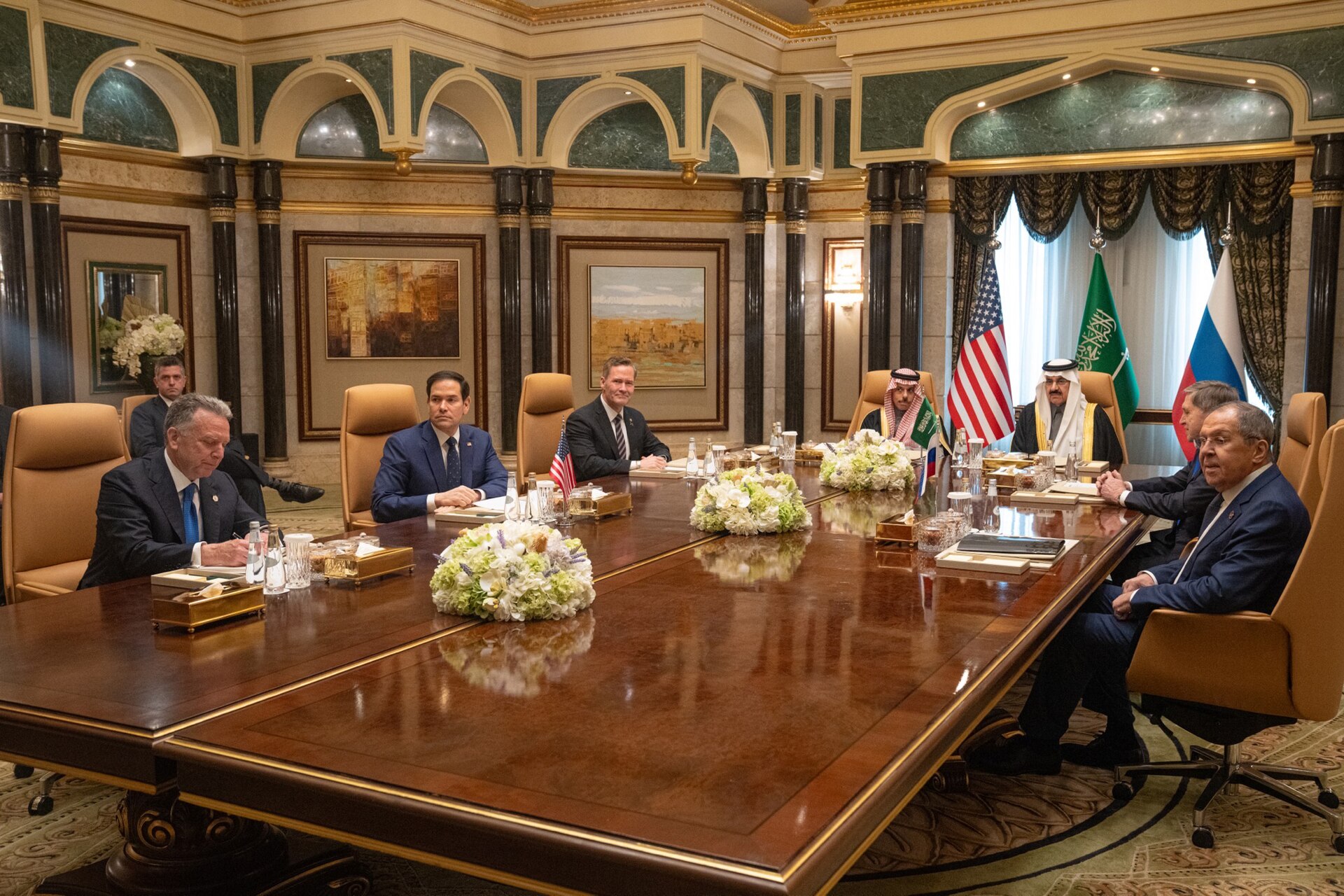
The May 8 call was the third documented Lavrov-Faisal phone conversation since the war began on February 28. Russian and Saudi readouts log the previous calls on March 8 and April 2. Each one tracked an inflection point: the first eight days into the war, the second on the eve of OPEC+ deliberations, the third five days before the Trump tour.
The TASS readout records both sides calling for “preventing further escalation around the Strait of Hormuz and restoring the navigation regime as it used to be before late February.” The Russian foreign ministry then added what is structurally the more interesting clause: Moscow “reaffirmed its readiness to facilitate progress in these areas while taking into account the interests of all parties involved.”
“All parties involved” is doing the work in that sentence. It is the formula Russia uses when it wants Iran and Saudi Arabia in the same diplomatic frame as co-equal participants. The phrase is not a courtesy — it is the constitutional language of the multilateral Gulf architecture Lavrov has been pitching since 2019, repeated on February 28 the day the war began, and now retrofitted to the wreckage of the war it survived.
Lavrov’s broader sequence is the more revealing artifact. On May 5 he reached Qatar’s prime minister and foreign minister. On May 7 he called Oman’s foreign minister. On May 8 he called Faisal. Three of the four most consequential Gulf interlocutors in 72 hours — and a March 30 videoconference earlier in the war that gathered the foreign ministers of Bahrain, Kuwait, Oman, Saudi Arabia, Qatar, the UAE, Jordan, and the GCC Secretary General onto one Russian-hosted line. Moscow is not conducting bilateral diplomacy. It is rebuilding a Gulf foreign-ministerial Rolodex it kept warm for seven years.
The Middle East briefing 3,000+ readers start their day with.
One email. Every weekday morning. Free.
Why Did Lavrov Call Faisal Five Days Before Trump Lands
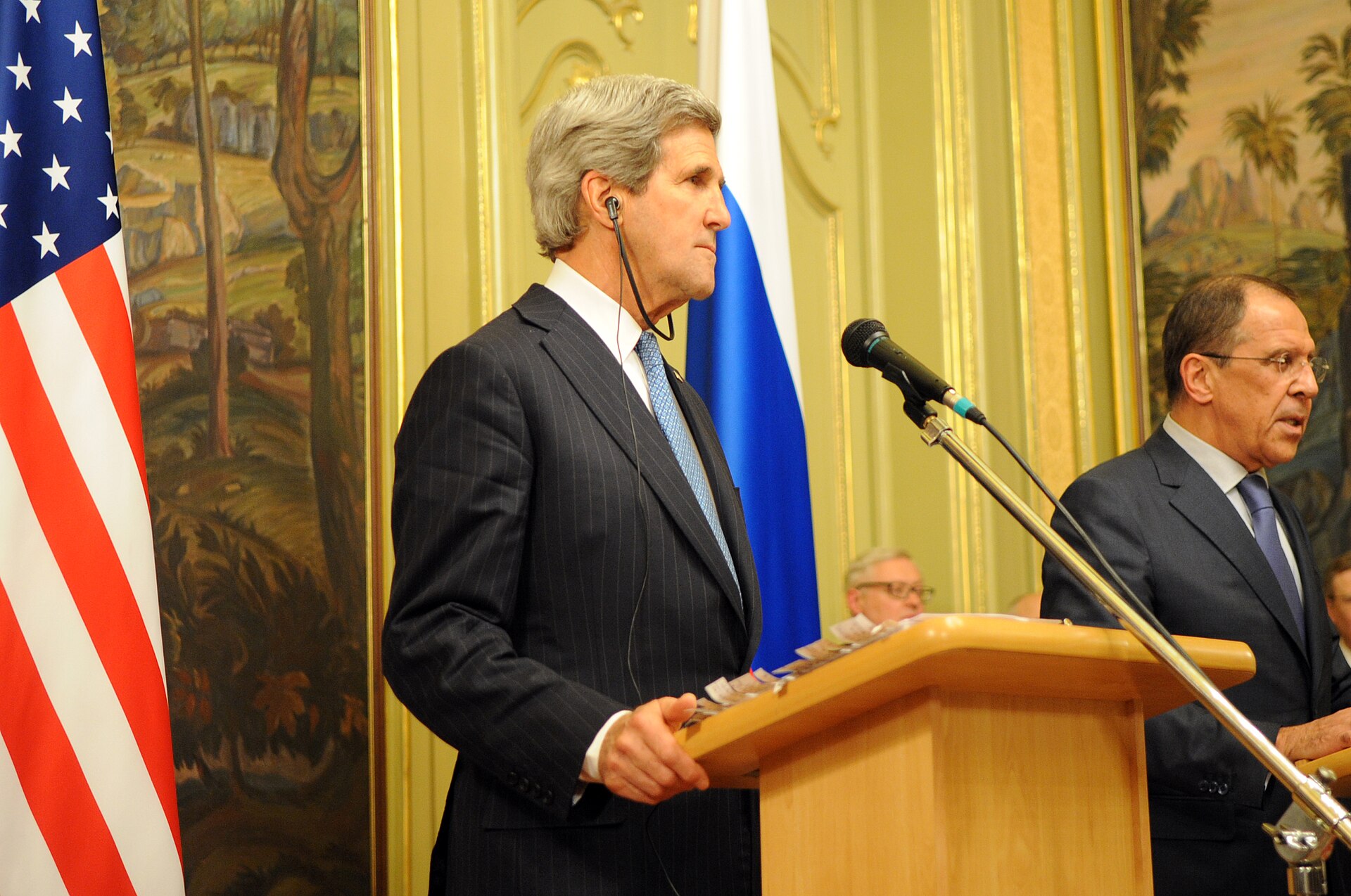
Russia’s window to insert itself into the post-war Hormuz governance framework closes when Trump’s wheels touch down in Riyadh on May 13. Once the US president and the Saudi crown prince define the post-war order bilaterally — which is the structural risk of every American Gulf tour — Moscow’s seat at that table is set by Washington. The Lavrov-Faisal call is the pre-summit insertion move: a public, dated record that Russia and Saudi Arabia jointly called for Hormuz restoration before Trump arrived to define what restoration means.
The call was not designed to produce an outcome. It was designed to produce a date stamp.
This is the part of Russian diplomacy that Western analysts routinely under-read because it does not announce itself. Moscow’s tradecraft in this register is procedural, not declaratory. The mechanism is to manufacture a public predicate — a joint readout, a bilateral position, a ministerial-level framing — that any subsequent settlement has to either incorporate or visibly exclude. Excluding Russia from a Hormuz framework is harder if there is a TASS-archived joint statement saying Russia and Saudi Arabia already agreed on the goal.
The Carnegie Endowment’s 2026 read of Russian Iran-war posture identified the same pattern from the other side: Moscow will not directly intervene militarily because it “values its relationship with Israel” and “does not want to ruin its relations with Trump.” Russia’s role, Carnegie wrote, is “backstage partner” with technical and operational support — which is a precise description of a Caspian drone supply chain combined with a Lavrov-Faisal phone call sequence.
The Caspian Contradiction
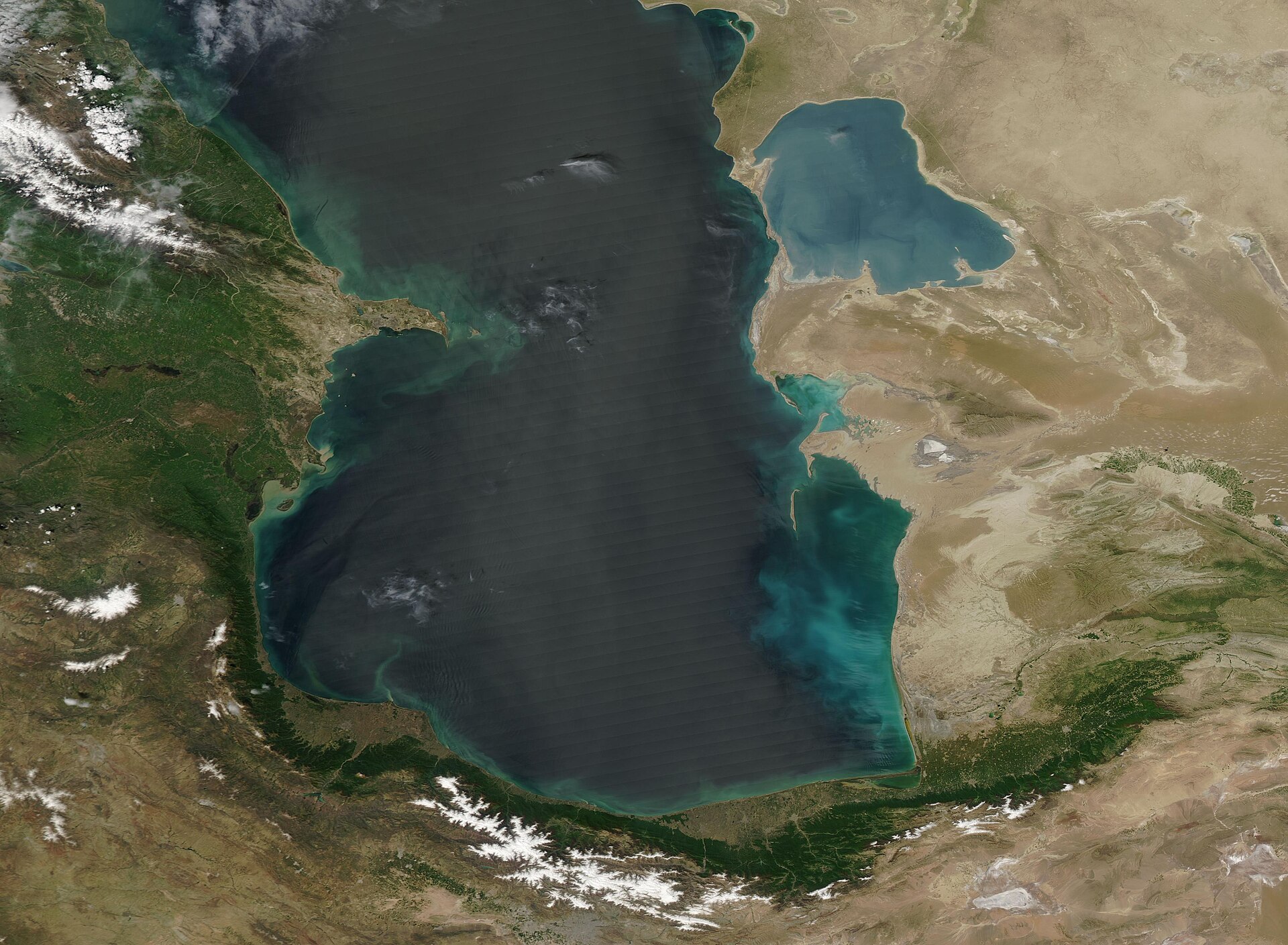
The drones are manufactured at Yelabuga in Tatarstan. They move down the Volga to Astrakhan, the Caspian riverport that gives Russia a maritime route to Iran without crossing any contested water. From Astrakhan they sail to Bandar Anzali on Iran’s northern coast — a transit through the Caspian, an enclosed sea where neither US Navy assets nor any Hormuz-area enforcement reaches. The route was operational before the war and is the primary mechanism for restocking the roughly 60 percent of Iran’s UAV arsenal US officials assess was destroyed during the conflict.
The geographical fact does the political work. Russia can resupply Iran’s drone capability while simultaneously calling for de-escalation in a body of water Russian cargo never had to use. Moscow’s Iran arms relationship is Caspian; Moscow’s Hormuz proposal concerns a chokepoint where Russia has no direct logistical exposure for its own exports. Russian LNG flows 49 percent to the EU, 23 percent to China, and 19 percent to Japan, routed through the Arctic, Baltic, and Black Sea — none of it transits Hormuz.
The contradiction is not a contradiction inside Russia. It is a contradiction only if you assume Moscow is choosing between Iran and Saudi Arabia. Moscow is not. The Caspian arms supply and the Lavrov-Faisal call are the same policy expressed on two surfaces — keep Iran armed enough to remain a structural counterparty to the Gulf, and keep Saudi Arabia engaged enough to legitimize Russia’s presence in any settlement.
Russian-Saudi cooperation starts — and stops — with oil prices.
— Wilson Center analysis, on the OPEC+ relationship
That formulation is the Wilson Center’s, and the Lavrov call does not contradict it — it extends it. Oil prices brought Riyadh and Moscow to OPEC+ in September 2016 when Mohammed bin Salman met Vladimir Putin at the Hangzhou G20. Oil prices broke the relationship in March 2020 and patched it by May 2020. Oil prices in May 2026 are running ~$101.73/bbl Brent, with a peak of $126/bbl on April 30. Russia’s incentive structure is fully visible in the price curve.
Russia Is Booking $9.3 Billion a Month From the Chokepoint It Wants Reopened
The numbers are the argument. The Centre for Research on Energy and Clean Air recorded Russia’s monthly fossil fuel export revenues at EUR 713 million per day in March 2026 — a 52 percent month-on-month surge, the highest in two years. The Kyiv School of Economics Russian Oil Tracker put Russia’s oil export revenues at $19.0 billion in March alone, a $9.3 billion month-on-month jump. Russia’s Mineral Extraction Tax revenues rose 114 percent month-on-month.
| Russia revenue indicator | February 2026 | March 2026 | Change |
|---|---|---|---|
| Oil export revenues (KSE) | ~$9.7B | $19.0B | +$9.3B / +95% |
| Fossil fuel daily revenues (CREA) | ~EUR 469M/day | EUR 713M/day | +52% |
| Mineral Extraction Tax revenues | baseline | +114% MoM | +114% |
| Brent crude (period high) | ~$78/bbl | ~$118/bbl | +$40/bbl |
Foreign Policy on April 21 published the read directly: “Russian Oil Revenues Soar Thanks to Trump’s War on Iran.” Carnegie analysis projects Russia’s total fossil fuel export revenues climbing from $158 billion in 2025 to $229 billion in 2026 — additional budget revenues of $45 billion to $151 billion for the year.
Lavrov’s call for restoring the pre-late-February navigation regime is therefore a call for surrendering most of that windfall. Or it would be, if “pre-late-February” meant what Saudi Arabia means by it. The phrase is ambiguous on purpose — Russia and Saudi Arabia agree on the destination at the level of words while the underlying interests pull in different directions on the timeline. Russia’s structural incentive is for a settlement that stretches long enough for Q2 and Q3 budget receipts to arrive, then resolves on terms Moscow helped write.
What Does Pre-Late-February Mean
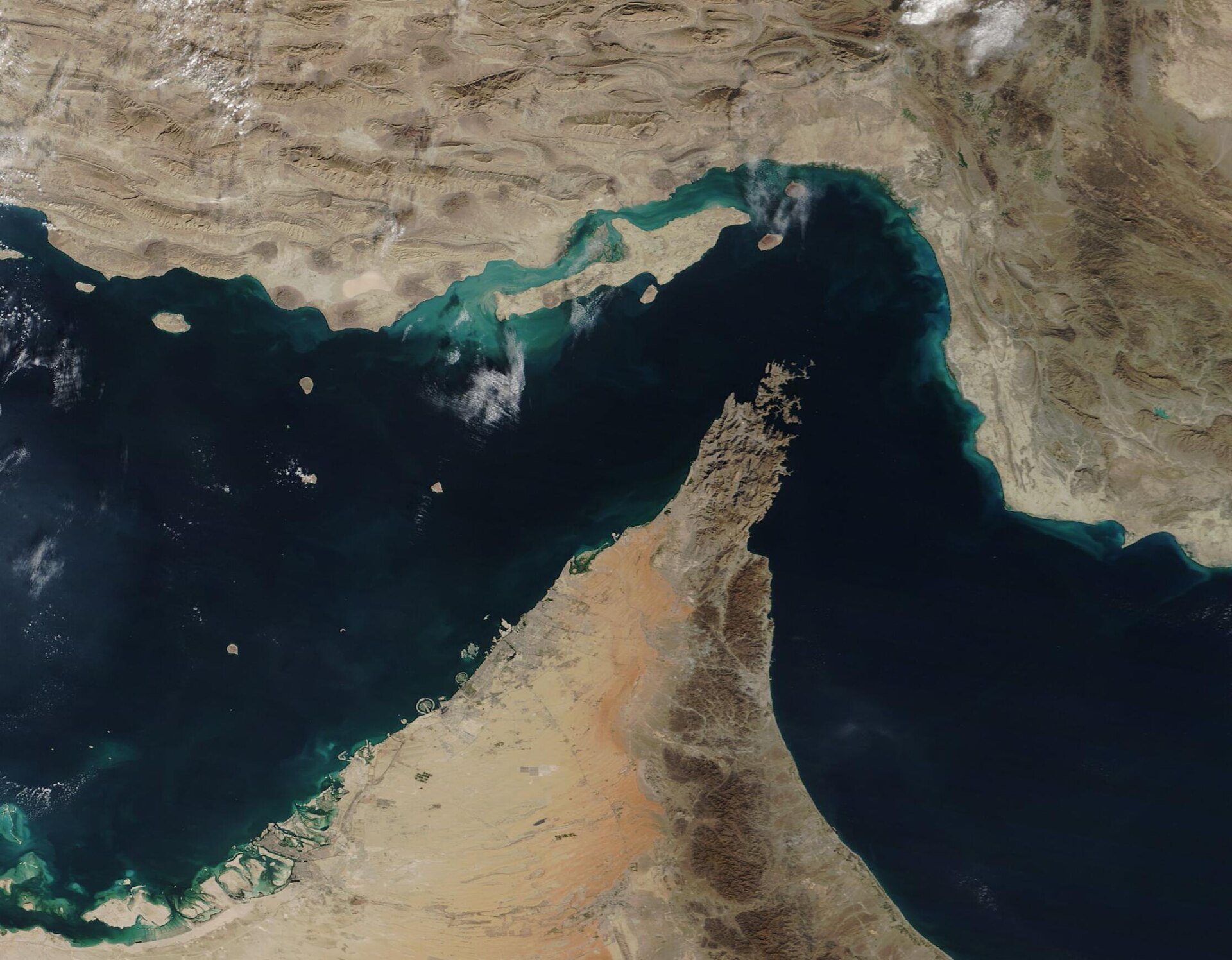
The Russian-Saudi joint position calls for “restoring the navigation regime as it used to be before late February.” That phrasing matters because the late-February baseline includes Iran’s Persian Gulf Strait Authority architecture — the PGSA was launched May 5-6, but Iran’s underlying transit-control regime (the March 26 nationality exemption list, the IRGC Navy Hormuz writ) predates the May regulator and is consistent with the late-February status quo.
“Pre-late-February” is also pre-blockade. The US Navy’s coercive measures, the European naval coordination requests, and the multinational shipping-defense framing that Bahrain put before the UN Security Council on April 7 — all of that came after late February. A return to the pre-late-February baseline would unwind the Western enforcement architecture that emerged during the war while leaving Iran’s pre-war control mechanisms substantially intact.
That asymmetry is the part of the Russian formulation Saudi Arabia did not publicly object to. Riyadh has its own reasons for accepting the framing, which run through a different file — the Trump tour, the post-war US-Saudi defense bargain, and the Saudi preference for not being locked into a US-led enforcement framework that defines Riyadh as the southern flank of an American security architecture.
Iran’s own posture supports the reading. Tasnim reported on May 6 that Iran was still reviewing the US MOU proposal and would respond “at the appropriate time” — the standard Iranian formula for delay. The Lavrov call landed two days into that delay window.
Russia Has a Hormuz Exemption Western Competitors Do Not
On March 26, Iran formally approved Russia as one of five nationalities — alongside China, India, Iraq, and Pakistan — whose ships may transit the Strait of Hormuz under Iranian authorization. Russian-flagged vessels transit. American, British, French, German, Japanese, Korean, and most allied-flagged vessels do not.
The exemption is not symbolic. Russia-Iran bilateral trade reached $4.8 billion in 2024, up 16 percent year-on-year, with Russian trade ministry projections for 2026 cargo volume exceeding 10 million tons. The transit privilege is the operational backbone of that trade volume during a war in which the chokepoint is otherwise closed to most flag states.
| Hormuz transit status, May 2026 | Position |
|---|---|
| Iranian-authorized nationalities | Russia, China, India, Iraq, Pakistan (5) |
| Hormuz transits since April 8 ceasefire | ~45 (3.6% of pre-war baseline) |
| Vessels stranded | ~1,500 |
| Crew stranded | ~22,500 |
| PGSA filing requirement (May 5-6) | 40+ questions to [email protected] |
Russia has made no public objection to the PGSA. Moscow’s silence is consistent with a Russian commercial position — under a managed-strait regime, Russian-flagged cargo enjoys preferential transit relative to Western competitors. A fully reopened strait under US-Saudi bilateral terms would strip that preference.
That is the unspoken part of “restoring the navigation regime as it used to be before late February.” The pre-war regime was one in which Russia’s cargo did not need an exemption. The current regime is one in which Russia has an exemption nobody else has. Russia’s preferred settlement is one that resolves the crisis without dismantling the exemption — which is what “managed reopening” would deliver, and what a multilateral Gulf framework with Russian co-sponsorship would protect.
The Syria Template Applied to the Gulf
Russia ran this play in Syria between 2015 and 2016. Moscow brokered ceasefires through the Astana process while simultaneously enabling the Assad military campaign through the Russian Aerospace Forces operation at Khmeimim. The combination — arm one party, position as essential broker for any peace — is not an accident of Russian foreign policy. It is the policy.
The 2026 Gulf application is identical in structure with one critical difference: Russia is not deploying forces. The arms supply runs through the Caspian; the diplomatic posture runs through Lavrov’s phone log; the economic windfall runs through the oil markets. Moscow gets the Syrian template’s strategic dividend without the Syrian template’s military cost.
Carnegie’s 2026 framing is precise on the constraint: Russia does not directly intervene because direct intervention would burn the Israel relationship and the Trump relationship. The Caspian route is the workaround. It supplies Iran without putting Russian uniforms in theatre and without giving Israel a direct casus belli against Russian assets. The drone shipments are Russian — the casualties they enable are Iranian and the targets they hit are not Israeli.
The Russian formulation in 2026 is therefore tighter than the Syrian formulation. Moscow does not need to deploy. It needs Iran armed enough to remain a structural counterparty, Saudi Arabia engaged enough to legitimize Russian co-sponsorship, and a chokepoint constrained enough to keep the oil price elevated through the budget cycle. The Lavrov-Faisal call addresses all three simultaneously: it does not disarm Iran, it locks in Saudi engagement at the foreign-ministerial level, and the public record of restoration talk does not actually restore anything.
What Did Riyadh Get By Taking the Call
The Saudi side of the call is its own calculation. Faisal bin Farhan did not have to take the third Lavrov call of the war. He took it five days before Trump arrives in Riyadh with a script the Saudis already wrote. The two facts are connected.
Saudi Arabia’s preferred post-war architecture is one in which Riyadh’s bilateral relationships — with the US, with China, with Russia, with Iran’s interlocutors via Pakistan — are managed in parallel rather than rolled up into an American-defined security framework. A multilateral frame dilutes US unilateral leverage. Lavrov’s call is one input into that diluting process. Araghchi’s Beijing visit was another. Iran getting to Beijing first was a third.
The Baker Institute for Public Policy at Rice University documents the structural Saudi-Russian alignment going back to OPEC+. Mohammed bin Salman, then deputy crown prince, told The Washington Post in April 2017 that the Saudis had been coordinating their oil policies with Moscow “to convince Russia that Riyadh was a better bet for them than Tehran.” That coordination logic survives the 2026 war. Riyadh keeps Moscow in the conversation specifically so Moscow does not default to Tehran on the issues where Saudi and Iranian interests diverge.
The Saudi calculation does not require trusting Russia. It requires keeping Russia in a position where Russia has reasons not to fully ally with Iran — and the foreign-ministerial phone call sequence, the OPEC+ coordination, the absence of public Saudi objection to Russian Caspian arms transfers, all serve that purpose. Riyadh’s hedge is that Russia stays equidistant. Russia’s hedge is that Saudi Arabia keeps it in the room.
The cost to Saudi Arabia of taking the call is essentially zero. The cost of refusing it would have been the loss of an asymmetric option a week before Trump arrives. Faisal took the call.
The April 7 Veto and What It Locked Out
Russia and China vetoed a UN Security Council resolution on April 7 — drafted by Bahrain — that would have called on Iran to end attacks on shipping and authorized states to coordinate defensive escorts in the Gulf. The veto was Russia’s most consequential public act of the war on the Hormuz governance question.
The Bahraini draft was the Western-led path to institutionalizing Hormuz security. UN Security Council sanction would have given European naval missions, US Fifth Fleet operations, and the multinational shipping-defense coordination requested by maritime industry bodies the legal architecture they currently lack. Russia’s veto closed that path.
What the veto opened was the bilateral and multilateral path Lavrov is now operating on. With UNSC governance closed, the post-war Hormuz architecture has to be built somewhere else — through the GCC, through OPEC+, through the kind of foreign-ministerial videoconferences Russia hosted on March 30, through the bilateral phone calls Lavrov logged with Qatar, Oman, and Saudi Arabia in the first week of May. Every one of those venues includes Russia. None of them include Russia by US invitation.
The Russian foreign ministry framed the US blockade in directly hostile terms on April 18, stating that the US “sought to take control of Iranian oil in the Persian Gulf.” That formulation — the US blockade as resource seizure rather than security enforcement — is the thesis Moscow is selling to Gulf interlocutors who have their own reasons to be skeptical of US enforcement architecture. Saudi Arabia’s willingness to take the May 8 call indicates the thesis has at least one buyer.
Both sides expressed the position in favor of preventing a return to escalation and the need to continue ongoing diplomatic contacts in order to reach a sustainable long-term agreement on all aspects of resolving the crisis as soon as possible.
— Russian Foreign Ministry readout of the Lavrov-Faisal call, May 8, 2026
The phrase “all aspects” is the Russian foreign ministry’s preferred plural. It signals comprehensive scope — Hormuz transit, Iran’s nuclear program, the post-war regional architecture, Iranian-Saudi bilateral relations, sanctions, the prisoner-and-mariner question — all on a single table. The 22,500 stranded mariners are one of those aspects. The MOU Iran is reviewing is another. Russia’s “all parties involved” formula and “all aspects” formula together describe a comprehensive multilateral settlement under Russian co-sponsorship — the framework Moscow has been pitching since 2019, now reactivated in conditions where Western competitors are constrained by Iranian transit restrictions Russia is exempt from.
FAQ
How does Russia’s Caspian Sea route bypass the Hormuz blockade specifically?
The Caspian is an enclosed inland sea bordered only by Russia, Iran, Azerbaijan, Kazakhstan, and Turkmenistan. It connects to the Black Sea via the Volga-Don Canal but has no maritime outlet to the Gulf or the Indian Ocean. Cargo entering Iran via Bandar Anzali on the Caspian arrives without ever crossing waters where US Navy or any Western enforcement asset can interdict it. Iranian internal transport then moves the cargo south. The route’s commercial throughput predates the war — it is the existing infrastructure of the Russia-Iran International North-South Transport Corridor — but its strategic value compounds when Hormuz is closed to most flag states.
What is OPEC+ doing during this war and where is Russia in it?
OPEC+ remained intact through the February 28 outbreak. The group’s coordination mechanism has the structural feature that Russia and Saudi Arabia coordinate quotas as the two largest producers in the bloc, which means production decisions during the war are negotiated bilaterally before they are presented to the broader cartel. Russia’s incentive in those negotiations is consistent with its broader posture — prices high enough to maximize budget receipts but not high enough to trigger Western demand destruction or accelerate non-OPEC supply growth. The April 30 Brent peak at $126 was at the upper edge of that band.
Why does Russia care about the Trump-Riyadh summit on May 13?
Trump’s Gulf tour is the first US presidential visit since the war and the first opportunity for the US and Saudi Arabia to define post-war terms in a bilateral format. Anything announced or pre-cooked at that summit becomes the US-Saudi baseline for subsequent multilateral negotiations — and Russia’s leverage over those negotiations is reduced if the baseline is already fixed. The Lavrov-Faisal call exists in part to put a Russian-Saudi joint position on the public record before the bilateral baseline is set, ensuring any subsequent US-Saudi framework either incorporates the joint position or is publicly distinguishable from it. Washington’s push for Chinese pressure on Tehran at the Beijing summit proceeds on a parallel track from which Riyadh holds no seat.
Has Russia ever delivered on its Gulf collective security proposal before?
No. The proposal was first formalized in July 2019 when the Russian foreign ministry published a “Russian Concept of Collective Security in the Persian Gulf Region” — a document calling for a multilateral architecture replacing the US-led one. It went nowhere. Lavrov reiterated the proposal on February 28, 2026, the day the war began, and has invoked it in subsequent statements. The 2026 conditions — chokepoint closure, Western enforcement gridlock at the UNSC, Saudi hedging — are the most favorable conditions the proposal has had since its 2019 introduction. Whether Moscow can convert the conditions into actual architecture is the question the next sixty days answer.
What did Lavrov tell Qatar and Oman in the calls preceding Faisal?
The May 5 call with Qatari Prime Minister and Foreign Minister Mohammed bin Abdulrahman Al Thani and the May 7 call with Omani Foreign Minister Badr Albusaidi both centered on Hormuz de-escalation and the Iran nuclear file, per Russian MFA readouts. Qatar and Oman are the two Gulf states with the deepest Iran communication channels — Qatar through the Doha-Tehran political relationship and host-nation status for various Iranian diplomatic events, Oman through its long-standing role as US-Iran backchannel. Lavrov’s sequencing — Doha, Muscat, Riyadh in 72 hours — covered the three Gulf capitals with the most independent Iran channels before reaching the capital with the deepest US relationship. The order is the architecture. Saudi Arabia’s parallel manoeuvre at the UN Security Council — co-sponsoring a Hormuz resolution it knew Russia and China would veto — is examined in Saudi Arabia’s Hormuz Resolution Was Designed to Fail.