
Table of Contents
- What the Statement Says — and What It Omits
- Three Countries, One Morning, Zero Casualties
- Why Did Faisal Call Araghchi Four Days Before the Strikes?
- From Article 51 to “Diplomatic Solutions”
- Does the Condemnation Signal Solidarity or Stage Management?
- The Saudi-Iran Channel Since March
- Frequently Asked Questions
RIYADH — Saudi Arabia’s Ministry of Foreign Affairs issued its “strongest condemnation” on May 11 of Iran’s drone-and-missile strikes against three Gulf Cooperation Council states the previous day — and managed to condemn an act of war without naming the military organization that carried it out. The statement omits any invocation of the collective self-defense mechanisms Saudi Arabia itself activated seven weeks earlier, and any reference to the American military campaign that its own airspace denial helped suspend. Released two days before Donald Trump lands in Riyadh for a summit built around a $142 billion arms package and Saudi designation as a Major Non-NATO Ally, the statement reads less like a diplomatic response to an attack on allied territory than a carefully stage-managed performance of outrage calibrated to preserve every option Riyadh currently holds.
That calibration matters because the May 10 strikes — which hit the UAE, Kuwait, and Qatar simultaneously in what amounted to Iran’s broadest single-day military action against GCC civilian infrastructure since the war began — arrived on the same day Tehran submitted its ceasefire counter-proposal to Pakistani mediators, a proposal Trump dismissed on Truth Social as “TOTALLY UNACCEPTABLE” within hours. Saudi Arabia is now performing two contradictory roles at once: GCC solidarity anchor for the Trump visit and back-channel interlocutor for a regime that just struck three of its treaty partners, and the MFA statement is the document where those two roles collide.
What the Statement Says — and What It Omits
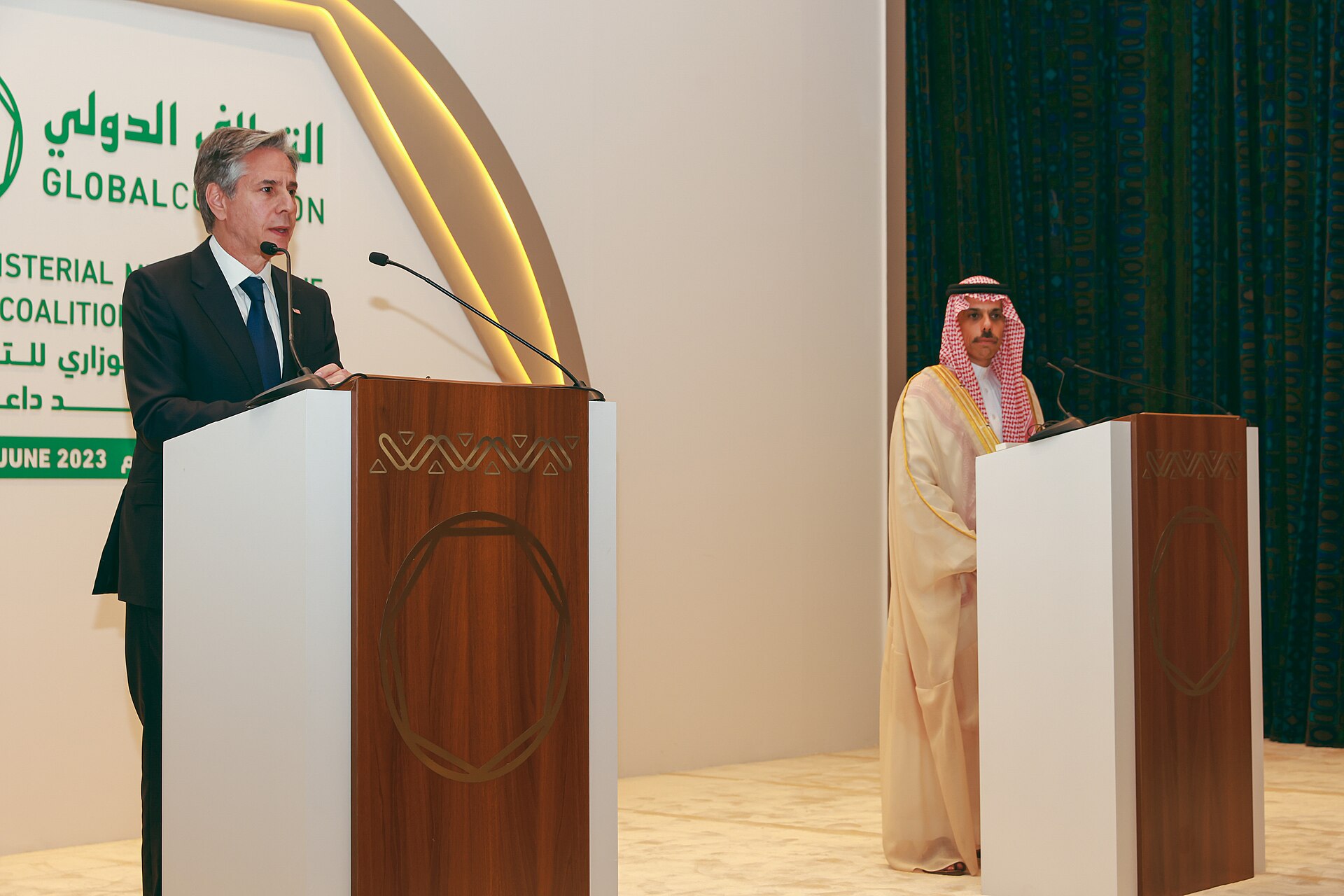
The full operative language is worth reading in its entirety, because the precision is the point. “The Ministry of Foreign Affairs expresses the Kingdom of Saudi Arabia’s strongest condemnation of the treacherous attacks targeting the territories and territorial waters of each of the United Arab Emirates, the State of Qatar, and the State of Kuwait,” the statement reads, “renewing the Kingdom’s support for all measures taken by the fraternal Gulf states to protect their security and stability.” It then calls for “an immediate halt to the blatant attacks targeting the territories and territorial waters of Gulf countries, as well as any attempts to close the Strait of Hormuz or disrupt international shipping lanes,” and stresses “the need to prioritize political and diplomatic solutions to avoid further escalation.”
Three things are present: condemnation, solidarity, and a call for diplomacy. But the omissions form their own statement, one arguably more revealing than the published text. The IRGC — the organization that commands Iran’s drone and missile forces, that declared “full authority” over the Strait of Hormuz, and whose operational independence from Iran’s civilian government has been documented by every Western intelligence service involved in this conflict — is not named once. The phrase “Islamic Revolutionary Guard Corps” does not appear, nor does any reference to Iranian military command structures, unit designations, or the specific weapons systems used in the May 10 attacks.
Article 51 of the UN Charter — the collective self-defense provision that Saudi Arabia formally invoked on March 26 alongside the UAE, Kuwait, Bahrain, Qatar, and Jordan in a joint declaration filed with the United Nations — goes unmentioned. That March declaration represented the hardest legal posture the GCC had taken since the war’s outbreak, a formal assertion of the right to respond militarily under international law. Seven weeks later, with three of those same states freshly struck, Riyadh retreated to “support for all measures” — language that endorses without committing, that backs without binding.
And Project Freedom — the American military operation to reopen the Strait of Hormuz that Saudi Arabia itself helped kill by suspending US access to Prince Sultan Air Base and Saudi airspace on May 4-5 — receives no mention at all, as though the largest US naval operation in the Gulf since 2003 were not happening within the same body of water the statement claims to defend.
The Middle East briefing 3,000+ readers start their day with.
One email. Every weekday morning. Free.
Three Countries, One Morning, Zero Casualties
The May 10 attacks themselves were militarily modest and geographically ambitious, a combination that suggests they were designed to send a message rather than inflict damage. UAE air defense systems intercepted two drones launched from Iranian territory, with Gulf News confirming no casualties and no infrastructure damage. Kuwait’s armed forces “detected and dealt with several hostile drones” at dawn, again without casualties, in what Kuwaiti military officials described as a response conducted “in accordance with established procedures” — language that implies routine interception rather than emergency scramble.
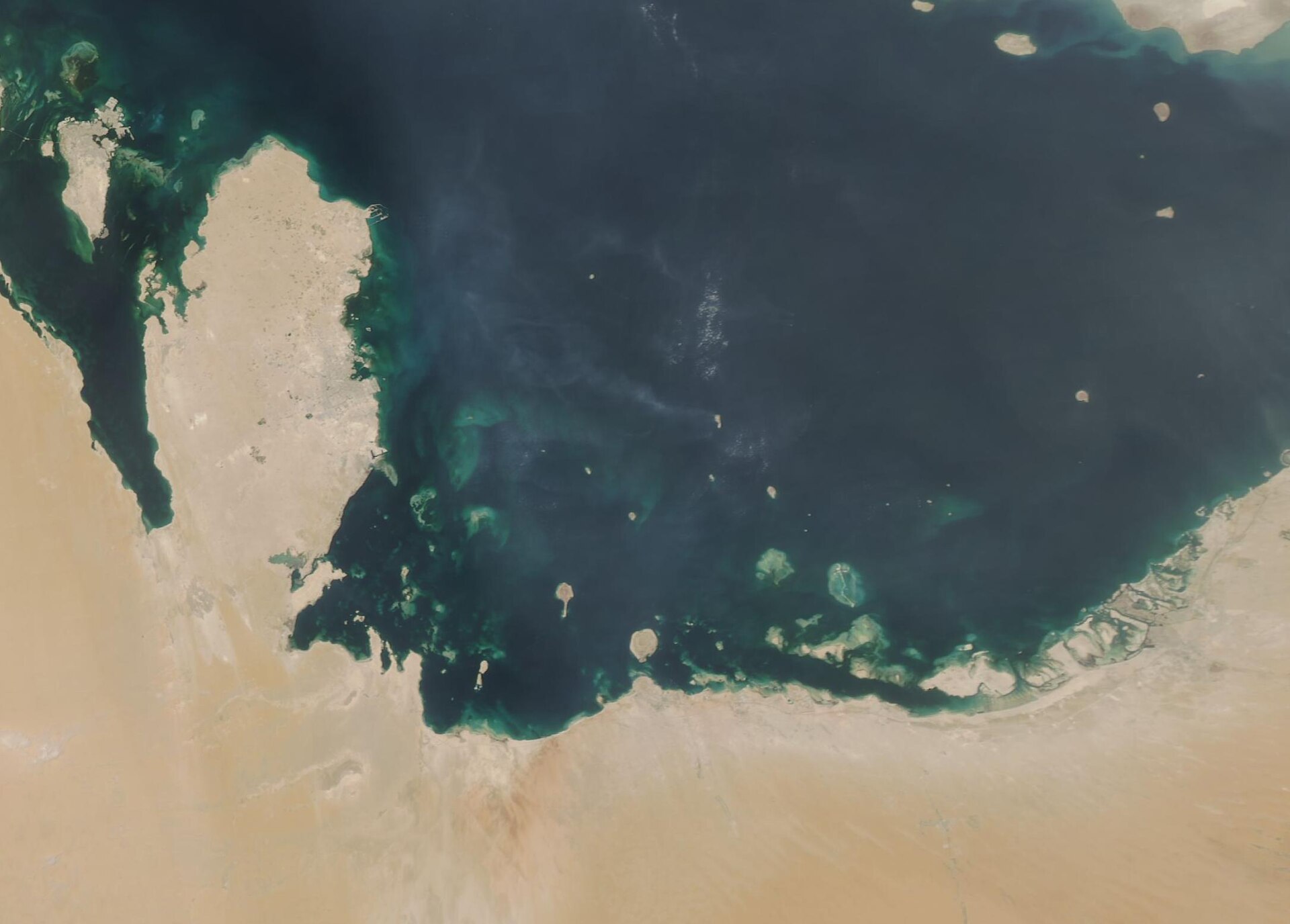
The Qatar strike was the most operationally distinctive: a drone hit a cargo vessel in Qatari territorial waters roughly 23 nautical miles northeast of Mesaieed port — approximately 43 kilometers northeast of Doha — causing what Qatar’s Defense Ministry characterized as “a limited fire on board” that was contained before the vessel continued to port under its own power. The UK Maritime Trade Operations Centre confirmed the coordinates, placing the strike well inside Qatar’s exclusive economic zone and close enough to the country’s primary LNG export terminal to register as a pointed reminder of what Iranian reach could do to the world’s largest liquefied natural gas exporter if the intent shifted from signaling to destruction.
Zero casualties across three simultaneous attacks on three separate sovereign states is not a failure of Iranian military capability — it is a design specification. Tehran struck the UAE, Kuwait, and Qatar on the same day it submitted its ceasefire counter-proposal to Pakistan, a sequencing entirely consistent with Iran’s compellence doctrine of demonstrating military reach at the exact moment it extends a diplomatic hand, ensuring that the hand carries visible weight.
Why Did Faisal Call Araghchi Four Days Before the Strikes?
On May 6, Saudi Foreign Minister Prince Faisal bin Farhan spoke by phone with Iranian Foreign Minister Abbas Araghchi, a conversation that both Al Arabiya and Arab News confirmed was focused on “the latest regional developments and efforts to maintain the security and stability of the region.” PressTV, Iran’s English-language state broadcaster, framed the call with even warmer language, reporting that both ministers “highlight cooperation among regional countries to prevent tensions” — a characterization that positioned the exchange as collaborative rather than adversarial, as two partners managing a shared problem rather than two states on opposite sides of an active war.
Four days later, Iran struck three of Saudi Arabia’s GCC partners simultaneously, which means one of two things: either Araghchi knew the attacks were coming and used the May 6 call to insulate the Saudi-Iran bilateral channel from the fallout, or he did not know — which would confirm what Saudi Arabia’s own diplomacy has been implicitly arguing for months, that Iran’s foreign ministry and its military command operate on parallel tracks with no reliable coordination between them. Neither interpretation is reassuring, but both explain why Riyadh’s condemnation avoids naming the IRGC specifically: if the foreign ministry channel is the one Saudi Arabia believes it can work with, naming the IRGC in a condemnation statement would collapse the very distinction Riyadh has been carefully maintaining.
Al-Monitor reported in May 2026 that Faisal has been working “the phones with a frequency that would exhaust most career diplomats — speaking daily with his Iranian counterpart, coordinating defence postures with five GCC foreign ministers.” The May 6 call was not an isolated event but part of a sustained rhythm of engagement that the May 10 strikes interrupted without breaking, and the May 11 condemnation was crafted to ensure it stays unbroken. The previous documented Faisal-Araghchi call came on April 13, the day the US naval blockade of Iranian ports took effect — suggesting that Riyadh treats every major escalation as an occasion to check the diplomatic line rather than cut it.
From Article 51 to “Diplomatic Solutions”
The rhetorical distance between March 26 and May 11 is the clearest measure of where Saudi Arabia’s wartime posture has actually traveled. On March 26, Riyadh joined five Arab states in a joint declaration to the United Nations formally invoking Article 51 — the legal foundation for collective self-defense under international law, the same provision the United States cited after September 11 and that NATO has invoked exactly once in its history. The declaration named Iran, cited specific attacks, and asserted the right of all signatories to take measures necessary to defend their sovereignty, a legal framework that explicitly opened the door to military response.
Seven weeks later, after Iran struck three of the six states that signed that declaration, the Saudi MFA statement did not re-invoke Article 51, did not reference the March 26 filing, did not cite international law at all beyond a general call for respecting sovereignty, and instead stressed “the need to prioritize political and diplomatic solutions to avoid further escalation.” The GCC’s own 50th Extraordinary Ministerial Council meeting on March 1 had used substantially harder language, calling Iranian attacks “heinous” and stressing member states’ “right to respond” — formulations the May 11 text conspicuously avoids. The GCC Secretariat’s parallel Al-Budaiwi condemnation the same day shows the same pattern: “treacherous” deployed for the seventh time, Article 51 dropped entirely, a fixed lexicon absorbing an expanding toll.
That de-escalation in language is not accidental or the product of diplomatic fatigue. It reflects a strategic calculation that the Armed Conflict Location and Event Data Project captured in its 2026 assessment: “GCC states cannot change their geography and finding a modus operandi with Iran is not optional.” Saudi Arabia has moved from a posture that reserved the right to respond militarily to one that explicitly privileges diplomacy, and it has done so while Iran’s attacks on GCC states have expanded from the UAE and Bahrain in the war’s early weeks to include Kuwait and Qatar by May — a widening geographic footprint met with a narrowing rhetorical response.
Does the Condemnation Signal Solidarity or Stage Management?
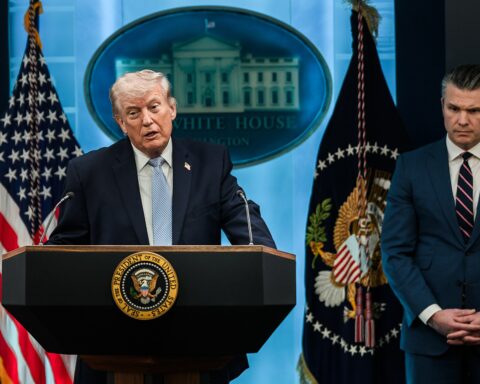
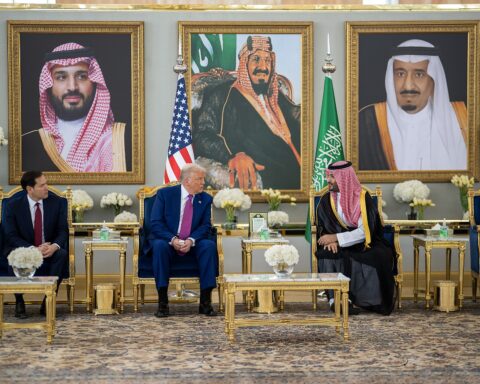
Trump arrives in Riyadh on May 13 for a summit at the Diriyah Forum that carries $142 billion in defense agreements — described by the White House as the largest in US history — a $600 billion Saudi investment pledge in the American economy, and the designation of Saudi Arabia as a Major Non-NATO Ally — the most consequential US-Saudi bilateral package since the 2017 Riyadh summit that opened Trump’s first term. The May 11 condemnation lands precisely in the diplomatic window where Riyadh needs to demonstrate GCC cohesion for an American president who views Gulf solidarity as a prerequisite for his own Iran strategy, while simultaneously avoiding any language that would foreclose the diplomatic track MBS has positioned himself to own.
The timing reveals the logic. The GCC Secretary-General issued a separate condemnation of the May 10 attacks on the day they occurred, May 10 — one day before Saudi Arabia’s bilateral MFA statement. Riyadh waited, drafting language that could thread between condemning Iran’s military actions and calling for diplomacy with Iran’s civilian government, between performing GCC solidarity for Washington’s benefit and preserving the back-channel that Faisal maintains with Araghchi on what Al-Monitor describes as a daily basis. The Stimson Center’s 2026 assessment noted that the war “eased the deepening rift between Saudi Arabia and the UAE, which now share anger at Tehran for attacking Gulf states despite their refusal to facilitate or support the US campaign” — but shared anger and shared strategy are different things, and Riyadh’s statement manages to express the former without committing to the latter.
The May 11 statement also serves a domestic fiscal purpose that is easy to overlook. Saudi Arabia posted a first-quarter 2026 deficit of 125.7 billion riyals ($33.5 billion), more than double the same period in 2025, according to Al Jazeera’s May 6 reporting on official Ministry of Finance data, driven by a 20 percent surge in spending — including a 26 percent increase in military expenditure — against oil revenues depressed by the effective closure of the Strait of Hormuz. Production crashed to 7.25 million barrels per day in March from 10.4 million in February, a 30 percent drop that the Yanbu bypass cannot fully compensate. In that fiscal environment, a condemnation statement that keeps every door open is not just diplomacy — it is economic survival articulated through the syntax of a foreign ministry press release.
| Date | Saudi Action | Rhetorical Intensity |
|---|---|---|
| March 1, 2026 | GCC 50th Extraordinary Ministerial Council | “Heinous” attacks; “right to respond” |
| March 21, 2026 | Expelled Iran military attaché + 4 staff | Hardest punitive measure of the war |
| March 26, 2026 | Joint declaration with 5 Arab states to UN | Article 51 invoked (collective self-defense) |
| May 6, 2026 | FM Faisal-Araghchi phone call | “Cooperation” / “preventing tensions” |
| May 11, 2026 | MFA condemnation of May 10 strikes | “Treacherous attacks” + “diplomatic solutions” |
The Saudi-Iran Channel Since March
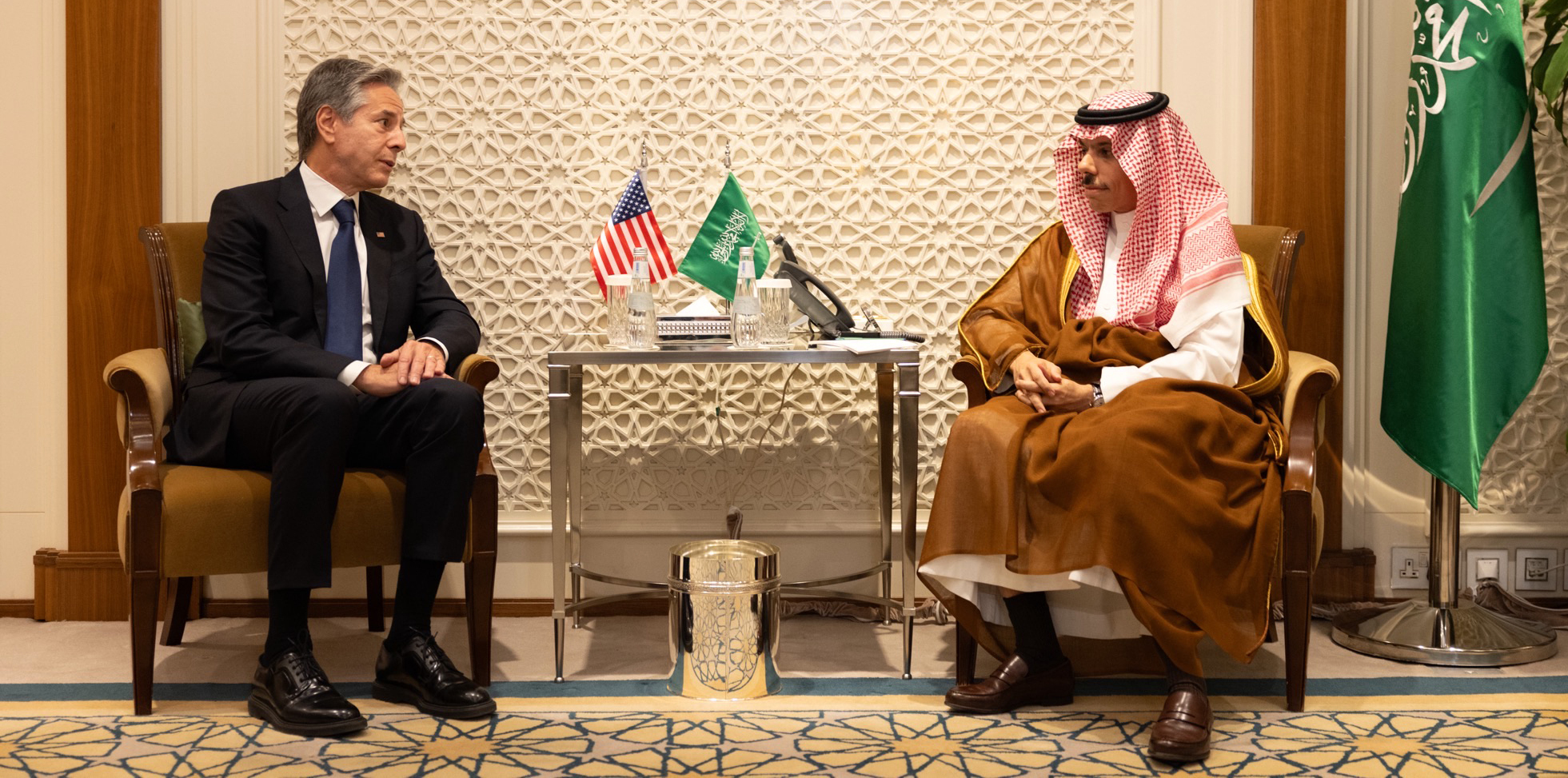
The diplomatic channel between Riyadh and Tehran has survived every military escalation of this war, a resilience that itself constitutes an argument about Saudi strategic priorities. Saudi Arabia expelled Iran’s military attaché and four embassy staff on March 21 — the most aggressive diplomatic downgrade since the war’s outbreak — but left the Iranian embassy partially open, preserving the institutional architecture of bilateral relations even while publicly punishing Iranian military conduct. The Middle East Council on Global Affairs assessed in 2026 that Gulf states have “prioritized defense and damage control, advocating for an end to the war and a return to the status quo to preserve long-term coexistence with Iran” — a framing that describes damage limitation as the primary objective, not victory.
That pattern of treating American escalation as an occasion for Saudi-Iranian diplomacy — rather than a signal to align behind Washington’s military posture — extends to Saudi Arabia’s operational choices. The May 4-5 suspension of US base and airspace access, which forced Trump to pause Project Freedom, confirmed that Riyadh’s veto power over American operations in the Gulf is not theoretical but operational. Prince Faisal’s March 19 warning that “patience in the Gulf is not unlimited” was directed not only at Tehran but at Washington, a statement calibrated to pressure both the country attacking GCC states and the country whose response to those attacks risks provoking more of them.
The May 11 condemnation sits at the intersection of all these pressures. Arab Center DC assessed in 2026 that GCC states are “rethinking responses to unwanted consequences” of the Iran war, positioning themselves to protect “their sovereignty, security and territorial integrity” through UN channels rather than military escalation — a posture that explains why Riyadh’s condemnation calls for diplomacy in the same paragraph that it condemns an act of war, and why the fiercest language in the statement is reserved not for Iran’s military operations but for “any attempts to close the Strait of Hormuz or disrupt international shipping lanes,” the threat that strikes directly at Saudi Arabia’s economic survival rather than its treaty obligations.
Frequently Asked Questions
Did Iran claim responsibility for the May 10 drone strikes?
No. As of May 11, Iran has not publicly claimed responsibility for the simultaneous attacks on the UAE, Kuwait, and Qatar, a silence consistent with Tehran’s pattern throughout the war of allowing state media to report on strikes without issuing formal military communiqués. Fortune, the Washington Post, and the Times of Israel all noted the absence of a claim. Iran’s ceasefire counter-proposal, submitted to Pakistani mediators on the same day as the attacks, demands an end to hostilities “on all fronts” including Lebanon, recognition of Hormuz sovereignty, compensation for war damages, and the release of frozen assets — terms Trump rejected within hours.
Could the May 11 condemnation trigger new GCC collective action against Iran?
Unlikely in the near term. The GCC’s collective self-defense framework requires consensus among all six members, and Qatar and Kuwait — two of the three states struck on May 10 — have maintained separate diplomatic tracks with Tehran throughout the war. The UAE’s parallel bilateral channel with Iran, documented by the Middle East Council on Global Affairs, further limits the conditions under which GCC members would move from shared outrage to shared military response. Saudi Arabia’s statement explicitly prioritized “diplomatic solutions,” signaling that Riyadh is not currently seeking to trigger collective GCC enforcement action.
What is at stake during Trump’s May 13 Riyadh visit?
The Diriyah Forum summit carries the defense and investment packages announced ahead of Trump’s arrival alongside a formal Strategic Defense Agreement and the Major Non-NATO Ally designation — the most consequential US-Saudi bilateral package since 2017. Elon Musk and Sam Altman are among the attendees. The summit arrives two days after the MFA condemnation and six days after Saudi Arabia suspended US base access, which means Trump is arriving in a capital that just publicly condemned his adversary while privately constraining his ability to fight that adversary — a diplomatic configuration that will test both leaders’ capacity for productive contradiction.
Is the Saudi-Iran diplomatic channel still active?
All available evidence says yes. Al-Monitor reported in May 2026 that Prince Faisal speaks with Araghchi “daily,” a characterization supported by the documented calls on April 13 (the day the US blockade began) and May 6 (four days before the strikes). PressTV’s framing of the May 6 call as emphasizing “cooperation among regional countries to prevent tensions” suggests Iran’s state media apparatus also treats the channel as operational and worth protecting. The Iranian embassy in Riyadh remains partially open despite the March expulsion of five staff members, preserving the institutional infrastructure for bilateral communication.
What does Iran’s ceasefire counter-proposal submitted on May 10 actually demand?
Iran submitted its counter-proposal to Pakistani mediators on the same day as the strikes. It demands an end to hostilities “on all fronts” including Lebanon, formal recognition of Iranian sovereignty over the Strait of Hormuz, compensation for war damages, and the release of frozen assets. Trump rejected the terms on Truth Social within hours as “TOTALLY UNACCEPTABLE.” The simultaneous submission of a ceasefire proposal and execution of strikes against three GCC states reflects Iran’s compellence doctrine: the diplomatic hand carries more weight if it is visibly backed by a military fist.
That fist was not only in the air. On May 12, Kuwait disclosed that it had arrested four IRGC officers who physically landed on Bubiyan Island on May 1 — the first confirmed armed IRGC incursion onto GCC sovereign territory. The clandestine ground operation and the May 10 drone strikes are structurally connected: both express Iran’s compellence logic, one through publicly claimed kinetic action, the other through covert military presence held in reserve.