MUSCAT — Four days before Donald Trump lands in Riyadh to sign a civil nuclear energy deal that does not expressly forbid Saudi uranium enrichment, Iran’s foreign minister tabled a proposal in Muscat that would force every Arab state in the room to answer the one question Washington has spent eighteen months avoiding: if Saudi Arabia is allowed to enrich, on what legal basis is Iran prohibited from doing so? Abbas Araghchi’s regional nuclear-enrichment consortium — a joint venture pairing Iranian centrifuge technology with Arab financing, Omani hosting, and American “participation” — is not a concession offered from weakness but a sovereignty trap engineered to detonate at the precise moment the US-Saudi 123 Agreement is most politically exposed.
The consortium idea is thirteen years old, first published by former Iranian nuclear negotiator Seyed Hossein Mousavian and Princeton physicist Frank von Hippel in 2013, refined in a full Princeton group paper in June 2025, and now formally introduced at Muscat Round 4 on May 11, 2026. Steve Witkoff’s response — denying it was under “formal discussion” rather than rejecting it outright — tells you everything about how dangerous Washington considers the framing. A hard rejection would require the administration to publicly articulate why enrichment is acceptable for Saudi Arabia and impermissible for Iran, a distinction that cannot survive a single reading of the 123 Agreement draft text currently before Congress.
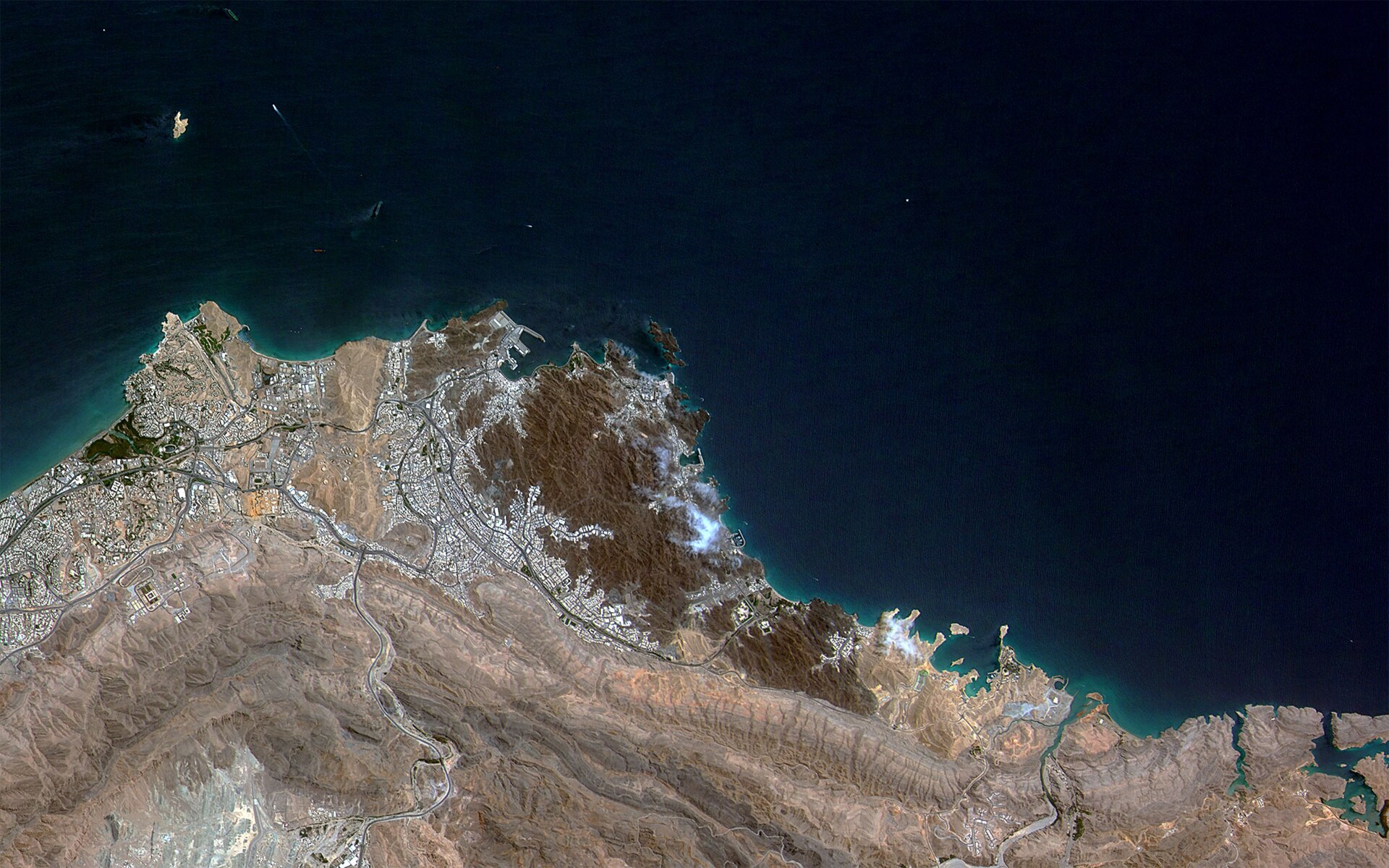
Table of Contents
- What Is Iran’s Regional Enrichment Consortium Proposal?
- How Does the Consortium Trap Saudi Arabia Before Trump’s Riyadh Visit?
- Why Does the US-Saudi 123 Agreement Leave the Door Open for Enrichment?
- The Witkoff Formulation: Denial Without Rejection
- What Can the IAEA Actually Verify — and What Can It Not?
- Rubio’s Gold Standard Reversal
- Three Doors, All Trapped
- The Authorization Ceiling Meets the Enrichment Floor
- Frequently Asked Questions
What Is Iran’s Regional Enrichment Consortium Proposal?
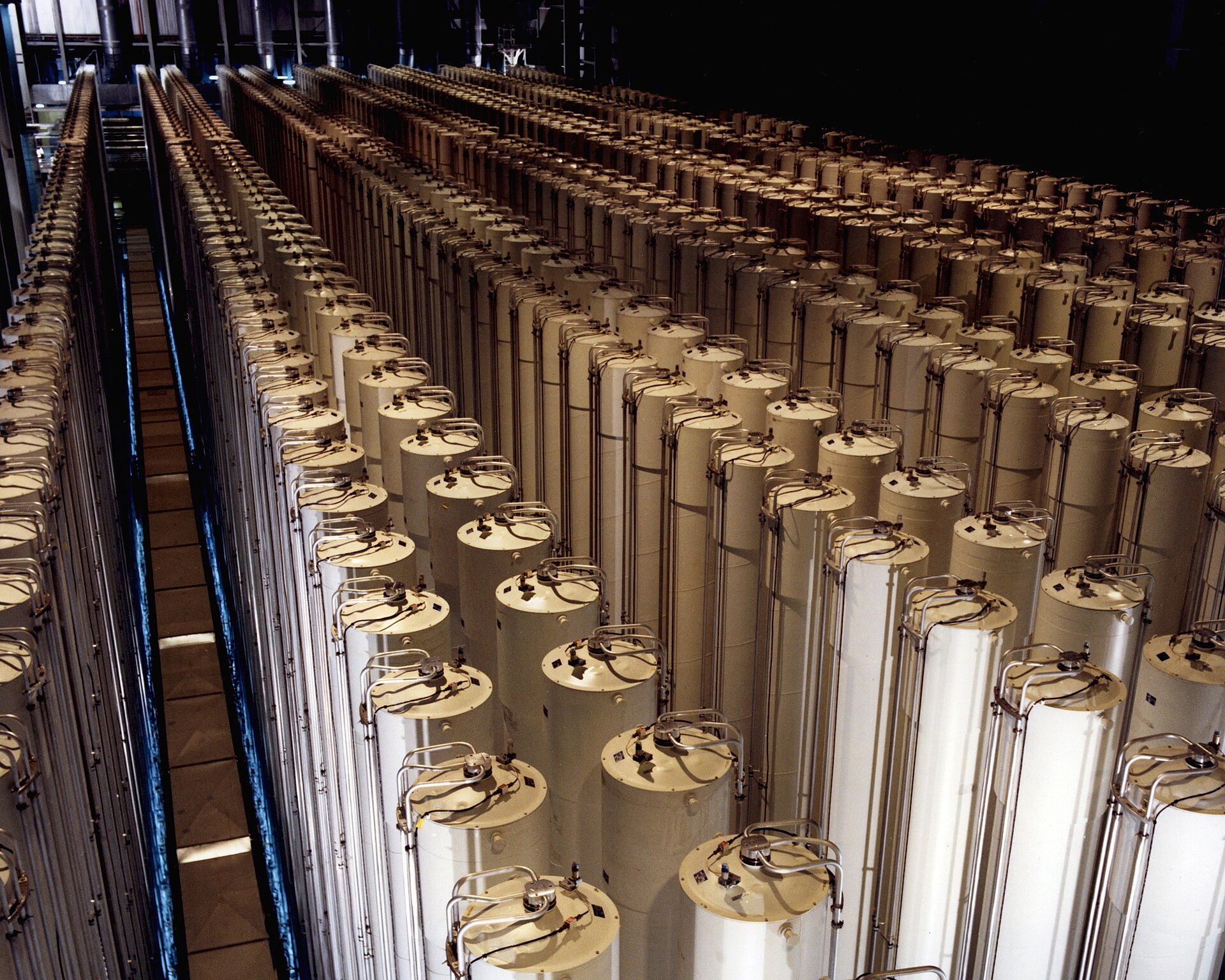
Iran’s consortium proposal, formally presented by Araghchi at Muscat Round 4, envisions a joint nuclear-enrichment facility in which Iran enriches uranium on Iranian soil under regional and IAEA oversight, with permanent on-site representation from Saudi Arabia, the UAE, and potentially the United States. Centrifuge components would be manufactured in Iran but assembled elsewhere; Iranian technicians would operate the facility. Oman is the leading candidate to host the enrichment plant, Saudi Arabia the primary financier and customer, and the UAE the administrative headquarters. In a second stage, Iran gains access to enriched material but halts independent enrichment — a formulation that preserves Iranian technical capacity while wrapping it in multilateral legitimacy.
The structural model draws explicitly from URENCO, the European enrichment joint venture shared among the United Kingdom, Germany, and the Netherlands, which has operated without proliferation incident for decades. Mousavian, the proposal’s intellectual architect, frames it as the direct answer to what he calls American “discrimination” against Iran: “Denying Iran this right means subjecting it to discrimination as the only member state deprived of such a right. This constitutes a national humiliation.” The word “humiliation” is doing strategic work — it anchors the consortium not in technical nonproliferation language but in the sovereignty vocabulary that resonates across the Global South, where the NPT is already viewed as a two-tier system designed to preserve Western nuclear monopoly.
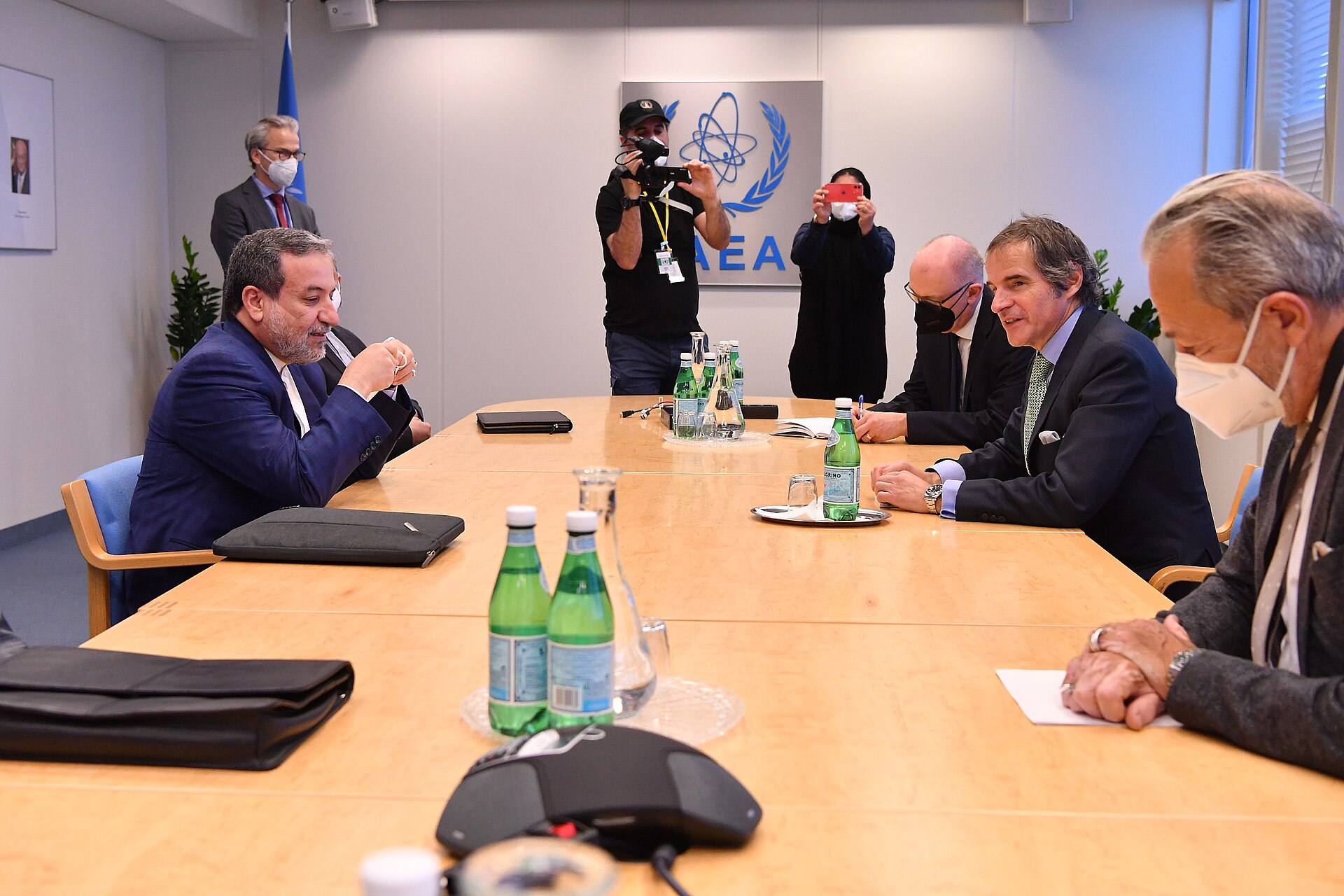
Omani Foreign Minister Badr al-Busaidi, who shuttled between the Iranian and American delegations for more than three hours on May 11, described the talks as having produced “useful and original ideas reflecting a shared wish to reach an honorable agreement.” That formulation — “useful and original ideas” — is diplomatically precise: it gives Witkoff cover to call the consortium unofficial while allowing Iran to legitimately claim it was tabled. Both readings are technically correct, which is itself a measure of how carefully the trap was constructed.
What the consortium does not address is the 440.9 kilograms of uranium enriched to 60% U-235 currently stored in underground tunnels at Isfahan, material that the IAEA has been unable to verify since Iran terminated all inspector access on February 28, 2026. The consortium is forward-looking by design — it proposes a framework for future enrichment while leaving the existing stockpile, enough to produce multiple weapons with approximately ten days of further enrichment using IR-6 centrifuges, entirely outside the conversation.
The Middle East briefing 3,000+ readers start their day with.
One email. Every weekday morning. Free.
How Does the Consortium Trap Saudi Arabia Before Trump’s Riyadh Visit?
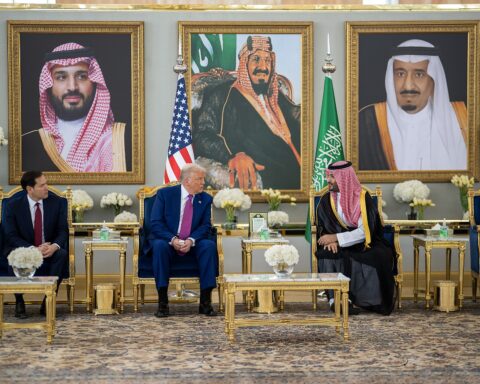
The timing is the mechanism. Trump arrived in the Gulf this week carrying a $142 billion defense sales agreement — the largest in US history — and a Joint Declaration on the Completion of Negotiations on Civil Nuclear Energy Cooperation, described by the White House as a “decades-long, multi-billion-dollar nuclear energy partnership” with Saudi Arabia. The nuclear deal was the centerpiece, the proof that MBS’s wartime loyalty to Washington had earned a concrete strategic reward. Araghchi tabled the consortium at Muscat on May 11, four days before Trump stood on stage in Riyadh to announce that partnership. The sequencing was not coincidental; it was operational.
Before and after each Muscat round, Araghchi made regional tours that included Riyadh, Doha, and Abu Dhabi — not as a diplomat seeking mediation but as a recruiter building the political architecture for consortium participation. Tehran is not simply proposing a technical enrichment structure; it is actively courting the Arab partners whose participation would collapse the American position. If Saudi Arabia joins the consortium, Iranian enrichment is legitimized by Arab co-ownership, and the US argument that Iranian enrichment is uniquely dangerous becomes indistinguishable from a claim that Saudi enrichment is also uniquely dangerous — an argument the Trump administration has just spent eighteen months trying to avoid making. If Saudi Arabia refuses, Iran gets to frame itself as the regional nuclear-inclusion actor and Riyadh as the obstacle to nuclear peace, four days before Trump lands to sell MBS a bilateral enrichment deal that excludes the rest of the region.
“Denying Iran this right means subjecting it to discrimination as the only member state deprived of such a right. This constitutes a national humiliation.”
— Seyed Hossein Mousavian, former Iranian nuclear negotiator, Princeton University
The Carnegie Endowment’s May 2026 assessment captures the wager precisely: Tehran calculated that surviving the conflict would strengthen its hand more than any negotiated concession could. The consortium is the diplomatic expression of that judgment — Iran offers to share the capability it refused to surrender, at the moment Washington is least able to say no.
Why Does the US-Saudi 123 Agreement Leave the Door Open for Enrichment?
The US-Saudi 123 Agreement draft, submitted to Congress as a preliminary notification in November 2025, does not expressly forbid Saudi uranium enrichment. The declaration references “additional safeguards and verification measures” for “proliferation-sensitive areas… including enrichment” — language that treats enrichment as a subject of cooperation, not prohibition. The word “enrichment” appears in the text zero times as something Saudi Arabia must not do. It appears only as something that requires additional oversight, which is precisely the framework Iran is now proposing for itself.
This is the gap the consortium targets. The so-called “gold standard” for nuclear cooperation agreements — the model established by the UAE’s 123 Agreement, signed in 2009 — explicitly prohibits enrichment and reprocessing and requires adoption of the IAEA Additional Protocol. The UAE’s Barakah plant, four South Korean-built reactors now fully operational, imports all its fuel and has permanently foreclosed domestic enrichment. The Trump administration chose not to apply this standard to Saudi Arabia, and chose not to require Riyadh to adopt the Additional Protocol. Saudi Arabia, which holds significant domestic uranium deposits, has stated openly that it will not sign a gold-standard agreement that forecloses enrichment. MBS himself said in 2018 that “if Iran gets a nuclear weapon, Saudi Arabia will get one too” — a statement that remains operative.
Iran’s consortium proposal directly exploits the asymmetry: Washington demands zero enrichment from Iran while advancing a nuclear cooperation deal with Saudi Arabia that does not require zero enrichment from Saudi Arabia. Mousavian has argued explicitly that this “resolves the US’s contradictory stance of supporting enrichment in Saudi Arabia while denying the same to Iran.” The Arms Control Association, in an April 2026 assessment, called the zero-enrichment red line “strategically incoherent when paired with the Saudi 123 deal.” These are not fringe critiques — they describe a structural vulnerability in the American negotiating position that Iran has now chosen to weaponize at the most damaging possible moment.
The consortium pairs nuclear sovereignty with Hormuz sovereignty in Iran’s broader counteroffer at Muscat. Both are framed as permanent sovereign rights not subject to negotiation, only to management — the nuclear consortium is the enrichment analog to PGSA.ir, the Hormuz transit authority Iran launched to institutionalize its strait control with multilateral cover. You do not eliminate Iran’s authority; you wrap it in a joint venture and dare Washington to object.
The Witkoff Formulation: Denial Without Rejection
Steve Witkoff’s public position on Iranian enrichment is unambiguous in isolation: “Enrichment enables weaponization… We cannot allow even 1 percent of an enrichment capability.” But his response to the consortium proposal at Muscat was not a rejection — it was a denial of formal status. Witkoff stated that the consortium was not under “formal discussion,” a formulation that is substantively different from saying the United States rejects it. Araghchi tabled it; Witkoff declined to acknowledge the tabling. The proposal exists in a diplomatic Schrödinger state — simultaneously on and off the table depending on which delegation you ask.
This denial-not-rejection behavior reveals internal White House awareness of the trap. A hard rejection would generate a headline — “US rejects Iran’s offer to share enrichment with Arab partners” — that plays directly into Tehran’s discrimination narrative at the exact moment Trump is in Riyadh signing an enrichment-permissive deal with MBS. The softer formulation — “not formally under discussion” — buys time without creating a quotable rejection that Iran can weaponize. But it also means the consortium remains alive, available for Araghchi to reference in every subsequent regional tour, every press conference, every meeting with the Omani foreign minister who has already validated it as “useful and original.”
The central unresolved technical issue at Muscat remains the enrichment moratorium duration: Iran proposed five years, the US demands twenty, and analyst estimates cluster at twelve to fifteen years as a potential landing zone. The consortium proposal does not directly address the moratorium — it offers something more dangerous to the American position, which is a permanent structural alternative to a moratorium. Why accept a time-limited freeze on enrichment when you can join a consortium that legitimizes enrichment in perpetuity? The consortium is not a compromise; it is a bid to make the moratorium debate irrelevant by reframing the question entirely.
Responsible Statecraft has already called zero enrichment a “fantasy” that “will lead us to war,” arguing the consortium is “the only realistic off-ramp.” Whether or not that assessment is correct, the fact that serious Western policy voices are making it means Iran’s framing has already achieved partial penetration in the discourse. The consortium does not need to be accepted to succeed — it needs only to make zero enrichment look unreasonable.
What Can the IAEA Actually Verify — and What Can It Not?
IAEA Director General Rafael Grossi confirmed on April 29, 2026, that the bulk of Iran’s highly enriched uranium stockpile — 440.9 kilograms at 60% U-235 — is “almost certainly still at the Isfahan site,” stored in tunnels in approximately eighteen blue containers moved there by truck on June 9, 2025, the day before Operation Midnight Hammer began. The IAEA cannot verify the current status of this material; all inspector access was terminated on February 28, 2026, with cameras disabled and seals removed. Grossi’s formulation — “almost certainly still” and “likely” — is the language of informed speculation, not verification.
Former senior US intelligence analyst Eric Brewer told Reuters in May 2026 that “Iran still possesses all of its nuclear material, as far as we know. That material is probably located in deeply buried underground sites where US munitions can’t penetrate.” The US intelligence assessment of Iran’s breakout timeline — approximately one year from zero, assuming reconstitution from scratch — remains unchanged despite two months of war. But that assessment assumes reconstitution from zero; the existing stockpile at Isfahan, if further enriched from 60% to weapons-grade 90% using approximately 200 IR-6 centrifuges, could produce enough material for a weapon in roughly ten days.
The consortium proposal is elegantly silent on this stockpile. It addresses future enrichment — who enriches, where, under what oversight — while leaving the existing 440.9 kilograms in Iranian custody, in tunnels the IAEA cannot access and US munitions cannot reach. No Iranian authority has agreed to an HEU transfer without a return clause; Iran’s foreign ministry has stated that uranium “will under no circumstances be transferred anywhere.” The consortium sidesteps this by design: future enrichment is collectively owned, but the material that actually matters for breakout remains sovereign Iranian property in sovereign Iranian tunnels. The Washington Institute for Near East Policy captured the core problem: “The fundamental verification challenge does not disappear simply because Arab states are co-owners. Iran would still control the centrifuge technology and the feedstock.”
Rubio’s Gold Standard Reversal
Marco Rubio, as a senator, was among the leading voices insisting that any 123 agreement with Saudi Arabia must meet the gold standard — the UAE model of explicit enrichment and reprocessing prohibition plus Additional Protocol adoption. Senators James Risch and Jeanne Shaheen stated independently, immediately after the Trump administration announced the Saudi framework in November 2025, that any nuclear cooperation agreement with Saudi Arabia “must meet the gold standard.” Rubio, now serving as Secretary of State, is overseeing a deal that meets neither requirement. The 123 Agreement draft does not expressly forbid enrichment, and the Trump administration opted not to require Saudi Arabia to adopt the Additional Protocol.
This reversal is not merely a matter of domestic political hypocrisy — it is a structural gift to Iran’s consortium argument. Tehran does not need to construct the discrimination case from scratch; it can simply quote Rubio against Rubio. If the gold standard was essential for Saudi Arabia when Rubio was a senator, why is it dispensable now that Rubio is the chief diplomat? The answer — that geopolitical circumstances changed, that MBS’s wartime cooperation earned concessions, that Saudi Arabia is a fundamentally different proliferation risk than Iran — may be substantively correct but is rhetorically indefensible in the NPT framework, where all non-weapons states theoretically hold identical rights under Article IV.
The snap-back mechanism that once gave Western powers coercive leverage over Iran’s nuclear program is already spent. The E3 triggered it on August 28, 2025; sanctions were reimposed September 27-28, 2025; the mechanism expired permanently on October 18, 2025. Any future pressure tool requires UN Security Council action, which Russia and China will veto. This means the consortium proposal arrives at a moment of maximum leverage for Iran: the old enforcement architecture is gone, the new one does not exist, and the American negotiating position contains an enrichment-shaped hole that Tehran has just publicly identified.
“Tehran decided it was better to fight while holding firm on its enrichment red lines rather than capitulate, wagering that Washington had underestimated it and that surviving the conflict would strengthen its hand.”
— Jane Darby Menton and Mohammad Ayatollahi Tabaar, Carnegie Endowment, May 2026
Three Doors, All Trapped
The consortium creates a trilemma with no clean exit for Washington or Riyadh, and each door leads to a version of the outcome Tehran wants. Door one: Arab states join the consortium, and Iranian enrichment is legitimized by co-ownership — the US position that Iranian enrichment is uniquely dangerous collapses, because it becomes functionally identical to the Saudi enrichment that Washington is simultaneously blessing. Door two: Arab states refuse, and Iran becomes the actor that offered partnership while Riyadh becomes the obstacle to regional nuclear peace, a framing that is devastatingly effective four days before Trump arrives to sell a bilateral enrichment deal that excludes the rest of the region.
Door three is the one Witkoff is currently trying to hold open: reject the consortium while advancing the Saudi 123 deal, and Iran’s NPT discrimination argument achieves its maximum rhetorical force at the exact moment Trump is on stage in Riyadh. The juxtaposition — zero enrichment for Iran, enrichment-permitted for Saudi Arabia — would be handed to global audiences simultaneously. This is the trap closing, and the Witkoff denial-not-rejection formulation is the sound of an administration that understands it is closing but cannot find the mechanism to stop it.
Saudi Arabia’s own position compounds the problem. Riyadh has lobbied Washington not to strike Iran’s nuclear facilities and to instead close the Witkoff-Araghchi deal — meaning Saudi Arabia simultaneously wants Iran’s nuclear capability constrained, its own enrichment rights preserved, and no military action that would render the consortium question moot. These three objectives are mutually incompatible unless the 123 Agreement explicitly forbids Saudi enrichment (which it does not) or unless Iran accepts zero enrichment voluntarily (which it will not). The consortium proposal is designed to make this incompatibility visible to everyone at once.
Iran’s broader May 10 counteroffer links Hormuz and nuclear enrichment in a single package — both declared non-negotiable in substance, both offered for institutional management in form. The dual-track structure is deliberate: you cannot resolve Hormuz without addressing enrichment, and you cannot address enrichment without confronting the 123 Agreement asymmetry. The threads are braided by design.
The Authorization Ceiling Meets the Enrichment Floor
The consortium proposal carries an additional structural problem that neither its proponents nor its critics have adequately addressed: Iran’s own authorization ceiling makes it unclear who could actually commit Tehran to the deal. President Pezeshkian, who publicly accused IRGC commanders Vahidi and Abdollahi of wrecking the Islamabad ceasefire negotiations, has zero authority over the IRGC under Article 110 of the Iranian constitution. The Supreme National Security Council, which holds formal authority over nuclear policy, is chaired by Ali Akbar Ahmadian but operationally directed by Vahidi, who carries an INTERPOL red notice for the 1994 AMIA bombing and has blocked every substantive concession since the Islamabad talks collapsed.
Khamenei’s prolonged absences from public decision-making — now spanning months — have left the authorization architecture headless at the apex. Mojtaba Khamenei has operated through audio-only channels, and no one outside the innermost IRGC circle knows whether the consortium proposal carries Supreme Leader authorization or is Araghchi freelancing with Foreign Ministry authority that SNSC commanders do not recognize. The pattern from Islamabad, where Araghchi was reportedly “inches away” from a memorandum of understanding before the IRGC-aligned delegation members torpedoed it, suggests that Araghchi’s proposals and IRGC-authorized positions remain structurally disconnected.
This means the consortium could function as a double trap — not only for Washington and Riyadh but for Araghchi himself. If Arab states engage seriously with the proposal and Iran’s own security establishment subsequently vetoes it, Tehran gets the diplomatic benefit of having offered partnership (the framing win) without the strategic cost of actually sharing enrichment capability (the sovereignty concession). The offer is more valuable as an offer than as an agreement, which may be precisely why it was tabled at Muscat rather than at the Islamabad bilateral where enforcement mechanisms were supposedly under discussion. The reason public HEU claims are so destructive to any such architecture is precisely this: Trump’s assertion that Iran verbally agreed to surrender its enriched stockpile — denied by Tehran’s Foreign Ministry within 24 hours — made the constructive ambiguity the consortium requires structurally impossible to restore.
The fourteen-point MOU framework that has emerged from successive rounds contains a provision for Iran to hand over its approximately 440 kilograms of 60%-enriched uranium as part of a phased deal, with snap IAEA inspections and an enrichment moratorium. The consortium does not replace this framework — it flanks it, offering a permanent structural alternative that makes the moratorium’s time-limited restrictions look like a worse deal for Iran than the consortium’s institutionalized enrichment. If you are Tehran, why accept a twenty-year freeze when you can propose a permanent joint venture that legitimizes your program forever?
| Parameter | US-Saudi 123 Agreement | UAE Gold Standard (2009) | Iran Consortium Proposal |
|---|---|---|---|
| Enrichment explicitly prohibited | No | Yes | No (institutionalized) |
| Reprocessing explicitly prohibited | Unspecified | Yes | Unspecified |
| IAEA Additional Protocol required | No | Yes | Regional + IAEA oversight |
| Domestic uranium use | Permitted (Saudi reserves) | Prohibited (fuel imported) | Iranian soil, Iranian technicians |
| US participation | Primary partner | Not applicable | “Potential” participant |
| Snap-back enforcement | Congressional review | Agreement terms | None specified |
Frequently Asked Questions
Has any Arab state publicly responded to Iran’s consortium proposal?
No Arab government has issued a public response as of May 11, 2026. Saudi Arabia’s silence is itself significant — Riyadh is simultaneously negotiating its own nuclear cooperation deal with Washington and cannot afford to appear either receptive to Iranian enrichment (which would alarm Congress during 123 Agreement review) or hostile to regional nuclear cooperation (which would validate Iran’s discrimination narrative). The UAE, whose Barakah plant operates under a gold-standard agreement that permanently forecloses domestic enrichment, has the strongest structural disincentive to join: participation would retroactively undermine the nonproliferation concessions Abu Dhabi made to secure its own nuclear program. Iran has explicitly identified Barakah as a potential strike target, adding a coercive dimension to the “invitation.”
Could the consortium actually work as a nonproliferation mechanism?
The URENCO model that Iran cites as precedent operates among three NATO allies with shared security commitments, mutual intelligence oversight, and no history of covert weapons programs. None of those conditions apply to a Gulf consortium. The Washington Institute for Near East Policy concluded in 2026 that co-ownership changes the political optics without changing the physical reality: Iran retains technical control of the centrifuge cascades and the feedstock that flows through them. The Princeton academics who designed the model acknowledge it requires “unprecedented transparency” from Iran — a state that terminated all IAEA access three months ago and whose enriched uranium stockpile sits in tunnels international inspectors cannot reach.
What happens to the consortium if the MOU framework collapses?
The consortium gains value for Iran whether talks succeed or fail. If the fourteen-point MOU framework produces a deal with an enrichment moratorium, Iran can argue the consortium should replace the moratorium when it expires — embedding permanent enrichment rights into the post-deal architecture. If talks collapse, the consortium becomes evidence that Iran offered a reasonable multilateral alternative and was rebuffed, strengthening Tehran’s position at the UN General Assembly and among Non-Aligned Movement states where NPT discrimination is already a consensus grievance. The proposal is designed to appreciate in diplomatic value regardless of the Muscat outcome, which is why it was tabled now rather than held in reserve.
Does the consortium address Iran’s existing HEU stockpile?
It does not, and the omission is structural rather than accidental. The 440.9 kilograms of 60%-enriched uranium at Isfahan remains entirely outside the consortium framework; Iran’s foreign ministry has stated that this material “will under no circumstances be transferred anywhere.” The consortium governs future enrichment under collective ownership while leaving the breakout-capable stockpile as sovereign Iranian property in tunnels international inspectors cannot enter. What this means in practice is that any Western government that endorses the consortium framework without separately resolving the HEU question has accepted a deal that solves the political legitimacy problem for Iran while leaving the physical breakout capability intact — a sequence of concessions with no guaranteed second step.
The Muscat talks will resume — both sides agreed to continue, and Oman’s validation of the consortium as among “useful and original ideas” ensures it will be on Araghchi’s agenda at every subsequent round, every regional tour, every press availability where a journalist asks Witkoff whether the United States supports equal treatment of NPT member states. Trump will land in Riyadh carrying a nuclear deal that does not prohibit Saudi enrichment, and somewhere in the diplomatic record of Muscat Round 4 there is now an Iranian proposal that makes that omission impossible to ignore. The trap does not require anyone to walk through the door — it requires only that everyone can see the doors exist. Why no American president can sign his way past that trap is explained in Three-Body Veto: the three independent veto-holders who block any Iran deal Trump can close.