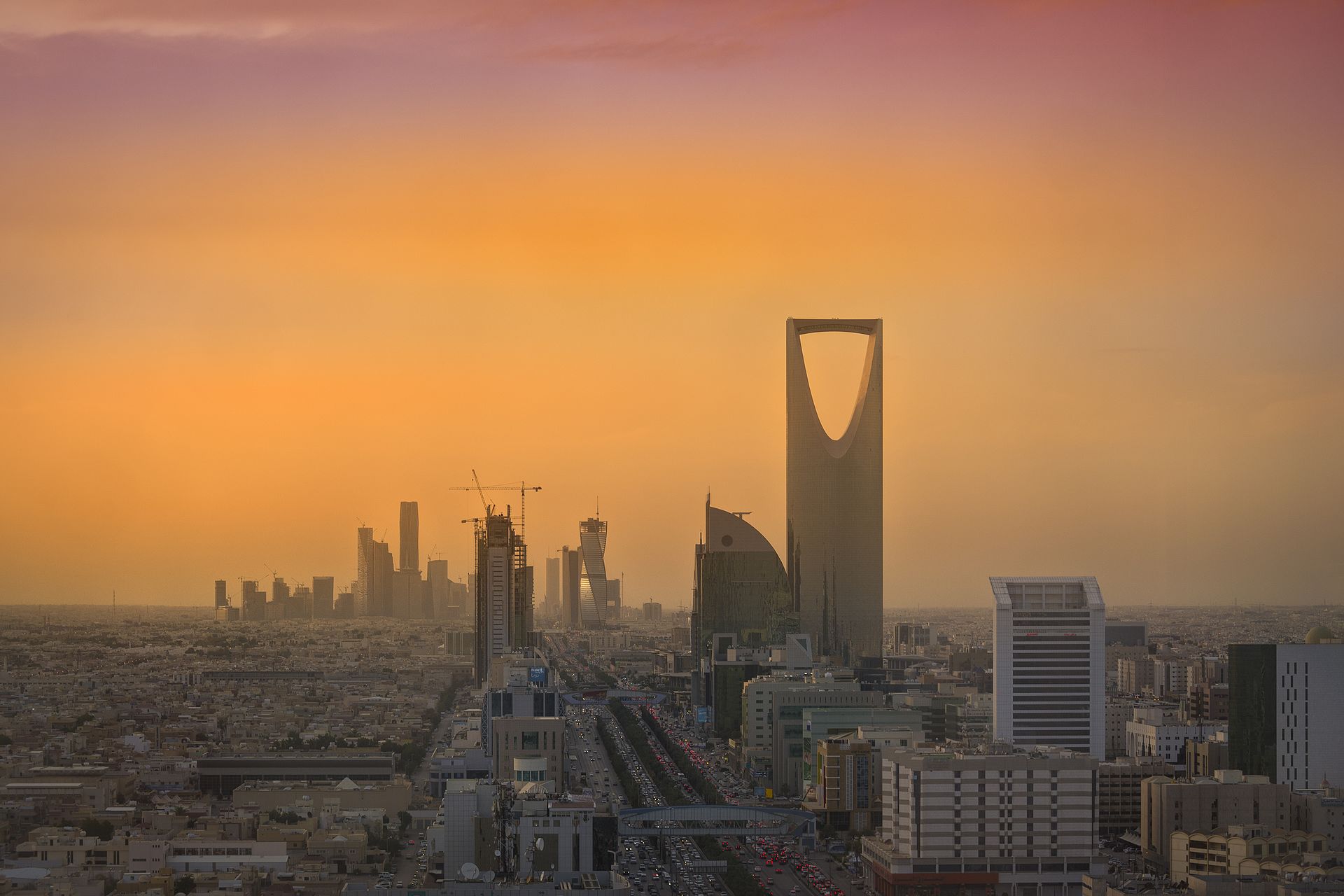

RIYADH — Saudi Arabia’s Tadawul stock exchange reopens on Tuesday after an eight-day Eid al-Fitr holiday during which the Iran war escalated more violently than at any point since hostilities began on 28 February. The TASI index closed at 10,946 on 16 March. In the days since, ballistic missiles struck Riyadh province, oil crashed 13 percent in a single session, the United States threatened to destroy Iran’s power grid, Aramco cut Asian crude supply for a second consecutive month, and the Strait of Hormuz remained effectively closed to commercial shipping. No modern stock exchange has ever reopened into a gap this wide between the last price printed and the reality waiting on the other side.
The question facing every portfolio manager with Saudi exposure is not whether the TASI will fall when the opening bell rings at 10:00 a.m. local time, but whether the market’s wartime repricing has already been priced into global proxies — or whether the eight-day information void has created a dislocation that could trigger circuit breakers, forced selling, and a liquidity crisis in the Arab world’s largest bourse. With FTSE Russell scheduled to rebalance its Saudi index constituents just twenty-four hours later on Wednesday, the collision of mechanical passive flows with wartime panic selling could produce the most volatile trading session in the exchange’s twenty-year history.
Table of Contents
- What Happened During the Eight Days the Market Was Dark?
- How Large Is the Gap Between the Last Trade and Reality?
- Why Is Aramco Simultaneously the Market’s Strongest and Weakest Stock?
- What Does the FTSE Russell Rebalancing Mean for Saudi Stocks?
- Will Foreign Investors Flee or Buy the Dip?
- The Defense Stocks Nobody Is Watching
- The Wartime Market Stress Matrix
- Can Circuit Breakers Contain the Damage?
- How Have War-Zone Markets Behaved Before?
- The PIF’s $941 Billion Dilemma
- The Contrarian Case for Buying Saudi Arabia at the Bell
- Trump’s Five-Day Clock and the Market’s Two-Day Window
- Frequently Asked Questions
What Happened During the Eight Days the Market Was Dark?
The Tadawul suspended trading at the close of business on Sunday 16 March to observe Eid al-Fitr. In the hundred and ninety-two hours between the last trade and the scheduled reopening, the Iran war entered its most dangerous phase.
On 21 March, President Donald Trump issued a forty-eight-hour ultimatum demanding Iran reopen the Strait of Hormuz or face the destruction of its power grid. Iran’s Revolutionary Guards responded by threatening to completely shut the strait and target desalination plants across the Gulf Cooperation Council states. Three ballistic missiles were detected targeting Riyadh province on 22 March, the same day Saudi air defenses intercepted sixty Iranian drones, including a concentrated barrage of thirty-eight within three hours.
Oil prices whipsawed with a violence that traders had not seen since the 2020 pandemic crash. West Texas Intermediate surged past $114 per barrel on 22 March as Trump’s deadline expired, then collapsed 13 percent in the largest single-day drop since the war began after the president postponed strikes for five days, citing productive talks that Tehran immediately denied had taken place.
The volatility was compounded by suspicious activity on prediction markets, where anonymous accounts wagered $160,000 on an Iran ceasefire before Trump’s announcement, raising questions about whether insider knowledge is now driving oil market swings.
The Middle East briefing 3,000+ readers start their day with.
One email. Every weekday morning. Free.
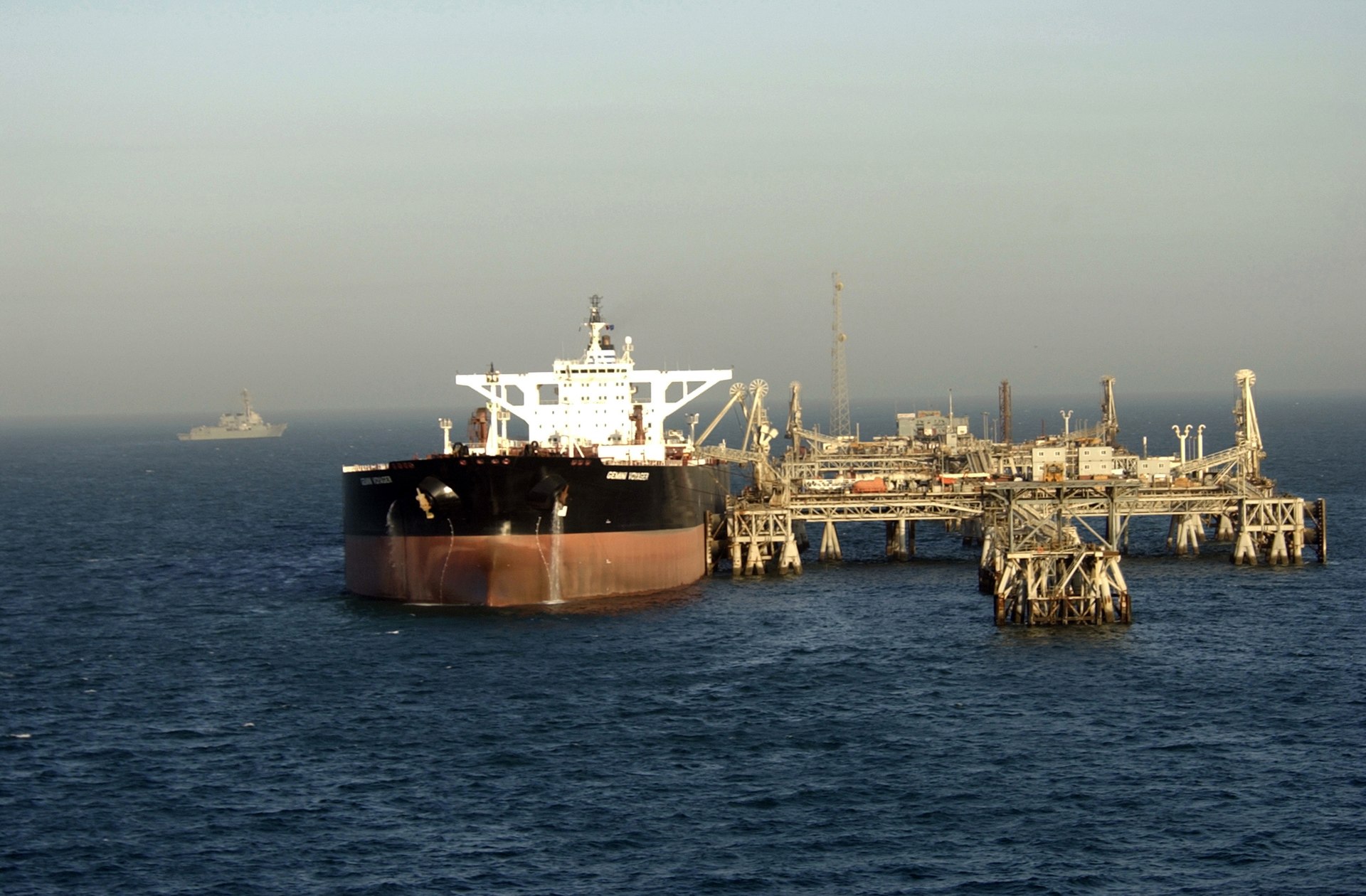
Aramco, which accounts for roughly 60 percent of the TASI’s total market capitalisation, confirmed it was cutting crude supply to Asian buyers for a second consecutive month because the closure of Hormuz had stranded the majority of its eastbound exports. The company’s only functioning export route — the East-West pipeline to the Red Sea port of Yanbu — has a maximum capacity of seven million barrels per day, less than half the twenty million barrels that typically transit the strait.
| Date | Event | Market Impact Signal |
|---|---|---|
| 17 March | Goldman Sachs warns Gulf faces worst recession in a generation | Negative — GDP downgrade |
| 18 March | Eleven killed as Iran strikes Gulf hotels, airports, and homes | Negative — civilian infrastructure |
| 19 March | Pentagon requests $200 billion for war fought from Saudi soil | Mixed — US commitment but escalation |
| 20 March | Yanbu refinery hit as war reaches the Red Sea | Negative — last export route at risk |
| 21 March | Trump issues 48-hour Hormuz ultimatum; CENTCOM destroys underground facility | Negative — extreme escalation |
| 22 March | Three ballistic missiles target Riyadh; 60 drones intercepted; oil hits $114 | Negative — capital under fire |
| 23 March | Oil crashes 13%; Trump postpones strikes 5 days; Iran denies talks | Mixed — de-escalation signal offset by Iran denial |
| 24 March | Tadawul reopens; FTSE Russell rebalancing next day | Uncertain — full repricing event |
For Saudi investors who went on holiday expecting a brief period of relative calm during the most sacred days in the Islamic calendar, the Eid break delivered the opposite. The war had not paused for prayer.
How Large Is the Gap Between the Last Trade and Reality?
The TASI closed at 10,946 on 16 March, having recovered from an initial post-war crash that took the index down 5 percent to 10,214 in the first session after hostilities began. By the close of the Eid break, the index had regained roughly half its losses — a performance that led some analysts to declare, prematurely, that Saudi stocks had won the war’s first round.
That assessment now looks dangerously optimistic. While the Tadawul was closed, global equity markets absorbed two weeks of escalation without the moderating influence of Saudi domestic investors, who account for approximately 90 percent of daily trading volume on the exchange. Asian markets, which trade in overlapping time zones and face the most direct economic exposure to Gulf energy disruption, sold off sharply. Chinese and Hong Kong indices were on track for their worst day in nearly a year by the close of 23 March.
The gap between the TASI’s closing level and the fair value implied by global market movements during the break can be estimated by tracking three proxies: the Franklin FTSE Saudi Arabia ETF (FLSA), which trades in New York; Aramco’s implied valuation derived from oil futures; and the MSCI Emerging Markets Index, which carries a Saudi weighting of approximately 3.2 percent.
All three proxies suggest the TASI is overvalued at 10,946 by between 8 and 15 percent, depending on assumptions about Aramco’s forward earnings and the duration of the Hormuz closure. A repricing to the midpoint of that range would take the index to approximately 9,850 — below the 10,000 psychological threshold and back to levels not seen since 2023.
The severity of the adjustment depends on whether the market opens with a flood of sell orders that overwhelm the limited buy-side interest likely to materialise after eight days of escalating violence, or whether Saudi institutional investors — principally the Public Investment Fund and its subsidiaries — step in as buyers of last resort to stabilise prices.
Why Is Aramco Simultaneously the Market’s Strongest and Weakest Stock?
Saudi Aramco presents the most paradoxical investment case in the history of oil markets. The company’s shares surged 13 percent year-to-date before the Eid break, reaching SAR 26.94, as the war drove oil prices to their highest levels since July 2022. Aramco’s CEO simultaneously warned of “catastrophic consequences” for the global oil market if the conflict persisted, according to CNBC.
The bull case is straightforward: with Brent crude trading near $98 and competitors unable to deliver their production — Iranian oil is off the market, Iraqi fields are under force majeure, and Kuwaiti and Emirati exports through Hormuz are stranded — Aramco holds the closest thing to a monopoly on accessible crude that the oil market has seen since the 1970s.
The bear case is equally compelling. Aramco’s operational crisis is the largest in the company’s history. Its primary export route through the Persian Gulf is closed. Its secondary route through Yanbu handles a maximum of seven million barrels per day, but the Yanbu refinery itself was hit by Iranian ordnance on 20 March, according to reports. The company declared a base dividend of $21.89 billion for the fourth quarter of 2025 and announced a $3 billion share buyback programme, but those commitments were made before the war began and before Aramco’s ability to physically deliver crude to its largest customers was severed.
| Metric | Value | War Impact |
|---|---|---|
| Market capitalisation | SAR 6.3 trillion ($1.68 trillion) | At risk if dividends cut |
| Q4 2025 base dividend | $21.89 billion | Pre-war commitment — sustainability questioned |
| Annual shareholder distributions | $85.5 billion | Requires sustained production capacity |
| Share buyback programme | $3 billion over 18 months | May be suspended |
| Year-to-date share price gain | +13% | Driven by oil price, not production |
| Export capacity via Yanbu | 7 million bpd max | Less than half of normal Gulf exports |
| Gulf export capacity | Near zero | Hormuz closed since 2 March |
The arithmetic is unforgiving. Higher oil prices increase revenue per barrel but mean nothing if the barrels cannot reach buyers. Aramco’s Q1 2026 earnings, due in May, will reveal the true cost of rerouting the world’s largest oil operation through a single pipeline system that was designed as a backup, not a primary export corridor. Morgan Stanley’s Iran War oil shock analysis has flagged the risk that Aramco’s operational constraints could force a dividend revision, which would send shockwaves through the TASI given the stock’s outsized index weight.
What Does the FTSE Russell Rebalancing Mean for Saudi Stocks?
FTSE Russell, one of the world’s most influential index providers, is scheduled to implement changes to the composition of its Saudi market constituents on Wednesday 25 March — just twenty-four hours after the Tadawul reopens, according to the Saudi Times. This is not a coincidence of timing; it is a collision of automated financial infrastructure with wartime chaos that could amplify volatility far beyond what domestic market dynamics alone would produce.
The rebalancing adjusts the weightings and membership of index constituents, triggering corresponding activity among passive and active fund managers who benchmark their portfolios against FTSE’s indices. Under normal conditions, this is a routine event that generates modest excess volume in the affected stocks. Under the conditions that will prevail on 24 and 25 March — a market reopening after an eight-day gap, extreme geopolitical uncertainty, and oil prices that moved 25 percent in both directions during the break — the rebalancing could force mechanical selling and buying into a market that lacks the liquidity to absorb it.
Saudi Arabia’s abolition of the Qualified Foreign Investor regime on 1 February 2026 — which allows foreign investors to trade directly on the Tadawul without meeting previous qualification thresholds — was expected to unlock up to $10 billion in passive inflows and increase Saudi Arabia’s weighting in global emerging-market indices from approximately 3.2 percent to 4.7 percent, according to Goldman Sachs Research. That liberalisation timeline has now been overtaken by the war. Foreign investors, who held over SAR 590 billion in Saudi equities as of the third quarter of 2025, face a choice between riding out the volatility or reducing their exposure before the rebalancing forces them into positions they did not choose.
Will Foreign Investors Flee or Buy the Dip?
The behavior of foreign capital will determine whether the Tadawul’s reopening is a controlled repricing or a disorderly rout. Foreign institutional investors typically account for only 10 percent of daily volume, but their marginal impact is disproportionate because they set the global benchmark price for Saudi equities through ETFs, American depositary receipts, and index-linked products traded in London, New York, and Hong Kong.
Three factors argue for foreign capital flight. First, the war has transformed Saudi Arabia from a stable emerging-market allocation into an active conflict zone. The U.S. Embassy in Riyadh has been issuing daily security alerts since mid-March and ordered non-emergency staff to leave on 8 March. Second, war-risk insurance for Gulf assets has effectively collapsed — P&I clubs pulled war-risk cover as early as 5 March, according to CNBC, making the economic risk of maintaining Gulf exposure prohibitively expensive for some institutional mandates. Third, Goldman Sachs has forecast that Saudi GDP could shrink by 3 percent if the war continues through April, while the International Energy Agency has warned that the Gulf energy crisis already surpasses the 1970s oil shocks.
Three factors argue for contrarian buying. First, oil at $98 per barrel generates extraordinary cash flow for the Saudi state even at reduced export volumes, providing a fiscal buffer that most war-zone economies lack. Second, the QFI abolition means that new foreign investors who had been waiting for access to the Saudi market now have an entry point at valuations 8 to 15 percent below the last traded price. Third, historical analysis by LPL Research shows that equity markets experiencing geopolitical shocks average only a 4.5 percent drawdown, with a median of just 2.9 percent, and typically stabilise within a month.
The Defense Stocks Nobody Is Watching
While the market’s attention will be fixed on Aramco, the more consequential long-term story may be unfolding in the defense sector. Saudi Arabia’s wartime procurement spree has created an industrial demand signal that did not exist three months ago.
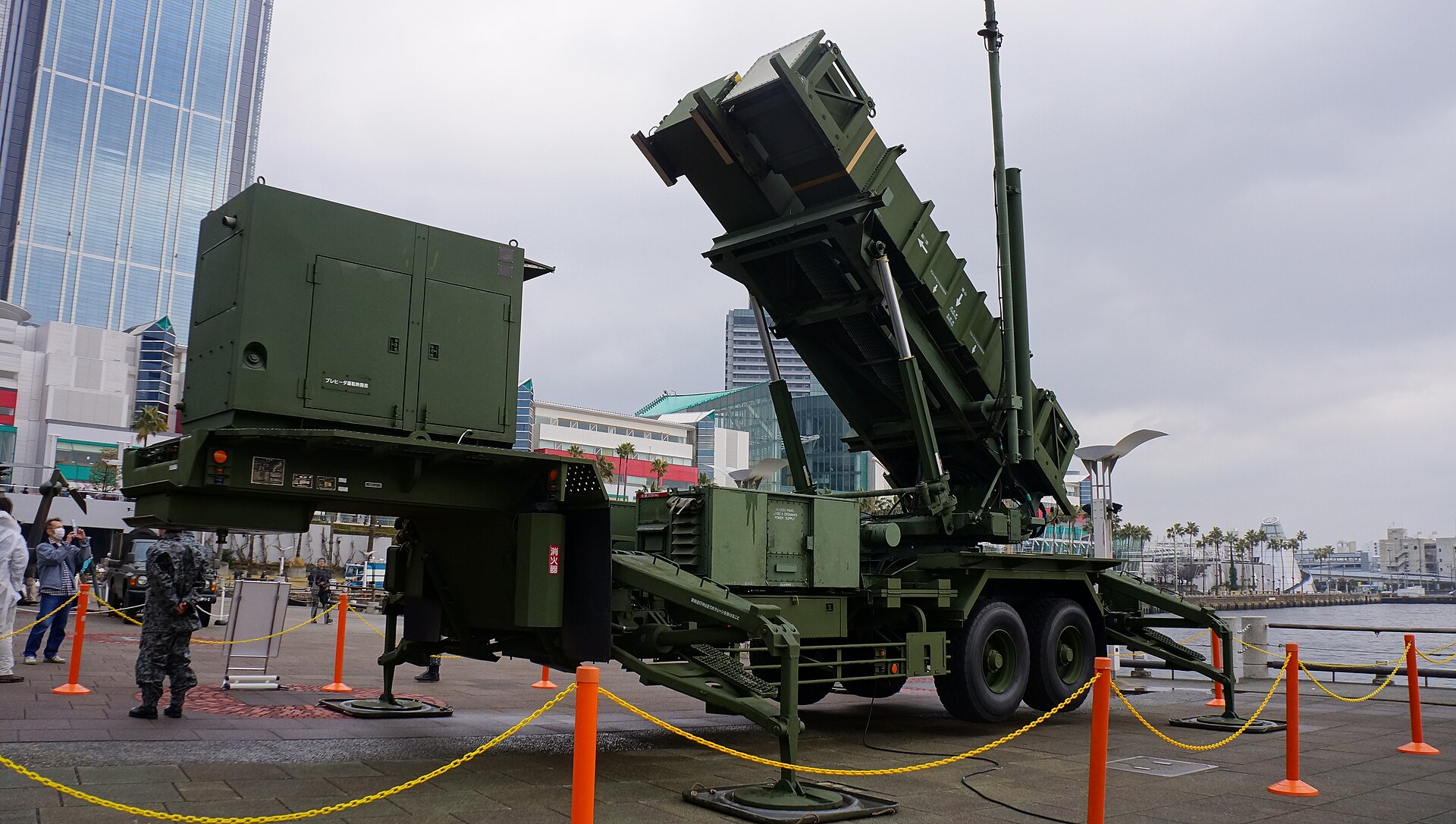
The numbers are staggering. The $142 billion Strategic Mutual Defence Agreement signed with the United States in May 2025 — described by the White House as the largest military cooperation agreement in U.S. history — is now being accelerated. The State Department approved a $9 billion sale of 730 PAC-3 missiles in January 2026, followed by a $3 billion F-15 sustainment package in February. Secretary of State Marco Rubio bypassed Congress to rush $16 billion in additional arms to the Gulf in March.
Saudi Arabia has also turned to Ukraine for air defense technology, signing a deal for interceptor missiles that cost a fraction of the $4 million to $12 million price tag of each PAC-3 unit. The Kyiv Independent reported that Riyadh and Kyiv were negotiating a separate larger deal that could be finalised within days. At the World Defense Show in Riyadh, sixty military and defence contracts worth more than SAR 33 billion (approximately $8.8 billion) were signed, with 1,486 exhibitors from eighty-nine countries, according to Middle East Online.
The Saudi Arabian Military Industries company (SAMI), a PIF subsidiary, is the primary beneficiary. SAMI’s mandate to localise 50 percent of military spending by 2030 has been given new urgency by the war’s demonstration that Saudi Arabia cannot rely on foreign supply chains for ammunition, spare parts, or interceptor missiles during an active conflict. Every interceptor fired over Riyadh is an argument for domestic production — and an argument for higher SAMI revenues. It is also an argument for buying defence stocks: with Lockheed Martin up 40 percent year-to-date and RTX surging 110 percent since 2023, Wall Street’s defence sector is recording the largest wartime windfall in a generation.
The Wartime Market Stress Matrix
Different sectors of the Tadawul face radically different risk profiles as the market reopens. A sector-by-sector analysis reveals a market that is not uniformly vulnerable but fractured along lines of war exposure, oil dependency, and domestic versus international revenue.
| Sector | War Exposure | Oil Price Sensitivity | Domestic Revenue % | Stress Level | Outlook |
|---|---|---|---|---|---|
| Energy (Aramco) | Extreme — export routes severed | Very high | 30% | Critical | High price / low volume paradox |
| Banking | High — loan defaults, capital flight | Moderate | 95% | Elevated | Depends on PIF deposits |
| Petrochemicals | Extreme — feedstock disruption | Very high | 20% | Critical | Production suspended at some plants |
| Telecoms | Low — domestic demand stable | Low | 98% | Low | Defensive — potential safe haven |
| Real Estate | High — construction frozen | Moderate | 99% | Elevated | PIF project cuts weigh on sector |
| Food & Retail | Moderate — supply chain stress | Low | 90% | Moderate | Essential spending resilient |
| Defense (SAMI) | Positive exposure | Low | 80% | Low | War accelerates procurement |
| Tourism & Entertainment | Extreme — F1 cancelled, bookings collapsed | Low | 40% | Critical | Revenue near zero during conflict |
| Insurance | Extreme — claims surge | Low | 95% | Critical | Wartime claims exceed reserves |
| Healthcare | Moderate — military demand up | Low | 95% | Low | Counter-cyclical demand |
The matrix reveals a market divided into three tiers. Defensive sectors — telecoms, healthcare, food retail, and defense — face limited war exposure and may attract flight-to-quality capital. Cyclical sectors tied to oil and petrochemicals face the paradox of high commodity prices with operational paralysis. And discretionary sectors — tourism, entertainment, real estate — face near-total revenue collapse as the Bahrain and Saudi Arabia Formula 1 races have been cancelled, international tourism has frozen, and construction contracts awarded by PIF fell 60 percent year-on-year in 2025, from $71 billion to below $30 billion, according to reporting on PIF’s spending cuts. The damage to the MICE (meetings, incentives, conferences, exhibitions) sector is accelerating: beyond the F1 cancellations, the WEF postponed its Jeddah conference, eliminating another high-profile event that was expected to channel foreign capital and executive attention toward Saudi investment opportunities.
Can Circuit Breakers Contain the Damage?
The Capital Market Authority regulates the Tadawul’s circuit-breaker mechanisms, which impose daily price limits on individual securities. If a stock moves beyond its permitted daily range — typically 10 percent in either direction for most listed equities — trading in that security is halted until the next session. There is no market-wide circuit breaker equivalent to the S&P 500’s 7/13/20 percent thresholds used by the New York Stock Exchange.
This structural difference creates a specific risk for the Tadawul’s reopening. In the United States, a market-wide halt gives all participants time to reassess and provides a coordinated reset. On the Tadawul, individual stock halts can create cascading illiquidity: if Aramco hits its limit down, traders seeking to reduce Gulf exposure will sell whatever else they can — banking stocks, petrochemicals, telecoms — driving those securities toward their own limits and creating a contagion effect across the index.
The scenario is not hypothetical. When the TASI fell 5 percent to 10,214 on the first trading day after the war began in late February, individual stocks hit limit down within the first hour. The recovery over subsequent sessions was driven primarily by PIF-linked entities buying at depressed levels. Whether the PIF has the bandwidth and the mandate to play the same role a second time — while simultaneously managing a $941 billion portfolio under wartime stress, funding defense procurement, and maintaining dividend commitments through Aramco — is the central question of the reopening.
How Have War-Zone Markets Behaved Before?
History offers imperfect but instructive parallels. The most relevant is not, as many analysts have suggested, the 1990 Gulf War’s impact on global markets, but the specific experience of regional exchanges that reopened after conflict-driven closures.
During the Iraqi invasion of Kuwait on 2 August 1990, the Kuwait Stock Exchange closed entirely and did not reopen for seven months. When it finally resumed trading in September 1992 — more than a year after liberation — the market had been fundamentally restructured. The pre-invasion index was essentially worthless. Kuwait’s economy took until 1996 to recover to pre-war levels, according to strategic recovery assessments. The parallel is imperfect because Saudi Arabia is not occupied and its economic infrastructure remains largely intact, but the precedent demonstrates that extended market closures during wartime can produce repricing events that take years to unwind.
The Israeli experience after 7 October 2023 provides a more recent and more directly comparable data point. The Tel Aviv Stock Exchange fell 6.3 percent in the first session after the Hamas attack but recovered most of its losses within weeks. The key difference, however, is that Israel’s economy is not oil-dependent, its trade routes were not severed, and its primary export sectors — technology and pharmaceuticals — were not physically disrupted by the conflict.
| Market | Event | Initial Drop | Recovery Time | Key Factor |
|---|---|---|---|---|
| Kuwait SE | Iraq invasion 1990 | Total closure | 4+ years | Economy destroyed, full rebuilding required |
| Tel Aviv SE | 7 October 2023 attack | -6.3% | ~3 weeks | Non-oil economy, trade routes intact |
| S&P 500 | 1990 Gulf War | -16.9% | 260 days | Oil shock plus domestic recession |
| S&P 500 | Average geopolitical shock | -4.5% | <30 days | Economic fundamentals matter more than event |
| Tadawul TASI | War onset (28 Feb 2026) | -5% to 10,214 | Partial by 16 March | PIF intervention, oil price surge |
The lesson from these precedents is not that markets always recover quickly — the Kuwait case proves they do not — but that recovery speed is determined by the underlying economic damage, not the violence of the initial shock. For Saudi Arabia, the critical variable is whether the Hormuz closure becomes permanent, temporary, or negotiated into some form of shared access. Trump’s offer to share the strait with Iran, reported on 23 March, suggests Washington recognises that full reopening is unlikely in the near term.
The PIF’s $941 Billion Dilemma
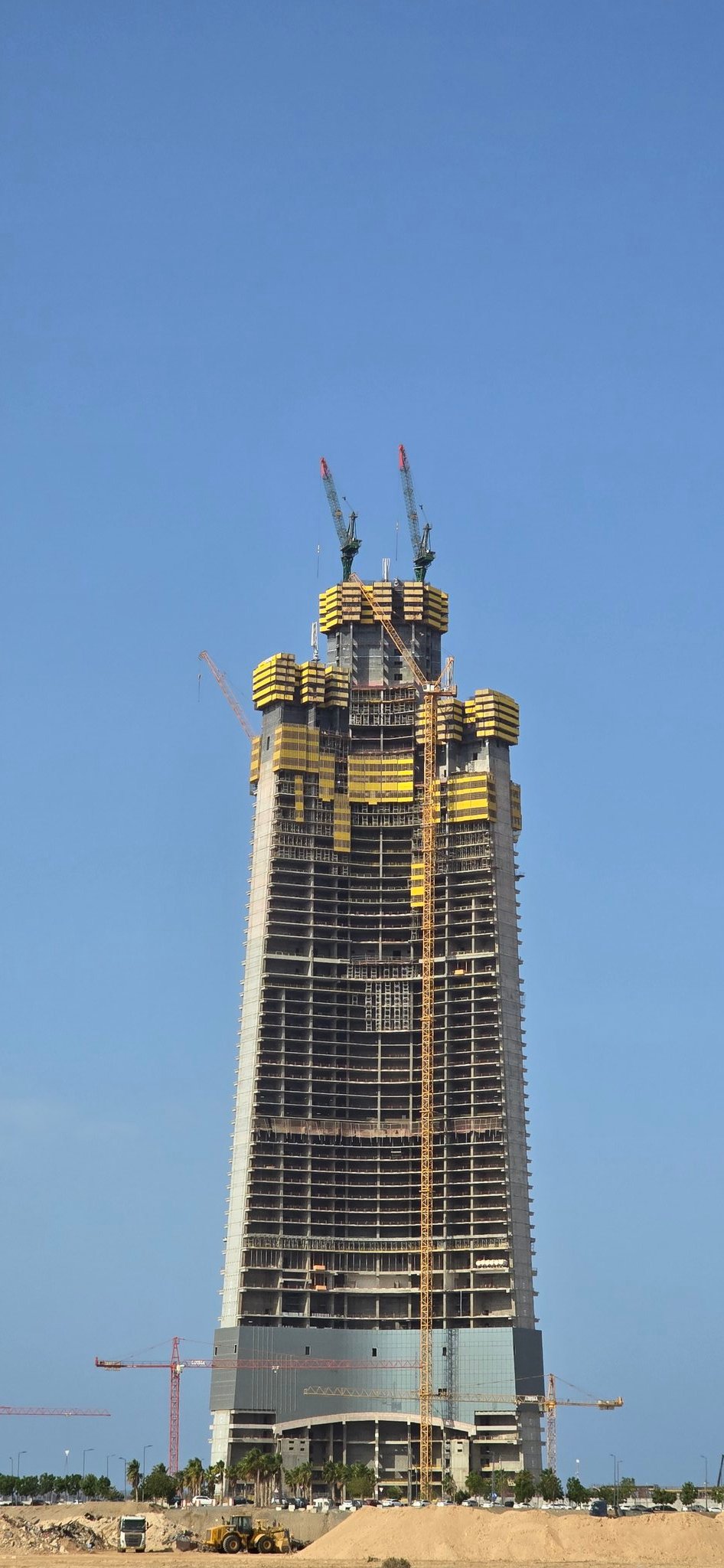
The Public Investment Fund sits at the intersection of every pressure bearing down on the Saudi market. As a $941 billion sovereign wealth fund, it is the ultimate buyer of last resort for the Tadawul. As the 98 percent owner of Aramco, it is the entity most exposed to the oil export crisis. As the sponsor of more than one hundred portfolio companies and over fifty development entities linked to giga-projects, it is the primary source of capital for the construction, tourism, entertainment, and real estate sectors that the war has frozen.
PIF’s wartime pivot has been stark. Construction contract awards fell nearly 60 percent from $71 billion in 2024 to below $30 billion in 2025, with PIF’s share of those awards dropping from 38 percent to just 14 percent, according to reporting on PIF’s strategy shift. A board meeting in December 2024 approved a minimum 20 percent reduction in spending across the portfolio, with some project budgets cut by as much as 60 percent. Governor Yasir Al Rumayyan signalled that the fund would reduce international investments and focus capital on domestic deployment.
The war has transformed this planned austerity into an emergency reallocation. PIF subsidiary SAMI is receiving accelerated funding for defense localisation. Agricultural acquisitions are being fast-tracked to secure food supplies for thirty-five million people whose shipping lanes are under fire. And the fund’s two highest-priority projects — Expo 2030 and the 2034 FIFA World Cup — have been ring-fenced as protected investment channels, according to Investment Minister Khalid Al Falih’s confirmation at the PIF Private Sector Forum in February 2026.
For the Tadawul reopening, the PIF’s dilemma is acute. If the fund deploys capital to stabilise the market — as it did during the initial post-war sell-off — it reduces its capacity to fund defense procurement, food security, and the mega-projects that underpin long-term economic diversification. If it stands aside and allows the market to find its own level, the resulting crash could destroy hundreds of billions of riyals in paper wealth, undermine consumer confidence, and trigger the kind of financial contagion that Goldman Sachs warned could shrink Saudi GDP by 3 percent.
The Contrarian Case for Buying Saudi Arabia at the Bell
Conventional wisdom holds that no rational investor buys into a war zone. The conventional wisdom is wrong — or at least incomplete. Some of the highest returns in market history have been generated by investors who bought at moments of maximum fear, and the Tadawul’s reopening may represent exactly such a moment.
The core of the contrarian argument rests on a structural asymmetry: Saudi Arabia is one of the few countries in the world that benefits financially from the very crisis that is depressing its stock market. Every day the Strait of Hormuz remains closed, the price of the oil that Saudi Arabia can still deliver — through Yanbu, through its strategic reserves, through swap agreements — rises. WTI at $98 per barrel generates approximately $360 million per day in gross revenue at Saudi Arabia’s current production rate, even at reduced export volumes. Over a year, that represents a significant fiscal surplus even under the most pessimistic export scenarios.
The second pillar of the contrarian case is valuation compression. If the TASI falls 10 to 15 percent on reopening, Saudi banking stocks — which derive 95 percent of their revenue domestically, have limited direct war exposure, and are backstopped by the Saudi Central Bank’s foreign reserves of approximately $440 billion — will trade at price-to-earnings ratios below their historical averages for the first time in three years. For value investors with a twelve-month horizon, this is a buying opportunity, not a crisis.
The third pillar is the QFI abolition. Saudi Arabia removed all foreign investor qualification requirements on 1 February 2026, opening the market to a global investor base for the first time. That reform was expected to unlock $10 billion in passive inflows and increase Saudi Arabia’s weighting in MSCI and FTSE emerging-market indices. The war has delayed those flows, not eliminated them. When the conflict ends — as all conflicts eventually do — the combination of pent-up passive demand, post-war reconstruction spending, and normalised oil exports could produce a rally that dwarfs the initial drawdown.
The risk, of course, is that the conflict does not end quickly, that Hormuz remains closed, and that the war escalates to a level that threatens Saudi Arabia’s core infrastructure. In that scenario, the contrarian trade becomes a value trap. But the historical record, as LPL Research has documented, shows that geopolitical shocks produce an average S&P 500 drawdown of just 4.5 percent with recovery in less than thirty days. Saudi Arabia’s wartime fundamentals — fiscal surplus, central bank reserves, PIF backstop, defence alliances with the United States — are stronger than those of any other country that has faced a comparable military threat while its stock market was open.
Trump’s Five-Day Clock and the Market’s Two-Day Window
The Tadawul’s reopening does not occur in a geopolitical vacuum. It coincides precisely with President Trump’s five-day postponement of strikes on Iran’s power infrastructure, announced on 23 March. Trump stated he was “holding that up” and opening the possibility for “immediate and direct contact” with Iranian leadership, according to NBC News. Tehran, in a characteristic display of parallel messaging, immediately denied that any talks had taken place.
For the Tadawul, this creates a two-day window of extreme binary risk. If progress toward de-escalation emerges by Wednesday 26 March — the date of the FTSE Russell rebalancing — the market could stabilise and the rebalancing would proceed into a recovering index. If Trump’s five-day clock expires on Friday 28 March without progress and strikes resume, the Tadawul would face a second repricing event before it has finished absorbing the first.
The market is therefore being asked to price not one unknown but two: the accumulated eight-day gap, and the forward-looking probability of either de-escalation or further escalation within the trading week. The financial warfare dimension adds a third variable: Iran’s targeting of the dollar-denominated financial system and its threats to Gulf desalination infrastructure introduce systemic risks that standard equity models were not designed to capture.
The Saudi market’s eight-day closure during the most violent phase of the Iran war has created the largest information gap in the history of Middle Eastern capital markets. What happens when the bell rings will define not just the value of Saudi equities, but the viability of war-zone financial markets as investment destinations for a generation.
Editorial analysis, March 2026
Saudi Arabia has built the Arab world’s most sophisticated capital market, attracted hundreds of billions in foreign investment, and secured inclusion in the world’s most important equity indices. On Tuesday morning, that market will discover whether sophistication and scale are enough to absorb a war.
Frequently Asked Questions
When does the Saudi Tadawul stock exchange reopen after Eid al-Fitr 2026?
The Tadawul is scheduled to resume trading on Tuesday 24 March 2026 at 10:00 a.m. local time (07:00 UTC), following an eight-day break for the Eid al-Fitr holiday. The exchange suspended equity, sukuk, and derivatives trading on 17 March. The FTSE Russell index rebalancing for Saudi constituents is scheduled for the following day, Wednesday 25 March.
What was the TASI index level before the Eid break?
The Tadawul All Share Index (TASI) closed at 10,946 points on Sunday 16 March 2026, the final trading session before the Eid al-Fitr holiday. The index had recovered from an initial post-war low of 10,214 reached in early March, gaining roughly 7 percent from the trough. Global proxy indicators suggest the fair value after the eight-day gap is between 8 and 15 percent lower than the closing level.
How does the Iran war affect Saudi Aramco’s stock price?
Aramco’s share price rose 13 percent year-to-date before the Eid break, driven by oil prices near $98 per barrel. However, the company faces an operational crisis: the Strait of Hormuz closure has severed its primary export route, forcing reliance on the East-West pipeline to Yanbu with a maximum capacity of seven million barrels per day. Aramco’s CEO has warned of catastrophic consequences for the oil market if the conflict persists, and analysts question the sustainability of the company’s $85.5 billion annual dividend commitment.
What is the FTSE Russell rebalancing and why does it matter?
FTSE Russell periodically adjusts the composition and weighting of its index constituents, including Saudi-listed stocks. The March 2026 rebalancing is scheduled for Wednesday 25 March — one day after the Tadawul reopens. Passive funds that track FTSE indices must buy and sell stocks to match the new weightings, generating forced flows that could amplify volatility in a market already adjusting to an eight-day information gap.
Will Saudi Arabia’s stock market crash when it reopens?
A significant decline is probable but not certain. Global proxy indicators suggest the TASI may be overvalued by 8 to 15 percent relative to the events that occurred during the break. However, the PIF and Saudi institutional investors stabilised the market after the initial post-war sell-off in early March, and may intervene again. The Tadawul’s individual stock circuit breakers limit daily moves to approximately 10 percent, which could contain — but also prolong — any sell-off by spreading the adjustment over multiple sessions.
How does the PIF affect the Tadawul?
The Public Investment Fund, Saudi Arabia’s $941 billion sovereign wealth fund, is the dominant force on the Tadawul. It owns approximately 98 percent of Aramco and has stakes in dozens of other listed companies. During the initial post-war sell-off, PIF-linked entities bought at depressed levels to stabilise prices. However, the fund is simultaneously managing wartime defense procurement, food security spending, and a 20 to 60 percent reduction in giga-project budgets, which may limit its capacity to support the market during the reopening.