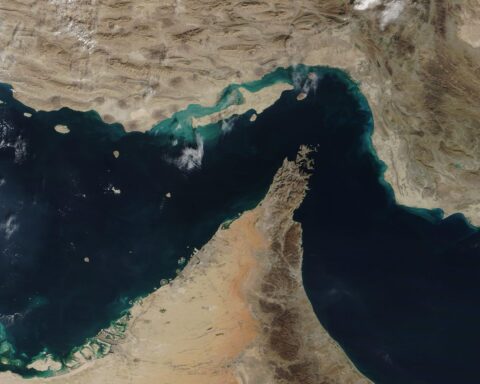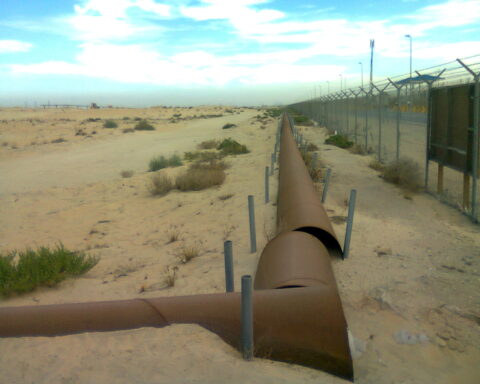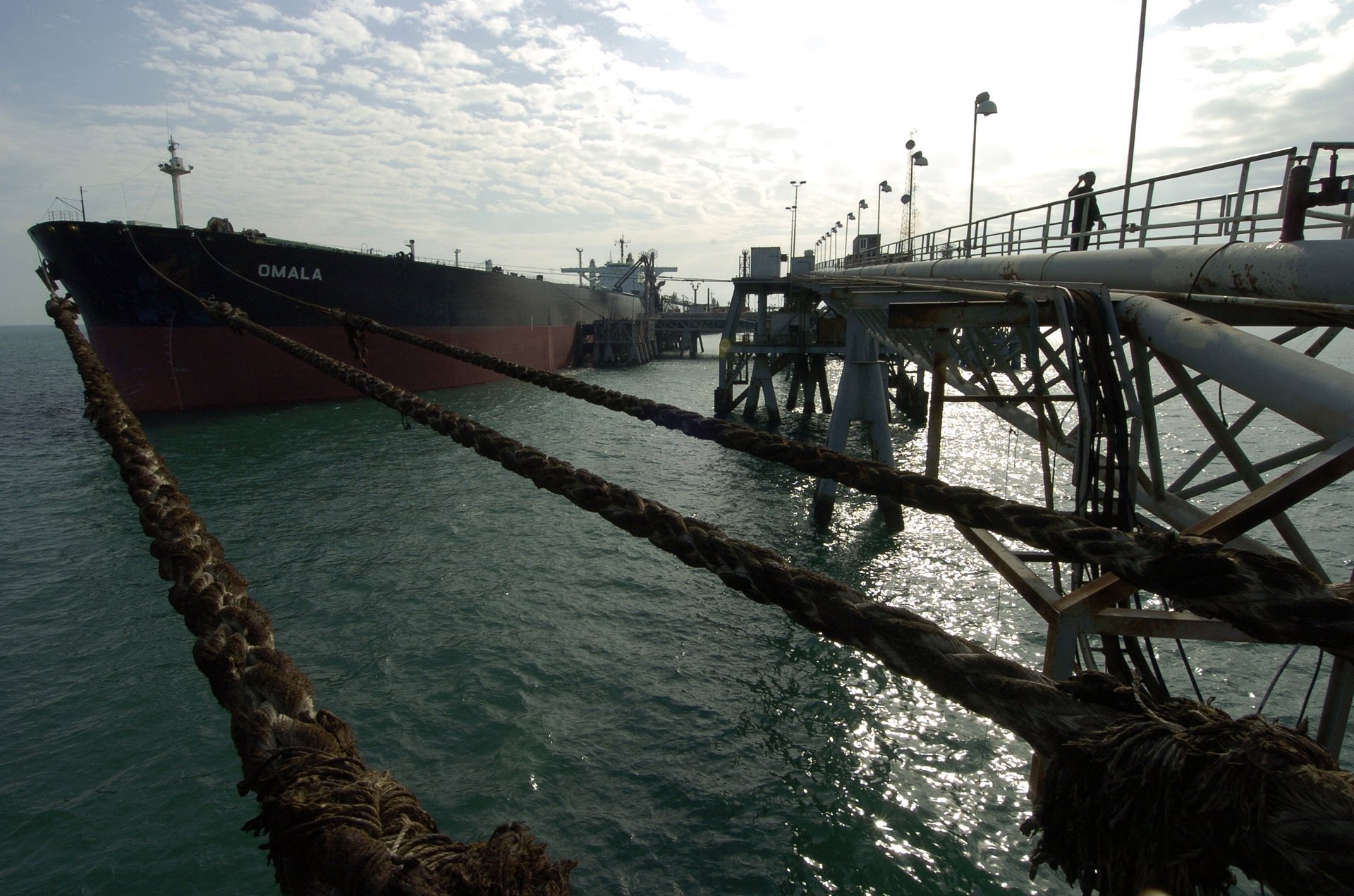

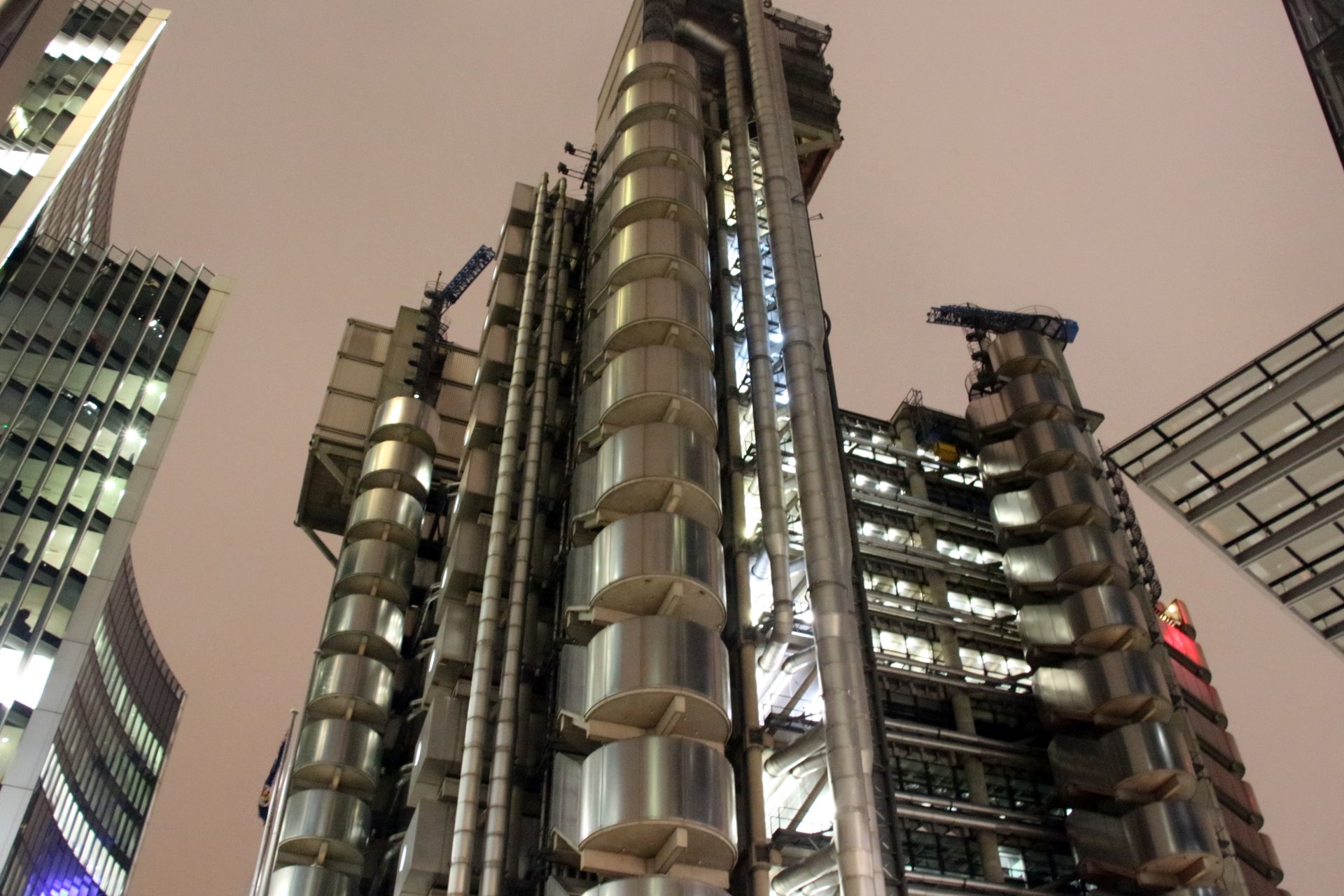
RIYADH — The most consequential weapon deployed in the Iran war is not a ballistic missile, a Shahed drone, or a Patriot interceptor. It is a seven-page circular issued from a nondescript office in the City of London. On March 3, 2026, the Lloyd’s of London Joint War Committee added the entire Persian Gulf, Gulf of Oman, and adjacent waters to its Listed Areas designation — and within seventy-two hours, all twelve members of the International Group of Protection and Indemnity Clubs cancelled war-risk coverage for vessels in the region. Transit volumes through the Strait of Hormuz collapsed by more than eighty per cent. The invisible hand of the insurance market accomplished what Iran’s navy could not: it shut down the world’s most important waterway without firing a single shot.
For Saudi Arabia, this insurance crisis represents a structural threat that will outlast the war itself. Even after a ceasefire is signed and the last missile falls, war risk premiums will remain elevated for years — potentially decades — reshaping the economics of every barrel of oil, every container of food, and every construction shipment that the Kingdom sends or receives. The war premium is not a temporary surcharge. It is the permanent repricing of Gulf trade risk, and it may prove more damaging to Vision 2030 than any Iranian drone strike.
Table of Contents
- What Is the War Risk Premium and Why Does It Matter for Saudi Arabia?
- How Did the Gulf Shipping Insurance Market Collapse in Seventy-Two Hours?
- The Numbers Behind the Invisible Blockade
- Why Did All Twelve P&I Clubs Pull Coverage Simultaneously?
- What Can the 1980s Tanker War Teach Saudi Arabia About Premium Persistence?
- The $20 Billion Plaster on a $352 Billion Wound
- How Is Saudi Arabia Rerouting Its Oil Exports?
- The Insurance Recovery Duration Model
- The Contrarian Case for Why Hormuz May Already Be Obsolete
- Is the War Premium Starving Saudi Arabia?
- What Happens to Saudi Trade After the Last Missile Falls?
- Frequently Asked Questions
What Is the War Risk Premium and Why Does It Matter for Saudi Arabia?
A war risk premium is the additional cost that maritime insurers charge to cover vessels transiting areas where armed conflict creates a material risk of damage, seizure, or total loss. Before February 28, 2026, the standard war risk premium for a vessel transiting the Strait of Hormuz ranged from 0.02 to 0.125 per cent of hull value — a manageable cost that most shipowners absorbed without adjusting freight rates. A $120 million tanker paid roughly $40,000 per transit.
Within days of the first Iranian retaliatory strikes on Gulf targets, that figure exploded. By mid-March, the typical Hormuz transit premium had risen to 2.5 per cent of hull value, according to Lloyd’s List — a surge of more than 2,000 per cent. The same $120 million tanker now faces a premium of $600,000 to $1.2 million for a single voyage, according to Euronews. Larger vessels — the Very Large Crude Carriers (VLCCs) that carry Saudi Arabia’s oil to Asia — confront bills of $7.5 million to $14 million per transit, with premiums renewed every seven days.
A comprehensive analysis of how insurers closed the Strait of Hormuz before Iran’s navy could reveals the four-layer blockade architecture that makes the financial closure far harder to reverse than the physical one.
For Saudi Arabia, these numbers translate into an existential economic challenge. The Kingdom exported 7.3 million barrels per day in February 2026, the highest level since April 2023, according to Bloomberg. At the International Energy Agency’s estimate of $8 per barrel in additional transport costs — up from $3 per barrel before the war — Saudi Arabia faces roughly $21 billion per year in elevated shipping expenses across its export portfolio. That figure does not include the cost of insuring inbound cargo shipments carrying the food, machinery, and construction materials that 35 million residents depend on.
The Middle East briefing 3,000+ readers start their day with.
One email. Every weekday morning. Free.
How Did the Gulf Shipping Insurance Market Collapse in Seventy-Two Hours?
The collapse was not gradual. It happened in three cascading waves over a single long weekend, each triggered by a different layer of the global maritime insurance architecture.
The first wave came on March 1, when major Protection and Indemnity clubs — the mutual insurers that cover shipowner liability for pollution, crew injury, and third-party damage — issued formal cancellation notices. Gard, Skuld, and NorthStandard led the withdrawal, citing the “evident tightening of reinsurers’ appetite for war-risk exposure,” as Skuld’s underwriting team stated publicly. By March 5, all twelve members of the International Group of P&I Clubs had given seventy-two-hour cancellation notices for war-risk elements of their coverage across the Persian Gulf and Gulf of Oman, according to Bloomberg.
The second wave followed immediately. With P&I coverage withdrawn, hull and machinery underwriters at Lloyd’s of London — who write 70 to 80 per cent of the world’s war risk business, according to gCaptain — repriced their own exposure. Premiums for Hormuz transit surged from under 0.125 per cent to between 1.5 and 3 per cent of hull value. For vessels linked to the United States, United Kingdom, or Israel, premiums reached 3 to 5 per cent — triple the standard war rate, according to Lloyd’s List and Business Insurance.
The third wave was the most damaging. Major container shipping lines — Maersk, MSC, CMA CGM, and Hapag-Lloyd — suspended all vessel crossings of the Strait of Hormuz. Maersk’s announcement on March 1 was unequivocal: all transits suspended “until further notice,” according to France24. CMA CGM instructed vessels already in the Gulf to “proceed to shelter.” One hundred and forty-seven container ships were sheltering inside the Persian Gulf within a week, according to Xeneta data cited by CNBC, and approximately 20,000 seafarers found themselves stranded aboard vessels that could neither proceed through the strait nor return to open water without insurance. The only vessels still moving through the chokepoint are those operating outside the rules entirely — including so-called zombie tankers sailing under the identities of scrapped ships.
The speed of the collapse stunned even veteran maritime professionals. “What was once a disruption-sensitive environment has now shifted into a persistently hostile operating zone,” said Marco Forgione of the Chartered Institute of Export and International Trade. Munro Anderson of Vessel Protect described the situation as “essentially a de facto close” of the strait — not by mines or missiles, but by the withdrawal of the financial infrastructure that makes commercial shipping possible. Iran has since added a direct financial dimension to the closure, charging ships up to $2 million to transit the strait under an IRGC-managed toll regime.
The Numbers Behind the Invisible Blockade
The scale of the insurance crisis becomes clear when measured against the physical dimensions of Gulf trade. The Strait of Hormuz normally carries roughly 20 per cent of global oil trade and 30 per cent of global seaborne fertiliser supply, according to Euronews. The insurance withdrawal did not reduce these volumes by 20 or 30 per cent. It reduced them by more than 80 per cent, according to gCaptain.
| Metric | Pre-War (Feb 2026) | During War (Mar 2026) | Change |
|---|---|---|---|
| War risk premium (% hull value) | 0.02–0.125% | 1.5–3.0% | +2,000% |
| Premium for $120M tanker (per transit) | $40,000 | $600K–$1.2M | +1,400–2,900% |
| Premium for $250M VLCC (per transit) | ~$625,000 | $7.5M–$14M | +1,100–2,140% |
| US/UK/Israeli vessel premium | 0.05–0.15% | 3–5% | +2,000–3,200% |
| Transport cost per barrel of oil | ~$3.00 | ~$11.00 | +267% |
| Shipping as % of delivered crude cost | 4% | 14% | +250% |
| Hormuz transit volumes | Normal | Down 80%+ | Near-total collapse |
| P&I clubs covering Gulf war risk | 12 of 12 | 0 of 12 | Complete withdrawal |
| Vessels trapped in Gulf | 0 | ~1,000 | — |
| Seafarers stranded | 0 | ~20,000 | — |
The dollar figures are staggering. JPMorgan energy analysts estimate that approximately 329 vessels currently operate in the Persian Gulf, each requiring hull, cargo, liability, pollution, and salvage coverage. The total insurance coverage required — and which the private market is no longer providing — amounts to roughly $352 billion, according to Insurance Journal. The estimated value of vessels trapped inside the Gulf ranges from $25 billion at the low end (Lloyd’s Market Association estimate) to more than $40 billion in worst-case scenarios.
These numbers explain why the insurance crisis matters more than any single military engagement. Iran’s navy could sink one tanker per week for a year and not inflict the same economic damage that the insurance withdrawal accomplished in three days. The market’s decision to reprice Gulf risk created an instantaneous, comprehensive, and — critically — perfectly legal blockade of the world’s most important maritime chokepoint.
Why Did All Twelve P&I Clubs Pull Coverage Simultaneously?
The simultaneous withdrawal of all twelve International Group members was not coordinated in the traditional sense. It was the logical consequence of three converging pressures that left clubs with no viable alternative, according to analysis by gCaptain and Reinsurance News.
First, reinsurance capital exhaustion. The firms that backstop P&I clubs — Munich Re, Swiss Re, Hannover Re, and other global reinsurers — had already absorbed two years of accumulated Red Sea war risk losses from Houthi attacks on commercial shipping since late 2023. Their appetite for additional Gulf exposure was near zero before the first Iranian missile struck a Gulf target. When the war began, reinsurers pulled capacity at short notice, leaving primary insurers exposed.
Second, Solvency II capital requirements. European insurers operate under regulatory frameworks that require them to hold capital proportional to the risk they underwrite. The sudden escalation from “elevated tension” to “active armed conflict involving the world’s largest military” forced insurers to recalculate their capital requirements for Gulf war risk. The numbers were prohibitive. Maintaining coverage would have required setting aside capital that could be deployed far more profitably elsewhere.
Third, the total-loss clause time bomb. Marine insurance policies contain provisions that trigger total-loss payouts when a vessel remains trapped or inaccessible for twelve months. With potentially 1,000 vessels confined to the Persian Gulf by the insurance withdrawal itself, clubs faced the paradoxical risk that their coverage cancellation could actually increase their liabilities — because vessels that cannot move cannot be repaired, inspected, or returned to service, accelerating the clock toward total-loss thresholds.
Fitch Ratings characterised the withdrawal as “credit negative” for exposed marine insurers, underscoring that even the act of leaving the market carried financial consequences. The P&I system, which covers 90 per cent of the world’s ocean-going tonnage, revealed itself to be structurally incapable of absorbing the risk of a modern great-power conflict in a critical shipping corridor.
What Can the 1980s Tanker War Teach Saudi Arabia About Premium Persistence?
The Iran-Iraq War of 1980 to 1988 produced the closest historical parallel to today’s shipping insurance crisis — and its lessons are deeply uncomfortable for anyone hoping that premiums will normalise quickly after a ceasefire.
During the so-called Tanker War phase (1984–1988), Iraq and Iran attacked 411 commercial vessels, including 239 oil tankers, killing more than 430 civilian sailors and damaging over 30 million tonnes of shipping, according to the Strauss Center at the University of Texas. Insurance premiums responded with ferocity. By September 1980, underwriters had announced a 300 per cent increase on cargo premiums for Iran- and Iraq-bound vessels. Hull war risk rates peaked at 7.5 per cent of vessel value for tankers loading at Iran’s Kharg Island terminal in May 1984 — three times the current 2026 peak for standard vessels.
| Metric | 1984–88 Tanker War | 2026 Iran War (to date) |
|---|---|---|
| Duration of conflict | ~4 years (attack phase) | 25 days (ongoing) |
| Vessels attacked | 411 | 16–20 |
| Peak hull war risk rate | 7.5% hull value | 3–5% hull value |
| Total insurance claims | ~$2 billion | TBD (est. rising rapidly) |
| P&I coverage withdrawn | Partial — some clubs | Total — all 12 IG members |
| Transit volume reduction | ~25% | ~80%+ |
| Seafarers stranded | Limited | ~20,000 |
| Time to premium normalisation | 2–3 years post-ceasefire | Unknown |
The most instructive lesson from the 1980s concerns what happened after the shooting stopped. Rates declined as attacks subsided through 1988, but they did not return to pre-war levels for two to three years. The market’s memory proved longer than the conflict itself. Underwriters had processed $2 billion in claims — half absorbed by the Lloyd’s market alone — and their pricing models incorporated a “residual risk premium” that reflected the demonstrated vulnerability of Gulf shipping to state-sponsored attack.
A more recent precedent reinforces the point. Following the 2003 Iraq invasion, hull war risk rates for Iraqi waters peaked at 3.5 per cent of vessel value and took approximately twelve months to decline to 0.25 per cent. The post-conflict decline was faster than in the 1980s, but the conflict was shorter, the attacks on commercial shipping fewer, and the fundamental risk profile of the waterway less permanently altered.
The 2026 crisis differs from both precedents in one crucial respect: the complete withdrawal of P&I coverage. In the 1980s, some P&I clubs maintained Gulf coverage at elevated rates. In 2003, coverage was never seriously threatened. The 2026 all-club withdrawal represents an institutional break that will require formal reinstatement — a process involving board approvals, reinsurance treaty negotiations, and regulatory capital recalculations that cannot happen overnight, regardless of the military situation on the ground.
The $20 Billion Plaster on a $352 Billion Wound
The Trump administration’s response to the insurance crisis revealed both the seriousness of the problem and the inadequacy of existing policy tools to address it. On March 6, the U.S. International Development Finance Corporation announced a $20 billion reinsurance facility intended to restore coverage for Gulf shipping, with Chubb named as lead underwriting partner on March 11.
The initiative faced immediate criticism. Benjamin Serra, Senior Vice President at Moody’s Ratings, called it “useful, but probably not enough currently to solve the situation.” The initial facility covered only hull and machinery and cargo — omitting the liability coverage that shipowners consider non-negotiable. Without War P&I coverage for pollution liability and cleanup costs, the plan was what Moody’s termed a “deal-killer” for most operators. The DFC expanded the facility on March 20 to include liability coverage, but the structural mismatch remained: $20 billion against JPMorgan’s estimate of $352 billion in total coverage requirements.
The gap between the government backstop and the market’s actual needs highlights a fundamental misunderstanding of how maritime insurance works. A $20 billion facility does not insure $20 billion worth of shipping. After accounting for retention levels, coverage limits, and the probability-weighted distribution of claims, the effective coverage for any individual voyage is a fraction of the headline number. Military experts cited by Insurance Journal warned that “commercial shipping is unlikely to restart without a ceasefire,” regardless of the financial guarantees on offer — because no insurance policy can compensate a shipowner for a vessel at the bottom of the Persian Gulf.
The contrast between the shipping industry’s losses and the defence sector’s gains captures the war’s economic paradox. While Gulf trade infrastructure bleeds billions in elevated premiums, defence contractors and their Wall Street investors are posting record returns from the same conflict.
The insurance market accomplished what Iran’s navy could not. It shut down the world’s most important waterway without firing a single shot.
Analysis of the March 2026 Gulf insurance collapse
The DFC facility also carried political conditions that limited its utility. Coverage was available only to vessels meeting U.S. government criteria — effectively excluding Chinese-flagged tankers that carry a substantial portion of Gulf crude, as well as vessels from nations that have not endorsed the U.S. position on the conflict. Washington’s broader diplomatic efforts to manage the Hormuz crisis have been similarly constrained by the mismatch between unilateral American action and the multilateral nature of Gulf trade.
How Is Saudi Arabia Rerouting Its Oil Exports?
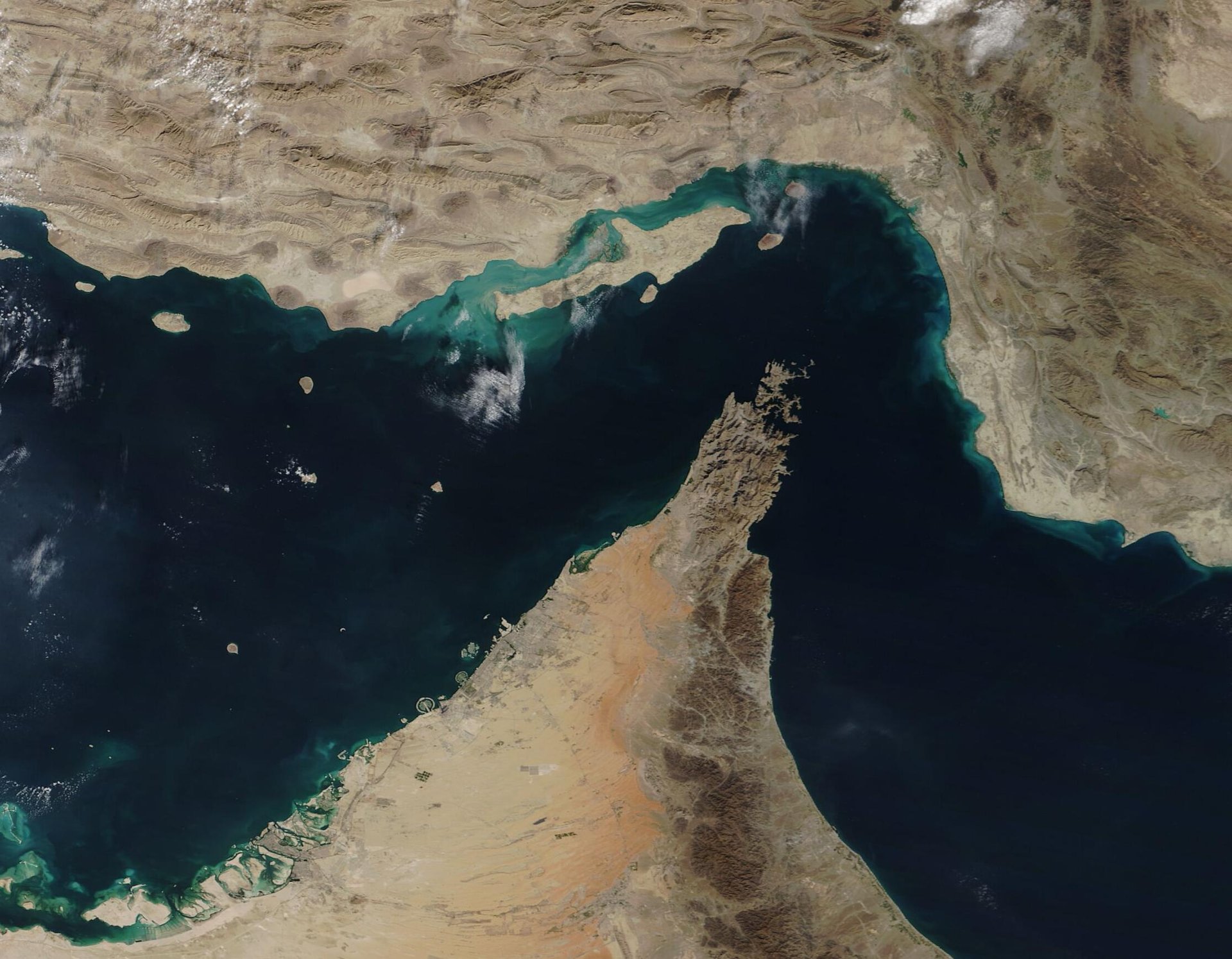
Saudi Aramco activated its primary contingency within days of the insurance collapse: the East-West Pipeline, a 750-mile conduit connecting the eastern oil fields at Abqaiq to the Red Sea port of Yanbu. Built in 1981 during the Iran-Iraq War specifically to bypass Hormuz vulnerability, the pipeline was designed with a nominal capacity of 5 million barrels per day, later expanded to an emergency capacity of 7 million barrels per day after the 2019 Abqaiq drone strikes by converting natural gas liquids lines to crude service.
Aramco CEO Amin Nasser confirmed in mid-March that the pipeline would reach full 7 million barrels per day capacity “within days,” according to S&P Global. The reality on the ground has been more constrained. Yanbu’s two terminals — North and South — have a combined nominal capacity of approximately 4.5 million barrels per day, according to Argus Media, with market sources estimating effective wartime throughput at around 3 to 4 million barrels per day. Vortexa shipping data showed Yanbu exports surging to a five-day rolling average of 3.66 million barrels per day, with occasional spikes above 4 million — roughly half of Saudi Arabia’s pre-crisis export volumes.
The arithmetic is unforgiving. Before the war, Saudi Arabia exported 7.3 million barrels per day. The Yanbu bypass can handle at most 4 million barrels per day under optimal conditions. The resulting shortfall of 3 to 4 million barrels per day represents the largest sustained supply disruption in Saudi oil history, exceeding even the temporary loss from the 2019 Abqaiq-Khurais attacks.
The Yanbu route also faces its own insurance complications. Approximately 70 to 75 per cent of Yanbu exports must transit Red Sea waters that have been subject to Houthi attacks since late 2023, according to the Horn Review. Iran has identified the Yanbu terminal as a strategic single point of failure — a vulnerability that insurers have noted in their own risk models. War risk premiums for Red Sea transit, while lower than Gulf rates, remain significantly elevated from pre-war levels, adding yet another layer of cost to Saudi Arabia’s rerouted exports.
The Insurance Recovery Duration Model
Historical precedent, market structure, and the specific characteristics of the 2026 crisis suggest that the war premium will follow a predictable — and slow — recovery trajectory. Five factors determine how quickly maritime insurance premiums normalise after a conflict, and their interaction creates what can be called the Insurance Recovery Duration Model.
| Factor | Description | 1980s Tanker War | 2003 Iraq War | 2026 Iran War (projected) |
|---|---|---|---|---|
| Conflict intensity | Frequency and severity of attacks on commercial vessels | 411 vessels attacked over 4 years | Minimal commercial targeting | 16–20 vessels in 25 days; high intensity |
| Institutional damage | Whether coverage was reduced, repriced, or fully withdrawn | Repriced; partial withdrawal | Repriced; no withdrawal | Full withdrawal — all 12 P&I clubs |
| Claims magnitude | Total insured losses relative to market capacity | ~$2 billion (50% on Lloyd’s) | Minimal | Rising rapidly; potential $25–40B vessel exposure |
| Reinsurance appetite | Speed at which reinsurers return capital to the segment | Gradual return over 2–3 years | Swift return within 12 months | Slow — exhausted by Red Sea + Gulf losses |
| Residual threat | Whether the underlying risk persists post-ceasefire | Iran retained asymmetric capability | Iraq’s navy destroyed | Iran retains full missile/drone/mine capability |
Applying this model to the current crisis yields a sobering projection. The institutional damage factor alone — the unprecedented full withdrawal of P&I coverage — introduces a recovery timeline measured in years rather than months. Restoring coverage requires reinsurance treaty renewals (typically annual, with the next major cycle in January 2027), regulatory capital approvals under Solvency II, and board-level decisions at twelve separate mutual organisations. Even under the most optimistic scenario — a ceasefire within weeks and no further attacks on commercial shipping — the structural reinstatement of Gulf war-risk coverage is unlikely before mid-2027.
The residual threat factor compounds the delay. Unlike the 2003 Iraq scenario, where the destruction of Iraq’s navy eliminated the primary threat to shipping, Iran will retain its full arsenal of anti-ship missiles, naval mines, fast attack craft, and drone systems after any ceasefire. Underwriters will price this residual capability into their models indefinitely, producing a permanent baseline premium significantly above pre-war levels. The Strauss Center’s analysis of the 1980s Tanker War found that even a decade after the ceasefire, Gulf transits carried a measurable risk premium compared to routes of equivalent distance in lower-risk waters.
The most likely outcome: premiums will decline from their current peaks within six to twelve months of a ceasefire, but will stabilise at a level two to five times higher than pre-war rates. For Saudi Arabia — whose oil minister is navigating OPEC’s deepest institutional fracture alongside the shipping crisis — this means an additional $0.50 to $2.00 per barrel in permanent shipping costs — a structural disadvantage that competing oil producers in West Africa, the Americas, and the North Sea do not face.
The Contrarian Case for Why Hormuz May Already Be Obsolete
The conventional analysis treats the insurance crisis as a temporary disruption to be endured and eventually resolved. The contrarian reading is more radical: the 2026 war has rendered the Strait of Hormuz permanently unreliable as a commercial shipping corridor, and the insurance market is simply the first institution to acknowledge this reality.
Consider the structural shift. Before 2026, the risk of a full Hormuz closure was treated by markets as a low-probability, high-impact scenario — a tail risk that merited monitoring but not pricing. The war has converted this tail risk into a demonstrated reality. The question is no longer whether Hormuz can be shut down, but how quickly it was shut down: not by naval blockade, which would have taken weeks and invited immediate military response, but by the cascading failure of the financial infrastructure that underwrites commercial navigation. The entire closure — from first strike to last P&I cancellation — took less than a week.
This precedent changes the actuarial calculus permanently. Any future escalation in Gulf tensions — whether between Iran and its neighbours, between Iran and Israel, or between any combination of regional powers — will now trigger immediate market repricing based on demonstrated rather than theoretical vulnerability. The insurance industry learned in March 2026 that a $20,000 drone can generate a $10 million insurance claim, and that lesson will be encoded in pricing models for a generation.
For Saudi Arabia, the implication is transformative. The Kingdom’s entire export infrastructure was designed around the assumption that Hormuz would remain open — an assumption that held for fifty years and broke in five days. It is the oil weapon reversal that echoes 1973: the same chokepoint that gave King Faisal leverage over the West now gives Iran leverage over Saudi Arabia. The East-West Pipeline and Yanbu bypass were conceived as emergency contingencies, not permanent alternatives. Yet the insurance market is now signalling that they may need to become exactly that: the primary export route for Saudi crude, with Hormuz relegated to a secondary corridor used only when premiums and risk levels permit.
This is not the analysis that Saudi policymakers want to hear. But it is the analysis that Lloyd’s of London, Munich Re, and every major reinsurer in the world has already conducted — and their money is already positioned accordingly.
Is the War Premium Starving Saudi Arabia?
Saudi Arabia imports more than 80 per cent of its food, according to CNN Business — 3.4 million metric tonnes of wheat, 4.5 million tonnes of corn, and 4.2 million tonnes of barley annually, almost all arriving by sea through shipping routes now priced at wartime rates. The war premium does not just affect oil exports. It affects every container of grain, every shipment of refrigerated meat, and every pallet of infant formula that reaches Saudi ports.
Hapag-Lloyd, one of the world’s largest container carriers, imposed a War Risk Surcharge of $1,500 per twenty-foot equivalent unit (TEU) for standard containers and $3,500 per container for refrigerated and special equipment, effective March 2, 2026. Other carriers have charged up to $4,000 per container for Middle East-bound cargo, according to CNBC. These surcharges pass directly through to consumer prices.
The results are already visible in Saudi supermarkets. Basic food prices across the Gulf rose 10 to 18 per cent in early 2026 compared to the same period the previous year, with a significant portion of the increase attributed to shipping and insurance costs rather than underlying commodity prices, according to the Middle East Insider. Rising shipping and insurance costs add an estimated 8 to 15 per cent to imported food costs — a figure that escalates with each week the conflict continues.
The food security dimension introduces a timeline pressure that the oil market does not face. Saudi Arabia can store crude oil in strategic reserves and wait for better shipping conditions. It cannot store fresh food. The Kingdom’s cold chain logistics depend on regular, predictable shipping schedules and manageable freight rates. When container carriers suspend Gulf services or impose prohibitive surcharges, the disruption reaches dinner tables within days — not the weeks or months that oil market adjustments typically require.
Construction materials for Vision 2030 megaprojects face similar pressures. Imported curtain wall systems, mechanical and electrical equipment, and specialist construction components that cannot be sourced domestically have seen delivery timelines extend by weeks and costs rise by double-digit percentages. Contractors with long-term fixed-price agreements bear the sharpest exposure, according to Construction Week Online — and many of those contracts were signed before anyone priced in the possibility of a full Gulf shipping insurance collapse.
What Happens to Saudi Trade After the Last Missile Falls?
A ceasefire will not restore normal shipping conditions. It will begin a multi-year process of institutional rebuilding that involves at least five distinct phases, each with its own timeline and obstacles.
Phase one: mine clearance. Iran has deployed naval mines in the Strait of Hormuz and surrounding waters. Even a small number of uncleared mines will prevent insurers from lifting their exclusions, because a single mine strike on a VLCC could generate a $300 million total-loss claim. The 1988 post-Tanker War mine clearance operation took months. The 1991 post-Gulf War mine clearance in Kuwaiti waters took more than a year. Modern mine countermeasure capabilities are faster but not instantaneous, and Iran’s mine inventory includes sophisticated influence mines that are difficult to detect and neutralise.
Phase two: P&I reinstatement. Each of the twelve International Group clubs will need to negotiate new reinsurance treaties that include Gulf war-risk coverage, obtain board approval for the reinstated terms, and file updated capital adequacy assessments with their regulators. The major reinsurance treaty renewal season is January 1, meaning that if a ceasefire occurred tomorrow, the earliest structural window for P&I reinstatement would be January 2027 — nine months away.
Phase three: hull rate normalisation. Lloyd’s syndicates will gradually reduce war risk premiums as the threat environment improves, but the pace will depend on the credibility of any ceasefire agreement and the persistence of Iran’s military capabilities in the Gulf region. Historical precedent from the 1980s and 2003 suggests a two to three year normalisation period for the most affected routes.
Phase four: carrier service restoration. Maersk, MSC, CMA CGM, and other major lines will not resume Gulf services until both insurance coverage and military threat levels meet their corporate risk thresholds. These thresholds are typically more conservative than the insurance market’s own pricing would suggest, because shipping companies bear reputational and operational risks beyond the insured losses.
Phase five: freight rate normalisation. Even after carriers resume service, reduced capacity and elevated fuel costs — vessels rerouting via Yanbu or the Cape of Good Hope burn substantially more fuel than direct Hormuz transit — will maintain freight rates above pre-war levels for an extended period.
The cumulative timeline for full normalisation of Saudi trade economics: three to five years from the date of a durable ceasefire. During this period, every Saudi export will carry a war premium, every import will cost more than it should, and every Vision 2030 construction project will face elevated material costs. The financial legacy of this war will be measured not in missile damage but in insurance premiums.
Saudi Arabia’s economic future now depends as much on reinsurance treaties as on Patriot missile batteries.
Maritime insurance market analysis, March 2026
Frequently Asked Questions
What is a war risk insurance premium and how does it affect oil prices?
A war risk premium is the additional charge that marine insurers levy on vessels transiting conflict zones. For the Persian Gulf in March 2026, premiums surged from roughly 0.05 per cent to 2.5 per cent of hull value — adding $0.40 to $1.00 per barrel to the delivered cost of Saudi oil, according to the International Energy Agency and the Strauss Center. These costs pass through to global oil prices, contributing an estimated $20 per barrel war premium to the current Brent crude price.
How long will elevated shipping insurance premiums last after a ceasefire?
Historical precedent from the 1980s Tanker War suggests that premiums take two to three years to normalise after a conflict ends. The 2026 crisis is likely to follow a slower trajectory because all twelve P&I clubs fully withdrew coverage — an unprecedented step requiring formal reinstatement through reinsurance treaty cycles, board approvals, and regulatory capital recalculations. The earliest structural window for institutional reinstatement is January 2027, with full normalisation projected three to five years from the date of a durable ceasefire.
Can Saudi Arabia bypass the Strait of Hormuz entirely?
Saudi Arabia’s East-West Pipeline carries crude from the eastern oil fields to the Red Sea port of Yanbu, with an emergency capacity of 7 million barrels per day. However, the Yanbu terminal’s effective throughput is limited to 3 to 4 million barrels per day — roughly half of Saudi Arabia’s pre-war export volume of 7.3 million barrels per day. The Red Sea route also faces war risk premiums from Houthi activity, making a complete Hormuz bypass both physically constrained and financially imperfect.
Why did all P&I clubs cancel Gulf war risk coverage at the same time?
Three converging factors drove the simultaneous withdrawal: reinsurance capital exhaustion after two years of Red Sea losses, Solvency II regulatory requirements that made Gulf war risk prohibitively expensive to underwrite, and the total-loss clause risk created by vessels potentially trapped for twelve months or more. The International Group’s twelve mutual clubs collectively cover 90 per cent of global ocean-going tonnage, and their decision reflected a market-wide reassessment of Gulf risk that no individual club could afford to resist.
What is the Trump administration’s $20 billion reinsurance facility and why hasn’t it worked?
The U.S. Development Finance Corporation announced a $20 billion reinsurance facility in March 2026, with Chubb as lead underwriting partner. The facility initially covered only hull and cargo, omitting the liability coverage that Moody’s described as a “deal-killer” for most shipowners. Although expanded on March 20 to include War P&I, the $20 billion figure covers only a fraction of the $352 billion in total insurance coverage that JPMorgan estimates is required. Military experts have noted that commercial shipping is unlikely to restart without a ceasefire, regardless of the financial guarantees offered.
How are Saudi food prices affected by the shipping insurance crisis?
Saudi Arabia imports more than 80 per cent of its food, almost all by sea. Container carriers have imposed war risk surcharges of $1,500 to $4,000 per container for Gulf-bound cargo, according to Hapag-Lloyd and CNBC. These costs have contributed to a 10 to 18 per cent increase in basic food prices across the Gulf compared to the same period in 2025, with shipping and insurance costs accounting for a significant share of the increase.