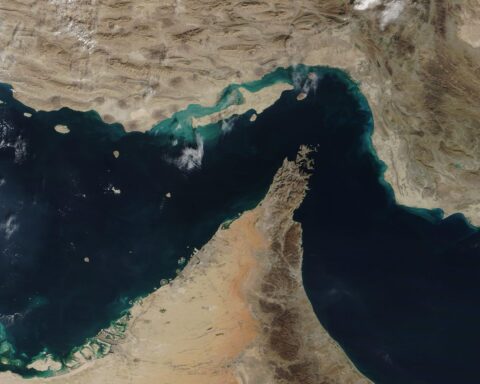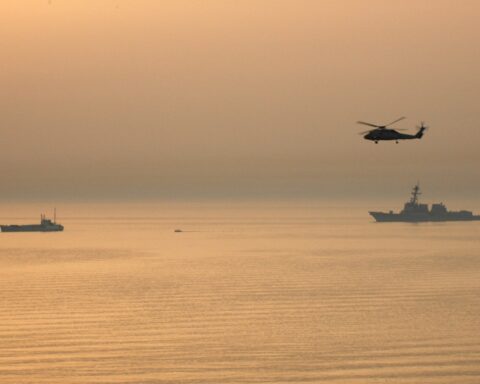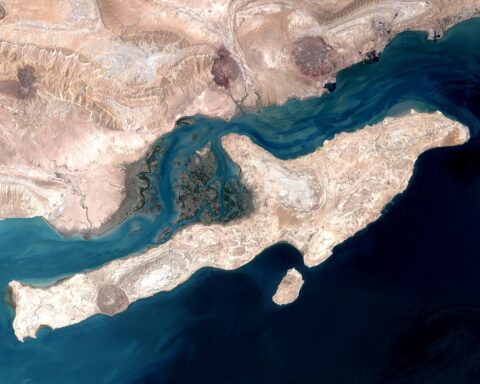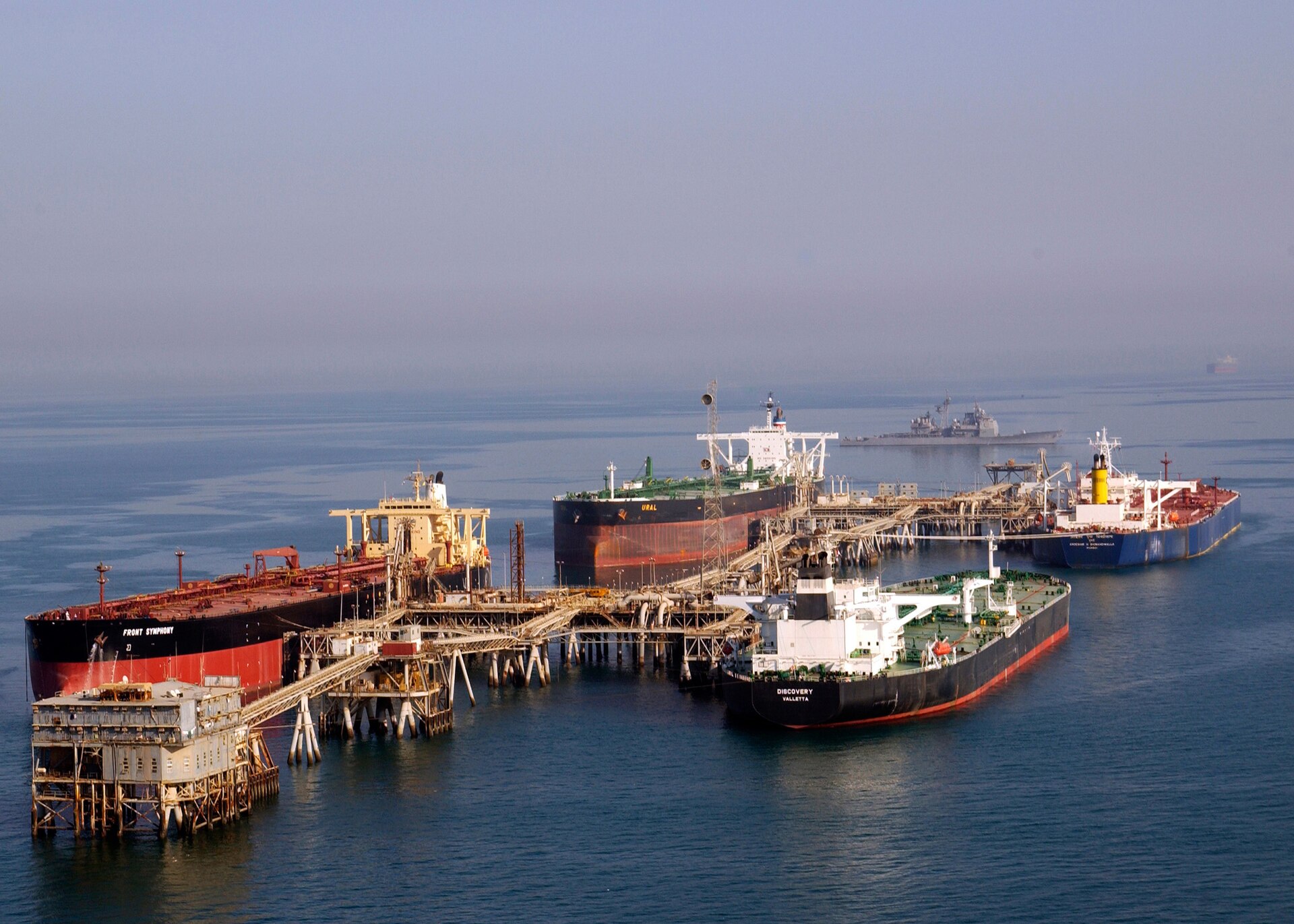

DUBAI — An oil tanker that was sent to a ship-breaking yard in Bangladesh five years ago has reappeared in the Strait of Hormuz, fully laden with crude oil and heading for open water. The vessel, the Nabiin, is the second so-called zombie tanker detected transiting the world’s most important oil chokepoint in the space of three days, according to Bloomberg ship-tracking data published on March 23. The emergence of ships bearing the identities of scrapped vessels marks a new and troubling phase in the Iran war’s maritime crisis, one that undermines the integrity of global vessel tracking and threatens to erode what little order remains in the Strait of Hormuz.
Traffic through the strait, which normally carries roughly one-fifth of the world’s daily oil and natural gas supply, has collapsed by more than 95 percent since the war began on February 28. Only 21 tankers have transited the route in the 24 days since American and Israeli jets struck Iran, compared with more than 100 per day before the conflict. The appearance of zombie ships — vessels that assume the identities of already-decommissioned tankers — suggests that operators willing to accept the physical risks of the strait are now also willing to commit maritime identity fraud to move oil through it. The desperation mirrors tactics from the 1980s, when the original tanker war drove operators to similar extremes — though as an analysis of the second tanker war demonstrates, the 2026 crisis has eclipsed its predecessor across every measurable dimension.
Table of Contents
- What Is a Zombie Tanker and Why Are They in the Strait of Hormuz?
- The Nabiin — An Oil Tanker Scrapped Five Years Ago Crosses Hormuz Fully Laden
- The LNG Jamal — A Ghost Ship That Should Be in an Indian Breaking Yard
- How Did a Supertanker Carrying Iraqi Oil Cross Hormuz With Its Signal Off?
- How Many Ships Have Crossed the Strait of Hormuz Since the War Began?
- Who Decides What Passes Through the Strait?
- The Dark Fleet That Existed Before the War
- What Do Zombie Tankers Mean for Saudi Oil Exports?
- Frequently Asked Questions
What Is a Zombie Tanker and Why Are They in the Strait of Hormuz?
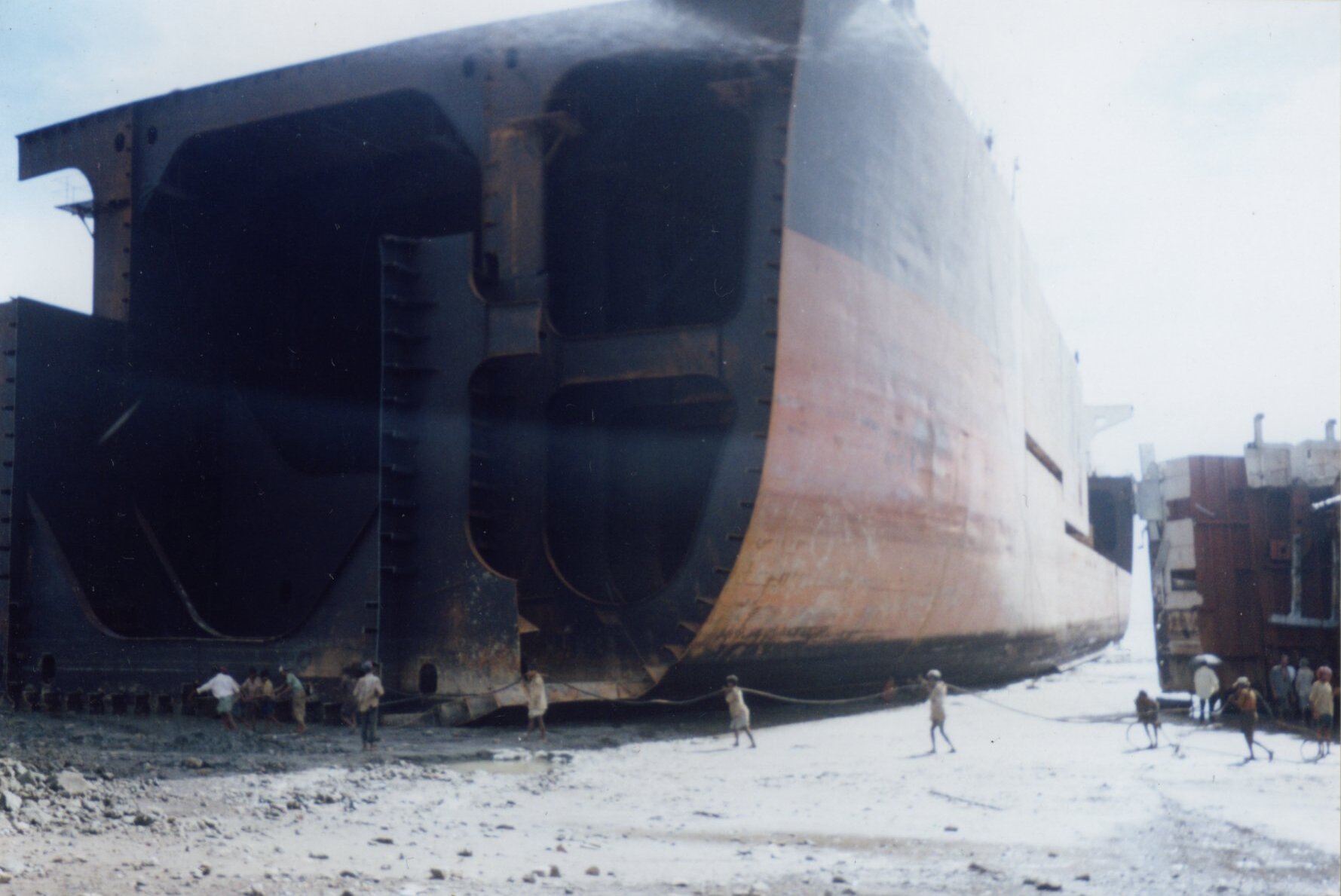
A zombie tanker is an active, operational vessel that has assumed the identity of a ship already sent to the scrapyard. The real ship was broken down for steel and spare parts at a demolition yard in Bangladesh, India, or Pakistan years earlier. Its registration documents, flag state credentials, and International Maritime Organization number are then transferred to or duplicated by another vessel, which sails under the dead ship’s name. Maritime tracking systems register the zombie tanker as a legitimate vessel — because, according to the paperwork, it is one.
The practice is not entirely new. Shadow fleet operators involved in sanctions evasion by Iran, Russia, and Venezuela have used variations of this tactic for years, according to the Middle East Institute. What has changed is the context. The near-total shutdown of the Strait of Hormuz since the start of the US-Israeli war with Iran on February 28 has created a maritime environment in which only vessels willing to accept extraordinary risk — or those operating outside international rules altogether — are still moving.
Maritime intelligence firm Windward has identified approximately 1,100 dark fleet vessels globally, representing roughly 17 to 18 percent of all tankers carrying liquid cargo, primarily oil. That fleet has now found the ultimate proving ground: a chokepoint where conventional shipping has all but ceased, where insurance markets have retreated, and where the line between legitimate trade and sanctions evasion has dissolved.
The Nabiin — An Oil Tanker Scrapped Five Years Ago Crosses Hormuz Fully Laden
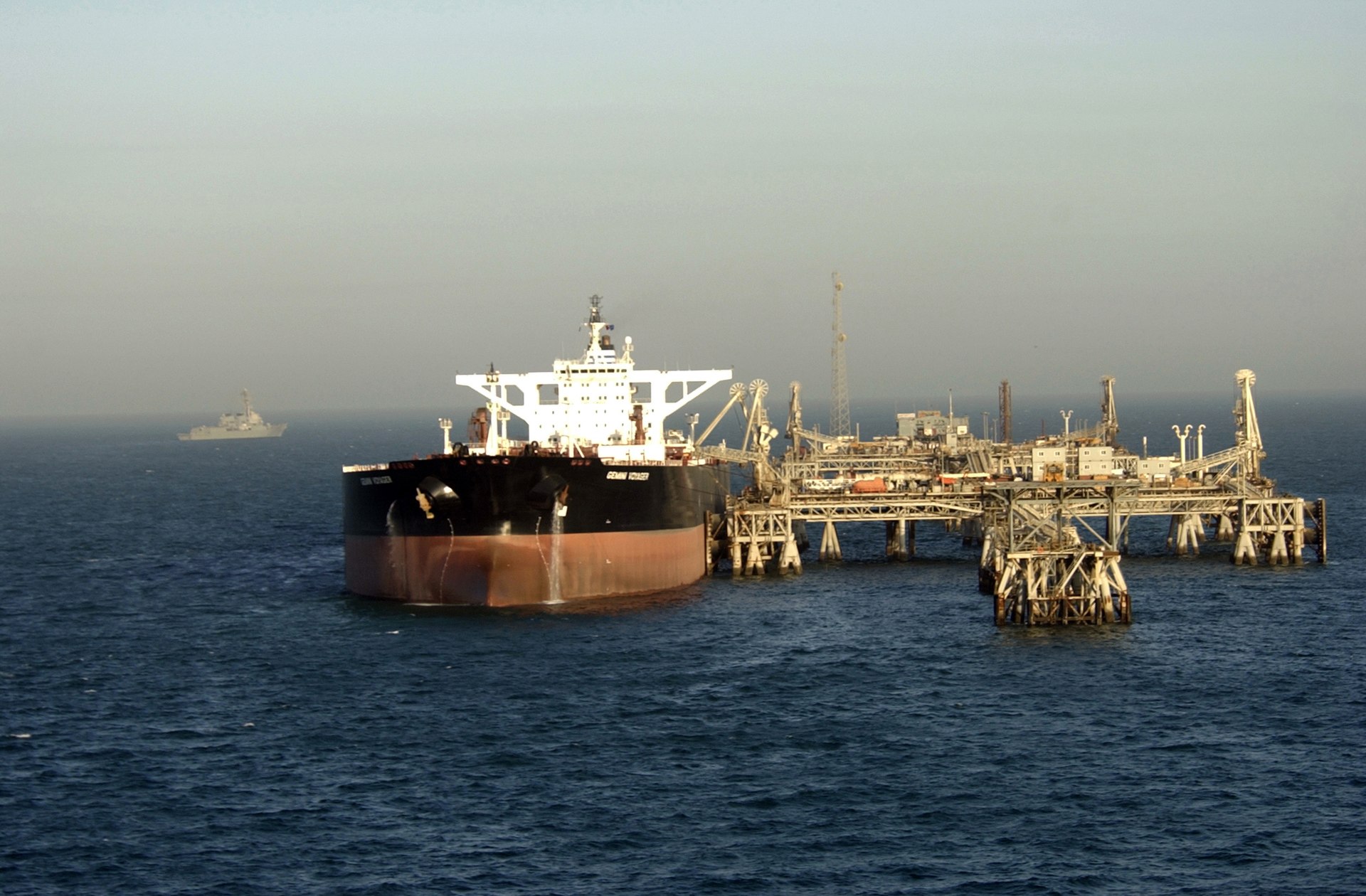
Ship-tracking data compiled by Bloomberg News showed the Nabiin inside the Persian Gulf on the evening of Sunday, March 22. By Monday morning, it was in the Gulf of Oman, on the far side of the Strait of Hormuz. The vessel’s Automatic Identification System indicated it was fully laden — carrying a full cargo of crude oil — with no declared destination.
The Middle East briefing 3,000+ readers start their day with.
One email. Every weekday morning. Free.
The problem, according to Bloomberg’s investigation, is that the Nabiin should not exist. Records indicate the Aframax-class tanker was built in 2002 and sent to the breaking yards in Bangladesh approximately five years ago. Aframax vessels, which typically carry between 80,000 and 120,000 deadweight tonnes of crude oil, are workhorses of the regional oil trade, small enough to navigate shallow ports but large enough to carry commercially significant volumes.
Two companies are listed on the maritime database Equasis as the Nabiin’s manager and owner: Muhit Maritime FZE and Sagitta Maritime Co Ltd, both registered in Dubai. Bloomberg reported that the two firms share identical contact details. Telephone calls and emails to both companies went unanswered.
The vessel entered the Persian Gulf hours before the war began on February 28, with Iraq’s Khor Al Zubair listed as its destination. It remained inside the Gulf for more than three weeks before transiting the strait. Its emergence, fully loaded and heading into open water, raises the question of whose crude it is carrying and under whose authority it was permitted to leave.
The LNG Jamal — A Ghost Ship That Should Be in an Indian Breaking Yard
The Nabiin was not the first zombie vessel to appear in the strait. Three days earlier, on March 20, a ship broadcasting the identity of the LNG Jamal — a Japanese-flagged liquefied natural gas carrier with IMO number 9200316 — transited the Strait of Hormuz and entered the Persian Gulf, according to the maritime publication The Week.
The LNG Jamal was taken to a demolition yard in India for breaking in October 2025, approximately five months before its AIS signal reappeared. Ship-tracking data showed the vessel’s transmissions beginning again on March 13, 2026, with an initial destination listed as Sohar, Oman. The vessel then crossed the strait, entered the Gulf, and was last tracked near Sharjah in the UAE before going dark — switching off its AIS transponder entirely.
The LNG Jamal case is particularly significant because the vessel exploited the transit agreements that Japan, India, and Turkey had negotiated with Iran. Tokyo secured safe passage rights through the Strait of Hormuz for Japanese-flagged vessels, an arrangement intended to maintain energy supplies to one of the world’s most oil-dependent economies. A zombie ship broadcasting a Japanese identity could potentially slip through under the cover of that diplomatic arrangement. Iran has since formalised its grip on the waterway, demanding up to $2 million per voyage from commercial vessels seeking passage through the strait.
The Week reported that it could not independently verify whether the vessel transmitting as the LNG Jamal was in fact a different ship using stolen credentials, or whether the scrapping records were in error. But the pattern — a vessel declared demolished, reappearing months later in a war zone — matches the definition of a zombie ship precisely.
How Did a Supertanker Carrying Iraqi Oil Cross Hormuz With Its Signal Off?
The zombie tankers are only part of a broader pattern of irregular maritime activity in and around the Strait of Hormuz. On March 23, Bloomberg reported that a supertanker hauling Iraqi crude had successfully transited the strait, making it the first observed vessel carrying Baghdad’s oil through the waterway since the war began.
The Omega Trader, managed by Japan’s Mitsui OSK Lines Ltd, went dark inside the Persian Gulf. Its AIS transponder stopped broadcasting from a position within the Gulf more than 10 days before the vessel reappeared in Mumbai, India. The gap in tracking data suggests either a deliberate decision to go dark — switching off the AIS transponder to avoid detection — or persistent signal jamming by Iranian electronic warfare systems operating in the strait.
Iraq’s position in the conflict has been complicated. Baghdad has maintained diplomatic relations with both Tehran and Washington while its own oil exports, which flow primarily through the Gulf, have been strangled by the effective closure of the strait. Reuters reported that Iraq was in direct talks with Iran to secure passage for Iraqi crude tankers, a negotiation that may have facilitated the Omega Trader’s transit.
The Deccan Chronicle reported that the Omega Trader was the first Iraqi crude tanker to reach Mumbai since the war began, providing a small but symbolically important relief valve for India, which imported approximately 4.7 million barrels per day from Gulf producers before the conflict.
How Many Ships Have Crossed the Strait of Hormuz Since the War Began?
The collapse of traffic through the Strait of Hormuz has been among the most economically significant consequences of the war. Before February 28, the strait handled more than 100 vessel transits per day, carrying approximately 21 million barrels of crude oil and significant volumes of liquefied natural gas. Since the start of hostilities, that number has fallen to a trickle.
S&P Global Market Intelligence reported that just 21 tankers transited the strait in the first 24 days of the conflict. According to CNBC, only 16 AIS-visible crossings were recorded in the seven days ending around March 22, consisting of 11 outbound and five inbound transits. On March 1 and 2, the first two days of the war, no commercial ships appeared in the strait at all.
| Metric | Pre-War (Before Feb 28) | During War (Feb 28 — Mar 24) |
|---|---|---|
| Daily tanker transits | 100+ | ~1 per day |
| Total tanker transits (24 days) | ~2,400 | 21 |
| Daily oil flow (barrels) | ~21 million | Unknown (minimal) |
| Traffic decline | — | 95%+ |
| Stranded vessels in Gulf | 0 | 400+ |
| Major shipping lines operating | Maersk, CMA CGM, Hapag-Lloyd, all | None (all suspended) |
Maersk, CMA CGM, and Hapag-Lloyd — three of the world’s largest container shipping companies — suspended all transits through the strait and related routes including the Red Sea within hours of the war’s outbreak. Lloyd’s List reported that approximately 200 compliant tankers were stranded as the strait closure froze Gulf traffic entirely. As of the second week of March, Fortune reported that more than 400 tankers were stranded in the Persian Gulf without owner permission to move.
The handful of vessels still transiting fall into three categories: Iranian-flagged ships and their proxies, which Iran permits through; vessels from countries that have negotiated bilateral safe passage agreements; and shadow fleet operators, including zombie tankers, that are willing to accept the physical and legal risks of the crossing. Those risks are not hypothetical: Iran has deliberately attacked civilian ships attempting the transit, killing seven seafarers in incidents that Human Rights Watch has classified as apparent war crimes.
Who Decides What Passes Through the Strait?
Iran has established an explicit system of selective access to the Strait of Hormuz since the war began. On March 5, the Islamic Revolutionary Guard Corps announced that Iran would keep the strait closed only to ships from the United States, Israel, and their Western allies, according to Reuters. The IRGC confirmed this policy again on March 8.
The practical effect has been to transform the strait from an international waterway — through which all vessels have a legal right of innocent passage under the United Nations Convention on the Law of the Sea — into a checkpoint controlled by a belligerent power. Iran has granted selective passage to vessels from countries it considers neutral or friendly.
On March 16, a Pakistani oil tanker crossed the Strait of Hormuz with explicit Iranian permission, according to Lloyd’s List. Japan, India, and Turkey have all negotiated separate transit arrangements. The Euronews reported on March 18 that Iran was allowing more ships through the strait than in the first two weeks of the war, though the total volume remained a small fraction of pre-conflict levels.
The zombie tankers appear to exploit this system of selective access. A vessel broadcasting a Japanese or Pakistani identity could potentially claim the protection of those countries’ transit agreements while carrying cargo for an entirely different party. The fact that the LNG Jamal broadcast a Japanese flag — belonging to a country with an explicit safe passage agreement — may not be coincidental.
The Dark Fleet That Existed Before the War
The infrastructure enabling zombie tankers did not emerge from the current conflict. Iran, Russia, and Venezuela have maintained shadow fleets for years to circumvent international sanctions on their oil exports. The US Department of State identified 14 shadow fleet vessels as blocked property involved in transporting Iranian petroleum in February 2026, just days before the war began. On February 25, the Treasury Department’s Office of Foreign Assets Control designated more than 30 individuals, entities, and vessels linked to Iran’s shadow fleet and to networks supporting ballistic missile production.
The Middle East Institute documented how these shadow fleets operate: vessels register under flags of convenience — Cameroon, Palau, Liberia, even landlocked Mongolia — that lack the resources to inspect them. They switch off AIS transponders to avoid detection, conduct ship-to-ship transfers of crude oil on the open ocean, change names and re-register under different flags, and use insurance providers outside the mainstream London market.
According to Fortune, two-thirds of Russian oil tankers reportedly carry insurance from unknown providers, effectively opting out of the international enforcement mechanisms that govern legitimate shipping. The same pattern applies to much of Iran’s shadow fleet. An analysis published by the CSIS examined the case of the Bella-1, an Iranian shadow fleet vessel, as a template for understanding how these networks operate and why they are so difficult to dismantle.
The war has not created the dark fleet phenomenon. It has simply given it a new and more dangerous operating environment. With legitimate commercial traffic at a standstill and the world’s attention focused on missile strikes and ceasefire negotiations, the strait has become a near-ideal operating space for vessels that exist outside the rules.
What Do Zombie Tankers Mean for Saudi Oil Exports?
For Saudi Arabia, the emergence of zombie tankers in the Strait of Hormuz carries implications that extend beyond maritime security. The Kingdom’s oil exports remain the foundation of its economy, and the closure of the strait has already forced Aramco to cut supply to Asian buyers for a second consecutive month, according to Bloomberg.
Saudi Arabia has added five shipping services to bolster trade links through alternative routes amid the Hormuz disruption, according to Arab News. The Kingdom’s Red Sea ports, particularly Yanbu, have taken on increased importance as bypass options. But the Red Sea route adds approximately 2,000 nautical miles and seven additional sailing days compared with the direct Gulf-to-Asia route through Hormuz, according to the Dallas Federal Reserve.
The zombie tanker phenomenon poses a specific threat to Saudi interests: if shadow fleet operators can move oil through the strait while legitimate tankers cannot, it creates a two-tier system in which sanctioned or non-compliant oil finds buyers while Saudi crude — which trades transparently, through insured vessels, at official selling prices — sits in storage. Iran’s own shadow fleet has continued to export oil through the strait despite the war, with PBS reporting that approximately 90 ships had crossed the waterway since the conflict began, the vast majority connected to Iranian exports.
The financial mechanism behind this two-tier system is explored in depth in a separate analysis of how London insurers sealed the Strait of Hormuz before Iran’s navy could, tracing the cascading withdrawal of war risk coverage that made legitimate shipping commercially impossible within days of the war’s outbreak.
The implications are already visible in oil markets. Brent crude, which surged past $119 per barrel in mid-March, fell 13 percent in a single day on March 23 as peace talk signals briefly lifted market sentiment. But the structural problem remains: the world’s most important oil chokepoint is no longer governed by international law. It is governed by Iranian permission, shadow fleet audacity, and the willingness of ship operators to bet on vessels that should not exist.
Frequently Asked Questions
What is a zombie tanker?
A zombie tanker is a vessel that assumes the identity of a ship already sent to a scrapping yard. The original ship has been demolished, but its registration documents, flag state credentials, and IMO number are transferred to or duplicated by another active vessel. This allows the zombie ship to transit international waters while appearing on tracking systems as a legitimate vessel that was officially decommissioned years earlier.
How many zombie tankers have been detected in the Strait of Hormuz?
At least two zombie vessels have been detected transiting the Strait of Hormuz in March 2026. The LNG Jamal, a Japanese-flagged LNG carrier that was sent to a breaking yard in India in October 2025, was tracked crossing the strait on March 20. Three days later, the Nabiin, an Aframax oil tanker built in 2002 and scrapped in Bangladesh five years ago, was detected exiting the strait fully laden with crude oil.
Who owns the zombie tankers crossing the Strait of Hormuz?
The Nabiin is listed on the maritime database Equasis as managed by Muhit Maritime FZE and owned by Sagitta Maritime Co Ltd, both Dubai-registered companies that share identical contact details. Bloomberg reported that calls and emails to both firms went unanswered. The beneficial owners of the vessels and the parties responsible for the identity fraud remain unknown as of March 24, 2026.
How does a zombie tanker differ from a dark fleet vessel?
Dark fleet vessels typically use their own identities but employ tactics such as switching off AIS transponders, conducting ship-to-ship oil transfers at sea, and registering under flags of convenience. Zombie tankers go further by assuming the identity of a vessel that no longer exists, making them virtually undetectable through standard maritime tracking databases. Both operate outside international insurance markets and regulatory oversight.
Is the Strait of Hormuz completely closed to commercial shipping?
The strait is not technically closed, but traffic has fallen by more than 95 percent since the war began on February 28, 2026. Iran has implemented a selective access policy, blocking vessels from the United States, Israel, and Western allies while granting passage to ships from countries it considers neutral. Countries including Japan, India, Pakistan, and Turkey have negotiated bilateral transit agreements. Shadow fleet operators and zombie tankers are also transiting without formal permission.