
VIENNA — The Organization of the Petroleum Exporting Countries was founded in Baghdad in September 1960 by five nations that believed collective action could protect their oil revenues from Western exploitation. Iran and Saudi Arabia were two of those five founders. Sixty-six years later, Iranian drones are striking Saudi refineries, Saudi air defenses are shooting down Iranian missiles over Riyadh, and the cartel that once bound them together cannot convene a meeting without first determining which delegates might be at war with each other. OPEC has survived price collapses, internal feuds, and the shale revolution. Whether it can survive a shooting war between its two most powerful members is the question that will define the global energy order for a generation.
The 2026 Iran war has removed at least 10 million barrels per day from global markets, sent Brent crude past $126 before a volatile crash that would eventually see oil fall below $100 on ceasefire hopes, and triggered the largest-ever release of strategic petroleum reserves in history. Yet OPEC+, the expanded alliance that theoretically controls 40 percent of world oil production, managed only a 206,000 barrel-per-day increase — a response so inadequate that the International Energy Agency publicly described it as insufficient. The cartel’s paralysis is not a failure of logistics. It is the institutional expression of a war that has shattered the political foundations on which OPEC was built. The production dispute is one dimension of a broader Saudi-UAE rivalry that spans seven fronts from oil to AI to proxy wars in Yemen and Sudan.
Table of Contents
- What Happens When OPEC’s Founder Goes to War With Its Leader?
- A Sixty-Six-Year Alliance Torn in Twenty-Five Days
- Has OPEC Ever Survived a War Between Its Members?
- How Much Oil Has the War Actually Removed From the Market?
- Why Did OPEC+ Raise Output by Only 206,000 Barrels?
- Prince Abdulaziz bin Salman’s Impossible Balancing Act
- The Cartel Cohesion Index
- Which OPEC Members Are Winning and Which Are Losing?
- Can the IEA Replace What OPEC Cannot Deliver?
- Russia Chose a Side Without Leaving the Table
- Why OPEC Might Emerge Stronger From This War
- What Comes After the Cartel’s Civil War?
- Frequently Asked Questions
What Happens When OPEC’s Founder Goes to War With Its Leader?
OPEC’s charter contains no provision for expelling a member that attacks another member. The organization’s founding statute, signed in Baghdad on 14 September 1960, assumes that its five original signatories — Iran, Iraq, Kuwait, Saudi Arabia, and Venezuela — will resolve disputes through negotiation, not military force. Twenty-five days into the most destructive conflict in the Persian Gulf since the Iran-Iraq War, that assumption lies in ruins.
Iran remains a full member of OPEC. Its delegate still holds a seat at the Vienna secretariat. Its production data — what little of it can be verified amid the chaos of war — still appears in OPEC’s Monthly Oil Market Report. Yet Iran’s military has fired ballistic missiles at the territory of four other OPEC members: Saudi Arabia, Kuwait, the United Arab Emirates, and Iraq. It has effectively closed the Strait of Hormuz, blocking the export routes of the very nations with which it ostensibly cooperates to manage global oil supply. And it has struck the SAMREF refinery in Yanbu, Saudi Arabia’s critical Red Sea export terminal that became the Kingdom’s lifeline after Hormuz shut down.
The institutional contradiction is stark. OPEC exists to coordinate oil production for the mutual benefit of its members. Iran’s war strategy is to destroy the production and export infrastructure of those same members. No international organization has ever faced a comparable situation — a founding member actively working to eliminate the export capacity of the organization’s leader while both remain seated at the same table.
OPEC Secretary General Haitham al-Ghais has made no public statement on the conflict. The Vienna secretariat has issued no communiqué addressing the war. The cartel’s silence is itself a statement: OPEC lacks the institutional machinery to address a military conflict between its members, and any attempt to do so would likely accelerate the organization’s fracture rather than heal it.
The Middle East briefing 3,000+ readers start their day with.
One email. Every weekday morning. Free.
A Sixty-Six-Year Alliance Torn in Twenty-Five Days
The relationship between Iran and Saudi Arabia within OPEC has always been adversarial. From the cartel’s earliest days, the two nations disagreed on pricing strategy, production quotas, and the organization’s political orientation. Iran, under the Shah, pushed for higher prices to fund its rapid modernization. Saudi Arabia, under King Faisal’s original vision for OPEC as a vehicle for Arab sovereignty rather than mere profit maximisation, favored moderate prices that would sustain demand and discourage the development of alternative energy sources.
That tension survived the 1979 Iranian Revolution, which transformed Tehran from a pro-Western monarchy into an Islamist republic. It survived the Iran-Iraq War from 1980 to 1988, during which Saudi Arabia quietly funded Iraq’s war effort while both Iran and Iraq continued to attend OPEC meetings. It survived the proxy conflicts of the 2010s — the wars in Yemen, Syria, and Iraq — that placed Iran and Saudi Arabia on opposite sides of nearly every regional flashpoint.
What it did not survive was Operation Epic Fury. The US-Israeli military campaign that began on 28 February 2026 killed Iran’s Supreme Leader Ali Khamenei and triggered retaliatory strikes against American bases and Gulf state territory across the region. Within seventy-two hours, Iran had fired missiles at Saudi Arabia, the UAE, Kuwait, Bahrain, and Qatar — striking at the core of OPEC’s Gulf membership in a single salvo.
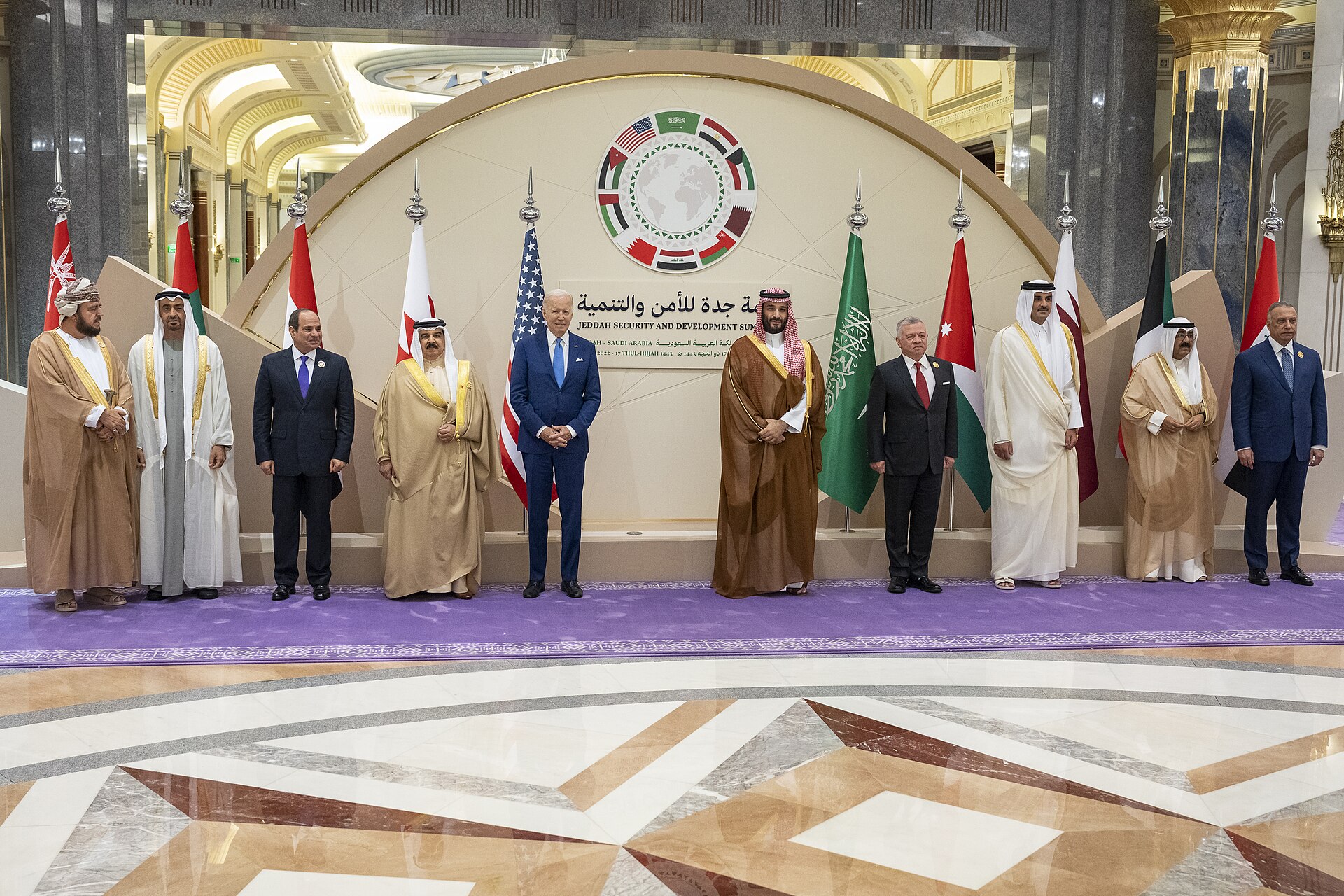
Saudi Arabia expelled Iran’s military attaché and four embassy staff members on 21 March. The diplomatic rupture formalized what the missiles had already established: the two pillars of OPEC — its largest Middle Eastern producer and its de facto leader — are now in a state of undeclared war. OPEC’s founding compact, which assumed that sovereign control over oil production was a shared interest strong enough to transcend political differences, has collided with a conflict in which oil infrastructure is itself a primary military target.
Has OPEC Ever Survived a War Between Its Members?
OPEC has, in fact, survived wars between its members before — but never one this destructive, and never one that simultaneously blocked the cartel’s primary export route. The historical precedents offer limited comfort.
The Iran-Iraq War of 1980-1988 was the first test. Iraq, under Saddam Hussein, invaded Iran in September 1980 in a conflict that would kill over a million people. Both nations were founding OPEC members. Both continued to attend OPEC meetings throughout the eight-year war. But the conflict devastated OPEC’s cohesion. Combined Iranian and Iraqi production fell from roughly 6 million barrels per day in 1980 to under 3 million by 1982. Saudi Arabia opened the taps to fill the gap, eventually triggering the 1986 oil price collapse that sent crude below $10 per barrel. OPEC’s market share fell from 51 percent in 1979 to 29 percent by 1985, according to EIA data.
The lesson was clear: wars between members destroy OPEC’s ability to manage supply. The cartel cut the official selling price by $5 per barrel in March 1983 — its first-ever official price reduction — as a direct consequence of the war’s disruption.
Iraq’s invasion of Kuwait in August 1990 was the second test. Saddam Hussein’s annexation of a fellow OPEC founder removed 4.3 million barrels per day from the market virtually overnight. Oil prices doubled from $17 to $36 per barrel within weeks. Again, Saudi Arabia served as the swing producer, increasing output by 3 million barrels per day to compensate. OPEC survived, but the invasion permanently altered the organization’s internal dynamics: Iraq remained under sanctions and production caps for over a decade, while Saudi Arabia cemented its dominance.
| Conflict | Year | Members Involved | Supply Lost (mb/d) | Hormuz Blocked? | OPEC Outcome |
|---|---|---|---|---|---|
| Iran-Iraq War | 1980-88 | Iran, Iraq | 3.0 | No | Cohesion damaged, price collapse by 1986 |
| Iraq invades Kuwait | 1990 | Iraq, Kuwait | 4.3 | No | Saudi fills gap, Iraq under sanctions |
| Iran War 2026 | 2026 | Iran vs. Saudi Arabia, Kuwait, UAE, Iraq | 10.0+ | Yes | Institutional paralysis, unprecedented |
The 2026 crisis is qualitatively different from both precedents. In the 1980s war, Iran and Iraq fought each other but did not attack other OPEC members. In 1990, Iraq attacked one OPEC member. In 2026, Iran has fired missiles and drones at four OPEC members simultaneously — Saudi Arabia, Kuwait, the UAE, and Iraq — while blocking the Strait of Hormuz, the export route through which roughly 20 percent of the world’s oil supply flows. The scale of the disruption, the number of members affected, and the closure of the critical shipping lane make this OPEC’s deepest existential crisis.
How Much Oil Has the War Actually Removed From the Market?
The production losses are staggering by any historical measure. Before the war began on 28 February 2026, the combined oil output of OPEC’s Gulf members — Saudi Arabia, Iran, Iraq, Kuwait, the UAE, and Qatar — exceeded 23 million barrels per day. By 12 March, according to the IEA’s March 2026 Oil Market Report, at least 10 million barrels per day had been removed from global supply through a combination of direct infrastructure damage, export blockades, and precautionary shutdowns.
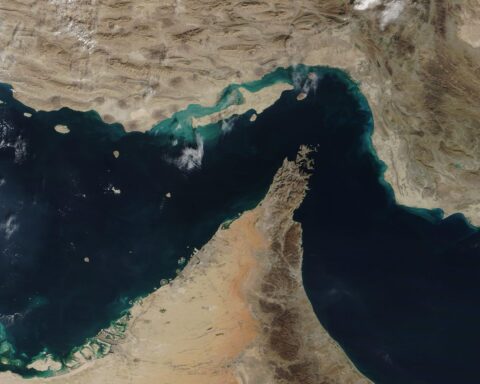
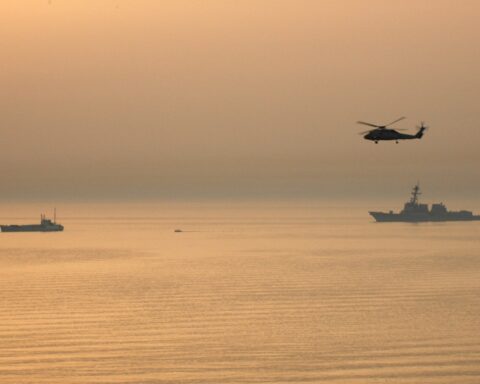
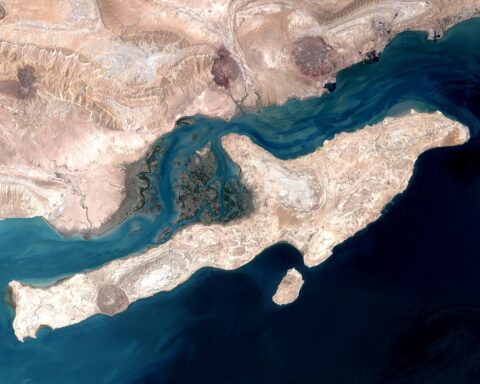
The Strait of Hormuz closure is the single largest factor. Before the war, roughly 17-20 million barrels per day of crude oil and petroleum products transited the waterway. Since Iran’s Revolutionary Guard Corps issued its warning prohibiting vessel passage, shipping traffic has collapsed from over 100 vessels daily to a trickle of 21 tankers in the war’s first three weeks, according to CNBC shipping data. The IRGC stated on 10 March that Iran was firing missiles with payloads of 1,000 kilograms or more at vessels, and Iran’s Defence Council warned that any attack on Iranian coastal territory would trigger the mining of all access routes throughout the Persian Gulf. As of late March, Iran has moved beyond military enforcement to economic extraction, demanding $2 million per ship for passage through the strait.

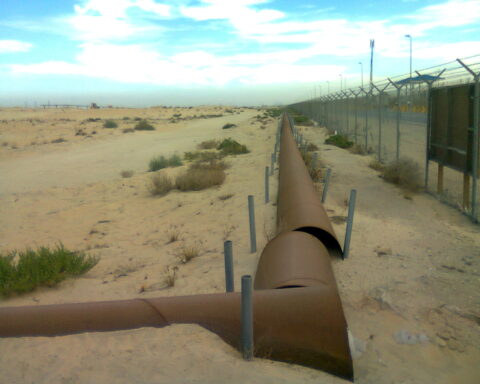
Saudi Arabia has partially compensated by diverting crude through its East-West Pipeline to the Red Sea port of Yanbu, bypassing Hormuz entirely. But that pipeline has a maximum capacity of roughly 5 million barrels per day, and the Iranian drone strike on the SAMREF refinery in Yanbu on 19 March demonstrated that even this alternative route is vulnerable. Aramco briefly paused crude loadings at Yanbu after the strike, and shipping insurance premiums for the Red Sea route immediately spiked.
Iran’s own production, which stood at roughly 3.2 million barrels per day before the war, has been severely disrupted by US-Israeli strikes on military and dual-use infrastructure. While exact figures are difficult to verify, satellite imagery and shipping data suggest Iranian exports have fallen below 500,000 barrels per day — a collapse of over 80 percent.
The cumulative effect is a supply deficit that dwarfs any previous disruption. The 1973 Arab oil embargo removed roughly 4.4 million barrels per day. The 1979 Iranian Revolution removed 5.6 million. The 1990 Kuwait invasion removed 4.3 million. The 2026 Iran war has removed more than all three combined.
Why Did OPEC+ Raise Output by Only 206,000 Barrels?
On 1 March 2026 — the day after the war began — OPEC+ agreed to increase production for April by 206,000 barrels per day. The group debated options ranging from 137,000 to 548,000 barrels per day before settling on the lower end. Against a supply deficit measured in millions of barrels, the increase was, in the words of one IEA official, “a rounding error.”
The decision reflected not a lack of urgency but a lack of capacity. OPEC’s spare production capacity — the additional oil that members could bring to market within 30 to 90 days — is concentrated almost entirely in Saudi Arabia and the UAE, which together hold roughly 2.5 million barrels per day of spare capacity, according to the EIA’s March 2026 estimates. Every other OPEC+ member is effectively producing at or near maximum capacity.
But spare capacity means nothing if you cannot ship the oil. Saudi Arabia’s 12 million barrel-per-day production capacity is constrained by export infrastructure. With Hormuz blocked and Yanbu under intermittent attack, the Kingdom can produce oil but struggles to deliver it. The UAE faces the same bottleneck: it has diverted crude through the Abu Dhabi Crude Oil Pipeline to the port of Fujairah on the Arabian Sea, but that pipeline’s capacity is limited to roughly 1.5 million barrels per day.
Russia, the most important non-OPEC partner in the OPEC+ framework, has its own calculations. Moscow benefits enormously from high oil prices — every $10 increase in Brent adds roughly $30 billion to Russia’s annual oil revenues. Russia has no incentive to flood the market and drive prices down, particularly while Western sanctions on Russian crude remain partially in place. President Trump’s decision to lift some Russian oil sanctions on 13 March further complicated the picture, allowing Russian barrels to partially replace Gulf crude in Asian markets.
The 206,000 barrel increase was the maximum that OPEC+ members could agree upon without either revealing the extent of their capacity constraints or triggering a political rupture between members who benefit from high prices and those desperate for more supply.
Prince Abdulaziz bin Salman’s Impossible Balancing Act
Saudi Arabia’s energy minister, Prince Abdulaziz bin Salman, half-brother of Crown Prince Mohammed bin Salman, has spent the past five years transforming OPEC from a loose coordination forum into a disciplined production cartel. His strategy relied on two pillars: voluntary production cuts to support prices, and a partnership with Russia through the OPEC+ framework that extended the cartel’s influence over roughly 40 percent of global oil supply.
Both pillars are now under extreme stress. The production cuts that Saudi Arabia championed throughout 2023 and 2024 — designed to keep Brent above $80 per barrel to fund Vision 2030 — have been rendered irrelevant by a war-driven supply shock that pushed crude past $126. The OPEC+ partnership with Russia is strained by Moscow’s transparent interest in prolonging the conflict’s price effects. And the cartel’s internal discipline has been shattered by the spectacle of one member attacking four others.
Prince Abdulaziz has made no public statement on Iran’s actions. He skipped the CERAWeek energy conference in Houston — the first time a Saudi energy minister has missed the event in over a decade. His absence was itself a signal: OPEC’s most powerful technocrat is focused on crisis management, not public diplomacy.
The challenge he faces has no precedent in OPEC’s history. Saudi Arabia must simultaneously defend its oil infrastructure from Iranian attack, maximize export volumes through alternative routes, coordinate with the IEA on strategic reserve releases, manage the OPEC+ relationship with Russia, and maintain some semblance of institutional continuity within OPEC itself — all while Crown Prince Mohammed bin Salman is reportedly considering whether to formally enter the war.
The Cartel Cohesion Index
Wars do not destroy institutions overnight. They fracture them along pre-existing fault lines. To understand how the Iran war is reshaping OPEC, it is useful to assess each member’s alignment with the organization’s core functions — production coordination, price management, and mutual non-aggression — across four dimensions: military stance in the current conflict, production compliance history, economic dependency on OPEC-managed prices, and political alignment with Saudi Arabia as the de facto leader.
| Member | Military Stance | Compliance Score (2024-25) | Oil Revenue Dependency | Alignment with Saudi Arabia | Cohesion Score (1-10) |
|---|---|---|---|---|---|
| Saudi Arabia | Belligerent (defending) | 98% | 62% of GDP | De facto leader | 10 |
| UAE | Belligerent (defending) | 89% | 30% of GDP | Strong ally | 9 |
| Kuwait | Belligerent (defending) | 95% | 58% of GDP | Strong ally | 9 |
| Iraq | Caught in crossfire | 72% | 92% of GDP | Ambivalent | 5 |
| Iran | Belligerent (attacking) | N/A (sanctioned) | 45% of GDP | Adversary | 1 |
| Algeria | Neutral | 91% | 20% of GDP | Moderate | 6 |
| Libya | Neutral (unstable) | Exempt | 95% of GDP | Weak | 4 |
| Nigeria | Neutral | 78% | 65% of GDP | Moderate | 6 |
| Venezuela | Neutral (pro-Iran rhetoric) | Exempt | 95% of GDP | Weak | 3 |
| Congo | Neutral | 85% | 50% of GDP | Moderate | 6 |
| Equatorial Guinea | Neutral | 82% | 70% of GDP | Moderate | 6 |
| Gabon | Neutral | 80% | 38% of GDP | Moderate | 6 |
The Cohesion Index reveals a three-tier fracture. The first tier — Saudi Arabia, the UAE, and Kuwait — represents the Gulf core that is under direct Iranian attack and most aligned with cartel discipline. These three nations account for roughly 40 percent of OPEC’s total production capacity and virtually all of its spare capacity. Their cohesion with each other has actually been strengthened by the war; shared threat has a unifying effect.
The second tier — Iraq, Algeria, Nigeria, Congo, Equatorial Guinea, and Gabon — represents the pragmatic middle. These nations benefit from high oil prices but have no direct stake in the Saudi-Iranian conflict. Their compliance with OPEC production quotas has been inconsistent, and they have little incentive to sacrifice their own output to compensate for a war they did not start. Iraq’s position is particularly precarious: its territory hosts both US military bases and Iranian-backed militias, and Iraqi militias have struck US bases 21 times in a single 24-hour period, making Baghdad a war zone within OPEC.
The third tier — Iran, Venezuela, and Libya — represents the organization’s dysfunction. Iran is the aggressor. Venezuela, which has historically aligned with Tehran on anti-Western rhetoric, cannot increase production meaningfully regardless of policy. Libya remains trapped in a civil conflict that makes consistent production impossible. These three members contribute instability rather than supply.
The weighted average Cohesion Score across all twelve members is 5.9 out of 10 — the lowest implicit reading since the organization’s founding. During the 1980-88 Iran-Iraq War, the equivalent score would have been approximately 6.5, as only two members were in conflict and the rest remained broadly cooperative. The 2026 war has driven cohesion to a structural low because the conflict directly involves five members and indirectly affects all twelve.
Which OPEC Members Are Winning and Which Are Losing?
War creates winners and losers even within alliances. Among OPEC members, the distribution of pain and profit from the 2026 conflict is highly unequal.
The clearest winners are OPEC members located far from the Persian Gulf who can export freely at inflated prices. Nigeria, which produced roughly 1.5 million barrels per day before the war, has seen its crude oil revenues increase by an estimated 40 percent simply because Brent is trading at $101 rather than the pre-war $71. Algeria, Congo, and Gabon enjoy similar windfalls. These African OPEC members face no export disruptions, no military threats, and no infrastructure damage — they collect the war premium on every barrel they sell.
The situation is reversed for the Gulf members. Saudi Arabia can produce 12 million barrels per day but is struggling to export more than 7-8 million through Yanbu and other non-Hormuz routes. The Kingdom has increased production, according to World Oil surveys showing Saudi Arabia driving OPEC output higher in early March, but the barrels that cannot reach tankers generate no revenue. The UAE faces the same constraint: production capacity of roughly 4 million barrels per day, but export routes limited by the Hormuz blockade to roughly 2-2.5 million through the Fujairah pipeline.
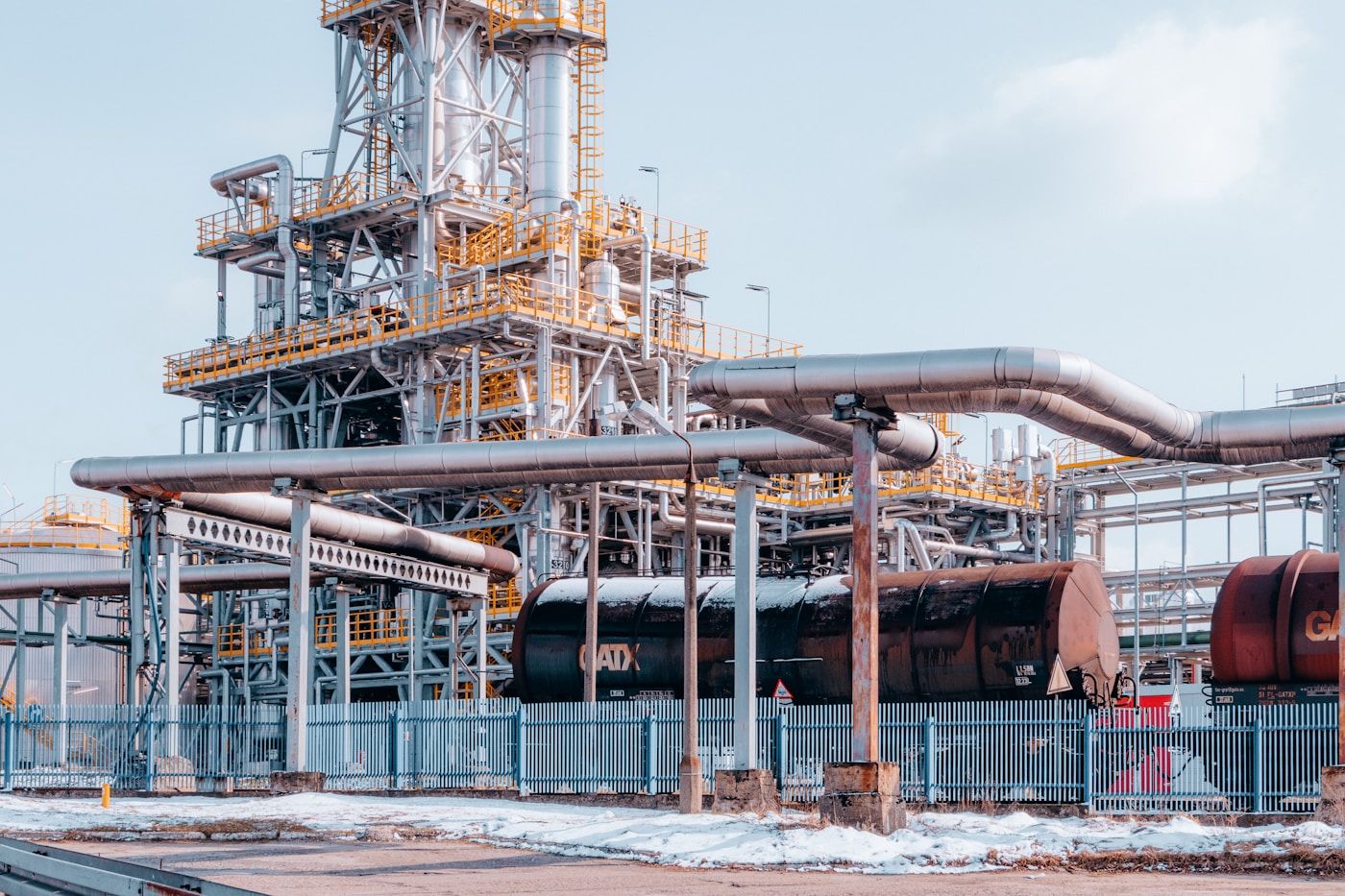
Iraq is the most damaged OPEC member in institutional terms. Baghdad declared force majeure on all foreign-operated oil fields on 21 March, effectively halting production at fields managed by BP, ExxonMobil, and other international oil companies. Iraq’s southern export terminal at Basra — the country’s economic lifeline — is within range of Iranian missiles. Iraqi production has fallen from roughly 4.5 million barrels per day to an estimated 2.5 million, and the revenues that fund 92 percent of Iraq’s government budget have been cut in half.
Iran, the war’s instigator within OPEC, has suffered the most catastrophic production losses. US-Israeli strikes have targeted dual-use infrastructure including port facilities, power plants, and communications networks. Iranian crude exports have collapsed below 500,000 barrels per day from a pre-war level of roughly 1.5 million (already constrained by Western sanctions). Iran’s oil revenue, which funded roughly 45 percent of government spending, has essentially evaporated.
| Member | Pre-War Output (mb/d) | Current Output (mb/d) | Pre-War Price ($/bbl) | Current Price ($/bbl) | Net Revenue Effect |
|---|---|---|---|---|---|
| Saudi Arabia | 10.1 | 10.5 | 71 | 101 | Export-constrained despite higher output |
| UAE | 3.8 | 3.9 | 71 | 101 | Pipeline export at Fujairah limit |
| Kuwait | 2.7 | 2.0 | 71 | 101 | Export severely disrupted |
| Iraq | 4.5 | 2.5 | 71 | 101 | Force majeure; revenue halved |
| Iran | 3.2 | 0.5 | 65 | N/A | Catastrophic collapse |
| Nigeria | 1.5 | 1.5 | 71 | 101 | +40% revenue windfall |
| Algeria | 1.0 | 1.0 | 71 | 101 | +40% revenue windfall |
| Libya | 1.2 | 1.1 | 71 | 101 | Modest windfall |
| Venezuela | 0.9 | 0.8 | 65 | 95 | Minimal change (sanctions) |
The asymmetry is politically corrosive. OPEC’s non-Gulf members are profiting handsomely from a war that is devastating the Gulf members who built and sustained the organization. Nigeria and Algeria have no incentive to increase production — doing so would only depress the prices that are filling their treasuries. The Gulf members who desperately want to pump more oil cannot get it to market. The result is an organization in which the interests of its members have never been more misaligned.
Can the IEA Replace What OPEC Cannot Deliver?
The International Energy Agency’s decision on 11 March to release 400 million barrels of oil from its members’ strategic reserves represented the largest coordinated stockpile release in the agency’s 50-year history. The United States contributed 172 million barrels from the Strategic Petroleum Reserve. Japan, Germany, South Korea, and other IEA members committed the remainder. The IEA described the action as a response to “the greatest global energy and food security challenge in history.”
The release is a direct challenge to OPEC’s relevance. The IEA was founded in 1974 specifically as a counterweight to OPEC — a consumers’ cartel to balance the producers’ cartel. For five decades, the IEA’s strategic reserves remained a theoretical deterrent, deployed only in limited quantities during the 1991 Gulf War, after Hurricane Katrina in 2005, and during the Libyan civil war in 2011. The 2026 release is of an entirely different magnitude: 400 million barrels is equivalent to roughly four days of total global oil consumption.
Yet the market’s response was underwhelming. Brent crude was trading above $90 per barrel when the IEA made its announcement and continued to rise in the following days, briefly touching $126 before the volatile crash on 23 March. Analysts described the release as a “Band-Aid,” arguing that the daily flow rate from strategic reserves — roughly 3-4 million barrels per day at maximum discharge — cannot compensate for a Gulf supply disruption measured at 10 million barrels per day.
The IEA’s action exposes a structural reality: strategic reserves can smooth short-term supply disruptions but cannot substitute for OPEC’s role as the world’s marginal producer. The reserves are finite. At current discharge rates, the 400-million-barrel release will be exhausted within approximately 120 days. If the war continues beyond that window — and Israel’s military has indicated it needs “several more weeks” to complete its objectives — the IEA will have spent its ammunition without resolving the underlying supply crisis.
The deeper implication is that OPEC remains indispensable precisely because no one else can do what OPEC does: manage the flow of 30 million barrels of crude oil per day from some of the world’s largest reserves to refineries across the globe. The IEA can release stored oil. It cannot produce new oil. The ghost ships drifting through the Strait of Hormuz are a reminder that production means nothing without safe passage.
Russia Chose a Side Without Leaving the Table
Russia’s position in the OPEC+ framework during the 2026 war is a masterclass in strategic ambiguity. Moscow has not condemned Iran’s attacks on Gulf states. It has not supported them either. It has not increased production to fill the supply gap. And it has quietly pocketed the revenue windfall from $100-plus oil prices while its European sanctions are partially eased.
President Trump’s decision on 13 March to lift some sanctions on Russian oil exports was driven by the need to find alternative crude supplies for markets cut off from Gulf oil. The irony was exquisite: the United States, which had sanctioned Russian oil to punish Moscow for invading Ukraine, was now lifting those sanctions because the United States’ own military campaign against Iran had created an oil shortage that only Russian barrels could partially fill.
For Russia, the Iran war is an unambiguous economic windfall. Every $10 increase in Brent crude prices adds approximately $30 billion to Moscow’s annual petroleum revenues. With Brent averaging roughly $100 per barrel since the war began — compared to $71 before — Russia is earning an additional $90 billion in annualized oil revenue. This windfall comes with no military expenditure, no diplomatic cost, and no requirement to increase production.
Russia’s behavior within OPEC+ has reflected this calculus. Moscow supported the minimal 206,000 barrel-per-day increase rather than pushing for a larger response. Russian diplomats have positioned Moscow as a mediator rather than a participant in the conflict. And Russian oil companies have aggressively marketed their crude to Asian buyers who previously relied on Gulf supplies, capturing market share that may prove permanent even after the war ends.
The OPEC+ partnership, which Prince Abdulaziz bin Salman spent years cultivating, now serves Russian interests more effectively than Saudi ones. Russia enjoys high prices without the burden of being bombed. Saudi Arabia bears the cost of defending its infrastructure while watching Russia fill the export vacuum its constrained pipelines cannot serve. This asymmetry will define the post-war negotiations within OPEC+ — and may ultimately force Riyadh to reconsider whether the Russian partnership delivers sufficient value to justify its continuation.
Why OPEC Might Emerge Stronger From This War
The conventional analysis holds that the 2026 war will permanently weaken OPEC. The cartel’s inability to respond adequately, the fracture between Gulf and non-Gulf members, and the IEA’s unprecedented intervention all suggest an organization in terminal decline. This analysis is wrong.
The war has demonstrated, more powerfully than any OPEC meeting or production cut ever could, that the world remains catastrophically dependent on the oil that flows from OPEC member states. No amount of renewable energy investment, no fleet of electric vehicles, no strategic petroleum reserve of any size can substitute for the 30 million barrels per day that OPEC members pump from the ground. The war has not weakened OPEC’s fundamental proposition — it has violently confirmed it.
The 2026 war proved what fifty years of OPEC communiqués could not: the global economy runs on Gulf oil, and there is no substitute at any price.
Editorial analysis, March 2026
Consider the evidence. The Philippines declared an energy emergency on 24 March because it cannot source sufficient crude oil. Japan and South Korea, the world’s fourth and fifth largest oil importers, face their worst energy crisis since the 1970s. India has deployed warships to escort tankers, but even the world’s fifth-largest economy sits nine days from empty in its strategic reserves, with 375,000 citizens evacuated from the Gulf and the rupee at historic lows. The IEA burned through its strategic reserves at an unprecedented rate. Every one of these responses confirms that OPEC’s oil is not optional — it is existential for the global economy.
When the war ends — and wars always end — OPEC will be positioned to reassert control over oil markets with greater leverage than before. Iran’s post-war production capacity will be diminished by infrastructure damage, making Tehran a weaker voice in OPEC deliberations and a more compliant quota participant. Saudi Arabia’s role as the world’s indispensable swing producer will be reinforced by the demonstrated inability of any other country or institution to fill the supply gap. And the memory of $126 oil will give consuming nations a powerful incentive to cooperate with OPEC rather than antagonize it.
The historical parallel is the 1973 oil embargo, which was universally predicted to destroy OPEC’s credibility. Instead, it cemented the organization’s power for a generation. Consuming nations learned that defying OPEC carried unacceptable economic costs. The same lesson is being taught again in 2026, at a scale that makes the 1973 embargo look modest.
What Comes After the Cartel’s Civil War?
Three scenarios define OPEC’s post-war future. The first, and most likely, is an institutional reset in which Saudi Arabia uses its enhanced leverage to impose a new internal order. Iran returns to OPEC meetings as a diminished member — its production capacity reduced, its diplomatic position weakened, its ability to challenge Saudi leadership eliminated for a decade or more. Prince Abdulaziz bin Salman negotiates a revised OPEC+ framework that gives Saudi Arabia an even larger share of production quotas, reflecting the Kingdom’s demonstrated role as the only producer capable of managing global supply during a crisis.
The second scenario is a formal split. OPEC divides into two blocs: a Gulf-centric “OPEC Core” led by Saudi Arabia, the UAE, and Kuwait, which controls the vast majority of spare capacity and export infrastructure; and a peripheral group of African and Latin American producers that coordinate loosely but lack the cohesion or capacity to influence global prices independently. This scenario would reduce OPEC’s membership but potentially increase its effectiveness, as the Gulf core would no longer be constrained by the competing interests of members with minimal spare capacity and inconsistent compliance records.
The third scenario is dissolution — OPEC ceases to function as a meaningful institution, and oil markets revert to a fully competitive model in which each producer maximizes individual output without coordination. This outcome is the least likely. OPEC’s institutional gravity is enormous: it controls 36 percent of global oil production, holds 80 percent of the world’s proven reserves, and has been the dominant force in oil markets for over six decades. No member — including Iran — benefits from OPEC’s collapse, because the absence of production coordination would trigger a price war that devastates every oil-dependent economy.
The most probable path forward combines elements of the first and second scenarios. Saudi Arabia will emerge from the war as OPEC’s undisputed leader, with the moral authority of having been attacked and the practical leverage of holding the world’s only meaningful spare production capacity. Iran will return to the table humbled, its military degraded, its infrastructure damaged, and its diplomatic isolation deepened by the expulsion of its military attachés from multiple Gulf states. The OPEC+ framework with Russia will continue but on revised terms that give Saudi Arabia greater pricing power and Moscow less influence over production decisions.
The financial markets are already pricing in this outcome. Saudi Aramco’s stock has held steady through the war despite the operational chaos, suggesting investors believe the Kingdom will emerge with its oil infrastructure intact and its market position enhanced. The 13 percent oil price crash on 23 March — triggered by reports of diplomatic progress toward a ceasefire — demonstrated that markets believe the war will end with OPEC’s fundamental structure preserved.
OPEC was born from the recognition that oil-producing nations needed collective bargaining power to protect their interests. That recognition has not changed. What has changed is the internal balance of power within the organization. When OPEC’s delegates next gather in Vienna — whether in weeks or months — they will sit around the same table but in a fundamentally different hierarchy. Saudi Arabia will sit at the head. Iran will sit at the foot. And the cartel that both nations created together sixty-six years ago will continue, reshaped but not destroyed, because the world that depends on its oil has no viable alternative.
Frequently Asked Questions
Is Iran still a member of OPEC during the 2026 war?
Iran remains a full member of OPEC as of March 2026. OPEC’s charter contains no mechanism to expel or suspend a member, even one that has launched military strikes against other members. Iran’s delegate retains a seat at the Vienna secretariat, though meaningful participation in production coordination has effectively ceased since the war began on 28 February 2026.
How much oil has the Iran war removed from global markets?
The IEA estimates that at least 10 million barrels per day have been removed from global supply as of mid-March 2026, making this the largest oil supply disruption in history. The losses result from the Strait of Hormuz blockade, direct infrastructure damage to Iranian facilities, precautionary shutdowns across the Gulf, and Iraq’s declaration of force majeure on foreign-operated oil fields.
Why can Saudi Arabia not simply increase production to compensate?
Saudi Arabia has roughly 2 million barrels per day of spare production capacity, bringing its theoretical maximum to 12 million barrels per day. However, the Kingdom’s ability to export is constrained by the Hormuz blockade. The East-West Pipeline to Yanbu can transport roughly 5 million barrels per day, but the Iranian drone strike on the SAMREF refinery on 19 March demonstrated that even this route is vulnerable to attack.
Has OPEC ever had members at war with each other before?
OPEC has experienced two previous conflicts between members: the Iran-Iraq War from 1980 to 1988 and Iraq’s invasion of Kuwait in 1990. Both damaged the organization’s cohesion and disrupted oil markets, but neither involved the closure of the Strait of Hormuz or simultaneous attacks on four OPEC member states. The 2026 conflict is unprecedented in its scope and severity.
Will OPEC survive the Iran war?
OPEC is likely to survive but in a restructured form. The organization controls 36 percent of global oil production and holds 80 percent of proven reserves. No alternative institutional framework exists to coordinate the production of 30 million barrels per day. Saudi Arabia’s enhanced leverage as the indispensable swing producer will allow Riyadh to reshape OPEC’s internal hierarchy, with Iran returning as a diminished member after the war ends.
What is Russia’s role in OPEC+ during the war?
Russia has maintained strategic ambiguity within OPEC+, supporting only a minimal production increase of 206,000 barrels per day while benefiting from oil prices roughly 40 percent higher than pre-war levels. Moscow has not condemned Iran’s attacks on Gulf OPEC members. The partial lifting of US sanctions on Russian oil on 13 March has allowed Russian crude to capture market share in Asia that previously went to Gulf producers.