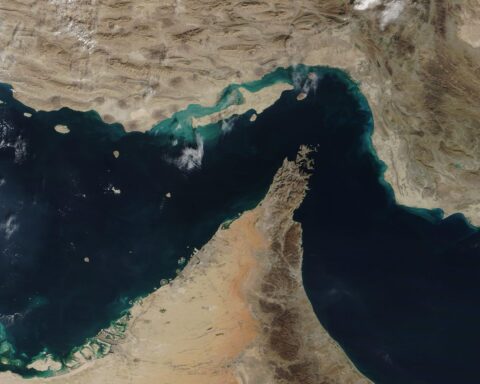

NEW DELHI — India has 9.5 days of strategic oil reserves. Its currency just hit a record low. Ninety per cent of its cooking gas imports pass through a strait that Iran has effectively closed. And 375,000 of its citizens have already fled the Gulf. The world’s most populous nation is not a combatant in the Iran war, yet no country outside the Persian Gulf itself is paying a steeper price for a conflict it neither started nor wanted.
The Strait of Hormuz crisis has exposed a vulnerability that decades of Indian economic planning failed to address. India imports 88 per cent of its crude oil, and more than half of that supply originates in the Middle East. With Tehran now deciding who passes through Hormuz and Saudi Aramco slashing allocations to Asian buyers for the second consecutive month, New Delhi confronts an energy emergency that reaches from the refineries of Jamnagar to the kitchen stoves of Kolkata. The rupee’s slide toward the psychologically devastating 100-per-dollar mark, LPG queues stretching around city blocks before dawn, and Indian Navy warships escorting tankers through the Arabian Sea all point to a single uncomfortable truth: India built the world’s fifth-largest economy on a foundation of Gulf oil, and that foundation is cracking.
Table of Contents
- How Dependent Is India on Gulf Oil?
- What Does the Hormuz Closure Mean for Indian Households?
- The Indian Navy’s Tanker Escort Gambit
- Why Is the Rupee Falling to Record Lows?
- India’s Diplomatic Tightrope Between Washington and Tehran
- How Long Can India’s Strategic Reserves Last?
- The Energy Dependence Matrix
- Can Aramco Still Supply Its Biggest Asian Customer?
- Three Hundred and Seventy-Five Thousand Indians Fled the Gulf
- What Happens to India’s Gateway to Central Asia?
- Will the Hormuz Crisis Accelerate India’s Energy Transition?
- India After Hormuz
- Frequently Asked Questions
How Dependent Is India on Gulf Oil?
India consumes between 5 million and 5.6 million barrels per day of refined petroleum products, making it the world’s third-largest oil consumer behind the United States and China. The country imports roughly 88 per cent of its crude oil needs, according to India’s Petroleum Planning and Analysis Cell, a dependency ratio that has barely moved in two decades despite ambitious government targets to reduce it.
Approximately 50 to 53 per cent of India’s crude oil — between 2.5 million and 2.8 million barrels per day as of February 2026 — originates in the Middle East. Saudi Arabia remains India’s single largest supplier, followed by Iraq, the United Arab Emirates, and Kuwait. Before the Hormuz crisis, these four countries alone accounted for more crude flowing into Indian refineries than all other sources combined.
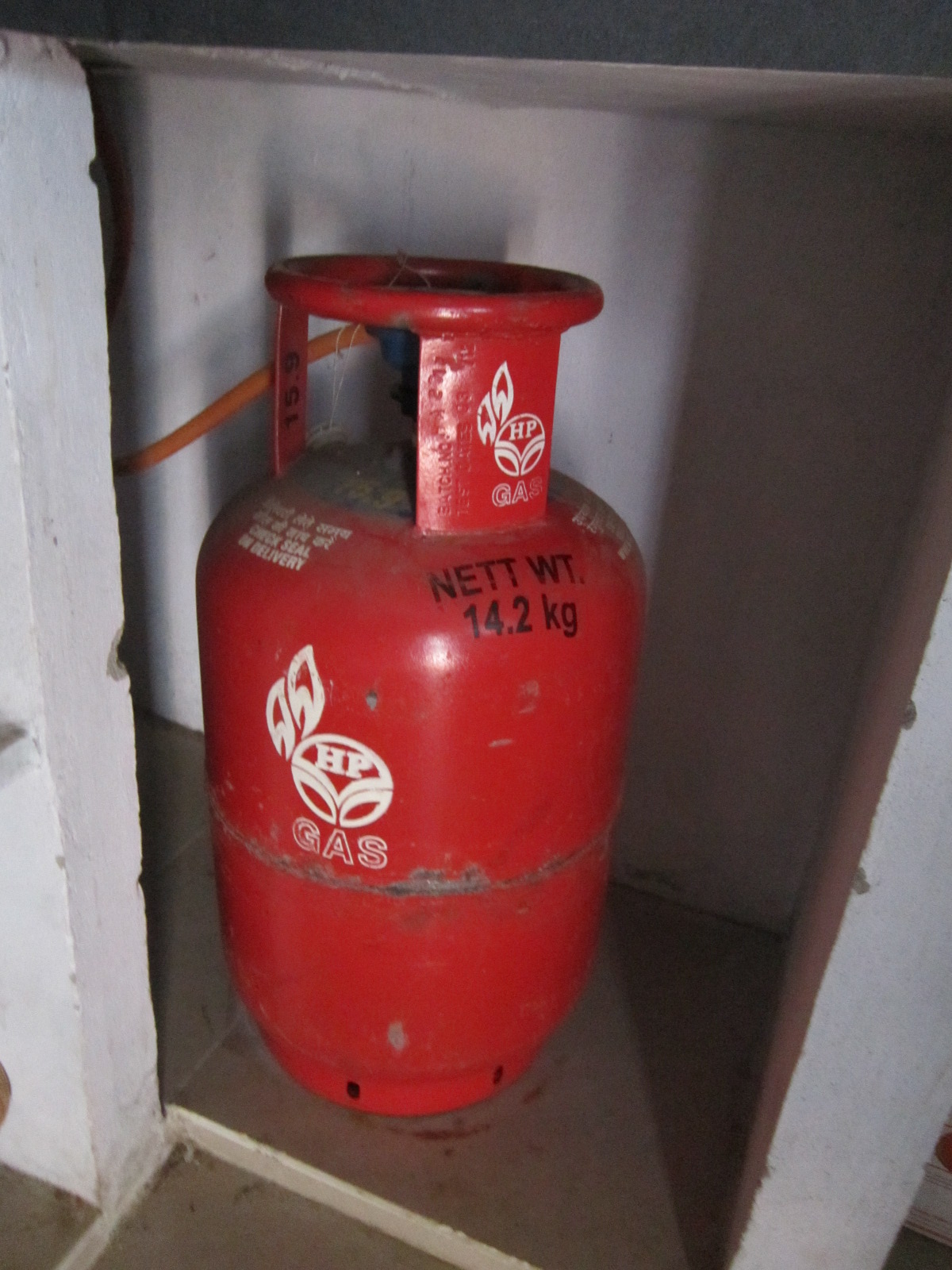
The dependency extends well beyond crude oil. Qatar and the UAE account for 53 per cent of India’s liquefied natural gas imports, according to the International Energy Agency. More critically, approximately 90 per cent of India’s LPG imports — accounting for roughly 60 per cent of total domestic consumption — normally transit through the Strait of Hormuz. For a country where 300 million households rely on LPG cylinders for daily cooking, this is not an abstract geopolitical statistic. It is the difference between a functioning kitchen and a cold stove.
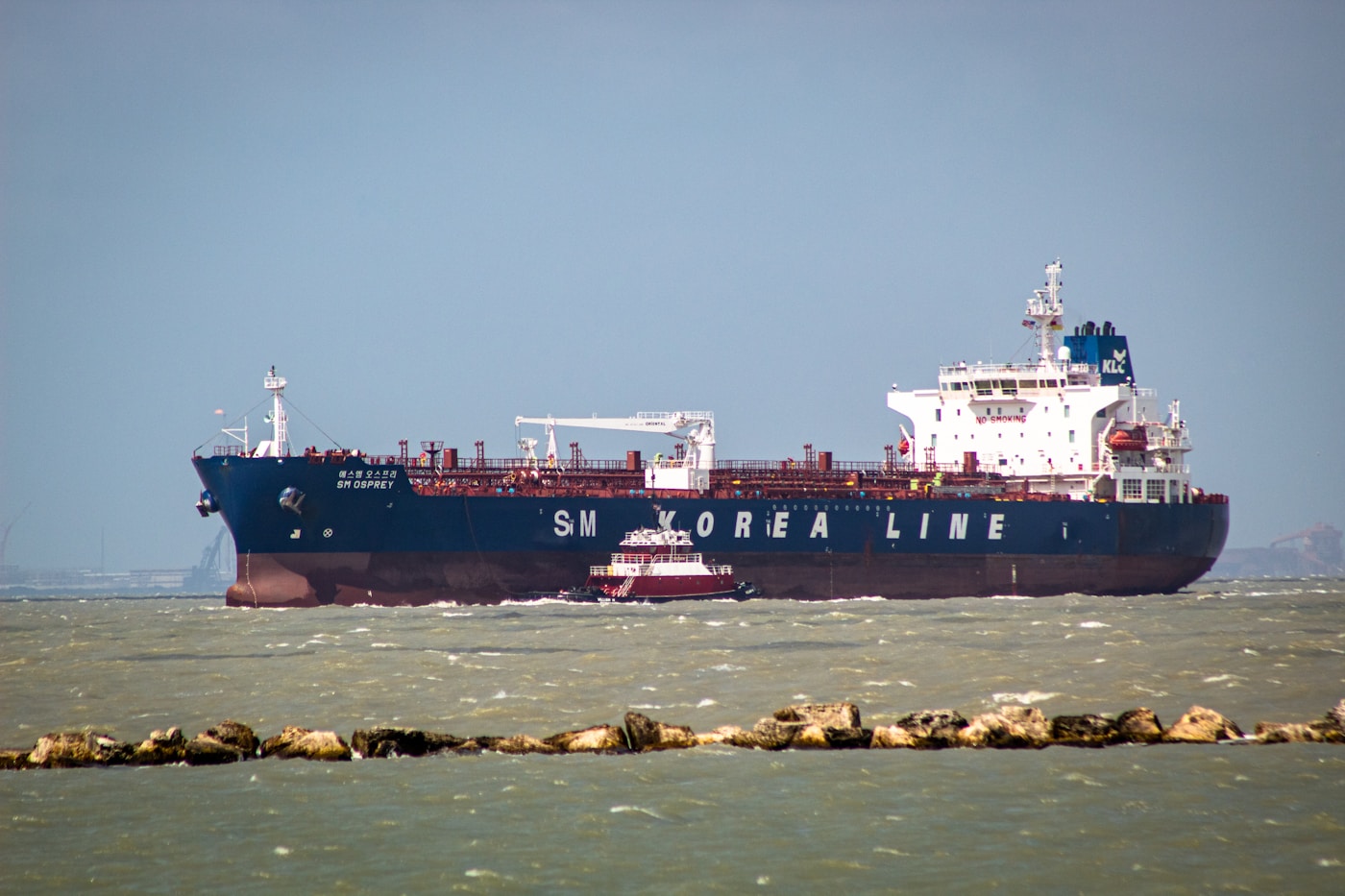
India has diversified its supplier base to some extent, now importing crude from approximately 40 countries. Russian oil, which surged to roughly 40 per cent of India’s imports after Moscow offered steep discounts following the 2022 invasion of Ukraine, provides a partial buffer. But Russian crude cannot replace the specific grades that Indian refineries are configured to process. Jamnagar, the world’s largest refining complex operated by Reliance Industries, and the state-owned Indian Oil Corporation’s facilities were designed around Arab Light and similar Gulf grades. Switching to alternative crudes requires blending adjustments, yield trade-offs, and often weeks of recalibration.
The Middle East briefing 3,000+ readers start their day with.
One email. Every weekday morning. Free.
| Metric | Value | Source |
|---|---|---|
| Daily oil consumption | 5.0–5.6 million bpd | India PPAC, 2026 |
| Import dependency | 88% | India PPAC |
| Share from Middle East | 50–53% | IEA, Feb 2026 |
| LPG imports via Hormuz | 90% | MUFG Research |
| LNG from Qatar + UAE | 53% | IEA |
| Households using LPG | ~300 million | India Petroleum Ministry |
| Indian workers in Saudi Arabia | ~2.6 million | India MEA |
| Strategic petroleum reserves | 9.5 days | BusinessToday, Mar 2026 |
What Does the Hormuz Closure Mean for Indian Households?
The Hormuz crisis hit Indian kitchens before it hit Indian policy papers. Within the first two weeks of the strait’s effective closure, LPG delivery delays stretched from seven days to as long as two weeks across major cities, according to NPR reporting from the ground. In several states, residents began queuing outside gas distribution centres as early as three in the morning to secure a single cylinder.
The Indian government responded by invoking the Essential Commodities Act, conducting over 12,000 raids and seizing more than 15,000 LPG cylinders to combat hoarding and black-market profiteering, according to India’s Ministry of Consumer Affairs. The government simultaneously began diverting LPG away from industrial users — canteens, hotels, restaurants, and factories — to prioritise household supply. For India’s restaurant industry, which employs an estimated 7.3 million people and relies almost entirely on LPG for cooking, the move was devastating.
CNN reported that fears of cooking gas shortages fuelled panic-buying of alternatives like induction stoves across India’s major cities. The political fallout was immediate. On 16 March, West Bengal Chief Minister Mamata Banerjee led a large protest rally in Kolkata, where participants carried cut-outs of cooking gas cylinders and chanted slogans criticising the Modi government’s failure to maintain LPG supply. The opposition Indian National Congress seized on the crisis, with party leaders calling it proof that India’s energy security had been neglected for years.
The LPG shortage reveals a structural weakness that predates the Iran war. India’s Pradhan Mantri Ujjwala Yojana programme, launched in 2016, successfully connected over 100 million households to LPG for the first time. The scheme was celebrated as one of the Modi government’s signature achievements. But it created a massive new demand pool — 300 million households — without proportionally expanding domestic LPG production or diversifying supply routes beyond the Gulf. When the Hormuz chokepoint closed, the very success of the Ujjwala programme amplified the crisis.
The Indian Navy’s Tanker Escort Gambit
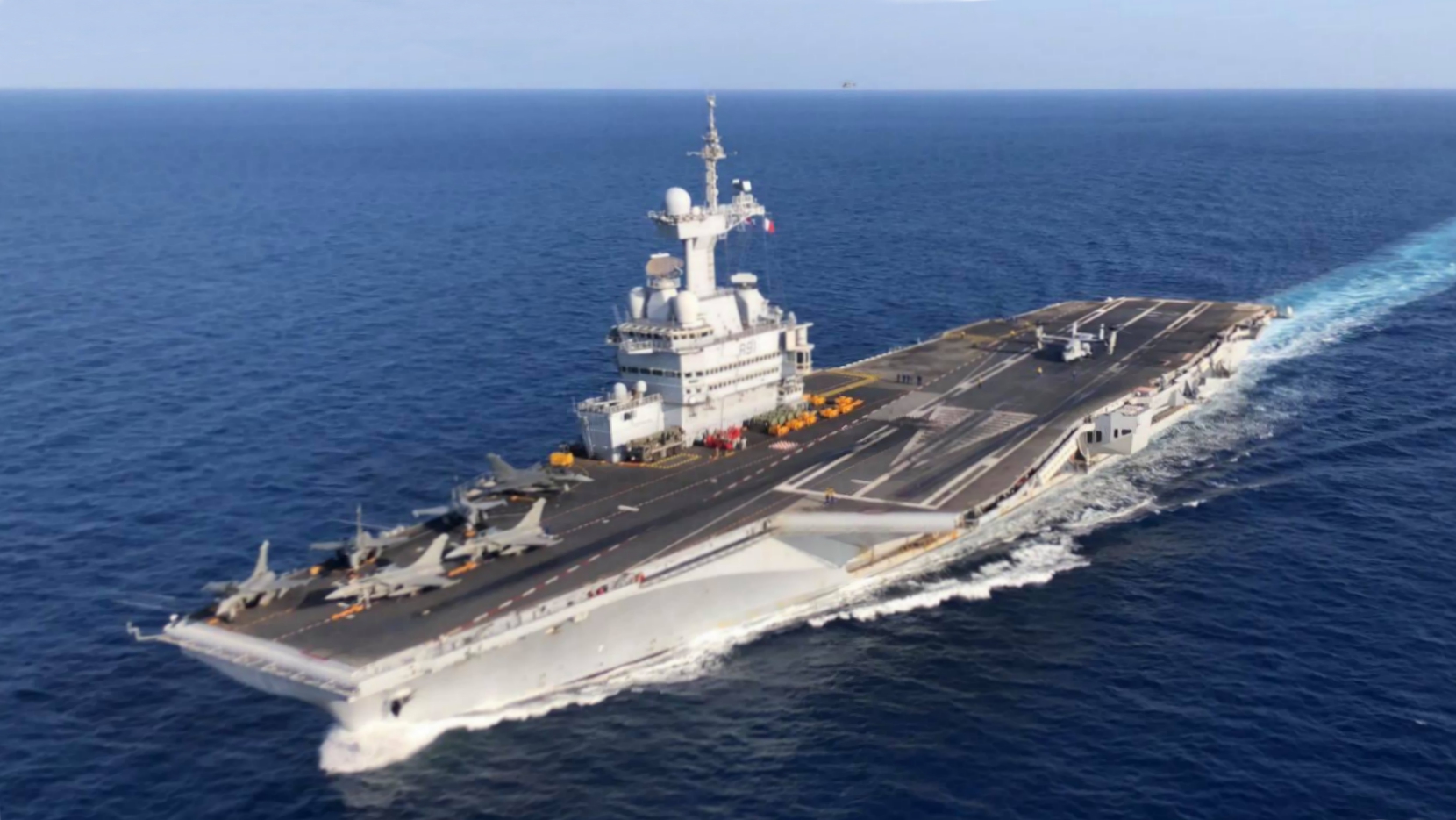
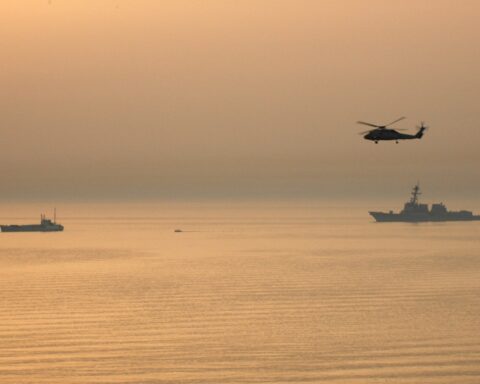
India’s response to the Hormuz crisis has, unusually, been led not by its diplomats but by its navy. Under the reactivated Operation Sankalp — originally launched during the 2019 Gulf tensions — the Indian Navy deployed over half a dozen warships, including logistics vessels, to the Gulf of Oman and Arabian Sea. The objective, as described by Bloomberg, was to escort Indian-flagged fuel vessels from the mouth of the Strait of Hormuz to safer waters in the northern Arabian Sea.
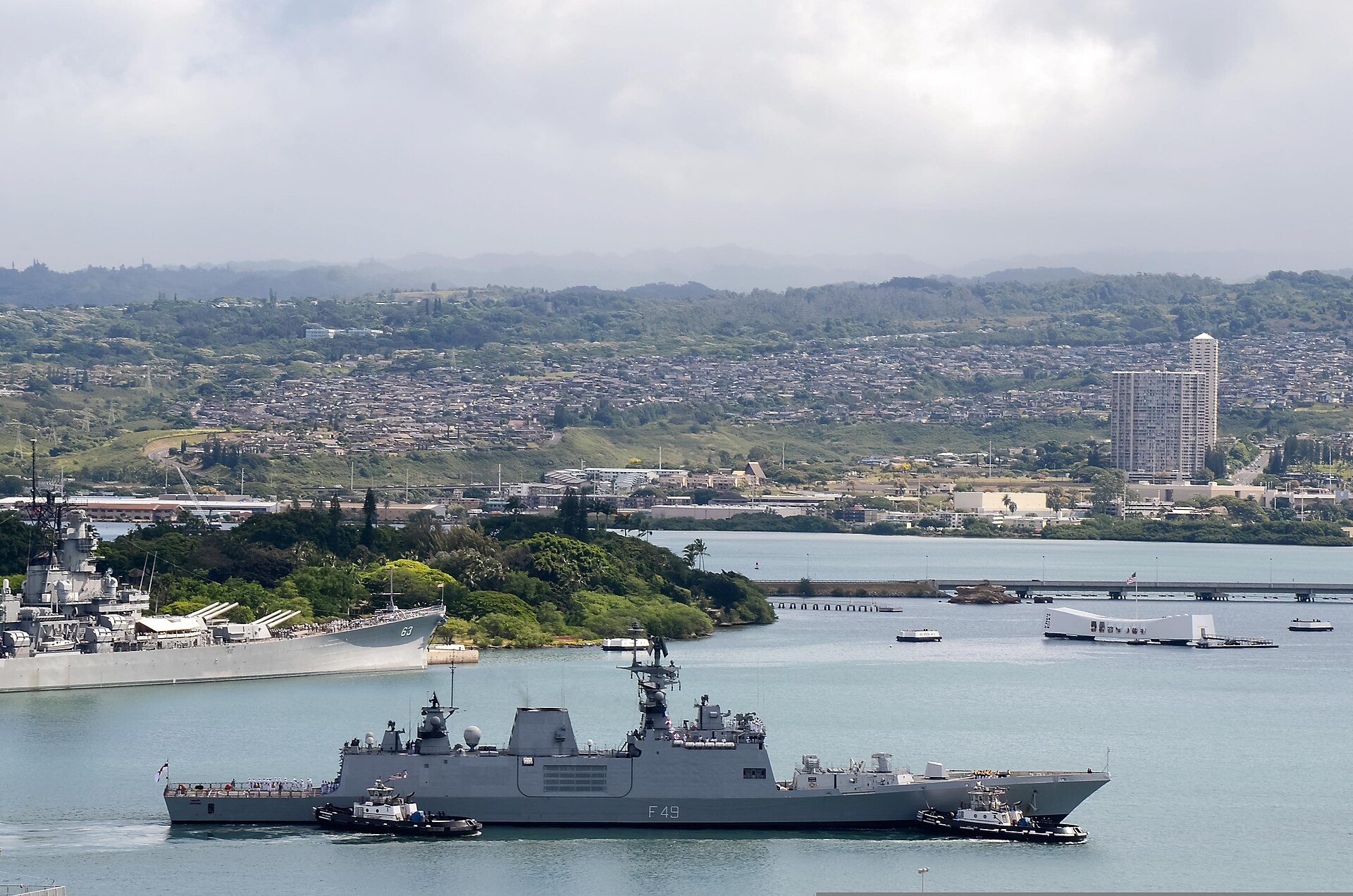
The navy’s positioning reveals New Delhi’s calculus. Indian warships are stationed east of Hormuz and will not enter the strait itself — a deliberate decision to avoid being drawn into the military confrontation between Iran and the US-led coalition. India secured the safe transit of two state-owned LPG carriers in the days following the initial Iranian blockade, and has since been negotiating with Tehran for several more vessels to be allowed through. As of late March, 22 India-flagged vessels remained stranded inside the Persian Gulf, including six LPG carriers, one LNG ship, and four crude oil tankers.
Perhaps the most remarkable development has been the quiet coordination between India and Pakistan on tanker escorts. Both nations, normally fierce rivals, deployed warships to the Gulf of Oman to protect their nationally owned tankers, according to USNI News. The sight of Indian and Pakistani naval vessels operating in the same waters for the same purpose — keeping oil flowing to South Asia — underscored the severity of the crisis. Neither country’s domestic politics would normally permit such cooperation, but energy desperation created an alignment that diplomacy never could.
The Indian Navy’s task force remains a defensive measure, not a projection of power. India does not have the carrier strike groups or the aerial refuelling capability to contest Iranian control of the strait. What it can do is provide a credible deterrent against opportunistic attacks on Indian-flagged vessels in international waters east of Hormuz — a narrow but vital mission that keeps at least a trickle of energy imports flowing while diplomats search for a broader solution.
Why Is the Rupee Falling to Record Lows?
The Indian rupee hit a record low of 93.94 against the US dollar on 23 March, extending its year-to-date depreciation to 3.6 per cent and raising serious questions about whether the psychologically significant 100-per-dollar level might be reached. For an economy that imports 88 per cent of its oil — priced in dollars — every rupee decline amplifies the cost of the crisis.
Three forces are driving the currency’s slide. Brent crude prices surged as much as 65 per cent to $120 per barrel following the Hormuz closure, according to Business Standard, directly increasing India’s dollar demand for energy imports. Foreign portfolio investors have sold Indian equities worth 1.07 trillion rupees ($11.4 billion) in calendar year 2026, draining dollars from the market. And India’s 10-year government bond yield has climbed to 6.839 per cent from 6.6 per cent before the war, pricing in inflation expectations that the Reserve Bank of India may struggle to contain.
| Indicator | Pre-War (Feb 2026) | Current (Late Mar 2026) | Change |
|---|---|---|---|
| INR/USD exchange rate | 90.67 | 93.94 | -3.6% |
| Brent crude ($/barrel) | ~73 | ~120 | +65% |
| 10-year bond yield | 6.60% | 6.839% | +24 bps |
| FPI equity outflows (CY2026) | — | ₹1.07 trillion | — |
| Aramco Arab Light premium | ~$0.50/bbl | $2.50/bbl | +$2.00 |
MUFG Research warned that the Hormuz closure is “not just about oil prices for INR” — the indirect effects across manufacturing, transportation, agriculture, and consumer prices could push India toward a stagflationary environment of higher inflation and weaker growth simultaneously. Every $10 increase in oil prices widens India’s current account deficit by approximately 0.4 per cent of GDP, according to the Reserve Bank of India’s own estimates. At $120 per barrel, the current account deficit is on track to exceed 4 per cent of GDP — territory India has not entered since the 1991 balance-of-payments crisis that forced it to pledge its gold reserves to the Bank of England.
The parallel to 1991 is one that Indian economic commentators have begun drawing with increasing frequency. That crisis, triggered partly by the Gulf War’s impact on oil prices and remittance flows, led to India’s landmark economic liberalisation. Whether the 2026 Hormuz crisis will produce a similar structural transformation depends on how long the strait remains closed and how aggressively New Delhi responds.
India’s Diplomatic Tightrope Between Washington and Tehran
India has declared itself neutral in the Iran war. But neutrality, as the Indian opposition has been quick to point out, is not the same as irrelevance — and India’s version of neutrality has satisfied no one.
The timeline is damaging. Prime Minister Narendra Modi visited Israel just 48 hours before American and Israeli warplanes struck Iranian targets on 28 February, killing Supreme Leader Ali Khamenei and launching the war. The visit’s proximity to the strikes became, as Foreign Policy noted, “the central symbol of India’s diplomatic miscalculation.” When Iran retaliated against American bases in Gulf countries, Modi posted on X condemning the attacks. When the US and Israel launched their initial strikes on Iran, the Modi government said nothing. The asymmetry was not lost on Tehran.
Opposition leader Sonia Gandhi described India’s posture not as neutrality but as “abdication” and a “grave betrayal” of India’s traditional balanced approach to Middle Eastern affairs, according to The Diplomat. The criticism struck at the core of India’s diplomatic identity. Since Jawaharlal Nehru, India has prided itself on strategic autonomy — the ability to maintain productive relationships with all parties in a conflict. The Iran war has tested that doctrine to breaking point.
India needs the United States as a defence and technology partner. It needs Israel as an arms supplier — Israeli-origin radar and air defence systems form a critical layer of India’s own missile defence architecture. It needs Iran for the Chabahar port, the International North-South Transport Corridor, and as a counterweight to Pakistan. And it needs Saudi Arabia and the Gulf states for oil, gas, and the $90 billion in annual remittances that flow from the Indian diaspora in the region back to families in Kerala, Andhra Pradesh, and Uttar Pradesh.
The war has made it impossible to satisfy all of these relationships simultaneously. India’s cautious approach — expressing concern while avoiding explicit condemnation — has, according to Asia Times, “lost India’s voice in the Middle East” at precisely the moment when that voice matters most.
How Long Can India’s Strategic Reserves Last?
India’s strategic petroleum reserves cover just 9.5 days of crude oil demand at full capacity, according to exclusive reporting by BusinessToday on 24 March. But the reserves are not at full capacity. The Indian Strategic Petroleum Reserves Limited (ISPRL) holds approximately 3.372 million metric tonnes of crude across three underground facilities — Visakhapatnam (1.33 MMT), Mangaluru (1.5 MMT), and Padur (2.5 MMT) — representing roughly 64 per cent of total storage capacity of 5.33 MMT.
At current fill levels, the strategic reserves alone cover fewer than seven days. Oil marketing companies maintain additional commercial stocks covering approximately 64.5 days, bringing the total national petroleum storage capacity to 74 days. This falls well short of the International Energy Agency’s recommendation of 90 days of net oil imports — a benchmark that India, as an IEA associate member, has committed to meeting but never reached.
Bloomberg reported on 9 March that India was “not mulling a strategic oil reserve release,” with officials arguing that the reserves should be held for a more severe disruption. The decision frustrated critics who argued that the crisis already constituted exactly the scenario the reserves were designed for. SM Vaidya, the former chairman of Indian Oil Corporation, publicly stated that India should “go aggressive in ramping petroleum reserve capacity” — an implicit admission that existing reserves were inadequate.
| Country | SPR Capacity (days) | Total Reserves (incl. commercial) | Import Dependency |
|---|---|---|---|
| Japan | ~115 days | ~200 days | 97% |
| South Korea | ~90 days | ~148 days | 97% |
| China | ~80 days | ~120 days | 72% |
| United States | ~25 days | ~150 days | 37% |
| India | ~9.5 days | ~74 days | 88% |
The comparison with Japan is instructive. Japan, which imports 97 per cent of its oil, maintains strategic reserves covering approximately 115 days — more than twelve times India’s SPR coverage. After the 1973 oil shock, Tokyo systematically built underground and above-ground storage facilities. India launched its own SPR programme only in 2004, and construction at the three existing sites was not completed until 2018. A planned expansion to add 6.5 MMT of capacity at Chandikhol in Odisha and Padur Phase II remains years from completion.
The 74-day combined figure also overstates India’s real resilience. Commercial stocks are held by oil marketing companies and private refiners for operational purposes — drawing them down aggressively would force refineries to reduce throughput, creating product shortages even if crude technically remained available. The functional emergency reserve, in a genuine supply disruption, is likely closer to 40–50 days before economic pain becomes severe.
The Energy Dependence Matrix
India’s exposure to the Gulf crisis extends across at least six distinct channels, each with different severity levels, timeframes, and mitigation options. Mapping these channels reveals why the Hormuz closure is not simply an oil price story — it is a systemic shock that touches almost every sector of the Indian economy.
| Channel | Exposure Level | Gulf Share | Crisis Severity | Mitigation Timeline | Alternative Sources |
|---|---|---|---|---|---|
| Crude oil | Critical | 50–53% | Severe — refinery mismatch | Weeks to months | Russia, West Africa, Americas |
| LPG | Existential | 90% | Acute — household cooking | No near-term alternative | US, Algeria (limited) |
| LNG | High | 53% | High — power generation | Months | Australia, US, Mozambique |
| Petrochemicals | Moderate | ~35% | Moderate — industrial inputs | Weeks | South Korea, Singapore, China |
| Remittances | High | ~55% of Gulf total | Severe — household income | Months to years | None equivalent |
| Shipping routes | Critical | ~60% of energy trade | Severe — Cape of Good Hope adds 15–20 days | No alternative chokepoint | Overland pipelines (non-existent) |
The matrix reveals two existential vulnerabilities. The first is LPG, where India has no meaningful near-term alternative to Gulf supply and where the impact hits the most politically sensitive constituency — hundreds of millions of households that depend on cooking gas for daily survival. The second is shipping routes, where the rerouting of tankers around the Cape of Good Hope adds 15 to 20 days to voyage times, increases freight costs by 30 to 50 per cent, and requires ships that are already committed to other routes.
The matrix also reveals a less obvious vulnerability: remittances. India receives approximately $110 billion in annual remittances, according to the World Bank, making it the world’s largest recipient. The Gulf states account for a disproportionate share — an estimated 55 per cent of remittances from all Gulf countries, or roughly $25–30 billion annually, flow to Indian households, primarily in Kerala and other southern states. With Indian workers losing jobs or being evacuated, this income stream faces disruption for the first time since the 1990 Gulf War evacuation.
The crude oil channel, while severe, offers more mitigation options than the others. Russia can increase supply (though at political cost for India’s relationship with the West), West African producers like Nigeria and Angola have spare capacity, and US shale producers are ramping output in response to elevated prices. But crude substitution takes time, and Indian refineries lose efficiency when processing non-optimal grades. The real constraint is not the availability of oil somewhere in the world — it is getting the right oil to the right refinery through a shipping network that has been upended by the second tanker war.
Can Aramco Still Supply Its Biggest Asian Customer?
Saudi Aramco has cut crude oil allocations to Asian buyers for April, the second consecutive month of reduced shipments, according to Reuters. The cuts reflect a physical reality: with the Strait of Hormuz effectively closed to most commercial traffic, Saudi Arabia can only export through its Red Sea port of Yanbu via the East-West Pipeline — a system with roughly 5 million barrels per day of capacity that must serve all of the Kingdom’s non-Gulf export needs.
The consequences for Indian refiners are severe. Buyers have been told that cargoes will be limited to Arab Light crude shipped from Yanbu, rather than the broader slate of grades — Arab Extra Light, Arab Medium, Arab Heavy — typically available from Gulf terminals like Ras Tanura and Ju’aymah. Saudi crude exports have fallen from 7.1 million barrels per day in February to approximately 4.4 million bpd in March, according to Bloomberg, a decline of 38 per cent that reflects the pipeline’s capacity constraints rather than any Saudi desire to cut production.
For April loadings, Aramco sharply raised the official selling price premium on Arab Light to $2.50 per barrel over the Oman-Dubai benchmark, up from March levels, according to Business Standard. Indian refiners estimate they will pay $45 to $50 more per barrel for term supplies from Saudi Arabia, the UAE, Iraq, and Kuwait under current distorted pricing structures. For India’s state-owned refiners — Indian Oil Corporation, Bharat Petroleum, and Hindustan Petroleum — which operate on thin margins and face political pressure to keep domestic fuel prices stable, the additional cost translates directly into losses that the government will eventually have to absorb.
The Kingdom’s struggle to maintain supply to its Asian customers is not a matter of will but of infrastructure. The East-West Pipeline that King Faisal’s generation built as a strategic bypass was never designed to carry the full weight of Saudi export volumes. It was an insurance policy for exactly this scenario — and the insurance is proving insufficient for the scale of the crisis. Saudi Arabia’s own economic restructuring, including the PIF’s pivot from megaprojects to food and energy security, signals that Riyadh recognises the severity of the supply disruption for its own customers.
Three Hundred and Seventy-Five Thousand Indians Fled the Gulf
The Indian Ministry of External Affairs confirmed that over 375,000 Indian nationals have returned safely from West Asian nations since the conflict began on 28 February. The evacuation, coordinated across multiple countries and transit routes, represents one of the largest peacetime repatriations in Indian history — exceeded only by the 1990 evacuation of 170,000 Indians from Kuwait and Iraq during the Gulf War.
The scale of the Indian diaspora in the Gulf makes every regional crisis a domestic Indian crisis. Approximately 2.6 million Indians live and work in Saudi Arabia alone, with millions more in the UAE, Kuwait, Qatar, Bahrain, and Oman. Qatar Airways evacuated 7,600 Indians from Doha in just three days, according to Dainik Jagran. Indian embassies and consulates activated round-the-clock helplines, coordinated with local community organisations, and facilitated transit visas through Saudi Arabia for Indians stranded in Bahrain, Kuwait, and Iraq, where airspace restrictions remained in place.
The evacuees face uncertain futures. Many were construction workers, service industry employees, and skilled professionals who left behind jobs, savings, and in some cases, unpaid wages. The Gulf employment market, already under pressure from the OPEC crisis and wartime economic disruption, may not recover positions for months or years. For the communities in Kerala, Tamil Nadu, Andhra Pradesh, and Uttar Pradesh that depend on Gulf remittances for everything from school fees to hospital bills, the loss of income is immediate and severe.
The remittance pipeline from the Gulf to India, worth an estimated $25–30 billion annually, faces disruption at multiple points. Workers who have returned cannot send money. Workers who remain face wage cuts, delayed payments, or reduced hours as Gulf economies contract under wartime conditions. And the rupee’s depreciation means that whatever money does flow back buys less in dollar terms than it did before the crisis began.
What Happens to India’s Gateway to Central Asia?
India’s Chabahar port project — its most ambitious infrastructure investment in Iran and the cornerstone of the International North-South Transport Corridor — has become a casualty of the war. India informed the US Treasury’s Office of Foreign Assets Control that it intended to “wind down all activities” at the port after Washington declined to extend sanctions waivers beyond April 2026, according to CNBC.
The Shahid Beheshti freight terminal at Chabahar, funded and partially operated by India, was not directly hit during the initial US-Israeli strikes, which focused on military installations surrounding the port. But the broader destruction of Iranian infrastructure, the collapse of shipping insurance for the region, and the tightening of US sanctions have made continued Indian operations effectively impossible.
The Chabahar-Zahedan railway — a key component of the INSTC that would have connected Indian trade to Afghanistan, Central Asia, and eventually Russia — was due for completion in 2026 but now faces “indefinite delays,” according to Republic World. For India, the loss is strategic rather than commercial. Chabahar was conceived as a counter to Pakistan’s Gwadar port, built with Chinese investment, and as India’s only viable land-sea route to Central Asian markets that bypasses Pakistani territory. The war has not only destroyed the physical infrastructure — it has destroyed the geopolitical rationale. An India that is winding down its presence in Iran cannot simultaneously claim Chabahar as a strategic counterweight to Chinese influence in the region.
Will the Hormuz Crisis Accelerate India’s Energy Transition?
The conventional narrative frames India’s energy crisis as an unmitigated disaster. A contrarian reading of the evidence suggests something different: the Hormuz closure may prove to be the most powerful accelerant for India’s energy transition that any government policy has failed to produce.
India added 18.5 gigawatts of renewable energy capacity in 2025, according to the Ministry of New and Renewable Energy, bringing total installed renewable capacity to approximately 180 GW. The government’s target of 500 GW of non-fossil fuel capacity by 2030 was, before the war, widely considered aspirational. The Hormuz crisis has reframed the target as an urgent national security imperative rather than a climate commitment.
The Hormuz crisis has achieved in four weeks what India’s climate policy establishment could not achieve in two decades — it has made energy independence a matter of survival rather than aspiration.
India Briefing analysis, March 2026
The precedent is instructive. Japan’s 2011 Fukushima disaster forced a dramatic rethinking of energy policy, ultimately accelerating solar deployment and energy efficiency measures by a decade. The 1973 oil shock drove France to build the world’s most extensive civilian nuclear programme within 15 years. India has both the scale and the political urgency to execute a comparable transformation — but only if the crisis is treated as a structural catalyst rather than a temporary disruption to be endured until Hormuz reopens.
Three indicators suggest the transformation is already beginning. The government fast-tracked approvals for 10 GW of solar projects in March alone, according to the Ministry of Power. State-owned NTPC accelerated its nuclear power plant construction timeline by two years. And Indian Oil Corporation announced a $2 billion investment in green hydrogen production facilities — a project that was in planning for years but received final board approval only after the Hormuz closure. The crisis, paradoxically, may cut through the bureaucratic inertia and vested interests that have slowed India’s energy transition for decades.
The risk, however, is that India treats the crisis as temporary and reverts to Gulf dependency once shipping normalises. Every previous oil shock — 1973, 1979, 1990, 2008 — produced initial enthusiasm for diversification that faded as prices retreated. The question is whether the scale of the 2026 crisis, combined with the collapse of the assumption that the US Navy will always guarantee freedom of navigation through Hormuz, produces a permanent shift in India’s energy calculus.
India After Hormuz
The structural changes required are not controversial — they are well understood and have been recommended by every energy policy body that has studied India’s vulnerabilities. What has been missing is the political will to implement them at the necessary speed and scale.
Expanding the strategic petroleum reserve to cover at least 30 days of imports — still below the IEA’s 90-day recommendation but three times the current level — would require investment of approximately $4–5 billion in new underground storage at Chandikhol and Padur Phase II. Building an overland crude pipeline from the Russian Far East, connecting India’s northeastern refineries to Siberian supply, has been studied repeatedly since the early 2000s but rejected on cost grounds. The Hormuz crisis has made the cost-benefit analysis look very different.
Diversifying LPG supply beyond the Gulf is more challenging. The United States is the world’s largest LPG exporter, and India has begun negotiating term contracts for US-origin propane and butane. Algeria, another major producer, could supply through Mediterranean routes that avoid the Gulf entirely. But replacing 90 per cent of supply from a single chokepoint requires years of infrastructure development — new import terminals, dedicated shipping lanes, and long-term contracts that lock in volumes and pricing.
The diplomatic restructuring may prove as consequential as the energy restructuring. India’s attempt to maintain relationships with every party in the Middle East simultaneously — the United States, Israel, Iran, Saudi Arabia, and the Gulf states — has been exposed as unsustainable in a wartime environment. When the war ends, India will face pressure from Washington to maintain distance from Iran, pressure from its own domestic politics to rebuild the Chabahar corridor, and pressure from Riyadh to deepen the MBS-Modi strategic partnership that both leaders have invested in heavily.
The Indian economy is resilient enough to survive the Hormuz crisis. It survived 1991, it survived the 2008 oil price spike, and it will survive 2026. The question is not survival but transformation. India enters this crisis as the world’s most vulnerable major economy to Gulf energy disruption. Whether it emerges as something different — a country that has finally broken its dependence on a single maritime chokepoint — depends on decisions being made in New Delhi right now, under pressure, with 9.5 days of strategic reserves and a currency sliding toward territory it has never seen before.
Frequently Asked Questions
How much oil does India import from Saudi Arabia?
Saudi Arabia is India’s single largest crude oil supplier, providing approximately 16–18 per cent of India’s total crude imports. In volume terms, this translates to roughly 800,000–900,000 barrels per day. India’s total crude imports from the Middle East, including Iraq, the UAE, and Kuwait, account for 50–53 per cent of its oil needs, or between 2.5 million and 2.8 million barrels per day as of February 2026.
Why is there an LPG shortage in India during the Iran war?
Approximately 90 per cent of India’s LPG imports transit through the Strait of Hormuz, which Iran has effectively closed since the war began on 28 February 2026. India imports about 60 per cent of its total LPG consumption, meaning that roughly 54 per cent of all LPG used in Indian households comes through the Hormuz chokepoint. With the strait blocked, deliveries have been delayed by seven to 14 days across major cities, triggering rationing, hoarding, and government raids under the Essential Commodities Act.
How many Indian workers are in Saudi Arabia and the Gulf?
Approximately 2.6 million Indians live and work in Saudi Arabia, with the total Indian diaspora across all Gulf Cooperation Council states estimated at 8–9 million. Since the Iran war began, over 375,000 Indian nationals have returned from the Gulf region, according to India’s Ministry of External Affairs. Many more remain, facing job uncertainty and security concerns as the conflict continues into its fourth week.
What is India’s strategic petroleum reserve capacity?
India’s Strategic Petroleum Reserves Limited operates three underground storage facilities with a total capacity of 5.33 million metric tonnes, covering approximately 9.5 days of crude oil demand at full capacity. The reserves are currently filled to roughly 64 per cent. Combined with commercial stocks held by oil marketing companies (64.5 days), India’s total petroleum storage covers about 74 days — well below the IEA’s recommended 90-day minimum.
Has the Indian rupee been affected by the Iran war?
The Indian rupee hit a record low of 93.94 against the US dollar on 23 March 2026, depreciating 3.6 per cent year-to-date. Analysts at MUFG and Business Standard have warned the currency could approach the 100-per-dollar level if oil prices remain elevated. The depreciation is driven by higher oil import costs, foreign portfolio investor outflows exceeding 1.07 trillion rupees, and rising bond yields reflecting inflation expectations. Every $10 increase in crude oil prices widens India’s current account deficit by approximately 0.4 per cent of GDP.
Is India neutral in the Iran war?
India has officially declared neutrality, but the position has been contested domestically and internationally. Prime Minister Modi’s visit to Israel 48 hours before the US-Israeli strikes on Iran, combined with asymmetric responses to the two sides’ military actions, has drawn criticism from opposition leaders who call it “abdication” rather than neutrality. India has deployed warships to escort its tankers but has avoided entering the Strait of Hormuz or joining any military coalition. The country simultaneously maintains defence partnerships with the US and Israel, an infrastructure project in Iran (Chabahar port), and energy relationships with Saudi Arabia and the Gulf states.