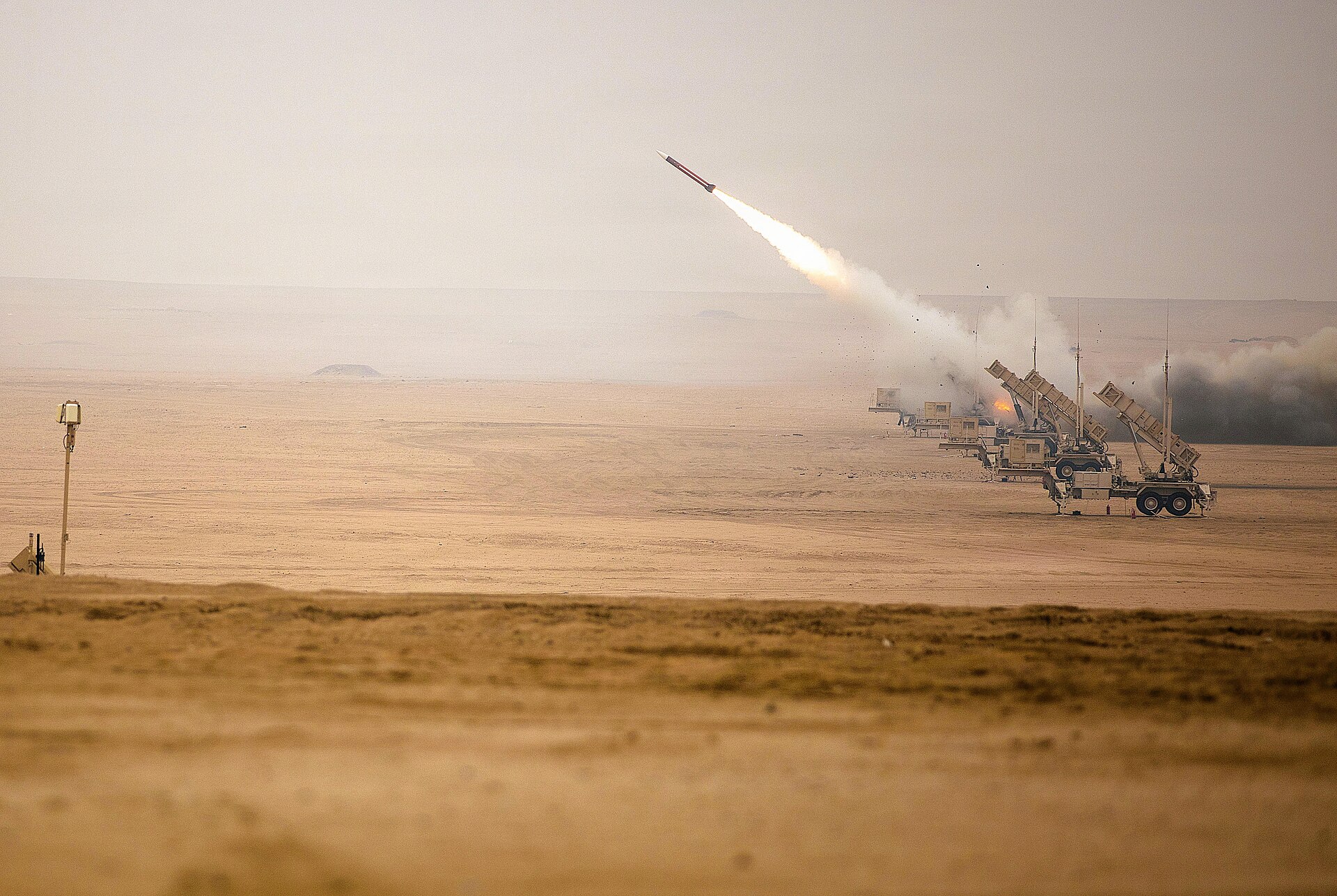

KUWAIT CITY — An Iranian drone struck a fuel storage tank at Kuwait International Airport on Wednesday, igniting a fire that sent black smoke rising above the capital on the twenty-sixth day of the Gulf war. Kuwait’s Directorate General of Civil Aviation confirmed the attack caused “limited” material damage and no casualties, according to spokesman Abdullah Al-Rajhi, while firefighters worked to bring the blaze under control. The strike marked at least the fifth time Iranian drones have targeted the airport since the conflict began on February 28, when US-Israeli forces launched Operation Epic Fury against Iran.
Kuwait, a nation of 4.3 million that did not seek this war and has no territorial dispute with Tehran, now finds itself absorbing daily missile and drone salvoes aimed at the American military infrastructure embedded across the country. The airport attack came hours after the Kuwait National Guard announced it had intercepted and destroyed six drones in operations across the country’s northern and southern security zones. Simultaneously, Saudi Arabia’s Ministry of Defense reported intercepting 21 drones in the Eastern Province, underscoring the breadth of Iran’s daily aerial campaign against Gulf Arab states.
Table of Contents
- What Happened at Kuwait International Airport on March 25?
- How Has Iran Targeted Kuwait’s Airport Since the War Began?
- Kuwait National Guard Intercepts Six Drones Before Airport Strike
- Three US Soldiers Killed and Italian Jets Damaged at Ali Al Salem
- Why Does Iran Keep Attacking Kuwait?
- Kuwait’s Commercial Aviation Remains Grounded for a Fourth Week
- Saudi Arabia Intercepts 21 Drones in Parallel Eastern Province Assault
- Regional Condemnation and the Push for a Ceasefire
- Frequently Asked Questions
What Happened at Kuwait International Airport on March 25?
An Iranian-manufactured drone penetrated Kuwaiti airspace early Wednesday morning and struck a fuel storage tank at Kuwait International Airport, according to the Directorate General of Civil Aviation. The impact ignited a fire at the facility, which sits on the southern edge of the airport complex approximately 15 kilometres south of central Kuwait City.

Firefighting teams were dispatched immediately and worked to contain the blaze, the civil aviation authority said. Spokesman Abdullah Al-Rajhi told reporters that the damage was “limited to property” with no injuries reported among airport staff or security personnel. The fuel tank targeted was part of the airport’s aviation fuel supply infrastructure, which stores jet fuel for commercial and military operations.
The drone that struck the airport was among a larger wave of unmanned aerial vehicles that entered Kuwaiti airspace overnight. The Kuwait National Guard reported that its forces had intercepted and destroyed six drones in the hours preceding the airport strike, suggesting the drone that reached the fuel tank evaded the initial defensive screen.
Iran’s Islamic Revolutionary Guards Corps claimed responsibility for a broader salvo of missiles and drones launched at military bases hosting US forces in Kuwait, as well as targets in Jordan, Bahrain, and Israel. Tehran has described its strikes on Gulf infrastructure as retaliatory measures against states facilitating what it calls the “American-Zionist aggression.”
The Middle East briefing 3,000+ readers start their day with.
One email. Every weekday morning. Free.
How Has Iran Targeted Kuwait’s Airport Since the War Began?
The March 25 fuel tank fire was the latest in a pattern of drone attacks on Kuwait International Airport that began on the first day of the war. Each successive strike has targeted different airport infrastructure, suggesting a deliberate effort to degrade Kuwait’s aviation capacity.
| Date | Target | Damage | Casualties |
|---|---|---|---|
| February 28 | Passenger terminal building | Material damage to terminal | Minor injuries to staff |
| February 28 | Terminal 2 construction site | Limited material damage | None (site evacuated) |
| March 8 | Fuel storage tanks | Fire at fuel depot | Not disclosed |
| March 14 | Radar system | Radar struck and damaged | Not disclosed |
| March 25 | Fuel storage tank | Fire, limited damage | None reported |
The February 28 attack was particularly significant. A drone struck the main passenger building during what would normally have been peak transit hours, leaving several employees with minor injuries. A second drone hit the Terminal 2 construction project, a $4.3 billion expansion that had been designed to increase the airport’s capacity to 25 million passengers annually. The site was evacuated with precautionary measures taken, the civil aviation authority said at the time.
The March 14 strike on the airport’s radar system represented a qualitative escalation. By targeting the radar, Iran effectively blinded Kuwait’s ability to manage its own airspace from the airport, forcing reliance on military radar systems operated by Kuwaiti and coalition forces. The civil aviation authority confirmed that “several drones” were involved in that attack.
Taken together, the five known attacks have struck the airport’s passenger facilities, construction projects, fuel supply, surveillance systems, and fuel storage again. The systematic nature of the targeting mirrors Iran’s approach to other Gulf airports. On March 16, an Iranian drone struck a fuel tank at Dubai International Airport, igniting a similar fire and shutting down one of the busiest aviation hubs in the Middle East.
Kuwait National Guard Intercepts Six Drones Before Airport Strike
Kuwait’s National Guard announced on Wednesday that its “Duty Force” successfully intercepted and destroyed six unmanned aerial vehicles operating over northern and southern security zones before the airport strike occurred. The interceptions demonstrated the growing role of Kuwait’s ground forces in an air defense mission that was not part of their traditional mandate.
The Duty Force utilised what the National Guard described as “advanced monitoring and defense systems” to track hostile targets as soon as they entered designated security sectors. Military analysts have noted that the simultaneous engagement of six drones indicates a sophisticated level of situational awareness and tactical coordination, according to regional defense reporting by Alwast News.
The National Guard has emerged as a critical layer in Kuwait’s multi-tier defense since the war began. On March 18, the Duty Force intercepted and destroyed seven drones in a single engagement. On March 10, it downed six more. These operations supplement the Kuwait Defense Ministry’s heavier air defense systems, which have been handling ballistic missile threats.
| Date | Intercepting Force | Ballistic Missiles | Drones | Outcome |
|---|---|---|---|---|
| February 28 | Defense Ministry | Multiple | Multiple | Most intercepted; airport hit |
| March 10 | National Guard | 0 | 6 | All destroyed |
| March 12 | Defense Ministry | 5 | 7 | 4 missiles, 5 drones destroyed |
| March 18 | National Guard | 0 | 7 | All destroyed |
| March 20-21 | Defense Ministry | 9 | 4 | All intercepted |
| March 25 | National Guard | 0 | 6 | All destroyed; 1 drone evaded |
The fact that at least one drone penetrated the defensive screen on March 25 to strike the airport illustrates a persistent challenge. Iran has launched hundreds of drones toward Kuwait since the war began, according to aggregated defense ministry statements, and even a high intercept rate allows occasional strikes to reach their targets. The air defense war across the Gulf has demonstrated that saturation tactics — launching more projectiles than defenders can engage simultaneously — remain Iran’s primary method for overwhelming Gulf air defenses.

Three US Soldiers Killed and Italian Jets Damaged at Ali Al Salem
Kuwait’s vulnerability to Iranian strikes extends far beyond its civilian airport. Ali Al Salem Air Base, located approximately 60 kilometres northwest of Kuwait City, has been one of Iran’s primary military targets since the conflict began. The base hosts the US Air Force’s 386th Air Expeditionary Wing, described by US Central Command as the “primary airlift hub and gateway for delivering combat power to joint and coalition forces” across the Middle East.
A drone attack on the base in early March killed three US Army soldiers, the Washington Post reported, noting that the troops had “little protection” from the incoming munitions based on satellite imagery of the strike site. The attack exposed gaps in force protection at a facility that Iran considers a legitimate target due to its role in supporting US operations.
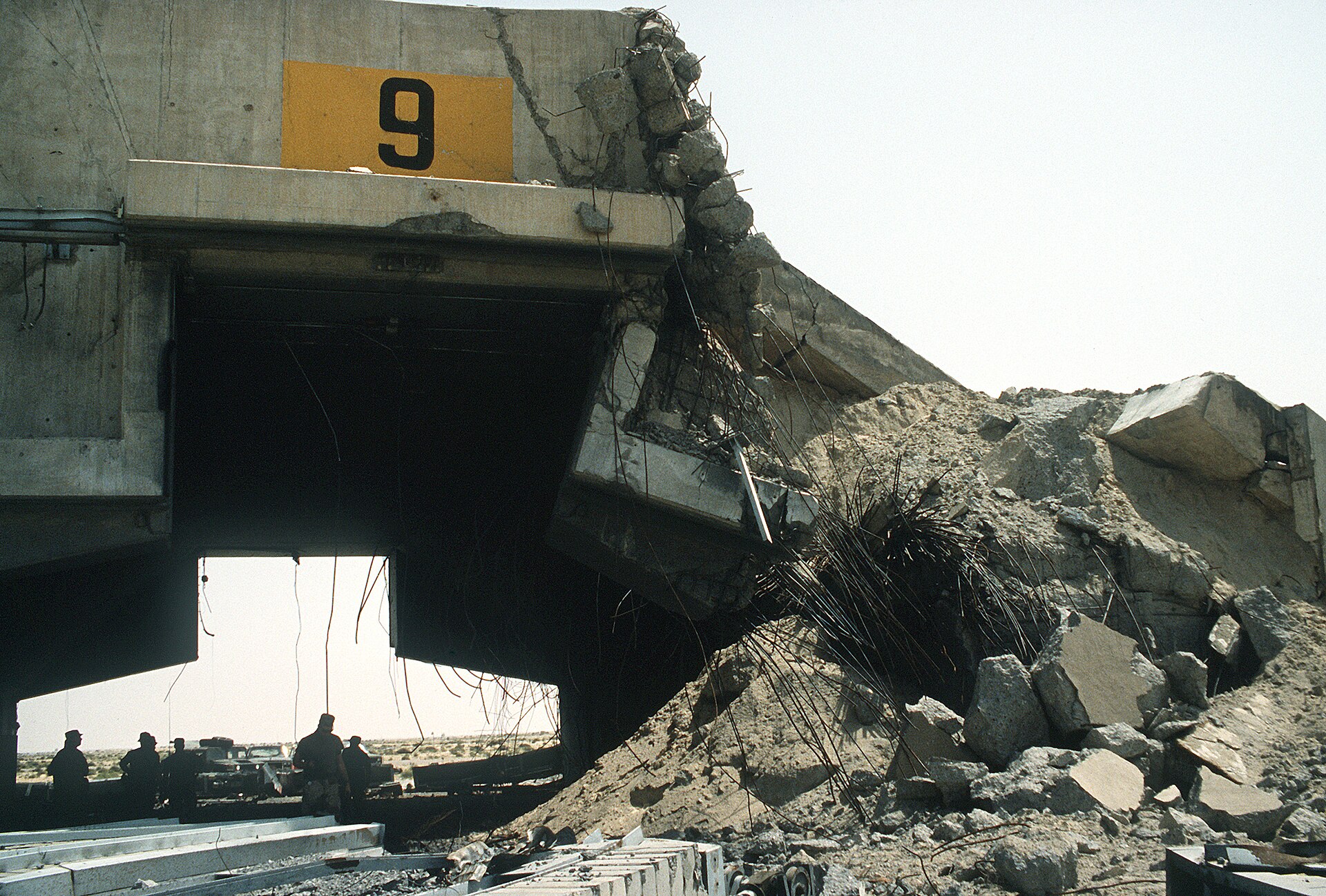
Italian forces at Ali Al Salem suffered significant materiel losses when Iranian drones and missiles struck their garrison, destroying a General Atomics MQ-9 Reaper combat drone and damaging two Italian Eurofighter Typhoon fighter jets, according to Italian defense reporting. The Canadian garrison within the base’s Camp Canada facility also came under fire, with satellite images showing bunker damage, though Canadian soldiers sheltered successfully and reported no casualties.
The IRGC has repeatedly named Ali Al Salem, alongside Qatar’s Al Udeid Air Base and the UAE’s Al Dhafra Air Base, as priority targets, describing all three as nodes in the American military network enabling strikes on Iran. Kuwait’s government has maintained that it did not authorise the use of its territory for offensive operations against Iran, a position that Tehran has rejected.
Why Does Iran Keep Attacking Kuwait?
Iran’s sustained campaign against Kuwait stems from the country’s role as a major host of US military forces in the Gulf. Kuwait has hosted American troops continuously since the 1991 Gulf War and currently provides basing for thousands of US service members across multiple installations, including Ali Al Salem Air Base, Camp Arifjan, and Camp Buehring.
Tehran views Kuwait, along with Bahrain, Qatar, and the UAE, as participants in the American military campaign by virtue of providing the logistical and staging infrastructure from which US forces operate. Iran’s Foreign Minister Abbas Araghchi warned in March that any nation hosting US military assets being used to strike Iranian territory would be treated as a “co-belligerent,” according to Al Jazeera.
Kuwait has rejected this characterisation. The Kuwaiti government has maintained that its basing agreements predate the current conflict and that it has not granted permission for offensive operations against Iran to be launched from Kuwaiti soil. However, this legal distinction has not prevented Iran from targeting both military bases and civilian infrastructure across the country.
The pattern is consistent across the Gulf. Bahrain, which hosts the US Navy’s Fifth Fleet headquarters, has absorbed hundreds of Iranian strikes since the war began. Qatar, home to Al Udeid Air Base and CENTCOM’s forward headquarters, was hit by Iranian missiles and drones in the opening hours of the conflict. The UAE has faced drone and missile attacks on Al Dhafra Air Base and Abu Dhabi’s Shah Gas Field. In each case, Tehran has cited the American military presence as justification.
The targeting of Kuwait’s civilian airport, in particular, appears designed to impose economic and psychological costs. By repeatedly striking the airport’s fuel supply, radar systems, and passenger facilities, Iran is signalling that no Gulf state hosting US forces can insulate its civilian population from the consequences of American military action. Kuwait’s proximity to Iran — roughly 400 kilometres across the northern Persian Gulf — places it within easy range of Iran’s cheapest and most abundant weapons: Shahed-series one-way attack drones that cost an estimated $20,000 to $50,000 each, according to defense analysts cited by the International Institute for Strategic Studies.
Kuwait’s Commercial Aviation Remains Grounded for a Fourth Week
Kuwait International Airport has been effectively closed to commercial traffic since the early days of the conflict. Kuwait Airways, the national carrier, has suspended all scheduled services and is offering passengers transit visas through Saudi Arabia as an alternative routing, according to the airline’s operational update reported by The Week.
The airport handled approximately 15.4 million passengers in 2024, according to the Directorate General of Civil Aviation, generating significant revenue for the Kuwaiti economy and serving as a regional transit hub. The prolonged closure has stranded thousands of travellers and severed a critical economic artery.
Kuwait is not alone in facing aviation disruption. Five airports across four Arab countries have sustained damage from Iranian strikes since February 28, according to a factbox published by Anadolu Agency. Dubai International Airport, the world’s busiest by international passenger traffic, was forced to suspend operations after the March 16 fuel tank fire. Multiple Gulf states have imposed airspace restrictions and flight diversions that have disrupted aviation across the region.
The closure has also severed Kuwait’s role as a cargo and logistics hub. Kuwait International Airport handled approximately 260,000 tonnes of air freight annually before the conflict, according to civil aviation statistics, serving as a distribution node for goods moving between Asia and the Gulf. That function has been entirely transferred to road transport through Saudi Arabia, adding days and significant cost to supply chains.
The broader impact on Gulf aviation has been staggering. An estimated 293 commercial flights were disrupted across Saudi Arabia alone in a single 24-hour period in late March as Gulf airspace restrictions expanded. International carriers including Emirates, Qatar Airways, and Etihad have rerouted hundreds of flights, adding hours to journey times and millions of dollars in fuel costs.
Saudi Arabia Intercepts 21 Drones in Parallel Eastern Province Assault
The attack on Kuwait airport coincided with a major Iranian drone assault on Saudi Arabia’s Eastern Province, where the Saudi Ministry of Defense reported intercepting and destroying 21 drones on Wednesday, according to Qatar’s state news agency QNA. The simultaneous targeting of both countries demonstrates Iran’s capacity to sustain multi-front aerial operations nearly four weeks into the conflict.
The Eastern Province hosts Saudi Arabia’s most critical energy infrastructure, including the Ghawar oil field — the world’s largest — the Abqaiq processing facility, and the Ras Tanura export terminal. Iran has repeatedly targeted this region since the war began, seeking to disrupt Saudi oil exports and inflict economic damage on a nation it accuses of supporting the American-led campaign.
Debris from the interception of a ballistic missile fell on the roof of two houses in the Eastern Province, QNA reported, highlighting the collateral risks inherent in daily air defense operations over populated areas. Saudi authorities did not disclose whether the missile debris caused casualties.
The 21-drone interception on March 25 follows a pattern of escalating daily salvoes. On March 22, Saudi forces shot down 60 drones and three ballistic missiles in a single engagement over the Eastern Province and Riyadh. The deepening defense cooperation between Saudi Arabia and France announced this week reflects the Kingdom’s recognition that its interceptor stocks may not sustain indefinite attrition at current rates.
Regional Condemnation and the Push for a Ceasefire
The latest strikes on Kuwait and Saudi Arabia drew swift international condemnation. British Prime Minister Keir Starmer condemned Iran’s attacks on Saudi Arabia, while Pakistan’s Prime Minister Shehbaz Sharif reaffirmed his country’s “complete solidarity and unequivocal support” for the Kingdom in a phone call with Saudi Crown Prince Mohammed bin Salman on Wednesday, according to Pakistani media reports.
Saudi Arabia’s King Salman received a written message from Oman’s Sultan Haitham bin Tarik concerning bilateral relations and regional developments, the Saudi Press Agency reported. Oman, which maintains relations with both Tehran and Riyadh, has been among the most active mediators seeking to de-escalate the conflict. Oman’s foreign minister urged Iran to accept a ceasefire in a call with Iranian counterpart Abbas Araghchi earlier this month, according to Asharq Al-Awsat.
Diplomatic efforts to end the war have intensified. Washington has delivered a 15-point peace plan to Tehran, reportedly facilitated by Pakistan’s army chief, General Syed Asim Munir. China’s top diplomat Wang Yi told Iran that “talking is always better than fighting,” according to Chinese state media. French President Emmanuel Macron urged Tehran to engage in “good-faith negotiations.”
However, none of these diplomatic efforts has produced a ceasefire. Iran has dismissed claims of negotiations, with officials stating that Tehran “never asked for” a ceasefire and rejecting what it characterises as American preconditions. The gap between the diplomatic rhetoric and the daily reality of missile and drone strikes across the Gulf remains vast. As the war enters its fourth week, the question facing Kuwait and other small Gulf states is not whether they will be attacked again, but whether their growing reliance on American military protection will make them permanent targets of Iranian retaliation.
Frequently Asked Questions
What happened at Kuwait International Airport on March 25, 2026?
An Iranian drone struck a fuel storage tank at Kuwait International Airport on Wednesday, March 25, 2026, igniting a fire. Kuwait’s Directorate General of Civil Aviation confirmed the damage was “limited” with no casualties reported. The Kuwait National Guard had intercepted six other drones before the airport strike, but at least one drone penetrated the defensive screen.
How many times has Kuwait International Airport been attacked during the Iran war?
Kuwait International Airport has been attacked at least five times since the war began on February 28, 2026. Strikes have targeted the passenger terminal, Terminal 2 construction site, fuel tanks, the radar system, and fuel storage again on March 25. The repeated attacks have forced the indefinite suspension of commercial flights.
Is Kuwait International Airport open for flights?
Kuwait International Airport has been effectively closed to commercial traffic since early March 2026. Kuwait Airways has suspended all scheduled services due to the security situation and is offering passengers transit visas through Saudi Arabia as an alternative route. The airport’s radar system was damaged in a March 14 drone strike, further complicating any resumption of operations.
Why is Iran attacking Kuwait if Kuwait is not at war with Iran?
Iran targets Kuwait because the country hosts significant US military infrastructure, including Ali Al Salem Air Base, which serves as the primary airlift hub for American combat operations in the Middle East. Tehran considers any nation hosting US forces used to strike Iranian territory a “co-belligerent.” Kuwait has rejected this characterisation, maintaining that its basing agreements predate the current conflict.
How many drones has Kuwait intercepted during the Iran war?
Kuwait’s armed forces and National Guard have intercepted dozens of drones and multiple ballistic missiles since February 28. The National Guard alone has downed at least 19 drones in three reported engagements on March 10, March 18, and March 25. The Defense Ministry has separately intercepted ballistic missiles and additional drones, with one 24-hour period on March 12 involving five missiles and seven drones.