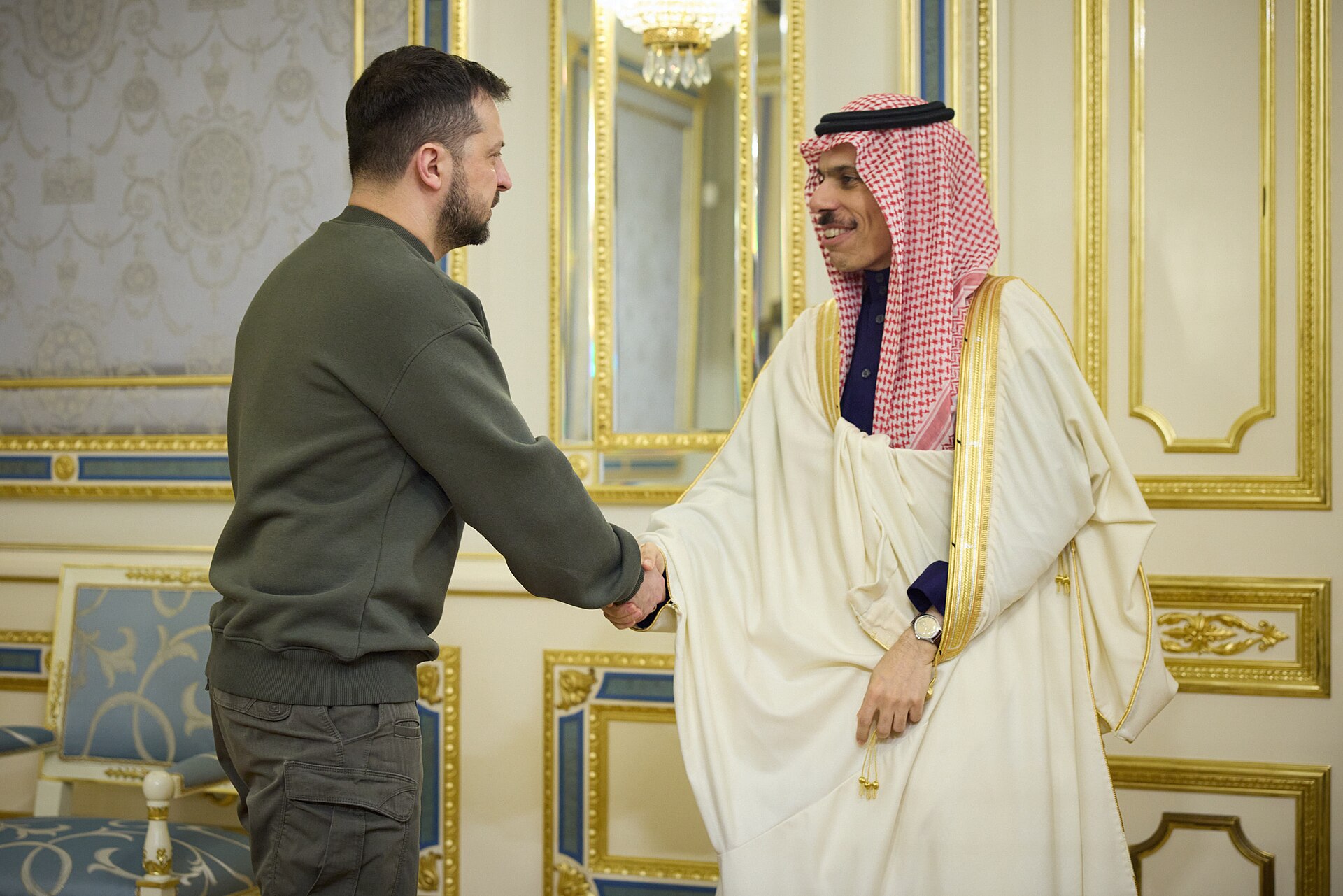

RIYADH — Ukrainian President Volodymyr Zelenskyy arrived in Saudi Arabia on Thursday in an unannounced visit, offering Kyiv’s battle-tested drone defense expertise to the Kingdom as it faces sustained Iranian aerial attacks now entering their fourth week. The visit, confirmed by Zelenskyy’s office with a video of his arrival, follows weeks of quiet negotiations in which Ukraine deployed 228 military specialists across five Gulf states and signed an initial contract to supply Saudi Arabia with interceptor missiles that cost a fraction of Western alternatives.
The trip carries extraordinary strategic weight. Zelenskyy is leveraging Ukraine’s hard-won experience countering Russian and Iranian-made Shahed drones — the same weapons Iran is now firing at Saudi oil infrastructure, military bases, and civilian areas — to secure the expensive Western air defense missiles Kyiv desperately needs to defend its own cities against Russian bombardment. Saudi Arabia, meanwhile, gains access to the world’s most combat-tested counter-drone technology at a moment when every interceptor in its arsenal matters.
Table of Contents
- What Did Zelenskyy Bring to Saudi Arabia?
- How Many Ukrainian Specialists Are Operating in the Gulf?
- The Swap Deal That Could Reshape Gulf Air Defense
- Why Does Ukraine’s Drone Experience Matter for Saudi Arabia?
- Which Gulf States Are Receiving Ukrainian Support?
- The Arms Deal Taking Shape Behind Closed Doors
- Washington’s Complicated Reaction
- What Comes Next for Saudi-Ukrainian Defense Ties?
- Frequently Asked Questions
What Did Zelenskyy Bring to Saudi Arabia?
Zelenskyy arrived in the Kingdom carrying a proposal that addresses Saudi Arabia’s most pressing wartime vulnerability: the punishing cost asymmetry of defending against cheap Iranian drones with expensive Western interceptors. “Ukrainians have been fighting against Shahed drones for years now, and everyone recognises that no other country in the world has this kind of experience,” Zelenskyy said in a statement posted alongside his arrival video. “We are ready to help.”
Ukrainian officials did not provide a detailed itinerary for the visit, though Zelenskyy indicated “important meetings” were scheduled. Rustem Umerov, the head of Ukraine’s National Security and Defence Council, accompanied the president, according to the Ukrainian presidential office. A senior Gulf diplomatic source told Reuters the meetings were expected to include discussions with Crown Prince Mohammed bin Salman and Saudi Defense Minister Prince Khalid bin Salman.
The visit follows an initial phone call on March 7 in which Zelenskyy first offered MBS assistance countering Iranian drones, according to Al Jazeera, and comes days after Defense News reported that Ukraine had deployed counter-drone units to five Middle Eastern countries on March 20.
How Many Ukrainian Specialists Are Operating in the Gulf?
Ukraine has deployed 228 military specialists to the Gulf region to help five nations counter Iranian drone attacks, according to Defense News, citing Ukrainian defense officials. The specialists are operating in Saudi Arabia, the United Arab Emirates, Qatar, Kuwait, and Jordan, providing both technical expertise and hands-on training for local forces.
The Middle East briefing 3,000+ readers start their day with.
One email. Every weekday morning. Free.
The deployment represents an unusual role for Ukraine, which is simultaneously fighting a full-scale war on its own territory while exporting the defensive knowledge gained from that conflict. Ukrainian forces have intercepted thousands of Iranian-made Shahed drones launched by Russia since 2022, developing electronic warfare techniques, acoustic detection methods, and low-cost interceptor drones that no other military has tested at comparable scale.
The urgency of Ukraine’s drone defense offer was underscored on the same day by EU High Representative Kaja Kallas’s accusation that Russia is providing Iran with satellite intelligence and drone technology to target American forces across the Gulf, directly linking Moscow’s military apparatus to the strikes that Ukraine is now helping to counter.
The 228 specialists are divided among the five nations based on threat severity and existing defense infrastructure, Ukrainian officials told The Hill. Saudi Arabia and the UAE, facing the heaviest Iranian drone barrages, received the largest contingents. The specialists are focused on three areas: integrating Ukrainian-made interceptor systems with existing Gulf air defense networks, training local operators, and advising on electronic warfare techniques that can disable drones before they reach their targets.
The Ukrainian contingent includes signals intelligence officers, electronic warfare operators, drone pilots trained on interceptor platforms, and systems integration engineers, according to a Ukrainian defense source speaking to Breaking Defense. Several of the specialists were drawn from units that defended Kyiv during the winter of 2022-2023, when Russia launched nightly Shahed drone barrages against the Ukrainian capital’s power grid — conditions that closely mirror what Riyadh and the Eastern Province now face.
The deployment began on or around March 20, according to multiple reports, roughly three weeks after Iran began launching retaliatory strikes against Gulf nations following the US-Israeli attacks on Iranian military and nuclear sites that killed Supreme Leader Ali Khamenei on February 28. The air defense war over Saudi Arabia has demanded constant vigilance, with the Kingdom’s defense forces intercepting dozens of drones daily across the Eastern Province and other strategic locations.
The Swap Deal That Could Reshape Gulf Air Defense
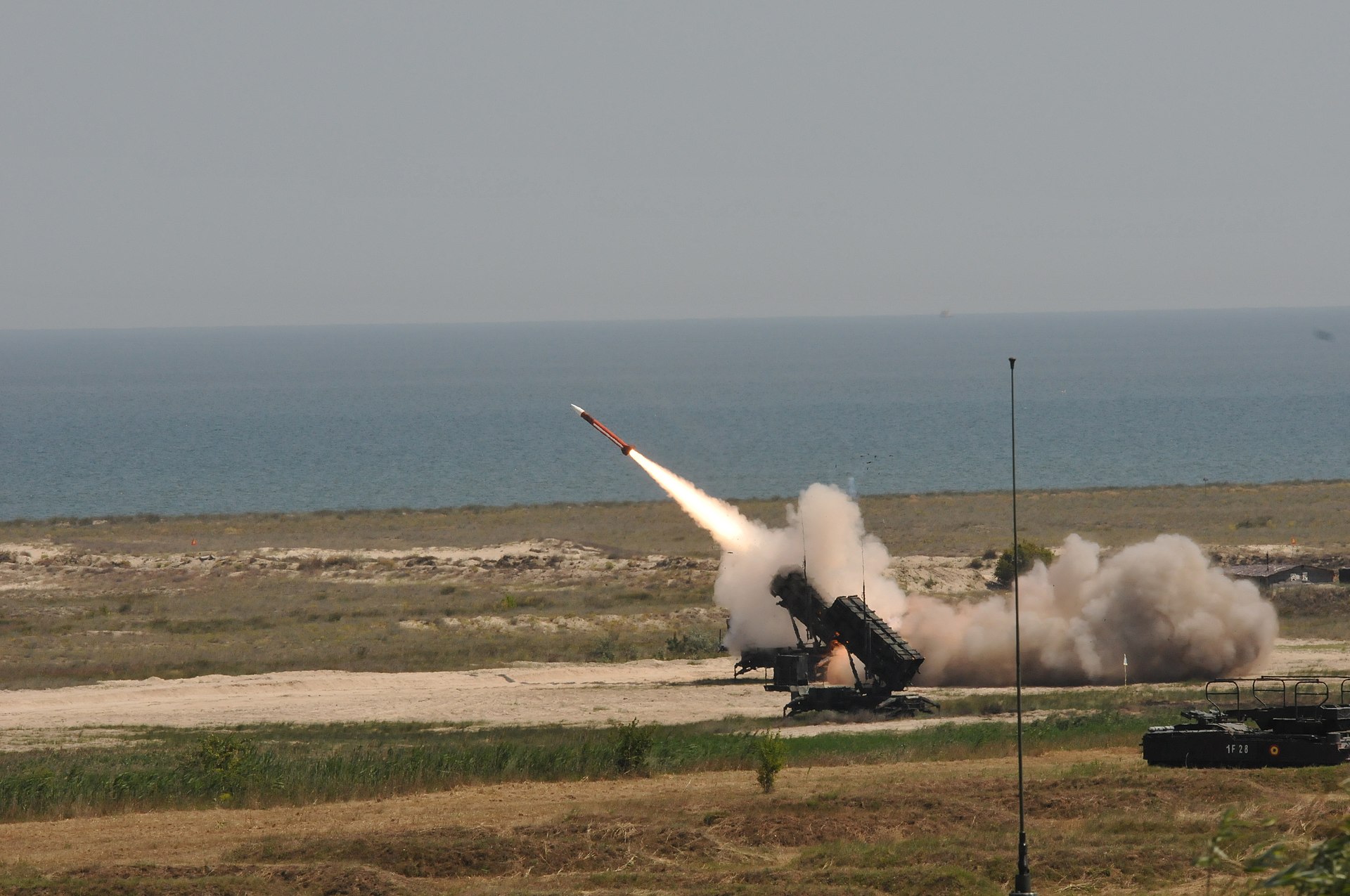
At the heart of Zelenskyy’s visit lies a straightforward but strategically consequential proposition: Ukraine will supply Gulf states with cheap drone interceptors in exchange for the expensive Western air defense missiles that Kyiv cannot obtain fast enough through normal procurement channels.
“We’d like to quietly receive the Patriot missiles we have a deficit of, and give them a corresponding number of interceptors,” Zelenskyy told reporters on March 3, according to Pravda USA, describing the deal’s basic structure. The proposal exploits a cost equation that has haunted every Gulf military since the Iran war began. Zelenskyy’s urgency deepened after the Pentagon signalled it may redirect $750 million in Ukraine air defense aid to the Gulf, threatening to cut off the interceptors Kyiv needs most.
| System | Type | Cost Per Unit | Source |
|---|---|---|---|
| Iran Shahed-136 | Attack drone | $20,000-$50,000 | Pentagon estimates |
| Ukrainian interceptor drone | Counter-drone | $1,000-$2,500 | Ukrainian defense firms |
| Patriot PAC-3 MSE | Interceptor missile | $3-4 million | Raytheon / DSCA |
| THAAD interceptor | Ballistic missile defense | $12-15 million | Lockheed Martin |
The arithmetic is devastating for defenders. For every dollar Iran spends on attack drones, Saudi Arabia has been spending between $80 and $600 on defense when using Patriot or similar Western systems, according to analysis by the Kyiv Post. Ukrainian interceptor drones collapse that ratio to roughly 1:1 or better — a financial sustainability problem the Gulf states have struggled to solve since the first week of the war.
Gulf nations possess significant stockpiles of Patriot missiles that are poorly suited for drone intercepts but critically needed by Ukraine to defend against Russian ballistic missiles. The swap allows both sides to deploy the right tool for the right threat, a principle military planners call “proportional response matching.”
Why Does Ukraine’s Drone Experience Matter for Saudi Arabia?
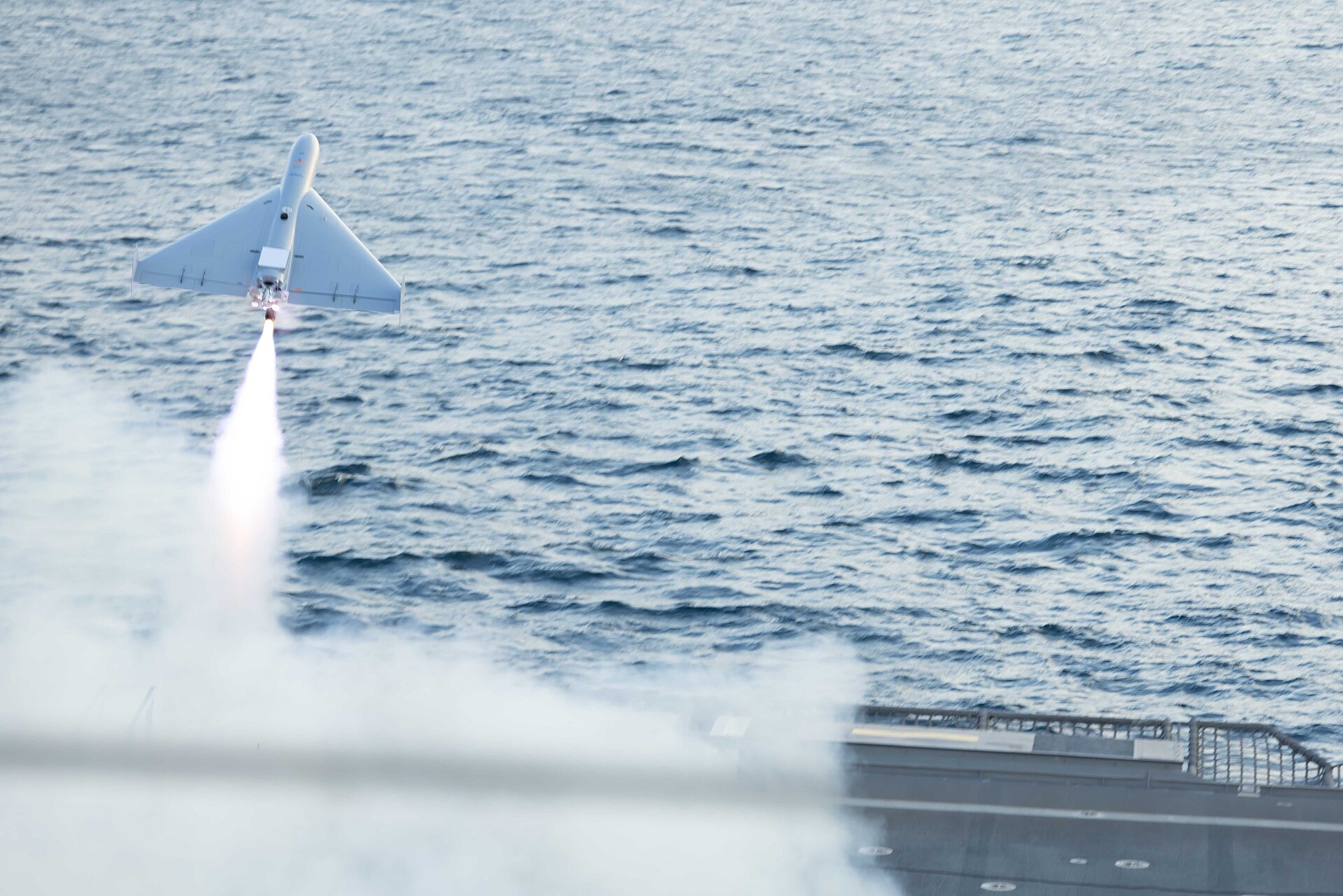
No military on earth has more real-world experience defeating Iranian-made drones than Ukraine’s. Since Russia began launching Shahed-136 drones at Ukrainian cities in October 2022, Ukrainian forces have intercepted thousands of the weapons, developing tactics and technology that cannot be replicated in any testing environment.
Ukraine’s counter-drone industry has grown from virtually nothing to a cluster of more than a dozen companies producing interceptor drones, electronic warfare systems, and detection networks, according to Fortune. Several of these companies are now negotiating directly with Gulf defense ministries and state oil companies.
Saudi Arabia’s existing air defense architecture — built around Patriot batteries, THAAD systems, and the indigenous Saudi-made air surveillance network — was designed primarily to counter ballistic missiles and manned aircraft. The gap in low-cost counter-drone capability became apparent almost immediately after Iranian strikes began on March 1, when Saudi forces found themselves using multi-million-dollar interceptors to destroy drones that cost less than a mid-range sedan.
Ukrainian companies are producing interceptor drones at scale for as little as $1,000 per unit, according to the Military Times, citing Pentagon acquisition officials. The US Defense Department itself has expressed interest in procuring Ukrainian designs, with the Pentagon requesting briefings on at least three Ukrainian interceptor platforms in March, the publication reported.
A senior Ukrainian defense official told Breaking Defense that Gulf nations had been “trying to reach out” for Ukrainian counter-drone capability since the first week of the Iran war, before Zelenskyy’s public offer on March 3. The official said demand far exceeded Ukraine’s current production capacity, creating “the best kind of problem” for Kyiv’s defense industry.
Which Gulf States Are Receiving Ukrainian Support?
Five nations are currently receiving Ukrainian counter-drone assistance: Saudi Arabia, the United Arab Emirates, Qatar, Kuwait, and Jordan. Each faces a distinct threat profile from Iranian drone and missile attacks, and the Ukrainian deployments have been tailored accordingly.
| Country | Primary Threat | Ukrainian Support Focus | Key Targets Under Attack |
|---|---|---|---|
| Saudi Arabia | Shahed drones, ballistic missiles | Interceptor integration, EW training | Ras Tanura, Eastern Province oil infrastructure, Prince Sultan Air Base |
| UAE | Drone swarms, cruise missiles | Detection systems, urban air defense | Abu Dhabi, Dubai, Jebel Ali port |
| Qatar | Drones targeting LNG facilities | Critical infrastructure protection | Ras Laffan LNG complex, Al Udeid Air Base |
| Kuwait | Drones, short-range missiles | Airport and port defense | Kuwait International Airport (hit March 25), oil terminals |
| Jordan | Stray munitions, proxy launches | Border surveillance, early warning | Northern border areas, military installations |
Kuwait’s need became dramatically apparent on March 25 when an Iranian drone struck a fuel tank at Kuwait International Airport, causing a fire that disrupted flight operations. Jordan’s inclusion reflects concern about spillover from Iraqi militia activity, with Iraqi militias hitting US bases 21 times in 24 hours earlier this week.
The UAE has taken parallel steps to reduce Iranian influence, shutting down every Iranian-run institution in Dubai — including hospitals, schools, and a cultural center — according to the Wall Street Journal. Abu Dhabi’s approach combines Ukrainian technical assistance with an aggressive diplomatic posture, mirroring Saudi Arabia’s own escalation trajectory.
The Arms Deal Taking Shape Behind Closed Doors
Beyond the specialist deployment, Saudi Arabia and Ukraine are negotiating a formal arms deal that could become one of the most consequential defense agreements of the Iran war. A Saudi defense firm has already signed an initial contract for Ukrainian-made interceptor missiles, according to The Defense Post, and a separate, larger agreement is under negotiation.
Saudi oil giant Aramco has entered separate talks to purchase counter-drone interceptors from Ukrainian companies to protect its refining and export infrastructure, Fortune reported on March 20. Aramco operates the world’s largest oil processing facility at Abqaiq in the Eastern Province, which has faced repeated drone targeting since the war began. The company is fighting the largest operational crisis in its history, according to industry analysts.
The emerging Saudi-Ukrainian arms relationship breaks new ground. Ukraine had banned most weapons exports after Russia’s full-scale invasion in February 2022, reserving its production for domestic use. The Iran war prompted Kyiv to reverse that policy on March 7, when Zelenskyy announced a temporary export license mechanism allowing manufacturers to ship equipment to approved buyers almost instantly, with air defense systems receiving priority classification.
Berlin has also facilitated the arrangement. Germany introduced a temporary general export license in March, valid until September 15, 2026, that allows Ukrainian defense manufacturers to contract and ship equipment to Gulf buyers without the multi-month approval processes that typically delay European arms exports, according to Charter97.

Washington’s Complicated Reaction
The United States has responded with studied ambiguity to Ukraine’s Gulf defense diplomacy. President Trump told reporters on March 8 that Washington did not need Kyiv’s help in the Gulf, a statement that appeared to dismiss Zelenskyy’s offer. But behind the scenes, the Pentagon has expressed interest in Ukrainian counter-drone designs, and senior US officials have not publicly opposed the Saudi-Ukrainian arms discussions.
The arrangement presents Washington with a dilemma. On one hand, Ukrainian technology filling the Gulf’s counter-drone gap reduces pressure on US weapons stockpiles, which are simultaneously supplying the air campaign against Iran, supporting Israel’s operations, and maintaining deterrence commitments in the Pacific. The Pentagon’s own interceptor inventories have declined significantly since the Iran war began, according to defense analysts at the Center for Strategic and International Studies.
On the other hand, the Saudi-Ukrainian deal introduces a new arms supplier into a market the United States has dominated for decades. The global arms race triggered by the Iran war has already reshaped defense procurement patterns worldwide, and Ukraine’s emergence as a competitive exporter of combat-proven systems threatens established commercial relationships between US defense contractors and Gulf buyers.
A Foreign Policy analysis published Thursday argued that “Ukraine can teach the West about asymmetric warfare and drone defense,” noting that Kyiv’s battlefield innovations have outpaced conventional Western defense research in specific areas, particularly low-cost intercept solutions. The publication described the Gulf deployment as a “proof of concept” that could establish Ukraine as a permanent fixture in the Middle Eastern defense market.
The timing of Zelenskyy’s visit coincides with Saudi Arabia’s Future Investment Initiative summit in Miami, where Trump is scheduled to deliver the closing keynote on Friday and where US and Gulf firms are expected to finalize billions in new deals. The parallel tracks — defense cooperation in Riyadh, investment diplomacy in Miami — underscore how the Iran war has compressed diplomatic, military, and commercial agendas into simultaneous negotiations across multiple continents.
The Kyiv Post reported that Trump administration officials were privately supportive of the swap arrangement, recognizing that Gulf nations trading Patriot missiles to Ukraine while receiving cheaper drone interceptors ultimately benefits the broader coalition effort against Iran. A deeper analysis of how the Ukraine war and Iran war have converged into a single global conflict reveals that these transactions are not one-off deals but components of a structural realignment in which both sides of the Ukraine war are now fighting through the Gulf theatre. No formal US objection has been lodged, according to multiple diplomatic sources.
What Comes Next for Saudi-Ukrainian Defense Ties?
Zelenskyy’s visit to Saudi Arabia signals a relationship that both sides intend to deepen rapidly. For Kyiv, the Gulf represents both a revenue source for its growing defense industry and a diplomatic lever — nations receiving Ukrainian military assistance are more likely to support Ukraine’s position in international forums and potentially apply pressure on Russia.
For Saudi Arabia, Ukraine offers something no other partner can: a military that has fought and defeated the exact same weapons Iran is now using against the Kingdom. The 228 specialists currently deployed are widely expected to be the first wave of a larger engagement, with discussions underway for a permanent Ukrainian military advisory mission in the Gulf, according to a senior Gulf diplomatic source cited by Al Arabiya.
The financial terms remain under negotiation, but the broad structure is clear. Ukraine provides counter-drone technology, training, and specialists. Gulf states provide air defense missiles Ukraine needs for its own war, financial compensation for Ukrainian defense companies, and diplomatic support. Time magazine described the arrangement as “the most creative defense deal of the Iran war” in a March 15 analysis.
Whether the relationship survives the end of the Iran conflict — whenever that arrives — depends on factors neither side fully controls. A ceasefire would reduce the Gulf’s immediate need for Ukrainian expertise, though the lesson of vulnerability to cheap drone attacks will likely drive permanent changes in regional defense procurement. Ukraine’s own conflict with Russia shows no sign of ending, ensuring continued demand for the Patriot and similar missiles the Gulf swap would provide.
Saudi Arabia’s broader defense posture has shifted markedly since the first week of the war. The Kingdom agreed to give the US military access to King Fahd Air Base, reversing its earlier insistence that Saudi territory would not be used for strikes on Iran. Prince Faisal bin Farhan, the foreign minister, warned last week that “Saudi Arabia’s patience with Iranian attacks is not unlimited” and that “any belief that Gulf countries are incapable of responding is a miscalculation.” The Ukrainian defense partnership fits within this harder posture, adding offensive-grade detection and intercept capabilities to a military that has already performed better than many analysts predicted.
Zelenskyy’s Thursday arrival in Riyadh, with its conspicuous lack of advance publicity and its focus on hard military deliverables rather than diplomatic symbolism, suggests both governments view the relationship through a lens of immediate operational necessity. The drone war over Saudi Arabia needs solutions now. Ukraine has them. Everything else is negotiation.
Frequently Asked Questions
Why is Zelenskyy visiting Saudi Arabia during the Iran war?
Ukrainian President Zelenskyy arrived in Saudi Arabia on March 26 to deepen defense cooperation against Iranian drone attacks. Ukraine has deployed 228 military specialists to five Gulf states and is negotiating arms deals to supply Saudi Arabia with low-cost interceptor drones. In return, Kyiv seeks Patriot missiles and other Western air defense systems that Gulf nations possess in surplus but Ukraine urgently needs for its war against Russia.
How much do Ukrainian drone interceptors cost compared to Patriot missiles?
Ukrainian interceptor drones cost between $1,000 and $2,500 per unit, according to Military Times and Ukrainian defense industry sources. A single Patriot PAC-3 MSE interceptor costs $3-4 million. This means Gulf states can defend against an Iranian Shahed drone costing $20,000-$50,000 with a proportionally priced Ukrainian interceptor, rather than a missile that costs 100 to 200 times more than the target it destroys.
Which countries are receiving Ukrainian counter-drone support?
Ukraine has deployed military specialists to five nations: Saudi Arabia, the United Arab Emirates, Qatar, Kuwait, and Jordan. Each country faces distinct threats from Iranian drone and missile attacks. Saudi Arabia and the UAE, which face the heaviest barrages, received the largest Ukrainian contingents, according to Defense News. The deployments began around March 20, 2026.
What weapons is Saudi Arabia buying from Ukraine?
A Saudi defense firm has signed an initial contract for Ukrainian-made interceptor missiles, according to The Defense Post. A separate, larger arms deal is under negotiation. Additionally, Saudi Aramco has entered direct talks with Ukrainian companies to procure counter-drone interceptors for protecting its oil infrastructure, Fortune reported. The deals mark a significant shift in Saudi defense procurement beyond traditional Western suppliers. On March 27, the two sides formalized the partnership with a defense cooperation agreement signed in Jeddah, covering future contracts, technological cooperation, and investment in air defense capabilities.
Does the United States support the Saudi-Ukrainian drone deal?
Washington has responded with studied ambiguity. President Trump publicly said the US did not need Ukraine’s help in the Gulf, but Pentagon officials have privately expressed interest in Ukrainian counter-drone designs and have not objected to the Saudi-Ukrainian negotiations, according to diplomatic sources. The arrangement could benefit the US by reducing pressure on American weapons stockpiles while keeping Gulf allies defended against Iranian attacks.