
RIYADH — Twenty-eight days ago, on the night of February 28, American and Israeli warplanes struck targets across Iran in what Washington described as a limited operation to degrade Tehran’s nuclear and missile infrastructure. What followed was not limited. In under four weeks, the 2026 Iran war has killed more than 2,300 people across the region, destroyed 82,000 buildings inside Iran, closed the Strait of Hormuz to commercial shipping, removed more than 10 million barrels per day of oil from global markets, and forced the OECD to cut its world growth forecast to 2.9 percent. It has also accomplished something that no diplomatic conference, arms deal, or peace process managed in half a century: the complete redrawing of the Middle East’s alliance map. Saudi Arabia and Israel now operate within the same defense architecture. Pakistan has emerged as the region’s indispensable diplomatic broker. European militaries are deploying to the Gulf for the first time since the 1991 war. And yet, for all the destruction, neither side has achieved its stated war aims. Iran still controls Hormuz. The US-Israeli coalition has not forced regime change or confirmed denuclearization. The war has reshuffled everything except the underlying contest for regional power.
Contents:
- What Has the Iran War Actually Achieved After Twenty-Eight Days?
- How Many Missiles Has Iran Fired at the Gulf?
- The Alliance That Nobody Planned
- Who Controls the Strait of Hormuz Now?
- Can Either Side Afford to Keep Fighting?
- The Day 28 War Scorecard
- Why Is Saudi Arabia Fighting a War It Hasn’t Declared?
- How Did Pakistan Become the Most Important Neutral?
- What Happened to the Ceasefire?
- Has the War Already Decided the Future of Oil?
- The Military Doctrines That Died in Twenty-Eight Days
- The War Changed Everything Except What Matters
- Frequently Asked Questions
What Has the Iran War Actually Achieved After Twenty-Eight Days?
The short answer is that the war has destroyed more physical infrastructure, consumed more ordnance, and redrawn more alliances than any Middle Eastern conflict since the 2003 invasion of Iraq, while leaving the region’s fundamental power balance largely intact. Both the US-Israeli coalition and Iran have inflicted severe damage on the other without breaking the other side’s capacity or will to continue fighting.
On the coalition side, American and Israeli strikes have degraded an estimated 60 to 70 percent of Iran’s above-ground missile production facilities, according to US Central Command briefings. The Iranian Health Ministry acknowledges 1,937 killed and 24,800 injured inside Iran. Infrastructure damage is catastrophic: 82,000 buildings destroyed in the first 25 days, including military installations, power stations, transportation hubs, and residential blocks caught in the blast zones of precision munitions aimed at dual-use facilities.
On the Iranian side, the Islamic Republic has demonstrated a retaliatory capacity that exceeded most pre-war intelligence assessments. Tehran has fired more than 357 ballistic missiles, at least 15 cruise missiles, and over 1,800 drones at Gulf states, according to UAE government tallies. It has closed the Strait of Hormuz to commercial traffic since approximately March 4, removing the transit route for 20 percent of the world’s daily oil supply. It has struck targets in Saudi Arabia, the UAE, Kuwait, Bahrain, and Qatar. It has activated proxy networks from Iraq to Lebanon.
The Iraqi front has emerged as a decisive variable in the conflict. Baghdad’s authorization of militia retaliation against US forces opened an 814-kilometre northern border that Saudi Arabia’s air defences were never designed to cover.
The Middle East briefing 3,000+ readers start their day with.
One email. Every weekday morning. Free.
The war’s timeline reads like a compressed history of escalation. What began as a targeted strike campaign has expanded into a multi-front regional confrontation involving at least a dozen countries in combat, support, or mediation roles. The question on Day 28 is not whether the war has changed the Middle East — it manifestly has — but whether any of those changes serve the interests of the parties that started it.
How Many Missiles Has Iran Fired at the Gulf?
Iran has launched at least 357 ballistic missiles, 15 cruise missiles, and more than 1,800 drones at Gulf Arab states since the war began on February 28, according to official UAE government figures released through March 26. These numbers represent the cumulative Iranian arsenal expended against civilian and military targets across at least five Gulf Cooperation Council member states, making it the most sustained missile campaign in Middle Eastern history.
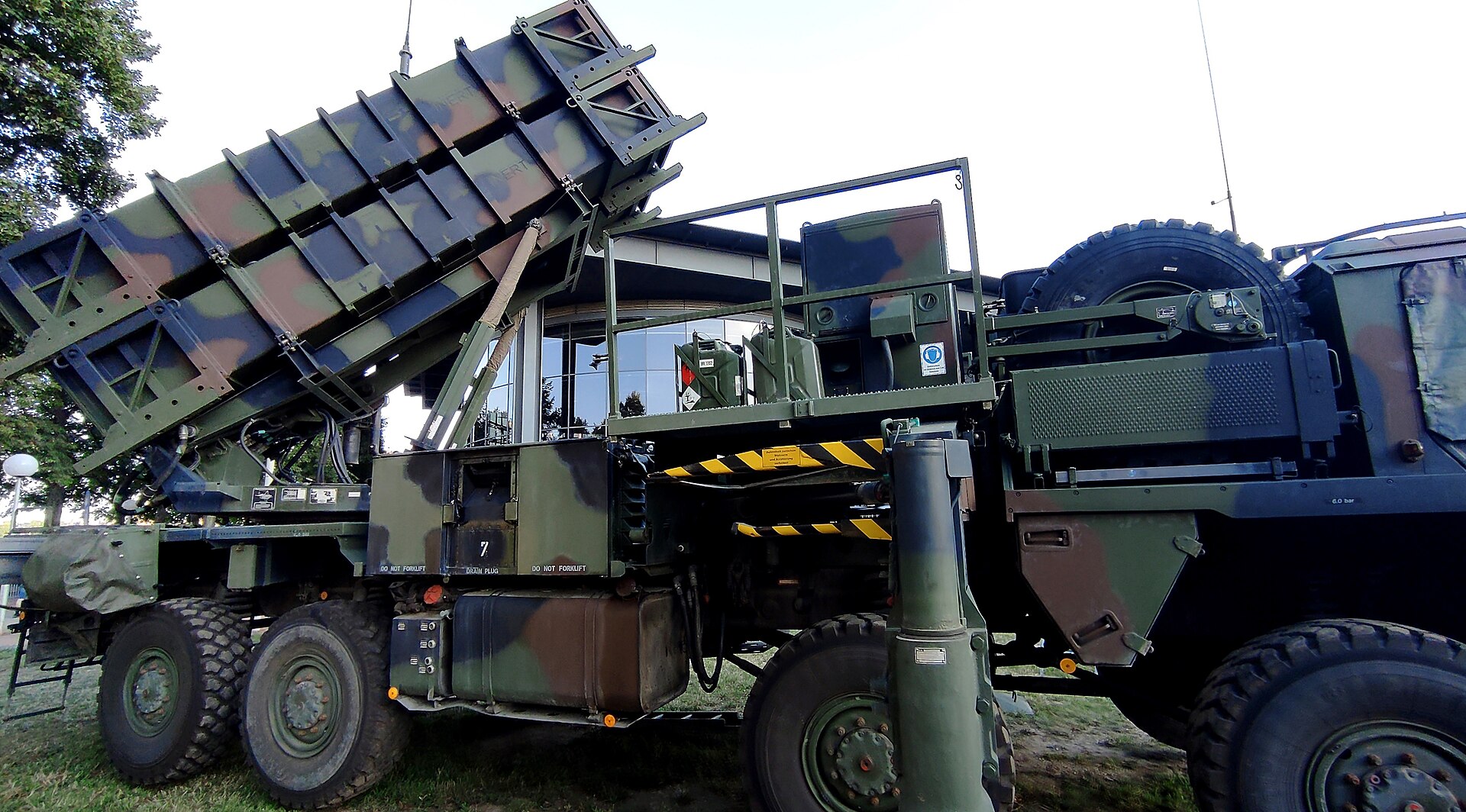
The distribution of strikes tells a story of Iranian strategic priorities. Saudi Arabia’s Eastern Province, home to the world’s largest oil processing facilities, has absorbed the heaviest drone bombardment, with 47 drones launched in a single day on March 23 alone. The Saudi air defense network has intercepted the vast majority of incoming threats, operating Patriot PAC-3 and THAAD batteries in a sustained defensive tempo that no military had previously attempted outside of simulation.
Bahrain, the smallest Gulf state and host to the US Fifth Fleet, has faced a disproportionate share of ballistic missile attacks relative to its size. Kuwait’s Mina al-Ahmadi refinery complex was struck by drones during Eid al-Fitr celebrations. The UAE reported 15 cruise missiles directed at its territory, a weapons class that presents a more challenging intercept profile than the slower-moving drones.
The air defense performance across the Gulf has been, by most professional military assessments, remarkably effective. Intercept rates for ballistic missiles have exceeded 90 percent across the Saudi and Emirati defense networks. Drone intercept rates are harder to calculate because of the sheer volume, but the drone war has validated more than a decade of Gulf investment in layered air defense. The systems that critics once called expensive status symbols have proven their worth under the most demanding conditions any air defense network has faced since the height of the Cold War.
The human toll, however, makes clear that intercept rates below 100 percent still mean death. Missile debris has fallen on Saudi neighborhoods in the Eastern Province. Across the region, the cumulative death toll exceeds 2,300, with thousands more injured. The statistical success of air defense is cold comfort to the families of those killed by the projectiles that got through.
The Alliance That Nobody Planned
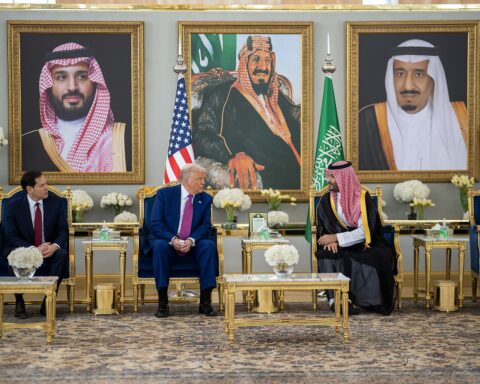
The most consequential geopolitical outcome of the first 28 days is an alliance structure that no diplomat designed and no treaty anticipated. Saudi Arabia and Israel, which have no formal diplomatic relations and whose populations hold deep mutual suspicions rooted in decades of conflict over Palestine, are now operating within the same integrated air defense architecture. American THAAD batteries on Saudi soil communicate with Israeli early-warning satellites. Saudi and Israeli radar data flows through the same US Central Command fusion centers.
This is not the Abraham Accords. It is something far more binding. The Abraham Accords were a peacetime diplomatic framework built on commercial incentives and a shared concern about Iran. What has emerged in 28 days is a wartime operational partnership forged under incoming fire. The Saudi-Israeli cooperation is driven not by choice but by physics: ballistic missiles launched from Iranian territory toward the Gulf transit Israeli early-warning radar coverage, and the flight times are too short for political consultations before intercept decisions must be made.
Beyond the Saudi-Israeli axis, the war has pulled in partners that would have seemed implausible even a month ago. The United Kingdom has deployed defensive military equipment to Saudi Arabia, Kuwait, and Bahrain, marking London’s most significant Gulf military commitment since the 1991 liberation of Kuwait. France has deepened defense cooperation with Riyadh through meetings between Saudi Defense Minister Khalid bin Salman and his French counterpart.
Perhaps the most unexpected entrant is Ukraine. President Volodymyr Zelenskyy visited Saudi Arabia on March 26, offering to deploy 201 Ukrainian drone defense specialists to assist Gulf states with the very expertise that Kyiv has been forced to develop through three years of Russian aerial bombardment. The symbolism is striking: a country still fighting its own war of survival is exporting hard-won battlefield knowledge to the wealthiest nations on Earth.
Pakistan, meanwhile, has signed a strategic defense pact with Saudi Arabia that carries implications far beyond the current conflict. Islamabad is the only nuclear-armed Muslim-majority state, and its formal alignment with Riyadh introduces a nuclear dimension to the Gulf security architecture that Iran cannot match through conventional means. The Pakistan factor is discussed in greater detail below, but its significance cannot be overstated: the war has accomplished what decades of Saudi financial support and Pakistani hedging never could — a clear strategic alignment between Islamabad and Riyadh.
The alliance that nobody planned may also be the alliance that nobody can easily dissolve. Wartime partnerships create institutional connections, shared intelligence databases, interoperable communications systems, and personal relationships between military commanders that persist long after the fighting stops. Whatever diplomatic settlement eventually ends this war, the defense architecture it has created will endure.
Who Controls the Strait of Hormuz Now?
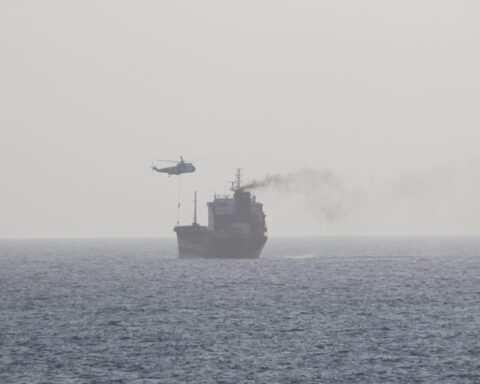
Iran does, and that single fact represents the most significant Iranian strategic achievement of the war. Since approximately March 4, the Islamic Revolutionary Guard Corps Navy has enforced a blockade of the Strait of Hormuz that has halted the transit of commercial oil tankers through the world’s most important energy chokepoint. Twenty percent of global oil supply passed through Hormuz before the war. That flow has effectively stopped.
The blockade has survived everything the US-Israeli coalition has thrown at it. Three American carrier strike groups are now operating in the Arabian Gulf and Gulf of Oman — the largest US naval concentration in the region since 2003. Israeli special operations forces killed IRGC Navy commander Alireza Tangsiri on March 26 in a strike that decapitated the blockade’s command structure. Yet the blockade has persisted even after Tangsiri’s death, because the IRGC Navy operates through a decentralized command structure that does not depend on any single leader.
The mechanics of the blockade are straightforward and almost impossible to counter with conventional naval force. Iran has mined approaches to the strait, deployed fast-attack craft armed with anti-ship missiles in the narrow shipping lanes, positioned shore-based anti-ship cruise missiles on its coastline and on islands within the strait, and used the threat of submarine-launched torpedoes to deter escort operations. The new tanker war has already surpassed the 1987-88 tanker war in both scope and economic impact.
Iran has selectively allowed some vessels through, including 10 tankers it permitted passage as a “goodwill gesture” and safe passage for Japanese-flagged ships. It has also imposed a $2 million transit fee per vessel, effectively claiming sovereign taxation rights over international waters. These selective openings are not signs of weakness. They are demonstrations of control — Tehran showing the world that it decides who passes and on what terms.
The strategic lesson is profound and will be studied for decades. The world’s most expensive navy, backed by the world’s most advanced surveillance systems, has been unable to force open a 21-mile-wide waterway against a determined adversary using mines, missiles, and small boats. The implications for other maritime chokepoints — the Taiwan Strait, the Malacca Strait, the Suez Canal — are not lost on military planners in Beijing, New Delhi, and Ankara.
Can Either Side Afford to Keep Fighting?
Neither side can afford the war it is fighting, but both sides believe they can afford it less to stop. This is the classic dynamic of escalatory commitment, and it is playing out with extraordinary speed because of the economic magnitudes involved.
Iran’s economy was fragile before the first bomb fell. After 28 days of sustained aerial bombardment, it is in a state approaching collapse. The Iranian economic crisis is structural, not cyclical: 82,000 buildings destroyed, power infrastructure degraded, transportation networks severed, and oil export revenue — already constrained by pre-war sanctions — reduced to near zero by the coalition’s targeting of energy infrastructure. The Iranian rial has lost what remaining international value it held. Food imports, which Iran depends on heavily, have been disrupted by both the war and the inability to process international payments.
The coalition side faces a different but equally pressing economic problem. The Hormuz closure has removed more than 10 million barrels per day from global oil markets. Brent crude peaked above $120 per barrel in mid-March before settling around $100 as diplomatic hopes briefly depressed prices. The OECD has cut its global growth forecast from 3.3 percent to 2.9 percent, attributing the revision almost entirely to the war’s energy market disruption. US inflation is now forecast at 4.2 percent, threatening the Federal Reserve’s rate-cutting cycle and the broader economic recovery that the Trump administration had been counting on for political purposes.
For Gulf states, the war’s economic impact is paradoxical. Higher oil prices should benefit oil exporters, but the Hormuz closure has prevented most Gulf crude from reaching market. Saudi Arabia has partially offset this through its Red Sea pipeline capacity, and SAMA reserves remain substantial, but the disruption to the non-oil economy has been severe. Vision 2030 megaprojects have been hit directly: NEOM’s Trojena ski resort has seen more than $6 billion in contracts cancelled, the 2029 Asian Winter Games have been relocated from NEOM to Almaty, and the Public Investment Fund has pivoted spending from megaprojects to wartime essentials including grain stockpiling.
The war’s economic balance sheet at Day 28 shows a conflict that is burning through national wealth at a rate that neither side can sustain indefinitely. The question is not whether the economics will eventually force a settlement, but whether the political dynamics will permit one before irreversible damage is done.
The Day 28 War Scorecard
Wars resist simple measurement, but the complexity of a multi-front conflict demands a structured framework for assessment. The Day 28 War Scorecard evaluates both sides across six dimensions that collectively determine a belligerent’s ability to sustain and ultimately prevail in a protracted conflict. Each dimension is scored on a 1-10 scale, where 10 represents a decisive advantage and 1 represents a critical vulnerability.
| Dimension | US/Israel Coalition | Score | Iran/Proxies | Score |
|---|---|---|---|---|
| Military Attrition | 60-70% of Iran’s above-ground missile production destroyed. Air superiority unchallenged. Tangsiri killed. But unable to open Hormuz or halt drone/missile launches. | 7 | 357+ ballistic missiles, 1,800+ drones fired. Hormuz closed. Gulf infrastructure struck. But losing command assets, missile stocks depleting, air defense nonexistent. | 5 |
| Economic Resilience | Gulf states have deep reserves but Hormuz closure cuts revenue. US faces 4.2% inflation. OECD growth cut to 2.9%. War costs estimated at $2-3B/week for US operations alone. | 6 | Economy near collapse. 82,000 buildings destroyed. Oil exports at zero. Rial worthless internationally. Food import disruption severe. No financial reserves to draw on. | 2 |
| Diplomatic Capital | Broad Western support. UK, France deploying assets. G7 aligned. But Global South largely opposed — BRICS statements critical. UN Security Council blocked by Russia/China vetoes. | 6 | Russia and China providing diplomatic cover. BRICS solidarity. But expelled from 6+ Gulf embassies. Isolated from regional neighbors. Proxy support fragmenting. | 4 |
| Alliance Strength | Unprecedented Saudi-Israeli-Western alignment. Pakistan defense pact. Ukraine drone expertise. 12+ nations in support roles. Coalition cohesion holding under stress. | 8 | Hezbollah degraded by 2024 war. Iraqi PMF authorized retaliation but fragmented. Houthis restrained by Saudi diplomacy. Proxy “axis of resistance” fraying. | 3 |
| Domestic Stability | US public war-weary but not yet protesting. Saudi population supportive under attack. Israeli public backing operations. Gulf nationals rallying behind governments. But war fatigue rising. | 7 | Civilian casualties generating domestic anger at regime. But IRGC maintains internal control. No organized opposition. Nationalism partially rallied by external attack. Media blackout effective. | 5 |
| War Aims Achievement | Nuclear sites struck but destruction unconfirmed. Regime change not pursued. Iran still fighting. Hormuz still closed. Missile launches continuing. Core objectives unmet. | 4 | Demonstrated deterrent capacity. Closed Hormuz. Inflicted Gulf damage. But economy devastated, military degraded, diplomatic isolation deepening. Pyrrhic achievement. | 4 |
The aggregate scores — 38 for the US-Israeli coalition, 23 for Iran — suggest a war that one side is winning on most conventional metrics but losing on the metric that matters most: the achievement of stated objectives. The coalition dominates the air, commands the seas (outside of Hormuz), maintains economic depth, and holds a broader alliance. Iran is losing on nearly every measurable dimension except one: it has closed the Strait of Hormuz, and that single achievement has neutralized much of the coalition’s conventional superiority by imposing costs that no amount of air power can erase.
The scorecard reveals a structural mismatch between means and ends. The coalition has the means to destroy Iran’s military infrastructure but not the means to achieve its stated end of denuclearization without a ground invasion that no coalition member is willing to undertake. Iran has the means to inflict economic pain through the Hormuz closure but not the means to translate that pain into a diplomatic outcome that preserves the regime and lifts the bombardment. Both sides are winning their respective wars of attrition while losing the war that matters.
Why Is Saudi Arabia Fighting a War It Hasn’t Declared?
Saudi Arabia is the most active non-combatant in the 2026 Iran war. Riyadh has not declared war on Iran, has not authorized offensive strikes against Iranian territory, and has not formally joined the US-Israeli military coalition. Yet Saudi Arabia has opened King Fahd Air Base to American forces, intercepted hundreds of Iranian drones and missiles in its own airspace, expelled the Iranian military attache on March 21, joined five Gulf states in a formal condemnation of Iranian aggression, and hosted Ukrainian drone defense experts. The distinction between combatant and non-combatant has become semantic.
The logic behind this ambiguity is deliberate. Crown Prince Mohammed bin Salman faces a strategic calculation with no clean answer. Full entry into the war would make Saudi Arabia a primary target for Iranian retaliation at a moment when the Kingdom’s economic transformation program is already under severe strain. Formal neutrality is impossible when Iranian missiles are landing on Saudi soil. The solution is a posture that provides maximum support to the coalition while maintaining the legal and diplomatic fiction of non-belligerency.
This is not without precedent. The United States maintained a posture of “neutrality” during the early years of World War II while providing massive material support to Britain through Lend-Lease. Saudi Arabia’s position in 2026 mirrors that approach: not yet a declared combatant, but so deeply integrated into the coalition’s operations that the distinction is meaningful only in international law, not in military reality.
The question of whether Saudi Arabia and the UAE will formally join the war remains live. Bloomberg and the Wall Street Journal have both reported incremental steps toward formal entry. Each Iranian strike that kills Saudi civilians, each drone that penetrates Saudi air defense, each escalation in Iranian rhetoric about targeting Saudi oil infrastructure pushes Riyadh closer to a threshold that the Crown Prince has so far managed to avoid crossing. The war Saudi Arabia is fighting without declaring may, by its own momentum, become the war it has no choice but to declare.
How Did Pakistan Become the Most Important Neutral?
Pakistan has emerged as the single most consequential mediating power in the 2026 Iran war, a role that would have been nearly unimaginable at the start of the year. Islamabad is now hosting indirect communications between Washington and Tehran, maintaining open channels with both the Iranian government and the Gulf Arab states, and positioning itself as the only credible interlocutor with access to all sides of the conflict. Pakistan shares this mediation space with Oman, whose wartime neutrality has kept the Muscat channel to Tehran open despite fourteen drone-strike deaths on Omani soil.
Pakistan’s unique position derives from geography, history, and nuclear capability. It shares a 959-kilometer border with Iran, maintains long-standing economic and security relationships with Saudi Arabia, hosts a significant Shia population that gives it cultural credibility with Tehran, and possesses nuclear weapons that make it impossible for any party to the conflict to ignore its interests. The Pakistan diplomatic role has expanded with each week of the war as other potential mediators — Turkey, Qatar, Oman — have proven unable to bridge the gap between the belligerents.
The strategic defense pact between Pakistan and Saudi Arabia, signed during the war, represents the most significant shift in South Asian geopolitics since Pakistan’s nuclear tests in 1998. The pact formalizes a security relationship that has existed informally for decades but that Islamabad had always kept ambiguous to avoid antagonizing Iran. The war has collapsed that ambiguity. Pakistan has chosen its side — not as a combatant, but as a security guarantor that brings a nuclear umbrella to the Gulf equation.
For Iran, the Pakistan factor introduces a calculation that transcends the current conflict. A Saudi Arabia backed by Pakistani nuclear guarantees is a fundamentally different strategic challenge than a Saudi Arabia that relies solely on American extended deterrence. American commitment to Gulf security waxes and wanes with domestic politics. Pakistani commitment to Saudi security, underwritten by decades of financial support, military cooperation, and shared Sunni solidarity, operates on a different and potentially more durable logic.
What Happened to the Ceasefire?
The ceasefire process has failed because neither side is willing to accept what the other side demands as a precondition for stopping the fighting. The gap between the American and Iranian positions is not a negotiating distance that skilled diplomats can bridge. It is a structural incompatibility between two sets of war aims that cannot be simultaneously satisfied. Gulf states have made that incompatibility sharper still, demanding the permanent destruction of Iran’s missile and drone manufacturing capacity as a precondition for any settlement.
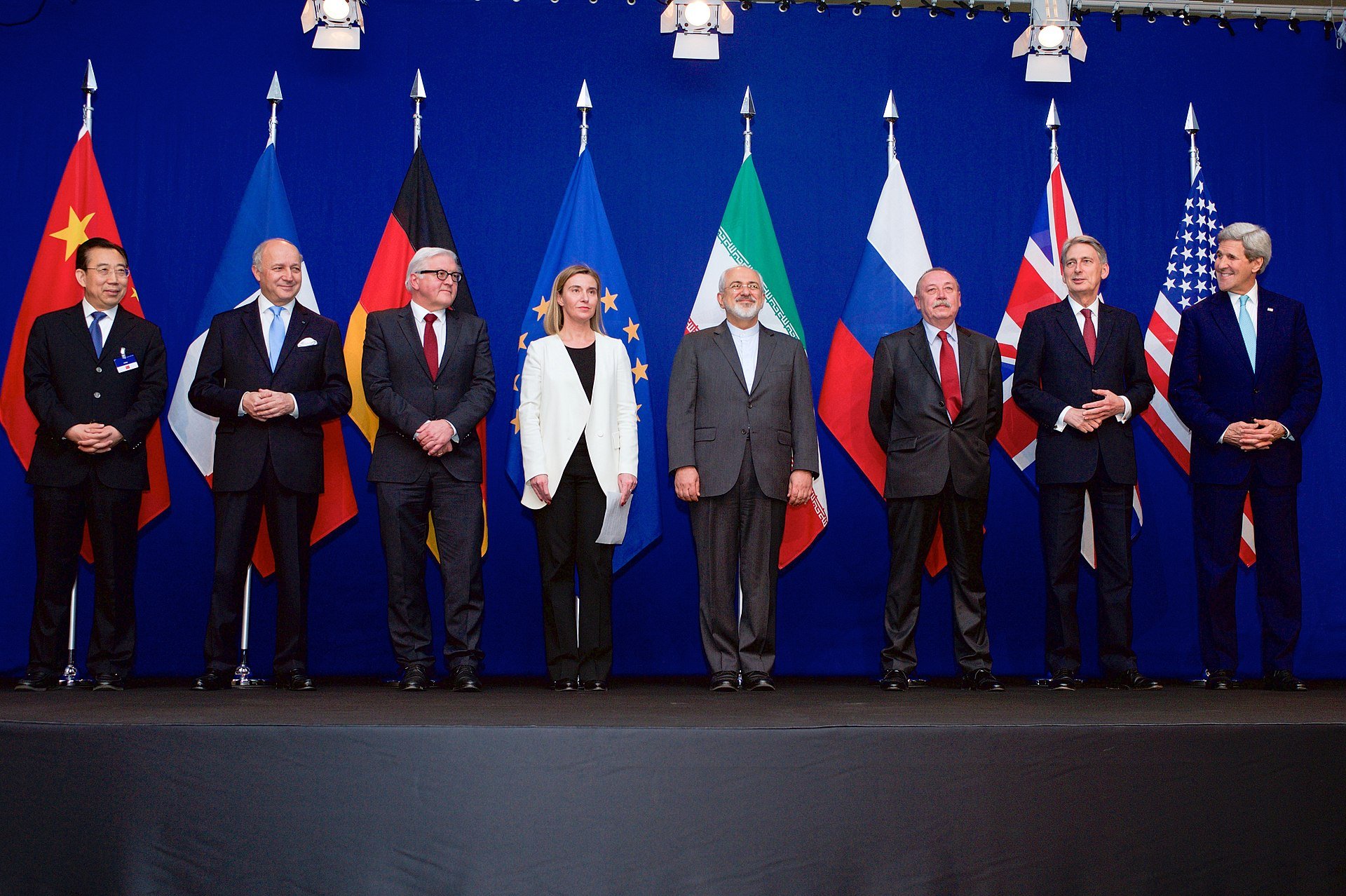
The United States has proposed a 15-point ceasefire plan that includes, among other conditions, the permanent reopening of the Strait of Hormuz under international naval supervision, verifiable dismantlement of Iran’s uranium enrichment capacity beyond civilian levels, the cessation of Iranian support for regional proxy groups, and compensation for Gulf states damaged by Iranian strikes. From Tehran’s perspective, these conditions amount to surrender — the abandonment of every strategic asset that Iran has spent four decades building.
Iran has countered with a 5-point proposal that demands an immediate cessation of all US and Israeli strikes, the withdrawal of American forces from Gulf bases, the lifting of all economic sanctions, international recognition of Iran’s right to a civilian nuclear program, and reparations for the destruction of Iranian civilian infrastructure. From Washington’s perspective, these conditions would reward Iranian aggression while dismantling the security architecture that the United States has maintained in the Gulf since 1990.
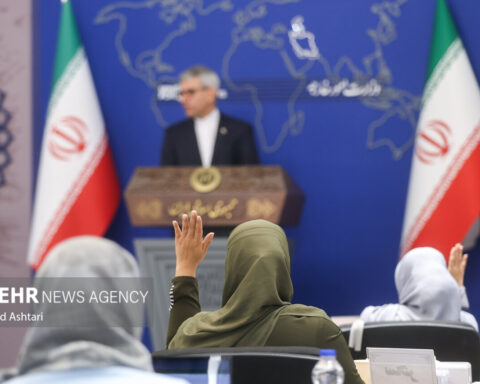
The gap between the 15-point plan and the 5-point counterproposal is not a matter of splitting the difference. It reflects fundamentally incompatible visions of what the post-war Middle East should look like. Iran’s parliament has publicly denied that any negotiations are taking place, even as Pakistani intermediaries shuttle between Tehran and Washington. Iran has rejected the core premises of the American plan, while the Trump administration has shown no willingness to modify its maximum demands.
President Trump has set an April 6 deadline — recently extended by 10 days from the original date — after which the United States has threatened to begin targeting Iran’s energy infrastructure directly. This is the escalation that both the oil markets and the Iranian government fear most. If the deadline passes without a ceasefire, the war will enter a new and more destructive phase in which the economic foundations of the Iranian state become primary targets.
Has the War Already Decided the Future of Oil?
The 2026 Iran war has done more to reshape global energy markets in 28 days than the entire climate policy apparatus accomplished in 28 years. The Hormuz closure has removed the comfortable assumption — embedded in every energy model, every refinery investment, every government budget — that Gulf oil will flow reliably to global markets through a single narrow waterway. That assumption is dead, and it is not coming back regardless of how the war ends.
The numbers are staggering. More than 10 million barrels per day of Gulf oil production has been functionally stranded by the Hormuz blockade. OPEC+ has responded by boosting output by 206,000 barrels per day from members with spare capacity outside the Gulf, but this is a rounding error against the magnitude of the disruption. Oil peaked above $120 per barrel before briefly dipping below $100 on ceasefire hopes that proved premature. The fourth oil shock is now a settled fact of the global economy, and its effects will persist long after the last missile is fired.
The structural changes are already visible. Saudi Arabia is accelerating the development of its Red Sea pipeline capacity to bypass Hormuz entirely. The East-West Pipeline, which can carry roughly 5 million barrels per day to the Red Sea port of Yanbu, has become the Kingdom’s most strategically important piece of infrastructure overnight. Every Gulf state is now re-evaluating its dependence on a single export route that a determined adversary has proven it can close.
Beyond the Gulf, the war has accelerated energy diversification at a pace that market forces alone would never have produced. Japan, South Korea, and India — the three largest Asian importers of Gulf oil — are fast-tracking emergency supply agreements with non-Gulf producers. The OECD’s revised forecasts incorporate not just the immediate price shock but a permanent risk premium on Gulf-origin crude that will reshape investment decisions for a generation.
The irony is that the war may accelerate precisely the energy transition that Iran’s oil wealth was supposed to protect it against. Every day that Hormuz remains closed strengthens the case for renewable energy, nuclear power, and domestic production in importing countries. The oil weapon has a shelf life, and Iran may have shortened it by decades through the very act of wielding it.
The Military Doctrines That Died in Twenty-Eight Days
The 2026 Iran war has served as the most consequential live-fire test of military doctrine since the 1991 Gulf War, and the results have invalidated assumptions that defense establishments on every continent had treated as settled.
The first doctrine to fall was the belief that maritime chokepoints cannot be closed against a first-rate navy. The US Navy — the most powerful naval force in human history, operating three carrier strike groups with combined air wings of more than 200 aircraft — has been unable to force the Strait of Hormuz open against an adversary with no aircraft carriers, no blue-water fleet, and a defense budget roughly one-fiftieth of the Pentagon’s. The asymmetric tools Iran has deployed — mines, fast boats, shore-based missiles, submarines — have proven that denial is cheaper and easier than access in confined waters.
The second doctrine to fall was the assumption that Gulf air defense systems were untested luxuries. Saudi Arabia’s military performance in this war has silenced a generation of skeptics who dismissed Gulf militaries as parade-ground forces incapable of real combat. The sustained air defense campaign — intercepting hundreds of ballistic missiles and thousands of drones over four weeks without a catastrophic failure — represents the most demanding operational test any integrated air defense network has faced. Gulf air defense works. That is no longer a theoretical proposition.
The third doctrine to die is the idea that precision airpower can achieve strategic objectives without ground forces. The US-Israeli air campaign has destroyed an enormous percentage of Iran’s above-ground military infrastructure, yet Iran continues to launch missiles, close Hormuz, and activate proxies. Destroying Iran’s arsenal was the easy part. Translating that destruction into political outcomes has proven impossible from the air alone, confirming a lesson that airpower theorists have been reluctant to accept since the doctrine of strategic bombing was first articulated in the 1920s.
The fourth and perhaps most consequential doctrinal shift concerns drones. The drone revolution that Ukraine previewed in its war with Russia has been confirmed and amplified in the Gulf. Cheap, expendable, produced in enormous quantities, and capable of overwhelming sophisticated defenses through sheer numbers, drones have established themselves as the defining weapon system of 21st-century warfare. The interceptor crisis — the reality that a $50,000 drone can force the expenditure of a $3 million Patriot missile — has implications for every military budget on Earth.
Defense planners in Taipei, NATO capitals, and New Delhi are studying this war with an intensity that previous Middle Eastern conflicts did not command. The lessons are directly transferable: if Iran can close Hormuz, China can close the Taiwan Strait. If drones can overwhelm Gulf air defense, they can overwhelm European air defense. If precision airpower cannot achieve strategic objectives against Iran, it cannot achieve them against any adversary with dispersed, hardened, and redundant military infrastructure. The 28-day war has rewritten the textbooks.
The War Changed Everything Except What Matters
Here is the contrarian assessment that the triumphalist narratives on both sides would prefer to ignore: after 28 days of the most intense military campaign in the Middle East since 2003, the fundamental power equation in the region is essentially unchanged.
Iran still controls the Strait of Hormuz. It has demonstrated, under the most extreme duress imaginable, that it possesses the will and the capability to close the world’s most important energy chokepoint. No amount of bombing has dislodged that control. The IRGC Navy lost its commander and kept operating. The air force lost its bases and kept launching drones from dispersed sites. The missile forces lost their factories and kept firing from underground storage that pre-war intelligence failed to fully map.
Iran’s nuclear capacity remains uncertain. The coalition has struck known nuclear facilities, but the history of Iran’s nuclear program is a history of concealment, duplication, and redundancy. Whether the Fordow enrichment facility — buried under a mountain — has been effectively destroyed, degraded, or merely damaged is a question that cannot be answered from satellite imagery alone. The war may have set back Iran’s nuclear timeline. It may have accelerated it by destroying the last diplomatic constraints on weaponization. Nobody outside the innermost circle of Iran’s Supreme National Security Council knows which.
Iran’s proxy network is damaged but not destroyed. Hezbollah was degraded before this war began, by the 2024 Israeli campaign in Lebanon. The Iraqi Popular Mobilization Forces have been authorized to retaliate against US forces but remain fragmented. The Houthis in Yemen have been partially restrained by Saudi diplomatic efforts. The “axis of resistance” is fraying but not broken, and the grievances that fuel proxy recruitment — sectarian marginalization, economic deprivation, opposition to US military presence — have been intensified, not resolved, by the war.
On the coalition side, the picture is equally ambiguous. The United States has demonstrated the ability to project devastating military force across 7,000 miles but has not achieved either of its stated objectives: verifiable denuclearization or the permanent reopening of Hormuz. Israel has conducted the most extensive air campaign in its history against a state that is not on its border, but the strategic threat from Iran has not been eliminated — it has been provoked into full expression. The Gulf states are safer in the sense that their air defenses have been validated, but less safe in the sense that the war has confirmed that Iran will target their civilian infrastructure in any future conflict.
The 2026 Iran war is tactically devastating and strategically indecisive — a paradox that neither side’s propaganda apparatus can explain away.
Day 28 assessment
The winners, if the word applies, may be the countries that stayed out. Russia has watched a major conflict consume American military resources and diplomatic attention without expending a single Russian soldier or ruble. China has maintained its economic relationships with both Gulf oil producers and Iran while the United States has entangled itself in another Middle Eastern war. India has navigated between its Gulf labor diaspora and its Iranian energy imports with a pragmatism that has earned it diplomatic credibility with all parties. The war has reshuffled the region’s alliances and destroyed its infrastructure, but the underlying contest between American hegemony and Iranian resistance to it remains exactly where it was on February 27 — unresolved, and now vastly more expensive for everyone involved.
Frequently Asked Questions
When did the 2026 Iran war start?
The war began on the night of February 28, 2026, when US and Israeli forces launched coordinated airstrikes against military and nuclear targets inside Iran. The operation was described by Washington as a limited action to degrade Iran’s nuclear and missile capabilities. Iran responded with missile and drone strikes against Gulf states and the closure of the Strait of Hormuz, escalating the conflict into a multi-front regional war within days. The full timeline of the Iran war covers every major development since Day 1.
How many people have been killed in the Iran war?
As of Day 28, the cumulative death toll across all parties exceeds 2,300. Iran’s Health Ministry has reported 1,937 killed and 24,800 injured inside Iran from coalition airstrikes. Additional casualties have been reported in Saudi Arabia, the UAE, Kuwait, Bahrain, and Iraq from Iranian missile and drone attacks. The civilian toll inside Iran has drawn international criticism, with 82,000 buildings destroyed in the first 25 days of the war.
Is the Strait of Hormuz still closed?
The Strait of Hormuz has been effectively closed to commercial shipping since approximately March 4, 2026. Iran’s IRGC Navy has enforced a blockade using mines, fast-attack craft, shore-based missiles, and the threat of submarine attack. Selective openings have occurred — Iran permitted 10 tankers through as a diplomatic signal and has granted passage to Japanese-flagged vessels — but routine commercial transit remains suspended. The killing of IRGC Navy commander Tangsiri by Israel on March 26 has not broken the blockade due to the IRGC’s decentralized command structure.
What is the Trump April 6 deadline?
President Trump has set April 6, 2026, as the deadline after which the United States will begin targeting Iran’s energy infrastructure — oil fields, refineries, and export terminals — if a ceasefire is not reached. This deadline was extended by 10 days from its original date. The threat represents a significant escalation because energy infrastructure strikes would aim to destroy Iran’s primary revenue source permanently, rather than the military and nuclear targets that have been the focus of coalition operations thus far.
What role is Saudi Arabia playing in the Iran war?
Saudi Arabia occupies an ambiguous position as the war’s most active non-combatant. The Kingdom has not declared war on Iran or authorized offensive operations, but it has opened King Fahd Air Base to US forces, intercepted hundreds of Iranian drones and missiles, expelled Iran’s military attache, and joined a five-nation Gulf condemnation of Iranian attacks. The Saudi royal family and the broader House of Saud face a defining strategic decision about whether formal entry into the war becomes necessary or whether the current posture of active non-belligerency can be sustained.
Is there a ceasefire plan for the Iran war?
Two competing proposals exist. The United States has proposed a 15-point ceasefire plan that includes permanent reopening of Hormuz, verifiable nuclear dismantlement, cessation of proxy support, and reparations. Iran has countered with a 5-point proposal demanding an end to all strikes, US withdrawal from Gulf bases, sanctions removal, nuclear rights recognition, and reparations for Iranian damage. The gap between these positions is fundamental, not tactical, and no mediator has yet found a formula that both sides can accept.
How has the war affected oil prices?
Brent crude peaked above $120 per barrel in mid-March before settling around $100. The Hormuz closure has removed more than 10 million barrels per day from global supply. OPEC+ has increased output by 206,000 barrels per day, a fraction of the shortfall. The OECD has cut its global growth forecast to 2.9 percent from 3.3 percent, with US inflation now forecast at 4.2 percent. The fourth oil shock is the most severe energy market disruption since 1973.