
ISLAMABAD — Pakistan’s defence minister went on live television Monday night and told the country that joining the Abraham Accords “clashes with our fundamental ideologies.” Saudi Arabia, which holds the identical position, responded to the same demand through an anonymous “senior Saudi source” speaking to CNN — no name, no ministry letterhead, no accountability.
The asymmetry is structural, not coincidental. Khawaja Asif could say what he said because Pakistan’s domestic constraints — its Kashmir doctrine, its ideological base, the army’s institutional legitimacy — made public rejection unavoidable. Saudi Arabia could not say what it privately believes because its American arms pipeline, its fiscal crisis, and its dependence on Washington for Hormuz resolution made public rejection impossible. The result is a diplomatic arrangement neither country designed: Pakistan absorbs the cost of saying no to Donald Trump, and Saudi Arabia shelters behind the silence. Same position, same week, entirely different accountability.
Table of Contents
- What Did Trump Actually Demand?
- Khawaja Asif Went on Live Television
- How Did Saudi Arabia Respond to the Same Demand?
- Why Can Saudi Arabia Not Say This Out Loud?
- The 2020 Precedent
- What Does Pakistan’s Rejection Actually Cost?
- What Does Saudi Arabia Get From Pakistan’s Refusal?
- Asim Munir’s Three-Day Sequence
- FAQ
What Did Trump Actually Demand?
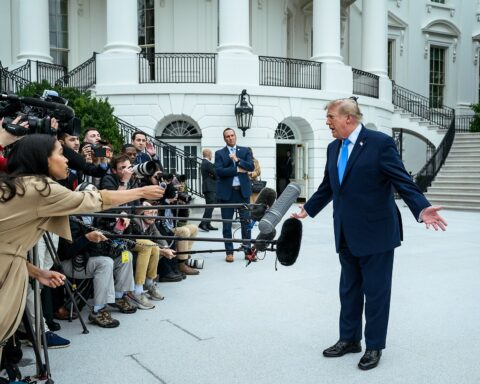
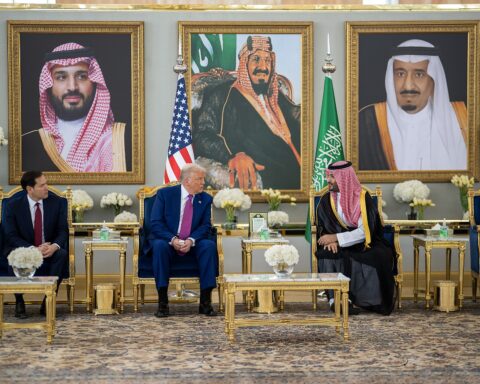
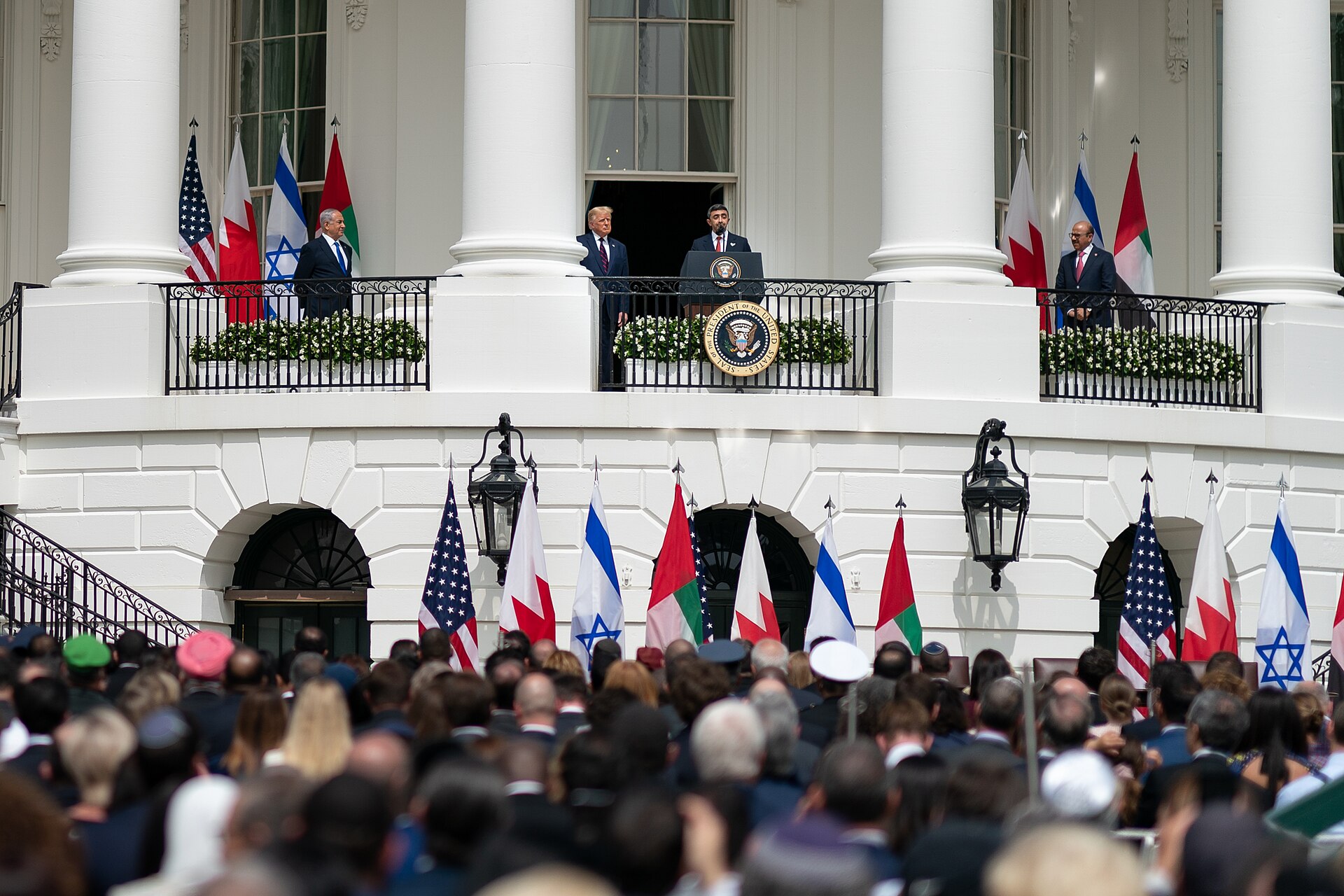
On May 25, Trump convened a conference call with eight leaders — from Saudi Arabia, UAE, Qatar, Pakistan, Turkey, Egypt, Jordan, and Bahrain — and told them he expected every nation not yet in the Abraham Accords to join after an Iran deal is reached. He followed the call with a Truth Social post calling the request “mandatory” and naming Saudi Arabia and Qatar as the countries that should sign first.
The call itself was remarkable for what it produced: nothing. An American official told Axios that “there was silence on the line, and Trump joked and asked if they are still there.” Eight heads of state or their representatives, collectively governing over half a billion people across the Muslim world, offered no pushback and no agreement — only the diplomatic equivalent of dead air. Saudi Arabia was in the middle of hosting Hajj, a period when its entire diplomatic apparatus was oriented toward pilgrimage logistics and security, not toward managing a normalization ultimatum from Washington.
Trump’s Truth Social post compounded the pressure. He wrote that he was “mandatorily requesting that all Countries immediately sign the Abraham Accords,” adding that if Iran signed its agreement, “it would be an Honour to have them also be part of this unparalleled World Coalition.” The language — mandatory, immediate, honour — left no room for the kind of incremental process Saudi Arabia had previously negotiated with the Biden administration, which reportedly came close to a normalization agreement before the October 7, 2023 Hamas attack halted it. The original Abraham Accords in 2020 brought in UAE, Bahrain, Morocco, and Sudan; Saudi Arabia was always the intended prize, and Trump made that explicit.
The post also created a specific problem for Pakistan. Trump named the country’s army chief, General Syed Asim Munir, as “Field Marshal Syed Asim Munir Ahmed Shah” — a title Munir does not hold, has never held, and which does not exist in Pakistan’s current military rank structure. He did not name Prime Minister Shehbaz Sharif. The effect was to address Pakistan’s military establishment directly while bypassing the civilian government, a distinction that carries real domestic political weight in a country where the civil-military relationship is permanently contested territory.
The Middle East briefing 3,000+ readers start their day with.
One email. Every weekday morning. Free.
Khawaja Asif Went on Live Television
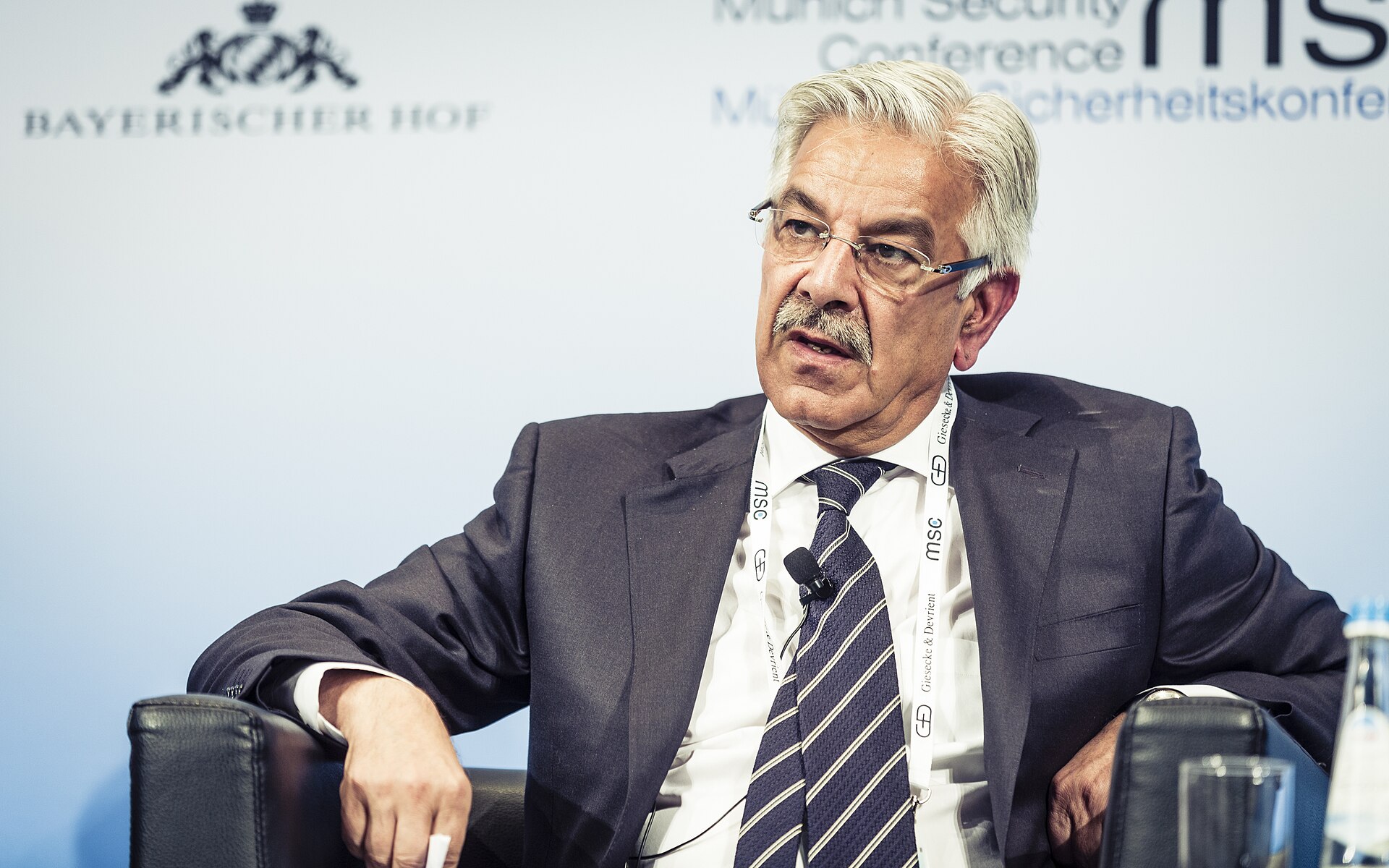
Khawaja Asif appeared on Samaa TV on Monday night and delivered what amounted to the clearest public rejection of Trump’s Abraham Accords demand from any official of any country on the call. He said: “Personally, I don’t think we should join any such accord which clashes with our fundamental ideologies.” Then he went further than policy disagreement into something closer to a moral verdict on the reliability of the parties involved.
How will you sit down with those people whose word cannot be trusted even for a single day?
Khawaja Asif, Pakistan Defence Minister, Samaa TV, May 25-26, 2026
The “personally” qualifier is worth examining. Asif was speaking as a minister offering a personal opinion on a television talk show, not delivering a formal MOFA press release. But the personal framing was a choice of format, not a departure from policy. Pakistan’s Foreign Minister Ishaq Dar had already repeatedly dismissed speculation about Abraham Accords participation and confirmed there had been “no shift in Pakistan’s official Palestine policy.” Pakistan’s MOFA spokesperson, Tahir Hussain Andrabi, had separately clarified: “Participating in the peace delegation never means joining the Abraham Accords or participating in the international peacekeeping force in Gaza.” And Pakistan had categorically ruled out joining the Accords as recently as January 2026, when it signed onto the Gaza Board of Peace.
Asif was not breaking new policy ground. He was saying what Pakistan’s government had already said through every available institutional channel — but he was saying it on camera, under his own name, with the emotional register of a politician speaking to a domestic audience that overwhelmingly opposes normalization with Israel. The Atlantic Council’s Michael Kugelman framed the structural constraint: “It is possible that if Saudi Arabia joins the Abraham Accords, pressure will increase on Pakistan to reconsider its position. But given current public opinion, any Pakistani government that joins these agreements could face serious political losses.”
The distinction between Asif’s public statement and Pakistan’s prior institutional positions is not content — it is speed and visibility. He responded to a direct demand from a sitting American president, on live television, within hours of the demand being made. By the time Saudi Arabia’s position filtered through CNN’s anonymous sourcing, Pakistan’s rejection was already on the record and circulating across South Asian and Middle Eastern media in Asif’s own voice.
How Did Saudi Arabia Respond to the Same Demand?
Through an anonymous “senior Saudi source” who told CNN that Riyadh would not normalize without “an irreversible pathway to Palestinian statehood” and that “partial or symbolic gestures will not suffice.” No named official, no press conference, no ministry statement. The kingdom’s position on the most consequential diplomatic demand of the year was communicated on background, attributed to no one.
This is not how Saudi Arabia communicates when it wants to be heard. When Trump previously claimed the Saudis were “not” demanding a Palestinian state as a condition for normalization, Saudi Arabia’s MOFA issued a formal written rebuttal stating that its position is “firm and unwavering” and “non-negotiable and not subject to compromises.” That was an institutional statement, attributed to the ministry, released in writing. Crown Prince Mohammed bin Salman went further in a September 2024 speech to the Shura Council: “The kingdom will not cease its tireless efforts to establish an independent Palestinian state with East Jerusalem as its capital, and we affirm that the kingdom will not establish diplomatic relations with Israel without one.” That was a domestic political speech — delivered to Saudi Arabia’s legislative body, not to a foreign audience — which makes it constitutionally harder to walk back than any diplomatic communiqué.
| Pakistan | Saudi Arabia | |
|---|---|---|
| Channel | Samaa TV (live broadcast) | CNN (background sourcing) |
| Official | Khawaja Asif, Defence Minister | Anonymous “senior Saudi source” |
| Attribution | Named, on-the-record | Unnamed, on-background |
| Timing | Hours after the demand | Following day, via Western outlet |
| Position | Rejection | Rejection |
| Accountability | Full ministerial | Zero |
The kingdom’s private position is identical to Pakistan’s public one, and the evidence is not limited to anonymous sourcing. An INSS analysis from February 2026 found that Saudi Arabia now “identifies more risks than opportunities in normalizing” with Israel and has been using its distance from normalization to “consolidate regional leadership” and serve domestic legitimacy. The ADL flagged in January 2026 an “intensification of antisemitic discourse in Saudi Arabia and growing public attacks on the Abraham Accords by prominent Saudi figures.” A source within the Saudi royal family told Israeli broadcaster Kan that the criticism “is not antisemitic but directed against Netanyahu.” The INSS concluded that the Israeli government itself “lacks desire to reach an agreement with Saudi Arabia, given the price Riyadh demands in the Palestinian context” — meaning the demand Trump made is one that neither the demander’s closest Middle East partner nor the intended signatory actually wants fulfilled on the terms required.
The gap between Saudi Arabia’s private conviction and its public communication is not ambiguity. It is a fiscal and military dependency that makes candour dangerous. Saudi Arabia believes what Pakistan said. It communicated the same position through an unnamed source. But it cannot say it the way Asif said it — under a name, on a screen, in real time, with a domestic audience watching.
Why Can Saudi Arabia Not Say This Out Loud?
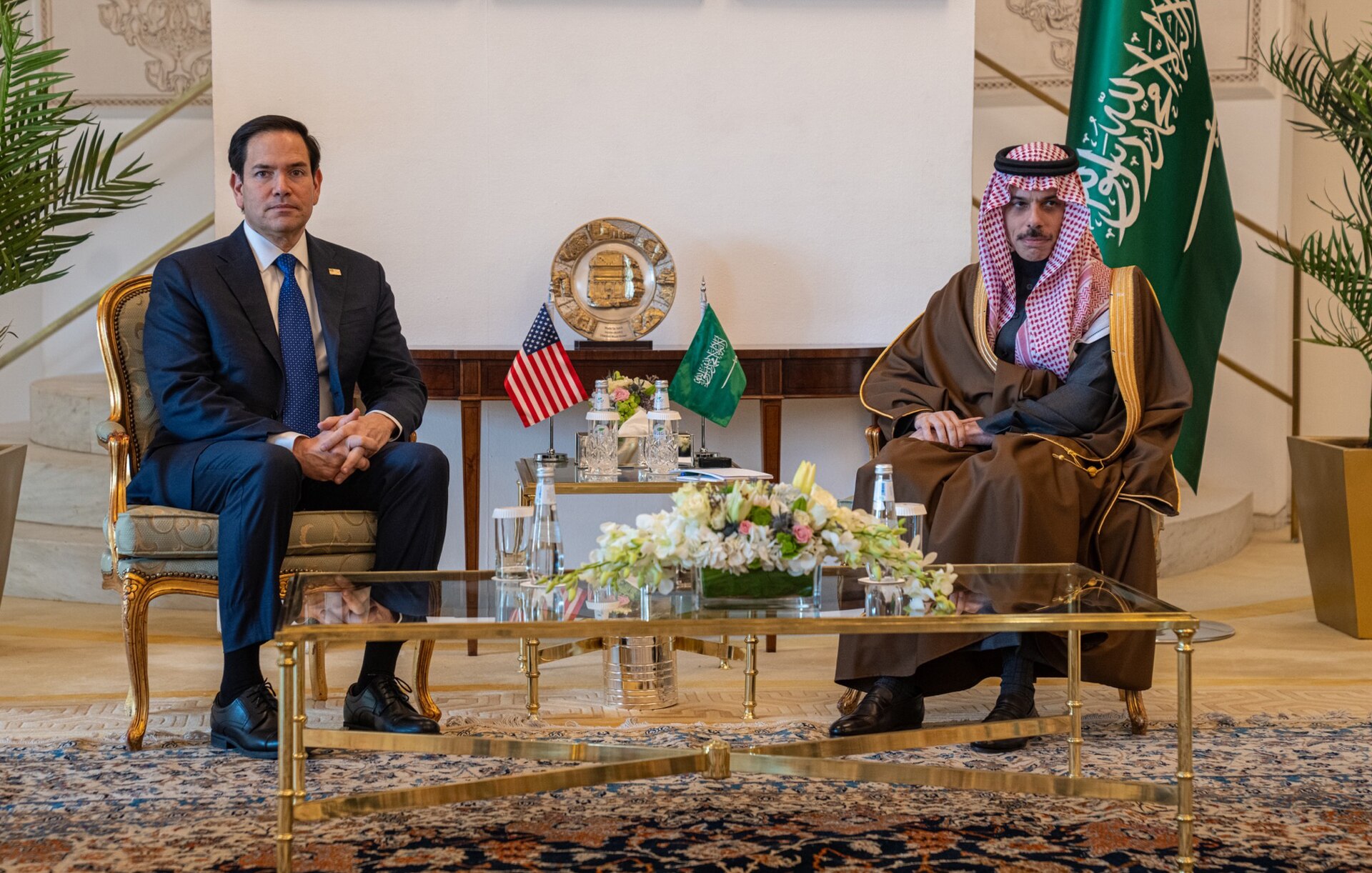
Because every major Saudi fiscal and security lifeline runs through the same administration that made the demand. The kingdom signed a $142 billion arms deal with the United States on May 13 — twelve days before Trump’s call. It is running a first-quarter deficit of $33.5 billion, which represents 194 percent of its full-year deficit target, with Goldman Sachs estimating the full-year figure will reach $80-90 billion. It depends entirely on Washington’s Iran deal framework for any prospect of reopening the Strait of Hormuz, through which the kingdom’s fiscal model was designed to function.
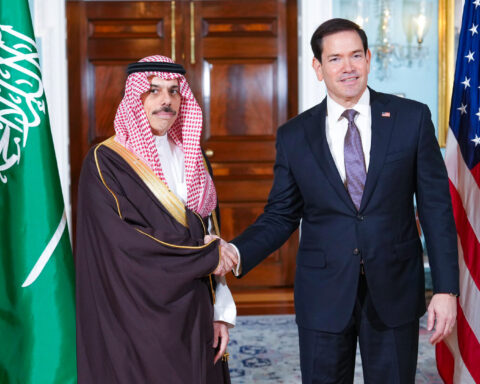
Saudi Foreign Minister Prince Faisal bin Farhan publicly praised Trump’s decision not to strike Iran on May 20, five days before the Abraham Accords call — establishing the kingdom’s public posture as one of gratitude, not confrontation. The kingdom had just worked through a tense episode over access to Prince Sultan Air Base, where 43 aircraft were grounded during a four-day suspension before access was restored under terms neither side has disclosed. Saudi Arabia has been excluded from all five rounds of US-Iran negotiations and from the nuclear track entirely, yet its economic survival depends on the outcome of talks it has no seat at.
A named Saudi official calling Trump’s Abraham Accords push unacceptable — the substance of what Asif said publicly — would put the arms pipeline, the fiscal relationship, and the diplomatic channel at simultaneous risk. The kingdom cannot say yes to normalization because MBS told the Shura Council it would not, because its domestic media environment has turned decisively against the Accords, and because Netanyahu will not offer the Palestinian statehood commitments Riyadh has made its precondition. It cannot say no to Trump because the $142 billion deal, the Hormuz negotiations, and the PSAB arrangement are all held together by a bilateral relationship that a named public rejection would fracture. Washington’s foreign-policy infrastructure has drawn its own conclusions about those conditions: FDD’s framing war against Saudi normalization conditions reached its peak on Arafah Day, when the Foundation for Defense of Democracies labelled them “voodoo diplomacy” — the same day Riyadh restated them without apology.
Both answers are dangerous. Only silence is safe. The anonymous CNN source is the sound of a kingdom communicating its position while denying it has spoken — and the longer Saudi Arabia’s MOFA stays silent through Hajj and Eid, the longer Pakistan’s on-the-record rejection remains the loudest response from any Muslim-majority state on the call.
The 2020 Precedent
Pakistan has spoken out of turn before in Saudi Arabia’s presence, and the cost was immediate. In August 2020, Foreign Minister Shah Mahmood Qureshi publicly criticised the Organisation of Islamic Cooperation for what he called a “lackluster response” to Kashmir and threatened to organise a rival Islamic bloc if the OIC — whose secretary-general is traditionally a Saudi appointment — did not convene a session. Saudi Arabia’s response arrived before the news cycle turned: Riyadh recalled $1 billion of a $3 billion loan to Pakistan and suspended a $3.2 billion oil credit facility. Pakistan’s Army Chief was dispatched to Riyadh to deliver what amounted to an institutional retraction.
The 2020 episode established a penalty structure that both countries understood. Pakistan pays when it deviates from Saudi preferences, and the payment arrives in a form Pakistan cannot absorb — direct withdrawal of financial support that keeps the country’s balance of payments from collapsing. The speed of the Saudi response demonstrated that this financial pressure is not theoretical. It operates against real budget lines, in real time, with no diplomatic cushion between the trigger and the consequence.
What makes the Abraham Accords rejection structurally different is alignment. In 2020, Qureshi was criticising Saudi Arabia’s own institution and threatening to undermine its leadership of the Islamic world — a direct challenge to Riyadh’s position. On the Abraham Accords, Pakistan’s public rejection serves Saudi interests. The position Asif articulated on Samaa TV is the position Saudi Arabia holds privately, has communicated on background, and has embedded in the crown prince’s own Shura Council address. There is no penalty for saying what the kingdom needs said by someone whose name can be attached to it.
A parallel precedent reinforces the pattern. In 2015, Pakistan’s parliament voted against joining the Saudi-led military intervention in Yemen — a direct rejection of a Saudi request that carried diplomatic costs for years afterward. The Yemen vote demonstrated that Pakistan’s constraints can override Saudi financial pressure even on questions of military solidarity. The Abraham Accords rejection draws on the same domestic architecture — Kashmir doctrine, public opinion, army legitimacy — but this time the constraint produces the outcome Saudi Arabia privately desires rather than one it opposes. The same structural rigidity that makes Pakistan an unreliable coalition partner on Yemen makes it a useful shield on Abraham Accords.
What Does Pakistan’s Rejection Actually Cost?
Pakistan’s economic exposure to Saudi Arabia is enormous — roughly $4.7 billion in remittances in the first half of FY2026 alone, 2.7 million workers in the kingdom, and a financial lifeline that in total reached $38.3 billion in FY2025, exceeding Pakistan’s entire merchandise export earnings. The 2020 Kashmir incident demonstrated that Saudi Arabia can weaponize this dependency overnight. On the Abraham Accords, the cost of rejection flows from Washington, not from Riyadh.
From Saudi Arabia, the cost is effectively zero. Riyadh has no incentive to punish a position it shares, and the September 2025 Pakistan-Saudi Strategic Mutual Defence Agreement — the first such pact Pakistan has signed with any country — adds an institutional layer that did not exist during the 2020 Kashmir episode. Recalling loans from a treaty ally that just said what you wanted said on international television is a move without strategic logic. The defence pact was driven by Army Chief Munir, the same figure Trump addressed by the wrong title in his Truth Social post, and it binds the two countries’ military establishments in ways that make the 2020-style financial snap response structurally obsolete.
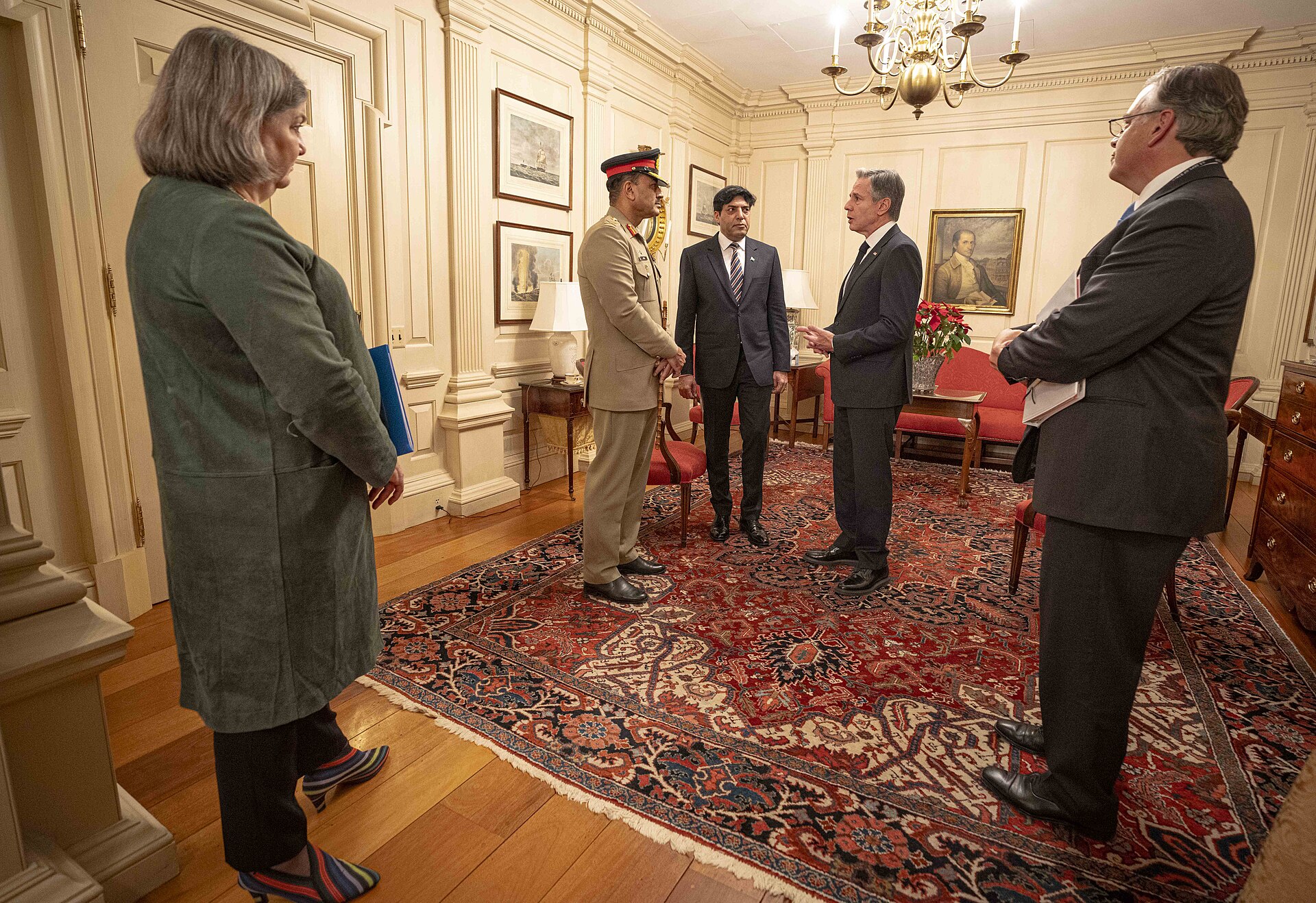
From Washington, the cost is harder to calculate but may be lower than it appears. Trump named Munir rather than the prime minister, suggesting the administration sees the army as the relevant interlocutor. Munir is simultaneously mediating the US-Iran war — a role that gives Pakistan standing Washington cannot easily discard. Pakistan helped secure the April 8 ceasefire and hosted US-Iran direct talks in Islamabad on April 11-12. A country whose army chief is brokering the deal Trump wants most has more room to say no on the deal Trump wants second most.
The deeper structural cost is long-term and doctrinal, not bilateral. Pakistan’s position on Palestine is bound to its position on Kashmir: accepting Israel’s existence on terms that bypass UN resolutions on Palestine would weaken Islamabad’s own insistence on UN resolutions regarding Kashmir, at a time when India-Israel strategic ties are deepening through defence procurement and intelligence sharing. This is not a policy preference that a government can reverse; it is a constitutional and doctrinal constraint that no civilian administration can override without dismantling the logic of its own territorial claims.
What Does Saudi Arabia Get From Pakistan’s Refusal?
Plausible distance from the rejection without having to manufacture it. Pakistan’s refusal establishes on the public record that Trump’s demand faces structural resistance from Muslim-majority nations with their own domestic constraints — resistance Saudi Arabia shares but cannot articulate publicly. The rejection shifts the frame from Saudi foot-dragging to a broader civilisational objection the kingdom can reference without authoring.
The arrangement works precisely because it is not coordinated. Pakistan’s constraints — Kashmir, ideological base, army legitimacy — made public rejection unavoidable whether or not it served Saudi interests. Saudi Arabia’s constraints — the Shura Council speech, the anti-normalization media environment, the ADL-documented intensification of public opposition — make its private position identical regardless of what Pakistan does. Two countries arrived at the same conclusion through entirely different structural logics, and the result is a burden-sharing dynamic that required no bilateral meeting to produce. Accidental cover is more durable than designed cover because there is no coordination to uncover and no back channel to leak.
Saudi Arabia also benefits from the sequence. Pakistan categorically ruled out the Abraham Accords in January 2026 when it joined the Gaza Board of Peace — four months before Trump’s demand. Asif’s Monday night statement was a reaffirmation of existing policy, not a fresh reaction. This means the cover was pre-built: Trump’s demand arrived into a political environment where Pakistan’s rejection was already established fact, not something assembled in response to a Saudi request. The timeline insulates Riyadh from any accusation that it put Islamabad up to the statement, because Pakistan’s position predates the demand it rejected.
The deepest paradox is that Pakistan is now Saudi Arabia’s formal military ally — through a mutual defence pact the kingdom’s own army chief helped drive — and simultaneously the loudest public voice rejecting a deal the kingdom privately opposes but cannot say so. Saudi Arabia did not create this situation. It inherited it from the structural geometry of Trump’s demand, Pakistan’s domestic politics, and a bilateral defence relationship that was designed for military cooperation, not for diplomatic ventriloquism. The structural accident is doing more for Saudi Arabia’s Abraham Accords position than any deliberate diplomatic strategy could achieve, because no one had to ask for it and no one has to deny it.
Asim Munir’s Three-Day Sequence
On May 22, General Asim Munir was in Tehran. He was there as a mediator in the US-Iran war — a role Pakistan assumed after facilitating the April 8 ceasefire and hosting US-Iran direct talks on April 11-12 in Islamabad. Iran’s state media reported the visit with the warmth reserved for a useful interlocutor, not an adversary. Three days later, on May 25, Trump convened the eight-leader call demanding Abraham Accords participation and addressed Munir by a title he does not hold, in a social media post that bypassed the civilian government entirely.
Munir is expected in Washington within weeks for what would be his third meeting with Trump in six months. When he arrives, he will carry three structurally contradictory mandates: his government’s public rejection of Trump’s Abraham Accords demand, a mutual defence pact with the kingdom that cannot reject the same demand publicly, and a mediator’s brief in the US-Iran negotiations that Trump attached as a precondition to normalization in the first place. Munir was the driving force behind the September 2025 pact’s negotiation.
The three-day sequence — Tehran on Thursday, Trump’s call on Sunday — compresses into a single week the contradictions Pakistan is managing. Munir was mediating with the country Trump is trying to cut a deal with, and within seventy-two hours his government rejected the deal Trump is trying to impose on everyone else. The roles are not compatible on paper, but they may be compatible in practice, because Pakistan’s value to Washington as an Iran interlocutor gives it the standing to say no on normalization without losing access. A country brokering the ceasefire Trump campaigned on occupies a different position in Washington’s hierarchy of needs than a country whose military architecture depends on the same administration’s continued goodwill.
The MOFA spokesperson’s prior statement — “Participating in the peace delegation never means joining the Abraham Accords” — proved to be the most precise formulation of all: a narrow, careful, technically accurate sentence that nonetheless did exactly what Saudi Arabia needed done. It put a named official’s words between Riyadh and Trump’s demand, on the public record, before the kingdom had to speak for itself.
FAQ
Could Saudi Arabia punish Pakistan for the Abraham Accords rejection the way it did during the 2020 Kashmir incident?
Structurally, no. In 2020, Pakistan was challenging Saudi Arabia’s own institution — the OIC — and threatening Riyadh’s leadership of the Islamic world. Here, Pakistan’s position directly serves Saudi interests. The September 2025 mutual defence pact also introduces a constraint that did not exist in 2020: recalling financial support from a formal treaty ally carries different signalling costs than recalling it from a dependent state. Pakistan’s position also predates Trump’s demand by four months, meaning it cannot be framed as a reactive provocation requiring punishment.
Has Pakistan ever recognised Israel in any capacity?
Pakistan is one of approximately 28 UN member states that have never recognised Israel in any form. Pakistani passports carry a printed statement: “This passport is valid for all countries of the world except Israel.” The barriers extend beyond foreign policy preference into documentary infrastructure, constitutional doctrine, and institutional architecture. Pakistan’s founding ideology includes solidarity with Muslim causes — of which Palestine is the most prominent — and any government that moved toward recognition would face simultaneous opposition from the army, the judiciary, the religious establishment, and public opinion. The practical effect is that recognition is not a policy switch a government can flip; it would require dismantling interlocking institutional constraints that have been accumulating since 1947.
What did the other six leaders on Trump’s call say?
Of the eight countries on the call, UAE and Bahrain are already Abraham Accords signatories and were not being asked to join. Egypt and Jordan have existing peace treaties with Israel — signed in 1979 and 1994 respectively — but have not joined the Accords framework, and neither produced a public statement following the call. Turkey’s position is complicated by its approximately $10 billion in annual pre-war trade with Israel alongside Erdogan’s sharp rhetorical opposition, a contradiction Ankara has managed by keeping quiet. Qatar, like Saudi Arabia, responded through back channels rather than public statements, placing it in the same anonymous-response category as Riyadh. Pakistan was the only country on the call to produce a named minister making an on-the-record rejection within hours of the demand.
Does the September 2025 Pakistan-Saudi mutual defence pact cover diplomatic obligations?
The pact’s publicly disclosed provisions focus on military cooperation, intelligence sharing, and mutual defence commitments. It does not appear to contain diplomatic alignment clauses, which means Pakistan can diverge from Saudi diplomatic positioning without technically violating the agreement, and Saudi Arabia cannot invoke it to compel Pakistan’s alignment on Abraham Accords or any other diplomatic question. This legal gap is structurally important: it is what makes the burden-sharing dynamic possible. Pakistan operates as a defence ally, not a diplomatic proxy, and the distinction gives both countries room to maintain different public postures on positions they privately share.
Meanwhile, MBS appears to have delivered a different kind of private signal to a different Trump ally. According to evangelical leader Mike Evans, the crown prince said he would recognize Israel “today” but that King Salman is the obstacle — the dynastic constraint on Saudi-Israel normalization, and why it may serve MBS as much as it constrains him.
Pakistan’s role did not end with Khawaja Asif’s television appearance. On May 26, Deputy Prime Minister Ishaq Dar took Pakistan’s mediation case to the UN Security Council, calling for de-escalation before a session chaired by Chinese Foreign Minister Wang Yi — the same day Saudi Arabia held no seat and did not speak.