RIYADH — HUMAIN, the PIF-owned artificial intelligence company that Mohammed bin Salman chairs personally, has appointed Goldman Sachs to raise SAR 20 billion (~$5.3 billion) in debt financing for data centres and GPU chips — a 2GW tranche that represents roughly one-third of the company’s decade-long 6.6GW target. The appointment, reported by Reuters on May 19, is the clearest signal yet of what Vision 2030 actually looks like under fiscal contraction: not a programme accelerating across multiple fronts but a sovereign fund retreating to a single bet it believes can attract external capital and, eventually, generate returns that megaprojects and football clubs could not.
The Goldman mandate sits in a fiscal context that makes it structurally necessary. PIF holds approximately $15 billion in cash — 1.6 per cent of its $930 billion in assets under management. Goldman Sachs estimates Saudi Arabia’s actual 2026 fiscal deficit at $80-90 billion. Construction awards fell from $71 billion to $30 billion. The Line is suspended. LIV Golf has been written down by $5.3 billion. HUMAIN is not Vision 2030’s latest addition. It is, increasingly, Vision 2030’s remainder.
Table of Contents
- The Goldman Mandate — and the Question It Avoids
- Why HUMAIN Could Not Exist Before November 2025
- What PIF Sold to Fund What PIF Borrowed
- Can Saudi Arabia’s Grid Handle 2GW of AI Load by 2030?
- War Risk Is Already Repricing the Lender Universe
- How Far Behind Abu Dhabi Is HUMAIN?
- The Chip Dependency Saudi Arabia Has Not Resolved
- Who Buys HUMAIN’s Compute?
- The Fiscal Arithmetic of Building a New Core
- Frequently Asked Questions
The Goldman Mandate — and the Question It Avoids
Goldman Sachs’s advisory role is to attract institutional lenders willing to finance 2GW of AI data-centre capacity in Riyadh and, eventually, Dammam. The SAR 20 billion quantum — roughly $5.3 billion at current exchange rates — covers data centres and the GPU chips that populate them. The first two campuses, 100MW each in Riyadh and Dammam, are targeting Q2 2026 launch. Scaling from 200MW to 2,000MW requires a financing architecture that does not yet publicly exist.
The House of Saud Daily Briefing
Saudi Arabia's news in 3 minutes, every morning. Free. See today's issue
The SAR 20 billion sits on top of a separate $1.2 billion framework already agreed with Saudi Arabia’s National Infrastructure Fund for up to 250MW of AI data-centre capacity. It accompanies HUMAIN’s $23 billion in announced strategic partnerships — NVIDIA, AMD, AWS, Qualcomm, and a minority stake in Elon Musk’s xAI — signed at the US-Saudi Investment Forum in May 2025. Partnership announcements and financing mandates are different instruments: the first is a memorandum, the second is a balance sheet.
The unanswered question is structural. Will the Goldman-arranged debt be ring-fenced project finance — where lenders hold only the data-centre assets as collateral — or will it carry an implicit (or explicit) sovereign backstop from PIF? When PIF issued its $7 billion bond earlier this year, Fitch rated its government-related entity status at “virtually certain” — sovereign parity. That bond was 3.4 times oversubscribed. But sovereign-parity debt loads onto a balance sheet already carrying what Goldman estimates as an $80-90 billion deficit. If HUMAIN’s debt follows the same pattern, it is not project finance. It is sovereign borrowing through a subsidiary, priced at a spread that assumes the Kingdom stands behind every GPU.
Why HUMAIN Could Not Exist Before November 2025
HUMAIN was announced in May 2025, timed to coincide with Trump’s Gulf tour and the US-Saudi Strategic Artificial Intelligence Partnership. But for seven months it was a company with partnerships and no confirmed supply of the one input that makes AI infrastructure viable: advanced chips. The US had, according to CNBC, “previously balked at the idea of direct exports to state-backed AI companies in the Gulf.”
The unlock came on November 19, 2025, the day after MBS visited the White House — a visit at which Saudi Arabia pledged $1 trillion in US investment. The Commerce Department authorised export of up to 35,000 NVIDIA chips to HUMAIN and the UAE’s G42, at an estimated value of approximately $1 billion, conditioned on what the Bureau of Industry and Security described as “rigorous security and reporting requirements.” The full NVIDIA deployment target — 600,000 GB300 Grace Blackwell platforms over three years, with an initial 18,000 GB300 systems plus InfiniBand networking — became contractually actionable only after this authorisation.
The dependency chain runs in one direction. Without confirmed chip access, there is no asset to finance. Without a financeable asset, there is no Goldman mandate. Without the Goldman mandate, there is no external debt tranche. Without external debt, PIF — with cash covering 1.6 per cent of its AUM — cannot fund 2GW of AI infrastructure from its own balance sheet. The November White House visit was not a diplomatic courtesy. It was the infrastructure equivalent of a planning permit.
What PIF Sold to Fund What PIF Borrowed
PIF’s 2026-2030 strategy, announced at the Future Investment Initiative in Miami in March 2026, reduced capital expenditure by approximately 15 per cent and shifted to 80 per cent domestic deployment. The Line was suspended. Expo 2030 and the 2034 FIFA World Cup replaced NEOM as anchor dates. HUMAIN was elevated to the centre of the portfolio. The rebalancing was not disguised; it was announced from a stage. NEOM’s physical contraction continued: the EUR 1.4 billion Connector High-Speed Rail between Oxagon and The Line was terminated on May 27, pushing total known NEOM contract cancellations past $8.45 billion.
The exception within that contraction is the one component the war has actually validated: DataVolt’s $5 billion data-centre campus at Oxagon and the Port of NEOM’s deepwater berths continued advancing as the strait closed, because their commercial thesis — Red Sea shipping bypass plus submarine-cable-connected AI compute — does not require Hormuz to remain open to remain viable.
The capital recycling is visible in the exits. LIV Golf, absorbed at $5.3 billion, was written down; the PGA merger that would have given PIF a governance seat in professional golf collapsed. Newcastle United’s approximately 21 per cent stake is being sold to fund a stadium worth over £1 billion. Yasir Al-Rumayyan exited the LIV chairmanship (while retaining his Aramco, PIF, and Newcastle roles). The sequence reads as: sell the soft-power assets that generated headlines but not returns, recycle the capital, deploy it into the one sector that can attract external debt and — in theory — produce offtake revenue.
The pattern is substitution, not addition. When construction awards drop from $71 billion to $30 billion, and the fund simultaneously appoints Goldman to raise $5.3 billion for data centres, the portfolio is contracting to what its chairman considers defensible. Blackstone-backed AirTrunk signed a $3 billion partnership with HUMAIN in October 2025 for a Riyadh data-centre campus. SDAIA’s Hexagon government data centre — 480MW, $2.7 billion, 30 million square feet in Riyadh, claimed as the world’s largest government data centre by MW capacity — broke ground in January 2026. The physical footprint is consolidating around compute, not concrete.
Can Saudi Arabia’s Grid Handle 2GW of AI Load by 2030?
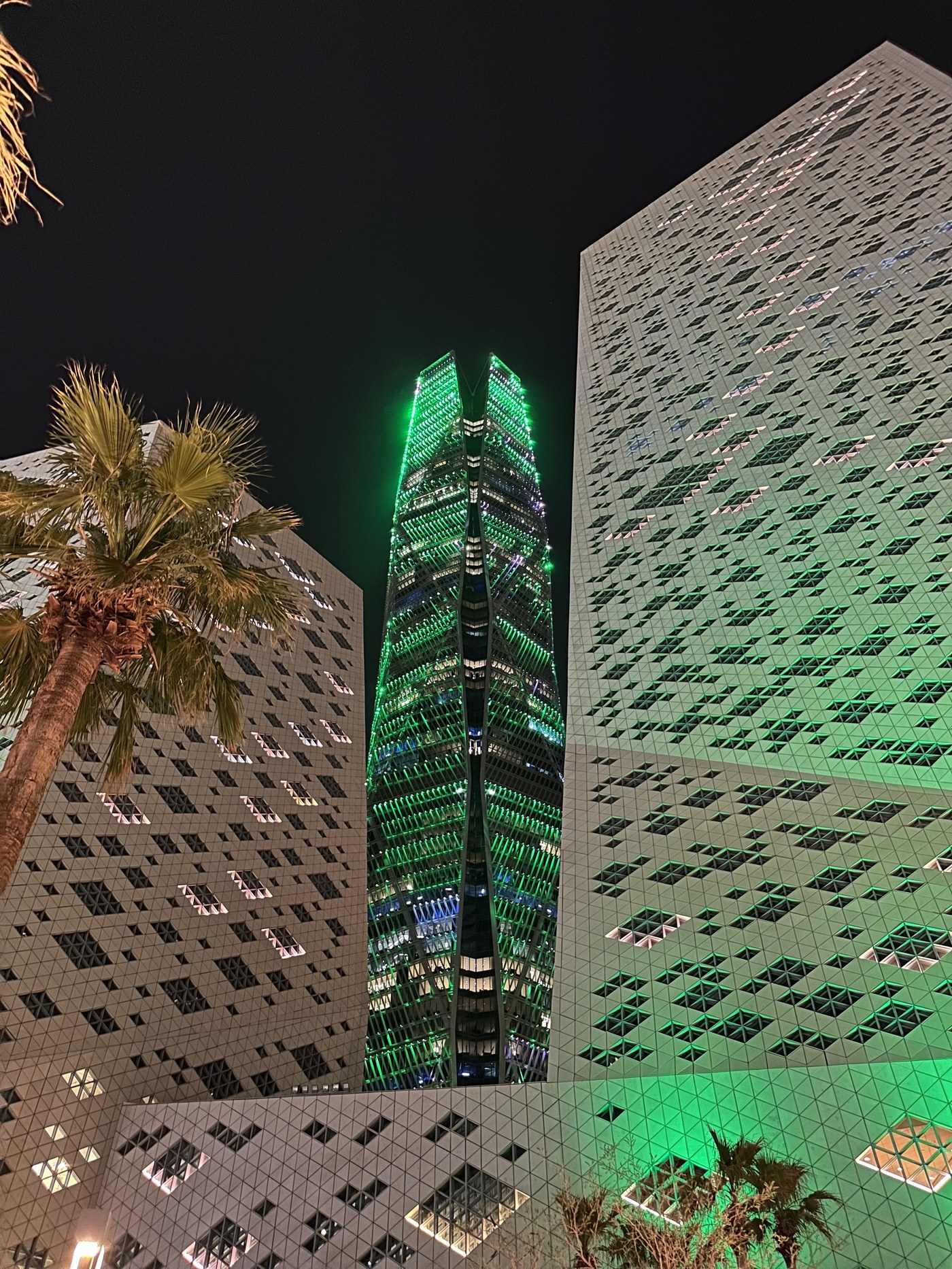
Saudi Arabia’s installed power generation capacity is approximately 84GW, projected to reach 106GW by 2034. The Kingdom has announced SAR 500 billion ($133 billion) in 2,600 grid-related projects over seven to eight years. In aggregate, 2GW of AI compute demand would represent roughly 2.4 per cent of current installed capacity — not an unmanageable figure at the national level.
The problem is geographic concentration. HUMAIN’s campuses are in Riyadh and Dammam. AI data centres require not just megawatts but reliable, redundant power at specific grid-connection points. Greenberg Traurig, a law firm that advises on large-scale data-centre projects, noted in a January 2026 analysis that Saudi regulators “explicitly recognized that rapid data centre expansion must be managed within broader system considerations,” reflecting “the scale and sequencing challenge of integrating large new loads into an expanding system, and the need to align siting and delivery timelines with planned network reinforcements.”
That language — “planned network reinforcements” — is regulatory acknowledgement that the grid is not ready at the concentration points HUMAIN needs. The 200MW across the initial Riyadh and Dammam campuses is deliverable on existing infrastructure. Scaling tenfold, to 2GW, within four years requires grid reinforcement contracts that have not been publicly tendered at the required scale. The 6.6GW decade target implies roughly 6.2 per cent of projected 2034 national capacity dedicated to AI compute alone — a sequencing challenge that no Gulf state, and very few countries globally, has attempted.
War Risk Is Already Repricing the Lender Universe
Before February 2026, Gulf AI investment was underwritten by a stability assumption that treated the region’s geopolitical risk as background noise. That assumption is now on the record. CNBC reported on May 24 that Iranian strikes “hit AWS facilities in the UAE and Bahrain, causing banking, payments, enterprise and consumer services to experience outages.” The IRGC also claimed striking an Oracle data centre in Dubai.
The repricing is not speculative. Gary Wojtaszek, CEO of Pure Data Center Group (owned by Oaktree Capital Management), told CNBC in April 2026 that his company had temporarily paused investment decisions in the Middle East while continuing “planning and discussions.” Mark Richards, a partner at BCLP — a law firm that advises on large-scale data-centre projects — said on May 24 that investment decisions “are taking longer because of the nature of the risks associated with effectively being in a region that has some serious threats.” Those risks, Richards added, “weren’t part of the original investment thesis” and are now being “priced as part of that process.”
HUMAIN’s Riyadh data centres sit further from the Strait of Hormuz than the UAE facilities that were struck. But the Riyadh-Dammam corridor is not beyond Iran’s demonstrated reach. Aramco’s Abqaiq processing facility and Khurais oil field — both in Saudi Arabia’s Eastern Province, the same broad geography as HUMAIN’s Dammam campus — were struck by drones and cruise missiles in September 2019, temporarily halving Saudi oil output. The Goldman mandate is being run in a lending environment where at least one major data-centre operator has paused, and where legal advisers are publicly telling clients that risk pricing has materially shifted.
The war-risk premium on the Riyadh-Dammam corridor extends beyond insurance markets. KLM suspended flights to both Riyadh and Dammam through July 12, the fourth extension of a grounding that has kept European carriers out of Saudi Arabia since the Iran war shut Gulf airspace in March 2026.
“Investment decisions are taking longer because of the nature of the risks associated with effectively being in a region that has some serious threats. [These risks] weren’t part of the original investment thesis.”
— Mark Richards, partner, BCLP, May 24 2026
How Far Behind Abu Dhabi Is HUMAIN?
The comparator is G42, Abu Dhabi’s AI company, backed by Microsoft and OpenAI. G42 is older, more operationally diversified, and — by the metric that matters most — has already resolved the contradiction that HUMAIN has not. To satisfy US chip-export conditions, G42 divested its Chinese technology partnerships and removed Chinese personnel from sensitive positions. Mubadala and G42 jointly launched MGX, a $100 billion AI infrastructure fund. The UAE’s “Stargate UAE” project targets 5GW of AI compute capacity. Abu Dhabi’s parallel-state strategy extends to AI as cleanly as it extends to energy and defence.
HUMAIN has a broader GPU vendor stack than G42 — NVIDIA, AMD, and Qualcomm versus G42’s NVIDIA-Microsoft concentration — and Saudi Arabia’s total data-centre pipeline (approximately 2,200MW) exceeds the UAE’s current operational capacity (roughly 500MW). But operational maturity favours Abu Dhabi by 12 to 18 months. G42 has functioning data centres, live enterprise clients, and a cloud infrastructure that serves government and private-sector workloads. HUMAIN has a Goldman advisory mandate, a NVIDIA delivery schedule, and campuses that have not yet opened.
Saudi Arabia declared 2026 its “Year of AI” by royal decree. HUMAIN’s CEO, Tareq Amin, formerly CEO of Aramco Digital, chairs a company whose flagship AI product — the ALLAM Arabic large language model — is not a frontier model by global benchmarks. HUMAIN’s competitive proposition rests on infrastructure geography: cheap energy and a strategic location between East Asian manufacturing and European enterprise markets, not research leadership.
The Chip Dependency Saudi Arabia Has Not Resolved
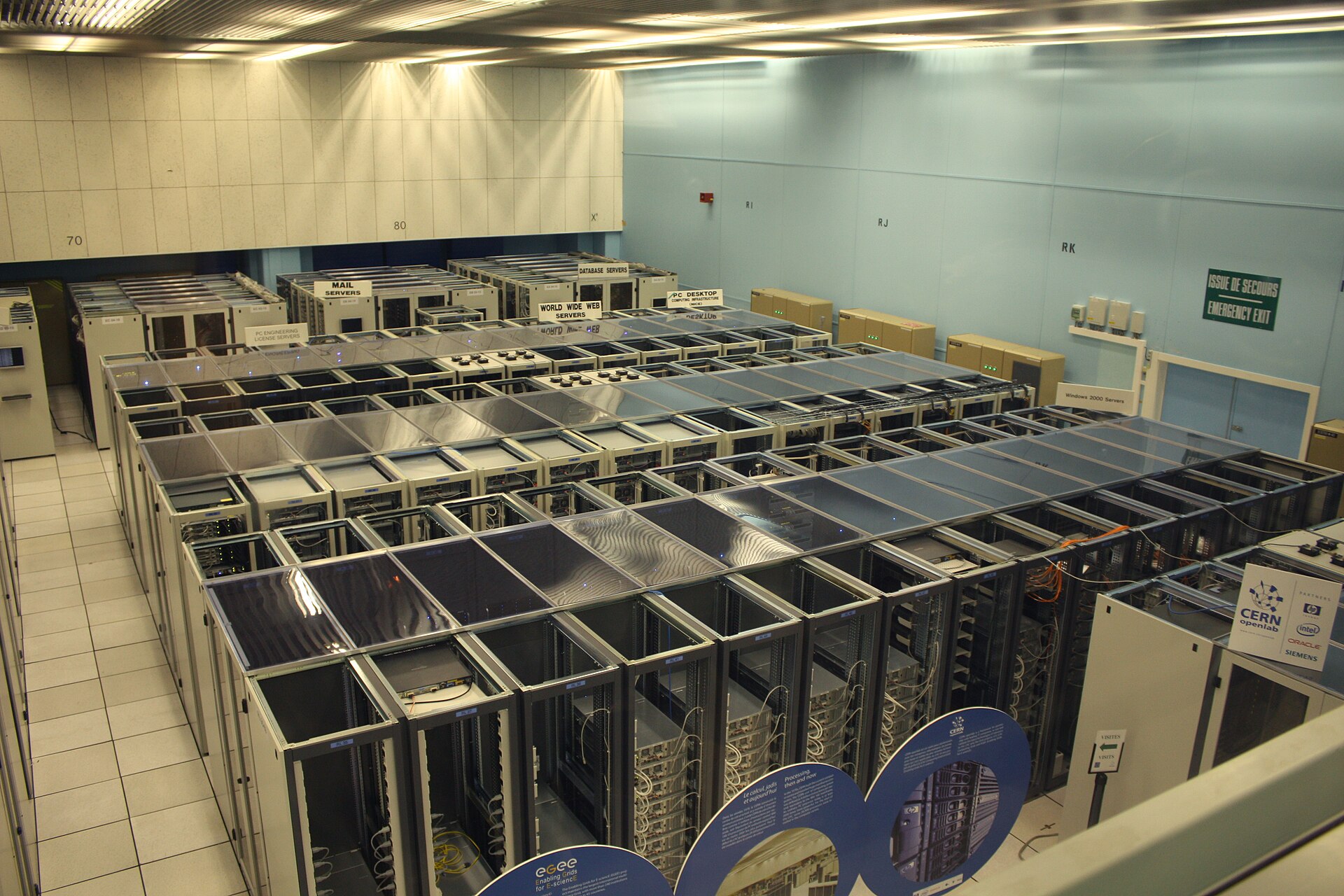
Huawei’s Ascend AI chips hold approximately 30 per cent market share in Saudi Arabia’s AI infrastructure, concentrated largely at NEOM. The November 2025 US chip authorisation was conditioned on security requirements — but Saudi Arabia has not undertaken the kind of systematic Chinese-technology divestment and Chinese-personnel removal that the UAE conducted to secure its own chip access. The Gulf International Forum noted in 2026 that HUMAIN’s compute advantage “depends on continued US chip export licenses — a dependency made fragile by the Trump administration’s tariff regime and the broader trajectory of US-China technology restrictions.”
The contradiction is structural. HUMAIN needs NVIDIA GB300 platforms to be commercially competitive. Securing those platforms requires satisfying US export conditions that implicitly demand reducing Huawei exposure. But reducing Huawei’s role at NEOM — Vision 2030’s most internationally visible physical project — creates a political complication with Beijing at a moment when Saudi Arabia is simultaneously managing OPEC+ coordination, yuan-denominated oil settlement pressures, and a war in the Gulf in which China holds diplomatic weight through its Iran relationship. The US concession gave HUMAIN its chips. It did not resolve the dual-supplier architecture that runs through the broader Saudi technology stack.
Who Buys HUMAIN’s Compute?
HUMAIN has framework agreements with AWS ($5 billion in AI infrastructure, including a joint “AI Zone”), NVIDIA (600,000 GB300 platforms), AirTrunk/Blackstone ($3 billion Riyadh campus), and Qualcomm. These are partnership announcements — some with specific dollar values, some with delivery timelines, none with publicly disclosed long-term offtake commitments at 2GW scale. The Goldman mandate exists precisely because lenders need revenue certainty, and that certainty does not yet exist on paper.
Moody’s flagged in February 2026 that $662 billion in off-balance-sheet data-centre commitments by just five hyperscale companies globally created concentration and counterparty exposure — risk that flows through to Gulf offtake assumptions. If hyperscalers are already overcommitted globally, the marginal willingness to sign binding long-term capacity agreements in a war-adjacent market is the variable Goldman needs to solve. Karen Young, a senior fellow at the Middle East Institute, characterised PIF as “the deployer of capital, it is an attractor of capital, and has the geographic location to be central as a supply centre” — but cautioned that tourism, financial services, logistics, and technology “may take a hit from the conflict.”
The domestic demand case is thinner than the infrastructure ambition suggests. Saudi Arabia produces minimal indigenous AI research by global standards, and its flagship model is not the kind of compute-intensive frontier application that drives hyperscaler demand. HUMAIN’s pitch to lenders is that Riyadh becomes a compute hub for a geographic corridor — serving Middle Eastern, North African, and South Asian enterprise demand — not that Saudi domestic AI applications will consume 2GW of capacity.
The Fiscal Arithmetic of Building a New Core
The numbers compress into a single question: can Saudi Arabia afford to build AI infrastructure at this scale while running a deficit of this magnitude? Q1 2026 delivered a $33.5 billion deficit — 194 per cent of the full-year budgeted target, exhausted in three months. Goldman’s full-year estimate runs to $80-90 billion, or 6-6.6 per cent of GDP. Brent broke below $100 in late May on Iran-deal optimism, against an IMF fiscal breakeven of $86.60 per barrel and a Bloomberg Economics PIF-inclusive breakeven of $108-111 per barrel.
Aramco’s dividend was cut by roughly one-third to approximately $84.5 billion in 2025 — a direct income decline of around $6 billion for PIF on its 16 per cent stake. PIF’s $15 billion cash position means every new capital commitment either displaces an existing one or requires external financing. The Goldman mandate is not a strategic choice in the way that term usually implies. It is a mathematical consequence of a fund that cannot simultaneously run a wartime fiscal deficit, service existing commitments, and self-fund AI infrastructure at GW scale.
The Gulf International Forum’s assessment is blunt: electricity subsidies at data-centre scale are “fiscally unsustainable if the war drags and oil revenue continues to decline.” Saudi Arabia’s power generation is overwhelmingly hydrocarbon-fuelled. Every megawatt of subsidised electricity for AI compute carries an opportunity cost measured in barrels that could have been exported. At $97 Brent, that cost is manageable. At $79 — the EIA’s 2027 forecast — it is a structural drain on a treasury that has already lost control of its deficit trajectory.
| Component | Value | Status | Source |
|---|---|---|---|
| Goldman Sachs advisory mandate | SAR 20B (~$5.3B) | Mandate appointed, financing not closed | Reuters, May 19 2026 |
| NIF framework agreement | $1.2B / 250MW | Framework agreed | Arab News, Feb 2026 |
| AirTrunk/Blackstone partnership | $3B (Riyadh campus) | Signed Oct 2025 | Blackstone, Oct 2025 |
| NVIDIA GB300 deployment | 600,000 platforms / 3 years | Chip export authorised Nov 2025 | NVIDIA Newsroom, May 2025 |
| US chip authorisation | 35,000 chips (~$1B) | Commerce Dept approved Nov 19 2025 | CNBC / Commerce Dept |
| AWS AI infrastructure | $5B (including AI Zone) | Partnership announced | Multiple sources, May 2025 |
| xAI minority stake | $3B committed | Investment made | Saudi Market Monitor / Arab News |
| SDAIA Hexagon DC (adjacent) | $2.7B / 480MW | Broke ground Jan 2026 | Gulf News / Data Centre Dynamics |
| Total announced partnerships | ~$23B | Mix of MoUs and commitments | PIF / PR Newswire, May 2025 |
| Metric | Figure | Source |
|---|---|---|
| PIF cash position | ~$15B (1.6% of AUM) | PIF disclosures |
| PIF AUM | ~$930B | PIF |
| Saudi Q1 2026 deficit | $33.5B (194% of full-year target) | MoF / Goldman Sachs |
| Goldman full-year deficit estimate | $80-90B | Goldman Sachs, 2026 |
| IMF fiscal breakeven (oil) | $86.60/bbl | IMF, 2026 |
| Bloomberg Economics breakeven (PIF-inclusive) | $108-111/bbl | Bloomberg Economics |
| PIF bond issuance | $7B, 3.4x oversubscribed | PIF / Fitch |
| Aramco dividend (2025, post-cut) | ~$84.5B | Aramco |
| Construction awards decline | $71B → $30B | PIF / MEED |
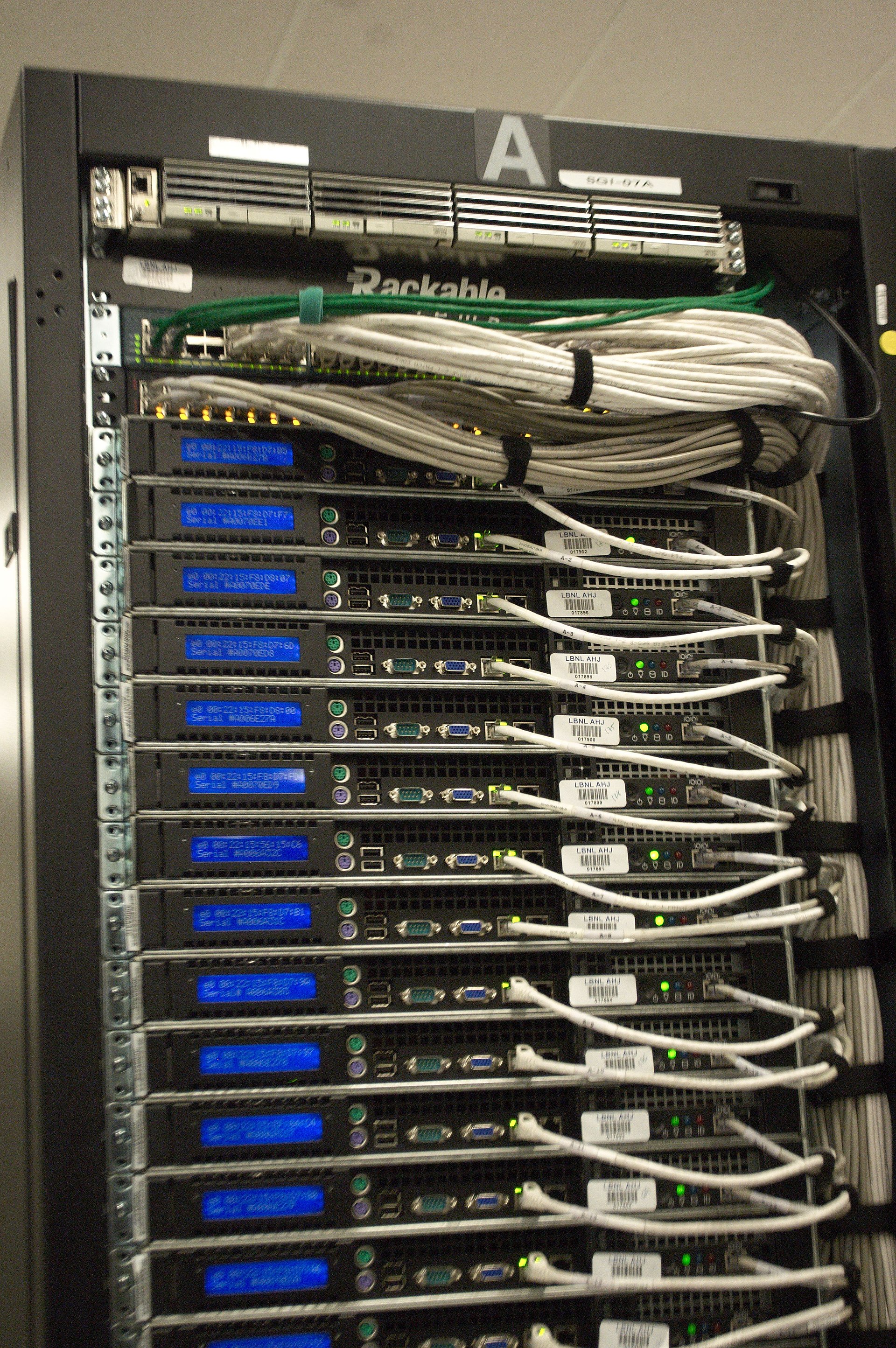
“Just as Middle East oil reserves centered the region in U.S. foreign policy, compute could elevate Gulf nations to the forefront of U.S. AI policy.”
— CSIS, “If Compute is the New Oil,” 2026
The CSIS framing contains the optimistic case and its limit. Oil made the Gulf indispensable because it was a resource that could not be replicated elsewhere at comparable cost. That logic no longer holds cleanly: Aramco’s ability to route crude through the East-West Pipeline solved the Hormuz blockade on paper but left its Asian pricing exposed — Chinese, Indian, Japanese, and South Korean buyers have cut Saudi loadings by 30-50 per cent as war-era OSP premiums pushed them toward Russian, West African, and US alternatives. Compute can be replicated — the question is whether Saudi Arabia’s combination of cheap energy, strategic geography, and sovereign capital creates a cost advantage durable enough to attract the tenants Goldman needs. The answer depends on variables Saudi Arabia does not fully control: chip-export policy, oil prices, war duration, and the willingness of hyperscalers to commit long-term capacity in a market where the risk premium has just been repriced by Iranian missiles hitting data centres 800 kilometres away.
Frequently Asked Questions
What is HUMAIN’s relationship to SDAIA?
HUMAIN and SDAIA are distinct entities within Saudi Arabia’s AI architecture. SDAIA, created by royal decree in 2019, is the national data and AI authority — a government body responsible for policy, regulation, and national data governance. HUMAIN, launched in May 2025 as a PIF subsidiary, is the commercial execution vehicle for AI infrastructure investment. SDAIA’s Hexagon government data centre (480MW, $2.7 billion) and HUMAIN’s commercially financed data centres serve different functions — sovereign data processing versus commercial compute-for-hire — though both draw on the same Riyadh power grid and the same pool of regulatory approvals. MBS chairs HUMAIN directly; SDAIA reports through the government apparatus.
How does HUMAIN’s financing compare to UAE AI investment vehicles?
Abu Dhabi’s MGX fund — a joint vehicle of Mubadala and G42 — was capitalised at $100 billion for AI infrastructure, dwarfing HUMAIN’s $5.3 billion Goldman mandate. The scale difference is partly structural: MGX draws on Mubadala’s balance sheet (approximately $302 billion AUM) and Abu Dhabi Investment Authority’s reserves, giving it a fiscal buffer that PIF — with $15 billion cash and a sovereign running an $80-90 billion deficit — cannot match. G42 also has an operational advantage: Microsoft and OpenAI are equity partners, not just framework-agreement counterparts, creating alignment between the infrastructure provider and the primary compute consumer.
What happens to HUMAIN if US chip-export policy tightens?
The November 2025 authorisation covered up to 35,000 NVIDIA chips with BIS-mandated security and reporting conditions. These authorisations are granted on a case-by-case basis and can be revised, suspended, or made conditional on additional compliance steps. If the US tightens Gulf chip exports — a scenario the Gulf International Forum described as “fragile” given tariff-regime instability and US-China technology restrictions — HUMAIN’s 600,000 GB300 deployment target would be delayed or reduced, undermining the revenue projections that Goldman is using to structure the debt package. The Huawei Ascend alternative carries approximately 30 per cent Saudi market share but cannot substitute for NVIDIA GB300 performance in frontier AI workloads, and using Huawei chips in HUMAIN facilities would likely violate the BIS conditions attached to the November authorisation.
What is HUMAIN’s relationship to NEOM?
HUMAIN and NEOM are separate PIF-owned entities with overlapping but distinct mandates. NEOM was conceived as a greenfield city-state on the Red Sea coast, funded by construction capital; HUMAIN is a compute infrastructure company funded by debt and partnership capital, headquartered in Riyadh. The overlap is in technology infrastructure: NEOM hosts the largest concentration of Huawei Ascend AI chips in the kingdom — the same Huawei exposure that now complicates HUMAIN’s compliance with US chip-export conditions. As PIF’s strategy has shifted toward HUMAIN, capital that would have flowed to NEOM’s “Oxagon” industrial port and AI campus (which included data-centre components) has been redirected. The two companies are not formally merged and have separate C-suites; they share a chairman in MBS and a sovereign balance sheet under pressure.
Could HUMAIN become profitable?
HUMAIN has disclosed no revenue, margin, or profitability projections. Its business model — building and operating AI data-centre infrastructure, selling compute capacity to hyperscalers and enterprise clients — is capital-intensive with long payback periods. The global data-centre industry typically targets 10-15 year returns on invested capital. HUMAIN’s cost advantages (subsidised electricity, sovereign land allocation) must be weighed against its cost disadvantages (desert cooling load, war-risk insurance premiums that have risen materially since February 2026, and the premium required to attract international engineering talent to Riyadh). Whether Goldman can structure the SAR 20 billion at rates that make a 2GW campus financially viable depends on offtake commitments that have not been publicly signed.
The House of Saud Daily Briefing
Saudi Arabia's news in 3 minutes, every morning. Free. See today's issue