
ISLAMABAD — The United States and Iran came within hours of holding their first direct meeting since the war began, and then both sides pulled back. Vice President JD Vance was prepared on two separate occasions in a ten-day window — between roughly March 25 and April 4 — to fly to Islamabad for face-to-face talks with Iranian officials. Both attempts collapsed at the last minute, the second on the night of April 4, barely thirty-six hours before President Trump’s deadline for resumed strikes on Iran’s power grid.
The double near-miss is the most consequential diplomatic event of the war that did not happen. Pakistani officials confirmed the logistics were in place; Tehran confirmed the channel existed. The fact that preparation advanced to the point of delegation manifests and travel schedules — twice — and then failed — twice — exposes the internal fault lines inside both governments that are preventing the war’s only visible diplomatic off-ramp from functioning. It also reveals an architecture of mediation in which Saudi Arabia, not Oman, not Qatar, now occupies the structural position of facilitator between Washington and Tehran.
Table of Contents
- The Anatomy of Two Near-Misses
- Who Killed the Vance Meeting Inside Each Government?
- How the Oman Precedent Died and Pakistan Inherited the Channel
- Why Did Iran Ask for Doha When Qatar Has Already Said No?
- Faisal bin Farhan in Islamabad and the Saudi Structural Role
- Fifteen Points Against Five
- The IRGC Authorization Problem
- Does the Vance-Hegseth Split Matter for Diplomacy?
- What Happens to the Channel After April 6?
- Frequently Asked Questions
The Anatomy of Two Near-Misses
A senior Pakistani government official told the Daily Parliament Times on April 3 that “the US delegation, headed by their Vice President, was ready to leave for Islamabad over the past few days.” Pakistan Today, reporting separately, confirmed the preparations had reached the stage of working through “key agenda items in advance, including frameworks for de-escalation, humanitarian pauses, and maritime security guarantees in the Gulf.” The two outlets described distinct episodes — one in late March, one in early April — both of which reached advanced logistics before collapsing.
Reuters reported that Vance spoke to Pakistani intermediaries “as recently as Tuesday,” April 1, which places the second attempt’s final preparation in the seventy-two hours before Tehran’s withdrawal. Trump himself publicly confirmed Vance was carrying messages, stating that Vance had “conveyed to Iran through an intermediary that the United States is ready for a cease-fire” if Washington’s conditions were met, while also delivering what Trump called a “harsh” message that military pressure would increase.
On the night of April 4, Tehran conveyed to Islamabad that it would not send negotiators. The stated reason, relayed through Pakistani channels and reported by The Nation, was “a trust deficit on part of Washington.” Iran simultaneously cited security reservations about Islamabad as a venue — a reference that Pakistani officials interpreted, with undisguised irritation, as a coded allusion to the February 6 Oman talks that preceded US strikes on Tehran by hours.
Iranian Foreign Minister Abbas Araghchi moved quickly to soften the refusal. “We are deeply grateful to Pakistan for its efforts and have never refused to go to Islamabad,” he told Dawn on April 4. “What we care about are the terms of a conclusive and lasting end to the illegal war that is imposed on us.” The formulation was precise: Iran was not refusing the channel, only declining to use it under current conditions. The distinction matters because it preserves the possibility of reactivation without Tehran having to reverse a formal rejection.
The Middle East briefing 3,000+ readers start their day with.
One email. Every weekday morning. Free.
Who Killed the Vance Meeting Inside Each Government?
The collapse was not one-sided. Both governments contain factions that needed the meeting to fail, and both got what they wanted on the same night.
Inside Iran, the decision architecture has fractured since the death of Ali Khamenei. Mojtaba Khamenei, selected as Supreme Leader by the Assembly of Experts on March 8, has not appeared publicly since — twenty-eight days without a single photograph, video, or audio recording of the man who holds constitutional authority over Iran’s armed forces. An IRGC military council comprising senior Revolutionary Guard officers has filled the vacuum, controlling access to Mojtaba, vetoing presidential appointments, and directing war decisions. IRGC commander Ahmad Vahidi personally blocked a presidential appointment by Masoud Pezeshkian, who has been unable to reach the Supreme Leader despite repeated requests.
Parliament Speaker Mohammad Bagher Ghalibaf, whom mediating countries had identified as the most plausible head of an Iranian delegation, rejected negotiations on March 29. “This cycle must be broken,” he said, referring to what he described as a pattern of American talks followed by American strikes. He called Trump’s claims of ongoing negotiations “fake news to manipulate financial and oil markets.” A source told NewSX that “Ghalibaf acts only with approval from Mojtaba Khamenei. Even if talks were to take place, Ghalibaf would not be able to commit Iran without broader approval.” The authorization ceiling is the structural problem: the man who could lead talks cannot commit, and the man who could commit cannot be reached.
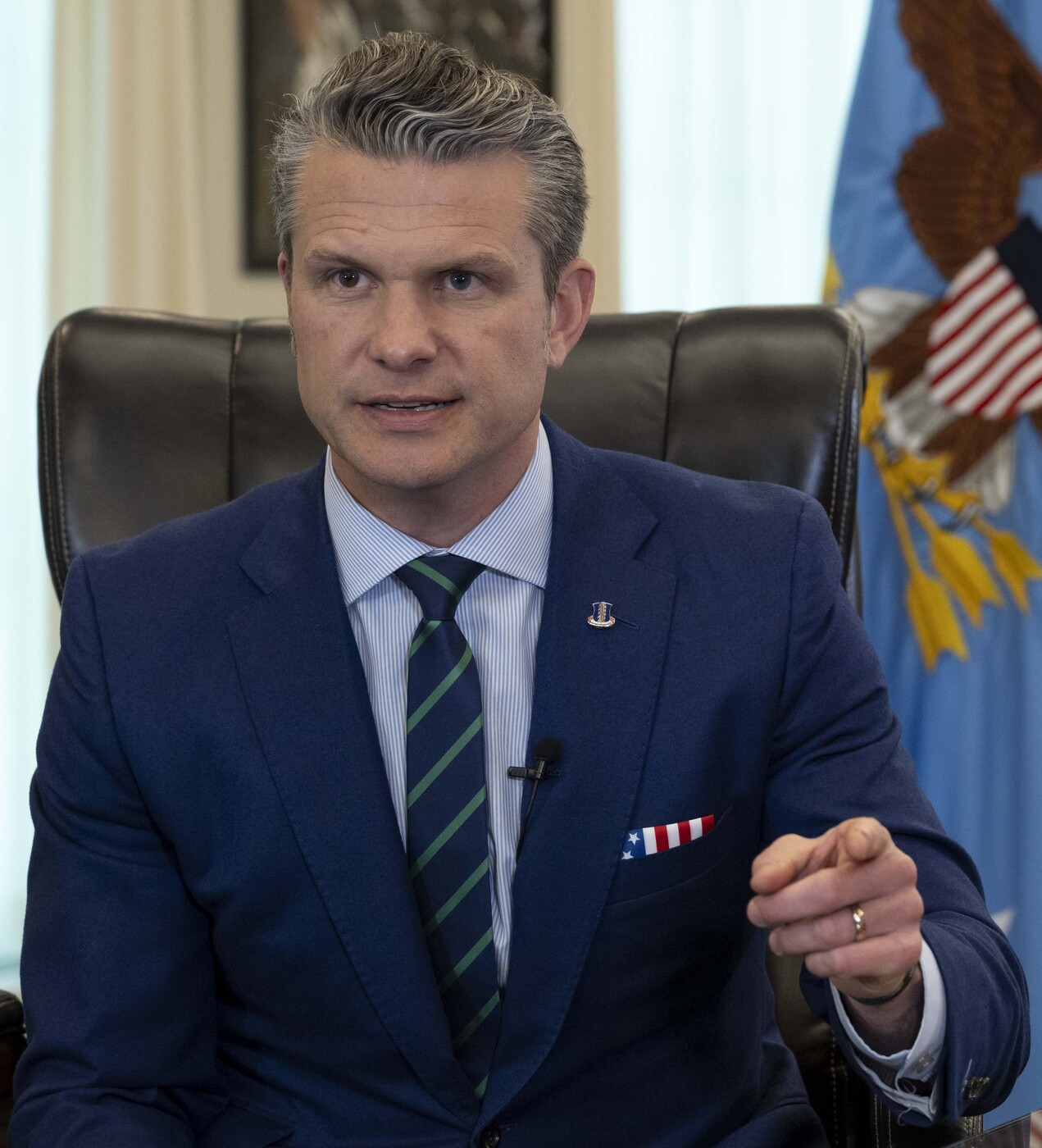
On the American side, the factional map is less opaque but no less consequential. Trump publicly identified Defense Secretary Pete Hegseth and Joint Chiefs Chair General Dan Caine as “the only two people that were quite disappointed” by the prospect of a ceasefire. “They were not interested in settlement,” Trump said. “They were interested in just winning this thing.” Hegseth’s own framing was blunter: “We negotiate with bombs.” Against this, Trump described Vance as “philosophically, a little bit different” on Iran, and “maybe less enthusiastic about going” to war — a characterization Vance himself had previewed in February when he told the Washington Post, “I remain a skeptic of foreign military interventions.”
The Vance diplomatic track and the Hegseth completion track have been running in parallel since March. Trump appears to have permitted both, using the diplomatic track as pressure on the military front and the military track as pressure on the diplomatic one. The collapse of the Islamabad meeting did not resolve the internal competition; it suspended it.
How the Oman Precedent Died and Pakistan Inherited the Channel
For three decades, Oman held the franchise on secret US-Iran diplomacy. Sultan Qaboos brokered the back-channel that produced the 2015 nuclear deal. William Burns — then Deputy Secretary of State — and Jake Sullivan flew to Muscat in March 2013 for what Burns later described as “along with the bin Laden raid in 2011, the most tightly held effort” in his career. Those talks remained secret for months and produced the initial draft framework of the JCPOA.
That infrastructure is gone. Iran struck both Oman and Qatar’s territory during the war’s first weeks. Qatar’s Ras Laffan LNG facility was hit directly, prompting Doha to formally withdraw from any mediation role. Qatar’s prime ministerial advisor, Dr. Majid Al Ansari, stated on March 24 that “Qatar is not engaged in US-Iran mediation.” Oman, under similar Iranian proximity pressure, has not offered its services.
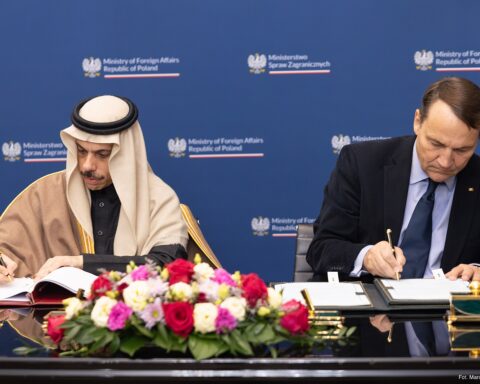
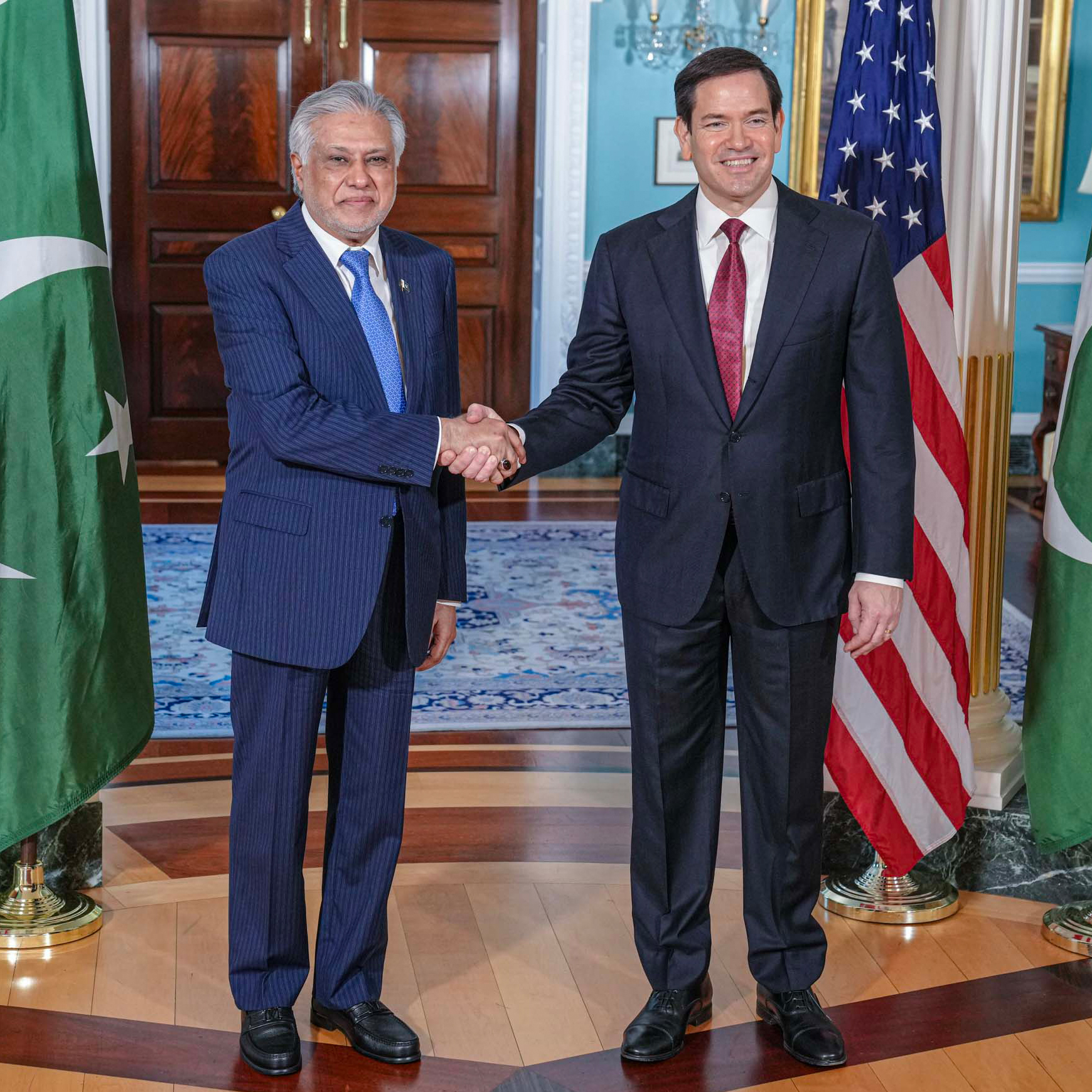
Pakistan’s claim to the mediator role rests on a specific combination of attributes: a 900-kilometer border with Iran, the world’s second-largest Shia Muslim population, close defense ties with Saudi Arabia, a nuclear deterrent, and — less discussed but equally relevant — an urgent economic need for the war to end before energy costs destabilize an already fragile economy. Deputy Prime Minister and Foreign Minister Ishaq Dar has invested heavily in the role, hosting the March 29 quadrilateral ministerial meeting and maintaining near-daily contact with both Washington and Tehran.
The channel’s architecture, however, depends on more than Pakistan. The March 29 quadrilateral meeting in Islamabad brought together Saudi Foreign Minister Faisal bin Farhan, Turkish Foreign Minister Hakan Fidan, and Egyptian Foreign Minister Badr Abdelatty alongside Dar. The four foreign ministers endorsed Pakistan’s initiative to host US-Iran peace talks — effectively providing multilateral diplomatic cover for what would have been a bilateral encounter. China added a structural layer on March 31, when Dar met Wang Yi in Beijing and the two released the Pakistan-China five-point initiative calling for an immediate ceasefire and restoration of “normal passage” through Hormuz.
Why Did Iran Ask for Doha When Qatar Has Already Said No?
After declining Islamabad, Tehran stated it preferred talks in Doha, Qatar. The preference is structurally circular. Qatar formally announced it was not engaged in mediation. Its prime ministerial advisor made the position public. Its Ras Laffan facility had been struck by Iranian missiles. Iran’s stated alternative venue is, by any reading of Qatar’s public position, unavailable.
Two interpretations are possible, and they are not mutually exclusive. The first is that Iran’s Doha preference reflects a genuine belief that Qatar — despite its public statements — would host talks if both parties agreed, on the grounds that Doha hosted the Taliban-US negotiations and has institutional mediation infrastructure that Islamabad lacks. The second, more widely held among diplomats tracking the process, is that proposing an unavailable venue is a method of declining without formally declining — preserving the appearance of willingness while ensuring nothing happens.
A diplomatic source told Pakistan Today on April 4 that “efforts are ongoing, and there is still a willingness on both sides to explore diplomatic options,” but cautioned the situation was “fluid and highly sensitive.” Dar, in a call with Araghchi’s office, reportedly used the Araghchi statement — “we have never refused to go to Islamabad” — as evidence that the channel remained viable despite the April 4 collapse. Araghchi, for his part, called Dar a “dear brother” and said his remarks had dismantled “false propaganda” about Pakistan’s role.
The choreography is instructive. Neither side has formally closed the door. Both have placed conditions on walking through it that the other currently cannot meet. The channel exists. The channel is unused. The preparation itself is the diplomatic artifact.
Faisal bin Farhan in Islamabad and the Saudi Structural Role
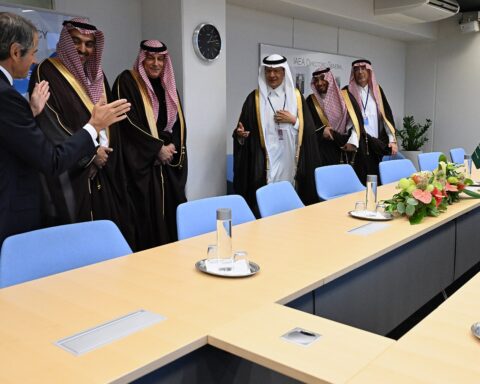
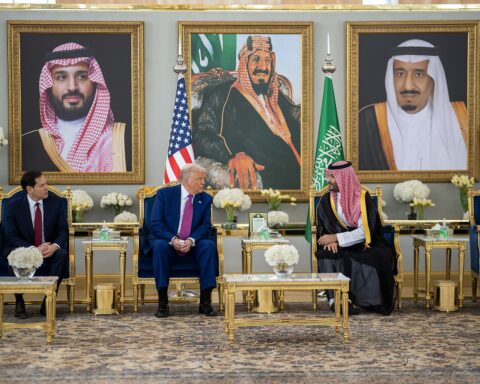
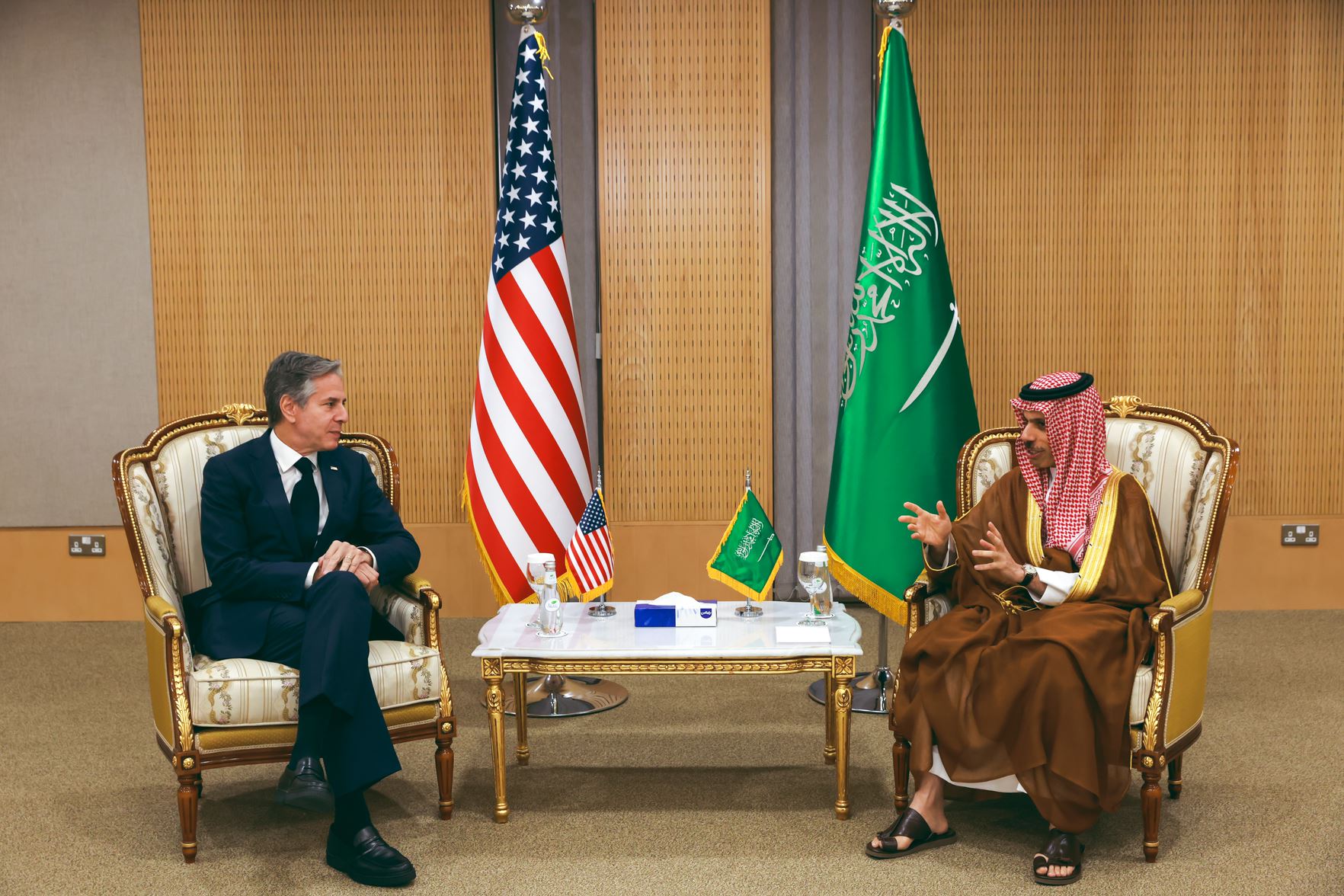
Faisal bin Farhan’s physical presence in Islamabad on March 29 — ten days into the period when Vance’s visits were being prepared — was not incidental. Saudi Arabia has been talking to Iran on a daily basis through security agencies and diplomatic channels since early March, according to European officials cited by Bloomberg. The Saudi foreign minister’s arrival in Islamabad placed Riyadh’s most senior diplomat in the same city where the Vance meeting was being arranged, at the moment it was being arranged.
Faisal and Dar held a follow-up phone call around April 3, discussing “latest developments in the regional situation” and reaffirming the Pakistan-China five-point initiative. The timing aligned precisely with the second attempt to convene the Vance meeting. Pakistan Today reported the call focused on de-escalation frameworks — the same frameworks Pakistani officials were simultaneously preparing for the Vance delegation.
Saudi Arabia’s structural role in the mediation architecture is distinct from Pakistan’s operational hosting function. Riyadh is the only party that maintains active, daily communication with both Tehran and Washington, possesses the economic weight to incentivize Iranian concessions (through oil market coordination and potential reconstruction aid), and retains the military credibility to make threats that Tehran takes seriously. When Faisal warned Iran at a twelve-nation Muslim foreign ministers’ meeting on March 19 that patience in the Gulf “is not unlimited” — adding “it could be a day, two days, or a week — I will not say” — the statement functioned simultaneously as a threat to Iran and a signal to Washington that Riyadh would eventually act independently if diplomacy failed.
The great-power trilateral calls Riyadh placed to Moscow, Beijing, and Tokyo on April 2 added a further dimension. Saudi Arabia was not merely facilitating a US-Iran dialogue; it was constructing a broader diplomatic framework in which any eventual deal would have multilateral endorsement, reducing the risk that a bilateral agreement would collapse — as the JCPOA did in 2018 — when a future US administration chose to withdraw.
What that structural role obscures is the distance between Riyadh’s public mediation posture and its private war aims. The New York Times confirmed in early April that MBS privately urged Trump to send US ground troops into Iran for regime change — framing the air campaign as a historic opportunity to seize Iranian oilfields permanently. Saudi Arabia’s facilitation of the Islamabad channel should be understood alongside, not instead of, that lobbying effort. What Faisal’s Islamabad presence also produced was a formal designation: Riyadh emerged from the March 29 quadrilateral as a named co-guarantor of the framework — a structural position with no precedent in modern diplomacy, examined in full in Saudi Arabia’s structural contradiction as both US ally and ceasefire guarantor.
| Attribute | Oman 2013 (JCPOA channel) | Pakistan-Saudi 2026 |
|---|---|---|
| Lead mediator | Sultan Qaboos (personal diplomacy) | Dar (operational) / Faisal bin Farhan (structural) |
| Multilateral cover | None — secret bilateral | Quadrilateral (Saudi, Turkey, Egypt) + China five-point plan |
| US lead negotiator | William Burns (career diplomat) | JD Vance (Vice President, political figure) |
| Iranian lead negotiator | Ali Asghar Khaji (authorized by Khamenei) | Undetermined — Ghalibaf refused; Araghchi lacks mandate |
| Secrecy | Total — not disclosed for months | Leaked within hours of each attempt |
| Mediator neutrality | Oman: no stake in nuclear outcome | Pakistan: 900km Iran border; Saudi: direct war exposure |
| Duration before results | 18 months to framework agreement | 10 days — two attempts, zero meetings |
Fifteen Points Against Five
The substantive gap between the US and Iranian positions is as wide as the procedural one. The 15-point US ceasefire proposal, delivered to Tehran via Pakistani intermediaries, demanded full dismantlement of nuclear facilities at Natanz, Isfahan, and Fordow; immediate transfer of all enriched uranium stockpiles; an end to domestic enrichment; a permanent no-nuclear-weapons commitment; complete IAEA monitoring; and reopening of the Strait of Hormuz. An Iranian official described the document as “extremely maximalist and unreasonable” and added that it was “not beautiful, even on paper.”
Iran’s five-point counterproposal demanded a halt to “aggression and assassinations”; mechanisms guaranteeing non-resumption of hostilities; payment of war reparations; cessation of attacks on Hezbollah and Iraqi proxies; and international recognition of Iran’s authority over the Strait of Hormuz. The last point — sovereignty over the strait through which 20 percent of global oil trade normally passes — is the irreducible demand that makes a deal functionally impossible under current conditions. Washington’s insistence on dismantlement and Tehran’s insistence on Hormuz sovereignty are not two positions that can be split by compromise; they are two frameworks that do not share an axis.
The Arms Control Association published a detailed assessment in April noting that “US negotiators were ill-prepared for serious nuclear negotiations with Iran” — a judgment directed at the Witkoff-Kushner pre-war talks but applicable to the current impasse. The 15-point proposal reads less like a negotiating position than a demand for Iranian capitulation, which is either its strategic purpose or its structural flaw, depending on which faction inside the White House drafted it.
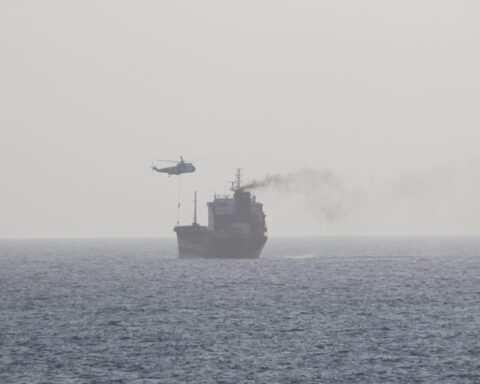
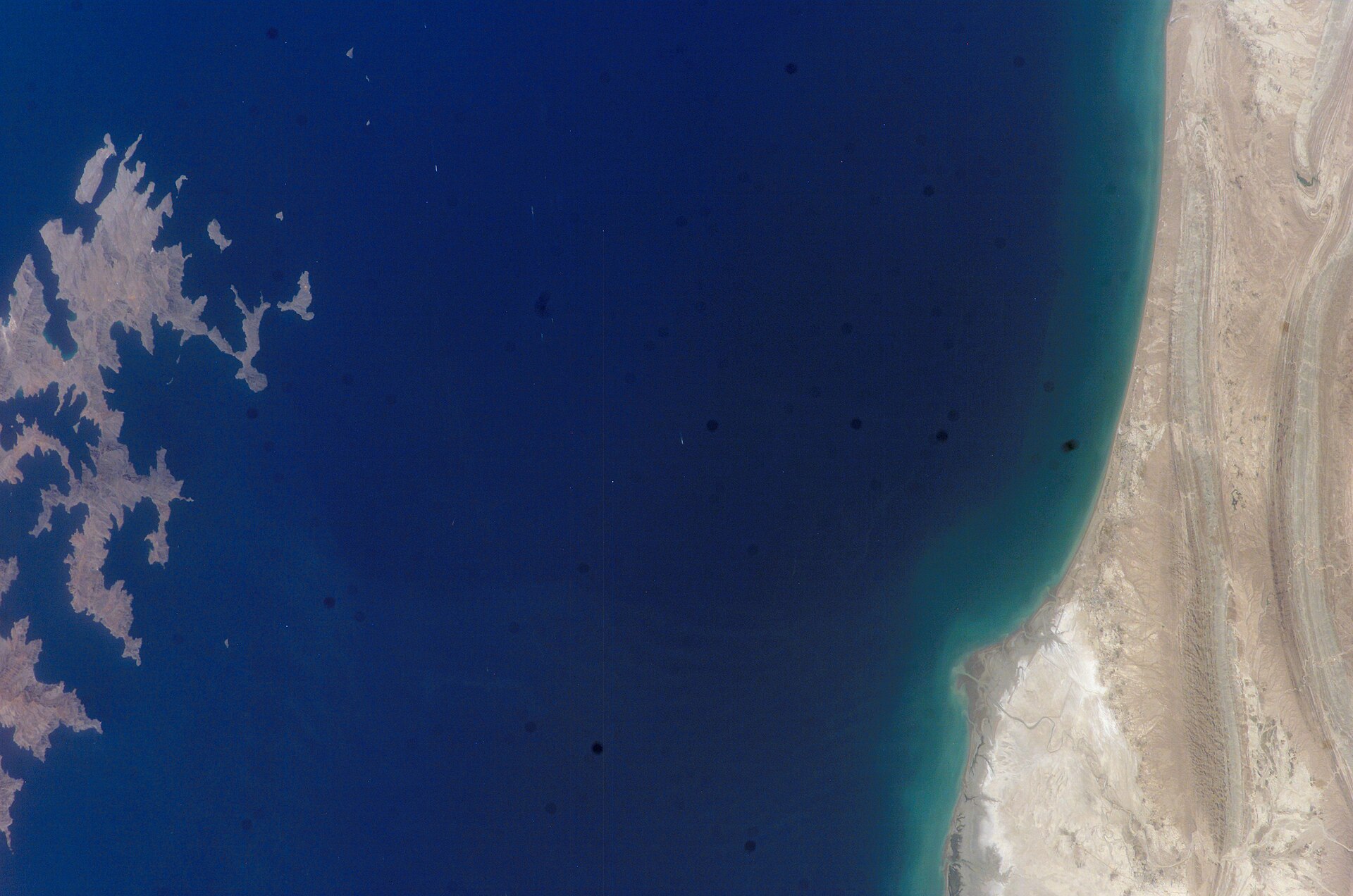
Brent crude closed at $109.03 per barrel on April 4; WTI at $111.29. The inversion — WTI trading above Brent, the opposite of normal market structure — signals that markets are pricing Gulf supply disruption rather than global demand. Zero tanker transits were recorded through the Strait of Hormuz on Tuesday, April 4, according to NPR, though a French container ship and a Japanese-owned LNG tanker had made crossings earlier in the week in what Bloomberg described as the first Western European and Japanese transits since the war began.
The IRGC Authorization Problem
Even if the Islamabad meeting had occurred, it is not clear who on the Iranian side could have committed to anything. The IRGC military council’s consolidation of power since Mojtaba Khamenei’s selection has created a decision-making structure in which the nominal head of state (Pezeshkian) is sidelined, the Supreme Leader is unreachable, and the parliament speaker (Ghalibaf) operates under a mandate that requires approval from a figure who communicates only through written statements and has not been seen or heard in public for nearly a month.
The Week India, citing sources with access to Iran’s internal governance, reported on April 1 that Pezeshkian had “repeatedly sought urgent meetings with Mojtaba Khamenei in recent days, but every request has gone unanswered.” WION reported that the IRGC had assumed “de facto control” of Iran, with Vahidi controlling appointments, blocking civilian oversight of war decisions, and maintaining a strict security perimeter around the Supreme Leader. The Times of Israel, citing the same reporting stream, described the IRGC military council as “effectively controlling Iran.”
For any external negotiator — Vance, Dar, Faisal bin Farhan — the Iranian authorization problem is not merely a complication. It is a structural barrier. The IRGC military council that now controls war decisions did not exist in its current form in early February. The question is not whether Iran’s diplomatic corps wants to negotiate — Araghchi’s statements suggest it does — but whether the people who control the military have granted the diplomats authority to do so. The available evidence, as of April 5, suggests they have not.
Does the Vance-Hegseth Split Matter for Diplomacy?
Trump’s public narration of his own administration’s internal divisions is unusual in its candor. By naming Hegseth and Caine as the two officials “quite disappointed” by ceasefire prospects, and describing Vance as “less enthusiastic about going” to war, Trump drew the factional map himself. He then complicated it by confirming that Vance, Secretary of State Rubio, Witkoff, and Kushner were all “in negotiations” with Iran — a statement that lumps together the very envoys Tehran explicitly rejected (Witkoff and Kushner) with the one it requested (Vance).
Iran’s insistence on Vance as interlocutor was itself a factional statement. Tehran issued what the Daily Beast described as an “ultimatum” sidelining Witkoff and Kushner, insisting Vance lead any direct talks. The rationale, reported by WION under the framing of “zero trust,” reflected Iran’s conclusion that the February Oman talks had been a deception operation — that Witkoff and Kushner engaged Iranian diplomats while US strikes were already being prepared. A Persian Gulf diplomat told MS NOW that “some of the people involved in the talks did not view Witkoff as an honest broker,” and that Witkoff had misrepresented Iran’s positions to Trump — telling the president that Iranians had “bragged” about their enriched uranium stockpile, when in fact Iran had indicated willingness to transfer the material as part of a deal.
Responsible Statecraft reconstructed the February sequence in detail: Araghchi offered to continue talks indefinitely; Witkoff and Kushner left the next day to visit the USS Abraham Lincoln; US strikes on Tehran followed hours later. Whether the Oman talks were a deliberate deception or merely overtaken by events, the result was the same — Iran demanded a different interlocutor.
Vance’s credibility with Tehran is, paradoxically, a function of his skepticism about the war. His February statement — “I remain a skeptic of foreign military interventions” — was noted in Tehran as evidence that he might be a negotiating partner with actual interest in a deal rather than a figure providing diplomatic cover for the next round of strikes. The fact that Trump publicly described Vance as “philosophically, a little bit different” on Iran reinforced this reading. The war has produced 3,519 Iranian dead — 1,607 of them civilians, 244 of them children, according to Al Jazeera’s tracker through Day 36 — and 15 American dead with more than 300 wounded and seven aircraft lost. Vance’s assignment to the diplomatic track was not an abstraction in Tehran.
What Happens to the Channel After April 6?
Trump’s April 6 deadline — 8:00 PM Eastern Time, the point at which he pledged to resume strikes on Iran’s power grid if the Strait of Hormuz remains closed — arrived with the Islamabad channel suspended but not severed. The deadline itself had already been extended once, from March 26, after Trump said Tehran “asked for seven, and I said, ‘I’m going to give you 10,’ because they gave me ships.”
Three outcomes shape the channel’s future. If Trump extends the deadline again — as reports from earlier on April 5 suggested he was already considering — the Islamabad channel gains additional time. A second extension would signal to Tehran that the deadline is negotiable, which could either accelerate engagement (by reducing the perceived risk of talking) or retard it (by reducing the perceived urgency). If strikes resume, the channel likely freezes for a period measured in weeks rather than days, as it did after the February 6 Oman-to-strikes sequence. If strikes resume and then pause again, as happened in mid-March, the channel’s viability depends entirely on whether the IRGC military council concludes that talking and fighting can happen simultaneously — a conclusion it has not yet reached.
Saudi Arabia’s role becomes more consequential in each scenario. Riyadh’s daily communication with Tehran through security agencies provides a back-channel that survives the collapse of any specific meeting format. The Pakistan-China five-point initiative, which Faisal bin Farhan endorsed in his April 3 call with Dar, provides a multilateral framework that can absorb a US-Iran bilateral deal if one eventually materializes. And Saudi Arabia’s own military option — held in reserve since Faisal’s March 19 warning — gives Riyadh a coercive capacity that a neutral mediator would not possess.
Dar continued working the phones on April 5, placing calls to his counterparts in Bahrain, Egypt, and Iran to push de-escalation. The operational machinery of the Islamabad channel remains intact. The delegations that were prepared twice have not been disbanded. The agenda items that were worked through in advance — de-escalation frameworks, humanitarian pauses, maritime security guarantees — remain on paper.
Frequently Asked Questions
What specific security concerns did Iran raise about Islamabad as a venue?
Iran’s security objection referenced the February 6, 2026 experience in Oman, where Araghchi engaged in extended talks with Witkoff and Kushner only for US strikes on Tehran to follow within hours of the talks concluding. Tehran views the Oman episode as a deliberate deception operation in which diplomacy provided cover for military action. The “security” language applied to Islamabad was not about Pakistan’s physical security environment — Islamabad’s diplomatic zone is heavily fortified — but about whether any venue short of Iranian soil could guarantee that talks would not again precede strikes. Pakistan’s intelligence services, which maintain close operational ties with both the CIA and Iran’s MOIS, were unable to provide the assurance Tehran sought.
Has Saudi Arabia offered to host the talks directly?
Riyadh has not publicly offered to host US-Iran direct talks, and doing so would contradict its current positioning. Saudi Arabia’s value in the mediation architecture depends on maintaining simultaneous credibility with both sides — which requires not becoming the venue, where a collapse would be attributed to the host. The Saudi preference, visible in Faisal bin Farhan’s Islamabad visit and the subsequent phone coordination with Dar, is to operate as the structural guarantor behind a Pakistani-hosted format, providing the diplomatic weight and the daily Iranian channel while allowing Islamabad to absorb the political risk of a failed meeting. The Lavrov-Faisal call on April 2 and the trilateral great-power outreach on the same day suggest Riyadh is building a broader framework that does not depend on any single venue.
Could Oman re-emerge as a mediator if the war ends?
Oman’s mediation capacity was damaged but not permanently destroyed by Iranian strikes on the Gulf. Sultan Haitham bin Tariq, who succeeded Qaboos in 2020, maintained Oman’s traditional neutrality through the early weeks of the war, but Iranian missile and drone attacks on Gulf infrastructure — including strikes near Omani territory — made continued neutrality politically untenable domestically. The institutional knowledge that produced the 2013-2015 JCPOA back-channel still exists within Oman’s foreign ministry, and several Omani diplomats who participated in the Burns-Sullivan talks remain in government. A post-war restoration of the Omani channel is plausible but would require Iranian guarantees regarding Omani sovereignty that Tehran has not offered.
What role does China play in the current mediation framework?
China entered the formal mediation structure on March 31, when Foreign Minister Wang Yi and Pakistan’s Dar released a joint five-point initiative calling for an immediate ceasefire, restoration of Hormuz shipping, cessation of attacks on civilian infrastructure, and a UN Charter-based comprehensive peace framework. The initiative was the first time a permanent UN Security Council member laid out a pathway to end the war. Beijing’s influence is primarily economic — China is Iran’s largest oil customer and has continued purchasing Iranian crude through the war via sanctions-evasion mechanisms. The Diplomat assessed the China-Pakistan plan as “all words, no commitment,” but its existence provides a diplomatic vehicle that Washington could accept without appearing to negotiate on Iranian terms, and that Tehran could accept without appearing to capitulate to American ones.
How many times has Trump extended a deadline during this war?
The April 6 deadline is itself the product of a prior extension. Trump initially set a 48-hour deadline on March 24 for Iran to reopen the Strait of Hormuz, threatening that “all Hell will reign down” if it was not met. He then extended the deadline to April 6 at 8:00 PM Eastern, saying Tehran “asked for seven” days and he had decided to “give them ten” because “they gave me ships” — a reference to limited Iranian facilitation of individual vessel transits. Reports on April 5 indicated a further extension was under consideration, linked to the rescue of a downed US weapons systems officer. Each extension has followed the same pattern: a maximalist public threat, a quiet request from intermediaries, and a presidential decision to grant additional time while claiming a concession.
That track has since given way to a new approach: US and Iranian mediators are now circulating a two-phase, 45-day ceasefire framework, the active diplomatic channel that emerged after the Vance near-miss, with Phase 1 covering a 30-day operational pause on Hormuz and Phase 2 addressing nuclear verification.