{“content”: “
RIYADH u2014 Iran’s state media declared on April 6 that its forces had destroyed 12 US aircraft since April 3 u2014 a number that, if true, would represent the most devastating three-day stretch for American airpower since Vietnam. The actual figure, painstakingly assembled from US Central Command confirmations and open-source intelligence, tells a different and more revealing story: approximately four aircraft shot down by Iranian fire, six more deliberately destroyed by US special operations forces to prevent capture during a rescue mission, at least two more claimed but not confirmed by any independent source, and a gap between those facts and Iran’s headline that is not an accident but a weapon.
n
That gap u2014 between 12 claimed kills and a reality split between enemy action and American self-destruction u2014 is now doing more work than any missile battery in Iran’s arsenal. It is eroding US domestic support for the air campaign ahead of President Trump’s April 7 deadline, signalling to regional audiences that American air superiority has a price tag denominated in wreckage, and forcing Saudi Arabia to confront an uncomfortable question: how long can Riyadh host the forward bases from which these increasingly costly missions launch without owning the political consequences of every aircraft that does not come back?
n
The Middle East briefing 3,000+ readers start their day with.
One email. Every weekday morning. Free.
Table of Contents
n
- n
- The 12-Kill Claim: What Iran Says vs. What Happened
- Why the Self-Destruction Distinction Matters More Than Iran Wants
- The Machine Behind the Numbers
- What Actually Burned at Prince Sultan
- Does Saudi Arabia’s Hosting Calculus Survive This?
- Who Is the Information War Actually For?
- Background: Eagle Claw’s Long Shadow
- Frequently Asked Questions
- n
n
n
n
n
n
n
n
n
n
n
n
n
The 12-Kill Claim: What Iran Says vs. What Happened
n
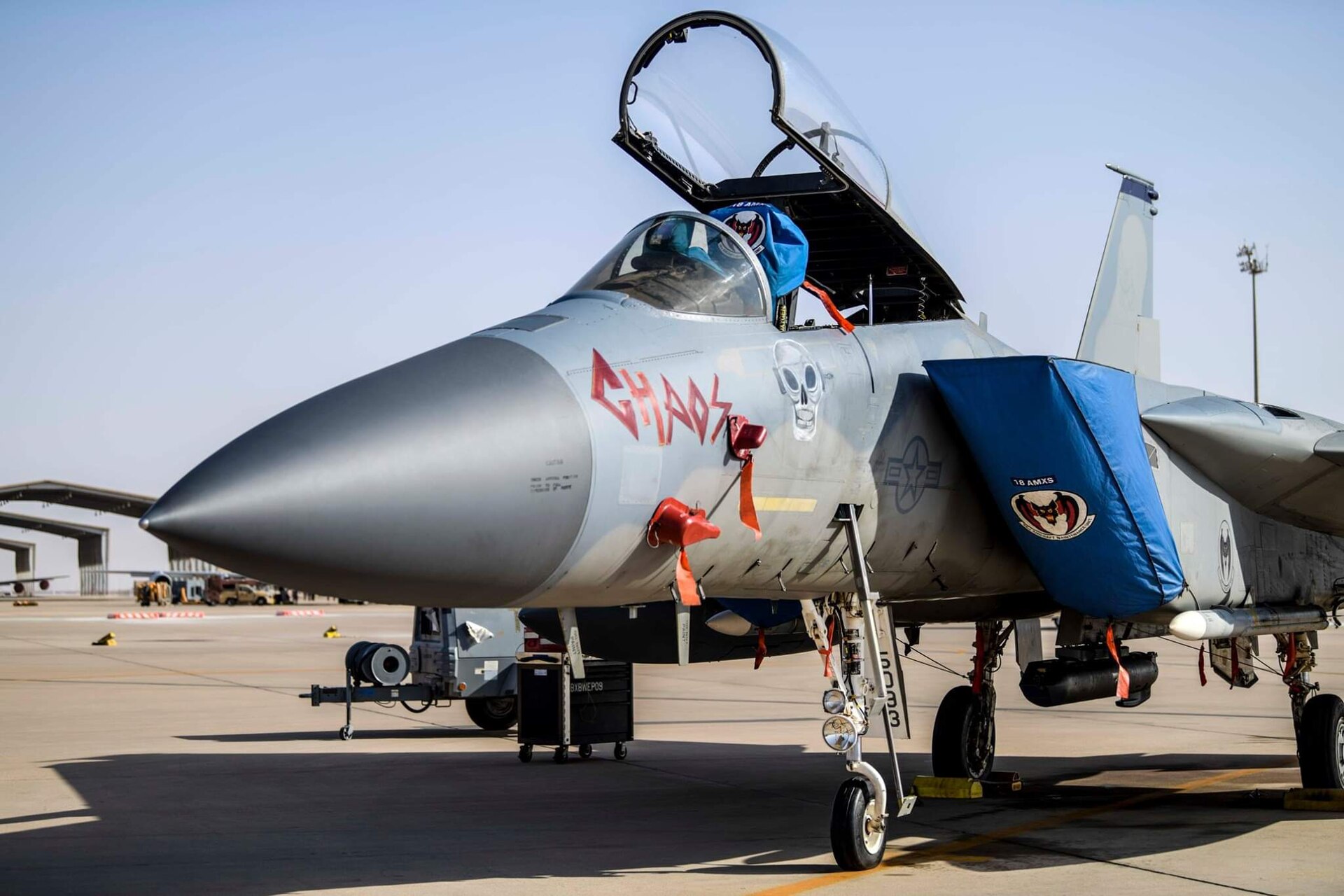
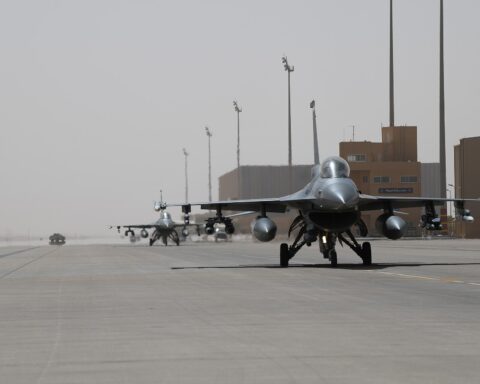
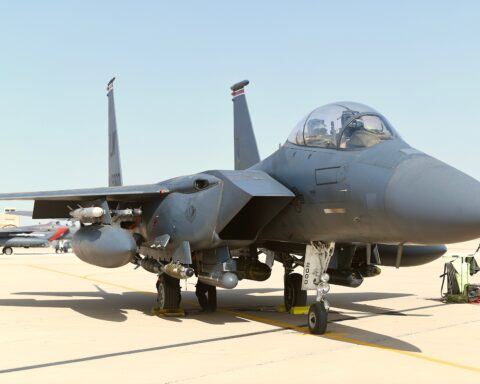
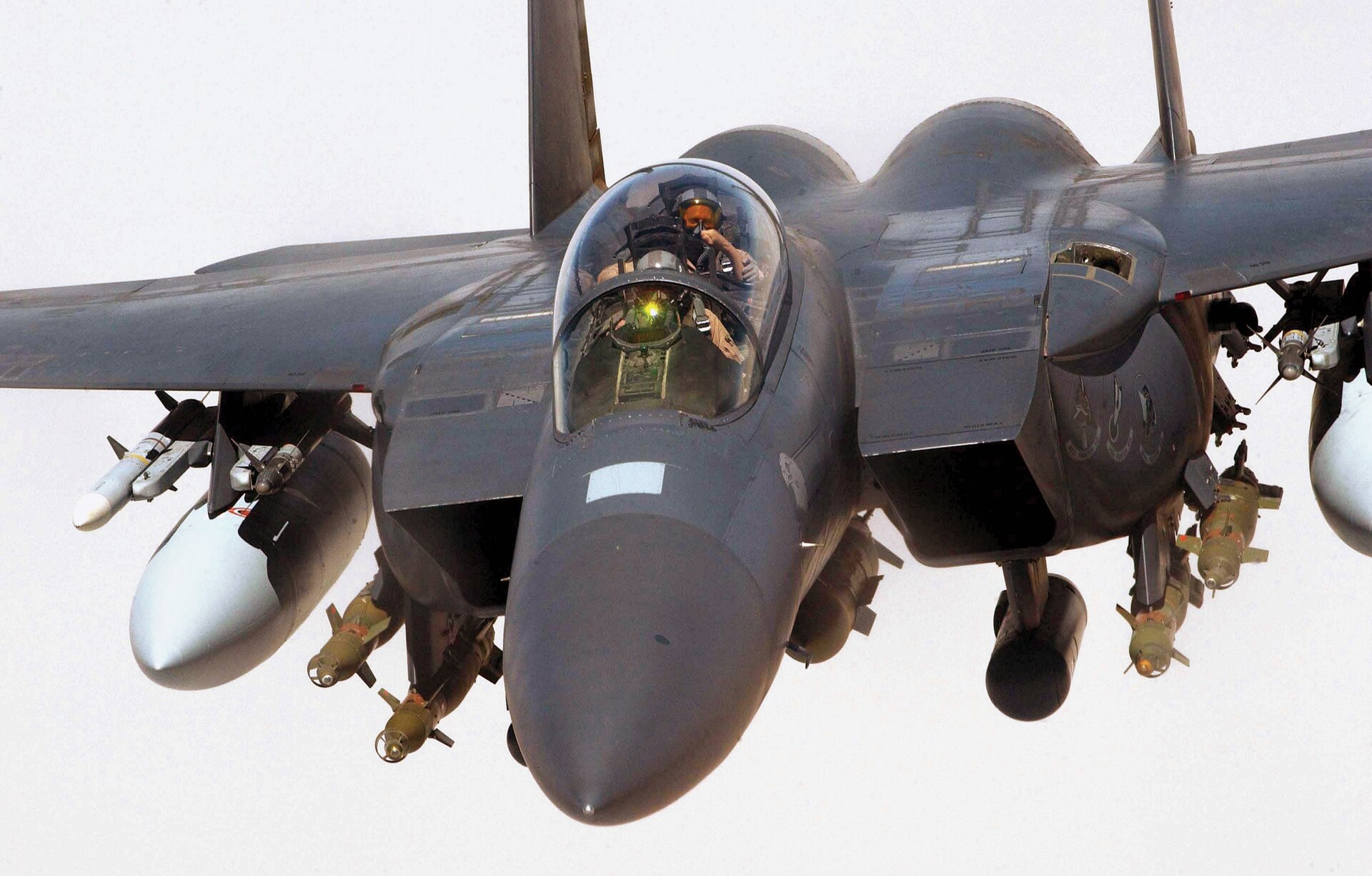
CGTN, Beijing’s English-language state broadcaster, published Iran’s tally on April 6 under a headline calibrated for maximum damage: “Iran claims downing of 12 US aircraft as Trump extends deadline.” The pairing was not subtle. Twelve aircraft destroyed, and then the American president blinked u2014 causation implied, never stated, impossible to unsee once read. The Iranian breakdown, sourced to IRGC military communiques, listed one F-15E Strike Eagle, two C-130 transports, one A-10 Warthog, four Black Hawk helicopters, two MH-6 “Little Bird” helicopters, and two MQ-9 Reaper drones.
n
Against that inventory, US confirmations tell a narrower story. The F-15E loss on April 3 is acknowledged and documented, as are two A-10 Warthogs brought down during the subsequent rescue operation u2014 the first US fixed-wing combat aircraft shot down by enemy fire in over 20 years, according to Military.com. CENTCOM has not confirmed Black Hawk or Reaper losses in the timeframe Iran claims. And the C-130s and Little Birds occupy a category Iran’s propagandists would prefer did not exist.
n
On April 2, before the heaviest losses, CENTCOM posted directly to X: “All U.S. fighter aircraft are accounted for. Iran’s IRGC has made the same false claim at least half a dozen times.” That statement has aged u2014 the F-15E and A-10 losses came after it u2014 but the pattern it identified has not changed. The IRGC has made at least six distinct false shootdown claims since hostilities began on February 28, each denied by CENTCOM, each circulated through Iranian state media before denial could catch up.
n
Why the Self-Destruction Distinction Matters More Than Iran Wants
n
The six aircraft that inflate Iran’s count from roughly four confirmed enemy kills to 12 were not shot down. They were destroyed by the Americans who flew them. On April 5, US special operations forces conducting a rescue mission for the downed F-15E’s weapons systems officer landed at a remote forward operating location inside Iranian territory, extracted their personnel, and then demolished two MC-130J or HC-130J special operations transports and four MH-6M Little Bird helicopters on the ground to prevent their capture. EADaily and AirLive both reported the deliberate destruction on April 5.
n
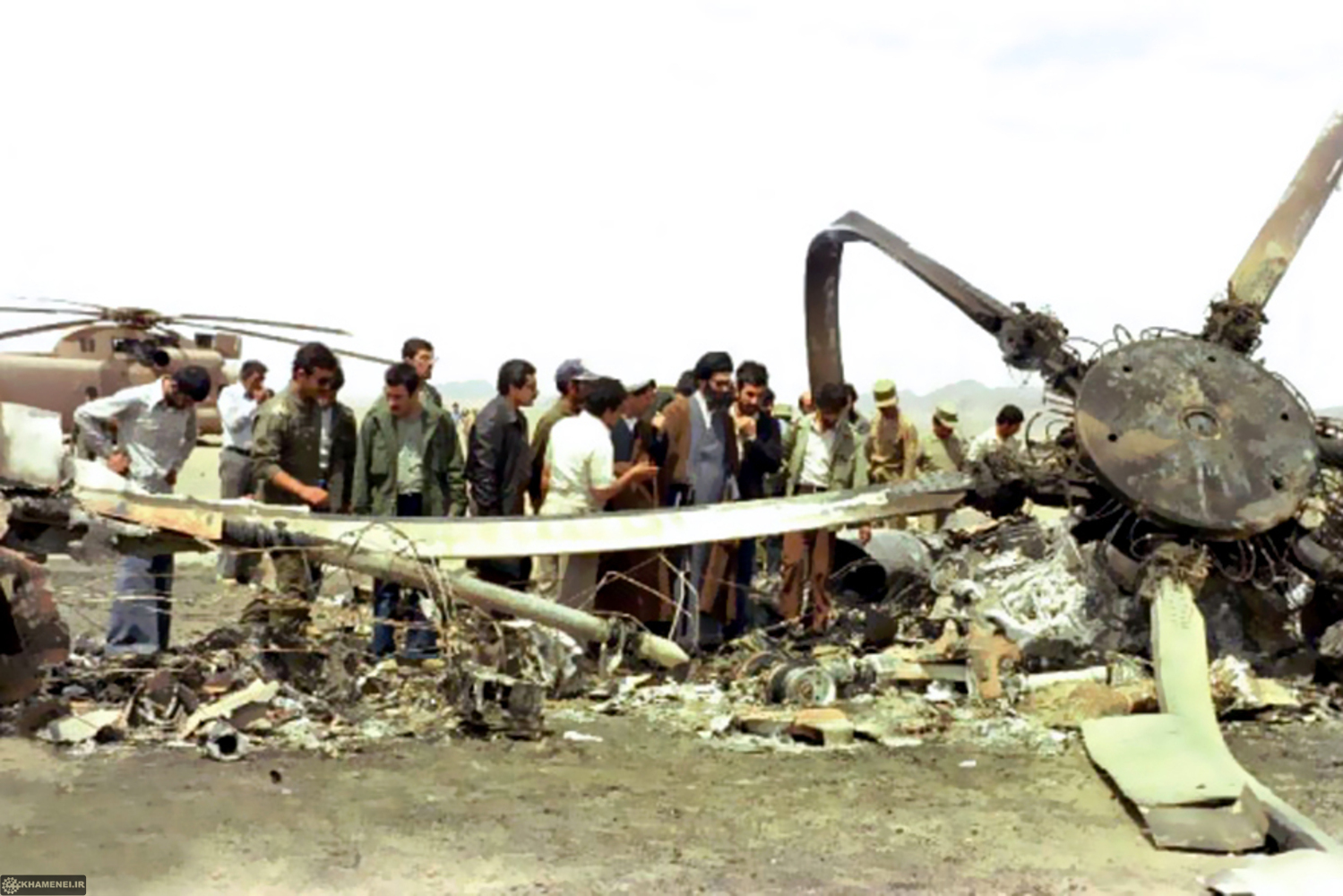
Iran’s PressTV knew exactly what rhetorical frame to apply. Its headline read: “From Tabas to Isfahan: Iran destroys two US C-130s, echoing 1980 Eagle Claw debacle.” The IRGC’s official statement described the aircraft consumed by “the flames of the wrath of the heroic fighters of Islam.” Neither PressTV nor the IRGC mentioned that the flames were American thermite charges, detonated by American hands, as part of a successful rescue u2014 not a failed one. The distinction between “Iran destroyed” and “Americans destroyed to deny Iran” is the entire analytical substance of the claim, and Iranian media erased it in a single headline.
n
For Tehran’s domestic audience, the erasure works. The images of burning American airframes on Iranian soil are real, and the explanation that Americans set the fires themselves sounds, to an audience primed by state media, like exactly the kind of excuse a losing side would invent. For international audiences u2014 particularly in capitals weighing the costs of the US campaign u2014 the 12-aircraft figure circulates faster than the footnote explaining that half of them were self-destroyed. Iran’s Parliament Speaker Mohammad Bagher Qalibaf captured the intended framing on PressTV: “If the United States gets three more victories like this, it will be utterly ruined.”
n
The Machine Behind the Numbers
n
The aircraft claims do not exist in isolation. They sit inside an industrial-scale information operation that NewsGuard has tracked since the war’s first week, cataloguing what it calls “25 Days, 50 Lies: Iran’s Disinformation War.” At least 18 false war-related claims emerged from Iranian outlets by March 6 alone u2014 up from five in the two weeks prior, according to Euronews reporting on NewsGuard’s tracker. The IRGC-aligned Tasnim News Agency claimed 650 US troops had been killed or wounded in the first two days of fighting; CENTCOM’s confirmed total stood at six US service members killed as of early April. The ratio u2014 650 claimed against six confirmed u2014 is not sloppy reporting. It is a deliberate inflation designed to establish a narrative ceiling so high that any subsequent, smaller claim sounds moderate by comparison.
n
INSS, the Israel Institute for National Security Studies, documented the operational infrastructure: over 37,000 AI-generated or manipulative content items tied to Iranian information operations since the conflict began, generating 145 million views and 9.4 million interactions across platforms. TikTok alone accounted for approximately 72 percent of the exposure, according to INSS’s “Roaring Lion” analysis. The IRGC’s earlier claim that it had shot down an enemy F-35 u2014 debunked when the Israeli Air Force clarified the video showed an F-35 shooting down an Iranian Yak-130, not the reverse u2014 was not an embarrassment Iran sought to correct. It had already done its work by the time the correction arrived.
n
n
Max Lesser, a senior analyst at the Foundation for Defense of Democracies, assessed that Iran’s deepfake aircraft imagery during the June 2025 Israel-Iran 12-Day War was a prototype for the current campaign, noting that the fabricated images “attempt to increase public confidence in its defense capabilities.” The 2026 iteration is faster, more systematic, and benefits from what disinformation researchers call the “liar’s dividend” u2014 the phenomenon where spreading enough doubt about what is real serves the liar’s interest even when individual claims are debunked. INSS concluded that the campaign “reflects an advanced stage in the evolution of Iranian doctrine, which has shifted from religious-ideological propaganda to operational, multidimensional information warfare.”
n
Russia has amplified the operation. NewsGuard documented Russian outlets using Iran’s false aircraft claims to assert, among other fabrications, that Iranian missiles had destroyed Ukrainian military bases in Dubai u2014 a claim that served Moscow’s interests by muddying the information environment around both conflicts simultaneously. The amplification network means Iran’s 12-aircraft claim does not need to survive fact-checking to succeed; it needs only to circulate long enough to shape perception before the correction lands.
n
What Actually Burned at Prince Sultan
n
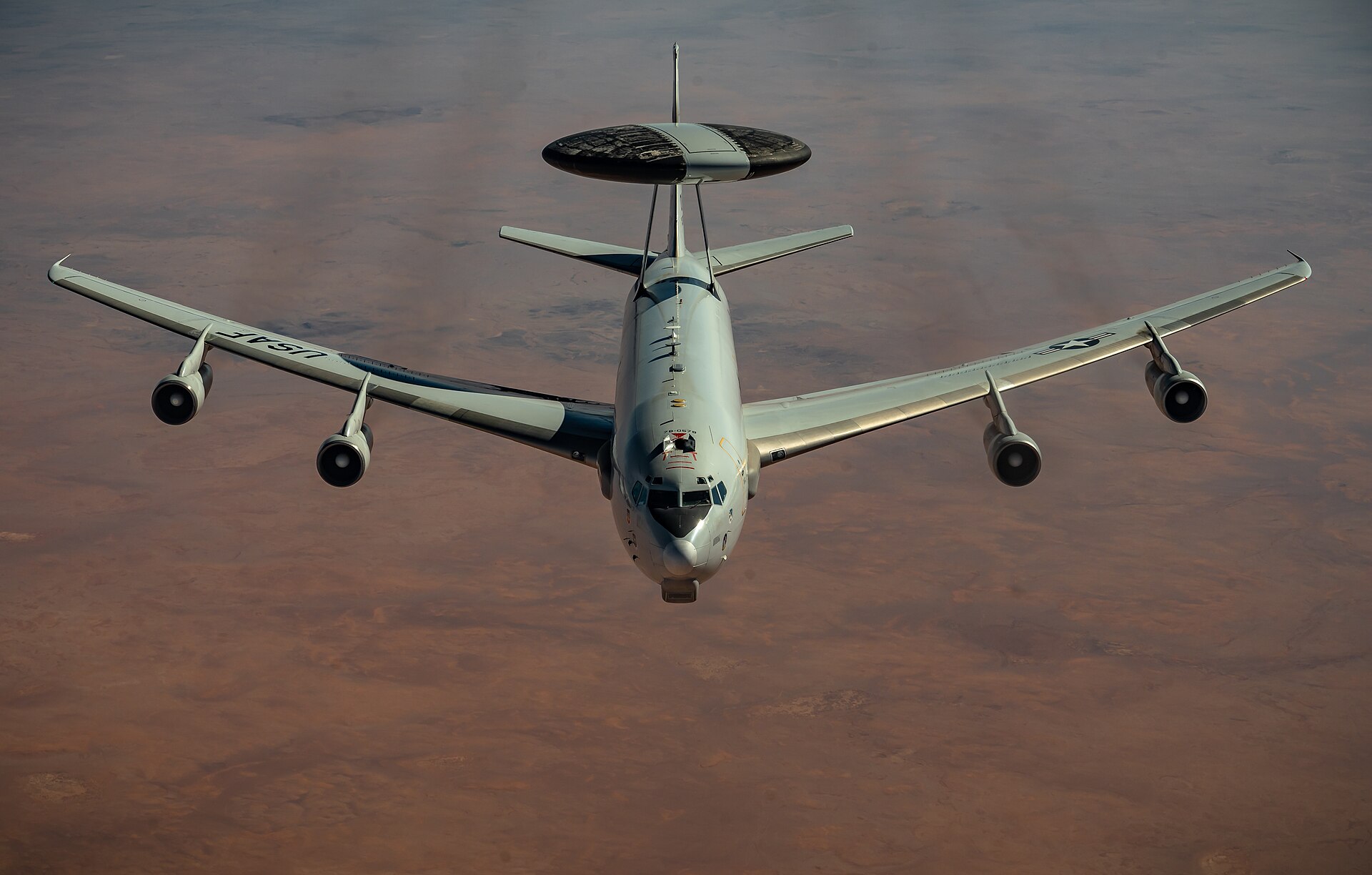
While Iran inflates its air-to-air kills, the damage it has inflicted on the ground at Prince Sultan Air Base is real and documented. Iranian missiles and drones struck the installation u2014 located roughly 80 miles southeast of Riyadh in Al-Kharj u2014 between March 27 and 29, as House of Saud previously reported. NBC News confirmed through satellite imagery that one E-3G Sentry AWACS aircraft was destroyed on the ground. That single airframe was worth approximately $500 million according to US Air Force procurement valuations and represented one of only 16 E-3 Sentries in the entire US fleet u2014 a loss equal to roughly six percent of America’s airborne early warning capability, according to the Atlantic Council’s conflict tracker.
n
The tanker fleet fared no better. Satellite imagery analysed by Defence Security Asia and The Aviationist appears to show three KC-135 Stratotankers destroyed, though official US language described five KC-135s as “damaged” u2014 a discrepancy between what the satellites show and what the Pentagon will say that mirrors, in miniature, the larger information gap this conflict keeps producing. Kelly Grieco, a senior fellow at the Stimson Center, told Defense News that Iran’s targeting pattern at Prince Sultan was deliberate and informed: “That’s not random. That’s a target set derived from an understanding of how US airpower functions.” By hitting the AWACS, the tankers, and the radar infrastructure, Iran was not trying to shoot down fighters u2014 it was trying to make fighters unable to fight.
n
Joe Costa, director of forward defense at the Atlantic Council, framed the logic bluntly: “It’s much easier to hit stationary infrastructure on the ground than planes flying in the air.” Mark Gunzinger of the Mitchell Institute added that US “low-density, high-demand combat aircraft… are increasingly critical u2014 it’s not surprising that Iran has targeted them.” The total estimated US material losses in the war’s first month run between $3 billion and $4.83 billion, according to assessments by Anadolu Agency and Straturka u2014 a figure that includes both the inflated Iranian claims’ real kernel and the verified destruction that requires no propaganda to alarm.
n
Two migrant workers were killed on March 8 when a projectile struck a residential area near Prince Sultan, damaging six homes, according to Al-Monitor. Those deaths u2014 of workers, not combatants, near a base that exists because Saudi Arabia agreed to host it u2014 are the kind of consequence that Iran’s information campaign does not need to fabricate. They are real, and they accumulate in Saudi domestic politics with a weight that no CENTCOM denial can offset. The US response to this capability destruction included deploying Ukrainian Sky Map and Merops drones to replace destroyed air battle management capability u2014 an operational admission that IRGC drone tactics had outpaced the formal US defence acquisition cycle.
n
Does Saudi Arabia’s Hosting Calculus Survive This?
n
Saudi Arabia expelled Iranian defense officials on March 21, giving them 24 hours to leave the kingdom. The Saudi cabinet issued a joint condemnation of Iranian attacks alongside the UAE, Kuwait, Bahrain, Qatar, and Jordan u2014 a display of Gulf solidarity that nonetheless cannot obscure the structural asymmetry of Riyadh’s position. Saudi Arabia is not a belligerent in this war. It is a host. And hosts, unlike combatants, can withdraw the invitation.
n
The political sensitivity of US forces on Saudi soil is not theoretical. Conservative religious opposition to the American military presence after the 1991 Gulf War was cited by Osama bin Laden as a primary justification for the September 11 attacks u2014 a history that every Saudi policymaker carries and that Iran’s information campaign is designed to reactivate. The 2026 deployment, which supports over 13,000 US combat sorties and strikes on more than 12,300 Iranian targets according to CENTCOM figures reported by YourNews on April 2, operates at a scale that makes the 1990s presence look modest. Every aircraft that burns at Prince Sultan u2014 whether destroyed by Iranian missiles or described as merely “damaged” u2014 reminds Riyadh that hosting American power projection comes with a return address.
n
A separate IRGC claim that a strike on a US pilots’ residence in Saudi Arabia killed or wounded 200 American aircrew was denied entirely by CENTCOM, according to Kurdistan24. The claim was almost certainly false. But its target audience was not American fact-checkers; it was the Saudi public, for whom the image of 200 foreign military casualties on Saudi soil u2014 regardless of its truth u2014 reframes the hosting arrangement as an active danger rather than a passive alliance. Iran’s information war against US aircraft losses and its kinetic war against Prince Sultan converge on the same pressure point: Saudi Arabia’s willingness to keep absorbing costs for a campaign it did not start and cannot control.
n
Neither path leads to relief. The 45-day ceasefire framework reported by Axios and The National on April 6 u2014 which both sides privately doubt the other will honour u2014 does nothing to resolve this pressure. If the ceasefire holds, Saudi Arabia still hosts bases that Iran has demonstrated it can hit. If it collapses, the next round of strikes will find the same KC-135s, the same runway infrastructure, and the same residential areas near Al-Kharj. Either outcome leaves Riyadh calculating whether the strategic value of the US alliance is worth the demonstrated cost of being its Middle Eastern address.
n
Who Is the Information War Actually For?
n
The most precise answer is: everyone, simultaneously, with different messages for each audience. For Iranian domestic consumption, 12 destroyed aircraft and Qalibaf’s sardonic “three more victories” frame a war Iran is winning u2014 a narrative essential for a regime whose parliament speaker, Pezeshkian, has privately warned that the economy faces “collapse in 3-4 weeks,” as reported in coverage of Iran’s deadline rejection. For regional audiences in the Gulf, South Asia, and North Africa, the steady drumbeat of US aircraft losses u2014 amplified at the scale INSS documented u2014 establishes that American military power is not the invulnerable force that decades of uncontested air superiority suggested.
n
For the American domestic audience, the information campaign has a specific and time-sensitive target: the April 7, 8 PM EDT deadline that President Trump set for Iran to reopen the Strait of Hormuz. Every aircraft loss, real or fabricated, feeds the domestic calculus of whether escalation is worth the price. The Atlantic Council noted that the Iran campaign is consuming assets “essential to credibly deter China” u2014 framing identified as America’s “most consequential challenge.” That framing transforms every destroyed aircraft from a tactical loss into a strategic opportunity cost, and Iran’s inflation of the numbers multiplies the perceived cost without requiring additional missiles.
n
That calculus sharpened further when Trump stood at the White House briefing room on April 6 and declared Iran could be “taken out in one night” u2014 using the 155-aircraft rescue mission as his proof of concept. The analysis of Trump’s one-night targeting doctrine dissects how the same aircraft count that demonstrated US reach also exposed the tanker fleet degradation and Saudi base vulnerability that Iran’s information campaign was designed to amplify.
n
Mehdi Tabatabaei, Iran’s deputy for communications, told CGTN on April 6 that “Iran would only reopen the strait after receiving compensation for war damages” u2014 a demand that implicitly treats the 12-aircraft claim and the broader destruction narrative as the accounting basis for those damages. The information war is not separate from the diplomatic war. It is the predicate for Iran’s negotiating position: the bigger the number, the bigger the bill, the harder it becomes for Washington to frame the campaign as low-cost enough to sustain. The US military’s institutional pattern of delayed or partial confirmation of combat losses u2014 visible in the “damaged” language around KC-135s that satellite imagery shows destroyed u2014 creates exactly the ambiguity Iran needs to keep the larger number alive.
n
n
Background: Eagle Claw’s Long Shadow
n
PressTV’s decision to frame the April 5 aircraft self-destructions through the lens of Operation Eagle Claw u2014 the catastrophically failed 1980 hostage rescue in which eight US service members died and multiple aircraft were destroyed in the Tabas desert u2014 was not improvised editorial colour. It was a calculated invocation of the single most humiliating US military failure on Iranian soil, designed to collapse 46 years of history into a single narrative: America comes to Iran, America fails, America burns its own aircraft in the desert. “Forty-six years after its first humiliation in the Islamic Republic,” PressTV wrote, “the United States had learned nothing and lost even more.”
n
The comparison is instructive precisely because it is wrong in the ways that matter most. Eagle Claw failed because of mechanical breakdowns, a desert sandstorm, and a collision on the ground u2014 it never reached its objective. The April 5 mission succeeded: the weapons systems officer was rescued, the personnel were extracted, and the aircraft were destroyed as a deliberate denial measure, not an accident. But the images u2014 burning American airframes in the Iranian desert u2014 are visually identical, and in an information war optimised for TikTok’s 72-percent share of exposure, the image travels faster than the context.
n
Beneath the Tabas comparison lies a deeper pattern: Iran’s systematic conversion of US operational decisions into propaganda material. When American forces make the tactically sound choice to destroy their own equipment rather than let it be captured u2014 a standard military practice with precedent from the Bin Laden raid’s stealth helicopter to countless operations across conflicts u2014 Iran reframes the destruction as evidence of defeat. The liar’s dividend compounds with each cycle: after enough false claims, even true US explanations sound like cover stories, and the burden of proof shifts from Iran’s propagandists to America’s spokespeople. That shift is the real victory Iran’s information campaign is designed to achieve, and it operates independently of whether any particular aircraft claim is true.
n
Frequently Asked Questions
n
How does Iran’s aircraft claim compare to historical propaganda inflation in other conflicts?
n
Wartime kill-claim inflation is well documented. During the 1991 Gulf War, Iraq claimed over 160 coalition aircraft shot down; the actual figure was 75, with 44 from enemy action. Argentina claimed to have sunk HMS Invincible in the Falklands u2014 which returned to port undamaged. Iran’s roughly 3:1 inflation ratio is consistent with historical patterns where belligerents facing air superiority amplify defensive claims. The distinguishing feature of 2026 is the speed of dissemination through AI-generated content, compressing the propaganda cycle from days to minutes.
n
What happens to the aircraft wreckage from the self-destroyed US planes inside Iran?
n
The MC-130J and MH-6M airframes destroyed by US forces represent an intelligence concern even in their demolished state. Thermite charges destroy sensitive avionics and classified mission systems, but airframe remnants and engine components can still yield metallurgical intelligence. Iran exploited captured US technology before u2014 most directly with the RQ-170 Sentinel drone captured intact in 2011, which Iran reverse-engineered into its Saegheh drone program. Russia and China both maintain active programs to acquire Western military wreckage, and Iran has shared captured equipment with both countries previously.
n
Has Saudi Arabia publicly responded to Iran’s specific claims about US losses at Saudi-hosted bases?
n
Saudi Arabia’s official communications have focused on condemning Iranian strikes and expressing solidarity with affected personnel rather than engaging with specific Iranian aircraft-loss claims. The Saudi Ministry of Defense has not issued detailed rebuttals of individual IRGC claims, effectively leaving that task to CENTCOM. This silence is itself strategic u2014 engaging with Iranian propaganda would elevate the claims and implicitly acknowledge Saudi Arabia’s role as a co-belligerent platform rather than a sovereign host nation. The Saudi cabinet’s March 21 joint statement with Gulf partners condemned attacks but did not reference specific military losses, maintaining a deliberate separation between the kingdom’s diplomatic position and the operational details of the US campaign.
n
What is the replacement timeline for the destroyed E-3G Sentry AWACS?
n
The E-3G Sentry destroyed at Prince Sultan cannot be replaced in any operationally meaningful timeframe. Boeing’s E-3 production line closed in 1992, and the planned replacement u2014 the E-7A Wedgetail u2014 is not expected to deliver to the US Air Force until 2027 at the earliest. The loss of one of 16 airframes means the remaining fleet must absorb its tasking across European, Indo-Pacific, and Middle Eastern commitments simultaneously. NATO allies operate additional E-3s, but reallocation from Europe would create gaps in eastern flank coverage u2014 the kind of trade-off the Atlantic Council warned about when it noted the Iran war is consuming assets essential to deterring China.
The E-3G loss is one piece of a larger damage picture that Congress has declined to publish in full. Iran’s $5 billion in damage to US military installations across 11 Gulf bases — a figure that explicitly excludes aircraft, radar, and satellite assets — has reshaped the Saudi security calculus in ways the official loss-reporting framework obscures.
n
The E-3G loss is one piece of a larger damage picture that Congress has declined to publish in full. Iranu2019s $5 billion in damage to US military installations across 11 Gulf bases u2014 a figure that explicitly excludes aircraft, radar, and satellite assets u2014 has reshaped the Saudi security calculus in ways the official loss-reporting framework obscures.
n
How does US delayed loss reporting compare with other Western militaries?
n
Washington’s pattern of delayed or euphemistic loss reporting is more conservative than most NATO allies. The UK MoD, shaped by Falklands controversies, adopted faster confirmation protocols during Iraq and Afghanistan. Israel allows domestic media to report losses once families are notified but restricts foreign reporting. The US approach, rooted in operational security doctrine that resists confirming losses before full battle damage assessment, creates information vacuums that adversary propaganda fills. In the 2026 Iran conflict, the gap between satellite-visible destruction and official acknowledgment has consistently measured 48 to 72 hours u2014 an eternity when Iran’s version circulates within minutes.
n”}