{“content”: “
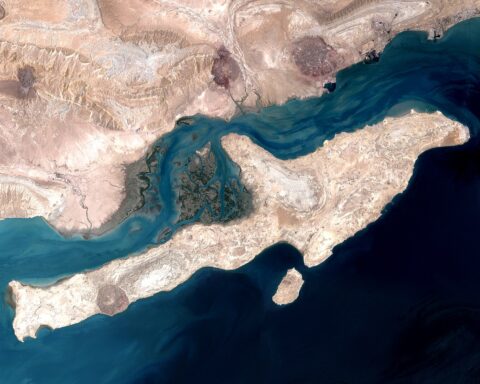
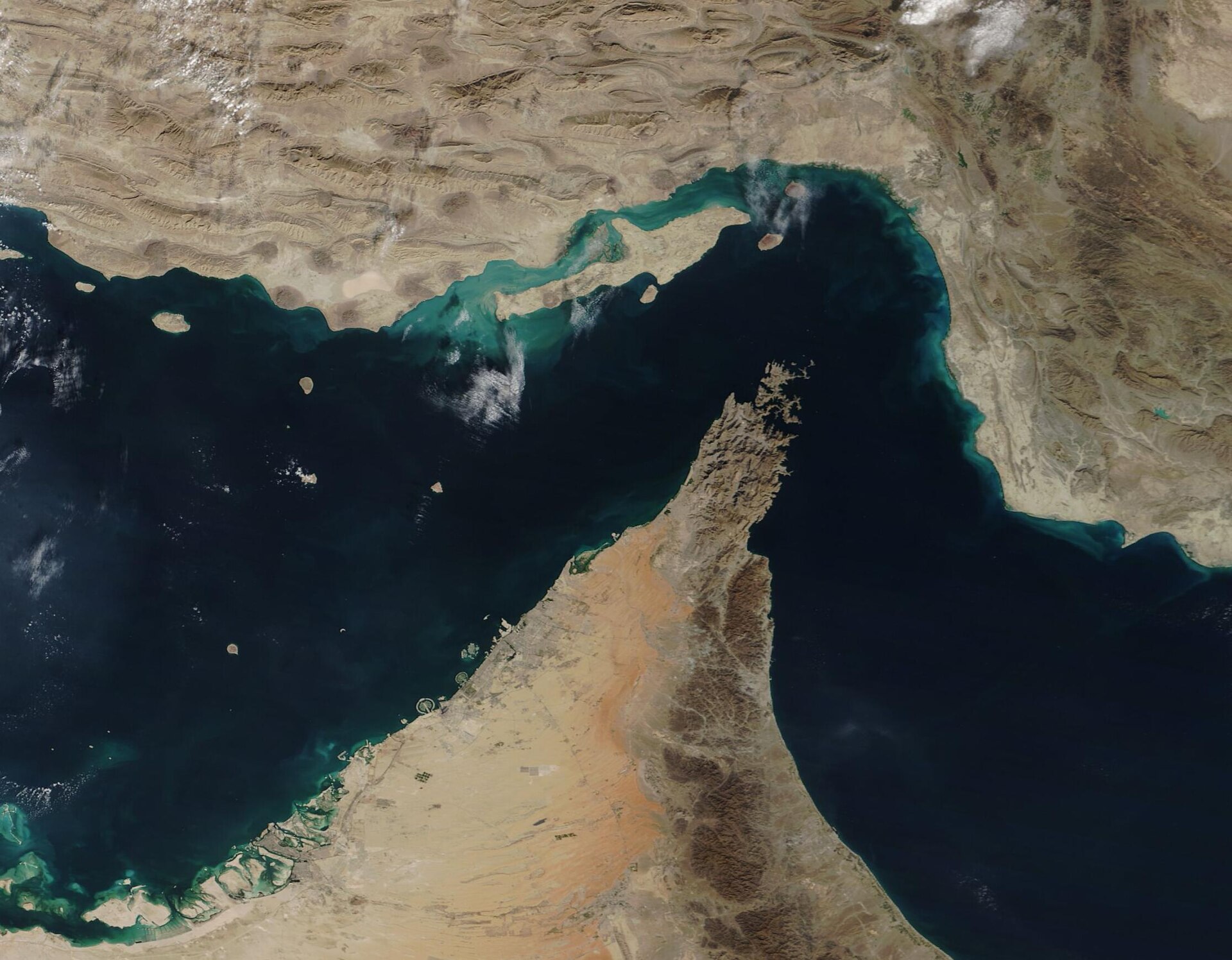
MANAMA u2014 US Central Command formally activated a mine-clearance mission in the Strait of Hormuz on April 11, sending two Arleigh Burke-class destroyers through the waterway and announcing plans to chart a “safe pathway” for commercial shipping u2014 a direct operational challenge to the IRGC Navy’s declaration of “full authority” over the strait issued one day earlier.
n
Iran’s Khatam al-Anbiya Central Headquarters responded within hours by “strongly denying” that any American vessels had entered the strait at all u2014 a statement that functions simultaneously as a factual claim and a legal assertion: that no transit can occur without Iranian authorization. The confrontation now runs on a collision course with the April 21-22 ceasefire expiry, and with it, the question of whether mine clearance under fire becomes the trigger for the war’s next phase.
n
n
The Middle East briefing 3,000+ readers start their day with.
One email. Every weekday morning. Free.
Table of Contents
n
- n
- What CENTCOM Says Happened u2014 and What Iran Says Didn’t
- The Mine Math: 12 Weapons, 51 Days, Zero MCM Ships
- A Jurisdictional Confrontation, Not a Naval One
- Can Mine Clearance Survive the Islamabad Collapse?
- Knifefish: Untested Technology in a Contested Strait
- What Does This Mean for 800 Trapped Ships?
- Background
- FAQ
- n
n
n
n
n
n
n
n
n
n
n
n
What CENTCOM Says Happened u2014 and What Iran Says Didn’t
n
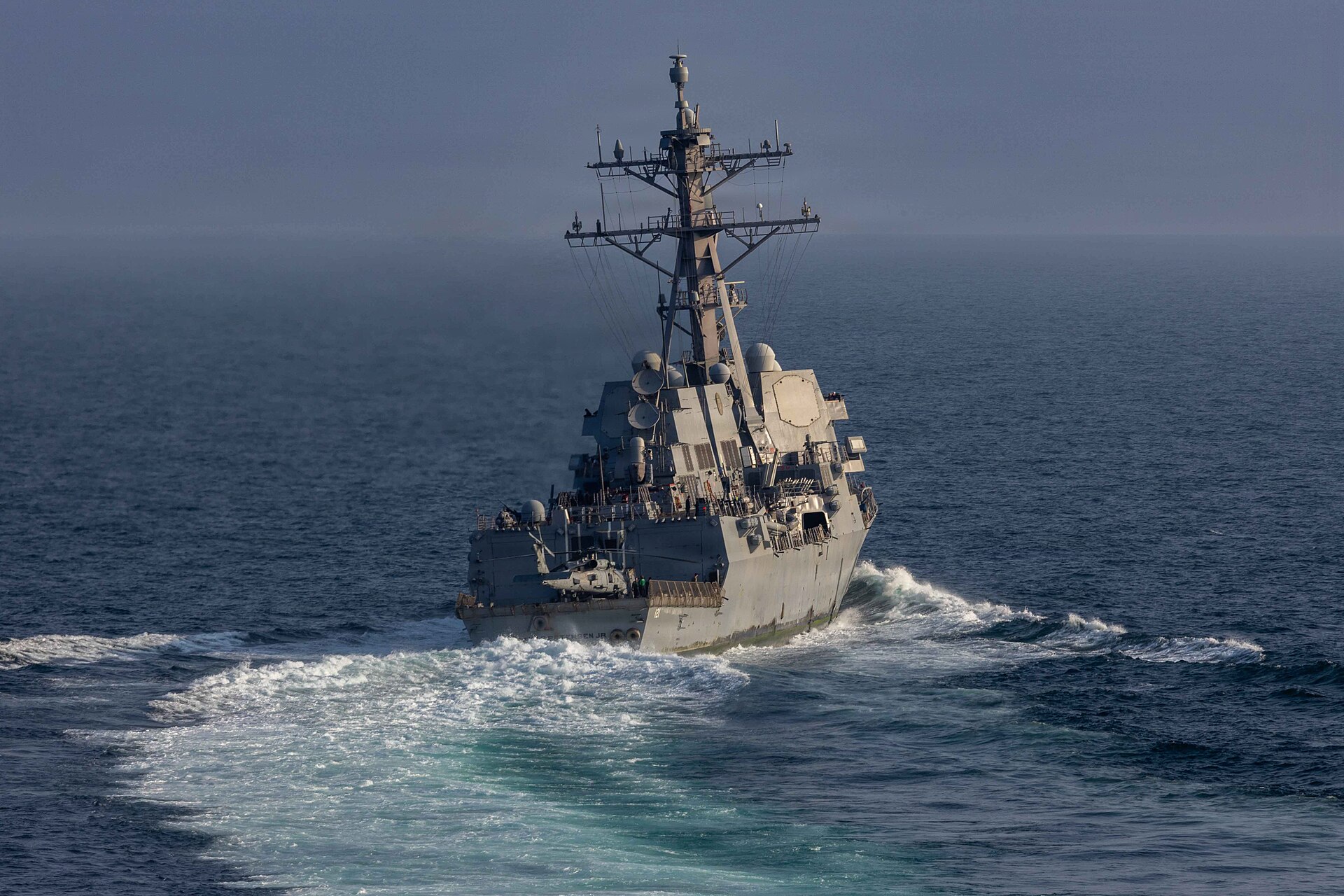
Admiral Brad Cooper, CENTCOM commander, announced on April 11 that USS Frank E. Peterson (DDG-121) and USS Michael Murphy (DDG-112) had transited the Strait of Hormuz and begun “setting conditions” for mine clearance. “Today, we began the process of establishing a new passage and we will share this safe pathway with the maritime industry soon to encourage the free flow of commerce,” Cooper said in a press release. The transit occurred without coordination with Tehran, despite the fact that Iranian Foreign Minister Abbas Araghchi was simultaneously negotiating in Islamabad.
n
President Donald Trump framed the operation on Truth Social as generosity: “we’re now starting the process of clearing out the Strait of Hormuz as a favor to Countries all over the World.”
n
That framing did not hold. On the same day, Trump reposted a retired general’s call for a naval blockade of Iran u2014 a signal that the operational question has shifted from mine clearance to blockade, two legally and strategically distinct thresholds.
n
Iran’s account of the same hours bears no resemblance. Khatam al-Anbiya Central Headquarters u2014 the IRGC’s joint command u2014 issued a statement carried by Al Jazeera on April 12: “The claim by the CENTCOM commander regarding the approach and entry of American vessels into the Strait of Hormuz is strongly denied.” The statement added that “the initiative for the passage and movement of any vessel is in the hands of the Armed Forces of the Islamic Republic of Iran.” Iranian state television called the transit claim “false news.”
n
A regional intelligence official, cited by Reuters and Bloomberg on April 11, offered a third version: that the IRGC launched a UAV toward the destroyers around noon Dubai time, and that at least one vessel “turned back after encountering threats.” CENTCOM’s press release made no mention of any incident. The three accounts u2014 clean transit, no transit, contested transit u2014 cannot all be true, but each serves the institutional interests of its source.
n
n
The Mine Math: 12 Weapons, 51 Days, Zero MCM Ships
n
US intelligence estimated, as of a March 23 assessment reported by the New York Times via Euronews, that Iran had deployed “less than a dozen” to “about a dozen” Maham-3 and Maham-7 mines in the Hormuz shipping lanes. Several mines may have drifted from their original positions due to sea currents u2014 meaning Iran itself may not know precisely where they are.
n
Twelve mines sounds manageable. The math says otherwise. The 1991 Kuwait mine-clearance operation u2014 the most recent large-scale US effort u2014 required 51 days to clear approximately 200 square miles. That operation had advantages the current one does not: a full squadron of Avenger-class mine countermeasures ships, uncontested airspace, and an enemy that had stopped mining. Counting from the April 7 ceasefire start, Day 51 falls on May 29 u2014 five weeks after the ceasefire expires on April 22.
n
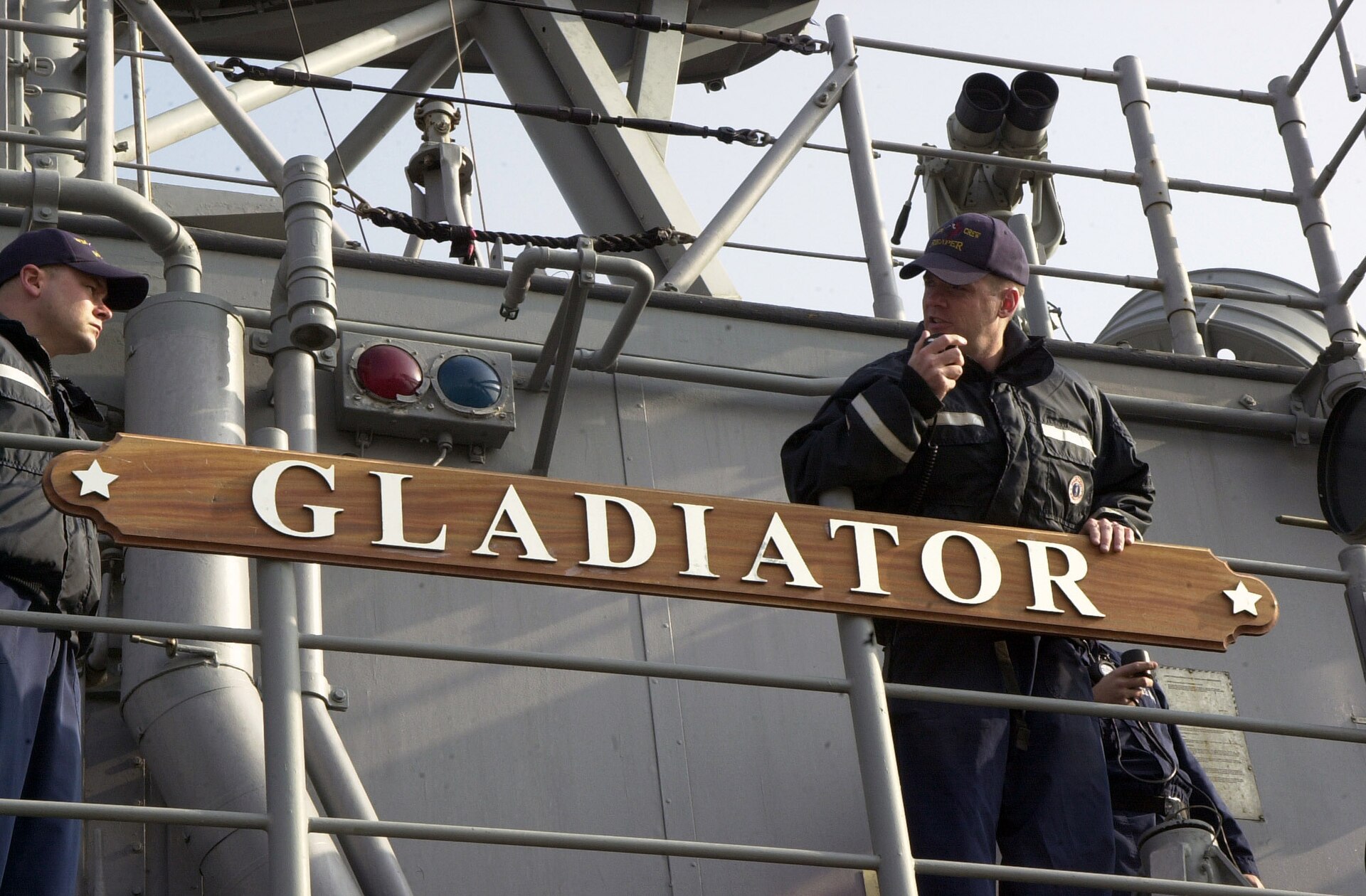
The ship deficit is the operation’s defining constraint. All four Bahrain-based Avenger-class MCM ships u2014 USS Devastator, Dextrous, Gladiator, and Sentry u2014 were loaded onto the heavy-lift vessel M/V Seaway Hawk in January 2026 for disposal, six weeks before Iran began mining. Four Avenger-class ships remain at Sasebo, Japan, according to US Naval Forces Pacific records; none have been confirmed deployed to the Gulf. The Navy’s mine countermeasures force in the theater where mines are actually present is, at present, zero dedicated MCM hulls.
n
What CENTCOM does have: seven Arleigh Burke-class guided-missile destroyers in the Arabian Sea, two more in the Red Sea, and the Tripoli Amphibious Ready Group with its embarked Marine Expeditionary Unit positioned in the region, according to Task & Purpose. Destroyers can escort commercial traffic and shoot at threats. They cannot find mines.
n
Jakob Larsen, chief safety officer at the shipping industry body BIMCO, offered a measured assessment to Argus Media: “Iran still has significant amounts of weapons to control shipping through the Strait, including anti-ship missiles, drones, fast attack craft, coastal artillery, and mines.” BIMCO is awaiting “technical details” before advising its commercial members to transit.
n
A Jurisdictional Confrontation, Not a Naval One
n
The mine-clearance announcement is not primarily a naval logistics story. It is a jurisdictional claim backed by warships.
n
On April 10, the IRGC Navy declared “full authority to manage the Strait” u2014 a statement issued while Araghchi was negotiating in Islamabad, and one that no one in Tehran’s civilian government has the institutional standing to retract. The IRGC’s April 5 declaration of the same authority came from IRGC Navy commanders operating without a named successor to Admiral Alireza Tangsiri, killed on March 30. The command is headless but operational u2014 and its jurisdictional claim has been repeated, not walked back.
n
CENTCOM’s response, one day later, was to transit two destroyers through the strait and announce a charted “safe pathway” for commercial shipping. Admiral Cooper’s language was commercial u2014 “free flow of commerce” u2014 but the act was legal: asserting transit passage rights under customary international law.
n
Mark Nevitt, writing in Just Security, noted that the transit passage right “shall not be impeded” under UNCLOS Articles 37-44, and is “widely regarded as customary international law binding on all states” u2014 including non-signatories. Neither Iran, the United States, nor Israel has ratified UNCLOS. But Natalie Klein of UNSW Sydney offered a complicating legal observation in The Conversation: “belligerent states are not similarly required to keep their own straits open.” Iran’s position is that it is exercising sovereign authority in wartime. Washington’s position is that transit passage survives armed conflict. Both are defensible readings of an untested legal question.
n
The problem is that both sides have now staked institutional positions. The IRGC cannot accept a US-charted passage through water it declared under its authority without conceding the core sovereignty claim that is also the hardest item in any Phase 2 ceasefire negotiation. CENTCOM cannot abandon a named mine-clearance operation without conceding that Iran controls Hormuz u2014 a concession that would unravel the legal architecture of every US freedom-of-navigation operation globally. Whether the IRGC Navy has the authority to act without Khameneiu2019s sign-off determines whether this jurisdictional standoff resolves diplomatically or tips into direct confrontation.
n
Can Mine Clearance Survive the Islamabad Collapse?
n
The Islamabad talks collapsed after 21 hours on April 12. Vice President JD Vance declared that Iran had rejected “our final and best offer,” adding: “this is bad news for Iran, much more than it’s bad news for the United States.” No next round of negotiations has been scheduled.
n
The ceasefire, such as it is, expires approximately April 21-22 u2014 ten days from the mine-clearance announcement. Vance’s declaration of a final offer leaves no diplomatic runway. Iran in Islamabad rejected international oversight of Hormuz, insisting on full sovereign control, according to Gulf News. Araghchi’s own framing u2014 “the reopening of the strait will take place taking into account technical constraints,” as reported by Euronews u2014 maintained Iran’s authority over the reopening timeline even during negotiations.
n
Iranian government spokesperson Fatemeh Mohajerani captured the posture: “We will negotiate with our finger on the trigger. While we are open to talks, we are also fully aware of the lack of trust.”
n
Mine clearance is 51-day work in a 10-day political window. The operation will almost certainly still be underway u2014 if it proceeds at all u2014 when the ceasefire expires. At that point, CENTCOM assets will be conducting slow, deliberate mine-hunting in water where Iran claims the right to control all vessel movement, with no diplomatic framework governing the encounter.
n
n
Knifefish: Untested Technology in a Contested Strait
n
CENTCOM’s gap-filler for the missing Avengers is the Knifefish unmanned underwater vehicle, built by General Dynamics. DefenseScoop reported on April 11 that Knifefish-equipped Littoral Combat Ships would join the operation “in the coming days.” Knifefish achieved initial operational capability in 2023. April 2026 marks its first deployment into a contested active-mining environment.
n
The operational concept requires LCS host ships u2014 aluminum-hulled vessels designed for littoral operations u2014 to remain outside the minefield while the Knifefish drone operates forward, scanning the seabed with low-frequency sonar. The drone identifies targets; separate assets neutralize them. Admiral Daryl Caudle, Chief of Naval Operations, has described the work in terms that suggest limited confidence in the timeline: “Mine search and destruction is slow, deliberate work and none of these options performs well in a non-permissive environment.”
n
The environment is non-permissive by any definition. Iran estimates it has “hundreds of small boats” capable of laying additional mines during clearance operations, according to Euronews analysts. Maria Sultan, a Pakistani defence analyst, told Al Jazeera on April 11: “If Iranians do not give a safe passage, it’s impossible for the American military fleet to move freely in the Strait of Hormuz.” That assessment may overstate Iranian capability against Arleigh Burke destroyers, but it accurately describes the challenge facing slow-moving mine-hunting platforms.
n
The 1988 precedent is instructive. On April 14 of that year, USS Samuel B. Roberts struck an Iranian mine in the Gulf. Four days later, the United States launched Operation Praying Mantis u2014 destroying two Iranian oil platforms, sinking a frigate, and disabling a missile boat. The gap between mine strike and retaliation was four days. In the current environment, with IRGC UAVs reportedly launched toward transiting destroyers and a ceasefire in its final days, the escalation timeline could compress.
n
What Does This Mean for 800 Trapped Ships?
n
Normal Hormuz throughput before the war was approximately 135 ships per day, according to Windward and S&P Global. Current traffic: 15 to 20 ships in 24 hours. More than 800 vessels remain trapped in the Gulf, according to shipping tracking firm Windward, and over 70 empty VLCCs sit off Singapore u2014 a four-week voyage from loading u2014 waiting for lanes to reopen.
n
CENTCOM’s promise of a “safe pathway” shared with the maritime industry is, for now, an aspiration. BIMCO has not advised its members to transit. No insurer has indicated willingness to cover Hormuz passages. The gap between a military transit by two guided-missile destroyers u2014 ships designed to survive attacks u2014 and a commercial transit by an unarmored tanker carrying 2 million barrels of crude is the gap between a demonstration and a reopening.
n
The April 11 destroyer transit proved that the US Navy can move warships through Hormuz. It did not prove that a 330-meter VLCC drawing 22 meters can do the same while mines of uncertain position drift in the shipping lanes and the IRGC maintains u2014 and periodically exercises u2014 its claim to control all vessel movement.
n
| Factor | Current Status | Required for Commercial Reopening |
|---|---|---|
| Mine clearance | Not yet begun (conditions being set) | Full sweep of shipping lanes (~51 days benchmark) |
| MCM ships in theater | 0 Avengers (4 at Sasebo, undeployed) | Multiple dedicated MCM hulls |
| Knifefish UUV | En route, never combat-deployed | Proven in contested environment |
| IRGC posture | “Full authority” claim; denies US transit | Acquiescence or neutralization |
| Insurance | No Hormuz war-risk coverage available | Underwriters willing to quote |
| BIMCO advisory | Awaiting “technical details” | Formal transit guidance to members |
| Ceasefire | Expires April 21-22; no extension negotiated | Extended or replaced by Phase 2 deal |
n
n
Background
n
The Iran-US conflict, designated Operation Epic Fury by the Pentagon, began on February 28, 2026. Iran mined the Strait of Hormuz in the war’s opening weeks, reducing traffic from 135 ships per day to 15-20. The US Navy’s four Bahrain-based Avenger-class mine countermeasures ships had been removed for disposal in January 2026 u2014 six weeks before mining began u2014 leaving no dedicated MCM capability in the Fifth Fleet’s area of responsibility.
n
A ceasefire took effect on April 7 after Pakistan-brokered negotiations, but contained no enforcement mechanism and no provisions for Hormuz reopening u2014 that issue was deferred to Phase 2. The IRGC Navy declared “full authority” over the strait on April 5 and again on April 10. The Iran Parliament passed a Hormuz transit fee bill on March 31. The ceasefire expires April 21-22. The Islamabad talks collapsed on April 12 with no next round scheduled.
n
n
FAQ
n
What type of mines has Iran deployed in Hormuz?
n
US intelligence identified Maham-3 and Maham-7 mines as of a March 23 assessment, according to reporting by the New York Times. These are Iranian-manufactured bottom-influence mines designed to detonate when a vessel’s magnetic or acoustic signature passes overhead. Unlike older contact mines, they sit on the seabed and are difficult to detect visually or with conventional sonar. Several have reportedly drifted from their deployment positions due to currents, complicating clearance for both sides.
n
Why did the US retire its mine-clearance ships just before the war?
n
The four Bahrain-based Avenger-class ships u2014 commissioned in the late 1980s and early 1990s u2014 had reached the end of their service life. The Navy’s plan was to replace dedicated MCM ships with the mine countermeasures mission module for the Littoral Combat Ship, which includes the Knifefish UUV. The retirement in January 2026 followed years of planned decommissioning and was not a response to the Iran crisis, which began five weeks later. The timing has drawn scrutiny from defense analysts and congressional oversight committees.
n
Could Iran lay new mines while the US clears existing ones?
n
Iran maintains hundreds of small boats u2014 fast attack craft, fishing vessels, and IRGC Navy patrol boats u2014 capable of deploying mines. Unlike the 1991 Kuwait precedent, where Iraq had stopped mining before clearance began, Iran has not committed to cease mining as part of the April 7 ceasefire. The ceasefire text contains no specific provisions on Hormuz. Re-mining during clearance would extend the timeline indefinitely and could constitute a ceasefire violation, though the absence of an enforcement mechanism means that designation carries no operational consequence.
n
What would trigger a US military response during mine clearance?
n
Operation Praying Mantis in 1988 established the precedent: a mine strike on a US vessel produced a retaliatory strike within four days. Current US rules of engagement for Operation Epic Fury have not been publicly disclosed. The presence of nine guided-missile destroyers in the Arabian Sea and Red Sea, plus the Tripoli ARG, provides immediate strike capability. Any mine detonation near a US vessel, IRGC interference with clearance operations, or an attack on Knifefish UUVs could trigger escalation u2014 with the ceasefire’s expiration removing even the nominal diplomatic constraint.
n
How long before commercial ships can safely transit Hormuz?
n
No timeline is available. BIMCO, the world’s largest shipowner association, has not issued transit guidance and is waiting for technical details from CENTCOM. War-risk insurance for Hormuz passages remains unavailable. Even if mine clearance proceeds without interference, the combination of drifting mines, IRGC small-boat activity, and the absence of a political settlement means commercial reopening will lag military clearance by weeks or months. CENTCOM has since publicly named the specific mine variants — Maham-3 and Maham-7 — now publicly identified as the primary threat types driving that timeline.
n”}