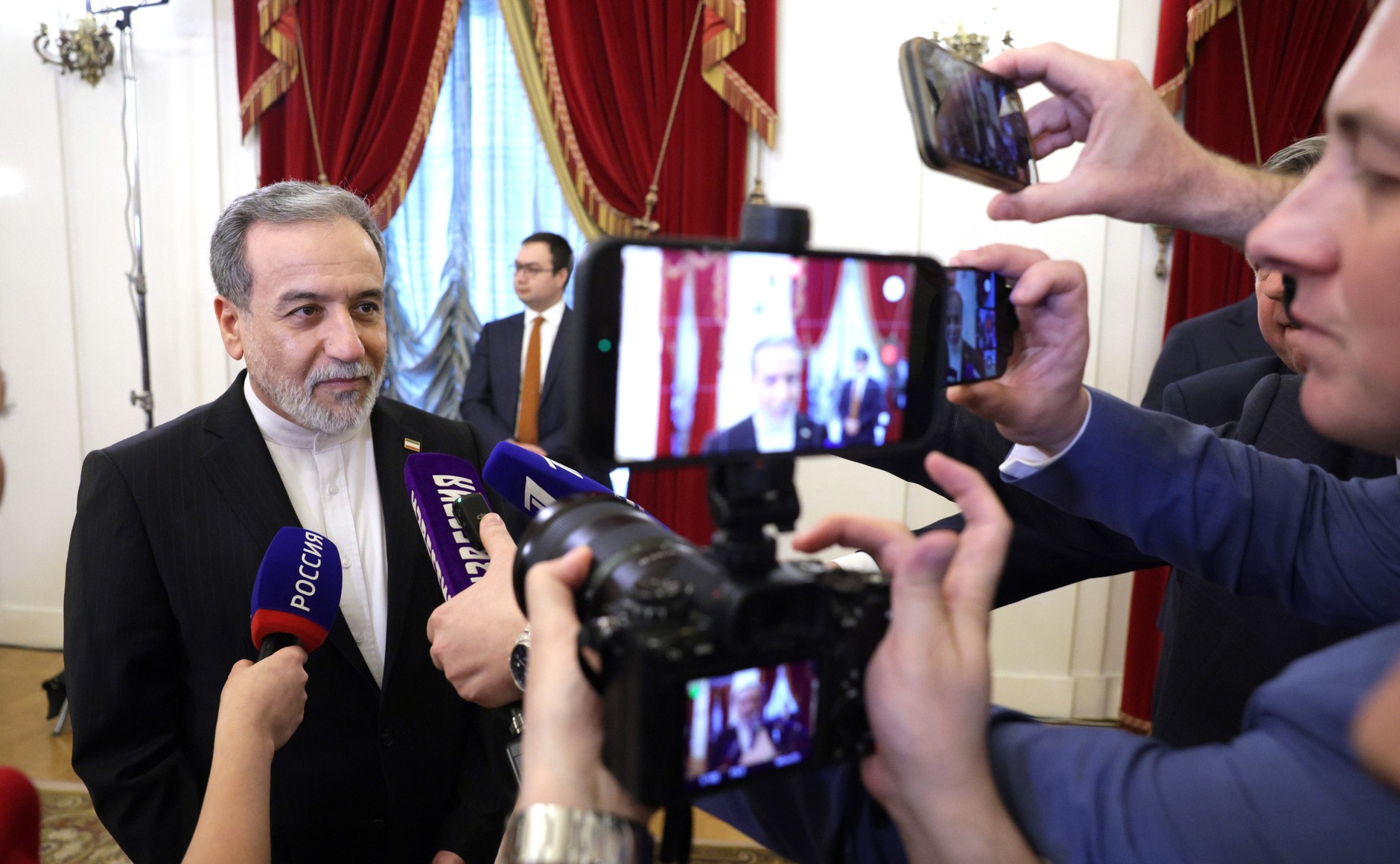

TEHRAN — The 2026 Iran nuclear talks have not stalled because of wording gaps or sequencing disputes. They have stalled because the man who negotiates — Foreign Minister Abbas Araghchi — does not command the military assets the deal is supposed to constrain, and the man who commands those assets — IRGC Commander-in-Chief Ahmad Vahidi — was never at the table. An Iranian official told Gulf counterparts that American negotiators complained directly: what they agreed with Araghchi was rejected by Vahidi. This is not a factional disagreement. It is the Iranian constitutional order functioning as designed.
Iran’s parallel authority structure — a civilian foreign ministry authorized to negotiate, and a Revolutionary Guards Corps authorized to refuse — was institutionalized after the 1980-1988 Iran-Iraq War for a specific purpose: to prevent any single official from binding the state to a foreign commitment. Article 150 of the constitution mandates the IRGC’s preservation as “guardian of the Revolution.” Article 176 requires all national-security decisions to pass through the Supreme National Security Council and receive the Supreme Leader’s personal confirmation before they bind anyone. Araghchi can signal flexibility in Doha, Muscat, or Rome precisely because his signals carry no constitutional weight until Vahidi, Mojtaba Khamenei, and the SNSC ratify them. Five rounds and 106 days into these negotiations, no one with ratification authority has signed anything. The channel problem compounds for Saudi Arabia specifically: Riyadh has built diplomatic access to Araghchi, Vahidi’s chain, and Pezeshkian, but has no path to Mojtaba Khamenei, the one official whose SNSC confirmation is constitutionally required — a gap analyzed in depth in Saudi Arabia’s structural exclusion from Iran’s signing authority.
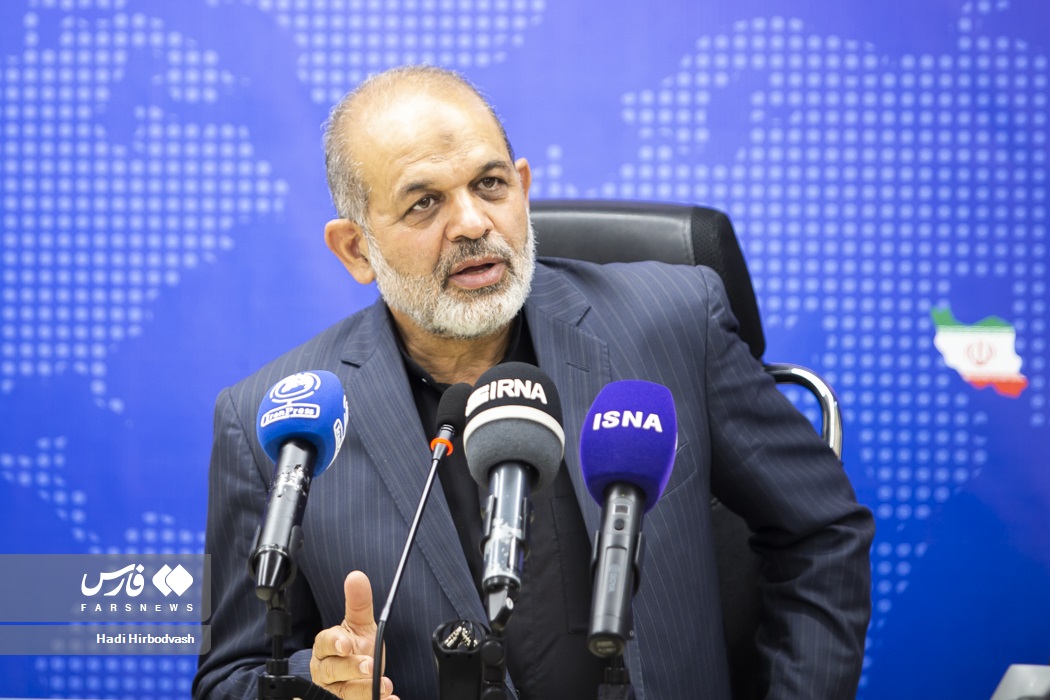
Table of Contents
- The Constitutional Design: Why Iran’s Negotiating Split Is Structural
- Who Is Ahmad Vahidi and What Does He Control?
- The Zarif-Soleimani Precedent: How This Played Out During the JCPOA
- What Can Araghchi Actually Commit To?
- The SNSC Approval Gate: 99 Days of Constitutional Delay
- Does Vahidi’s Wartime Authority Extend Beyond the Battlefield?
- The Parliamentary Kill-Switch That Has Not Fired
- Mojtaba Khamenei’s HEU Directive and the Courier Bottleneck
- What Does This Mean for Saudi Arabia?
- FAQ
The Constitutional Design: Why Iran’s Negotiating Split Is Structural
Israel Hayom reported on May 26, 2026, citing an Iranian official who had briefed Gulf counterparts on the state of play: American negotiators told their Iranian interlocutors that the leadership in Tehran was divided, and that “what they agreed on with Araghchi was rejected by Ahmad Vahidi, the commander of the Revolutionary Guards.” The same official added a mirror observation — that the American side was similarly fractured, with “what we agreed on with their team initially accepted and then rejected by the president and his extremist ministers.”
Competitors have covered this as a personality conflict or factional dispute. CNN, on May 9, identified hardline opponents of the deal as “Super Revolutionaries — the radical Iranian hardliners bent on sabotaging any deal with the US.” Iran International and the Irish Times tracked 27 ultra-hardline MPs who refused to sign a joint statement endorsing the negotiating team. Fox News reported Ghalibaf’s forced withdrawal from the nuclear delegation after overstepping in Islamabad.
All of these accounts describe symptoms. The underlying condition is constitutional.
The Islamic Republic’s dual-track authority structure was built in the decade after the Iran-Iraq War, a conflict that killed an estimated 500,000 Iranians and exposed catastrophic coordination failures between Iran’s regular army (Artesh) and the nascent Revolutionary Guards. The post-war constitutional revision of 1989 — the last year the constitution was amended — embedded two institutional responses. Article 150 mandated the IRGC’s permanent preservation as the guardian of the Revolution, with a scope of duties deliberately left to ordinary law rather than constitutional text. Article 176 created the Supreme National Security Council as the sole body authorized to “determine defence and national security policies within the framework of general policies determined by the Leader,” and stipulated that its decisions become binding only “after the confirmation of the Leader.”
The Middle East briefing 3,000+ readers start their day with.
One email. Every weekday morning. Free.
The effect is a system in which the Foreign Ministry implements policy it did not write, the IRGC executes operations the Foreign Ministry cannot direct, and the SNSC arbitrates disputes the Supreme Leader resolves. No single actor — not the president, not the foreign minister, not the IRGC commander — can bind the state alone.
Who Is Ahmad Vahidi and What Does He Control?
Vahidi is the third IRGC Commander-in-Chief since the 2026 war began. Hossein Salami was killed by Israel during the June 2025 twelve-day war. Mohammad Pakpour, who succeeded Salami, was killed on February 28, 2026 — the opening day of joint US-Israeli strikes. Vahidi, whom Supreme Leader Khamenei had appointed IRGC Deputy Commander in December 2025, stepped into the top role on March 1, less than 90 days into the current negotiating period. He previously commanded the Quds Force (1988-1997), served as Defense Minister under Ahmadinejad, and remains subject to an Interpol Red Notice for the 1994 AMIA bombing.
His institutional biography maps onto the exact nodes the deal is supposed to constrain. From 1988 to 1997, Vahidi commanded the Quds Force — the IRGC’s extraterritorial operations arm, the same position Qasem Soleimani would hold from 1998 until his assassination in 2020. From 2009 to 2013, he served as Defense Minister under Ahmadinejad, overseeing Iran’s ballistic missile development during the period when Western intelligence agencies traced the acceleration of delivery-system research. From 2021 to 2024, he was Interior Minister under Raisi, controlling Iran’s internal security apparatus.
Interpol has maintained a Red Notice for Vahidi’s arrest since Argentine prosecutors formally accused him of planning the 1994 AMIA bombing in Buenos Aires — an attack that killed 85 people and wounded over 300, the deadliest antisemitic attack in the Western Hemisphere since the Second World War. The Red Notice remains active. Euronews, in a May 21, 2026 profile, described it as having “significantly restricted his ability to travel abroad.” Iran denies involvement. The U.S. Congress, in H.Res.597 of the 119th Congress, condemned the AMIA attack and encouraged accountability — a resolution that takes on operational meaning now that its target leads the IRGC.
According to IndexBox research published in May 2026, citing UANI analysis, Vahidi is “practically controlling the country.” He has blocked President Pezeshkian’s attempts to appoint a new intelligence minister — all candidates rejected. His stated position: “during wartime all critical and sensitive leadership positions must be decided by the IRGC.”
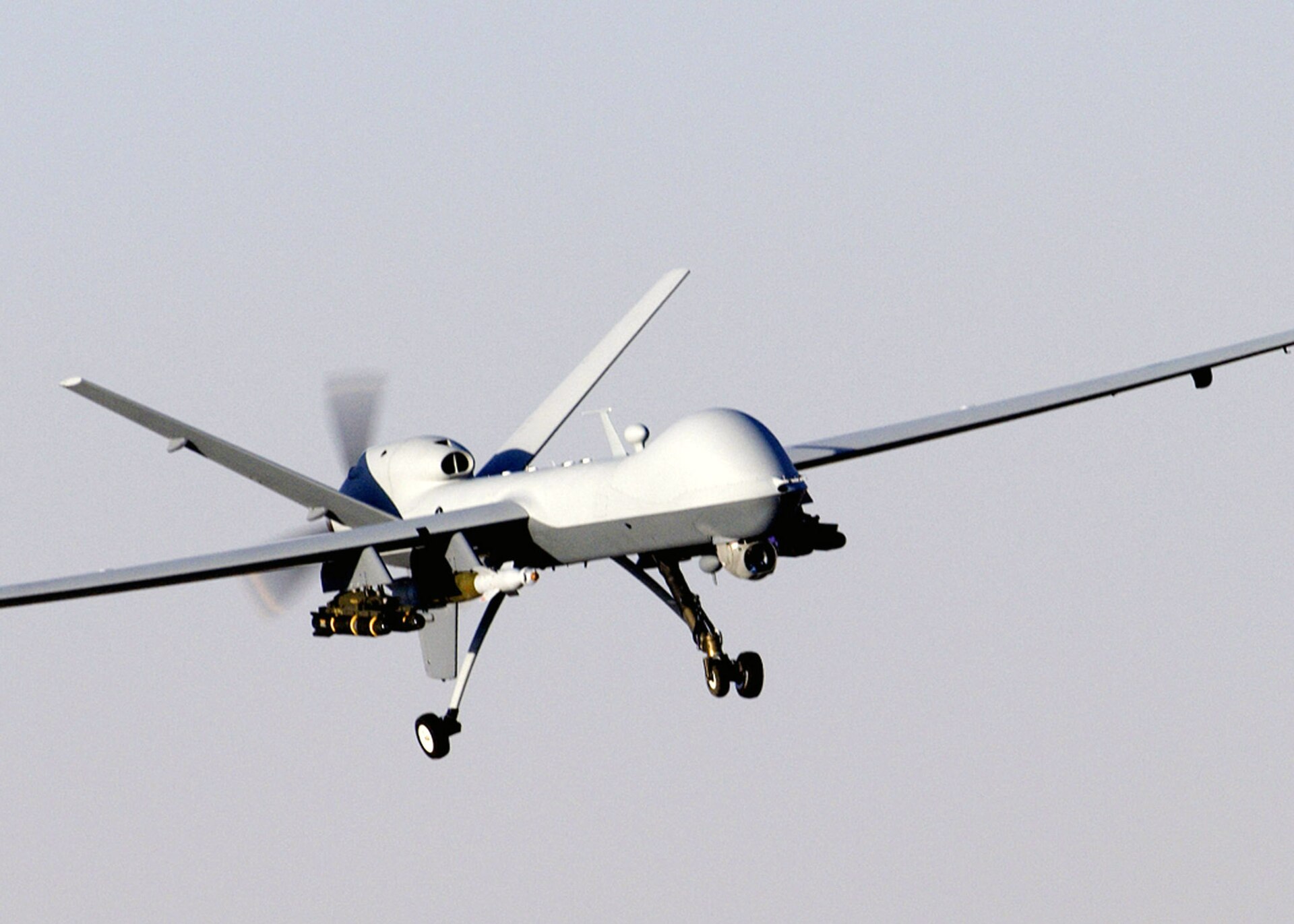
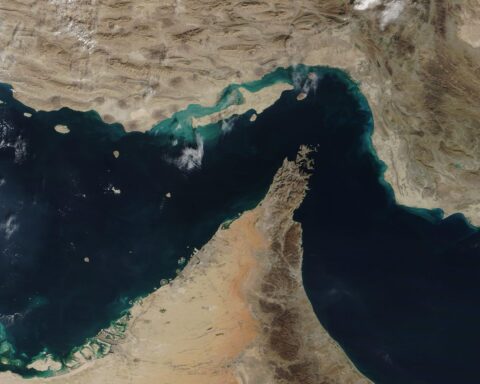
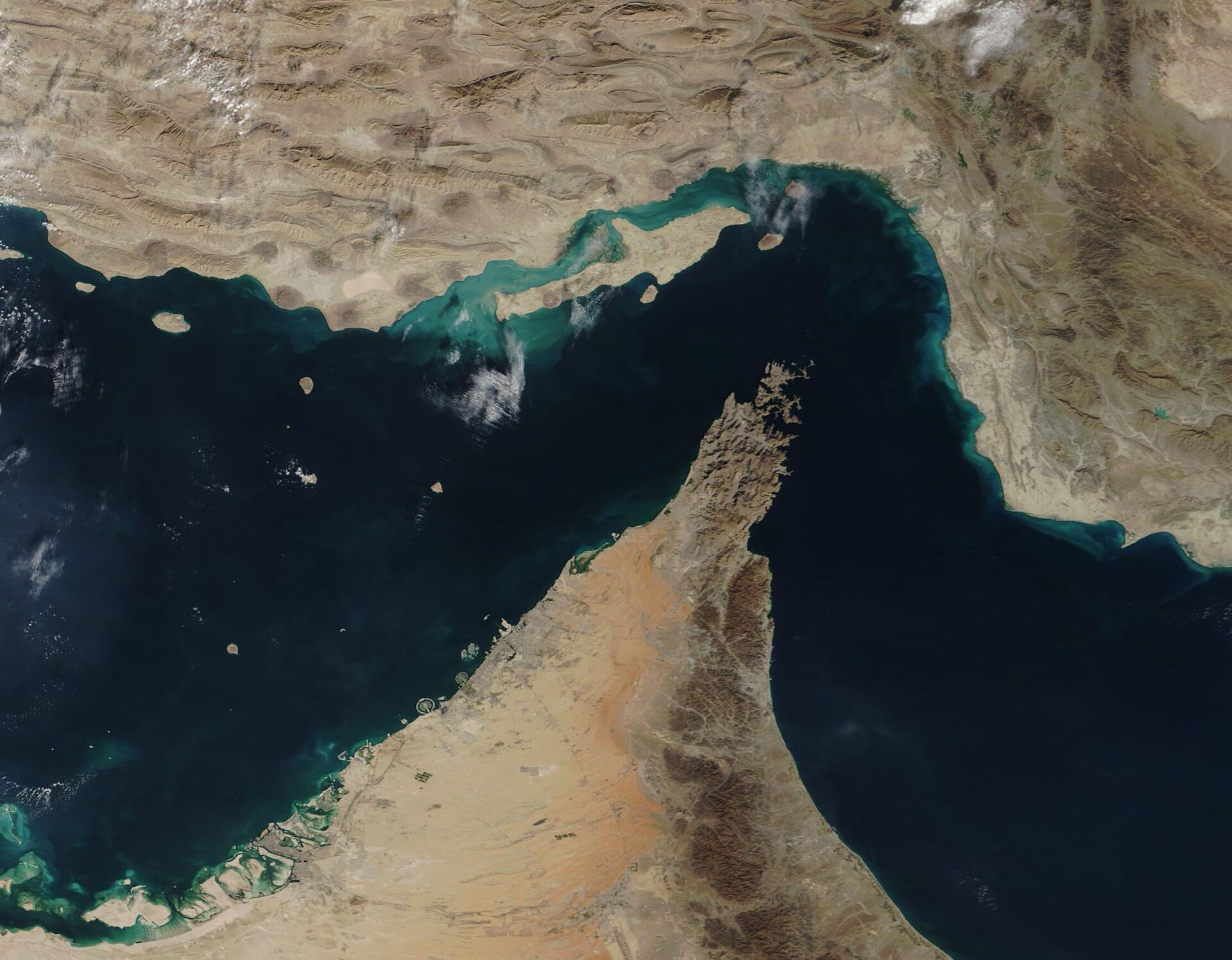
The assets under Vahidi’s command include the IRGC’s missile force, which launched the projectiles that struck Gulf states; the IRGC Navy, which operates in the Strait of Hormuz where the Persian Gulf Security Architecture now collects transit fees; the Quds Force, which coordinates with Hezbollah and the Houthis; and the IRGC’s parallel intelligence service, which operates independently of the civilian Ministry of Intelligence. None of these assets answer to the Foreign Ministry. On May 28, while Araghchi’s team described “good faith” progress in Doha, the IRGC Navy provided the kinetic counterpoint: warning shots fired at four commercial vessels near Hormuz, the constitutional split made visible on the water.
The Zarif-Soleimani Precedent: How This Played Out During the JCPOA
The structural split between Araghchi and Vahidi has a precise historical template: the relationship between Foreign Minister Mohammad Javad Zarif and Quds Force Commander Qasem Soleimani during the 2013-2015 JCPOA negotiations.
On April 25, 2021, Iran International published a three-hour excerpt from a seven-hour interview Zarif had given on February 24 of that year to journalist Saeed Laylaz. The recording was part of an oral history project on the Rouhani administration, coordinated by the Center for Strategic Studies, and was not intended for publication until after Rouhani left office. The Iranian Foreign Ministry did not dispute its authenticity. Spokesman Saeed Khatibzadeh called the leak “unethical politics” but did not challenge the content.
Zarif’s account described a system in which the foreign minister negotiated an agreement he could not enforce, while the IRGC commander ran parallel operations designed to undermine it:
“In the Islamic Republic, the military field rules,” Zarif said. “I have sacrificed diplomacy for the military field rather than the field servicing diplomacy.” He described the Foreign Ministry’s role in determining Iran’s foreign policy as “nil.”
On Soleimani’s interference with the JCPOA specifically, Zarif recounted a trip Soleimani made to Moscow shortly after the nuclear deal was agreed in July 2015 — a trip conducted, Zarif said, “upon Moscow’s initiative without the Iranian foreign ministry having any control on it. Its objective was to destroy the JCPOA.” The visit reportedly coordinated Russia’s military intervention in Syria, which complicated Western diplomatic engagement with Iran at the exact moment the deal required it.
Zarif stated he had “never been able to ask Soleimani to do something that would serve my diplomatic moves.” He confirmed that the Foreign Ministry could not appoint ambassadors without coordinating with the Revolutionary Guards, particularly in countries where Iran maintained strategic or military interests. And he disclosed that the IRGC knew about the January 2020 missile strike on the Ain al-Assad base in Iraq before Iran’s own foreign minister was informed.
Zarif later called the recording “an honest transmission of experiences to future officials” and a “bitter analysis of a historical period.” He apologized, saying his words did not “undermine Soleimani’s greatness.”
The structural parallel is exact. In 2015, Zarif signed the JCPOA; the IRGC, which controlled the enrichment-adjacent military research and the regional proxy network the deal was supposed to contain, operated outside Foreign Ministry authority throughout. In 2026, Araghchi negotiates in Doha; Vahidi — Soleimani’s predecessor as Quds Force commander — controls the missile batteries, the Hormuz naval operations, and the Houthi coordination the MOU is supposed to address. The 1989 constitutional revision that institutionalized this arrangement has not been amended since.
What Can Araghchi Actually Commit To?
Araghchi can commit to the text of a negotiated document but not to its enforcement. Under Iran’s constitutional framework, the Foreign Ministry implements SNSC-approved policy — it does not set it. Any concession Araghchi offers in Doha remains non-binding until the SNSC ratifies it and the Supreme Leader confirms it, a chain that runs through Vahidi’s institutional base.
This is not speculation. Araghchi himself told Pakistani, Egyptian, Turkish, and Qatari mediators — according to the Israel Hayom report — that “there’s no consensus inside the Iranian leadership about how to address the U.S. demands.” Iran’s foreign ministry spokesman, asked about negotiating progress, stated that they had “reached a conclusion on a large portion of the issues under discussion” but added: “to say that this means the signing of an agreement is imminent — no one can make such a claim.”
The dual messaging — progress on text, no imminent signing — is itself an artifact of the constitutional design. The Foreign Ministry can report convergence on wording because wording is within its mandate. It cannot confirm binding commitment because binding commitment requires SNSC ratification and Supreme Leader approval, which are outside its mandate.
Article 176 specifies that the SNSC’s standing members include the IRGC Commander-in-Chief, the Army Commander, the Foreign Minister, the Intelligence Minister, the Interior Minister, the Parliament Speaker, the Chief Justice, the Chief of Staff, and two Supreme Leader representatives. Vahidi sits on this body by constitutional right. Araghchi sits on it by constitutional right. They hold equal votes. But Vahidi’s institutional base — the IRGC — operates its own intelligence services, maintains its own command chain independent of the regular army, and conducts foreign policy through the Quds Force without Foreign Ministry coordination authority. The GIS Reports assessment describes this as a “pervasive” IRGC mandate that extends across politics, economy, foreign policy, and internal security.
Araghchi’s flexibility in Doha is structurally permitted for the same reason it is structurally meaningless. He can offer concessions because those concessions do not bind the IRGC. He can signal openness because openness at the table costs nothing when the table’s output requires ten more approvals. The five rounds of talks have produced five rounds of Araghchi signaling willingness and Vahidi’s institutional apparatus refusing to confirm it.
The SNSC Approval Gate: 99 Days of Constitutional Delay
How quickly can the SNSC convert a negotiated text into a binding commitment? The JCPOA provides the only available precedent, and it is less encouraging than commonly understood.
The JCPOA was agreed on July 14, 2015. The UN Security Council endorsed it via Resolution 2231 on July 20. Iran’s parliament — the Majlis — voted 161-59 on October 13 to approve an implementation bill titled “Reciprocal and Proportional Action by the Government of the Islamic Republic of Iran in the Implementation of the JCPOA.” The Guardian Council ratified the bill the following day. Supreme Leader Khamenei issued a conditional endorsement via letter to President Rouhani on October 21, outlining eight conditions. Implementation Day — the point at which obligations became operational — arrived on January 16, 2016.
The full arc from agreement to Khamenei’s endorsement: 99 days. From the Majlis vote to the Supreme Leader’s letter: 8 days. The compressed window is often cited as evidence the system can move quickly when political will exists. But the 91 days before the Majlis vote were not dead time — they were the period during which the SNSC, Khamenei’s office, and the IRGC assessed whether the deal served their institutional interests.
Iran’s Deputy Foreign Minister stated at the time that there was “no need for Parliament’s approval” because the JCPOA was technically an executive agreement under SNSC authority, not a treaty. Ali Akbar Salehi, then head of Iran’s Atomic Energy Organization, confirmed: “the final decision in this regard rests with the Supreme National Security Council.” The Majlis vote was politically motivated — a mechanism for distributing institutional responsibility — rather than constitutionally required.
The 2026 context is structurally worse. The JCPOA was negotiated during peacetime, with a president (Rouhani) who had campaigned on the deal and a Supreme Leader who — however grudgingly — permitted it. The 2026 MOU is being negotiated during a war. The president (Pezeshkian) cannot appoint his own intelligence minister. The IRGC Commander has declared that wartime leadership positions belong to the Guards. And the Supreme Leader’s son — the figure whose confirmation is constitutionally required — communicates via courier from an undisclosed location.
Does Vahidi’s Wartime Authority Extend Beyond the Battlefield?
In practice, yes — though the constitutional text does not grant it. Vahidi’s claim — that “during wartime all critical and sensitive leadership positions must be decided by the IRGC” — has no explicit constitutional basis. Article 150 mandates the IRGC’s preservation and its role guarding the Revolution, but delegates the scope of duties to ordinary law. Article 176 gives the SNSC authority over defense and security policy, not the IRGC unilaterally. The distinction is academic: Vahidi has blocked every intelligence minister candidate Pezeshkian has proposed, the Quds Force conducts external operations without Foreign Ministry oversight, and the IRGC’s media apparatus — anchored by Tasnim News Agency — runs its own messaging operation that frequently contradicts official Foreign Ministry statements. His authority extends wherever the SNSC and Supreme Leader’s office permit it, and neither has checked him.
The Tasnim-Raja News clash of late April 2026 illustrates the fracture within the IRGC’s own institutional base. Iran International reported on April 28 that 27 ultra-hardline MPs — including members of Saeed Jalili’s Stability Front (Paydari) — refused to sign a joint statement endorsing the negotiating team. Tasnim, the IRGC-linked outlet, called the hardliners’ conditions “unrealistic” and advocated a pragmatic negotiating line. Raja News, aligned with the ultra-hardline faction, rebuked Tasnim. CNN described Jalili as heading a “shadow government.”
Even the IRGC, in other words, is not a monolith. Vahidi’s institutional authority as Commander-in-Chief gives him a constitutional veto over any deal the Foreign Ministry negotiates. But his ability to exercise that veto depends on alignment with Mojtaba Khamenei, the SNSC hardliners, and the Paydari faction in parliament — the same alignment required to ratify a deal in the first place. The system was designed to prevent any single actor from binding the state alone, and that constraint runs in both directions.
The Parliamentary Kill-Switch That Has Not Fired
Iran’s parliament has its own mechanism for rendering the negotiations moot. On March 28, 2026, Tehran representative Malek Shariati introduced a triple-urgency bill titled “Support for the Nuclear Rights of the Iranian Nation.” The bill has three pillars: withdrawal from the Non-Proliferation Treaty, repeal of the domestic JCPOA implementation law, and negotiation of new agreements with SCO and BRICS partners on nuclear technology cooperation. Ebrahim Rezaei, spokesman for the parliament’s national security commission, endorsed the logic: the NPT “has had no benefit for us” and it would be “meaningless for Iran to remain a signatory.”
Triple-urgency designation means the bill can be debated, voted on, and reviewed by the Guardian Council in a single session. It is the fastest legislative track available.
It has not been used. Iran’s parliament has not convened in person since US-Israeli strikes began on February 28, 2026. The bill was uploaded to the parliamentary portal but no session has occurred to debate it. Even if passed, it would require Guardian Council approval and — per Salehi’s 2015 precedent and Article 176 — SNSC endorsement and Supreme Leader confirmation.
This is a separate instance of the same constitutional architecture. The bill exists. The mechanism to activate it exists. The institution that must approve it (SNSC/Supreme Leader) is the same institution that must approve a deal. The parliamentary kill-switch and the SNSC ratification gate are not competing mechanisms — they are the same gate approached from opposite directions. A parliament that cannot convene cannot pass a deal-killing bill; an SNSC that cannot reach consensus cannot ratify a deal. Both pathways are frozen by the same structural condition: wartime institutional paralysis.
Mojtaba Khamenei’s HEU Directive and the Courier Bottleneck
The constitutional chain terminates at the Supreme Leader. Since Ali Khamenei’s effective withdrawal from day-to-day governance, that function has been exercised by his son Mojtaba, who — as CBS reported in May 2025 — communicates from a hidden location via courier only. “Even senior Iranian officials don’t know where he is.”
Mojtaba has issued at least one directive directly constraining the negotiating space: according to Reuters, Iran’s HEU stockpile must remain inside the country. Senior Iranian officials believe transferring enriched uranium abroad would leave Iran vulnerable. This directive eliminates the core concession American negotiators have sought — the removal or down-blending of Iran’s highly enriched uranium stockpile — at a level of authority that Araghchi cannot override and that the SNSC cannot circumvent without the Supreme Leader’s own reversal.
The HEU question is not abstract. The White House claimed written assurances on HEU disposal; Iran’s own SNSC denied them. The distinction between down-blending (reducing enrichment levels while keeping material in Iran) and disposal (removing it from the country) represents a 55,330-to-564 SWU ratio: Iran retains 99 percent of the enrichment work already completed even if it agrees to down-blend. The directive from Mojtaba forecloses even this partial concession.
The courier-only communication chain creates an additional structural bottleneck. The JCPOA’s compressed approval window — 8 days from Majlis vote to Khamenei’s endorsement letter — was possible because Khamenei was accessible, his office was operational, and institutional channels were open. In 2026, the equivalent approval would require a courier to reach Mojtaba at an undisclosed location, await his assessment, and return with a decision. The constitutional requirement for Supreme Leader confirmation has not changed. The physical infrastructure for meeting it has.
What Does This Mean for Saudi Arabia?
Saudi Arabia has no seat at the table where Araghchi signals flexibility, no channel to the SNSC where ratification occurs, and no line to Mojtaba Khamenei where final confirmation resides. A signed MOU carries a structural asterisk: the entity authorized to sign it — the Foreign Ministry — does not command the IRGC launchers, the Hormuz naval force, or the Houthi coordination network the deal is supposed to constrain.
The Araghchi-Vahidi split compounds this exclusion with a structural problem: even if Saudi Arabia were included, which institution would it be negotiating with? The Foreign Ministry can offer diplomatic assurances about Iran’s regional behavior, but it does not control the IRGC Navy operating in the Strait of Hormuz, the Quds Force coordinating with the Houthis, or the missile batteries that struck Gulf states. The Eid call between MBS and Pezeshkian on May 27 — warm in tone, “purely bilateral” in Baghaei’s bounding — reached the civilian presidency, not the IRGC command structure that controls the assets Saudi Arabia needs constrained.
The Persian Gulf Security Architecture, operational since May 18, has collected transit fees from an estimated 33 daily passages as of May 25. The IRGC Navy enforces it. The Foreign Ministry did not negotiate it. If the MOU constrains Iran’s Hormuz operations in Phase 1, the constraint would need to bind the IRGC — the institution whose commander has publicly rejected what Araghchi agreed to. This split is now materializing in competing MOU texts: the IRGC’s competing draft text places Hormuz “under Iran’s management” while Araghchi’s FM track accepted “unrestricted” passage.
Zarif’s 2021 confession applies with updated names. In 2015, the JCPOA was signed by the Foreign Minister; it was not implemented by the institution that controlled the relevant military assets. In 2026, if an MOU is signed by Araghchi, its implementation would depend on compliance by Vahidi — the man the Israel Hayom report identifies as the one rejecting what Araghchi agrees to. The eight days between the 2015 Majlis vote and Khamenei’s conditional endorsement were followed by years of IRGC non-compliance the Foreign Ministry could neither prevent nor remedy. Saudi Arabia’s dual exclusion — from the negotiating rounds and from the ratification circuit — leaves it dependent on an enforcement mechanism Iran’s own constitutional architecture is designed to frustrate.
FAQ
Has an IRGC commander ever publicly overridden a Foreign Ministry commitment during active negotiations?
Not in the form of a public communiqué, but the pattern is documented. During the JCPOA negotiations, Soleimani’s Moscow trip — conducted without Foreign Ministry knowledge, per Zarif’s leaked tape — was designed to coordinate Russian military intervention in Syria at the precise moment the nuclear deal required Western-Iranian diplomatic stability. The interference was operational rather than declarative: Soleimani did not issue a statement rejecting the JCPOA; he launched a parallel military-diplomatic track that complicated its implementation. Vahidi’s rejection of Araghchi’s concessions, relayed via an Iranian official to Gulf counterparts, is the first documented instance where the split has been described as a direct override communicated to the opposing negotiating party.
Could President Pezeshkian bypass the SNSC and sign an executive agreement directly?
Article 125 of Iran’s constitution authorizes the president to sign international treaties “after obtaining the approval of the Majlis.” Article 77 requires Majlis approval for all treaties. But national-security agreements — which the nuclear MOU would qualify as — fall under Article 176’s SNSC framework. Salehi’s 2015 statement that “the final decision rests with the SNSC” established the precedent that nuclear agreements are SNSC instruments, not presidential ones. Pezeshkian chairs the SNSC but does not control it: Vahidi, two Supreme Leader representatives, and the intelligence and interior ministers all hold standing seats. With Pezeshkian unable to appoint even his own intelligence minister, his authority within the SNSC is procedural, not substantive.
What happens if the SNSC approves a deal but the IRGC refuses to implement it?
There is no constitutional enforcement mechanism. Article 176 states that SNSC decisions become effective “after the confirmation of the Leader,” but specifies no penalty for non-compliance by constituent members. In the JCPOA period, the IRGC conducted ballistic missile tests that the Foreign Ministry argued were outside the deal’s scope and that Western governments argued violated its spirit. The IRGC’s parallel command chain — separate from the regular army’s chain of command, with its own intelligence services, its own economic enterprises (estimated at 20-40 percent of Iran’s non-oil GDP by various Western assessments), and its own foreign-operations arm — gives it the institutional capacity to implement or obstruct independently of SNSC directives. The constitutional design created a veto, not a chain of command.
Is the Araghchi-Vahidi dynamic different from normal civil-military tensions in other countries?
Structurally, yes. In most constitutional systems, the military is subordinate to civilian authority — the defense minister reports to the head of government, who sets policy. In Iran, the IRGC Commander-in-Chief is appointed by the Supreme Leader, not the president. The IRGC answers to the Leader’s office, not the civilian executive. The Foreign Ministry and the IRGC are parallel institutions reporting to the same apex (Supreme Leader), not a hierarchical chain in which diplomacy directs military behavior. The GIS Reports assessment describes this as a constitutionally legitimized parallel state. Turkey, Pakistan, and Egypt have all experienced periods of military dominance over foreign policy, but in each case the constitutional text subordinates the military to civilian authority even when practice diverges. Iran’s constitution does not subordinate the IRGC to the presidency — it subordinates both the IRGC and the presidency to the Supreme Leader, creating co-equal institutions with overlapping mandates and no mechanism for resolving disagreements except at the apex.
How does the Doha trifecta departure on May 26 fit this framework?
Ghalibaf (parliament speaker), Araghchi (foreign minister), and Hemmati (central bank governor) traveled to Doha together — a civilian delegation representing Iran’s diplomatic, legislative, and economic authority. None of them commands IRGC assets. Their departure without signing, framed by Tasnim as “generally positive,” is consistent with a system in which the negotiating team can report progress (because textual convergence is within their mandate) but cannot confirm commitment (because commitment requires SNSC ratification by a body that includes Vahidi). The delegation’s composition is itself diagnostic: three civilian officials, zero IRGC representatives. The institution whose compliance the deal requires was not represented in the room where the deal was discussed.
The civilian-only composition of the Doha delegation also explains why Oman’s interlocutor in the Muscat back-channel is Araghchi’s FM chain, not the IRGC. Oman’s refusal to sign IMO CL 5028 is grounded in the 1974 Hormuz treaty with Tehran’s civilian foreign-policy apparatus — the same chain that can negotiate transit norms but cannot, under the constitutional design traced here, bind Vahidi’s command over the mines and fast boats that enforce them.