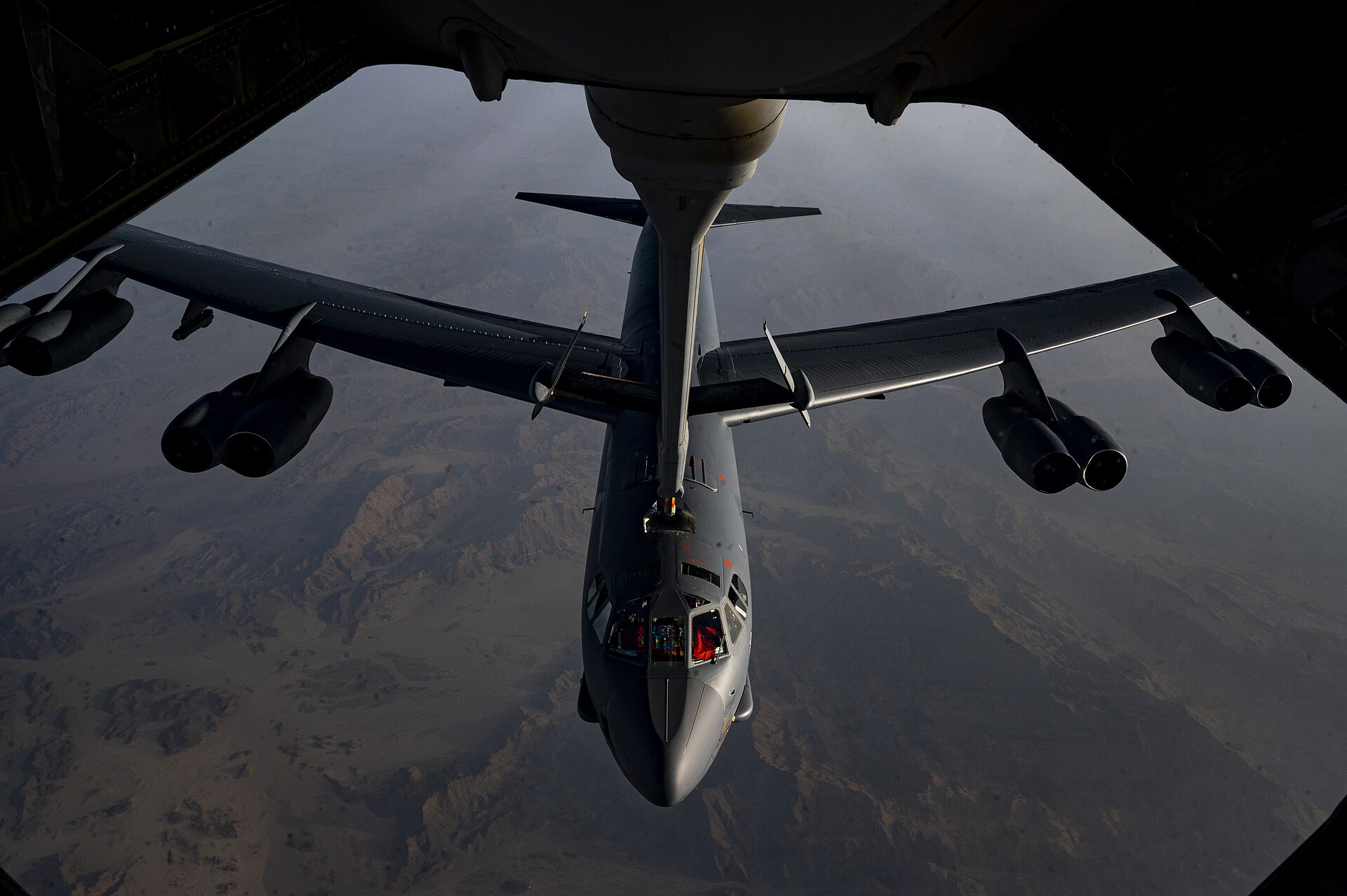
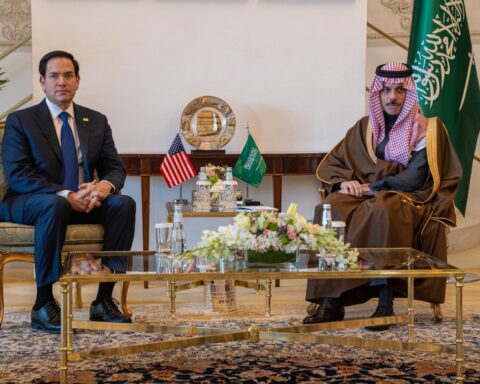
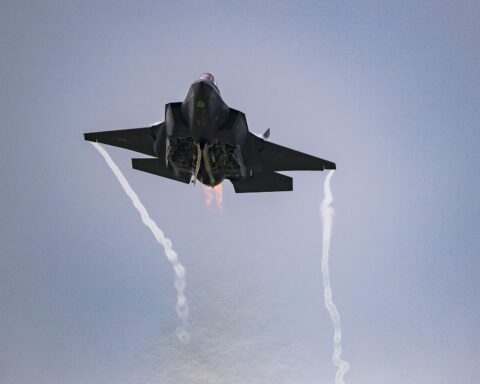
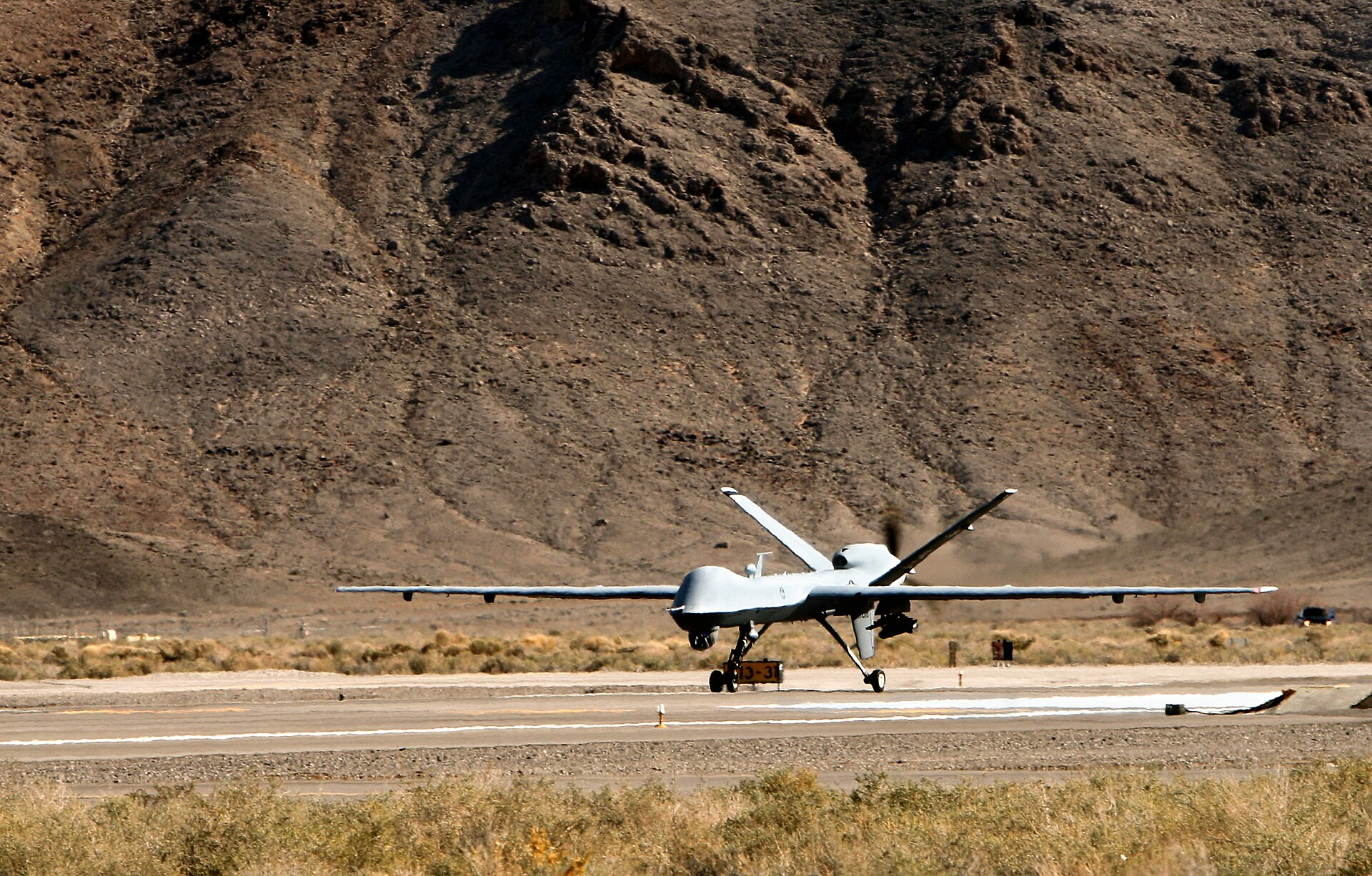
WASHINGTON — The United States Air Force MQ-9 Reaper fleet has fallen to 135 aircraft — 54 units below the 189-aircraft operational minimum the Senate Armed Services Committee treats as the floor for worldwide ISR and strike coverage, a 28.5% shortfall confirmed in congressional testimony on May 12. Operation Epic Fury destroyed 24 Reapers, and the production line that built them has effectively closed.
The deficit matters most where the fleet was thinnest. Prince Sultan Air Base, 80 kilometers south of Riyadh, hosts the 378th Air Expeditionary Wing under an arrangement without a formal Status of Forces Agreement. Iranian missile strikes in March damaged five KC-135 Stratotankers on the flight line, knocked an E-3 Sentry AWACS offline, and wounded 29 American personnel. The tankers have since been evacuated.
Three dimensions of the shortfall reach past procurement: what it means for Iran’s unconfirmed but strategically coherent aerial engagement claims on May 26, for the PSAB basing arrangement the Saudi royal family cannot renegotiate from dependence, and for the co-belligerency doctrine Mojtaba Khamenei published on Arafah Day that conditions on the ground now partially substantiate.
Table of Contents
- The May 12 Hearing
- How Many MQ-9s Did Operation Epic Fury Destroy?
- What Does “56 Combat Lines” Mean at 135 Aircraft?
- What Is the Air Force Designing to Replace the Reaper?
- Why Do Iran’s May 26 Claims Need No Pentagon Confirmation?
- PSAB After the Strikes
- Can Saudi Arabia’s Defenses Close the Gap?
- The Doctrine That Landed on Facts
- Frequently Asked Questions
The May 12 Hearing
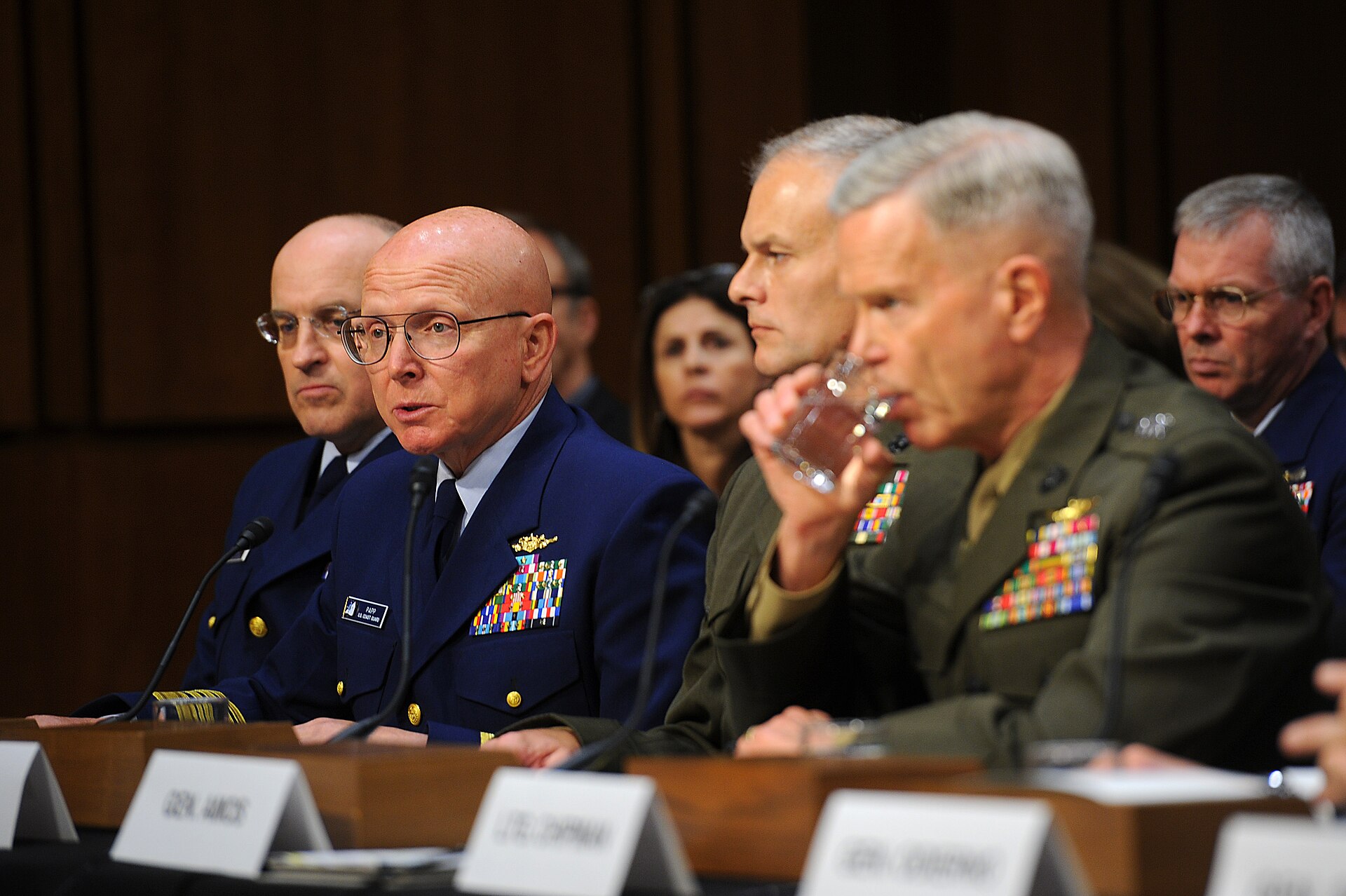
Lt. Gen. David Tabor, the Air Force’s Deputy Chief of Staff for Plans and Programs, appeared before the Senate Armed Services Subcommittee on Airland on May 12 with numbers that resist reassuring framing. The MQ-9 Reaper fleet stood at approximately 135 aircraft. The standing operational requirement — the number below which combatant commanders begin losing ISR coverage across theaters — was 189, a figure Sen. Kevin Cramer, Republican of North Dakota, cited on the record.
Tabor acknowledged the gap in language that split between institutional confidence and visible anxiety. The fleet was “still able to fulfill our contract of 56 combat lines worldwide,” he told senators — the minimum ISR orbit commitment to every combatant command from CENTCOM to INDOPACOM. Then came a sentence from a different register entirely: “We are concerned about how they’ve attrited, and we’re looking at options to buy back as many of the MQ-9As as we possibly can right now.”
We are concerned about how they’ve attrited, and we’re looking at options to buy back as many of the MQ-9As as we possibly can right now.
The HOS Daily BriefThe Middle East briefing 3,000+ readers start their day with.
One email. Every weekday morning. Free.
Lt. Gen. David Tabor, USAF Deputy Chief of Staff for Plans and Programs, Senate SASC Airland subcommittee, May 12, 2026
“Buy back” is not standard acquisition language. It reflects a specific constraint: General Atomics’ MQ-9 production line reached effective end-of-run in 2025, and the tooling has been partially reconfigured for MQ-9B export production. The remaining MQ-9A airframes — older, less capable than the MQ-9B SkyGuardian variants in limited production for allied customers — represent whatever sits in storage or on the shop floor at General Atomics’ facility in Poway, California. Air Force officials have offered no projection for how many airframes the buyback effort will recover.
The 189-aircraft floor was not a wish list. It was a requirements document tied to combatant commander demand signals — the number each regional command calculated it needed for continuous ISR coverage of active conflict zones, counterterrorism operations, and strategic surveillance. CENTCOM alone typically absorbs 20 to 25 of the 56 combat lines, covering Iraq, Syria, the Horn of Africa, and the Gulf maritime domain. The fleet’s collapse to 135 means either CENTCOM loses orbits during an active war, or another combatant command — most likely AFRICOM or EUCOM — absorbs the shortage and operates with reduced coverage of its own theater.
How Many MQ-9s Did Operation Epic Fury Destroy?
Twenty-four MQ-9 Reapers were confirmed destroyed during Operation Epic Fury, according to Congressional Research Service report IN12692 published on May 20. Total US aircraft losses across the campaign reached 42 — including 25 drones (24 Reapers and one MQ-4C Triton) and 17 manned aircraft damaged or destroyed, the highest single-campaign aerial attrition the United States has sustained since the 1991 Gulf War.
The pre-war MQ-9 inventory stood at approximately 159 aircraft. Losing 24 in under 90 days of combat removed roughly 15% of the global fleet in a single campaign. At $30 million per unit — the CRS baseline figure — direct MQ-9 losses reached approximately $720 million. Senate testimony noted that aircraft configured with full sensor packages and communications suites ran “up to $50 million a copy,” placing the true cost somewhere between $720 million and a $1.2 billion ceiling.
| Metric | Figure | Source |
|---|---|---|
| Pre-war inventory | ~159 aircraft | CRS report IN12692 |
| Destroyed in Epic Fury | 24 aircraft | CRS report IN12692, May 2026 |
| Current fleet size | ~135 aircraft | Senate SASC Airland, May 12 |
| Operational minimum | 189 aircraft | Sen. Cramer (R-ND) |
| Shortfall | 54 units (28.5%) | Calculated from testimony |
| Unit cost (baseline) | $30M | CRS |
| Unit cost (full sensor suite) | Up to $50M | Senate SASC testimony |
| Total US aircraft lost/damaged | 42 | CRS / Stars and Stripes |
| Total operation cost (excl. base damage) | $29B | Jules Hurst, Pentagon comptroller |
The 24 Reapers were not the campaign’s only drone loss. The Navy lost an MQ-4C Triton — a $180 million high-altitude maritime surveillance platform — bringing total unmanned aircraft losses to 25. The CRS tallied an attrition pattern that disproportionately targeted ISR assets: the eyes of the forward-deployed force, not its combat aircraft. Iran’s air defense operators prioritized the platforms that enabled strikes over the platforms that delivered them.
Jules Hurst, the Pentagon’s acting comptroller, told Congress the total military operations cost of Epic Fury reached $29 billion — a figure that excludes damage to US bases across the Middle East, including PSAB. Base damage falls under a different appropriations category. The total cost of the campaign remains officially uncalculated.
What Does “56 Combat Lines” Mean at 135 Aircraft?
Fifty-six combat lines represent the Air Force’s standing ISR orbit commitment to combatant commanders worldwide — continuous drone surveillance from the Strait of Hormuz to the Sahel to the South China Sea. At 189 aircraft, the fleet sustains those orbits with margin for maintenance rotation, crew training, attrition reserves, and surge capacity. At 135, it cannot.
A combat line is not a single aircraft. Each continuous 24-hour orbit requires multiple MQ-9s: one on station, one transiting, one in maintenance, and at least one in reserve or crew training. Air Force planning doctrine commonly uses a ratio of 3.5 to 4 aircraft per sustained orbit. At that ratio, 56 combat lines demand 196 to 224 MQ-9s — a number that exceeds even the 189-unit floor Cramer cited.
The 189-aircraft threshold was not set as a peacetime convenience number. It was the minimum for sustained operations, and the fleet is 28.5% below it during the most intensive air campaign since 2003. Tabor’s assurance that the Air Force can “still fulfill our contract” at 135 aircraft depends on compressed maintenance cycles, extended airframe hours beyond manufacturer specifications, and the assumption that no additional losses occur. On Day 89 of the war, with CENTCOM conducting strikes on Iranian launch sites within a nominal ceasefire window, that assumption carries an observable shelf life.
Zero surge capacity also means the Air Force cannot respond to a second simultaneous contingency — a crisis in the Taiwan Strait, a deterioration along the Korean DMZ, an escalation in West Africa — without pulling ISR orbits from an active combat theater. Every operational MQ-9 is committed to maintaining existing coverage. The Air Force has not operated below its stated MQ-9 floor during a shooting war before this one.
What Is the Air Force Designing to Replace the Reaper?
The Air Force released requirements for an MQ-9 successor on May 11 — the day before Tabor’s testimony — under the Attritable ISR Aircraft program. The specifications call for up to 932 miles of range, a minimum 20-hour endurance, low-to-medium acquisition cost, open architecture, and mass-producibility. Over 50 vendors responded to the initial request for information.
The design philosophy represents a doctrinal reversal. The MQ-9 Reaper was built to survive: a $30-50 million platform with a sophisticated sensor suite, engineered for airspace where enemy air defenses were limited or suppressed. Epic Fury proved that premise wrong. Iran’s integrated air defense network — Russian-supplied S-300PMU2 systems, domestically produced Bavar-373 batteries, and shorter-range Mersad and Sayyad platforms — engaged MQ-9s at altitudes and ranges the aircraft was never designed to evade.
The replacement concept, as The War Zone reported, aims for an aircraft “cheap enough to absorb losses at scale.” The shift abandons survivability as the organizing principle and substitutes expendability — mass-produced airframes that can be lost in numbers without degrading the ISR architecture as a whole. The International Institute for Strategic Studies confirmed this structural logic in its 2026 assessment, noting that UAVs in Gulf deterrence had proven exposed to contested airspace in ways pre-war doctrine did not anticipate.
The timeline is the more immediate problem. From requirements release to initial operational capability, new military aircraft programs historically take four to seven years. Even under accelerated acquisition authorities, no Attritable ISR drone will reach a CENTCOM operating base before 2029 at the earliest. The 54-unit gap will persist through the remainder of this conflict and for several years beyond it.
Why Do Iran’s May 26 Claims Need No Pentagon Confirmation?
The IRGC claimed three aerial engagements on May 26: an MQ-9 Reaper shot down over the Persian Gulf, an F-35 fired upon and forced to withdraw, and an RQ-4 Global Hawk engaged with anti-aircraft fire. The Pentagon has issued no confirmation as of May 27. The claims carry strategic weight independent of verification, because the fleet-attrition data they reference was confirmed by the US Senate two weeks earlier.
PressTV, aligned with IRGC public-affairs operations, framed the MQ-9 claim as an airspace-violation intercept. The Jerusalem Post, citing Iranian state media, reported the F-35 engagement. NewsX and WION carried the RQ-4 account. Pentagon silence is consistent with standard practice during active operations — the military neither confirms asset locations nor validates adversary claims during hostilities.
Non-confirmation has its own history, though. On June 20, 2019, Iran’s IRGC downed a US Navy RQ-4A Global Hawk BAMS-D over the Strait of Hormuz using a 3rd Khordad surface-to-air missile system. The US disputed the airspace claim. Iran released debris footage.
The shoot-down was eventually confirmed — establishing a precedent for Iranian capability against high-value US surveillance platforms and for the Pentagon’s institutional preference for delayed acknowledgment of losses.
Tasnim — the semi-official news agency close to IRGC intelligence — described the May 25-26 CENTCOM strikes as “grave violations” under a 48-hour designation framework. The term “grave” maps to the International Court of Justice’s threshold for state responsibility, a choice consistent with the dual-track strategy Iran has maintained throughout the war: pursue diplomatic engagement through the Doha channel while building a legal-grievance record that could support claims before international bodies. The Iranian delegation left Doha without signing on the same day it claimed three aerial engagements — the diplomatic and military tracks running simultaneously, by design.
Even setting aside the three specific claims, the IRGC’s messaging pattern carries its own signal. By asserting engagements against an MQ-9, an F-35, and an RQ-4 simultaneously — three aircraft types across different altitude bands and mission profiles — Iran is claiming a layered defensive capability rather than a single intercept.
The pattern mirrors the 2019 RQ-4 shoot-down, after which Iran released technical details (the 3rd Khordad missile system, the engagement altitude, the coordinates) that proved accurate when the Pentagon eventually confirmed the loss. Whether the May 26 claims follow the same trajectory remains unclear. The data, if it exists, may not surface for weeks.
PSAB After the Strikes
Prince Sultan Air Base was reactivated in December 2019 — a quiet return after the 2003 evacuation, when Saudi Arabia revoked US access within hours of Washington’s announcement that it would draw down forces after the Iraq invasion. By mid-2025, satellite imagery showed a substantial forward presence: 53 F-16s, 22 KC-135 Stratotankers, 10 C-130 transports, and the MQ-9 and surveillance assets that formed the ISR backbone of CENTCOM’s Gulf posture.
The March strikes dismantled parts of that architecture on the ground. On March 16, five KC-135 Stratotankers were damaged at PSAB — the aerial refueling platforms that enable extended F-16 combat sorties across the theater (Military Times). Eleven days later, an Iranian ballistic missile struck the base again, damaging an E-3 Sentry AWACS and wounding more than 29 US personnel (The Aviationist, March 27). The KC-135s were subsequently evacuated, removing PSAB’s aerial refueling capability.
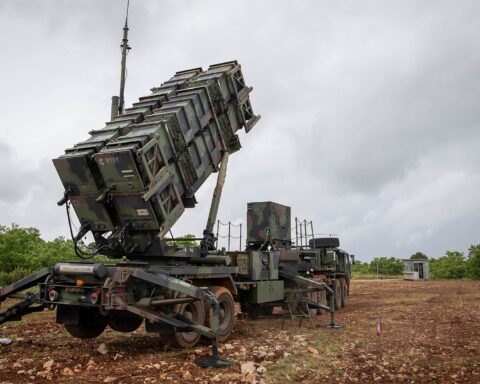
The THAAD and Patriot layered defenses that were supposed to prevent exactly this outcome had already been compromised. The AN/TPY-2 THAAD radar in Jordan — one of two forward-deployed units providing boost-phase tracking data to the Gulf defense network — was destroyed in a prior strike, an event CSIS characterized as “blinding US eyes in the Middle East.” Interception duties fell entirely to Patriot PAC-3 batteries operating with depleted interceptor stocks.
Saudi Arabia’s basing arrangement with the United States operates without a formal Status of Forces Agreement — a condition that has persisted since the 2019 reactivation. The November 2025 Strategic Defense Agreement updated the legal framework for joint operations but did not include SOFA provisions governing personnel jurisdiction, criminal liability, or withdrawal procedures. The $142 billion arms deal signed in May 2025 deepened the dependency without formalizing the protections. PSAB now hosts an estimated 2,500-2,700 US personnel under administrative arrangements that either government can alter unilaterally — as the 2003 precedent demonstrated.
After weeks of Iranian strikes on Saudi soil, Riyadh made a decision it had spent months resisting: Taif Air Base was opened to US forces, shifting the kingdom from formal non-belligerency to de facto co-belligerency. Under the ICJ’s Nicaragua standard, a state that provides territory for military operations against another state assumes a measure of responsibility for those operations — a legal exposure Saudi Arabia did not carry before the Taif decision and cannot easily reverse. The Arab Center Washington DC assessed that, post-war, “Saudi Arabia is likely to continue to diversify its international partnerships… [and] could result in more direct steps to curtail the predominant role of the U.S. in the kingdom’s security and foreign policy.”
Can Saudi Arabia’s Defenses Close the Gap?
Saudi Arabia’s PAC-3 MSE interceptor stockpile stands at an assessed 80 to 150 rounds. Each interceptor costs $3.7 to $4 million. A single Iranian Shahed-136 attack drone costs between $20,000 and $50,000. CSIS calculated the cost asymmetry at 114 to 1 in Iran’s favor.
Iran’s campaign doctrine is built around that ratio. CSIS analysts have documented the operational logic: saturate air defenses with cheap drones and cruise missiles to force interceptor expenditure, while simultaneously degrading the ISR platforms — the MQ-9s, the AWACS, the THAAD radars — that feed targeting data to the interceptor batteries. The 24 MQ-9s destroyed in Epic Fury were part of that targeting architecture.
The fiscal bind compounds the military one. Saudi Arabia’s first-quarter 2026 deficit reached $33.5 billion — 194% of the full-year budget target — while Brent crude has dipped below $100 on Iran deal optimism. Bloomberg Economics places the kingdom’s true fiscal breakeven, including Public Investment Fund capital commitments, at $108 to $111 per barrel.
The UAE’s Anwar Gargash called the GCC “weakest historically” in April. CSIS titled its ceasefire munitions assessment “Last Rounds?” — and the question reaches beyond the Gulf. The PAC-3 interceptors Saudi Arabia expends defending PSAB from Iranian salvos are drawn from the same global Patriot stockpile the Pentagon has earmarked for Pacific deterrence. Every round fired over al-Kharj is one fewer available for Guam, Okinawa, or the Korean Peninsula.
The selectivity of Washington’s emergency authorization process compounds the depletion problem. When Secretary Rubio signed an emergency determination under Section 36(b) of the Arms Export Control Act in May, he named Qatar, Kuwait, the UAE, and Israel as recipients — but not Saudi Arabia, the country that has consumed more Patriot interceptors than any other in the system’s history. Why Saudi Arabia was excluded from the emergency waiver, and what its remaining interceptor stockpile means for the air defense ceiling, is examined here.
The Doctrine That Landed on Facts
Mojtaba Khamenei published a 14-page written doctrine on Arafah Day — May 26, the holiest day of the Hajj calendar — addressed to Muslim pilgrims gathered in Mecca. The document, analyzed in full here, contained a sentence that reads differently against the MQ-9 fleet data and the PSAB strike record: “Nations and lands will no longer serve as shields for American bases.”
The sentence makes a doctrinal claim about a condition that has partially materialized. PSAB has been struck, repeatedly. KC-135 tankers have been evacuated from its flight line. An AWACS was damaged on its tarmac. Americans have been wounded.
The ISR umbrella that was supposed to make the base defensible stands 54 aircraft below its operational floor — a gap the Senate confirmed and the Air Force cannot close before the end of the decade. The doctrine does not describe a hypothetical. It describes conditions the US military’s own testimony confirmed 14 days earlier.
The international humanitarian law framework the doctrine invokes — host-state co-belligerency under the ICJ’s Nicaragua standard and the International Law Commission’s Article 16 on state responsibility for aiding wrongful acts — acquires factual ground when the host state has opened a second air base to the belligerent power and when that power has conducted strikes from Saudi territory without Saudi consultation. The arms agreement signed weeks before the war deepens the very basing dependency the doctrine targets. PSAB’s personnel operate under administrative arrangements rather than treaty protections.
The timing was precise. Arafah Day falls during the Hajj pilgrimage — with over two million pilgrims present in Mecca. The document was not delivered as a speech. A written text of that length is a permanent diplomatic record, distributed to an audience of millions and preserved in a format designed to outlast a news cycle.
The previous Supreme Leader, Ali Khamenei, spoke at Hajj. Mojtaba Khamenei published a document — a shift that reflects either a security constraint (he has communicated through couriers from an undisclosed location since the war began) or a deliberate choice to create a text that can be cited, translated, and invoked in future proceedings.
Maj. Gen. Mohammad Hossein Shekarchi, spokesman of Iran’s Joint Armed Forces Staff, reinforced the doctrinal framing on the same day with a warning that Iran’s response would extend “beyond regional borders” — referencing “the previous two wars” and an escalation ladder from selective PGSA enforcement to total Hormuz closure. Saudi MOFA has issued no public response to the 14-page doctrine. As of May 27, the ministry’s silence has extended past eight consecutive days — through the CENTCOM strikes, through the Khamenei publication, and through the Eid al-Adha holiday Riyadh had requested as a no-escalation window.
The attrition count advanced on May 30: a Kuwaiti PAC-3 intercept of an Iranian Fateh-110 over Ali Al Salem Air Base produced debris that destroyed aircraft on the flight line, bringing confirmed Reaper losses to at least 25. The intercept succeeded; the airfield did not go undamaged.
Frequently Asked Questions
Is the MQ-9 Reaper still in production?
Full-rate MQ-9A production ended in 2025. General Atomics maintains a limited line for MQ-9B SkyGuardian and SeaGuardian export variants ordered by the United Kingdom, Italy, Belgium, and Australia, but the MQ-9A model the US Air Force operates is no longer being manufactured. The “buyback” Lt. Gen. Tabor referenced involves acquiring whatever MQ-9A airframes remain in storage or partially assembled — a finite supply, not a production restart.
What other US surveillance assets operate in the Gulf besides MQ-9s?
CENTCOM’s ISR architecture includes MQ-4C Tritons for high-altitude maritime surveillance (one lost in Epic Fury), RQ-4 Global Hawks for signals intelligence at 60,000 feet, EP-3E Aries II electronic reconnaissance aircraft, and satellite constellations managed by the National Reconnaissance Office. The E-3 AWACS damaged at PSAB in March provided airborne early warning — a role the Air Force is transitioning to the Boeing E-7A Wedgetail, though deliveries are not expected before the late 2020s.
Does the November 2025 Strategic Defense Agreement cover US troops at PSAB?
The SDA governs arms sales, intelligence sharing, and joint training protocols but deliberately excluded Status of Forces provisions — the criminal jurisdiction, civil liability, and withdrawal-notification clauses that govern US personnel at bases in Japan, South Korea, Germany, and more than 80 other countries with formal SOFAs. Those provisions matter most in one concrete scenario: if a US service member is accused of a crime on Saudi soil, there is no agreed framework governing whether Saudi or American courts have jurisdiction. The gap also affects compensation for accidents, rules of engagement during joint patrols, and the legal basis for US intelligence activities conducted from Saudi territory — none of which the SDA addresses.
What air defense systems has Iran used against US drones?
Iran deploys a layered network including Russian-supplied S-300PMU2 (NATO designation: SA-20 Gargoyle) long-range systems, the domestically developed Bavar-373, the 3rd Khordad (Raad) medium-range system that downed the RQ-4A in 2019, and shorter-range Mersad and Sayyad systems reverse-engineered from American Hawk missiles Iran acquired during the 1979 revolution. The integration of these platforms into a unified air defense command — achieved with Chinese technical assistance during the 2010s, according to the IISS — is what enabled the sustained drone attrition rates of Epic Fury.
How long before the Attritable ISR Aircraft reaches operational units?
Historical precedent for new military aircraft programs suggests four to seven years from initial requirements to first operational capability. The Air Force is using Other Transaction Authority contracting — a streamlined pathway that bypasses traditional Federal Acquisition Regulation timelines and allows prototype agreements with non-traditional defense contractors — to compress that cycle. Even so, the most optimistic projections place first deliveries around 2029-2030. Whether the Attritable ISR program will be treated as a true MQ-9 replacement or a supplemental attritable layer below the surviving Reapers remains unresolved: the Air Force has not published an acquisition objective number.
The IRGC claims of MQ-9 and F-35 engagements that drove this attrition calculation are examined through Iran’s dual-track command structure in Iran’s dual-track negotiating structure — where IRGC Commander Vahidi controls the military assets that produce these losses independently of any diplomatic track Araghchi runs.
The escalation continued on May 28 when the IRGC fired a Zolfaghar ballistic missile at Kuwait — the first ballistic missile launched at a GCC state since the April 8 ceasefire — confirming that attrition of the drone and missile inventory has not degraded Iran’s offensive launch capacity. The May 28 Kuwait strike and CENTCOM’s response are documented here.